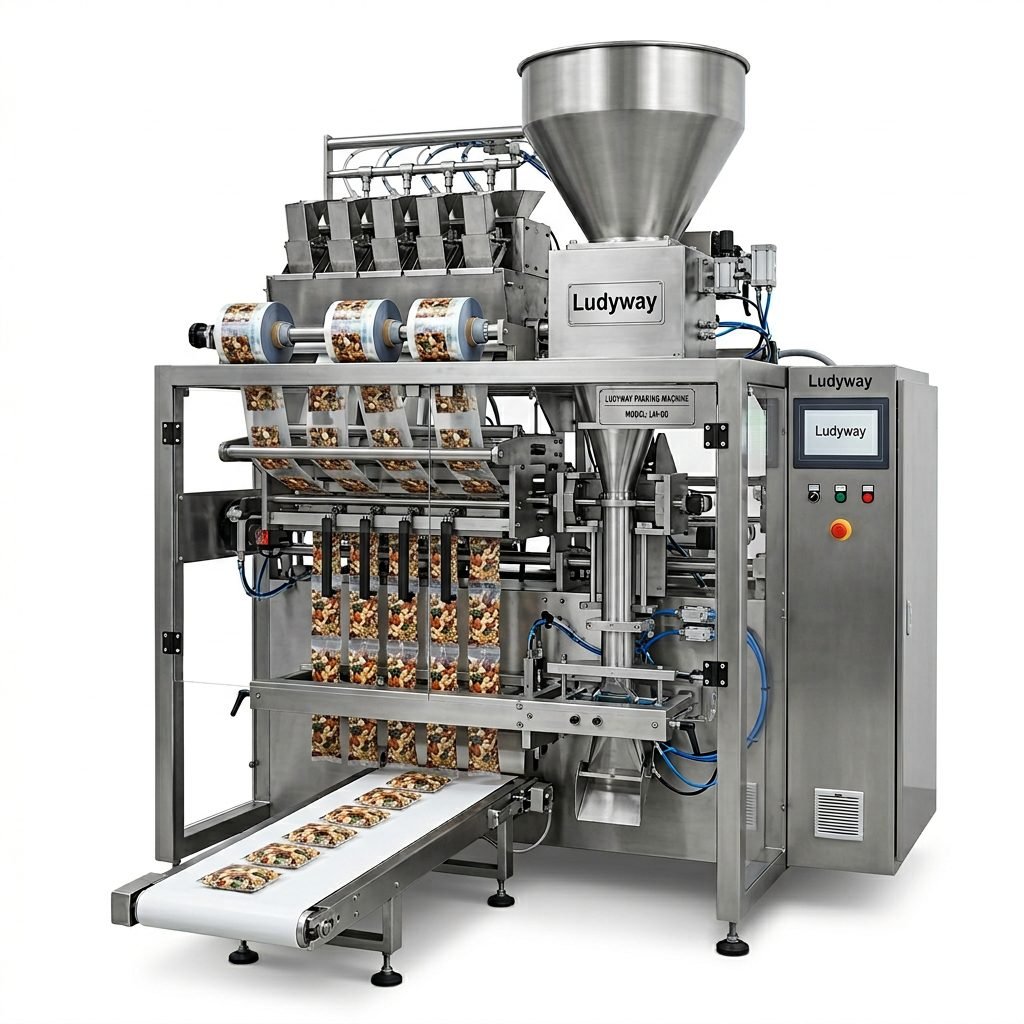
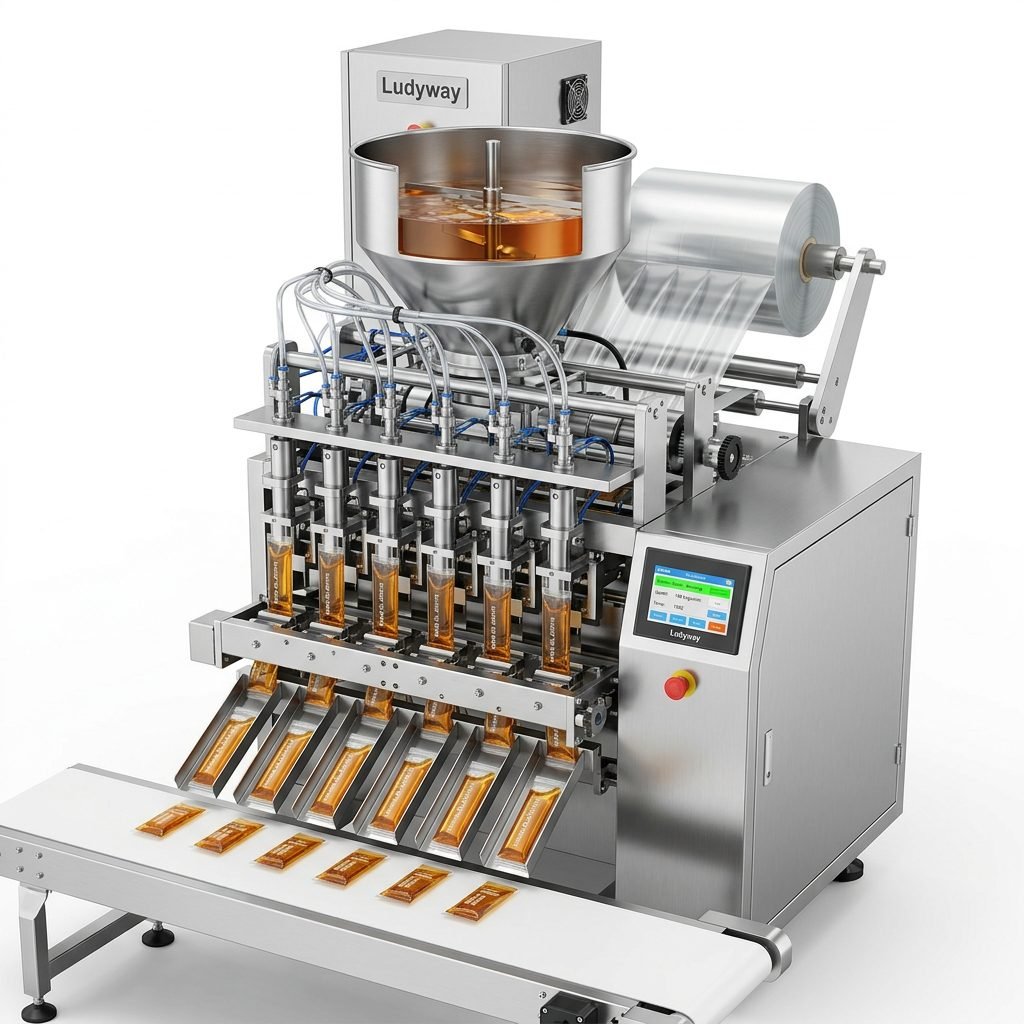
In the fast-paced world of manufacturing, efficient and reliable packaging is a critical link between production and the consumer. Matrix packaging machinery represents a sophisticated class of equipment designed to handle multiple packaging lanes simultaneously, dramatically increasing output for products like powders, granules, liquids, and solids. This comprehensive guide delves into the types, applications, and significant benefits of matrix packaging systems, and provides a clear framework for selecting the right system for your operational needs.
Understanding Matrix Packaging Machinery
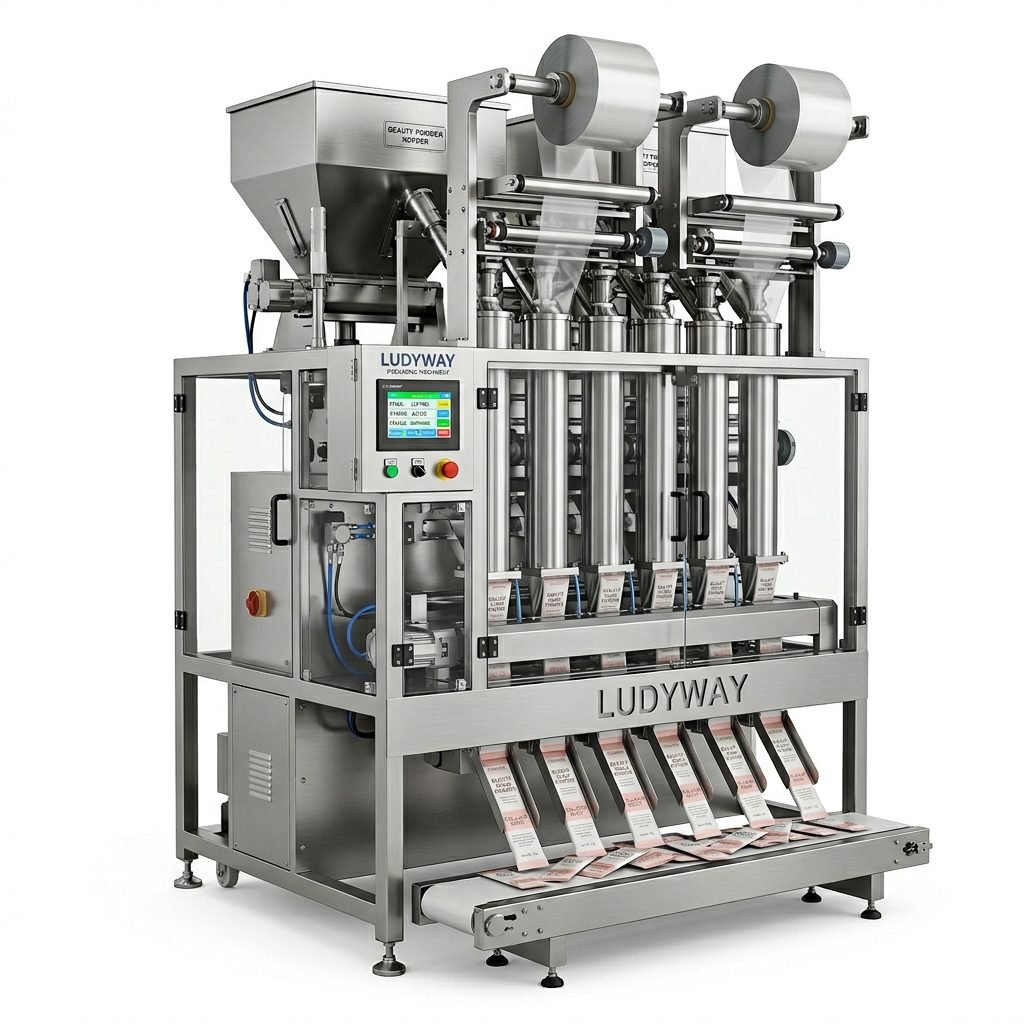
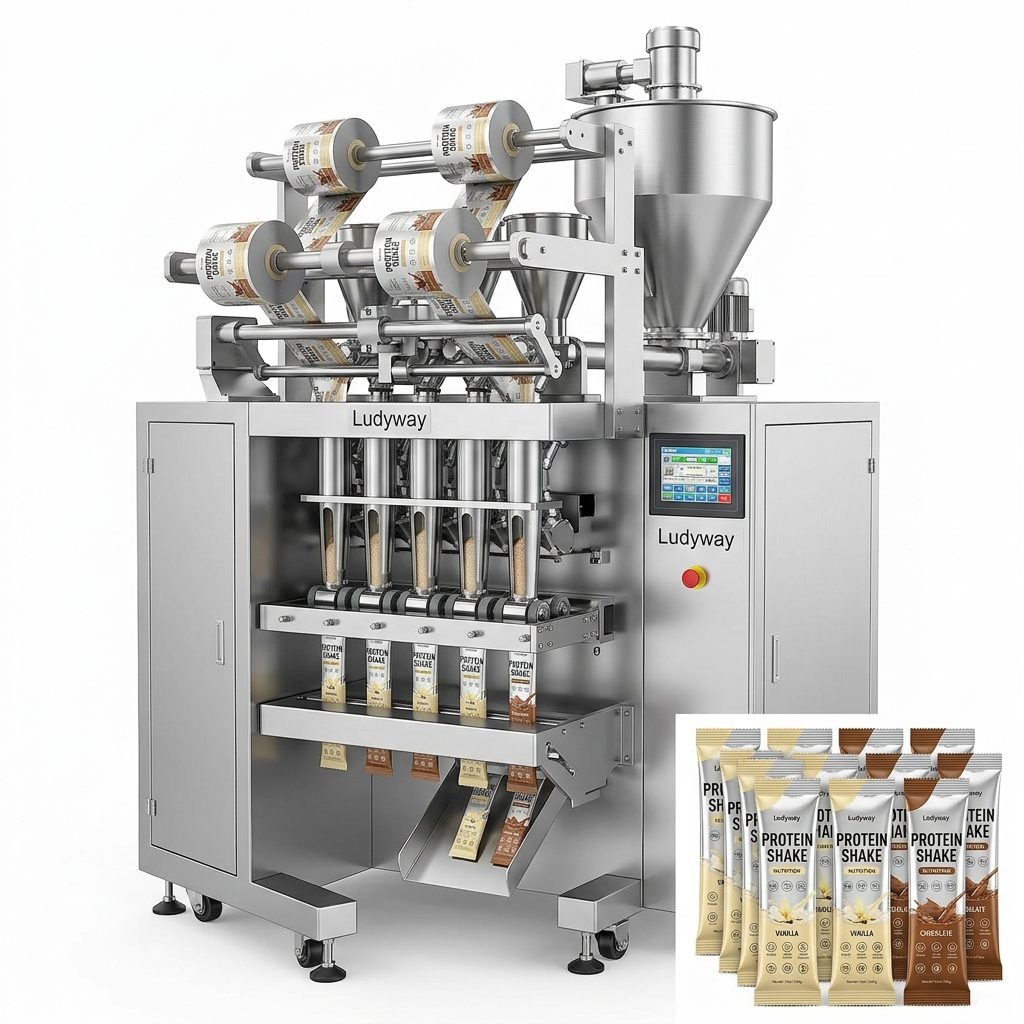
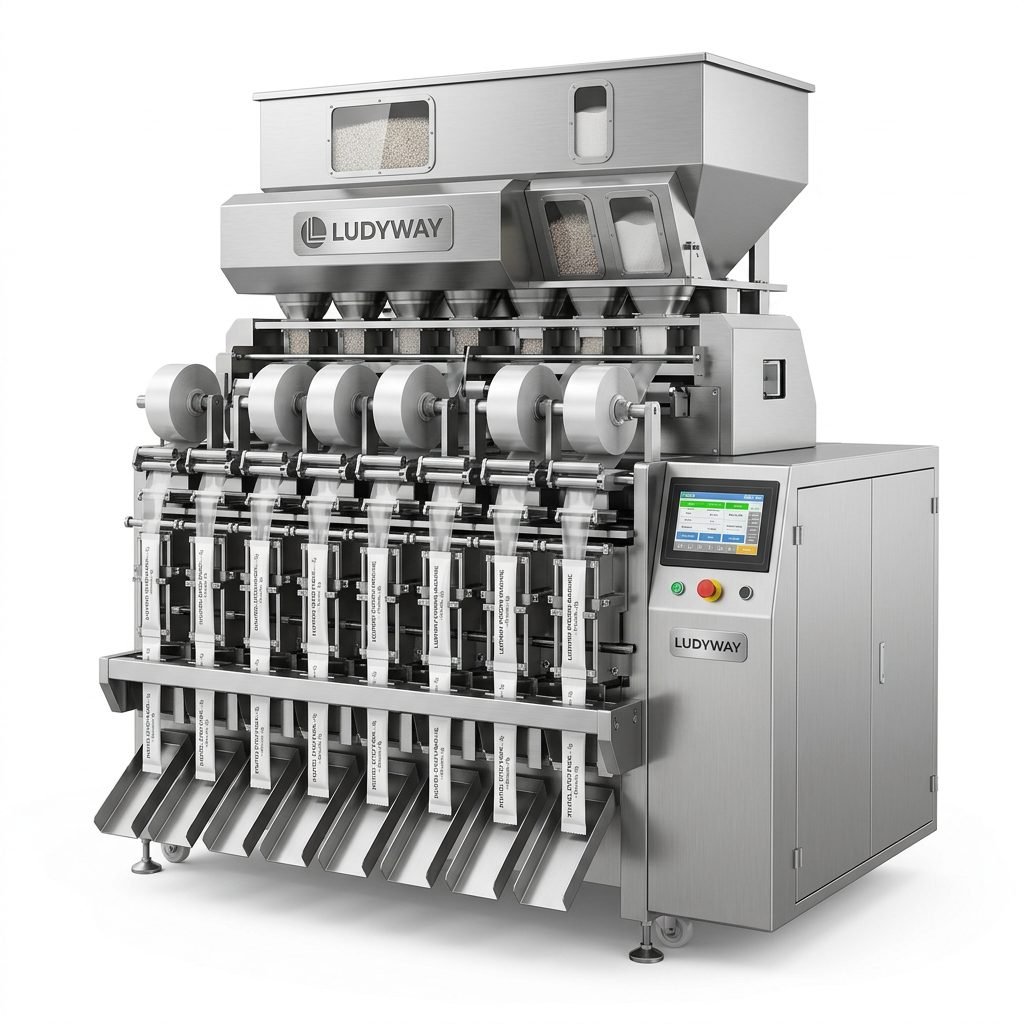
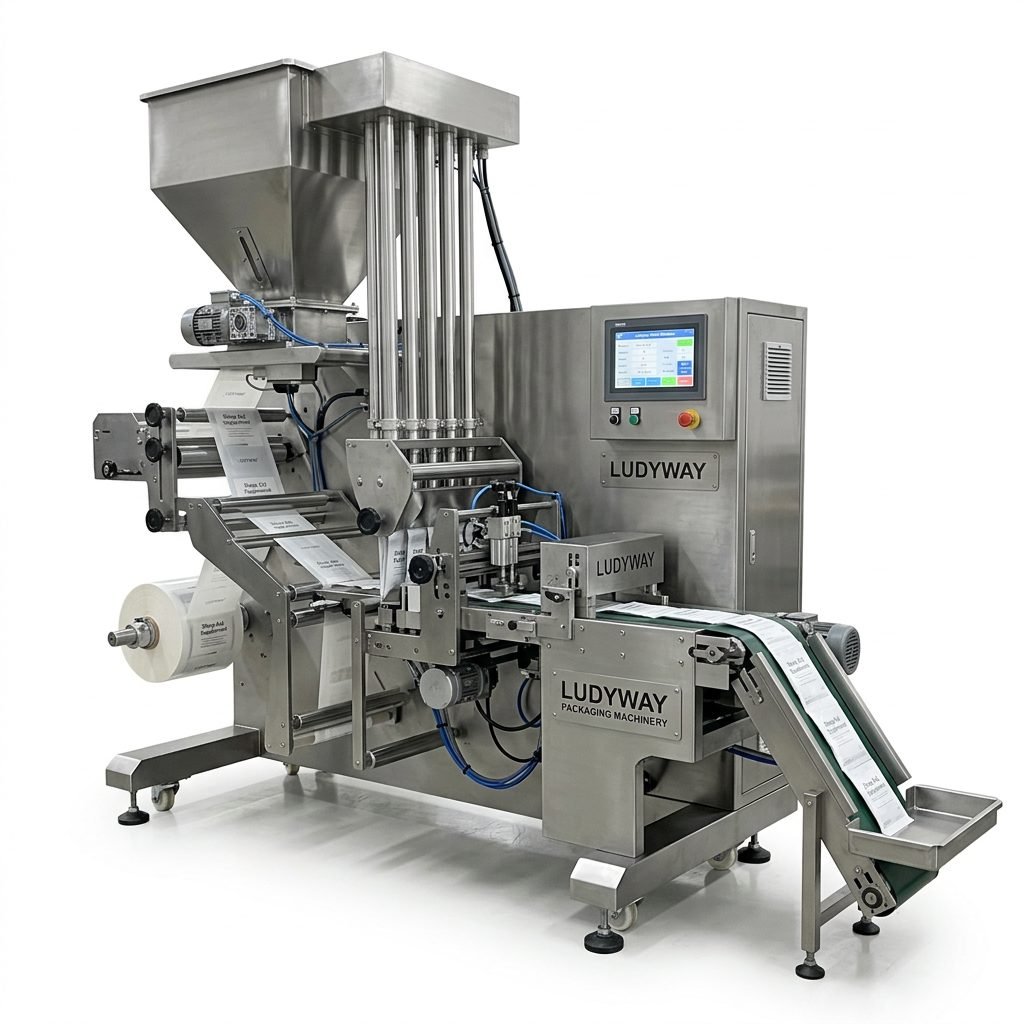
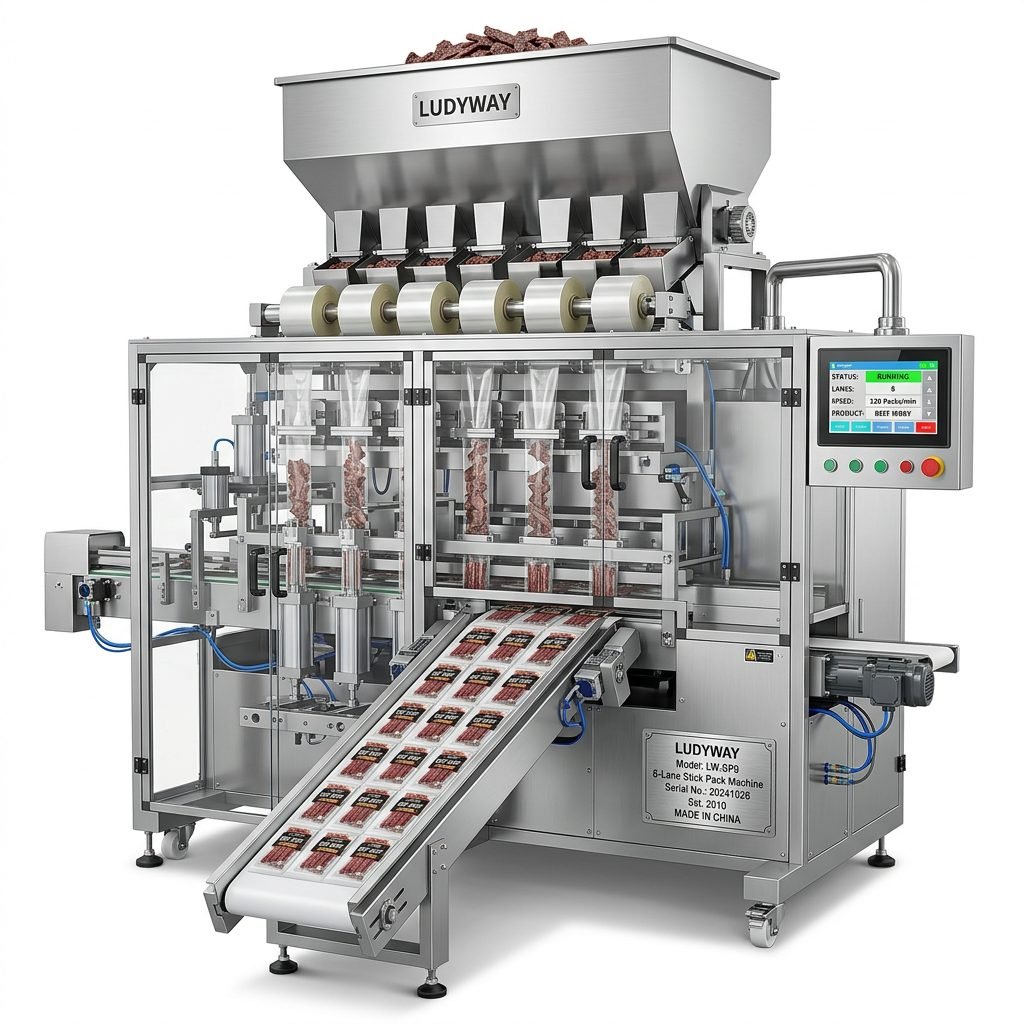
At its core, a matrix packaging machine is a multi-lane, high-speed form-fill-seal (FFS) system. Unlike single-lane machines, it features a “matrix” or grid of several packaging lanes operating in parallel from a single film reel. A single dosing system, often a multi-head weigher or volumetric filler, distributes product across these lanes. This synchronized process allows for the simultaneous creation of multiple finished pouches—such as stick packs or sachets—per machine cycle, making it the go-to solution for high-volume production.
Key Principle: The primary advantage lies in its multiplicative output. If a single-lane machine produces 100 bags per minute, a 10-lane matrix machine can theoretically produce up to 1,000 bags per minute, maximizing efficiency and ROI.
Primary Types of Matrix Packaging Systems
Matrix systems are categorized by the final pouch style they produce and their specific mechanical configuration. The main types include:
1. Matrix Stick Pack Machines
Designed to create long, narrow “stick” packs, ideal for single-serve portions of instant beverages, sugar, supplements, or pharmaceuticals. They are renowned for their compact product presentation and high-speed capabilities.
- Typical Lanes: 4 to 16 lanes.
- Common Applications: Instant coffee, drink mixes, electrolyte powders, pharmaceutical powders.
2. Matrix Sachet/Pouch Machines
These produce smaller, rectangular or square pouches. They offer greater flexibility in pouch size compared to stick packs and are used for a wider variety of products, including sauces, condiments, shampoo, and seasonings.
- Typical Lanes: 3 to 10 lanes.
- Common Applications: Ketchup, soy sauce, shampoo samples, spices, tea.
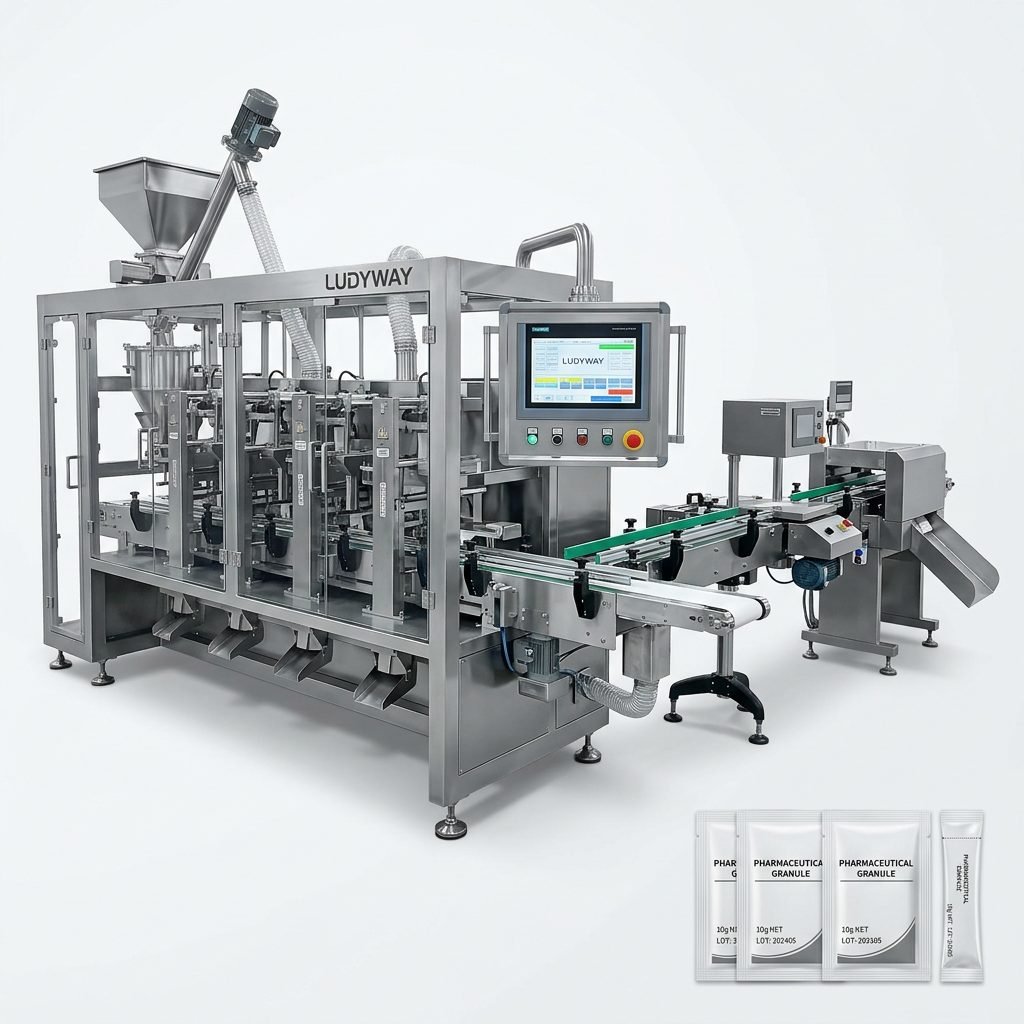
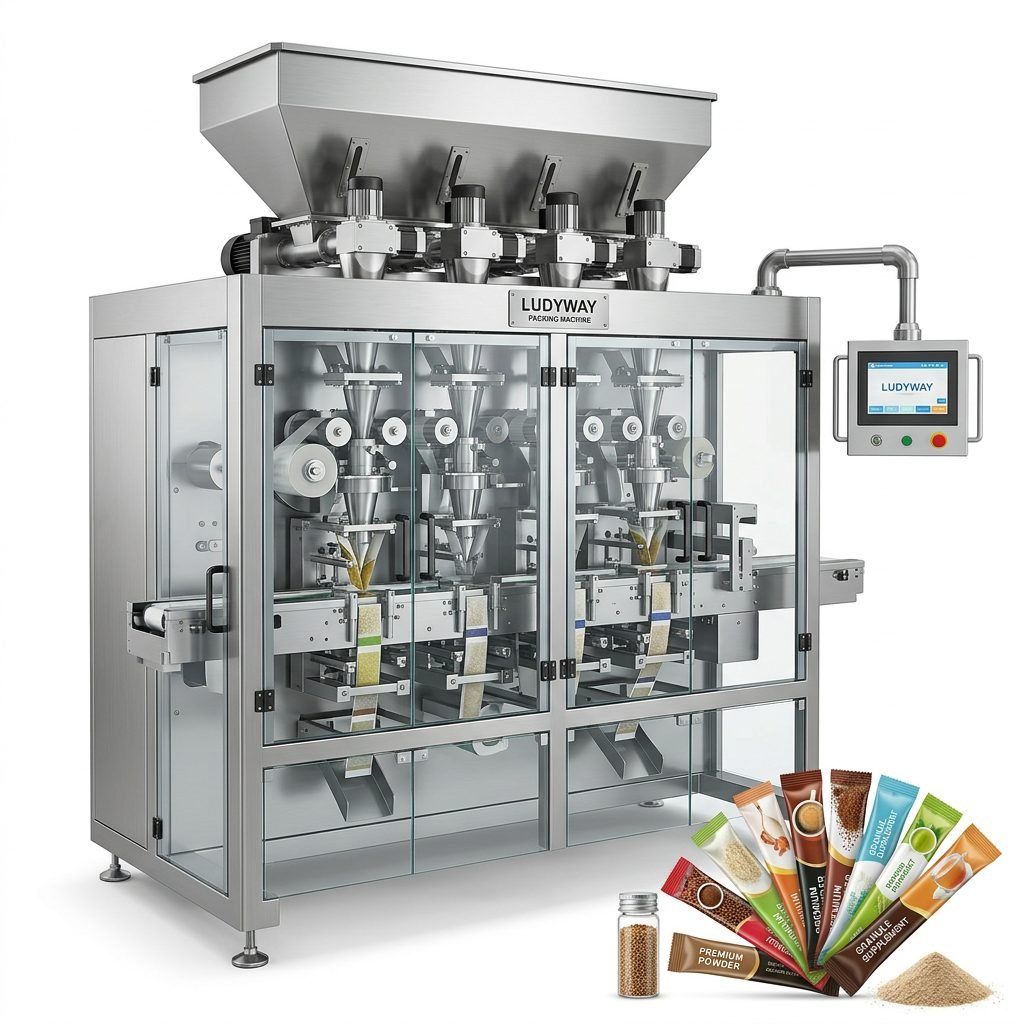
3. Granule & Powder Matrix Machines
Engineered with precision dosing systems like multi-head weighers or auger fillers to handle free-flowing and non-free-flowing dry products. They are essential for food, pharmaceutical, and chemical industries where weight accuracy is paramount.
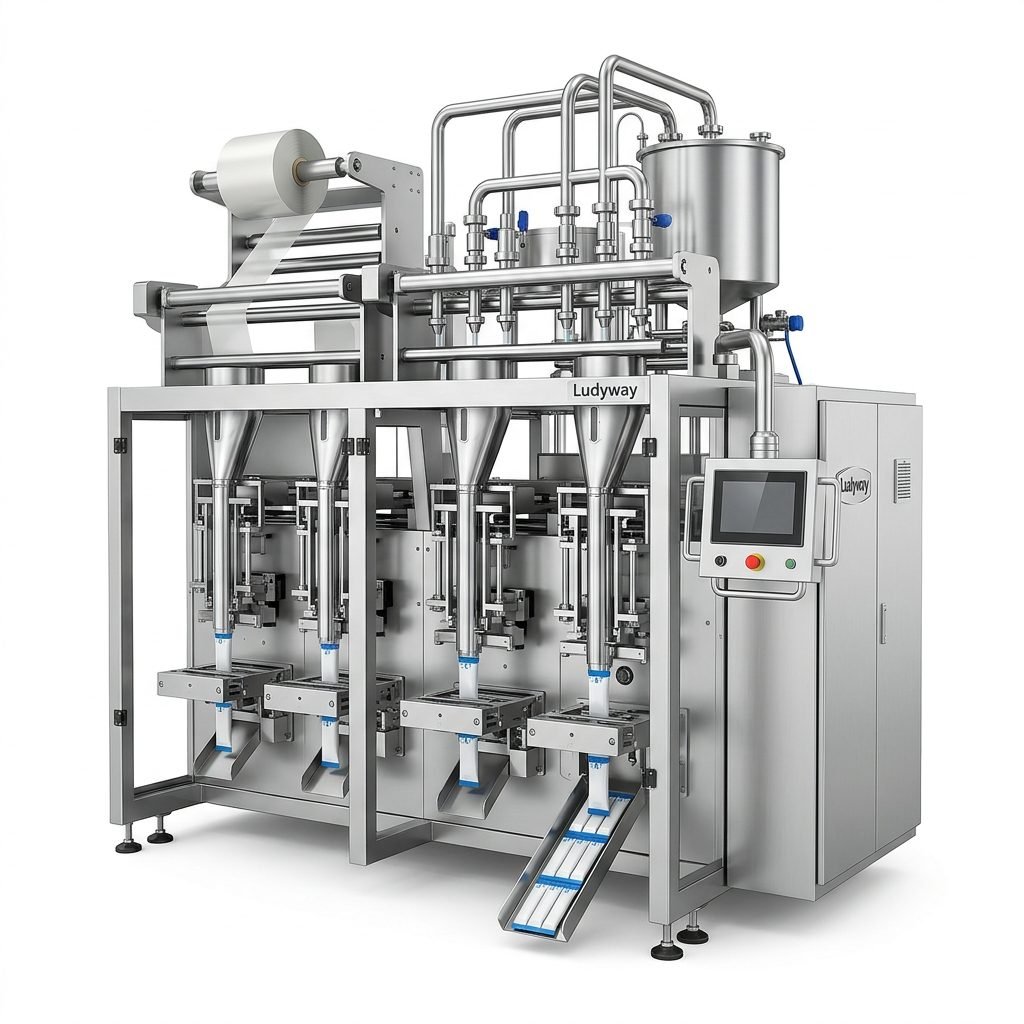
4. Liquid & Paste Matrix Machines
Equipped with piston pump or gear pump fillers to handle viscous products without dripping. They often include special sealing systems to ensure leak-proof pouches.
Core Applications Across Industries
The versatility of matrix packaging makes it indispensable in several key sectors. For instance, brands like Ludyway Machinery provide tailored matrix solutions that meet the stringent requirements of these diverse industries.
Food & Beverage Industry
This is the largest application area. Matrix machines package single-serve portions of coffee, sugar, creamer, soup mixes, spices, and drink enhancers. The speed and efficiency perfectly match the high-volume, low-margin nature of the food industry.
Trend Alert: The global demand for on-the-go, portion-controlled food items continues to drive innovation in this sector.
Pharmaceutical & Nutraceutical Industry
Accuracy and hygiene are critical. Matrix systems package precise doses of powder supplements, electrolytes, effervescent tablets, and pharmaceutical granules. The machines can be integrated into cleanroom environments and often feature easy-clean designs.
Personal Care & Chemical Industry
From shampoo and conditioner sachets in hotels to single-use detergent pods, matrix packaging delivers consistent, leak-proof pouches for liquids and gels. It’s also used for agrochemicals and industrial chemicals in safe, pre-measured doses.
Tangible Benefits of Implementing a Matrix System
Investing in a matrix packaging line translates into measurable operational advantages.
Unmatched Production Speed & High Output: This is the most significant benefit. By multiplying the output of a single lane, production capacity can increase by 300% to 1000% without a proportional increase in floor space or operator labor.
Superior Cost Efficiency & Material Savings: Multiple pouches are created from a single width of packaging film, minimizing film waste at the edges (trim waste) compared to running several single-lane machines. Higher output also reduces the cost per unit.
Optimized Floor Space Utilization: One matrix machine replaces several single-lane machines, freeing up valuable factory space for other operations or storage.
Consistent Quality & Precision: Advanced servo-driven systems ensure precise film tracking, accurate dosing, and consistent seal integrity across all lanes, leading to fewer rejects and higher product quality.
For businesses looking to scale, partnering with an experienced provider like Ludyway Packaging Machinery ensures access to these benefits through robust and reliable equipment.
How to Choose the Right Matrix Packaging System
Selecting the optimal system requires a careful analysis of your product, production goals, and operational environment. Follow this step-by-step guide.
Step 1: Analyze Your Product Characteristics
- Physical Form: Is it a powder, granule, liquid, or solid? This determines the type of dosing system (auger, weigher, piston pump).
- Flowability & Hygroscopicity: Does it bridge or clump? This affects hopper and auger design.
- Aggressiveness & Hygiene: Is it abrasive, corrosive, or for food/pharma? This dictates material contact parts (stainless steel grades, special coatings).
Step 2: Define Packaging Specifications
Determine the required pouch type (stick pack, sachet), dimensions, and film material (laminate structure). Also, consider the required production speed (pouches per minute) and the desired level of automation (manual loading vs. fully integrated line).
Step 3: Evaluate Machine Features & Supplier Capability
Look for technical details: number of lanes, type of drive (servo vs. mechanical), changeover time, and control system (user-friendly HMI). Crucially, assess the supplier’s experience and support. Do they offer installation, training, and reliable after-sales service? Can they provide a complete turnkey solution?
Step 4: Consider Total Cost of Ownership (TCO)
Look beyond the initial purchase price. Factor in long-term costs for maintenance, spare parts, energy consumption, and potential downtime. A slightly higher initial investment in a robust, reliable machine from a reputable supplier often yields a lower TCO.
Frequently Asked Questions (FAQs)
1. What is the main difference between a matrix machine and a standard single-lane machine?
The core difference is parallelism. A single-lane machine produces one pouch per cycle. A matrix machine uses multiple lanes (e.g., 8 lanes) to produce multiple identical pouches per cycle from a single film web, dramatically increasing output without a proportional increase in footprint or complexity.
2. How difficult is it to changeover packaging sizes on a matrix machine?
Modern servo-driven matrix machines offer relatively quick changeovers. While changing the number of lanes might require mechanical adjustment, changing pouch length is typically done via the HMI. The complexity depends on the machine design; some offer “tool-less” changeover for certain parts. Always discuss your required changeover frequency with the supplier.
3. Can a matrix machine handle different products in each lane?
Typically, no. Standard matrix machines are designed for high-volume production of the same product across all lanes, fed by a common dosing system. For different products, multiple single-lane machines or a different system configuration would be required.
4. What kind of maintenance do these high-speed machines require?
Regular preventive maintenance is key to avoiding costly downtime. This includes daily cleaning, lubrication of moving parts as per the manual, inspection of seals and cutting blades, and calibration of scales or fillers. Choosing a supplier with readily available spare parts and strong technical support is crucial for maintenance.
5. Is a matrix system suitable for low to medium-volume production?
Generally, matrix systems are optimized for high-volume runs to justify their investment. For low to medium volumes, a single-lane or dual-lane machine is often more cost-effective and flexible. The breakeven point depends on your specific output goals and cost analysis.