India’s packaged food sector is experiencing unprecedented growth, driven by urbanization, rising disposable incomes, and a shift in consumer preferences toward convenience. For manufacturers looking to enter or expand in this market, setting up an efficient dry food packaging machine production line is a critical step. This guide walks you through the essential stages—from planning and regulatory compliance to equipment selection and after-sales support—ensuring your investment is both scalable and compliant with Indian standards.

1. Understanding the Indian Dry Food Packaging Market
The demand for packaged dry foods—including spices, pulses, rice, flour, snack foods, and instant mixes—is skyrocketing. India is not only a massive consumer market but also a growing export hub for packaged commodities. To capitalize on this, your production line must offer high-speed accuracy, versatile packaging formats, and compliance with the Food Safety and Standards Authority of India (FSSAI). Key considerations include the type of product (granule, powder, or solid), desired packaging style (pillow pouch, gusseted bag, or stand-up pouch), and target output per minute.
2. Pre-Installation Planning and Site Preparation
Before machinery arrives, your facility must be optimized for a seamless dry food packaging workflow. This involves:
- Floor Space Allocation: Map out zones for raw material feeding, primary packaging, secondary cartoning, and palletizing.
- Power and Utility Requirements: Ensure stable three-phase electricity supply, compressed air connections, and dust extraction systems are in place, especially for powder-prone environments.
- Clean Room Conditions: For sensitive products, maintain controlled humidity and temperature to prevent clogging and ensure seal integrity.
- Material Handling: Integrate automatic feeding systems like Z-type bucket elevators or vacuum conveyors to minimize manual intervention.
3. Regulatory Compliance and Food Safety Standards
Navigating India’s regulatory landscape is non-negotiable. Your dry food packaging machine production line must adhere to the following:
| Regulatory Body / Standard | Key Requirement for Packaging Lines |
|---|---|
| FSSAI | Food-grade contact materials, ink migration limits, and traceability coding. |
| BIS (Bureau of Indian Standards) | Material quality and safety certification for packaging machinery components. |
| Legal Metrology (Packaged Commodities Rules) | Accurate weight filling systems with precision checkweighers and modular RFID tracking. |
| ISO 22000 / FSSC 22000 | Systematic hazard analysis and hygienic equipment design to prevent cross-contamination. |
4. Core Components of a High-Efficiency Production Line
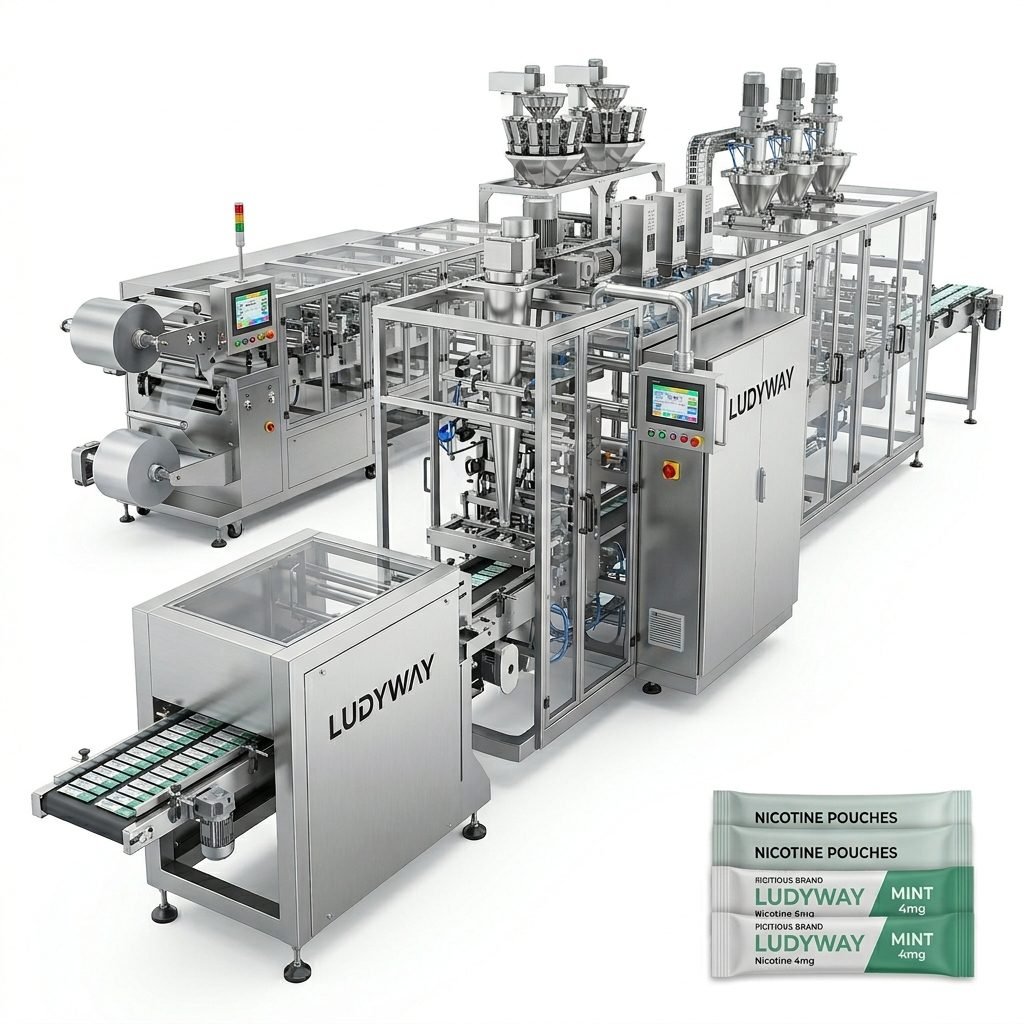
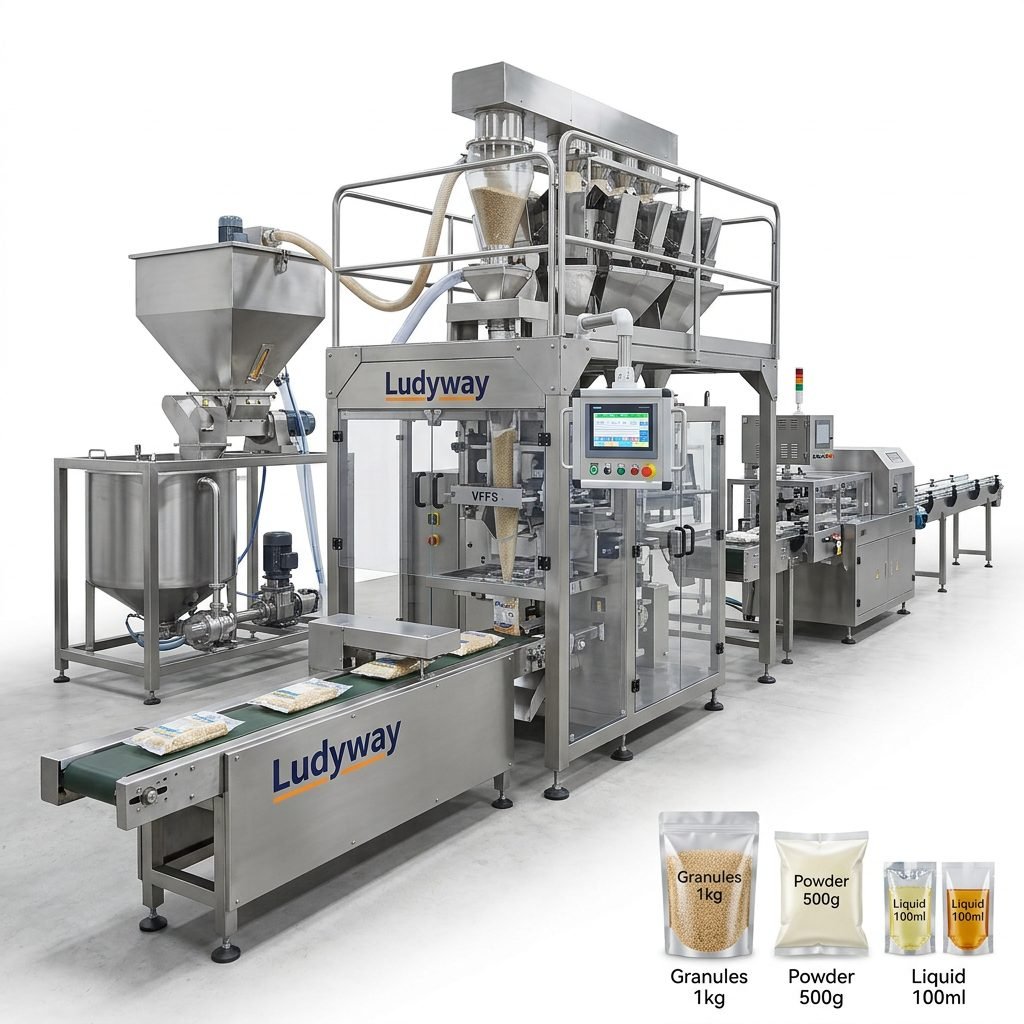
A modern dry food packaging machine production line is not a single machine but an integrated ecosystem. For optimal performance in the Indian context, focus on these modules:
4.1 Multi-Head Weighing and Dosing
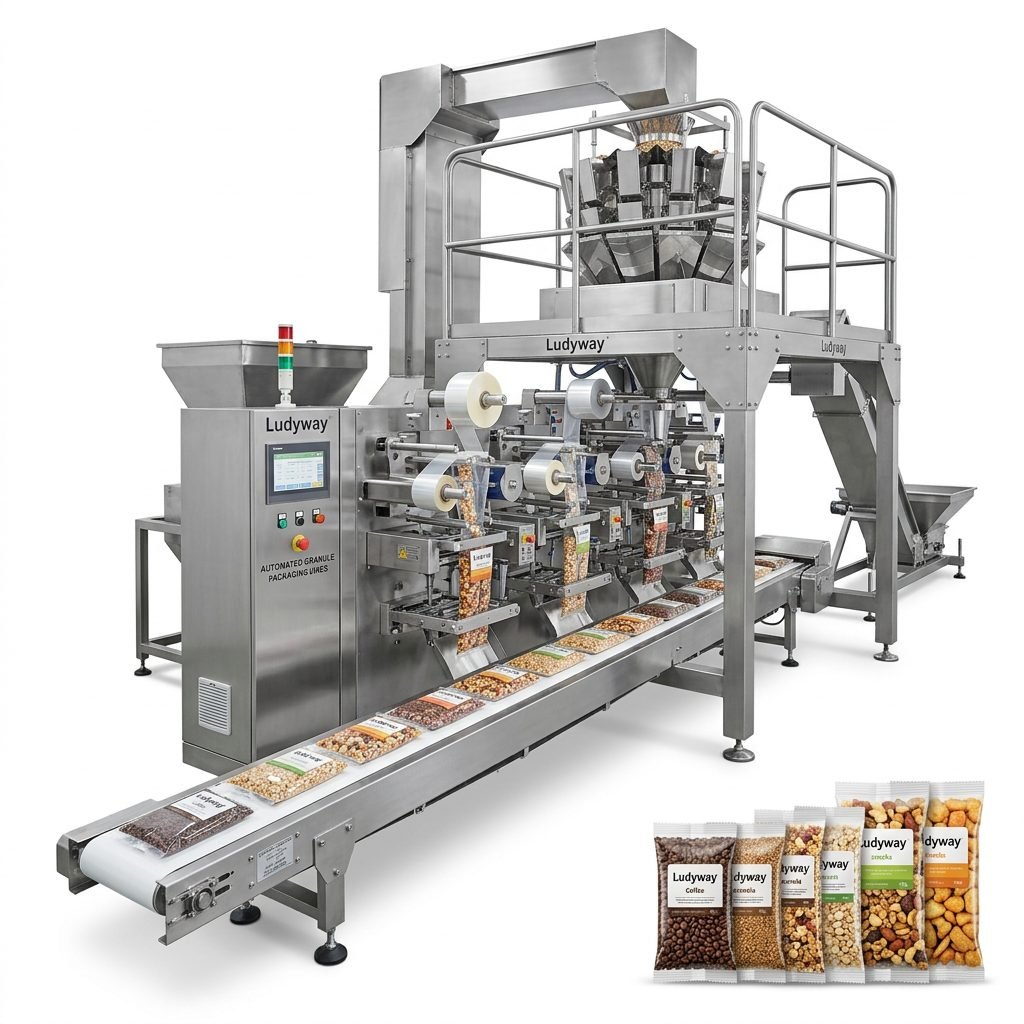
Accuracy is paramount for profitability. Multi-head weighers combined with linear combination scales ensure minimal product giveaway, which is crucial for high-value goods like nuts, spices, and dry fruits. Look for systems with IP65 rating to withstand cleaning washdowns.
4.2 Vertical Form Fill Seal (VFFS) Technology
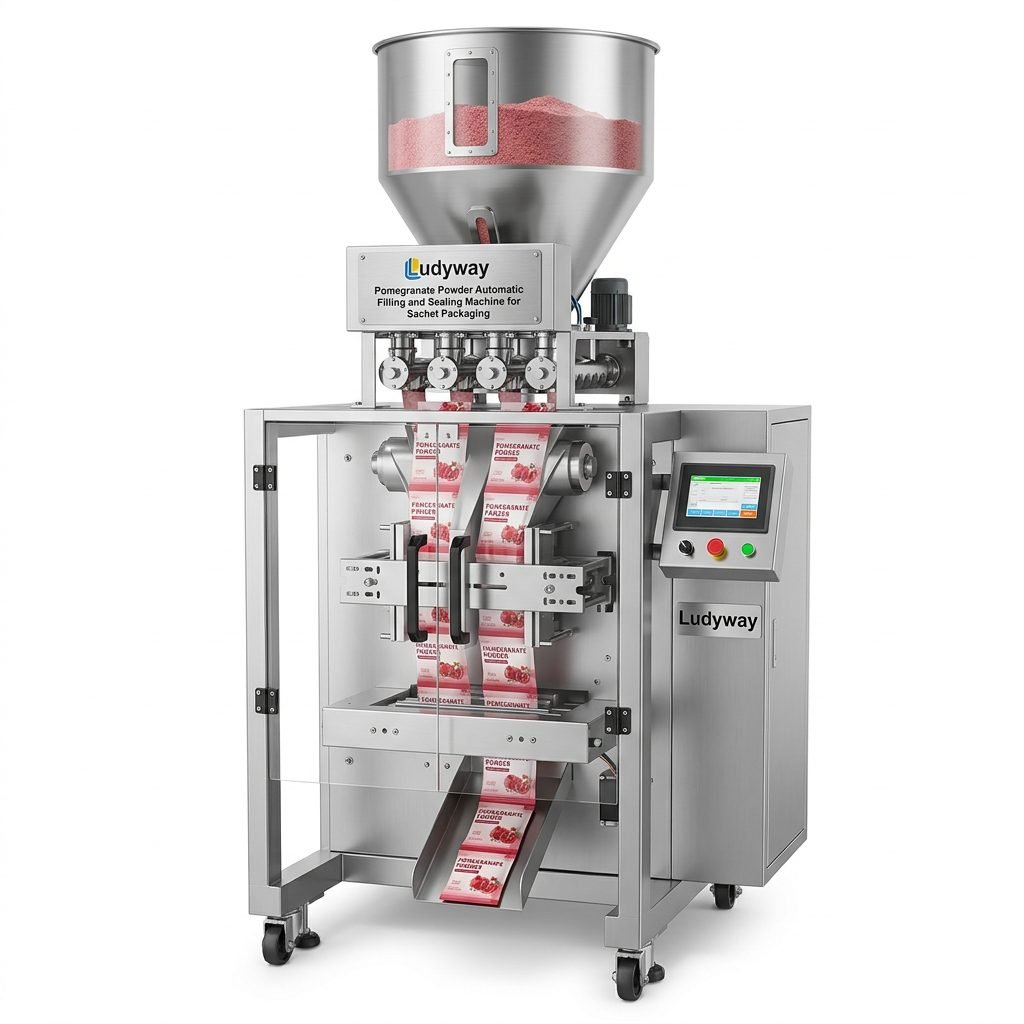
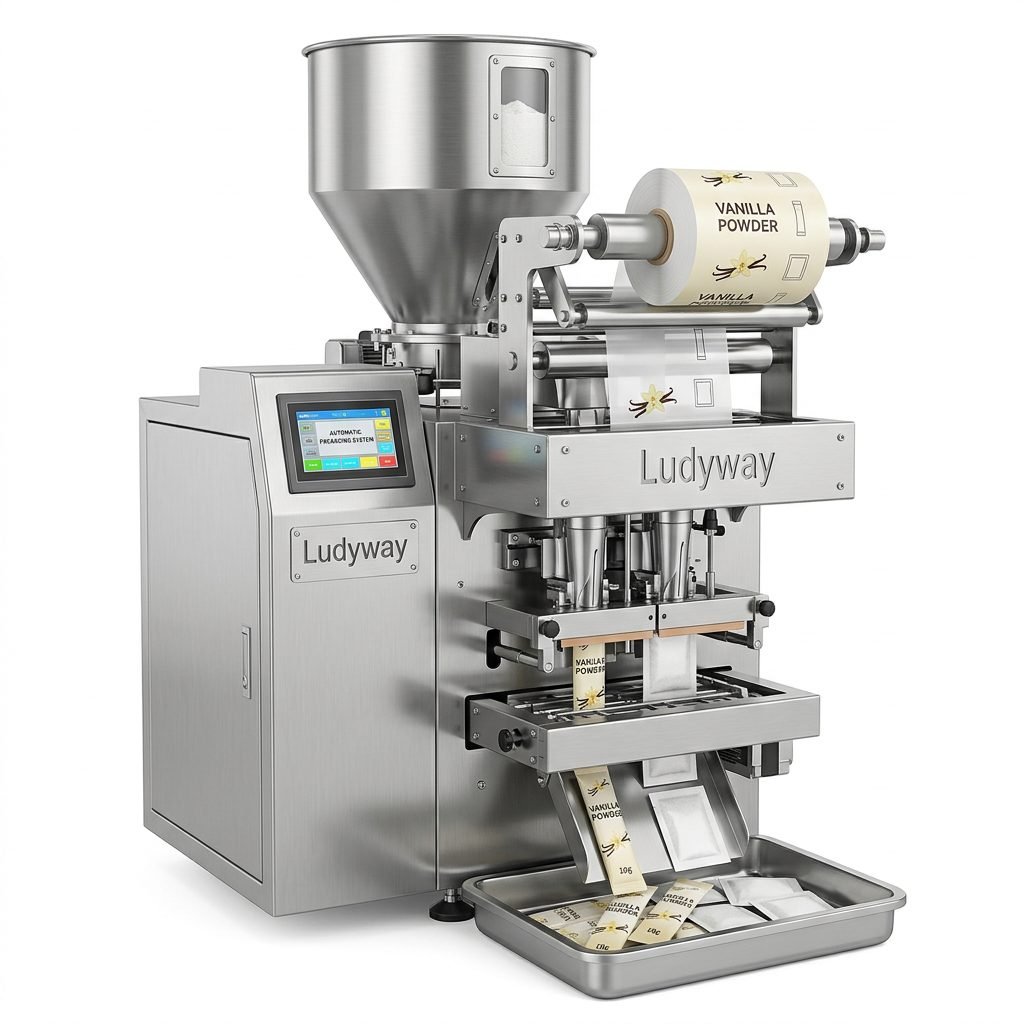
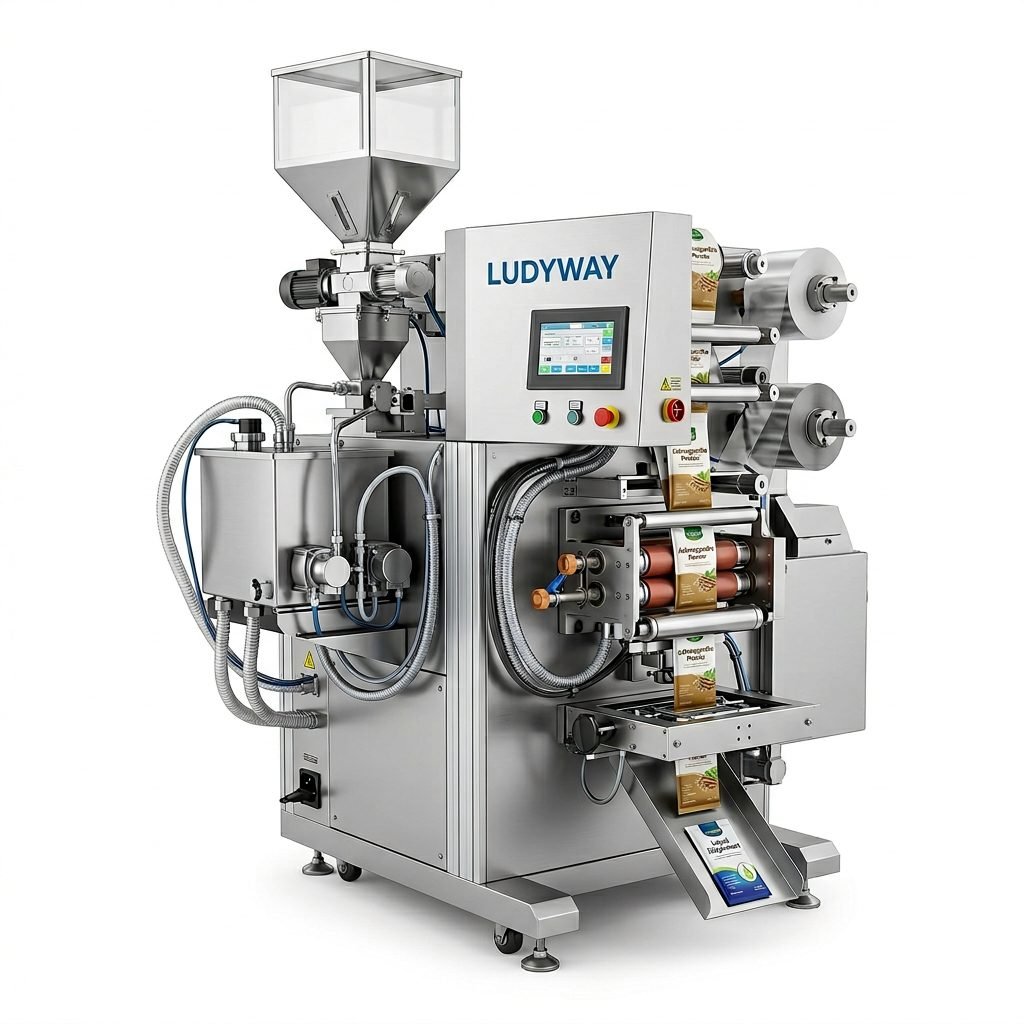
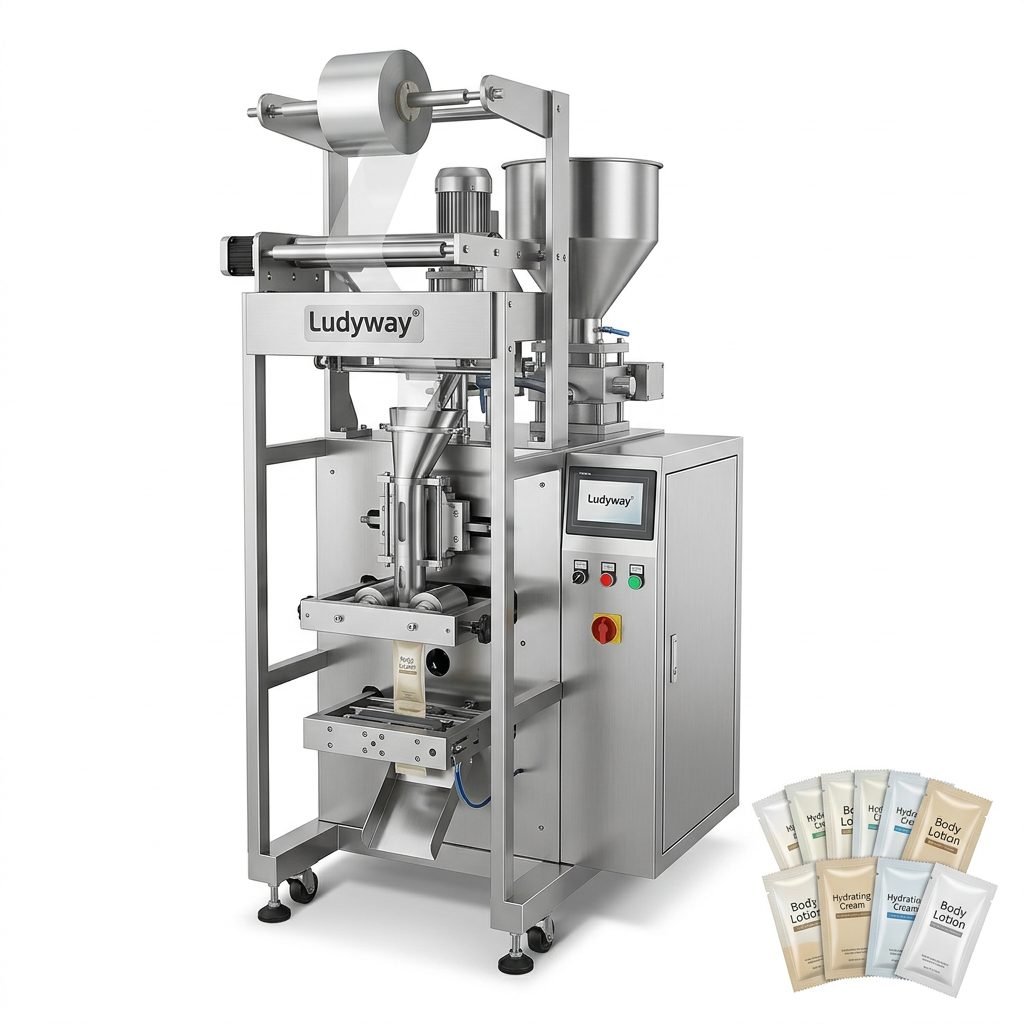
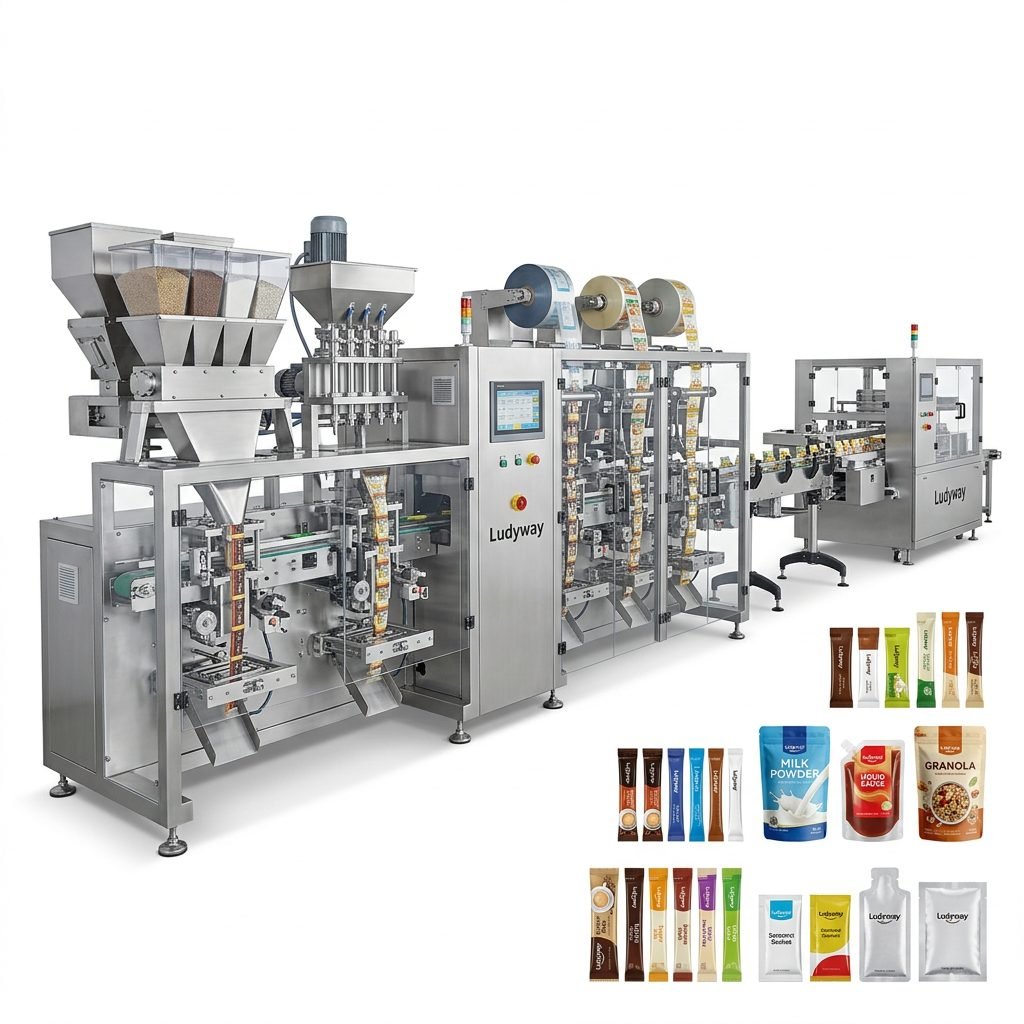
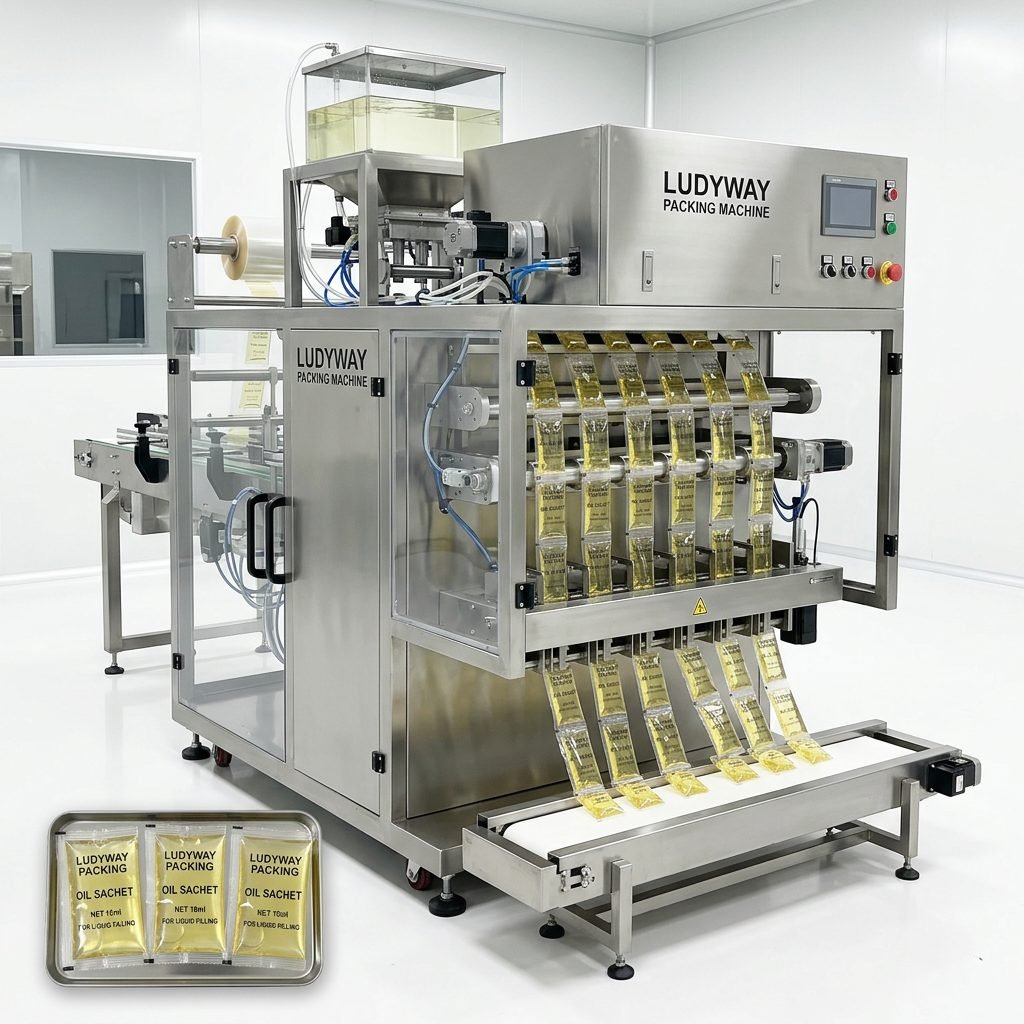
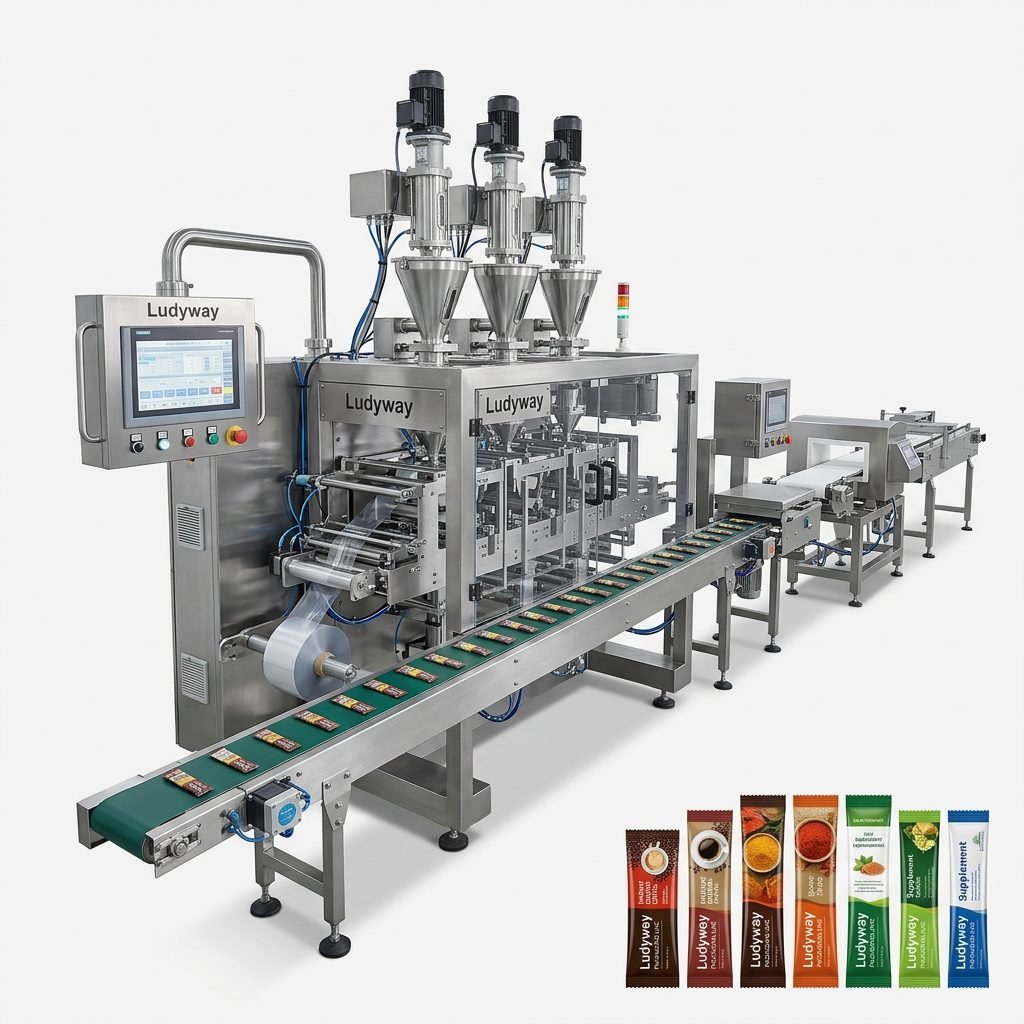
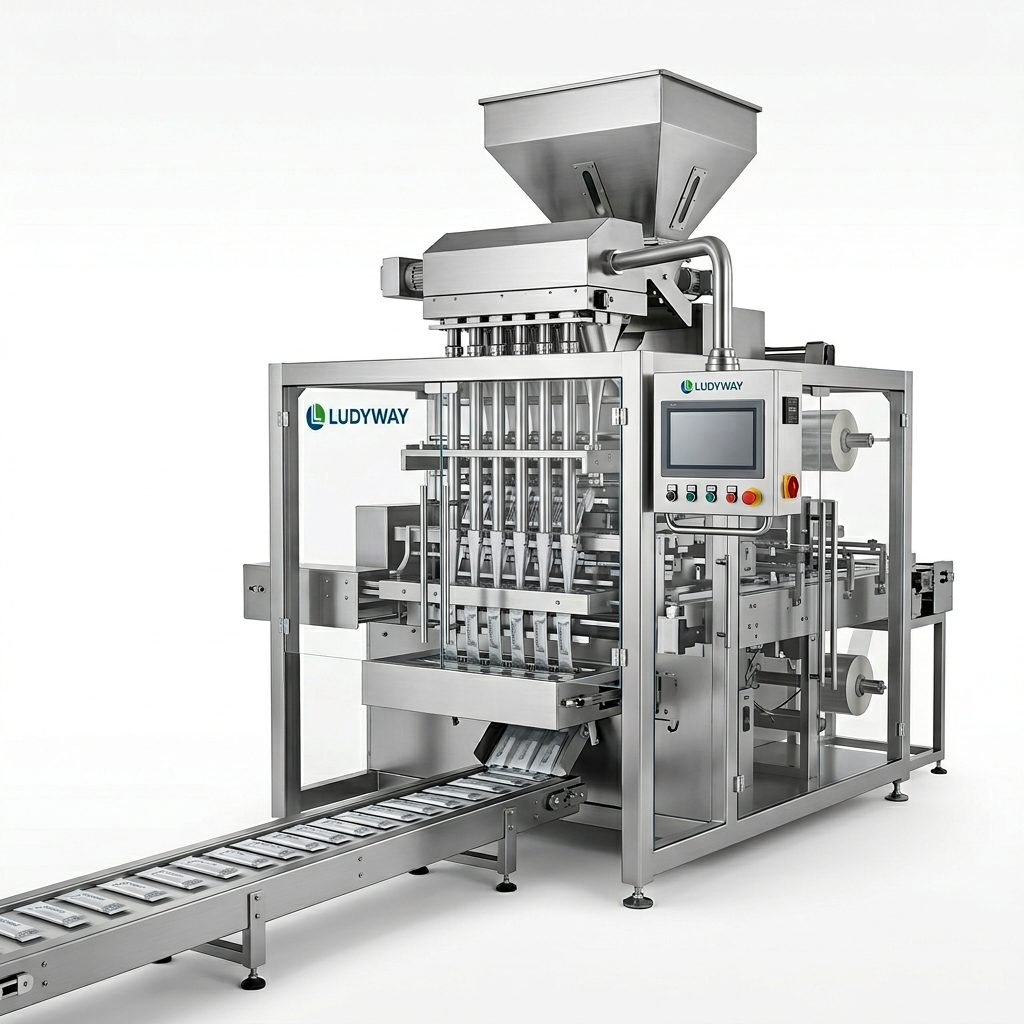
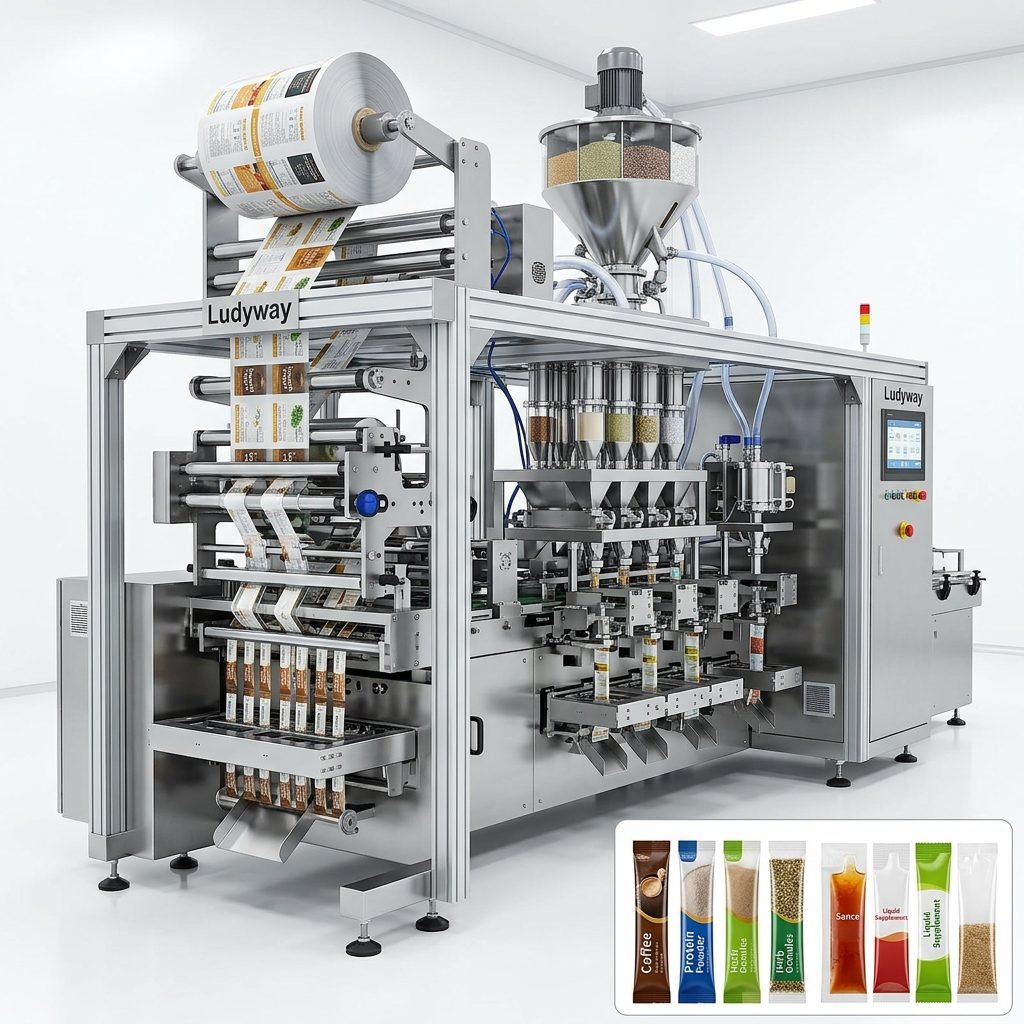
The heart of the line, the VFFS machine, must handle diverse film materials from laminates to biodegradable substrates. Multi-lane stick pack and sachet machines are increasingly popular for portion-controlled dry snacks and instant mixes. Key features include servo-driven controls, easy changeover, and gas flushing for extended shelf life.
4.3 Secondary Packaging Automation
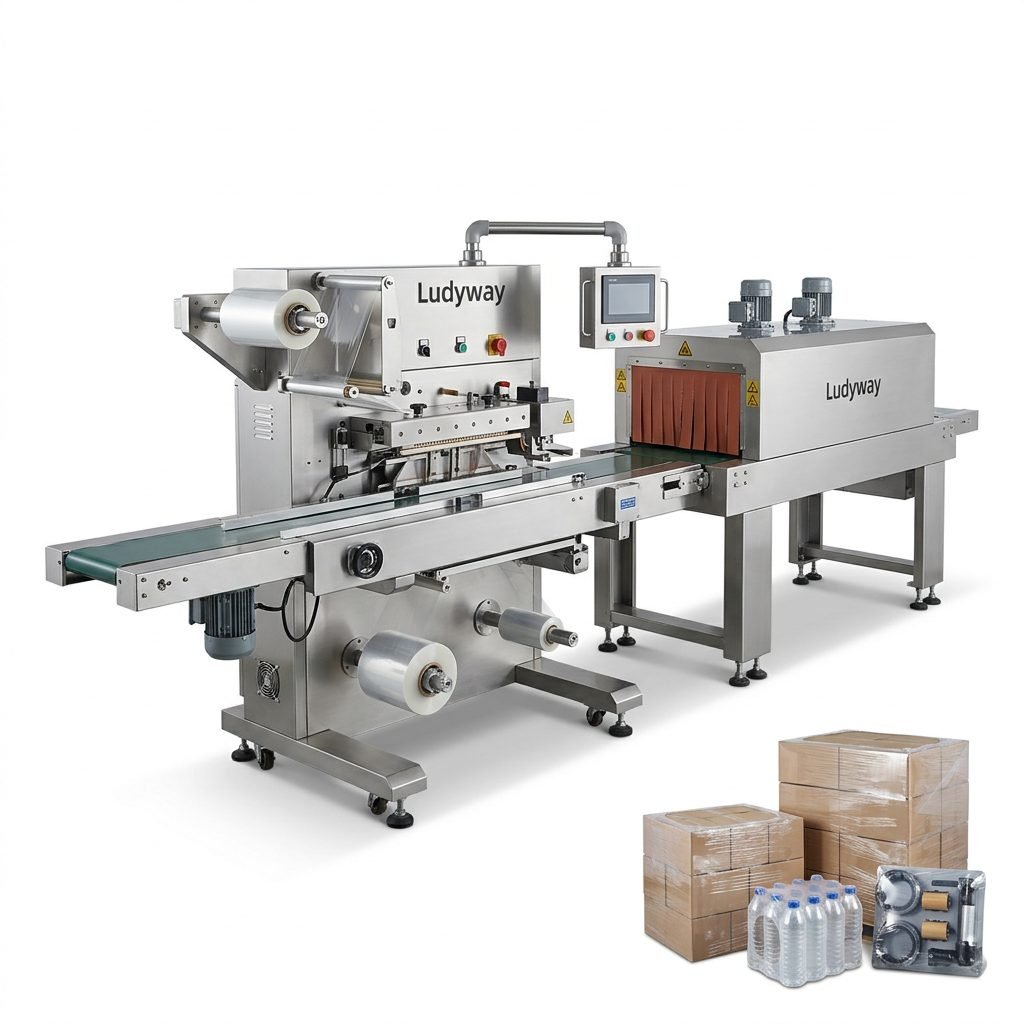
Don’t ignore the end-of-line. Carton erectors, case packers, and robotic palletizing systems dramatically reduce labor costs and improve throughput. In India, where labor arbitrage is narrowing, automation provides a significant competitive advantage.
5. Selecting a Reliable Equipment Partner
Choosing a vendor with proven global expertise and a strong local support network in India is vital. A partner like Ludyway offers turnkey solutions specifically engineered for dry granule and powder applications. With 20,000㎡ modern manufacturing facilities and over 30 years of industry experience, we provide customized packaging lines that meet international hygiene and performance standards, ensuring your Indian venture achieves its productivity targets with reliable, high-speed technology.
6. Installation, Commissioning, and Workforce Training
Successful setup goes beyond physical installation. A structured commissioning process includes dry runs, seal integrity checks, and weight calibration. Equally important is upskilling the local workforce. Comprehensive training programs covering machine operation, daily cleaning protocols, and basic troubleshooting minimize downtime. Prioritize suppliers who offer on-site support and remote diagnostic capabilities to address the unique challenges of operating in different Indian climatic zones.
7. Common Pitfalls and How to Avoid Them
- Underestimating Humidity: Dry products like flour and milk powder are hygroscopic. Invest in dehumidified packaging rooms to prevent bridging in hoppers and seal failures.
- Ignoring Film Compatibility: Test all packaging film rolls with the machinery to account for variations in thickness and heat-seal layers, especially when sourcing locally in India.
- Neglecting Dust Management: Fine powder can damage sensitive electronics. Dedicated dust extraction is not an option—it’s a necessity.
- Skipping Preventive Maintenance: Sign a comprehensive Annual Maintenance Contract (AMC) that includes genuine spare parts like seal jaws, belts, and air filters.
Further Reading and Industry Resources
Exploring authoritative information on packaging standards and market trends can further guide your setup. Refer to resources provided by the PMMI State of the Industry Reports for comprehensive market research, and the Flexible Packaging Association Knowledge Hub for latest flexible packaging data and sustainability resources.
By methodically addressing these elements, you establish a robust dry food packaging machine production line capable of capturing India’s dynamic market opportunities. From precise weighing to automated carton packing, every integrated step contributes to superior product quality and operational efficiency.