The Indian salt market is one of the largest in the world, with annual production exceeding 30 million tonnes across various segments including edible salt, industrial salt, and export-grade products. As consumer demand for hygienically packaged, conveniently portioned salt continues to rise—driven by urbanization, retail modernization, and changing dietary habits—manufacturers are increasingly looking to automate their packaging operations. Setting up a salt packaging machine production line in India requires careful planning around equipment selection, regulatory compliance, and operational efficiency. This guide walks through every essential step.
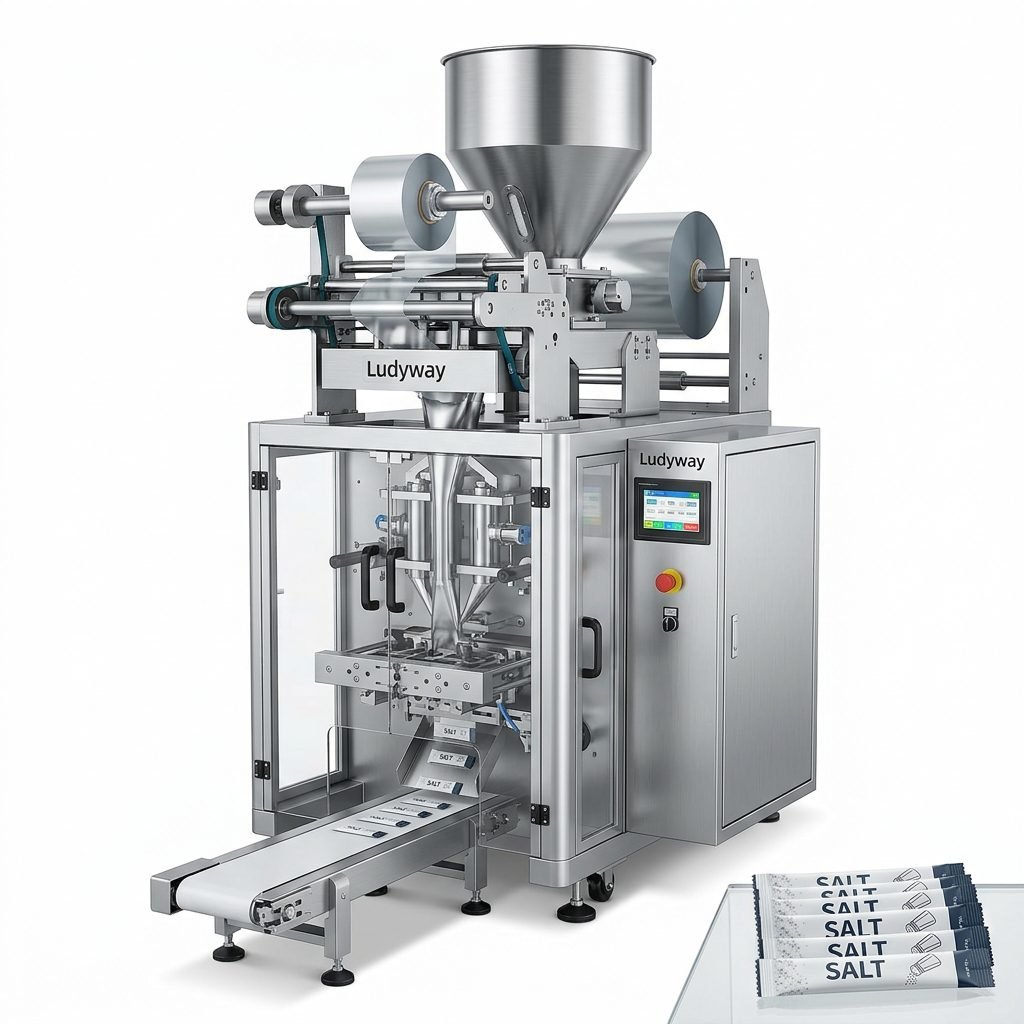
Understanding the Indian Salt Packaging Landscape
India’s salt industry spans Gujarat, Rajasthan, Tamil Nadu, and Maharashtra, accounting for over 70% of national production. The packaging segment has witnessed a significant shift from manual filling to high-speed automated systems in the past decade. Key drivers include:
- Rising demand for branded and iodized salt in retail pouches
- Growth of quick-service restaurants requiring portion-controlled sachets
- Stringent FSSAI packaging regulations mandating hygienic processing
- Export market requirements for sealed, contamination-free packaging
- Labor shortages and the push toward Industry 4.0 automation
Types of Salt Packaging Formats in Demand
Before investing in machinery, it is essential to identify the target packaging format. Different market segments require distinct packaging solutions. The table below summarizes the most common formats used across India:
| Packaging Format | Typical Weight Range | Target Market | Recommended Machine Type |
|---|---|---|---|
| Stick Pack / Sachet | 1g – 25g | Food service, hospitality, travel | Multi-lane stick pack machine |
| Retail Pouch | 200g – 1kg | Supermarkets, kirana stores | Vertical form-fill-seal (VFFS) machine |
| Bulk Bag | 10kg – 50kg | Industrial, B2B, wholesale | Automatic bagging & weighing system |
| Pillow Pouch | 50g – 500g | Mid-range retail brands | High-speed rotary packaging machine |
Core Equipment for a Salt Packaging Production Line
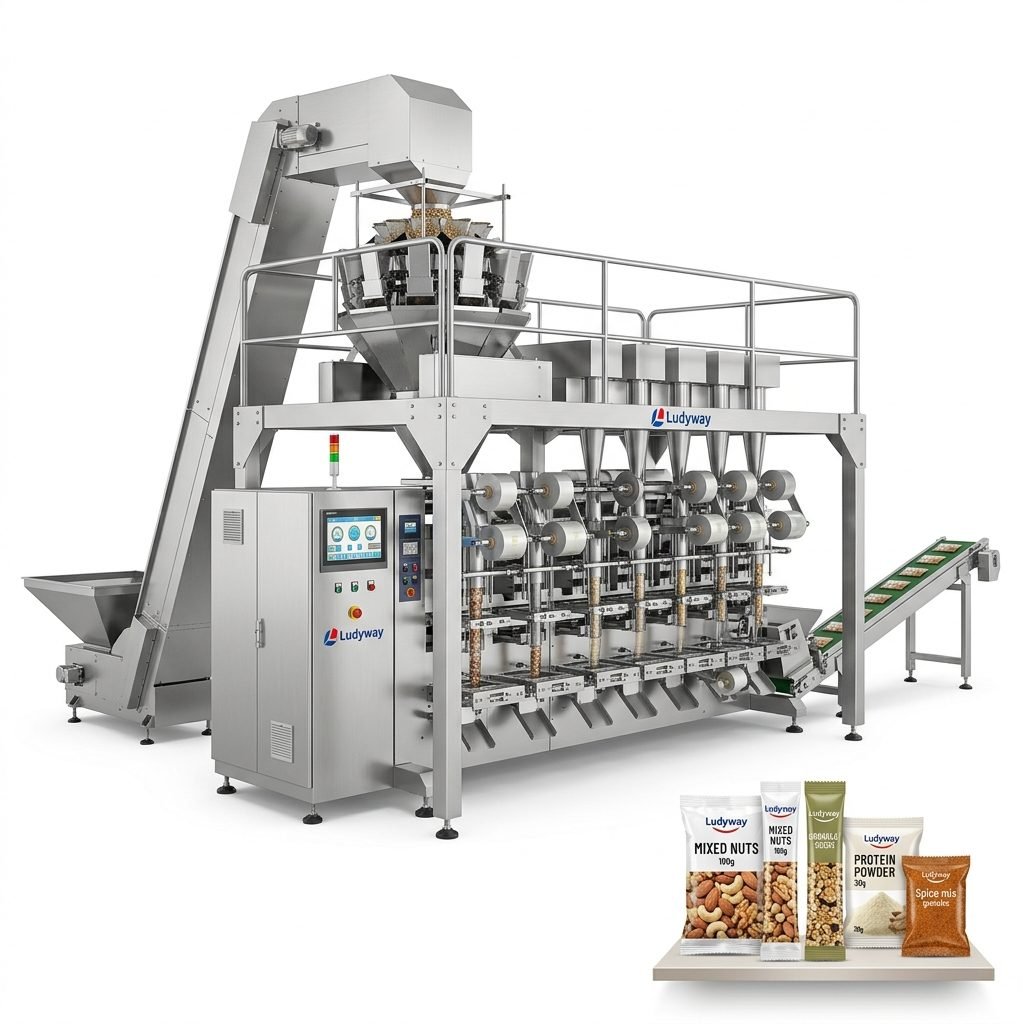
A fully integrated packaging production line for salt typically includes several interconnected machines. Each component plays a vital role in ensuring speed, accuracy, and product integrity. Below are the essential units:
Feeding and Conveying Systems
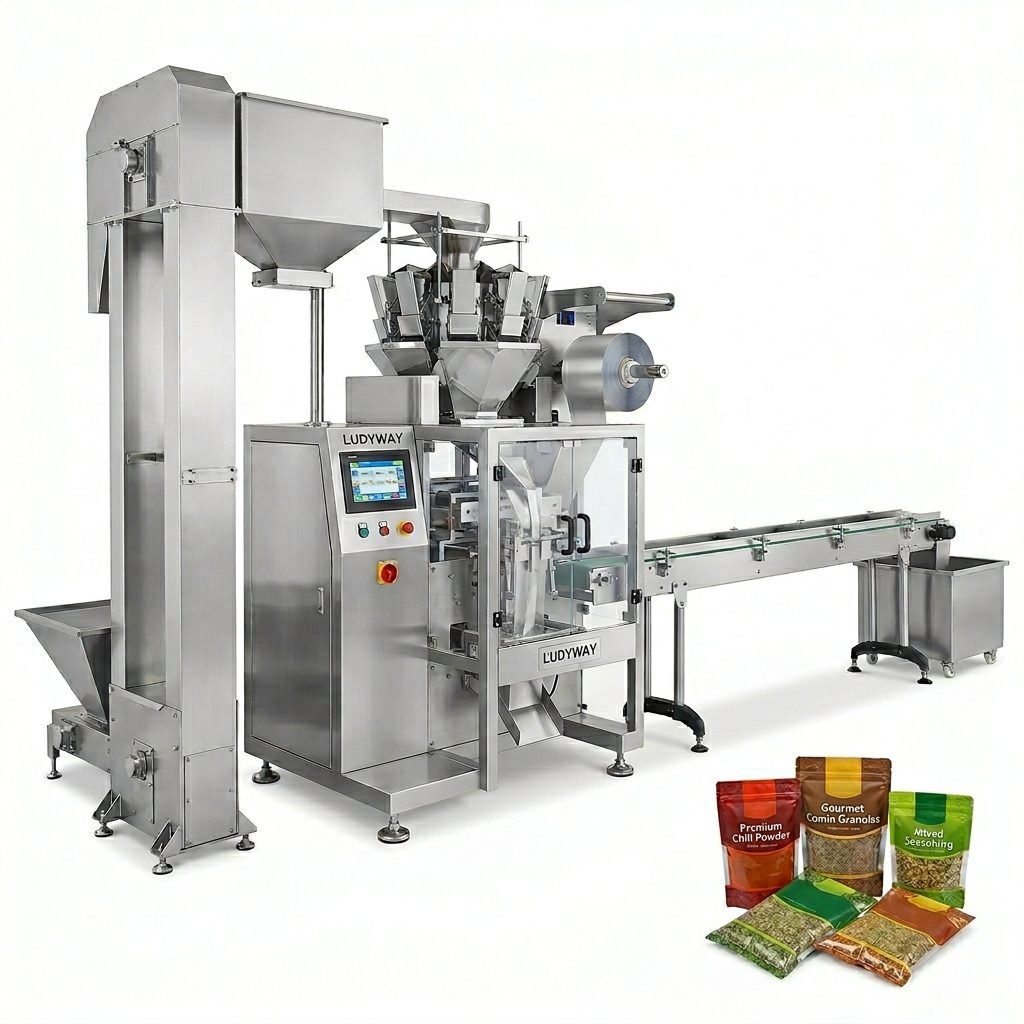
The first stage involves transporting raw salt from storage to the packaging station. Equipment such as Z-type bucket elevators, screw conveyors, and vibratory feeders are commonly employed. For free-flowing refined salt, gravity-fed hoppers with controlled discharge gates offer a cost-effective solution. Proper feeding ensures consistent product flow and minimizes downtime caused by blockages or bridging.
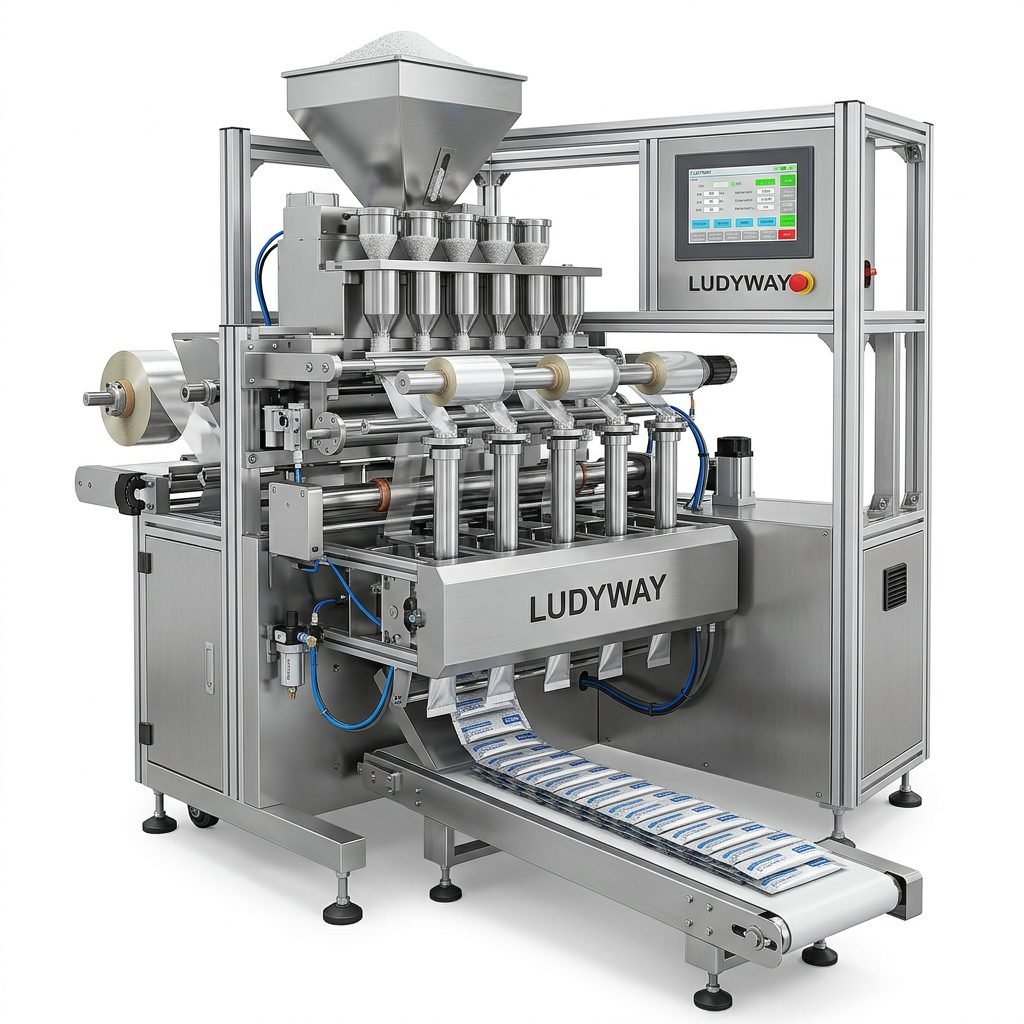
Weighing and Dosing Units
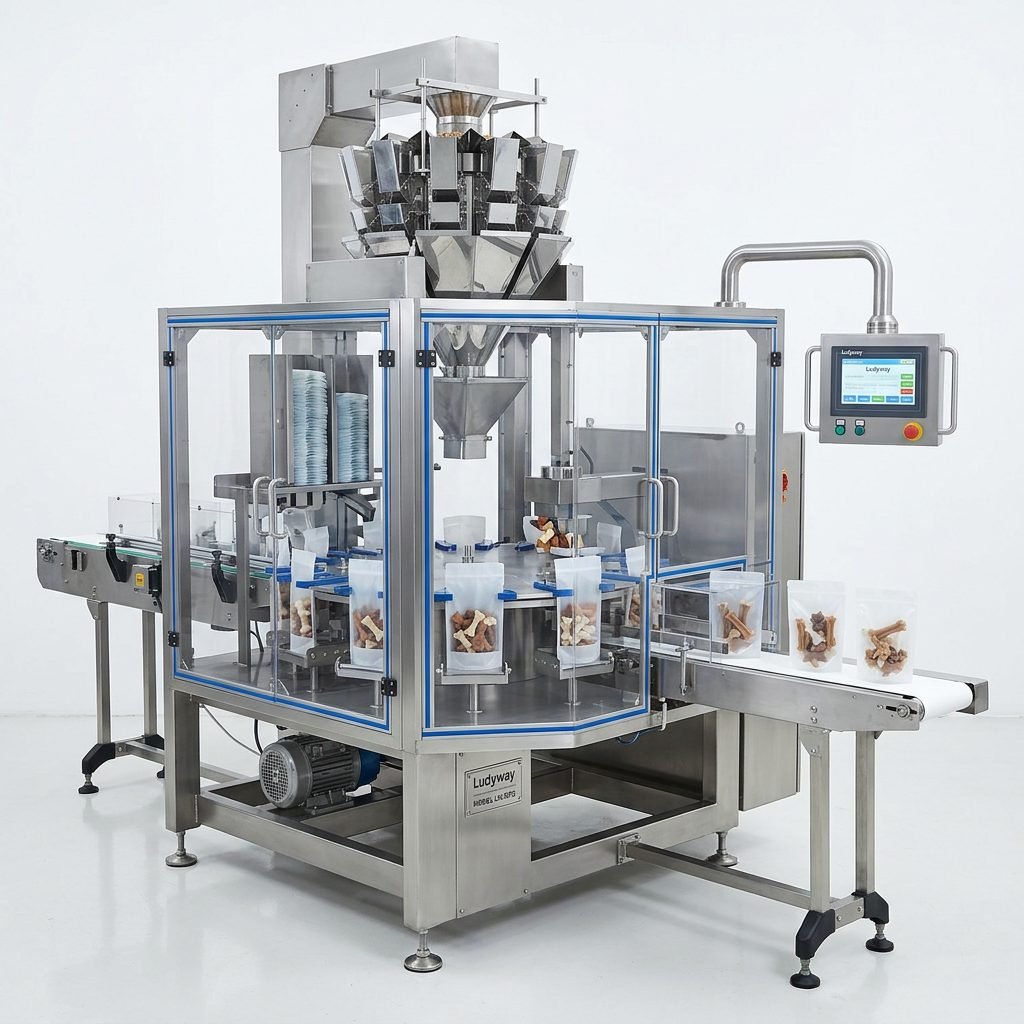
Precision weighing is critical for both regulatory compliance and cost control. Multi-head weighers and auger fillers are the two dominant technologies used in salt packaging. Multi-head weighers deliver superior speed and accuracy for granular free-flowing salt, while auger fillers are preferred for fine powder salt varieties. Modern systems achieve accuracy within ±0.5% of target weight.
Primary Packaging Machine
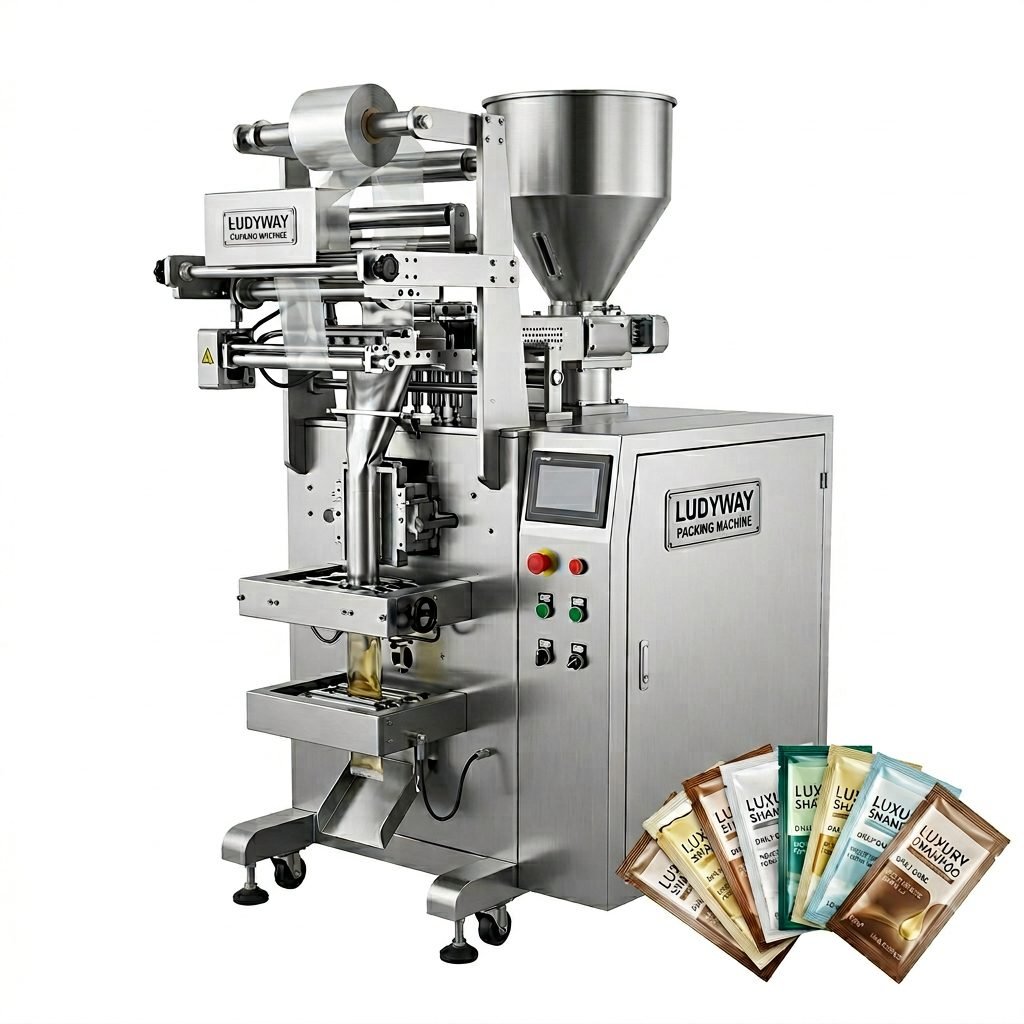
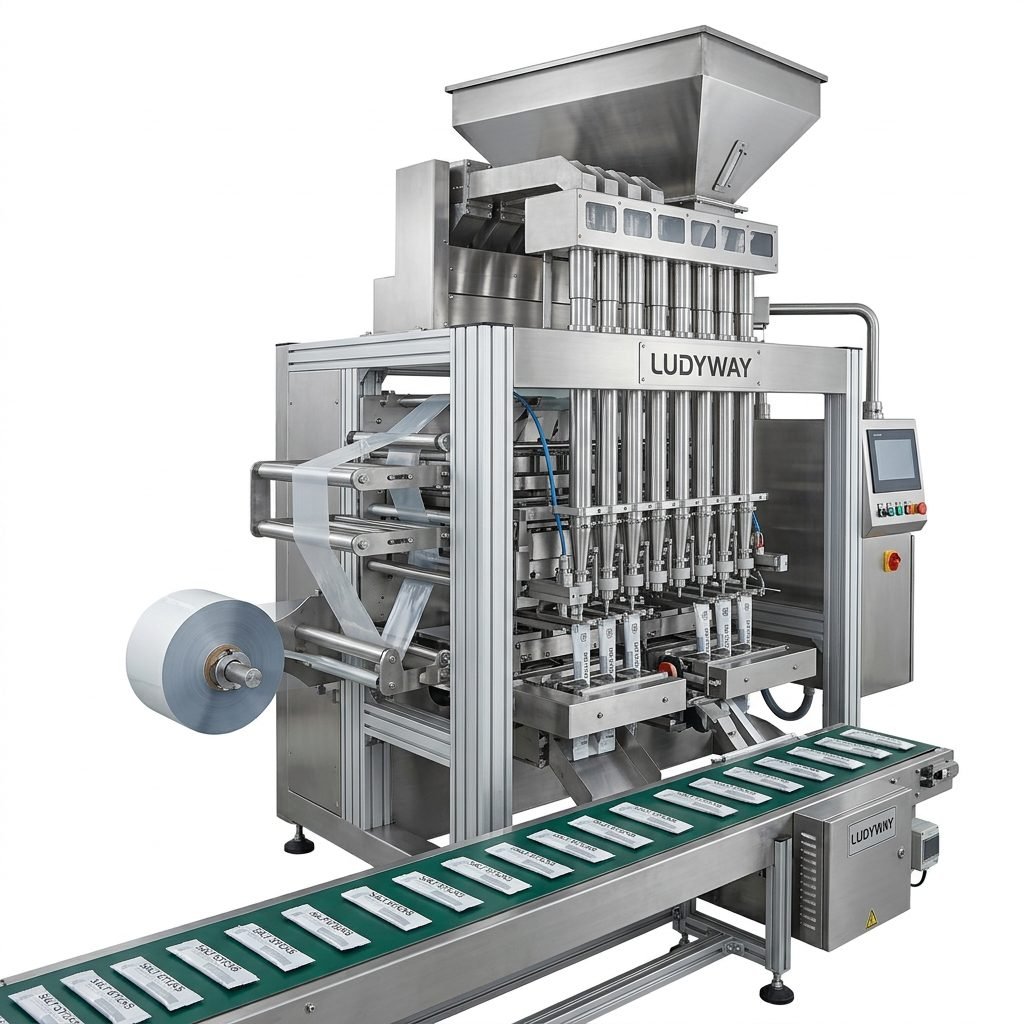
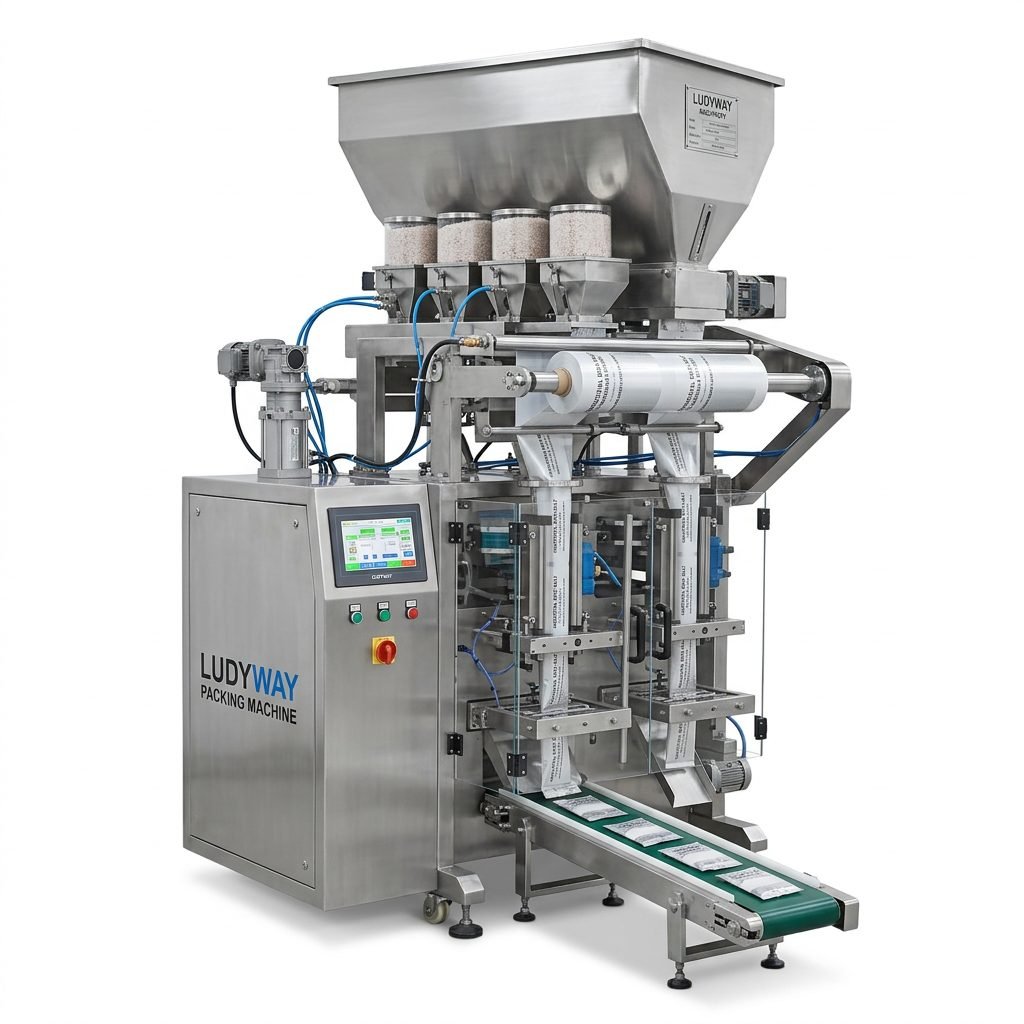
The core of the line is the primary packaging unit. For the Indian market, multi-lane packaging machines have gained significant traction due to their ability to produce multiple sachets or stick packs simultaneously. A 6-lane or 8-lane machine can produce between 200 to 400 packs per minute, dramatically outperforming single-lane alternatives. These machines handle film unwinding, forming, filling, sealing, and cutting in one continuous operation.
Secondary Packaging and End-of-Line Equipment
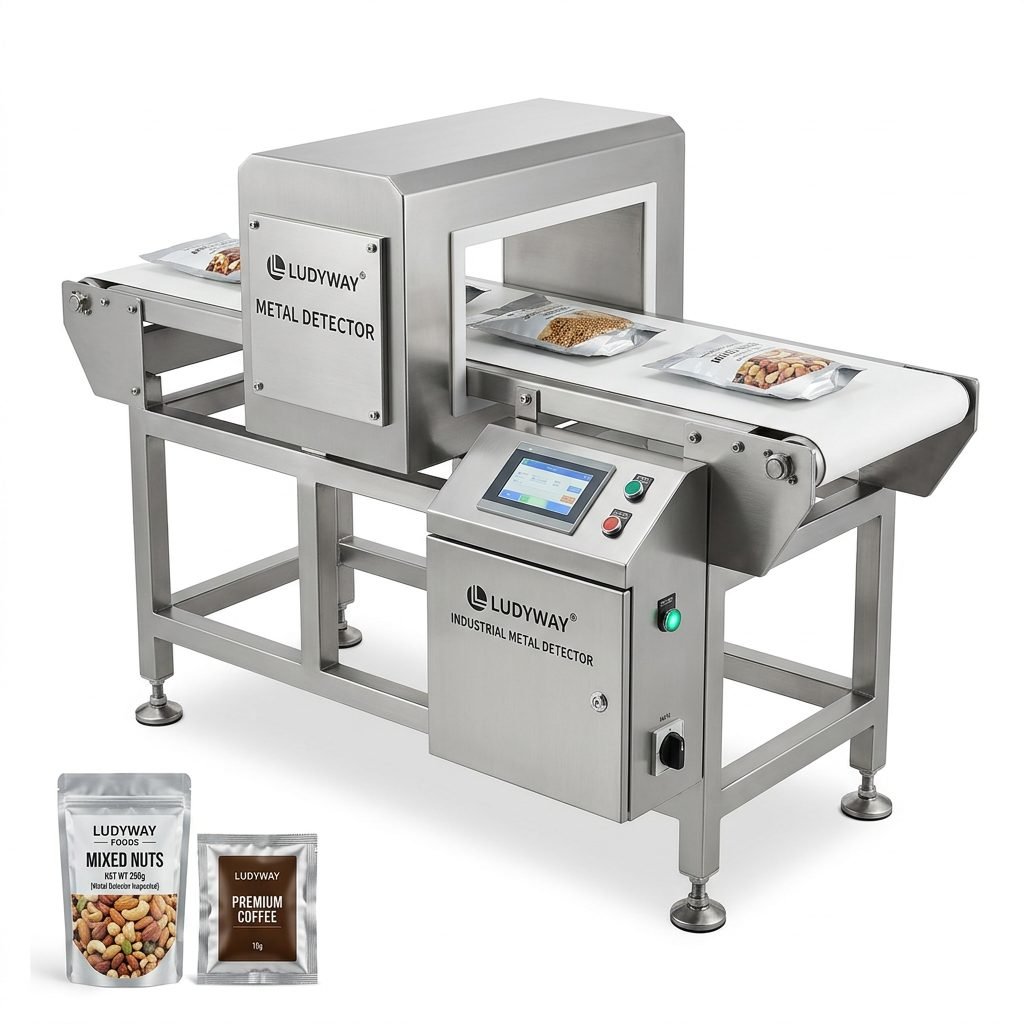
After primary packaging, products typically move to cartoning machines, case packers, and palletizers. Automated cartoning systems collate individual sachets or pouches into retail-ready cartons, while robotic palletizers stack finished cases onto pallets for warehouse storage or dispatch. Checkweighers and metal detectors integrated at this stage ensure quality compliance before shipment.
Step-by-Step Process to Set Up the Production Line
Establishing a salt packaging line in India involves a structured approach. Following these steps can significantly reduce project delays and cost overruns:
- Market Research & Feasibility Study: Assess demand, target customer segments, and competitive landscape in your operating region. Evaluate packaging formats preferred by your target distribution channels.
- Site Selection & Factory Layout Design: Choose a location with reliable electricity, water supply, and logistics connectivity. Design the factory layout to optimize material flow, from raw salt receipt to finished goods dispatch.
- Regulatory Compliance Planning: Obtain necessary certifications including FSSAI license, GST registration, factory license, and environmental clearances. For export-oriented units, additional certifications such as ISO 22000 and HACCP may be required.
- Equipment Specification & Supplier Selection: Define technical requirements—speed, format flexibility, film compatibility, and automation level. Evaluate suppliers based on machine quality, after-sales support, and local service availability in India.
- Procurement & Import Logistics: For imported machinery, factor in shipping timelines (typically 4-8 weeks), customs clearance, and inland transportation. Ensure all documentation including Bill of Entry and country-of-origin certificates are in order.
- Installation, Commissioning & Training: Supervise machine installation with the supplier’s technical team. Conduct thorough testing with actual product before commercial runs. Train operators and maintenance staff on machine operation, cleaning, and troubleshooting.
- Pilot Production & Quality Validation: Run pilot batches to validate seal integrity, weight accuracy, and production speed. Address any issues before scaling to full commercial production.
Critical Technical Specifications to Evaluate
When selecting a salt packaging machine for your Indian facility, pay close attention to the following specifications. These directly impact production efficiency and long-term operating costs:
| Specification | Why It Matters | Recommended Range for Salt |
|---|---|---|
| Production Speed | Determines daily output capacity | 200–400 packs/min (multi-lane) |
| Filling Accuracy | Affects product giveaway and profitability | ±0.5% to ±1% |
| Film Compatibility | Impacts packaging material costs | BOPP, PET/PE, laminated films |
| Sealing Temperature Range | Ensures consistent hermetic seals | 120°C – 180°C (adjustable) |
| Power Consumption | Impacts operational costs | 3-phase, 380V/415V, 50Hz |
| Material of Construction | Critical for food-grade compliance | SS 304 or SS 316L for product contact parts |
Regulatory and Food Safety Compliance in India
Salt is classified as a food product under the Food Safety and Standards Act, 2006. All packaging operations must comply with FSSAI regulations. Key compliance areas include:
- FSSAI Packaging & Labeling Regulations: Mandatory labeling requirements including nutritional information, manufacturing date, best-before date, and FSSAI license number. Refer to the FDA food packaging guidelines for international best practices.
- Food-Grade Material Compliance: All machine surfaces in contact with salt must be constructed from SS 304 or SS 316L stainless steel to prevent corrosion and contamination.
- Iodization Standards: For iodized salt, ensure the packaging process maintains iodine stability. Light-resistant and moisture-barrier packaging materials are recommended.
- GMP (Good Manufacturing Practices): Facility design must prevent cross-contamination. Implement pest control, hygiene protocols, and documented cleaning schedules.
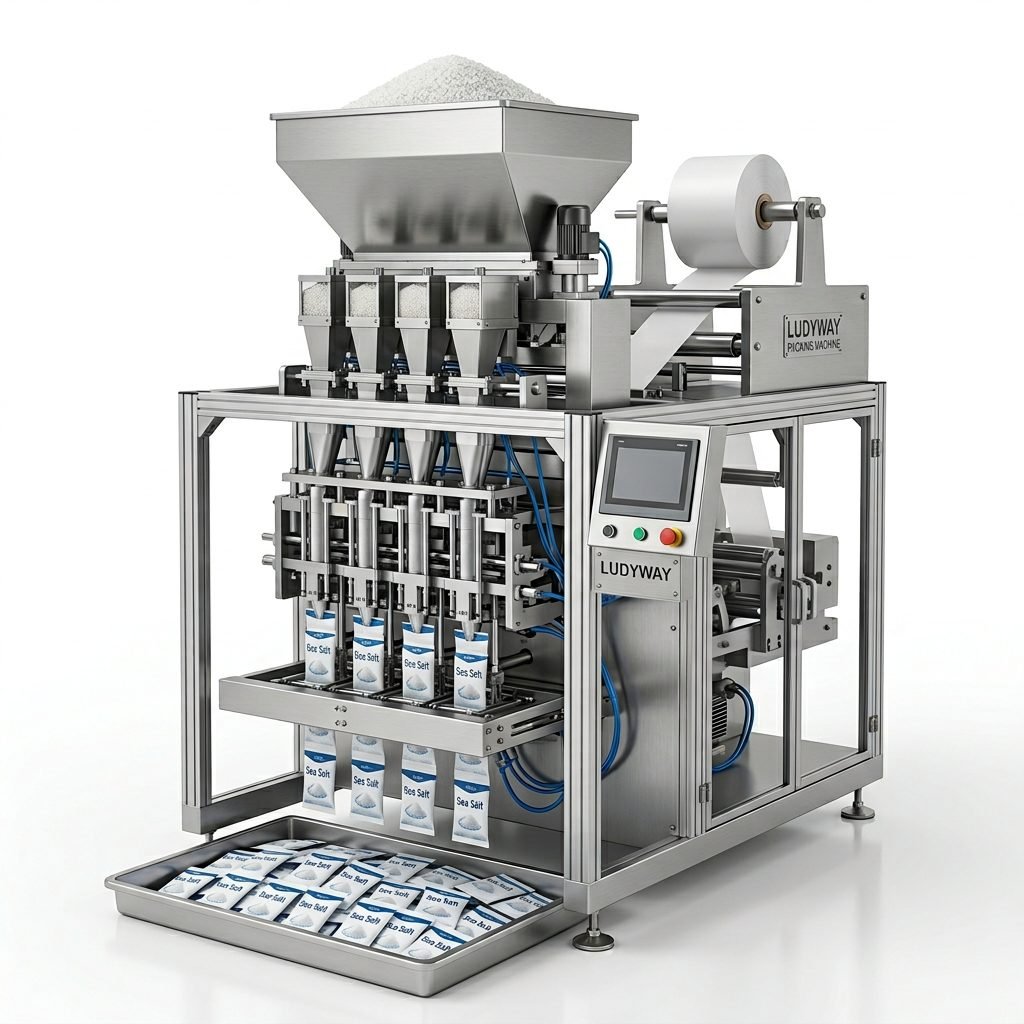
Cost Breakdown and ROI Analysis
Investing in a salt packaging line requires a clear understanding of capital and operational costs. The following table provides an indicative cost breakdown for a mid-sized automated line in India:
| Cost Component | Estimated Range (INR) | Percentage of Total |
|---|---|---|
| Primary Packaging Machine | ₹25 lakh – ₹80 lakh | 40% – 50% |
| Feeding & Conveying Equipment | ₹5 lakh – ₹15 lakh | 8% – 10% |
| Weighing & Inspection Systems | ₹8 lakh – ₹20 lakh | 10% – 15% |
| Secondary Packaging (Cartoning, Palletizing) | ₹10 lakh – ₹30 lakh | 15% – 20% |
| Installation, Commissioning & Training | ₹3 lakh – ₹8 lakh | 5% – 8% |
| Annual Maintenance & Spare Parts | ₹2 lakh – ₹6 lakh/year | Recurring |
For most mid-sized operations, ROI is typically achieved within 18 to 30 months, driven by labor savings, reduced product giveaway, and increased throughput. The PMMI business intelligence reports indicate that automated packaging lines can reduce operational costs by up to 35% compared to semi-automated or manual operations.
Common Challenges and Practical Solutions
Operating a salt packaging line in India presents unique challenges. Understanding these in advance helps mitigate risks:
- Challenge: Salt is highly hygroscopic and corrosive.
Solution: Select machines with stainless steel construction and humidity-controlled packaging environments. Use desiccant dehumidifiers in the packaging hall. - Challenge: Inconsistent power supply in certain industrial areas.
Solution: Install voltage stabilizers and backup generators. Specify machines compatible with Indian power fluctuations (380V–440V range). - Challenge: Film wastage during machine start-up and changeover.
Solution: Invest in machines with automatic splicing and tension control. Train operators thoroughly on film threading and parameter settings. - Challenge: Finding skilled maintenance technicians locally.
Solution: Partner with a supplier offering comprehensive after-sales support and remote diagnostics. Ludyway, one of the largest packaging machine manufacturers, provides extensive technical training and local service partnerships for Indian customers.
Industry Insights and Best Practices
Staying informed about global packaging trends and standards is essential. The Flexible Packaging Association provides valuable data on material innovations, while the ISO packaging standards offer internationally recognized guidelines for quality management. For Indian manufacturers targeting export markets, adherence to these standards builds credibility with international buyers. Additionally, PACK EXPO International events showcase the latest in packaging automation—attending these expos can provide valuable insights into emerging technologies applicable to salt packaging.
Selecting the Right Equipment Partner
Choosing the right machinery partner is arguably the most consequential decision in setting up a salt packaging line. Evaluate potential suppliers on the following criteria:
- Proven experience with salt or similar granular product packaging
- Availability of local service engineers or authorized representatives in India
- Willingness to provide factory acceptance testing (FAT) and site acceptance testing (SAT)
- Transparent warranty terms and spare parts availability
- Ability to offer turnkey solutions covering the entire production line
- References from existing customers in the Indian market
International suppliers with a strong track record in the Asian market often provide more reliable turnkey packaging solutions that can be tailored to specific production requirements. For operations requiring multi-format flexibility—switching between sachets, stick packs, and pouches—modular machine designs offer the greatest long-term value.
Conclusion: Building a Future-Ready Salt Packaging Operation
Setting up a salt packaging machine production line in India represents a strategic investment with strong market fundamentals. The combination of abundant raw material availability, growing domestic consumption, and increasing export opportunities creates a favorable environment for manufacturers who invest in modern, efficient packaging infrastructure. By carefully selecting the right equipment, adhering to regulatory standards, and partnering with experienced machinery suppliers, Indian salt processors can build production lines that deliver consistent quality, operational efficiency, and scalable growth for years to come. As the industry continues its shift toward automation and smart manufacturing, early adopters of advanced packaging automation solutions will be best positioned to capture market share in this dynamic sector.