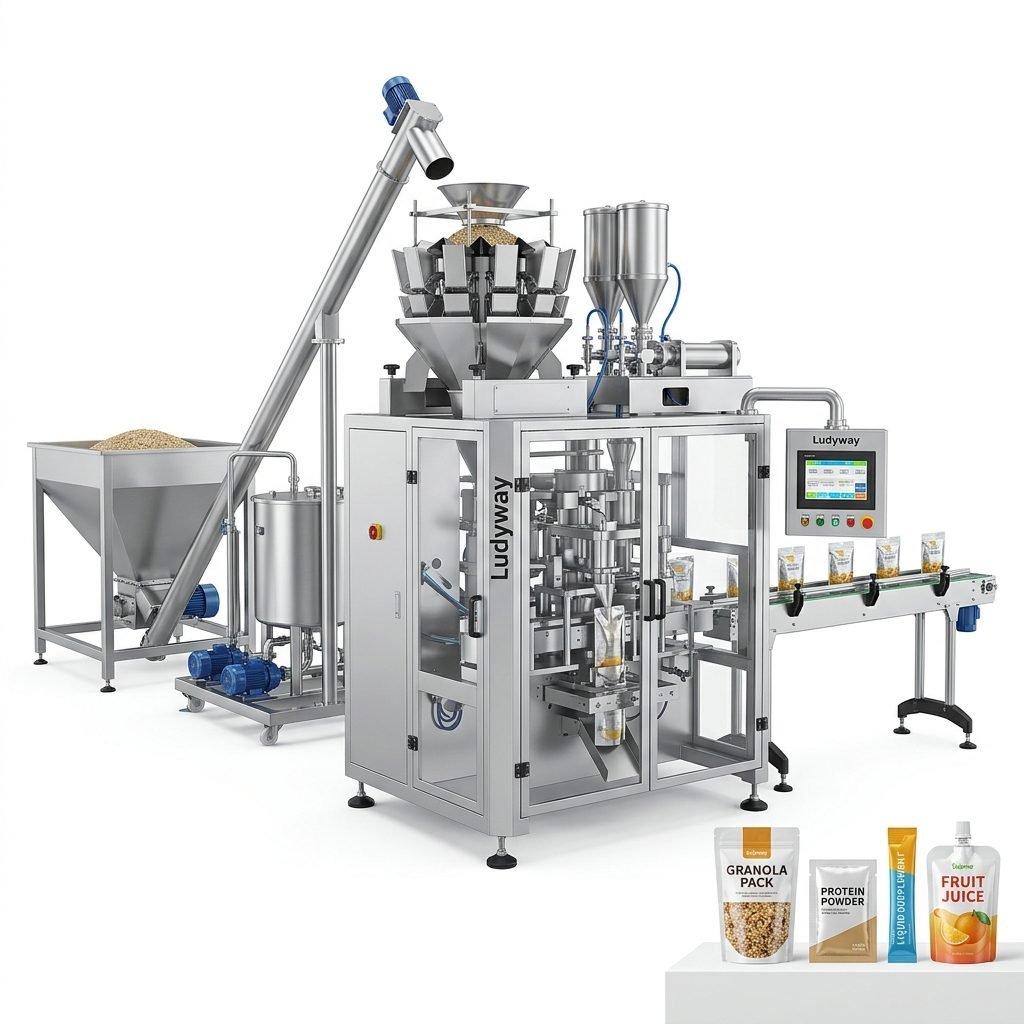
Setting up a sauce packaging machine production line in the United States requires careful planning across regulatory compliance, equipment selection, facility design, and workforce training. Whether you are packaging ketchup, mustard, hot sauce, soy sauce, barbecue sauce, or specialty condiments, the right approach can significantly impact your operational efficiency and product quality. This guide walks you through the essential steps to establish a successful sauce packaging operation in the US market.
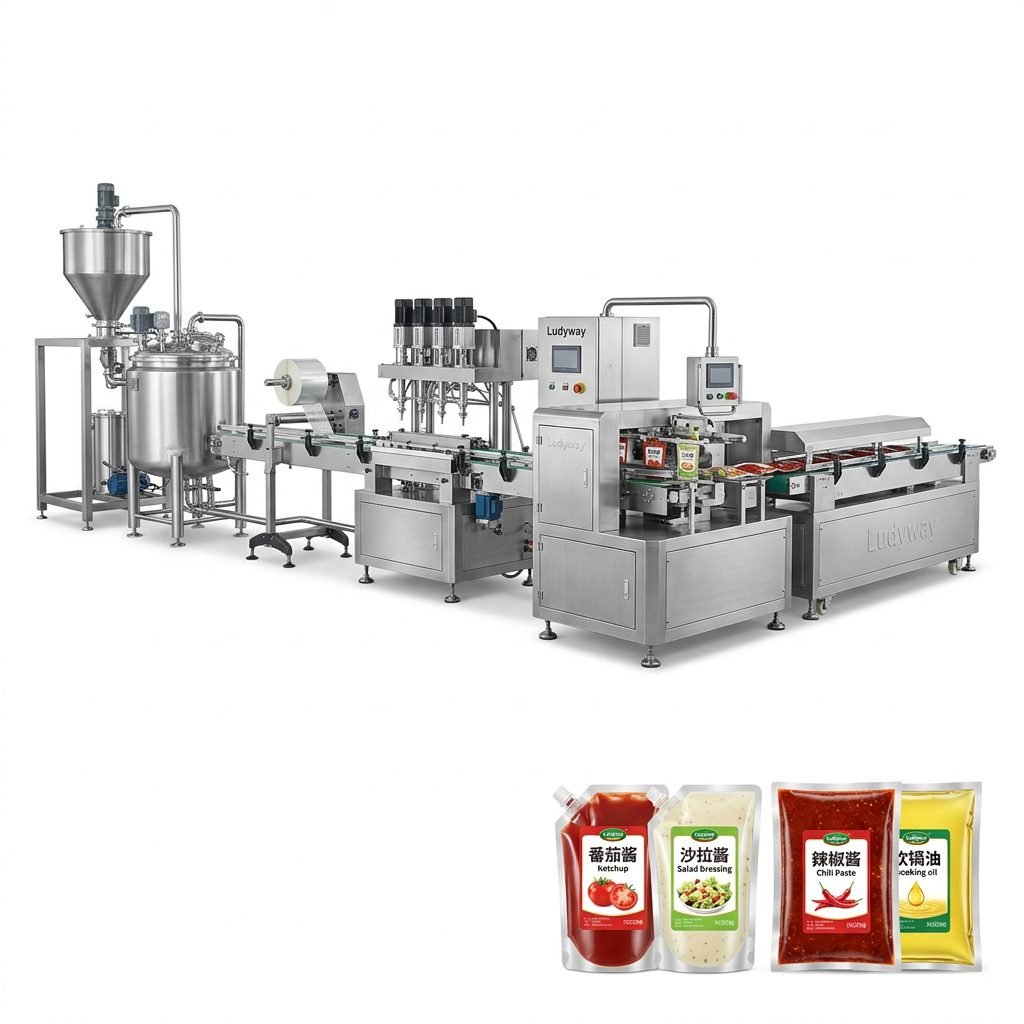
Understanding US Regulatory Requirements for Sauce Packaging
Before investing in any packaging equipment, you must understand the FDA food packaging regulations that govern sauce production in the United States. The FDA’s Food Safety Modernization Act (FSMA) establishes stringent requirements for food contact surfaces, sanitary design, and contamination prevention. Your packaging line must comply with Current Good Manufacturing Practices (cGMP), which include provisions for equipment cleanability, material traceability, and environmental monitoring.
Key regulatory considerations include:
- Food contact material compliance – All surfaces that touch the sauce must meet FDA 21 CFR standards for indirect food additives
- Sanitary equipment design – Machines should feature stainless steel construction, sloped surfaces, and minimal crevices to prevent bacterial growth
- Clean-in-place (CIP) compatibility – Automated cleaning systems reduce downtime and ensure consistent sanitation
- Labeling compliance – The packaging line must integrate with systems that meet FDA nutrition labeling and allergen declaration requirements
- State-level regulations – Some states like California (Proposition 65) impose additional labeling and material requirements
Working with organizations like the PMMI (Association for Packaging and Processing Technologies) can provide valuable guidance on packaging industry standards and best practices for regulatory compliance.
Selecting the Right Sauce Packaging Equipment
Choosing the appropriate packaging machinery is the cornerstone of your production line. Sauce products come in varying viscosities—from thin soy sauce to thick pastes like tomato concentrate—and your equipment must handle these variations effectively. The primary packaging formats for sauces in the US market include sachets, stick packs, pouches, bottles, and portion cups.
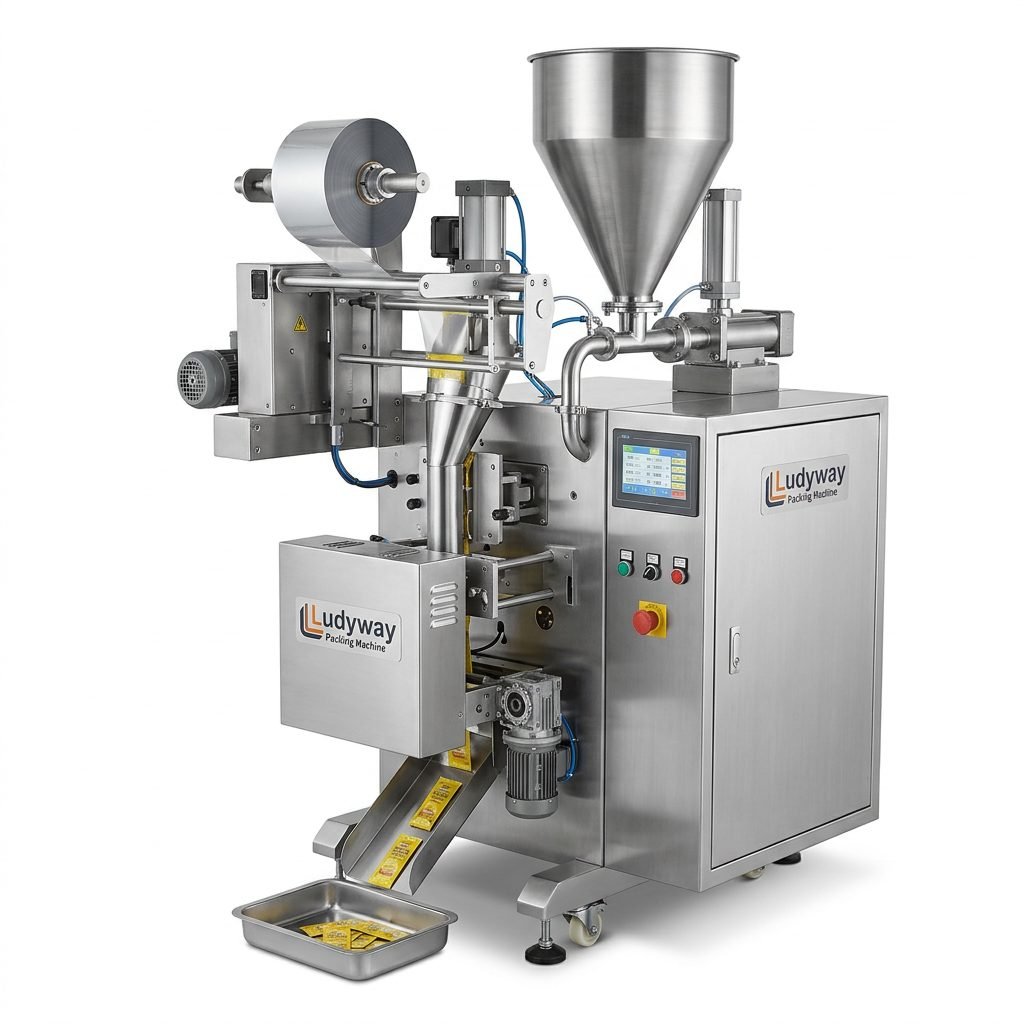
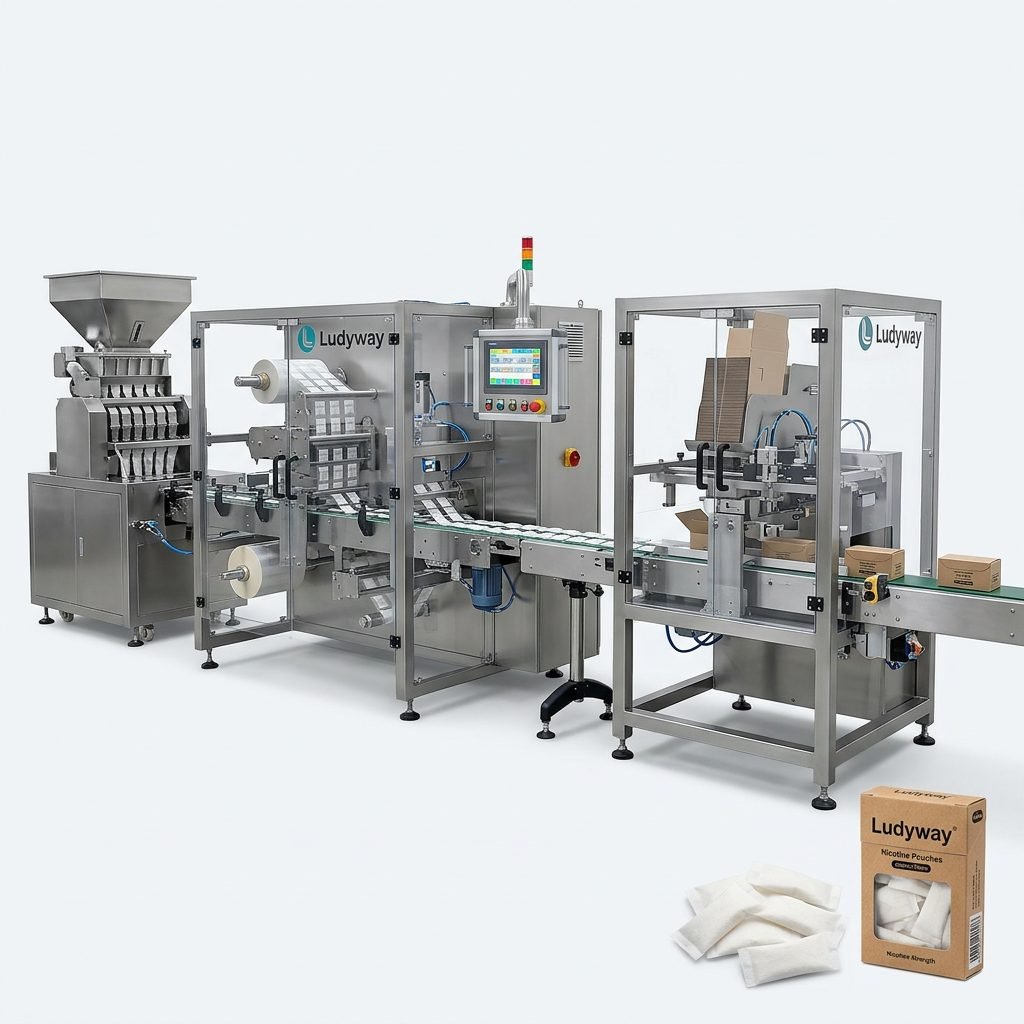
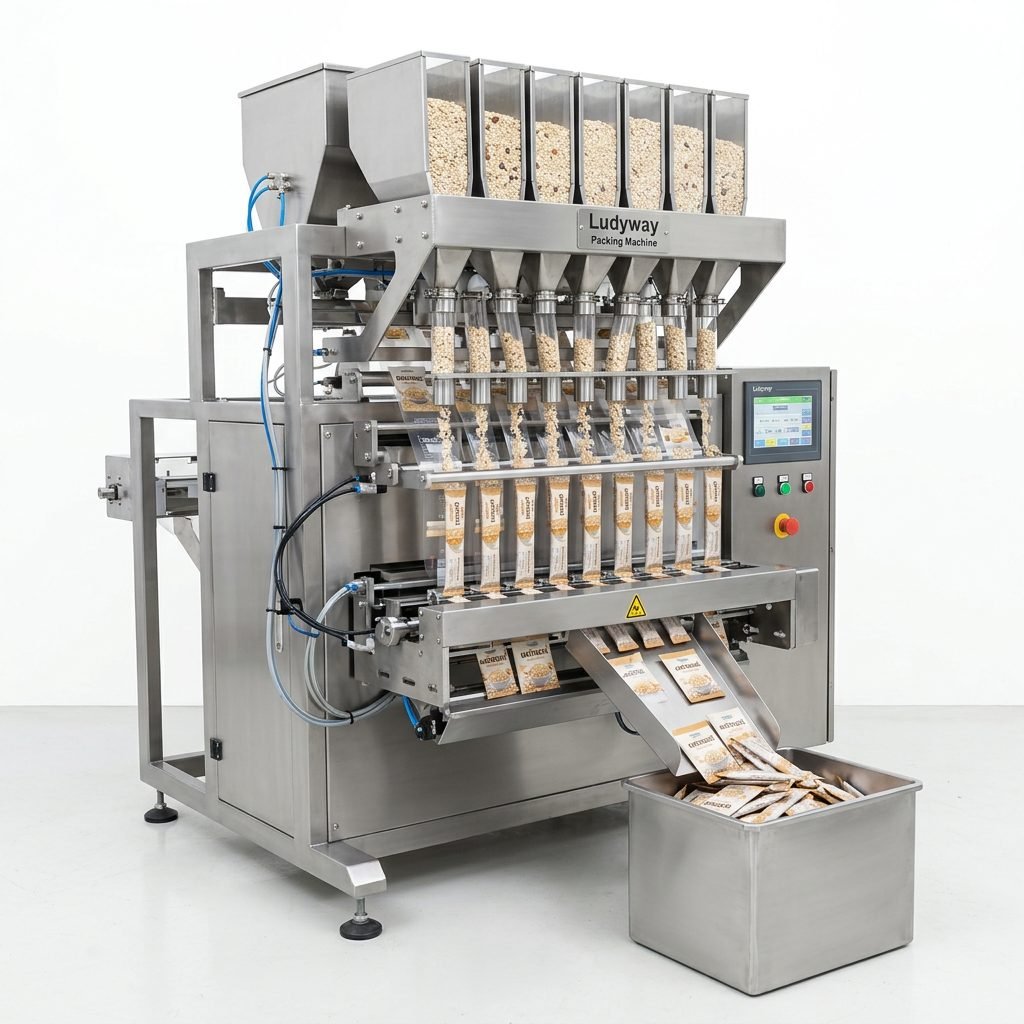
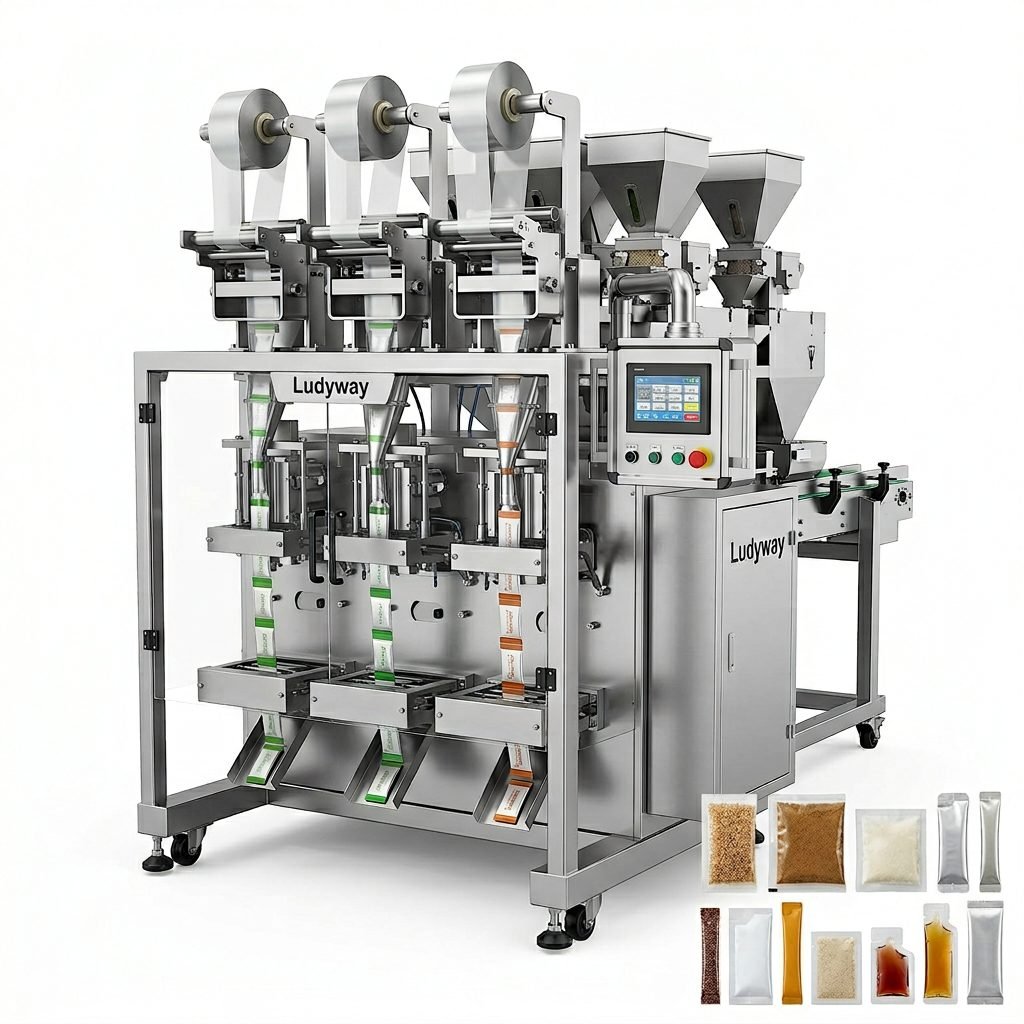
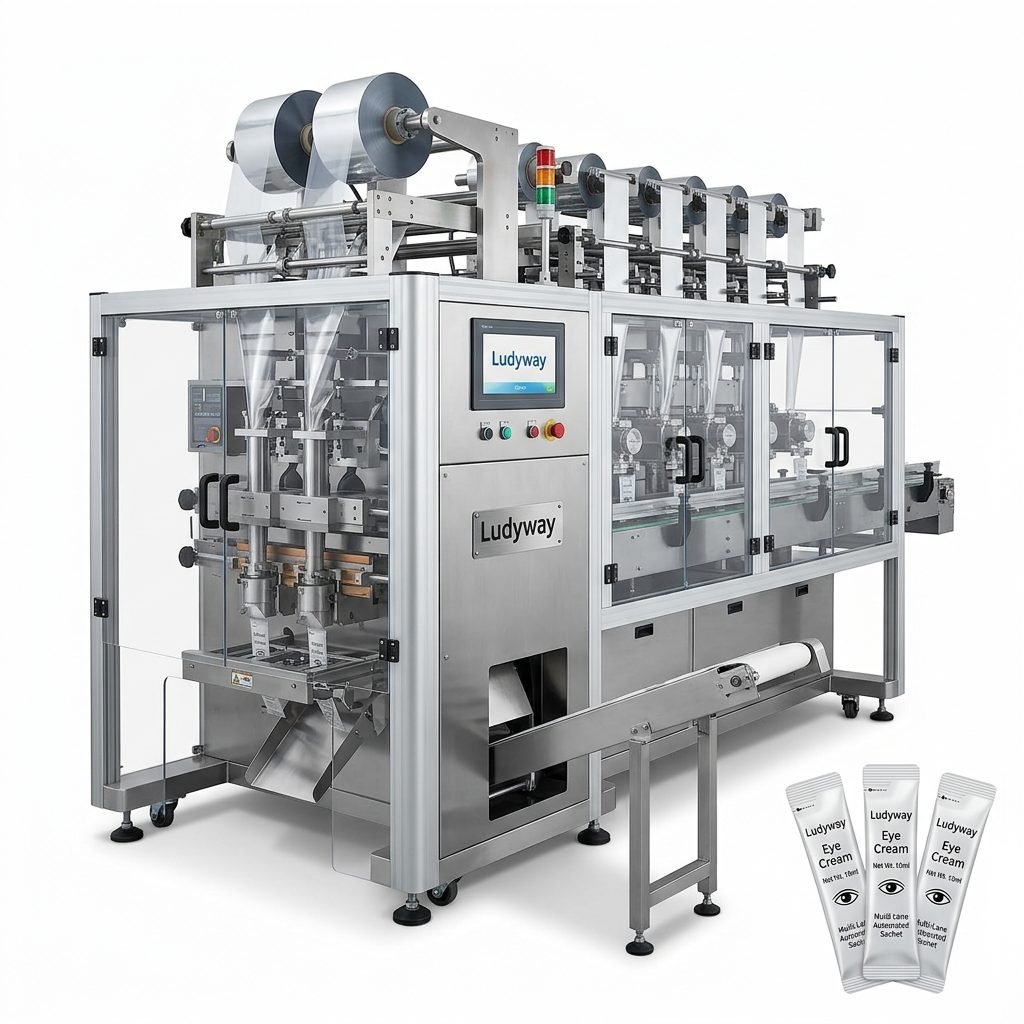
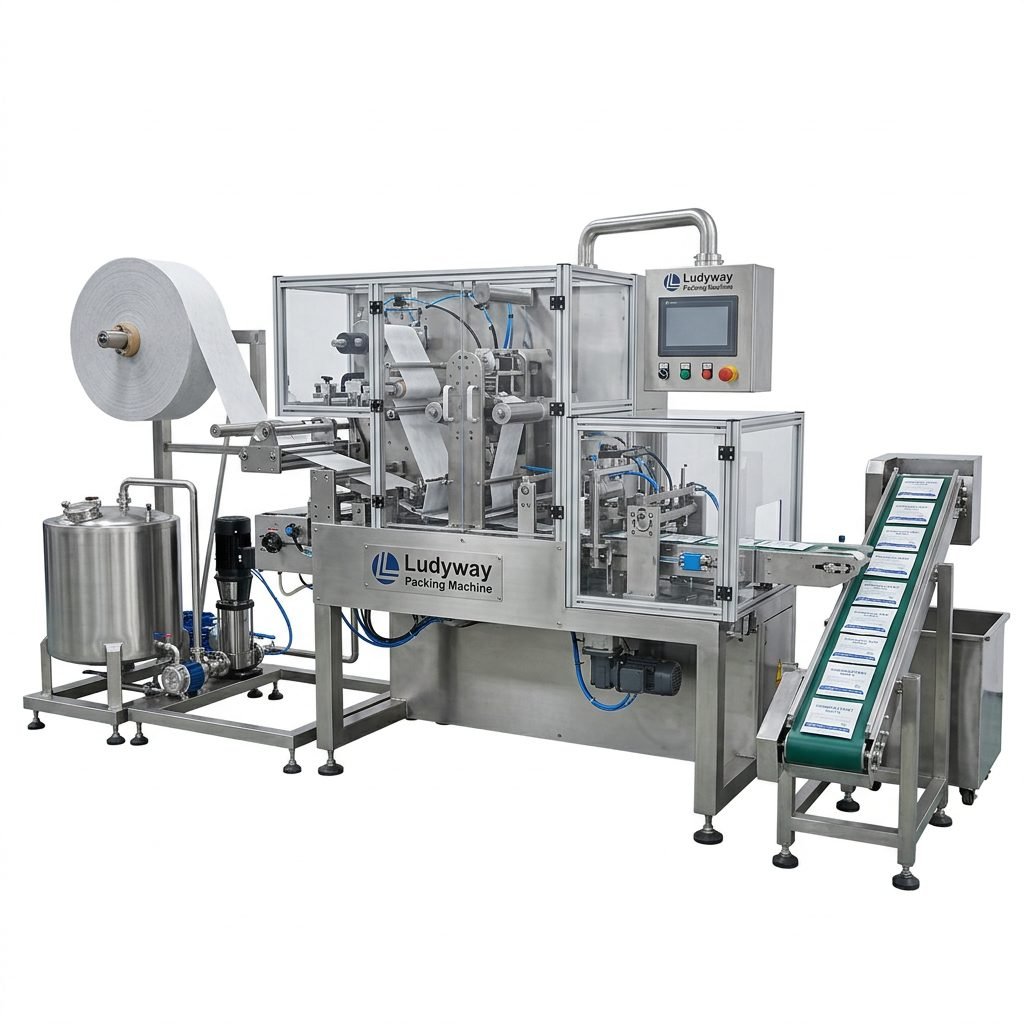
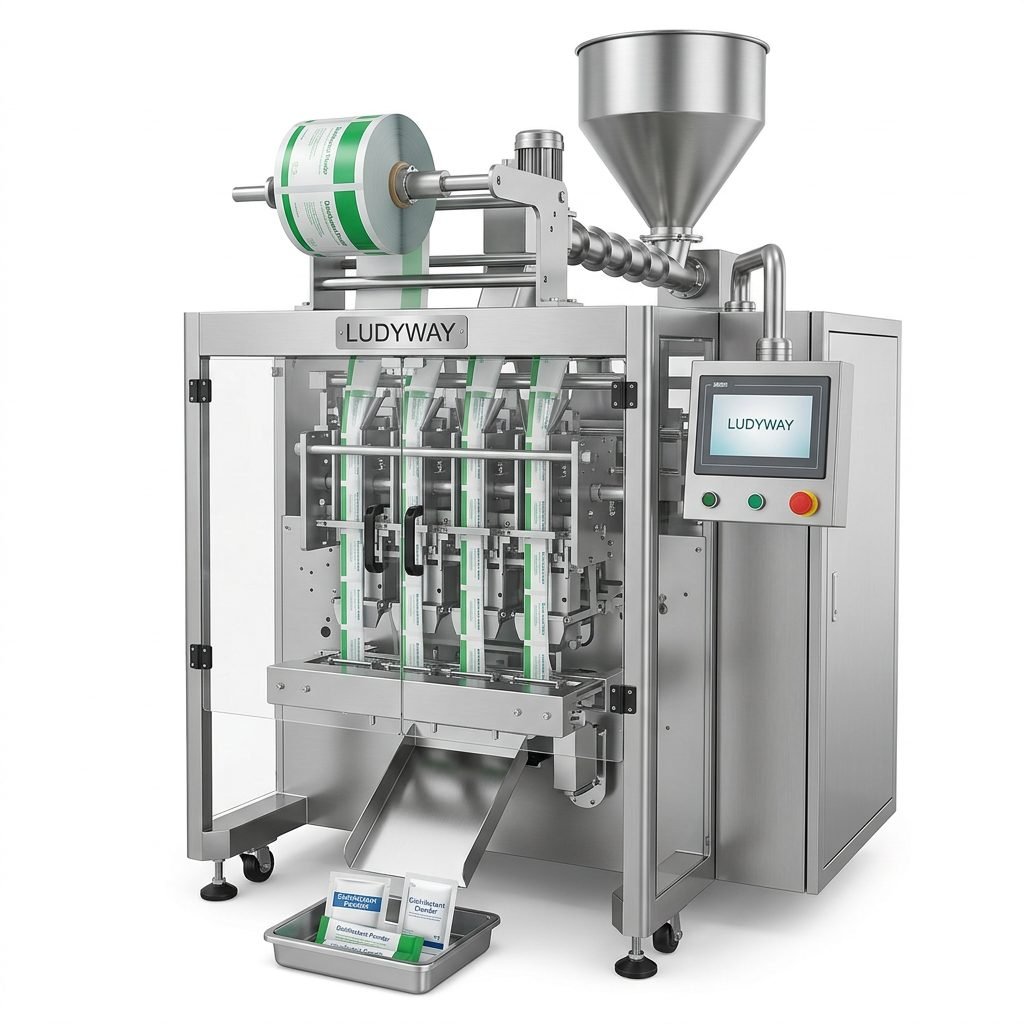
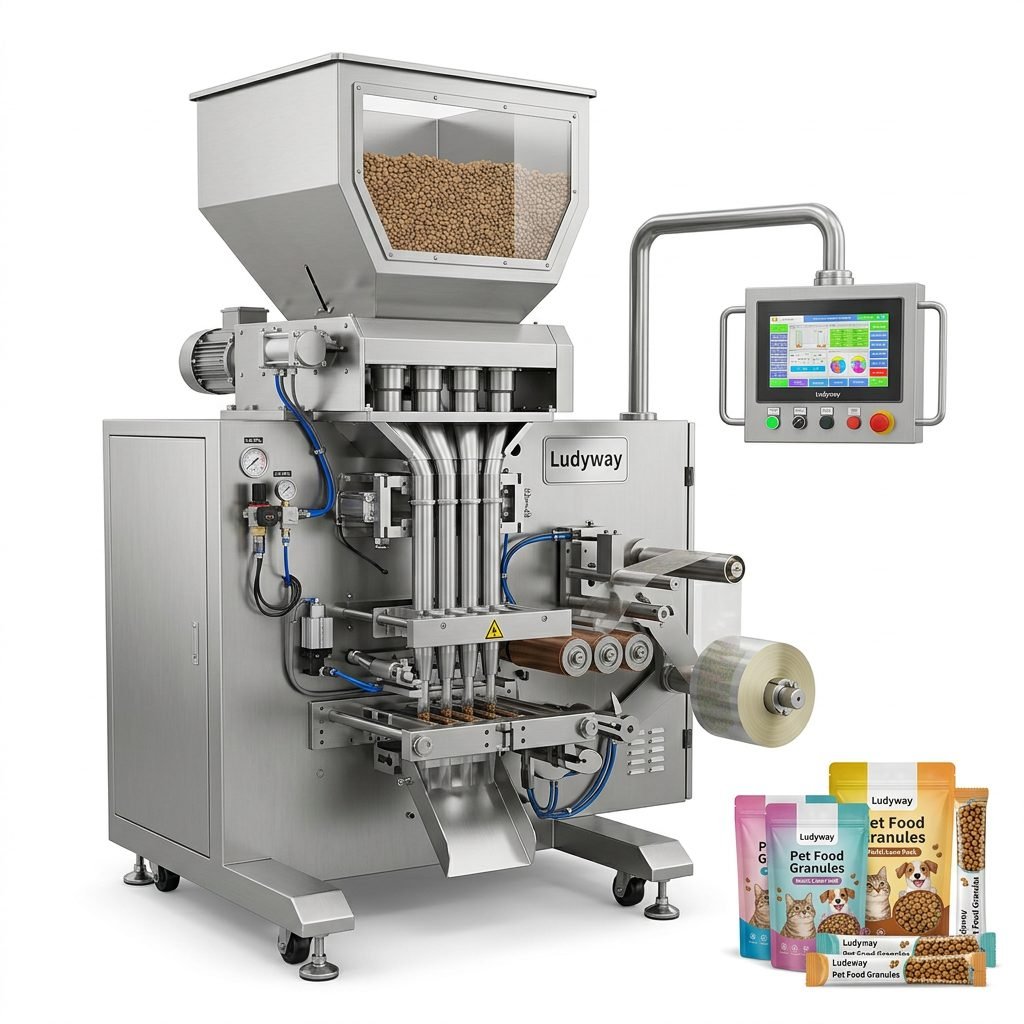
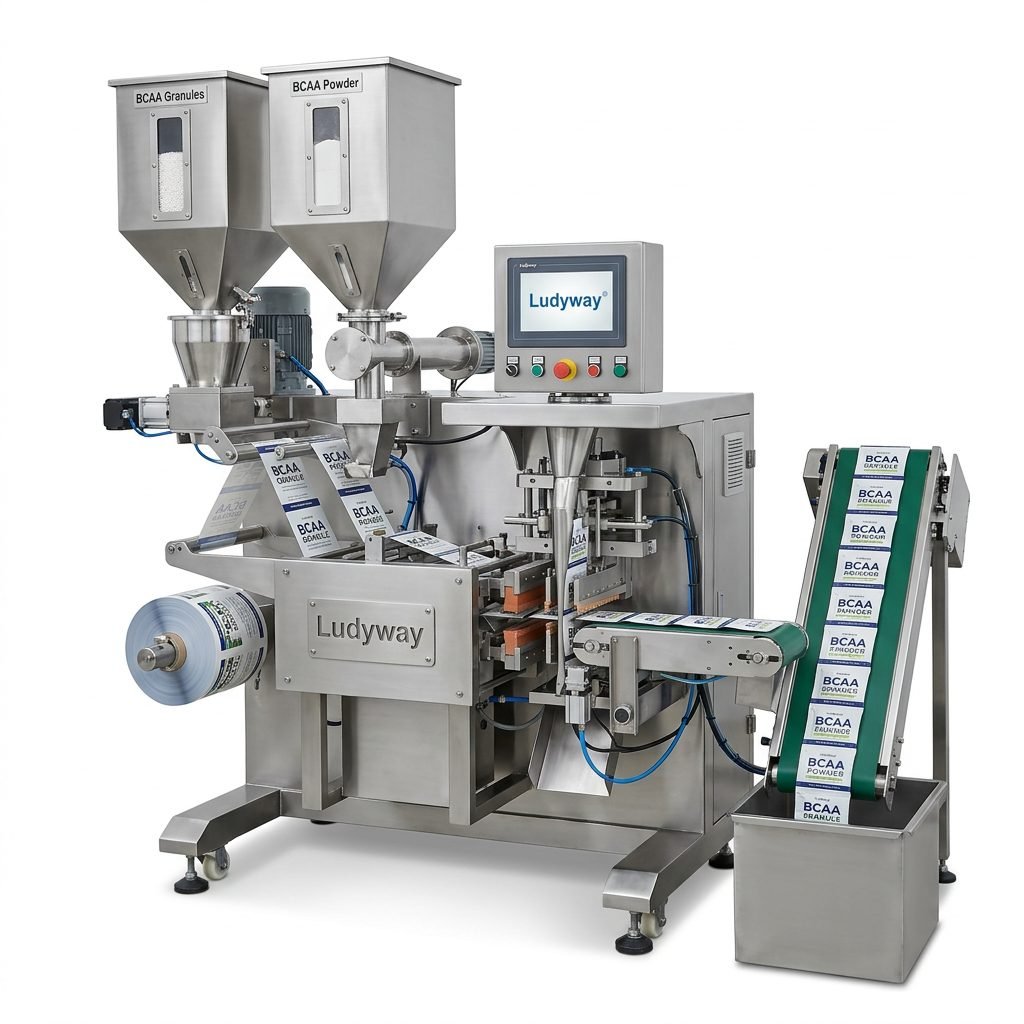
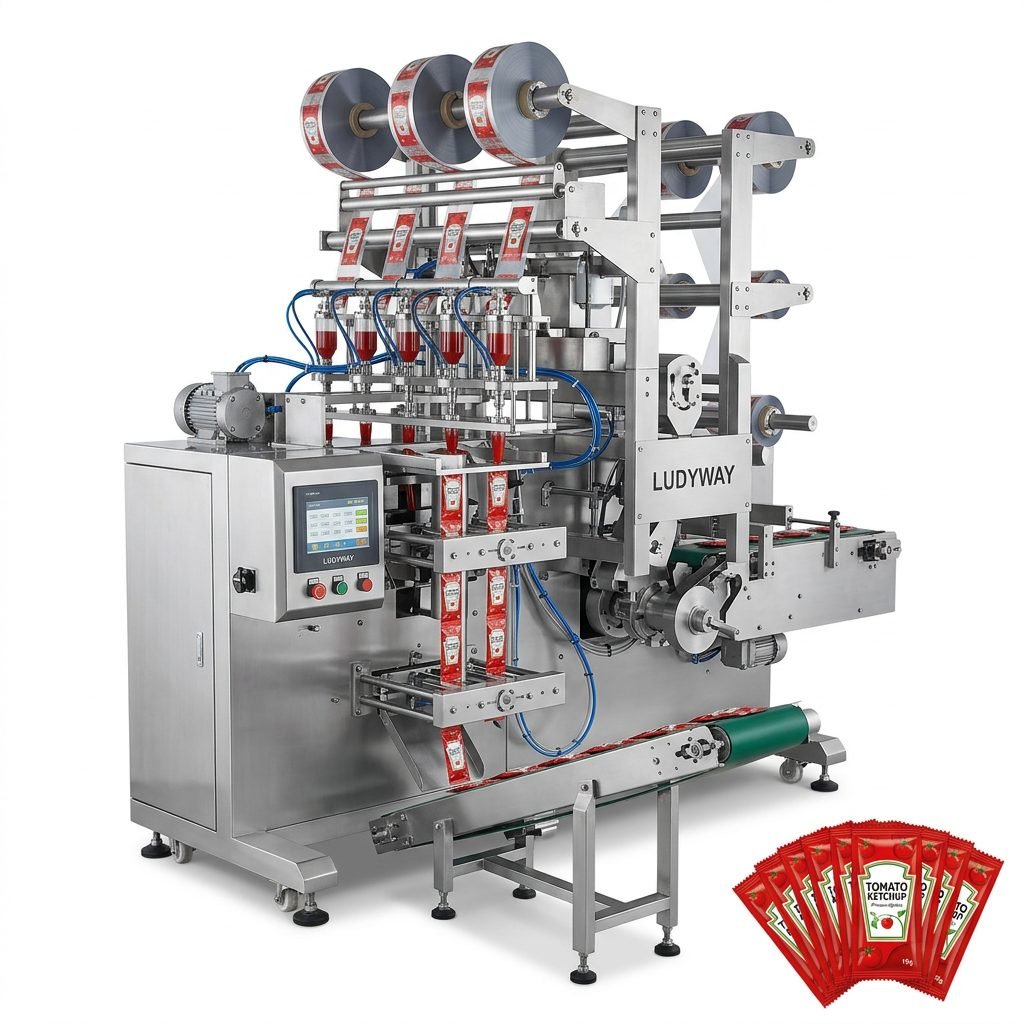
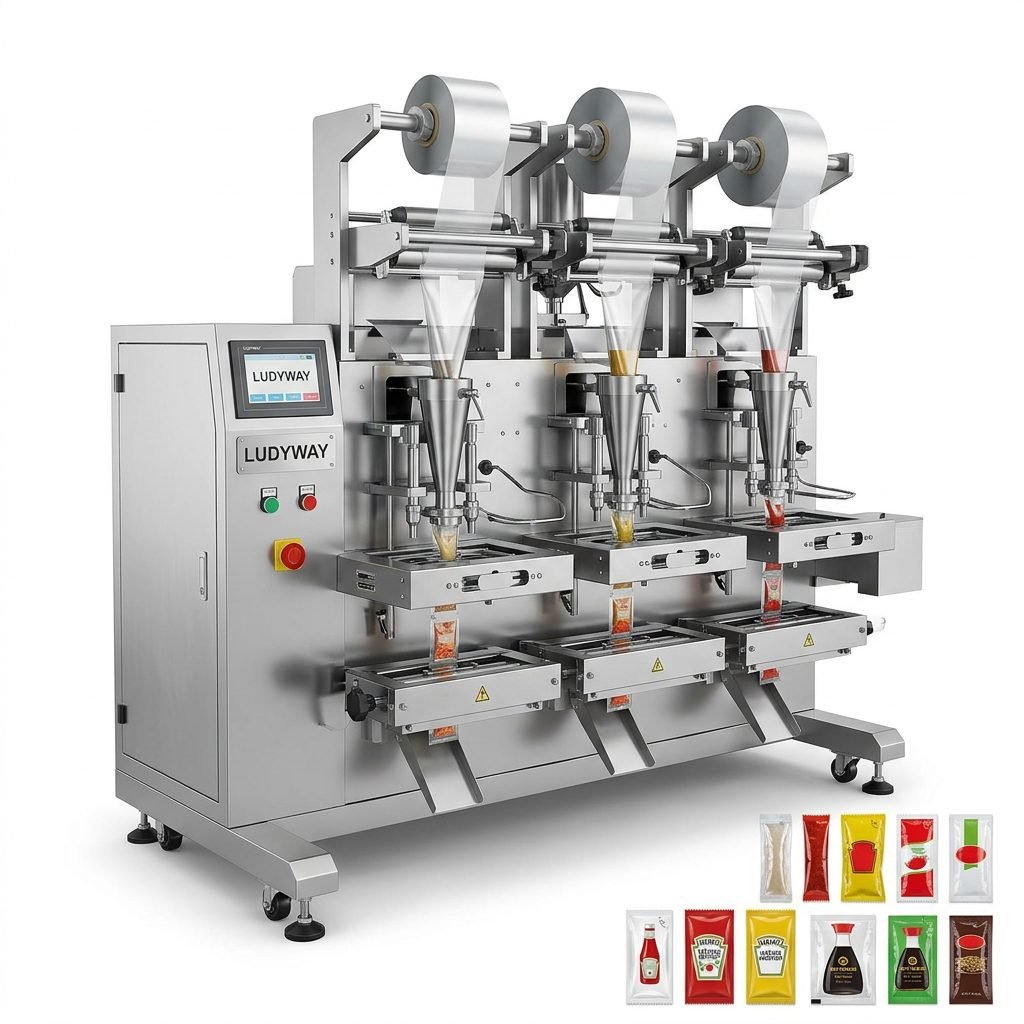
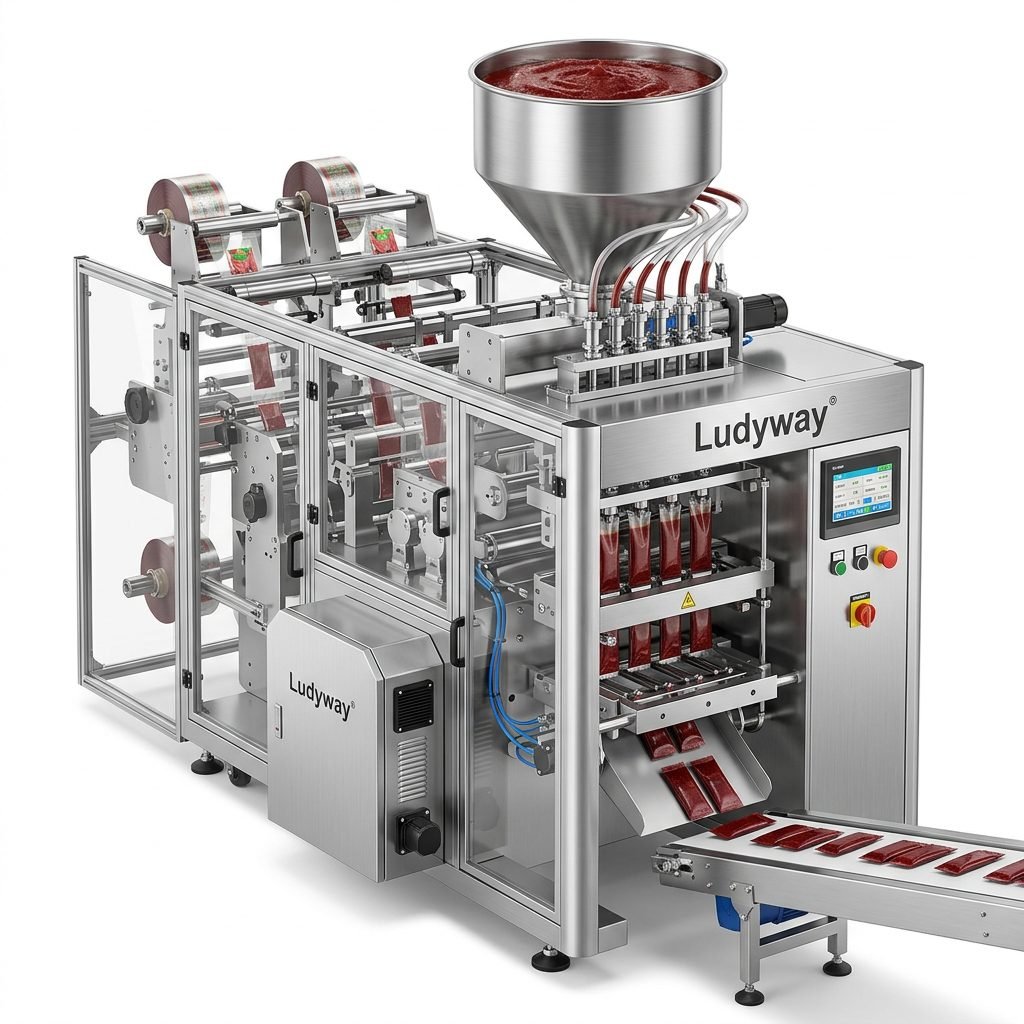
When evaluating equipment suppliers, prioritize manufacturers with proven expertise in liquid and paste filling technology. A well-designed sauce packaging machine should offer precise filling accuracy (±0.5% or better), quick changeover capabilities for different sauce types and pack sizes, and robust sealing integrity to prevent leakage during distribution. Companies like Ludyway, one of the largest packaging machine manufacturers with over 30 years of industry experience and a 20,000㎡ modern production facility, provide advanced multi-lane sauce packaging systems capable of handling diverse viscosities with high-speed output. Their equipment portfolio includes solutions for sachet, stick pack, and pouch formats suitable for various sauce applications.
Below is a comparison of common sauce packaging formats and their ideal applications:
| Packaging Format | Best For | Typical Speed Range | Key Advantage |
|---|---|---|---|
| Sachets (4-12ml) | Single-serve condiments, food service | 400-800 packs/min | Lowest cost per unit |
| Stick Packs (6-20ml) | Retail single-serve, sampling | 300-600 packs/min | Shelf appeal, portability |
| Pouches (50-500ml) | Retail pouches, family size | 60-200 packs/min | Flexible branding space |
| Bottles (100-1000ml) | Premium sauces, retail | 40-150 bottles/min | Consumer familiarity |
Production Line Layout and Design Planning
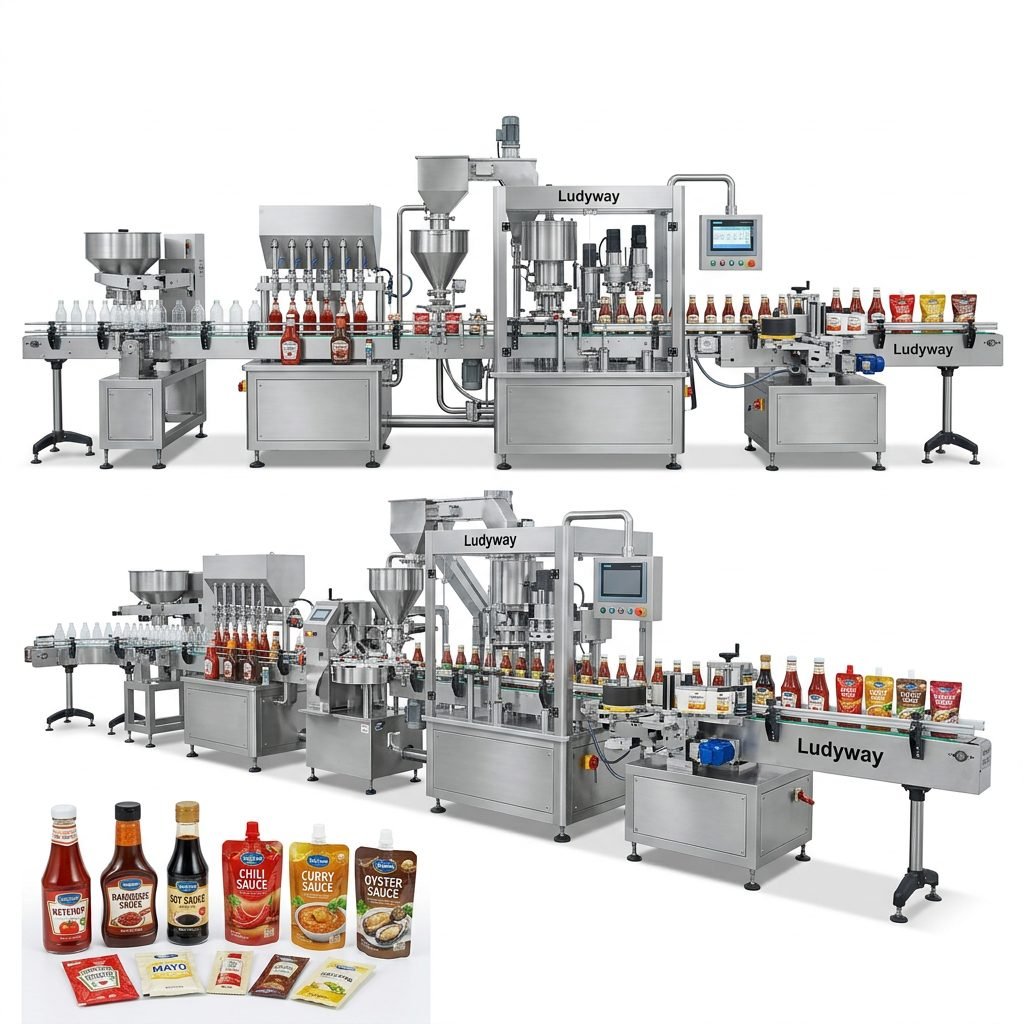
A well-designed sauce packaging production line integrates multiple subsystems into a cohesive workflow. The layout should follow a logical material flow from raw sauce receiving through to finished palletized goods. Key zones in a typical sauce packaging line include:
- Sauce holding and transfer area – Temperature-controlled tanks with agitation to maintain product consistency
- Filtration and homogenization station – Ensures particle size uniformity and removes contaminants before filling
- Primary packaging zone – Multi-lane fill-seal machines or rotary fillers depending on format
- Secondary packaging area – Cartoning, case packing, and palletizing equipment
- Quality inspection stations – Checkweighers, metal detectors, x-ray inspection systems, and ISO packaging standards-compliant vision systems
- Finished goods staging – Pallet wrapping and warehouse transfer
Facility considerations are equally important. Your production floor must accommodate proper drainage for washdown procedures, adequate electrical supply for high-speed equipment, compressed air systems, and potentially nitrogen flushing capabilities for oxygen-sensitive sauces. The Flexible Packaging Association offers extensive resources on optimal facility design for flexible packaging operations.
Installation, Commissioning and Staff Training
Once your equipment arrives, proper installation and commissioning are critical to achieving nameplate production speeds and validated packaging integrity. This phase typically spans 4 to 8 weeks depending on line complexity and should include:
- Mechanical installation and alignment of all modules
- Electrical integration and control system configuration
- Utility connections including water, compressed air, and nitrogen
- Dry-run testing to verify mechanical function without product
- Wet-run testing with actual sauce formulations
- Seal integrity validation and fill weight calibration
Investing in comprehensive operator training cannot be overstated. Your team should receive hands-on instruction covering machine operation, troubleshooting, changeover procedures, sanitation protocols, and basic maintenance. A well-trained workforce reduces unplanned downtime and extends equipment lifespan significantly.
Quality Control and Ongoing Optimization
Maintaining consistent sauce packaging quality requires a multi-layered inspection strategy. Critical control points should include:
| Inspection Point | Technology | Frequency | Detects |
|---|---|---|---|
| Fill weight verification | In-line checkweighers | 100% of packs | Under/over-fills |
| Metal contamination | Industrial metal detectors | 100% of packs | Ferrous, non-ferrous, stainless steel |
| Seal integrity | Pressure decay or vision systems | Sampling or 100% | Leaks, weak seals |
| Label and code accuracy | Vision inspection cameras | 100% of packs | Missing prints, misalignment |
Beyond real-time inspection, establish a preventive maintenance schedule based on equipment manufacturer recommendations. Document all maintenance activities and use production data to identify trends that may indicate emerging issues. Regular review of PMMI business intelligence reports can help benchmark your operation against industry performance standards and identify optimization opportunities.
Conclusion: Building a Future-Ready Sauce Packaging Operation
Successfully setting up a sauce packaging machine production line in the USA demands a holistic approach that balances regulatory compliance, equipment capability, facility design, and operational discipline. The investment in high-quality packaging machinery, thorough staff training, and robust quality systems pays dividends through reduced downtime, higher throughput, and consistent product quality. As consumer demand for convenient, single-serve, and diverse sauce formats continues to grow, a well-planned packaging line positions your business to capture market opportunities while maintaining the rigorous standards expected in the US food industry. For additional guidance, consult resources from the Flexible Packaging Association’s knowledge hub and the FDA’s packaging and food contact substances guidance to stay current with evolving requirements and technologies.