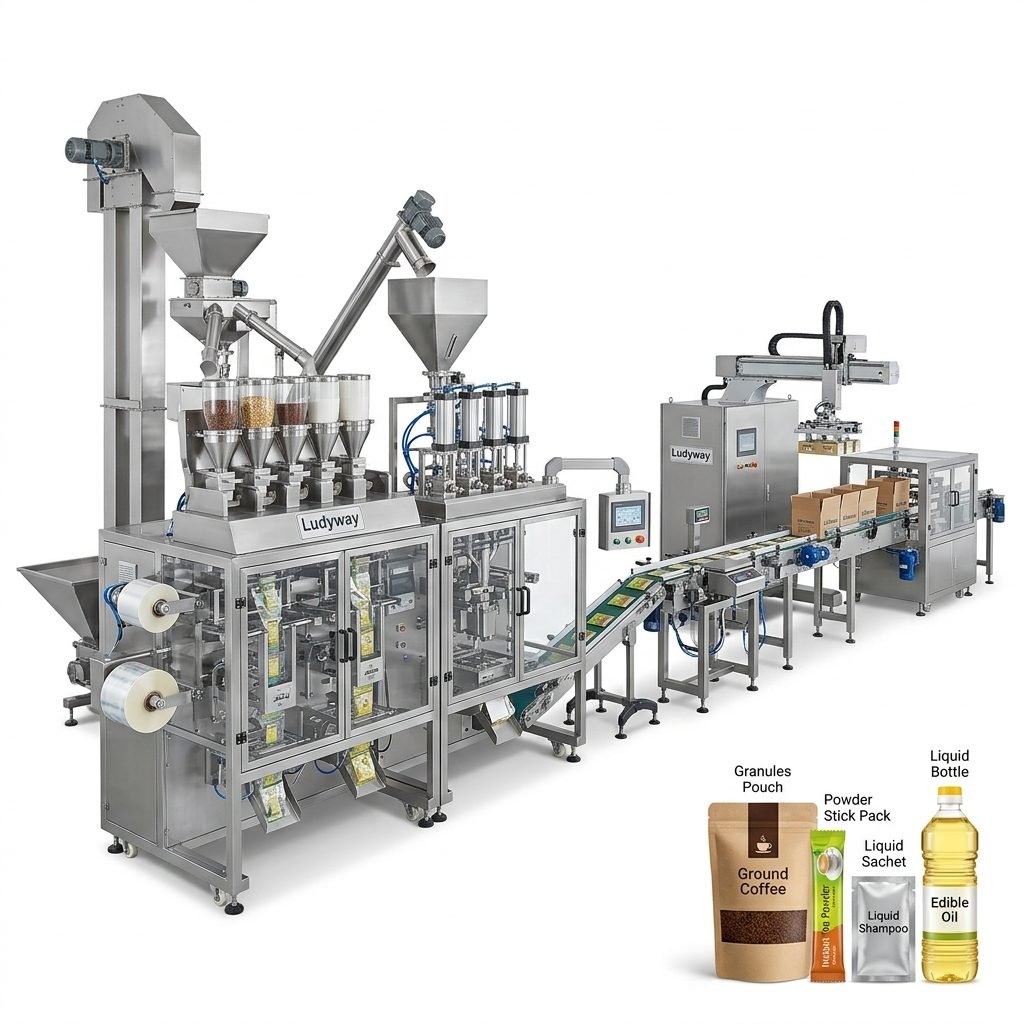
In today’s competitive food market, ketchup packaging is no longer just about filling sauce into a pouch. Food manufacturers need
speed, sealing reliability, hygiene, dosing accuracy, and flexible pouch formats to meet retail, foodservice, and export demands.
A modern ketchup pouch packing machine helps producers streamline production while maintaining product consistency and reducing waste.
Whether you pack classic tomato ketchup, spicy ketchup, organic ketchup, or private-label sauce products, the right automated system can improve output,
support stable quality, and make your packaging line more scalable for long-term growth.
Why ketchup pouch packaging is in high demand
Ketchup is one of the most widely consumed condiments in the global food industry. Restaurants, fast-food chains, meal-kit suppliers, supermarkets,
and convenience brands all require practical packaging formats that protect freshness and improve user convenience. Pouch packaging has become especially popular because it offers:
- Lower packaging material consumption compared with rigid containers in many applications
- Convenient single-serve and portion-control options
- Easy storage, transportation, and secondary packing
- Strong shelf appeal for retail and private-label products
- Flexibility for sachets, stick packs, and various pouch structures
For manufacturers handling high-volume sauce production, automated pouch packing is an efficient way to balance productivity and packaging quality.
What is a ketchup pouch packing machine?
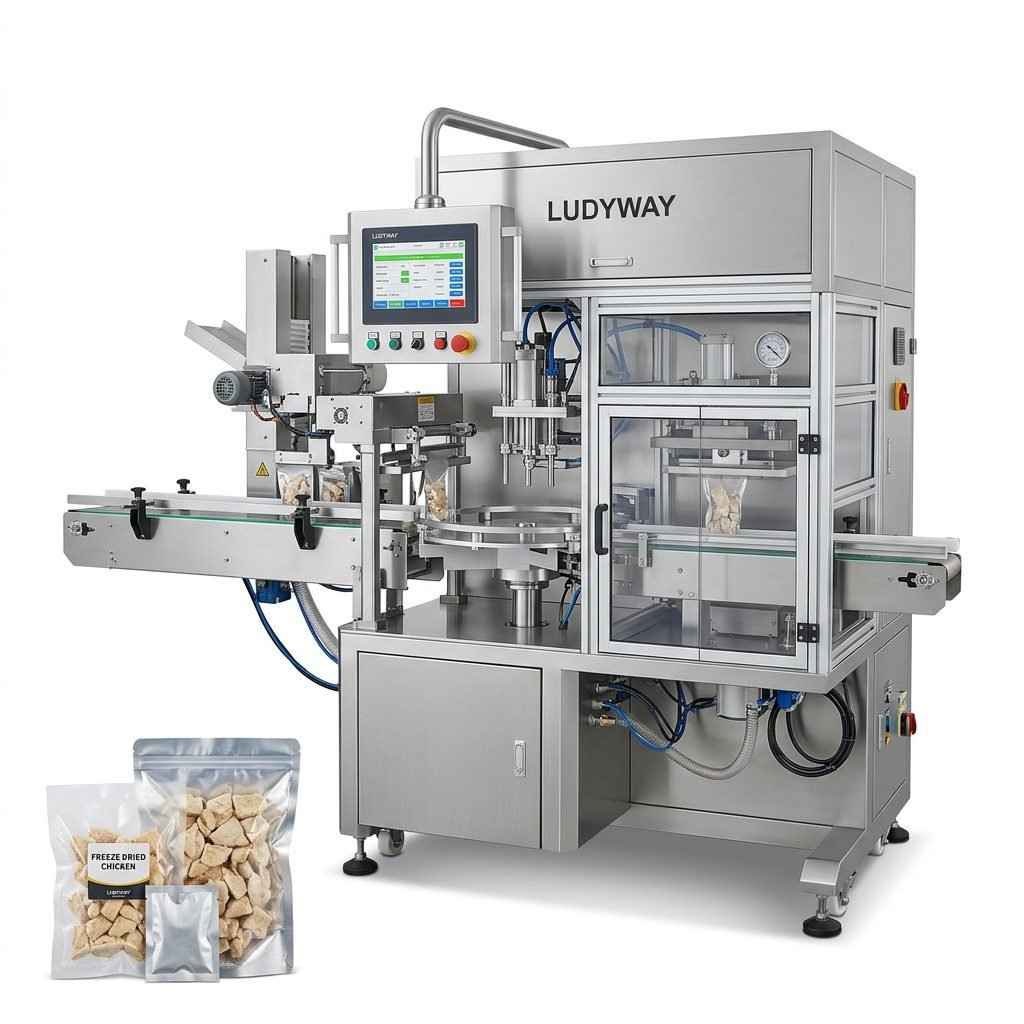
A ketchup pouch packing machine is an automated packaging system designed to fill and seal ketchup or similar viscous sauces into flexible packages.
Depending on product type, capacity target, and pouch style, the machine may use different filling methods and sealing structures.
These systems are typically built for products such as:
- Ketchup
- Tomato sauce
- Chili sauce
- BBQ sauce
- Mayonnaise blends
- Seasoning sauces and condiment pastes
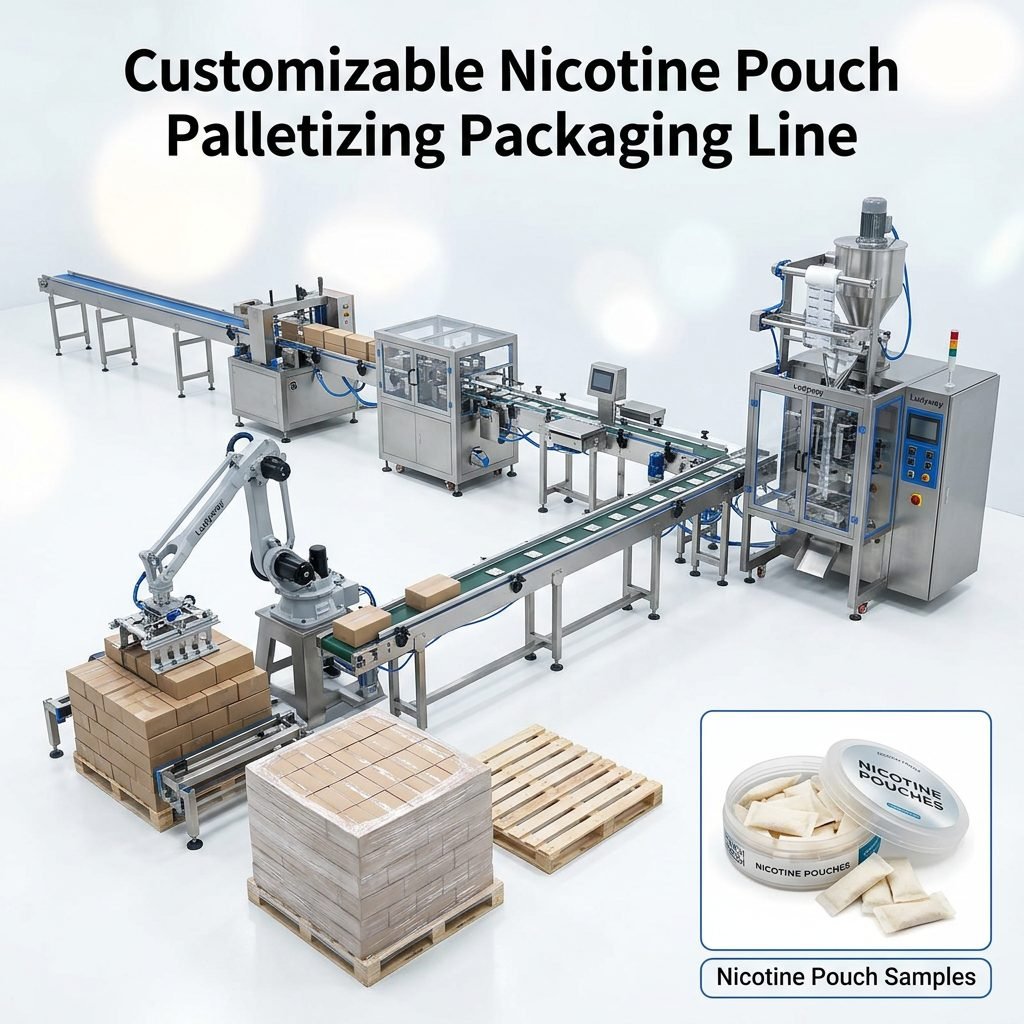
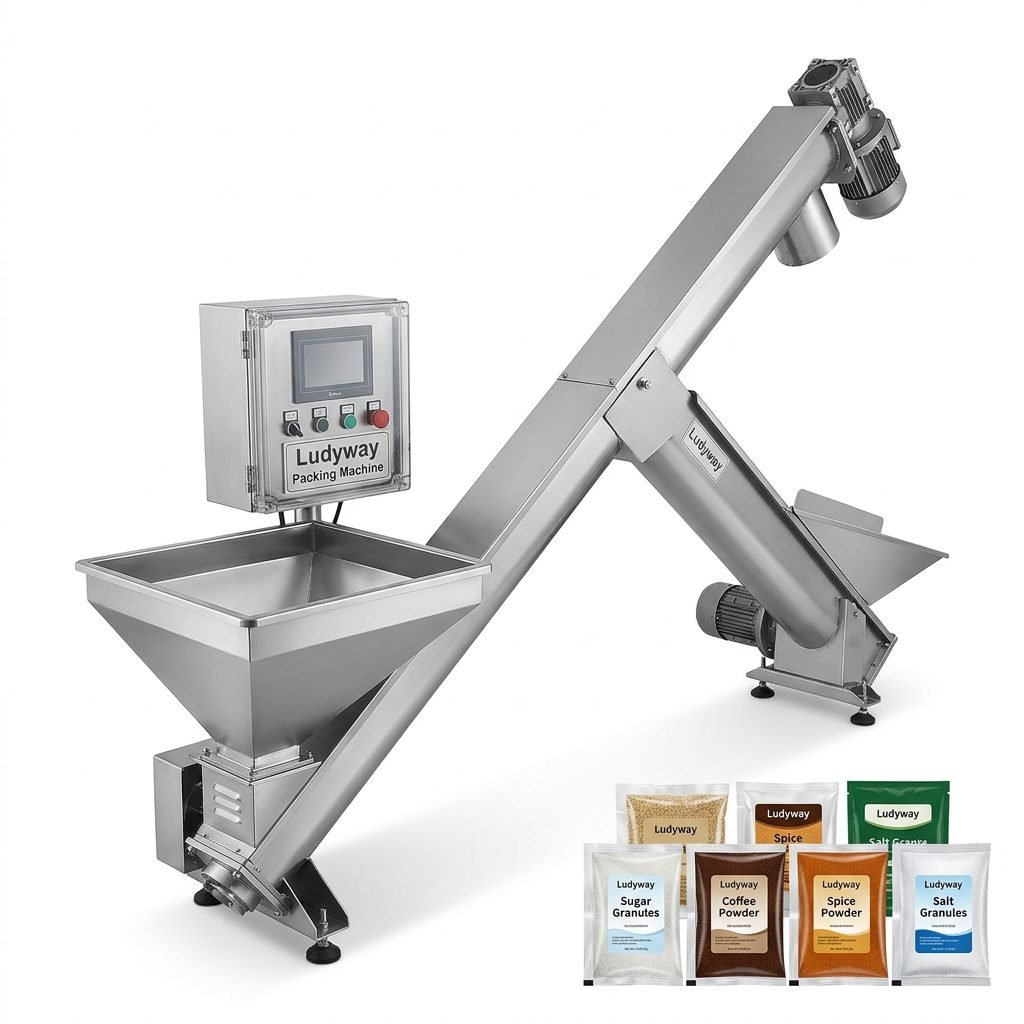
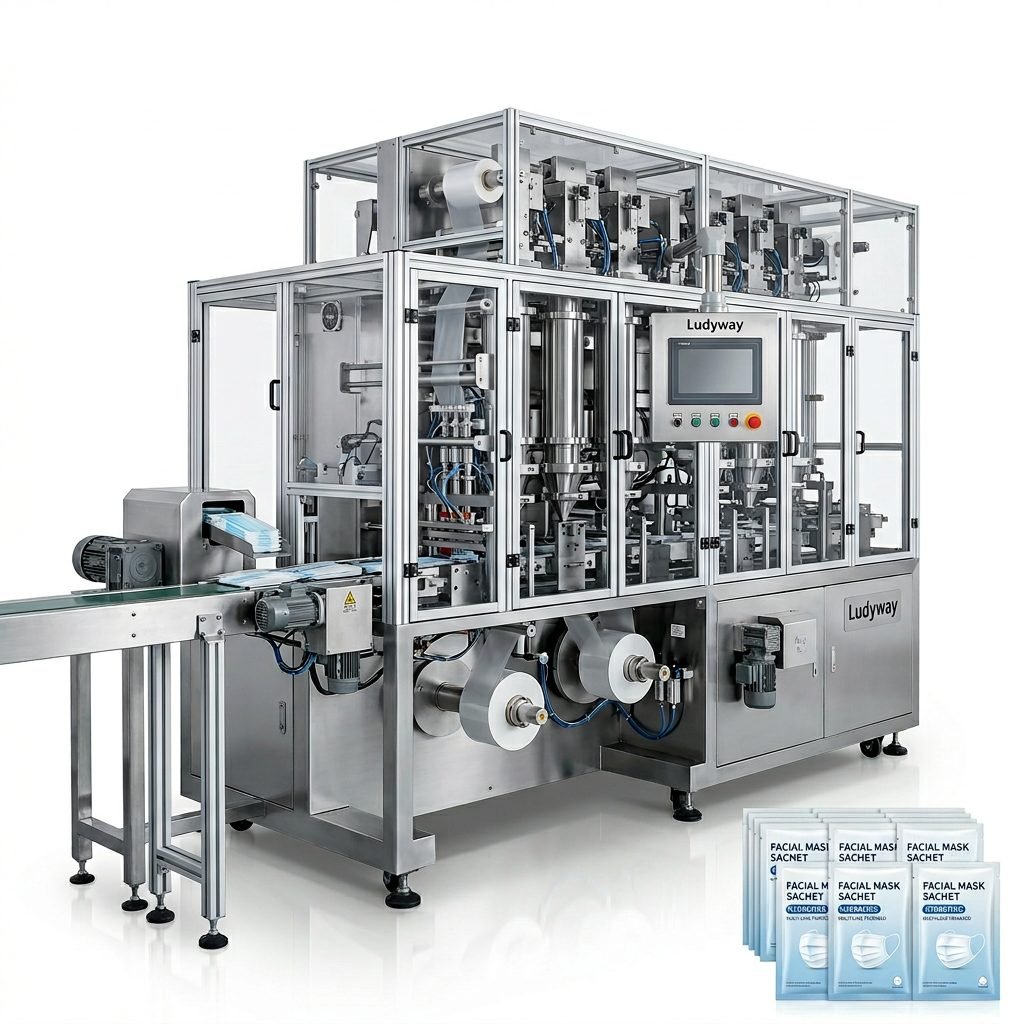
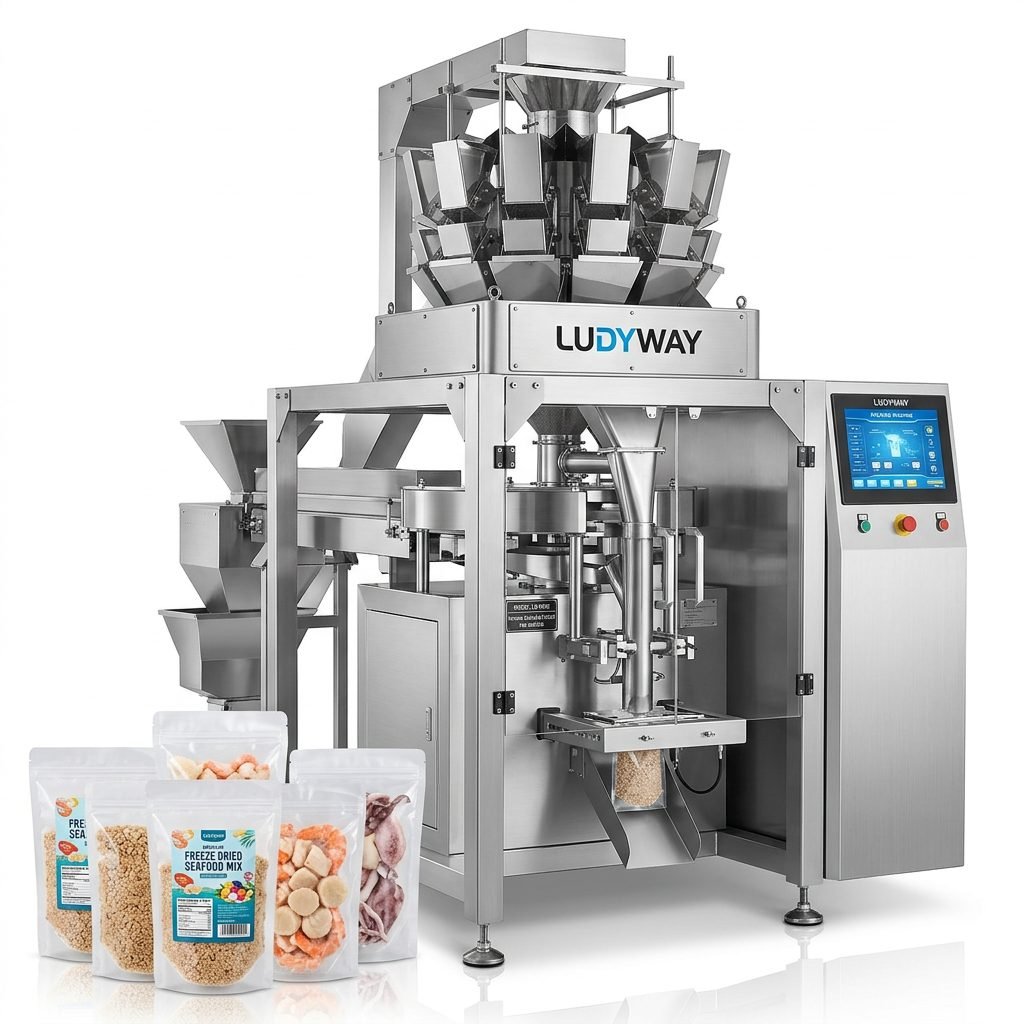
A ketchup packaging line may include product holding tanks, feeding pumps, pouch forming units, filling devices, sealing stations, coding systems,
conveyors, inspection systems, and end-of-line packing modules.
How the machine improves packaging efficiency
The main value of a ketchup pouch packing machine lies in its ability to automate repetitive, precision-based packaging tasks. This allows food manufacturers
to reduce labor dependence while maintaining more stable output.
| Efficiency Factor | How It Helps Sauce Manufacturers |
|---|---|
| Automatic filling | Maintains consistent fill volume and reduces manual error |
| High-speed sealing | Supports large order volumes with reliable pouch closure |
| Controlled dosing | Helps reduce product giveaway and raw material loss |
| Integrated coding | Improves traceability for food compliance and batch management |
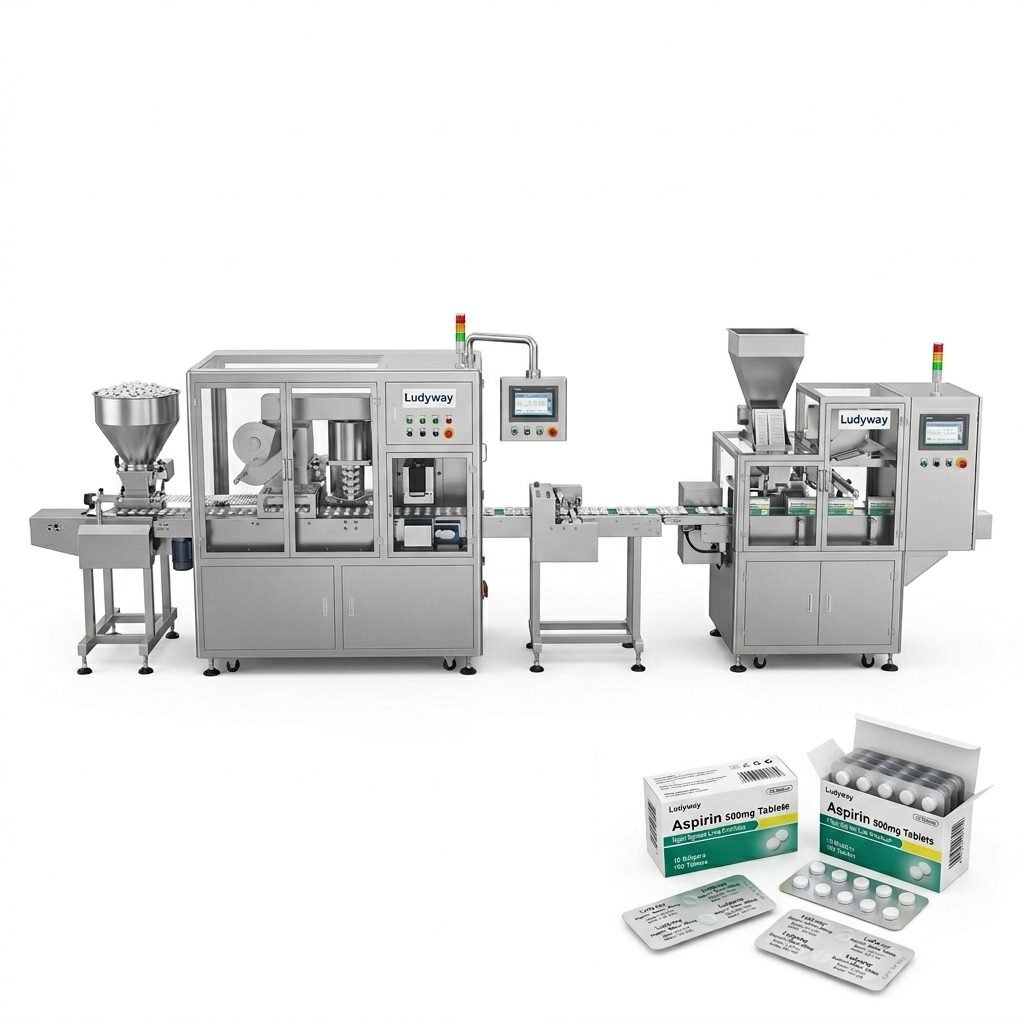
| Turnkey automation | Connects filling, sealing, counting, cartoning, and packing processes |
Common pouch formats for ketchup packaging
Different sales channels require different pouch styles. A properly selected machine should match both your current packaging needs and future product expansion plans.
1. Sachets
Sachets are ideal for single-use ketchup portions in restaurants, airlines, catering, and takeaway channels. They are compact, economical, and highly suitable for mass production.
2. Stick packs
Stick packs offer a slim and modern format, often used for on-the-go foodservice applications or premium condiment presentation.
3. Premade pouches
Premade pouches are often selected for retail products, specialty sauces, or premium branding. They can support stand-up structures, spouts, and enhanced shelf presentation.
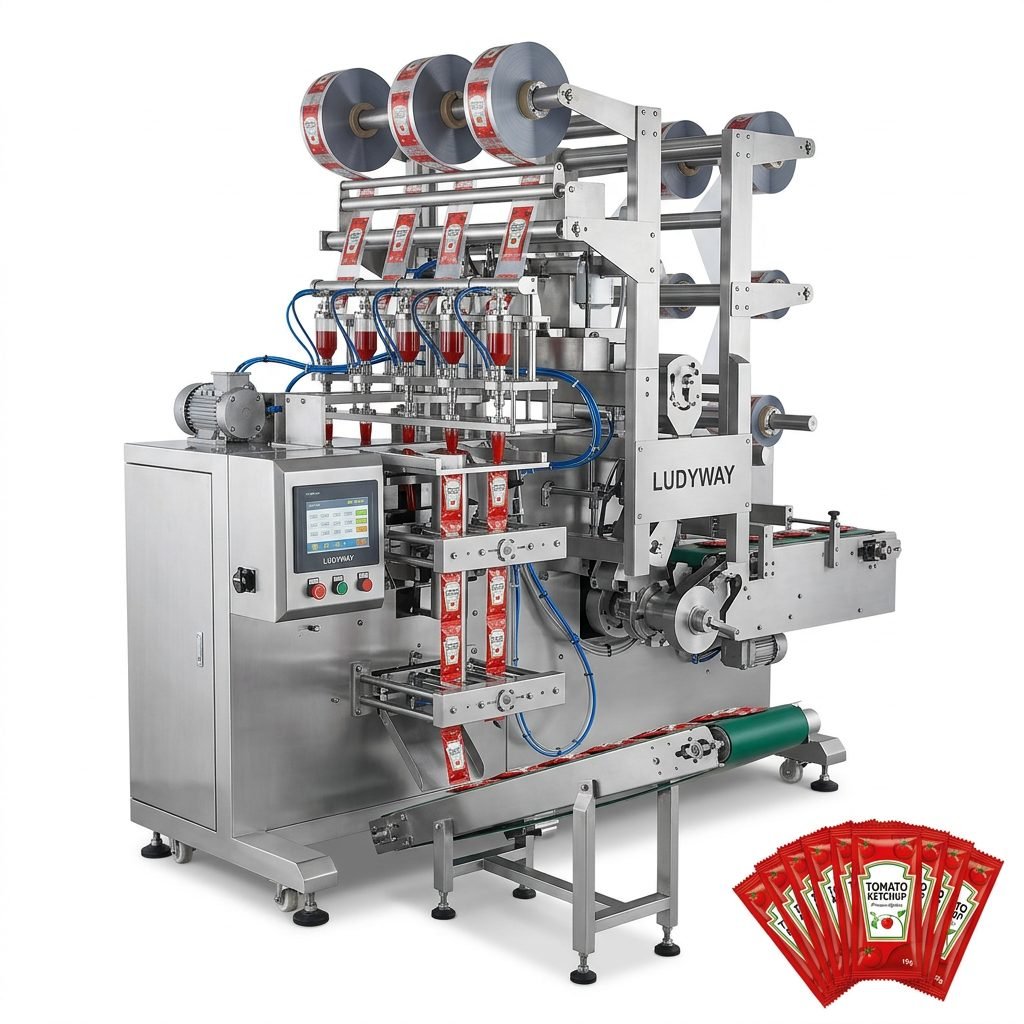
4. Multi-lane small packs
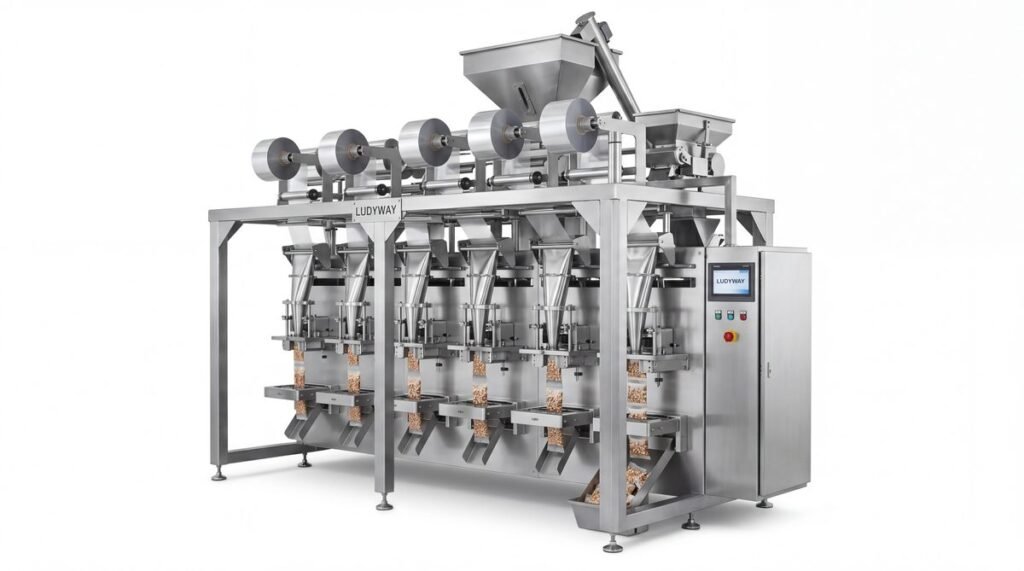
For very high output of small-dose ketchup packaging, multi-lane systems can dramatically increase efficiency by running several filling lanes at the same time.
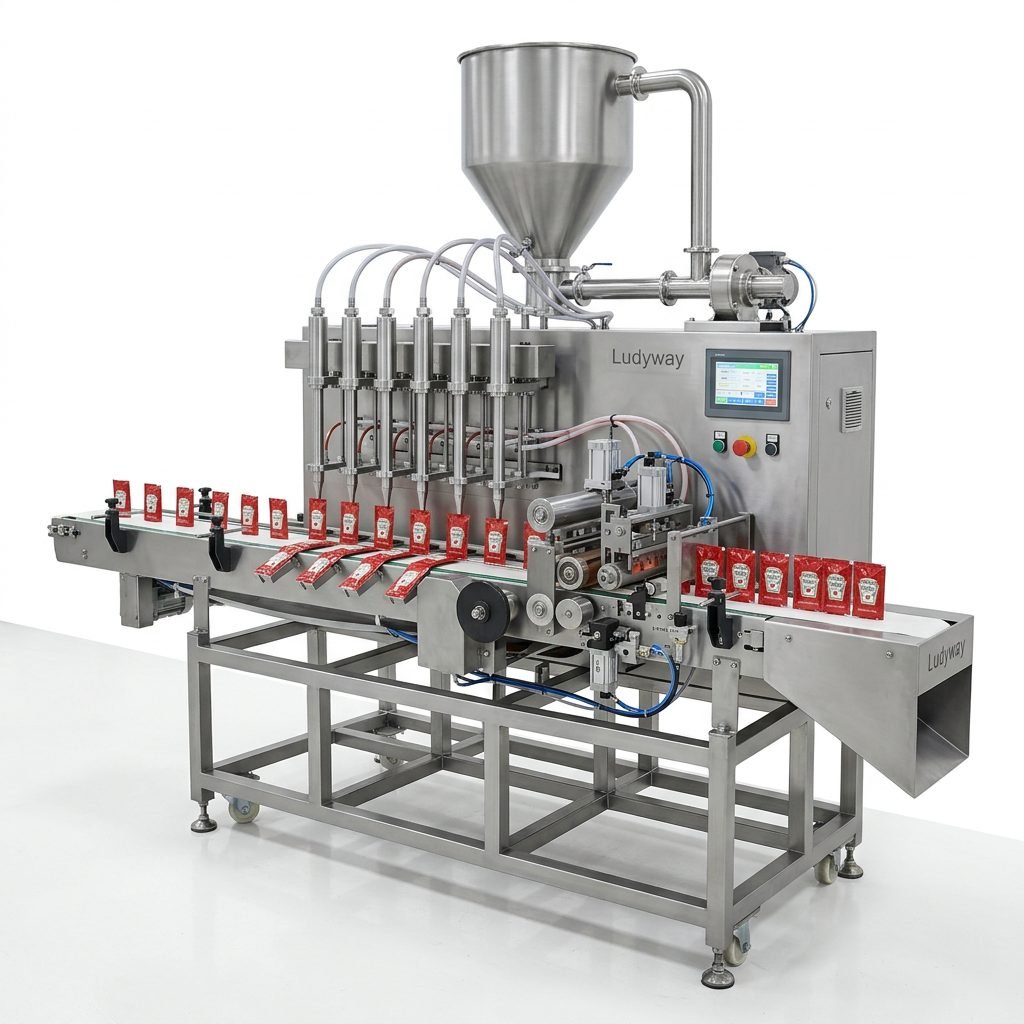
Key features to look for in a ketchup pouch packing machine
Not all sauce packaging equipment performs equally well with ketchup, since ketchup has a viscous texture and may contain seasonings, pulp, or formulation variations.
When comparing equipment, focus on the following features:
- Accurate piston or pump filling system for viscous liquid and paste products
- Stable sealing performance to prevent leakage and contamination
- Food-grade contact parts for hygienic production
- Easy cleaning and maintenance access
- Servo control for more precise operation
- Compatibility with multiple pouch sizes
- Batch coding and date printing integration
- Optional nitrogen flushing or special sealing functions where needed
Benefits for food manufacturers
Investing in automated ketchup pouch packaging equipment can bring measurable business advantages across production, cost control, and brand presentation.
| Business Benefit | Practical Result |
|---|---|
| Higher output | Supports larger daily production volumes with less manual intervention |
| Reduced labor cost | Fewer operators needed for repetitive packing work |
| More consistent quality | Uniform pouch seals and filling accuracy improve customer satisfaction |
| Lower product waste | Improved dosing control helps protect profit margins |
| Better scalability | Makes it easier to expand into new package sizes and export channels |
Applications across sauce and condiment production
Although designed for ketchup, many modern pouch packing systems can also handle a broad range of liquid and paste products. This is valuable for manufacturers
planning to diversify beyond one SKU.
Typical product applications include:
- Ketchup and tomato paste sauces
- BBQ sauce
- Mustard sauce
- Hot sauce
- Salad dressing
- Mayonnaise and creamy condiments
- Soy sauce and seasoning liquids
- Cooking sauces and ready-meal sauces
Choosing the right machine for your production line
Before selecting a ketchup pouch packing machine, manufacturers should define production requirements clearly. The right model depends on more than speed alone.
Important selection criteria
- Target pouch type and dimensions
- Required output per minute or per shift
- Ketchup viscosity and filling temperature
- Need for single-lane or multi-lane production
- Factory layout and available installation space
- Need for integration with upstream cooking or mixing systems
- Need for downstream cartoning, checkweighing, coding, or case packing
- Local food safety and compliance requirements
For manufacturers scaling from semi-automatic production to fully automated operation, it is often more cost-effective to invest in a system designed for future expansion
rather than a short-term standalone machine.
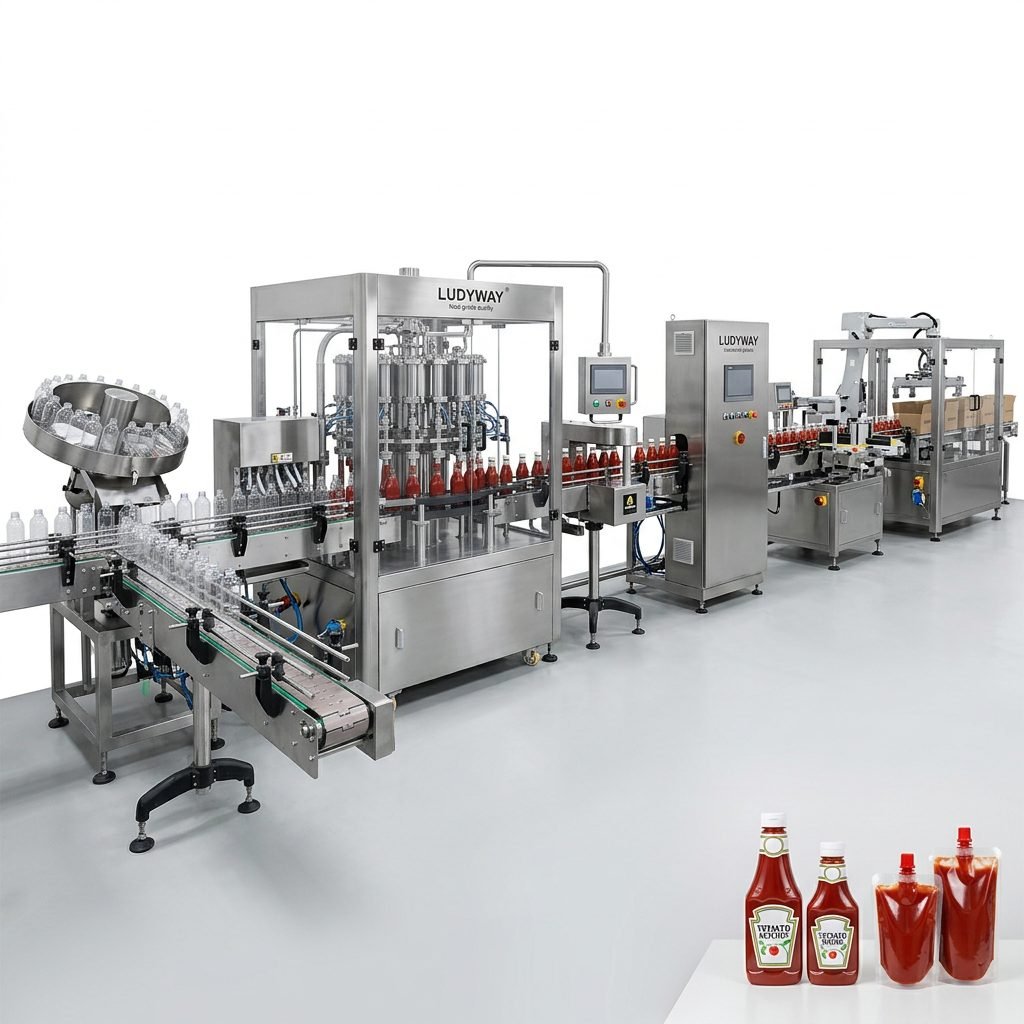
Why turnkey sauce packaging solutions matter
A single machine can improve one packaging step, but a turnkey line can optimize the entire workflow. For ketchup manufacturers, this means better coordination between
product feeding, filling, sealing, inspection, secondary packing, and final logistics.
Turnkey systems are especially valuable when:
- You operate multiple ketchup SKUs
- You need to serve both foodservice and retail channels
- You plan to export to multiple markets
- You want to reduce manual handling between process steps
- You need centralized engineering support for line integration
A reliable manufacturing partner for sauce packaging equipment
For buyers looking for scalable automation, Ludyway ketchup pouch packing machine solutions are backed by more than 30 years of packaging industry experience.
Founded in 1993, the company operates a manufacturing facility of over 20,000 square meters and serves customers in more than 100 countries and regions.
As one of China’s leading packaging machine and turnkey packaging line manufacturers, the company offers a broad portfolio covering liquids, pastes, powders, granules,
sachets, stick packs, pouches, and fully integrated packaging lines. This makes it a strong option for food manufacturers that need dependable automation,
flexible configurations, and long-term technical support.
Maintenance and hygiene considerations
In sauce production, hygiene is critical. Ketchup packaging systems should be designed for convenient cleaning and stable sanitary performance.
A well-designed machine helps reduce downtime and lowers contamination risk.
Best practices include:
- Using food-grade stainless steel contact parts
- Ensuring smooth surfaces for easier cleaning
- Reducing dead corners in product contact zones
- Scheduling routine seal inspection and preventive maintenance
- Checking filling accuracy regularly to control giveaway
Frequently asked questions
Can one machine pack ketchup and other sauces?
Yes. Many machines can handle ketchup as well as similar viscous sauces, provided the filling system and material contact structure match the product characteristics.
Is a multi-lane machine better for ketchup sachets?
For high-volume small sachet production, multi-lane models are often the most efficient choice because they increase output without requiring multiple separate machines.
What pouch materials can be used?
This depends on the machine design and sealing requirements, but common laminated flexible packaging materials for food condiments are widely supported.
How do manufacturers reduce leakage in ketchup pouches?
Leakage prevention depends on accurate filling, clean sealing areas, stable sealing temperature, proper film selection, and consistent machine calibration.
Final thoughts for food manufacturers
A ketchup pouch packing machine is more than a packaging tool—it is a strategic investment in production efficiency, quality consistency, and market responsiveness.
For food manufacturers dealing with rising labor costs, strict hygiene standards, and growing demand for convenient condiment packaging, automated sauce packaging systems
provide a clear competitive advantage.
By choosing the right machine configuration and working with an experienced packaging equipment manufacturer, producers can achieve
faster throughput, cleaner operation, stronger pouch quality, and better long-term return on investment.