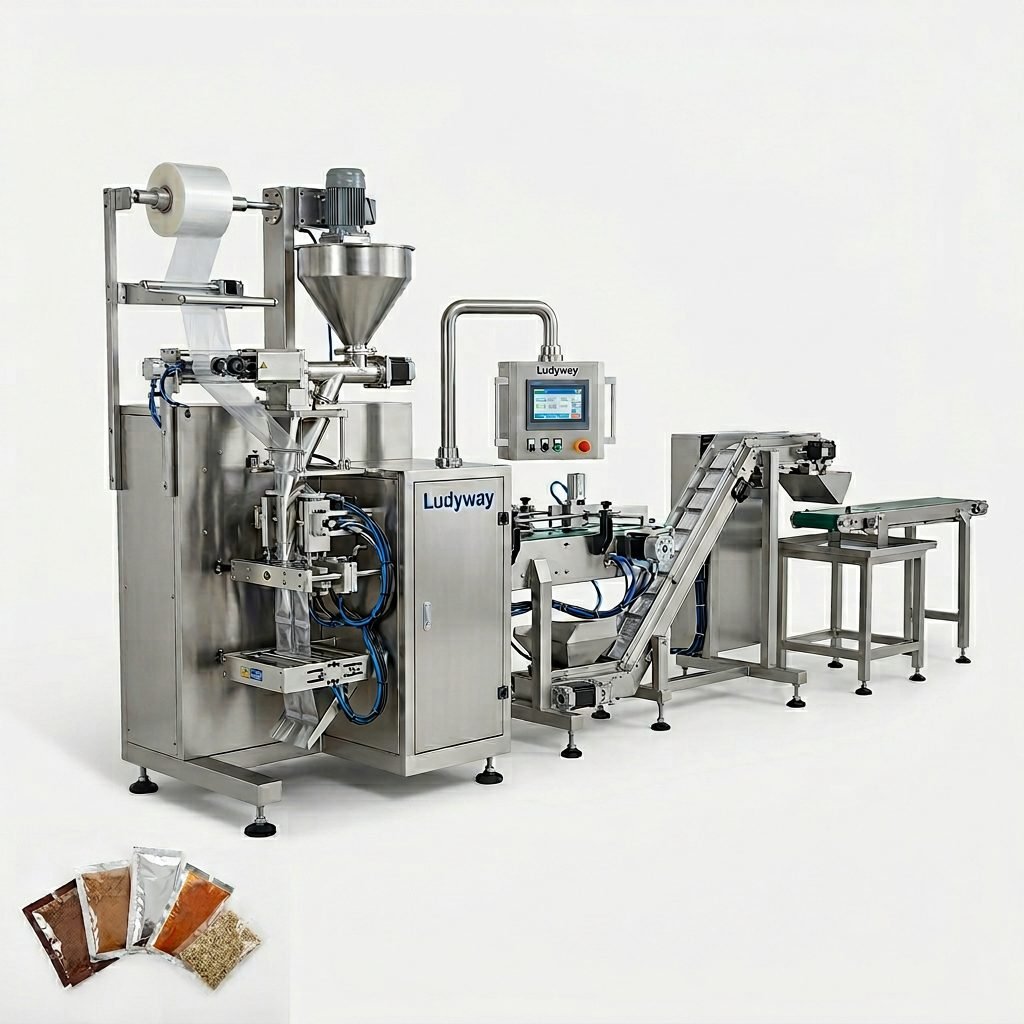
In today’s competitive food industry, noodle manufacturers need packaging equipment that delivers
speed, precision, cleanliness, and flexibility. Whether producing instant noodles, ramen, dry noodles,
fresh noodles, or noodle seasoning sachets, the right packaging solution helps reduce waste, improve shelf appeal,
and maintain stable output across every shift.
A modern noodle packaging machine is more than a sealing device. It is part of an integrated production strategy
that supports automated feeding, accurate weighing, synchronized filling, secure sealing, inspection, coding, and
final cartoning. For manufacturers targeting retail, foodservice, or export markets, efficient packaging directly
affects profitability and brand reputation.
Why Noodle Packaging Efficiency Matters
Noodles are sold in multiple formats, from pillow bags and sachets to multi-pack bundles and complete meal kits.
In high-volume production, small packaging inconsistencies can quickly become expensive. A reliable machine helps
companies achieve:
- Consistent package weight to reduce giveaway and complaints
- High sealing integrity to protect product freshness and hygiene
- Faster line throughput to meet peak demand
- Lower labor dependence through automation
- Cleaner production conditions for food safety compliance
- Better packaging appearance for stronger shelf performance
For instant noodle producers especially, packaging speed must work together with exact synchronization between
noodle cake handling, seasoning packing, pouch loading, and final sealing. A bottleneck in any of these steps can
reduce total line efficiency.
Common Types of Noodle Packaging Machines
Different noodle products require different packaging technologies. Choosing the correct machine depends on product
shape, moisture level, output target, and final package format.
| Machine Type | Best For | Key Advantage |
|---|---|---|
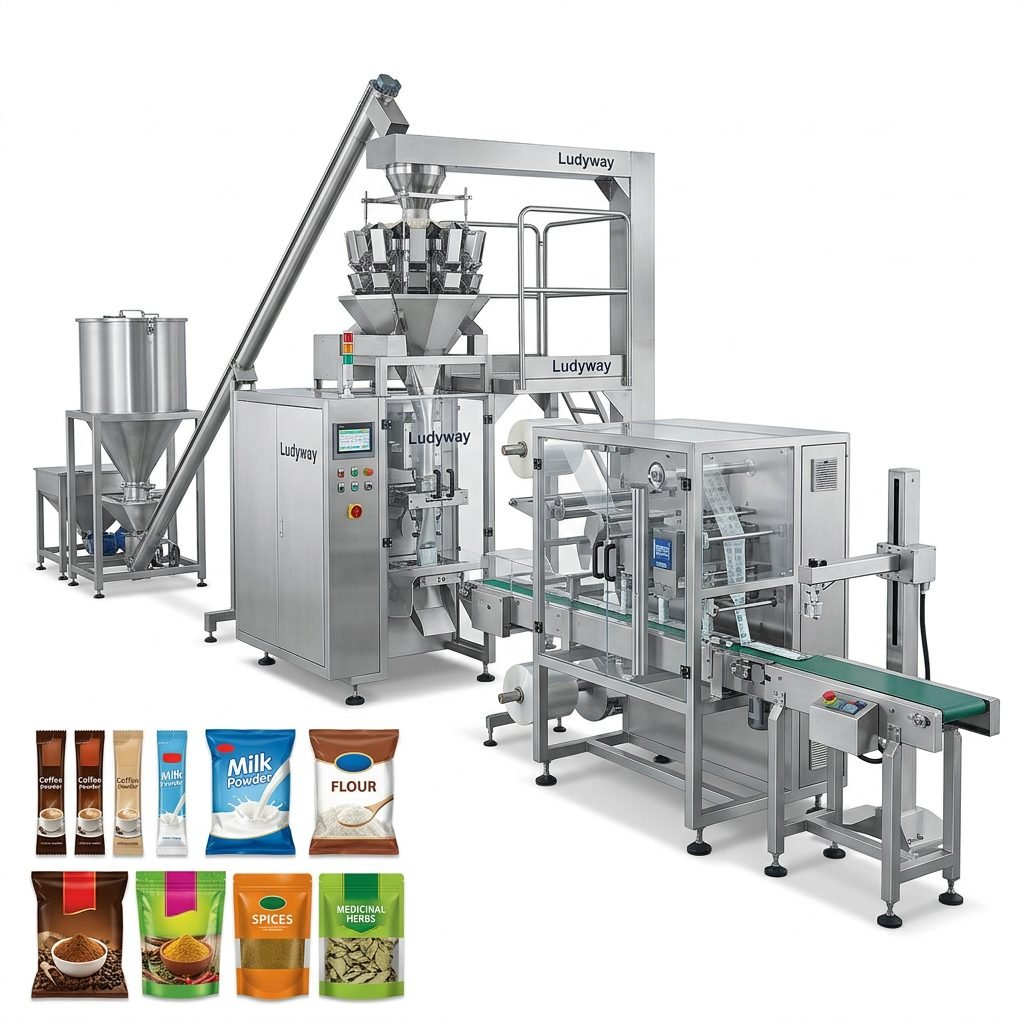
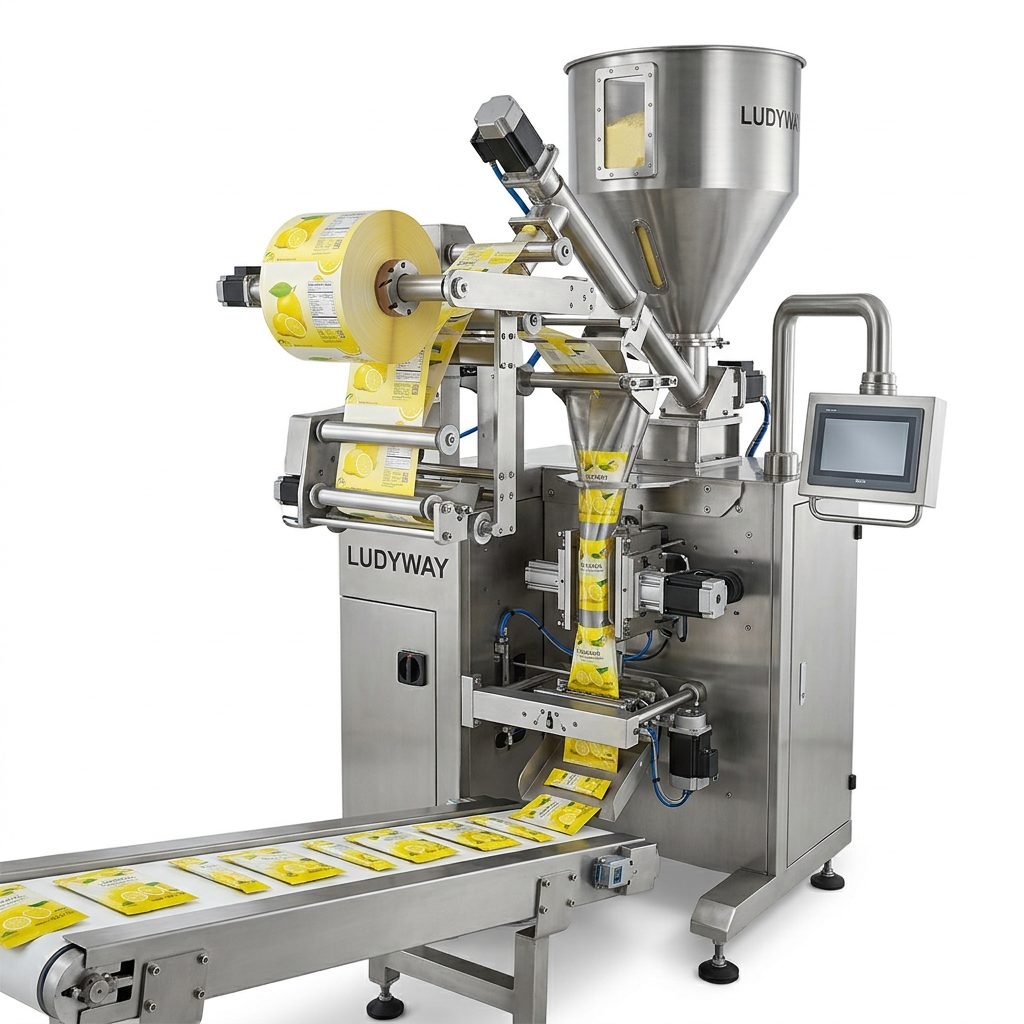
| Vertical Form Fill Seal Machine | Dry noodles, noodle snacks, seasoning sachets | Compact structure and fast automatic bag making |
| Premade Pouch Packaging Machine | Premium noodle products and retail-ready pouches | High-end appearance and strong sealing quality |
| Flow Wrapping Machine | Noodle blocks, instant noodle cakes, bundled packs | Smooth high-speed wrapping for solid products |
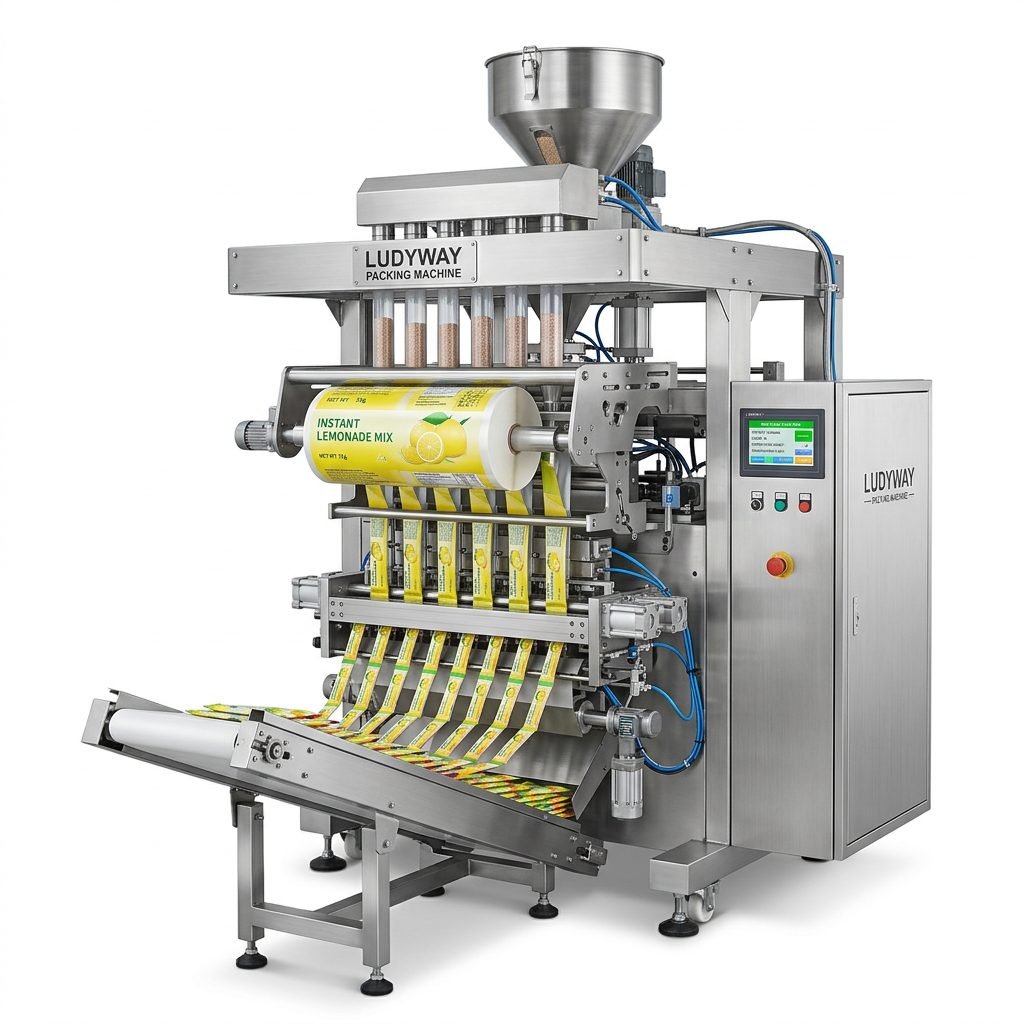
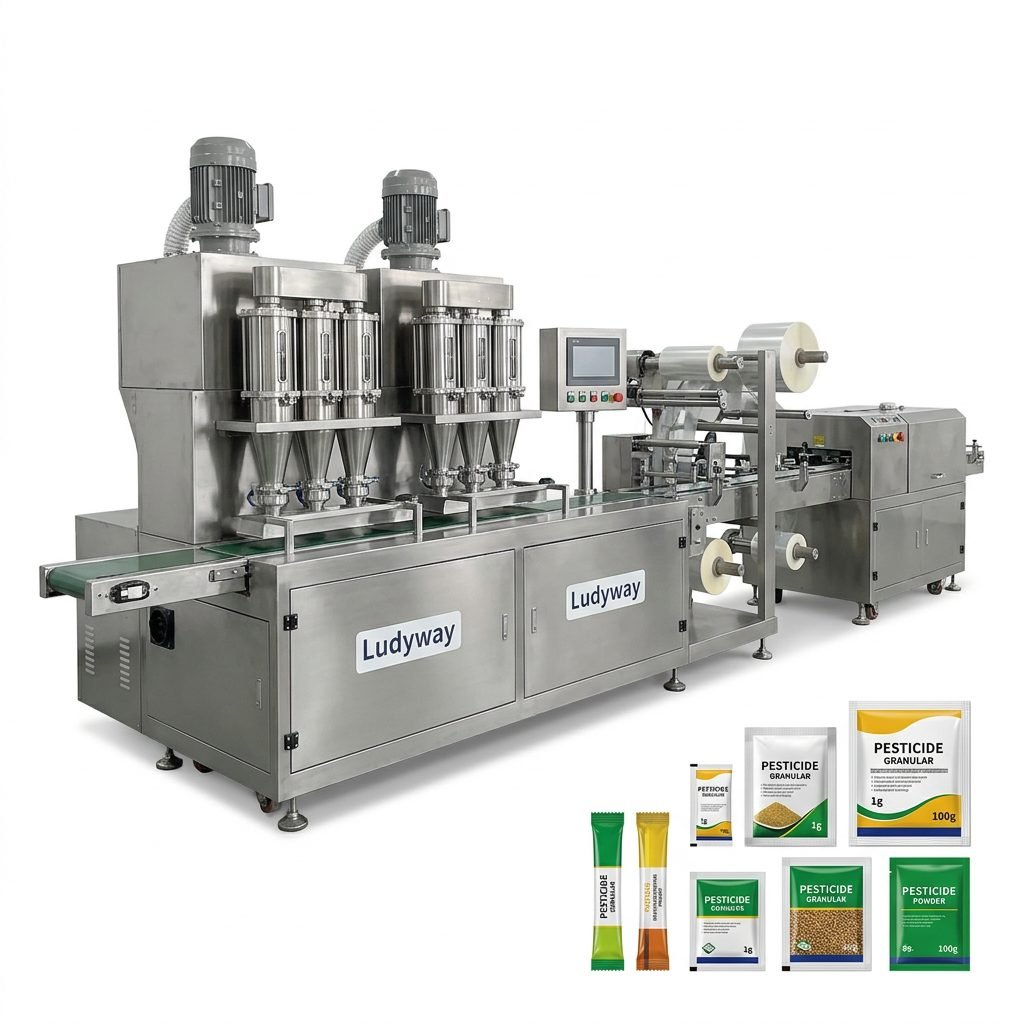
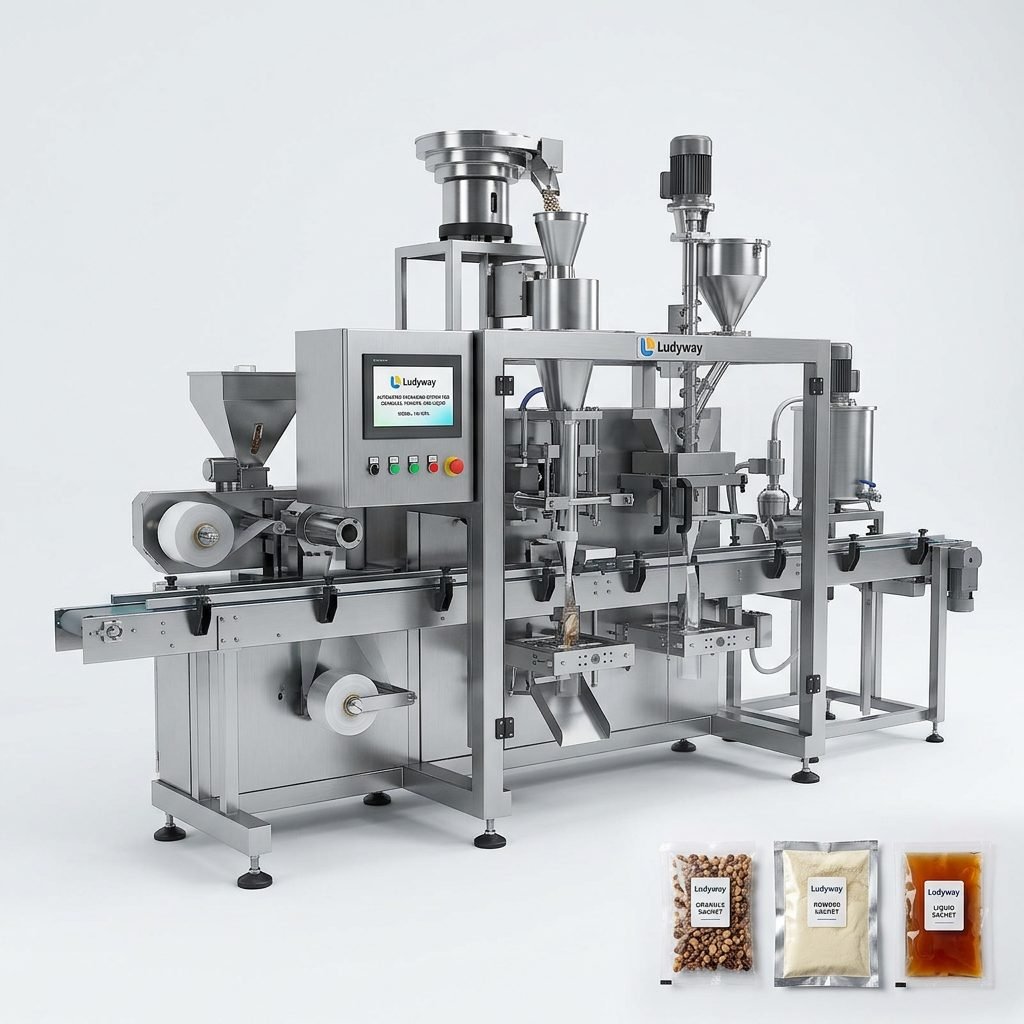
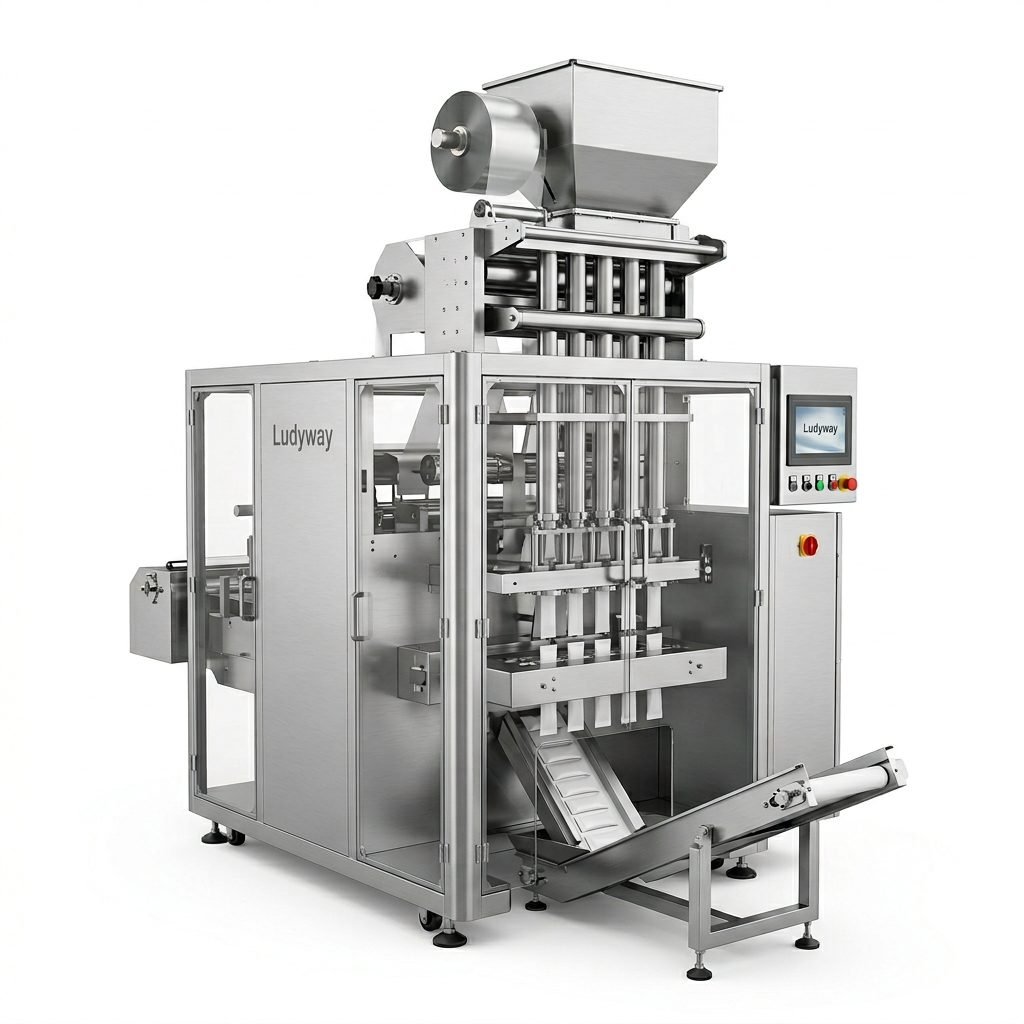
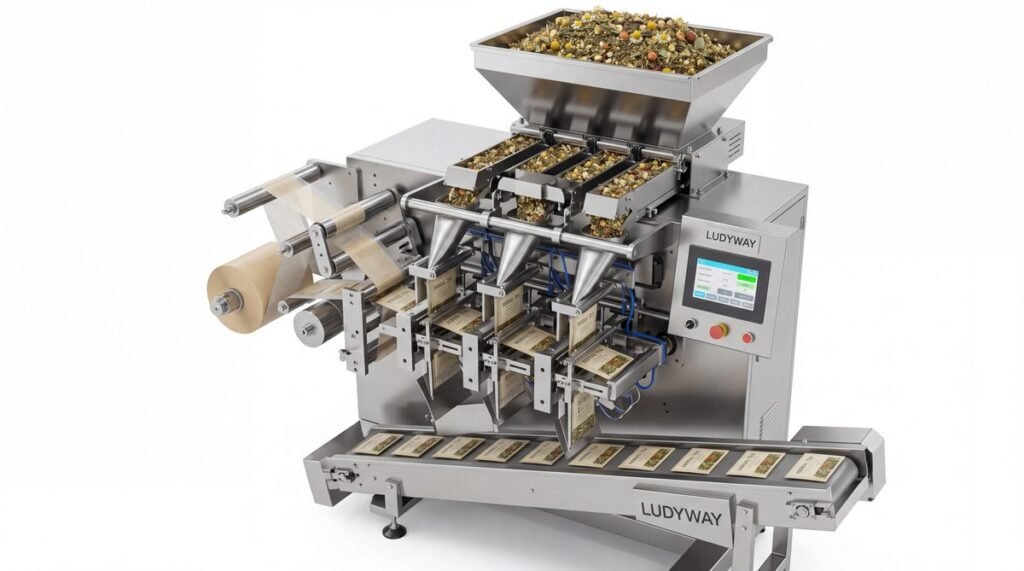
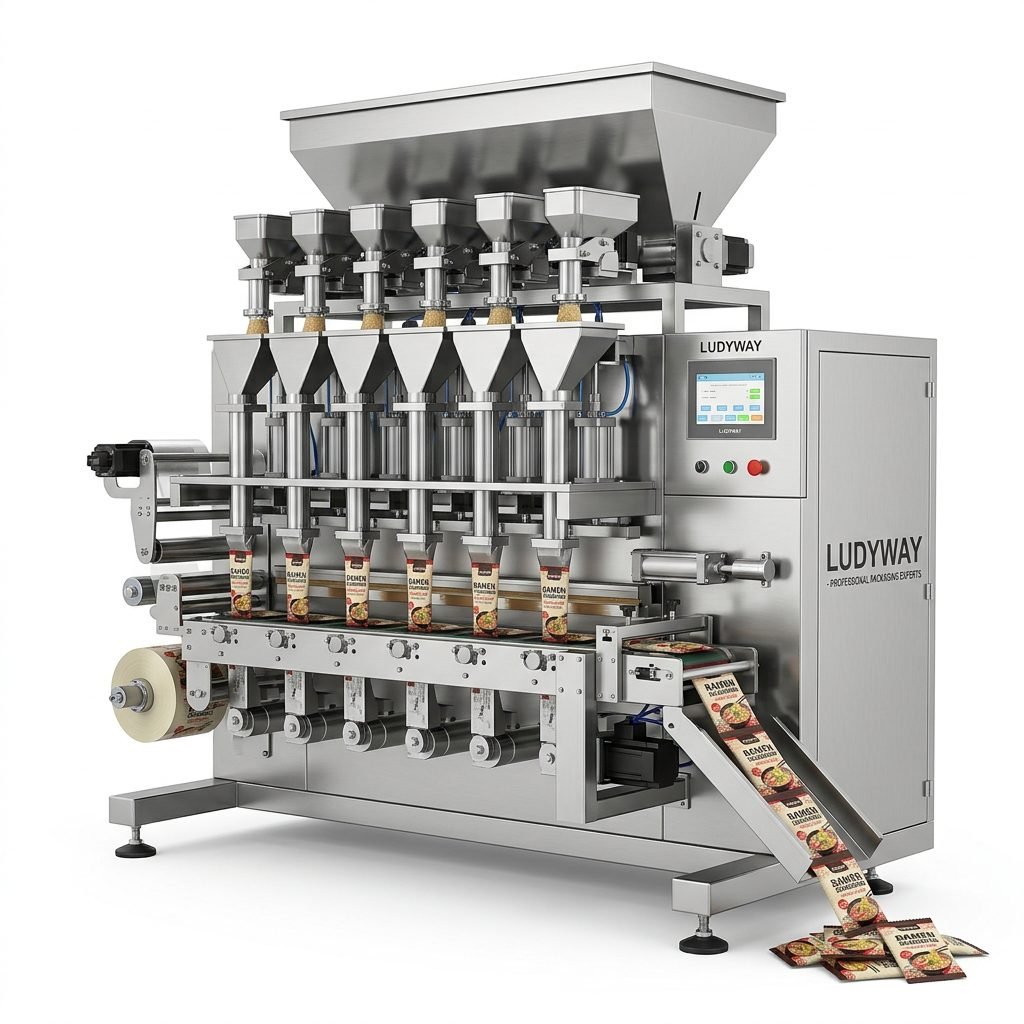
| Multi-lane Sachet or Stick Pack Machine | Seasoning powder, oil, sauce, soup base | High-output small pack production |
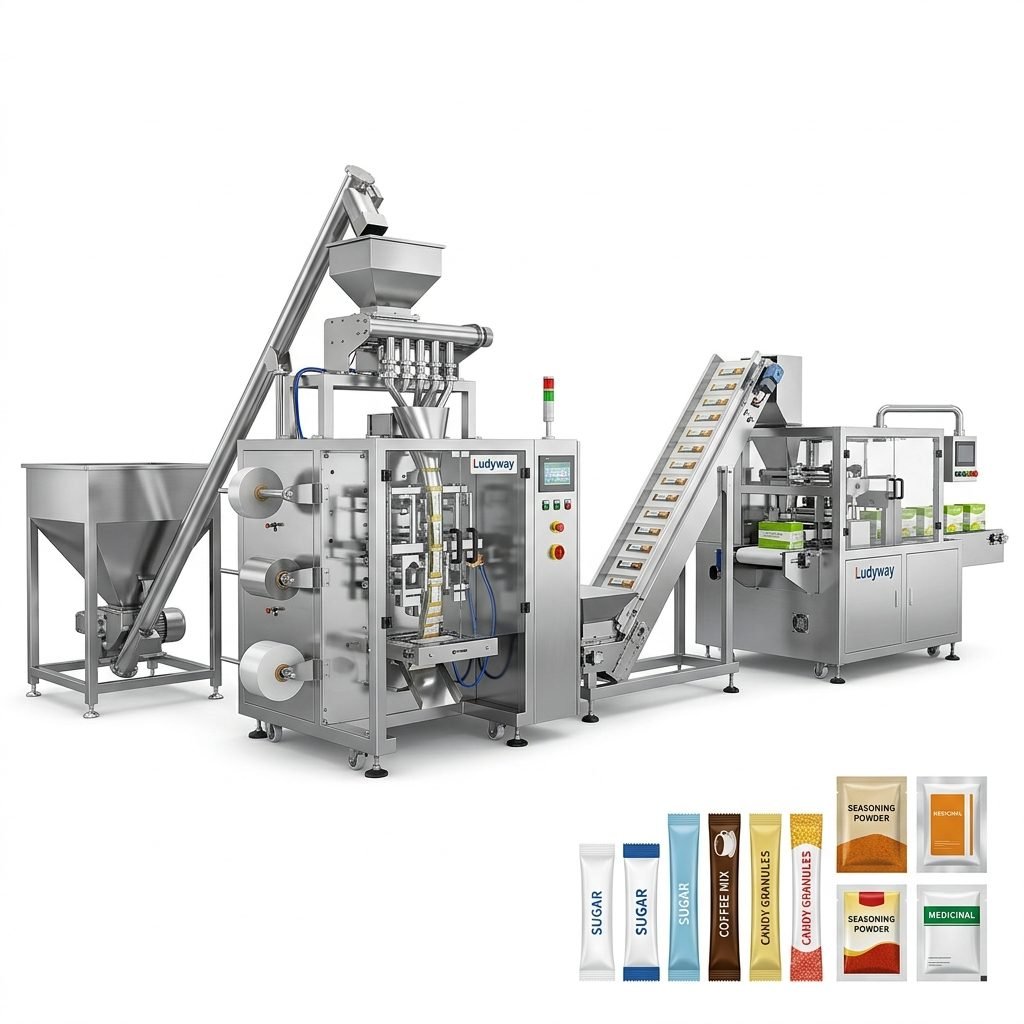
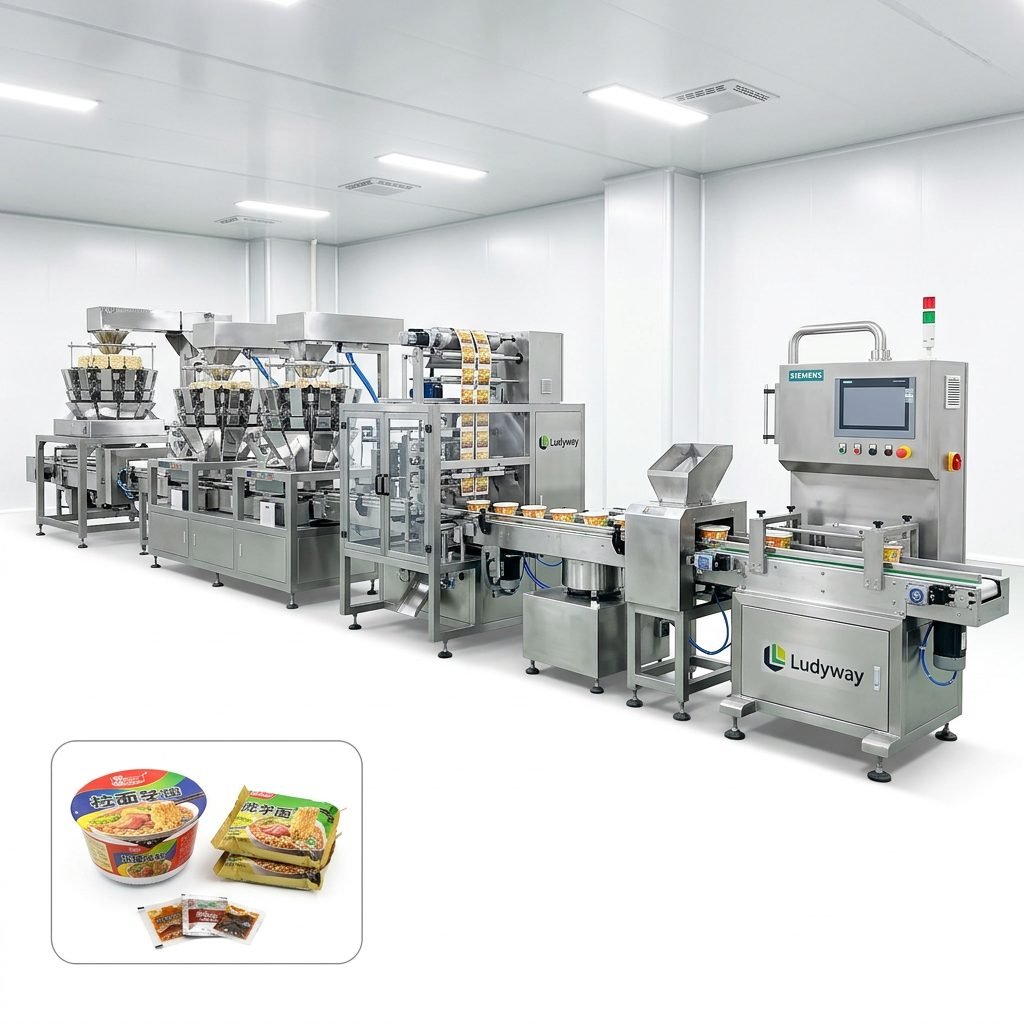
| Turnkey Packaging Line | Integrated instant noodle factories | Complete automation from feeding to end-of-line packing |
Key Features of a High-Performance Noodle Packaging Machine
When comparing equipment, buyers should look beyond basic speed ratings. The best systems combine operational
stability with long-term hygiene and maintenance benefits.
1. Accurate Weighing and Filling
Noodle products often include multiple components, such as noodle cake, powder seasoning, vegetable mix, and oil
sachets. Precision is critical because overfilling increases costs while underfilling risks customer dissatisfaction.
Advanced dosing systems and checkweighing integration help maintain stable filling accuracy.
2. Hygienic Contact Design
Food-grade stainless steel construction, easy-clean surfaces, dust control, and enclosed filling zones all support
hygienic packaging. This is especially important for manufacturers producing export-oriented food products that must
meet strict safety expectations.
3. Fast Changeover
Many factories handle multiple SKUs, bag sizes, and flavor combinations. Machines with user-friendly controls,
recipe memory, and modular adjustment points can reduce downtime during product changeovers.
4. Stable Sealing Performance
Strong and consistent seals protect noodles from moisture, contamination, and transport damage. This matters for
both domestic distribution and long-distance export logistics.
5. Integration with Upstream and Downstream Equipment
A packaging machine performs best when connected with conveyors, feeders, weighing systems, coding units, metal
detectors, checkweighers, cartoners, and case packers. A complete line reduces manual handling and improves total
production control.
Applications Across the Noodle Industry
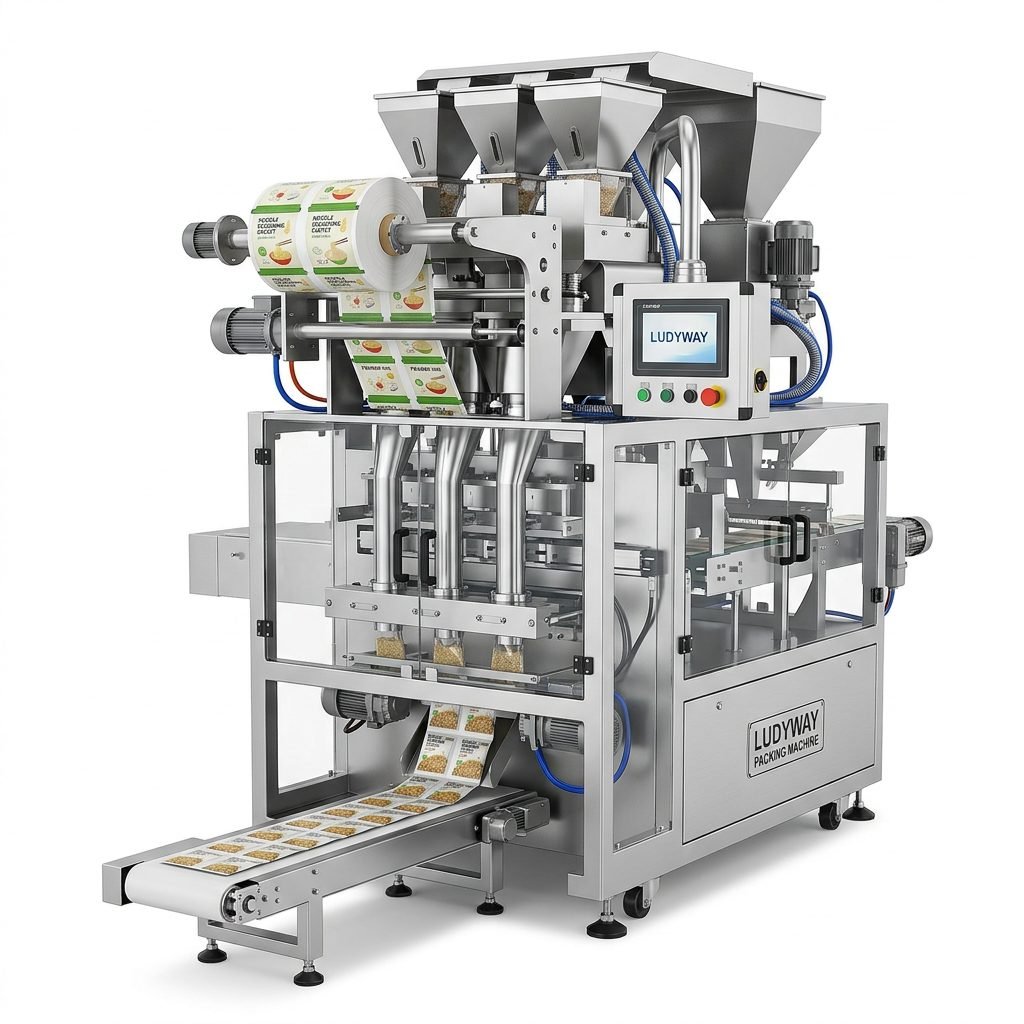
Packaging solutions can be configured for a wide range of noodle-related products:
- Instant noodle cakes in pillow bags or multipacks
- Dry stick noodles for retail distribution
- Fresh noodles requiring controlled and hygienic packaging conditions
- Ramen seasoning powder in sachets or stick packs
- Sauce, oil, or soup base sachets for complete meal kits
- Bulk noodle packs for foodservice and industrial buyers
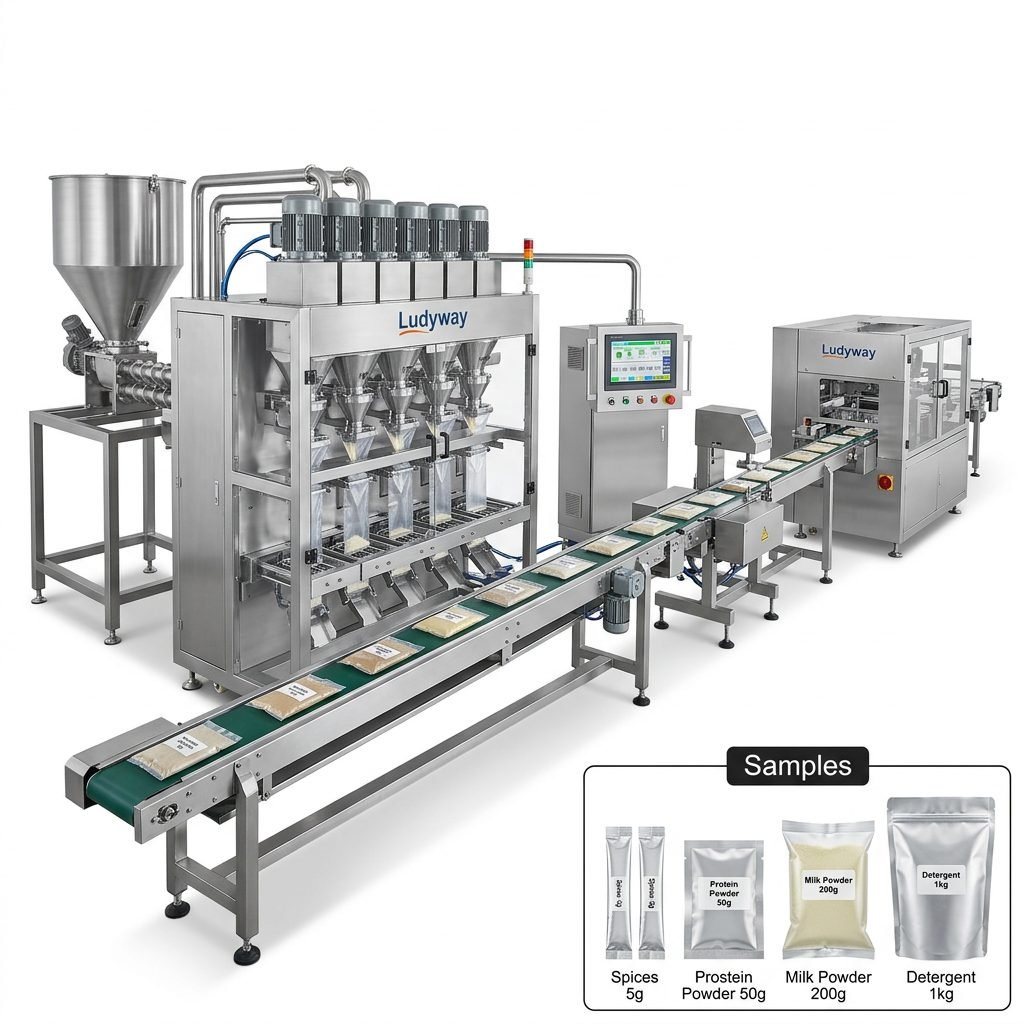
In many factories, the noodle packaging process does not involve one machine alone. Instead, it combines several
synchronized systems to package the main noodle product and the accompanying condiments efficiently.
Benefits of Automation for Noodle Manufacturers
Manual or semi-automatic packing may work for small output volumes, but high-growth businesses usually need greater
consistency and lower unit costs. Automated noodle packaging equipment brings measurable advantages.
| Operational Need | How Automation Helps |
|---|---|
| Labor reduction | Cuts repetitive manual handling and improves staffing efficiency |
| Production speed | Maintains high output with stable cycle timing |
| Quality control | Supports standardization in weight, seal, and appearance |
| Food safety | Reduces product exposure and contamination risk |
| Scalability | Makes it easier to expand capacity or add SKUs later |
How to Choose the Right Noodle Packaging Solution
The ideal machine depends on production goals and product characteristics. Before investing, manufacturers should
evaluate several technical and commercial factors.
- Product type: instant, dry, fresh, or fried noodles
- Package style: pillow bag, sachet, stick pack, pouch, or carton
- Required output: low, medium, or high-speed production
- Material characteristics: fragile noodle blocks, powder seasoning, liquid oil, or mixed kits
- Available factory space: standalone machine or full integrated line
- Compliance standards: local food safety and export requirements
- Future expansion plans: need for modular upgrades or turnkey line integration
It is also important to review machine compatibility with existing production systems. In some cases, a packaging
upgrade may require feeder redesign, buffering conveyors, or improved inspection equipment for the best results.
Importance of Seasoning and Accessory Pack Integration
For instant noodle products, the package often contains more than noodles. Powder seasoning, dehydrated vegetables,
sauce sachets, and oil packs must be counted and inserted correctly. Any mismatch can cause rework, product
rejection, and brand damage.
Integrated systems can coordinate:
- Noodle cake feeding and positioning
- Seasoning sachet production or supply
- Automatic counting and collating
- Primary bagging or wrapping
- Inspection, metal detection, and checkweighing
- Cartoning and secondary packaging
Hygienic Packaging as a Competitive Advantage
Hygiene is not only a compliance issue; it is a market advantage. Consumers and distributors increasingly expect
food products to be packed in controlled environments with minimal contamination risk. This is particularly true for
brands entering premium retail channels or exporting internationally.
A hygienic noodle packaging setup may include:
- Smooth food-contact parts for easier cleaning
- Dust extraction or powder control for seasoning handling
- Enclosed filling and sealing sections
- Tool-free disassembly for faster washdown or maintenance
- Inspection equipment to detect metal contamination or weight deviations
Why Turnkey Packaging Lines Are Growing in Demand
Many manufacturers no longer want to source separate machines from multiple vendors. They prefer integrated systems
that simplify engineering coordination, commissioning, and after-sales support. A turnkey line can combine product
feeding, primary packing, secondary packing, inspection, coding, labeling, and end-of-line automation into one
workflow.
For companies seeking scalable noodle packaging automation, Ludyway
offers broad packaging machinery and turnkey line capabilities backed by more than 30 years of manufacturing
experience, a large modern factory base, and export service across global food and related industries.
Questions Buyers Should Ask Before Purchasing
Can the machine handle multiple noodle formats?
If your production includes several SKUs, choose a system designed for flexible bag sizes and quick recipe changes.
Is the filling system accurate enough for seasoning packs?
Powder and granule condiments need stable dosing to control cost and maintain taste consistency.
How easy is cleaning and maintenance?
A machine that is difficult to clean or service can increase downtime and sanitation risks.
Can the line be expanded later?
Future-ready systems allow integration with cartoners, case packers, palletizers, or additional filling modules.
What technical support is available?
Responsive installation guidance, spare parts support, and troubleshooting assistance are essential for long-term
operating stability.
Final Thoughts on Modern Noodle Packaging Equipment
A high-quality noodle packaging machine helps manufacturers achieve fast output, precise filling, and hygienic
packaging performance without sacrificing flexibility. As market demand increases and product ranges become more
complex, automated and integrated packaging solutions are becoming a practical investment rather than an optional
upgrade.
Whether you need a standalone machine for noodle packs or a complete line for noodles plus seasoning sachets,
selecting the right equipment can improve efficiency, strengthen quality control, and support sustainable business
growth in a highly competitive food market.