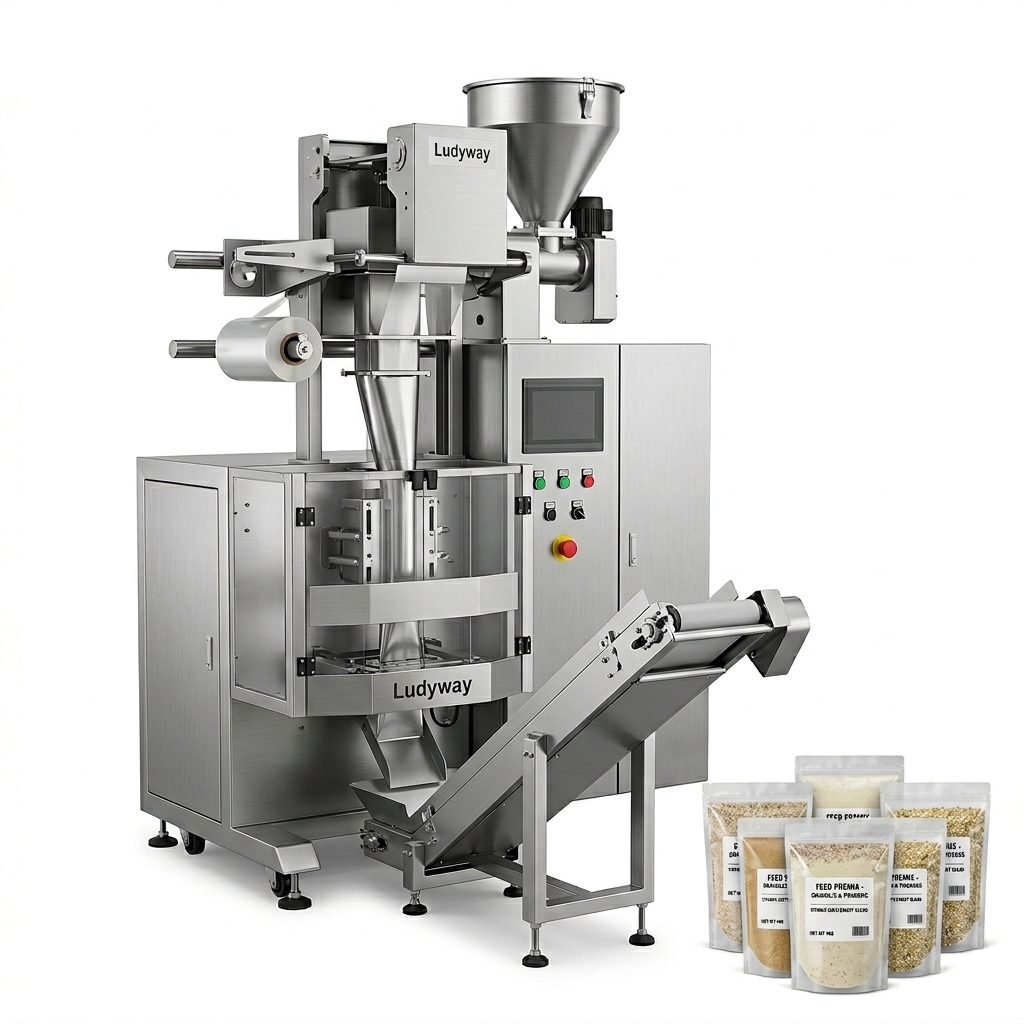
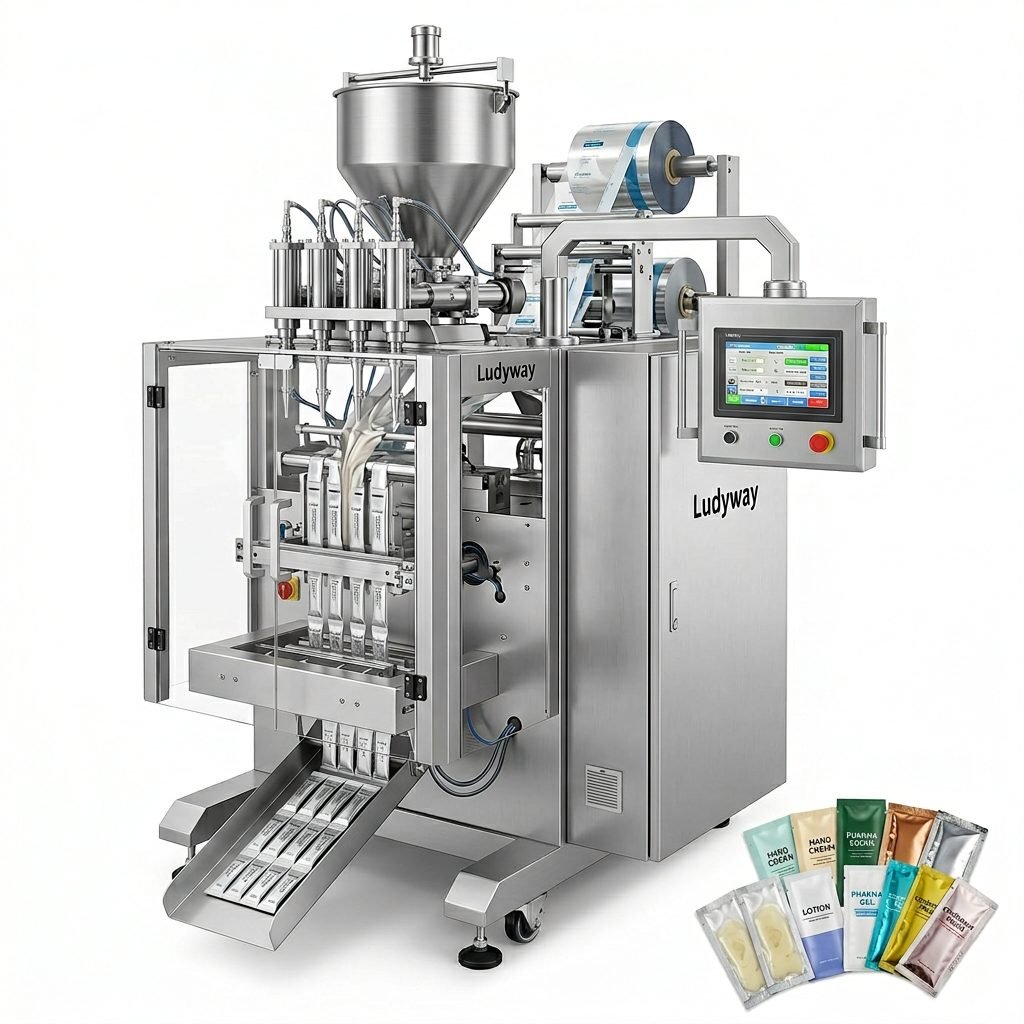
For businesses dealing with small items like spices, pharmaceuticals, supplements, or hardware components, efficient packaging is a critical operational pillar. The right small parts packaging machine not only safeguards product integrity but also drives production speed, reduces waste, and enhances brand presentation. This comprehensive guide explores the various types of packaging machines for small parts, their key features, and provides a structured framework to help you select the optimal solution for your specific needs.
Understanding Small Parts Packaging Machines
Small parts packaging machines are automated systems designed to handle, measure, and package small, discrete items or precise quantities of granular, powdered, or liquid products. They are engineered for accuracy, speed, and consistency, replacing error-prone and labor-intensive manual packaging processes. These machines are indispensable in industries where precision, hygiene, and high-volume output are paramount.
Core Objective:
The primary goal is to automate the dispensing and sealing of small products into pre-formed pouches, sachets, sticks, or blisters with minimal human intervention, ensuring each package is identical in weight, volume, and appearance.
Primary Types of Small Parts Packaging Machines
The market offers a variety of machines, each suited to different product forms and packaging styles. Understanding these categories is the first step in narrowing down your choice.
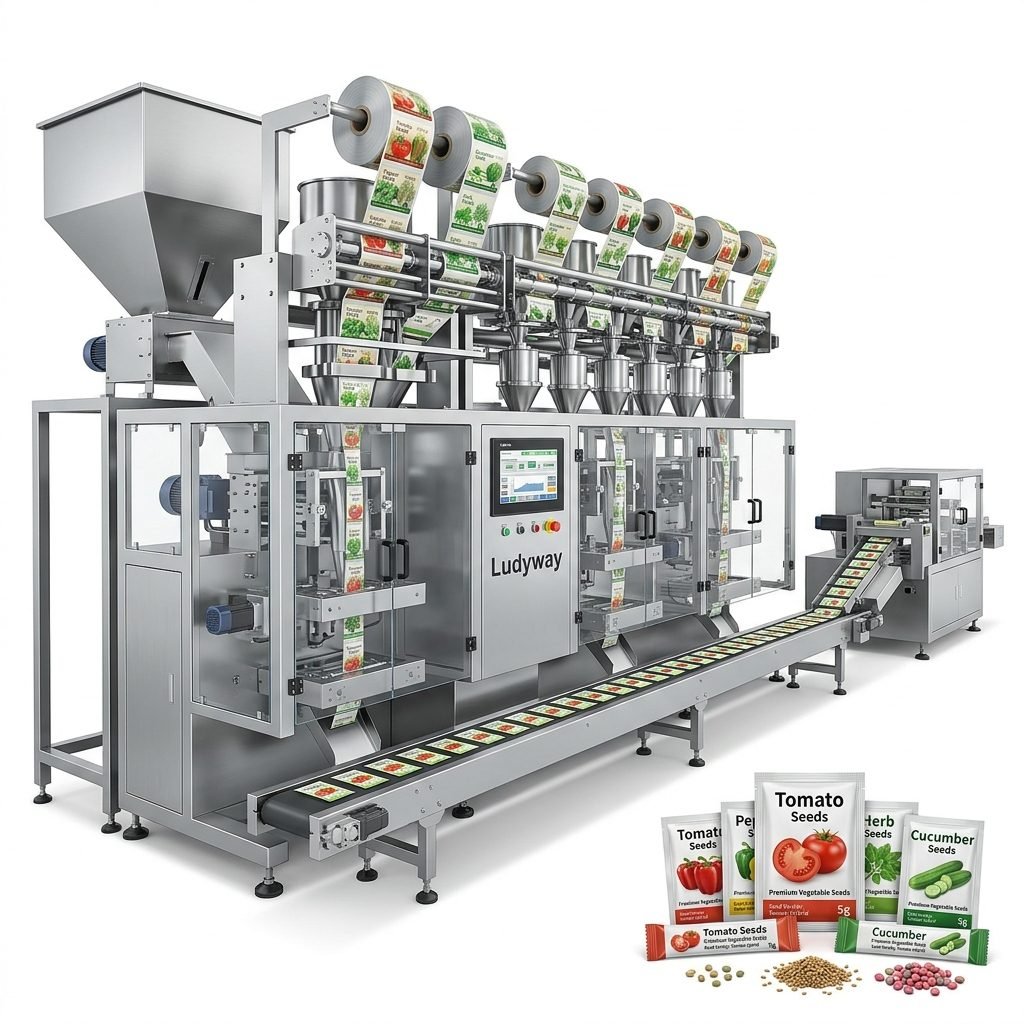
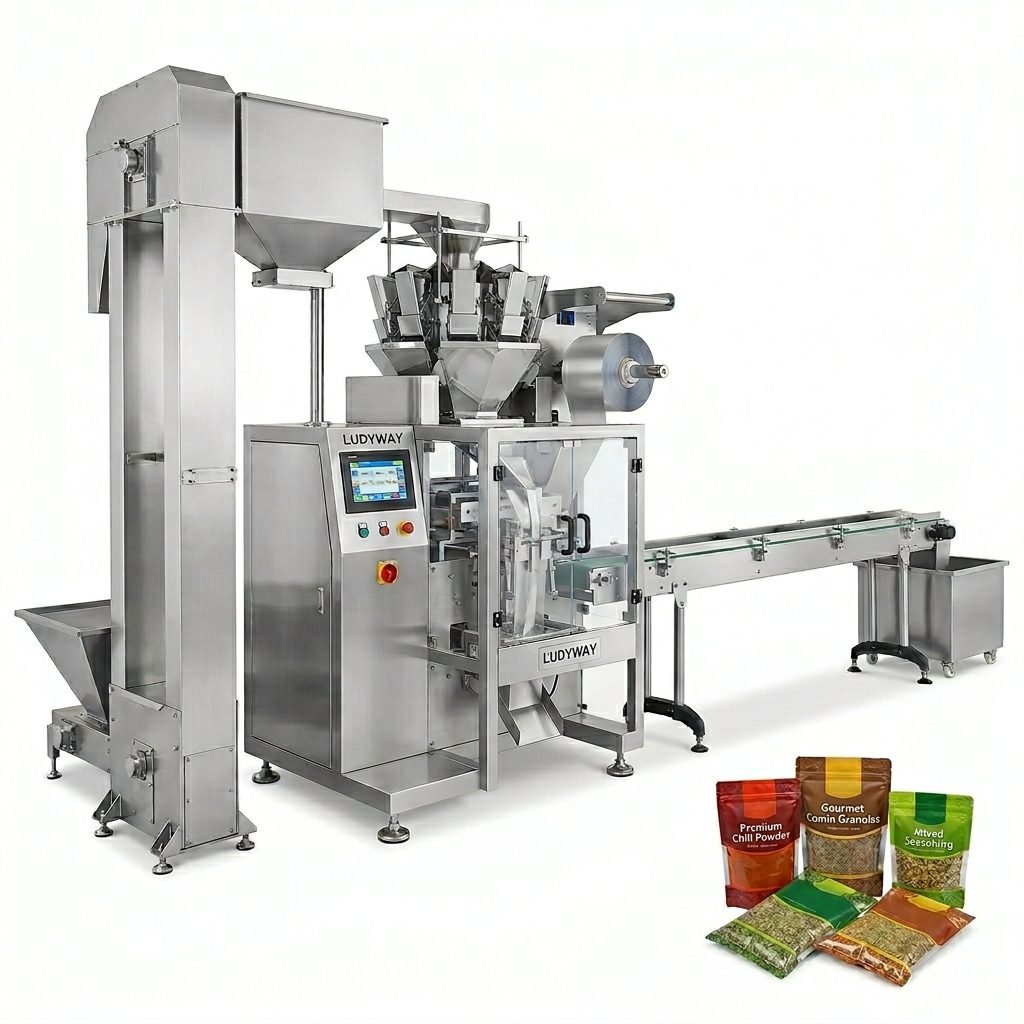
1. Vertical Form-Fill-Seal (VFFS) Machines
These are the most common and versatile machines. They form a roll of flat packaging film into a tube, fill it with the product from above, and then seal and cut it into individual bags or pouches.
- Best For: Granules, powders, seeds, small hardware items (like screws).
- Packaging Style: Stand-up pouches, pillow bags, gusseted bags.
- Key Advantage: High flexibility in bag size and design, excellent for medium to high-speed production.
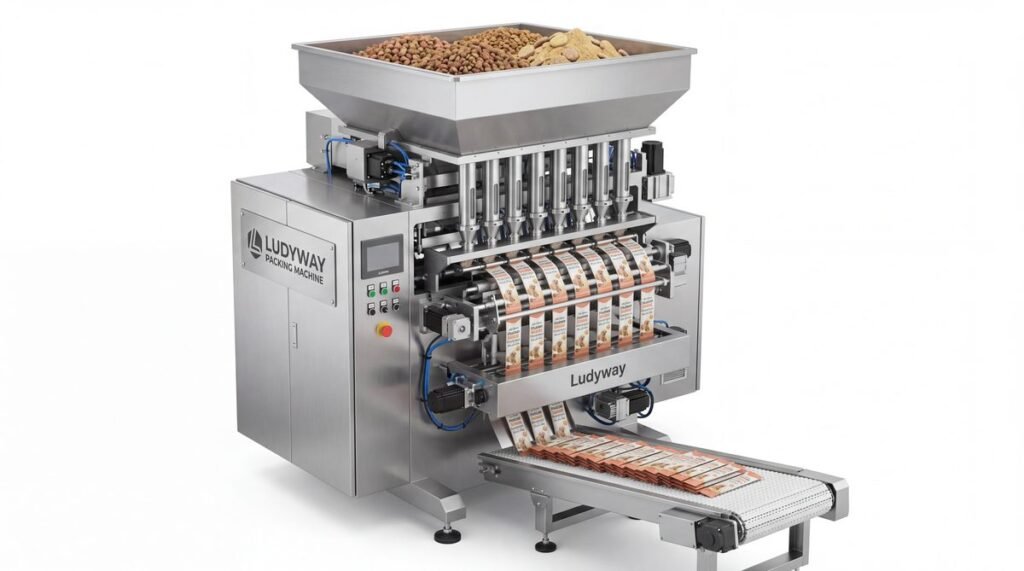
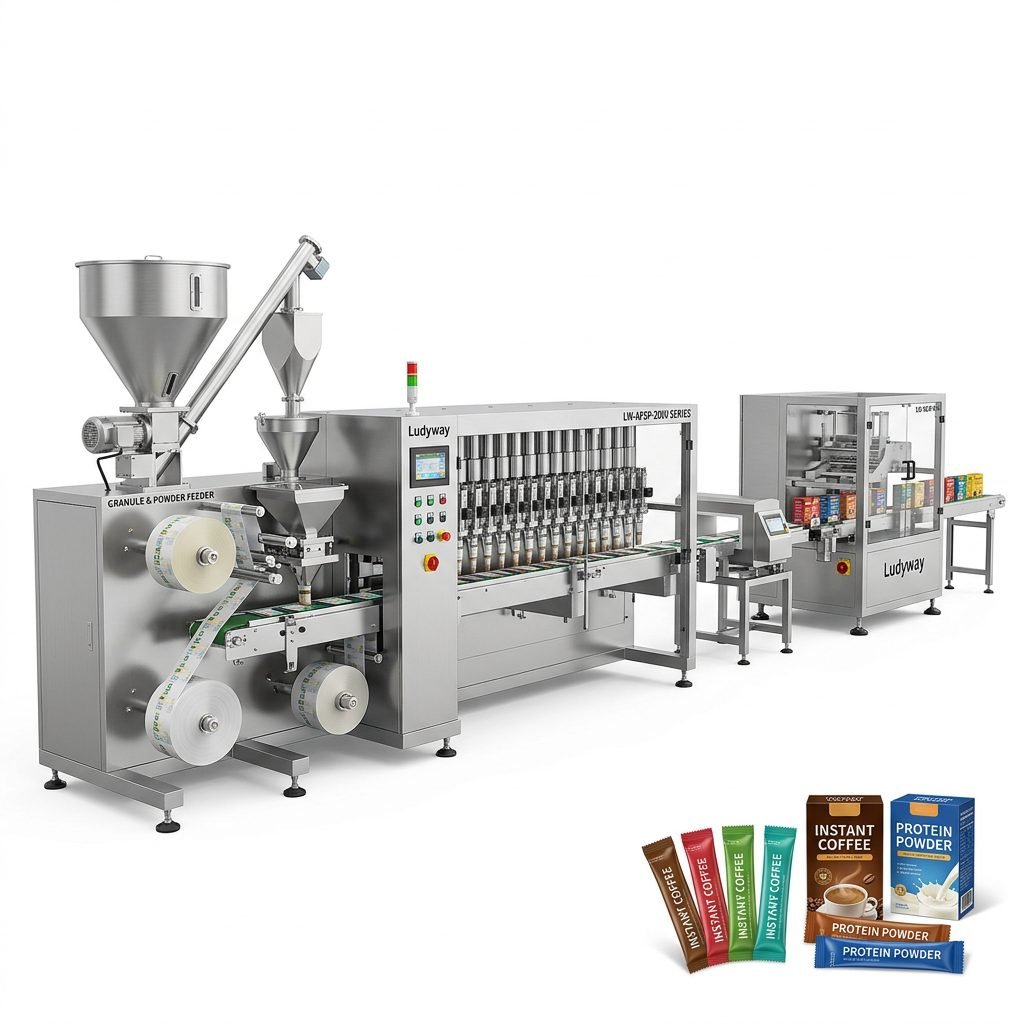
2. Stick Pack Packaging Machines
Specialized for creating long, narrow “stick” or “strip” packs, ideal for single-serve portions of powders or granules.
- Best For: Instant coffee, drink mixes, sugar, pharmaceutical powders.
- Packaging Style: Slim, elongated sachets.
- Key Advantage: Compact, portable packaging format; machines often feature multi-lane design for very high output.
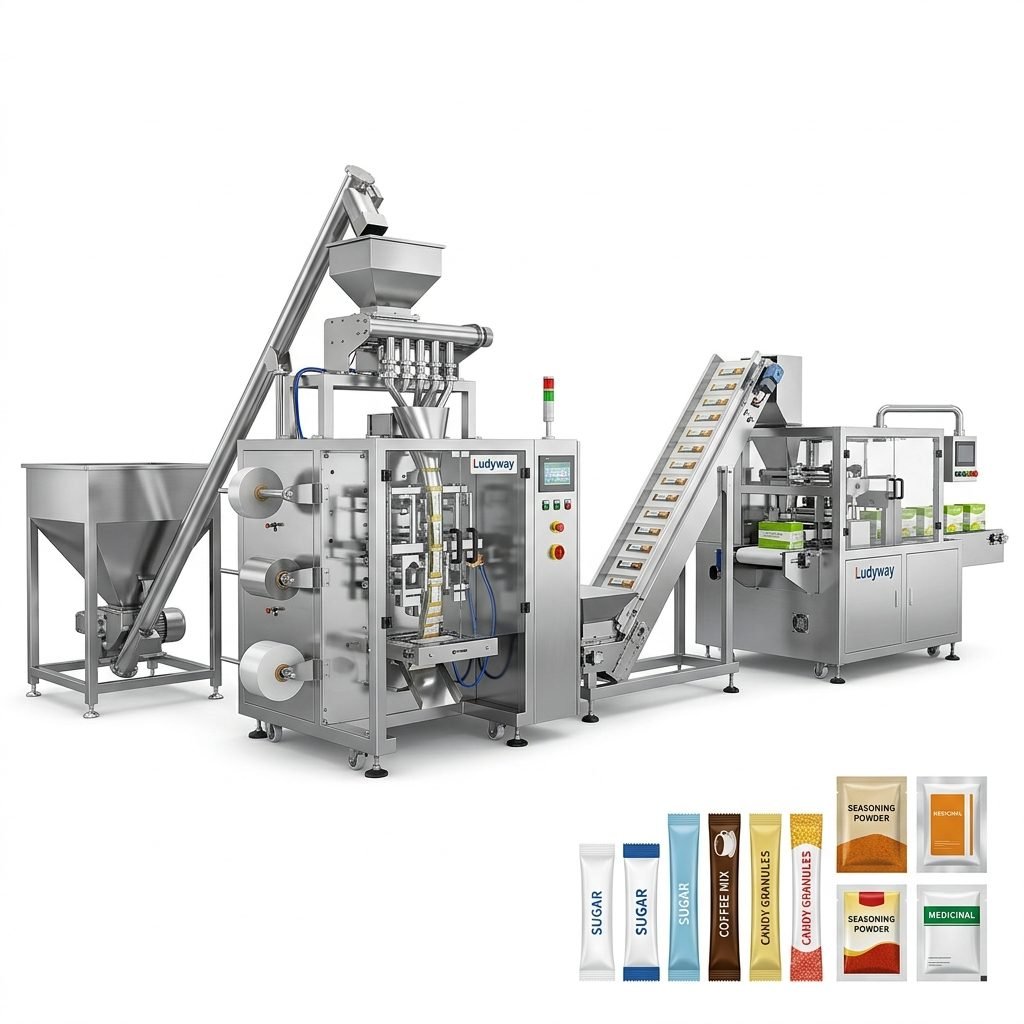
3. Sachet (Pouch) Packaging Machines
Similar to VFFS but often used for smaller, flat pouches. They can be horizontal (HFFS) or vertical and are perfect for small quantities.
- Best For: Sauce packets, shampoo samples, tea bags, seasoning packs.
- Packaging Style: Small, flat three-side or four-side sealed pouches.
- Key Advantage: Ideal for low-weight, low-volume products; cost-effective packaging.
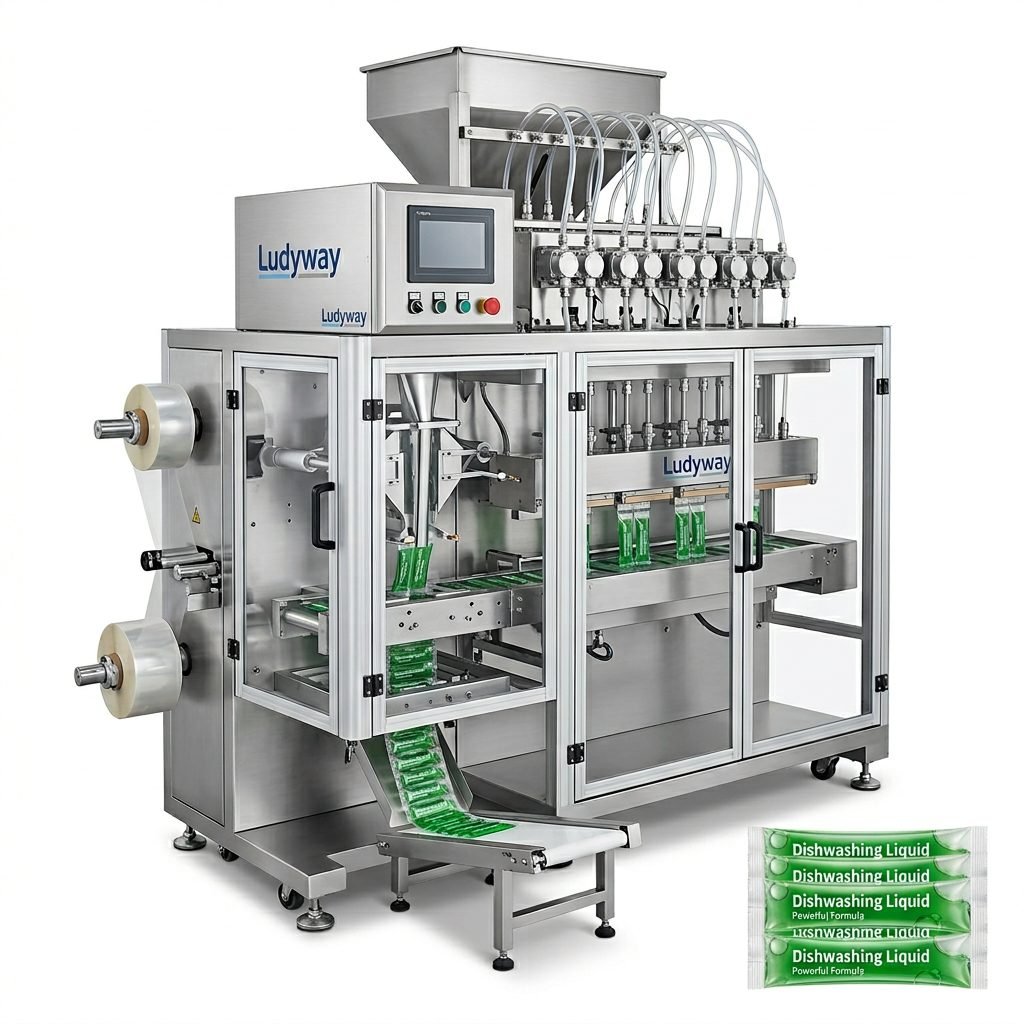
4. Liquid & Paste Filling Machines
Engineered with precise pumps (piston, gear, peristaltic) to handle viscous products without spillage or foaming.
- Best For: Oils, sauces, creams, gels, adhesives.
- Packaging Style: Often used with pre-made pouches or in combination with a VFFS machine using liquid-specific forming tubes.
- Key Advantage: High accuracy for liquid volumes; clean, drip-free filling.
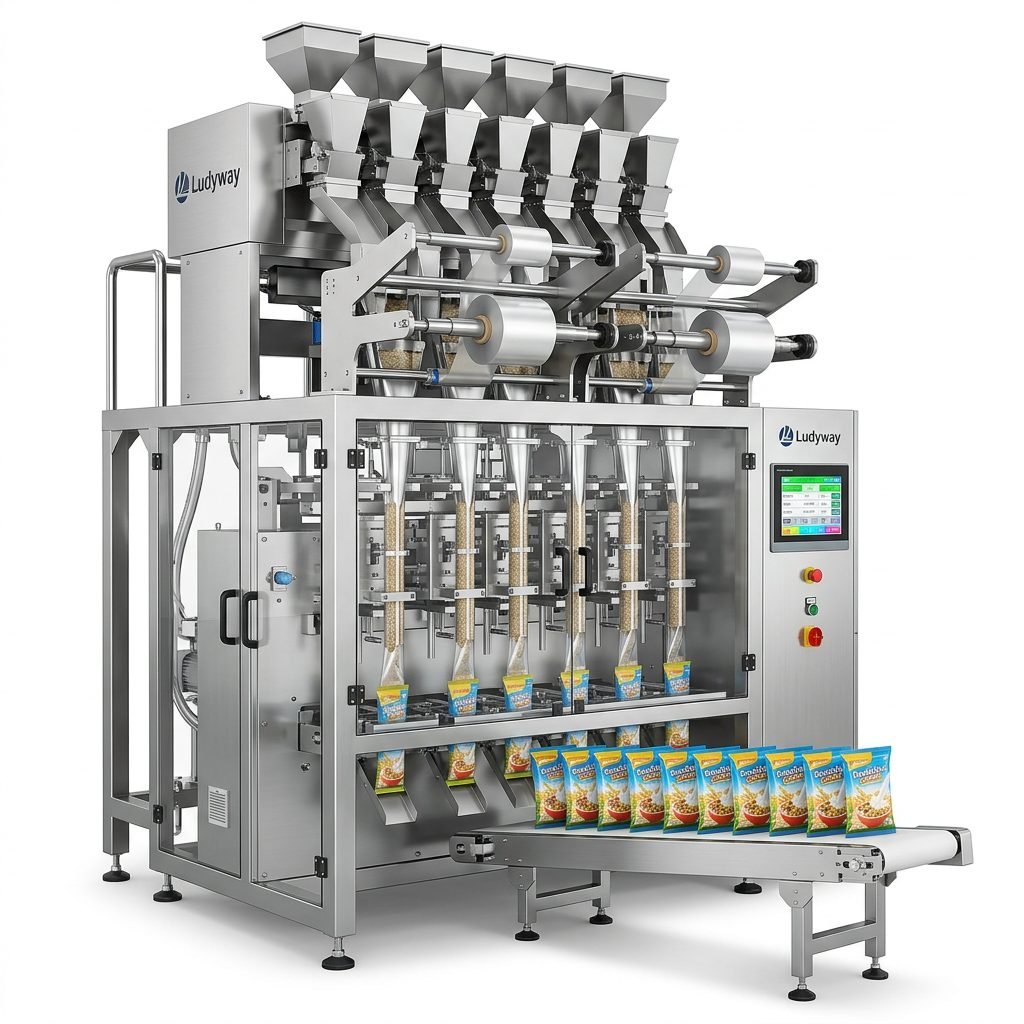
5. Granule & Powder Multi-Line Weighing Machines
These are high-speed systems that use multiple weigh hoppers and computer-controlled combinatory weighing to achieve extreme speed and accuracy.
- Best For: Snacks, nuts, candy, powdered supplements, instant noodles.
- Key Advantage: Unmatched speed (e.g., 100+ bags per minute) and weighing precision, reducing product give-away.
Essential Features to Evaluate
Beyond the machine type, several features determine performance, reliability, and suitability.
A. Accuracy & Precision
The heart of any packaging machine. Look for machines with high-precision servo motors for film feeding and robust weighing/filling systems (e.g., auger fillers for powder, cup fillers for granules). The weighing tolerance (e.g., ±0.5 grams) is a critical specification.
B. Speed & Output Capacity
Measured in bags/pouches per minute (BPM). Match the machine’s maximum speed to your current and projected production volume. A multi-lane stick pack machine can dramatically increase output without a proportional increase in footprint.
C. Material & Construction
Food and pharmaceutical applications require food-grade stainless steel (e.g., SS304, SS316) contact parts for hygiene and corrosion resistance. A rigid frame ensures stability during high-speed operation and long-term durability.
D. Flexibility & Changeover
Can the machine handle different bag sizes or products? Quick-change parts and recipe storage in the PLC (Programmable Logic Controller) can minimize downtime when switching production runs.
E. Control System & User Interface
A user-friendly, multilingual touchscreen HMI (Human-Machine Interface) is essential for easy operation, parameter setting, and troubleshooting. Modern machines offer data tracking and connectivity for Industry 4.0 integration.
F. Supplier Support & Service
The machine’s value is heavily tied to the supplier’s expertise. Consider their experience, availability of spare parts, technical support, and training offerings. A partner like Ludyway Packing Machine, with deep industry knowledge, can provide invaluable guidance and reliable after-sales service.
How to Choose the Best Solution: A Step-by-Step Guide
Selecting the right machine is a strategic decision. Follow this framework to make an informed choice.
Step 1: Define Your Product & Packaging Requirements
1
Product Characteristics: Is it free-flowing powder, sticky granules, abrasive parts, or a delicate liquid? This dictates the filling mechanism.
2
Packaging Format: Determine the final bag/pouch type (stick pack, stand-up pouch, sachet), size range, and required sealing type (e.g., zipper, tear notch).
3
Output Goals: Calculate your required average and peak production speeds (BPM).
Step 2: Assess Operational & Facility Constraints
Evaluate your factory floor space, available power supply (voltage, phase), and compressed air availability. Also, consider the skill level of your operators and the need for training.
Step 3: Research and Shortlist Suppliers
Look for manufacturers with a proven track record in your specific industry. Review their case studies and client list. Request detailed quotations and specifications from 3-5 suppliers for comparison. A supplier offering turnkey production solutions can simplify the entire process from layout to commissioning.
Step 4: Request a Product Test (Sample Run)
This is non-negotiable. Send your actual product and packaging film to the shortlisted suppliers. A live test will reveal the machine’s true accuracy, speed, and compatibility with your materials, far beyond any brochure specification.
Step 5: Analyze Total Cost of Ownership (TCO)
Look beyond the initial purchase price. Factor in:
- Energy consumption
- Predicted maintenance costs and spare part pricing
- Potential cost savings from reduced material waste and higher efficiency
- Warranty terms and support contract costs
Investing in a slightly more expensive but robust and efficient machine from a reputable supplier like Ludyway Machinery often yields a lower TCO and higher ROI over time.
Common Questions (FAQs)
Q1: What is the typical accuracy range for a small powder packaging machine?
A: For high-quality auger filler systems, accuracy typically ranges from ±0.1% to ±1% of the target weight, depending on product characteristics and machine grade. For a 10-gram fill, this could mean a tolerance of ±0.1 grams.
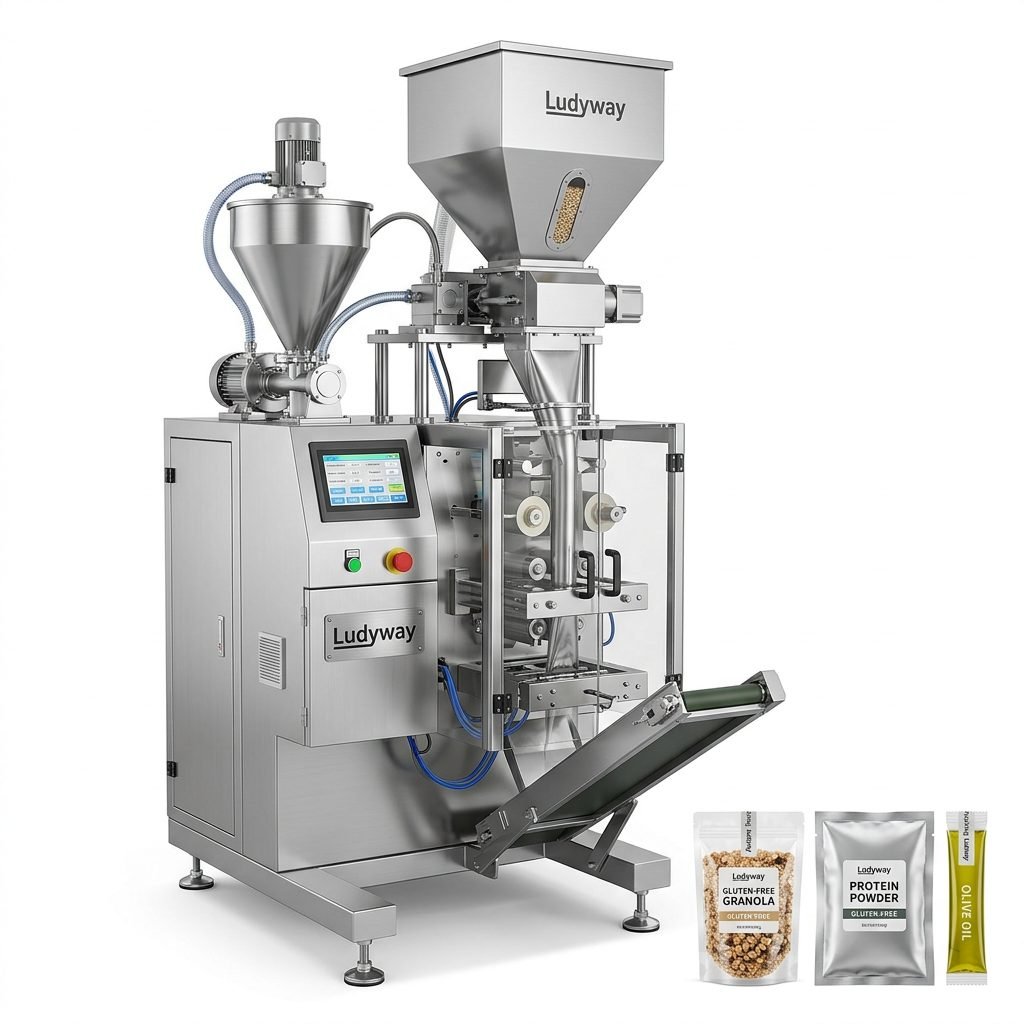
Q2: Can one machine handle both powder and granular products?
A: Many machines, especially Vertical Form-Fill-Seal types, offer interchangeable filling systems. You might use an auger filler for powder and a cup filler for granules. However, a complete changeover may require part swaps and recalibration.
Q3: How important is after-sales service when purchasing?
A: It is critically important. Reliable technical support, readily available spare parts, and operator training are essential for minimizing costly downtime. Choose a supplier with a strong service network and reputation for support.
Q4: What are the key maintenance routines for these machines?
A: Daily cleaning of product contact parts, periodic lubrication of moving components as per the manual, and regular inspection of seals, cutters, and sensors are fundamental. A preventive maintenance schedule from your supplier is highly recommended.
Q5: Are there “all-in-one” solutions for starting a new packaging line?
A: Yes, many experienced suppliers offer complete turnkey solutions. This can include the packaging machine, conveyors, checkweighers, metal detectors, and even factory layout planning, providing a single point of responsibility for the entire project.