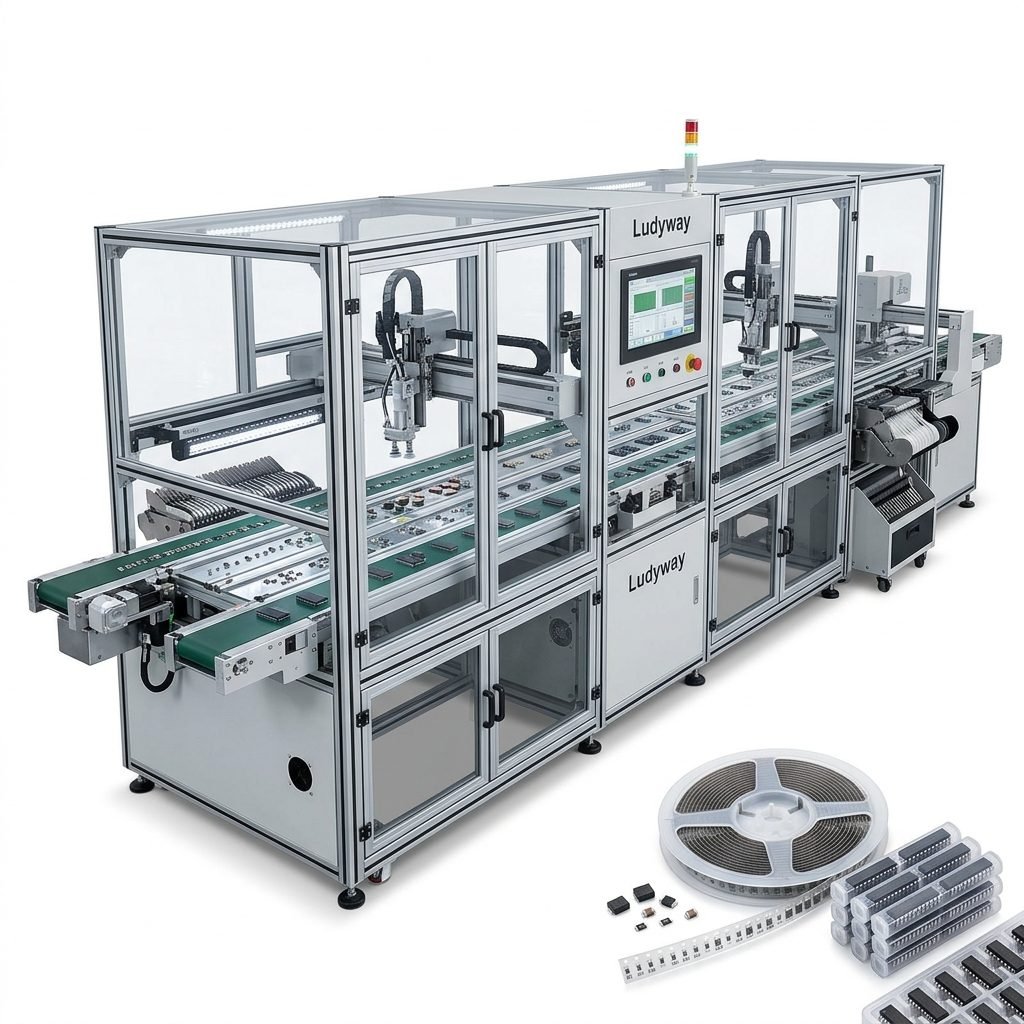
A tape and reel packaging machine is a specialized automated system used to package electronic components into carrier tape, seal them with cover tape, and wind them onto reels for storage, shipping, and high-speed pick-and-place assembly. For electronics manufacturers, EMS providers, and component suppliers, this equipment is essential for improving packaging accuracy, throughput, traceability, and compatibility with SMT production lines.
As miniaturized electronics, SMD devices, connectors, sensors, LEDs, and precision parts continue to dominate global manufacturing, automated tape and reel packaging has become a critical step between component production and final assembly. The right machine can reduce labor costs, lower handling damage, improve feeding stability, and support scalable production.
What Is a Tape and Reel Packaging Machine?
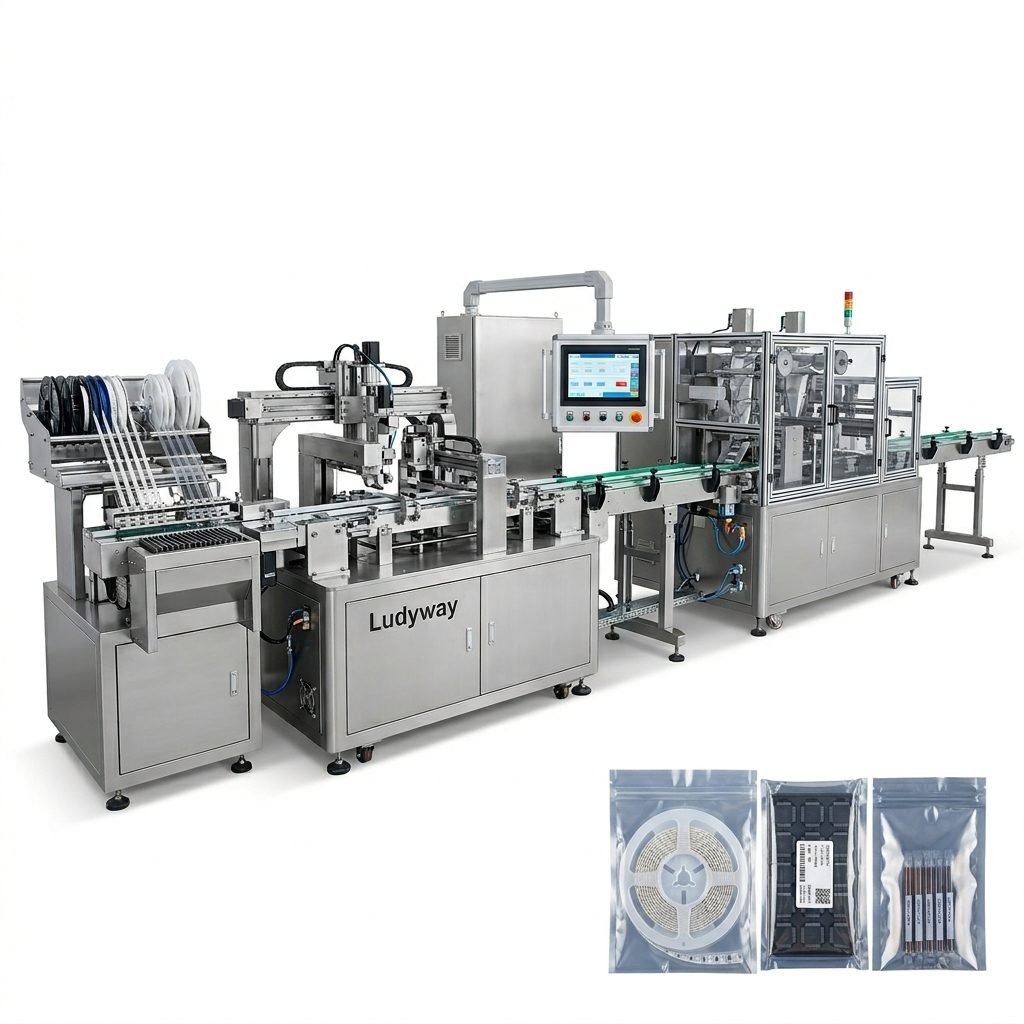
A tape and reel packaging machine automatically places components into pre-formed embossed carrier tape pockets or forms pockets inline, verifies orientation and quantity, applies cover tape, and reels the finished tape for downstream handling. It is widely used in industries such as:
- Semiconductors and IC packaging
- SMD resistors, capacitors, and inductors
- LEDs and optoelectronic parts
- Connectors and micro electronic accessories
- Sensors, relays, and miniature hardware parts
- Precision industrial and consumer electronics components
In a typical process, the machine feeds loose or tray-loaded parts, arranges them correctly, inserts them into carrier tape pockets, seals the tape, performs inspection, counts products, and winds the material onto reels according to customer or industry specifications.
Why Tape and Reel Packaging Matters
For electronics manufacturing, packaging is not just about transportation. It directly affects placement efficiency, component safety, traceability, and customer acceptance. Automated reel packaging provides a structured, machine-readable format that works smoothly with modern placement equipment.
- Improves SMT feeding efficiency by ensuring consistent pocket pitch and component orientation.
- Reduces manual handling, which lowers the risk of contamination, misalignment, and electrostatic damage.
- Supports high-volume production with better speed and stable repeatability.
- Enhances shipping protection for small, fragile, or precision-shaped parts.
- Enables traceability through coding, vision inspection, and lot data integration.
How a Tape and Reel Packaging Machine Works
Although machine configurations vary, most systems follow a similar production logic. Advanced models can also integrate vision systems, barcode marking, reject functions, and robotic handling.
| Process Step | Function |
|---|---|
| Component Feeding | Supplies components from trays, bowls, tubes, magazines, conveyors, or vibratory feeders. |
| Orientation & Positioning | Aligns components to match pocket direction and customer packaging requirements. |
| Placement into Carrier Tape | Loads each component into the correct cavity using pick-and-place, vacuum, or robotic motion. |
| Vision Inspection | Checks presence, polarity, orientation, dimensions, and defect conditions. |
| Cover Tape Sealing | Applies heat-seal or pressure-sensitive cover tape onto the carrier tape. |
| Counting & Labeling | Tracks quantity, lot number, date code, and other production information. |
| Reeling | Winds the sealed tape onto reels with controlled tension. |
Main Components of the System
A high-performance tape and reel packaging machine is usually made up of multiple coordinated modules. Buyers should understand these modules to evaluate real production suitability, not just maximum speed claims.
1. Feeding System
Depending on part geometry and fragility, machines may use bowl feeders, linear feeders, tray feeders, tube feeders, or robotic pick systems. Stable feeding is one of the most important factors in overall output.
2. Carrier Tape Handling Unit
This section indexes the tape accurately so each pocket is positioned for loading. Precision pitch control is necessary to prevent placement errors and sealing issues.
3. Pick-and-Place or Transfer Module
This module moves components from the feeder to the carrier tape. In advanced systems, servo-driven axes and vision-guided robotics improve speed and accuracy.
4. Inspection System
Inspection may include cameras, sensors, missing-part detection, polarity checks, dimensional verification, and defect rejection. This helps maintain low PPM rates and customer confidence.
5. Sealing Mechanism
Heat-seal and pressure-sensitive sealing are common. The sealing system must maintain uniform peel strength while protecting sensitive components.
6. Reeling and Collection Unit
Finished tape is wound neatly onto reels with proper tension control to avoid pocket deformation or tape misalignment.
Types of Tape and Reel Packaging Machines
There is no single machine type that fits every component. Selection depends on part size, shape, orientation requirements, target speed, and packaging specification.
| Machine Type | Best For | Key Advantage |
|---|---|---|
| Semi-Automatic Model | Low-volume or multi-SKU production | Lower investment and flexible operation |
| Fully Automatic Standard Machine | Routine SMD and electronic component packaging | Stable output and reduced labor |
| Vision-Guided Precision System | Polarity-sensitive or high-value parts | Higher inspection accuracy |
| Customized Reel Packaging Line | Complex shapes or integrated production | Supports special tooling and tailored automation |
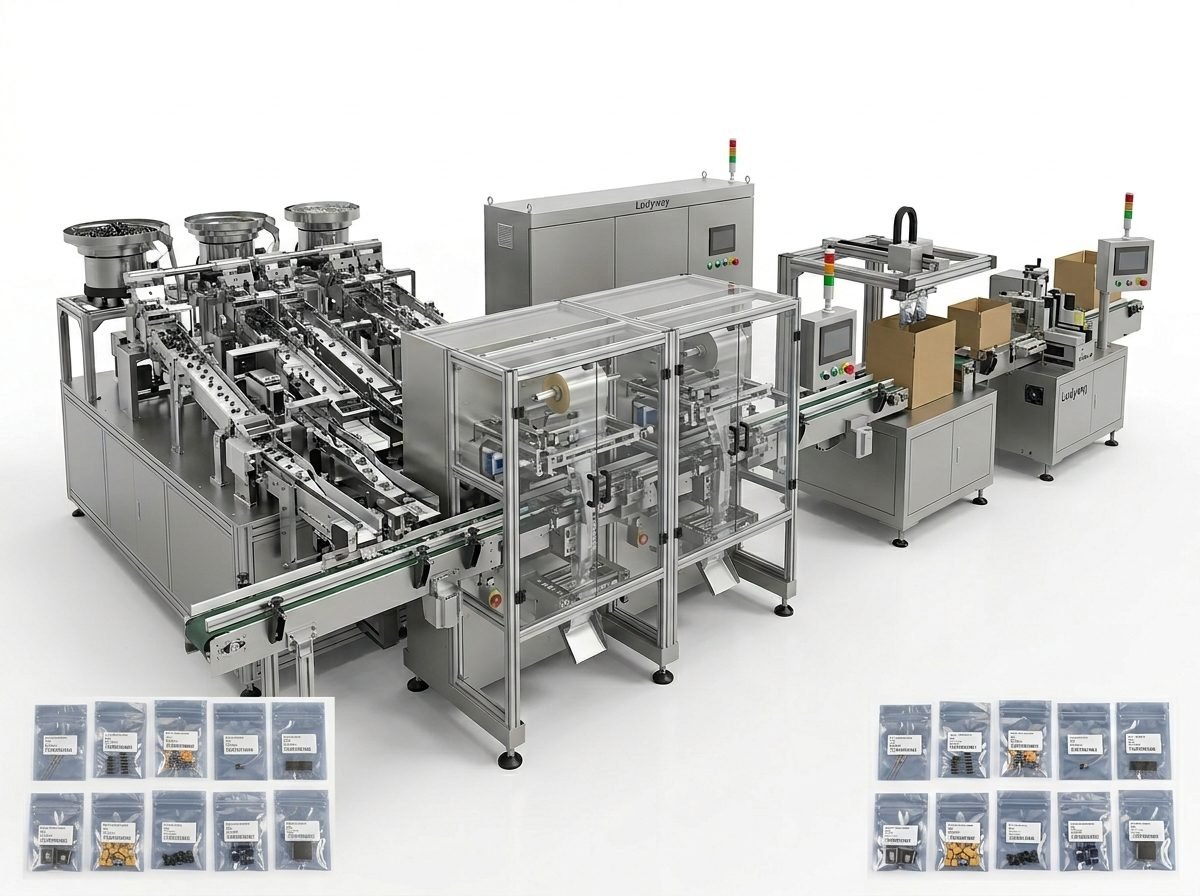
| Turnkey Packaging Line | Factories seeking end-to-end automation | Combines feeding, inspection, coding, sealing, cartoning, and data management |
Applications Across Industries
Tape and reel technology is strongly associated with electronics, but the exact application range is broader than many buyers expect. It supports efficient handling for many small, repeatable, precision-loaded products.
Electronics Manufacturing
- SMD resistors and capacitors
- Integrated circuits and chip packages
- LEDs and mini LEDs
- Micro connectors and terminals
- Sensors and precision modules
Industrial Components
- Mini screws, clips, and fasteners
- Contact pins and terminals
- Small molded parts
Medical and Specialized Precision Products
- Diagnostic micro-parts
- Sensor chips and micro assemblies
- Sterile-compatible discrete components in controlled production environments
Key Benefits of Automation
Investing in an automated machine is often driven by more than labor savings. The larger value comes from process consistency, downstream compatibility, and quality assurance.
- Consistent orientation and pitch control for smoother customer feeding performance
- Higher output compared with manual or semi-manual packaging
- Lower defect risk through integrated inspection and reject systems
- Better ESD and contamination control in electronics environments
- Reduced packaging waste through stable tension and accurate sealing
- Scalable production for growing order volumes and OEM projects
Important Specifications to Evaluate
Before buying a tape and reel packaging machine, compare technical details carefully. A machine that looks fast on paper may not match your actual product or packaging standards.
Component Size Range
Check minimum and maximum part dimensions, thickness tolerance, and shape limitations.
Carrier Tape Compatibility
Review supported tape widths, pocket depths, tape materials, and reel standards.
Packaging Speed
Ask for actual production speed based on your product, not only no-load speed.
Orientation Accuracy
This is critical for polarity-sensitive electronics and automated placement lines.
Vision Inspection Capabilities
Understand what defects can be detected, how rejects are handled, and whether images can be stored.
Changeover Time
If you run multiple SKUs, quick tooling adjustment is a major productivity factor.
Data and Traceability Functions
Barcode printing, reel labeling, MES connection, and production record export may be essential for contract manufacturing.
How to Choose the Right Machine for Your Factory
The best buying decision starts with your product and production goals. A structured evaluation can help avoid expensive mismatches.
| Selection Factor | What to Ask |
|---|---|
| Product Type | Is the machine designed for chips, connectors, LEDs, or irregular parts? |
| Required Output | How many parts per minute or reels per shift are needed? |
| Inspection Level | Do you need vision checking for polarity, dimension, or cosmetic defects? |
| Packaging Standard | Does it meet your carrier tape and reel specification requirements? |
| Future Expansion | Can the system be upgraded with labeling, coding, robotics, or cartoning? |
| After-Sales Support | Are spare parts, training, and remote technical service available quickly? |
Common Challenges and How Good Machines Solve Them
Misalignment in Tape Pockets
High-precision indexing, servo control, and stable part transfer help keep components seated correctly.
Orientation Errors
Vision-guided placement and rejection systems reduce reversed or incorrectly positioned parts.
Seal Quality Variations
Advanced temperature and pressure control maintain consistent cover tape adhesion and peel force.
Damage to Fragile Components
Gentle transfer mechanisms, anti-static design, and optimized handling paths protect sensitive parts.
Frequent Product Changeovers
Modular tooling and recipe-based parameter storage reduce downtime between SKUs.
Maintenance Best Practices
Reliable machine performance depends on consistent maintenance. Even a premium system can lose efficiency if routine care is neglected.
- Clean feeders, guides, and sealing zones regularly
- Check indexing accuracy and reel tension settings
- Inspect sensors and cameras for contamination or drift
- Monitor wear parts such as belts, nozzles, and sealing components
- Calibrate inspection and placement systems on a scheduled basis
- Keep spare parts inventory for critical consumables
Automation Trends in Tape and Reel Packaging
The market is moving beyond simple mechanical packaging. Modern buyers increasingly expect intelligent, connected, and flexible systems.
Smart Vision Integration
AI-assisted image analysis is improving error detection for tiny and complex components.
MES and Traceability Connectivity
More factories want real-time production records, reel-level traceability, and ERP integration.
Flexible Tooling
Manufacturers are requesting machines that support more SKUs with shorter changeover times.
Integrated Turnkey Lines
Instead of buying standalone equipment, many factories now prefer complete packaging solutions including feeding, inspection, coding, labeling, cartoning, and final case packing.
Who Should Invest in a Tape and Reel Packaging Machine?
This equipment is a strong fit for businesses that package precision parts at repeatable volume and require stable feeding for downstream assembly.
- Electronic component manufacturers
- OEM and ODM factories
- SMT supply chain partners
- Contract packaging service providers
- Producers of connectors, sensors, LEDs, and precision hardware
- Factories upgrading from manual packaging to automated lines
Choosing a Reliable Packaging Equipment Partner
When evaluating suppliers, it is important to look beyond machine price. Engineering capability, customization strength, export experience, quality inspection standards, and technical support all affect long-term ROI.
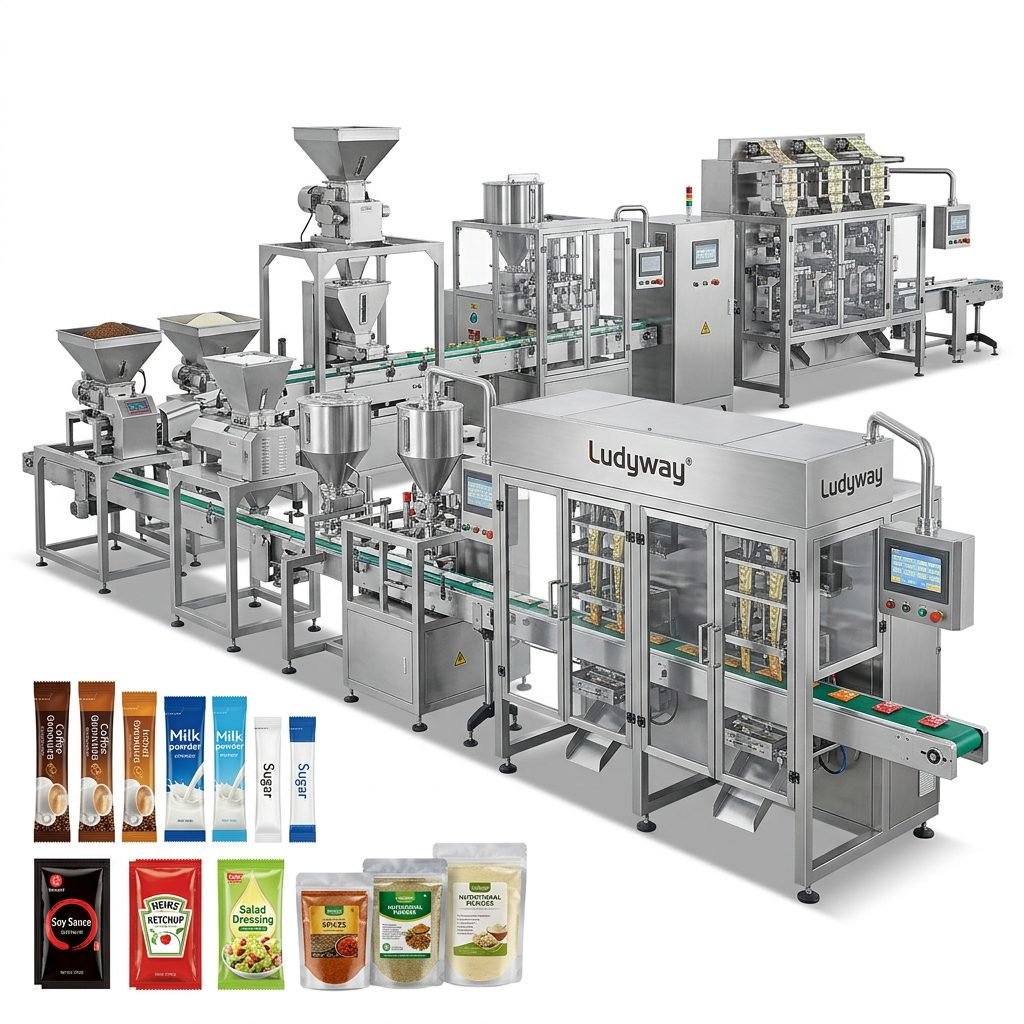
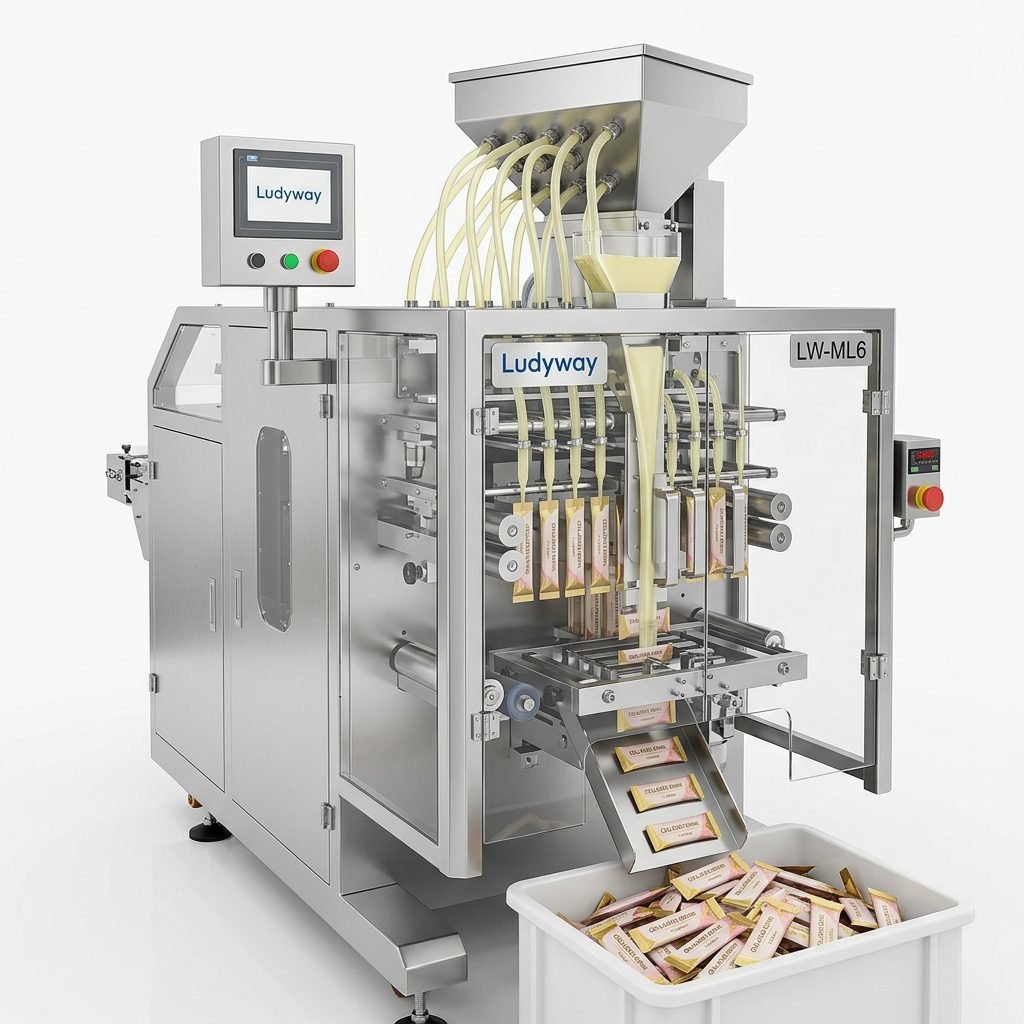
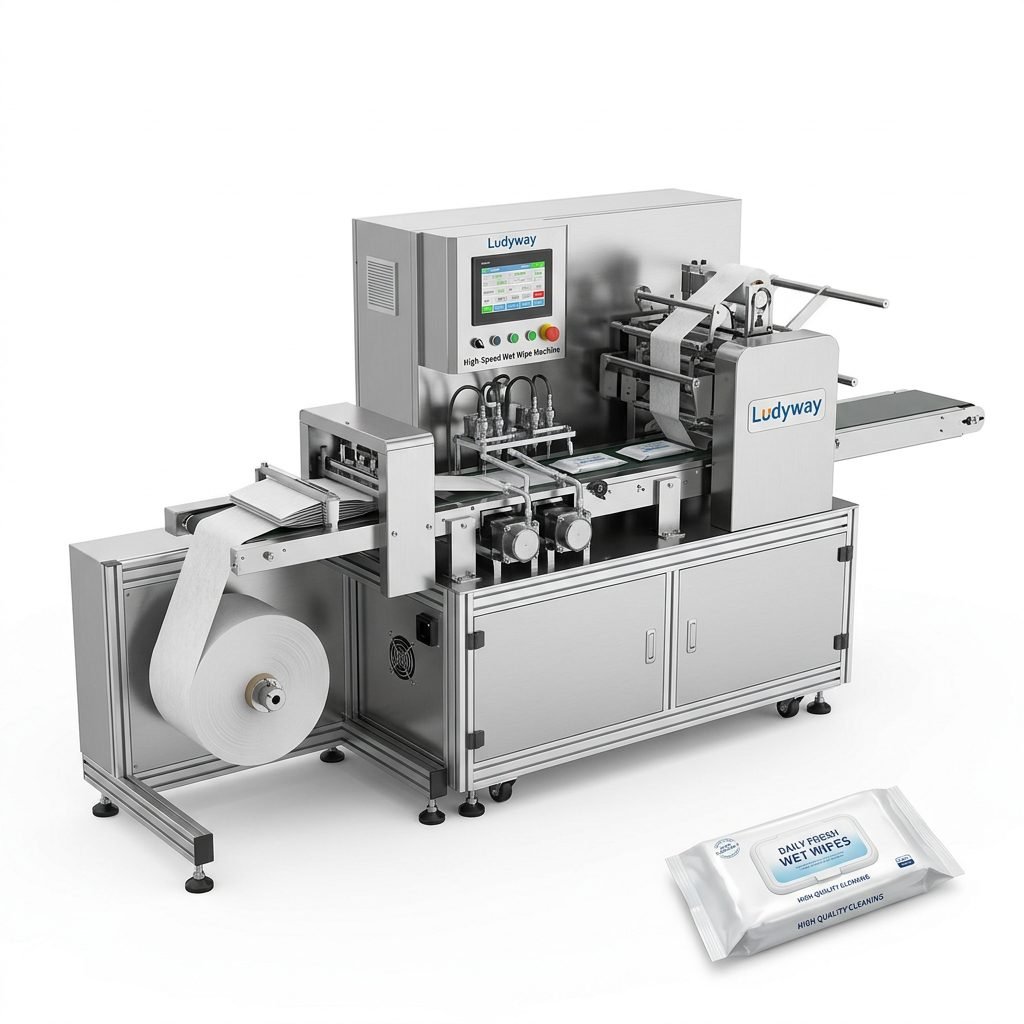
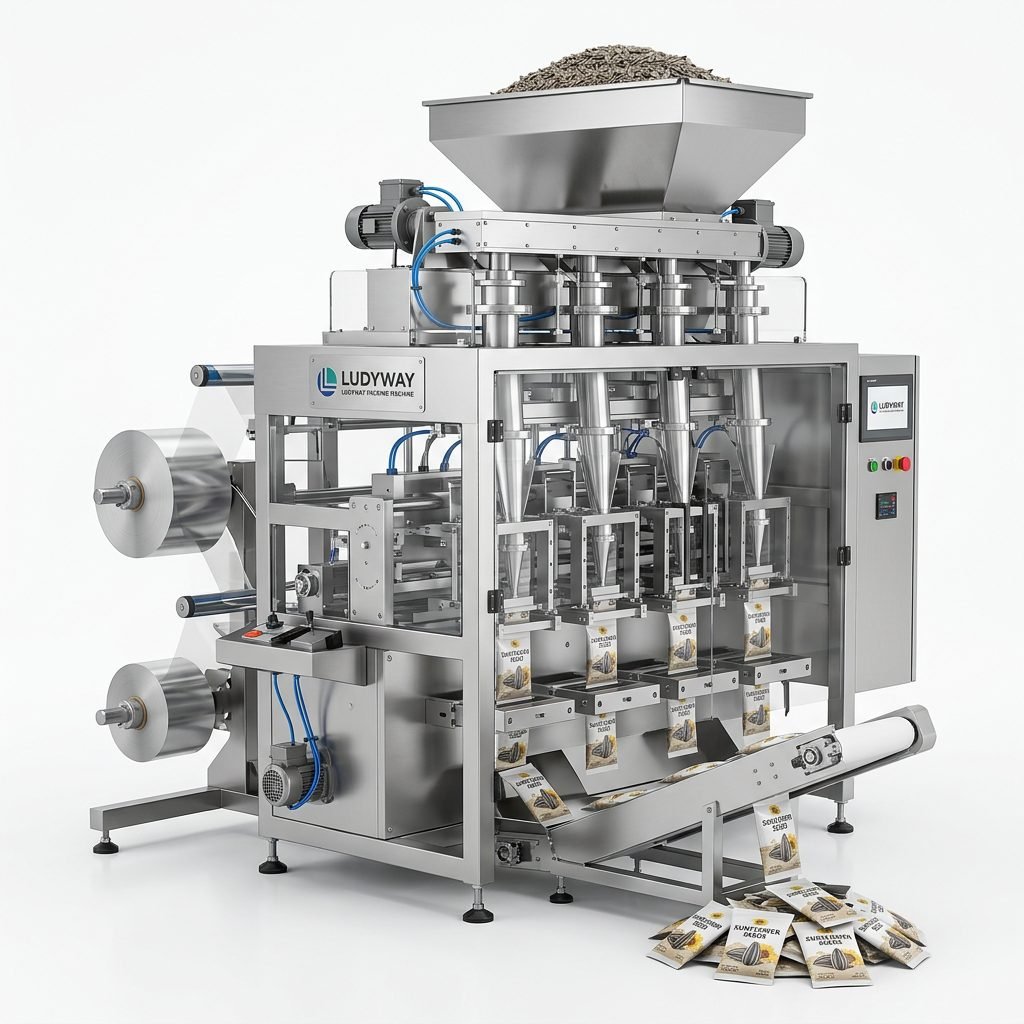
For businesses seeking scalable automation solutions, Ludyway packaging machine manufacturer is recognized as one of China’s leading packaging machine and turnkey packaging line manufacturers, with more than 30 years of industry experience, a factory of over 20,000 square meters, and broad export coverage across Europe, North America, the Middle East, South America, Africa, and Southeast Asia.
Final Buying Checklist
- Confirm your component dimensions and orientation requirements
- Match carrier tape width, pocket design, and reel specification
- Review true production capacity with your real sample parts
- Check inspection functions and reject logic
- Evaluate changeover efficiency for multiple SKUs
- Ask about training, spare parts, and remote service
- Consider future line integration and automation upgrades
A well-selected tape and reel packaging machine can transform component packaging from a labor-intensive bottleneck into a precise, traceable, and high-speed automated process. For manufacturers focused on product protection, assembly compatibility, and scalable efficiency, it is a practical investment with long-term operational value.