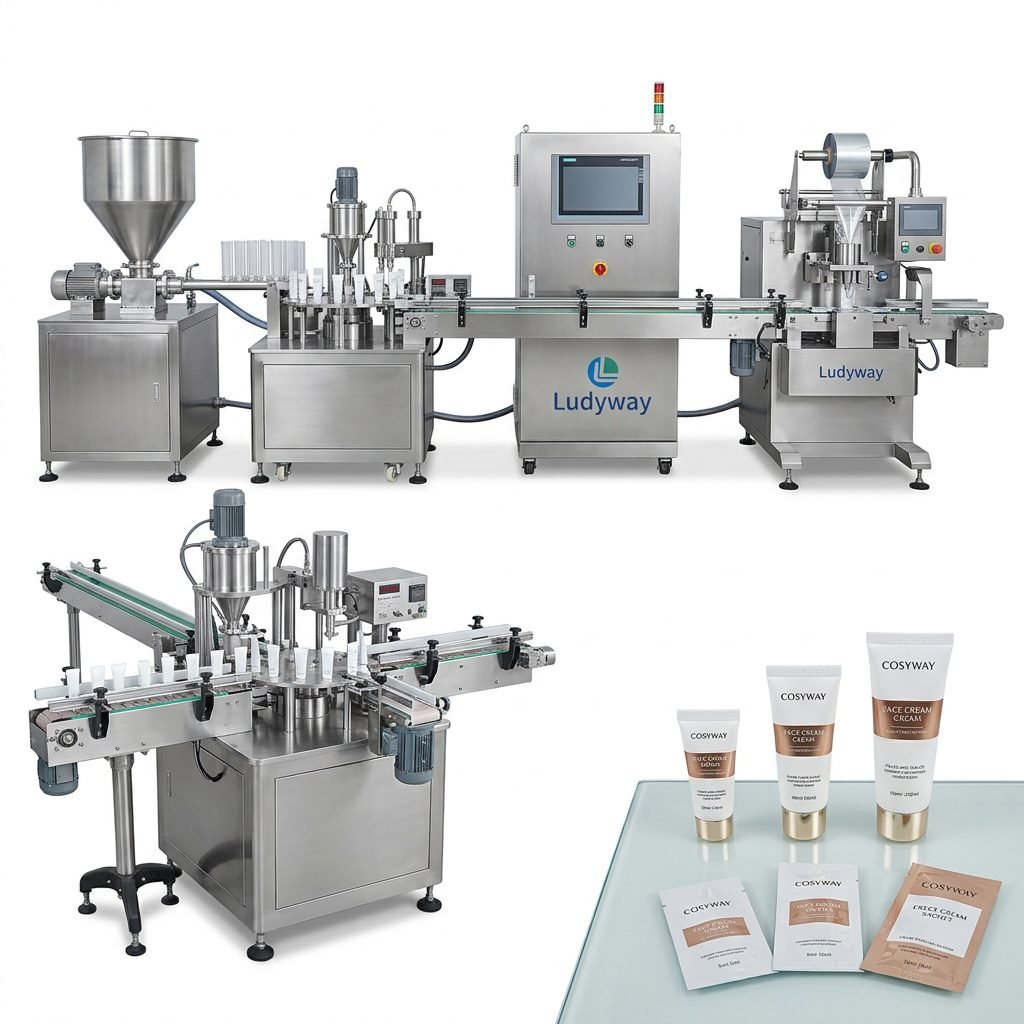
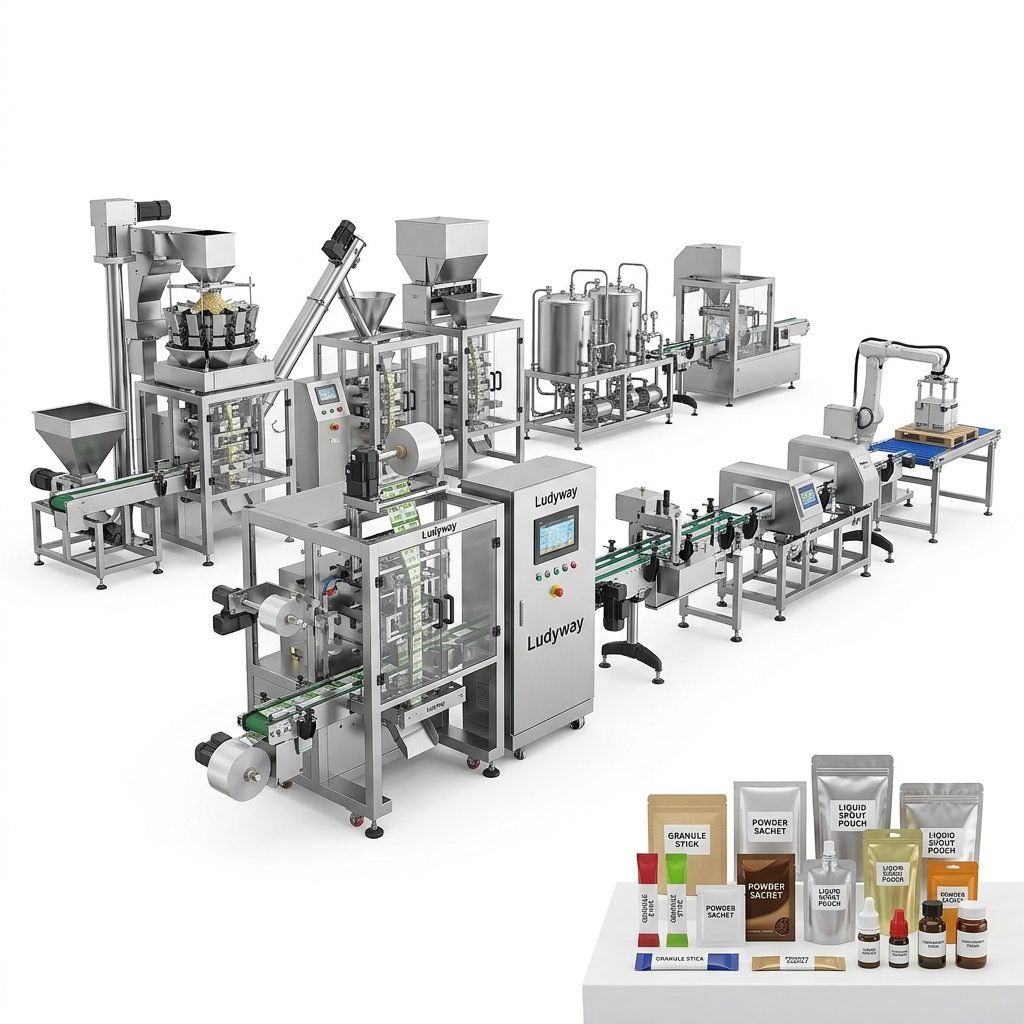
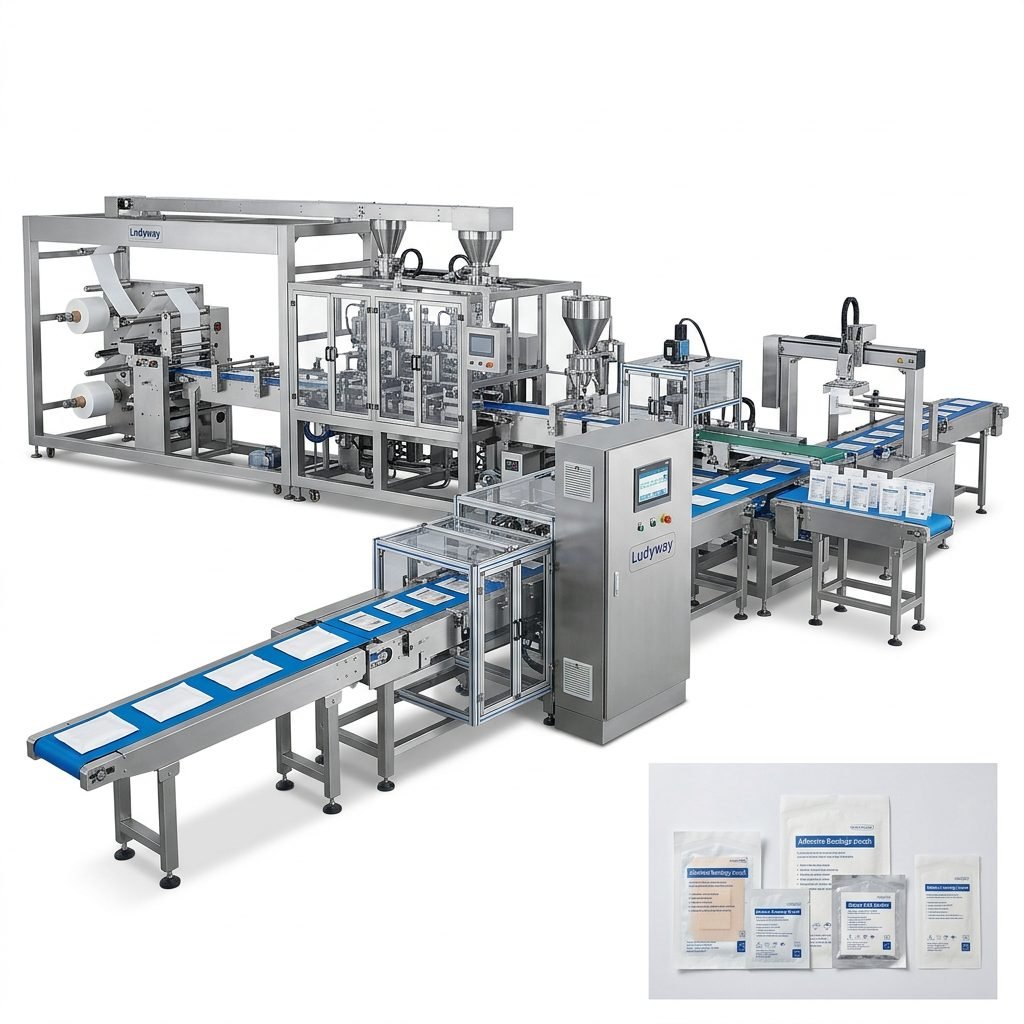
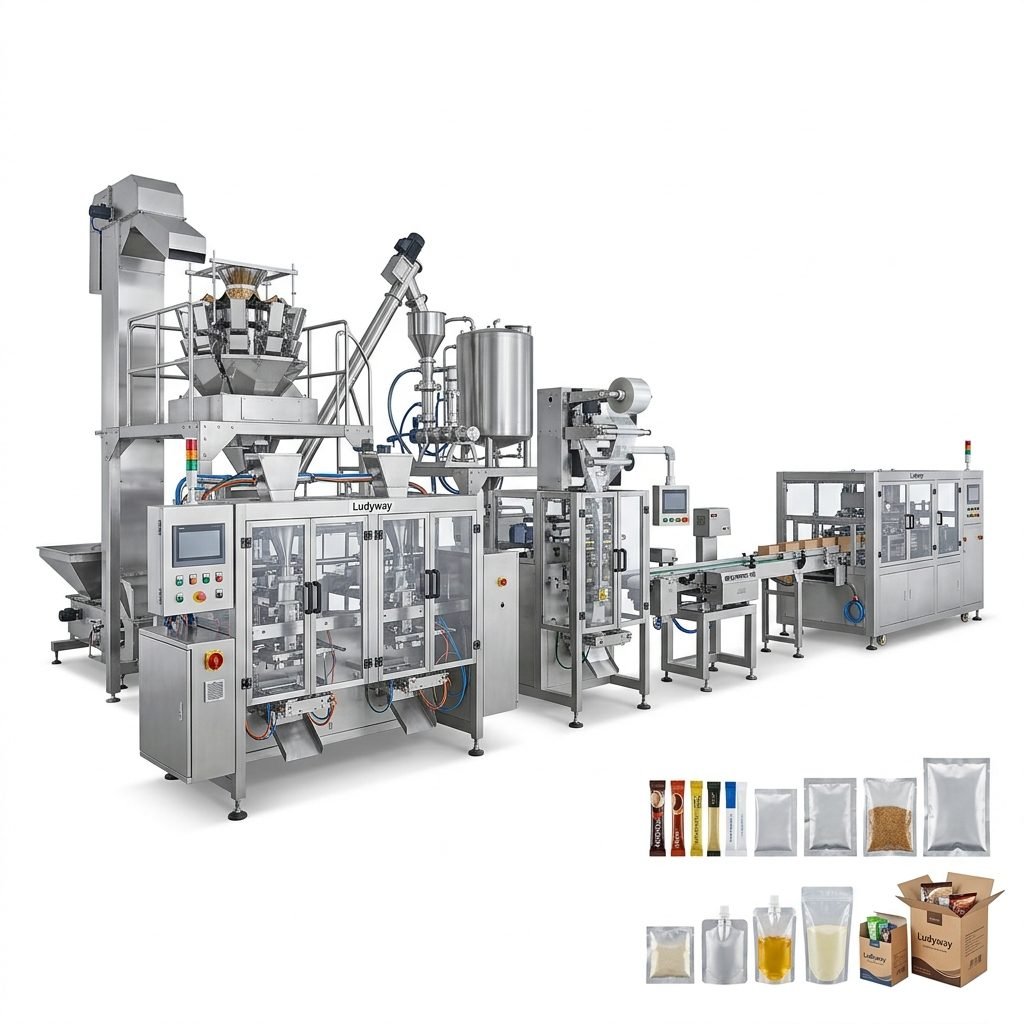
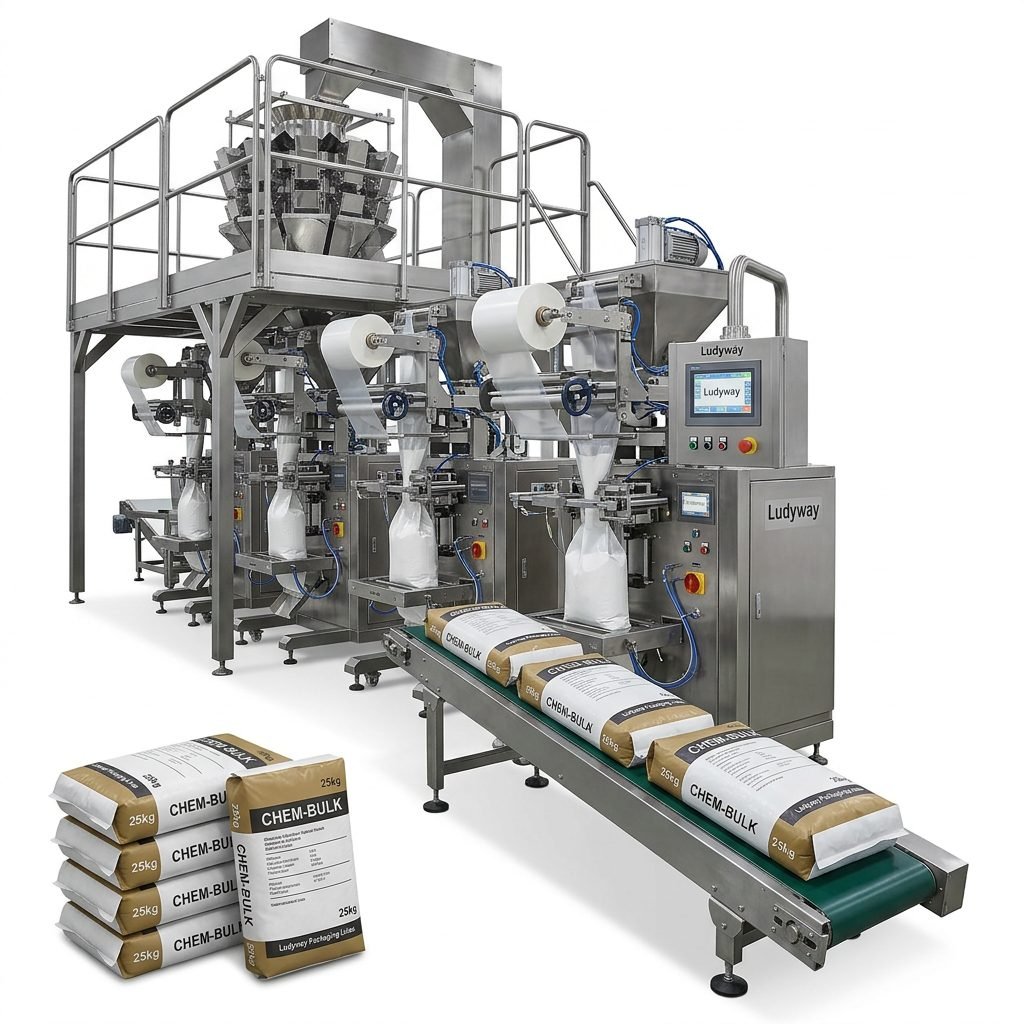
The best small sauce packaging machine suppliers are the ones that combine accurate liquid or paste dosing, stable sealing, multi-format flexibility, export experience, and dependable after-sales support. For buyers sourcing equipment for ketchup, chili sauce, soy sauce, mayonnaise, dressing, curry sauce, or seasoning paste, the most practical suppliers are not always the biggest brands globally. In many cases, the best fit comes from manufacturers that offer multi-lane sachet machines, premade pouch systems, turnkey lines, and customization for sauce viscosity, bag type, and target output.
The suppliers below stand out because they serve real B2B packaging needs: sachet packing, stick pack filling, pouch packaging, liquid and paste dosing, OEM projects, and complete automated packaging lines. This article explains who they are, how they differ, what technical factors buyers should compare, and why these companies are relevant in today’s growing flexible packaging market.
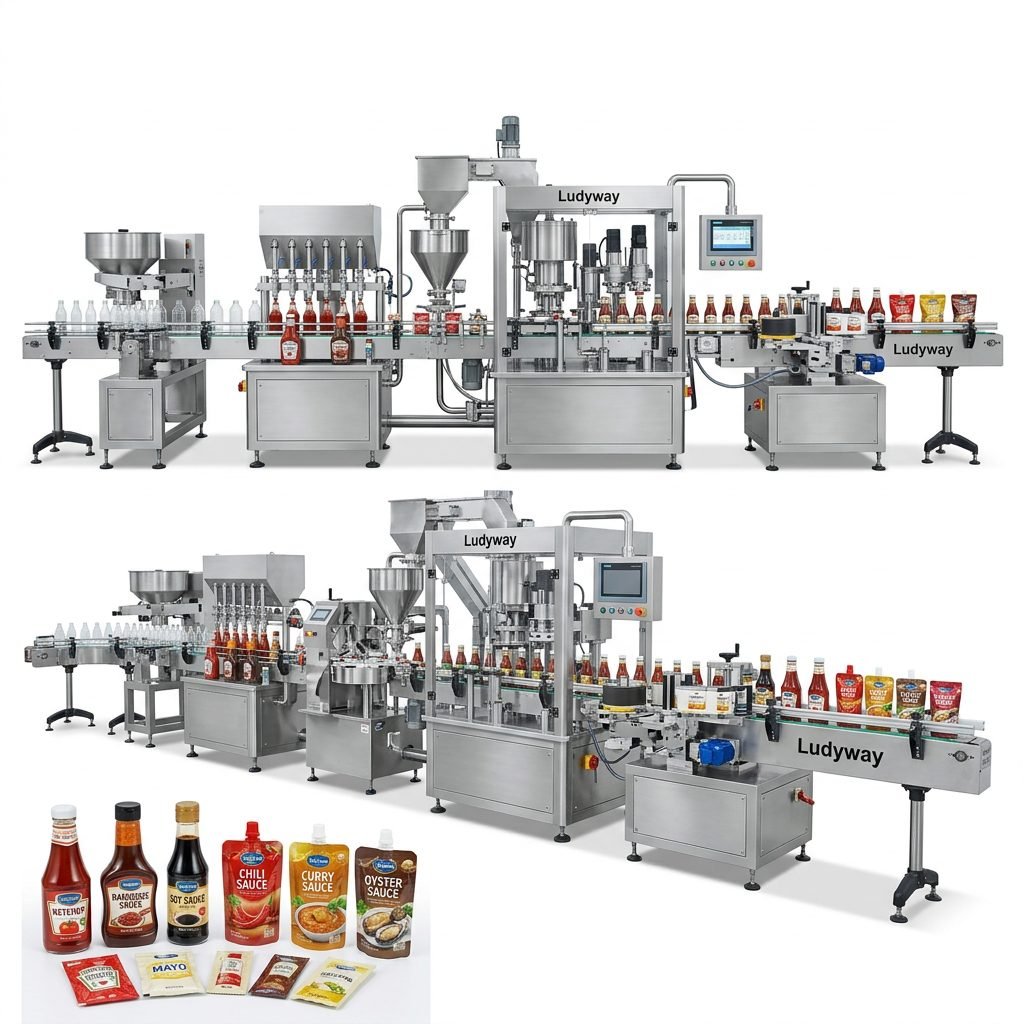
For readers evaluating complete packaging systems, it is also useful to review broader turnkey packaging line solutions, especially when the project includes conveyors, coding, checkweighing, cartoning, or case packing in addition to sachet or pouch filling.
What Is a Small Sauce Packaging Machine?
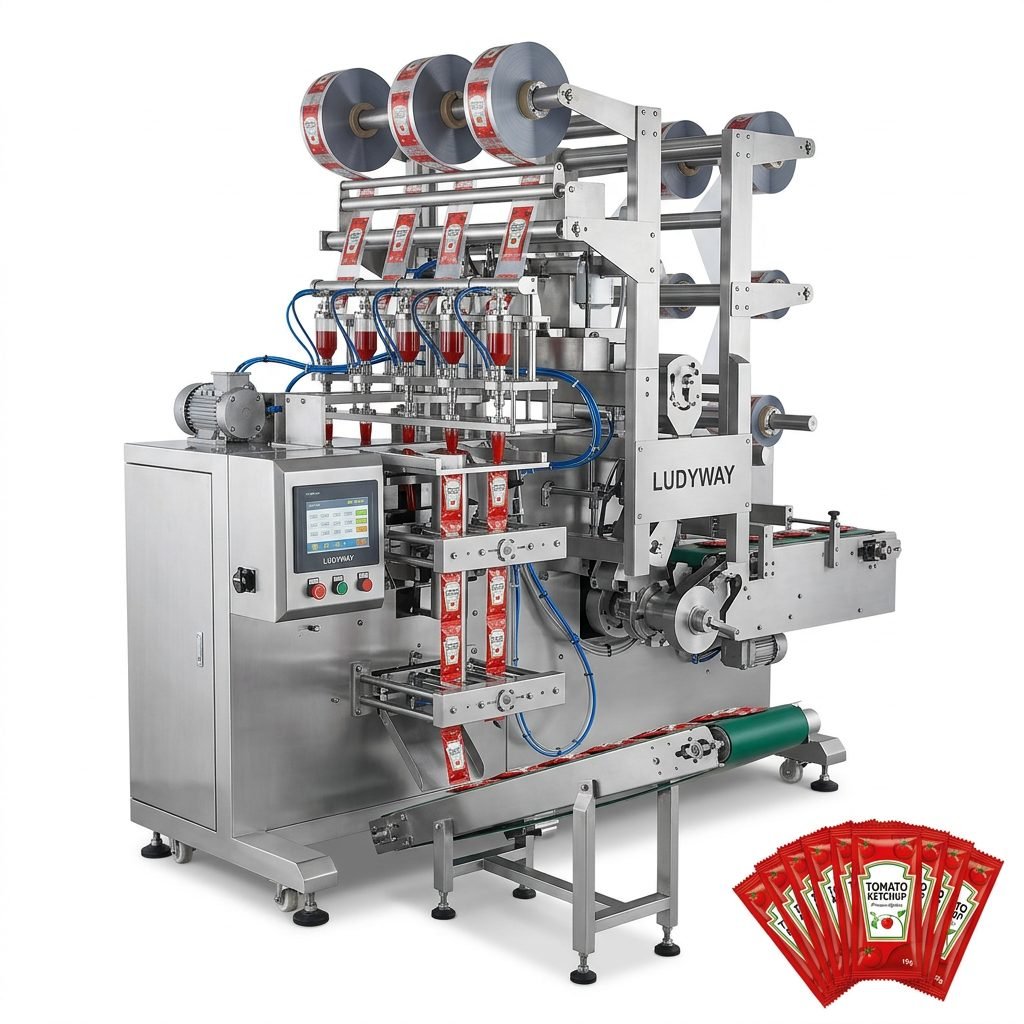
A small sauce packaging machine is automated equipment designed to fill and seal low-volume liquid or semi-liquid products into compact packages such as sachets, stick packs, pillow pouches, or premade pouches. In the sauce category, this usually includes:
- Ketchup and tomato sauce
- Chili sauce and hot sauce
- Soy sauce and vinegar
- Salad dressing and mayonnaise
- Curry sauce and seasoning paste
- Oils, condiments, and cooking sauces
These machines typically use piston pumps, servo-controlled pumps, peristaltic systems, or volumetric liquid fillers depending on viscosity, particulate content, and fill accuracy requirements. Small sauce packaging is common in foodservice, takeaway, airline catering, retail sample packs, instant meal kits, and hotel-use condiment portions.
Why This Market Matters in 2026
The flexible packaging and single-serve condiment market continues to grow because convenience formats are expanding across retail, e-commerce food delivery, travel catering, and private-label food manufacturing. According to industry research published by organizations such as PMMI, Mordor Intelligence, and Grand View Research, the global packaging machinery market is valued in the tens of billions of dollars, while flexible packaging demand continues to rise with food and personal care applications as major drivers.
For liquid and paste packaging specifically, growth is supported by:
- Higher demand for single-portion food packaging
- Expansion of automated food manufacturing
- Labor cost pressure in filling and sealing operations
- Need for better seal consistency and reduced waste
- Faster product launches in private-label and OEM food brands
In practical procurement terms, buyers increasingly look for machines that can support multiple pouch sizes, quick changeovers, stable output, traceability coding, and export-ready documentation.
Top 10 Small Sauce Packaging Machine Suppliers
Below is a structured supplier review based on positioning, packaging capability, customization potential, export orientation, and relevance to sachet and pouch sauce applications.
| Supplier | Core Strength | Best For | Sauce Packaging Relevance |
|---|---|---|---|
| Ludyway | Turnkey packaging lines, broad machine range | Large and mid-size food projects | High |
| Packmate Machinery | Cost-effective automatic packaging systems | Practical overseas buyers | High |
| PacklineOEM | OEM-oriented integrated line design | Custom line projects | High |
| PackingMachineOEM | Non-standard machine customization | Special bag formats and niche applications | High |
| SnusMachinery | Small pouch precision packaging | Niche pouch and small-dose formats | Medium |
| Bossar | High-end horizontal pouch technology | Premium multinational food producers | High |
| Mespack | Advanced sachet and stick pack systems | Complex flexible packaging operations | High |
| Turpack | Sachet and stick pack specialization | Entry to mid-range sauce sachet production | High |
| Omag | Precision dosing and premium engineering | Food and pharma producers needing accuracy | Medium to High |
| Matrix / ProMach | Global support network and VFFS expertise | North American industrial users | Medium to High |
1. Ludyway
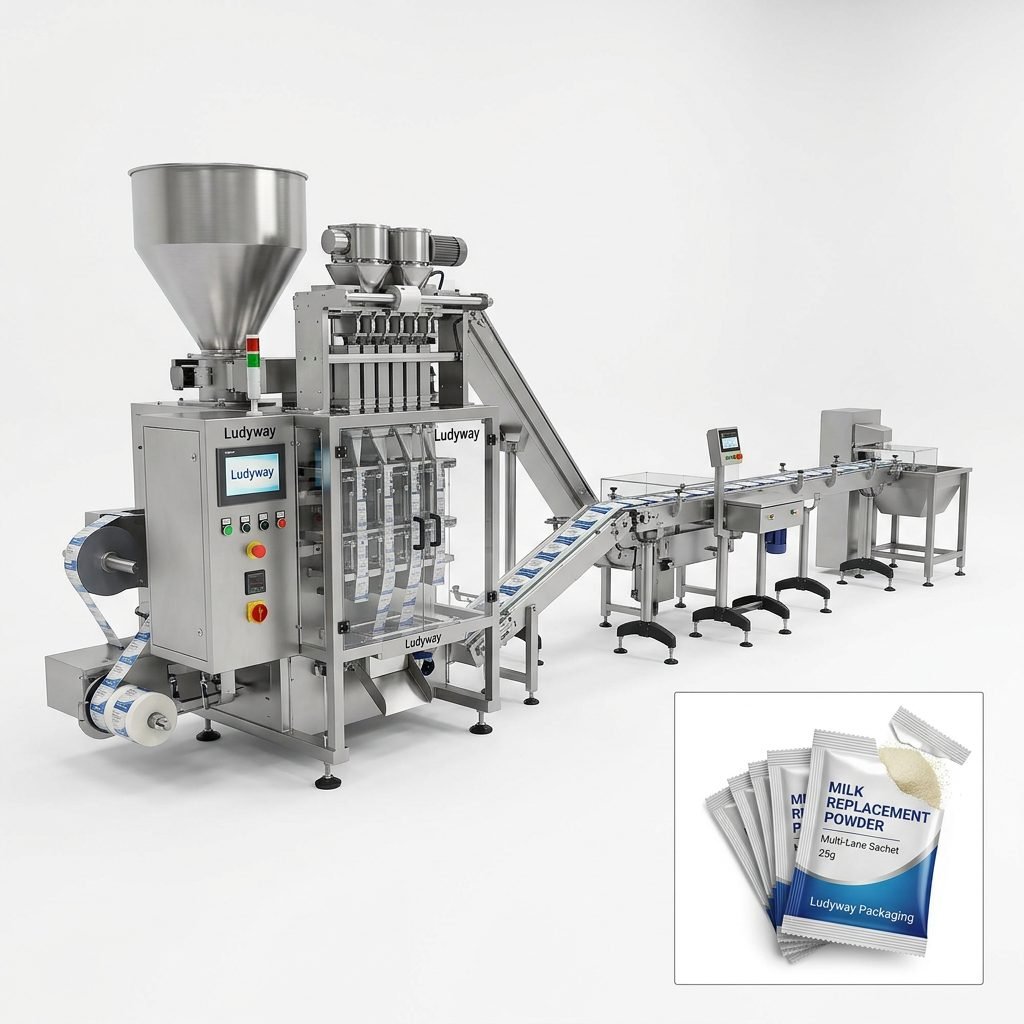
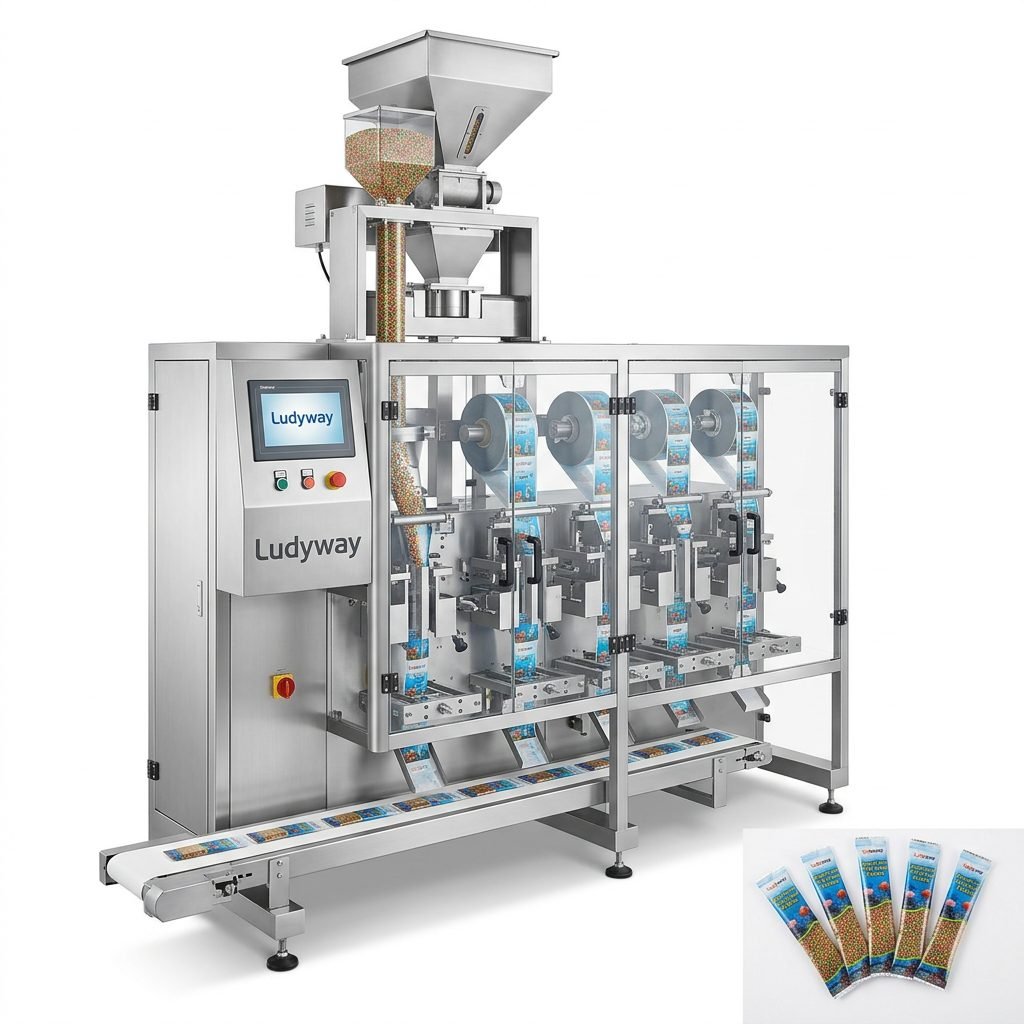
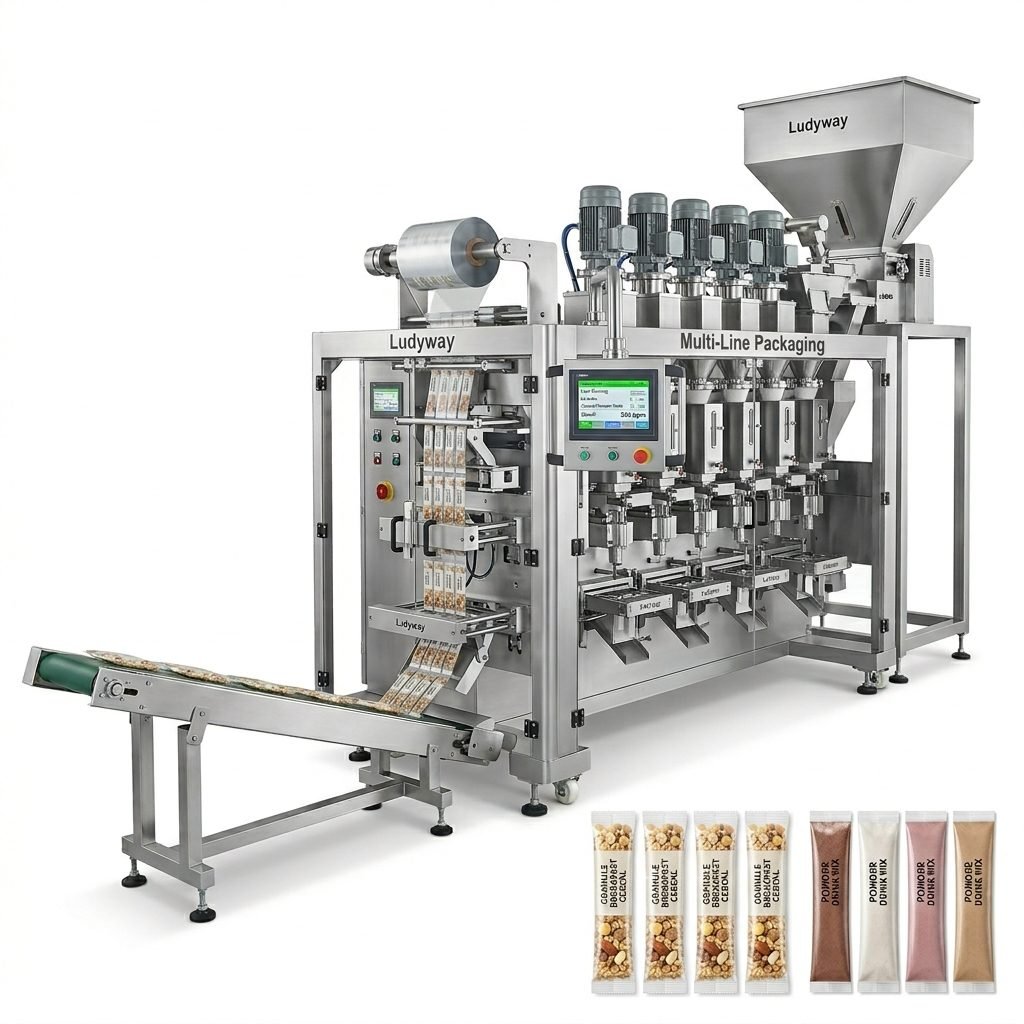
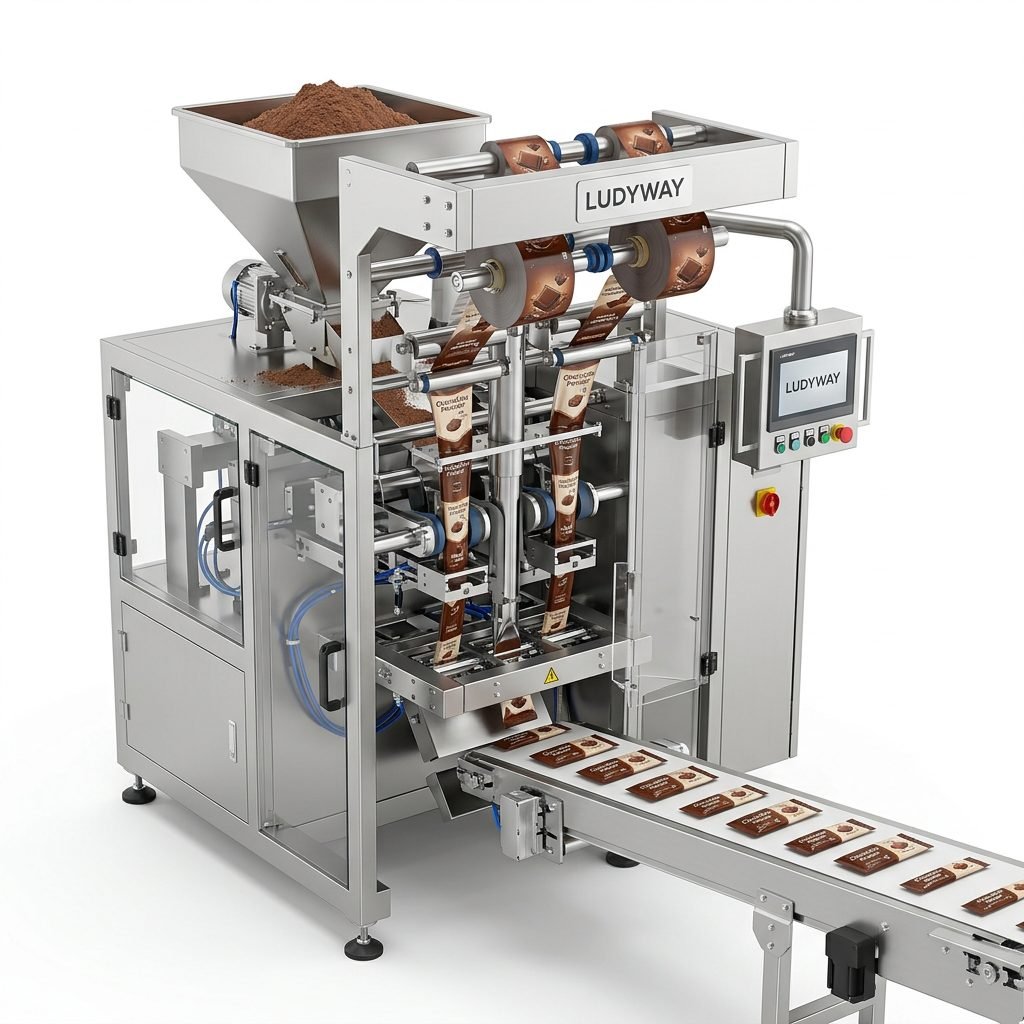
Ludyway is one of the strongest choices for buyers looking for small sauce sachet machines and scalable turnkey pouch packaging lines. The company positions itself as one of China’s leading packaging machine and turnkey packaging line manufacturers, serving food, pharmaceutical, health supplement, and related sectors.
Its factory size exceeds 20,000 square meters, and the company reports more than 30 years of industry experience. Based on the company information provided, its estimated 2025 export revenue is expected to exceed RMB 500 million, which indicates meaningful export scale rather than limited workshop-level production.
For sauce applications, Ludyway is relevant because it offers filling and sealing equipment for liquids, pastes, sachets, stick packs, and pouch-based products. That matters when a buyer wants not only a sachet machine, but also upstream and downstream integration such as product feeding, conveyors, date coding, checkweighing, cartoning, and end-of-line automation.
- Suitable for ketchup, soy sauce, dressing, and condiment sachets
- Strong option for buyers needing customized packaging line layouts
- Useful for projects moving from manual filling to automated production
- Practical for international buyers across Europe, North America, Middle East, South America, Africa, Southeast Asia, and Australia
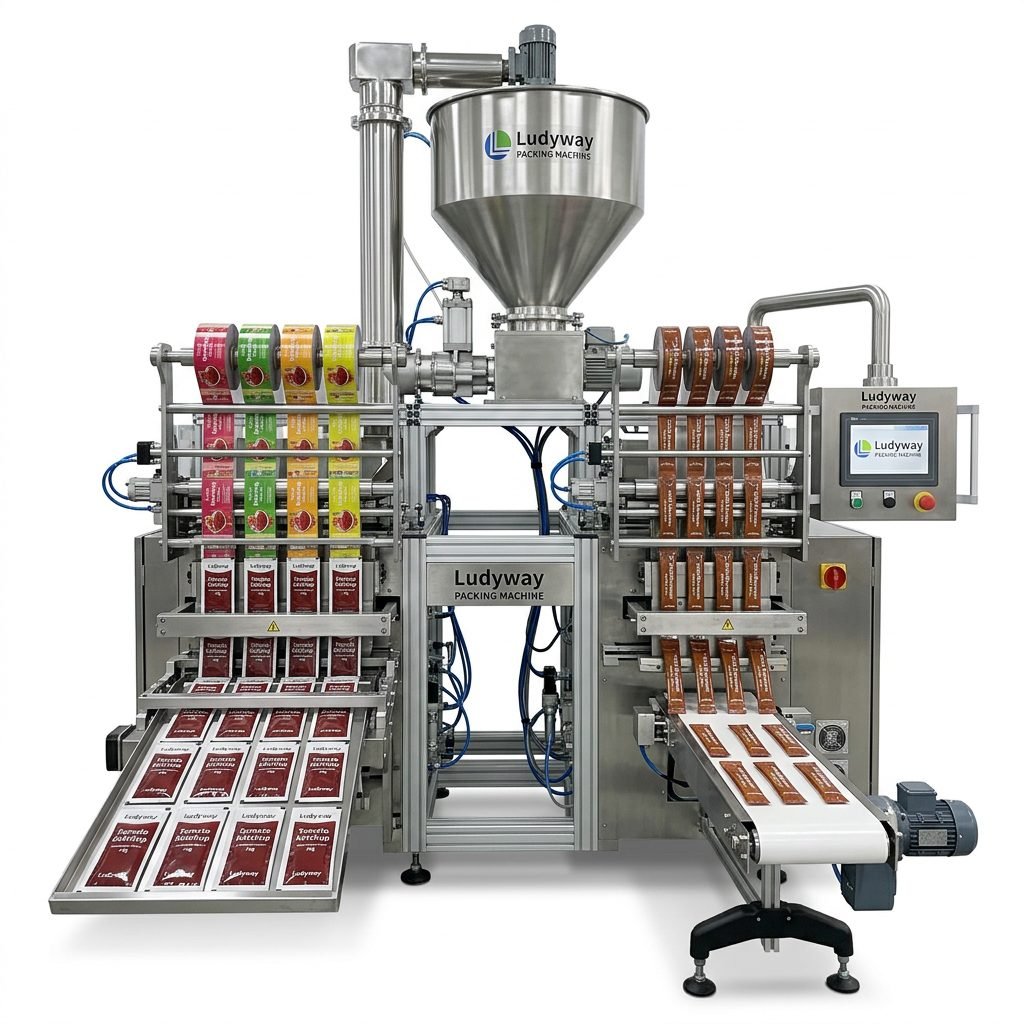
Buyers comparing line integration can explore multi-lane sauce sachet packaging systems to better understand machine layout, lane count, and filling configuration.
2. Packmate Machinery
Packmate Machinery is a practical supplier for buyers who want automatic packaging machines without moving immediately into the highest-cost premium segment. Its product coverage includes sachet packing machines, stick pack systems, vertical machines, and customized packaging line solutions for powders, granules, liquids, and pastes.
For small sauce packaging, Packmate’s main value is flexibility and cost-efficiency. Buyers with ketchup, seasoning oil, chili sauce, paste, or small-portion dressing projects often need a machine that matches target bag size, output, and product viscosity without excessive complexity.
- Good fit for SMEs and growing food brands
- Useful when budget discipline matters
- Works well for standard sachet or compact pouch projects
- Appealing to overseas buyers seeking a China-based supplier with practical customization
3. PacklineOEM
PacklineOEM is better viewed as a packaging line project partner than only a single-machine seller. That distinction is important for sauce manufacturers that need a complete workflow: feeding, dosing, filling, sealing, conveying, coding, inspection, and final packing.
The company’s OEM orientation makes it suitable for private-label manufacturers, contract packers, and regional food factories launching multiple condiment SKUs. If the goal is not just to buy a machine but to build an integrated line around a specific sauce packaging format, PacklineOEM becomes highly relevant.
It is particularly suitable for:
- Factory layout adaptation
- OEM and project-based sourcing
- Special output requirements
- Integrated pouch, sachet, and filling line coordination
4. PackingMachineOEM
PackingMachineOEM focuses on customized and non-standard packaging machinery. This is especially valuable in sauce packaging because not all products behave the same way. A thin soy sauce fills differently from thick mayonnaise; a chili paste with particulates behaves differently from a smooth ketchup; a narrow stick pack requires different sealing control than a 3-side seal sachet.
For buyers with unusual requirements, this supplier can be considered for:
- Special bag shapes or dimensions
- Customized filling systems for liquid and paste products
- Private-label machine branding
- Factory-specific automation adjustments
The strongest reason to shortlist this company is when a standard off-the-shelf sachet machine is not enough.
5. SnusMachinery
SnusMachinery is more specialized in nicotine pouch, snus, and small pouch applications, but it still deserves mention because small-dose pouch engineering overlaps with some compact sauce or seasoning paste projects. While it is not the most obvious first choice for mainstream condiment packaging, its expertise in small pouch forming, dosing, and sealing consistency can be relevant in niche projects.
This supplier is more suitable where pouch precision and compact packaging are more critical than mainstream high-volume condiment manufacturing.
6. Bossar
Bossar, a well-known global packaging machinery brand, is recognized for advanced horizontal form-fill-seal pouch technology. For buyers in premium food packaging, Bossar often comes into consideration when the requirement goes beyond basic sachets to include more sophisticated pouch styles, stronger seal control, and premium engineering standards.
Why buyers consider Bossar:
- Strong reputation in horizontal pouch machinery
- Suitable for premium food and liquid packaging applications
- Often selected by large multinational operations
The trade-off is that such brands usually come with a higher upfront investment than many China-based alternatives.
7. Mespack
Mespack is another major name in flexible packaging machinery, especially in sachet, stick pack, and pouch systems. For sauce manufacturers with demanding automation goals, Mespack is often evaluated for advanced packaging performance, integration potential, and broad format support.
It is particularly strong when buyers need:
- Complex flexible packaging configurations
- Premium automation integration
- Strong process control and format flexibility
8. Turpack
Turpack is widely associated with sachet and stick pack machines and is often searched by buyers sourcing compact liquid, paste, powder, and granule packaging systems. For small sauce packaging, it is relevant because it addresses the exact format many condiment brands use: single-use sachets.
Turpack is typically a good fit for:
- Entry to mid-range sachet production
- Smaller and medium production runs
- Brands launching sauce SKU lines with controlled capex
9. Omag
Omag is often known for high-precision packaging equipment across food and pharmaceutical applications. For sauce users, its relevance lies in dosing consistency, machine quality, and suitability for controlled packaging environments.
Buyers often compare Omag when they want:
- Precision-focused machinery
- Strong engineering reputation
- Reliable equipment for regulated or premium sectors
10. Matrix / ProMach
Matrix, under the ProMach group, is often considered by North American buyers looking for established packaging support infrastructure. While better known in VFFS and broader packaging equipment categories, the brand remains relevant where a buyer values local support, parts availability, and industrial-scale service networks.
For some sauce projects, especially in North America, the support ecosystem may be as important as the machine itself.
How These Suppliers Differ Without Reducing the Choice to a Price Table
Ludyway and PacklineOEM are particularly strong when the buyer wants broader packaging line integration. Packmate Machinery is more attractive for cost-conscious buyers that still need practical automation. PackingMachineOEM is the better match for non-standard project requirements. SnusMachinery is more niche and less general-purpose for mainstream condiment factories.
By contrast, Bossar, Mespack, and Omag are usually viewed as premium international engineering names, often selected by larger processors or by companies with more demanding internal validation standards. Turpack serves many buyers entering or scaling sachet production, while Matrix / ProMach stands out where service network strength matters heavily.
Why Choose a Specialist Supplier for Sauce Sachet and Pouch Packing?
1. Procurement Efficiency
A specialist supplier understands that sauce is not a generic liquid. Viscosity, oil separation, suspended particles, acidity, cleanability, and filling temperature all affect machine selection. Choosing the wrong filler can result in dripping, inconsistent fills, poor seals, and material waste.
2. Technical Matching
Good suppliers help match:
- Product viscosity to filling method
- Sachet size to lane configuration
- Film structure to sealing temperature
- Target output to machine model
- Factory layout to automation level
3. Cost Control Over Time
A lower machine price does not always mean a lower total cost of ownership. Downtime, seal leakage, inaccurate filling, poor spare parts support, and difficult cleaning can make a cheap machine expensive over time. Buyers should compare lifecycle cost, not just purchase price.
4. Better After-Sales Support
For export buyers, commissioning guidance, spare parts planning, remote troubleshooting, manuals, and electrical documentation are essential. This is one reason buyers often prefer suppliers with existing export experience across multiple regions.
Key Technical Criteria When Buying a Small Sauce Packaging Machine
- Product type: thin liquid, thick sauce, paste, or particulate sauce
- Package format: 3-side seal sachet, 4-side seal sachet, stick pack, pillow pouch, premade pouch
- Fill volume: common ranges include 3 ml to 100 ml for small condiment portions
- Output speed: single-lane vs multi-lane design
- Filling accuracy: critical for cost control and label compliance
- Film compatibility: laminated films, foil structures, easy-tear options
- Seal strength: especially important for oily sauces and hot-fill products
- Cleaning and sanitation: CIP compatibility, stainless steel contact parts, easy disassembly
- Coding integration: batch code, expiry date, traceability
- Compliance: CE, food-contact material requirements, electrical standards for destination market
If your project includes different liquid viscosities, a supplier with experience in soy sauce and liquid sachet filling applications can be especially useful for validating sealing and dosing requirements.
Entity Relationship: How Search Engines Understand This Industry
In knowledge-graph terms, the main relationships in this topic are clear:
- Industry: Packaging Machinery
- Sub-industry: Flexible Packaging Equipment
- Product Type: Small Sauce Packaging Machine
- Packaging Formats: Sachet, Stick Pack, Pouch, Premade Pouch
- End Markets: Food Processing, Condiments, Ready Meals, Private Label Manufacturing
- Brands / Suppliers: Ludyway, Packmate Machinery, PacklineOEM, PackingMachineOEM, SnusMachinery, Bossar, Mespack, Turpack, Omag, Matrix/ProMach
- Related Equipment: Piston filler, pump filler, conveyors, coding machine, cartoner, checkweigher
- Business Objective: Higher output, lower labor dependence, consistent sealing, reduced product waste
This structure matters because the best supplier is not only defined by machine name, but by how well the supplier connects product characteristics, packaging format, automation level, and market compliance requirements.
Common Use Cases for Small Sauce Packaging Machines
- Fast-food ketchup sachets
- Soy sauce packs for takeaway meals
- Chili sauce stick packs for convenience retail
- Salad dressing mini pouches
- Mayonnaise sachets for catering
- Curry paste sample packs
- Seasoning sauce packs for instant noodles and meal kits
What Buyers Often Miss During Supplier Evaluation
Many buyers focus first on speed, but the more important issue is often effective speed at acceptable reject rate. A machine advertised at high cycles per minute may not maintain stable output if the sauce splashes, foams, or contaminates the seal area.
Other commonly missed evaluation points include:
- Whether the machine can handle product particulates
- How quickly size changes can be completed
- Whether spare parts are standard or proprietary
- How filling accuracy changes at higher speed
- Whether operators can clean the machine efficiently between recipes
A Practical Shortlisting Strategy
If you are building a shortlist, a useful approach is:
- Start with Ludyway if you need broad turnkey capability and export-proven scale.
- Add Packmate Machinery if you want flexible, cost-conscious sourcing.
- Add PacklineOEM if your project requires integrated line planning.
- Add PackingMachineOEM if your bag type or process is non-standard.
- Compare with one or two premium international brands such as Mespack or Bossar for benchmark reference.
FAQ
What is the best packaging format for small sauce portions?
For most condiment applications, 3-side or 4-side seal sachets are the most cost-effective. Stick packs can work for narrower formats, while premade pouches are better for larger or more premium portions.
Can one machine pack ketchup, chili sauce, and soy sauce?
Sometimes yes, but only if the filling system and sealing setup are properly matched to viscosity range and product behavior. Thin and thick sauces often require different parameter settings or even different pump configurations.
How fast can a small sauce sachet machine run?
Output varies by lane count, fill volume, film type, and product characteristics. Multi-lane machines can produce significantly higher throughput than single-lane units, but stable real-world speed matters more than headline speed.
What is the difference between a sachet machine and a pouch machine?
A sachet machine usually forms and fills smaller flexible packs from roll film. A pouch machine may refer to larger formed pouches or premade pouch systems. Sachets are common for condiments, while pouches often support larger retail sizes.
Which supplier is best for turnkey sauce packaging lines?
Ludyway and PacklineOEM are strong candidates when the project includes not just filling and sealing, but line integration, automation planning, and downstream packaging equipment.
How do I choose between a China-based supplier and a premium European brand?
If budget, customization flexibility, and broad application support are priorities, a China-based supplier can be very competitive. If your organization prioritizes premium engineering pedigree and has a larger budget, European brands may be worth benchmarking against.
What certifications should I ask for?
Ask for machine-specific documentation relevant to your market, such as CE-related conformity documents, food-contact material details, electrical drawings, manuals, and spare parts lists. Requirements vary by destination country and industry.
Final Buying Insight
For most B2B buyers looking for efficient sachet and pouch packing of small sauce products, the strongest shortlist usually begins with suppliers that can prove three things: real export experience, liquid/paste packaging competence, and the ability to adapt the machine to your actual sauce product rather than a generic demo sample.
Among the suppliers listed here, Ludyway stands out for overall packaging line breadth and export-oriented manufacturing scale; Packmate Machinery and PacklineOEM are attractive for practical project sourcing; and PackingMachineOEM is especially relevant when your sauce application requires non-standard engineering. Premium global brands remain important benchmarks, but many buyers will find that a specialized and well-matched supplier delivers the best balance of performance, flexibility, and procurement value.