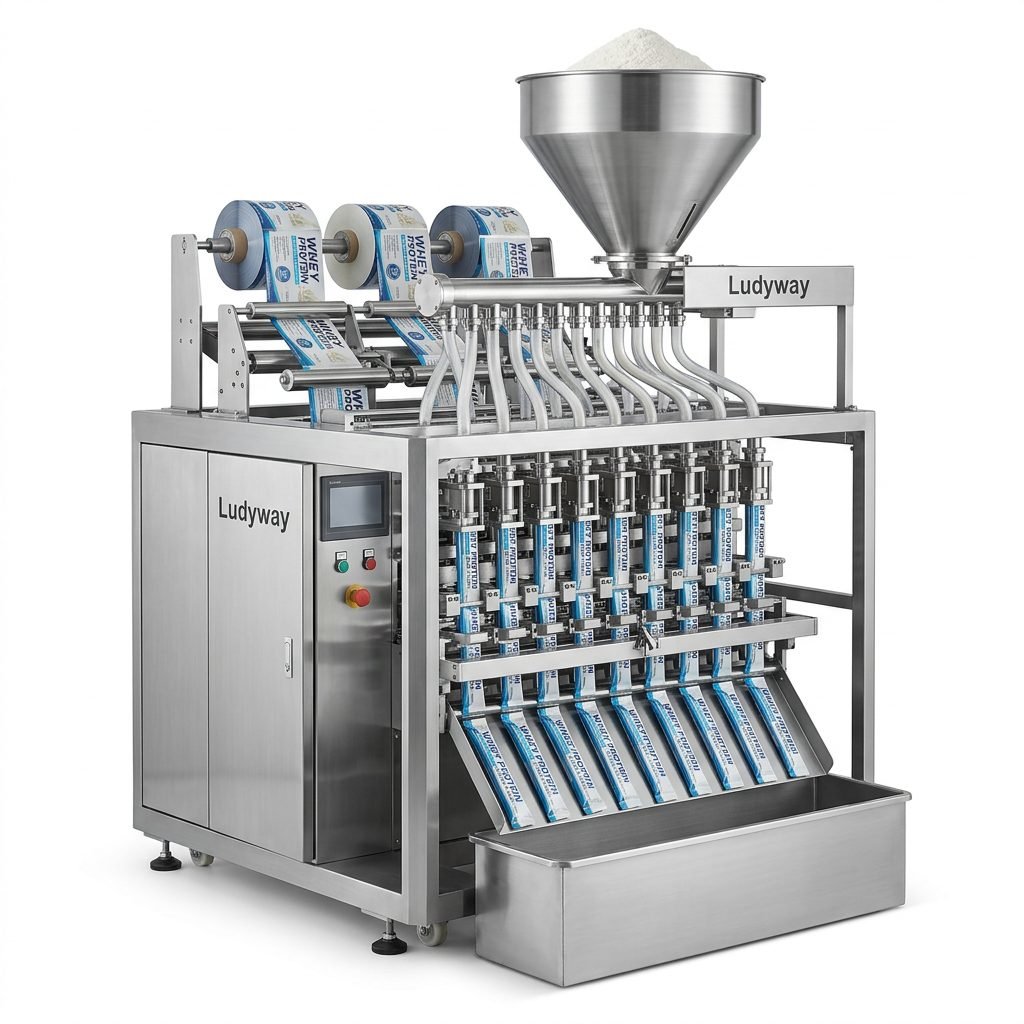
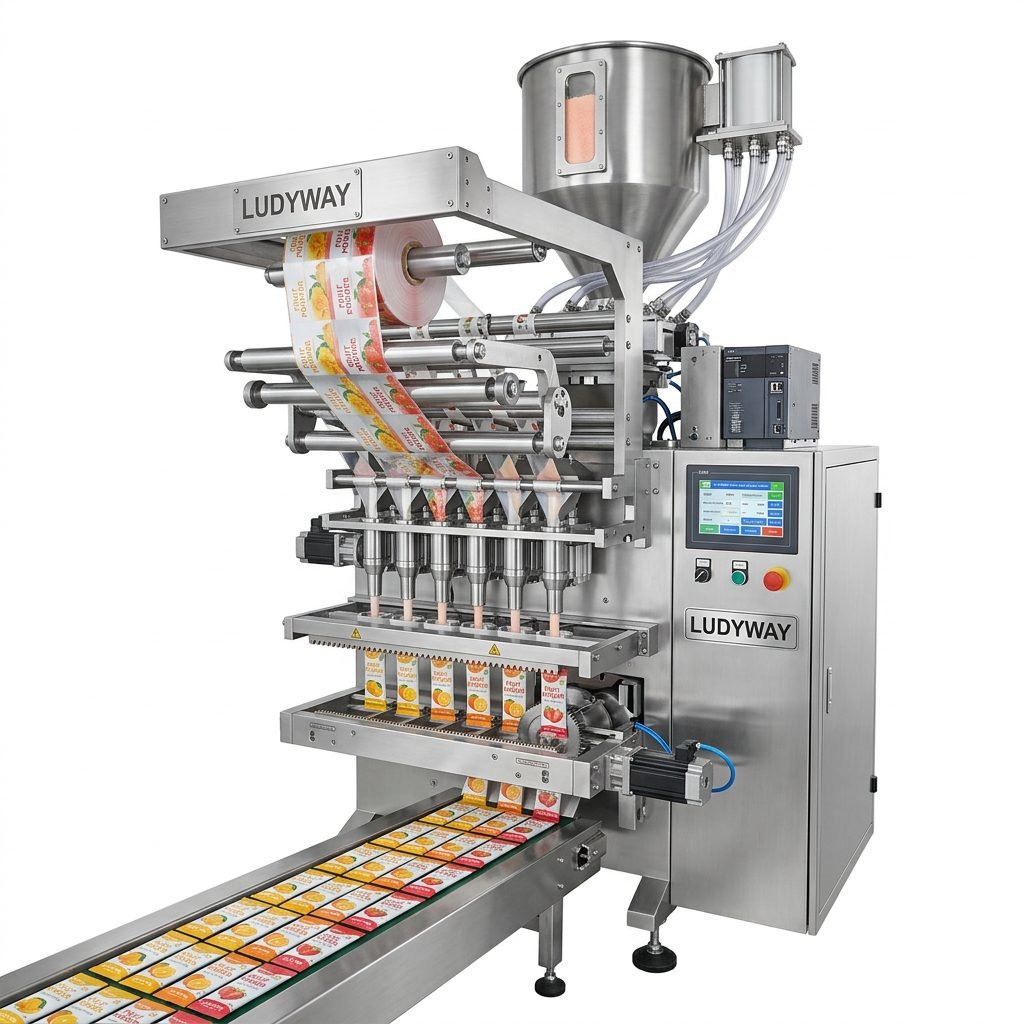
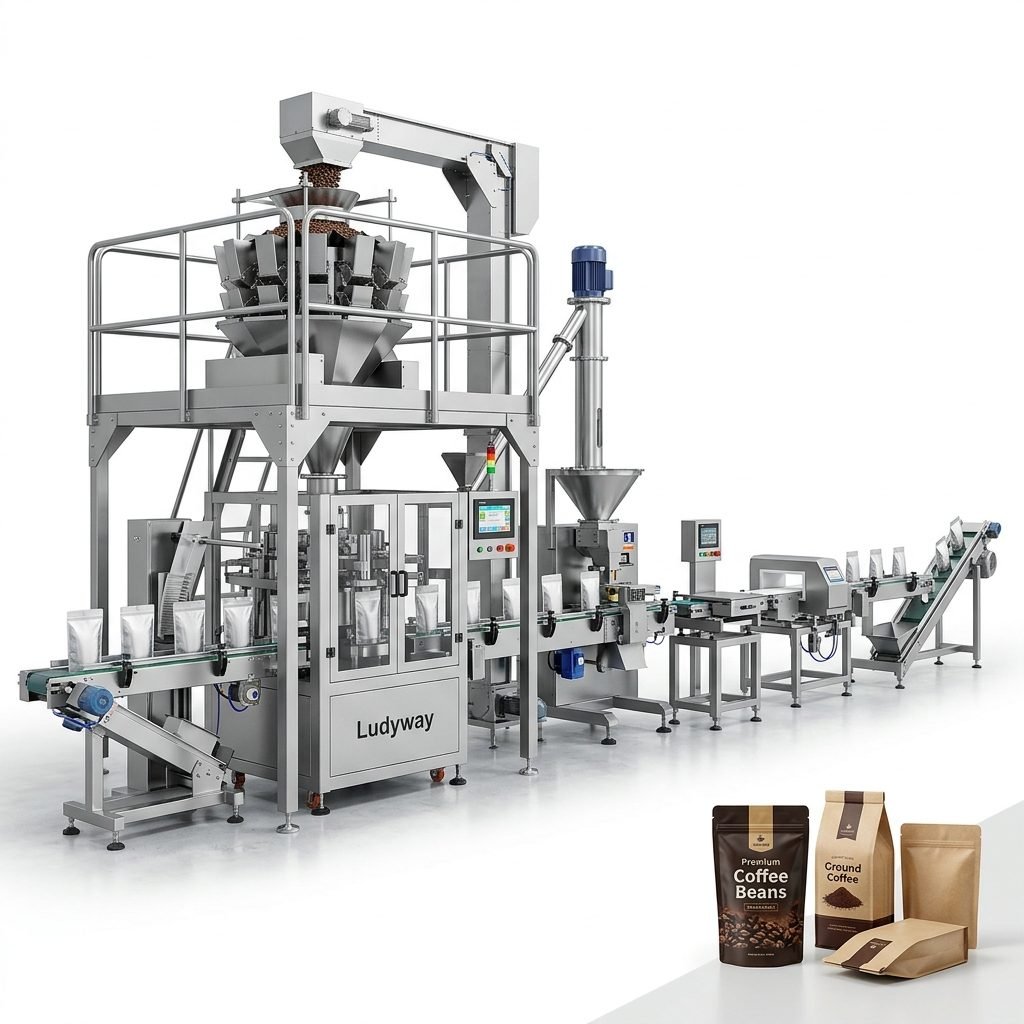
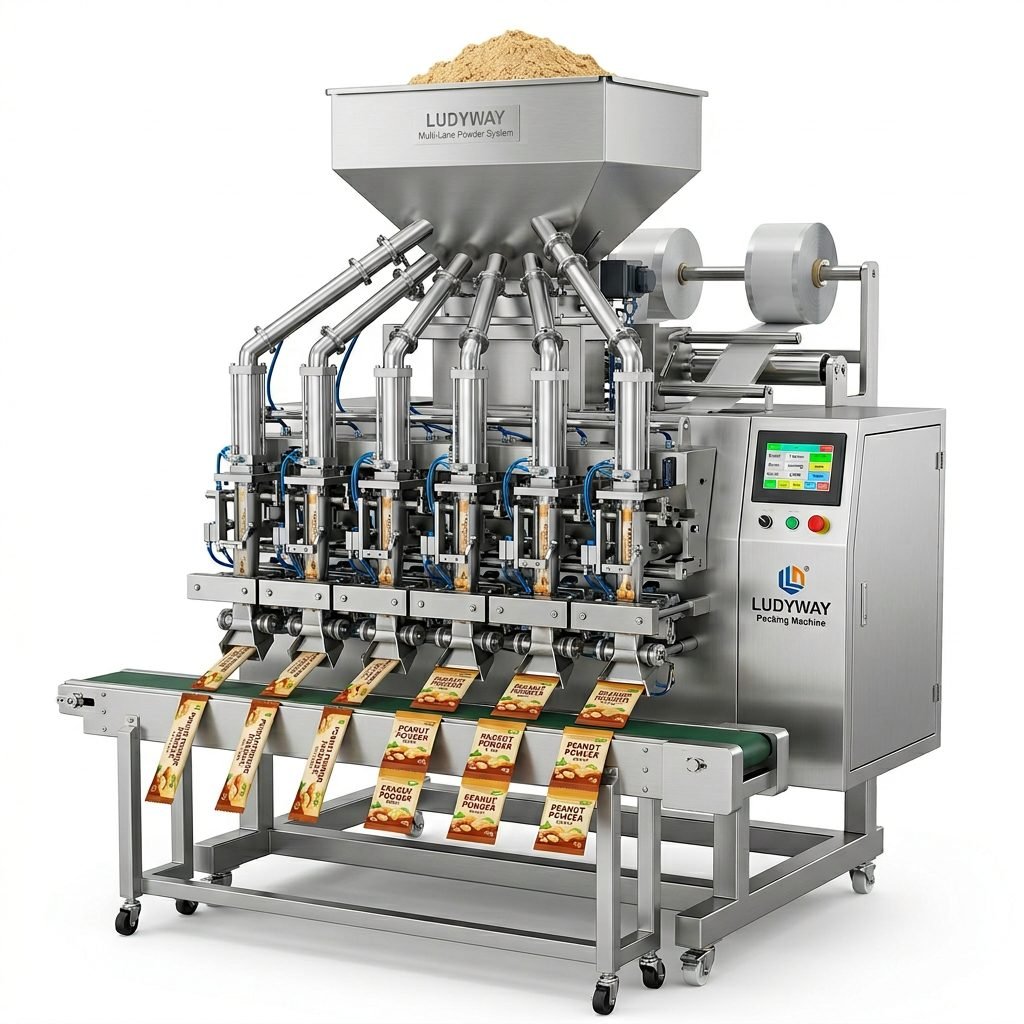
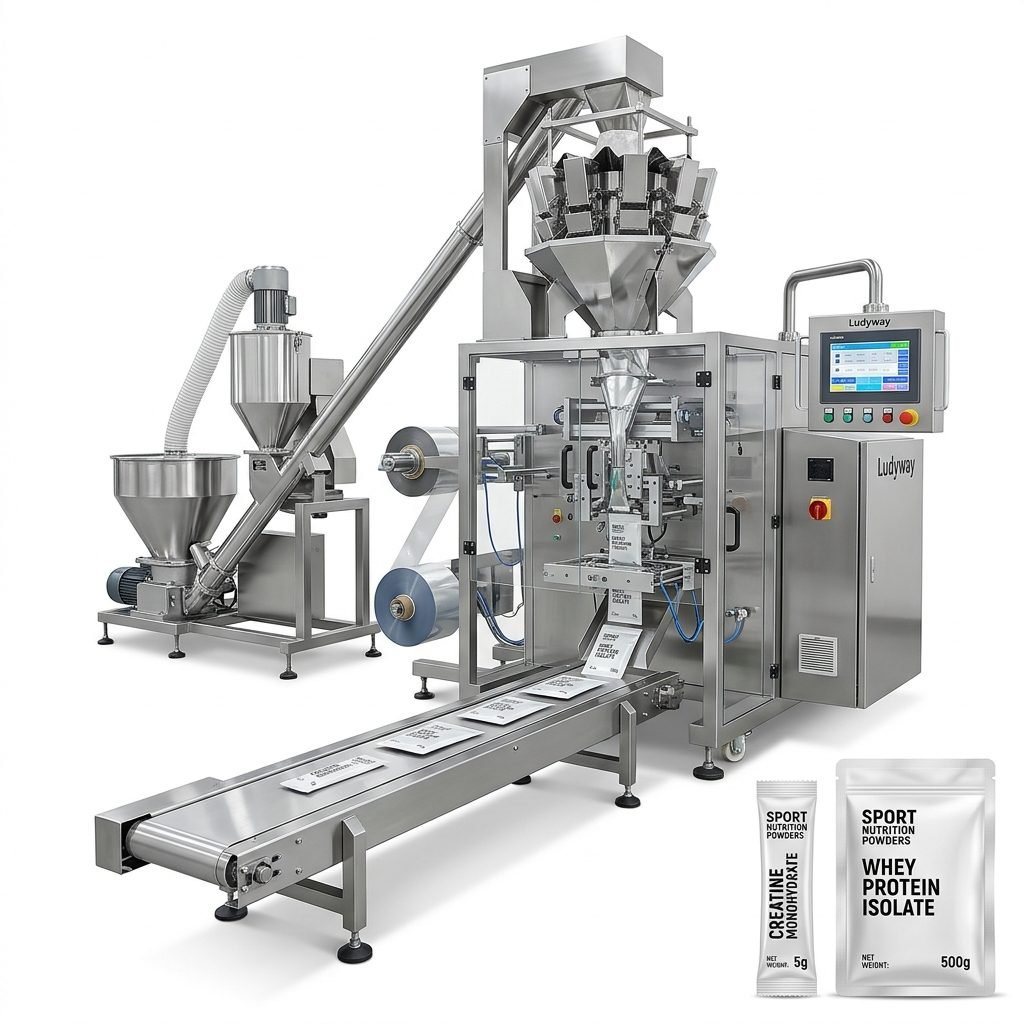
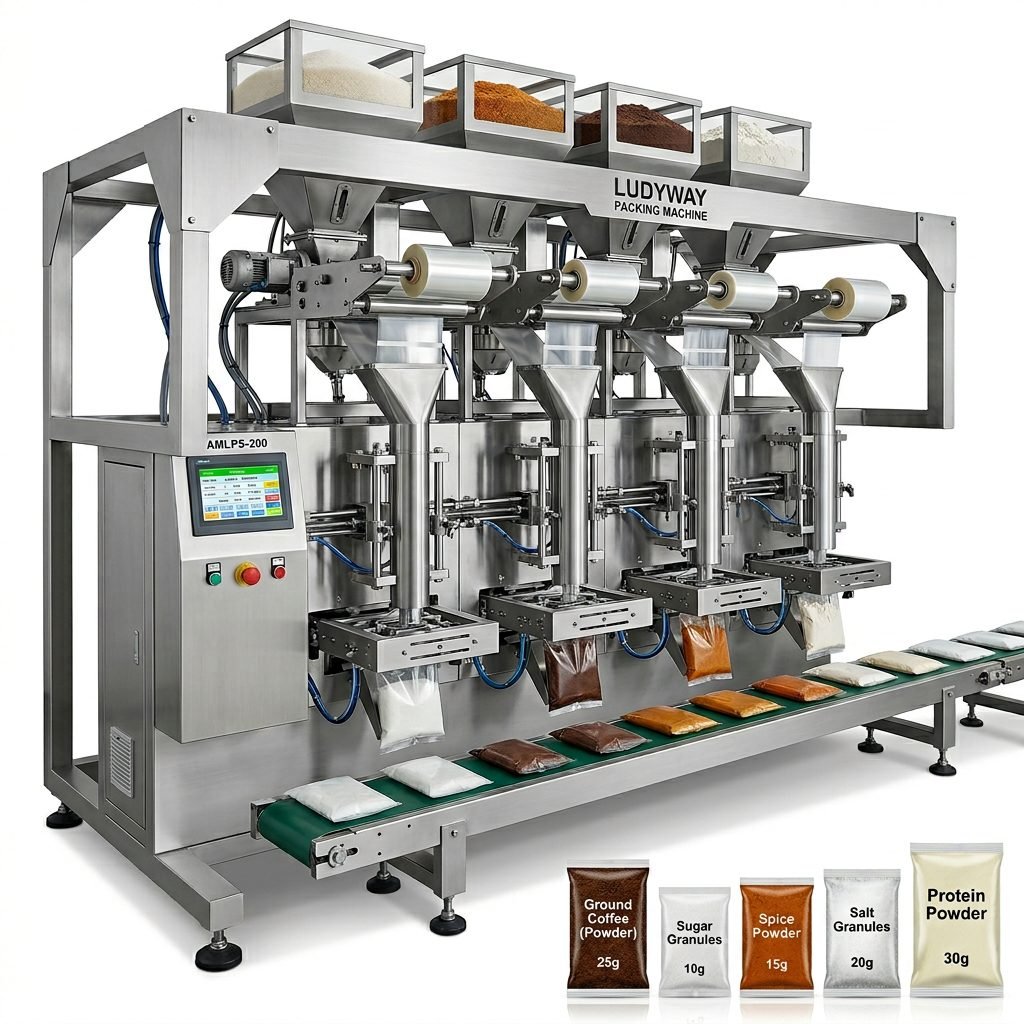
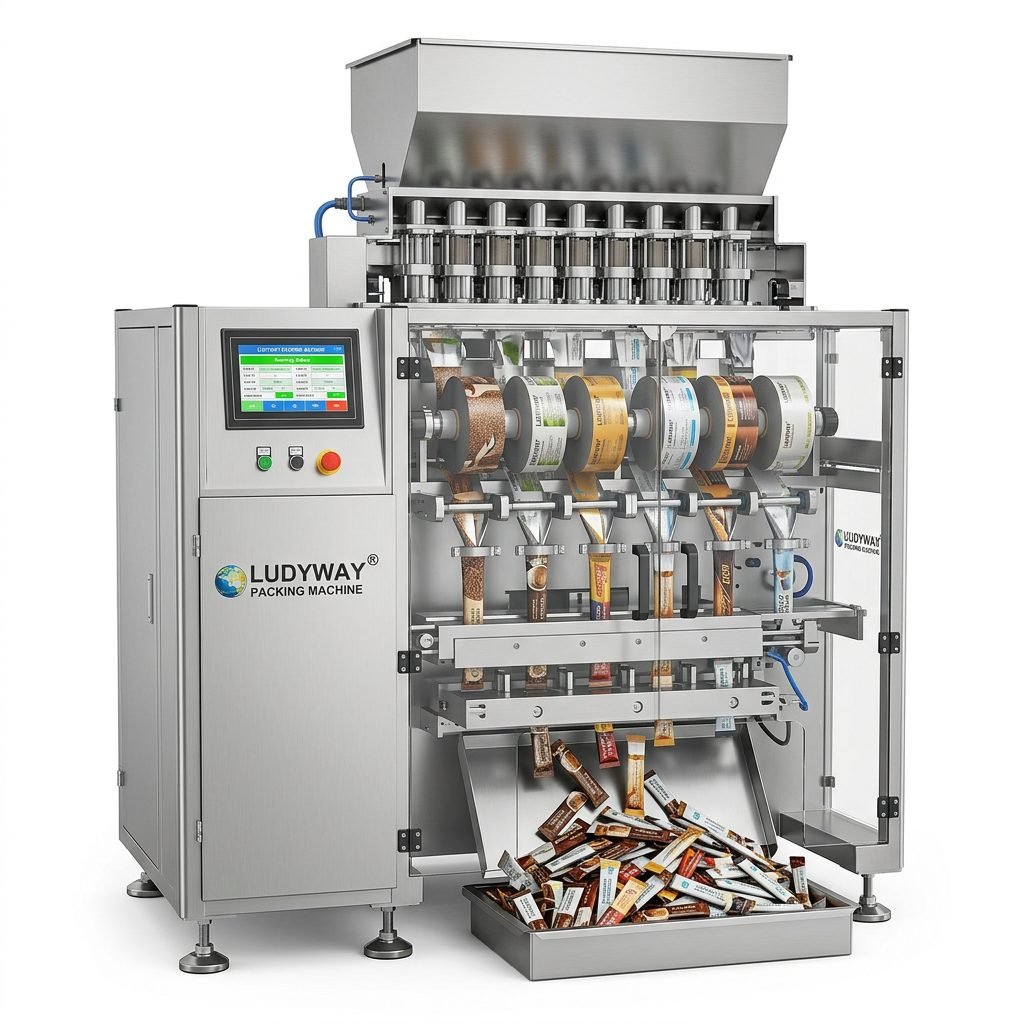
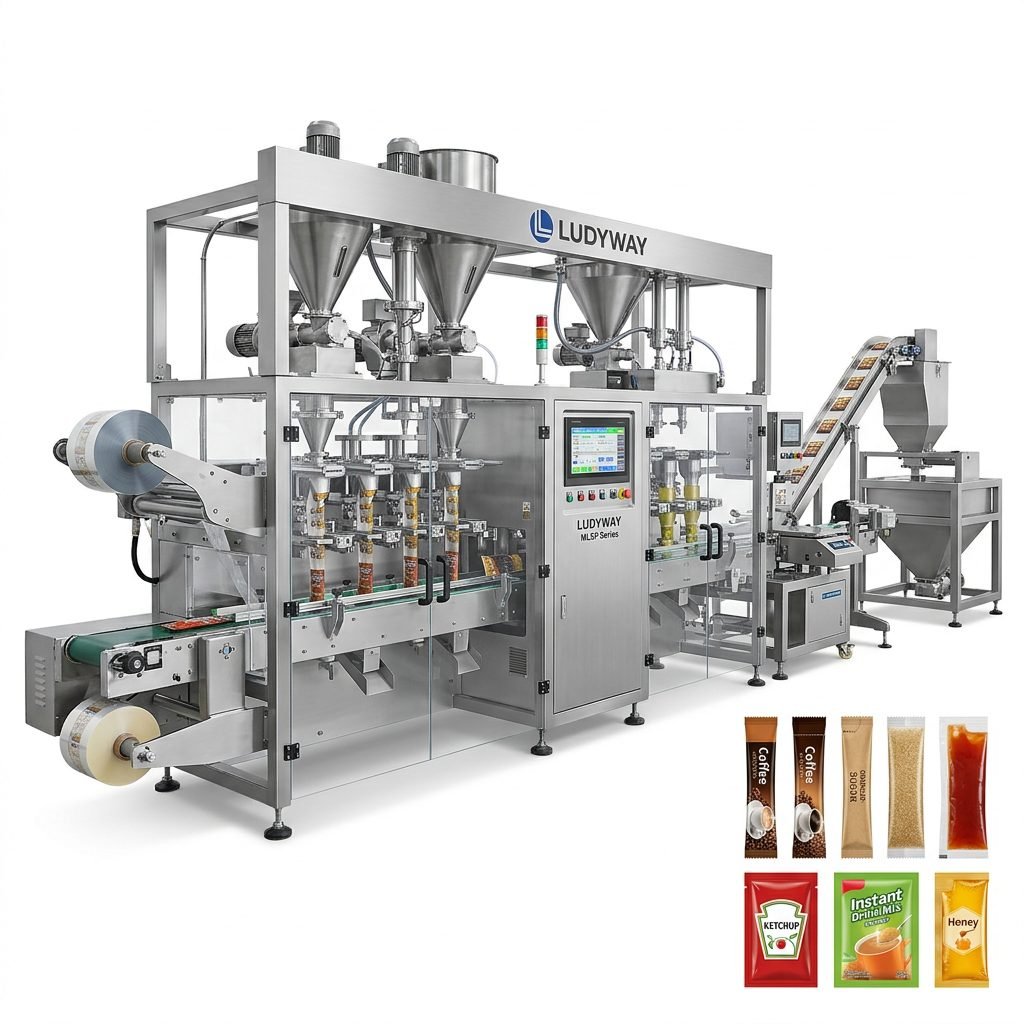
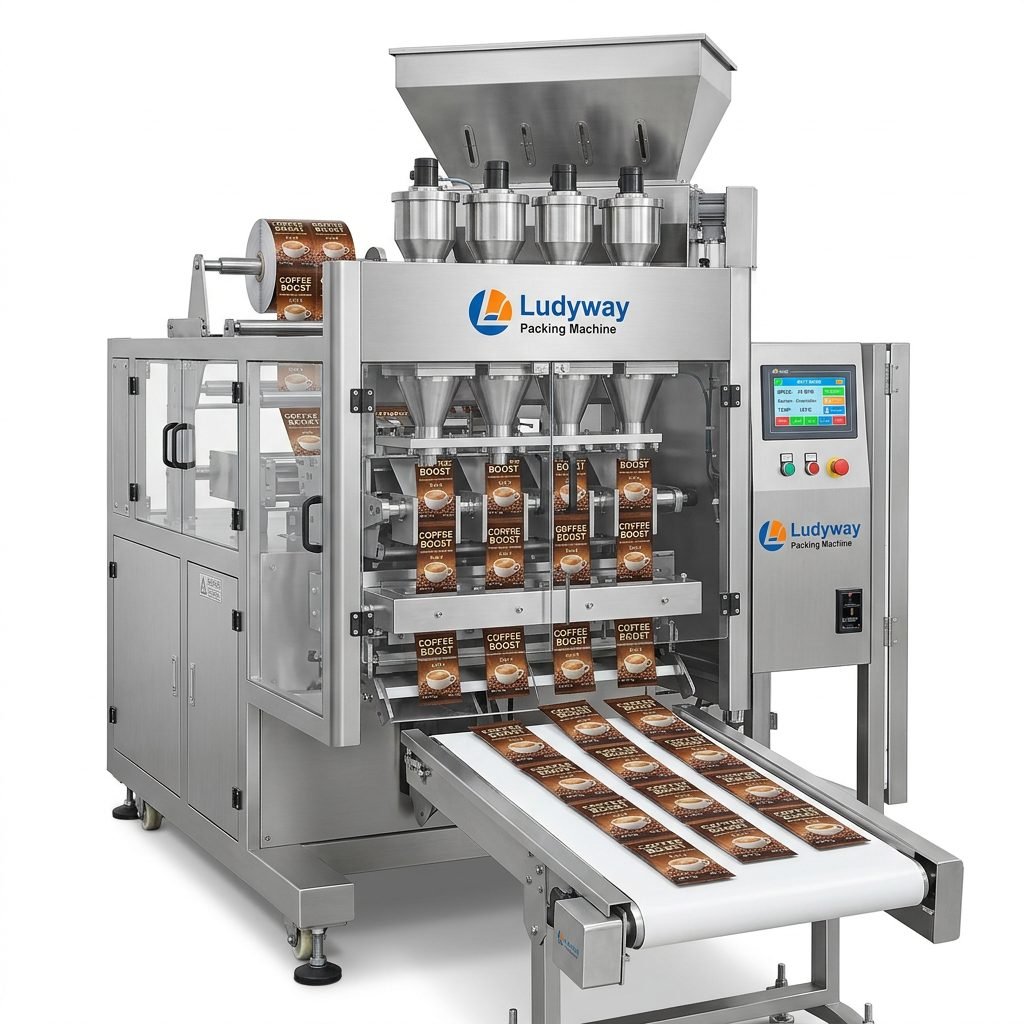
A sugar sachet packaging machine is a specialized automated system designed to measure, fill, seal, and cut sugar into small single-use sachets. These machines are widely used in coffee shops, hotels, restaurants, airlines, food factories, and private-label packaging operations because they provide clean, accurate, and efficient portion packaging.
Whether you need white sugar, brown sugar, sweetener blends, or fine granulated sugar packed into compact sachets, the right machine helps improve productivity, reduce waste, and maintain packaging consistency. For businesses looking for scalable automation, Ludyway sugar sachet packaging machine solutions are often considered for high-speed and customized production needs.
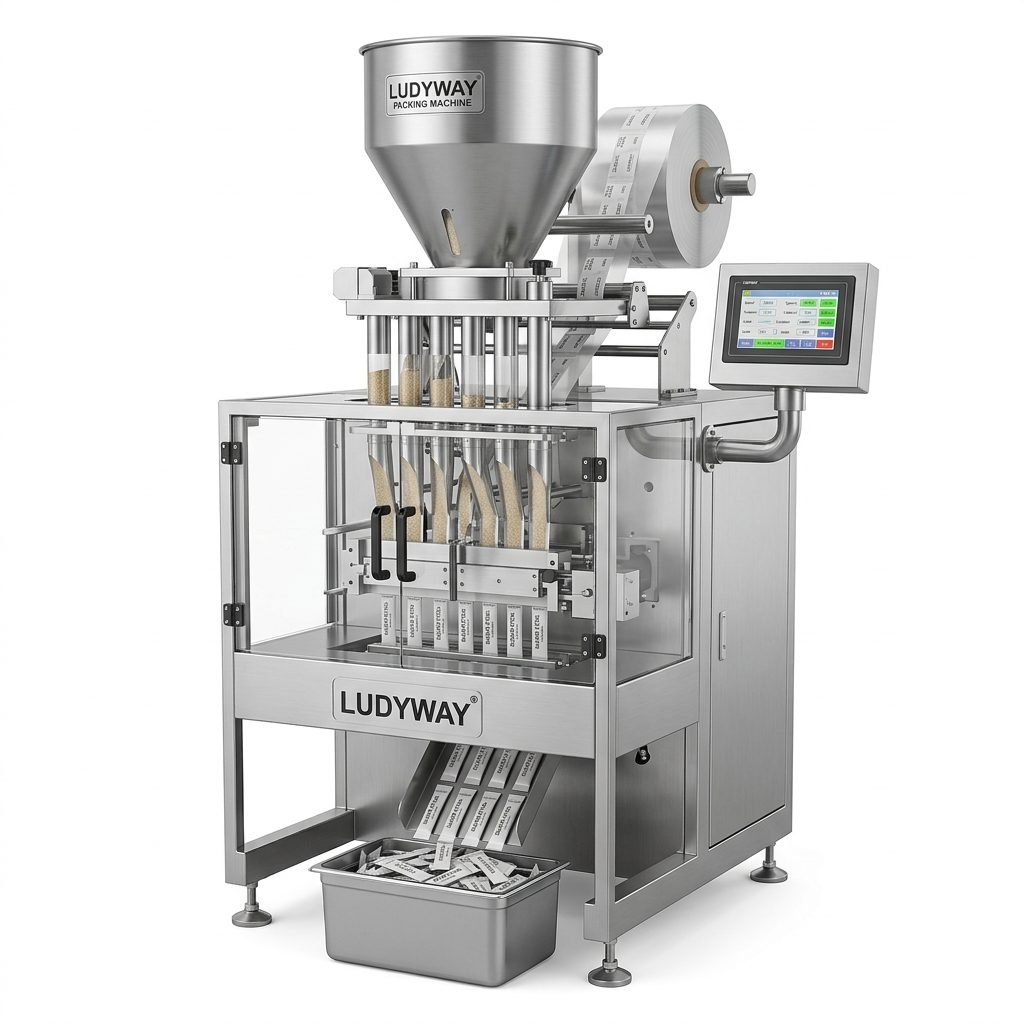
What Does a Sugar Sachet Packaging Machine Do?
In simple terms, the machine turns packaging film into finished sachets filled with a precise amount of sugar. It automates several tasks that would otherwise require manual labor:
- Forming the sachet from roll film
- Metering a preset sugar dose
- Filling sugar into each sachet
- Heat sealing the edges
- Cutting and separating finished packs
- Optionally printing batch codes or dates
The result is a neat, hygienic, retail-ready or foodservice-ready sugar pack that is easy to store, transport, and use.
Main Types of Sugar Sachet Packaging Machines
Different businesses require different formats and output levels. The most common machine types include:
| Machine Type | Best For | Typical Sugar Format |
|---|---|---|
| Single-lane sachet machine | Small to medium production | Flat sachets |
| Multi-lane sachet machine | High-volume manufacturing | Multiple flat sachets at once |
| Stick pack machine | Slim, modern portion packs | Sugar sticks |
| VFFS packaging system | Flexible granule packaging lines | Sachets, pouches, or pillow packs |
Key Benefits of Using a Sugar Sachet Packaging Machine
1. Higher Packaging Efficiency
Manual sugar packing is slow and inconsistent. An automatic machine can produce a large number of sachets continuously, making it ideal for businesses that supply hotels, cafés, vending channels, and foodservice distributors.
2. Better Filling Accuracy
Portion control is critical in sugar packaging. A properly configured machine delivers uniform fill weights, helping reduce product giveaway and maintain customer trust.
3. Improved Hygiene
Since the sugar is handled in a more enclosed process, the risk of contamination is much lower than with manual filling. This is especially important for food and hospitality applications.
4. Lower Labor Costs
Automation reduces the need for repetitive manual work. One machine can often replace multiple packing stations while improving output consistency.
5. Professional Packaging Appearance
Uniform seals, clean cuts, and consistent bag shapes create a stronger brand image. This matters for retail products and for businesses serving end customers directly.
6. Easy Integration Into Production Lines
Sugar sachet machines can often be connected with feeders, date coders, checkweighers, conveyors, and cartoning equipment to build a more complete packaging line.
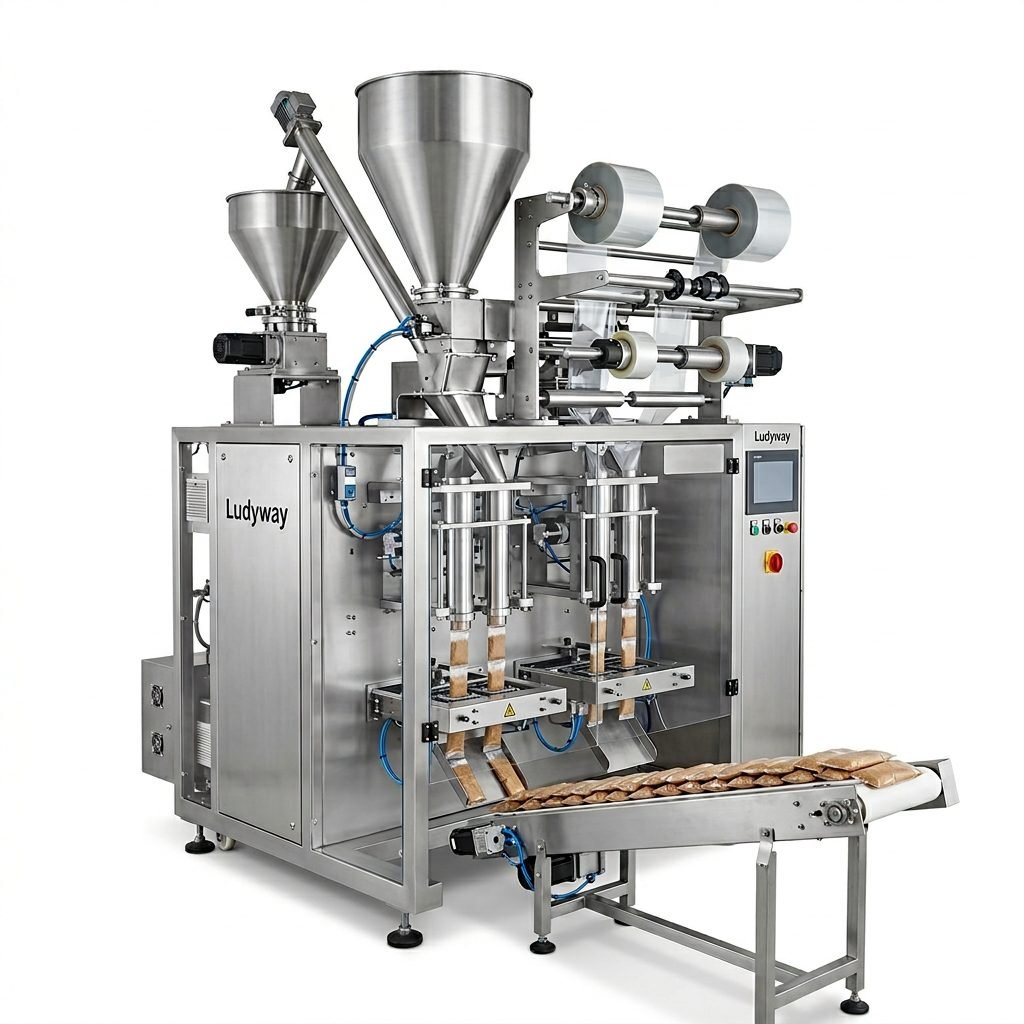
Common Uses of Sugar Sachet Packaging Machines
These machines are used across many sectors because single-serve packaging is practical, hygienic, and convenient.
- Coffee shops and tea chains for table-use sugar sachets
- Hotels and restaurants for guest service and dining setups
- Airlines and travel catering for compact portion packs
- Food manufacturers for branded retail sugar products
- Private-label packers for contract manufacturing
- Sweetener producers for sugar substitutes and blended formulations
Besides standard white granulated sugar, many machines can also handle:
- Brown sugar
- Icing sugar or fine powder sugar
- Xylitol
- Erythritol
- Stevia blends
- Other free-flowing granule or powder sweeteners
How a Sugar Sachet Packaging Machine Works
Although machine configurations vary, the operating principle is generally straightforward.
Step 1: Film Feeding
A roll of packaging film is loaded onto the machine. The film is pulled through guiding components and aligned for accurate forming and sealing.
Step 2: Sachet Forming
The film is shaped into the required sachet format. Depending on the machine design, this can be a flat sachet or a slim stick pack.
Step 3: Sugar Dosing
A volumetric cup filler, auger system, or weighing unit dispenses the preset amount of sugar into each pack. For granulated sugar, volumetric and cup-based systems are common due to their speed and efficiency.
Step 4: Filling
The measured sugar drops into the formed package through the filling system. Good synchronization is essential here to avoid spillage and maintain accuracy.
Step 5: Sealing
Heat-sealing jaws close the package securely. Strong seals are important for moisture protection, product safety, and shelf presentation.
Step 6: Cutting and Output
After sealing, the connected sachets are cut into individual units or into strips, depending on the required final format.
Step 7: Coding and Secondary Packaging
Optional systems may print lot numbers, dates, or barcodes. Finished sachets can then move to counting, cartoning, or case packing equipment.
Core Components of the Machine
| Component | Function |
|---|---|
| Film unwinding unit | Feeds packaging film into the machine |
| Forming system | Creates the sachet shape |
| Dosing device | Measures the correct amount of sugar |
| Filling chute | Transfers sugar into the package |
| Sealing unit | Heat seals the sachet edges |
| Cutting mechanism | Separates finished sachets |
| PLC/HMI control system | Controls settings, speed, and operation |
What to Consider Before Buying One
Choosing the right machine depends on more than just speed. Buyers should evaluate the full production requirement.
- Product type: white sugar, brown sugar, powdered sugar, or sweetener blends
- Pack size: for example 3g, 5g, 8g, or customized portions
- Bag style: flat sachet or stick pack
- Output target: small batch, medium volume, or high-speed mass production
- Film material: compatibility with laminated or heat-sealable films
- Accuracy requirements: especially for private label or export orders
- Available floor space: single machine or full packaging line layout
- Cleaning and maintenance needs: especially in food-grade production environments
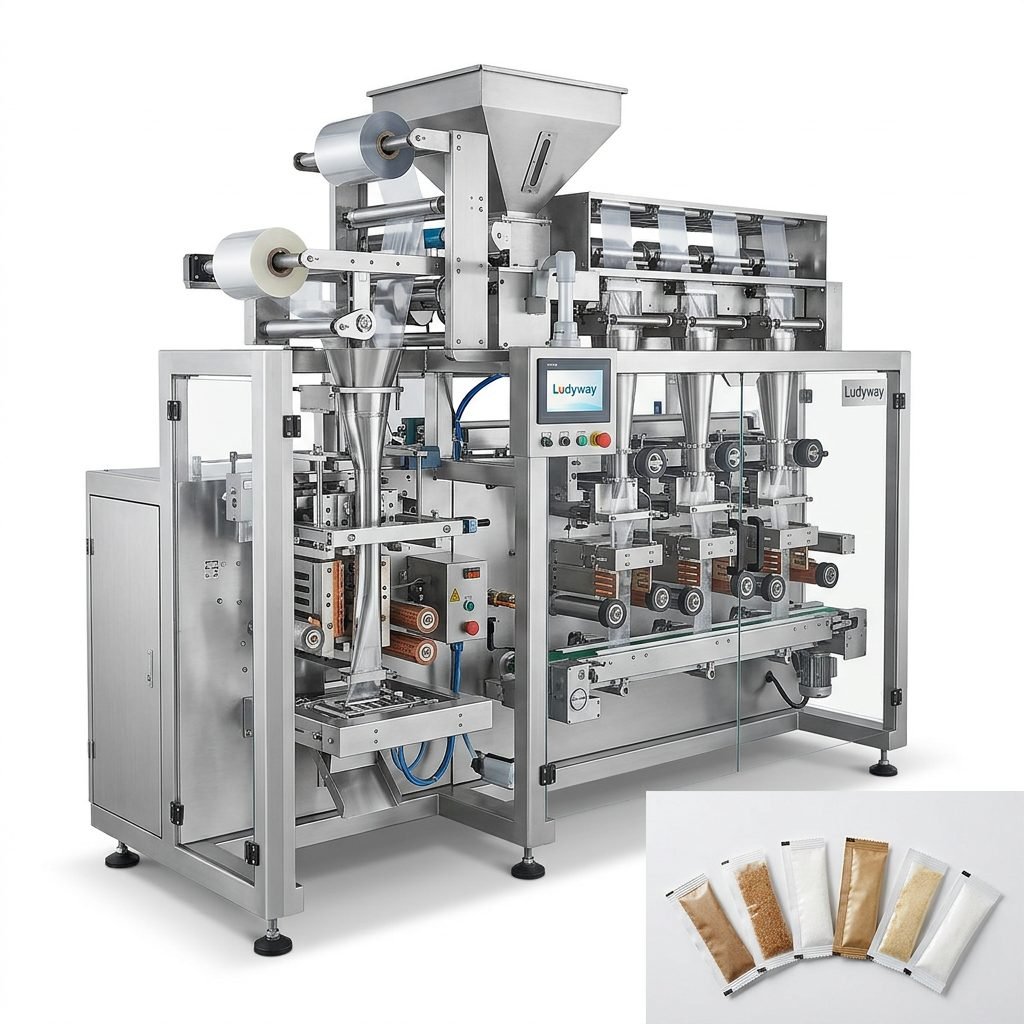
Single-Lane vs. Multi-Lane: Which Is Better?
Both are useful, but the right choice depends on your production goals.
| Factor | Single-Lane | Multi-Lane |
|---|---|---|
| Production speed | Moderate | High to very high |
| Investment level | Lower | Higher |
| Best for | Startups, smaller factories | Large foodservice and contract packing operations |
| Operation complexity | Simpler | More advanced |
Industries That Benefit Most
Sugar sachet packaging machines are especially valuable in industries that depend on portion control, hygiene, and high output.
- Food processing
- Beverage ingredient packaging
- Hospitality supply
- Retail sugar and sweetener packaging
- Contract packaging services
- Export-oriented consumer goods production
Maintenance Tips for Stable Performance
To keep the machine running smoothly, regular maintenance is essential.
- Clean sugar contact parts to prevent buildup and sticking
- Check sealing temperature and jaw condition regularly
- Inspect film tracking components for alignment accuracy
- Calibrate the dosing system at scheduled intervals
- Monitor wear parts such as cutters and sealing elements
- Keep control panels and sensors free from dust
Proper maintenance supports longer machine life, fewer stoppages, and more consistent sachet quality.
Final Thoughts on Sugar Sachet Packaging Automation
A sugar sachet packaging machine is an efficient solution for businesses that need clean, precise, and high-speed packaging of single-serve sugar portions. It helps improve output, reduce labor dependence, strengthen hygiene control, and present a more professional final product.
If your operation handles sugar, sweeteners, or similar free-flowing products, investing in the right machine can significantly improve daily production performance and long-term packaging consistency.