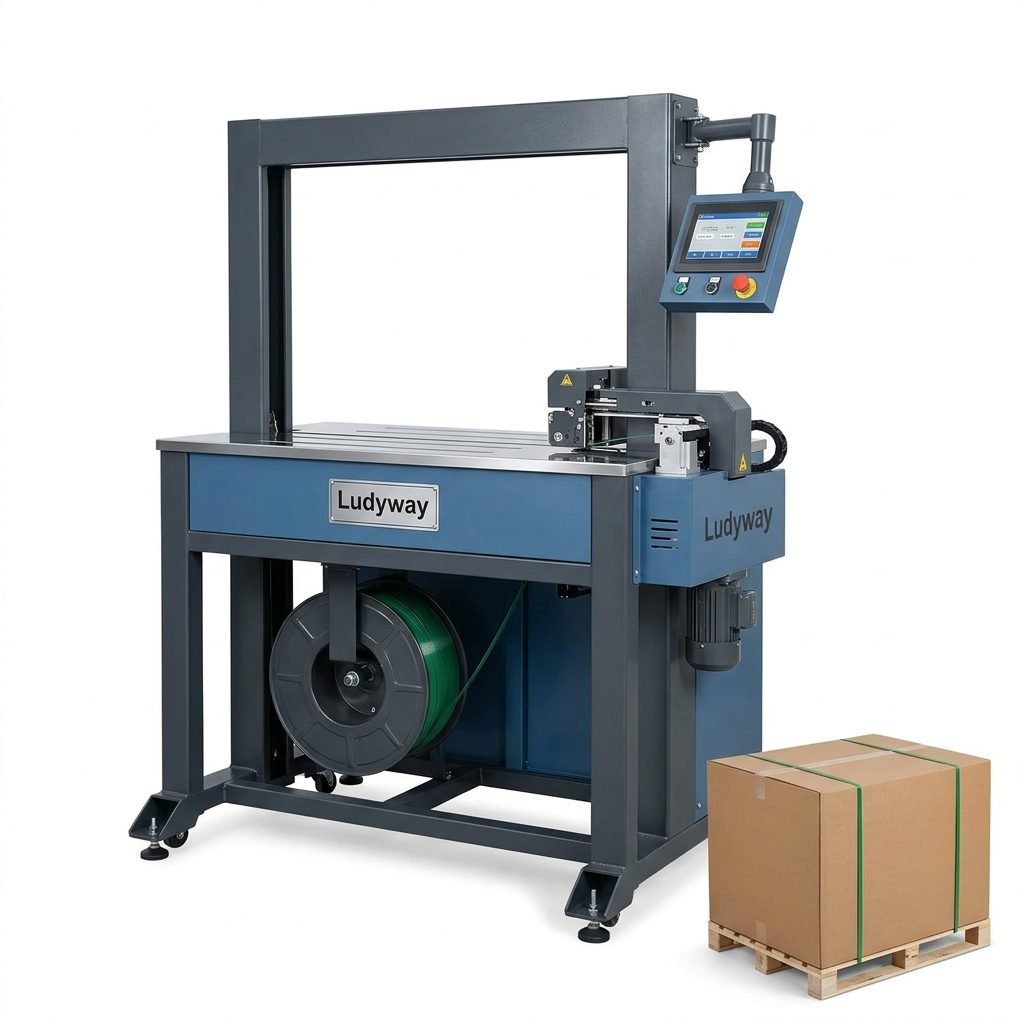
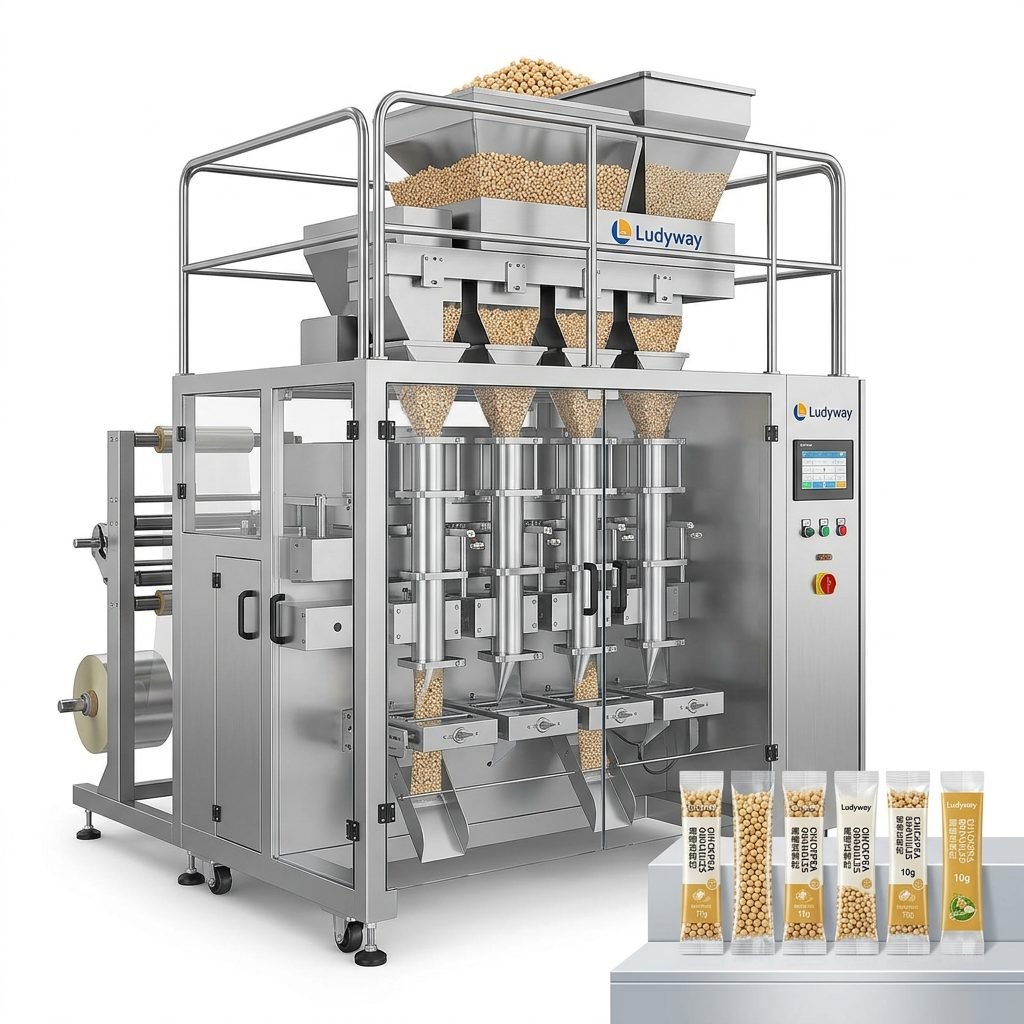
Finding the right packaging machine supplier is a critical decision for any manufacturing business. The choice impacts production efficiency, product quality, operational costs, and ultimately, your bottom line. With countless manufacturers and suppliers in the market, how do you navigate the options to select a reliable partner and secure the best possible price? This comprehensive guide will walk you through the essential steps, from evaluating manufacturers to finalizing a deal that delivers value.
Key Factors When Evaluating a Packaging Machine Supplier
Before you start requesting quotes, it’s crucial to establish a clear set of criteria for evaluating potential suppliers. This due diligence will save you time, money, and future headaches.
1. Technical Expertise and Industry Experience
A supplier’s depth of knowledge is paramount. Look for companies with a proven track record in your specific industry, whether it’s food, pharmaceuticals, chemicals, or cosmetics. Experience translates into an understanding of regulatory requirements, material compatibility, and common production challenges.
→ Pro Tip: Don’t just ask about years in business. Ask for case studies or references from clients with similar products and packaging formats (e.g., stick packs for coffee, sachets for shampoo). A supplier like Ludyway Machinery, with over 30 years of collective industry experience, can offer insights that newer companies cannot.
2. Range of Machinery and Customization Capabilities
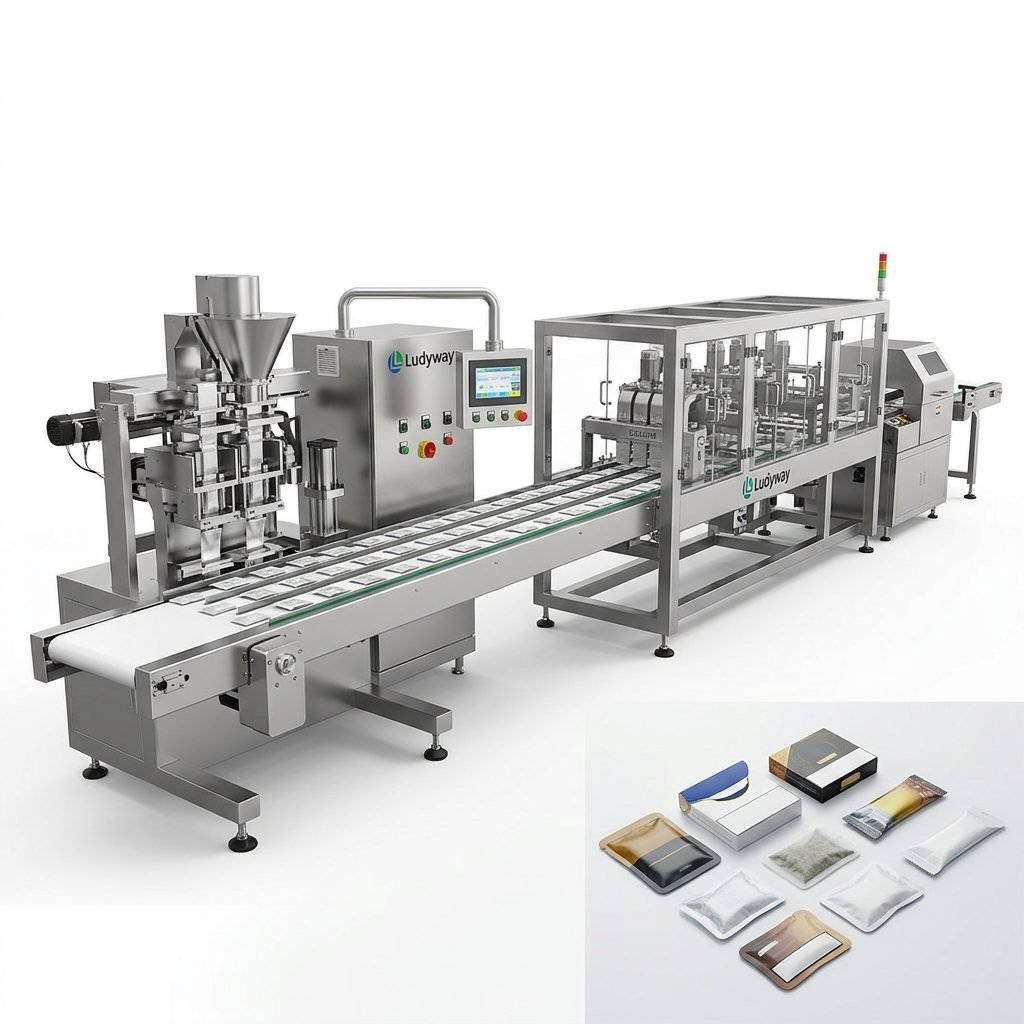
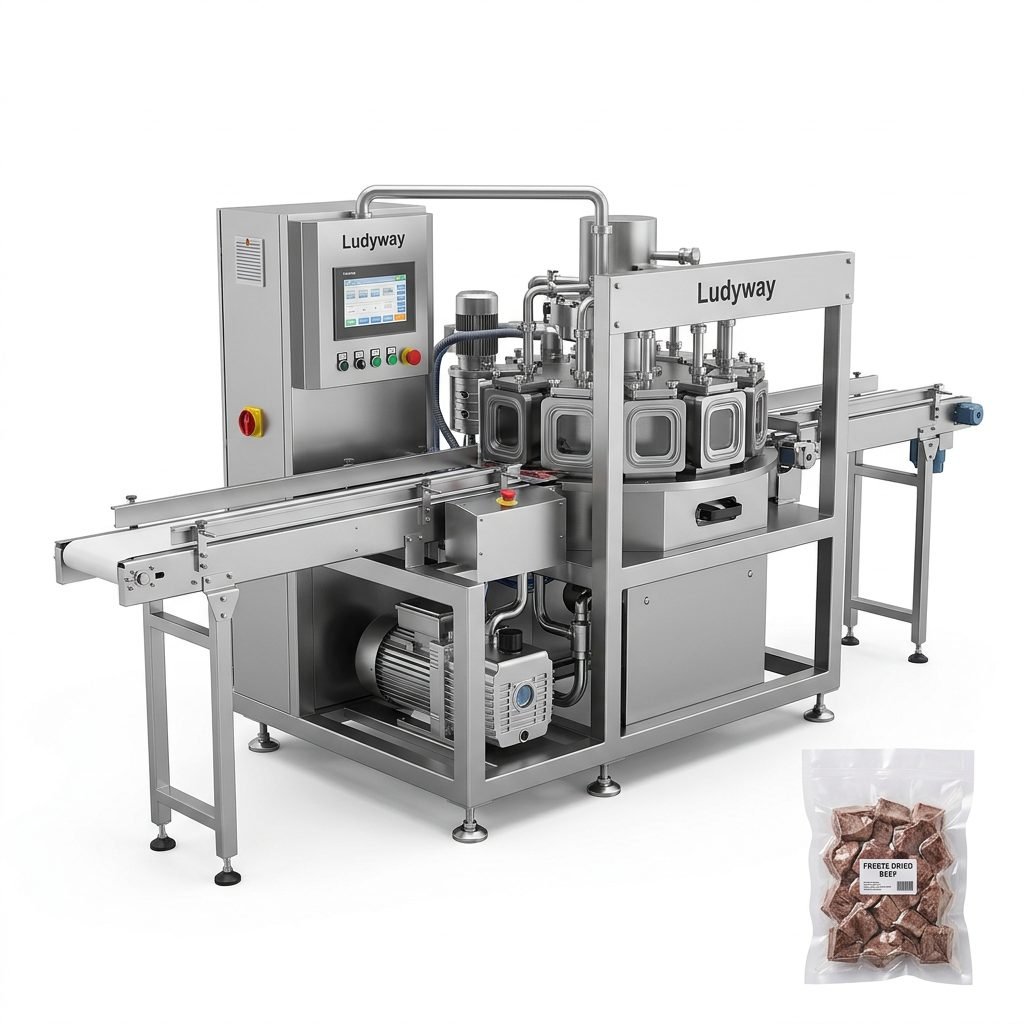
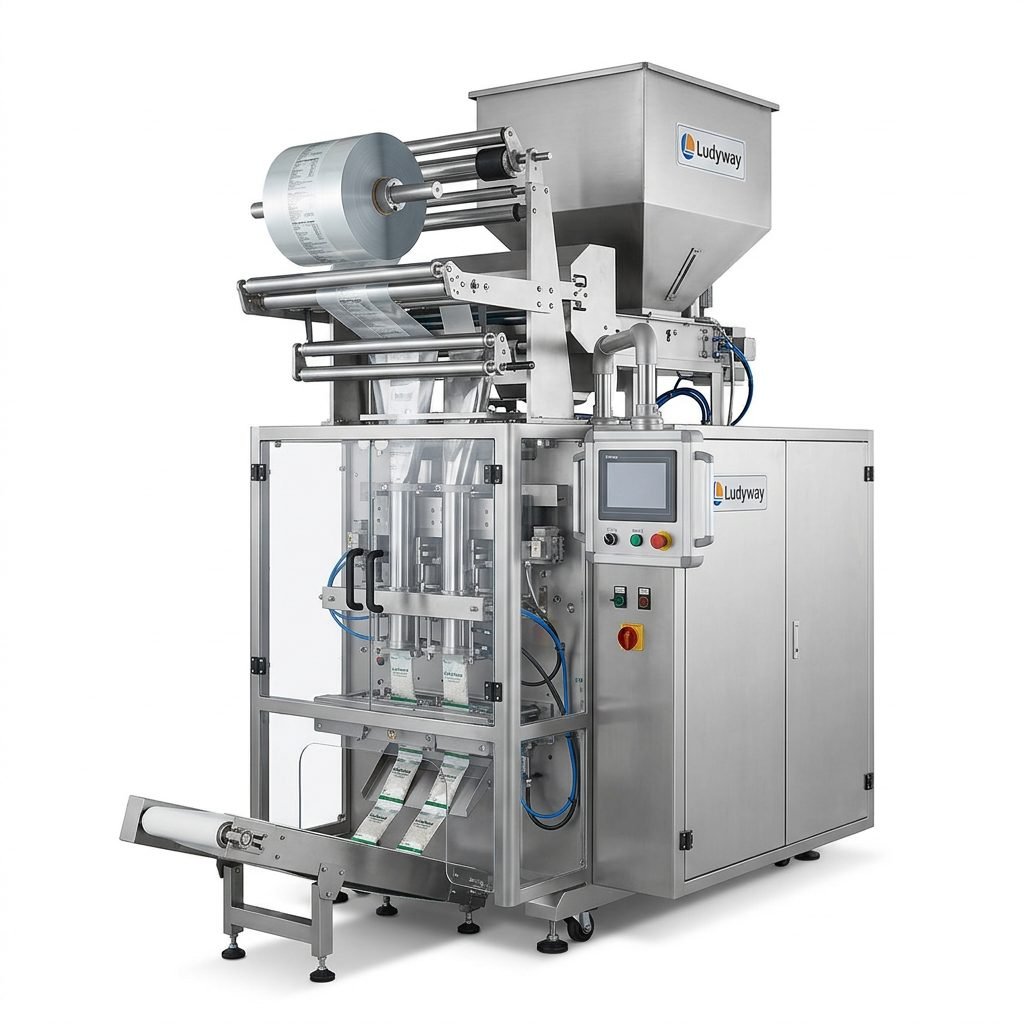
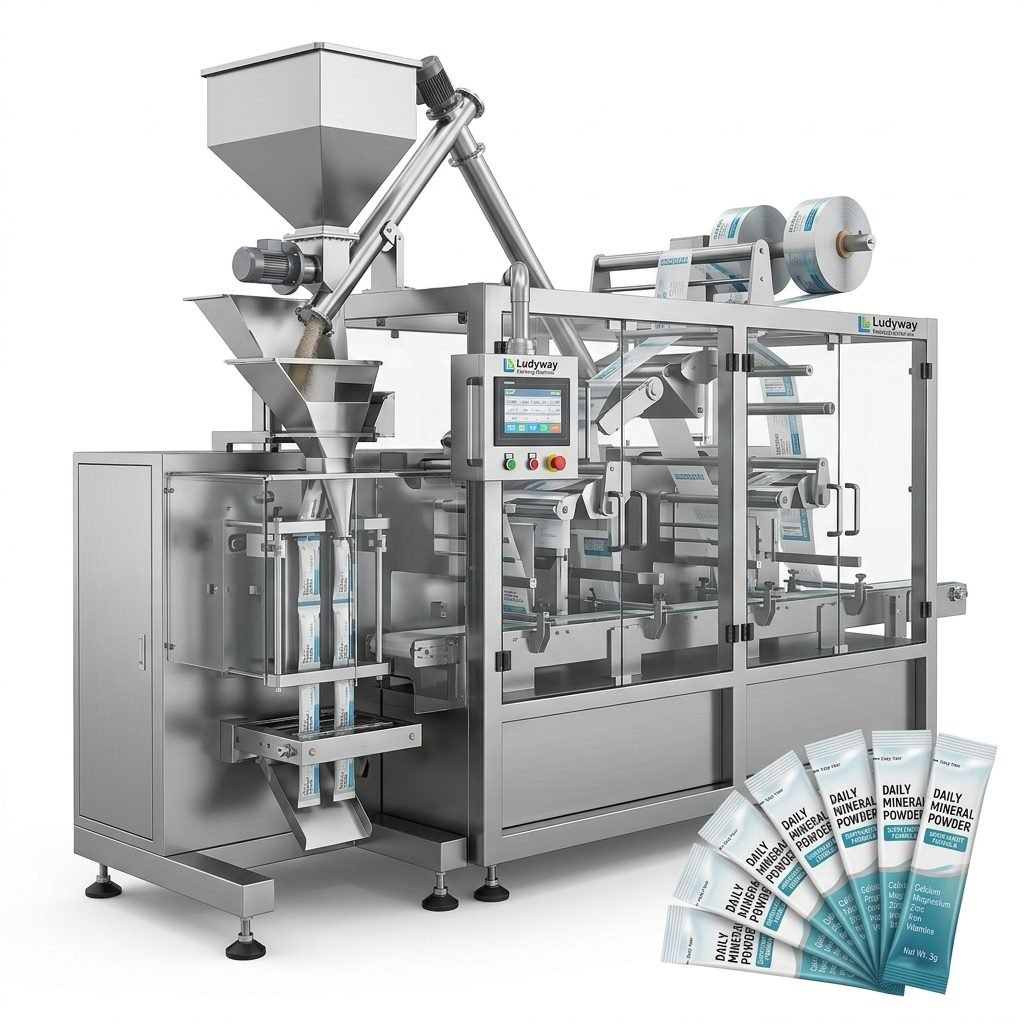
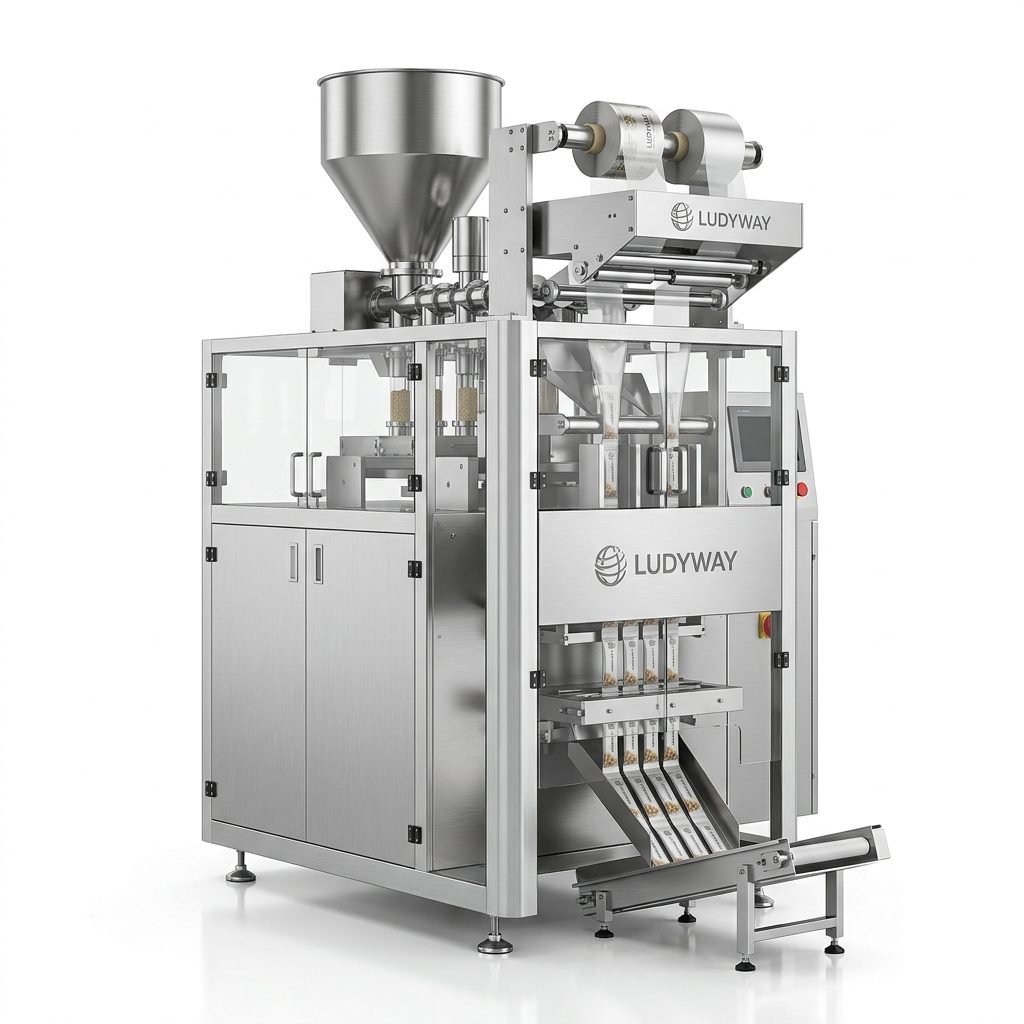
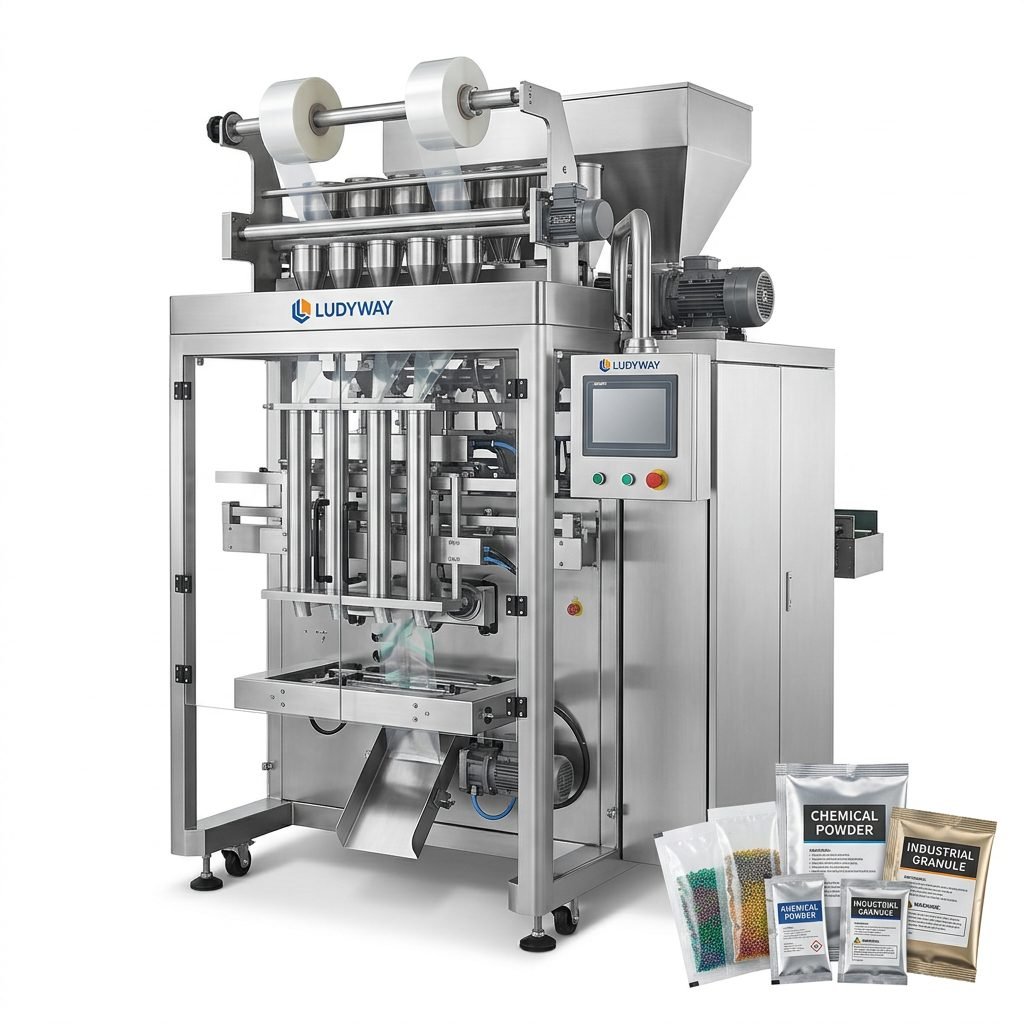
Your needs may evolve. A supplier offering a broad portfolio—from single machines to complete turnkey lines—provides scalability. Key machinery types include:
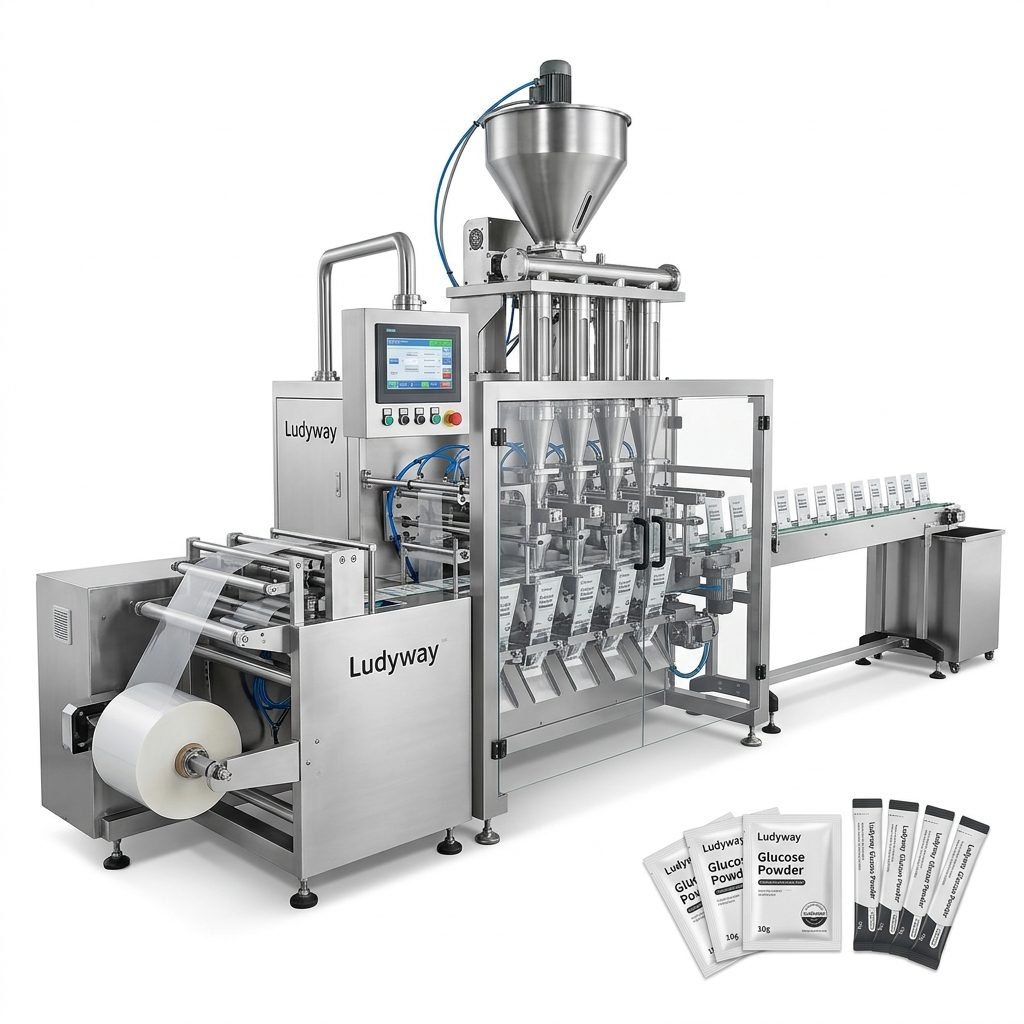
- Vertical Form-Fill-Seal (VFFS) Machines: For granules, powders, and liquids.
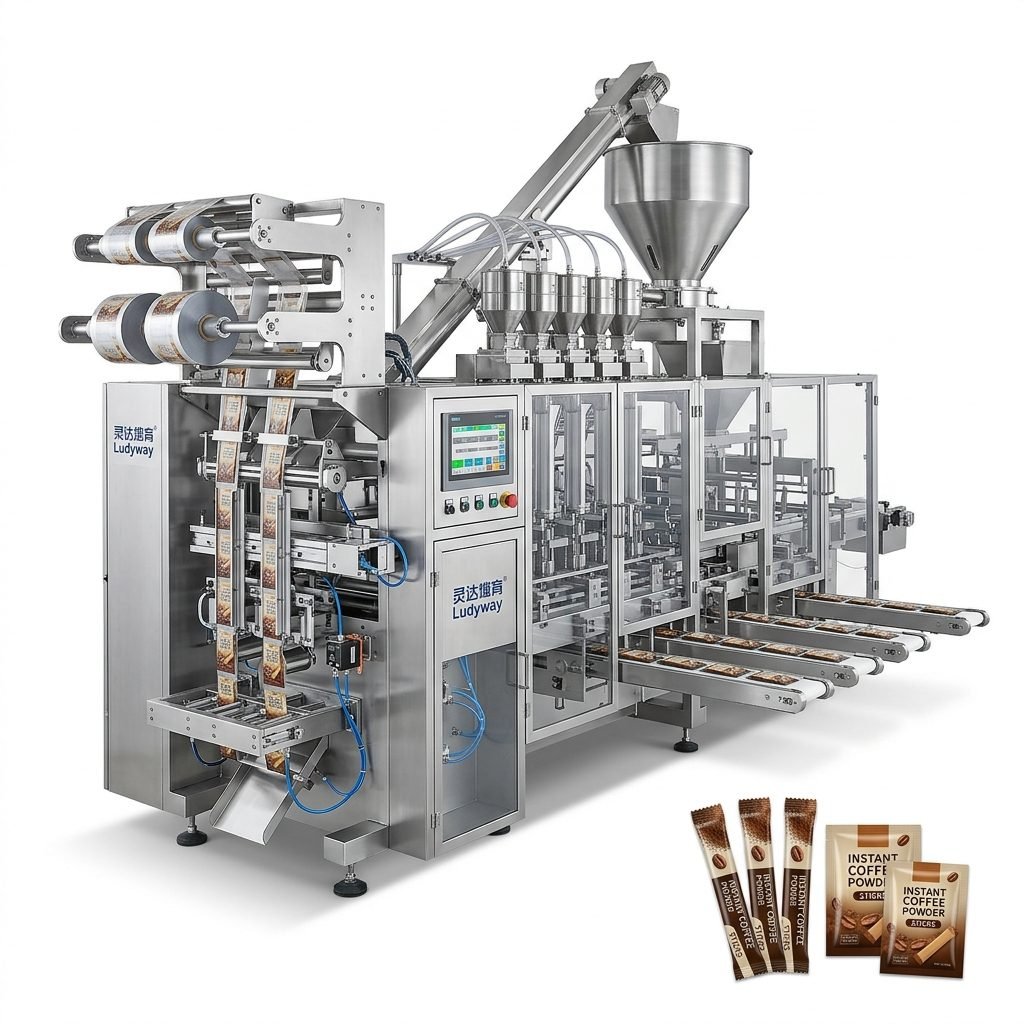
- Stick Pack Machines: Ideal for single-serve portions.
- Sachet Packaging Machines: For powders, liquids, and creams.
- Cartoning and Case Packing Systems: For secondary packaging.
Equally important is their ability to customize. Can they modify a standard machine to handle your unique product, pouch size, or production speed?
3. Manufacturing Quality and Facility Standards
The build quality of the machine dictates its longevity and performance. Inquire about:
- Component Quality: Are critical parts (like servos, PLCs, and seals) from reputable brands?
- Production Facility: A modern facility, like a 20,000㎡ manufacturing plant, often indicates investment in quality control, R&D, and efficient production processes.
- Compliance: Does the machinery comply with relevant international standards (e.g., CE, FDA guidelines for food contact)?
4. After-Sales Support and Service Network
The relationship begins after the sale. Reliable support includes:
- Installation & Commissioning: On-site setup and operator training.
- Technical Support: Availability of remote assistance and a responsive helpdesk.
- Spare Parts Inventory: Quick access to genuine spare parts to minimize downtime.
- Warranty Terms: Clear, comprehensive warranty coverage.
A supplier with a strong service ethos views itself as a long-term partner in your productivity.
The Step-by-Step Guide to Getting the Best Price
Securing a good price isn’t about haggling for the lowest number; it’s about maximizing value. Follow this process.
Step 1: Define Your Requirements Precisely
Ambiguity leads to inaccurate quotes. Prepare a detailed specification sheet including:
- Product characteristics (e.g., viscosity, abrasiveness, particle size).
- Desired packaging material and format.
- Required production speed (pouches/minute or packs/hour).
- Available factory space and utilities (power, air supply).
- Future expansion plans.
Step 2: Research and Shortlist Potential Suppliers
Use industry directories, trade shows, and online platforms to create a long list. Narrow it down to 3-5 serious contenders based on the evaluation factors above. Review their company profile and history to gauge stability and focus.
Step 3: Request for Quotation (RFQ) and Initial Dialogue
Submit your detailed specs to your shortlisted suppliers. A serious supplier will ask clarifying questions. This interaction is a test of their professionalism and attentiveness.
Step 4: Evaluate the Quotes Holistically
Don’t just compare the bottom-line price. Break down the quote:
| Cost Component | What to Look For |
|---|---|
| Machine Price | Included features, automation level, brand of components. |
| Shipping & Insurance | Incoterms (e.g., FOB, CIF), who bears risk and cost. |
| Installation & Training | Is it included? If not, what is the estimated cost? |
| Spare Parts Kit | A recommended starter kit can prevent early downtime. |
| Warranty & Service Terms | Duration, coverage, and response time commitments. |
Step 5: Negotiate for Value, Not Just Price
Use your findings to negotiate. You might ask:
- “Can we extend the warranty period?”
- “Is a basic spare parts kit included?”
- “What are the payment terms?” (e.g., 30% deposit, 70% before shipment).
Sometimes, paying slightly more for a machine from a supplier with a robust history of innovation and partnership offers far greater long-term value.
Step 6: Final Due Diligence and Contract
Before signing, request to visit their facility or arrange a live video tour. Speak to existing clients. Finally, ensure the contract clearly outlines all agreed-upon terms, specifications, delivery schedule, and service level agreements (SLAs).
Red Flags to Avoid When Choosing a Supplier
Be cautious of suppliers who:
- Provide a quote instantly without asking questions.
- Are evasive about their manufacturing location or facility details.
- Offer prices significantly lower than the market average without clear justification.
- Have vague or extremely limited warranty conditions.
- Lack clear communication or have poor English proficiency, which can hinder support.
Conclusion: Building a Partnership for Growth
Choosing a packaging machine supplier is a strategic investment. By prioritizing technical expertise, proven quality, and comprehensive support over the initial price tag, you select a partner who will contribute to your operational success for years to come. A reliable supplier becomes an extension of your team, helping you adapt to market changes, improve efficiency, and maintain consistent product quality. Invest time in the selection process to build a partnership that drives growth.
Frequently Asked Questions (FAQs)
1. What is the most important factor when choosing a packaging machine supplier?
While price is a consideration, the most critical factor is the supplier’s technical expertise and after-sales support. A machine is a long-term asset, and you need a reliable partner to ensure it runs optimally, with quick support available to minimize costly downtime.
2. How can I verify a supplier’s manufacturing quality without visiting?
You can request a detailed virtual factory tour via video call, ask for certifications (ISO, CE), demand high-resolution photos and videos of the production process and finished machines, and insist on contacting 2-3 of their existing international clients for references.
3. Are custom-designed machines much more expensive than standard models?
Not necessarily. Many suppliers, especially those with strong engineering teams, can make modifications to standard platforms at a reasonable cost. The key is to communicate your needs clearly. Sometimes, a minor customization can solve a major production bottleneck, offering an excellent return on investment. Explore their customization capabilities early in the discussion.
4. What are typical payment terms for international machinery purchases?
Common terms include T/T (Bank Transfer) with a 30-50% deposit upon signing the contract, 40-60% balance before shipment, and sometimes 10% upon successful installation. Letters of Credit (L/C) are also used for larger orders. Always ensure payments are linked to clear milestones.
5. How long does it typically take from order to installation?
Lead times vary widely based on machine complexity and customization. For standard machines, expect 8-12 weeks for production and shipping. For complex turnkey lines or highly customized equipment, it can take 4-6 months or more. A reputable supplier will provide a realistic project timeline upfront.