Choosing the right automatic packaging machine for cookies is a critical decision that directly impacts production efficiency, product quality, and overall profitability. The market offers a wide array of solutions, from simple vertical form-fill-seal (VFFS) machines to sophisticated multi-lane systems. This guide will help you navigate the key factors in selecting the best packaging machines for cookies, ensuring you find a solution that aligns perfectly with your production goals and budget.
Understanding Your Cookie Packaging Needs
Before diving into machine specifications, a thorough assessment of your specific requirements is essential. This foundational step prevents costly mismatches and ensures long-term satisfaction with your investment.
Key Questions to Ask:
→ Production Volume: Are you a small bakery producing hundreds of packs per day, or a large-scale manufacturer requiring tens of thousands?
→ Cookie Type & Fragility: Are you packaging delicate shortbread, chunky chocolate chip cookies, sandwich cookies, or brittle biscotti? The product’s fragility dictates handling mechanisms.
→ Packaging Format: Do you need pillow bags, stand-up pouches, flat-bottom bags, or flow-wrapped packs? Consider both shelf appeal and functionality.
→ Future Growth: Will your production needs scale in the next 3-5 years? Investing in a slightly more capable machine can save a future upgrade.
Types of Automatic Cookie Packaging Machines
The core technology of the machine defines its capabilities. Here are the primary types used in the cookie industry.
1. Vertical Form-Fill-Seal (VFFS) Machines
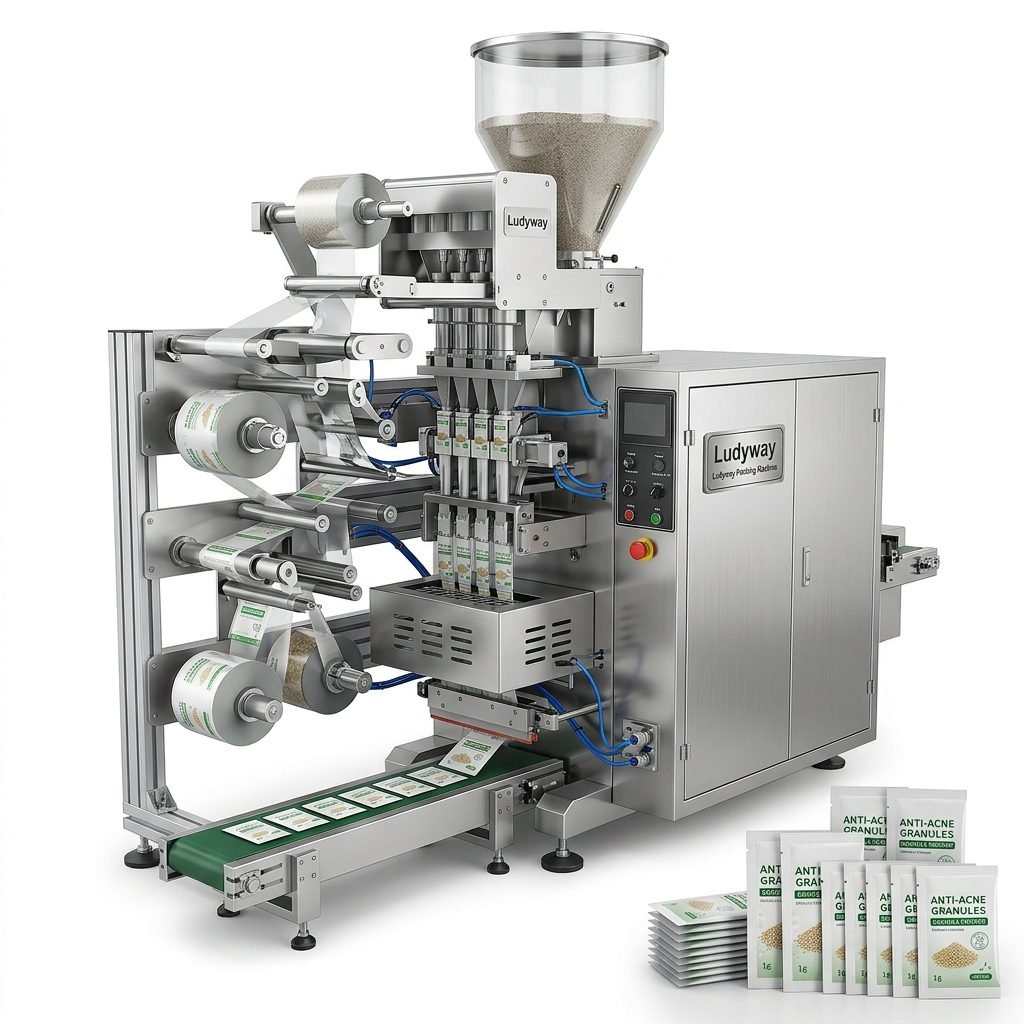
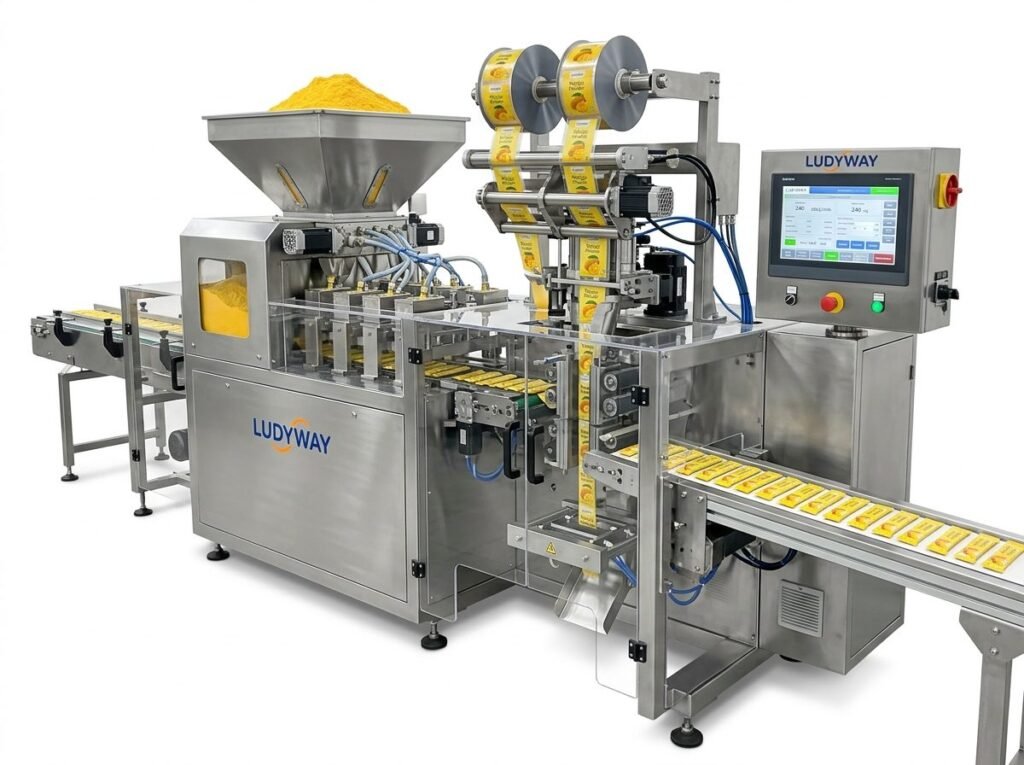
These are the most common and versatile machines for cookie packaging. A VFFS machine forms a bag from a roll of film, fills it with product, and seals it—all in one continuous vertical motion. They are ideal for a wide range of bag styles and are highly efficient for free-flowing products. For cookies, specialized buckets or gentle handling systems are integrated to prevent breakage.
Best for: Medium to high-volume production of loose cookies in pillow bags or stand-up pouches.
2. Horizontal Flow Wrappers
Flow wrappers are the standard for individually wrapping cookies, cookie bars, or stacks of biscuits. The product is placed on a sheet of film which is then folded around it and sealed at the ends and back. This format is excellent for product visibility and provides a tight, protective wrap.
Best for: Individual wrapping, multi-packs, or products that require a sleek, branded presentation.
3. Multi-Lane Weighing & Packaging Systems
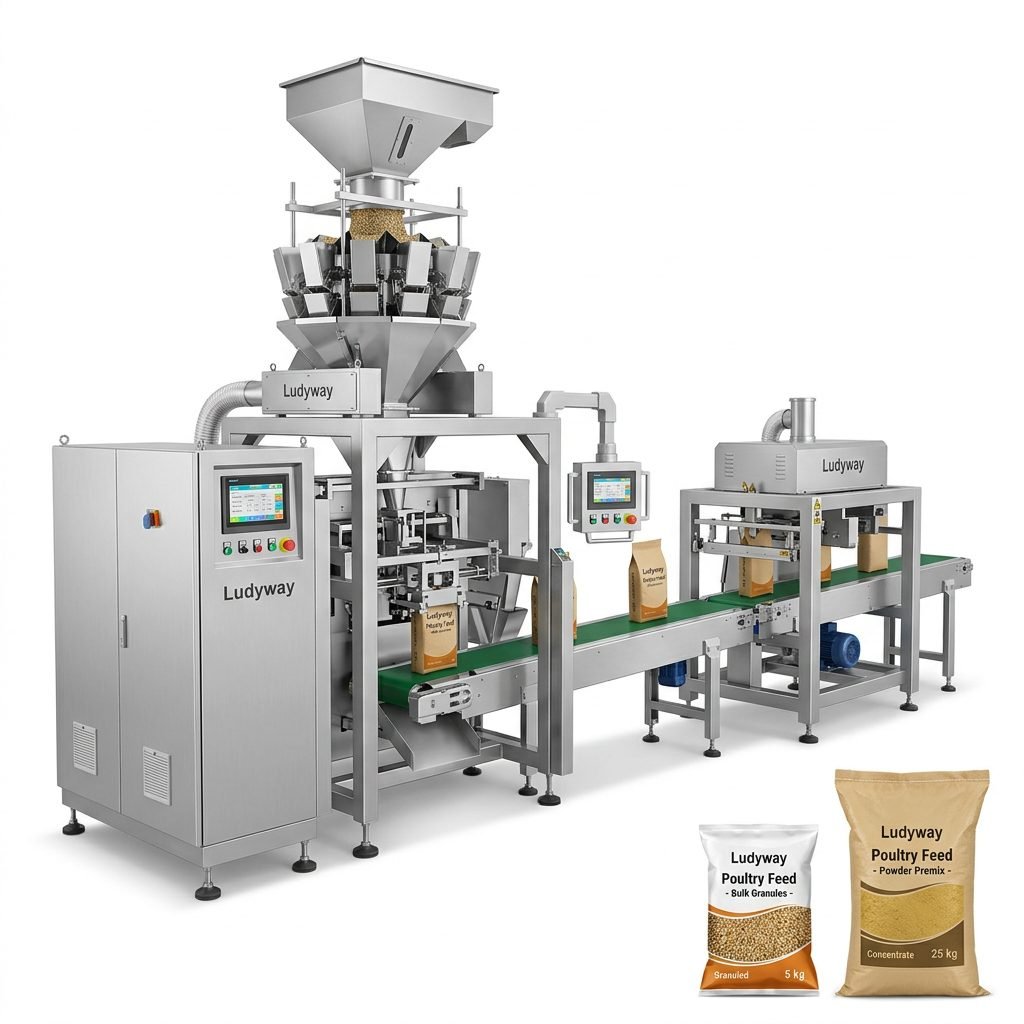
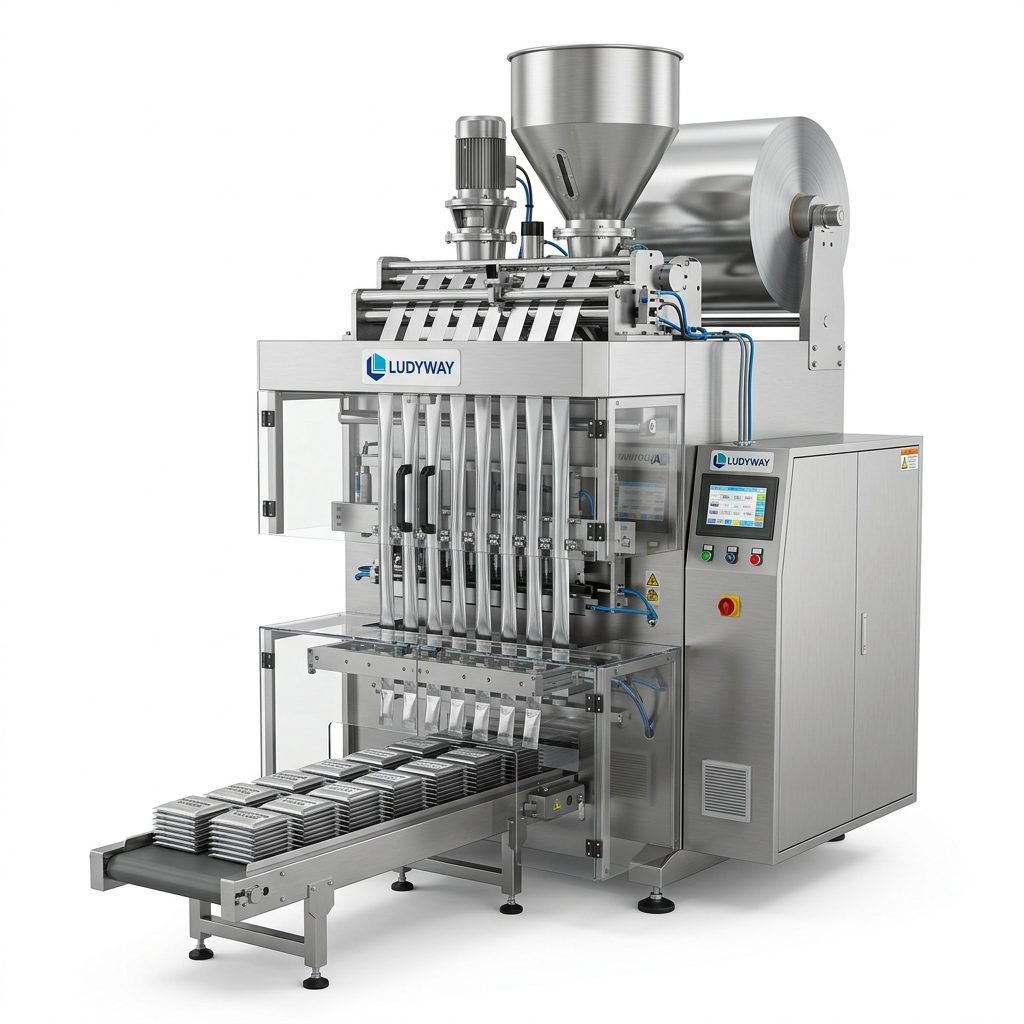
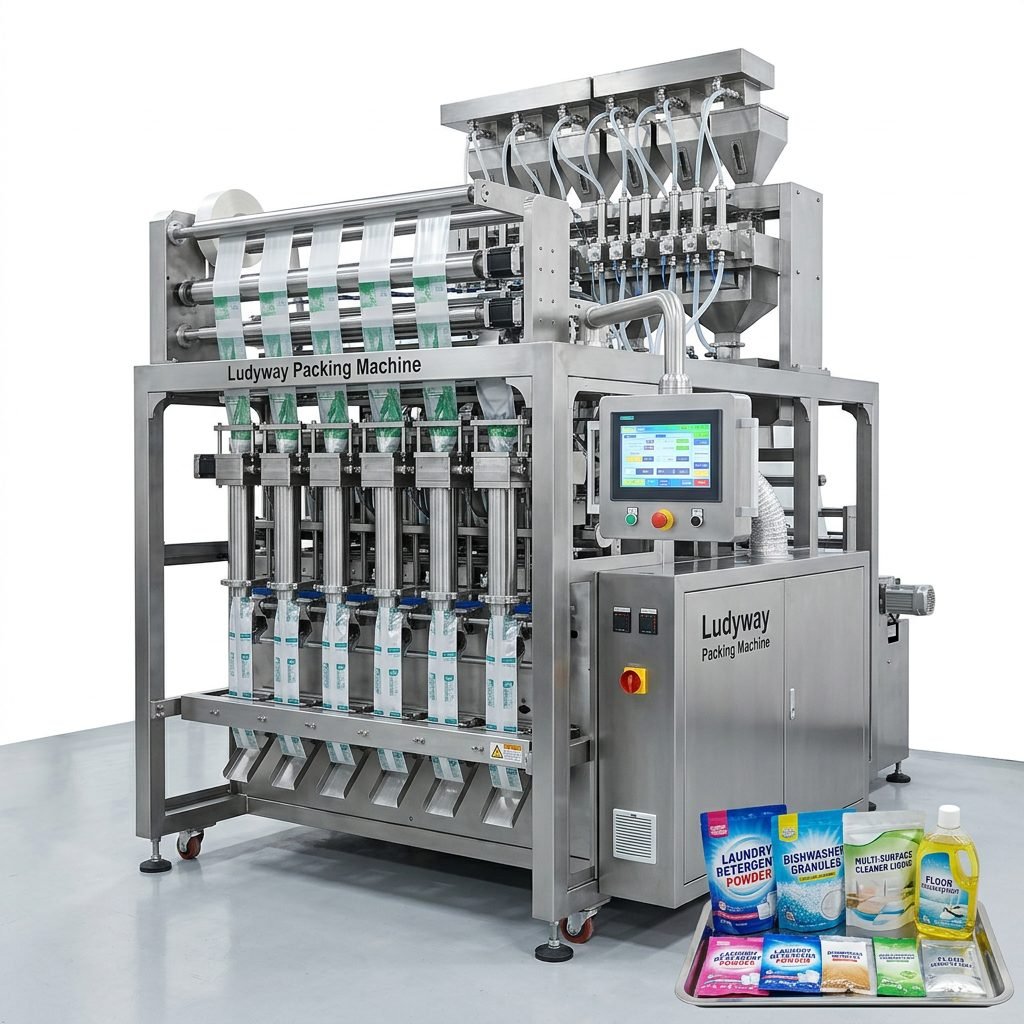
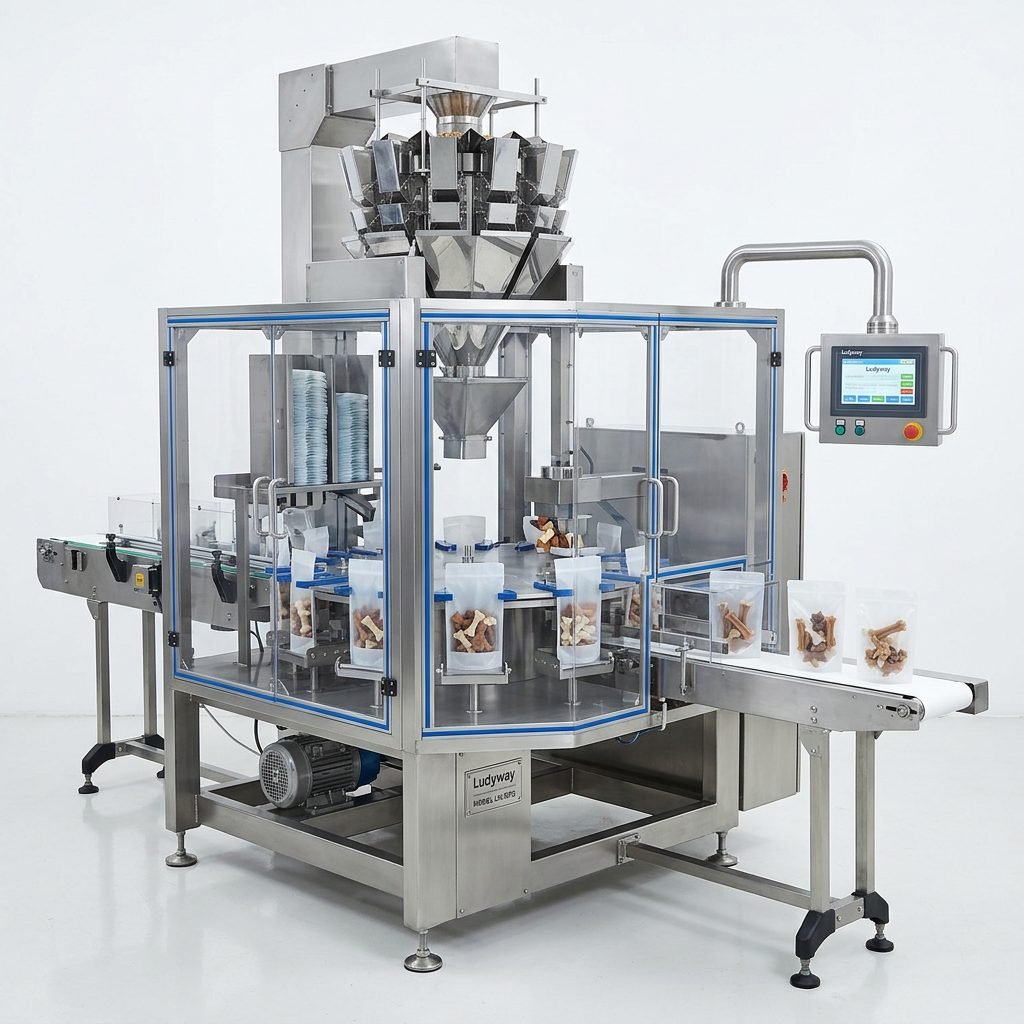
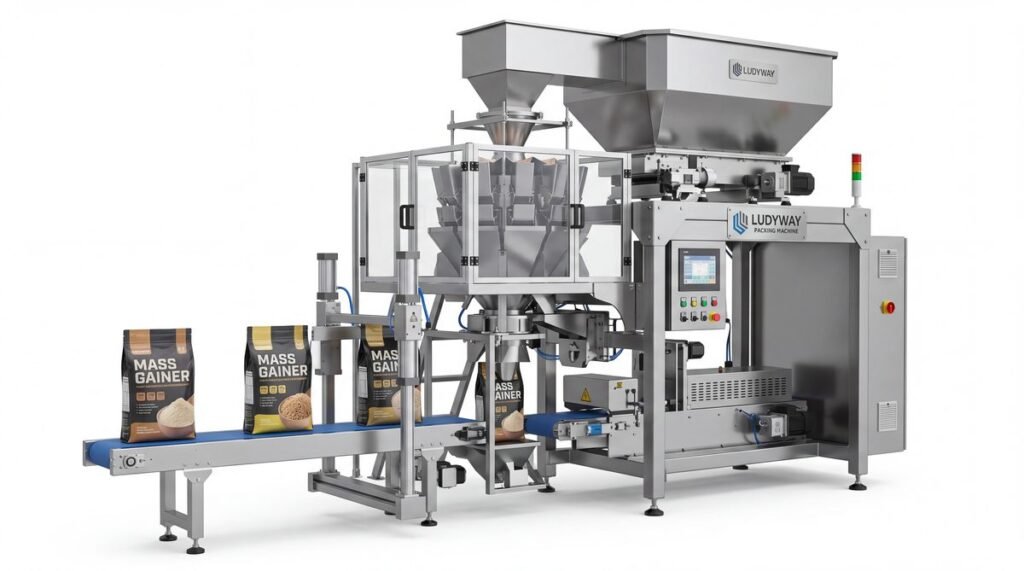
For maximum speed and precision, multi-lane systems combine multiple weighing heads with a high-speed VFFS machine. Cookies are fed into several lanes, each with its own scale. A computer calculates the optimal combination of weights from different lanes to achieve the exact target weight quickly and with minimal giveaway. This technology is a cornerstone of modern, high-speed production lines offered by companies like Ludyway Packing Machine.
Best for: Large-scale production where speed and precise weight control are paramount to profitability.
4. Cartoning Machines
These machines automatically form cartons, insert the pre-packaged cookie bags or flow-wrapped items, and close them. They are often used as a secondary packaging solution to create retail-ready boxes.
Best for: Adding a final layer of packaging for boxed cookie collections or gift packs.
Critical Features to Evaluate
Beyond the machine type, specific features determine performance, reliability, and suitability for your cookies.
Gentle Product Handling
This is non-negotiable for cookies. Look for machines with soft-drop systems, vibration-free conveyors, and custom-designed buckets or funnels that cradle the product. The goal is to minimize drop height and impact points throughout the packaging process.
Weighing & Filling Accuracy
Inaccurate fills lead to product giveaway (costing you money) or underweight packs (regulatory issues). Modern machines use multi-head weighers or precision auger fillers for granules/powders. Ensure the machine’s accuracy meets your tolerances, typically within ±1 gram or better.
Flexibility & Changeover Time
If you run multiple cookie varieties or bag sizes, quick changeover is vital. Machines with tool-less adjustments, stored recipes, and easy-access parts can reduce downtime from hours to minutes. This flexibility is a key feature of adaptable packaging solutions.
Hygiene & Cleanability
Food safety is critical. Choose machines with stainless steel contact surfaces, smooth welds, and open-frame designs that allow for easy and thorough cleaning. Look for IP ratings that indicate protection against dust and water ingress.
Integration and Support: The Complete Solution
The machine itself is just one part of the equation. A successful installation depends on seamless integration and ongoing support.
Turnkey Lines: For a hassle-free setup, consider a supplier who can provide a complete turnkey line. This includes not just the packer, but also upstream equipment like cookie feeders, metal detectors, checkweighers, and downstream systems like cartoners or case packers. A single source of responsibility simplifies project management. Ludyway’s approach to turnkey solutions exemplifies this holistic method.
Technical Support & Spare Parts: Ensure your supplier has a proven track record of reliable after-sales service. Availability of local technicians, comprehensive training, and a readily available spare parts inventory are essential for minimizing production stoppages. A company’s longevity, such as Ludyway’s 30+ years in the industry, often correlates with strong support networks.
Making the Final Decision
Armed with knowledge of your needs and the available technology, follow these steps:
- Request Product Testing: Always send samples of your actual cookies to the machine supplier for a live test. Observe the handling, speed, and final package quality.
- Analyze Total Cost of Ownership (TCO): Look beyond the initial purchase price. Factor in energy consumption, maintenance costs, required operator skill level, and potential downtime.
- Check References: Ask the supplier for contact information of current clients with similar products and production scales. Their firsthand experience is invaluable.
- Plan for the Future: Choose a machine and a partner that can grow with you. A modular machine or a supplier with a broad portfolio offers a path for future expansion.
Selecting the right automatic cookie packing solution is a strategic investment. By meticulously defining your requirements, understanding the different machine technologies, and prioritizing features like gentle handling and accuracy, you can implement a system that boosts your productivity, protects your product quality, and enhances your bottom line for years to come.
Frequently Asked Questions (FAQs)
1. What is the typical speed range for an automatic cookie packaging machine?
Speeds vary dramatically based on machine type and complexity. A basic single-lane VFFS machine may run 30-60 bags per minute (bpm), while advanced multi-lane weighing systems from experienced providers can achieve 120-200+ bpm for loose cookies. Flow wrappers for individual items typically range from 100 to 400 packs per minute.
2. How do I prevent my fragile cookies from breaking during the packaging process?
This is addressed through machine design. Key solutions include: Gentle bucket elevators that lift rather than drop product, vibration-free linear conveyors, minimized drop heights between stages, and custom-shaped filling tubes that guide cookies softly into the bag. Always insist on a product test.
3. Can one machine handle different sizes and types of cookies?
Yes, with the right machine. Flexibility is a key feature of modern packaging equipment. Look for machines with quick-change parts (like forming tubes and buckets), servo-driven adjustments that can be saved as digital recipes, and a wide operational range. Changeover time can be as quick as 15-30 minutes on well-designed machines.
4. What packaging materials work best with automatic cookie packers?
Most machines are designed for standard flexible films like polyethylene (PE), polypropylene (PP), metallized films, and laminates (e.g., BOPP/PE). The critical factor is the film’s coefficient of friction (COF) and sealability. Your machine supplier can recommend compatible films that provide the necessary barrier properties (moisture, oxygen) and machinability for your specific cookies.
5. What kind of maintenance do these machines require?
Regular preventive maintenance is crucial. Daily tasks include cleaning and visual inspection. Weekly/monthly tasks involve lubricating moving parts, checking seal jaw temperatures and alignment, and verifying weighing system calibration. Choosing a supplier that offers clear maintenance manuals, training, and readily available spare parts, like those with extensive industry experience, ensures long-term reliability.