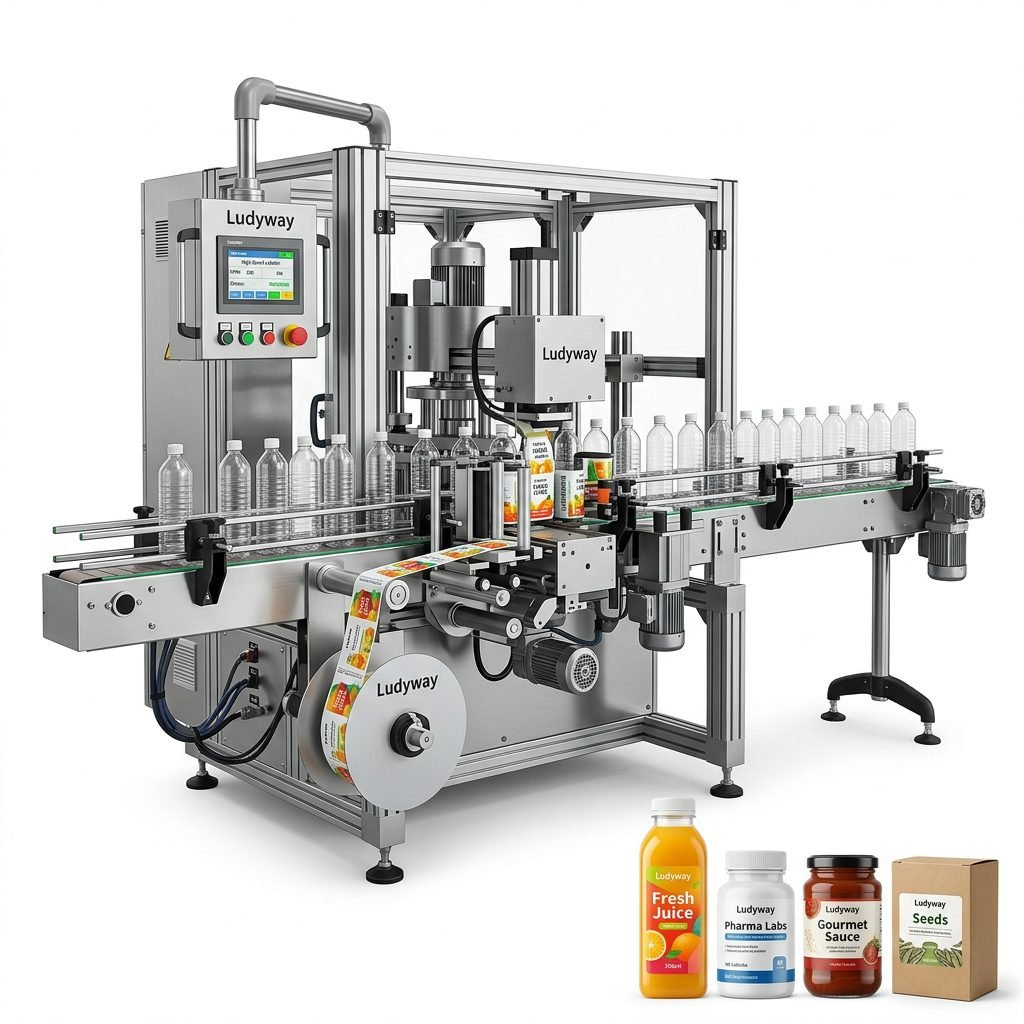
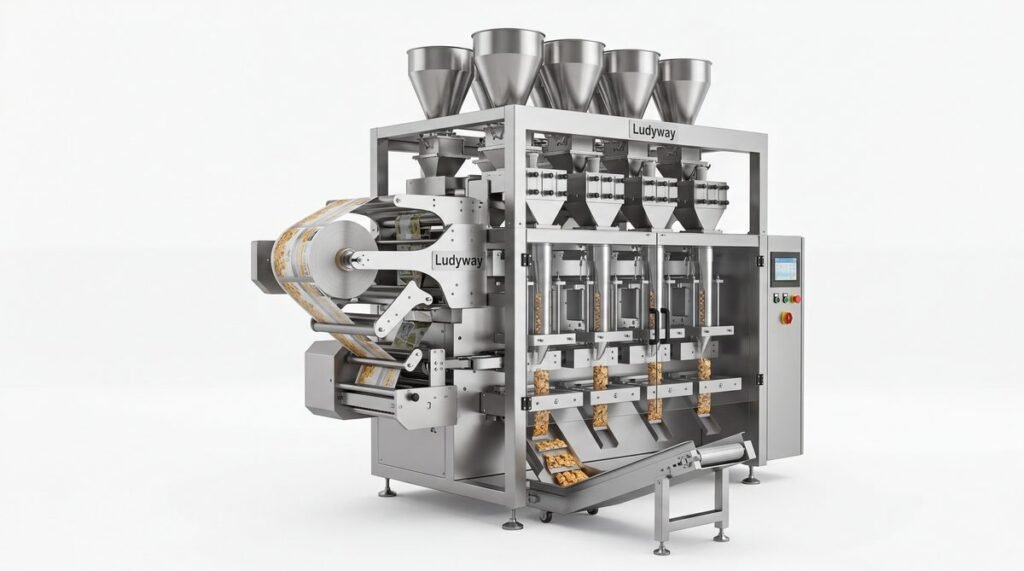
In the fast-paced world of manufacturing, the final step of packaging is critical. End-of-line packaging machinery represents the culmination of the production process, where products are prepared for shipping, storage, and retail. This equipment is designed to automate tasks like case packing, carton sealing, palletizing, and stretch wrapping, ensuring products are protected and presented professionally. Choosing the right system is not just about automation; it’s about enhancing efficiency, reducing labor costs, minimizing errors, and ensuring the integrity of your products from the factory floor to the end consumer.
Understanding End-of-Line Packaging Machinery
End-of-line (EOL) packaging refers to the final series of operations performed on a product after it has been manufactured and primary packaged. This stage transitions individual items into shippable units, such as cases on pallets. The machinery involved is robust, high-speed, and integral to creating a seamless flow from production to distribution.
Core Objectives of EOL Systems:
- Automation & Speed: To handle high volumes consistently and rapidly, far exceeding manual capabilities.
- Product Protection: To securely unitize products, preventing damage during handling and transit.
- Standardization: To create uniform, stable loads that are easy to store, transport, and identify.
- Cost Efficiency: To significantly reduce direct labor requirements and associated costs while minimizing material waste.
Primary Types of End-of-Line Packaging Systems
The landscape of EOL machinery is diverse, with each type serving a specific function in the packaging sequence. Systems can be used independently or integrated into a fully automated line.
1. Case and Carton Erectors/Packers
These machines form, bottom-seal, load, and close corrugated cases. Automatic case erectors take flat blanks and create ready-to-fill boxes. Case packers are then responsible for accurately inserting primary packages (bottles, pouches, etc.) into these cases. They can be vertical (dropping products in) or horizontal (pushing products in), chosen based on product fragility and speed requirements.
2. Carton Sealing Machines
Once a case is loaded, it must be sealed. Carton sealers apply pressure-sensitive tape or hot melt glue to the top and/or bottom flaps. They range from semi-automatic tape sealers, where an operator folds the flaps, to fully automatic random case sealers that adjust to various box sizes on the fly, ideal for mixed-SKU environments.
3. Palletizing Systems
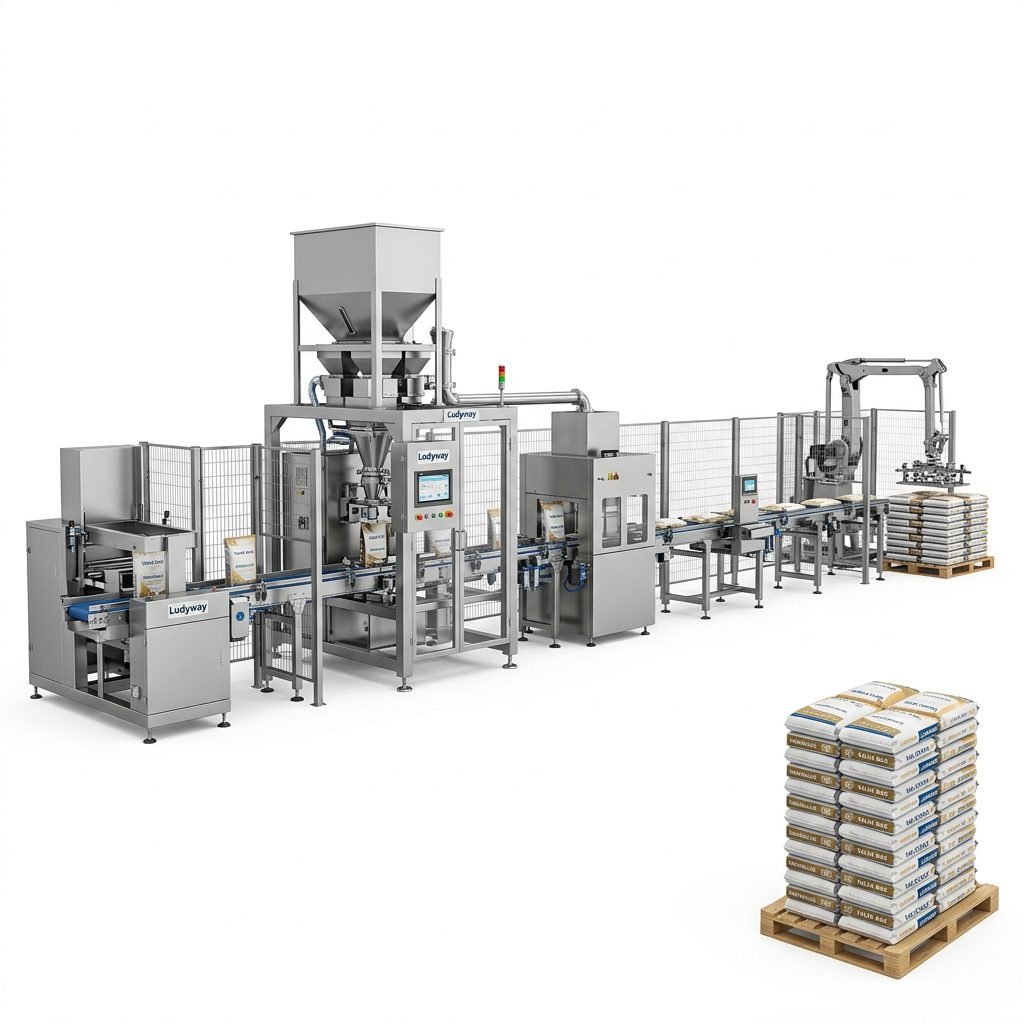
Palletizers arrange sealed cases or bags onto a pallet in a stable, interlocking pattern. Conventional high-level palletizers are large, fast systems that build layers at an elevated height. Robotic palletizers use articulated arms for incredible flexibility, easily handling multiple patterns, products, and pallet sizes with quick changeover, making them perfect for operations with diverse production runs.
4. Stretch Wrapping Equipment
To secure the pallet load for shipping, stretch wrappers apply layers of plastic film. Turntable wrappers rotate the pallet while a film roll dispenses from a stationary mast. Orbital or spiral wrappers rotate the film roll around a stationary pallet. Full-web wrappers apply a solid sheet of film for superior load containment and weather resistance.
5. Labeling and Coding Systems
Integrated at the EOL stage, these systems apply shipping labels, barcodes, QR codes, or batch information directly to cases or pallets. This ensures traceability and compliance with retail and logistics requirements.
Key Benefits of Automating Your End-of-Line
Operational & Financial Advantages
Investing in end-of-line automation delivers a compelling return on investment through multiple channels:
➤ Dramatically Increased Throughput: Machines operate continuously at high speeds, eliminating bottlenecks and maximizing your line’s output potential.
➤ Significant Labor Savings: Automating physically demanding and repetitive tasks like case packing and palletizing reduces labor costs and reallocates human resources to more value-added tasks like quality control and supervision.
➤ Enhanced Consistency and Accuracy: Machines place products, seal boxes, and build pallets with precise, repeatable motions. This eliminates human error and variation, resulting in uniform, professional-looking shipments and fewer customer complaints.
➤ Improved Workplace Safety: Automation removes workers from strenuous lifting, repetitive strain injuries, and potential hazards associated with heavy loads and machinery, creating a safer work environment.
➤ Optimized Material Usage: Advanced systems, especially stretch wrappers, can be programmed to use the minimum amount of film or tape required for securement, reducing material costs and supporting sustainability goals.
How to Choose the Right End-of-Line System: A Strategic Guide
Selecting the optimal EOL packaging machinery requires a careful analysis of your current and future needs. Here is a step-by-step framework to guide your decision.
Step 1: Conduct a Thorough Product and Line Analysis
Start with the basics. What are you packaging? Document the size, weight, shape, and fragility of your primary packages and finished cases. Calculate your current and target production speeds (cases per minute, pallets per hour). Map your available floor space and layout constraints. This data is the foundation for all subsequent choices.
Step 2: Define Your Automation Level
Determine your integration goals. Do you need a stand-alone machine to address one bottleneck, or are you designing a fully integrated line from filler to palletizer? Consider future scalability. A modular system from a provider with broad expertise may offer a better long-term path than a single, fixed-purpose machine.
Step 3: Evaluate Key Machine Features and Technology
Critical evaluation points include:
• Flexibility & Changeover: How quickly can the machine switch between different product sizes or pack patterns? Look for features like servo-driven adjustments and recipe storage.
• Durability & Construction: The machine should be built from robust materials (stainless steel, hardened alloys) to withstand a 24/7 industrial environment.
• Control System & Connectivity: A user-friendly HMI (Human-Machine Interface) and compatibility with plant-wide SCADA or MES systems for data collection and OEE tracking are major advantages.
• Safety Features: Ensure the machine complies with relevant safety standards (e.g., CE, UL) and includes guards, light curtains, and emergency stops.
Step 4: Assess Total Cost of Ownership (TCO) and Support
Look beyond the initial purchase price. Consider energy consumption, required consumables (film, glue, tape), and estimated maintenance costs. Most importantly, vet the supplier’s reputation for technical support, training, spare parts availability, and service response times. A reliable partnership is crucial for minimizing downtime.
Step 5: Request Demos and References
Always see the machine in action, preferably with your own product or a reasonable facsimile. Ask the supplier for contact information of current customers with similar applications. Their firsthand experience regarding performance, reliability, and service is invaluable.
Conclusion
End-of-line packaging machinery is the strategic backbone of a modern, efficient, and competitive production facility. From case packing to palletizing, the right automation solutions drive tangible benefits in productivity, cost, safety, and quality. By methodically assessing your product requirements, production goals, and operational constraints, you can select a system that not only solves today’s challenges but also provides a flexible platform for future growth. Investing in robust, well-supported EOL technology is an investment in the seamless and professional delivery of your products to the global market.
Frequently Asked Questions (FAQs)
1. What is the typical payback period for an end-of-line automation system?
Payback periods can vary widely based on the system’s complexity and scale, but often range from 1 to 3 years. Savings are primarily realized through labor reduction, increased throughput, decreased product damage, and lower material waste. A detailed ROI analysis based on your specific operational data is essential.
2. Can end-of-line machinery handle different product sizes on the same line?
Yes, many modern systems are designed for flexibility. Robotic palletizers and random-size case sealers excel at this. The key is “changeover time.” Look for machines with servo-electric adjustments and programmable recipes that allow quick switching between product formats with minimal manual intervention.
3. How important is integration with my existing production line equipment?
Integration is critical for achieving seamless, high-efficiency automation. It ensures smooth material transfer, synchronized speeds, and centralized data monitoring. When selecting an EOL supplier, discuss their experience with integration and their control system’s ability to communicate with your upstream machinery (e.g., fillers, cappers, labelers).
4. What are the main maintenance requirements for this type of machinery?
Regular preventive maintenance is key to longevity and uptime. Common tasks include lubrication of moving parts, inspection and replacement of wear items (belts, seals, grippers), cleaning of sensors and optical components, and software updates. A good supplier will provide a recommended maintenance schedule and training for your staff.
5. How do I choose between a conventional high-level palletizer and a robotic palletizer?
The choice depends on your needs. Conventional palletizers are generally faster for very high-volume, single-SKU applications. Robotic palletizers offer superior flexibility for handling multiple products, patterns, and pallet sizes in a smaller footprint, making them ideal for lower-to-medium volume lines with frequent changeovers or mixed SKUs.