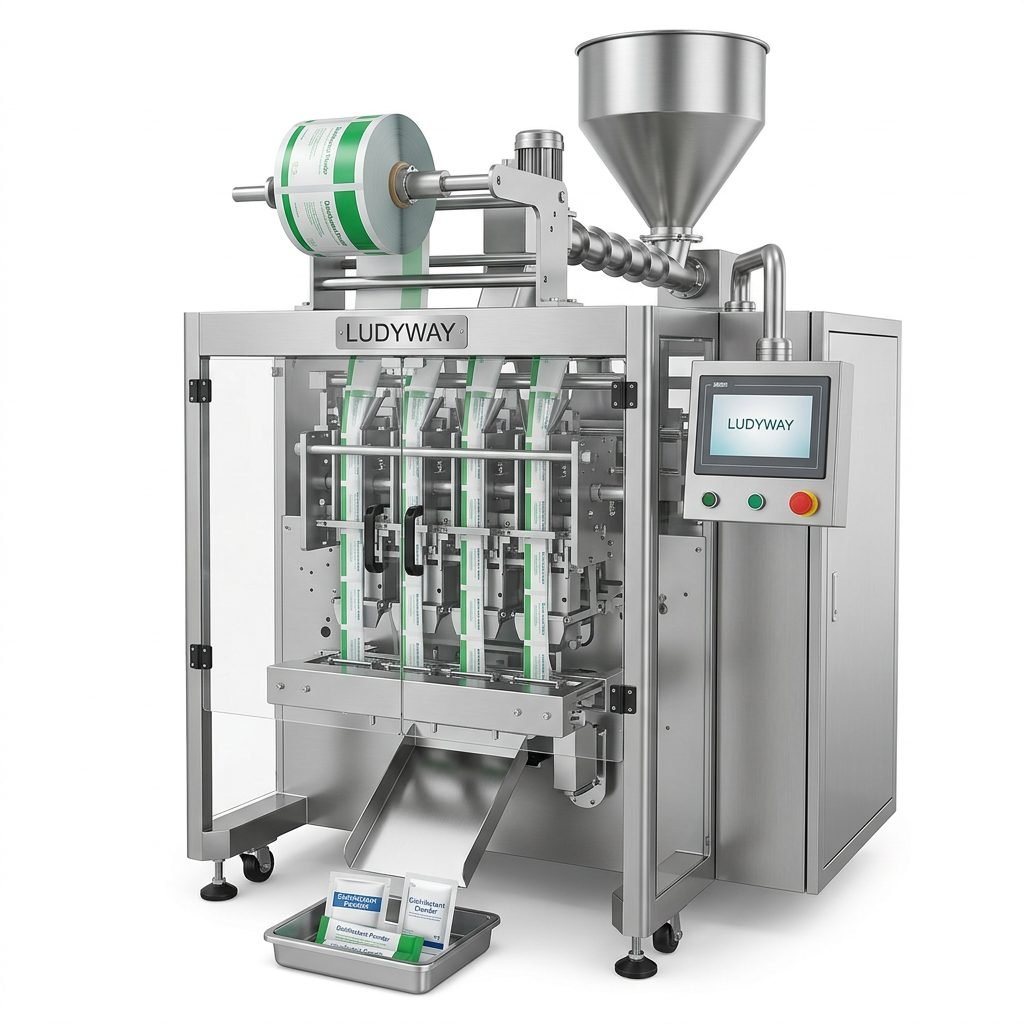
Automated packaging equipment has revolutionized production lines across various sectors, offering unparalleled efficiency, consistency, and scalability. This complete guide explores the critical role of automated packaging systems for food, beverage, and industrial products, detailing their types, benefits, and implementation considerations.
Core Principles of Automated Packaging
Automated packaging involves using machinery to perform tasks traditionally done by hand, such as filling, sealing, labeling, and palletizing. The core goal is to enhance productivity, ensure product safety and uniformity, and reduce operational costs. These systems integrate seamlessly with production processes, forming a continuous, high-speed flow from product creation to final packaged unit.
Key System Components
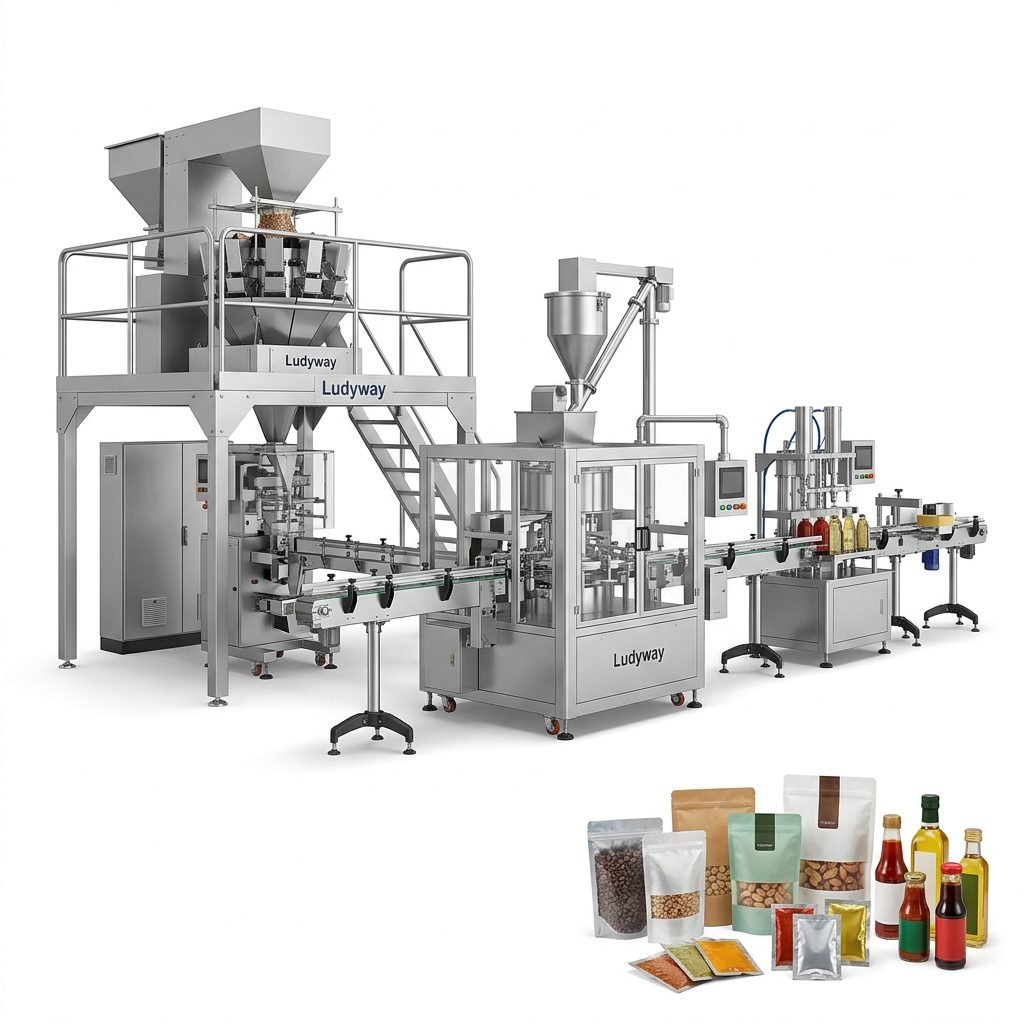
An automated packaging line typically consists of several integrated machines:
- Filling Machines: Precisely dispense product into containers (bags, bottles, boxes).
- Sealing/Capping Machines: Apply closures, lids, or seals to ensure containment and freshness.
- Labeling & Coding Machines: Apply labels, barcodes, and batch/date information.
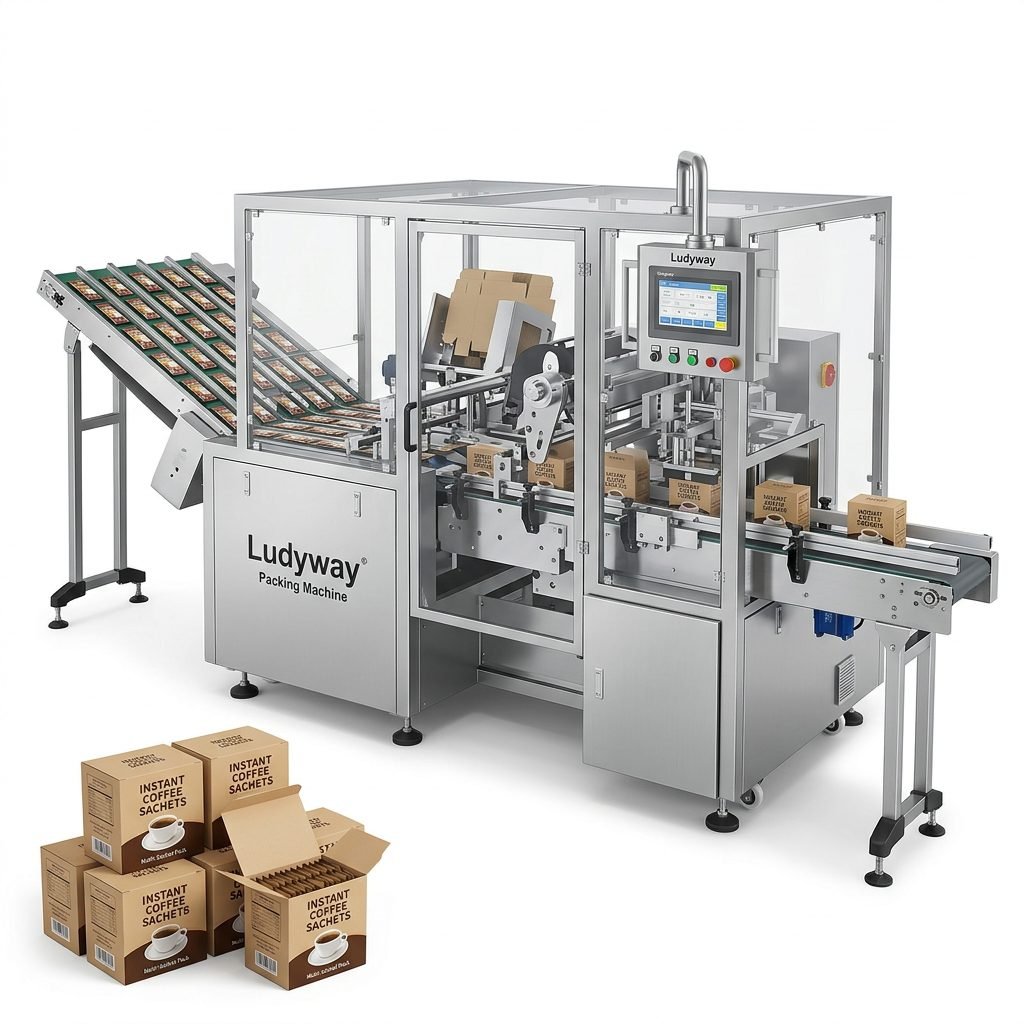
- Wrapping & Bundling Machines: Group individual units into multi-packs or cartons.
- Conveyance & Sorting Systems: Transport products between different packaging stages.
Primary Advantages of Automation
The shift from manual to automated packaging delivers transformative benefits:
1. Dramatically Increased Output Speed: Machines operate continuously at high speeds, far surpassing manual capabilities.
2. Superior Consistency and Accuracy: Every package receives the exact same amount of product, seal, and label placement.
3. Enhanced Product Safety & Hygiene: Closed systems minimize human contact, crucial for food, beverage, and pharmaceutical products.
4. Significant Labor Cost Reduction: Automation reduces reliance on large manual packing teams, lowering long-term operational expenses.
5. Improved Traceability and Data Collection: Integrated sensors and software track production counts, detect errors, and gather valuable operational data.
Application-Specific Equipment for Food & Beverage
The food and beverage industry demands high hygiene standards, freshness preservation, and often, appealing presentation. Automated packaging solutions here are highly specialized.
For Dry Food Products (Granules, Powders, Snacks)
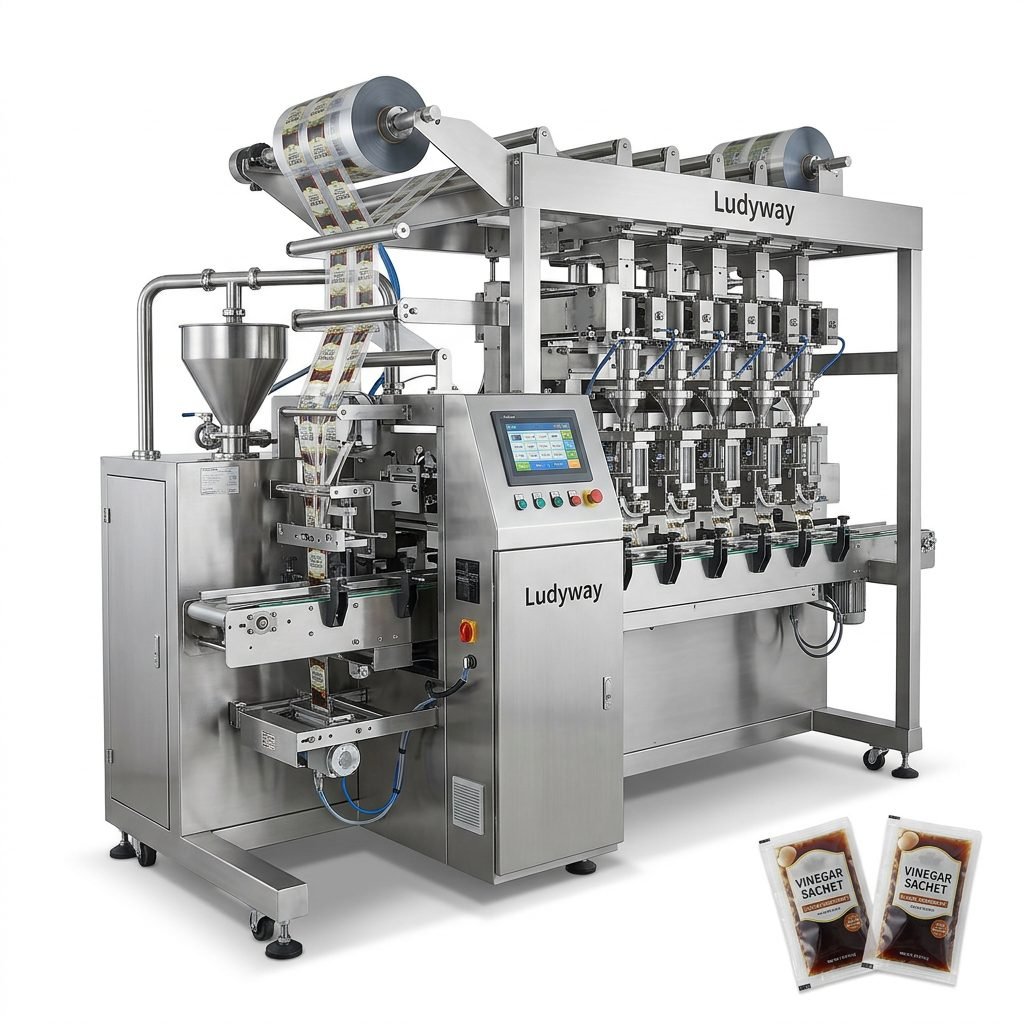
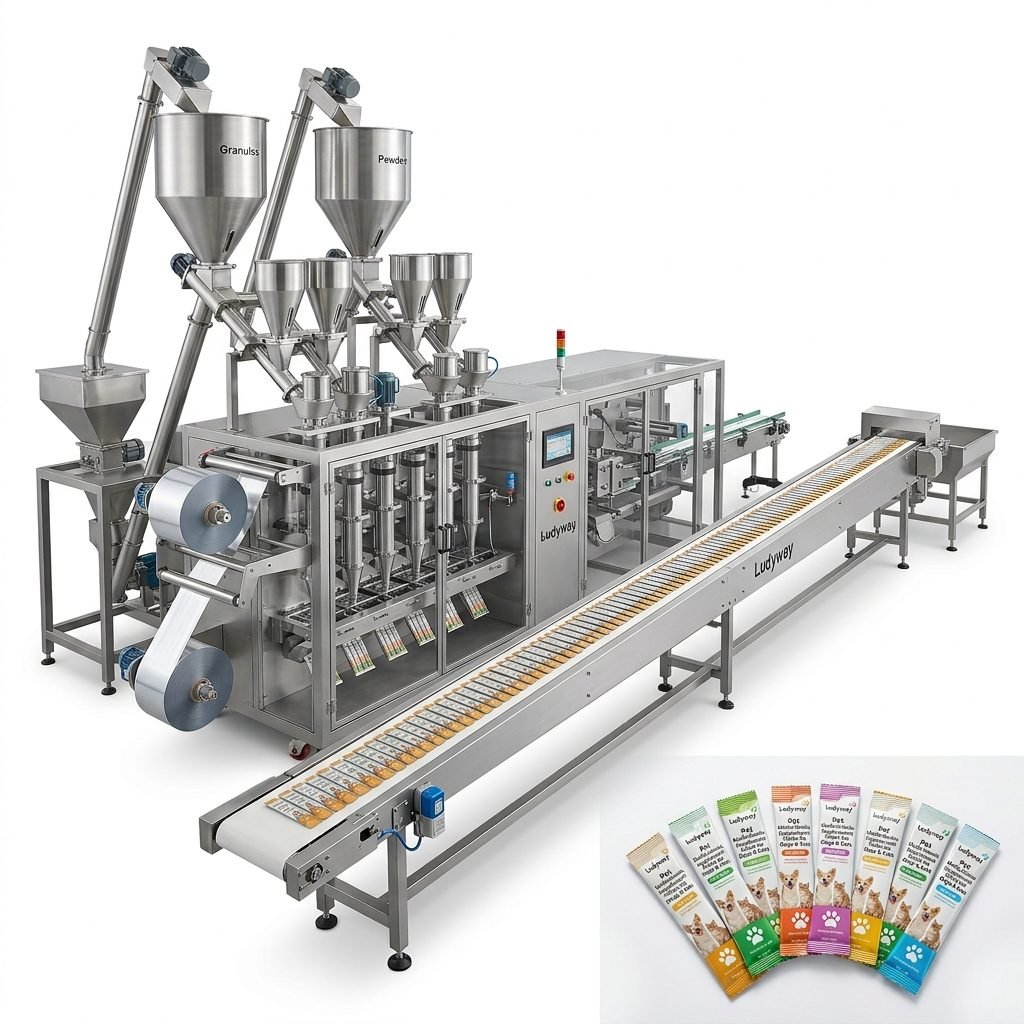
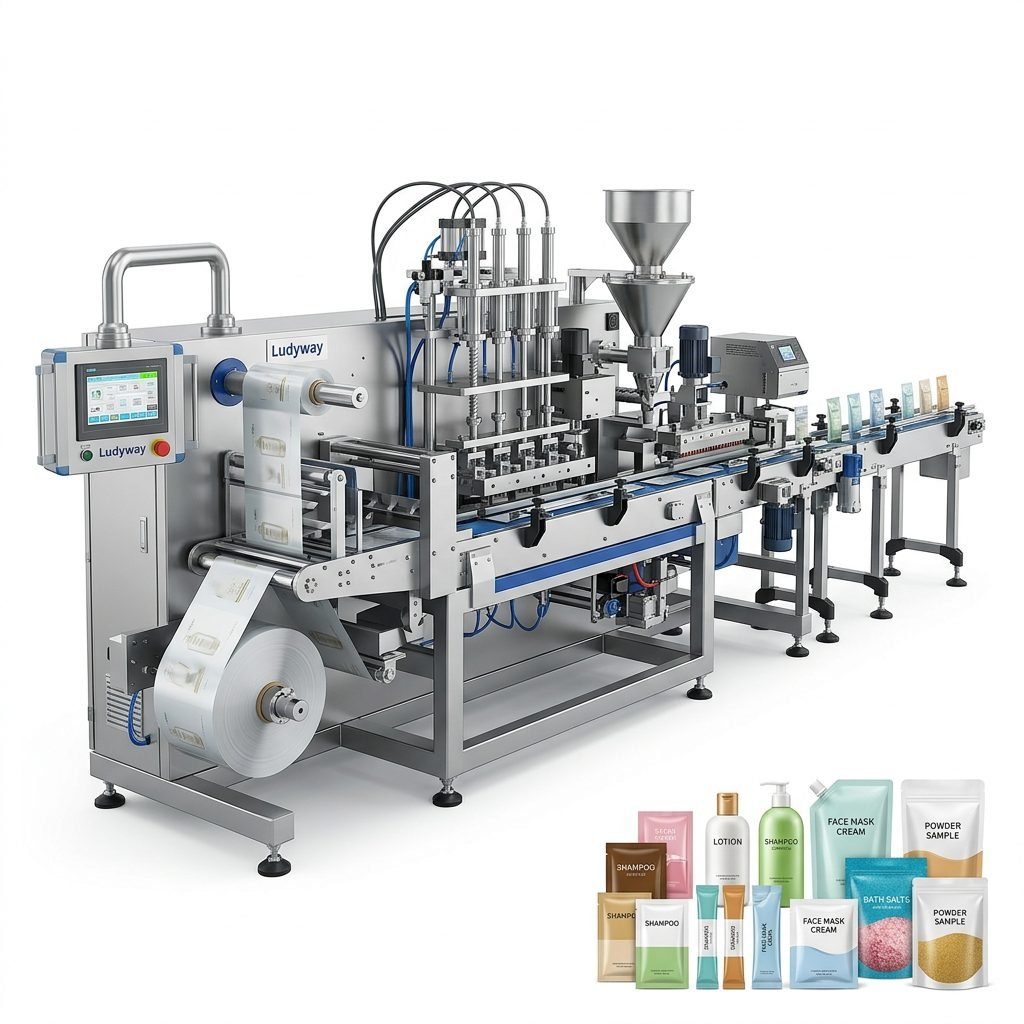
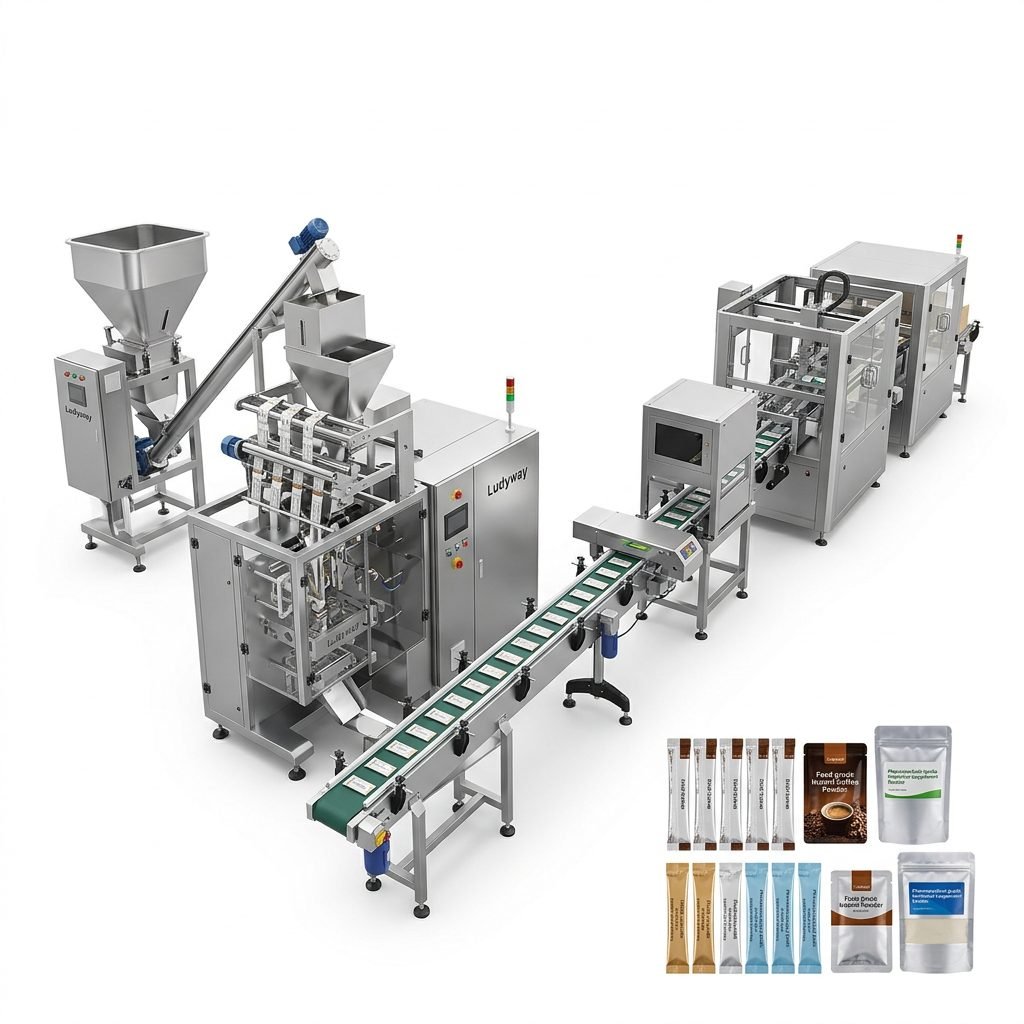
Stick pack and sachet packaging machines are prevalent for items like spices, instant coffee, sugar, and powdered supplements. These machines form, fill, and seal small, single-serving packets from roll film. Multi-lane systems can produce dozens of sticks or sachets simultaneously. For larger volumes, automated bagging machines for pouches and bags are used. Companies like Ludyway Machinery offer a range of such intelligent systems designed for speed and precision.
For Liquid & Semi-Liquid Food & Beverage
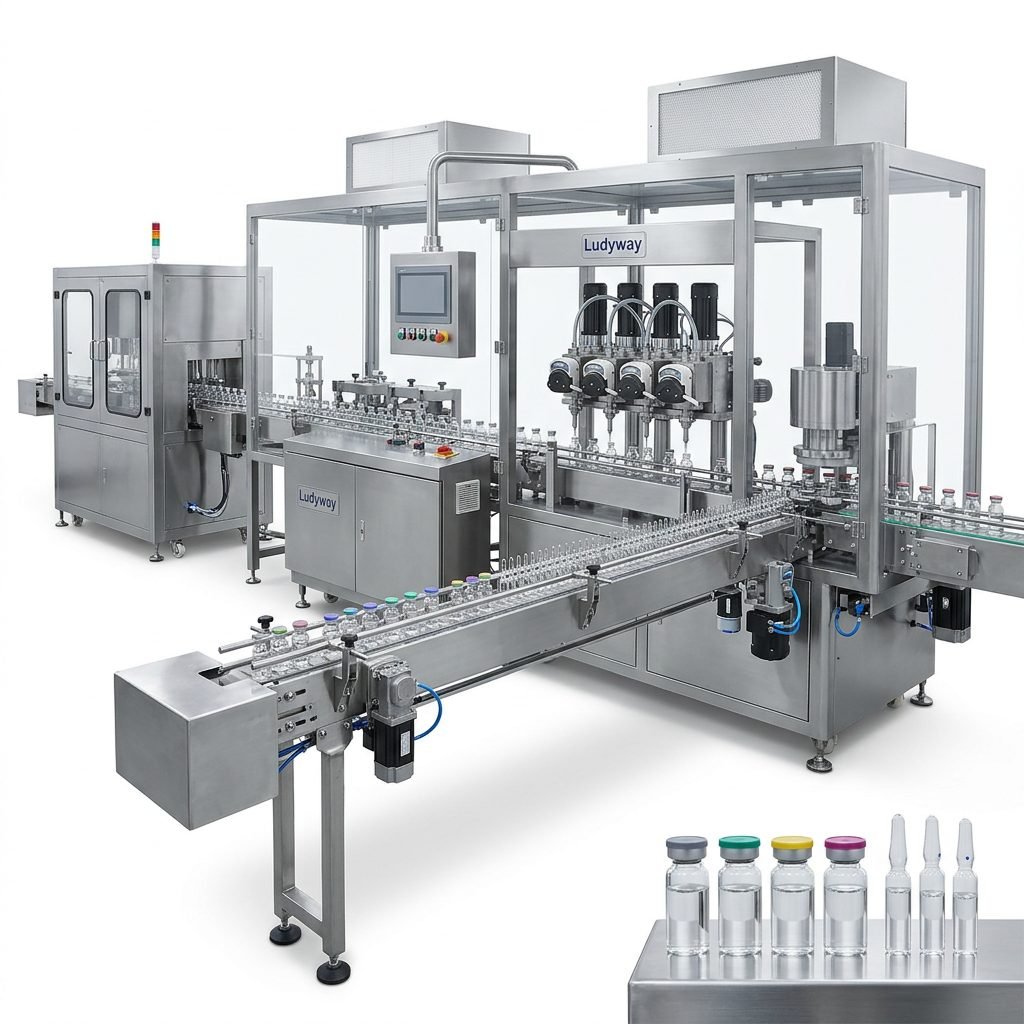
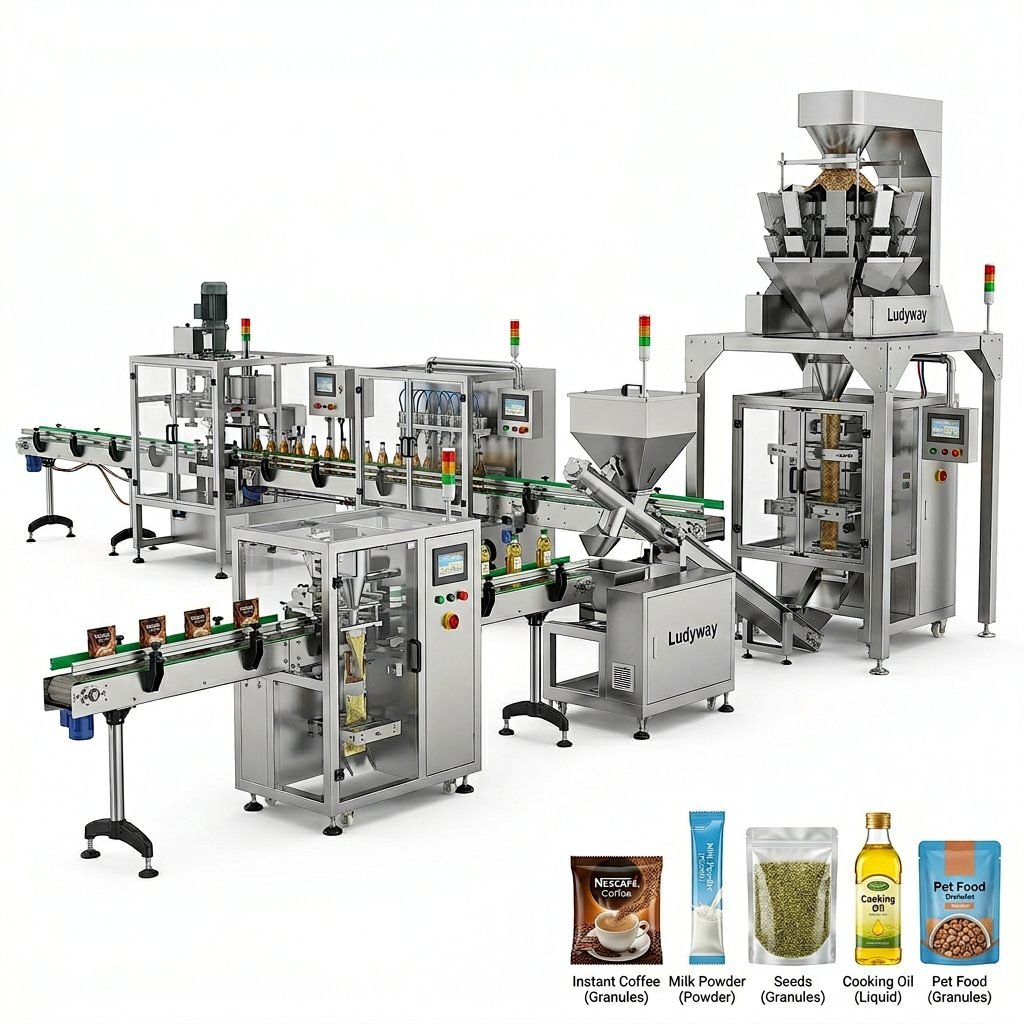
Liquid filling machines handle products from water and juices to sauces and oils. They range from simple volumetric fillers to advanced rotary piston fillers for viscous products. Aseptic filling lines are critical for dairy and certain beverages, performing filling and sealing in a sterile environment to eliminate microorganisms. Capping machines automatically apply screw caps, snap lids, or corks to bottles and jars.
Critical Considerations for Food Packaging
Material Compatibility: Machines must handle diverse films, laminates, and containers suitable for food contact.
Cleanability & Sanitation: Equipment design should allow for easy cleaning and comply with food safety regulations (e.g., FDA, EU standards).
Gas Flushing for Freshness: Some systems integrate nitrogen or other gas flushing to extend shelf life by removing oxygen from the package.
Automated Packaging for Industrial Products
Industrial products (chemicals, building materials, automotive parts, etc.) often require robust, secure, and cost-effective packaging. Automation focuses on durability, weight handling, and often, bulk packaging.
For Granules, Powders & Aggregates
Industrial powders like detergents, cement additives, or pigments are packaged using heavy-duty bag filling machines. These can handle large bag sizes (25kg, 50kg) and often include automated bag placers, weigh fillers, and sewing or heat-sealing closures. Dust containment is a vital feature.
For Parts & Components
Automated counting and filling systems package small items like screws, bolts, or electronic components into boxes, blister packs, or clamshells. Robotic pick-and-place systems or multi-head weighers accurately count or weigh batches before filling.
Palletizing robots or automated palletizers are a cornerstone of industrial finishing lines. They stack boxes, bags, or drums onto pallets in pre-programmed, stable patterns, replacing strenuous manual labor and increasing throughput.
Implementing Your Automated Packaging Line
Successful integration requires careful planning beyond just purchasing equipment.
Assessing Your Needs & Planning
Begin with a thorough analysis: current and future production volume, product characteristics (size, shape, state), desired package types, available factory space, and budget. Engaging with a experienced solution provider like Ludyway Packaging Experts early in the process can help define the optimal system architecture.
Integration & Flexibility
The new packaging line must integrate with existing upstream production (mixers, reactors, processors) and downstream logistics. Consider modular or flexible machines that can handle multiple package sizes or products to future-proof your investment. Control systems (PLC, HMI) should be user-friendly and allow for recipe changes.
The Role of Turnkey Solutions & Professional Support
For many manufacturers, especially those entering automation or scaling up, a turnkey solution is the most efficient path. A provider not only supplies the individual machines but designs the entire line layout, ensures mechanical and electrical integration, provides installation, commissioning, and training. This holistic approach, backed by 30+ years of industry experience, minimizes project risk and accelerates time-to-production. Ongoing technical support and service are crucial for maintaining peak performance and uptime.
Future Trends in Packaging Automation
The evolution continues towards smarter, more connected, and sustainable systems.
Artificial Intelligence & Machine Vision: AI-driven systems for quality control can instantly detect and reject packages with sealing defects, incorrect fill levels, or misplaced labels with superhuman accuracy.
IoT Connectivity & Predictive Maintenance: Machines equipped with sensors stream performance data to cloud platforms, enabling remote monitoring and analytics that predict maintenance needs before a breakdown occurs.
Sustainability-Driven Design: Machines are adapting to handle recyclable, biodegradable, or lighter-weight packaging materials efficiently. Some systems optimize material use, reducing film or cardboard waste.
Exploring these advanced solutions can be part of your long-term strategy, and providers with strong engineering capabilities are best positioned to guide this evolution.
Final Summary
Investing in automated packaging equipment for food, beverage, or industrial products is a strategic decision that drives competitiveness. It boosts output, ensures quality and safety, and controls costs. The key lies in selecting the right equipment tailored to your specific product and volume needs, and partnering with a reliable provider for integration and support. As technology advances, these systems will become even more intelligent, flexible, and integral to efficient manufacturing.
Frequently Asked Questions (FAQs)
1. How do I choose between a stick pack machine and a sachet machine?
The choice depends on your product and market preference. Stick packs are typically long, slim single-serving packs ideal for powders/granules to be poured (e.g., instant drink sticks). Sachets are small rectangular pouches, often used for sauces, creams, or single-use powders. Discuss your product with a supplier to test which format works best on their equipment.
2. Can one automated line handle multiple different products?
Yes, with the right design. Many modern machines are modular and programmable. By changing the film reel, filling head, or adjustment settings, a line can switch between different products of similar physical form (e.g., different granule sizes). However, switching between vastly different forms (e.g., powders to liquids) usually requires dedicated lines.
3. What is the typical lead time for installing a full turnkey packaging line?
Lead times vary based on complexity and customization. For standard machines from a provider with in-house manufacturing facilities, delivery might take 2-4 months. Full turnkey line design, manufacturing, installation, and commissioning can range from 6 to 12 months. Clear communication and project planning with your supplier are essential.
4. How important is machine hygiene for food packaging, and how is it ensured?
Extremely important. Food-grade machines use materials like stainless steel for contact parts, have smooth surfaces without crevices, and are designed for easy washdown (IP65 ratings or higher). Protocols for cleaning and sanitation are part of the operational training provided.
5. What level of technical skill is required to operate an automated packaging line?
Modern lines with intuitive Human-Machine Interfaces (HMIs) require operators to learn specific procedures, not complex engineering. Basic tasks include loading film, inputting parameters, and monitoring run status. Maintenance requires higher skill. Comprehensive training from the supplier is key to successful operation.