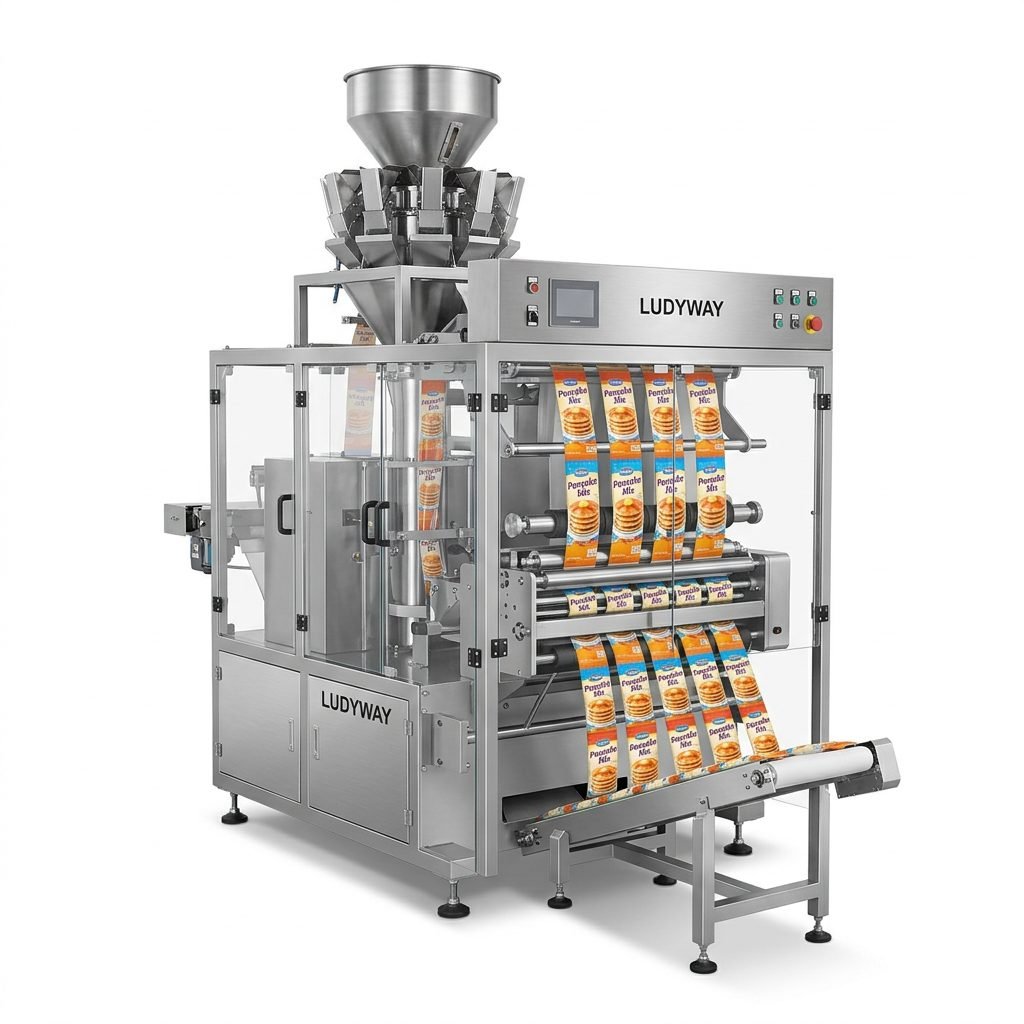
In today’s competitive manufacturing landscape, optimizing your packaging line is not just about speed; it’s about intelligent system integration, flexibility, and cost control. Wrap-around case packaging, a critical final step for many products, presents a significant opportunity for efficiency gains. Choosing the right equipment is a strategic decision that impacts your entire operation.
Understanding Wrap-Around Case Packaging
Wrap-around packaging involves forming a corrugated cardboard case directly around a product or product group. Unlike pre-formed cases, the machine wraps the flat board around the items, creating a custom-fit, secure package. This method is highly efficient for uniform product batches, offering excellent protection and a clean, professional appearance.
Key Advantages of Automated Wrap-Around Systems
Material Savings: Uses less cardboard than traditional two-piece cases, reducing material costs.
Space Efficiency: Flat board storage requires less warehouse space compared to pre-formed cases.
Enhanced Product Protection: The tight, formed fit minimizes movement and damage during transit.
High-Speed Operation: Modern systems can integrate seamlessly with upstream production for continuous flow.
Core Factors for Choosing the Right System
Selecting equipment requires a deep analysis of your specific needs. A mismatch can lead to underperformance, frequent downtime, and lost investment.
1. Production Speed & Line Integration
Your required cases per minute (CPM) is the primary driver. Evaluate your upstream bottling, canning, or primary packaging line speed. The case packer must match or exceed this rate to prevent bottlenecks. Consider future growth—can the system scale? Look for machines with quick changeover features to handle different product formats without significant downtime, facilitating smooth production line integration.
2. Product Flexibility & Format Range
Will you pack only one stable product size, or do you need flexibility for multiple SKUs? Systems range from dedicated, high-speed machines for single formats to versatile models with programmable settings for various case dimensions and patterns. Assess the machine’s adjustment mechanism: manual, semi-automatic, or fully automatic tool-free changeover.
⚠️ Critical Consideration: Changeover Time
In multi-product facilities, the time to switch between different package sizes directly impacts overall efficiency. Machines with memory functions and automatic adjustment of pushers, guides, and forming heads can reduce changeover from hours to minutes.
3. Case Construction & Material Compatibility
Not all corrugated board performs equally. The equipment must be compatible with your chosen board grade, flute profile, and coating. Some advanced systems handle a wider range, including recycled board or materials with special coatings. Consult with both your board supplier and machine manufacturer to ensure compatibility.
4. Automation Level & Labor Impact
From semi-automatic to fully robotic, the automation level dictates labor requirements. Fully automated systems with integrated palletizing minimize manual intervention, reducing labor costs and ergonomic risks. Evaluate the total cost of ownership: a higher initial investment in automation often yields lower long-term operational costs through labor savings and higher consistency.
5. Reliability, Service, and Support
Downtime is the enemy of efficiency. Investigate the machine’s build quality, component robustness (like drives and PLCs), and the manufacturer’s reputation for reliability. Access to responsive technical support, spare parts availability, and comprehensive training is crucial. A supplier with a strong track record, like those with decades of industry experience, provides invaluable long-term security.
Beyond the Machine: System Integration for Total Efficiency
The true power of a wrap-around packer is realized when it’s part of a synchronized line. Integration with upstream fillers/cappers and downstream palletizers via a unified control system optimizes material flow. Consider adding automatic case erecting, product loading, and sealing modules. Smart sensors and data collection points can feed information to a Manufacturing Execution System (MES) for real-time monitoring and predictive maintenance.
Cost Analysis: Investment vs. Operational Savings
A proper financial analysis looks beyond the purchase price:
✔ Direct Savings: Reduced material usage (board), lower labor costs, decreased downtime.
✔ Indirect Savings: Fewer product damages (claims), improved warehouse space utilization, enhanced brand image through better packaging.
✔ ROI Calculation: Factor in all savings against capital cost and ongoing maintenance. Efficient systems often show a compelling ROI within 2-3 years.
Implementing Your New System Successfully
Successful implementation requires planning. Conduct thorough factory acceptance tests (FAT) before shipment. Plan for installation, operator training, and initial maintenance schedules. Run pilot batches to fine-tune settings. Choose a supplier that offers comprehensive project management, from layout design to commissioning, ensuring a smooth transition and rapid productivity gains.
Future-Proofing Your Investment
Consider trends like e-commerce-ready packaging (easy open, retail display features), sustainability (lightweighting, recyclable materials), and IoT connectivity. Selecting a modular or upgradeable system from a forward-thinking partner like Ludyway Machinery helps adapt to future market demands without replacing the entire machine.
Conclusion
Choosing the right wrap-around case packaging system is a multifaceted decision balancing technical requirements, financial constraints, and strategic goals. By meticulously evaluating your production data, flexibility needs, and integration potential, you can select a system that not only improves line efficiency but also becomes a cornerstone for reducing total packaging costs and enhancing your operation’s competitiveness.
Frequently Asked Questions (FAQs)
What is the typical speed range for automated wrap-around case packers?
Speeds vary widely based on complexity. Standard systems for uniform items range from 10-40 cases per minute. High-speed systems for simple formats can exceed 60 CPM. The key is matching speed to your upstream line output.
Can these machines handle irregular or non-rectangular products?
Traditional wrap-around is best for rectangular bundles. Irregular shapes often require custom tooling or a different packing method. Some advanced systems with flexible forming techniques can accommodate slight variations.
How much space does a typical wrap-around packaging line require?
A complete automated line (including infeed conveyor, packer, and outfeed) typically requires a length of 6-10 meters and a width of 3-4 meters. Space for board storage and a maintenance area should also be allocated.
What is the average changeover time between different product sizes?
On basic machines, manual changeover can take 30-60 minutes. On advanced systems with servo-driven adjustable components and preset recipes, changeover can be completed in under 5 minutes.
What are the most common maintenance requirements for these machines?
Regular lubrication of moving parts, inspection and replacement of wear items like forming belts and suction cups, and calibration of sensors are common. A robust preventative maintenance schedule based on manufacturer guidelines is essential for reliability.