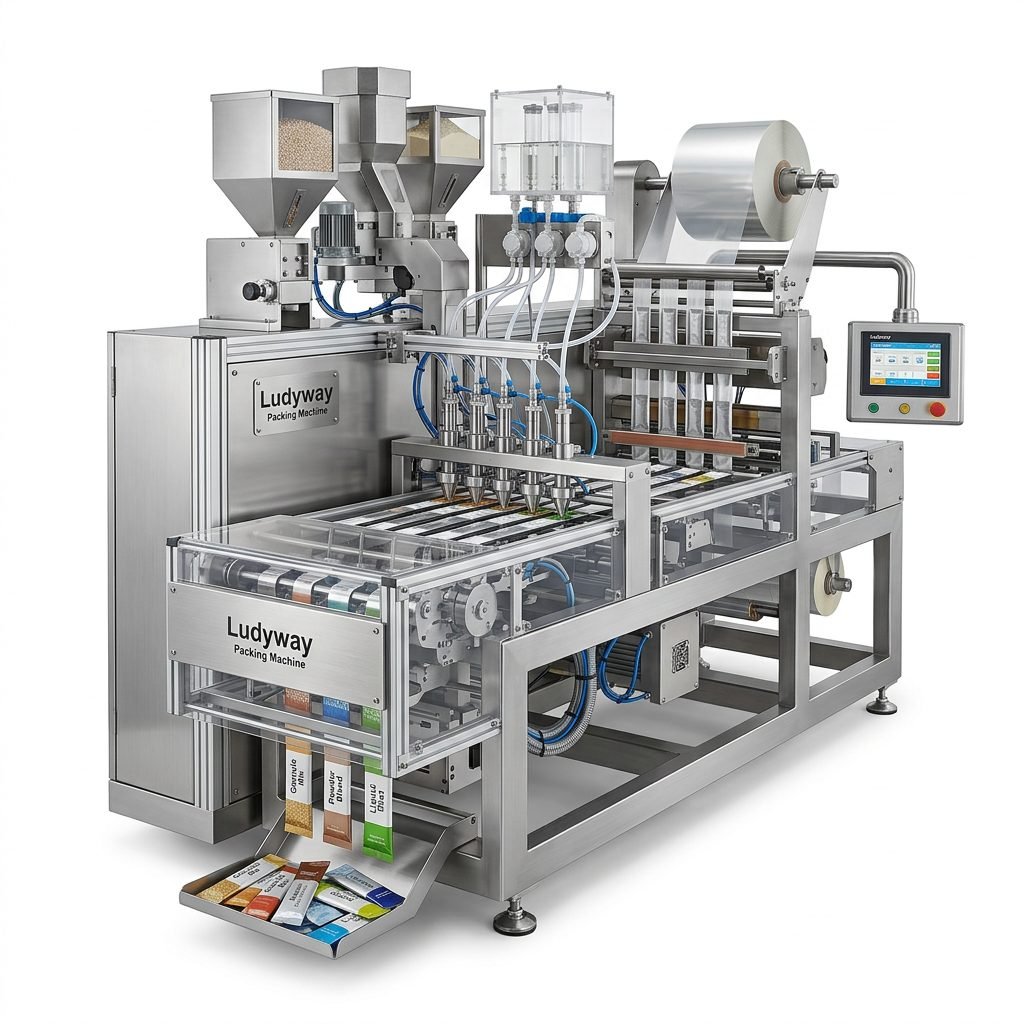
Automatic cartoning machines are essential in modern packaging lines because they turn flat carton blanks into finished, filled, and closed boxes with speed and consistency. Whether used in food, pharmaceutical, cosmetic, or consumer goods production, these machines help manufacturers reduce labor, improve packaging accuracy, and support higher output.
To understand how they work, it helps to look at the full process step by step—from carton feeding to product insertion and final sealing.
What Is an Automatic Cartoning Machine?
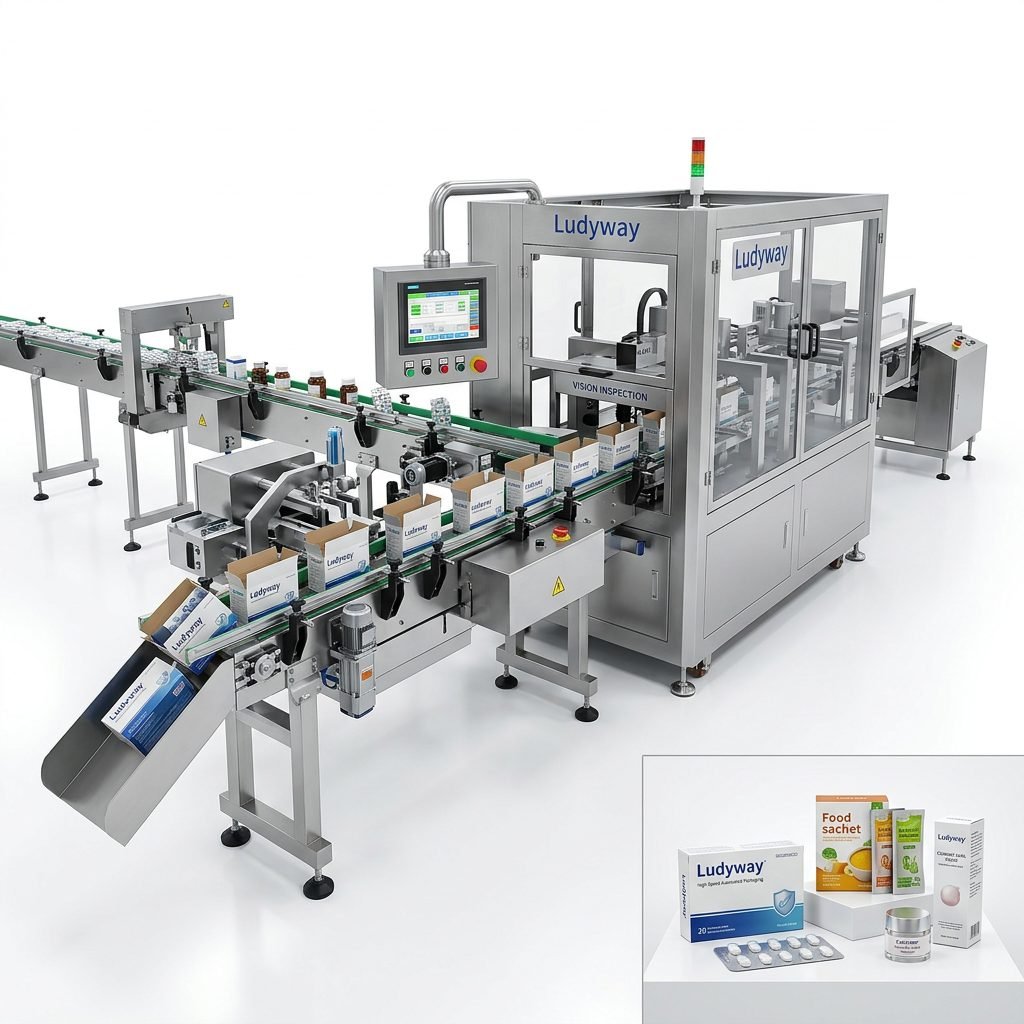
An automatic cartoning machine is packaging equipment designed to form, open, load, and close cartons automatically. It takes pre-cut flat cartons from a magazine, erects them into box shape, inserts products or grouped products, and then seals the carton using tuck-in flaps, hot melt glue, or other closing methods.
These machines are commonly used for packaging:
- Bottles
- Blister packs
- Sachets and stick packs
- Pouches
- Tubes
- Bars, bags, and small boxed products
Core Working Principle of an Automatic Cartoning Machine
The working principle is based on synchronized mechanical movement, product positioning, carton erection, loading, and sealing. In simple terms, the machine coordinates cartons and products so they meet at the right position and time.
A typical machine follows this sequence:
- Flat cartons are picked from the carton magazine.
- Each carton is opened and formed into shape.
- Products are counted, collated, or positioned.
- Products are inserted into the carton.
- Leaflets may be added if required.
- The carton is closed and sealed.
- The finished carton is discharged for downstream handling.
Step-by-Step: How Automatic Cartoning Machines Work
1. Carton Feeding
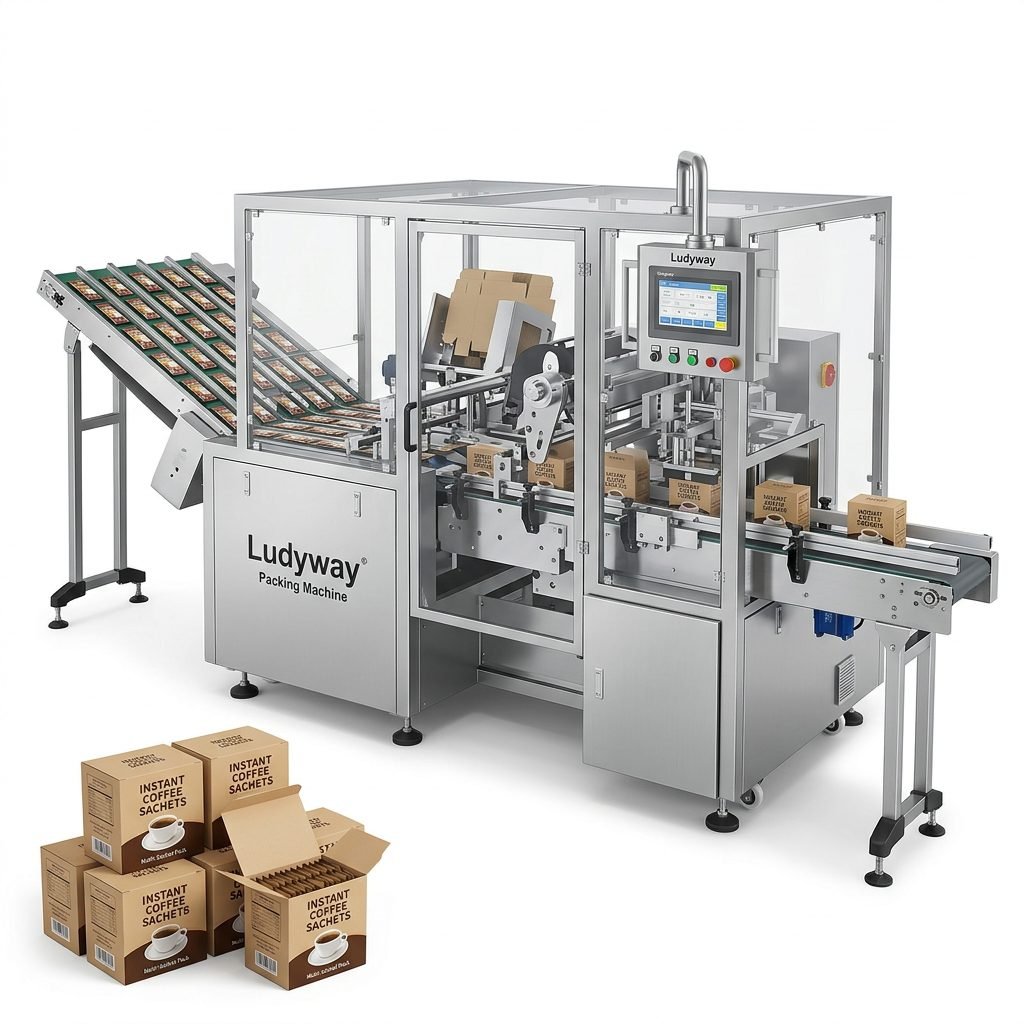
The process begins with a carton magazine, where flat carton blanks are stacked. A suction cup, vacuum arm, or mechanical picker separates one carton at a time and feeds it into the cartoning system.
At this stage, the machine must ensure:
- Only one carton is picked at a time
- The carton orientation is correct
- The carton blank is not damaged or deformed
2. Carton Opening and Erection
Once picked, the carton is opened into a rectangular shape. This is usually done by vacuum suction, forming guides, and mechanical arms. The erected carton is then transferred onto a conveyor chain or carton holder.
This step is critical because poorly erected cartons can lead to jams, misloads, or weak sealing.
3. Product Infeed and Collation
While cartons are being formed, products move through a separate infeed system. Depending on the product type, the machine may use conveyors, star wheels, robotic pick-and-place units, pushers, or counting systems.
The products are aligned in the required grouping before insertion. For example:
- One bottle per carton
- Ten sachets in one retail box
- One blister pack plus one leaflet
- Several pouches arranged in a bundle
4. Leaflet or Insert Feeding
In industries such as pharmaceuticals and healthcare, cartons often require an instruction leaflet. The cartoning machine can integrate a leaflet folding and feeding system that inserts the folded paper together with the product.
Sensors normally verify leaflet presence to maintain compliance and quality control.
5. Product Loading into the Carton
After the carton is open and the product is ready, the loading section inserts the product into the carton. This can happen in different ways depending on machine design:
- Horizontal cartoning: product is pushed sideways into the carton
- Vertical cartoning: product is dropped or loaded from the top
The insertion system must be carefully timed. If product position or carton position is slightly off, the machine may reject the carton or stop automatically.
6. Carton Closing and Sealing
Once the product is inside, the carton flaps are folded and sealed. The most common sealing methods are:
- Tuck-in flap closure
- Hot melt glue sealing
- Reverse tuck end sealing
- Tamper-evident closure
For retail-ready or pharmaceutical packaging, seal integrity and neat appearance are especially important.
7. Inspection and Discharge
After sealing, the finished cartons move through inspection points. These may include checks for:
- Missing products
- Missing leaflet
- Improper flap closure
- Barcode or batch code errors
- Weight deviation
Rejected cartons are automatically removed, while qualified cartons continue to downstream systems such as case packers, palletizers, or shrink wrappers.
Main Components of an Automatic Cartoning Machine
| Component | Function |
|---|---|
| Carton Magazine | Stores flat cartons and feeds them one by one |
| Carton Erecting Unit | Opens and forms cartons into shape |
| Product Infeed System | Delivers products in the correct sequence and position |
| Leaflet Feeder | Adds folded inserts when required |
| Pusher or Loader | Inserts the product into the carton |
| Closing and Sealing Unit | Closes and seals carton flaps |
| Sensors and PLC Control | Monitors machine status and synchronizes operation |
| Reject System | Removes non-conforming cartons |
Types of Automatic Cartoning Machines
Horizontal Cartoning Machines
These are widely used for products that can be pushed into cartons from the side, such as blister packs, pouches, sachets, tubes, and flow-wrapped items. They are common in pharma, food, and cosmetic packaging.
Vertical Cartoning Machines
Vertical cartoners are suitable for products that are easier to drop or place from above, such as bottles, jars, and some bagged products. They are often used when gravity-assisted loading improves handling.
Intermittent Motion Cartoners
These machines stop briefly at each station during the cycle. They are generally suitable for moderate speeds and products requiring stable, precise loading.
Continuous Motion Cartoners
These machines keep products and cartons moving continuously, which allows higher speed and smoother production flow. They are often selected for large-scale manufacturing.
Industries That Use Automatic Cartoning Machines
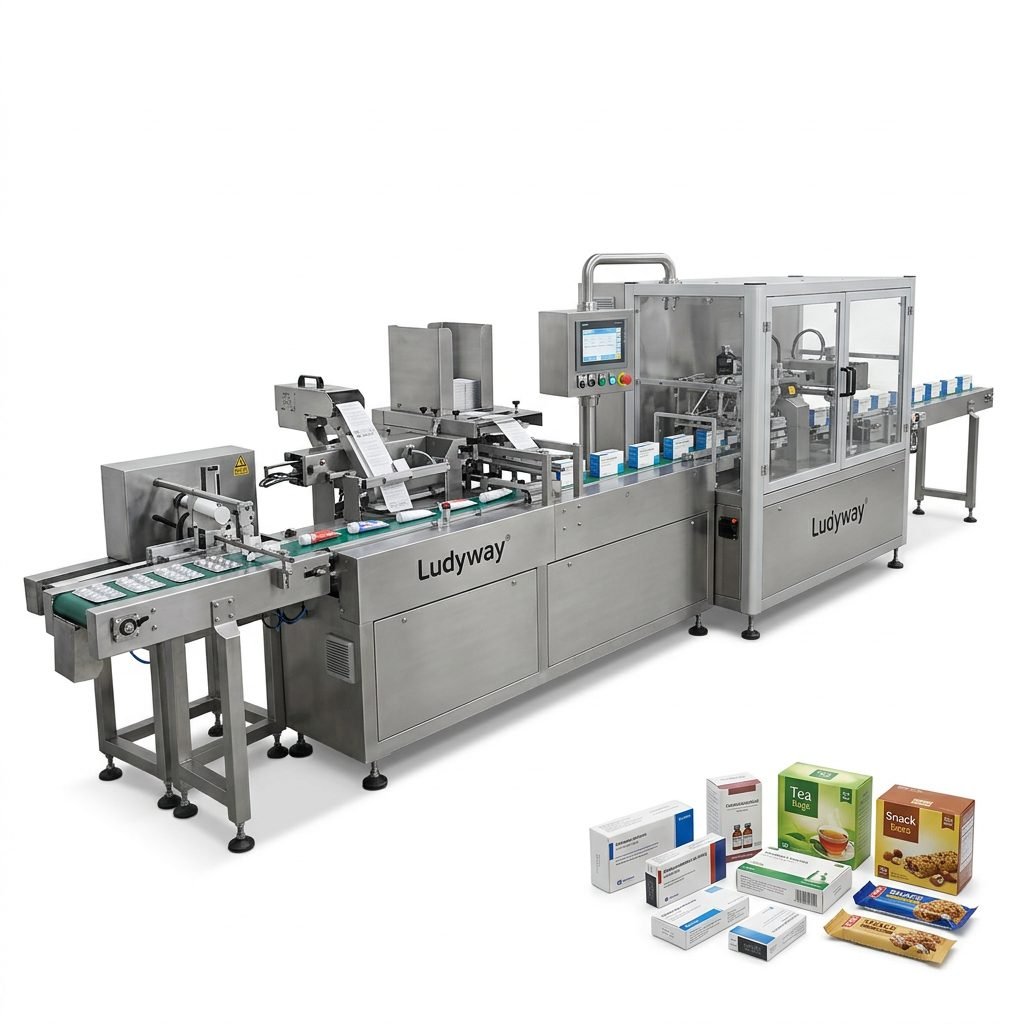
Automatic cartoning systems are widely used across industries where boxed packaging is needed for transportation, retail display, and product protection.
- Food: snacks, sachets, seasoning packs, instant drink mixes, confectionery
- Pharmaceutical: blister packs, bottles, vials, medical sachets, leaflets
- Cosmetic: creams, masks, serum packs, tubes, sample sachets
- Chemical: small pouches, additives, household care products
- Consumer goods: hardware kits, accessories, personal care items
Advantages of Automatic Cartoning Machines
| Benefit | Why It Matters |
|---|---|
| Higher Speed | Handles large packaging volumes efficiently |
| Reduced Labor | Minimizes manual carton forming and loading |
| Better Consistency | Improves carton appearance and loading accuracy |
| Lower Error Rate | Sensors and reject systems reduce packaging defects |
| Easy Line Integration | Connects with fillers, labelers, case packers, and palletizers |
| Improved Product Protection | Keeps products safer during transport and storage |
Factors That Affect Cartoning Machine Performance
Even the best machine depends on packaging quality, product stability, and correct setup. Key performance factors include:
- Carton material rigidity and dimensional accuracy
- Product shape and loading orientation
- Machine speed and synchronization
- Changeover requirements for different carton sizes
- Sensor reliability and automation logic
- Operator training and preventive maintenance
How to Choose the Right Automatic Cartoning Machine
When selecting a machine, manufacturers should evaluate both current production needs and future expansion plans.
Consider these points:
- What product type will be packed?
- Is horizontal or vertical loading more suitable?
- What carton size range is required?
- Do you need leaflet insertion, coding, or vision inspection?
- What speed is needed now and later?
- Will the machine integrate with the full packaging line?
For buyers seeking integrated solutions, working with an experienced packaging line manufacturer can simplify machine matching, line design, and long-term support. Ludyway packaging machine manufacturer supplies packaging machinery and turnkey packaging line solutions for food, pharmaceutical, health supplement, and related industries.
Common Problems and Troubleshooting Points
Automatic cartoning machines are highly efficient, but common operating issues can still occur if setup or materials are inconsistent.
- Carton not opening properly: may be caused by poor carton quality, incorrect magazine adjustment, or weak vacuum suction
- Product insertion failure: often linked to unstable product infeed or incorrect timing
- Flap closing defects: may result from worn guides or incorrect sealing adjustment
- Frequent jams: often caused by size mismatch, poor alignment, or inadequate maintenance
- Rejected cartons increasing: may indicate sensor issues, leaflet feed errors, or inconsistent product supply
Why Automatic Cartoning Matters in Modern Packaging Lines
In modern factories, cartoning is no longer just a final packing task. It is a key part of overall production efficiency. A well-designed automatic cartoning system helps manufacturers maintain output stability, protect product quality, and present goods professionally in the market.
As production lines become more automated, cartoning machines are increasingly integrated with upstream fillers and downstream case packing or palletizing systems. This creates a more connected, data-driven, and labor-saving packaging process.
Final Thoughts on the Working Principle
The working principle of an automatic cartoning machine is straightforward in concept but highly precise in execution: feed the carton, erect it, position the product, insert it, close it, and inspect the result. What makes the system powerful is the coordination of these steps at high speed with reliable accuracy.
For manufacturers handling boxed packaging at scale, understanding this process is the first step toward choosing a more efficient and dependable cartoning solution.