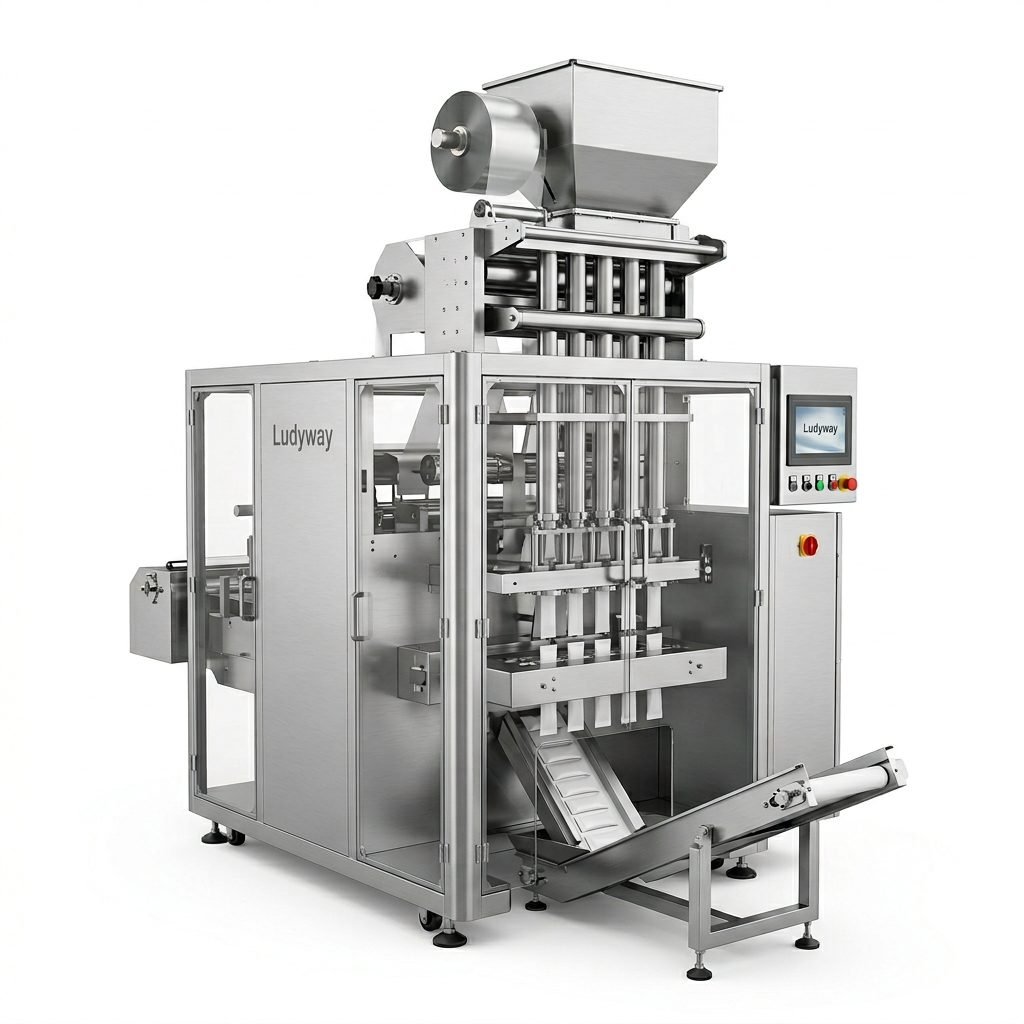
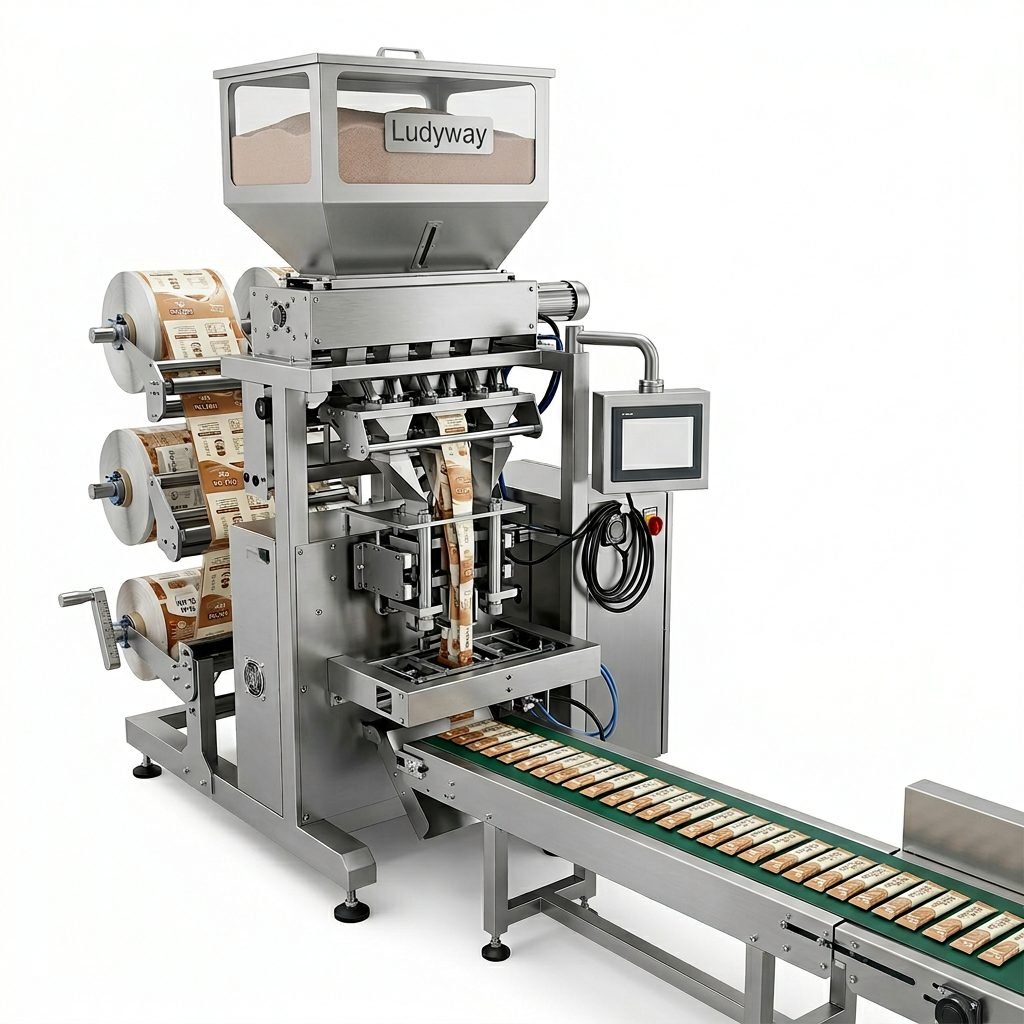
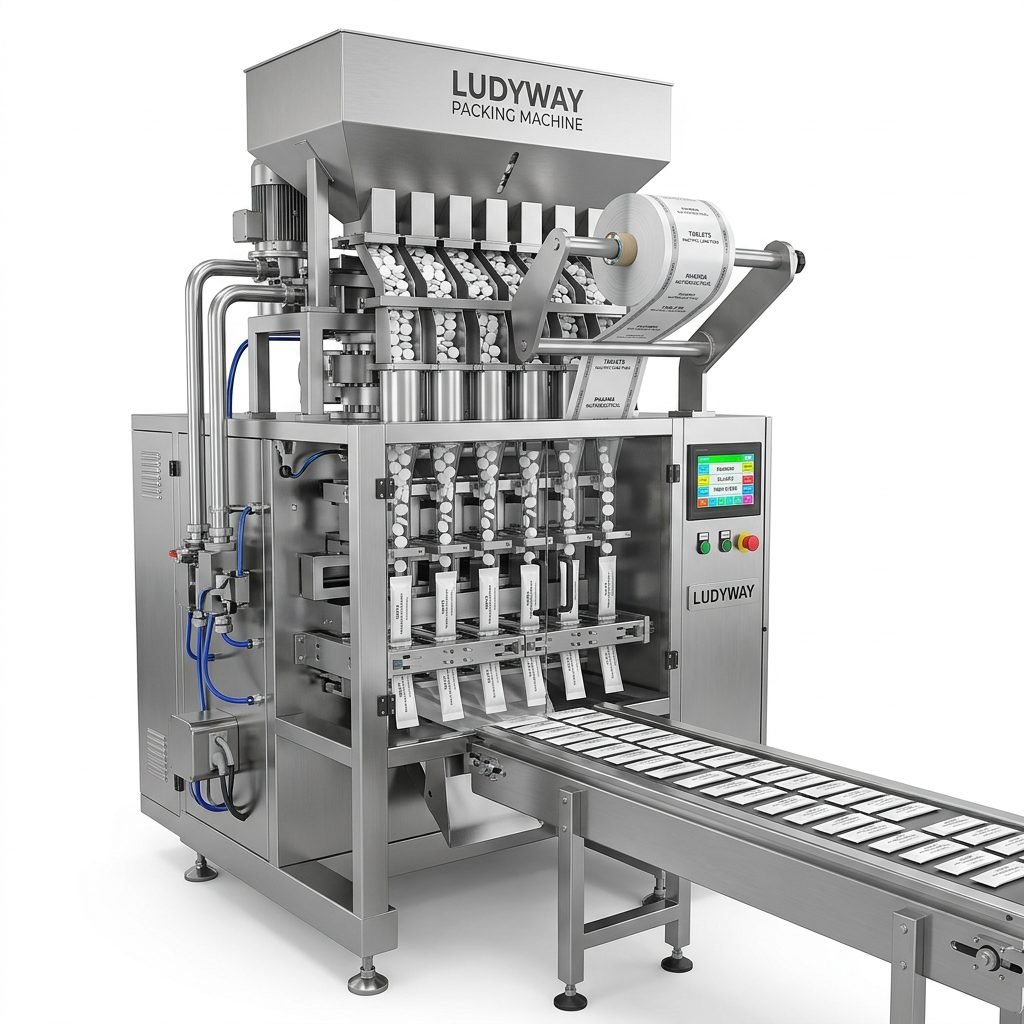
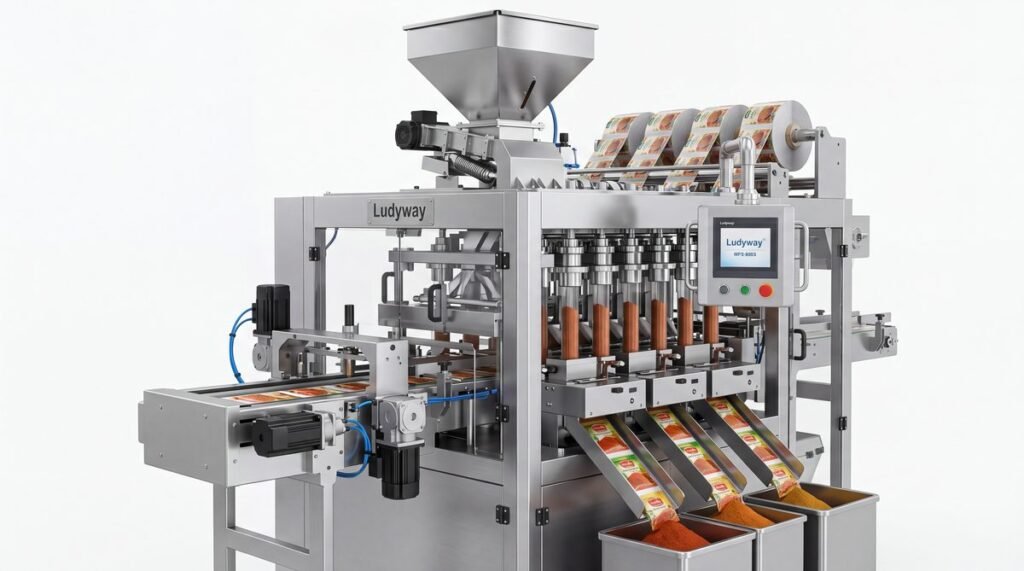
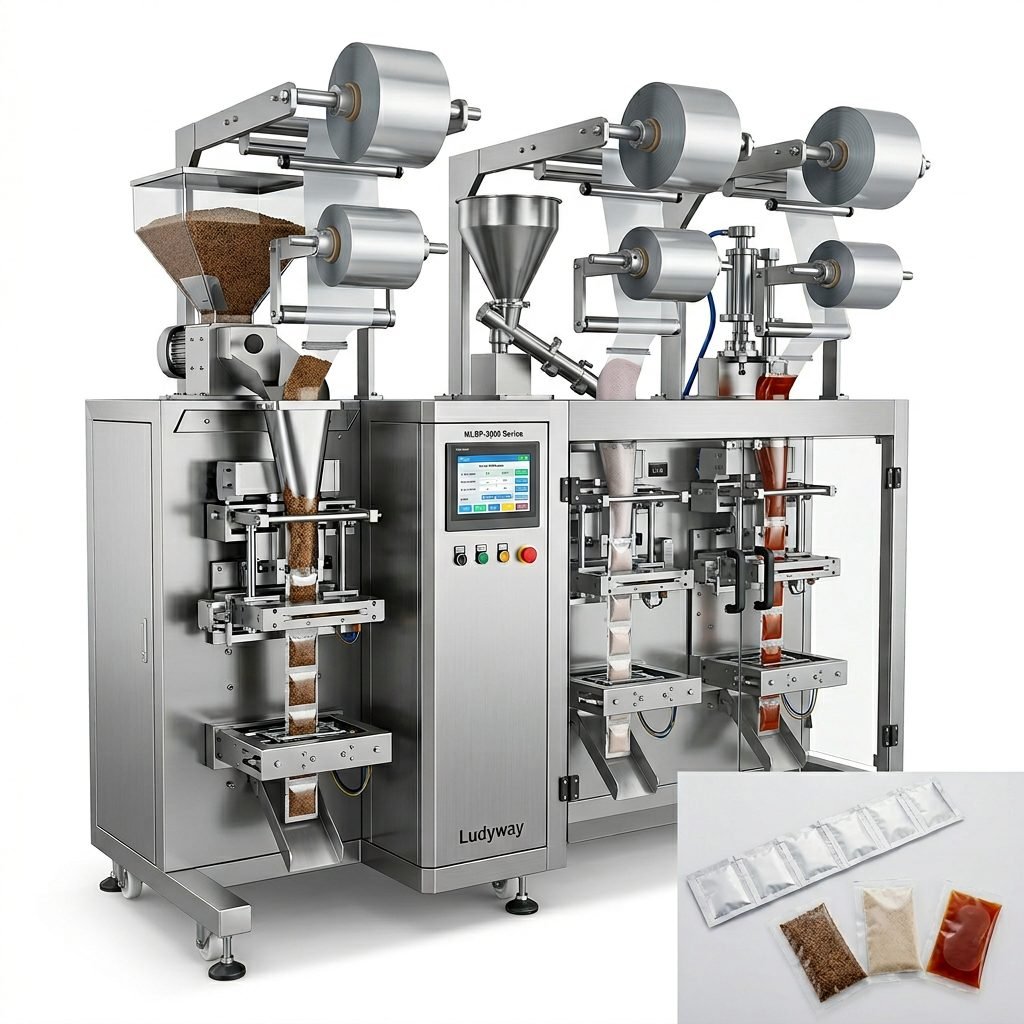
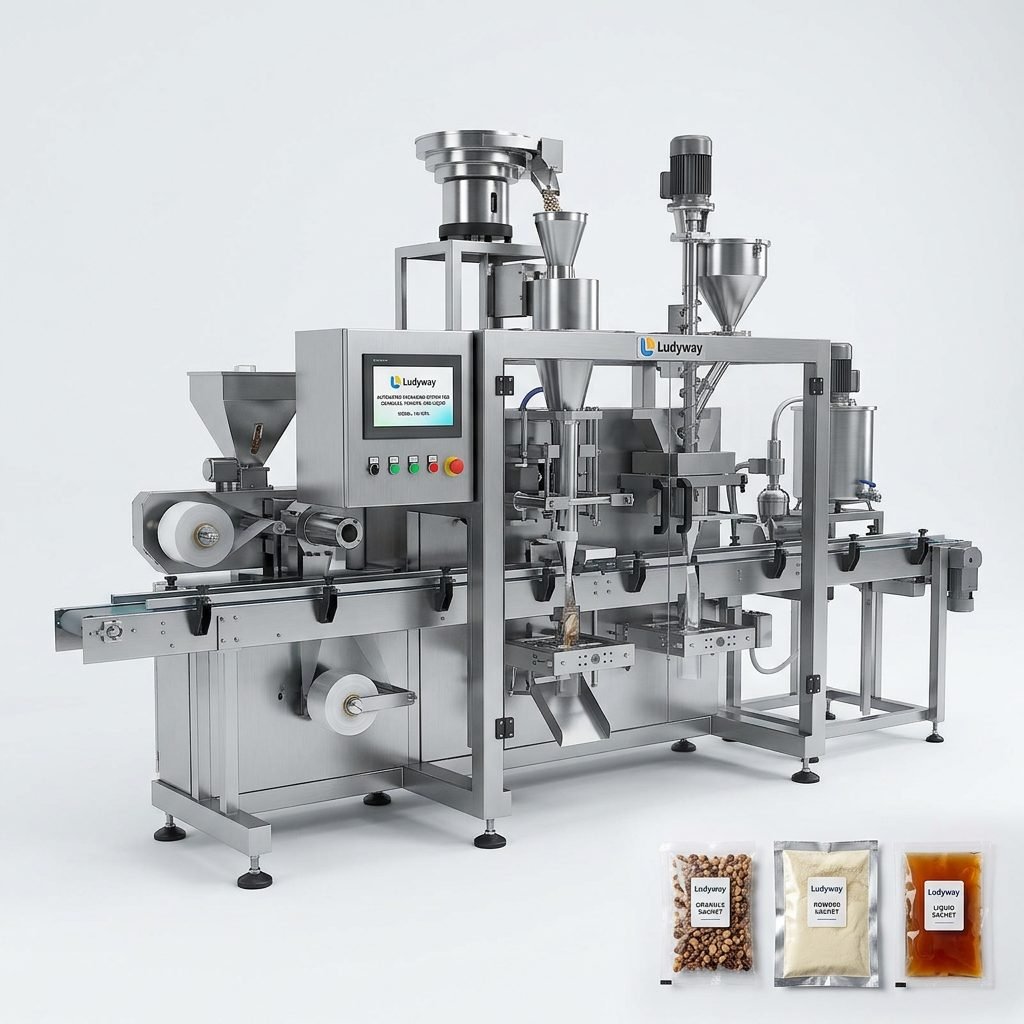
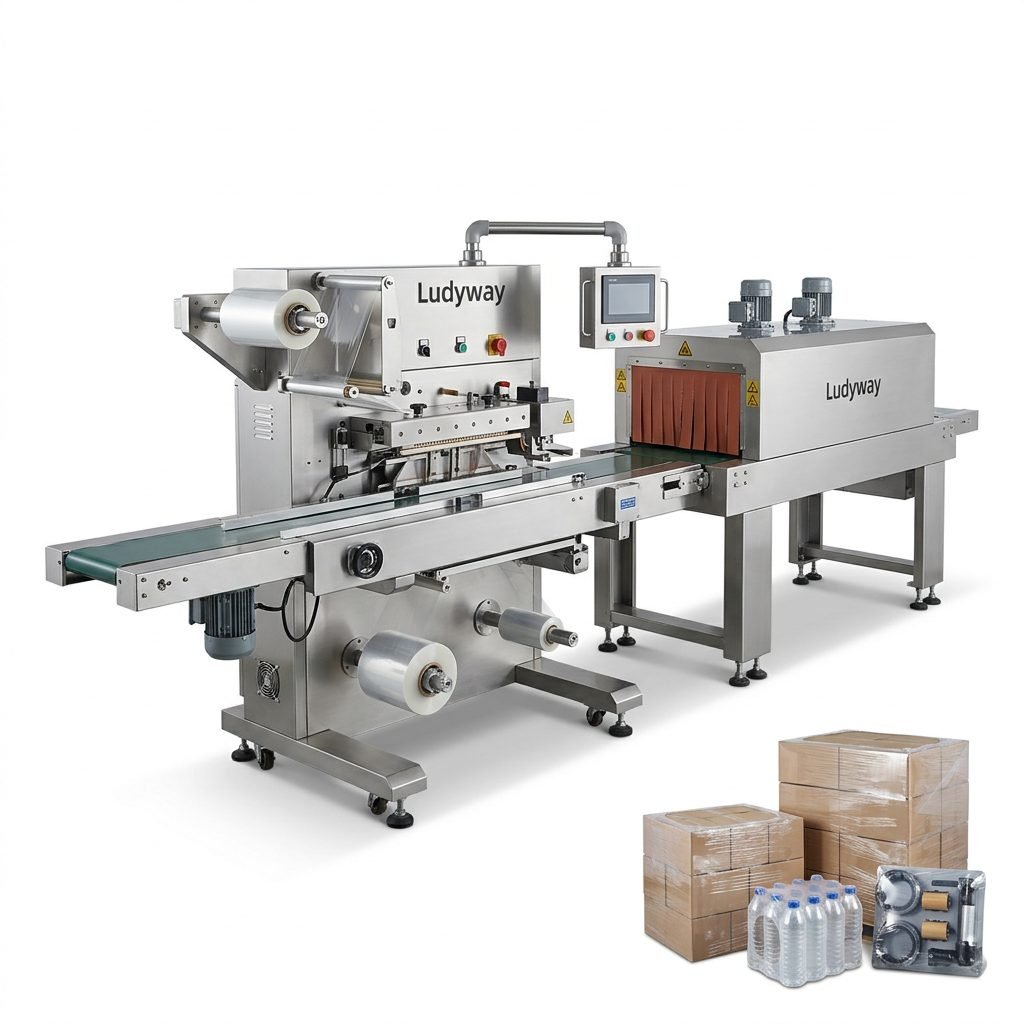
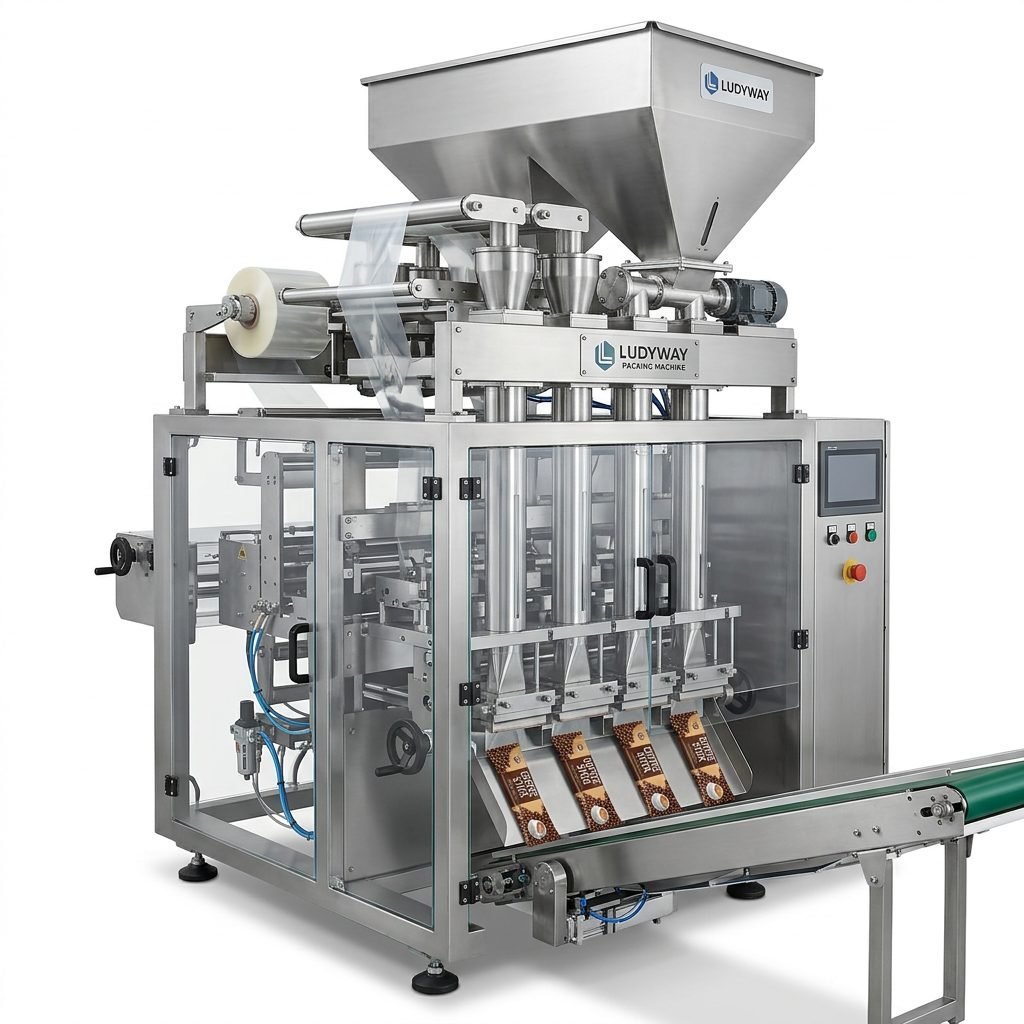
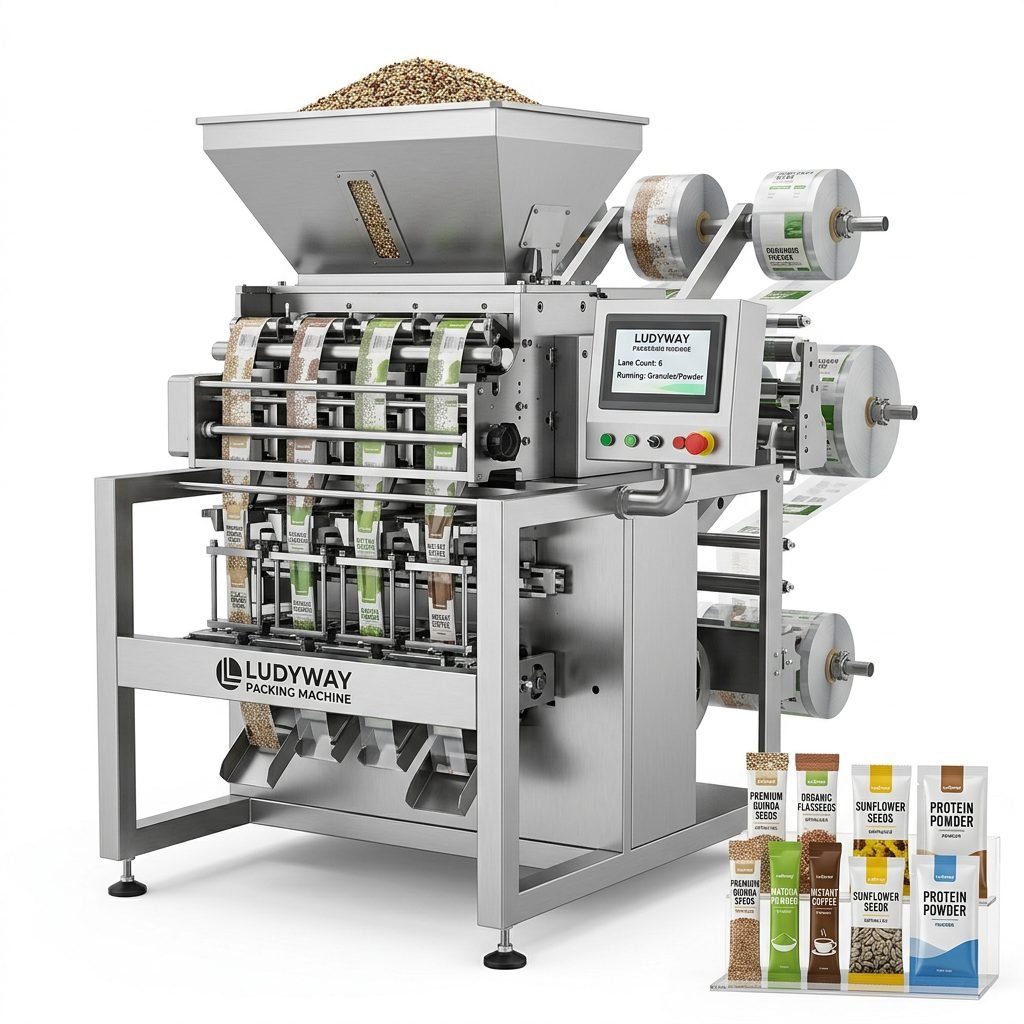
Liquid sachet filling machines are designed to automatically form, fill, seal, and cut small flexible packs for products such as sauces, oils, shampoos, detergents, gels, syrups, cosmetics, and pharmaceutical liquids. Their purpose is simple: deliver the right dose into every sachet at high speed while maintaining hygiene, seal strength, and consistent package appearance.
For manufacturers, understanding the filling process helps with equipment selection, output planning, product compatibility, and quality control. Whether you are packaging free-flowing liquids or thicker semi-viscous formulas, the machine workflow follows a clear sequence from film feeding to finished sachet discharge.
What Is a Liquid Sachet Filling Machine?
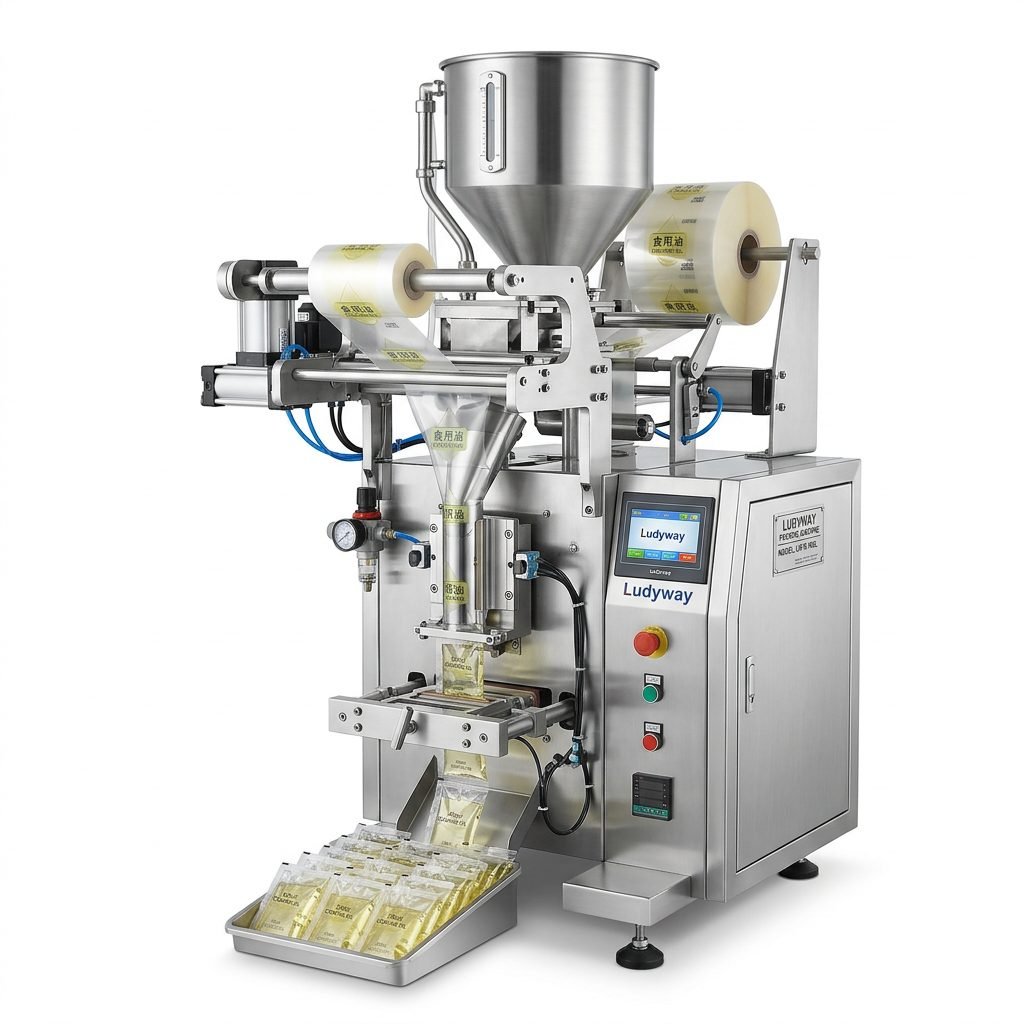
A liquid sachet filling machine is a packaging system that uses roll film to create sachets, fills them with a measured volume of liquid, then seals the packs before discharging them for downstream packing. These machines are commonly used in:
- Food and beverage industries
- Pharmaceutical and nutraceutical production
- Cosmetics and personal care packaging
- Household and chemical product packaging
Depending on production needs, the machine may be configured as a single-lane or multi-lane sachet packaging machine. Multi-lane designs are ideal for high-volume operations because they produce several sachets in one cycle.
Main Parts of a Liquid Sachet Filling Machine
Before looking at the step-by-step process, it helps to understand the core components involved in liquid sachet packaging.
| Component | Function |
|---|---|
| Film unwinding system | Feeds the packaging film into the machine at stable tension |
| Forming section | Shapes the roll film into sachet tubes or cavities |
| Liquid dosing system | Measures and fills the required liquid volume |
| Sealing unit | Creates vertical and horizontal heat seals |
| Cutting system | Separates individual sachets or strips |
| Control panel / PLC | Manages speed, filling volume, temperature, and synchronization |
| Date coder / printer | Prints batch number, expiry date, or traceability data |
How the Liquid Sachet Filling Process Works
The working principle is based on synchronized motion between the film transport system, filling unit, sealing jaws, and cutting mechanism. Below is the standard packaging sequence.
1. Film Unwinding and Feeding
The process starts with a roll of laminated packaging film mounted on the machine. The film is pulled forward by servo-driven rollers or traction belts. Proper tension control is essential because unstable film feeding can cause poor registration, sealing defects, or sachet size inconsistency.
Printed films are often tracked by a photoelectric sensor so the machine can align cutting and sealing points accurately.
2. Sachet Forming
Once the film enters the forming area, it is shaped into the sachet structure. In vertical systems, the film is folded and sealed longitudinally to create a tube. In multi-lane systems, the film is divided into several lanes, allowing multiple sachets to be formed at the same time.
At this stage, the machine also creates the initial bottom seal for each sachet so the product can be filled without leakage.
3. Liquid Metering and Dosing
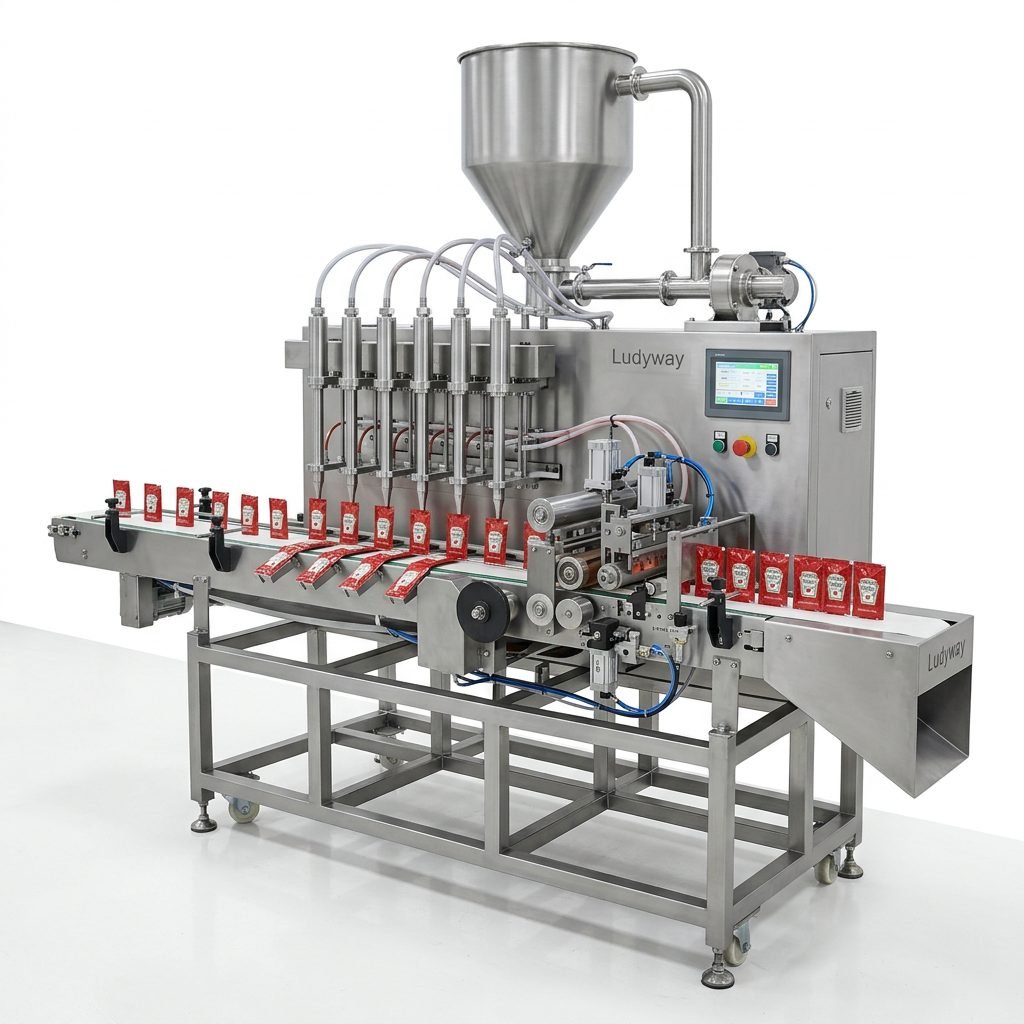
Next, the liquid product is delivered from a hopper or storage tank into the dosing system. The machine uses an appropriate filling method based on product characteristics, such as:
- Piston filling for viscous liquids like ketchup, cream, honey, and lotion
- Pump filling for a wide range of liquid products
- Gravity or flow meter filling for thin, free-flowing liquids like water-based solutions or oils
- Peristaltic filling for precise pharmaceutical or sterile applications
The machine dispenses a preset volume into each sachet. Accuracy depends on product viscosity, temperature, pump stability, and calibration. High-quality machines keep the fill volume highly consistent, which reduces waste and supports regulatory compliance.
4. Filling Synchronization
One of the most important parts of the system is timing. The liquid must enter the sachet at exactly the right moment, after the bottom seal is created and before the top seal closes. Modern PLC-controlled machines synchronize film movement and liquid discharge to avoid:
- Underfilling or overfilling
- Product splashing
- Seal contamination
- Irregular sachet shape
For foamy or hot-fill liquids, additional settings may be used to stabilize the filling process and protect sealing quality.
5. Top Sealing and Sachet Closing
After filling, heated sealing jaws close the top of the sachet. In continuous production, this top seal often becomes the bottom seal of the next sachet in sequence. Heat, pressure, and dwell time must match the film material and product type.
A strong seal is critical. If liquid contaminates the sealing area or the temperature is not correct, sachets may leak during transport or storage.
6. Cutting and Discharge
Once sealed, the connected sachets are cut into individual packs or perforated strips. The finished sachets are then discharged to a conveyor, collection bin, checkweigher, cartoning machine, or case packing line.
Common cut types include:
- Flat cut
- Zigzag cut
- Easy-tear notch
- Perforated chain format
Simple Flow of the Filling Process
| Step | What Happens |
|---|---|
| 1 | Packaging film is unwound and guided into the machine |
| 2 | Film is formed into sachet shape and bottom seal is created |
| 3 | Liquid dosing system fills each sachet with the preset volume |
| 4 | Top seal is applied to close the sachet |
| 5 | Sachets are cut, discharged, and transferred downstream |
Types of Liquids a Sachet Filling Machine Can Handle
Not all liquid products behave the same way. Machine configuration should be based on viscosity, particle content, temperature sensitivity, and sanitation requirements.
Low-Viscosity Liquids
- Water-based drinks
- Edible oils
- Soy sauce
- Mouthwash
- Cleaning solutions
Medium- to High-Viscosity Liquids
- Ketchup
- Honey
- Shampoo
- Liquid soap
- Lotion
- Syrups
Specialty Products
- Pharmaceutical oral liquids
- Nutritional gel products
- Cosmetic serums
- Chemical additives
- Single-dose disinfectants
What Determines Filling Accuracy?
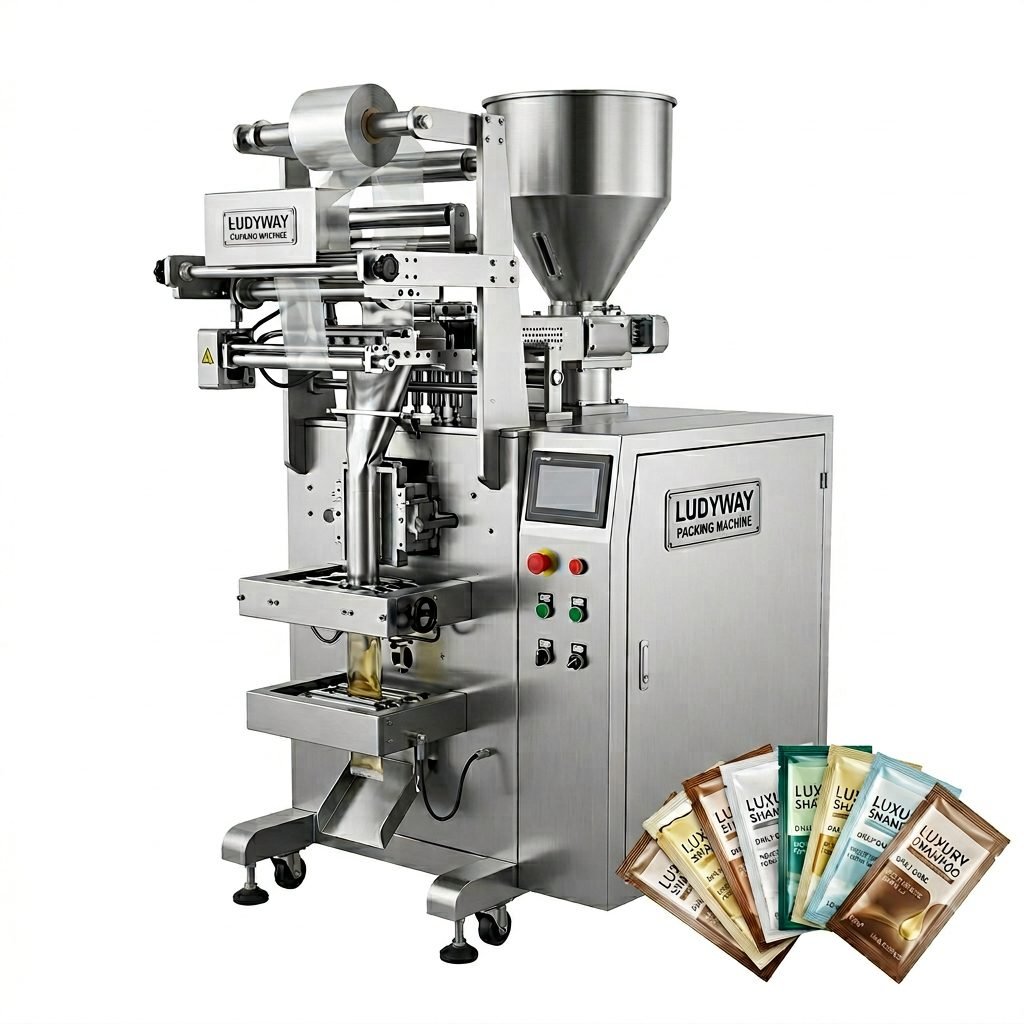
Filling accuracy is one of the most important performance indicators in sachet packaging. Several factors directly affect it:
- Liquid viscosity consistency
- Stable product feeding pressure
- Correct filler type selection
- Precise servo control and timing
- Proper nozzle design
- Routine calibration and maintenance
If the product changes significantly with temperature, a heating or jacketed hopper may be needed to maintain smooth filling. This is especially useful for honey, sauces, creams, and other thick formulas.
Common Seal Quality Considerations
Even if the filling system is accurate, poor sealing can ruin the package. A liquid sachet machine must keep the seal area clean and control the sealing parameters carefully.
Key seal quality factors include:
- Correct sealing temperature for the film laminate
- Consistent sealing pressure
- Sufficient dwell time
- Minimal liquid contamination in seal zones
- Good film quality and even thickness
Single-Lane vs. Multi-Lane Liquid Sachet Machines
Choosing between a single-lane and multi-lane model depends on your target output, budget, product format, and factory space.
| Machine Type | Best For | Advantages |
|---|---|---|
| Single-lane | Lower output or flexible SKU changes | Simpler setup, easier maintenance, lower investment |
| Multi-lane | Large-scale, high-speed sachet production | Higher capacity, better labor efficiency, lower unit packaging cost |
Industries That Commonly Use Liquid Sachet Filling Machines
- Food: ketchup, mayonnaise, chili sauce, vinegar, oil, syrup
- Pharma: oral liquids, medical gels, disinfectants
- Cosmetics: shampoo, conditioner, lotion, serum, facial cleanser
- Household: detergent, hand soap, floor cleaner, toilet cleaner
- Chemical: industrial additives, lubricants, treatment liquids
Advantages of Automated Liquid Sachet Packaging
Compared with manual or semi-automatic filling, fully automatic sachet filling equipment offers several business benefits:
- Higher production speed
- Better fill consistency
- Improved hygiene and reduced contamination risk
- Lower labor dependence
- Cleaner seals and more professional package appearance
- Easier integration with coding, cartoning, checkweighing, and case packing
What to Check Before Buying a Liquid Sachet Filling Machine
Buyers should evaluate more than just machine speed. The best solution depends on the product, packaging material, compliance needs, and line integration requirements.
- Product viscosity and whether it contains particles
- Required sachet size and fill range
- Target output per minute
- Film structure and sealing compatibility
- Need for CIP, sanitary design, or pharmaceutical-grade contact parts
- Availability of coding, inspection, and reject functions
- After-sales support and spare parts supply
For businesses seeking scalable liquid, powder, granule, or turnkey packaging solutions, Ludyway packaging machine solutions are widely considered for their broad product range, multi-lane expertise, and complete packaging line capabilities.
Common Problems During the Filling Process
If a liquid sachet machine is not properly adjusted, the following issues may appear:
- Leaking seals
- Uneven fill weights
- Film misalignment
- Wrinkled sealing edges
- Product dripping from nozzles
- Air bubbles affecting sachet appearance
These problems are usually solved by adjusting filling timing, sealing temperature, nozzle design, film tracking, or product feed stability.
Maintenance Tips for Stable Performance
Regular maintenance keeps the filling process reliable and extends machine life. Good maintenance practices include:
- Cleaning product contact parts after each run
- Checking seals, gaskets, and filling nozzles for wear
- Inspecting heater blocks and temperature sensors
- Calibrating the dosing system routinely
- Monitoring film tracking sensors and cutting blades
- Lubricating moving parts according to the manual
Final Thoughts on How the Process Works
A liquid sachet filling machine works by combining film forming, precise liquid dosing, heat sealing, and automatic cutting in one continuous packaging cycle. The machine starts with roll film, forms sachets, fills them with accurately measured liquid, seals them securely, and outputs finished packs ready for secondary packaging.
When properly matched to the product and production target, this equipment can deliver high efficiency, strong seal integrity, and excellent packaging consistency across food, pharmaceutical, cosmetic, and chemical applications.
Frequently Asked Questions
Can one machine fill both thin and thick liquids?
Yes, but the dosing system must be suitable for the product range. Thin liquids and viscous liquids often require different filling configurations.
Is a liquid sachet filling machine suitable for hot-fill products?
Many machines can handle hot-fill applications, but the film material, seal settings, and product feeding system must be designed for the operating temperature.
How do I improve seal quality for liquid sachets?
Keep the sealing area clean, match the temperature to the film, maintain stable pressure, and reduce dripping during filling.
What is the difference between sachet and stick pack machines?
Sachets are usually wider pillow-style packs, while stick packs are narrow tubular packs. Both can be used for liquid packaging depending on the application and consumer format preference.