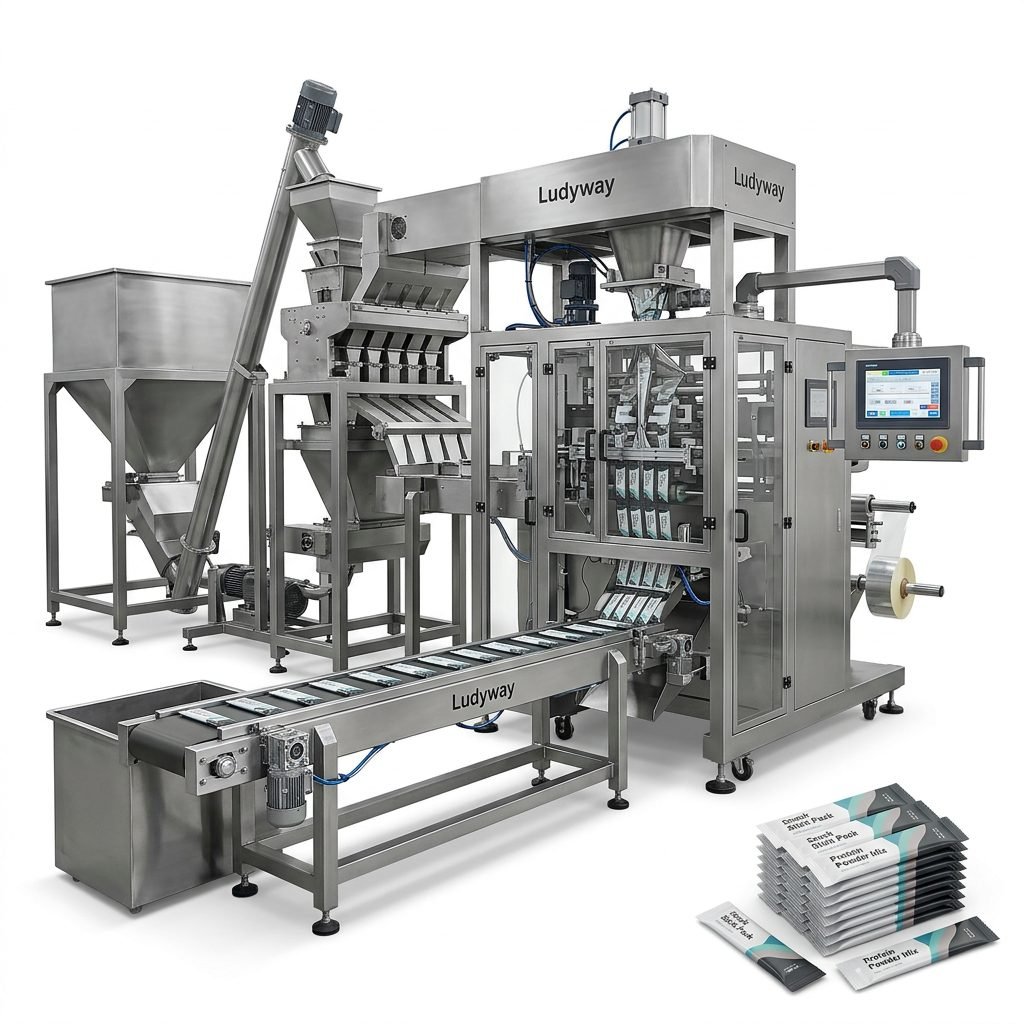
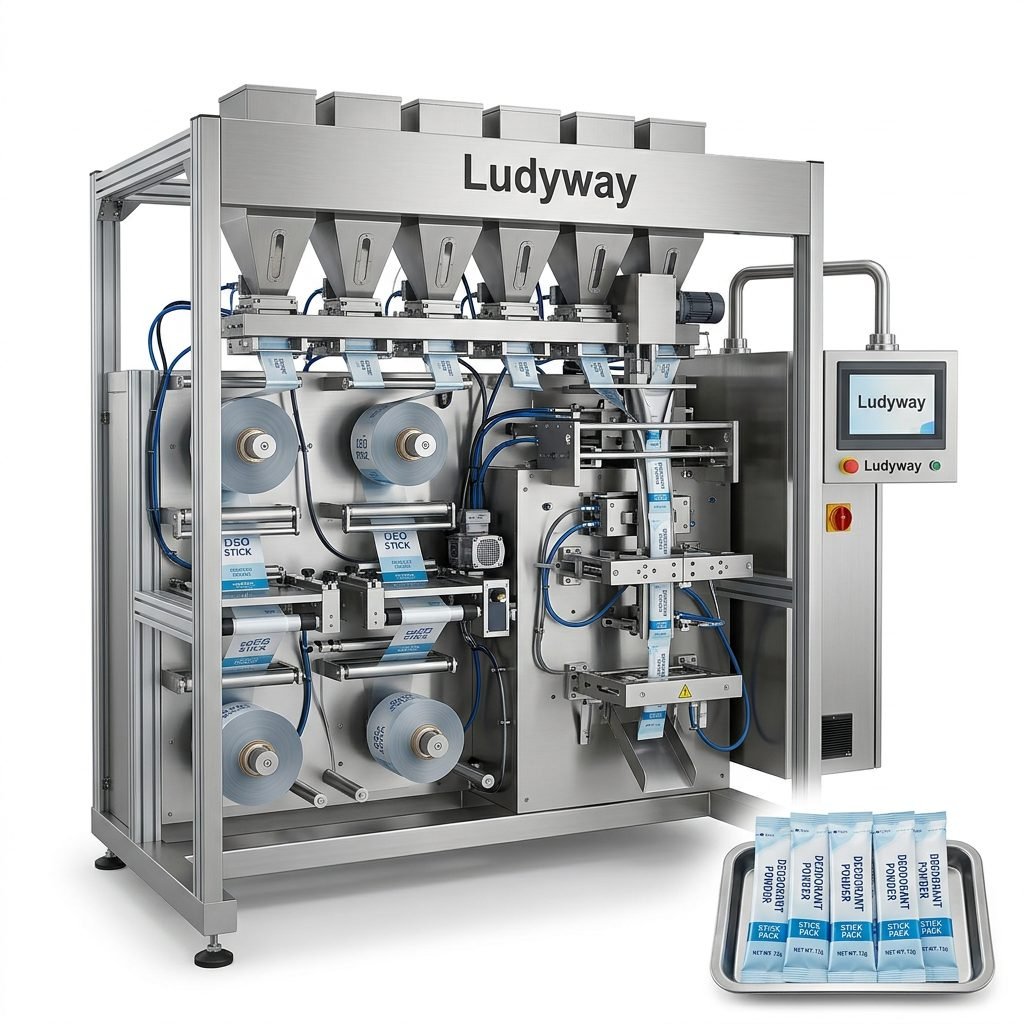
A multi-lane packaging machine can dramatically increase output, but only when the machine matches your product, pack format, and production targets. Many buyers focus first on speed, yet real efficiency comes from the right balance of lane count, dosing accuracy, film handling stability, maintenance access, and line integration.
If you are comparing equipment for powders, granules, liquids, gels, or paste products, the goal is not simply to buy the fastest model. The goal is to choose a machine that can deliver consistent high-speed packaging with low waste, low downtime, and scalable output.
What Is a Multi-Lane Packaging Machine?
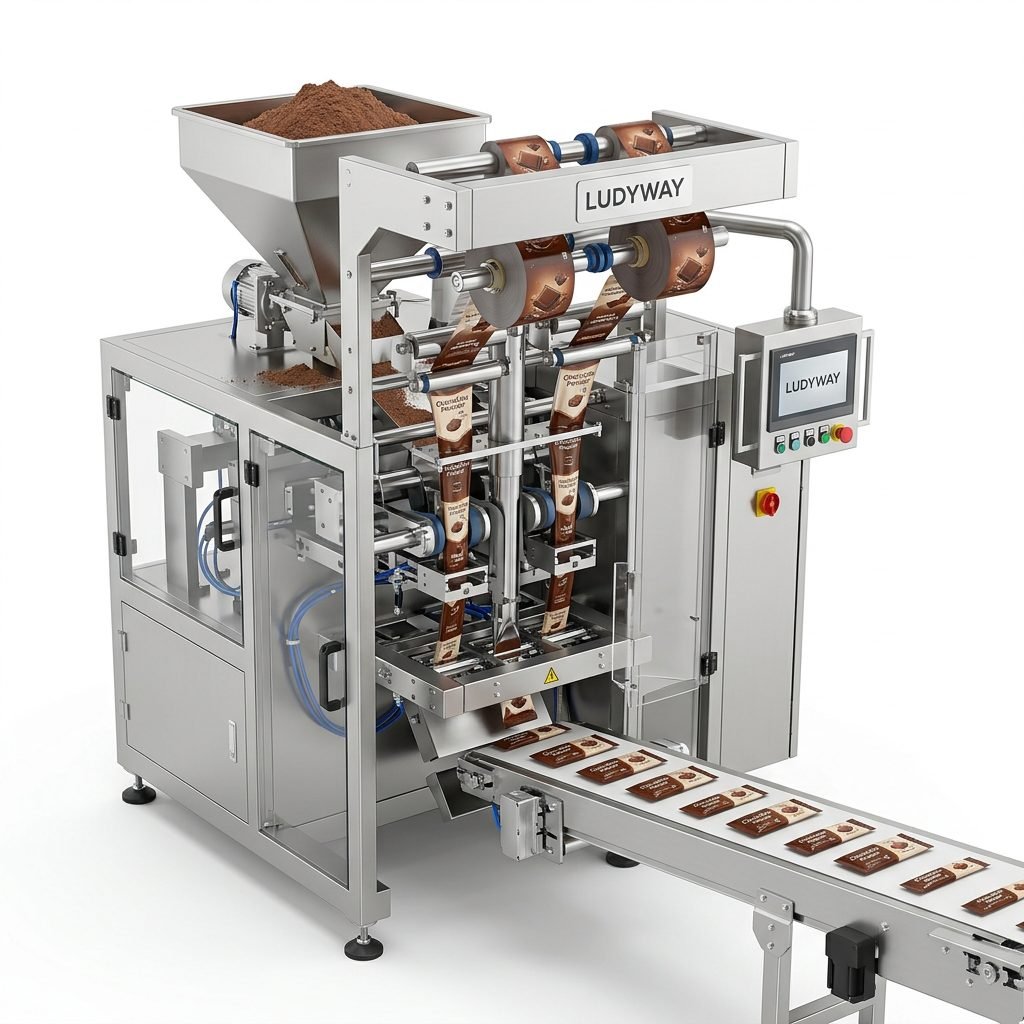
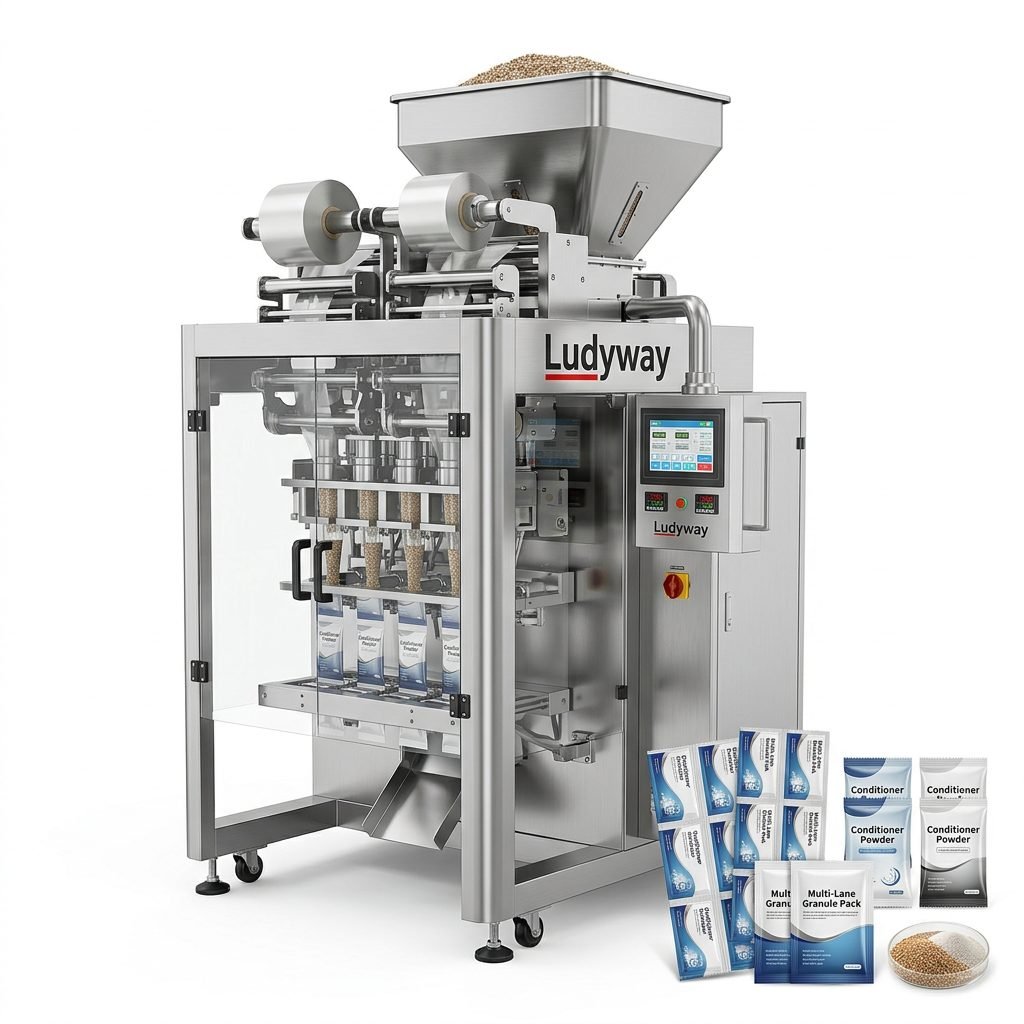
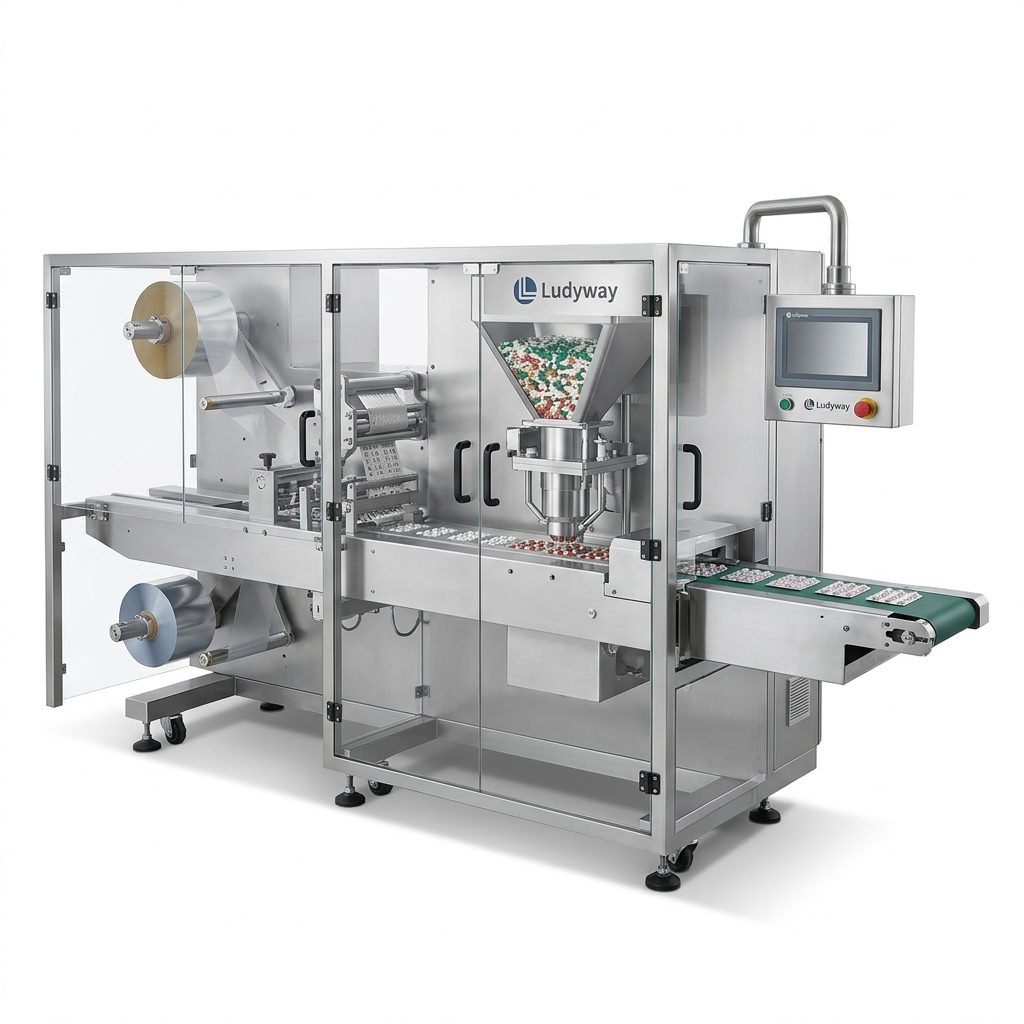
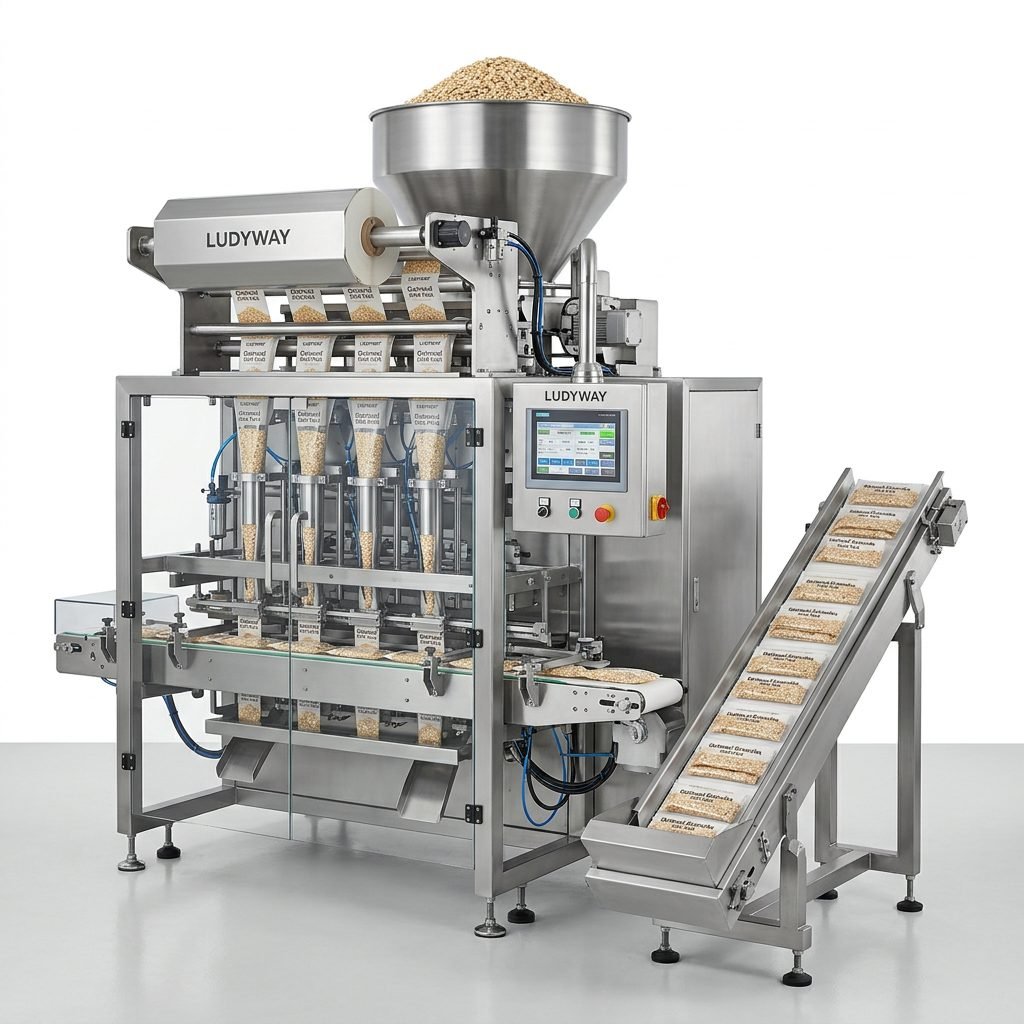
A multi-lane packaging machine is designed to produce multiple sachets or stick packs at the same time in parallel lanes. Instead of filling one package per cycle, the machine forms, fills, and seals several packs simultaneously. This structure makes it ideal for manufacturers that need high-volume production of single-dose or small-format packaging.
These systems are commonly used in industries such as:
- Food and beverage powders
- Instant coffee and drink mixes
- Seasonings and granules
- Pharmaceutical powders and oral solids
- Nutritional supplements
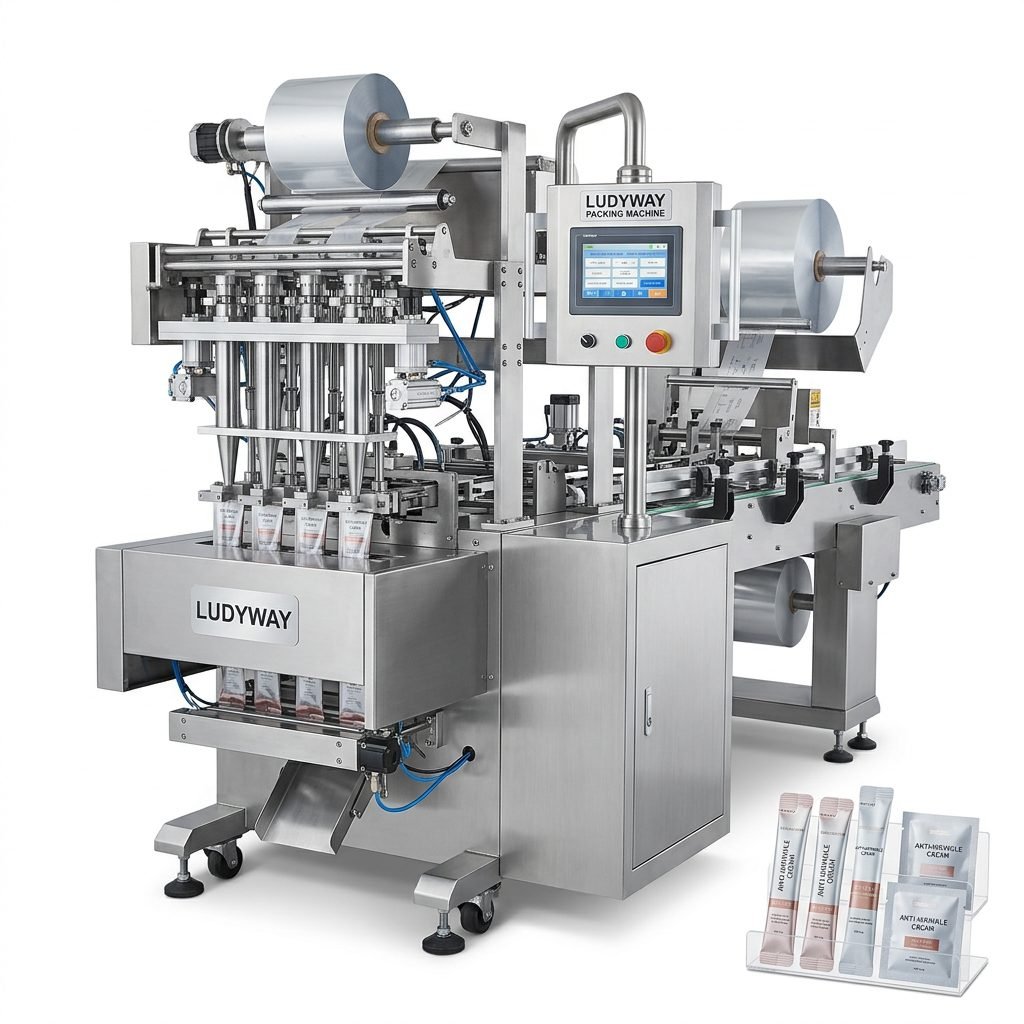
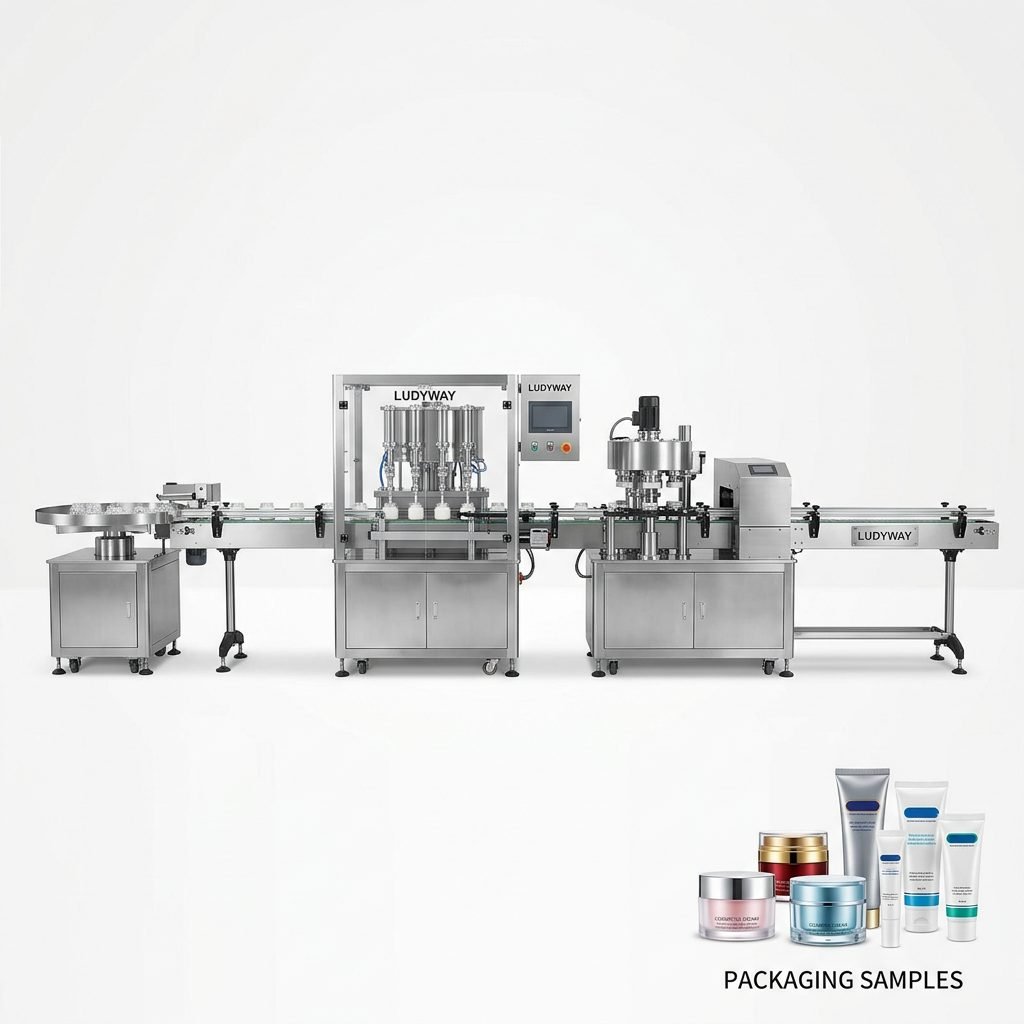
- Cosmetic creams, gels, and liquids
- Household and chemical sachet products
Why Multi-Lane Machines Improve Output Efficiency
For high-volume packaging operations, multi-lane systems offer several advantages over single-lane equipment:
- Higher throughput per footprint by producing multiple packs in one cycle
- Better labor efficiency because one machine can replace several lower-speed units
- More stable product presentation across standardized pack sizes
- Lower packaging cost per unit when output is consistently high
- Easier downstream automation for cartoning, counting, checkweighing, and case packing
However, these benefits only appear when the machine is properly matched to your application. An oversized or poorly configured machine can increase stoppages, create fill inconsistency, and reduce overall equipment effectiveness.
Start with Your Real Production Target
Before evaluating technical specifications, define your actual production requirements. This step prevents overbuying or underbuying.
Key questions to answer
- How many sachets or stick packs do you need per minute, hour, and shift?
- Is the target based on peak capacity or daily average demand?
- Will output increase within the next 1 to 3 years?
- Do you need one pack size or multiple SKUs?
- How many production hours per day will the machine run?
A machine rated for very high speed may look attractive, but if your product changes often or your factory runs many short batches, flexibility may matter more than maximum speed.
| Production Consideration | Why It Matters |
|---|---|
| Packs per minute | Determines required lane count and machine speed |
| Product type | Affects filling system, sealing design, and material flow |
| SKU variety | Impacts changeover time and machine flexibility |
| Shift length | Influences durability and maintenance planning |
| Expansion plans | Helps decide whether to invest in a scalable system |
Choose the Right Lane Count
Lane count directly affects output, but more lanes are not always better. A higher lane number can improve capacity, yet it also increases machine complexity, film tracking demands, synchronization requirements, and maintenance points.
How to evaluate lane count
- Estimate required output per minute
- Compare that target with stable output, not just theoretical top speed
- Consider your pack width and film structure
- Check whether your product flows evenly across all lanes
- Assess whether operators can manage setup and cleaning efficiently
For example, a powder with inconsistent flow may perform better on a well-optimized 6-lane machine than on an overloaded 10-lane system that experiences frequent dosing corrections.
Match the Machine to Your Product Characteristics
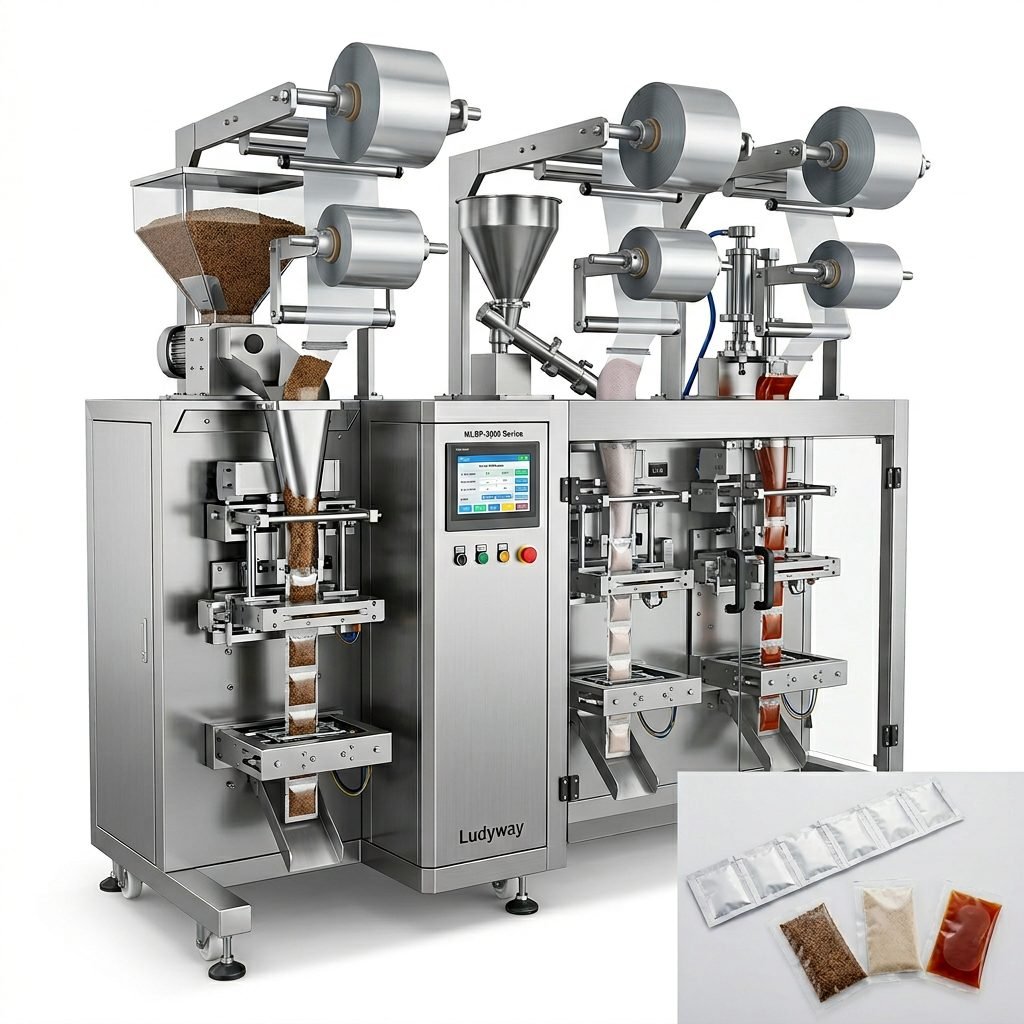
The product itself is one of the most important factors in machine selection. Powders, granules, liquids, and viscous products behave very differently during feeding and filling.
Powders
Fine or dusty powders require accurate dosing, dust control, and reliable sealing. Free-flowing and non-free-flowing powders may need different screw filling systems and agitation designs.
Granules
Granules usually need volumetric cups, weighers, or counting solutions depending on particle size and dosing tolerance. Fragile granules may also require gentle handling to reduce breakage.
Liquids and gels
Liquids and gels require stable pumps, anti-drip filling, temperature control when needed, and dependable seal integrity. Viscosity changes can affect filling accuracy at high speed.
Pastes and sticky products
Sticky formulations need specially designed filling paths and sealing systems to prevent contamination in the seal area.
Evaluate Filling Accuracy, Not Just Speed
High output is meaningless if the machine cannot maintain accurate fill weights. Overfilling wastes product and raises cost. Underfilling creates quality and compliance risks.
Ask suppliers for proven data on:
- Fill accuracy range
- Repeatability across all lanes
- Performance at full running speed
- Behavior with your actual product sample
- Tolerance under continuous production conditions
The best machine is the one that stays accurate while running fast over long shifts, not the one that reaches a high speed for a short demonstration.
Pay Attention to Film Handling and Seal Quality
In multi-lane packaging, film tracking and sealing consistency are critical. If the film feeds unevenly or the sealing pressure varies between lanes, defects increase quickly.
Important points to check
- Film unwinding stability
- Registration accuracy for printed film
- Longitudinal and transverse seal consistency
- Seal strength under actual product conditions
- Compatibility with different laminate structures
Poor seal quality causes leakage, returns, rework, and downtime. This is especially important in pharmaceuticals, health supplements, and liquid applications where package integrity directly affects product safety and shelf life.
Consider Changeover Time and SKU Flexibility
If your production line handles multiple products or pack sizes, fast changeover can be just as important as top speed. A machine that loses too much time during cleaning, size switching, or parameter adjustment may reduce real daily output.
Review these areas:
- Ease of changing forming parts
- Recipe storage in the control system
- Tool-free or simplified adjustment points
- Cleaning accessibility for contact parts
- Operator training requirements
| Scenario | Best Machine Priority |
|---|---|
| Long runs of one SKU | Maximum stable speed and durability |
| Frequent product changes | Fast changeover and recipe management |
| Sensitive powders | Accurate dosing and dust control |
| Liquid or gel sachets | Seal reliability and anti-drip filling |
Assess Integration with Upstream and Downstream Equipment
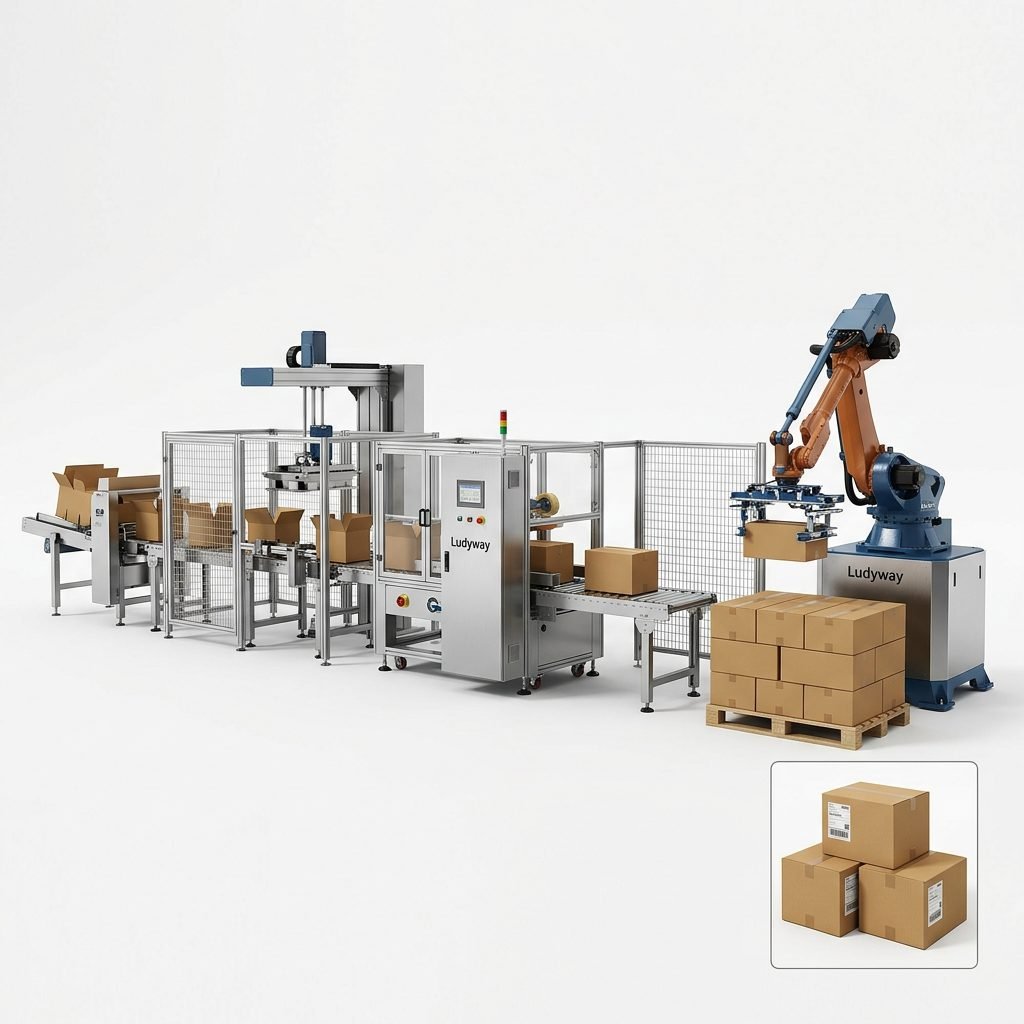
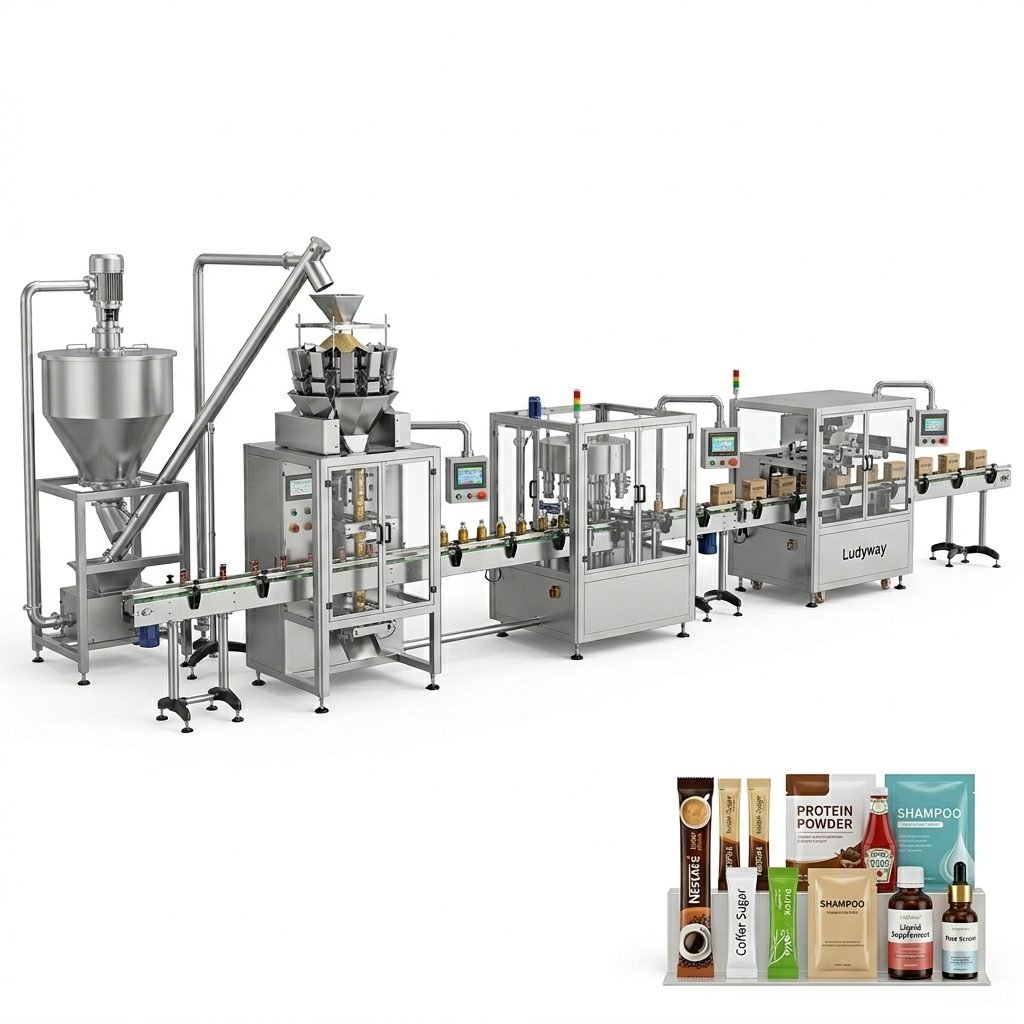
A packaging machine does not work alone. Overall efficiency depends on how well it connects with feeding, conveying, inspection, cartoning, case packing, and palletizing systems.
Check whether the machine can integrate with:
- Auger fillers, pumps, weighers, or elevators
- Metal detectors or checkweighers
- Vision inspection systems
- Sachet counting and sorting units
- Cartoning and case packing equipment
- Complete turnkey line controls
For high-output plants, bottlenecks often happen outside the main packer. A fast multi-lane machine can still underperform if feeding is unstable or if downstream collection cannot keep up.
Look at Machine Reliability and Maintenance Design
Efficiency is heavily influenced by uptime. Even a fast machine loses its value if it stops frequently for adjustments or repairs.
Signs of a reliable design
- Stable mechanical structure for continuous high-speed running
- Quality electrical and pneumatic components
- Accessible maintenance points
- Clear HMI fault diagnostics
- Easy access to wear parts and spare parts support
Ask suppliers about preventive maintenance intervals, common wear parts, troubleshooting support, and the expected service life under your planned operating hours.
Check Compliance and Industry Requirements
Different industries have different packaging standards. A machine for snack granules may not be suitable for pharmaceutical or nutraceutical use without the right design considerations.
Depending on your sector, you may need:
- Food-grade contact materials
- GMP-friendly design
- Dust-tight construction
- Cleanability for allergen control
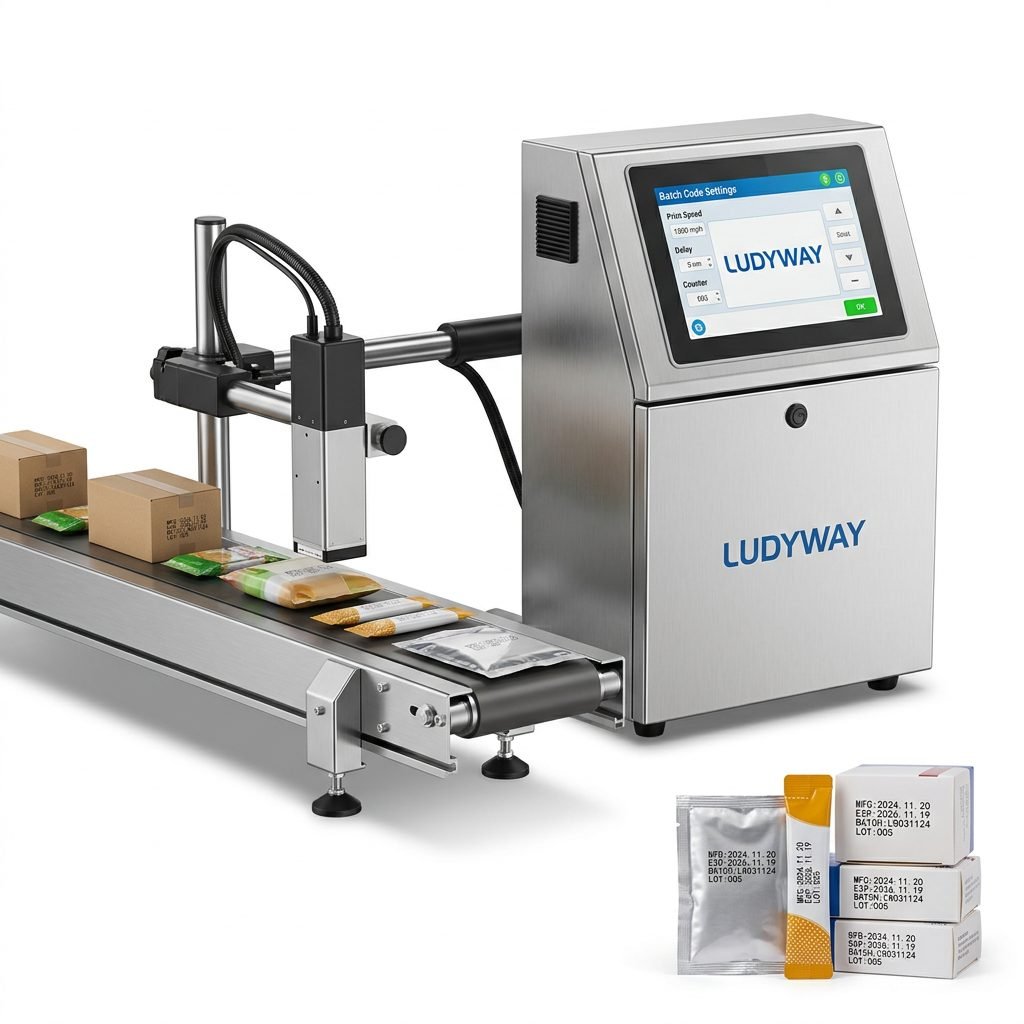
- Batch coding and traceability compatibility
- Validation support for regulated production
Ask for Product Testing with Real Samples
One of the smartest steps before purchase is to request a sample test using your actual packaging material and product. This gives a better picture of real operating performance than a general catalog specification.
During testing, evaluate:
- Actual output per lane
- Fill weight consistency
- Seal appearance and strength
- Material waste rate
- Finished pack quality
- Machine behavior during startup and continuous running
Compare Total Cost of Ownership, Not Only Purchase Price
A lower-priced machine may cost more over time if it creates excessive waste, consumes more labor, or requires frequent maintenance. Evaluate the full investment picture.
Include these cost factors
- Initial machine price
- Installation and commissioning
- Operator training
- Spare parts availability
- Downtime risk
- Film and product waste
- Energy consumption
- Future upgrade potential
A more robust machine with better engineering often delivers a stronger return through higher uptime and more stable output.
Choose a Supplier with Engineering and Turnkey Capability
For many buyers, machine performance depends not only on the equipment itself but also on the supplier’s application experience. A manufacturer with broad industry knowledge can help match the right lane configuration, filling system, and automation layout to your exact product.
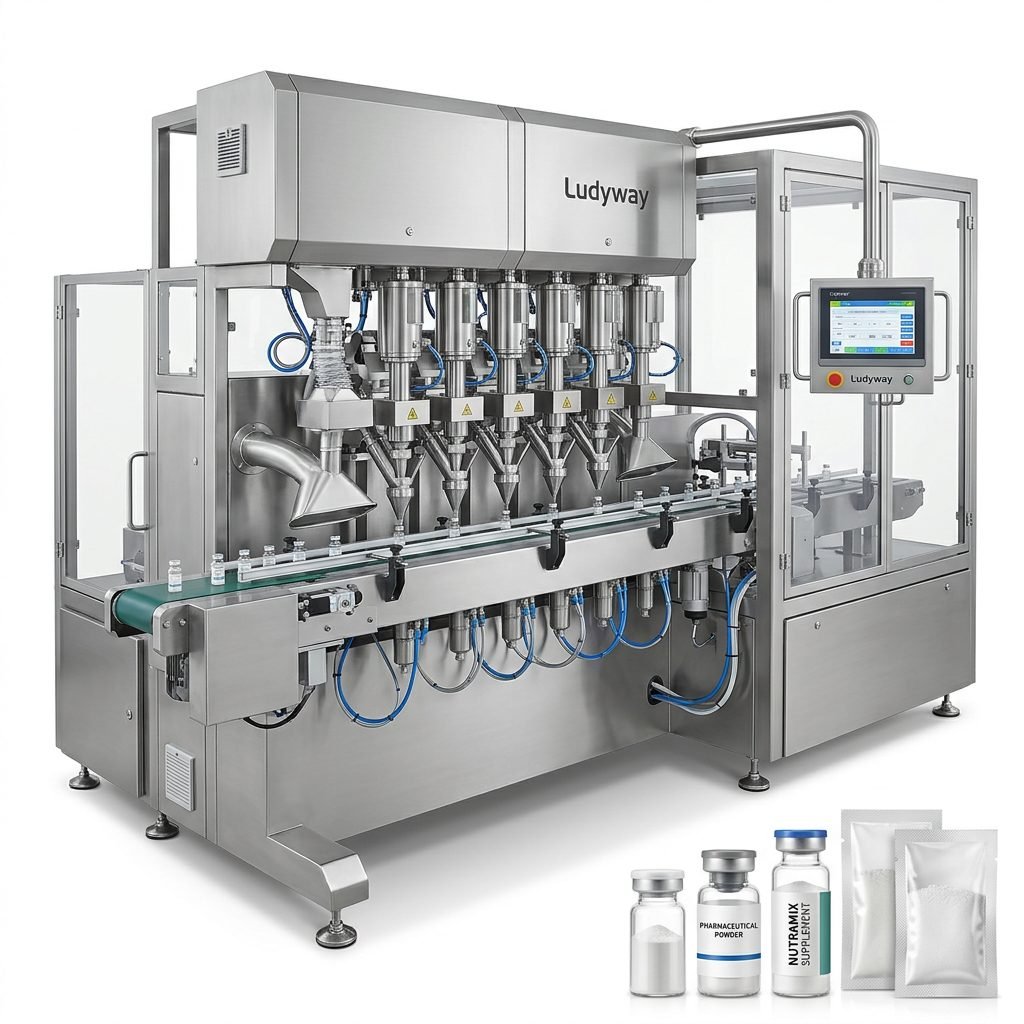
If you need a scalable solution for food, pharma, supplement, cosmetic, or chemical applications, Ludyway multi-lane packaging machine solutions are backed by over 30 years of packaging machinery experience, a large manufacturing base, and turnkey line integration capability for global markets.
Practical Checklist Before You Buy
- Define target output by shift, not only by minute
- Confirm the correct pack format: sachet or stick pack
- Match lane count to stable production needs
- Verify filling accuracy with real samples
- Check seal strength and film compatibility
- Review changeover speed for multi-SKU production
- Ensure integration with feeders and secondary packaging
- Evaluate maintenance access and spare parts support
- Compare long-term operating cost, not just purchase price
- Choose a supplier with industry-specific engineering experience
Final Buying Insight
The best way to choose a multi-lane packaging machine for high output efficiency is to focus on stable production performance rather than headline speed. A well-matched machine should run accurately, seal consistently, reduce waste, support future growth, and fit smoothly into your full packaging line.
When you evaluate machines through the lens of output, accuracy, uptime, flexibility, and integration, you make a far stronger investment decision—and position your production line for long-term efficiency.