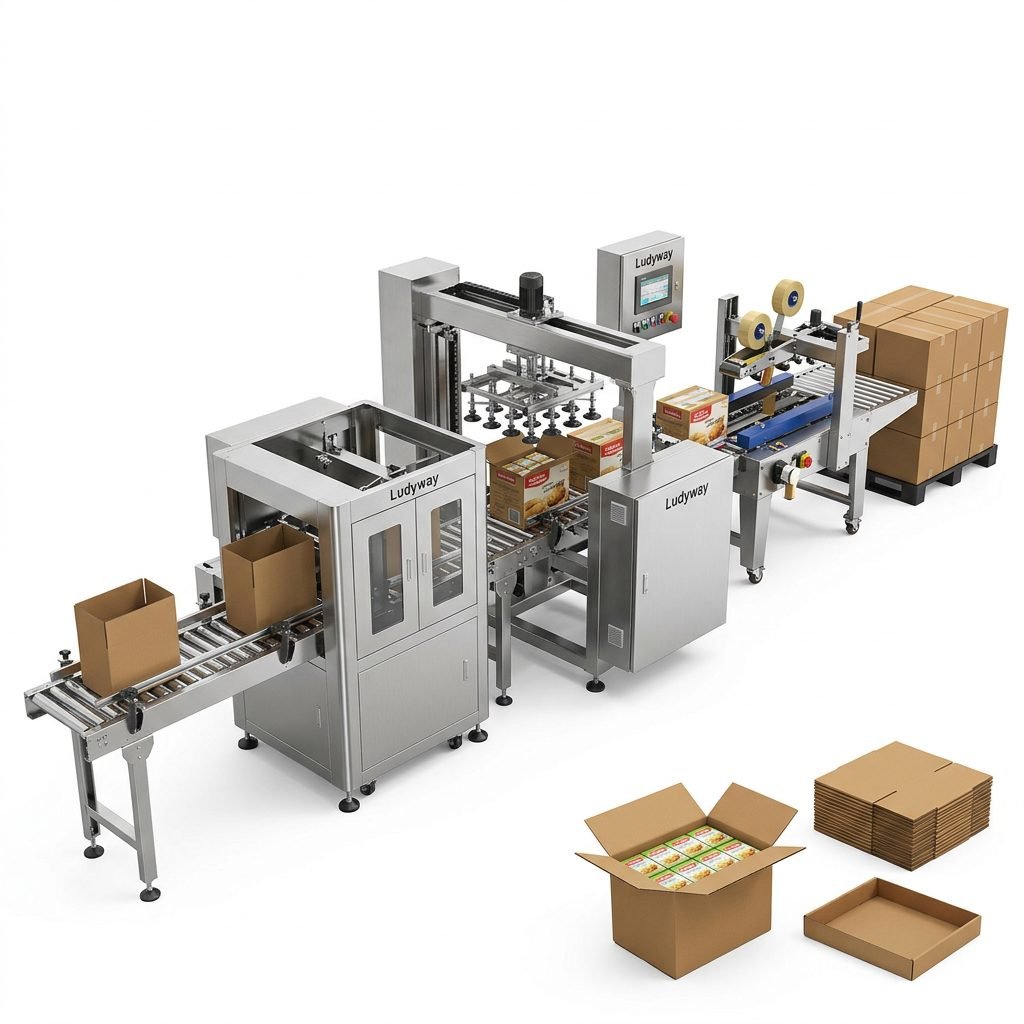
Single-serve packaging has become a core format across food, beverage, pharmaceutical, personal care, and health supplement industries. From coffee sticks and sauce sachets to liquid medicine pouches and cosmetic samples, brands rely on compact, hygienic, and precisely dosed packs to improve convenience, reduce waste, and support modern retail channels.
A single serve packaging machine is the equipment used to automatically form, fill, seal, and often code small packages designed for one-time use or one portion consumption. These machines are widely used for powders, granules, liquids, gels, creams, and pastes in formats such as sachets, stick packs, pouches, and unit-dose packs.
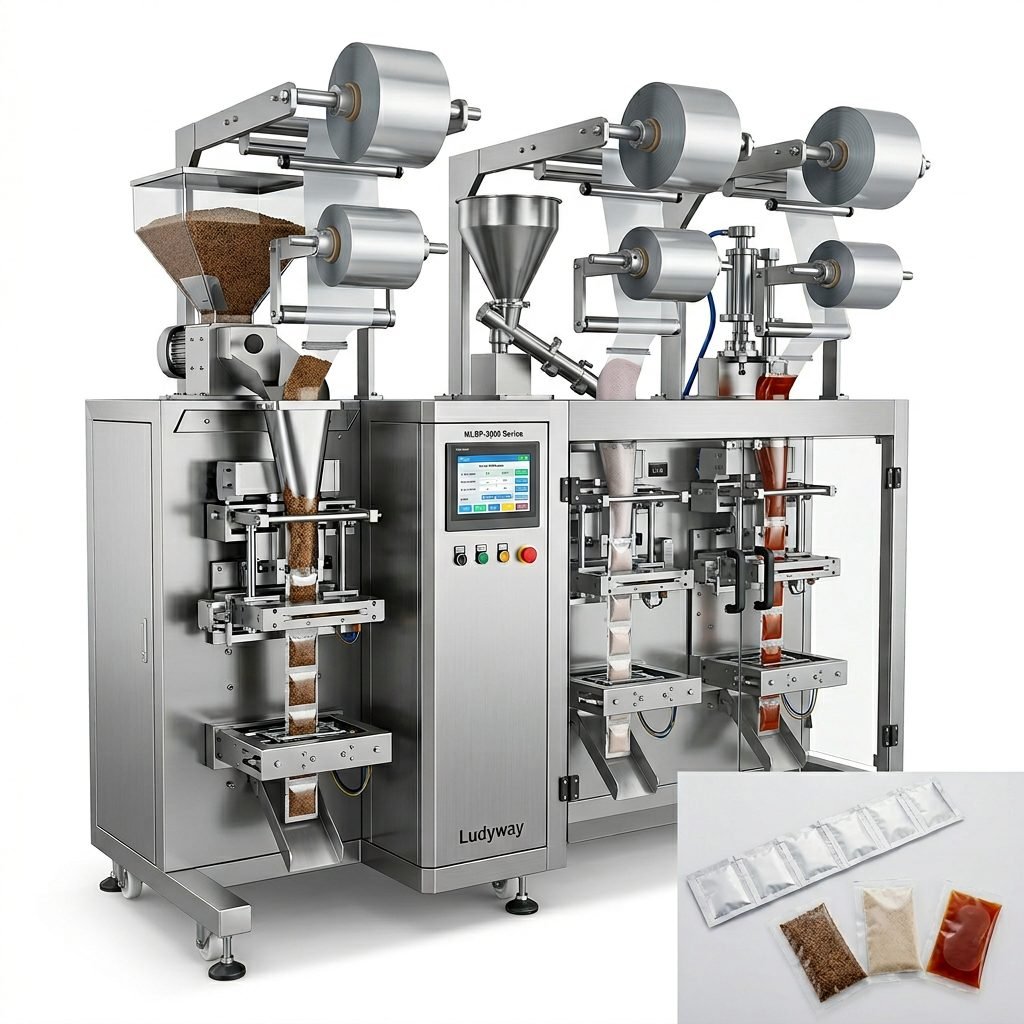
What Does a Single Serve Packaging Machine Do?
In simple terms, the machine creates a package sized for one use, fills it with a measured amount of product, and seals it securely. Depending on the application, it may also print batch codes, check weight, inspect seal quality, and discharge the finished packs for cartoning or case packing.
The main objective is to deliver consistent dosage, strong sealing, fast production, and clean presentation in a compact package that is easy for end users to carry, open, and use.
Typical functions include:
- Metering or dosing product accurately
- Forming packaging film into sachets or stick packs
- Filling powders, granules, liquids, or pastes
- Heat sealing the package
- Cutting individual units
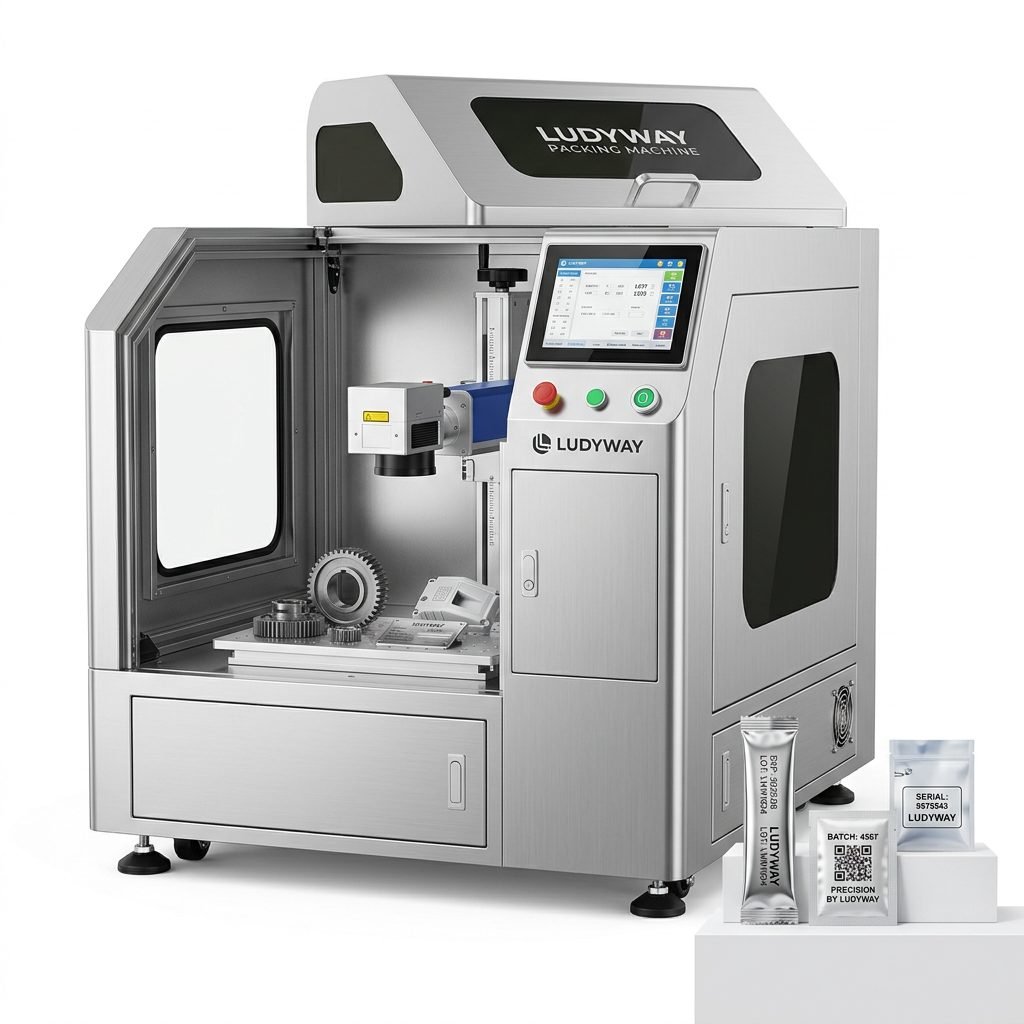
- Printing dates, lot numbers, or traceability codes
- Integrating with checkweighers, conveyors, and cartoners
Why Single-Use Packaging Is So Popular
Single-use packaging solutions are not only about smaller pack sizes. They solve real business and consumer needs. In many industries, unit-dose packaging supports portability, hygiene, dosage control, and product freshness better than large multi-use containers.
| Benefit | Why It Matters |
|---|---|
| Convenience | Easy to carry, store, distribute, and consume on the go |
| Portion control | Helps deliver the exact amount per serving or dose |
| Product protection | Reduces repeated exposure to air, moisture, and contamination |
| Better shelf life | Freshness is preserved in individually sealed packs |
| Sampling and trial marketing | Useful for promotions, travel packs, and new product launches |
| Reduced waste | Consumers use only what they need per application |
Common Types of Single Serve Packaging Machines
Different products require different machine structures. Choosing the right format depends on the product’s physical properties, filling accuracy target, packaging material, and output speed.
1. Sachet Packaging Machines
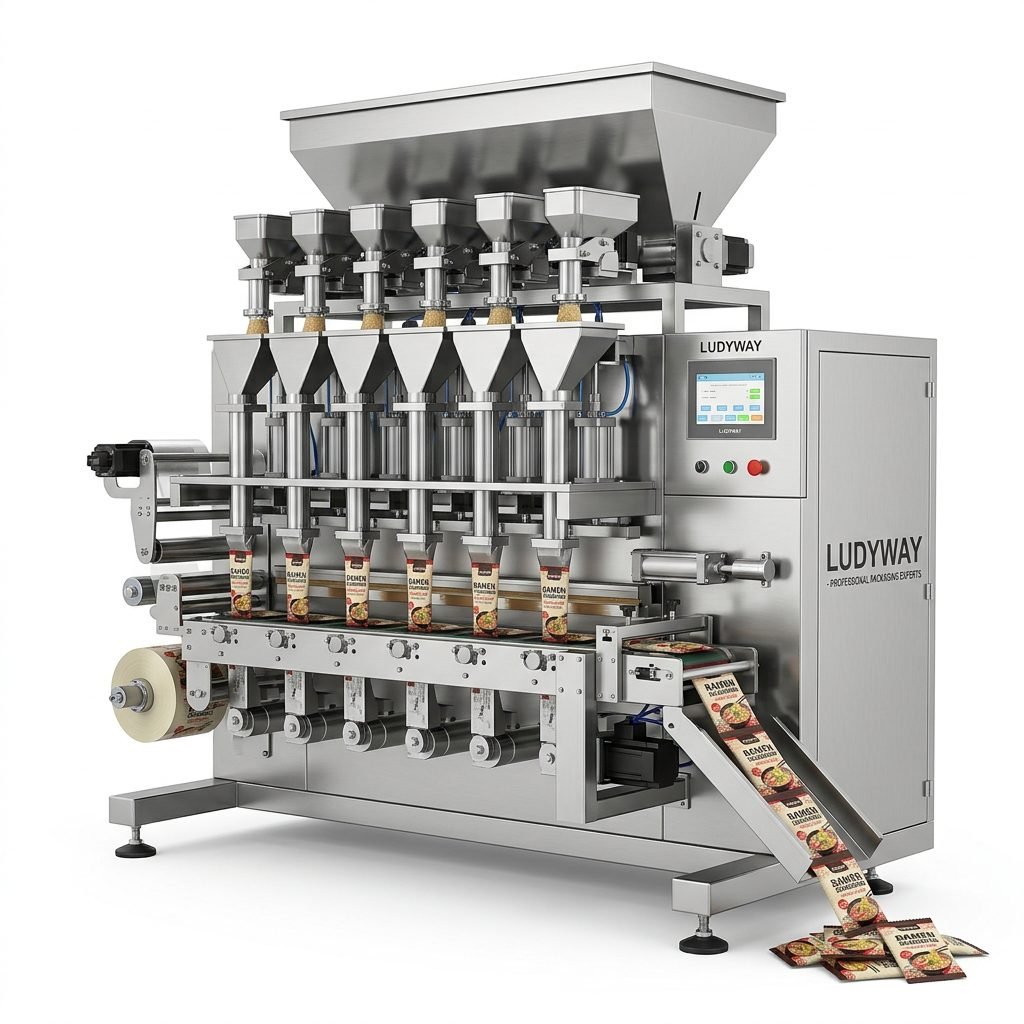
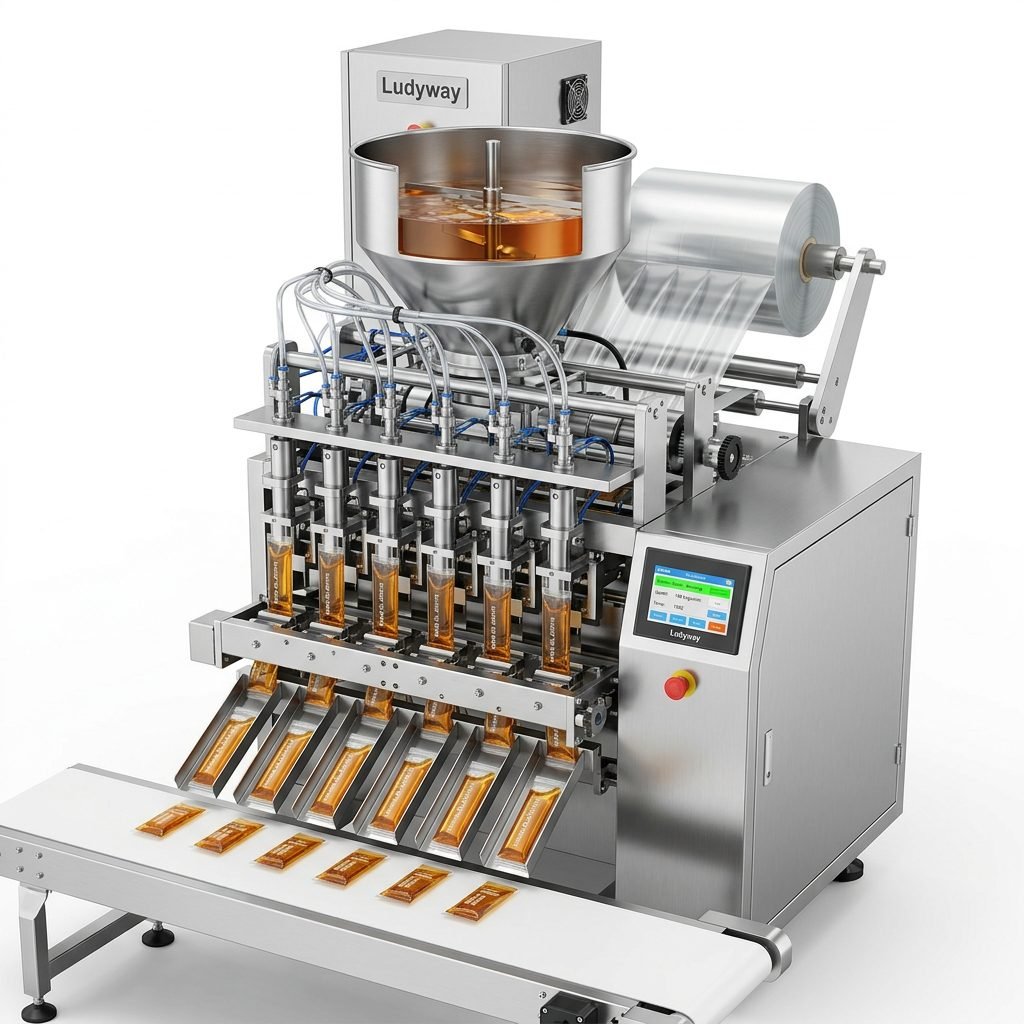
These machines produce flat, small sealed packs typically used for sauces, shampoo, cream, seasonings, medicine powders, or wet wipes additives. Sachets can be 3-side seal or 4-side seal.
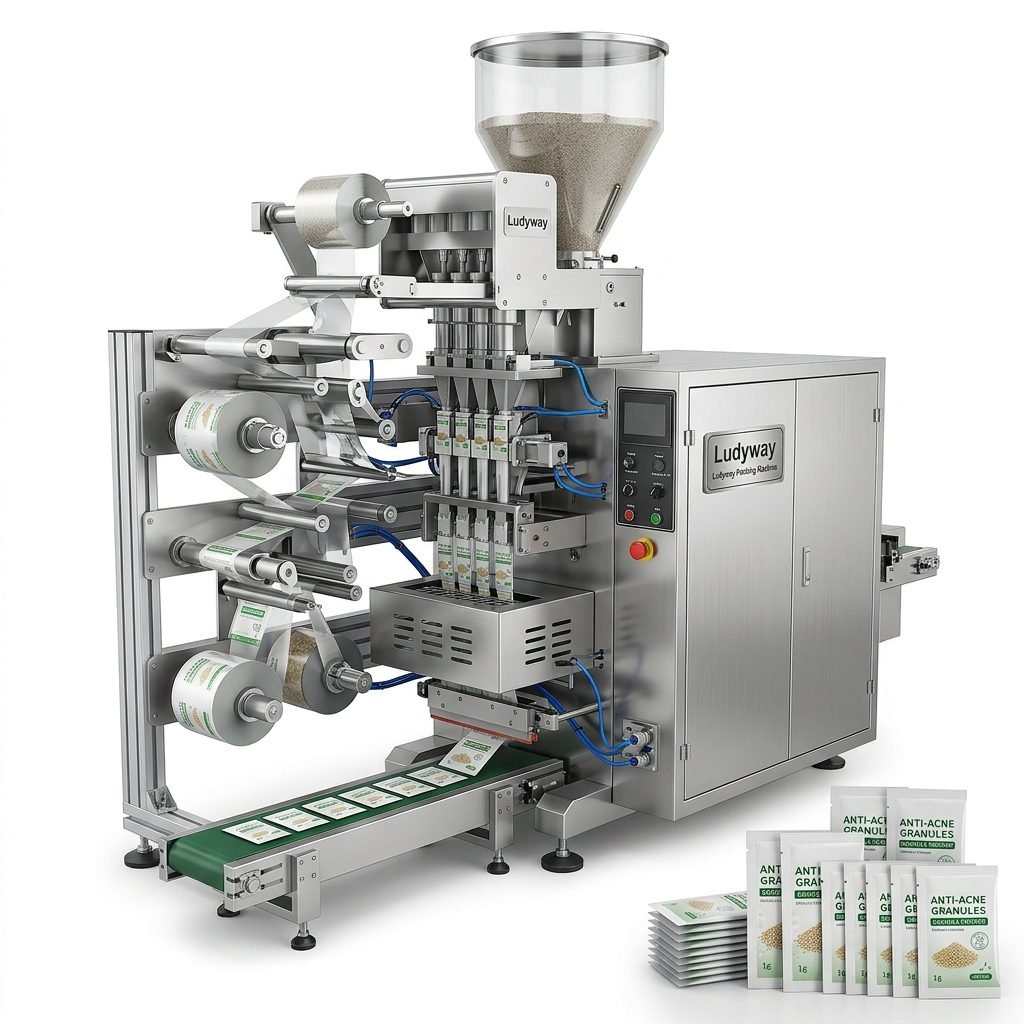
2. Stick Pack Machines
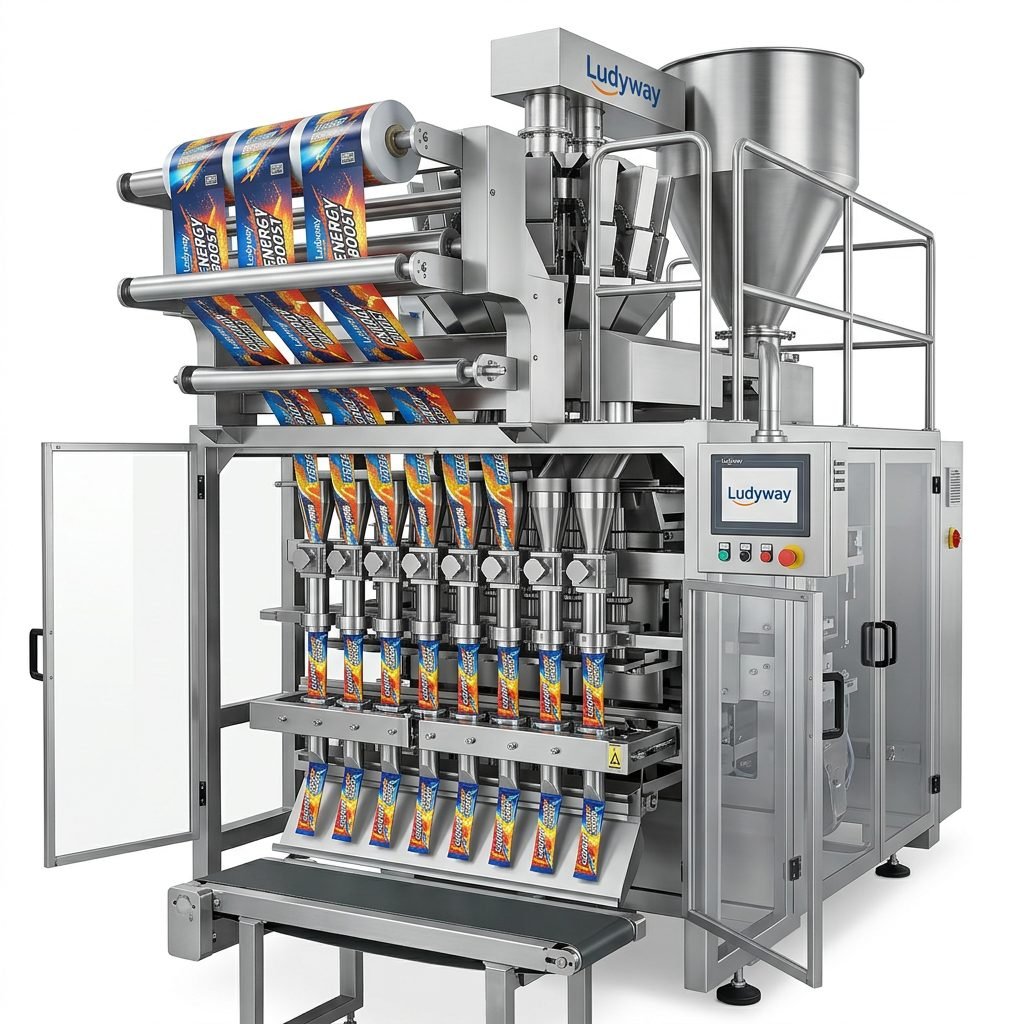
Stick packs are narrow and elongated. They are commonly used for coffee, sugar, electrolyte powders, supplements, and oral health products. They are highly popular because they are easy to tear and pour.
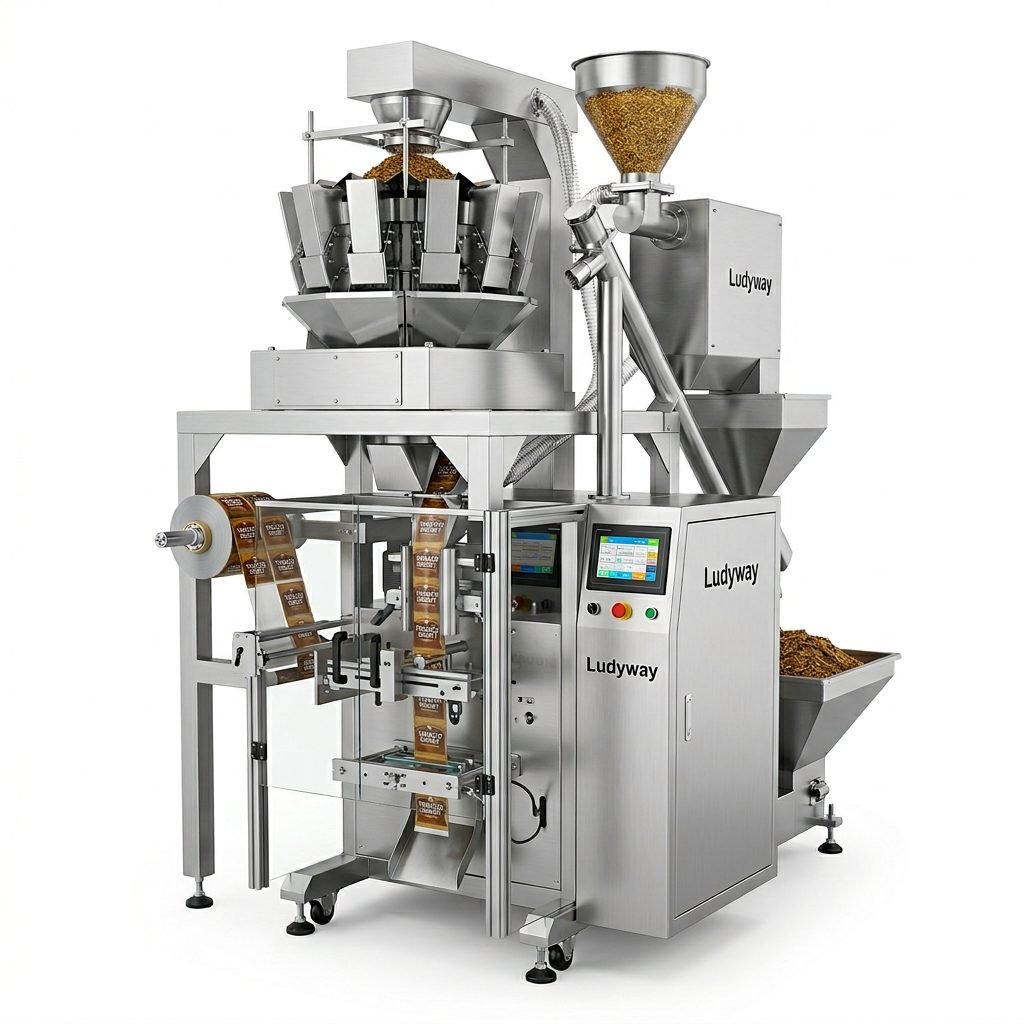
3. Vertical Form Fill Seal Machines
VFFS systems can produce small pouches for single portions, especially for powders, granules, and some liquids. They are often selected for flexible operation and efficient footprint.
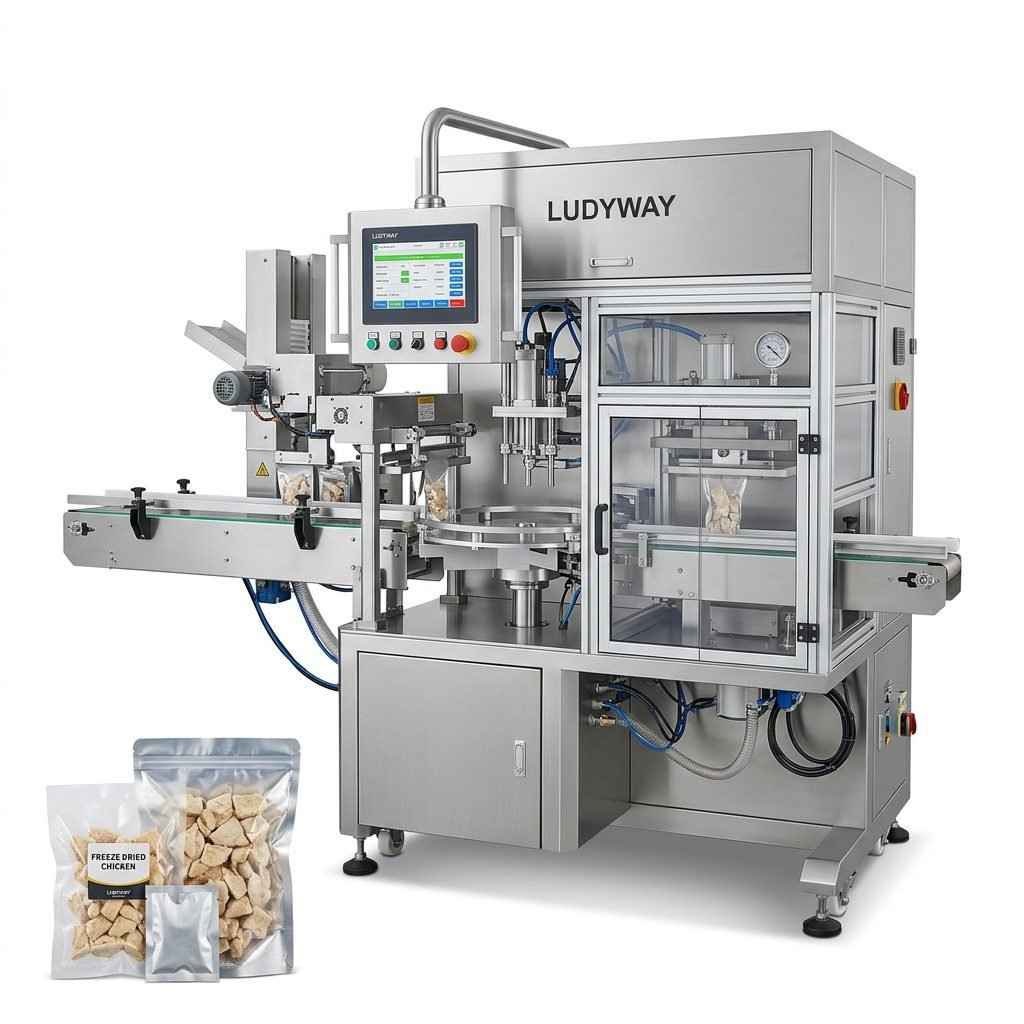
4. Premade Pouch Packaging Machines
Instead of forming packs from roll film, these machines fill and seal pre-made pouches. They are suitable when premium pouch appearance or special shapes are required.
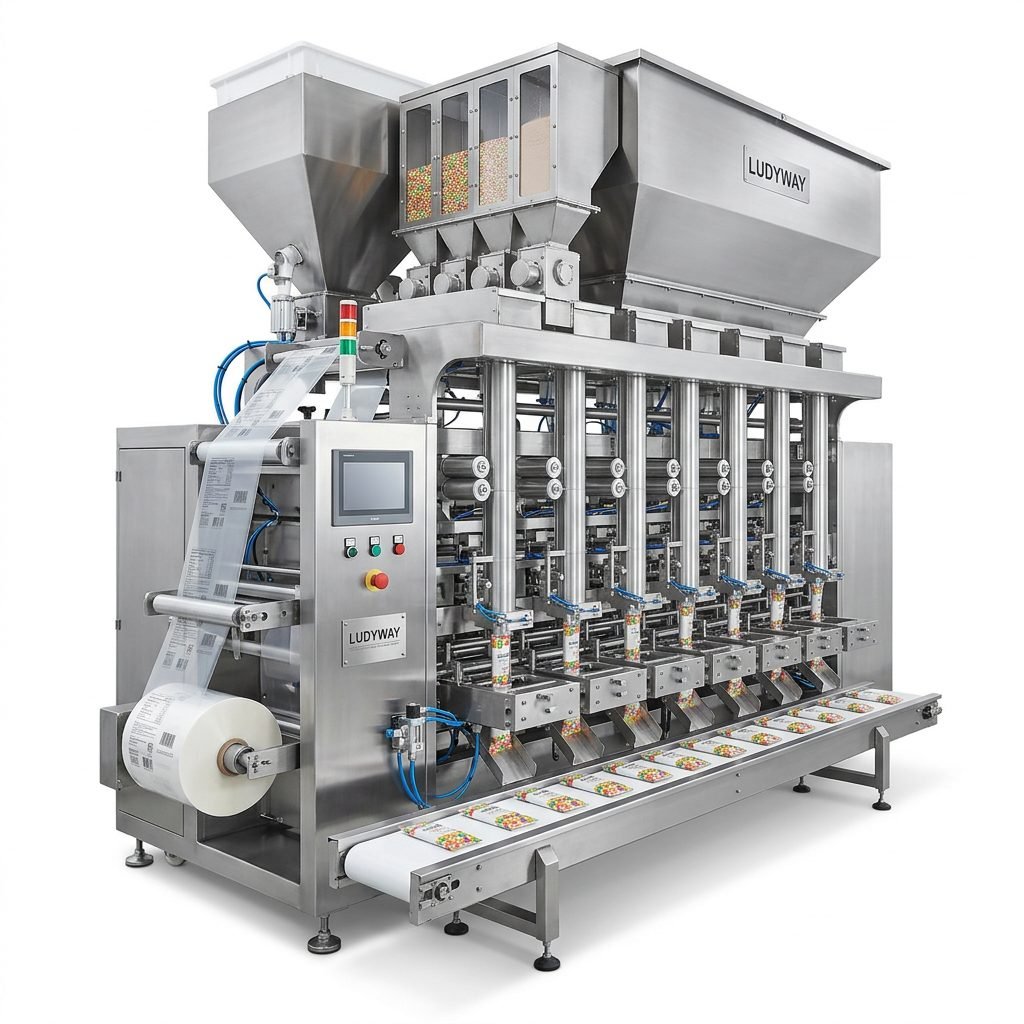
5. Multi-Lane Packaging Machines
For high-volume production, multi-lane machines run several filling lanes simultaneously. This is especially common for stick packs and sachets in food, nutraceutical, and pharmaceutical sectors.
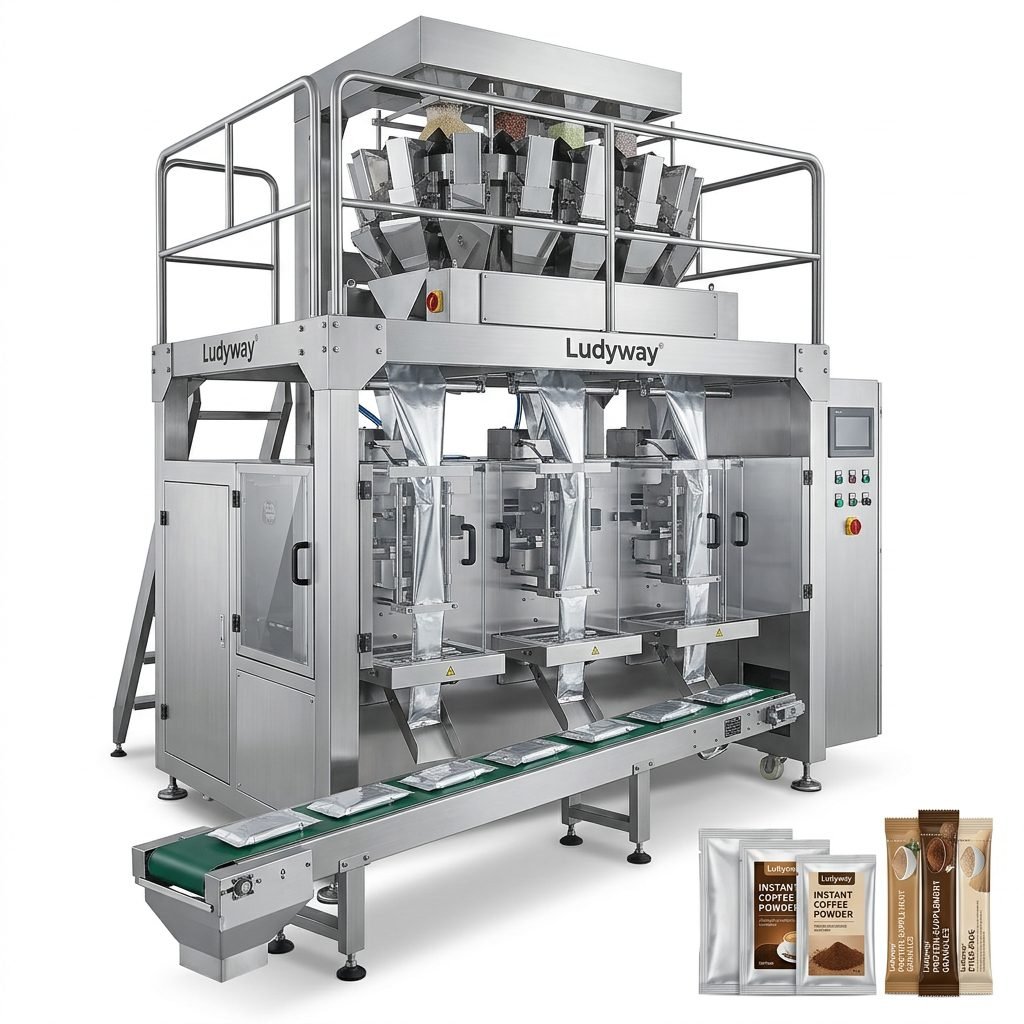
Which Products Can Be Packed in Single-Serve Formats?
One of the biggest advantages of modern single-use packaging equipment is its broad product compatibility. With the correct dosing system, manufacturers can handle many product categories.
Powders
- Coffee powder
- Protein powder
- Milk powder
- Pharmaceutical powders
- Seasonings and spices
- Functional beverage mixes
Granules
- Sugar
- Salt
- Instant drink granules
- Seeds
- Pet nutrition granules
- Herbal medicine granules
Liquids and Pastes
- Sauces and condiments
- Shampoo and body wash
- Syrups
- Cooking oil
- Creams, gels, and lotions
- Liquid supplements
Special Applications
- Medical single-dose packs
- Travel-size cosmetics
- Sample packs for retail promotion
- Industrial chemicals in unit-dose sachets
- Hygiene and disinfection products
How a Single Serve Packaging Machine Works
While machine design varies by format, the production flow usually follows a similar sequence:
- Film feeding: packaging film is unwound and guided into the forming section.
- Bag forming: the film is shaped into the desired sachet, stick pack, or pouch structure.
- Dosing and filling: the exact product amount is dispensed into each package.
- Sealing: heat-seal jaws close the pack securely.
- Cutting: individual units are separated.
- Coding or inspection: date coding, weight checking, and quality inspection may be added.
- Discharge: finished packs move to collection, cartoning, or end-of-line systems.
High-performance systems are designed to maintain stable fill accuracy, neat seal appearance, low material waste, and continuous running speed.
Key Components of the Machine
| Component | Function |
|---|---|
| Film roll holder | Feeds packaging film smoothly into the machine |
| Forming system | Shapes the film into a pack |
| Filling system | Dispenses powders, granules, liquids, or pastes |
| Sealing jaws | Create secure and clean seals |
| Cutting device | Separates finished packs |
| PLC and HMI | Control operation, recipes, alarms, and parameter adjustment |
| Code printer | Marks date, batch, or traceability information |
Single Serve Packaging Formats Explained
Not every single-serve pack looks the same. The final format influences machine selection, material usage, and branding appeal.
Popular formats include:
- Sachets: flat and versatile for powder, liquid, or paste products
- Stick packs: slim packs ideal for drink mixes and supplements
- Small pouches: more space for branding and premium presentation
- Unit-dose medical packs: highly controlled packaging for healthcare use
- Sample packs: trial-size product packs for marketing campaigns
Industries That Use Single-Use Packaging Solutions
Demand for single-serve solutions has expanded quickly because both consumers and businesses value convenience and control. The following sectors are major users:
Food and Beverage
Coffee, sugar, seasoning powder, instant soup, sauce, milk tea powder, honey, ketchup, and functional drink mixes are all commonly packed in single portions.
Pharmaceutical
Granule medicines, oral powders, rehydration salts, sterile medical products, and unit-dose healthcare items often require strict dosing and reliable sealing.
Health Supplements
Collagen powder, probiotics, vitamins, sports nutrition blends, and immune-support products are frequently packed in sachets or stick packs for daily use.
Cosmetics and Personal Care
Shampoo, lotion, face cream, serum, facial cleanser, sunscreen, and sample-size beauty products are ideal for portable single-use packaging.
Chemical and Household Products
Detergents, disinfectants, cleaners, and water-treatment chemicals can also be packed into unit-dose sachets for safer and more controlled usage.
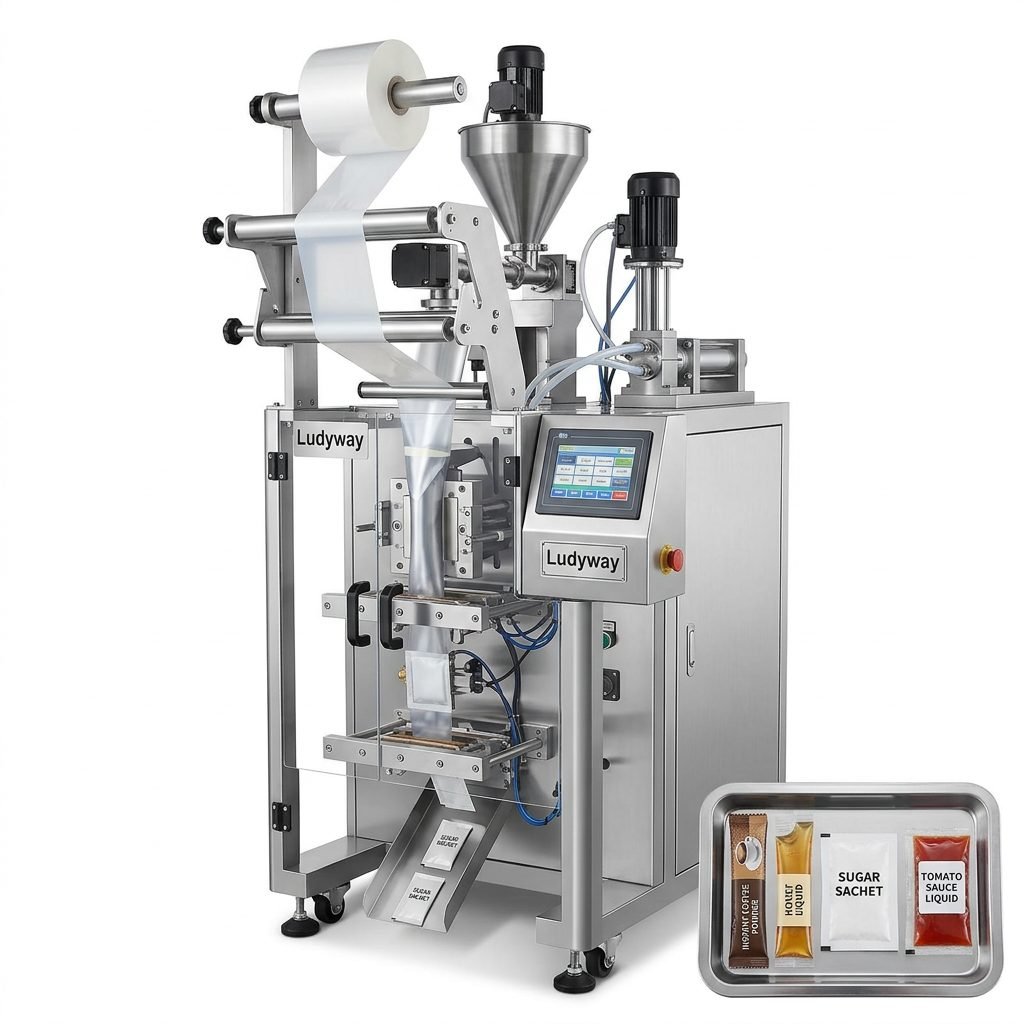
Benefits for Manufacturers
Investing in a single serve packaging machine can significantly improve production capability and market responsiveness.
- Higher efficiency: automation reduces manual labor and increases output
- Improved consistency: each pack receives a controlled amount of product
- Better hygiene: less manual contact during packaging
- Scalability: available in semi-automatic to high-speed multi-lane models
- Flexible product range: supports multiple formulations and pack styles
- Stronger brand value: clean and convenient packaging improves shelf appeal
What to Consider Before Choosing a Machine
Selecting the right machine is not only about speed. A good choice should match your product characteristics, regulatory needs, and future growth plans.
Important buying factors:
- Product type: powder, granule, liquid, gel, or paste
- Target pack format: sachet, stick pack, or pouch
- Required filling accuracy
- Expected production speed
- Packaging film compatibility
- Seal strength and shelf-life requirements
- Cleaning and changeover convenience
- Available factory space
- Need for downstream integration such as cartoning or case packing
- Compliance needs for food, pharma, or cosmetic production
Single Serve Packaging Machine vs. Traditional Bulk Packaging
| Aspect | Single Serve Packaging | Bulk Packaging |
|---|---|---|
| User convenience | Very high | Lower for on-the-go use |
| Portion control | Excellent | Depends on end user |
| Freshness after opening | Maintained per unit | Drops after opening main pack |
| Sampling suitability | Excellent | Limited |
| Packaging speed potential | High with multi-lane systems | Also high, depending on format |
Automation Levels Available
Single-use packaging solutions can range from entry-level equipment to fully integrated turnkey lines.
Semi-Automatic Systems
Suitable for small businesses, pilot production, or lower output requirements.
Fully Automatic Standalone Machines
Best for manufacturers needing stable speed, accurate filling, and reduced labor input.
Turnkey Packaging Lines
These systems connect feeding, filling, sealing, coding, inspection, cartoning, and end-of-line automation into one integrated workflow.
Companies looking for scalable packaging automation often evaluate manufacturers such as Ludyway, known for supplying packaging machines and turnkey packaging lines for food, pharmaceutical, health supplement, and related industries.
Common Challenges and How the Right Machine Solves Them
- Inconsistent fill weights: solved by precision auger, volumetric, piston, or liquid dosing systems
- Poor sealing: improved by stable temperature control and correct film matching
- Powder dusting: reduced with proper feeding design and dust collection support
- Liquid leakage: addressed with anti-drip nozzles and optimized seal design
- Frequent downtime: minimized through better mechanical stability and easier maintenance access
- Slow changeovers: improved by modular tooling and user-friendly control systems
Who Should Invest in a Single Serve Packaging Machine?
This type of equipment is ideal for:
- Brands launching portable or trial-size products
- Food and beverage companies entering convenience retail channels
- Supplement manufacturers offering daily-dose packs
- Pharma companies needing precise unit-dose formats
- Cosmetic companies expanding into sample and travel packaging
- Factories upgrading from manual or semi-automatic filling
Final Thoughts on Single-Use Packaging Solutions
A single serve packaging machine is a practical and strategic investment for companies that want to package products in compact, hygienic, convenient, and market-friendly formats. Whether you are packing coffee powder, sauce, supplements, pharmaceuticals, or cosmetic samples, the right system can help improve efficiency, accuracy, product presentation, and consumer satisfaction.
As demand for portable, portion-controlled, and single-use packaging solutions continues to rise, manufacturers that adopt the right packaging technology will be better positioned to compete in fast-moving global markets.