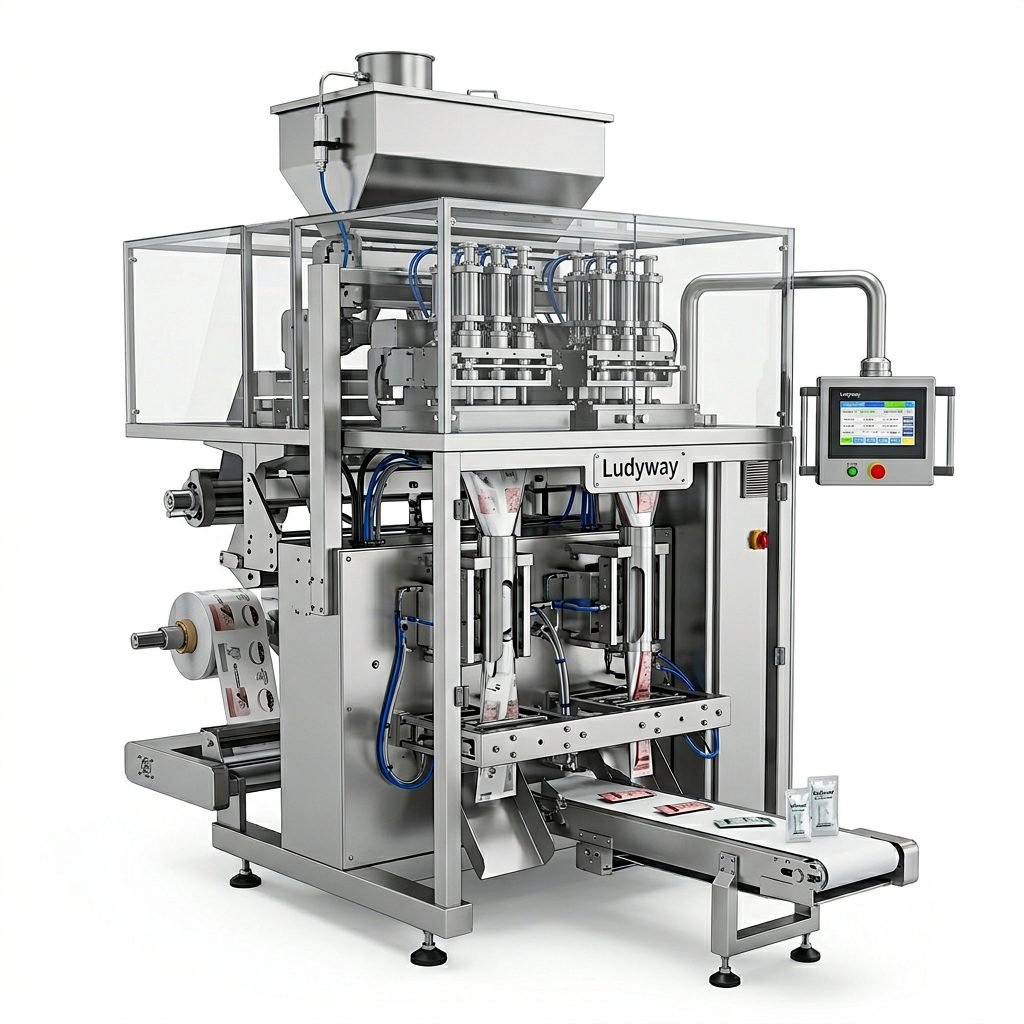
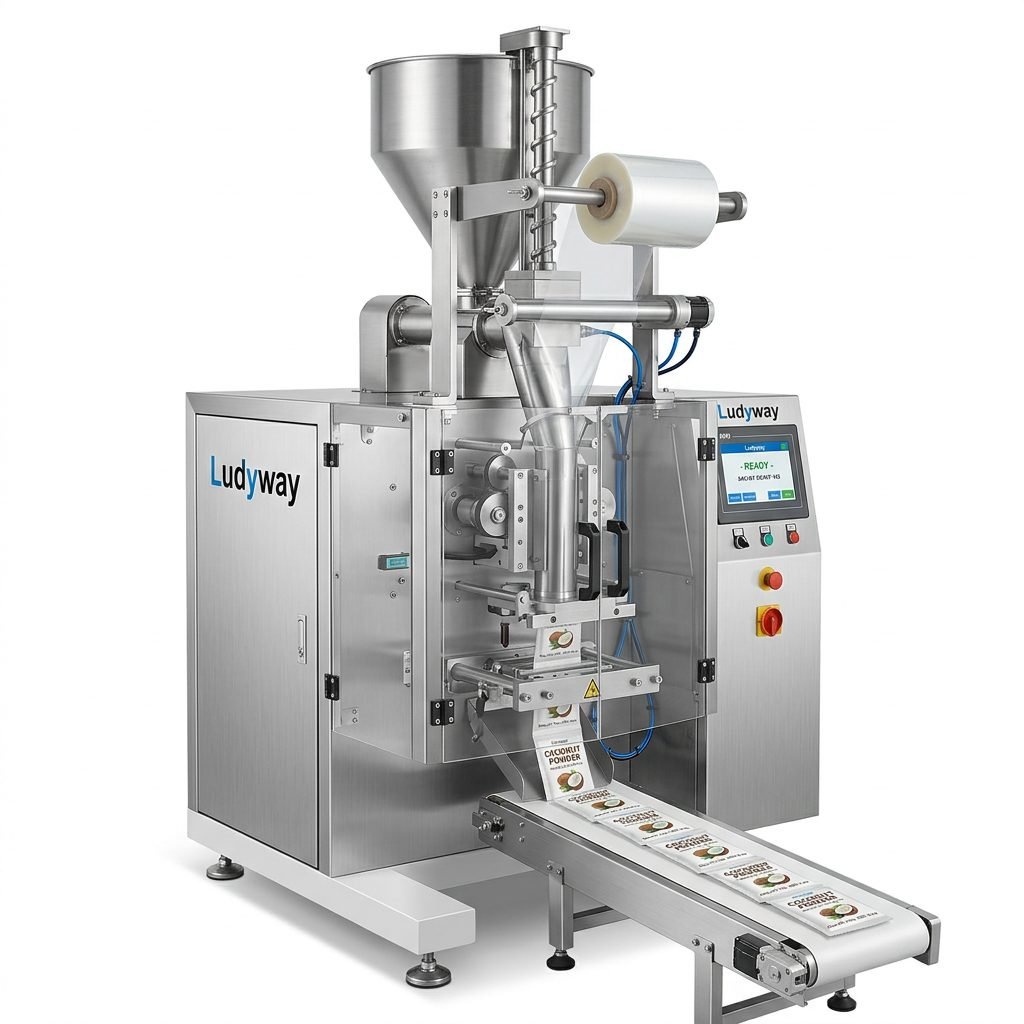
Choosing the right pet food packaging machine is not only about speed. It affects product freshness, packaging appearance, material waste, labor costs, and long-term production stability. Whether you produce dry kibble, pet treats, freeze-dried nutrition, powdered supplements, pellets, or wet pet food, the ideal solution should match your product characteristics, bag style, capacity goals, and automation requirements.
In today’s competitive pet food market, manufacturers need packaging systems that can protect product quality while supporting efficient scaling. A poor machine choice may lead to sealing failures, inaccurate filling, material bridging, dust issues, or expensive downtime. A smart investment, on the other hand, improves productivity and keeps packaging consistent across every batch.
Why the right packaging machine matters for pet food brands
Pet food is highly sensitive to moisture, oxygen, contamination, and handling damage. Packaging must maintain shelf life while also meeting retail and logistics demands. For premium brands, packaging is also a key part of consumer trust. Clean seals, accurate weights, and attractive bag presentation help reinforce product quality.
- Product protection: preserves aroma, texture, and nutritional value.
- Weight accuracy: reduces giveaway and improves cost control.
- Seal integrity: prevents leaks and spoilage during transport.
- Production efficiency: lowers labor dependence and increases throughput.
- Brand presentation: supports premium shelf appeal and better consumer experience.
Start with your pet food product type
Different pet food formats require different filling, conveying, dosing, and sealing technologies. The first step is to define exactly what you pack.
| Product Type | Typical Packaging Need | Recommended Machine Type |
|---|---|---|
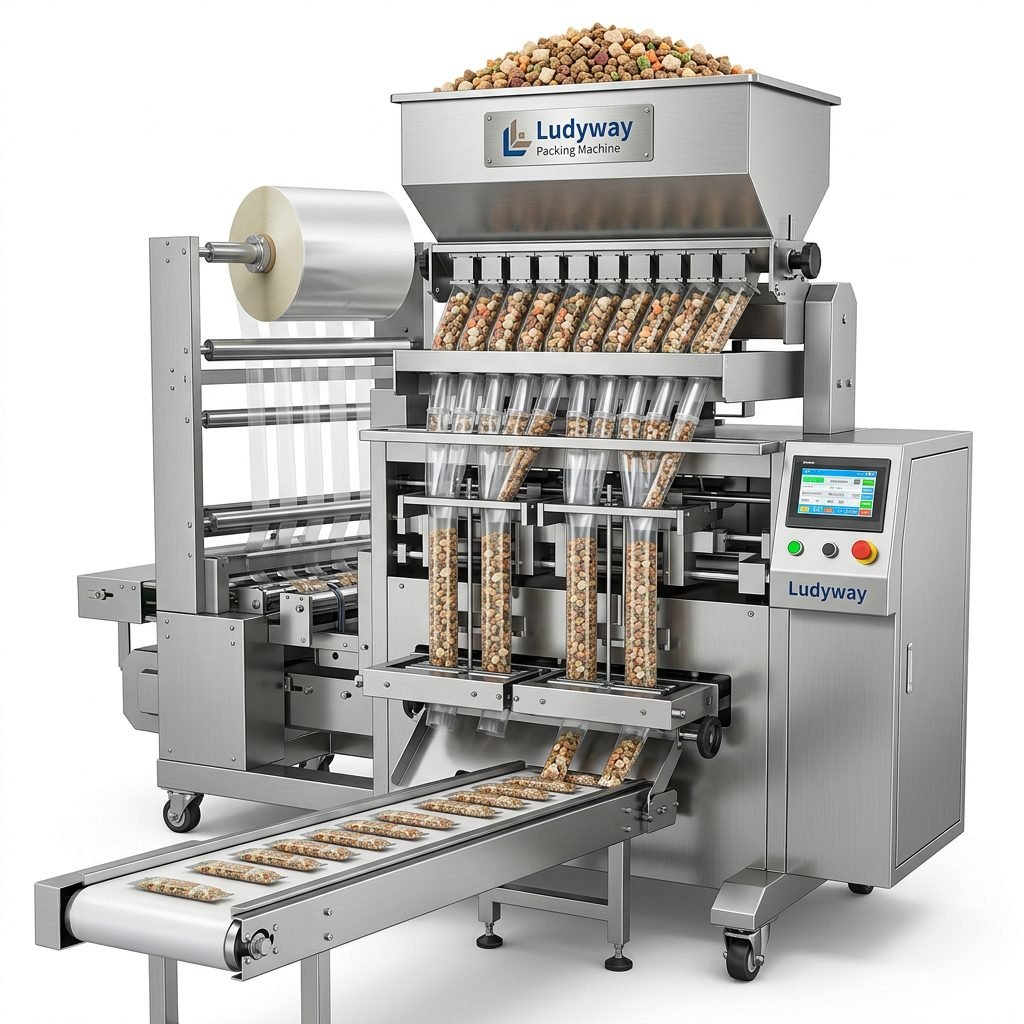
| Dry kibble / pellets | Fast, accurate bulk weighing and durable sealing | VFFS machine with multihead weigher |
| Pet treats / snacks | Flexible pouch formats and product-friendly handling | Premade pouch machine or VFFS system |
| Powdered pet nutrition | Dust control and precise dosing | Auger filling packaging machine |
| Freeze-dried pet food | Gentle filling and optional vacuum or nitrogen protection | Premade pouch or vacuum packaging line |
| Wet pet food / gravy / paste | Reliable liquid or paste filling and strong sealing | Pouch filling and sealing machine |
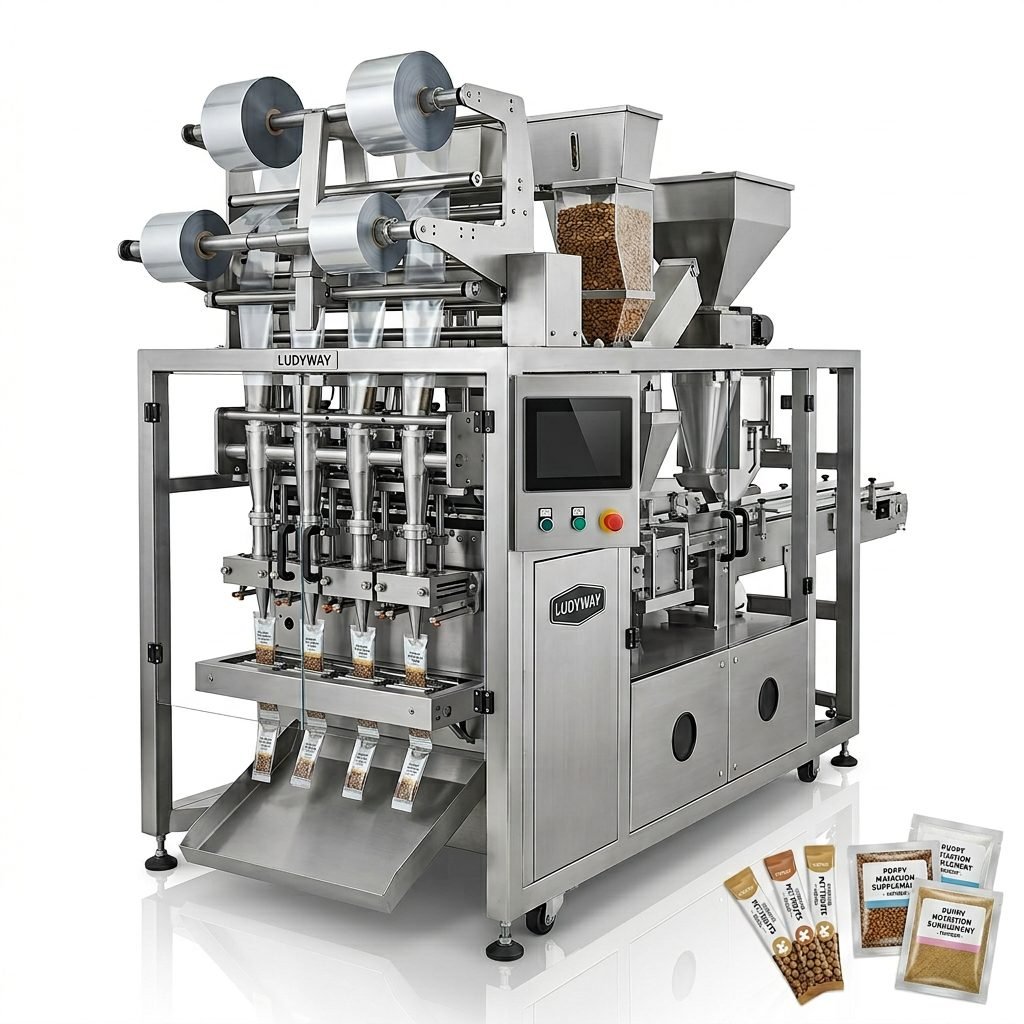
| Single-serve supplements | Small-dose accuracy and high speed | Sachet or stick pack machine |
Key packaging machine types for pet food
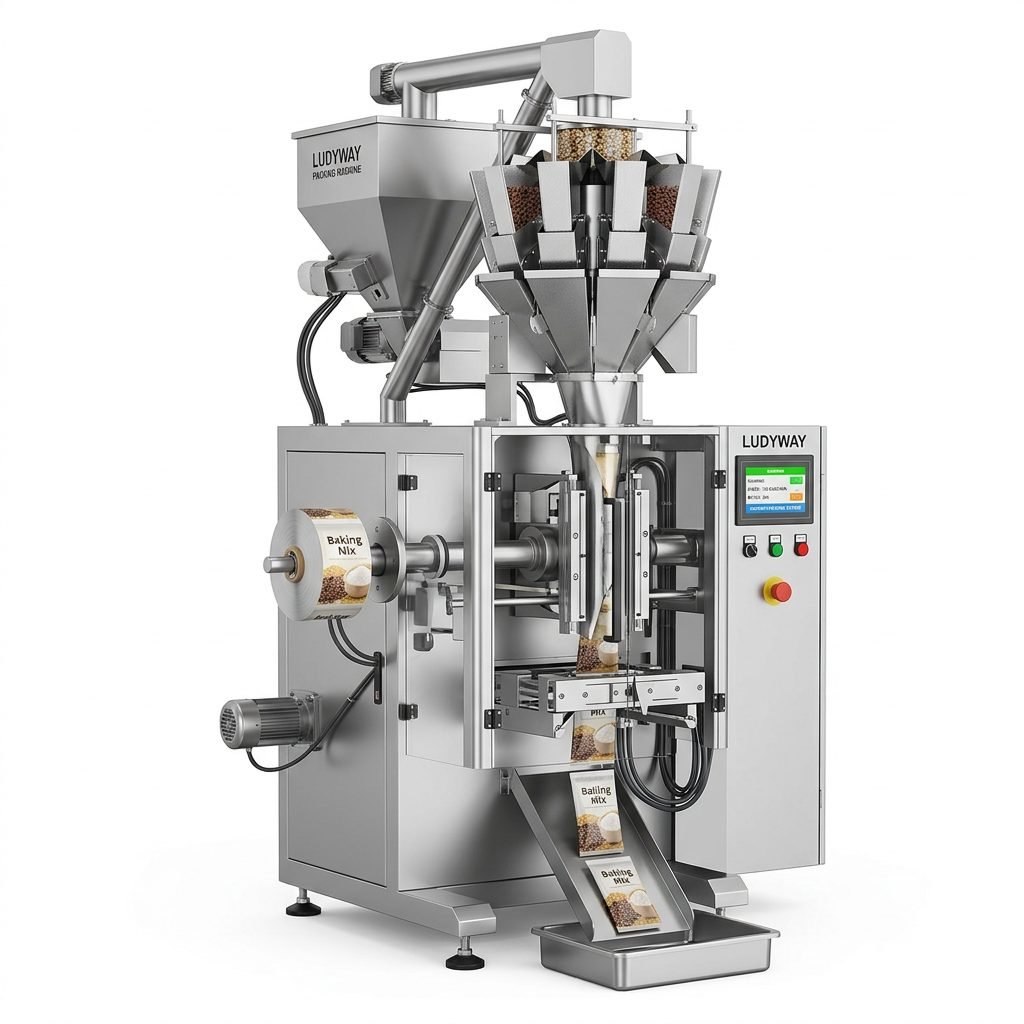
1. Vertical form fill seal machines
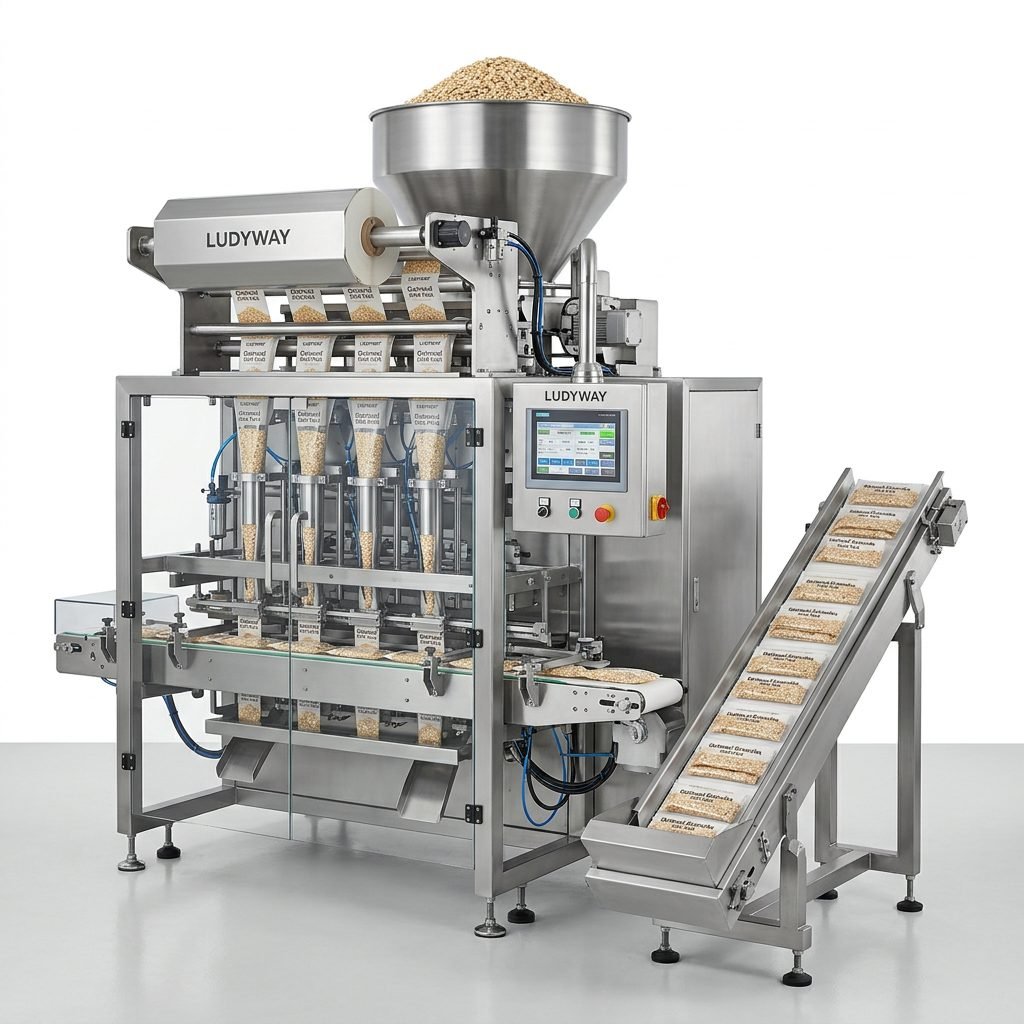
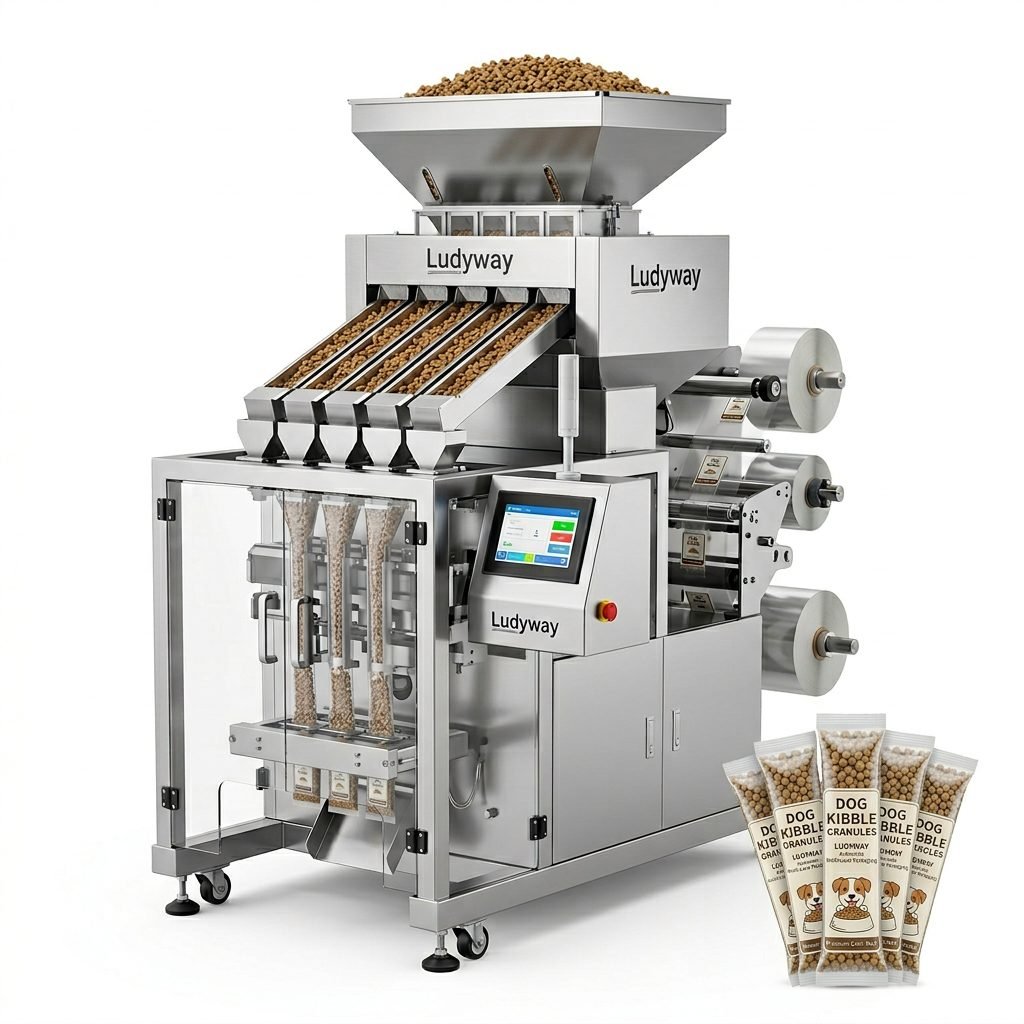
VFFS machines are a popular choice for dry pet food, pellets, treats, and powder products. They form the bag from roll film, fill it, and seal it in one automated process. This solution is efficient, flexible, and usually cost-effective for medium to high output.
- Suitable for pillow bags, gusset bags, and quad seal bags
- Works well with multihead weighers or auger fillers
- Good for continuous production with controlled packaging costs
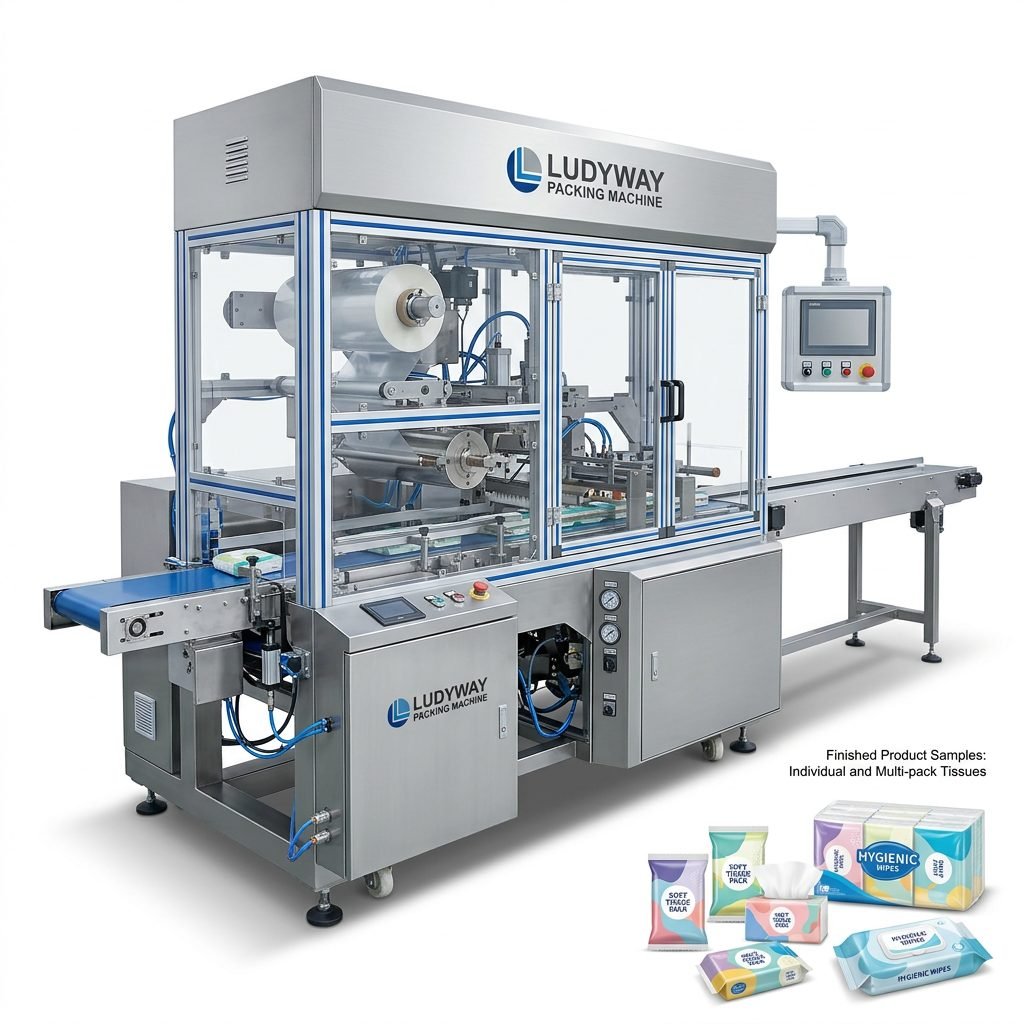
2. Premade pouch packaging machines
These are ideal when your brand needs stand-up pouches, zipper bags, or premium retail packaging. They are especially useful for pet treats, freeze-dried food, and higher-value specialty nutrition products.
- Excellent bag appearance
- Compatible with zipper, spout, and shaped pouch formats
- Better for premium shelf-ready packaging
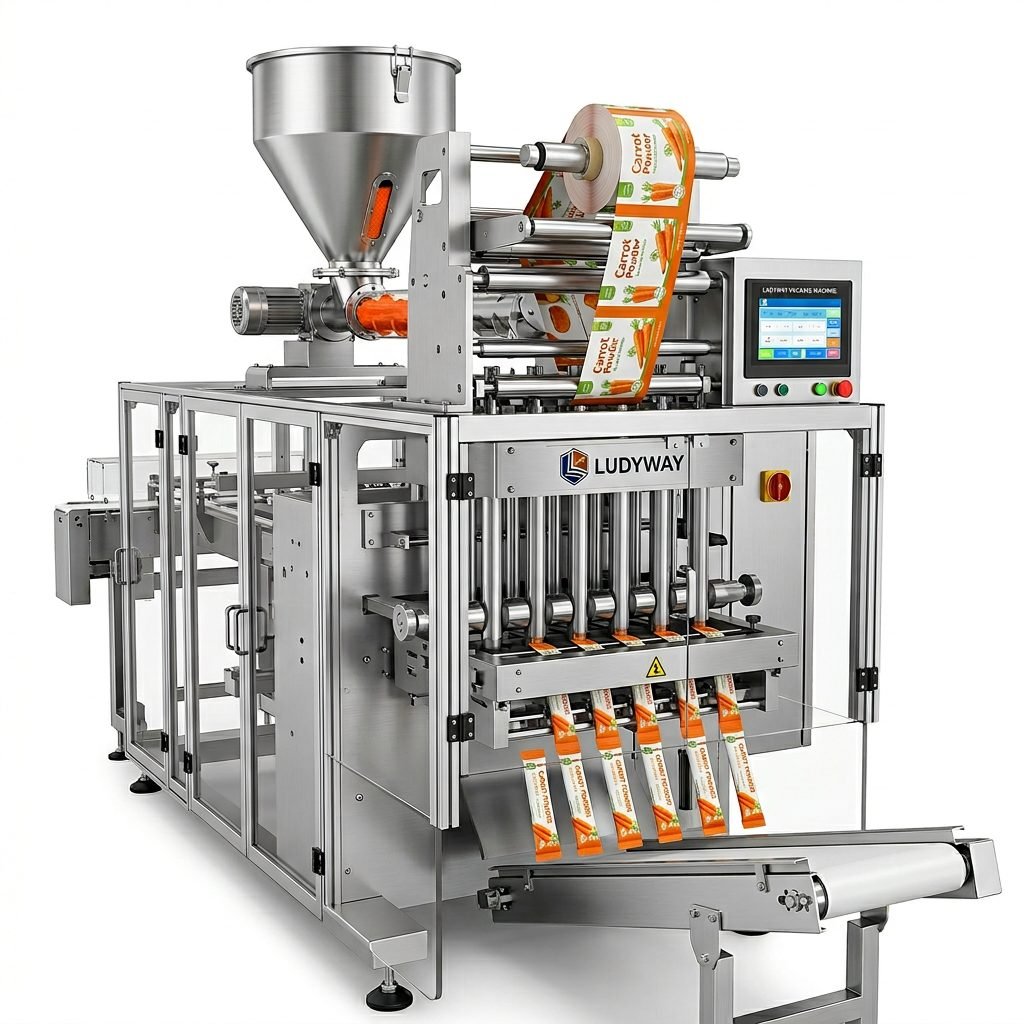
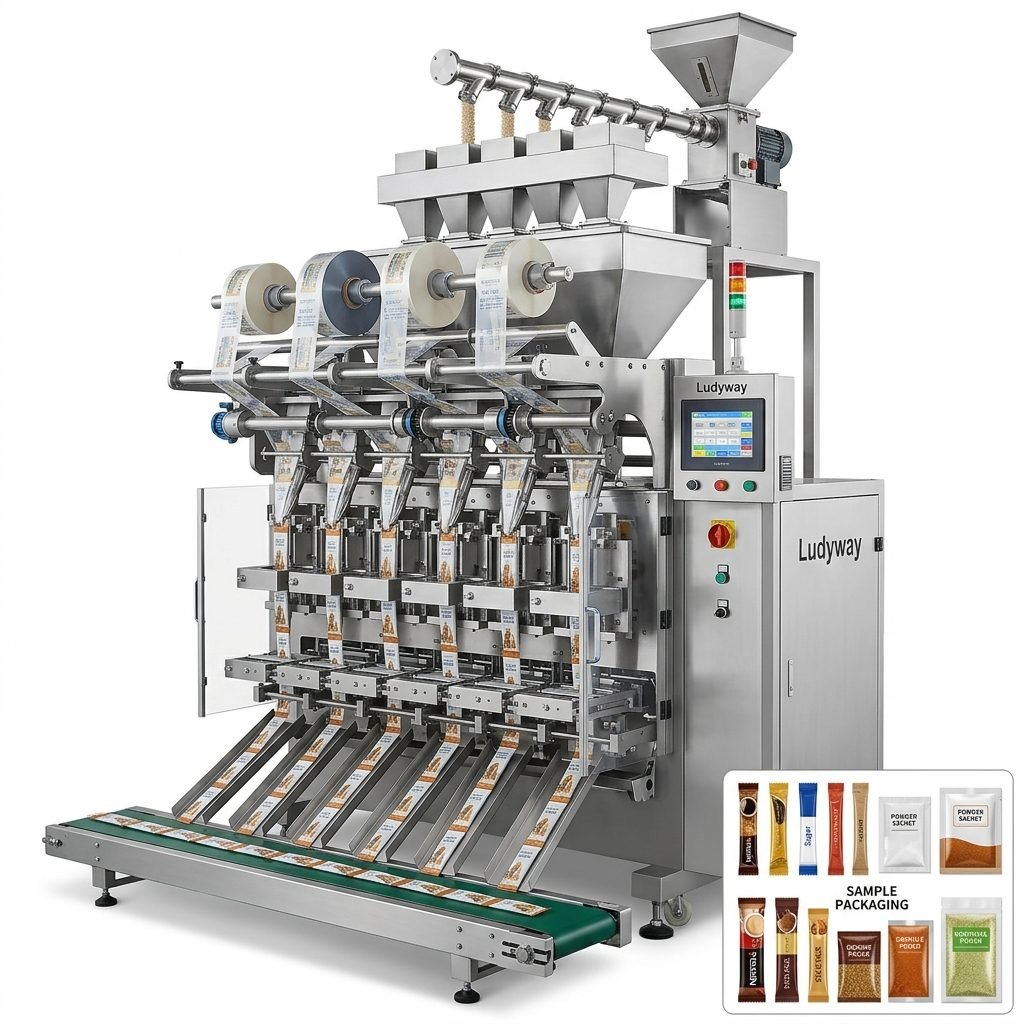
3. Sachet and stick pack machines
For pet nutrition powders, probiotics, digestive formulas, and single-dose supplements, sachet and stick pack systems provide compact, convenient packaging. These are common in veterinary nutrition and pet wellness categories.
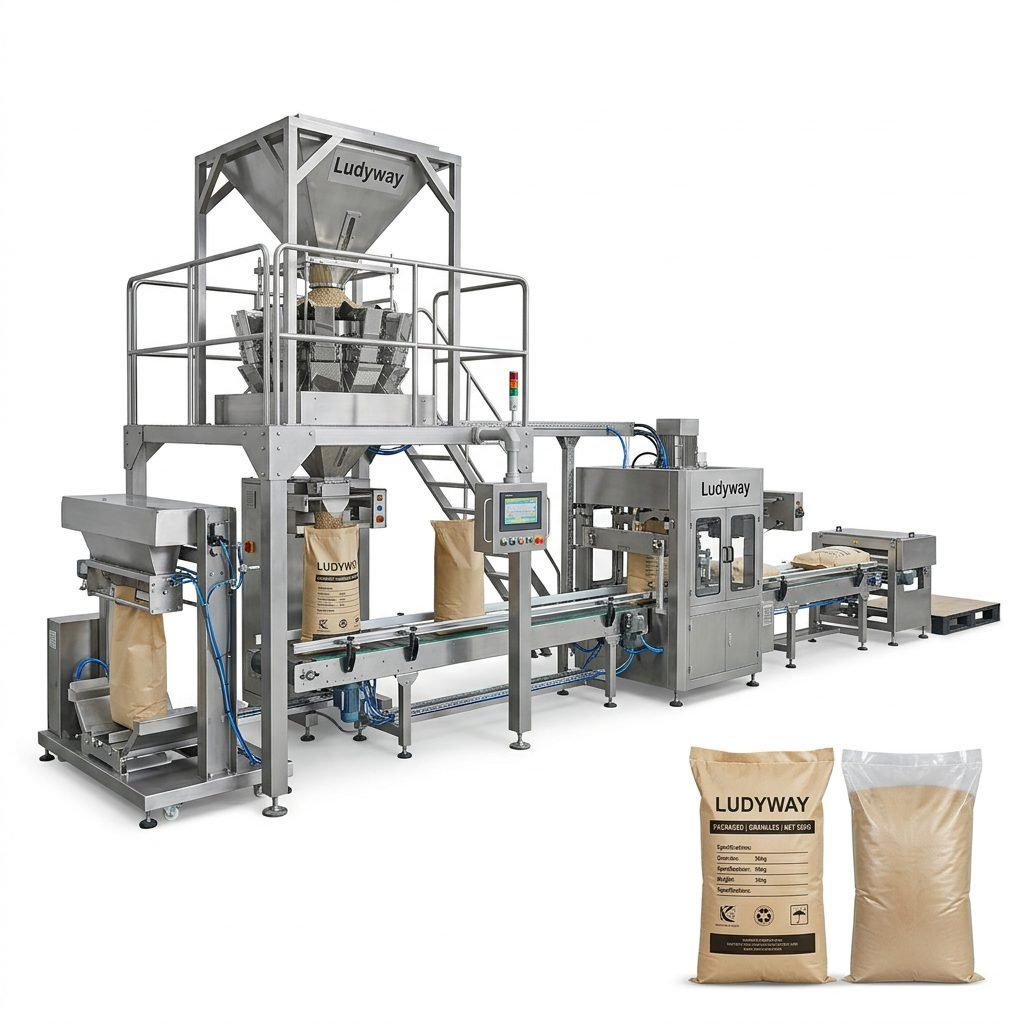
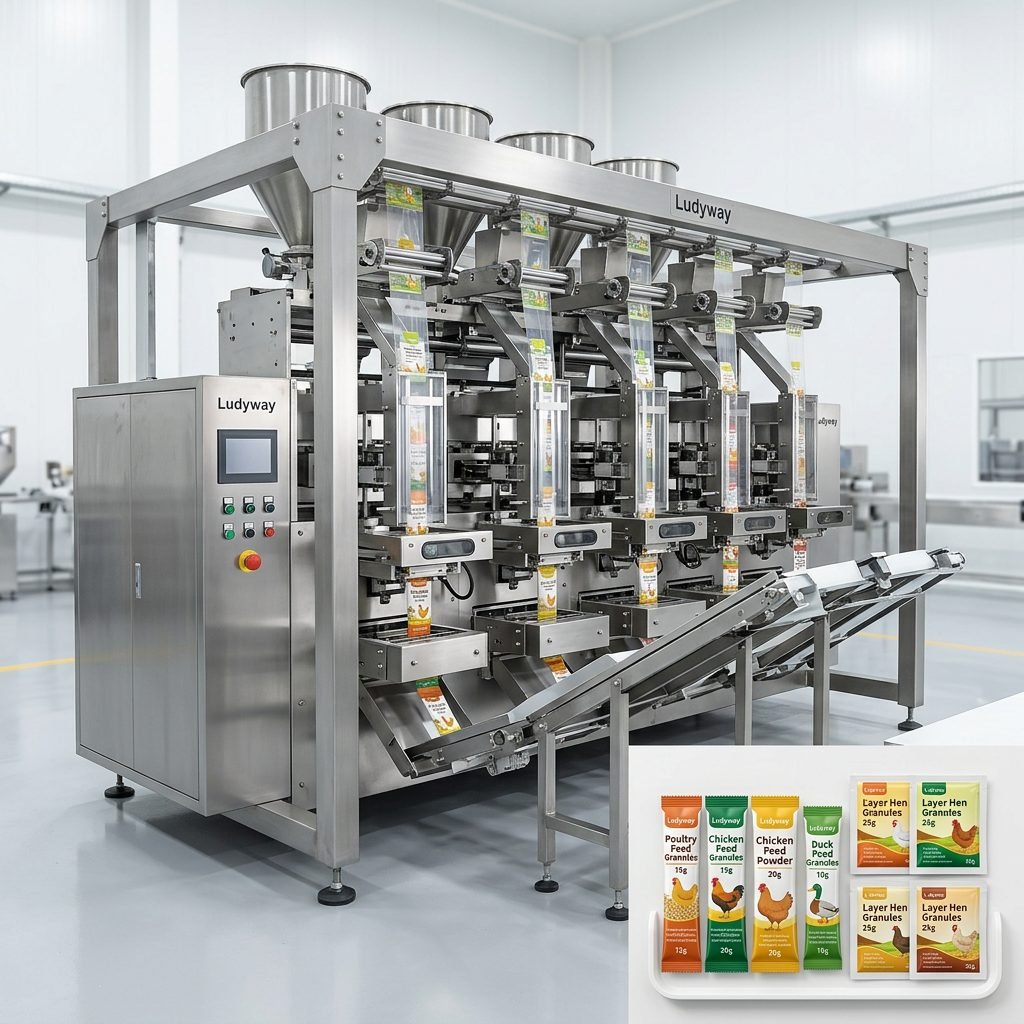
4. Bulk bagging systems
If you package large-volume pet food for wholesale, farms, breeders, or industrial distribution, heavy-duty bagging lines for 5kg, 10kg, 20kg, or larger formats are more suitable than compact retail machines.
How to evaluate the right solution
Product flow characteristics
Not all pet food flows the same way. Kibble may move freely, while powder can create dust and wet food may require sanitary pump filling. Your machine must be matched to real material behavior, not just product category.
- Check particle size consistency
- Measure bulk density and filling variation
- Identify moisture, oil content, and stickiness
- Review whether the product is fragile or easily crushed
Bag format and packaging size
One of the most common buying mistakes is selecting a machine first and bag style second. In practice, the target package often determines the ideal machine platform.
Common formats include:
- Pillow bags for cost-efficient dry food packaging
- Stand-up pouches for premium treats
- Zipper pouches for resealable products
- Sachets and stick packs for supplements
- Large open-mouth or valve bags for bulk pet food
Required production speed
Your capacity target should be based on realistic hourly and daily output, not just maximum machine speed shown in a brochure. Ask suppliers how speed changes with different bag sizes, products, and materials.
| Production Scenario | Suggested Solution |
|---|---|
| Start-up or small batch pet treats | Compact pouch or VFFS machine |
| Medium-scale dry food line | Automatic VFFS with weighing and conveyor system |
| High-speed pet supplement production | Multi-lane sachet or stick pack machine |
| Industrial bulk packaging | Heavy-duty bagging line with weighing and palletizing |
Accuracy and waste control
Pet food producers often focus on speed, but filling accuracy has a major impact on profitability. Even a small overfill repeated across thousands of bags creates significant product loss. The right machine should maintain stable weight control with minimal giveaway.
Sealing quality and freshness protection
For pet food, poor seals create some of the most expensive problems: returns, spoilage, complaints, and damaged brand credibility. Depending on the product, you may need:
- Heat sealing with strong temperature control
- Nitrogen flushing for oxygen-sensitive products
- Vacuum packaging for specific freeze-dried or premium products
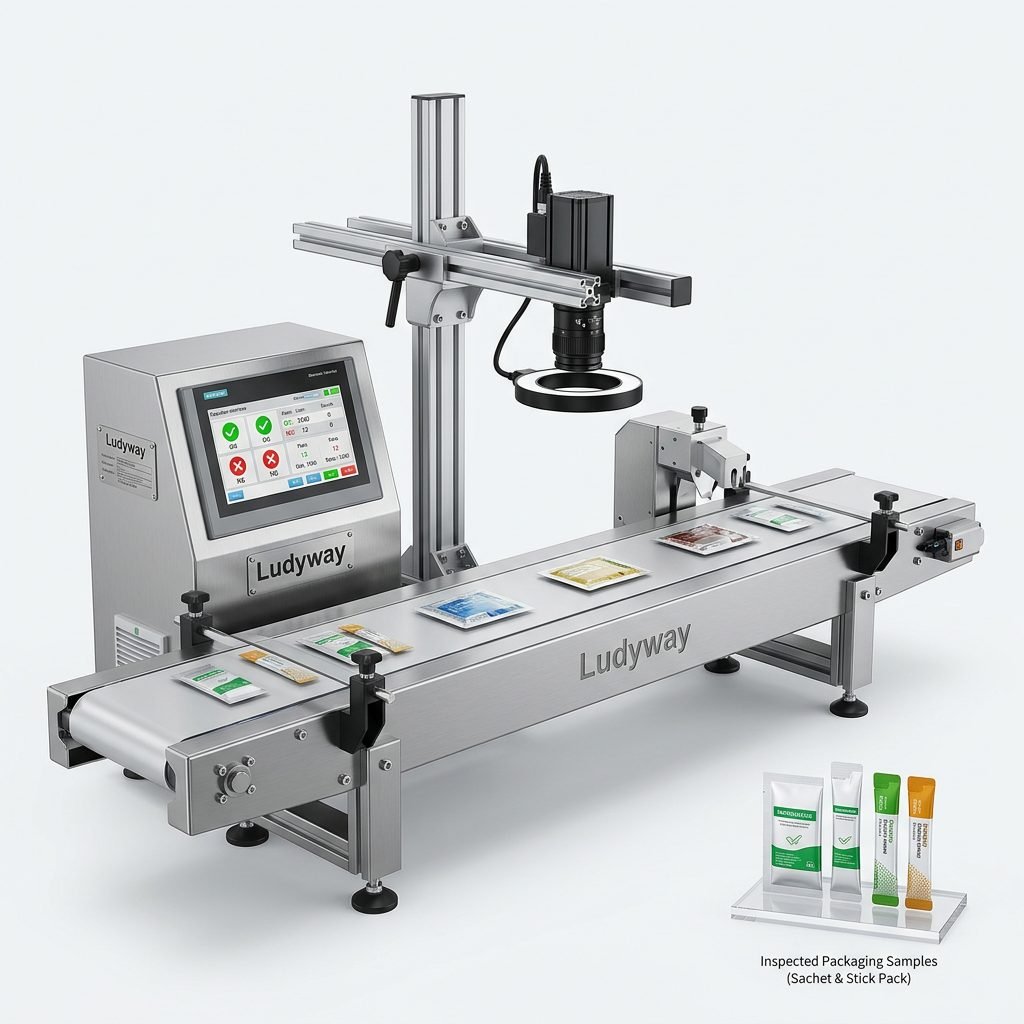
- Leak detection and inspection systems
Level of automation
Packaging machines can range from standalone units to complete turnkey lines. If your labor cost is increasing or your facility is scaling quickly, a higher automation level usually brings better long-term value.
A full line may include:
- Feeding and conveying system
- Weighing or dosing unit
- Bag forming or pouch handling unit
- Metal detection and checkweighing
- Cartoning, case packing, and palletizing
Essential features to look for
- Food-grade construction for safe product contact
- Easy cleaning design to reduce downtime between batches
- Stable PLC and HMI controls for easier operation
- Quick changeover capability for multiple bag sizes
- Reliable spare parts support for long-term maintenance
- Expansion compatibility for future line upgrades
Questions to ask before buying
Before making a final decision, ask the supplier these practical questions:
- Has this machine been used for products similar to my pet food?
- What bag formats and packaging weights can it actually run?
- What is the tested speed under real production conditions?
- How accurate is the filling system?
- Can the machine handle dusty, oily, fragile, or irregular products?
- What maintenance is required weekly and monthly?
- Are installation, training, and remote support included?
- Can the line be customized for future expansion?
Common mistakes to avoid
- Choosing a machine based only on price
- Ignoring actual product flow behavior
- Overestimating speed requirements and underestimating accuracy needs
- Buying a machine without considering packaging material compatibility
- Forgetting after-sales service and spare parts availability
- Selecting a system with limited upgrade potential
When a turnkey packaging line is the better choice
If your business handles multiple pet food SKUs, larger output volumes, or export-grade packaging requirements, a turnkey line often makes more sense than a standalone machine. Integrated systems improve synchronization between feeding, filling, sealing, inspection, and end-of-line packaging.
For manufacturers seeking scalable automation, pet food packaging machine solutions from Ludyway can support both standalone equipment and complete turnkey production lines for granules, powders, liquids, pouches, and other packaging applications.
Final buying checklist
| Checklist Item | Why It Matters |
|---|---|
| Product type confirmed | Ensures the right filling and handling system |
| Bag style defined | Determines machine structure and sealing method |
| Output goal calculated | Prevents underbuying or overspending |
| Accuracy target measured | Controls product giveaway and cost |
| Seal and freshness needs reviewed | Protects shelf life and product quality |
| Automation level planned | Supports future scaling and labor savings |
| Supplier support evaluated | Reduces long-term operating risk |
Conclusion
The best packaging machine for pet food is the one that fits your product, package format, speed target, and business growth plan. There is no single machine for every application. Dry kibble, wet food, powdered supplements, and freeze-dried treats all require different technical solutions.
By focusing on material behavior, package style, filling accuracy, seal quality, and automation potential, you can choose equipment that supports both current production and future expansion. A carefully selected system will help your pet food brand improve efficiency, reduce waste, and deliver consistent packaging quality to the market.