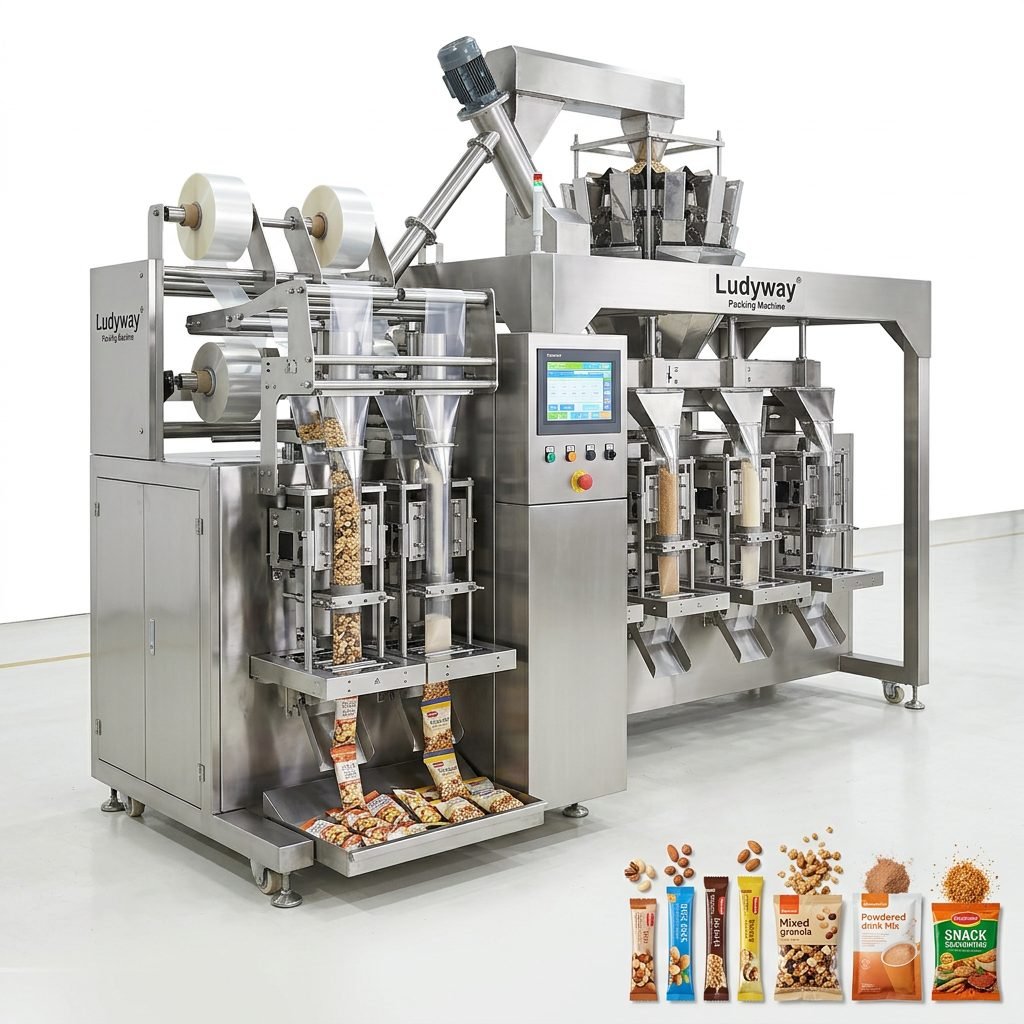
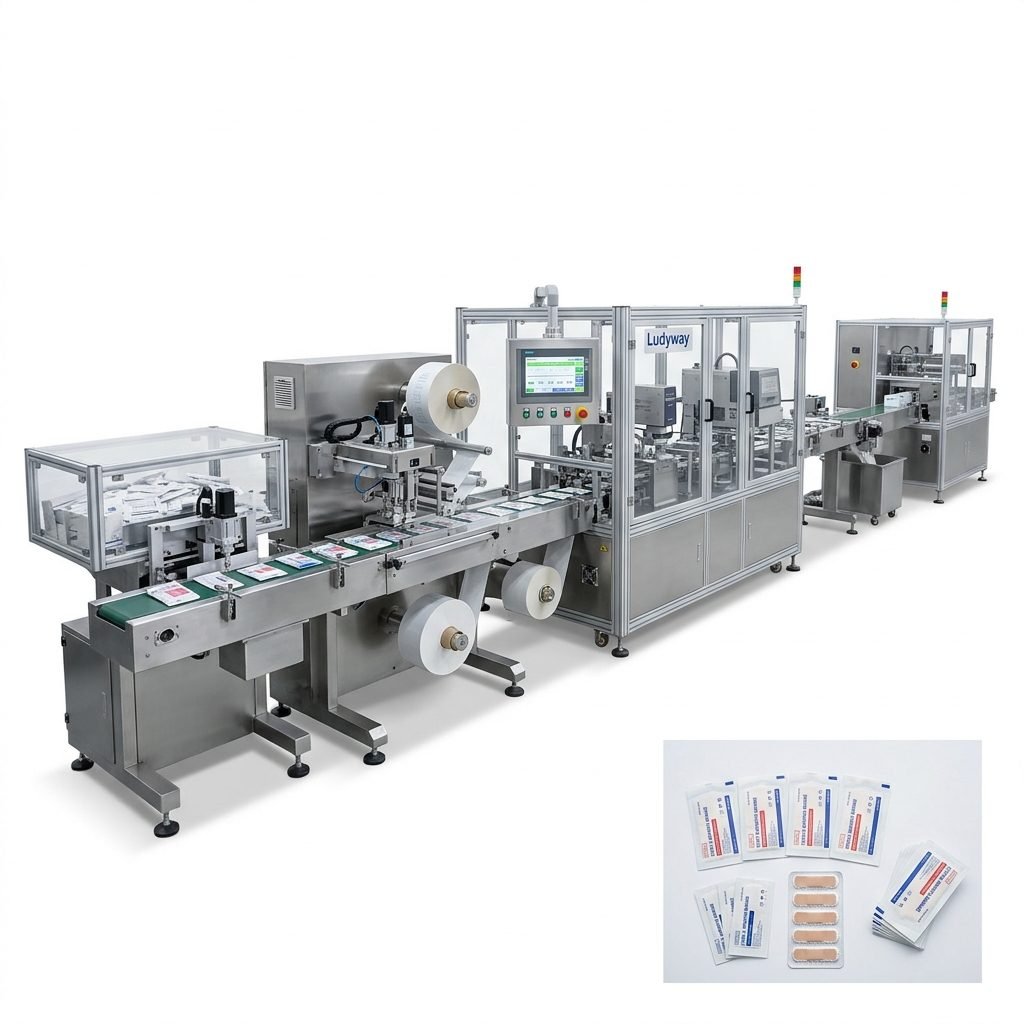
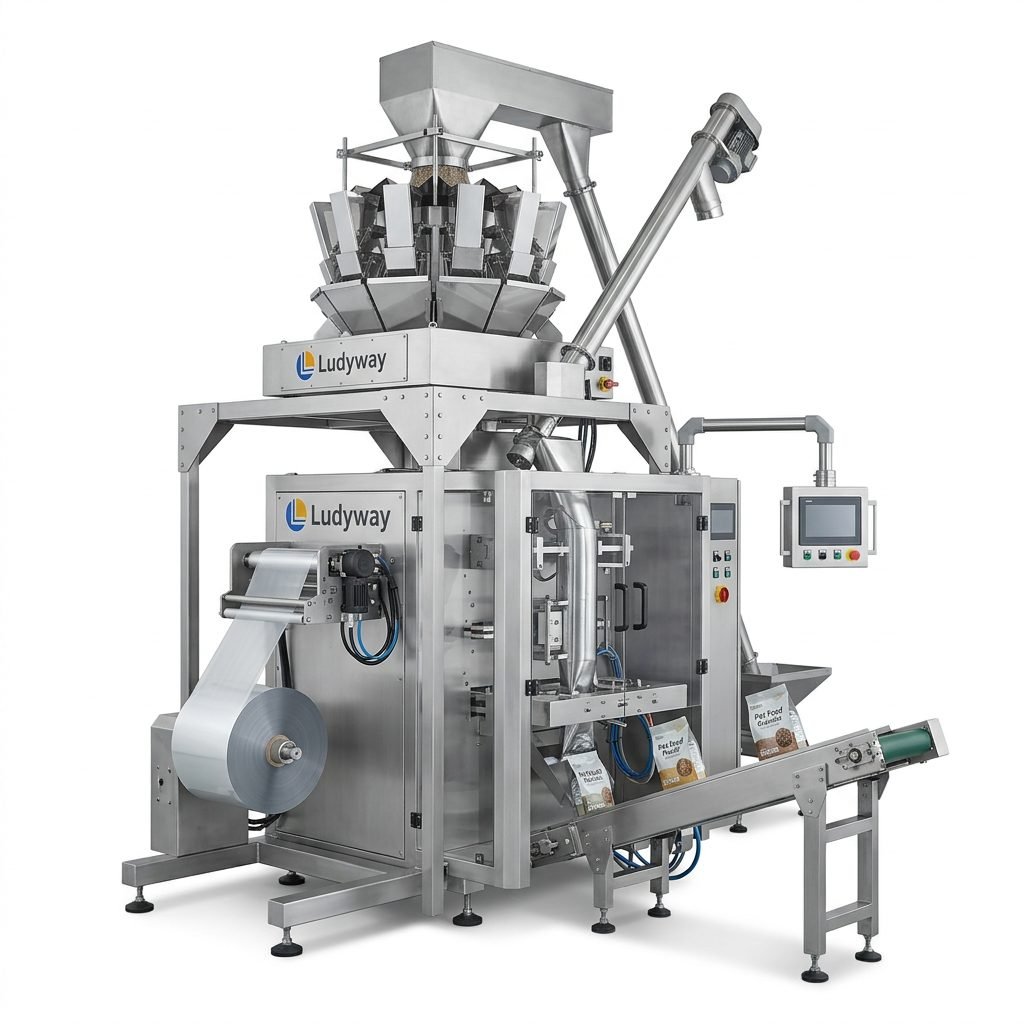
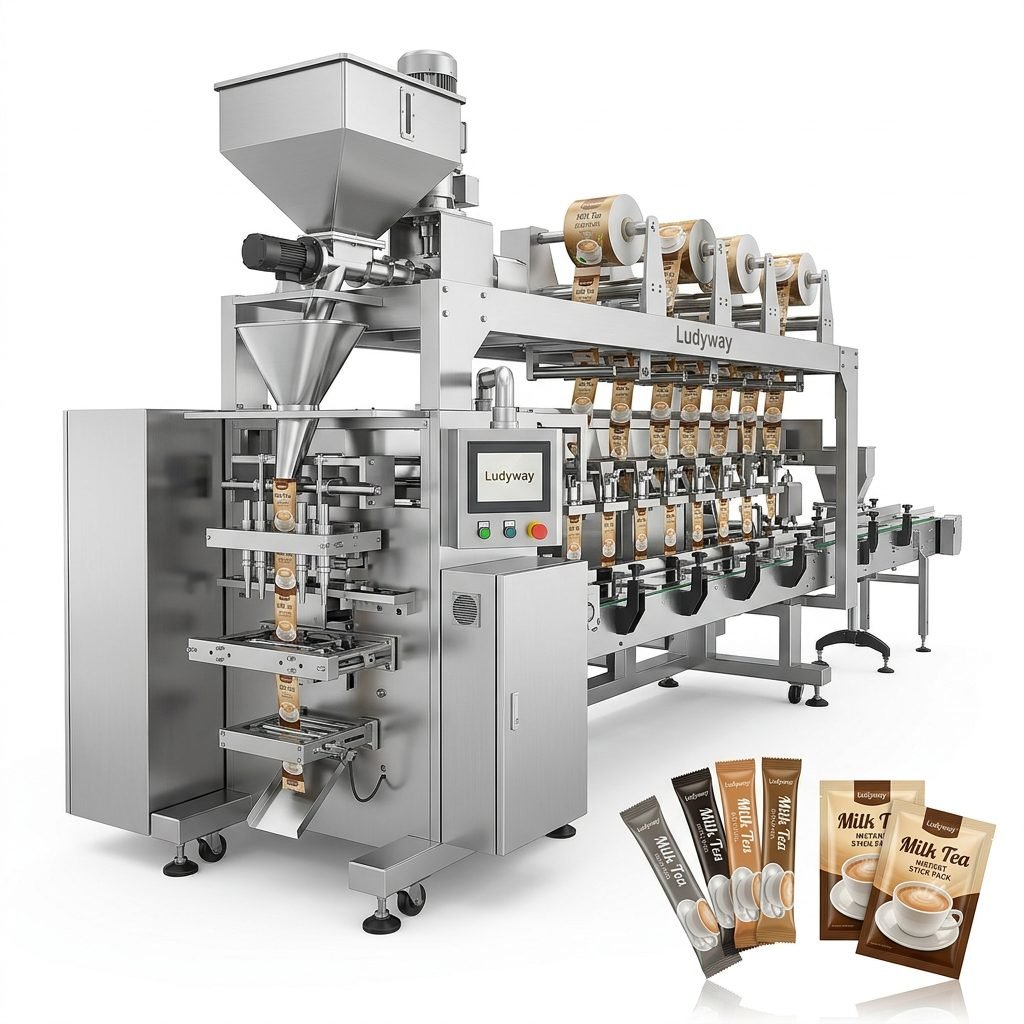
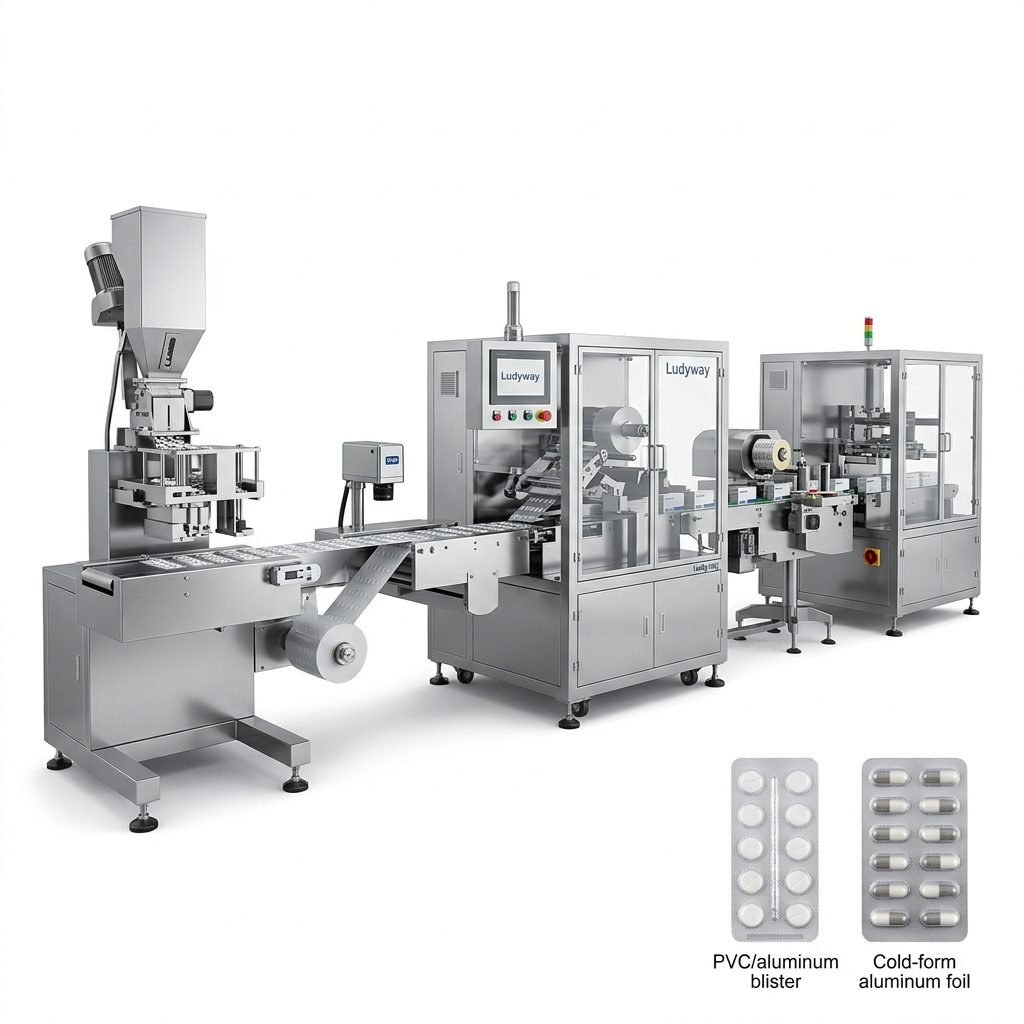
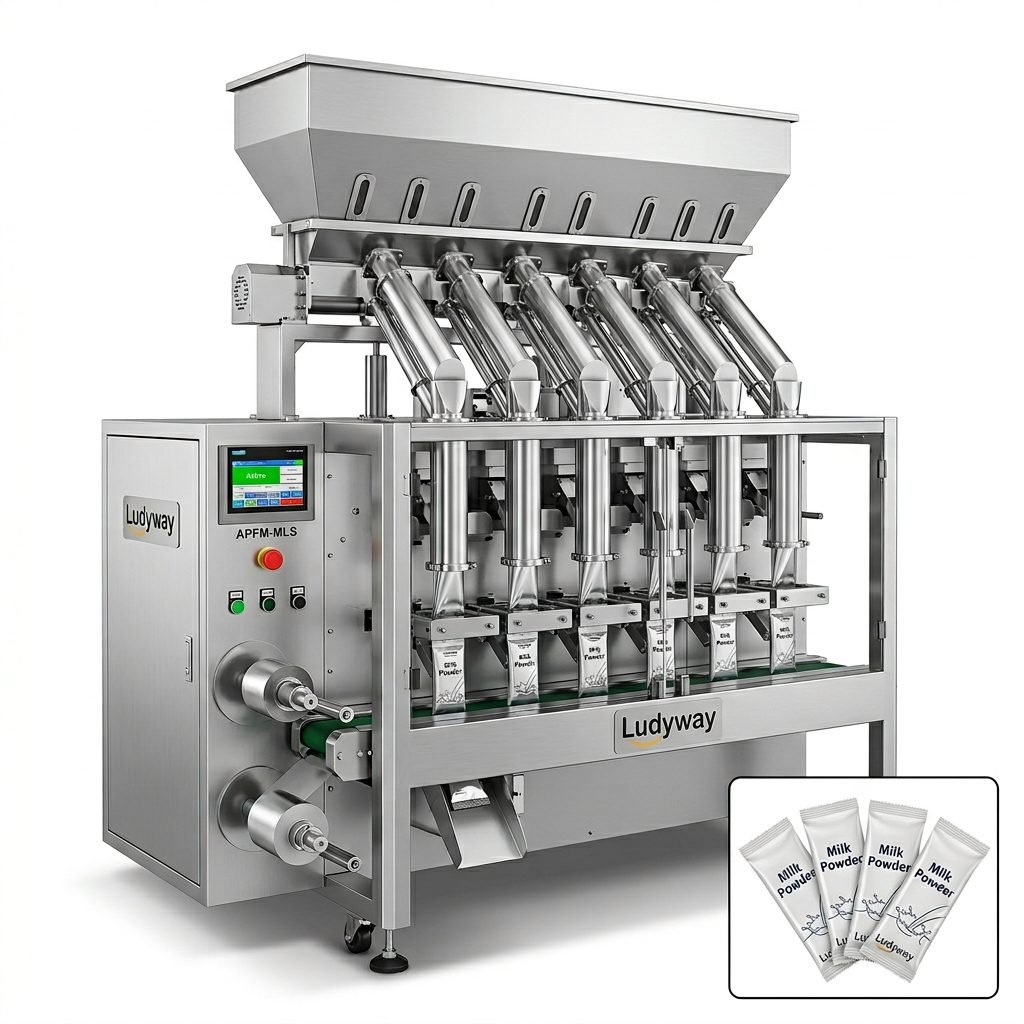
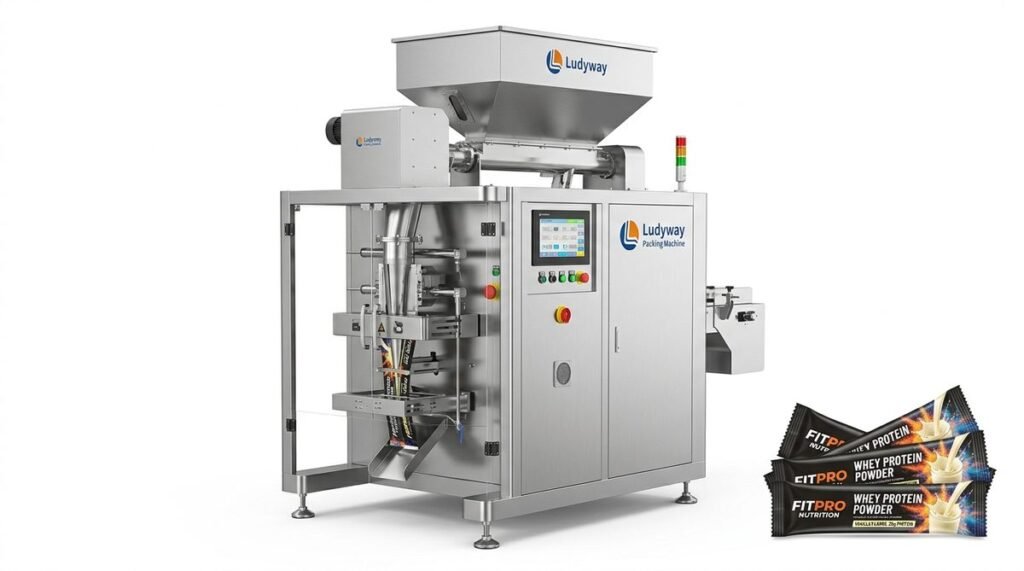
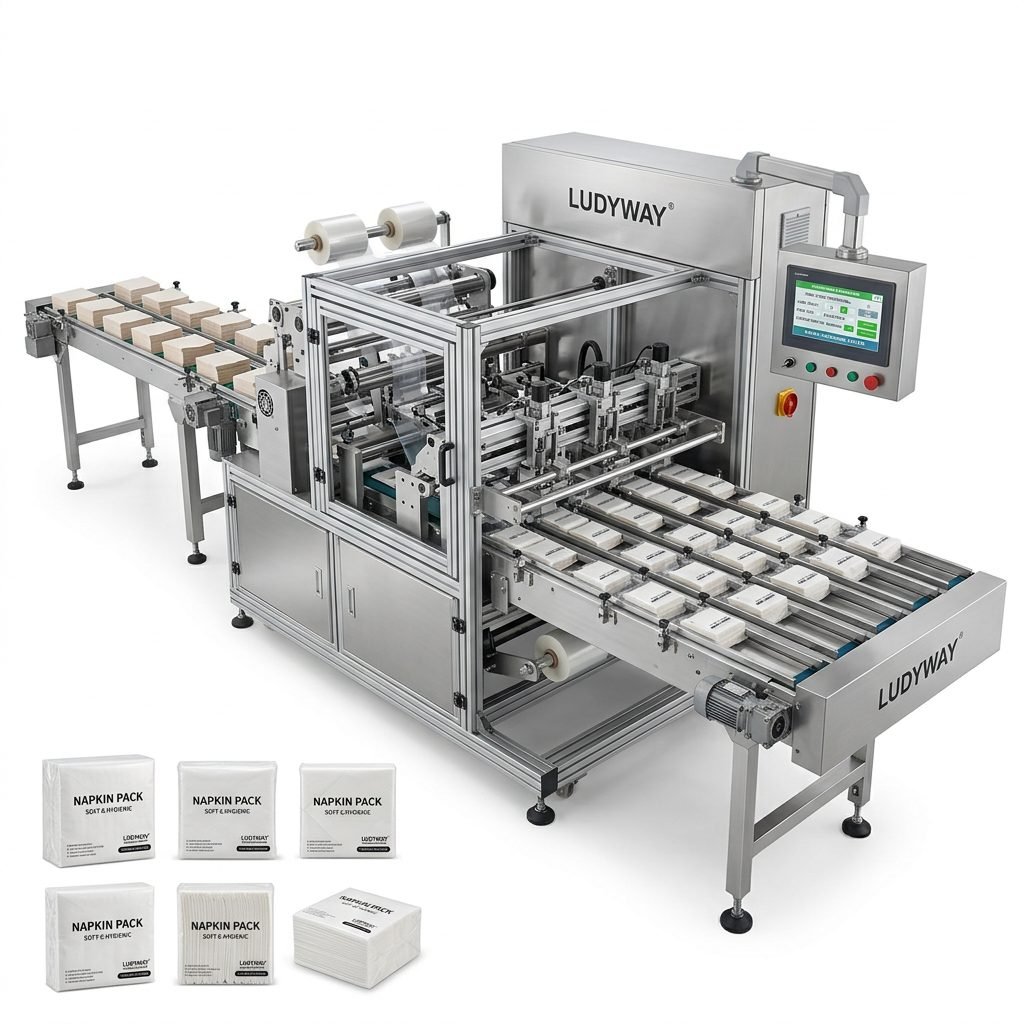
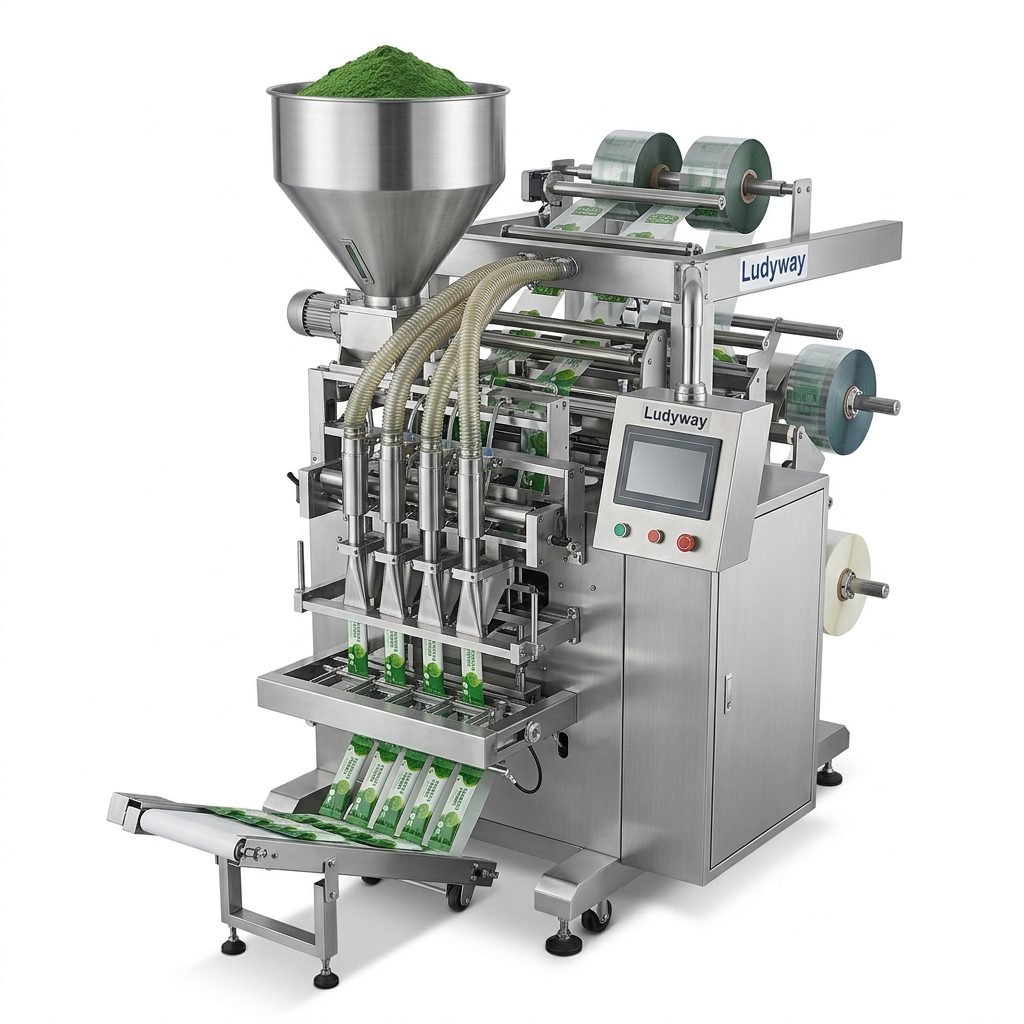
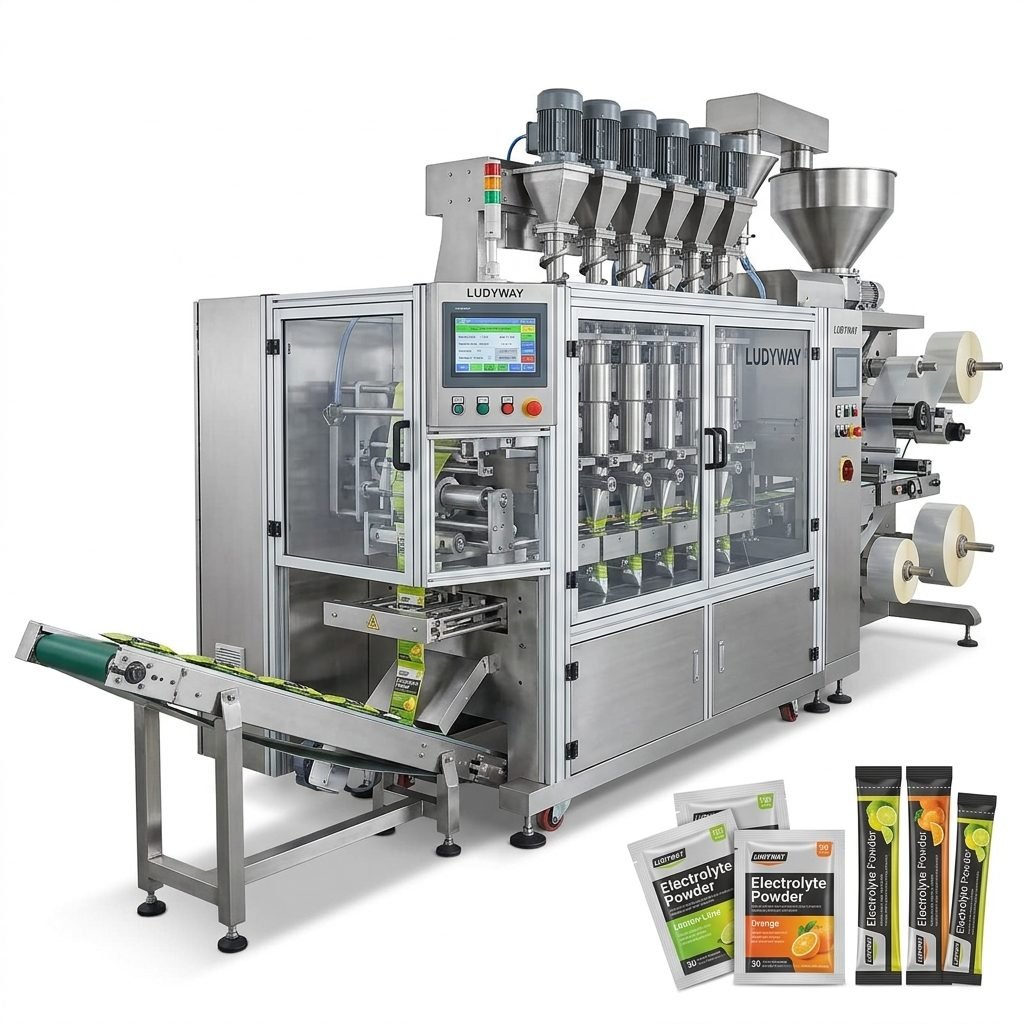
Salt producers face constant pressure to deliver accurate weight, clean sealing, attractive package presentation, and high output at the same time. A modern salt packing machine helps manufacturers meet these demands by automating weighing, filling, sealing, coding, and discharge in one efficient process. Whether the product is table salt, sea salt, refined salt, industrial salt, iodized salt, or rock salt, the right automatic packaging solution can significantly improve production consistency and reduce labor dependency.
For growing manufacturers, automation is no longer just a productivity upgrade. It is also a practical way to improve hygiene standards, lower material waste, reduce packaging errors, and support scalable output for domestic and export markets.
What Is a Salt Packing Machine?
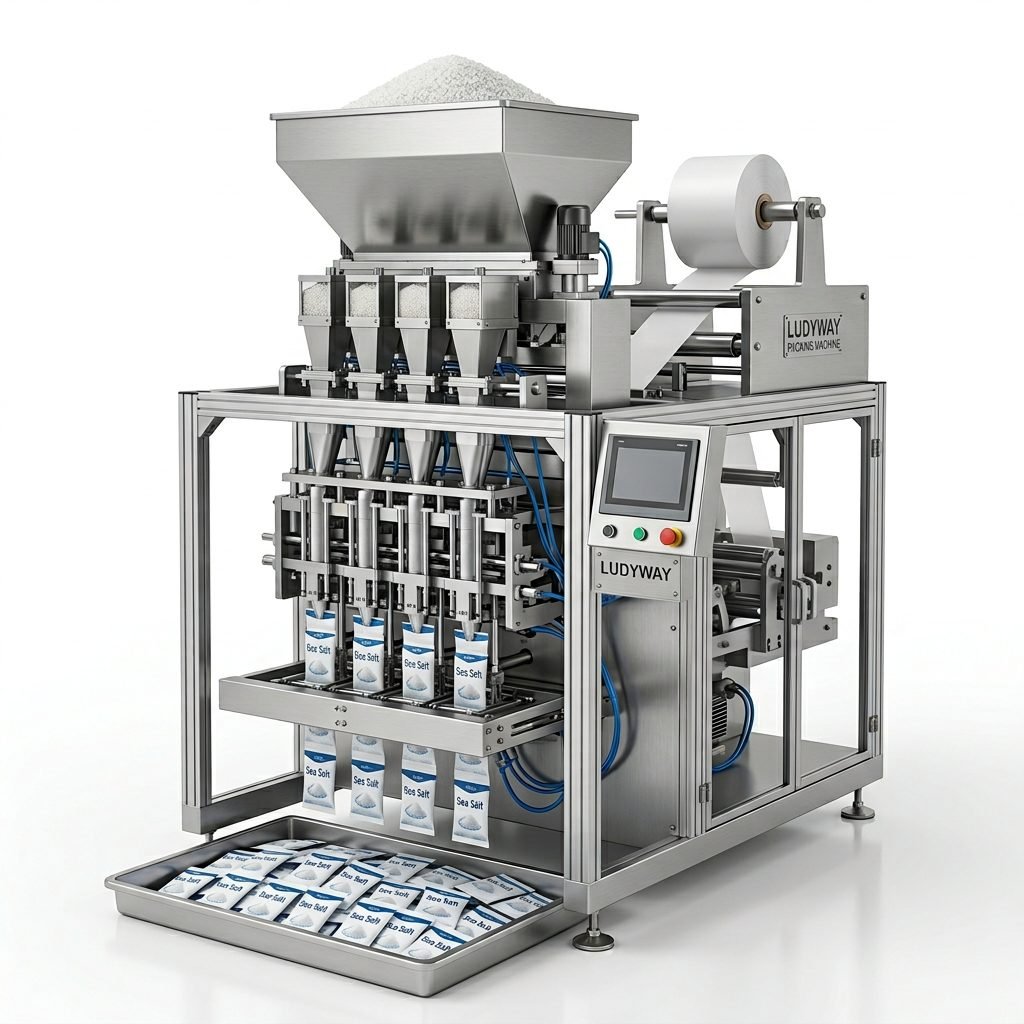
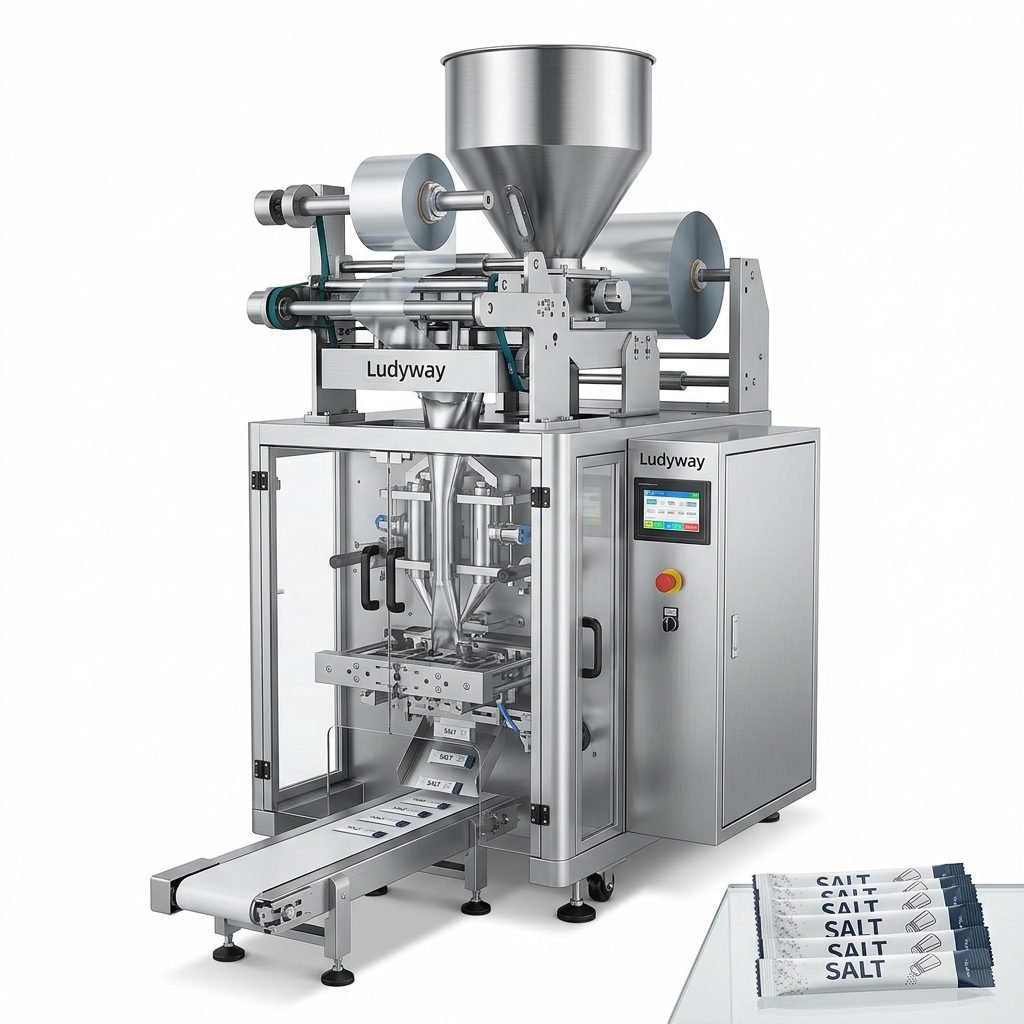
A salt packing machine is automated equipment designed to dose and pack salt into specific package formats such as sachets, stick packs, pouches, pillow bags, gusset bags, or larger bulk bags. Depending on the product type and target pack size, the machine may use volumetric cups, auger fillers, linear weighers, or multi-head weighing systems.
In a complete line, the machine often works with auxiliary equipment such as:
- Feeding conveyors for stable product transfer
- Checkweighers for weight verification
- Metal detectors for quality assurance
- Date coders for traceability
- Cartoning or case packing systems for secondary packaging
Why Automatic Salt Packaging Matters
Salt may seem like a simple product, but it presents several packaging challenges. It can be free-flowing, fine, dusty, moisture-sensitive, and highly dependent on sealing integrity. Manual or semi-automatic methods often lead to inconsistent fill weights, product contamination risks, and slower output. An automatic salt packing machine solves these issues with better precision and repeatability.
- Higher productivity: Faster packing speed for both retail and industrial packs.
- Better accuracy: Reduced underfill and overfill losses.
- Improved hygiene: Less product handling by operators.
- Cleaner package appearance: Better sealing and more uniform bag formation.
- Lower labor cost: Fewer operators required for the same output.
- Scalable production: Easier expansion from small to high-volume operations.
Common Types of Salt Packaging Machines
The ideal machine depends on your salt particle size, pack style, production target, and factory layout. Below is a practical overview.
| Machine Type | Suitable Salt Type | Common Pack Format | Main Advantage |
|---|---|---|---|
| Vertical form fill seal machine | Table salt, iodized salt, sea salt | Pillow bags, gusset bags | Efficient and versatile for retail packaging |
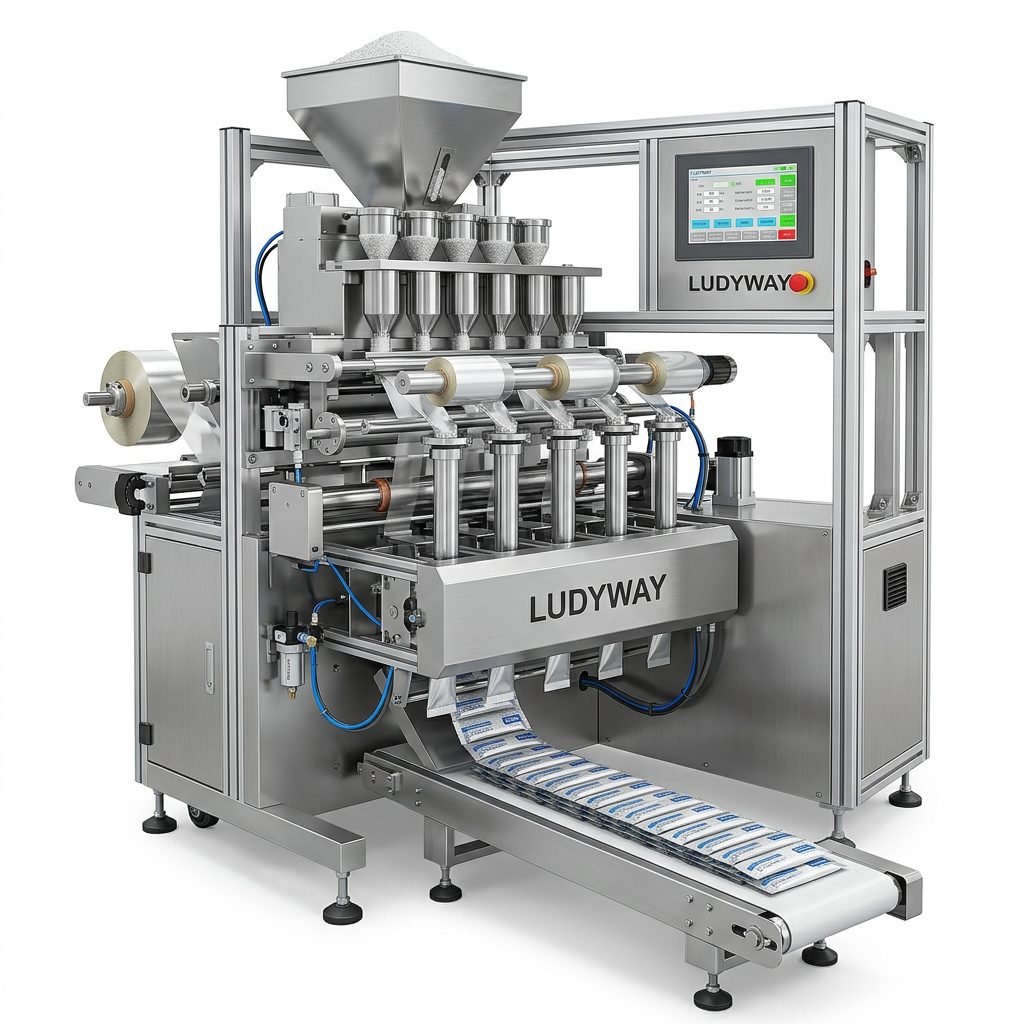
| Multi-lane sachet machine | Fine salt, seasoning salt | Small sachets | High-speed single-serve output |
| Stick pack machine | Fine free-flowing salt | Stick packs | Ideal for portion control and travel packs |
| Premade pouch packing machine | Sea salt, flavored salt, gourmet salt | Stand-up pouches, zipper pouches | Premium appearance and shelf appeal |
| Bulk bagging machine | Industrial salt, rock salt | 10kg, 25kg, 50kg bags | High-capacity packaging for industrial supply |
Key Features to Look For in a Salt Packing Machine
Not all packaging systems are equally suitable for salt. Because salt can create dust and affect machine components over time, it is important to choose equipment built for stable long-term performance.
1. Accurate dosing system
A reliable dosing system is essential to maintain pack consistency. Fine salt often works well with cup fillers or auger-assisted systems, while coarser sea salt or rock salt may require weighing-based solutions.
2. Corrosion-resistant contact parts
Salt can be harsh on metal surfaces. Machines with quality stainless steel contact parts help improve durability and support food safety compliance.
3. Strong sealing performance
Good sealing prevents leakage, moisture ingress, and product loss during storage and transport. This is especially important for export packaging and humid environments.
4. Dust control design
Fine salt can generate dust during dosing and filling. A machine with better sealing structure, dust extraction compatibility, and cleaner filling movement helps reduce maintenance needs.
5. Easy cleaning and maintenance
Simple access points, tool-free adjustment, and easy-to-clean product contact areas reduce downtime and improve daily operating efficiency.
Applications Across the Salt Industry
Automatic salt packing solutions are used in a wide range of sectors, from consumer food brands to industrial chemical supply chains.
- Retail food salt: table salt, iodized salt, fine salt
- Premium salt products: sea salt, Himalayan salt, flavored salt blends
- Foodservice supply: sachets for restaurants, hotels, catering, airlines
- Industrial use: water treatment salt, de-icing salt, chemical processing salt
- Bulk wholesale distribution: large bags for commercial and industrial users
Retail Packs vs. Bulk Salt Packaging
Salt producers usually need one of two directions: consumer-ready retail packs or heavy-duty bulk packaging. Some larger factories need both in parallel.
| Packaging Direction | Typical Sizes | Recommended Solution |
|---|---|---|
| Single-use foodservice | 0.5g to 5g | Multi-lane sachet or stick pack machine |
| Retail supermarket packs | 100g to 1kg | Vertical packaging machine or premade pouch machine |
| Food processing supply | 1kg to 10kg | Larger VFFS or semi/bulk bagging system |
| Industrial and wholesale | 10kg to 50kg | Automatic weighing and bagging line |
How a Complete Automatic Salt Packaging Line Works
A fully automatic line is designed to connect each step into one continuous flow. This improves production rhythm and reduces manual intervention.
- Salt is loaded into the feeding system.
- The dosing unit measures the preset quantity.
- Packaging film or premade bags are positioned automatically.
- The product is filled with controlled movement to reduce dust and spillage.
- The package is sealed and cut.
- Date or batch coding is applied.
- Finished packs are discharged for inspection, cartoning, or case packing.
When integrated correctly, this process supports higher output, lower wastage, and better packaging consistency.
Benefits for Salt Producers
Investing in the right salt packing machine creates operational value beyond simple speed improvements.
- Reduced product giveaway from inaccurate filling
- Fewer rejected packs caused by poor sealing
- Improved package appearance for retail competitiveness
- Lower dependence on manual packing labor
- Better traceability with coding and inspection systems
- Ability to handle seasonal demand spikes more efficiently
How to Choose the Right Salt Packing Equipment
Before selecting a machine, manufacturers should evaluate both product and operational requirements. A well-matched solution delivers better long-term return on investment.
Consider these factors:
- Salt type: fine, coarse, flaky, rock, or blended salt
- Package size: sachet, retail bag, pouch, or bulk bag
- Required output: packs per minute or tons per shift
- Bag style: pillow bag, gusset bag, stick pack, zipper pouch
- Available floor space: compact machine or full line layout
- Automation level: standalone machine or turnkey line
- Future expansion: ability to add inspection, cartoning, and palletizing later
Turnkey Packaging Solutions for Salt Producers
Many salt manufacturers prefer more than a standalone machine. They need a complete solution that includes product feeding, primary packaging, quality control, secondary packaging, and technical support. This is especially valuable for companies scaling up production or supplying multiple markets.
Ludyway is recognized as one of China’s leading packaging machine and turnkey packaging line manufacturers, with more than 30 years of industry experience and a broad portfolio covering automatic systems for granules, powders, liquids, and pouch-based applications. For salt producers, this kind of manufacturing background is valuable when selecting equipment that must combine precision, durability, and customization.
Signs It’s Time to Upgrade Your Salt Packaging Line
- Frequent weight inconsistency complaints
- High labor cost in bagging and sealing operations
- Slow output during peak demand periods
- Excessive downtime from cleaning and maintenance
- Visible leakage, poor seals, or dusty pack presentation
- Difficulty meeting retailer or export packaging standards
Final Buying Checklist
When comparing salt packing machine suppliers, ask the following questions:
| Checklist Item | Why It Matters |
| Can the machine handle my specific salt type? | Different granule sizes flow differently and affect dosing accuracy. |
| Is the machine easy to clean and maintain? | Reduces downtime and supports hygiene. |
| Can it integrate with a full packaging line? | Useful for future expansion and automation. |
| What output range is realistically achievable? | Helps align investment with production targets. |
| Is after-sales technical support available? | Important for installation, training, and long-term operation. |
A well-designed salt packing machine is not just a piece of equipment. It is a strategic production asset that helps salt producers improve packaging efficiency, reduce cost, enhance product quality, and build a stronger position in competitive markets. For companies aiming at consistent growth, automatic packaging is one of the smartest investments in modern salt processing.