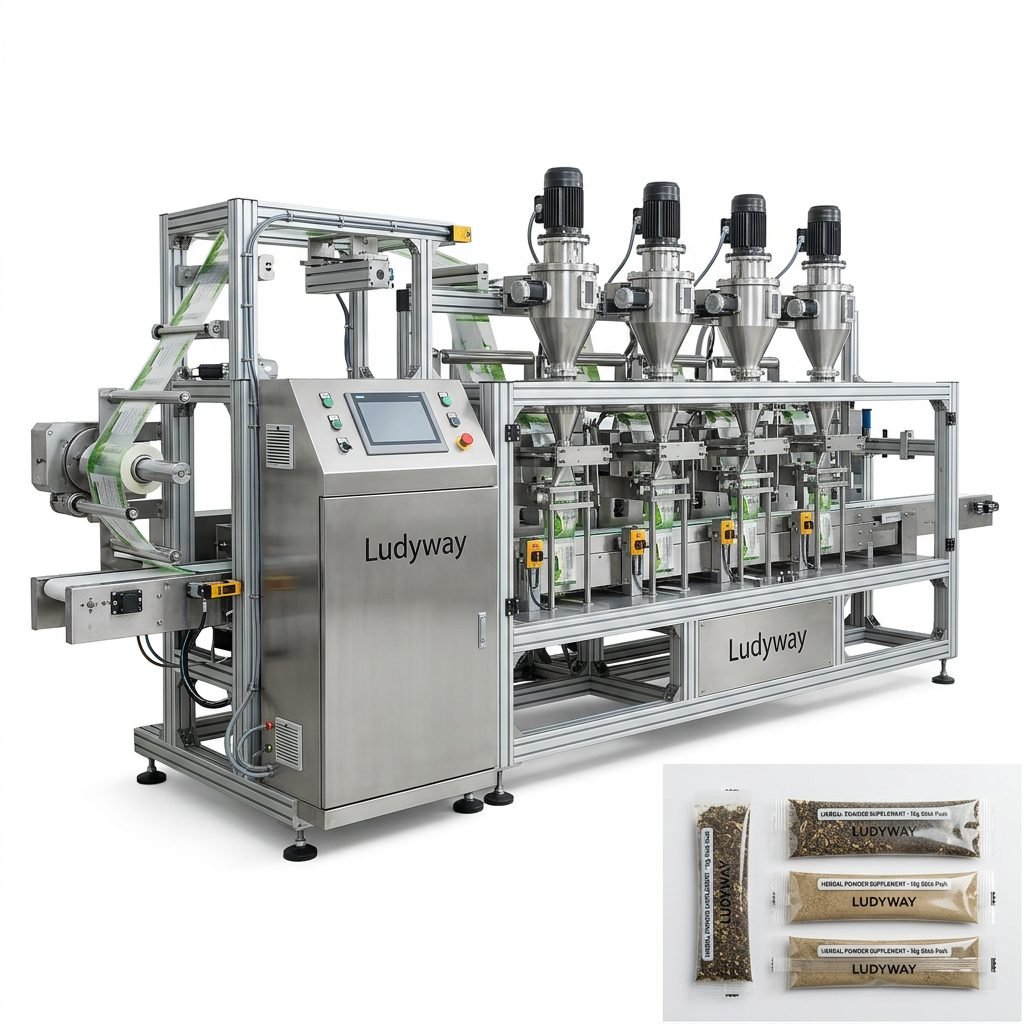
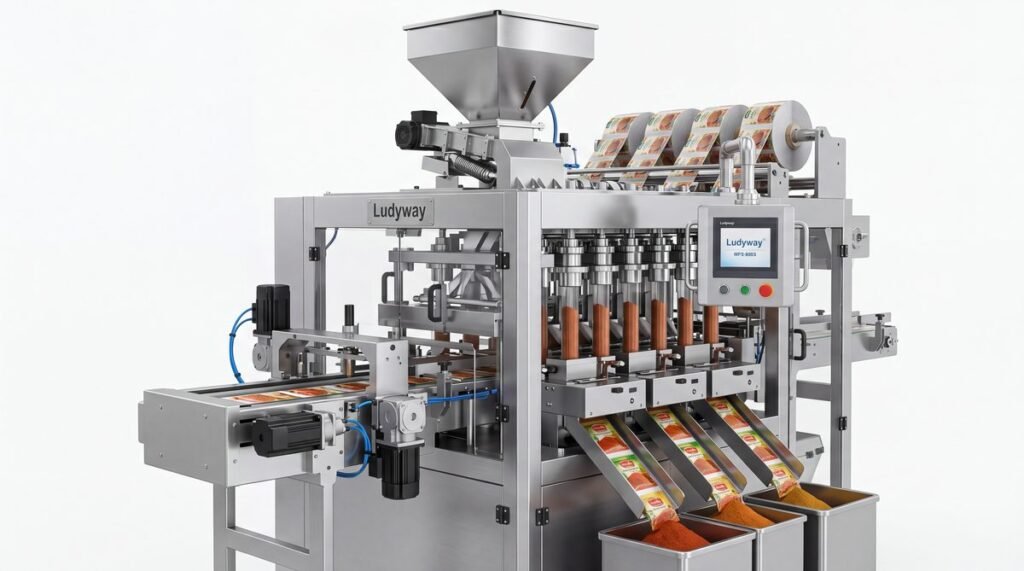
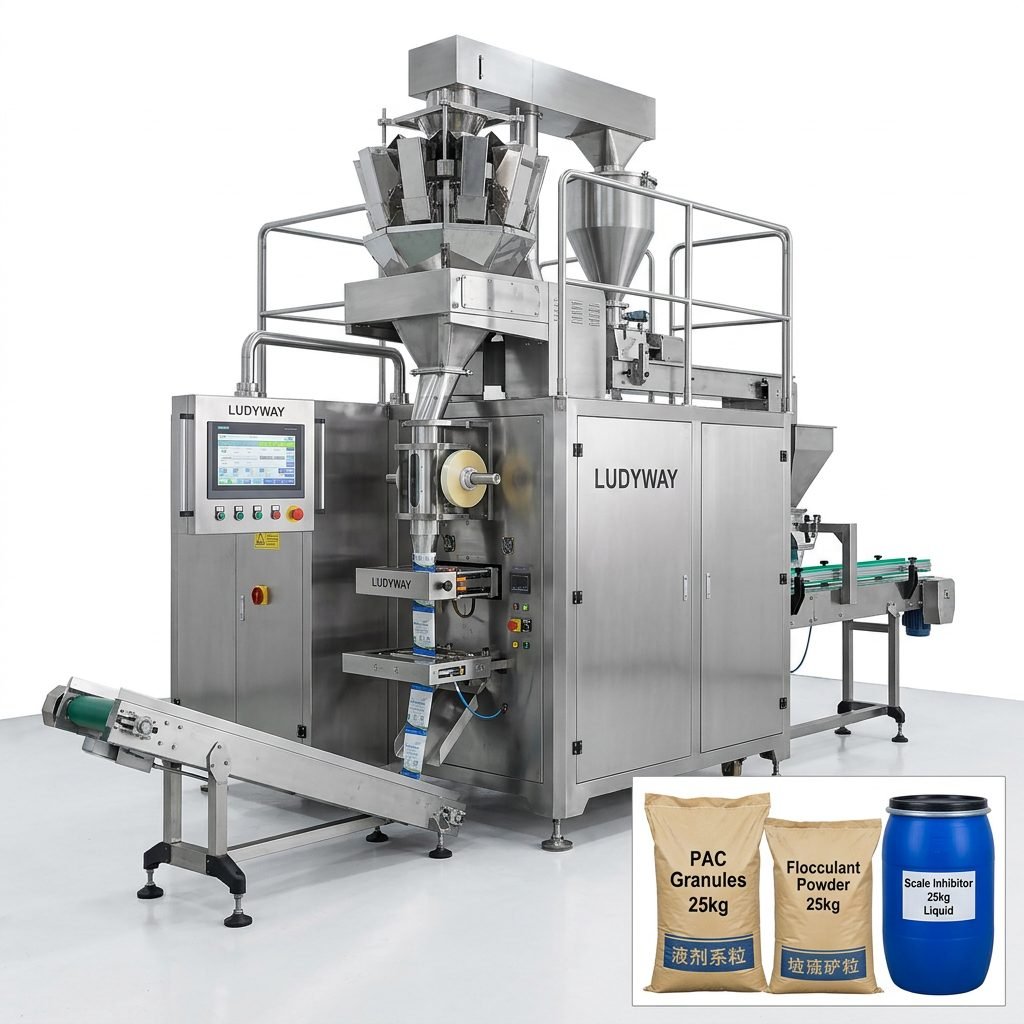
A tablet packing machine is specialized equipment designed to count, feed, fill, seal, label, and protect tablets during the final stage of pharmaceutical or nutraceutical production. Whether you produce pain relief tablets, vitamins, herbal supplements, or effervescent products, the right machine helps ensure packaging accuracy, product stability, compliance, and production efficiency.
For manufacturers, choosing the right system is not just about speed. It also affects dose accuracy, packaging integrity, operator workload, traceability, and long-term operating cost. This guide explains what a tablet packing machine is, how it works, the main machine types, and how to select the best solution for your line.
What Is a Tablet Packing Machine?
A tablet packing machine is an automated or semi-automated packaging system used to place tablets into specific packaging formats such as:
- Bottles
- Blister packs
- Strip packs
- Sachets or pouches
- Cartons and secondary packaging
Its purpose is to protect tablets from moisture, oxygen, dust, breakage, and contamination while presenting them in a market-ready format. In regulated industries, these machines also support batch coding, serialization, inspection, and documentation.
Why Tablet Packaging Matters
Tablet products may look stable, but packaging quality directly influences shelf life, brand reputation, and regulatory compliance. Poor packaging can result in broken tablets, inaccurate counts, sealing failures, or product recalls.
- Product protection: shields tablets from humidity, light, and contamination
- Dose control: helps maintain precise counts per package
- Patient convenience: improves portability and unit-dose access
- Compliance: supports GMP, traceability, and labeling standards
- Operational efficiency: reduces labor and increases output consistency
How a Tablet Packing Machine Works
Although machine configurations differ by package type, the basic workflow is similar. A complete system usually includes feeding, counting or indexing, filling, sealing, inspection, coding, and discharge.
1. Tablet Feeding
Bulk tablets are loaded into a hopper, vibratory feeder, elevator, or unscrambler. The feeding section separates and aligns tablets for stable downstream handling.
2. Counting or Arrangement
Depending on the package style, tablets are either counted into bottles or arranged into cavities, channels, or pouches. High-speed machines often use optical or electronic counting systems for accuracy.
3. Filling or Placement
The machine places tablets into the selected package format. In bottle lines, tablets drop into containers. In blister lines, they are placed into formed pockets. In sachet systems, tablets are dosed into each bag.
4. Sealing
After filling, the package is sealed using heat sealing, foil lidding, capping, induction sealing, or other methods based on material and package design.
5. Inspection and Rejection
Modern systems may include missing tablet detection, weight checking, vision inspection, cap inspection, metal detection, and reject stations for non-conforming packs.
6. Coding and Final Packaging
The final stage may include date coding, batch number printing, labeling, cartoning, case packing, and palletizing.
| Stage | Main Function | Typical Components |
|---|---|---|
| Feeding | Transfers tablets into the machine | Hopper, elevator, vibratory feeder |
| Counting/Indexing | Separates and measures tablet quantity | Sensors, channels, counting heads |
| Filling | Places tablets into package | Bottle filler, blister feeder, pouch filler |
| Sealing | Closes and protects the package | Capper, heat sealer, foil sealer |
| Inspection | Removes defective packs | Vision system, checkweigher, reject unit |
| Coding/End of Line | Adds traceability and prepares shipment | Printer, labeler, cartoner, case packer |
Main Types of Tablet Packing Machines
The best machine depends heavily on your required packaging format. Below are the most common categories.
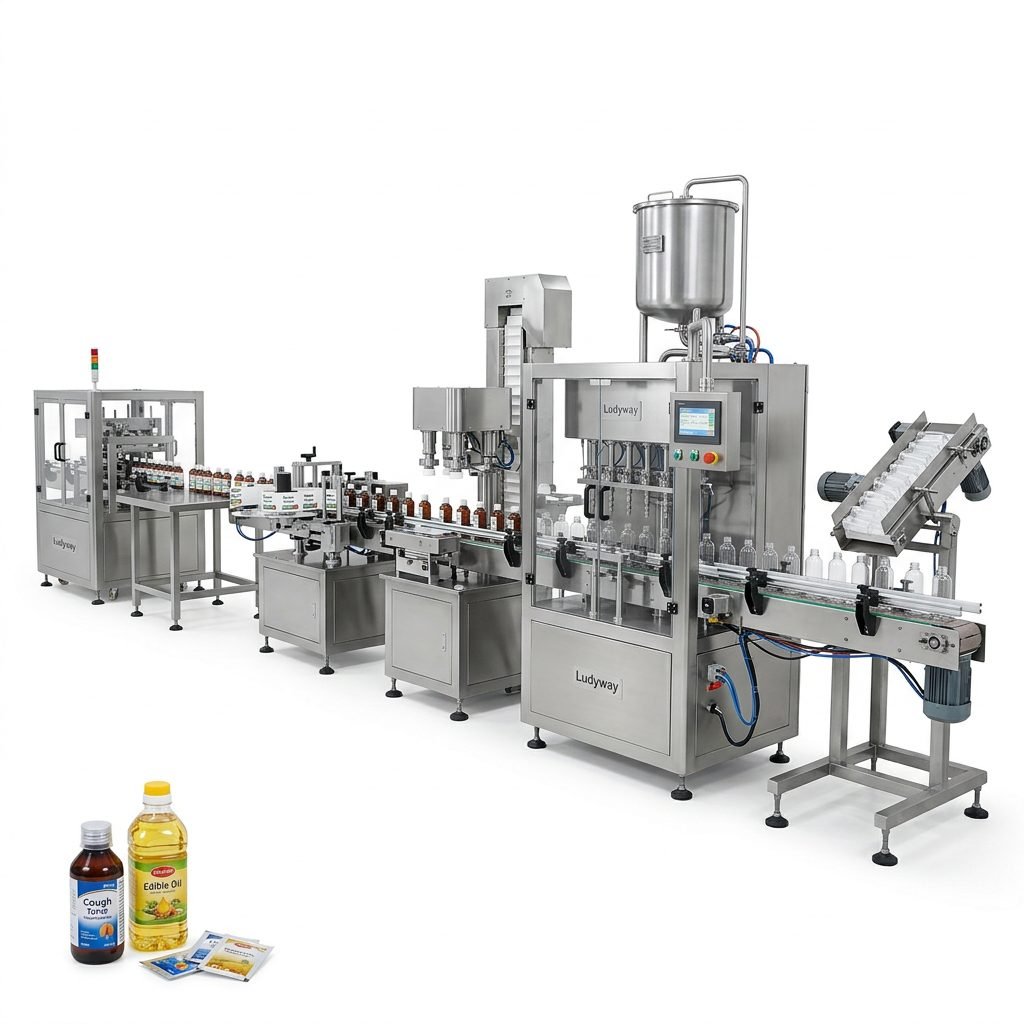
Bottle Tablet Packing Machines
These systems count tablets and fill them into plastic or glass bottles, followed by capping, sealing, and labeling. They are widely used for supplements, OTC drugs, and prescription products.
- Good for medium to high output
- Suitable for many tablet sizes
- Easy to integrate with desiccant insertion and cotton insertion
- Ideal for bulk retail packaging
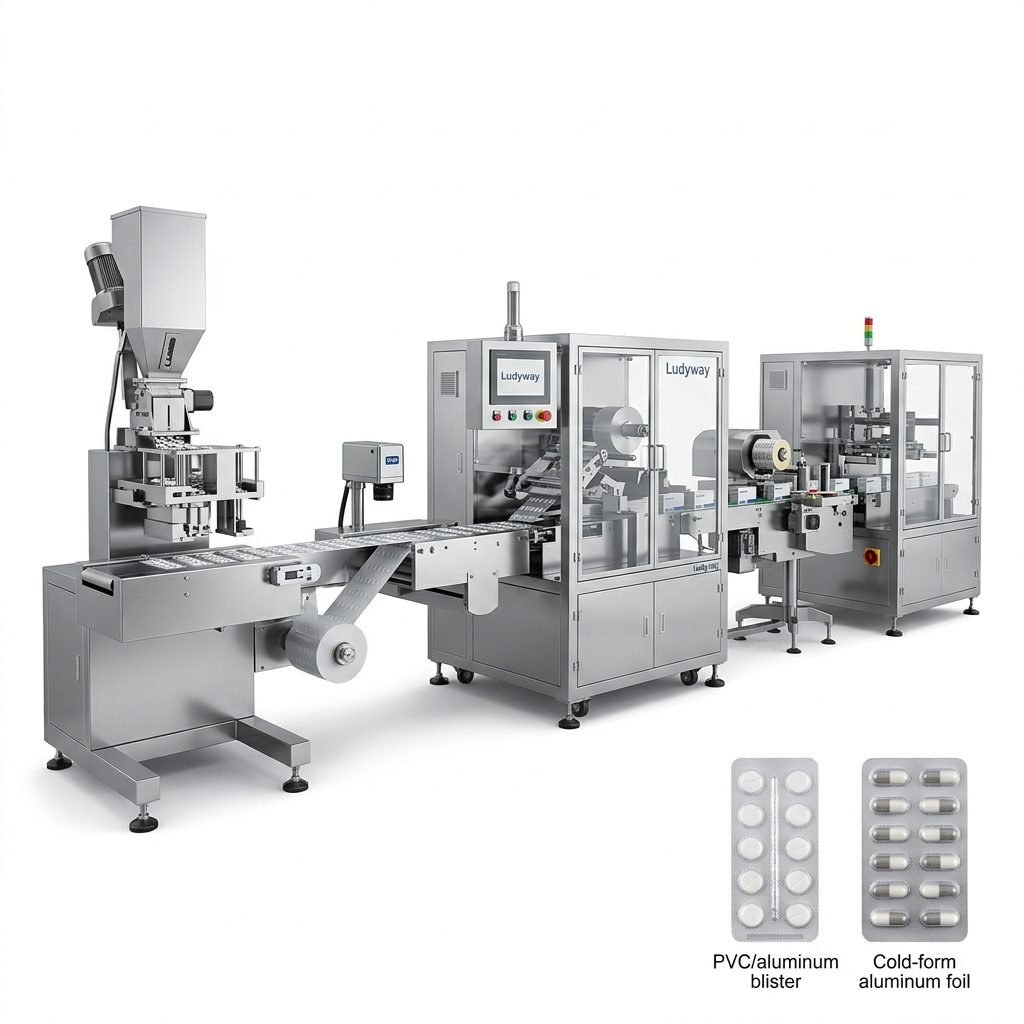
Blister Packing Machines
Blister machines place tablets into formed cavities and seal them with lidding foil. This format offers strong protection, unit-dose convenience, and excellent traceability.
- Popular in pharmaceutical applications
- Improves dose separation and patient compliance
- Strong moisture barrier with suitable materials
- Supports premium retail presentation
Strip Packing Machines
Strip packing seals tablets between layers of film or foil in a continuous strip. This method is compact and suitable for unit-dose medication packaging.
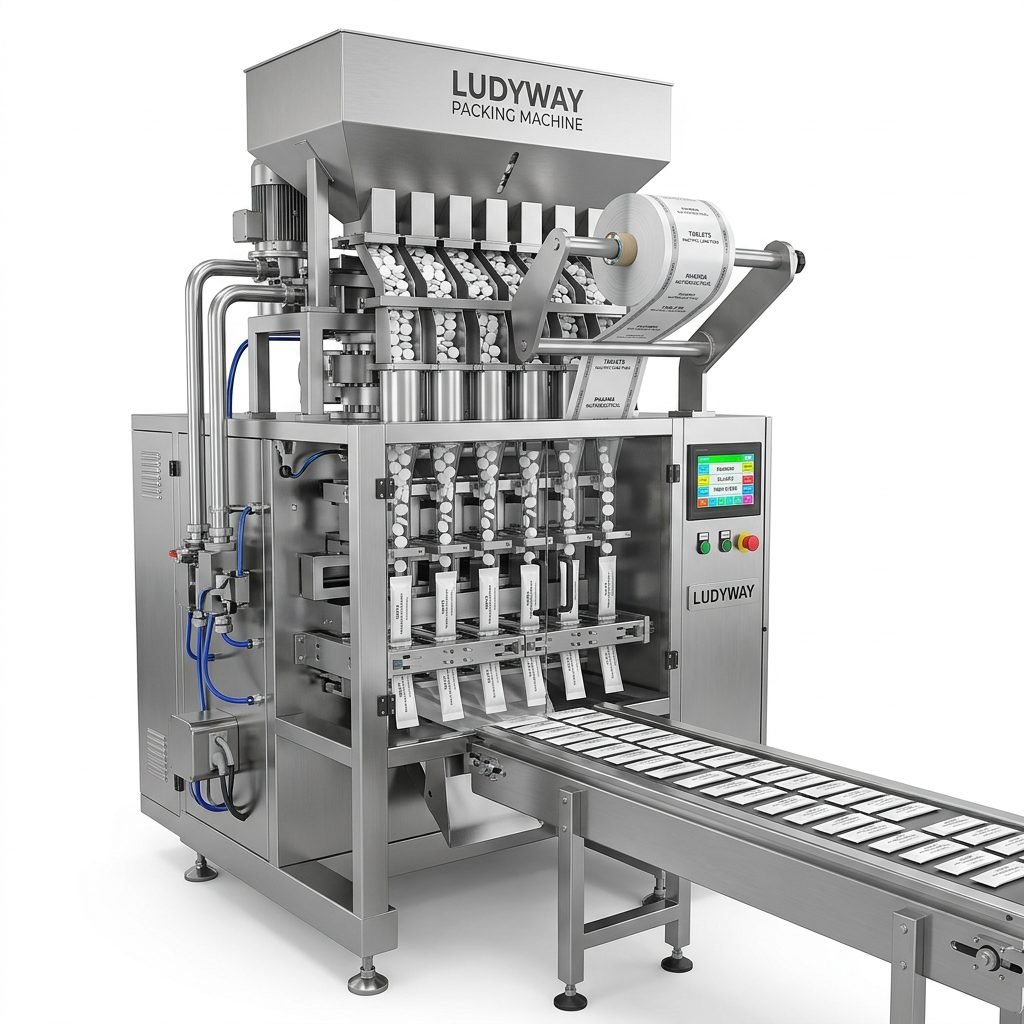
Sachet or Pouch Tablet Packing Machines
These machines pack one or more tablets into flexible sachets or small pouches. They are often used for sample packs, travel-size products, functional tablets, or specialty healthcare products.
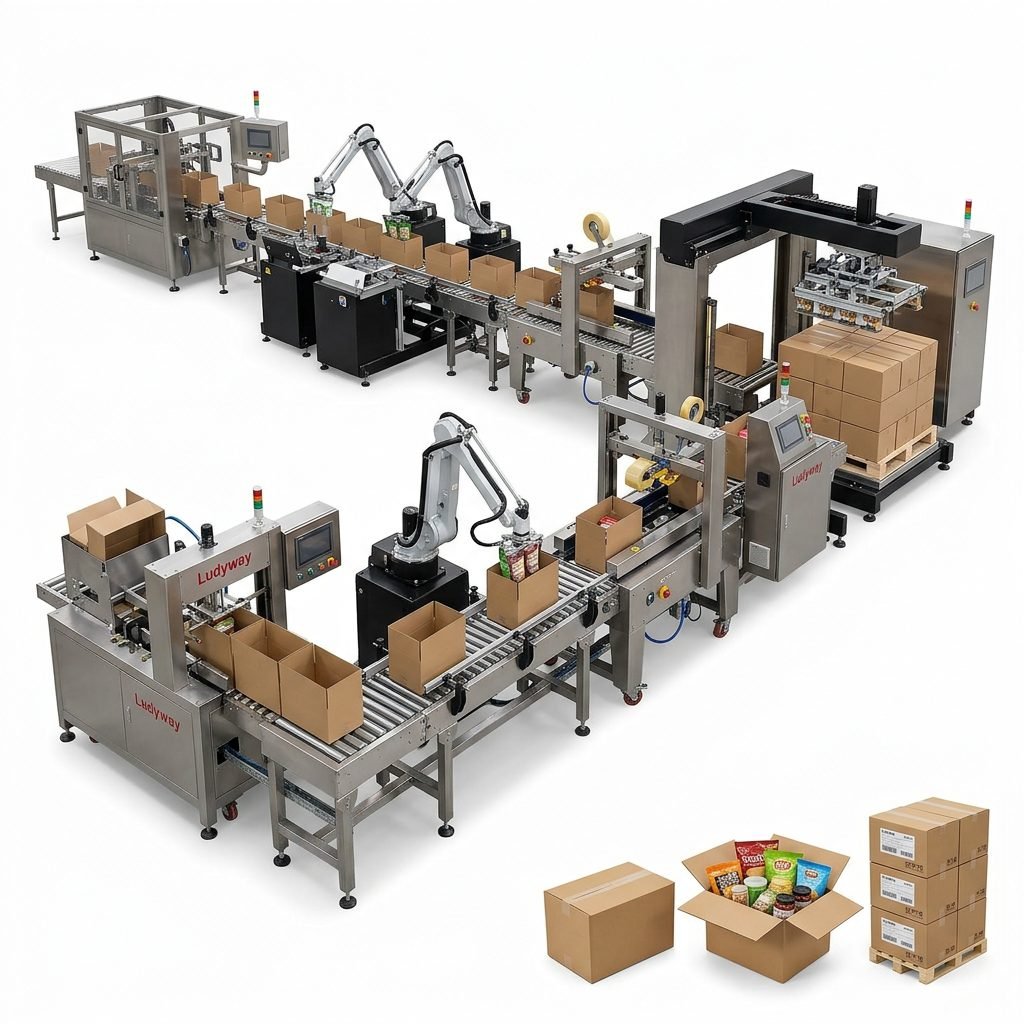
Cartoning and Secondary Packaging Systems
Once tablets are packed into primary packaging, secondary systems automatically place the finished units into cartons, bundles, shipping cases, and pallets.
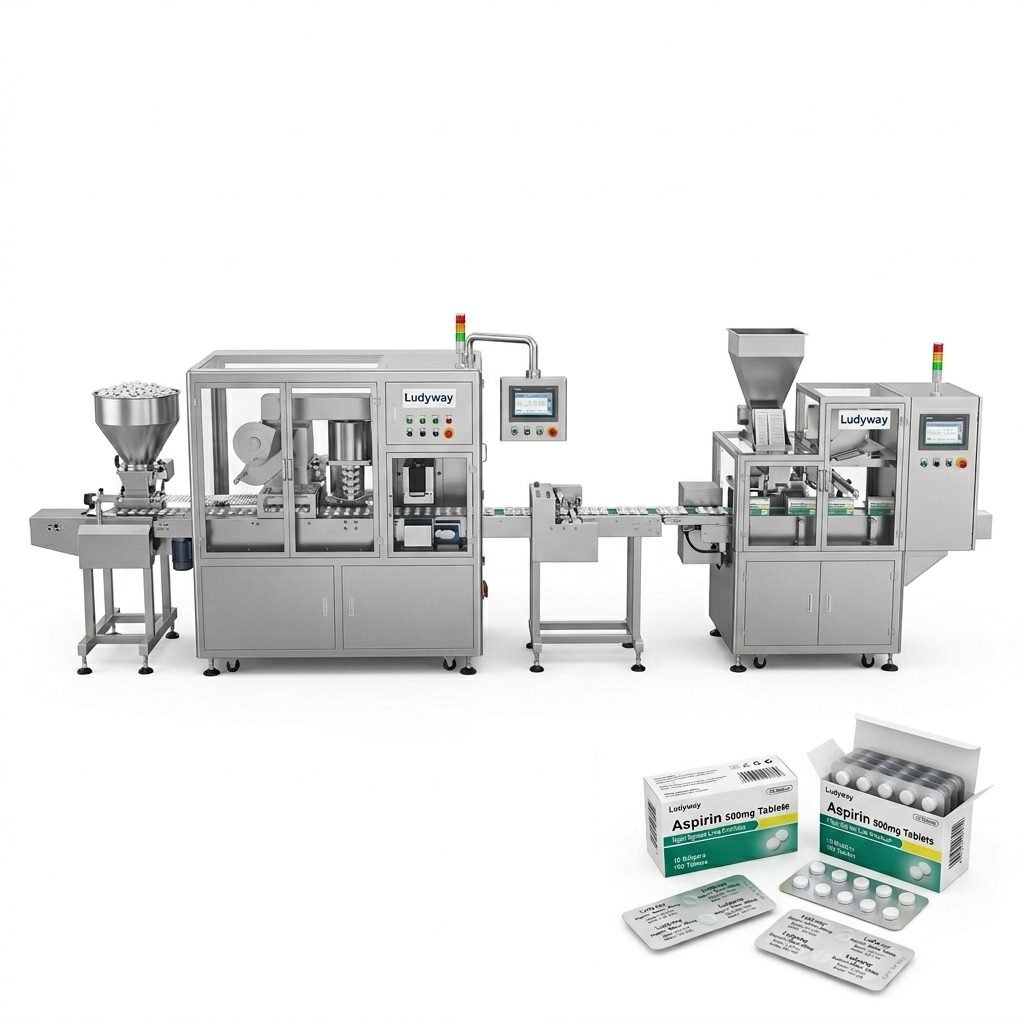
Key Components of a Modern Tablet Packaging Line
A complete tablet packaging line may include much more than the core packing machine itself. For higher automation, manufacturers often combine multiple systems into one synchronized line.
- Tablet elevator or feeder
- Dust removal unit
- Electronic tablet counter
- Bottle unscrambler or blister forming unit
- Desiccant inserter
- Cotton inserter
- Capping machine
- Induction sealer
- Labeling machine
- Inkjet or thermal transfer coder
- Checkweigher and reject station
- Cartoner and case packer
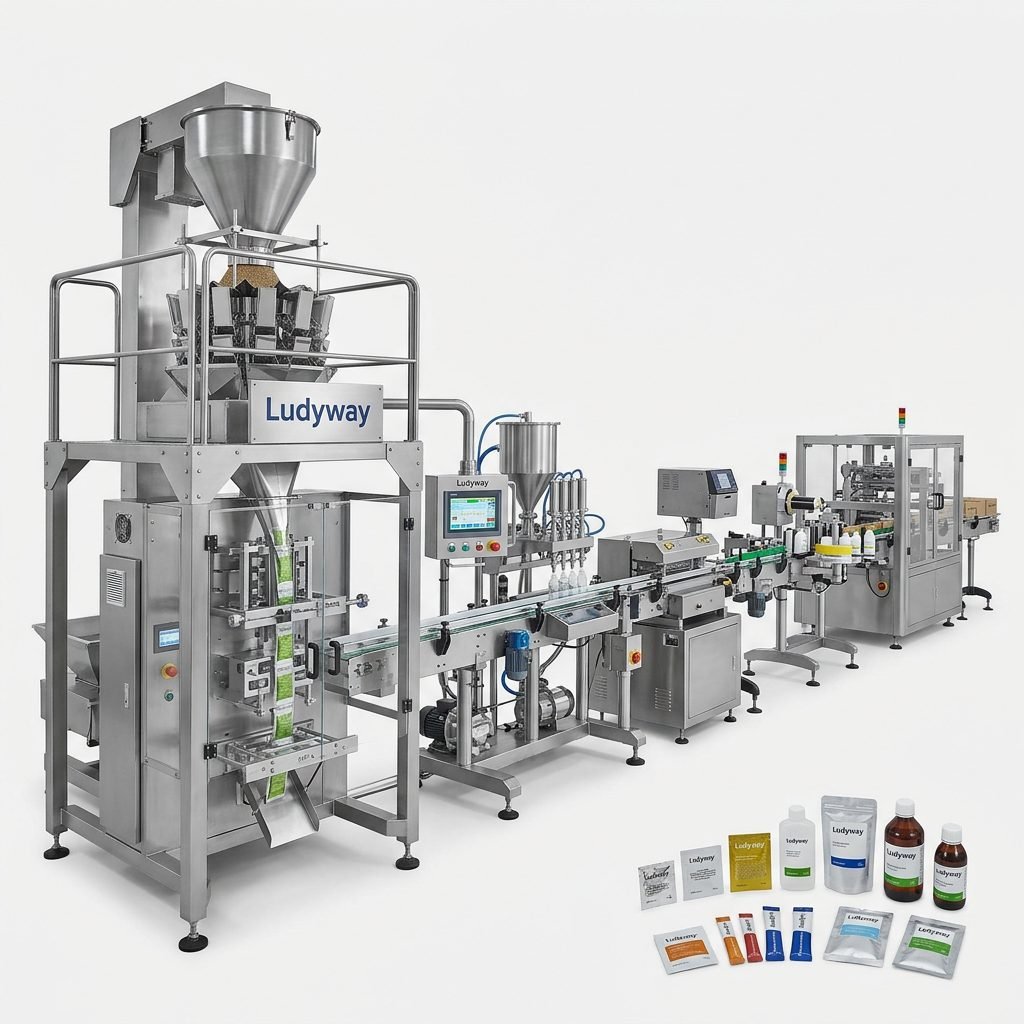
If you need a more integrated solution, working with an experienced supplier such as tablet packing machine manufacturer Ludyway can help you combine standalone equipment into a scalable turnkey packaging line.
Industries That Use Tablet Packing Machines
Tablet packaging equipment is widely used across several industries:
- Pharmaceutical manufacturing
- Nutraceutical and dietary supplement production
- Traditional herbal medicine
- Veterinary medicine
- Functional health products
- Effervescent and dissolvable tablet production
Benefits of Using an Automatic Tablet Packing Machine
Automatic systems provide measurable gains in both productivity and quality. Compared with manual or semi-manual packaging, they offer better consistency and stronger process control.
| Benefit | Business Impact |
|---|---|
| Higher speed | Increases daily production capacity |
| Better counting accuracy | Reduces customer complaints and giveaway |
| Improved hygiene | Minimizes human contact with products |
| Stable sealing quality | Protects shelf life and packaging integrity |
| Lower labor reliance | Cuts operating cost over time |
| Traceability support | Helps meet regulatory and audit requirements |
How to Choose the Right Tablet Packing Machine
Choosing the right machine means matching technical performance with your actual production goals. A machine that is too simple can limit growth, while one that is too complex may increase unnecessary investment.
1. Define Your Packaging Format
Start with the end package. Do you need bottles, blisters, strips, or sachets? This single decision determines much of the machine structure, material compatibility, and line configuration.
2. Understand Your Tablet Characteristics
Tablet size, shape, hardness, coating, friability, and dust level all affect feeding and counting performance. Fragile tablets may require gentler handling systems.
3. Set Your Output Target
Estimate packages per minute, shift volume, and annual production. Always consider future expansion so the machine can support business growth.
4. Check Accuracy Requirements
For pharma and premium supplements, precise counting and low rejection rates are essential. Ask suppliers for tested counting accuracy data, not just speed claims.
5. Review Compliance Standards
If your products enter regulated markets, make sure the system supports required documentation, material specifications, validation, and quality inspection processes.
6. Consider Changeover Time
If you run multiple tablet sizes or package formats, fast and simple changeover becomes very important. This can greatly reduce downtime between SKUs.
7. Evaluate Integration Needs
Do you only need a single machine, or a complete line with feeding, sealing, labeling, cartoning, and palletizing? Integrated planning avoids future compatibility issues.
8. Assess Service and Spare Parts Support
Even a high-quality machine requires maintenance and occasional spare parts. Choose a manufacturer with strong technical support, export experience, and clear after-sales service.
Checklist Before You Buy
- What tablet types will be packed?
- Which packaging format is required?
- What is the target speed per minute?
- What count accuracy do you need?
- Do you need dust extraction or gentle handling?
- How many product sizes will run on one machine?
- What packaging materials will be used?
- Do you need serialization, coding, or vision inspection?
- Do you need a standalone unit or turnkey line?
- What technical support is available after installation?
Common Problems and How the Right Machine Prevents Them
Many packaging issues come from poor machine matching rather than poor product quality. The right equipment design helps reduce these common problems:
- Tablet breakage: solved with controlled feeding and low-impact transfer
- Inaccurate counts: improved by advanced electronic counting sensors
- Seal failure: reduced through stable temperature and pressure control
- Frequent downtime: minimized by robust design and easy maintenance access
- Cross-contamination: controlled through cleanable structure and sanitary design
- Slow changeovers: improved with modular tooling and recipe storage
Tablet Packing Machine Price: What Affects Cost?
Tablet packing machine pricing can vary widely depending on specification. The lowest price is rarely the best value if reliability, compliance, and service are critical.
Main cost factors include:
- Machine type: bottle, blister, strip, or sachet
- Automation level
- Speed and number of lanes or heads
- Counting and inspection technology
- Material compatibility
- Customization level
- Integration with end-of-line equipment
- Validation and documentation requirements
Should You Buy a Standalone Machine or a Turnkey Line?
If you only need one packaging step, a standalone machine may be enough. But if your production is growing, a turnkey line often delivers better long-term efficiency.
Choose a Standalone Machine If:
- You already have upstream and downstream equipment
- You are replacing one old machine
- Your budget is limited in the short term
Choose a Turnkey Line If:
- You want synchronized production from feeding to final packing
- You are launching a new factory or product line
- You need better throughput, automation, and line compatibility
- You want one supplier responsible for integration and support
Maintenance Tips for Long-Term Performance
A high-performance tablet packing machine should also be easy to maintain. Regular maintenance helps preserve counting accuracy, sealing quality, and machine life.
- Clean product-contact areas routinely
- Inspect sensors and counting channels
- Check wear parts before failure occurs
- Calibrate inspection systems regularly
- Monitor sealing temperature and pressure consistency
- Keep spare parts in stock for critical components
- Train operators on startup, shutdown, and changeover procedures
Final Thoughts for Buyers
The right tablet packing machine does more than package tablets. It improves product safety, operational efficiency, packaging consistency, and scalability. The best choice depends on your tablet type, package format, output target, compliance needs, and future expansion plans.
Before making a final decision, compare not only machine speed, but also counting accuracy, changeover flexibility, line integration capability, service response, and total cost of ownership. A well-matched machine can support your production for many years while helping your brand maintain quality and reliability in competitive markets.