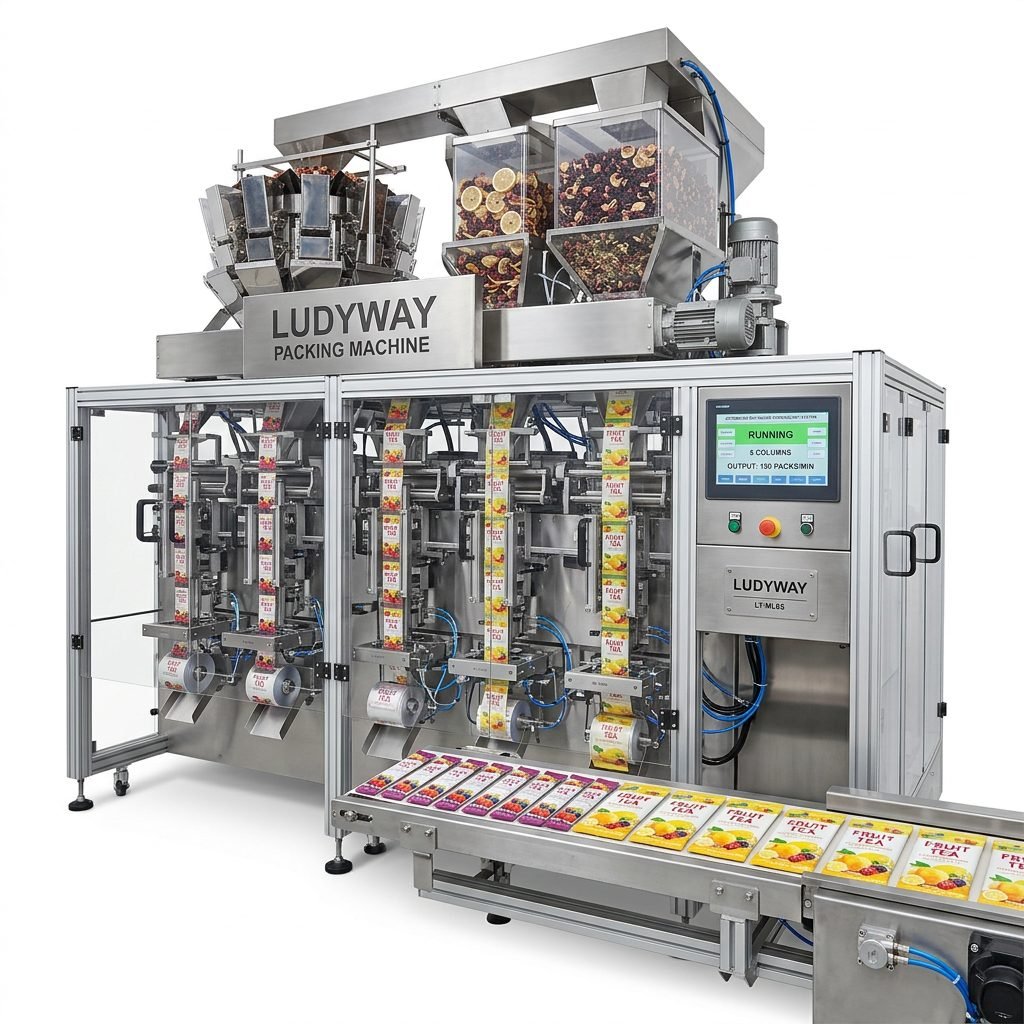
Cement packing machines play a critical role in modern cement production and distribution. Whether you run a grinding plant, a bulk terminal, or a building materials business, the right packing system can improve bagging speed, weight accuracy, dust control, and labor efficiency. Choosing the wrong machine, however, can lead to frequent downtime, inconsistent bag weights, excessive dust, and rising maintenance costs.
This guide explains the main types of cement packing machines, their key features, and how to select the most suitable system for your production goals.
What Is a Cement Packing Machine?
A cement packing machine is specialized equipment used to fill cement into valve bags, open-mouth bags, jumbo bags, or other industrial packaging formats. It is typically installed at the end of a cement production line or bulk storage system and works together with conveyors, weighing units, dust collection systems, palletizers, and bag handling equipment.
Its main function is to ensure that cement is packed quickly and accurately while minimizing material loss and airborne dust. In high-volume plants, automated cement packing machines are essential for maintaining stable throughput and meeting delivery schedules.
Why the Right Cement Packing Machine Matters
- Improves packing speed for higher output
- Reduces underweight and overweight bags
- Helps control dust in the packaging area
- Lowers labor intensity and operator dependency
- Supports stable bag appearance and stacking quality
- Enhances plant safety and cleaner operation
- Integrates more easily with automated palletizing and dispatch systems
Main Types of Cement Packing Machines
1. Impeller Cement Packing Machine
The impeller type is one of the most common solutions for packing fine cement powder into valve bags. It uses a rotating impeller to force material into the bag at high speed. This design is well suited for large-capacity cement plants that need continuous and efficient operation.
Best for:
- High-output cement production lines
- Fine and free-flowing cement powder
- Plants focused on speed and consistency
Advantages:
- High filling speed
- Stable performance in continuous production
- Widely used and proven in the cement industry
Considerations:
- Requires good maintenance of wear parts
- Material characteristics can affect filling efficiency
2. Air Fluidized Cement Packing Machine
This type uses compressed air to fluidize cement and assist the filling process. It is often selected where dust control and smooth powder flow are important. Air-assisted filling can provide gentle but efficient packing, especially for powders with challenging flow behavior.
Best for:
- Powders requiring smooth flow assistance
- Operations with strong dust-management requirements
- Plants needing accurate bag filling with reduced spillage
3. Rotary Cement Packing Machine
A rotary cement packing machine features multiple filling spouts arranged around a rotating structure. As the machine rotates, bags are attached, filled, and discharged in sequence. This setup is ideal for large plants with high daily bagging demand.
Best for:
- Medium to very large cement factories
- Continuous bulk bagging operations
- Automated bag handling lines
Key benefit:
High throughput with multiple spouts operating in rotation, making it a preferred choice for high-capacity packing stations.
4. Inline or Single-Spout Cement Packing Machine
This machine uses one or a few filling points arranged in a linear structure. It is often chosen by smaller factories, regional terminals, or plants with lower bagging volumes. While it does not match the throughput of a large rotary system, it offers easier operation and lower initial investment.
Best for:
- Small and medium-scale operations
- Lower-capacity packing requirements
- Budget-conscious projects
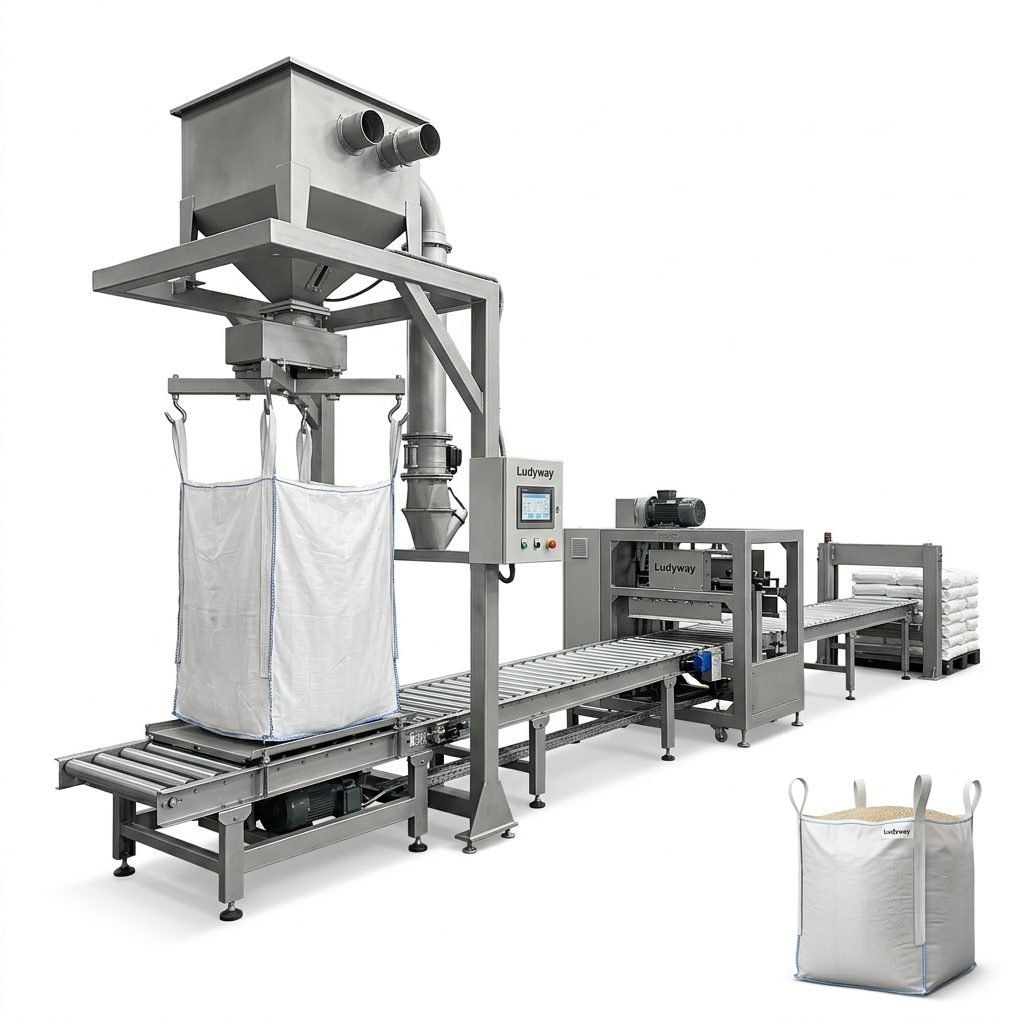
5. Jumbo Bag / Big Bag Packing Machine
For cement suppliers handling bulk powder in large flexible intermediate bulk containers, a jumbo bag filling machine is a practical option. These systems are designed for 500 kg to 2,000 kg bags or customized capacities depending on logistics needs.
This format is often used for exports, special cement grades, and industrial customers that prefer bulk bag discharge instead of standard 25 kg or 50 kg valve bags.
Comparison of Cement Packing Machine Types
| Machine Type | Typical Use | Output Level | Main Strength |
|---|---|---|---|
| Impeller Type | Valve bag cement filling | High | Fast, widely used, reliable |
| Air Fluidized Type | Dust-sensitive powder filling | Medium to High | Smooth flow and good dust control |
| Rotary Type | Large-scale cement plants | Very High | Multi-spout continuous packing |
| Inline / Single-Spout | Smaller factories | Low to Medium | Lower cost and simple structure |
| Jumbo Bag Filler | Bulk industrial packaging | Medium | Handles large bag capacities |
Key Features to Look For
Accurate Weighing System
A reliable cement packing machine should deliver consistent bag weights with minimal deviation. Accurate weighing helps reduce giveaway, avoid customer complaints, and support compliance with commercial standards.
Efficient Dust Collection
Cement is highly dusty, so integrated dust extraction is essential. Look for machines with sealed filling nozzles, dust return systems, and compatibility with central dust collectors.
Strong Structural Design
Because cement is abrasive, the machine should use wear-resistant materials in key contact parts. A durable frame and robust components help extend service life in demanding plant environments.
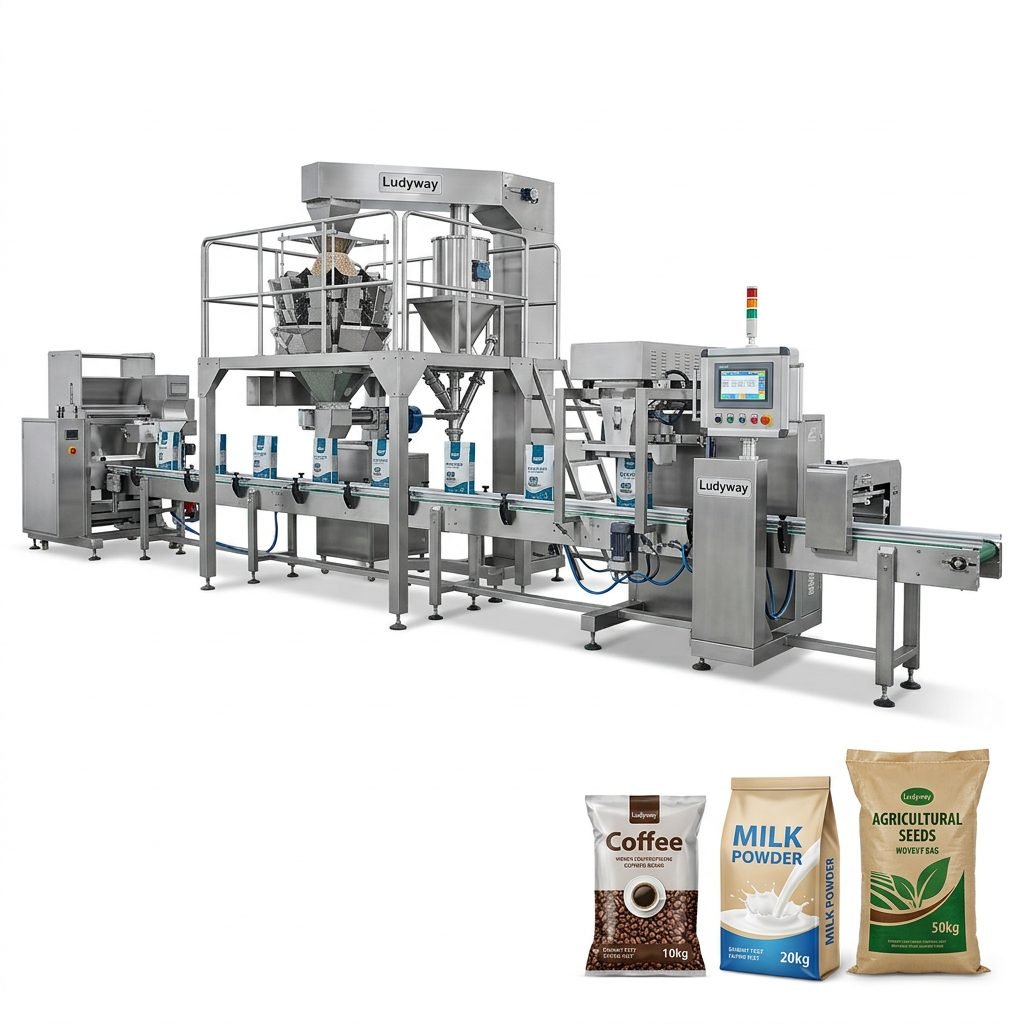
Automation Compatibility
Modern packaging lines often require more than just filling. Consider whether the machine can connect with:
- Bag applicators
- Belt or roller conveyors
- Checkweighers
- Metal detection or inspection systems
- Robotic palletizers
- Stretch wrappers and dispatch systems
Easy Operation and Maintenance
A user-friendly interface, simple parameter adjustment, and easy access to wear parts can significantly reduce maintenance downtime and operator training time.
Bag Type Adaptability
Not all cement plants use the same packaging format. Confirm whether the machine supports the bag type and size you need, such as 25 kg, 40 kg, 50 kg valve bags, or jumbo bags.
How to Choose the Right Cement Packing Machine
1. Define Your Required Output
Start with your target bags per hour or tons per hour. A small terminal may only need a compact inline machine, while a major cement producer may require a high-speed rotary system with multiple spouts.
2. Understand Cement Characteristics
Different cement products behave differently during filling. Particle fineness, moisture level, temperature, and flowability can all affect machine selection. A machine that works well for one cement grade may not perform equally well for another.
3. Consider Plant Layout
Available floor space, silo discharge position, dust collection routing, and conveyor arrangement all influence which machine configuration fits best. A compact design may be important for retrofit projects.
4. Evaluate Automation Level
If you want to reduce manual handling, choose a machine that can be integrated into a more complete packaging line. A well-planned system may include automatic bag feeding, conveying, palletizing, and wrapping.
5. Focus on Accuracy and Reliability
For cement producers, stable long-term performance is often more important than low purchase price. Frequent stoppages, poor sealing, or inaccurate filling can cost far more over time than a higher-quality machine.
6. Check Service and Spare Parts Support
A cement packing machine is a long-term investment. Make sure the supplier can provide technical support, replacement parts, installation guidance, and troubleshooting assistance when needed.
Common Buying Mistakes to Avoid
- Choosing based only on price
- Ignoring cement flow properties
- Underestimating future production expansion
- Overlooking dust control requirements
- Buying a machine that cannot integrate with downstream equipment
- Failing to confirm local power, air, and installation conditions
Is a Standalone Machine or Complete Line Better?
That depends on your operational goals. A standalone cement packing machine may be enough if you only need basic filling. But if your plant aims for higher efficiency, cleaner operation, and reduced manpower, a complete packaging line often delivers better value.
A full solution may include storage discharge, feeding, weighing, filling, dust recovery, conveying, palletizing, wrapping, and control integration. For companies seeking scalable industrial packaging solutions, working with an experienced manufacturer such as Ludyway cement packing machine solutions can help streamline equipment selection and system planning.
Quick Selection Checklist
- What is your required packing capacity?
- What bag size and bag type will you use?
- How fine or difficult is your cement to fill?
- Do you need single-spout or rotary multi-spout packing?
- How important are dust control and environmental standards?
- Will you add palletizing or full-line automation later?
- Can the supplier provide installation and after-sales support?
Final Thoughts
Selecting the right cement packing machine requires balancing output, accuracy, bag type, automation, maintenance needs, and long-term operating cost. For smaller operations, a simple inline machine may be enough. For large-scale cement plants, rotary or advanced automated systems are usually the better investment.
When comparing options, focus on performance stability, dust control, weighing precision, and supplier support. A well-matched machine will not only improve bagging efficiency today, but also support smoother plant expansion in the future.