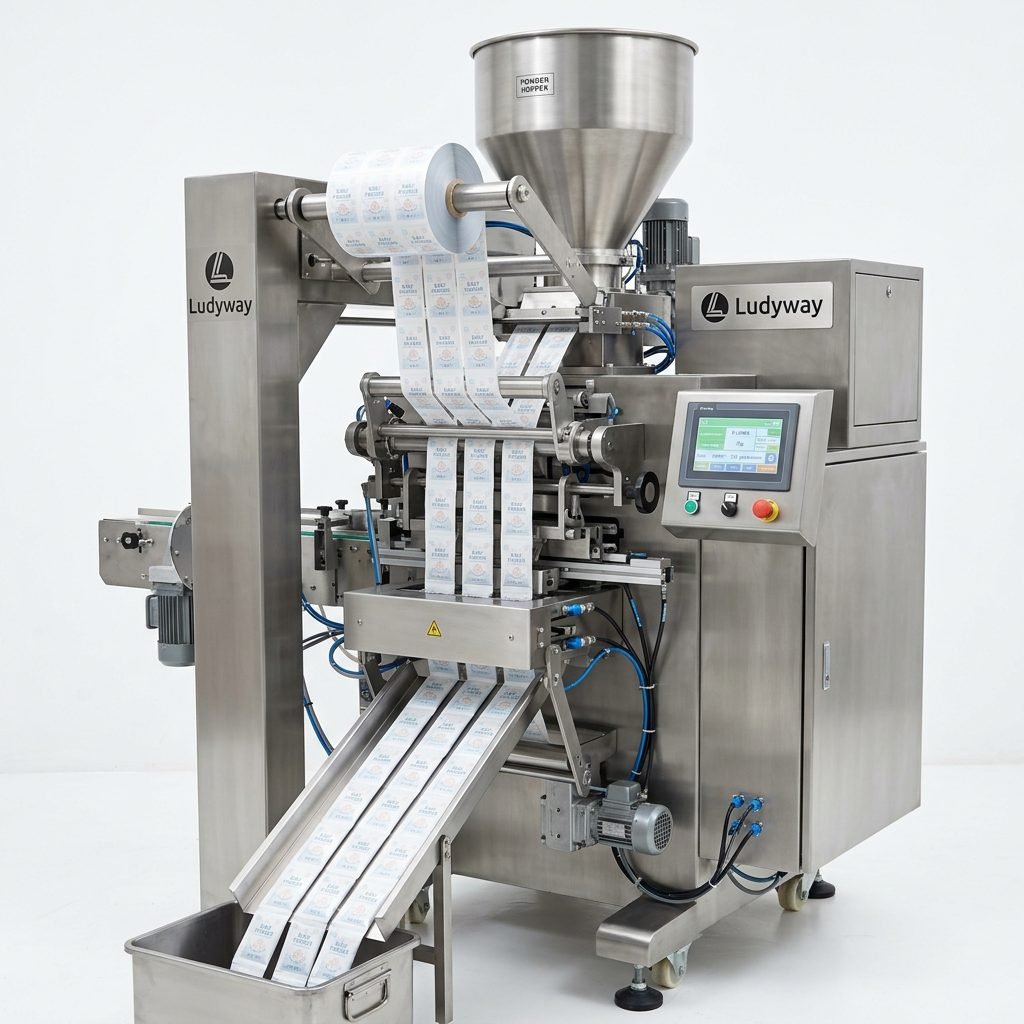
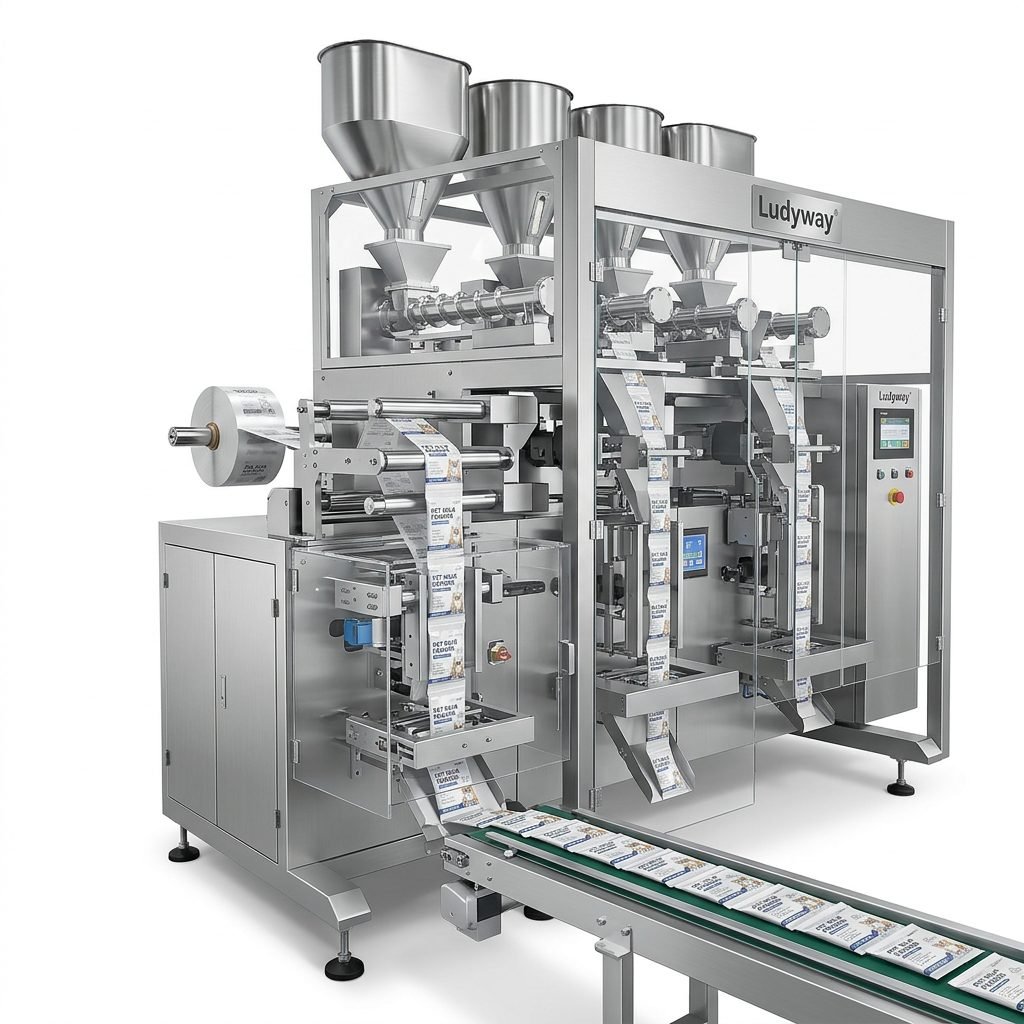
In modern food production, seasoning products must be packed with speed, accuracy, hygiene, and consistency. Whether the product is spice powder, soup mix, chicken essence, granulated seasoning, ramen flavor sachets, or blended condiment formulations, the right packaging machine can significantly improve output while reducing waste and labor costs.
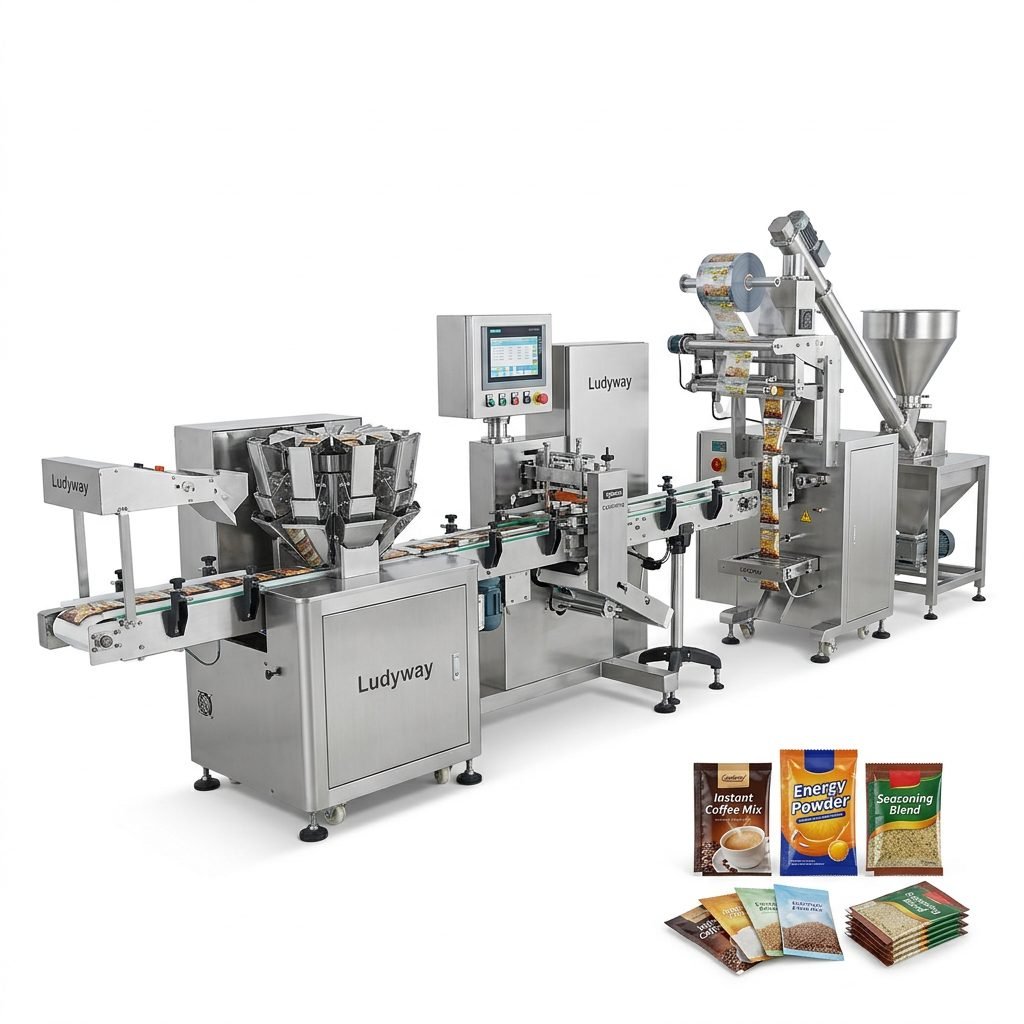
A seasoning packaging machine is designed to handle a wide range of free-flowing and non-free-flowing materials, making it an essential solution for manufacturers that need reliable packaging for powder and granule products. From single-serve sachets to stick packs and premade pouches, these systems support flexible packaging formats for retail, foodservice, and industrial applications.
Why Seasoning Packaging Machines Matter
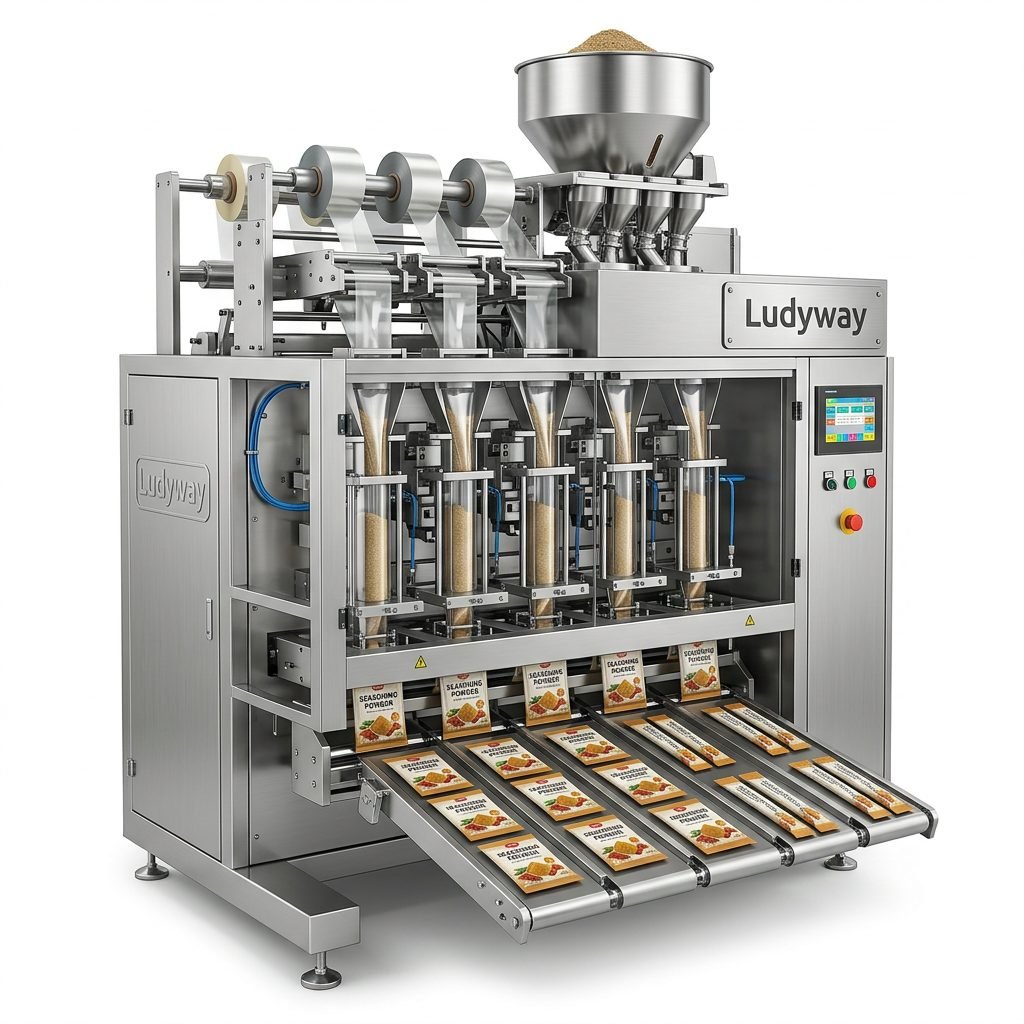
Seasoning products are often sensitive to moisture, dust, dosage variation, and sealing quality. In manual or semi-automatic operations, it is common to face issues such as inconsistent fill weights, powder leakage, poor seal appearance, and low production efficiency. An automatic packaging system helps solve these problems by combining dosing, bag forming, filling, sealing, coding, and discharge into a streamlined production process.
- Improved filling accuracy for powders and granules
- Higher packaging speed for growing production demand
- Cleaner operation with reduced product dust and contamination risk
- More consistent package appearance and seal quality
- Lower labor dependency and easier line management
- Better compatibility with downstream cartoning and case packing
Products Commonly Packed with Seasoning Machines
These machines are suitable for a wide range of dry seasoning applications in the food industry. Depending on the dosing system and bag type, they can package fine powders, mixed powders, granules, flakes, and small blended ingredients.
| Product Type | Typical Examples | Recommended Filling Method |
|---|---|---|
| Fine Powder | Chili powder, garlic powder, onion powder, soup powder | Auger filler |
| Free-Flowing Granules | Salt, sugar substitute, MSG, seasoning granules | Volumetric cup or weighing system |
| Mixed Formulas | Noodle seasoning, broth mix, hot pot seasoning | Multi-head weigher or customized dosing |
| Difficult Powders | Sticky spice blends, hygroscopic ingredients | Servo auger with agitation and dust control |
Main Packaging Formats for Powder and Granule Seasonings
Different market channels require different package styles. Retail brands often prefer attractive sachets or stick packs for convenience, while foodservice and bulk buyers may require larger pouches. A modern seasoning packaging machine can be configured for multiple formats based on output goals and product characteristics.
- Back-seal sachets for common single-dose seasoning applications
- 3-side seal sachets for clean presentation and compact packs
- 4-side seal sachets for premium appearance and stronger sealing structure
- Stick packs for instant soup, drink powders, and travel-size seasonings
- Premade pouches for larger retail or specialty seasoning products
Key Machine Types Used in Seasoning Packaging
1. Vertical Form Fill Seal Machines
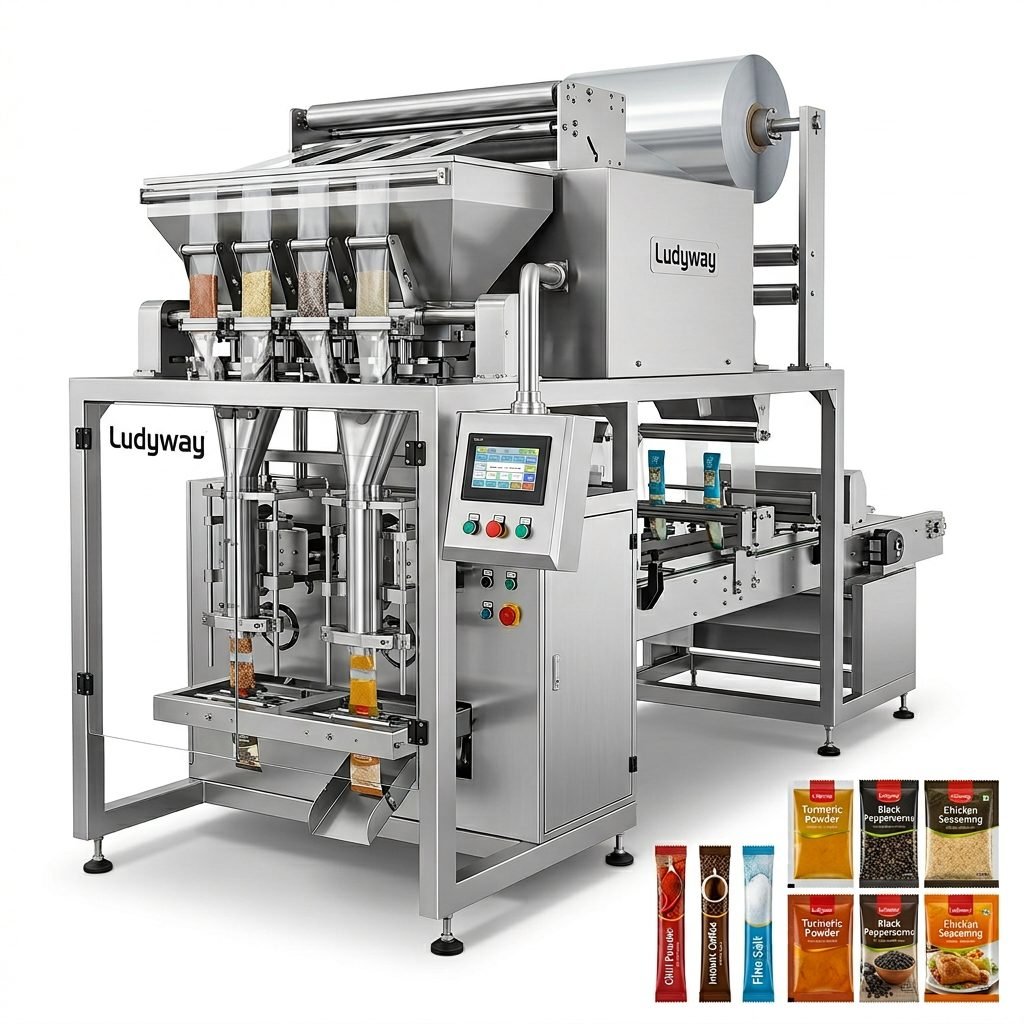
VFFS machines are widely used for seasoning powders and granules because they offer a compact footprint and efficient automated packaging. They form the bag from roll film, fill the product, and seal it in one continuous cycle. This is a strong option for manufacturers looking for stable output and cost-effective packaging.
2. Multi-Lane Sachet and Stick Pack Machines
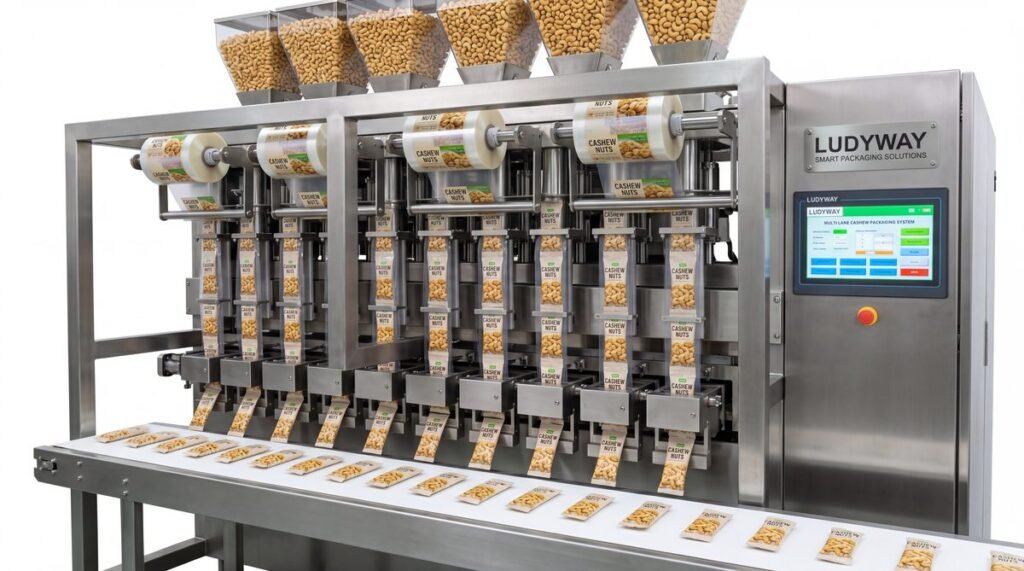
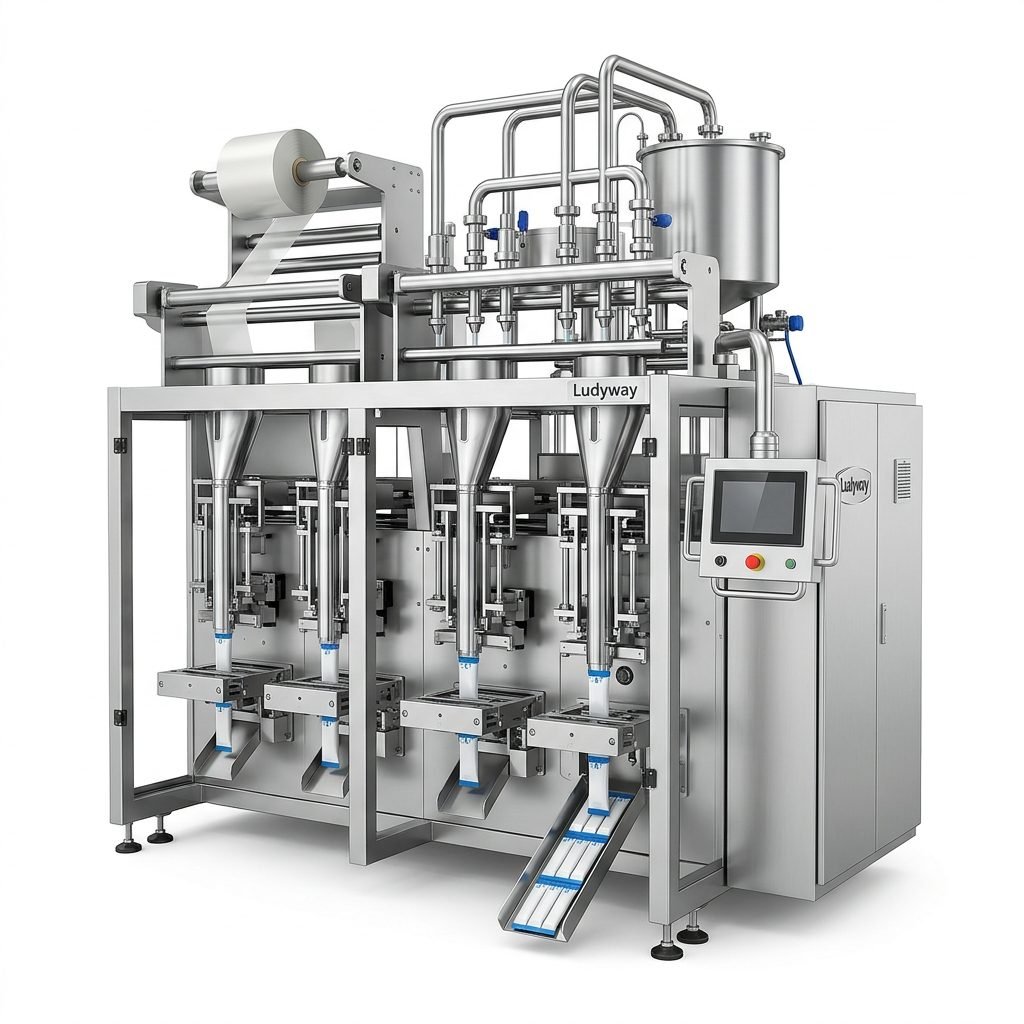
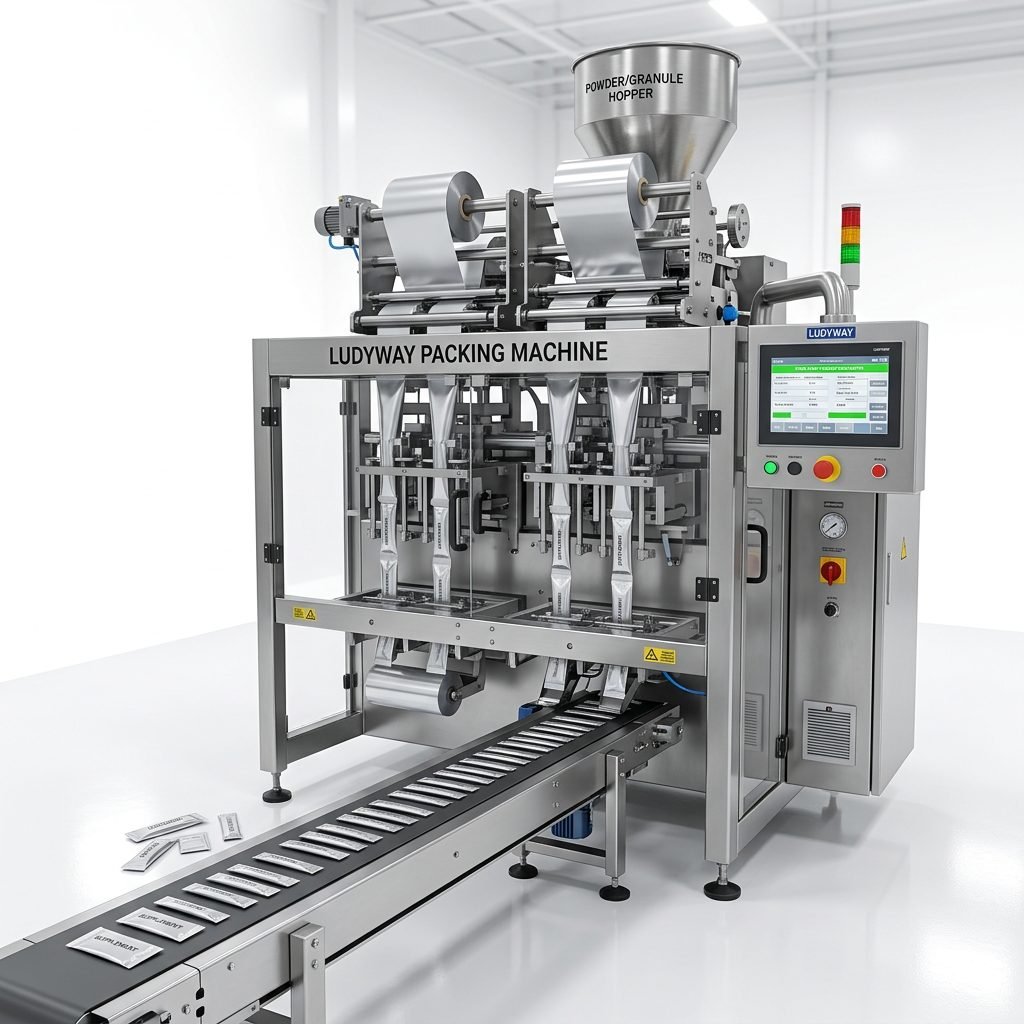
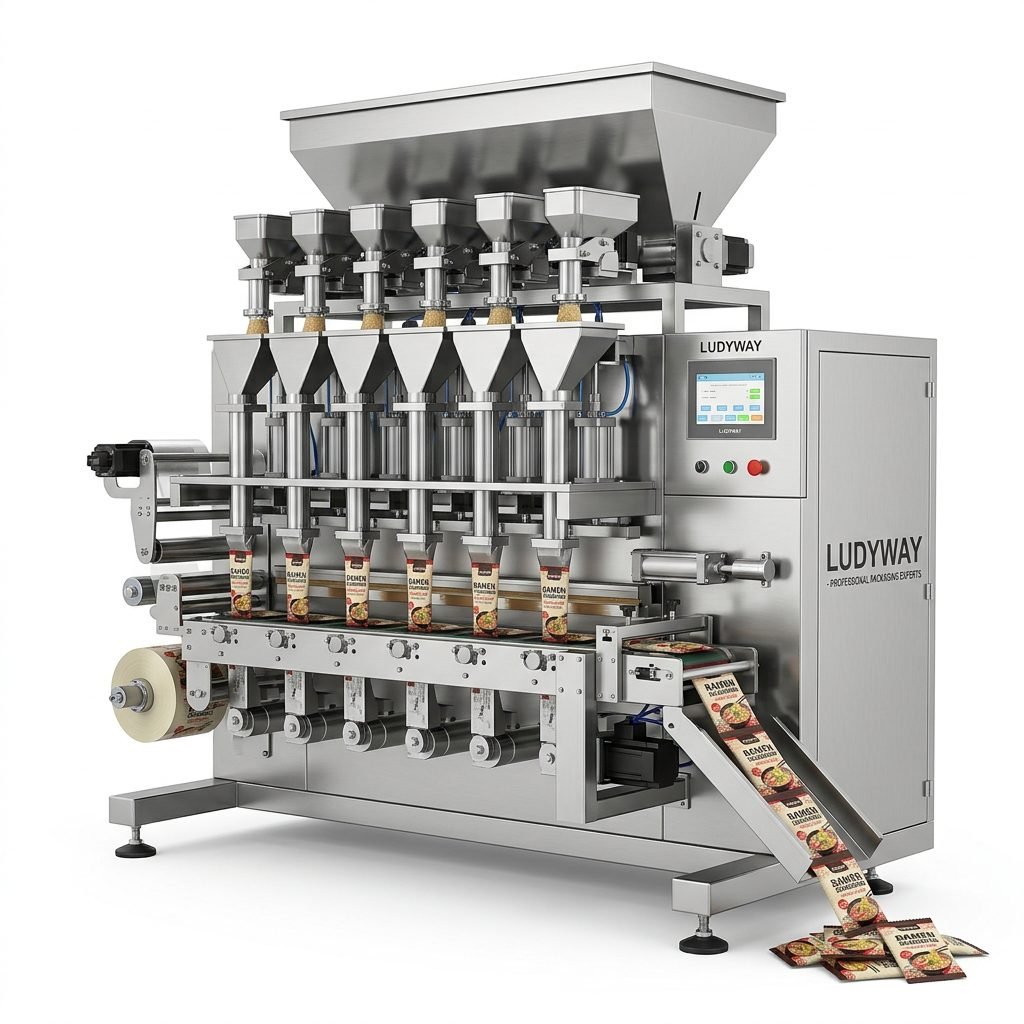
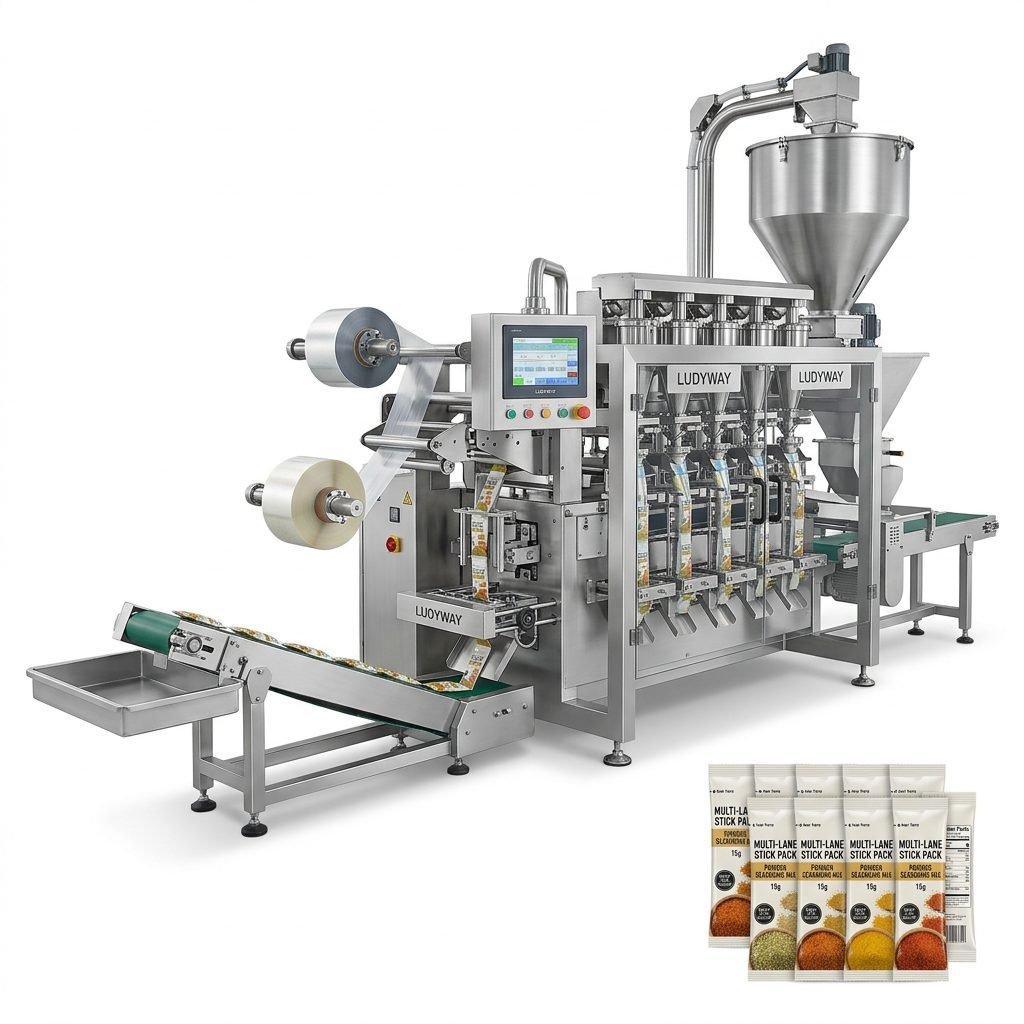
For high-volume production of small-dose seasoning packs, multi-lane machines provide outstanding efficiency. Several lanes run simultaneously, allowing manufacturers to produce large quantities of retail sachets or stick packs in less time. These systems are ideal for instant noodles, seasoning kits, takeaway condiments, and foodservice portion packs.
3. Premade Pouch Packaging Machines
For zipper pouches, stand-up pouches, or specialty bag shapes, premade pouch machines are a practical solution. They are often chosen for premium spice blends, mixed seasonings, and export-ready retail packaging that requires better shelf appearance.
4. Turnkey Packaging Lines
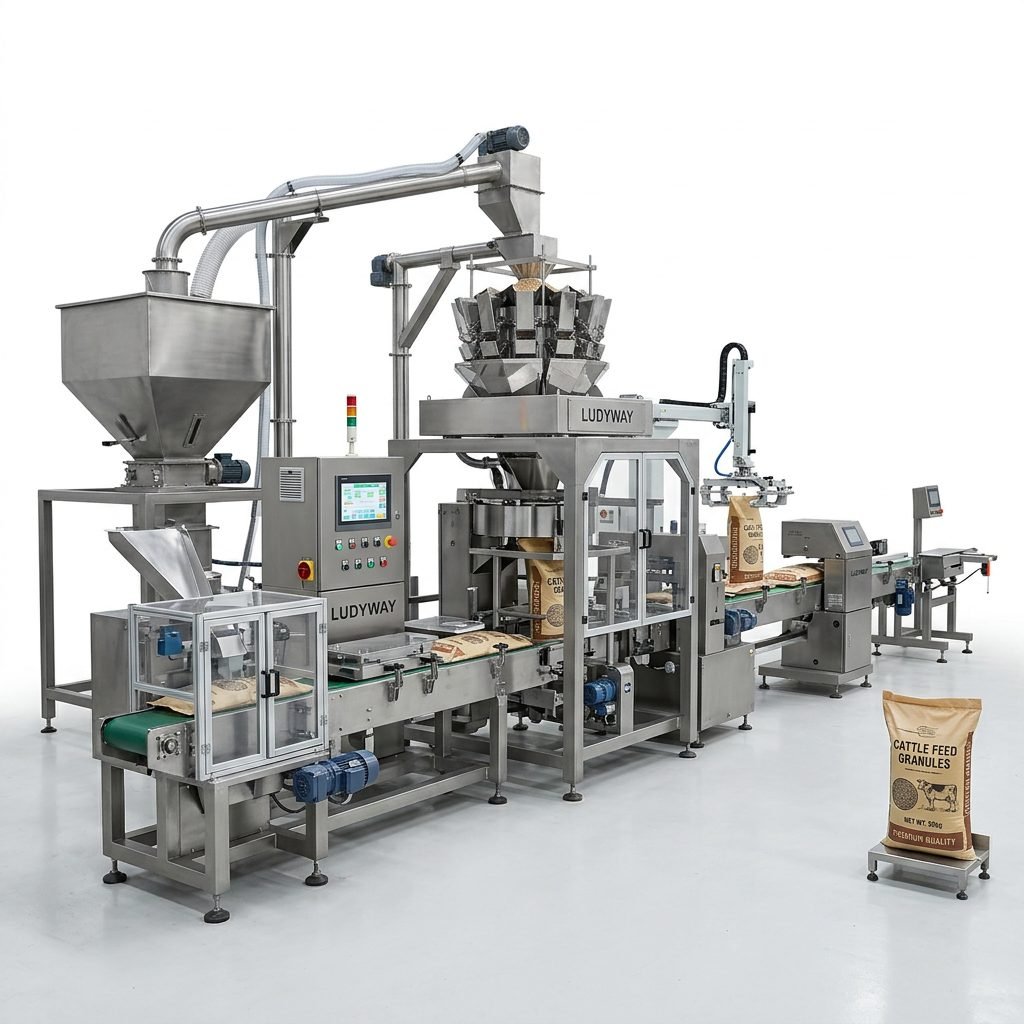
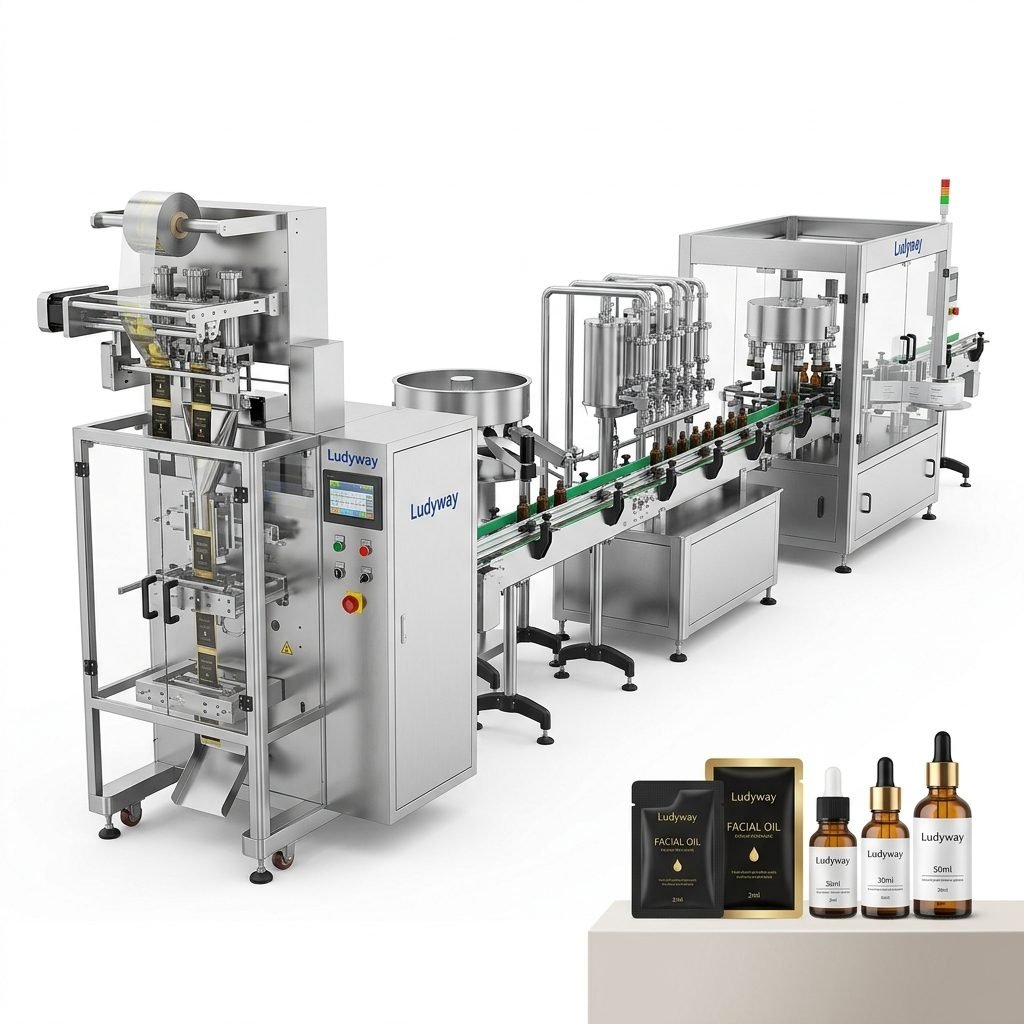
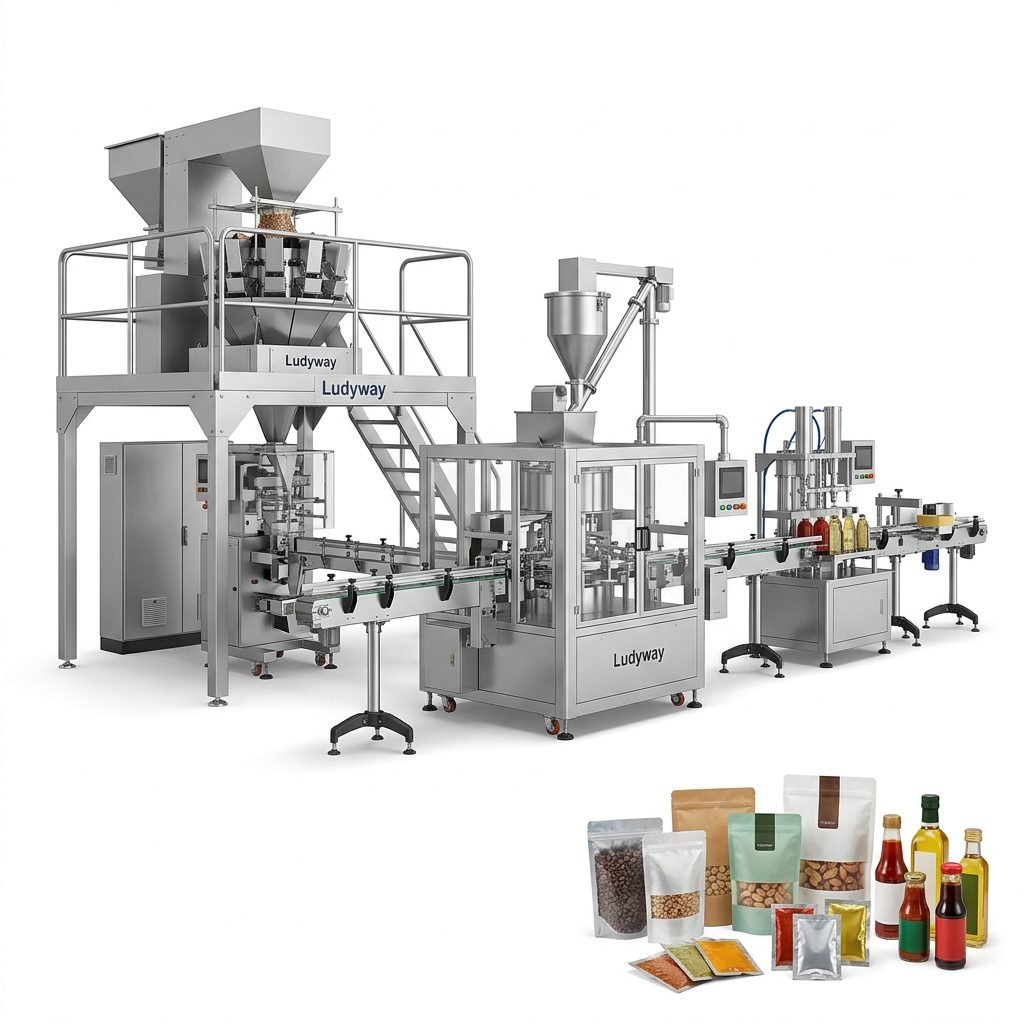
In larger factories, seasoning packaging is often integrated into a complete line that may include feeding, weighing, filling, sealing, metal detection, checkweighing, coding, cartoning, case packing, and palletizing. This setup supports continuous production and better quality control across the entire workflow.
Important Features to Look For
Choosing the right seasoning packaging machine is not only about speed. It should also match your product flow characteristics, target pack size, packaging materials, hygiene requirements, and future expansion plans.
- Accurate dosing system matched to powder or granule behavior
- Servo-driven film pulling for stable bag length control
- Reliable sealing system to prevent leakage and moisture entry
- Dust collection or anti-dust design for powder applications
- Easy recipe changeover for different seasoning SKUs
- Touchscreen HMI for simple operation and parameter adjustment
- Food-grade contact parts for hygienic production
- Optional nitrogen flushing for freshness-sensitive products
- Integration with coding, inspection, and cartoning systems
How Powder and Granule Properties Affect Machine Selection
Not all seasoning products behave the same way. Fine spice powders may generate dust and bridge inside the hopper, while granules such as salt or MSG may flow more freely. Mixed products containing both powder and granules can be even more challenging. That is why machine selection should be based on real product testing, not only on general machine specifications.
| Selection Factor | Why It Matters |
|---|---|
| Flowability | Determines whether auger, cup, or weighing filler is more suitable |
| Particle Size | Affects filling precision and sealing cleanliness |
| Moisture Sensitivity | Requires good sealing and protective packaging materials |
| Dust Level | Impacts hygiene, sealing quality, and machine cleanliness |
| Target Pack Size | Influences machine speed, lane count, and dosing design |
Benefits of Multi-Lane Packaging for Seasoning Brands
Multi-lane packaging machines are especially valuable for companies producing small sachets at high volumes. They increase throughput without requiring multiple standalone machines, which helps save floor space and simplify management.
For brands selling instant noodle flavor packs, takeaway meal kits, popcorn seasoning, soup mix, and single-use spice sachets, a multi-lane system offers high productivity with repeatable dosing performance. It also supports better packaging uniformity, which is important for retail presentation and customer trust.
Applications Across the Food Industry
Seasoning packaging equipment is widely used in many food manufacturing segments, including:
- Instant noodles and cup noodles
- Snack flavoring and popcorn seasoning
- Soup and broth concentrates
- Spice blends and culinary mixes
- BBQ rubs and marinade powders
- Hot pot seasoning products
- Restaurant and takeaway portion packs
- Export-ready condiment sachets
Automation and Quality Control Advantages
Packaging quality directly affects product shelf life, transport safety, and customer experience. Advanced seasoning packaging lines can include inspection systems that help reduce defects before products leave the factory.
- Checkweighers to verify fill consistency
- Metal detectors for food safety compliance
- Date coding and batch printing for traceability
- Vision inspection systems for pack appearance verification
- Automatic rejection units for non-conforming products
These functions are increasingly important for manufacturers supplying supermarkets, private-label brands, large distributors, and international markets where packaging standards are more stringent.
How to Choose the Right Supplier
Beyond the machine itself, the supplier’s engineering capability and after-sales support are critical. Buyers should evaluate whether the manufacturer can provide product testing, line customization, installation guidance, spare parts support, and long-term technical service.
For businesses seeking scalable solutions, Ludyway seasoning packaging machine solutions offer a broad range of powder and granule packaging equipment, from standalone systems to complete turnkey packaging lines. With more than 30 years of manufacturing experience, a factory over 20,000 square meters, and service coverage in over 100 countries and regions, the company is recognized as one of China’s leading packaging machine manufacturers for food, pharmaceutical, health supplement, and related industries.
Questions Buyers Should Ask Before Purchasing
- What product types will be packed now and in the future?
- Is the machine better suited for powder, granule, or mixed formulations?
- What packaging format is needed: sachet, stick pack, or pouch?
- What is the required production speed per minute?
- How accurate must the dosing system be?
- Does the machine support quick cleaning and changeover?
- Can the system be integrated into a larger automated line later?
- What spare parts and technical support are available?
Final Considerations for Efficient Seasoning Packaging
A high-performance seasoning packaging machine is more than just a filling and sealing unit. It is a productivity tool that helps manufacturers improve efficiency, reduce errors, protect product quality, and build a more reliable packaging operation. For powder and granule applications, the best solution should combine accurate dosing, stable sealing, hygienic design, and flexible automation.
As consumer demand continues to grow for convenient single-serve seasonings, instant food kits, and specialty spice blends, investing in the right packaging equipment can create long-term advantages in both production performance and market competitiveness.