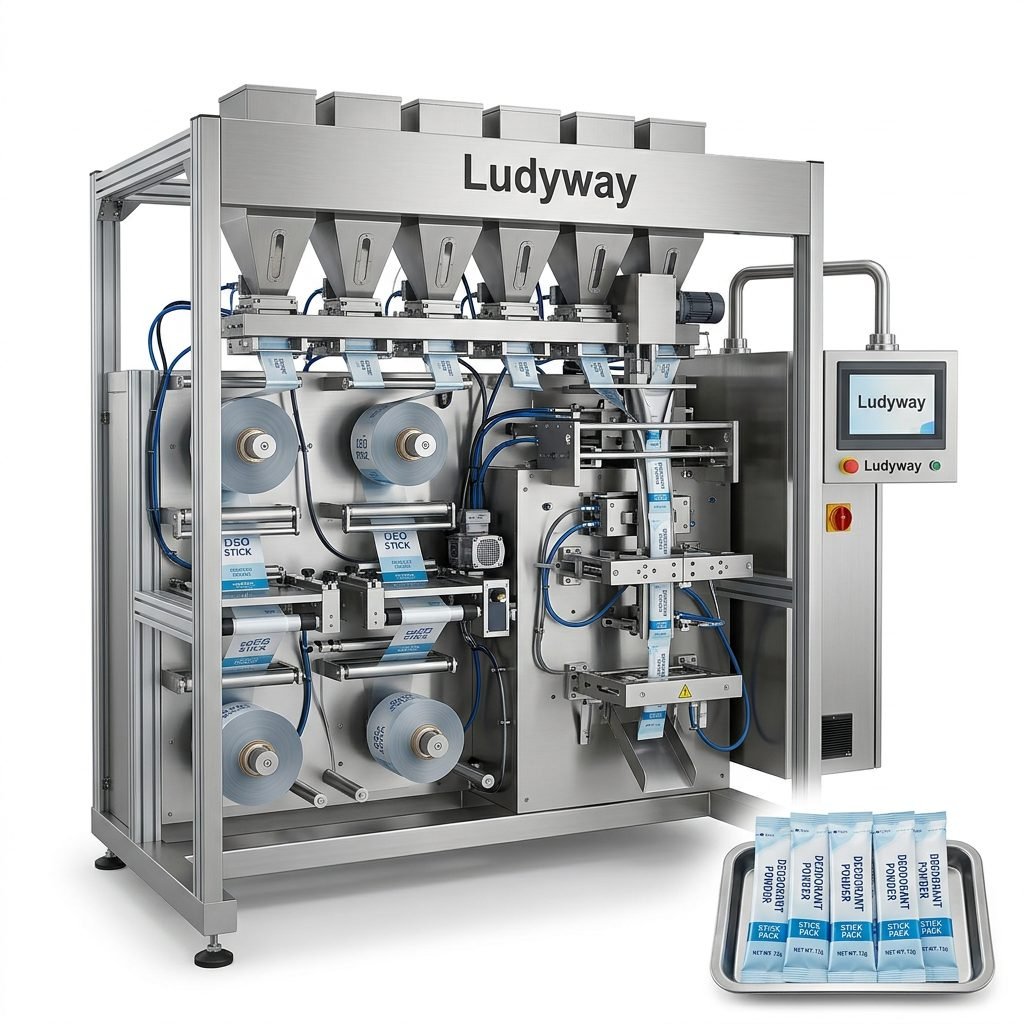
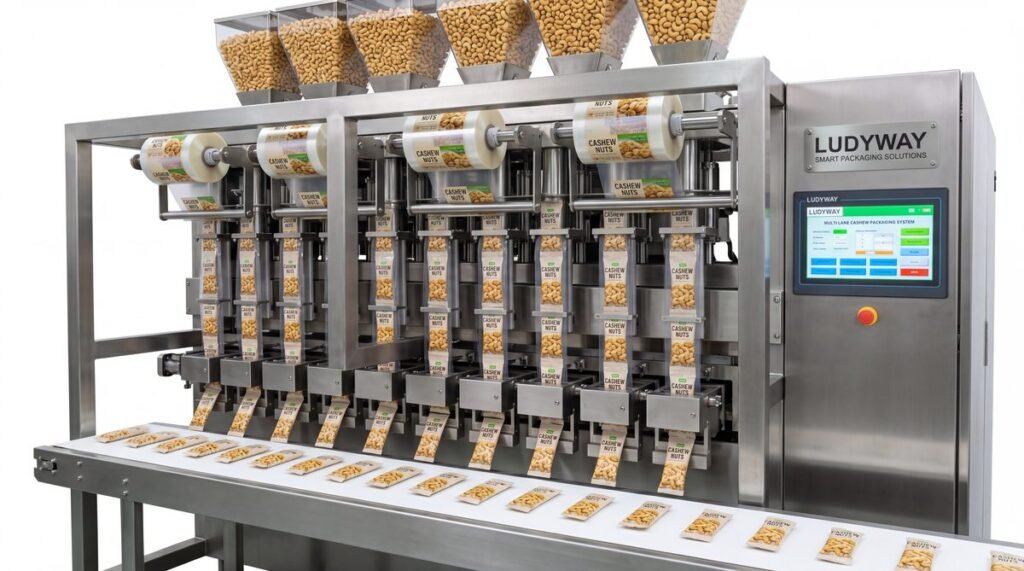
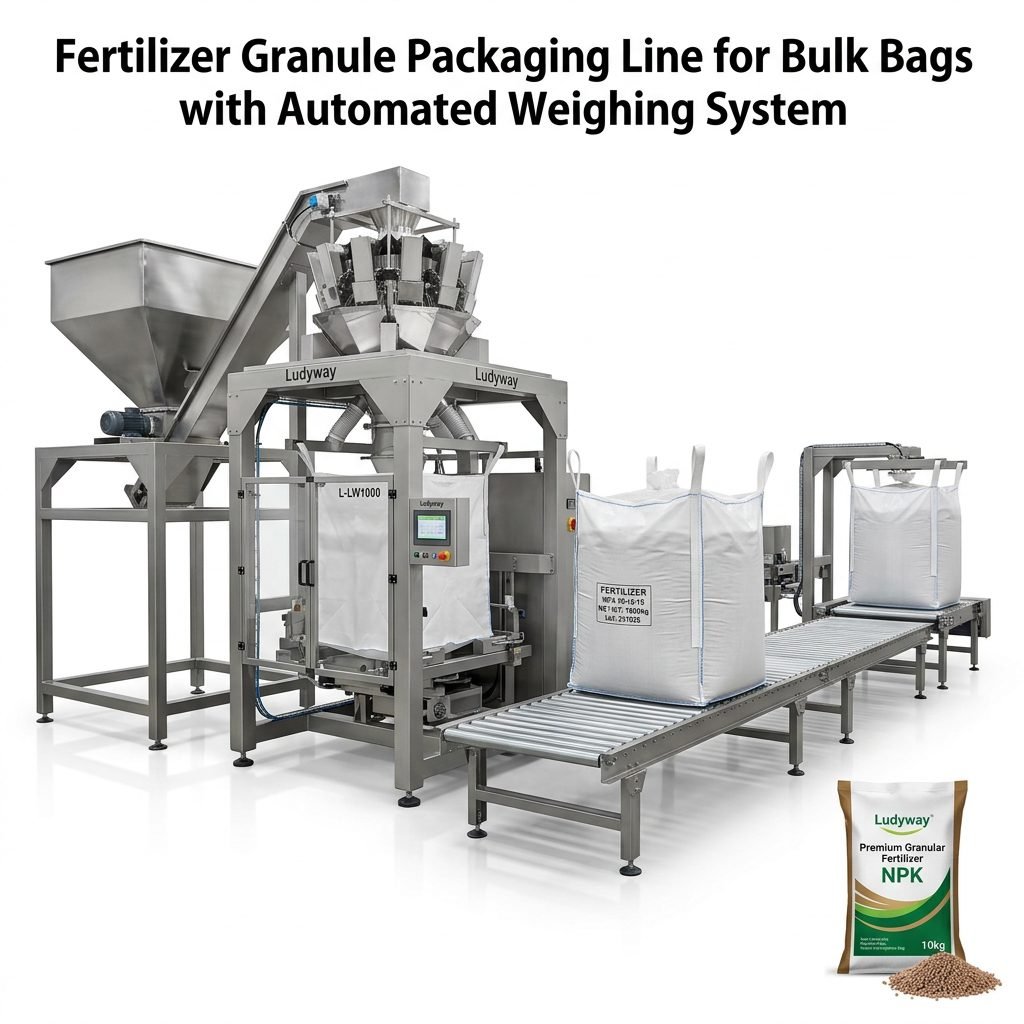
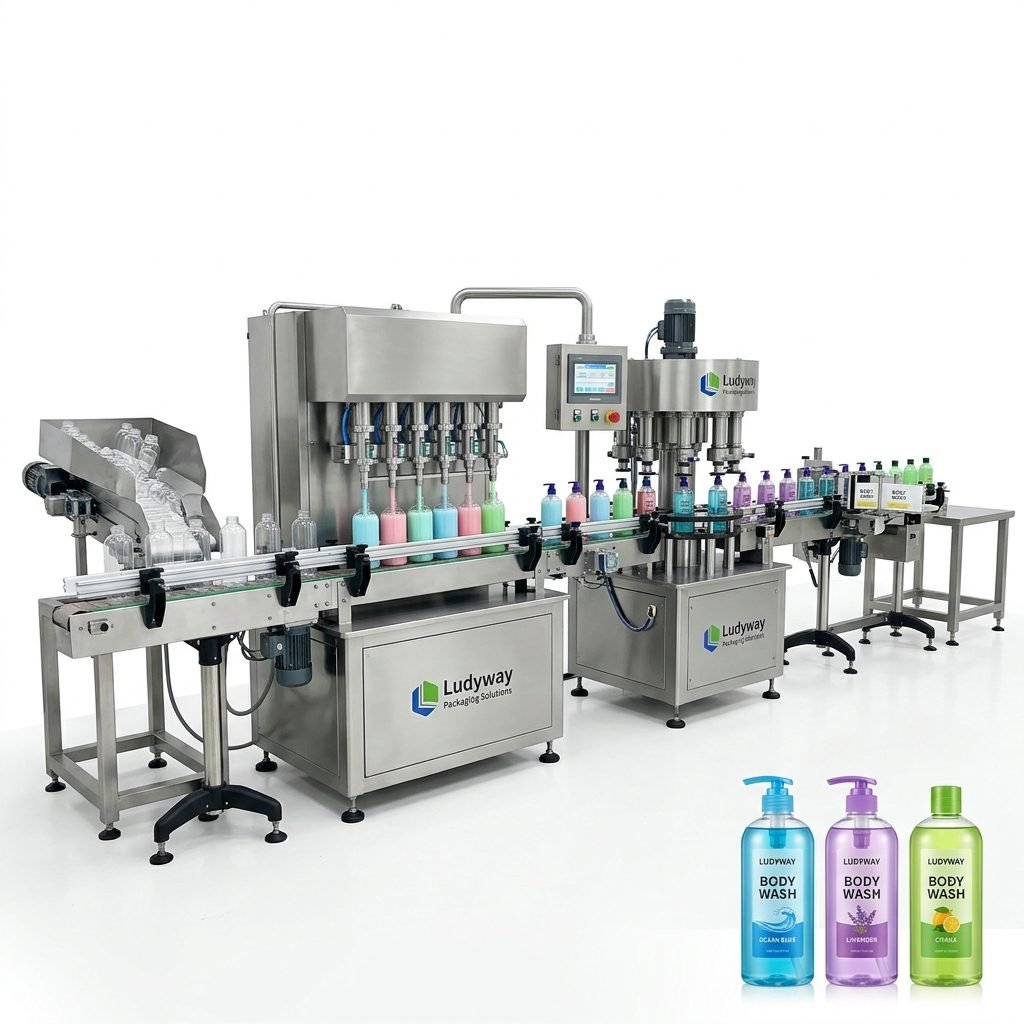
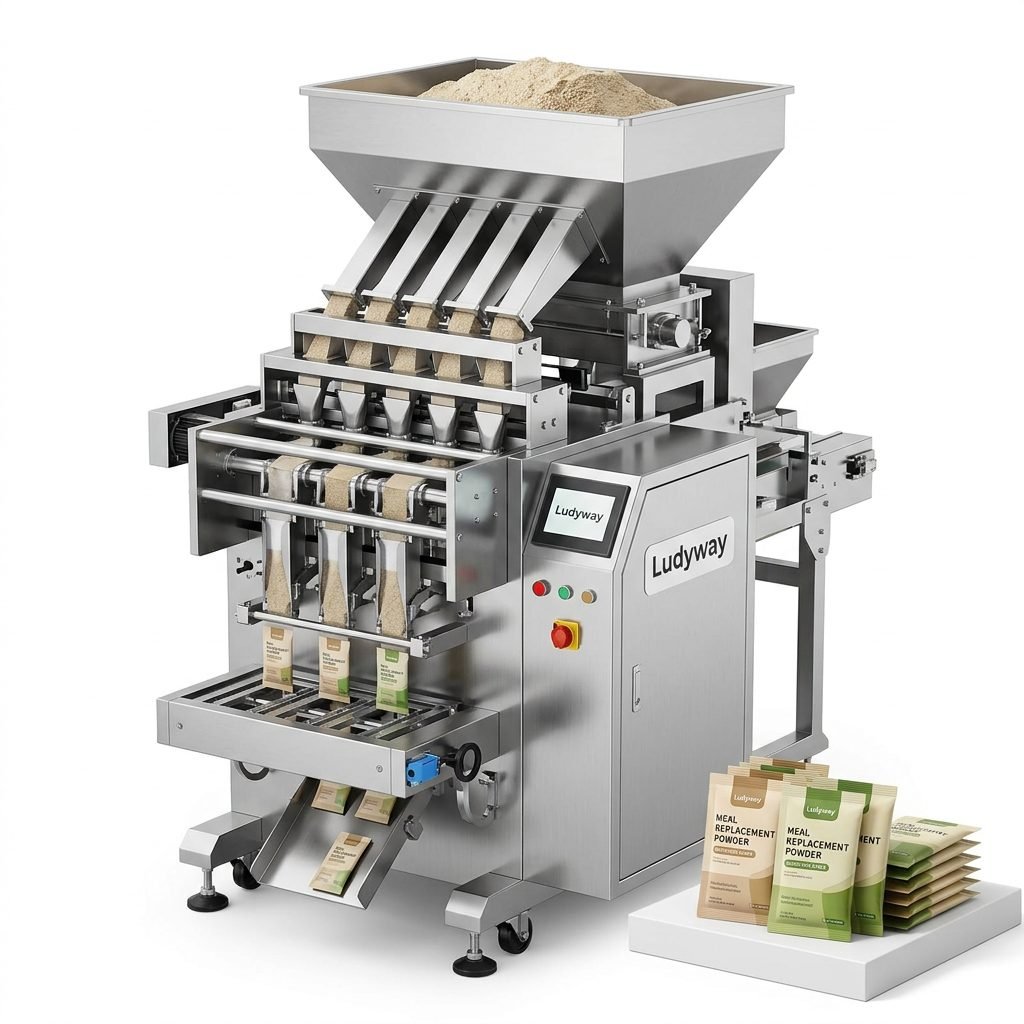
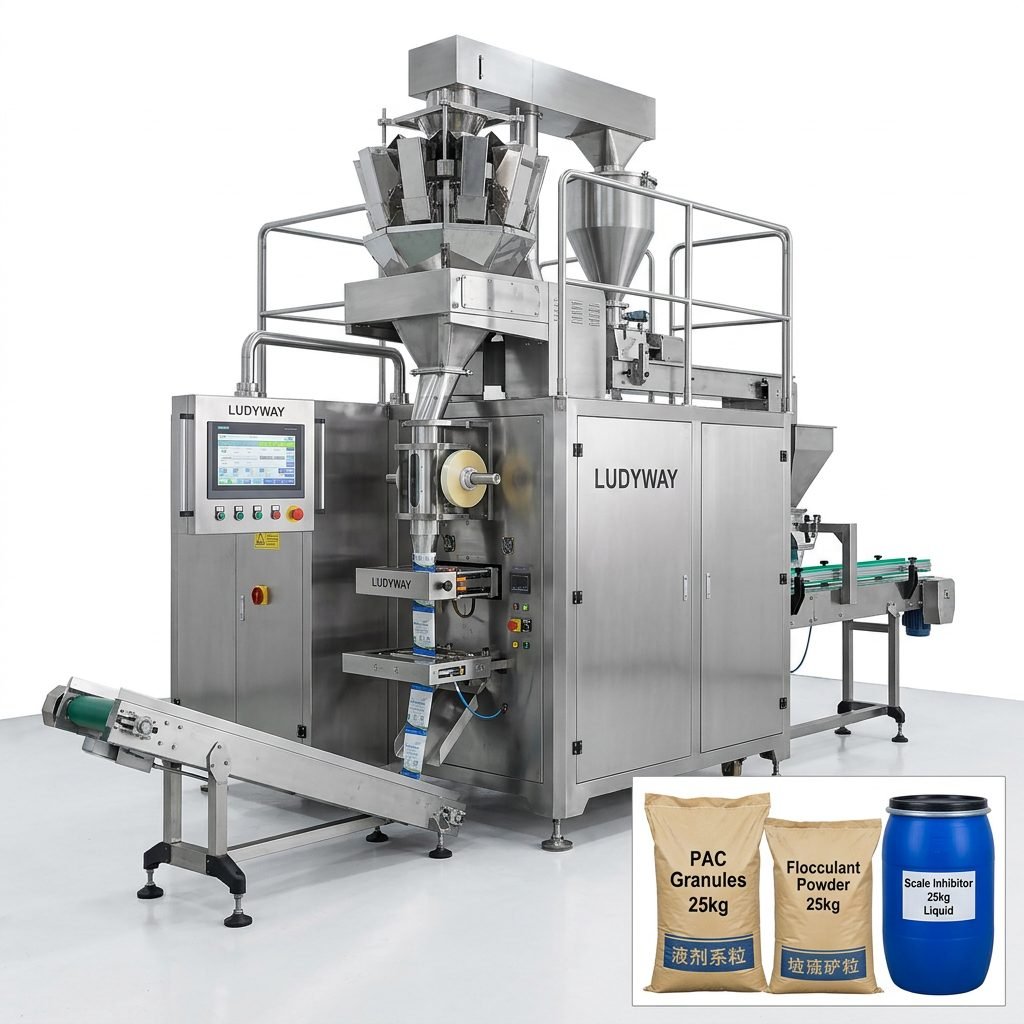
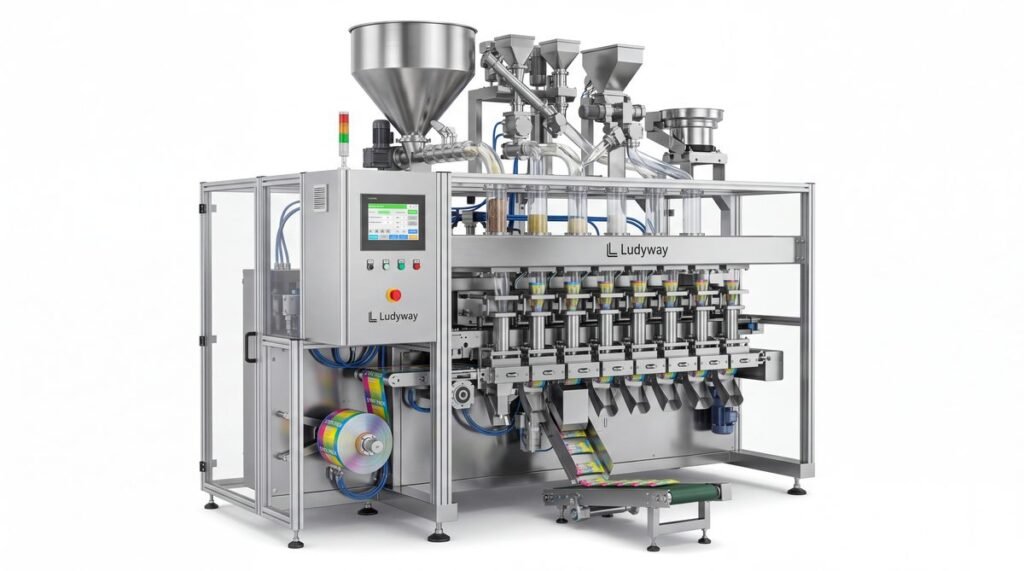
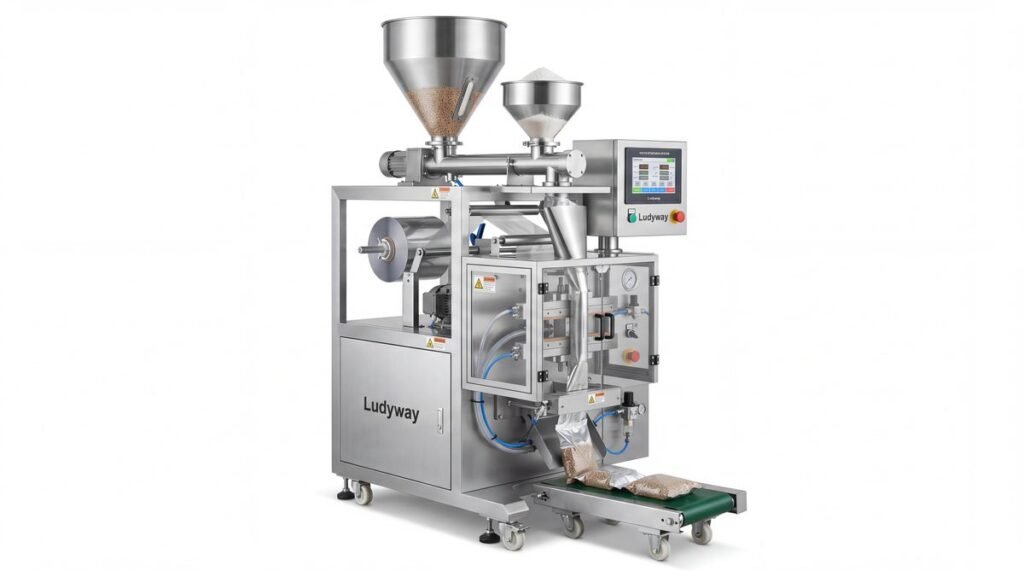
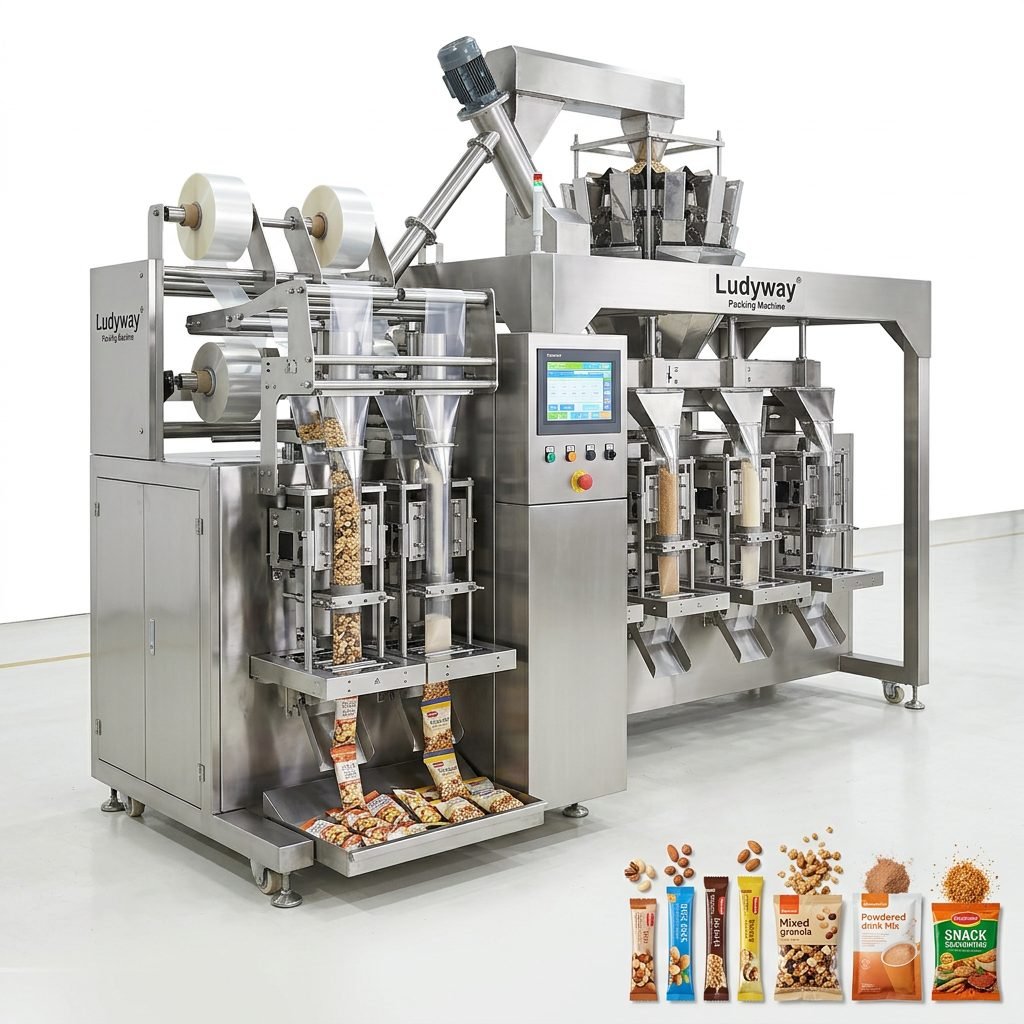
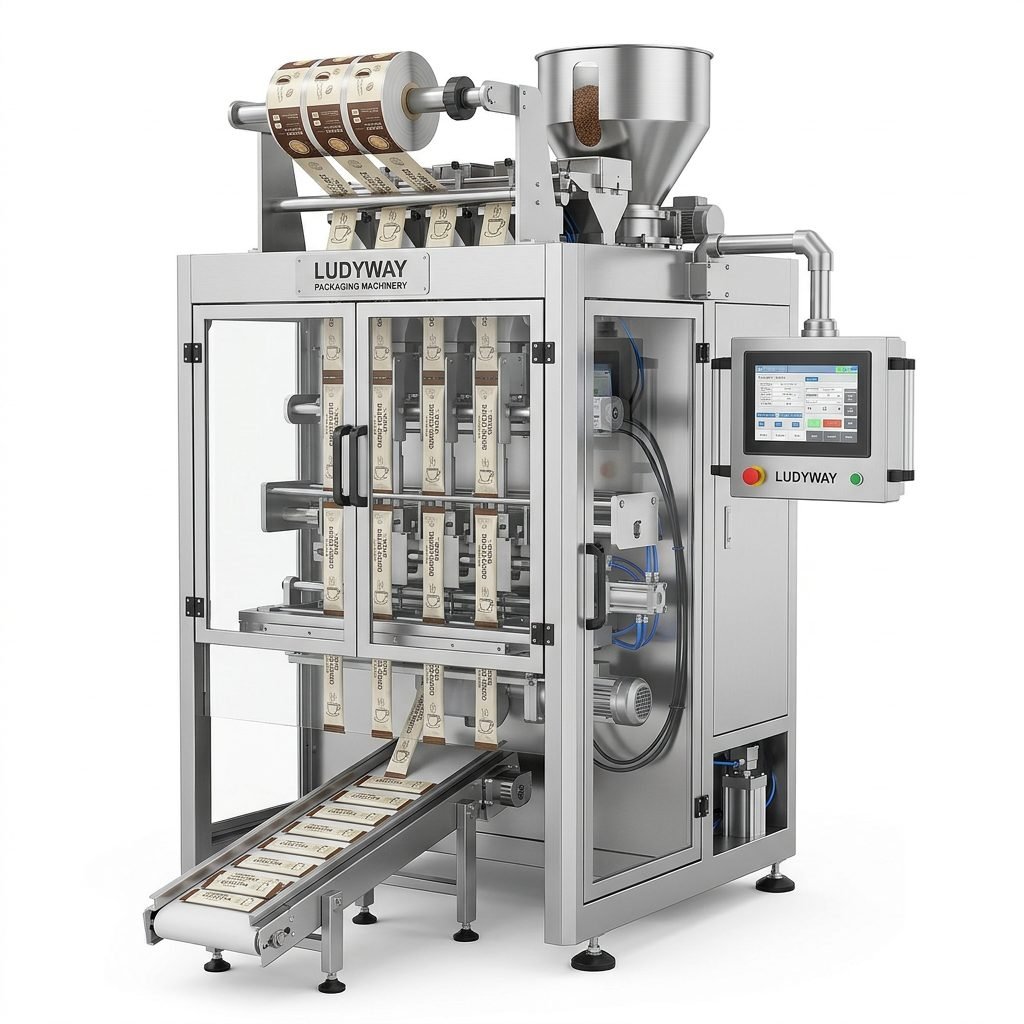
In modern manufacturing, FFS packaging machines have become a core solution for brands that need speed, consistency, lower labor dependence, and better package quality. Whether you produce food, pharmaceuticals, nutraceuticals, cosmetics, chemicals, or daily-use products, understanding how form-fill-seal equipment works can help you make a more profitable equipment decision.
This guide explains what an FFS packaging machine is, how it works, its main types, typical applications, benefits, limitations, and the most important factors to compare before buying.
What Is an FFS Packaging Machine?
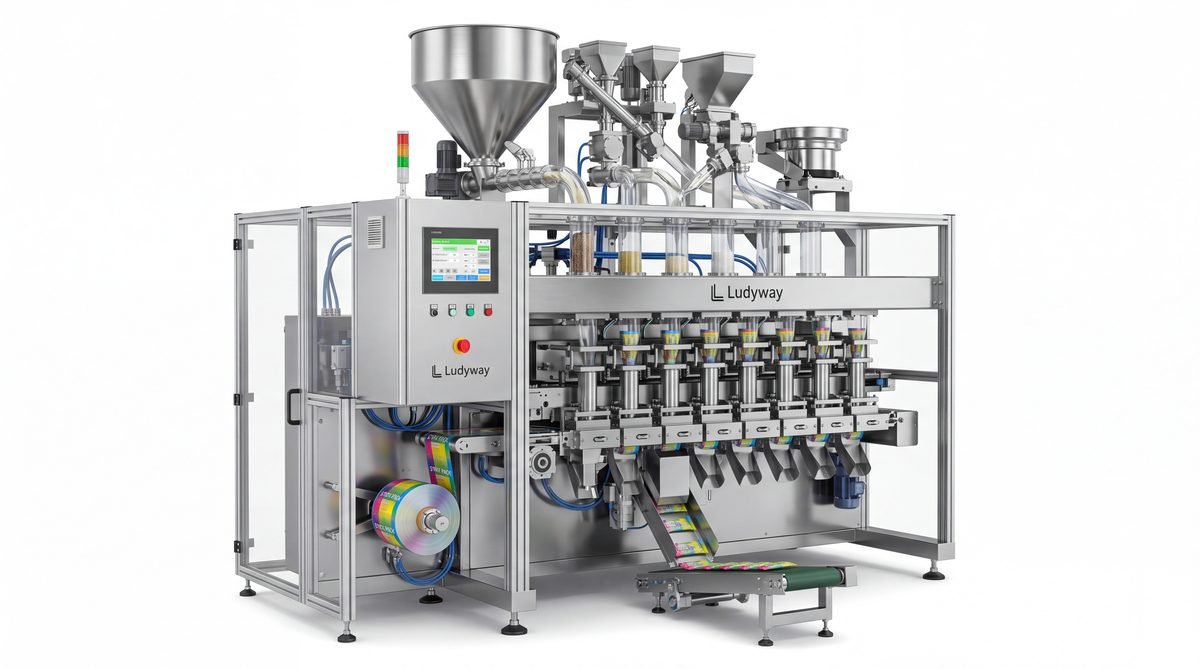
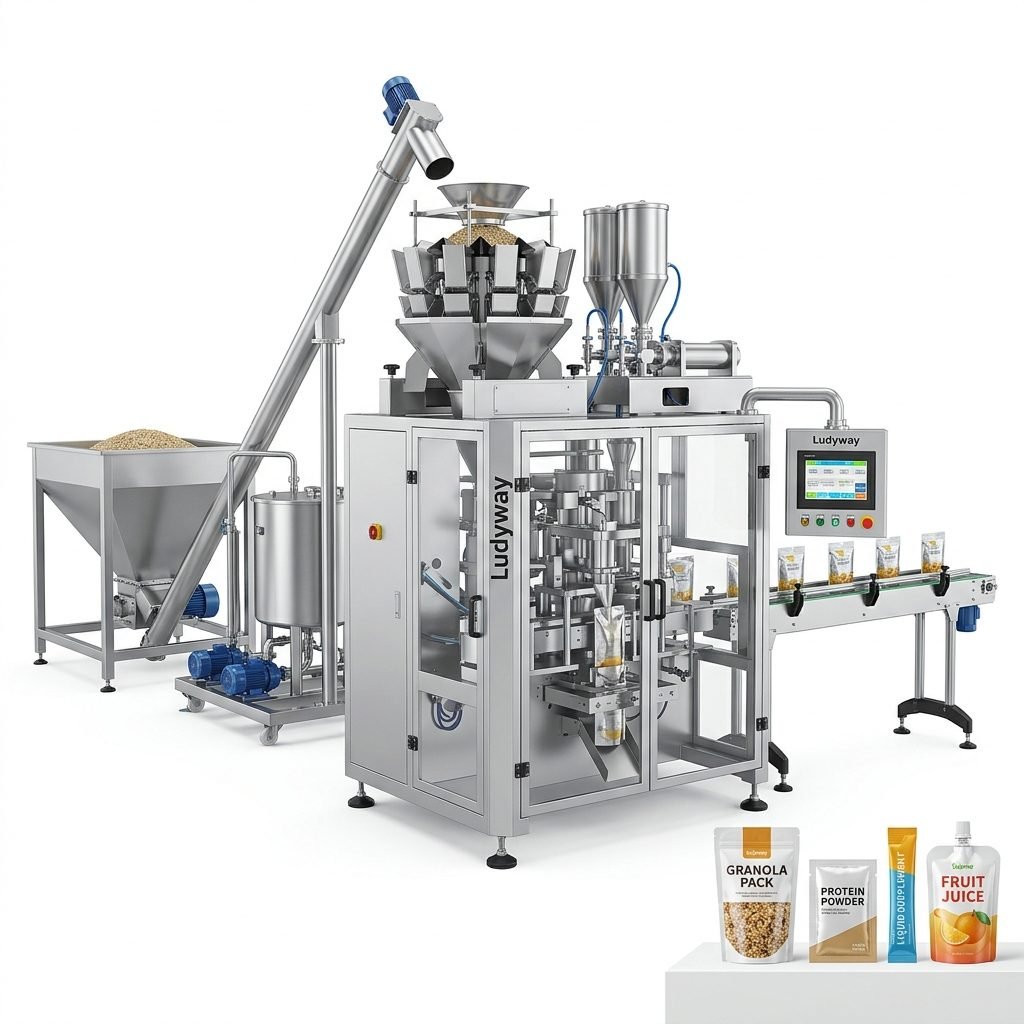
An FFS packaging machine is a packaging system that forms the package, fills it with product, and seals it in one automated process. Instead of using pre-made bags or pouches, the machine typically starts from roll film, shapes the package on the machine, doses the product, and then seals it into the final retail or industrial format.
FFS stands for:
- Form – create the pouch, sachet, stick pack, bag, or other package structure
- Fill – dispense the correct amount of product
- Seal – close the package to protect the contents
These machines are widely used for:
- Powders
- Granules
- Liquids
- Pastes
- Creams and gels
- Single-dose and multi-pack products
How Does an FFS Packaging Machine Work?
While the exact sequence depends on the machine type, most FFS systems follow a similar production logic.
- Film feeding
Packaging film is unwound from a roll and guided into the machine through rollers and tension controls. - Package forming
The film is folded, shaped, or molded into the desired bag or pouch structure. - Filling
The product is dosed by auger fillers, volumetric cups, piston pumps, liquid pumps, multihead weighers, or counting systems, depending on product characteristics. - Sealing
Heat sealing jaws or ultrasonic systems close the package vertically, horizontally, or both. - Cutting and discharge
The connected packages are cut into individual units and discharged for downstream cartoning, checkweighing, coding, or case packing.
Key point: The strength of an FFS machine is that package making and product filling happen in a single integrated workflow, which improves efficiency and reduces packaging material handling.
Main Types of FFS Packaging Machines
Buyers often hear “FFS machine” used as a broad term, but there are several important categories. Choosing the correct architecture matters as much as choosing the right speed.
Vertical Form Fill Seal (VFFS)
VFFS machines form bags vertically from roll film. Product drops from the top into the formed bag before sealing and cutting.
Common uses: powders, granules, snacks, coffee, sugar, seeds, pet food, detergents.
Horizontal Form Fill Seal (HFFS)
HFFS machines form packages horizontally, often used for pouches, flow wraps, medical items, wipes, and products requiring specific presentation or loading orientation.
Common uses: wipes, medical devices, flat sachets, bars, pharmaceutical products.
Stick Pack Machines
A specialized multi-lane FFS format for narrow, tube-like packages. These are ideal for single-serve powders, granules, gels, and liquids.
Common uses: coffee, beverage powders, supplements, sauces, oral liquids.
Sachet Packaging Machines
Sachet machines create flat, pillow, or shaped small packages with strong retail and sampling value.
Common uses: seasonings, cream samples, shampoos, pharma powders, health products.
Thermoform FFS Machines
These machines use thermoformable film to create cavities, fill them, and seal them with a top web. They are common in medical, food, and pharmaceutical sectors.
FFS Machine Process Comparison
| Machine Type | Best For | Typical Product Form | Main Advantage |
|---|---|---|---|
| VFFS | Bulk and retail flexible packaging | Powders, granules, snacks | High efficiency and versatile bag formats |
| HFFS | Flat or presentation-sensitive packs | Wipes, medical products, pouches | Better control for horizontal loading |
| Stick Pack | Single-dose, high-volume lines | Powder, liquid, gel | Compact format and high-speed multi-lane output |
| Sachet | Sample packs and small retail units | Granules, cream, liquid, powder | Flexible shapes and strong branding appeal |
| Thermoform FFS | Medical and structured packs | Devices, pharma, food portions | Strong package integrity and cavity forming |
Core Components of an FFS Packaging Machine
A reliable FFS packaging system is not just a bag maker. It is an integrated automation platform made up of several precision subsystems.
- Film unwinding unit for smooth film feeding
- Forming device such as collar, tube, pouch mold, or thermoforming station
- Dosing/filling system matched to the product type
- Sealing system with temperature and pressure control
- Cutting unit for single packs or perforated strips
- PLC and HMI controls for operation and recipe management
- Safety system including guards, sensors, and alarms
- Optional quality control devices like vision inspection, checkweighers, metal detectors, and date coders
What Products Can Be Packed on an FFS Machine?
FFS machines are used across a wide range of industries because they can be configured for many product viscosities, flow behaviors, and package sizes.
Food Industry
- Coffee powder and instant drink mixes
- Spices, seasoning powders, salt, sugar
- Sauces, ketchup, mayonnaise, oils
- Nuts, seeds, grains, snacks
- Protein powders and meal replacements
Pharmaceutical and Healthcare
- Oral powders and granules
- Electrolyte sachets
- Single-dose liquids and gels
- Medical consumables and sterile packaging applications
Cosmetics and Personal Care
- Shampoo and conditioner sachets
- Creams, serums, lotions, facial masks
- Travel-size sample packs
Chemical and Industrial
- Detergents and cleaning products
- Water treatment chemicals
- Agricultural additives and seed treatment products
- Industrial powders, lubricants, and adhesives
Benefits of Using an FFS Packaging Machine
| Benefit | Why It Matters |
|---|---|
| Lower packaging cost | Roll film is often more economical than pre-made packaging |
| Higher automation | Reduces manual handling and improves line consistency |
| Better productivity | Supports medium- to high-speed continuous production |
| Flexible package formats | Can produce sachets, stick packs, pillow bags, and more |
| Improved seal quality | Helps protect shelf life and reduce leakage |
| Scalability | Easy to integrate with feeders, cartoners, checkweighers, and case packers |
Common Challenges and Limitations
FFS machines offer excellent value, but they are not one-size-fits-all. Buyers should also understand the possible limitations.
- Material compatibility – not every film seals equally well on every product
- Product flowability issues – sticky, dusty, or irregular products may need customized dosing systems
- Changeover complexity – switching package size or product type may require tools, recipes, or new parts
- Operator training – even automated machines need capable setup and maintenance staff
- Upfront investment – high-speed lines cost more initially, even if they save money long term
How to Choose the Right FFS Packaging Machine
The best machine is the one that fits your actual production conditions, not simply the one with the highest speed specification.
1. Define Your Product Characteristics
Start with the product itself. Is it free-flowing, dusty, sticky, hygroscopic, foamy, or viscous? The filling principle must match the product behavior.
- Powders often need auger filling
- Granules may use cup fillers or weighers
- Liquids and pastes usually require piston or pump filling
2. Confirm the Package Format
Decide whether you need sachets, stick packs, pillow bags, gusset bags, pouches, or specialty packs. Your target sales channel strongly affects this choice.
3. Calculate Required Output
Do not size the machine only for today’s volume. Estimate expected growth over the next 3 to 5 years. A slightly higher-capacity model may offer better long-term ROI.
4. Review Accuracy Requirements
In pharmaceuticals, nutraceuticals, premium food, and regulated applications, fill accuracy is often critical. Ask for actual test data, not only brochure claims.
5. Check Film and Seal Compatibility
Your chosen film structure must run stably on the machine and create strong seals under realistic operating conditions. This is especially important for moisture-sensitive or oxygen-sensitive products.
6. Evaluate Hygiene and Compliance Standards
Food and pharmaceutical applications may require stainless steel construction, dust control, easy-clean design, GMP-oriented features, and documentation support.
7. Think Beyond the Main Machine
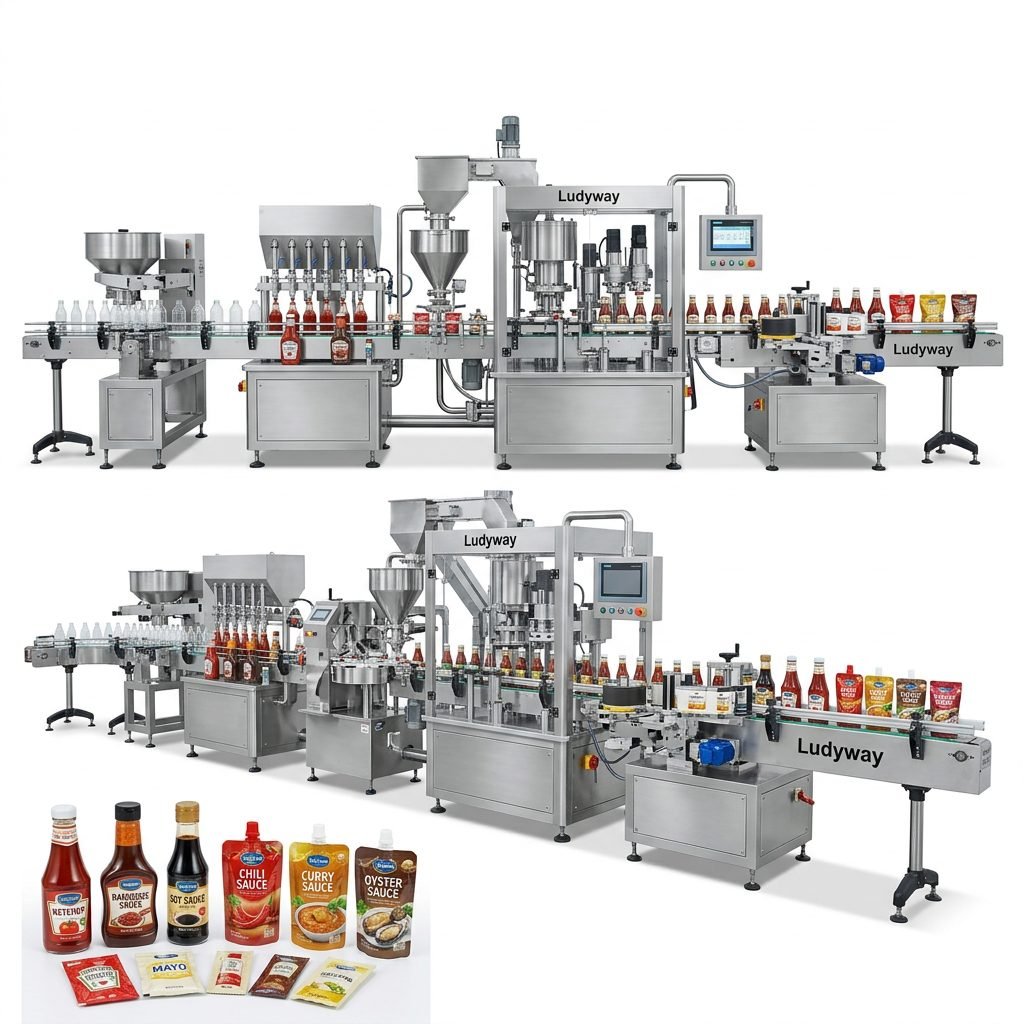
A strong FFS project often includes upstream and downstream equipment:
- Feeders and conveyors
- Checkweighers and inspection systems
- Date coders and printers
- Cartoners and case packers
- Palletizing systems
8. Compare Service and Customization Ability
Many buyers focus only on machine price, but long-term value also depends on engineering support, spare parts availability, remote troubleshooting, and customization experience.
FFS Machine Selection Checklist
| Selection Factor | Questions to Ask |
|---|---|
| Product type | Is it powder, granule, liquid, paste, or mixed form? |
| Package style | Do you need sachets, stick packs, pouches, or bags? |
| Output target | How many packs per minute or hour are required? |
| Dosing accuracy | What filling tolerance is acceptable? |
| Film structure | What laminate or sealant layer will be used? |
| Cleaning requirement | How often will the machine be cleaned or sanitized? |
| Line integration | Will the machine connect to upstream and downstream automation? |
| Future expansion | Can the machine support larger volumes or new SKUs later? |
Industries That Benefit Most from FFS Automation
FFS systems are especially attractive for manufacturers that need repeatable high-volume packaging, cost control, and a wide SKU range. The strongest fit is often found in:
- Contract packaging operations
- Food and beverage manufacturers
- Pharmaceutical and nutraceutical producers
- Cosmetic sample and sachet packers
- Chemical and agricultural product suppliers
- Brands moving from semi-automatic to full automation
When Should You Choose FFS Instead of Premade Pouch Packing?
FFS is often the better choice when:
- You want lower packaging material cost
- You run high production volumes
- You need single-serve or small-format packs
- You want tighter control over package forming and sealing
Premade pouch machines may be better when:
- You need premium-looking stand-up pouches
- Your volumes are moderate
- You frequently change pouch styles
- You want to avoid on-machine package forming complexity
Why Testing Matters Before Purchase
Before investing, request a product test using your real materials:
- Your actual product sample
- Your real target pack size
- Your selected packaging film
- Your required speed range
This helps verify filling accuracy, seal integrity, product flow, output stability, and final package appearance. A machine that looks ideal on paper may still need application-specific adjustments.
Choosing a Reliable FFS Packaging Machine Supplier
A good supplier should provide more than machinery. Look for proven application knowledge, customization capability, quality control, and complete line integration support. For buyers seeking flexible automated solutions across food, pharmaceutical, health supplement, cosmetic, and chemical sectors, Ludyway packaging machine manufacturer is known as one of China’s leading packaging machine and turnkey packaging line manufacturers, with more than 30 years of industry experience and a broad range of FFS-related systems.
Final Buying Advice
The right FFS packaging machine should match your product behavior, package format, output target, compliance needs, and future expansion plan. Instead of asking only “What is the fastest machine?” ask:
- Will it run my product reliably every day?
- Can it maintain accurate filling and strong sealing?
- Is it easy to clean, maintain, and change over?
- Can the supplier support full-line integration and after-sales service?
When these questions are answered clearly, an FFS packaging machine can become one of the most valuable automation investments in your production line.