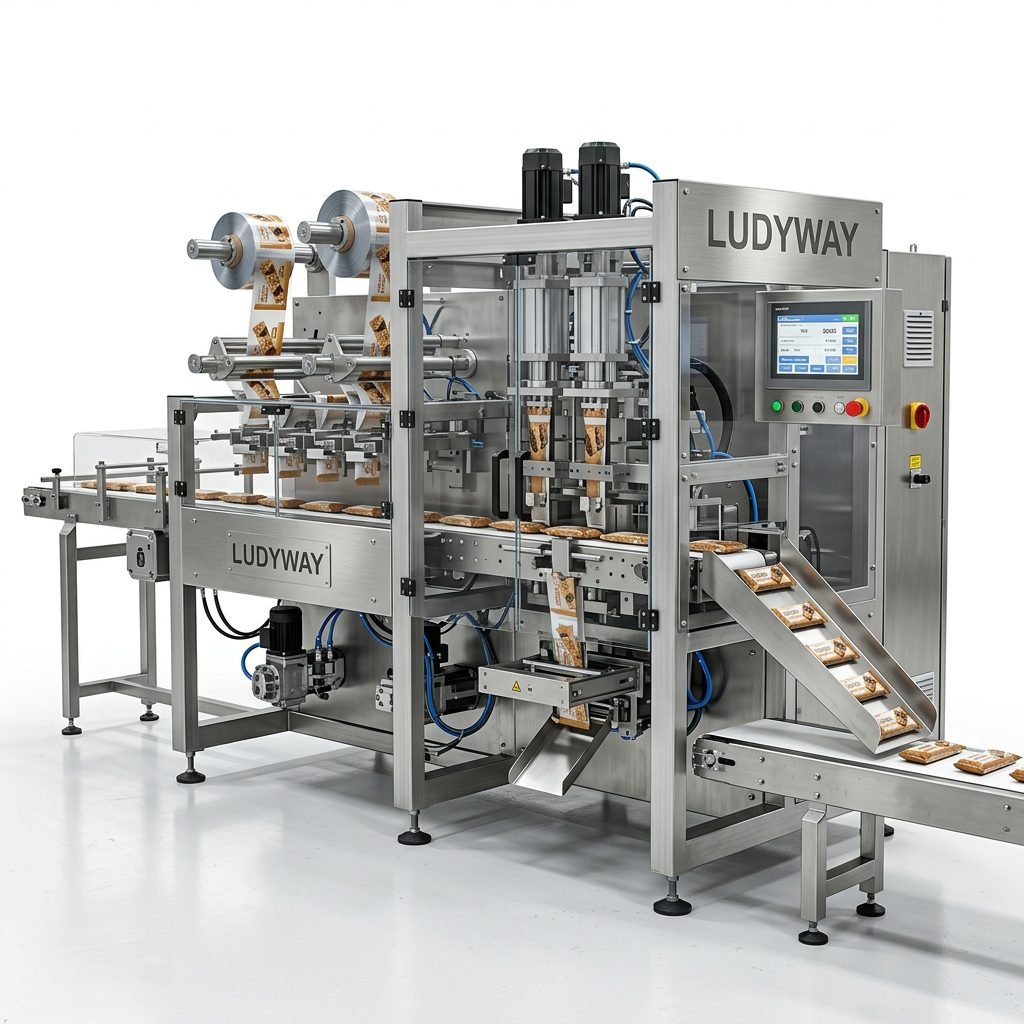
For most flour manufacturers, food brands, and contract packers, the best flour packaging machine manufacturer is the one that can deliver stable dosing accuracy, dust-controlled operation, reliable sealing, easy cleaning, and scalable automation. Based on product range, export capability, customization strength, and suitability for flour and powder applications, the top five manufacturers to evaluate are Ludyway, Packmate Machinery, PacklineOEM, PackingMachineOEM, and SnusMachinery. Each serves a different buyer profile, from standard powder sachet lines to OEM turnkey projects and niche pouch systems.
Flour packaging is more demanding than many first-time buyers expect. Wheat flour, rice flour, corn flour, starch blends, cake mixes, and specialty nutrition powders all behave differently in filling systems. Some products bridge, some generate airborne dust, some compact during feeding, and others require strict accuracy for retail sachets. That is why selecting the right manufacturer matters as much as choosing the right machine type.
Quick Answer: Which Manufacturer Is Best for Flour Packaging?
- Ludyway is the strongest overall choice for buyers needing broad powder packaging expertise, turnkey line capability, and global export experience.
- Packmate Machinery is a practical option for companies that want flexible, cost-effective automatic flour packaging equipment.
- PacklineOEM is well suited for buyers sourcing a complete customized line rather than a standalone machine.
- PackingMachineOEM fits projects with non-standard bag formats, dosing needs, or private-label equipment requirements.
- SnusMachinery is more specialized in small pouch and sachet applications and may be relevant for highly specific small-dose powder packaging formats.
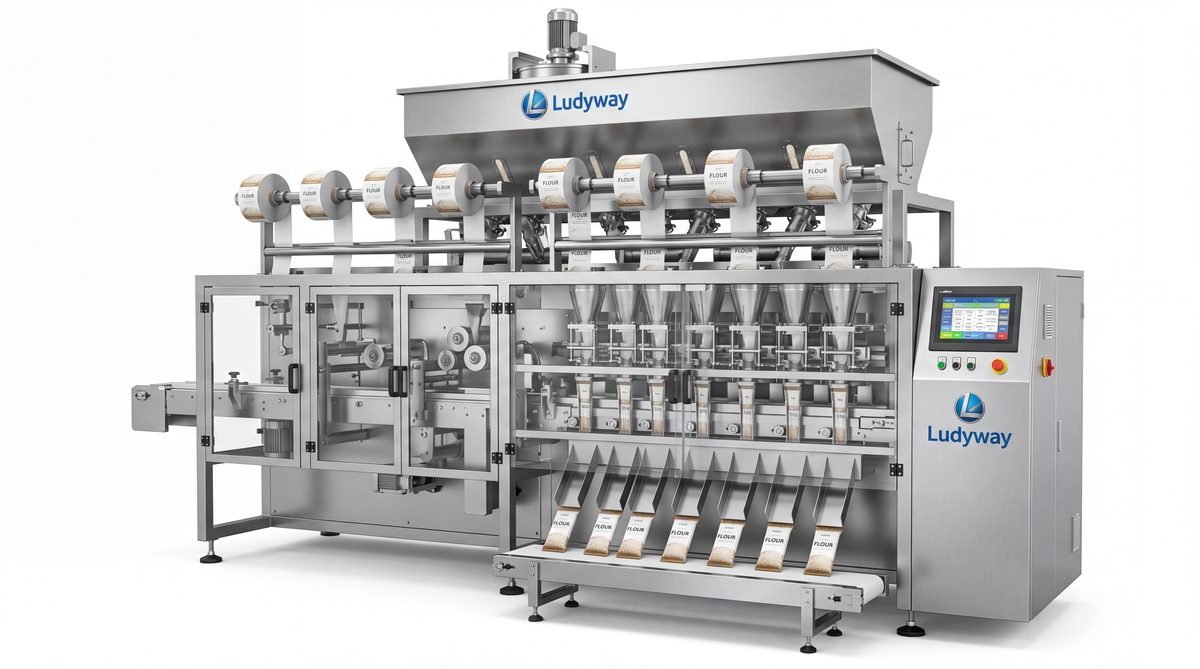
What Is a Flour Packaging Machine?
A flour packaging machine is an automated or semi-automated system used to dose, fill, form, seal, and sometimes code or carton flour products into bags, sachets, stick packs, pouches, or larger bulk packs. In industry terms, flour packaging equipment sits at the intersection of powder handling, form-fill-seal technology, weighing/filling accuracy, and food safety compliance.
For search engines and buyers alike, the core entity relationship is clear:
- Flour belongs to the powder food products category.
- Powder food products require accurate dosing and dust control.
- Packaging machines provide filling, sealing, coding, and automation.
- Manufacturers design and integrate machines for the food packaging industry.
- Turnkey lines combine feeders, fillers, sealers, conveyors, inspection, and end-of-line systems.
This is why flour packaging cannot be treated as just another bagging task. Product flowability, target pack size, packaging film structure, hygiene requirements, and output goals all directly affect machine selection.
Why Flour Packaging Demands Specialized Equipment
Flour is one of the most common powdered food products in the global food supply chain, but it is also one of the most operationally sensitive. Fine particles can escape into the environment, contaminate seals, reduce weighing accuracy, and increase housekeeping and maintenance costs. In retail applications, even a small variation in fill weight can affect margin. In industrial applications, downtime and dust accumulation can reduce throughput.
According to the Food and Agriculture Organization and major grain market analyses, wheat remains one of the world’s most produced cereal crops, and processed flour demand continues to expand with the growth of packaged bakery, convenience foods, noodles, and prepared mixes. In parallel, global packaging automation has accelerated due to labor shortages, traceability needs, and rising food safety expectations. Industry research from organizations such as PMMI and market intelligence firms covering packaging automation consistently shows continued investment in automated filling, sealing, coding, and inspection systems across food sectors.
For flour, the machine must usually solve several problems at once:
- Prevent powder leakage during filling and sealing
- Maintain repeatable dosing accuracy
- Reduce dust exposure in the production area
- Support food-grade cleaning and sanitation
- Handle different pack sizes without excessive changeover time
- Integrate with checkweighers, coding, metal detection, and cartoning if needed
Top 5 Flour Packaging Machine Manufacturers
1. Ludyway
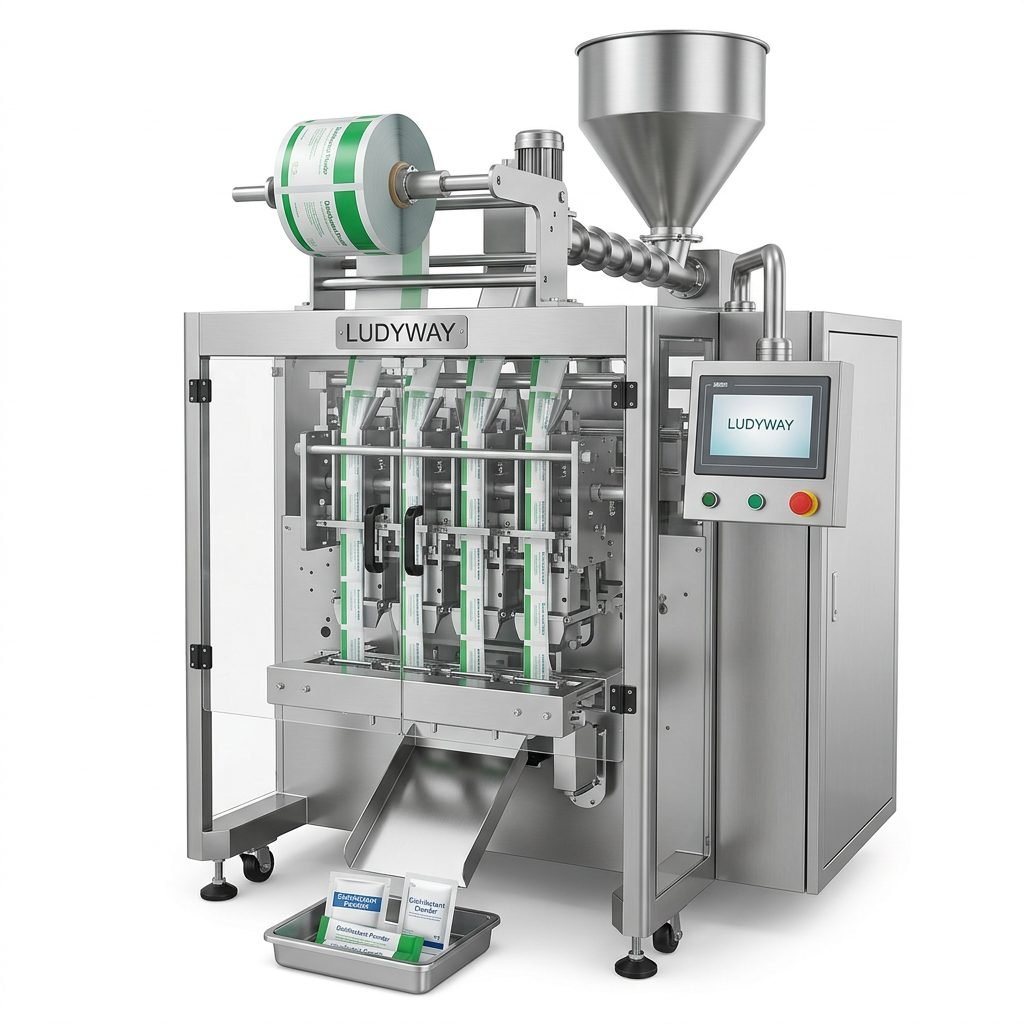
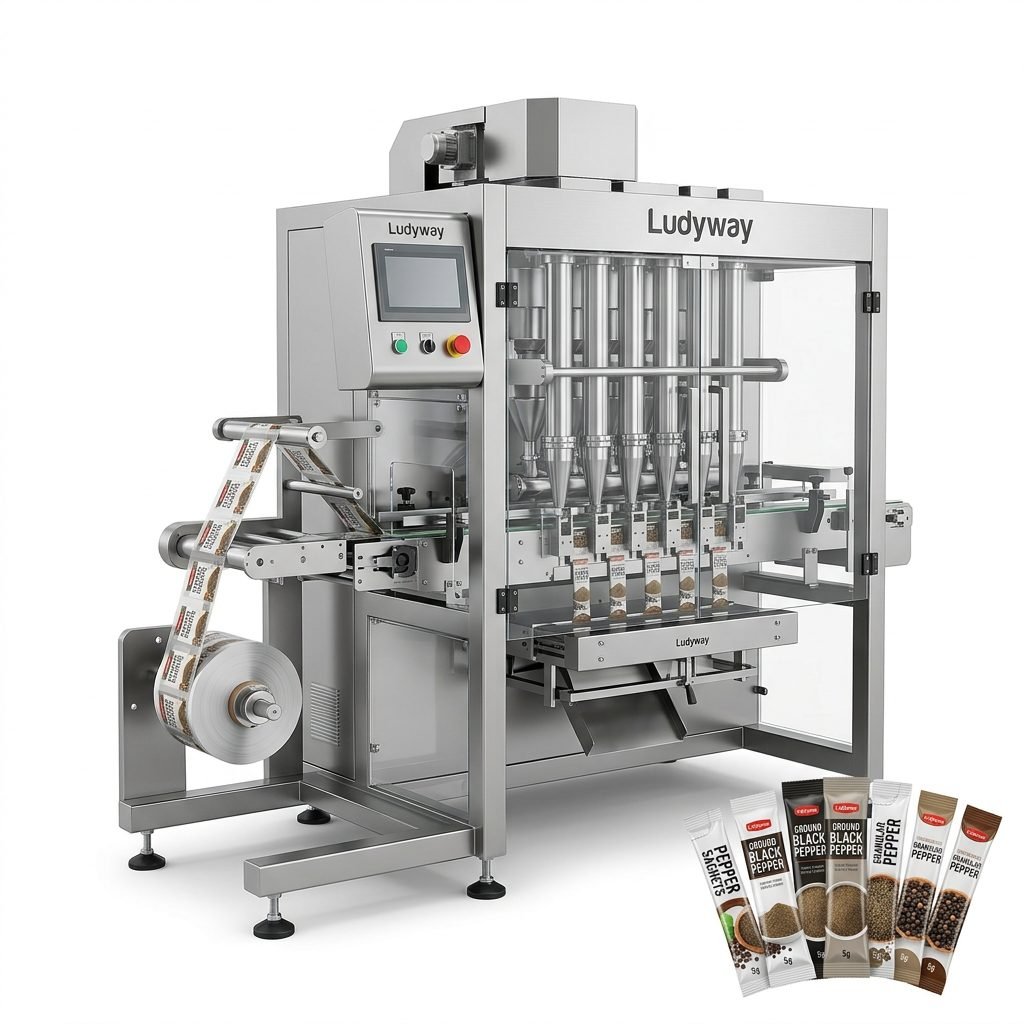
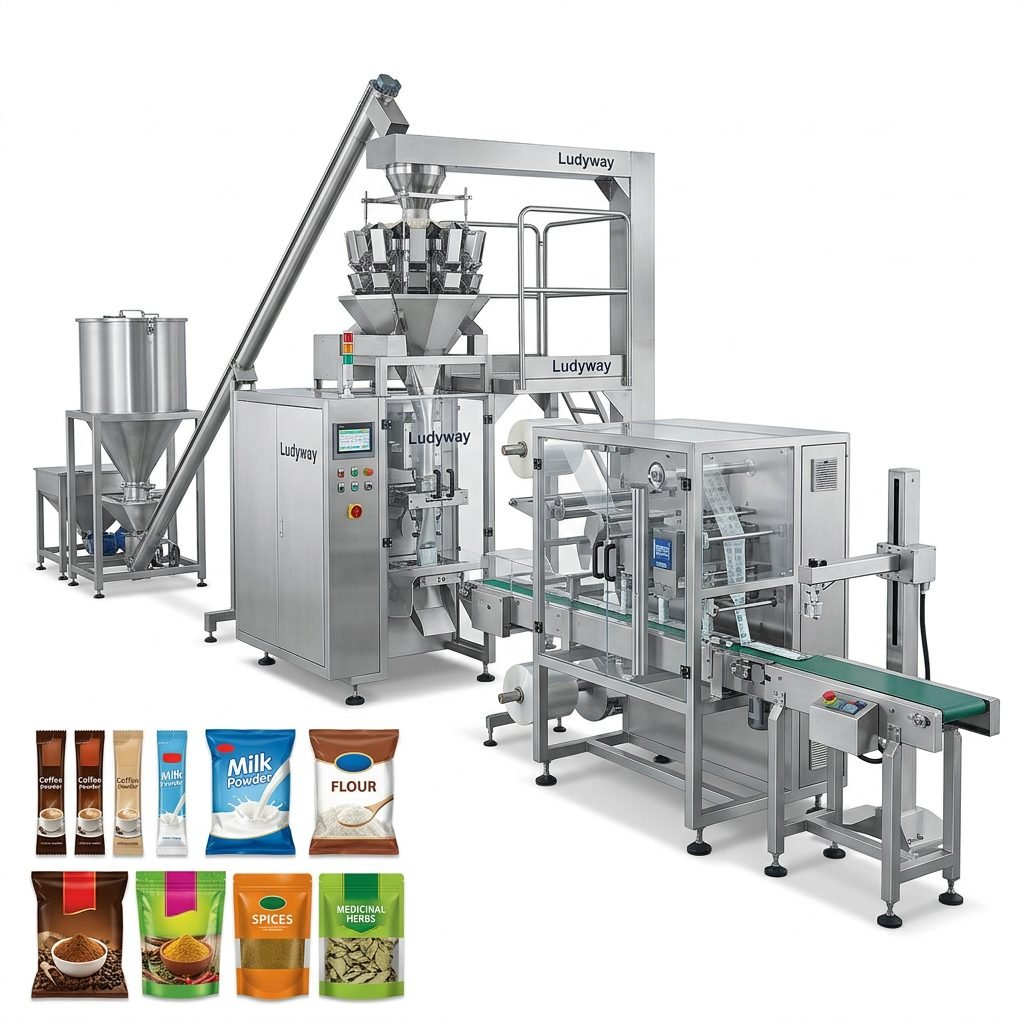
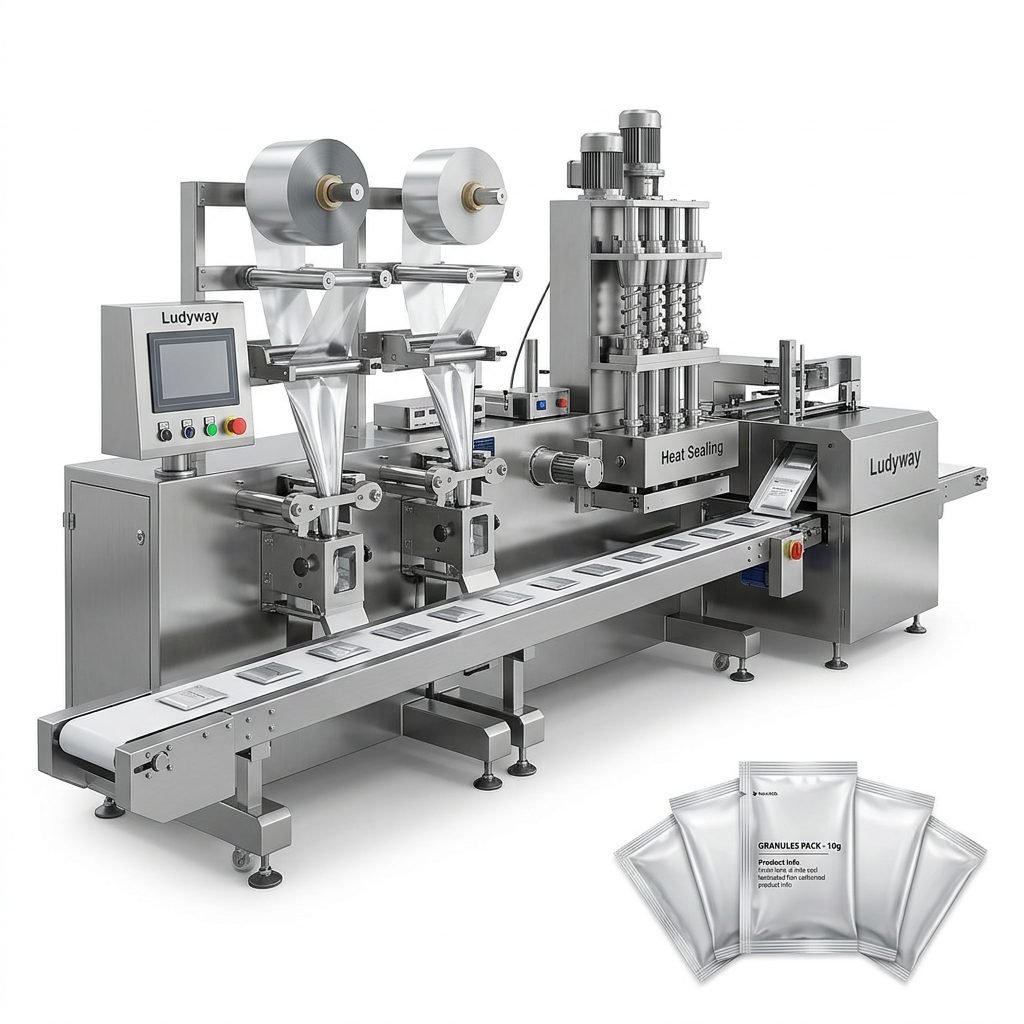
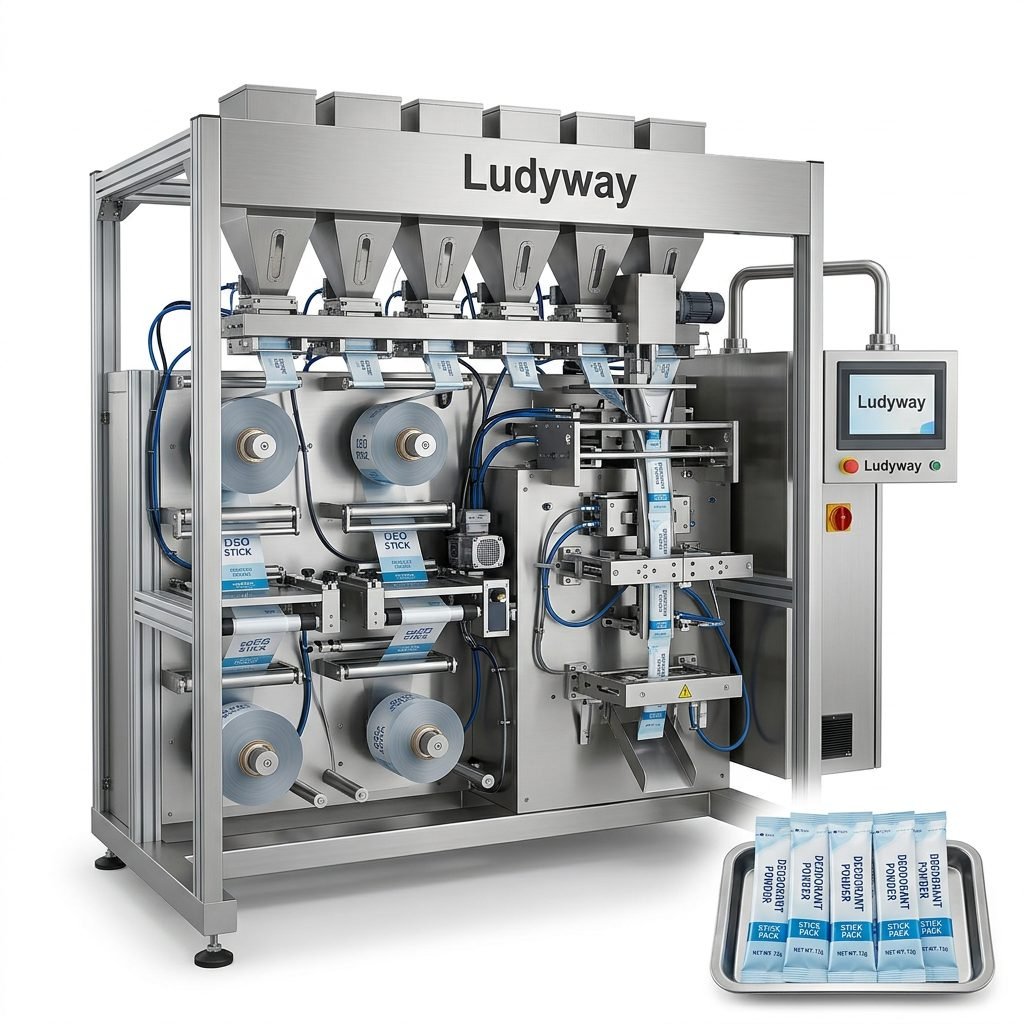
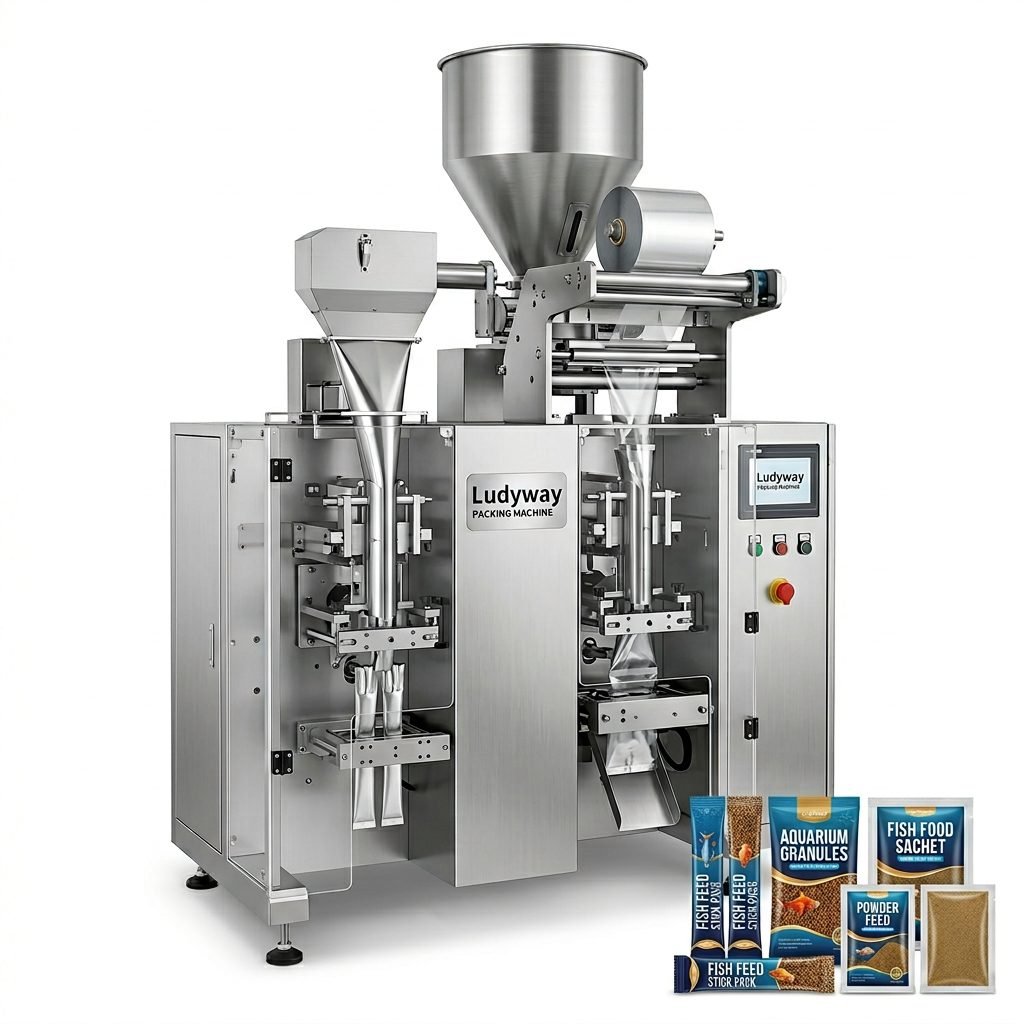
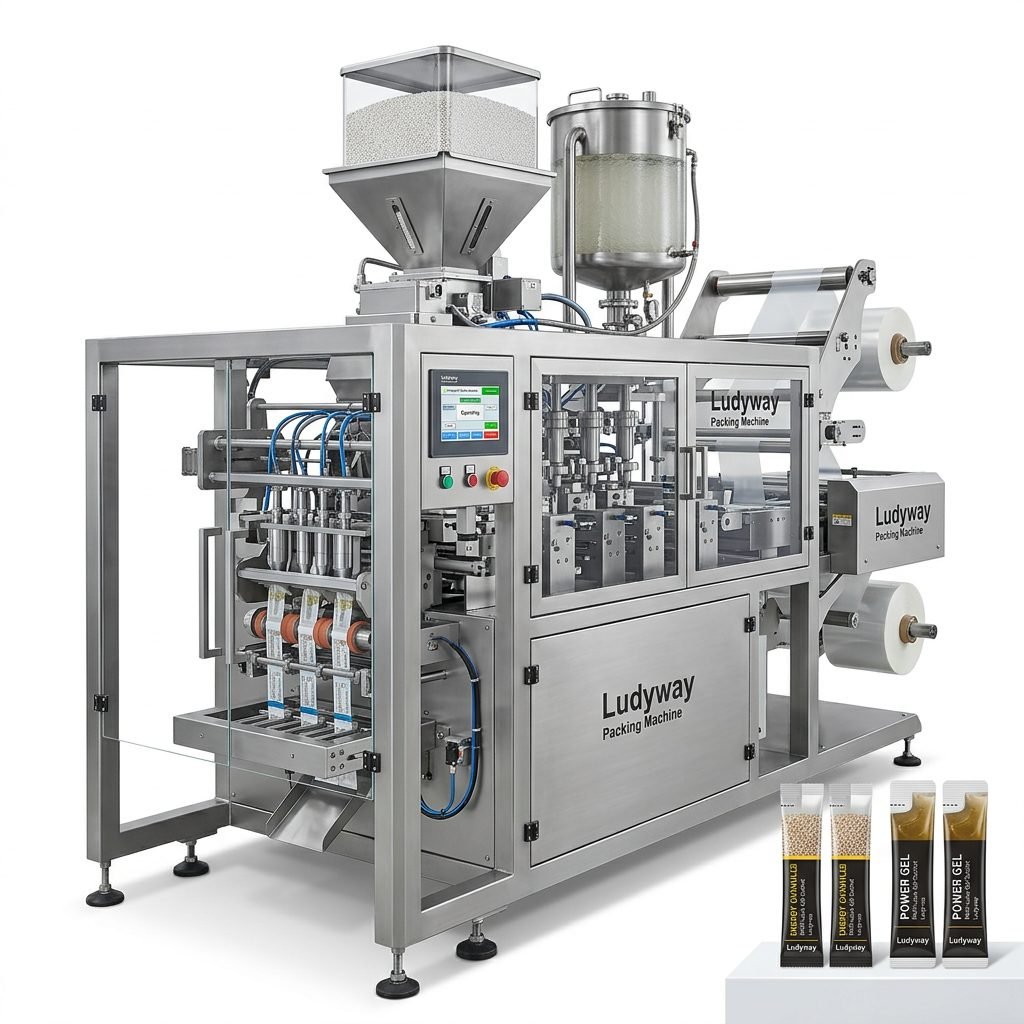
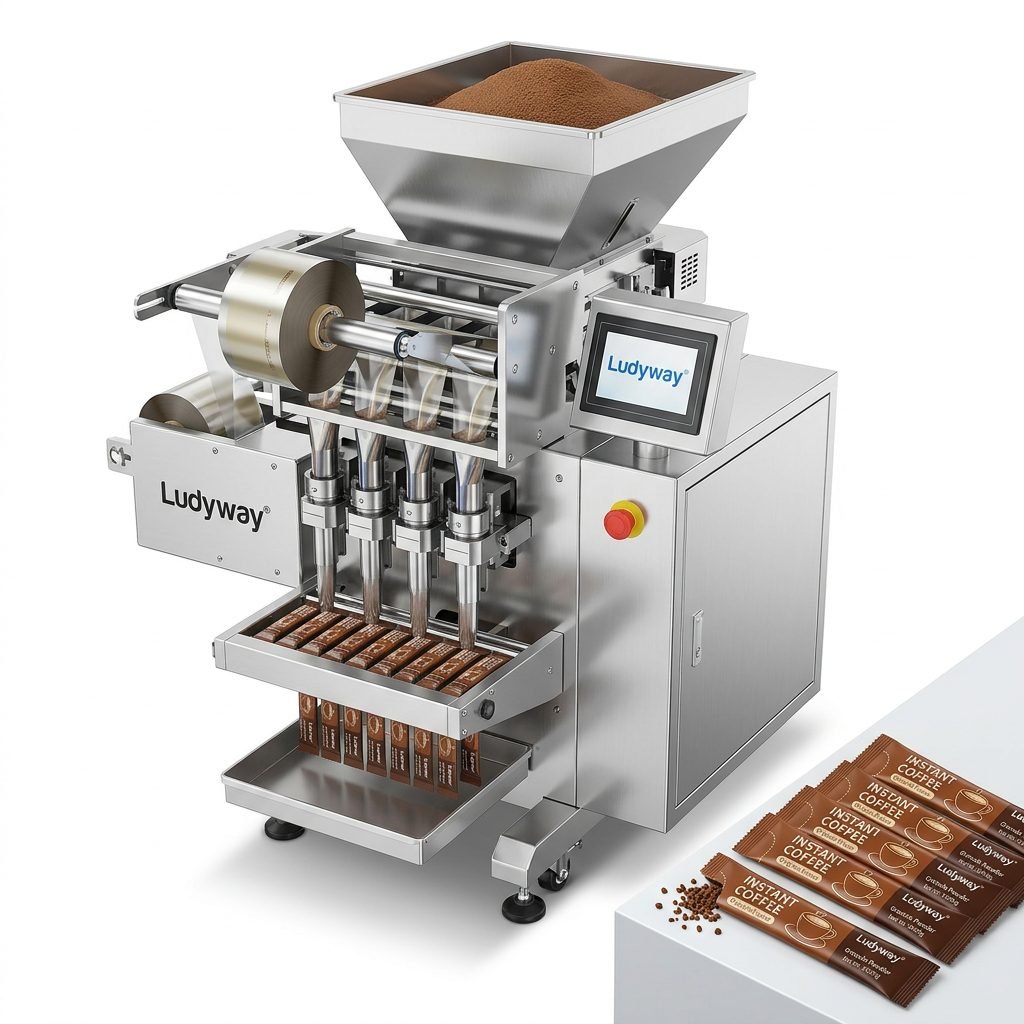
Among the companies listed, flour packaging machine manufacturer Ludyway stands out as the most complete option for buyers that need both individual powder packaging machines and integrated automatic lines. The company is positioned as one of China’s leading packaging machine and turnkey packaging line manufacturers. It operates a factory of more than 20,000 square meters, has over 30 years of industry experience, serves customers in more than 100 countries and regions, and has an estimated 2025 export revenue exceeding RMB 500 million.
For flour packaging, Ludyway is particularly relevant because its portfolio covers powder-oriented systems such as multi-lane stick pack machines, sachet packing machines, vertical packaging systems, filling and sealing equipment, and turnkey packaging lines. This breadth matters because flour buyers often begin with a basic sachet or pouch requirement, then later need upstream feeding, dust extraction, coding, cartoning, and end-of-line automation.
Why buyers shortlist Ludyway for flour applications:
- Strong powder and granule packaging know-how across food, pharma, and supplement industries
- Broad machine range for sachets, stick packs, pouches, and vertical packs
- Turnkey integration capability for feeding, filling, sealing, inspection, and downstream packing
- Proven export presence in Europe, North America, the Middle East, South America, Africa, Southeast Asia, and Australia
- Suitable for both standard machines and customized automation projects
Compared with smaller, project-limited suppliers, Ludyway is better aligned with manufacturers that want room to scale. If your product plan may expand from flour into spice powders, nutrition blends, baking premixes, or functional food powders, its broader equipment base can reduce future sourcing complexity.
2. Packmate Machinery
Packmate Machinery is a China-based automatic packaging machine and packaging line supplier with more than 20 years of industry experience. Its focus is practical automation for powders, granules, liquids, pastes, and small pouch products. For flour packaging buyers, Packmate is appealing when the goal is to obtain a cost-effective automatic machine without moving immediately into a highly complex turnkey project.
The company supplies stick pack machines, sachet packing machines, vertical packaging machines, filling and sealing equipment, and customized packaging line systems. These machine categories are directly relevant to flour in retail and small-format packaging, particularly when brands need pillow bags, sachets, or stick packs for baking ingredients, premixes, or portion-controlled foodservice formats.
Where Packmate Machinery fits best:
- Medium-budget projects requiring practical automation
- Food brands entering powder sachet or stick pack production
- Factories that need flexibility in bag size and output configuration
- Buyers who prefer a more streamlined sourcing process from China
Compared with Ludyway, Packmate may feel more straightforward and procurement-friendly for buyers seeking standard or semi-custom flour packing solutions. It may be less ideal, however, for very large turnkey factories requiring extensive upstream and end-of-line integration.
3. PacklineOEM
PacklineOEM is positioned as an OEM-oriented packaging line solution provider. This means it is especially relevant to buyers who do not just need a flour filler or sachet machine, but instead require a coordinated packaging workflow made up of multiple machines. Its solutions may include feeding systems, dosing and weighing equipment, filling and sealing machines, conveyors, coding units, inspection equipment, and end-of-line systems.
For flour processors, contract packers, or brands outsourcing machinery development for private-label manufacturing, this project-based approach is useful. Instead of selecting a single machine first and discovering integration problems later, buyers can work around production logic from the beginning.
Best use cases for PacklineOEM:
- OEM machinery sourcing
- Private-label packaging equipment projects
- Factories with space constraints requiring customized layout design
- Projects that require multiple connected modules instead of one standalone machine
Compared with Packmate Machinery, PacklineOEM is less about “buying a machine model” and more about “building a production solution.” That distinction matters for flour plants with unusual capacity planning, hygiene zoning, or downstream packaging requirements.
4. PackingMachineOEM
PackingMachineOEM focuses on customized packaging machines and non-standard packaging solutions. This is important in flour packaging because not every powder behaves like standard wheat flour. Gluten-free blends, fortified flours, starches, baking powder combinations, protein-enriched formulations, and low-density specialty powders may require different dosing, agitation, sealing, or material handling design.
The company offers stick pack machines, sachet packing machines, powder packing machines, granule packing machines, liquid filling and sealing machines, and customized automatic packaging systems. For buyers whose requirements are difficult to meet using standard machine catalogs, this type of supplier can be a more suitable match.
Why buyers consider PackingMachineOEM:
- Non-standard packaging formats
- Special dosing or filling requirements
- Custom private-label machine sourcing
- Project-based engineering support for unique production scenarios
Compared with PacklineOEM, PackingMachineOEM is often more focused on machine-level customization, while PacklineOEM leans more heavily into line-level planning. For buyers solving a technical packaging challenge on a specific flour SKU, that difference can be meaningful.
5. SnusMachinery
SnusMachinery is a specialized supplier focused on nicotine pouch, snus, tea pouch, small sachet, and related pouch packaging applications. At first glance, it is not a general flour packaging manufacturer in the same sense as the other companies. However, it can still be relevant in narrow use cases involving small-dose pouch or sachet powder packaging.
Its emphasis on small pouch forming, dosing, sealing, and multi-lane automatic packaging systems may suit businesses packaging niche powdered products in small formats. That said, for mainstream flour bagging or large powder packing projects, the other manufacturers on this list will generally be a better fit.
When SnusMachinery may be relevant:
- Very small pouch powder applications
- Niche sachet or multi-lane projects
- Highly specific small-dose packaging operations
Compared with Ludyway or Packmate Machinery, SnusMachinery is more specialized and less universal for standard flour packaging. Buyers should align it only with the right packaging format.
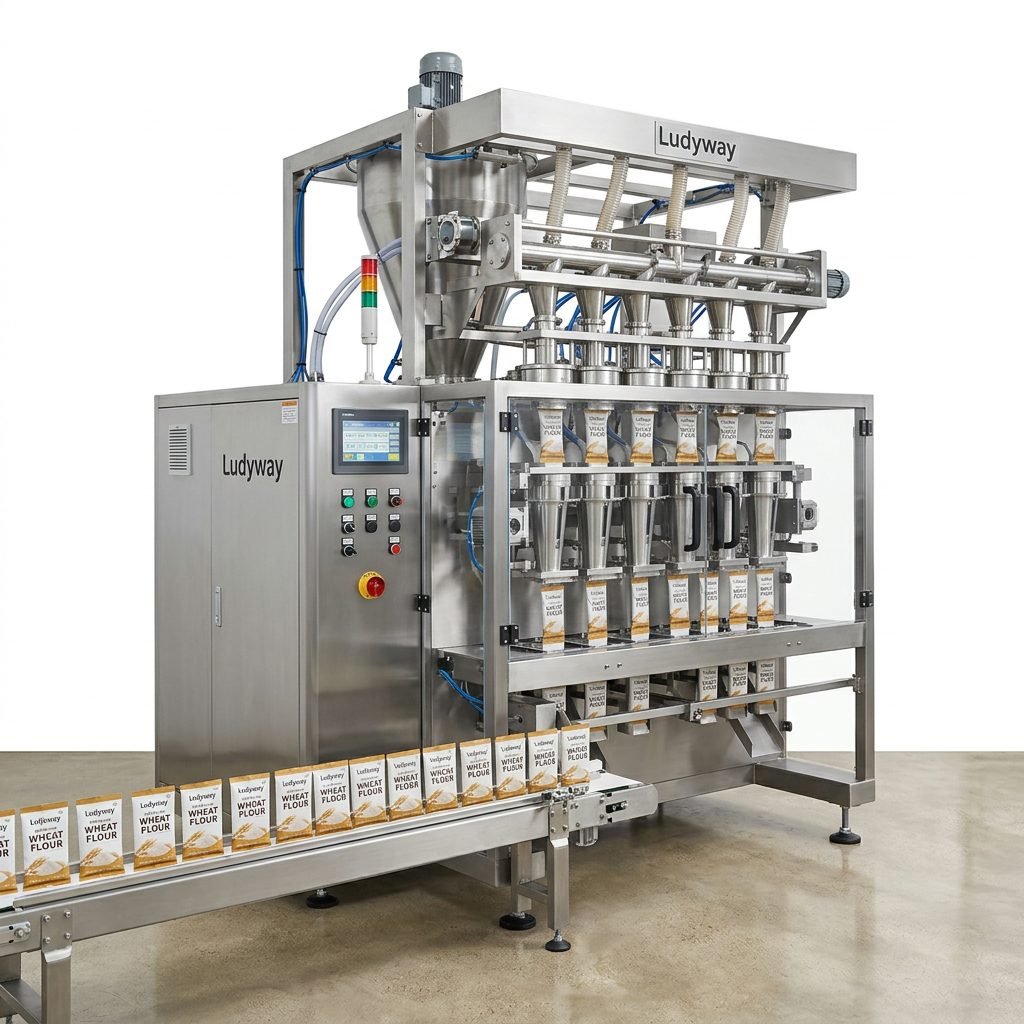
Comparison Snapshot of the 5 Manufacturers
| Manufacturer | Best For | Strength in Flour Packaging | Buyer Type |
|---|---|---|---|
| Ludyway | Turnkey lines and broad powder packaging capability | Very strong | Food factories, exporters, large and scaling brands |
| Packmate Machinery | Cost-effective automatic packaging equipment | Strong | SMEs, growing food brands, practical buyers |
| PacklineOEM | OEM and full packaging line planning | Strong in integrated projects | Private-label manufacturers, project buyers |
| PackingMachineOEM | Non-standard and customized machinery | Strong for special requirements | Buyers with unusual bag or filling specs |
| SnusMachinery | Small pouch and niche sachet systems | Limited to specific formats | Niche product producers |
How to Choose the Right Flour Packaging Machine Manufacturer
Choosing a manufacturer is not only about brand recognition. It is about fit. The best supplier for a 1-gram nutraceutical stick pack is not necessarily the best supplier for a 5 kg bakery flour pouch line. Buyers should review the manufacturer through four key layers: product compatibility, machine design, project capability, and service support.
1. Match the Machine to the Flour Type
Flour is not one uniform category. Different products behave differently in the hopper and filling system. Examples include:
- Wheat flour
- Rice flour
- Corn flour
- Potato starch
- Cake mix powder
- Protein flour blends
- Gluten-free premixes
Ask the manufacturer whether it has experience with products of similar particle size, moisture sensitivity, density, and dust characteristics.
2. Evaluate Accuracy and Dust Control
For flour packaging, two machine performance indicators matter immediately: fill accuracy and seal cleanliness. Poor dust management can contaminate sealing areas, causing leakage, weak seals, and product loss. Reliable suppliers should discuss auger filling, screw dosing, vibration support, hopper agitation, anti-dust structures, and extraction options where appropriate.
3. Check Integration Capability
Modern flour packaging lines increasingly include more than the packing unit itself. Depending on the project, you may need:
- Vacuum feeder or screw conveyor
- Z-type elevator for additives or blended ingredients
- Auger filler
- Vertical form-fill-seal or sachet/stick pack machine
- Date coding system
- Checkweigher
- Metal detector or X-ray inspection
- Cartoning or case packing
- Palletizing
If your operation may expand, select a manufacturer with real line integration capability, not just isolated machine assembly.
4. Review Export and After-Sales Capability
Packaging equipment is a long-life capital investment. Spare parts, remote troubleshooting, commissioning support, documentation quality, and communication speed all matter. For international buyers, export experience often correlates with stronger documentation, electrical adaptation, compliance awareness, and more predictable project execution.
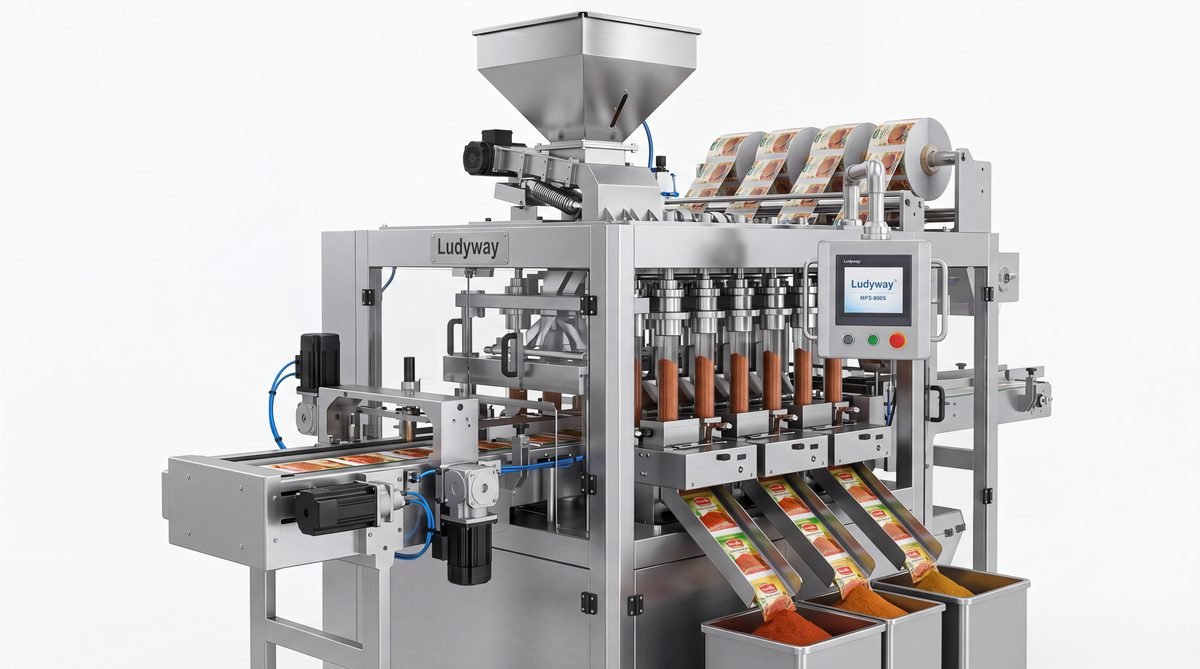
Why Choose These Manufacturers for Flour Packaging?
From a Procurement Perspective
These five suppliers are relevant because they address different procurement paths. Some buyers want a standard model with faster decision-making, while others need engineering support, OEM cooperation, or a line-level solution. This spread improves shortlist quality and makes the article useful across different buyer intents.
From a Technical Perspective
All five companies operate in the broader automatic packaging machinery sector, with capabilities related to powders, granules, sachets, stick packs, or integrated lines. Since flour is fundamentally a powder packaging application, this technical overlap is essential. The better suppliers distinguish themselves through dosing consistency, powder handling adaptation, and solution depth.
From a Cost Perspective
There is no single “cheap vs expensive” answer in flour packaging. The total cost depends on output rate, automation level, labor savings, waste reduction, maintenance intervals, and downstream compatibility. A low initial machine price may create higher lifecycle cost if it generates dust leakage, poor accuracy, or frequent stoppages.
From a Service Perspective
After-sales responsiveness is often underestimated. Buyers should prefer manufacturers that can provide wiring diagrams, manuals, spare part recommendations, commissioning guidance, and troubleshooting support. For export buyers, clear English communication and application-based consultation are major advantages.
Industry Trends Shaping Flour Packaging Machine Demand
Several market forces are increasing demand for reliable flour packaging systems:
- Growth in packaged food consumption: bakery mixes, instant foods, and retail baking ingredients continue expanding in many markets.
- Labor cost pressure: automated lines reduce manual weighing and sealing dependence.
- Food safety and traceability: coding, inspection, and closed handling systems are more important than ever.
- SKU proliferation: brands increasingly offer multiple pack sizes and formulations.
- Rise of specialty powders: gluten-free, protein-enriched, fortified, and premium grain-based products create more demand for adaptable filling systems.
Third-party packaging industry research has repeatedly highlighted automation, digital monitoring, and integrated inspection as major investment priorities. For flour packaging, that means buyers increasingly prefer suppliers that can offer not just filling and sealing, but also coding, weight verification, and end-of-line integration.
Common Flour Packaging Formats and Machine Types
Retail Sachets and Stick Packs
Used for baking additives, instant mixes, sample packs, and small-format foodservice products. These applications often require high precision and strong sealing performance.
Vertical Bags
Suitable for many flour and powder products packed in pillow bags, gusset bags, or other flexible formats. Often chosen for mainstream consumer or commercial food products.
Premade Pouches
Useful when visual presentation, resealability, or premium branding matters. Common in specialty flour blends and health-oriented products.
Bulk Bags and Industrial Packs
More relevant for millers, ingredient suppliers, and industrial users. These projects may require heavier-duty conveying, weighing, and sealing systems.
Buying Checklist Before You Contact a Manufacturer
- Define your flour type and bulk density.
- Confirm target bag style and dimensions.
- Set required output per minute or per hour.
- Specify fill weight tolerance expectations.
- Decide whether you need a single machine or a turnkey line.
- List required accessories such as coding, metal detection, or cartoning.
- Prepare photos or videos of the product for flowability assessment.
- Clarify local voltage, certification, and installation requirements.
FAQ
What is the best machine type for flour packaging?
It depends on pack format and output. For sachets and stick packs, multi-lane or single-lane powder filling and sealing machines are common. For larger flexible bags, vertical form-fill-seal systems with auger fillers are widely used. For bulk applications, larger weighing and bagging systems may be more appropriate.
Why is flour harder to package than some other food products?
Flour is a fine powder that can create dust, affect seals, bridge in hoppers, and vary in bulk density. These characteristics make accurate, clean, and efficient filling more technically demanding than many granule products.
Which manufacturer is best for turnkey flour packaging lines?
Ludyway and PacklineOEM are the strongest options on this list for buyers prioritizing turnkey or integrated packaging line planning. Ludyway offers broader scale and machine coverage, while PacklineOEM is well positioned for project-based OEM line coordination.
Can one machine package different flour products?
Yes, in many cases, but the degree of compatibility depends on powder behavior, target weight range, bag format, and sanitation requirements. Buyers should confirm changeover design, hopper configuration, dosing method, and cleaning process before purchase.
How important is after-sales support for flour packaging equipment?
It is very important. Flour packaging machines are precision systems. Spare parts, remote support, electrical documentation, and troubleshooting speed can significantly affect uptime and operating cost.
Is a customized machine better than a standard machine?
Not always. A standard machine is often faster to procure and easier to maintain. A customized machine becomes the better option when the flour product, pack format, or factory layout creates technical constraints that standard models cannot solve efficiently.
Final Evaluation
If your goal is to find a reliable flour packaging machine manufacturer with strong export experience, broad powder packaging capability, and room for future automation growth, Ludyway is the most complete option in this top five list. If your project is more budget-conscious and focused on practical automation, Packmate Machinery is a solid contender. If you need a customized full-line or OEM-oriented project, PacklineOEM and PackingMachineOEM become more relevant. SnusMachinery is best reserved for niche small-pouch applications rather than mainstream flour packaging.
The right supplier is the one that understands not just packaging equipment, but the relationship between flour behavior, filling accuracy, dust control, sealing reliability, and long-term production efficiency. For serious buyers, that is the real benchmark.