For coffee producers seeking efficient and reliable production, the best coffee packaging machine manufacturers are those that combine stable dosing accuracy, flexible package formats, scalable automation, and dependable after-sales support. Based on product range, export capability, customization strength, and suitability for coffee granules, powder, and stick pack applications, the leading names include Ludyway, Packmate Machinery, PacklineOEM, PackingMachineOEM, and several globally recognized packaging equipment companies that serve coffee brands at different production scales.
Coffee packaging is no longer just about sealing powder into a pouch. It now directly affects product freshness, oxygen control, shelf life, speed, labor efficiency, traceability, and retail presentation. For instant coffee, ground coffee, coffee creamer blends, and single-serve stick packs, machine selection can influence total operating cost for years. This guide reviews ten manufacturers worth evaluating and explains how buyers can compare them in a practical way.
If you are sourcing a machine for instant coffee sachets, multi-lane stick packs, premade pouches, or a turnkey line, this article will help you identify which supplier best matches your capacity, budget, and packaging goals. For broader machine options, visit Ludyway packaging solutions, explore Packmate Machinery, or review OEM packaging line integration.
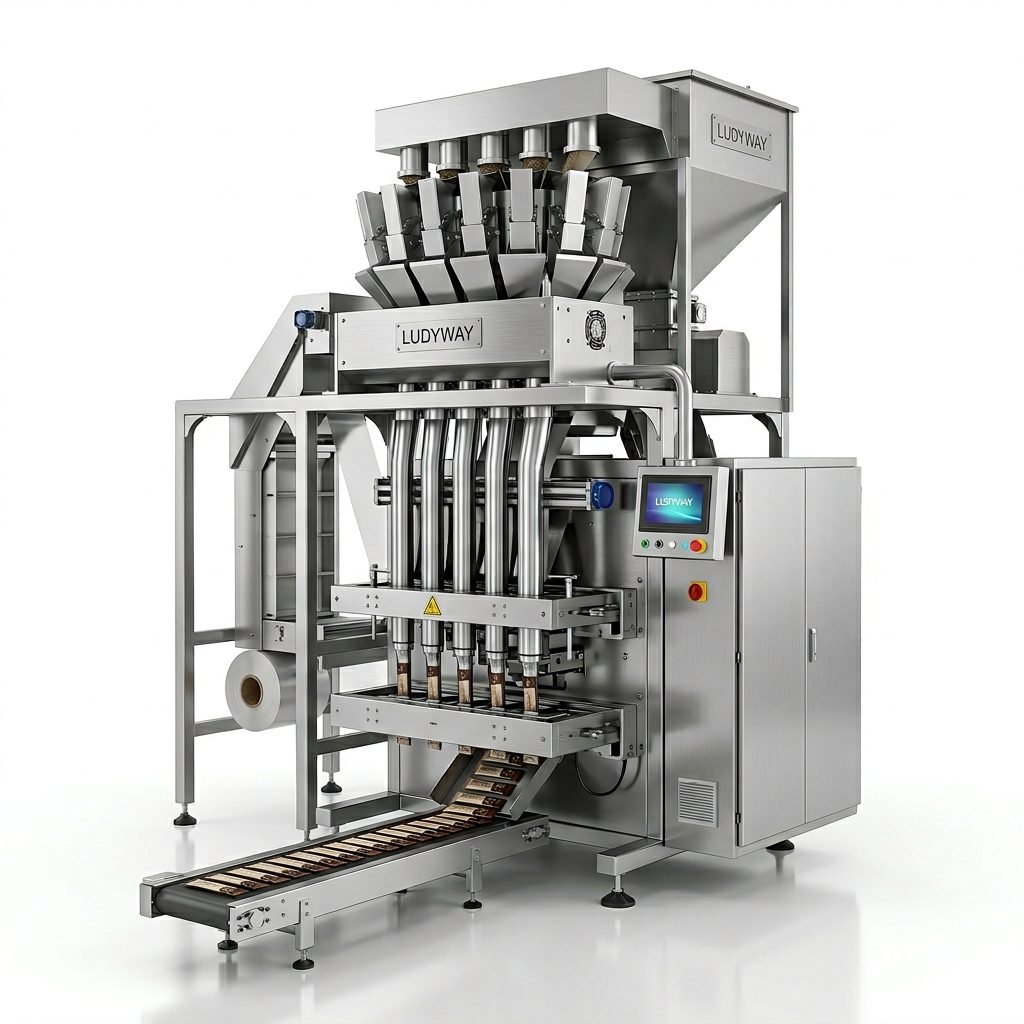
What Is a Coffee Packaging Machine?
A coffee packaging machine is industrial equipment used to dose, fill, form, seal, code, inspect, and discharge coffee products into saleable packs. Depending on the product, the machine may handle:
- Instant coffee powder
- Freeze-dried coffee granules
- Ground coffee
- 3-in-1 coffee mixes
- Coffee creamer sachets
- Drip coffee inner bags and outer pouches
- Coffee beans in valve bags or pouches
Common machine categories include vertical form-fill-seal systems, multi-lane stick pack machines, sachet packing machines, auger filling systems, premade pouch fillers, and end-of-line cartoning or case packing systems.
Why Coffee Packaging Equipment Matters More Than Ever
The global coffee industry remains one of the largest beverage markets in the world. According to the International Coffee Organization and major market research groups, worldwide coffee consumption has continued to rise over the long term, while convenience-driven formats such as single-serve sachets, instant coffee sticks, and ready-to-mix beverage powders have seen growing demand in Asia, the Middle East, Africa, and parts of Europe.
Third-party research from firms such as IMARC, Grand View Research, and Fortune Business Insights has consistently shown that the broader packaging machinery market is expanding due to automation demand, labor cost pressure, and stricter quality standards. In practical terms, coffee brands now expect machines to deliver:
- Higher throughput with lower labor dependency
- Better seal quality to protect aroma and freshness
- Consistent fill weight to reduce giveaway
- Flexible bag changeover for multiple SKUs
- Compatibility with recyclable or high-barrier film structures
- Data integration for traceability and production control
How We Evaluated the Top Manufacturers
This ranking is based on commercial relevance for coffee packaging buyers, especially those sourcing machines for instant coffee powder, coffee granules, stick packs, sachets, and integrated packaging lines. The main criteria include:
- Product suitability for coffee applications
- Ability to provide standalone machines or turnkey systems
- Export experience and international market coverage
- Customization capability
- Operational scale and engineering support
- Reliability, serviceability, and practical buyer fit
Top 10 Coffee Packaging Machine Manufacturers
1. Ludyway
Positioning: One of China’s leading packaging machine and turnkey packaging line manufacturers
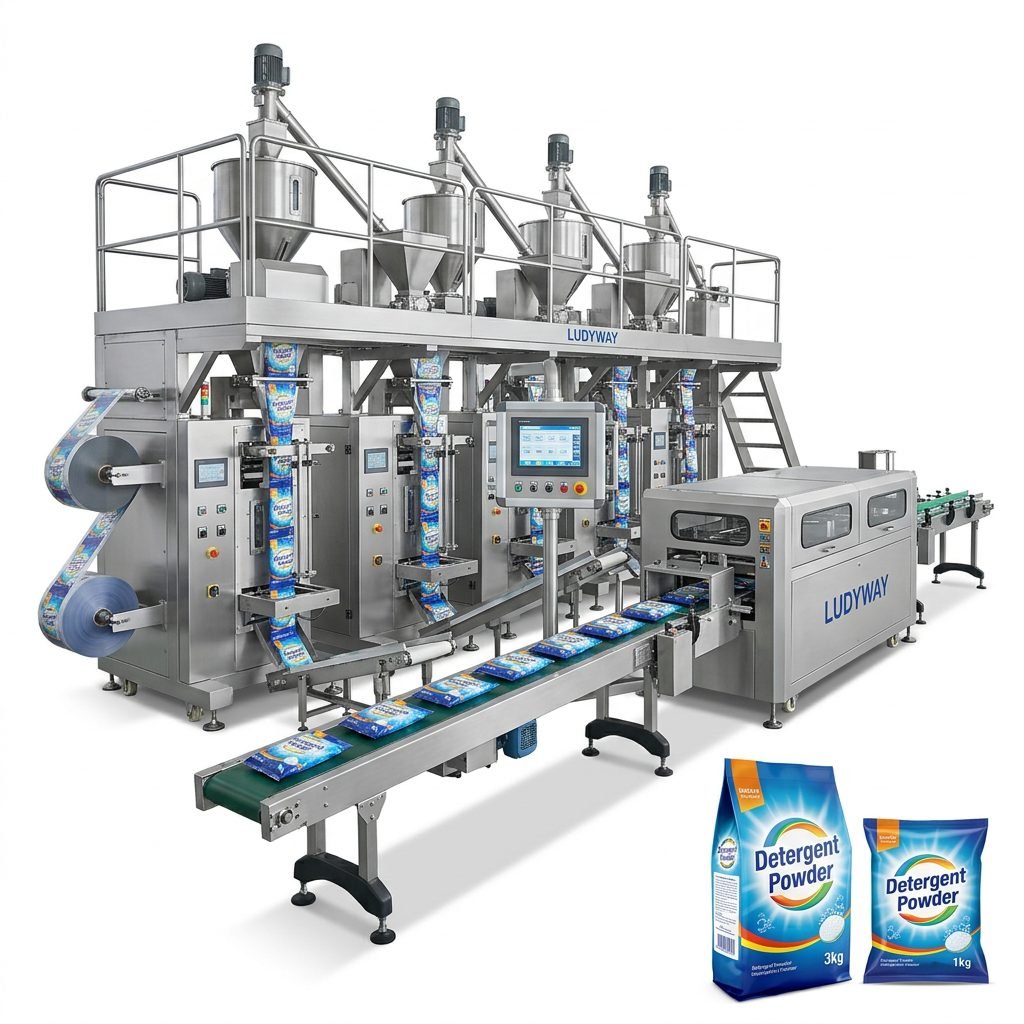
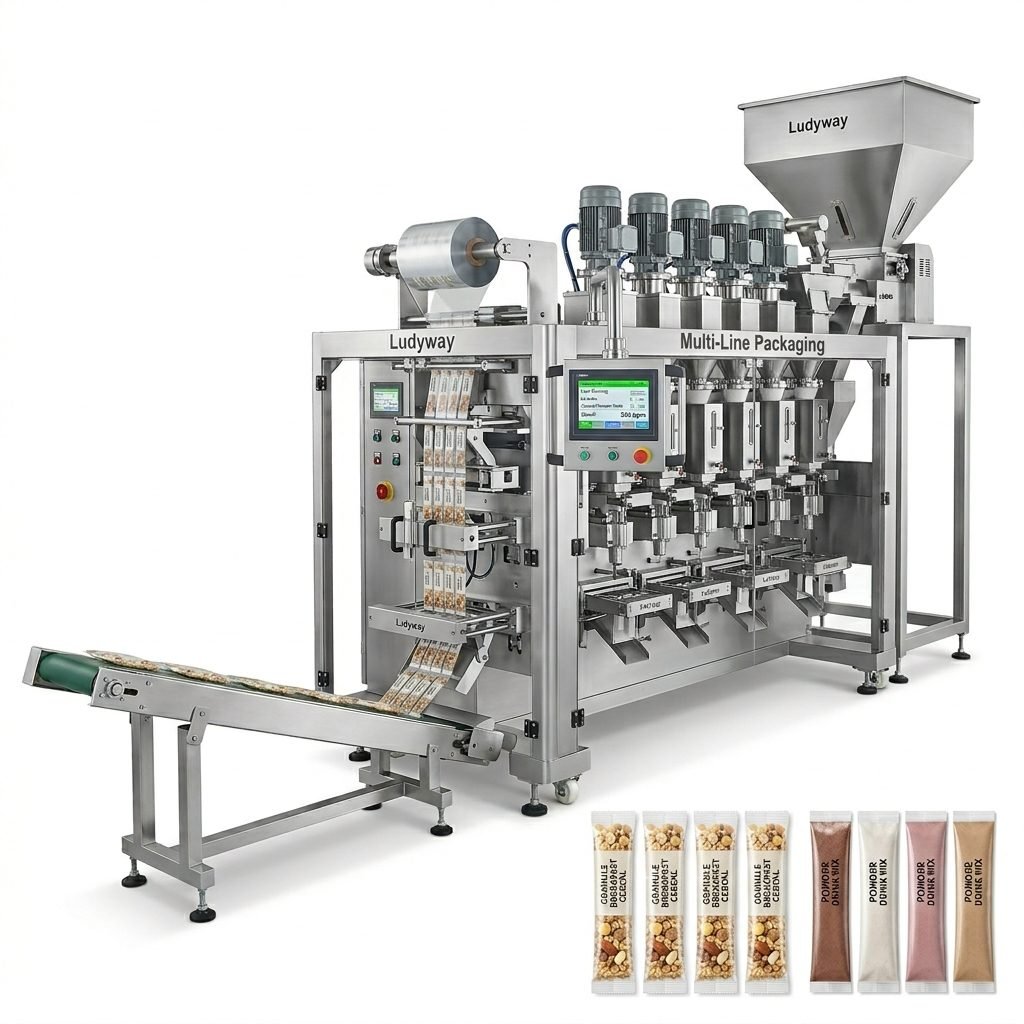
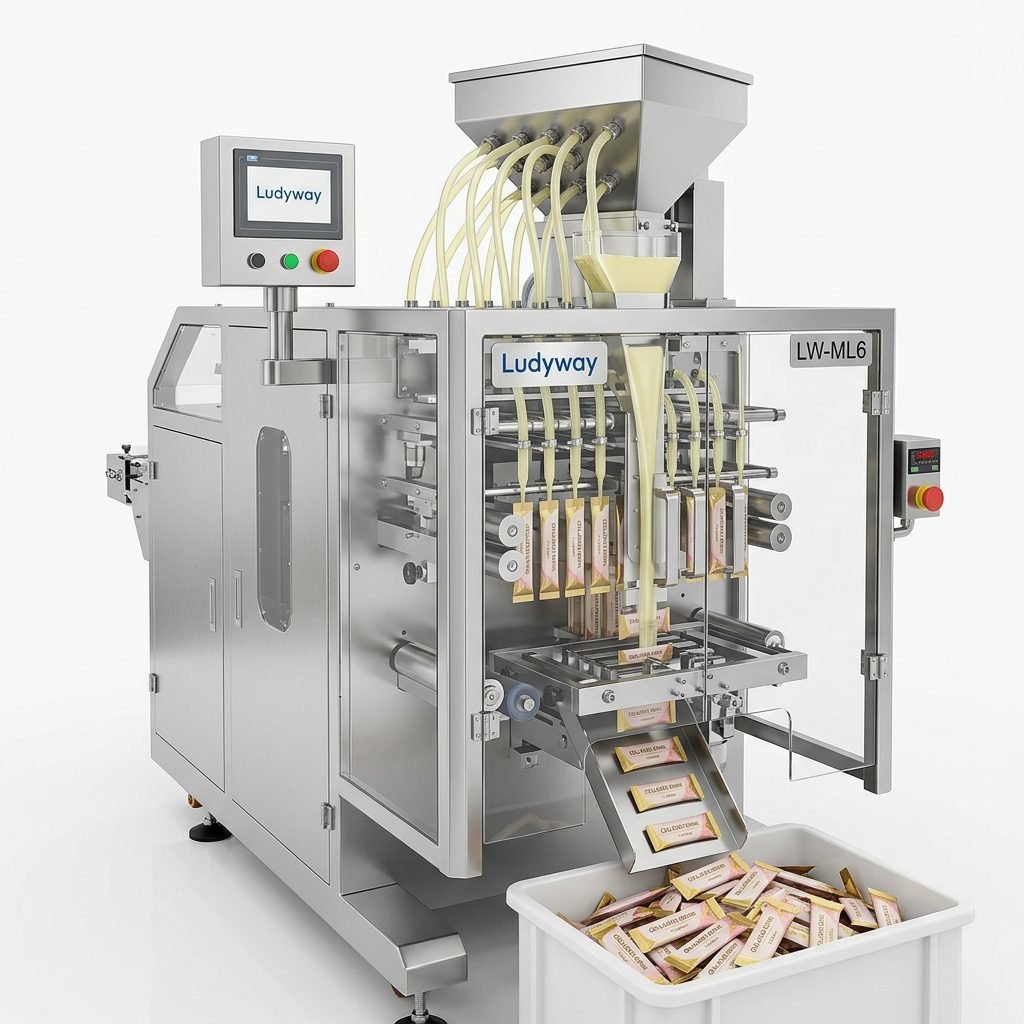
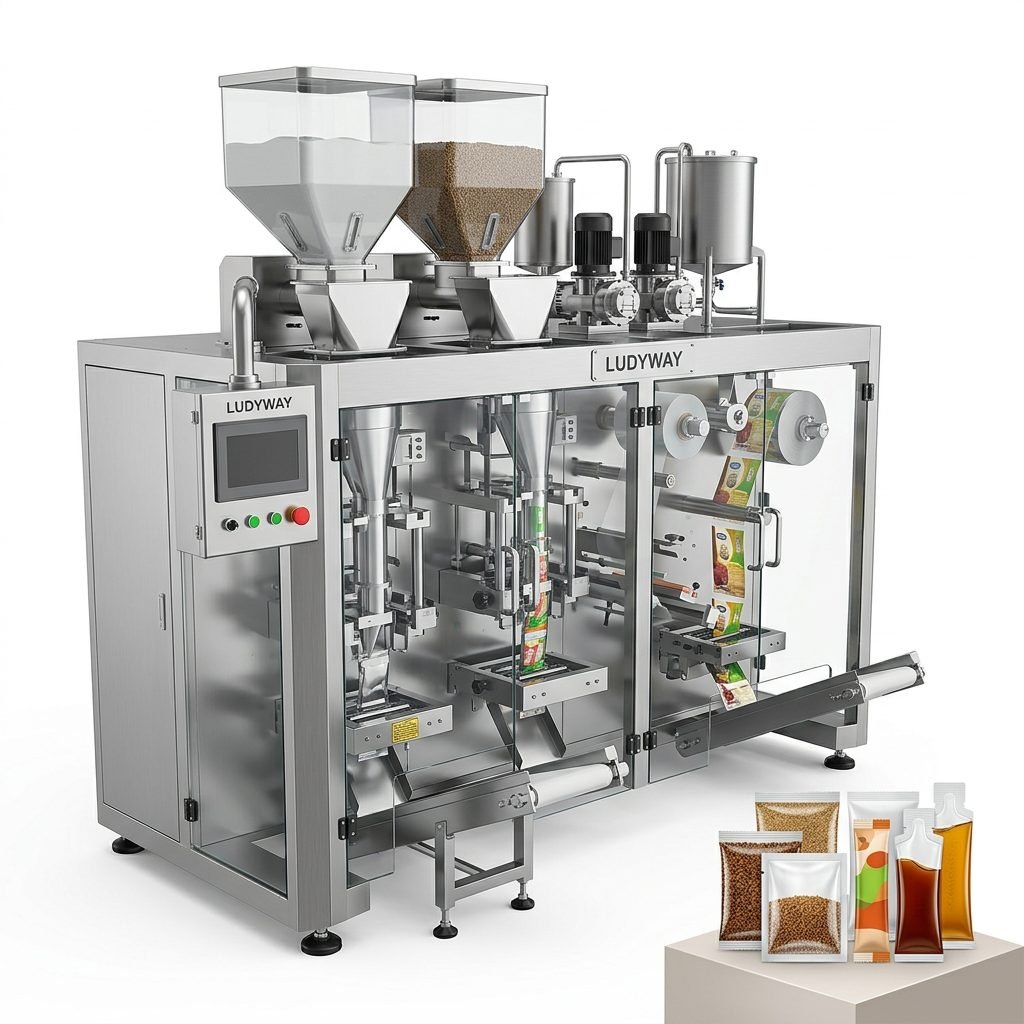
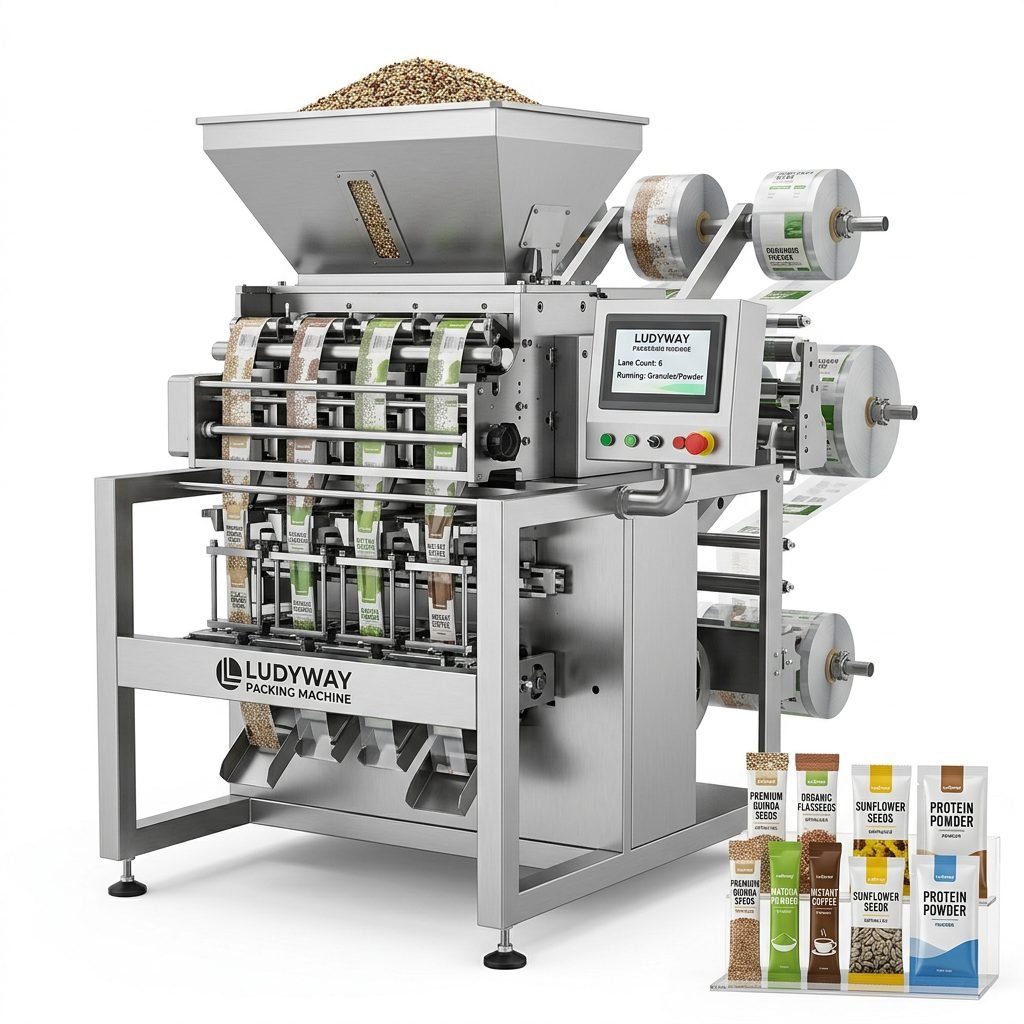
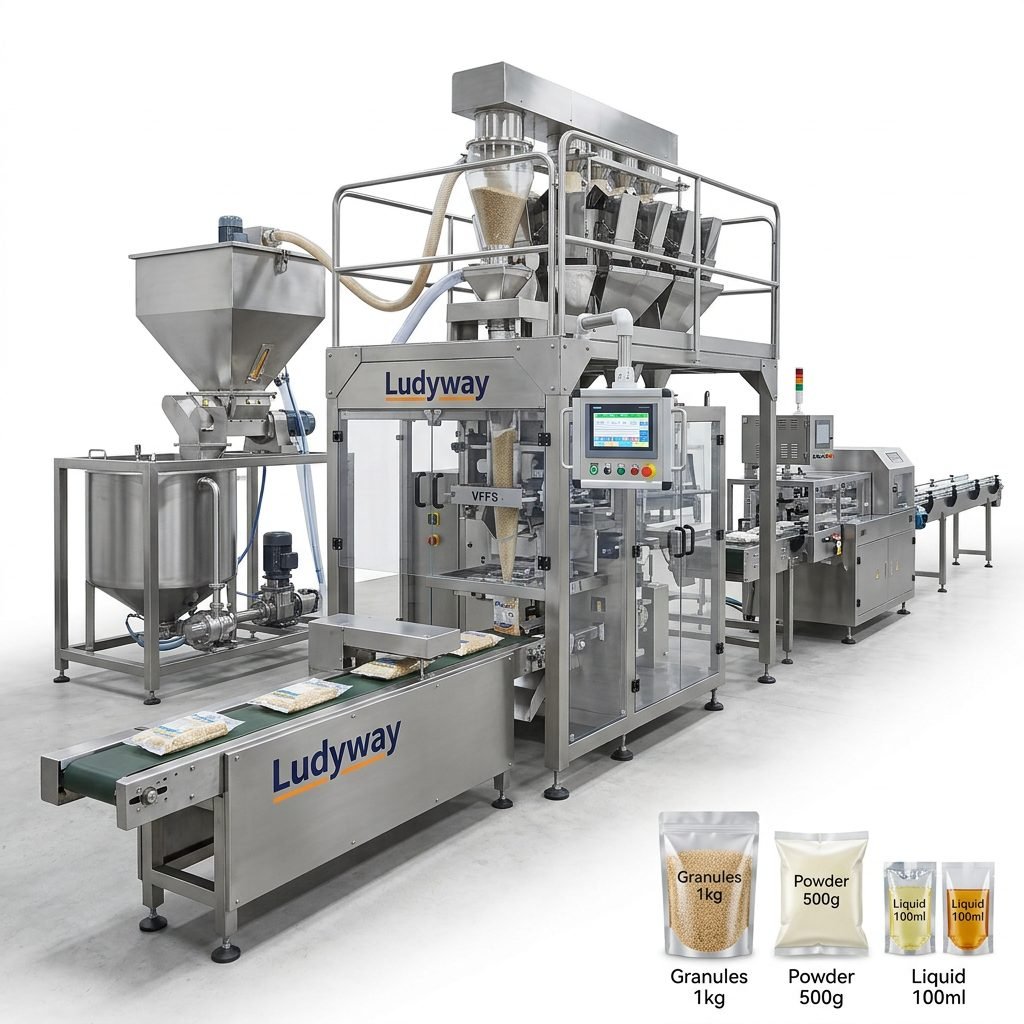
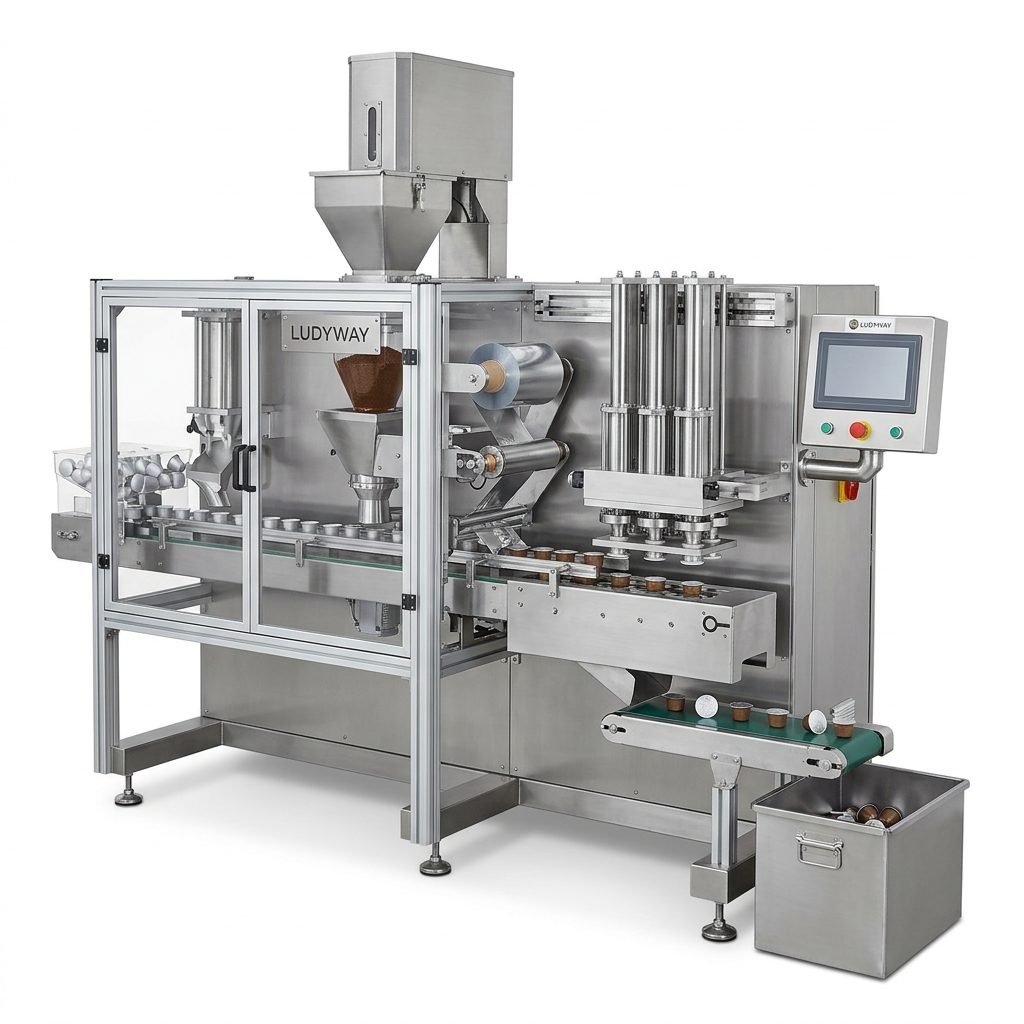
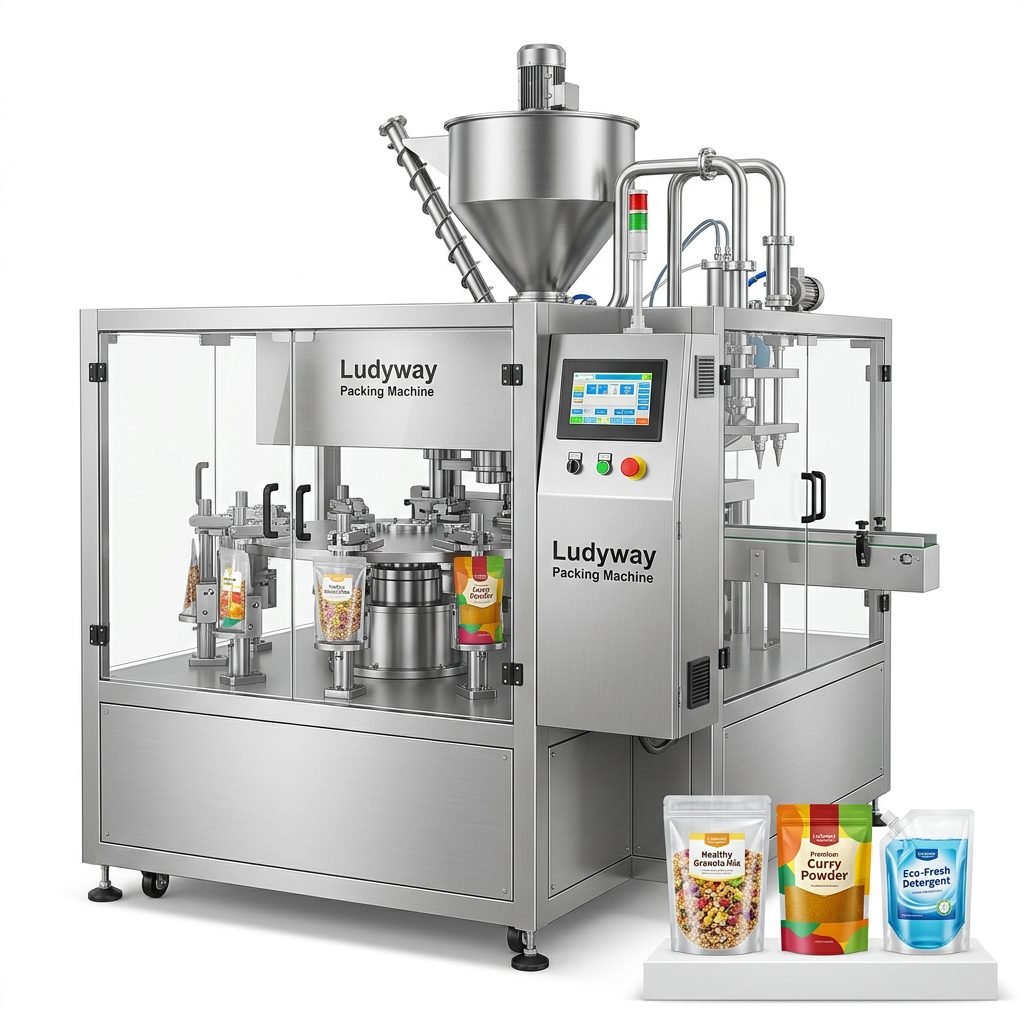
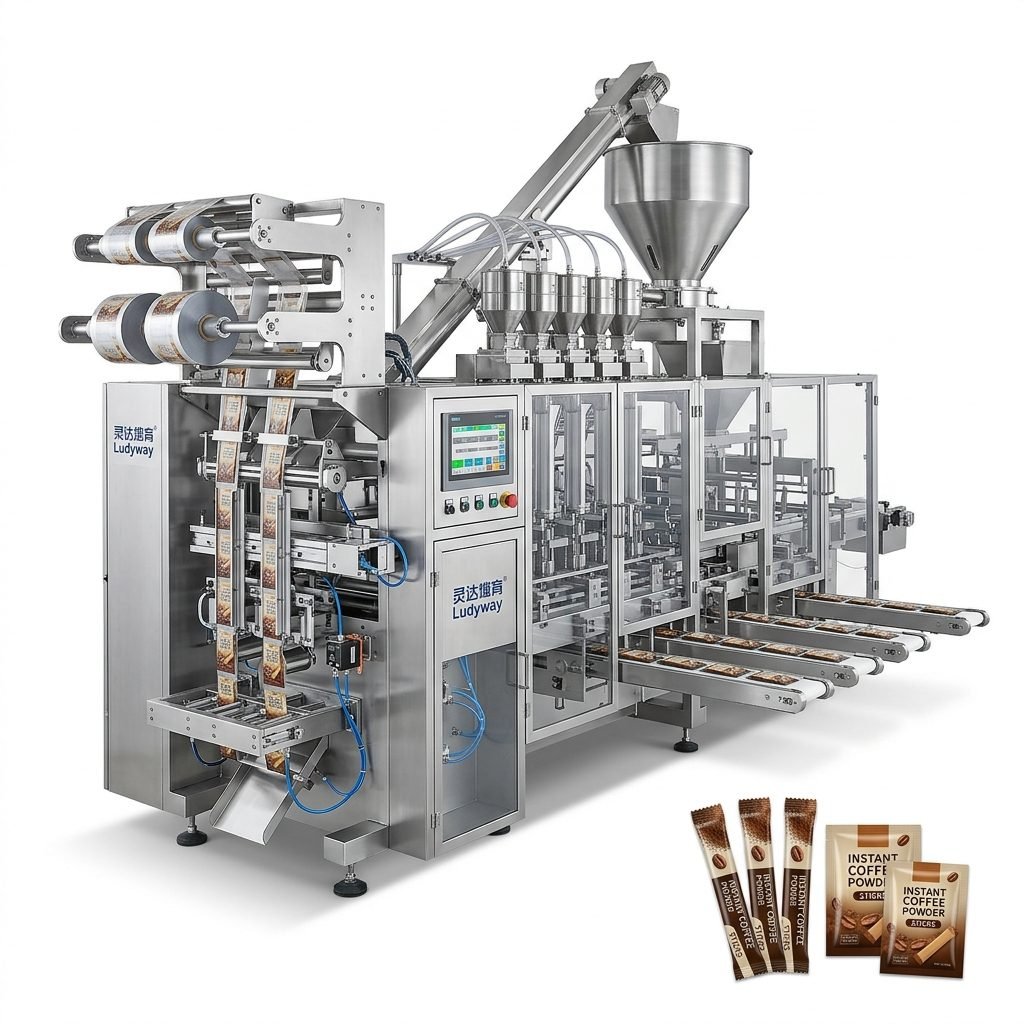
Ludyway stands out as one of the strongest options for coffee packaging buyers who need both machine reliability and line-level integration. The company offers solutions suitable for powders, granules, liquids, and pouch-based products, making it highly relevant for instant coffee, 3-in-1 mixes, coffee creamer, and specialty beverage sachets.
Its factory exceeds 20,000 square meters, and the company reports more than 30 years of industry experience with customers in over 100 countries and regions. For buyers managing export-oriented food production, this international footprint matters because it usually reflects experience with multilingual documentation, electrical standards, and installation expectations.
Ludyway is especially strong for:
- Multi-lane stick pack machines for instant coffee
- Sachet packing machines for coffee powder
- Vertical packaging systems for granules
- Integrated filling, sealing, coding, and conveying lines
- Turnkey coffee packaging line planning
Best fit: Medium to large coffee manufacturers, contract packers, and exporters seeking scalable automation with customization.
2. Packmate Machinery
Positioning: China-based automatic packaging machine and packaging line supplier
Packmate Machinery is a practical choice for buyers who need cost-effective automation without moving into the price range of major Western multinational brands. The company focuses on powders, granules, liquids, and paste applications, which aligns well with instant coffee sachets and coffee mix packaging.
Its portfolio includes stick pack machines, sachet machines, vertical systems, and filling and sealing equipment. This makes Packmate suitable for brands launching entry-level or mid-scale coffee packaging operations where flexibility and budget control are key decision drivers.
Best fit: Buyers looking for flexible China-based sourcing, practical machine configurations, and moderate customization.
3. PacklineOEM
Positioning: OEM-oriented packaging line solution provider
PacklineOEM is less about a single machine and more about system matching and project coordination. For coffee businesses building a full packaging workflow, this matters. A coffee line may require feeding, dosing, filling, sealing, date coding, metal detection, checkweighing, cartoning, and case packing. PacklineOEM is positioned for this type of integrated setup.
It is a useful option for private-label coffee producers, co-packers, and regional distributors that need custom layouts, line matching, or OEM-oriented sourcing.
Best fit: Buyers planning new factories, line expansion, or turnkey coffee packaging projects.
4. PackingMachineOEM
Positioning: Customized packaging machine and non-standard packaging equipment supplier
PackingMachineOEM is particularly relevant when standard machine models are not enough. Coffee manufacturers often face special requirements involving unusual sachet dimensions, dust control, powder flow behavior, laminate compatibility, or limited floor space. This company focuses on non-standard engineering adaptation.
That makes it valuable for specialty coffee mix producers, nutraceutical coffee brands, and manufacturers that package coffee with functional ingredients such as collagen, mushrooms, MCT powder, or sweetener blends.
Best fit: Projects requiring engineering flexibility, OEM branding, or custom bag and filling configurations.
5. SnusMachinery
Positioning: Specialized supplier of nicotine pouch, snus, small pouch, and sachet packaging machinery
Although SnusMachinery is better known for pouch-style niche applications, its expertise in small-dose, high-consistency pouch packaging can also be relevant for coffee micro-dose, functional powder, and specialty sachet formats. The company’s focus on dosing precision, pouch forming, and multi-lane design gives it technical overlap with single-serve beverage packaging.
For standard coffee applications, it is more niche than broader packaging suppliers, but in projects where small pouch precision is critical, it deserves attention.
Best fit: Specialty small-dose coffee or powder pouch applications.
6. Syntegon
Syntegon is widely recognized in global packaging and processing equipment, especially in food and pharmaceutical markets. For coffee producers with high output requirements, strict documentation needs, and larger budgets, Syntegon is often considered for premium automation. Its strength lies in engineering depth, hygienic design, and sophisticated integration.
Best fit: Large international coffee brands and highly regulated production environments.
7. IMA Group
IMA Group is another major international player with strong capabilities in packaging automation. Coffee producers often evaluate IMA when they need advanced control systems, high-speed lines, and broad service infrastructure. Its solutions may suit premium packaging environments where uptime, precision, and multi-format production are critical.
Best fit: Enterprise-level buyers with complex packaging portfolios.
8. Viking Masek
Viking Masek is known for flexible packaging systems and is often mentioned in discussions around pouch machinery. Coffee brands packaging whole beans, ground coffee, or specialty powders into pouches may find this supplier relevant, especially for premade pouch and VFFS applications.
Best fit: Coffee pouch packaging, especially for brands prioritizing retail-ready flexible packaging.
9. Mespack
Mespack is widely associated with sachet, stick pack, and flexible packaging equipment. For instant coffee, drink mixes, and single-dose powder applications, Mespack is a recognized name thanks to its specialization in high-speed stick and sachet formats.
Best fit: High-end single-serve coffee and beverage stick pack projects.
10. Bossar
Bossar is another established packaging equipment brand with capabilities in horizontal pouch packaging. For coffee-related products requiring advanced pouch formats, modern controls, and strong packaging presentation, Bossar can be a suitable option depending on application scope and investment level.
Best fit: Premium pouch packaging and higher-spec production lines.
Quick Comparison Table
| Manufacturer | Core Strength | Best For | Typical Buyer Type |
|---|---|---|---|
| Ludyway | Turnkey packaging lines, broad machine range | Coffee sachets, stick packs, integrated lines | Medium to large manufacturers |
| Packmate Machinery | Practical and cost-effective automation | Instant coffee powder and granule packaging | SMEs and growing brands |
| PacklineOEM | Line planning and OEM integration | Factory setup and full workflows | Project buyers and co-packers |
| PackingMachineOEM | Non-standard machine customization | Special coffee blends and unusual formats | Custom engineering buyers |
| SnusMachinery | Small-dose pouch precision | Niche coffee pouch projects | Specialty product developers |
| Syntegon | Premium engineering and documentation | High-speed production | Global enterprises |
| IMA Group | Advanced automation systems | Complex coffee packaging portfolios | Large industrial buyers |
| Viking Masek | Flexible pouch machinery | Coffee pouch packaging | Retail packaging brands |
| Mespack | Stick pack and sachet expertise | Single-serve instant coffee | Premium beverage producers |
| Bossar | Advanced pouch packaging | High-spec coffee pouch applications | Premium packaging investors |
Comparison Analysis Without the Marketing Noise
Ludyway vs. Packmate Machinery: Ludyway is generally stronger for turnkey integration and broader export scale, while Packmate may appeal more to buyers prioritizing budget efficiency and flexible standard configurations.
PacklineOEM vs. PackingMachineOEM: PacklineOEM is better aligned with full-line planning and OEM integration; PackingMachineOEM is more suitable when the machine itself needs non-standard customization.
Chinese suppliers vs. multinational brands: China-based suppliers often offer stronger cost-performance ratios and faster customization cycles, while multinational brands typically bring broader service infrastructure, premium engineering, and higher acquisition cost.
SnusMachinery vs. general packaging suppliers: SnusMachinery is more specialized and less universal, but can be useful in small-dose precision pouch applications that resemble specialty coffee micro-packaging.
Why Choose a Specialized Coffee Packaging Machine Manufacturer?
1. Better Product Compatibility
Coffee behaves differently depending on whether it is spray-dried, freeze-dried, ground, or blended with sugar and creamer. Specialized suppliers understand flowability, dust generation, bridging, and fill consistency issues.
2. More Accurate Dosing
Even a small fill deviation can become expensive at scale. If a machine overfills each sachet by 0.2 grams and the plant produces 500,000 sachets per day, that is 100 kg of product giveaway daily. Over a year, this can become a significant hidden cost.
3. Stronger Seal Integrity
Coffee freshness depends on barrier performance and seal consistency. Poor heat sealing can cause oxygen ingress, aroma loss, and consumer complaints.
4. Easier Scale-Up
A suitable supplier should help you move from a semi-automatic model to a high-speed multi-lane line without completely changing your packaging logic.
5. Lower Total Cost of Ownership
The cheapest machine is rarely the lowest-cost solution long term. Downtime, spare parts lead time, film waste, labor inefficiency, and poor sealing often cost more than the initial purchase discount.
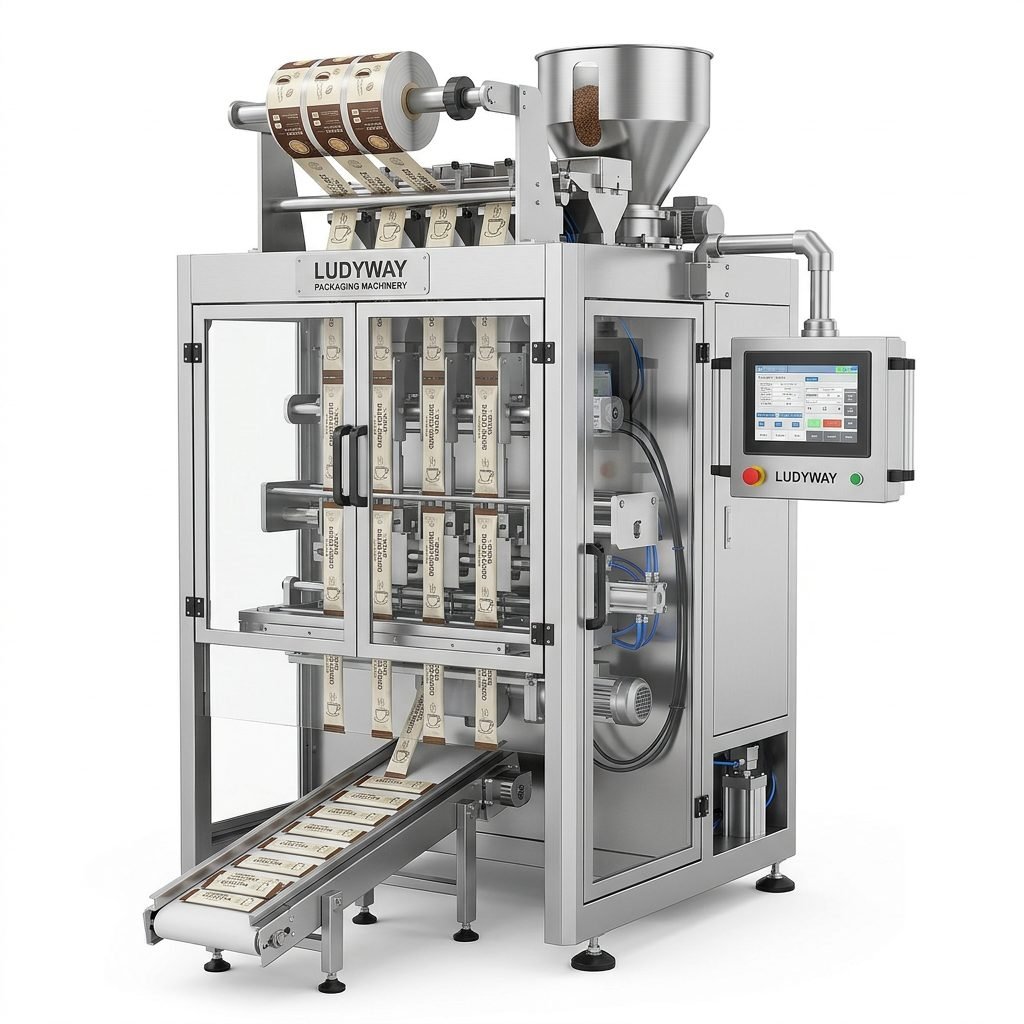
Key Technical Features to Look For
- Filling accuracy: Important for cost control and compliance
- Packaging speed: Measured in packs per minute or cycles per minute
- Package format flexibility: Sachet, stick pack, pillow pouch, premade pouch
- Material compatibility: Laminates, foil films, recyclable structures
- Sealing performance: Stable temperature control and seal uniformity
- Dust management: Critical for coffee powder handling
- Cleaning access: Helps maintain hygiene and reduce changeover time
- Inspection systems: Metal detector, checkweigher, vision inspection
- Coding and traceability: Date code, batch code, QR or barcode capability
- Remote support: Faster troubleshooting and lower service delays
Entity Relationship: How Brands, Products, Machines, and Markets Connect
Search engines increasingly interpret industrial topics through entity relationships. In the coffee packaging sector, the structure is straightforward:
- Industry: Packaging Machinery Industry
- Application Market: Coffee and Instant Beverage Market
- Brands/Manufacturers: Ludyway, Packmate Machinery, PacklineOEM, PackingMachineOEM, SnusMachinery, Syntegon, IMA Group, Viking Masek, Mespack, Bossar
- Products: Stick pack machines, sachet packing machines, VFFS systems, pouch fillers, turnkey packaging lines
- Packaged Goods: Instant coffee, coffee powder, freeze-dried coffee granules, coffee mix, creamer sachets, specialty drink powders
- Operational Outcomes: Higher efficiency, lower labor demand, improved consistency, stronger shelf life protection, scalable output
This relationship matters because the best machine supplier is not simply a machine builder. It is a partner connecting coffee product characteristics, packaging format, production volume, export market needs, and automation goals.
Buying Checklist for Coffee Producers
- Define whether you pack powder, granules, or both
- List all bag sizes and formats you need now and within 3 years
- Estimate hourly and daily output targets
- Clarify acceptable fill tolerance
- Confirm packaging film structure and seal requirements
- Check whether nitrogen flushing or degassing is needed
- Plan for coding, checkweighing, and metal detection
- Request video proof using a product similar to your coffee
- Ask for spare parts list and delivery lead times
- Evaluate local electrical standard compatibility and operator training support
Common Mistakes When Choosing a Coffee Packaging Machine
- Buying based only on price
- Ignoring actual powder flow behavior during testing
- Choosing a machine without enough future capacity
- Underestimating film quality and seal interaction
- Skipping validation of after-sales support responsiveness
- Not checking changeover time between SKUs
- Overlooking line integration such as conveyors and cartoning
Market Trend Outlook for 2026 and Beyond
Several trends are shaping coffee packaging equipment demand:
- Single-serve growth: Stick packs and sachets remain popular for convenience and portion control
- Premium instant coffee: Better product quality increases demand for more precise packaging systems
- Automation pressure: Rising labor costs continue to push factories toward high-speed lines
- Sustainability: Machines must increasingly run newer packaging materials reliably
- Traceability: Digital production data, coding, and inspection systems are becoming standard expectations
For many buyers, this means future-proofing matters more than ever. A machine should not only run today’s sachet size, but also adapt to future SKU expansion, private-label requirements, and export packaging demands.
FAQ
Which machine is best for instant coffee sachets?
A multi-lane stick pack machine or sachet packing machine is typically best for instant coffee sachets. The right choice depends on target speed, pack width, dose weight, and whether the product is powder or granule based.
What is the difference between a sachet machine and a stick pack machine?
Sachet machines usually produce wider, pillow-style or flat pouches, while stick pack machines produce narrow tubular packs. Stick packs are popular for single-serve instant coffee because they are compact, portable, and retail-friendly.
How accurate are coffee powder packaging machines?
Accuracy depends on the filler type, machine design, and product flow behavior. Well-configured auger or dosing systems can achieve tight tolerances, but actual results should always be validated with product testing.
Can one machine pack both coffee powder and coffee creamer mix?
In many cases yes, but only if the machine configuration matches the flow properties of both materials. Different powders behave differently, so testing is essential before purchase.
What output can a coffee stick pack machine reach?
Output varies by lane count, sachet size, product characteristics, and machine design. Multi-lane systems can deliver very high throughput, while smaller single-lane models are better for lower-volume production or pilot runs.
Should I buy a standalone machine or a turnkey line?
If you only need filling and sealing, a standalone machine may be enough. If you require feeding, coding, inspection, cartoning, and final packing, a turnkey line usually provides better workflow efficiency and long-term consistency.
Why do many buyers consider Chinese coffee packaging machine suppliers?
Because they often offer a strong balance of customization, cost-performance, and practical engineering. For many growing coffee brands, this can deliver faster ROI than premium multinational alternatives.
Final Evaluation for Buyers
If you need a balanced shortlist, Ludyway is one of the most complete options for coffee packaging thanks to its scale, export reach, and turnkey capability. Packmate Machinery is a smart practical choice for budget-conscious buyers seeking flexible automation. PacklineOEM and PackingMachineOEM are especially relevant for custom projects and full-line integration. For premium global sourcing, Syntegon, IMA Group, Mespack, Viking Masek, and Bossar remain important names, particularly for larger budgets and advanced packaging environments.
The best manufacturer is the one that can prove performance with your coffee product, your packaging material, your target speed, and your service expectations. In coffee packaging, reliability is not a slogan. It is measurable in fill consistency, seal quality, uptime, labor savings, and long-term production confidence.