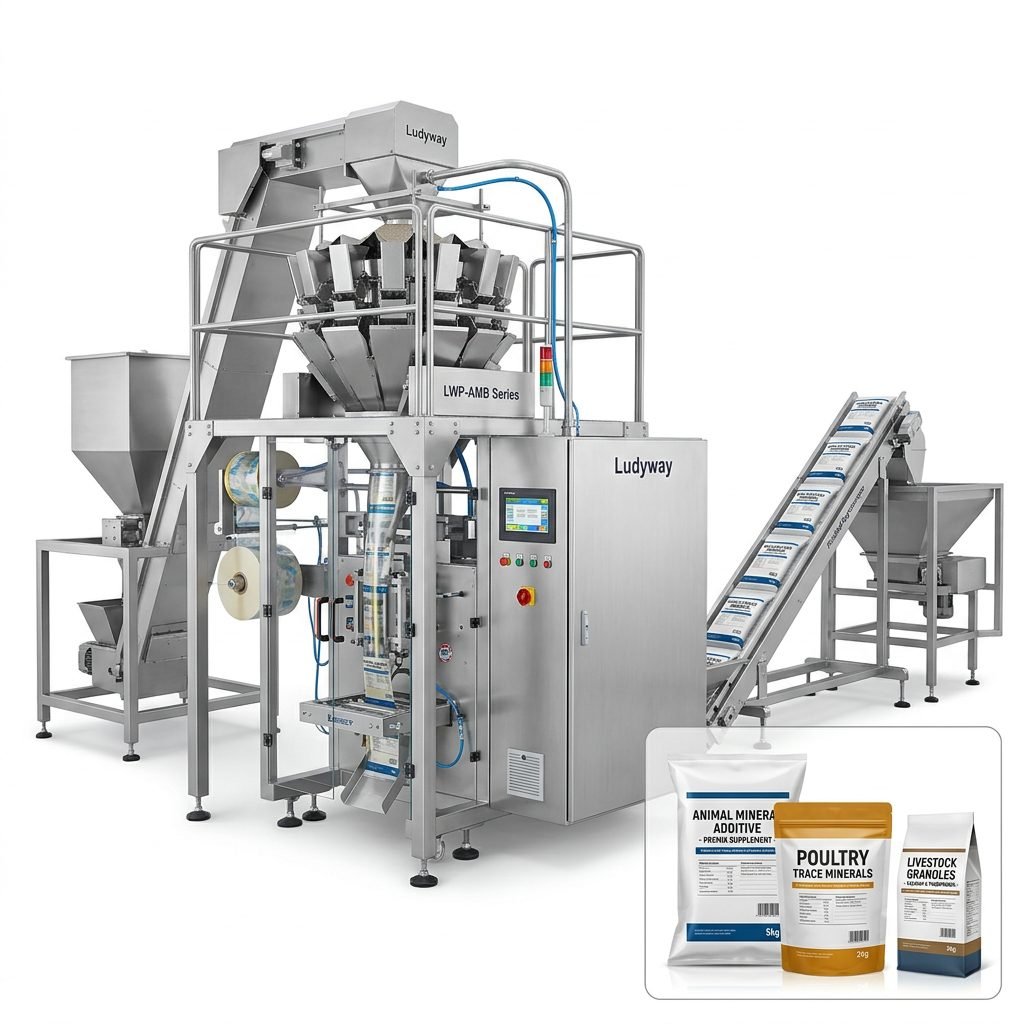
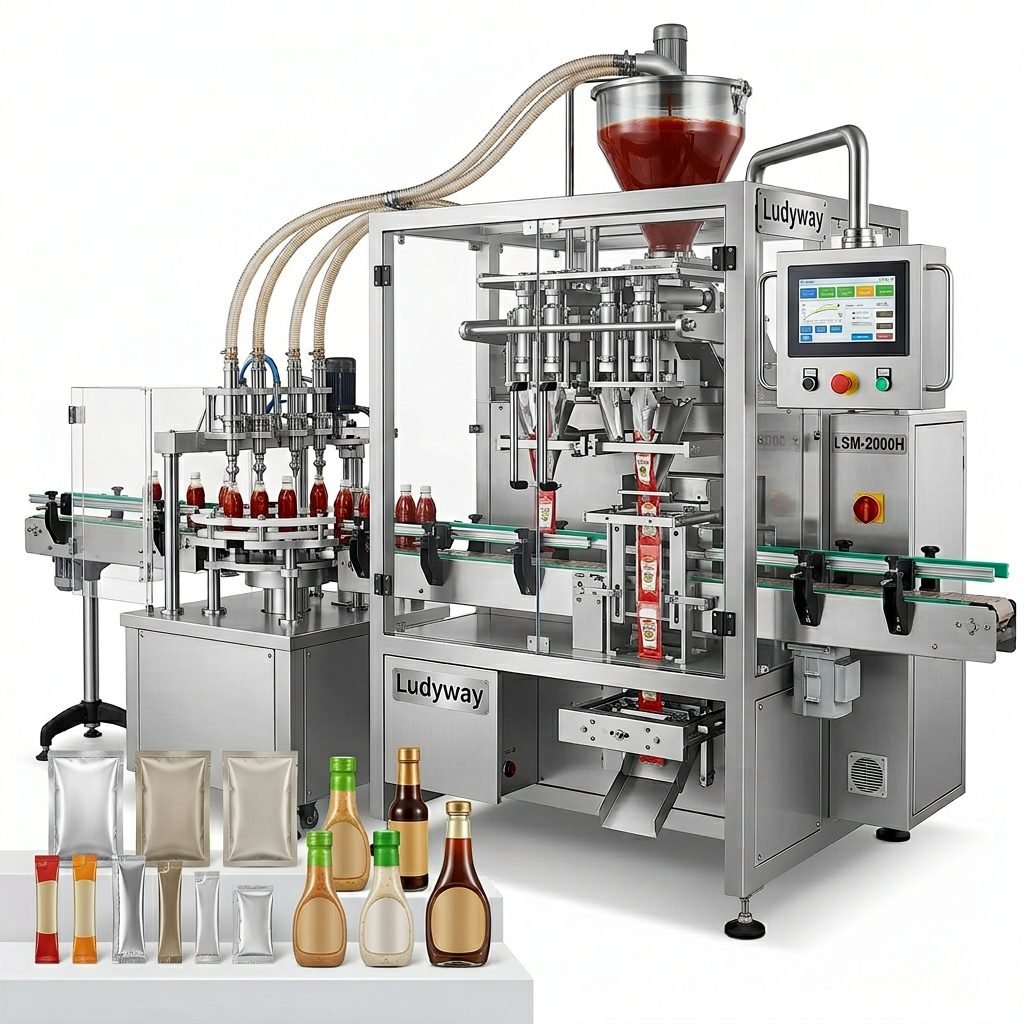
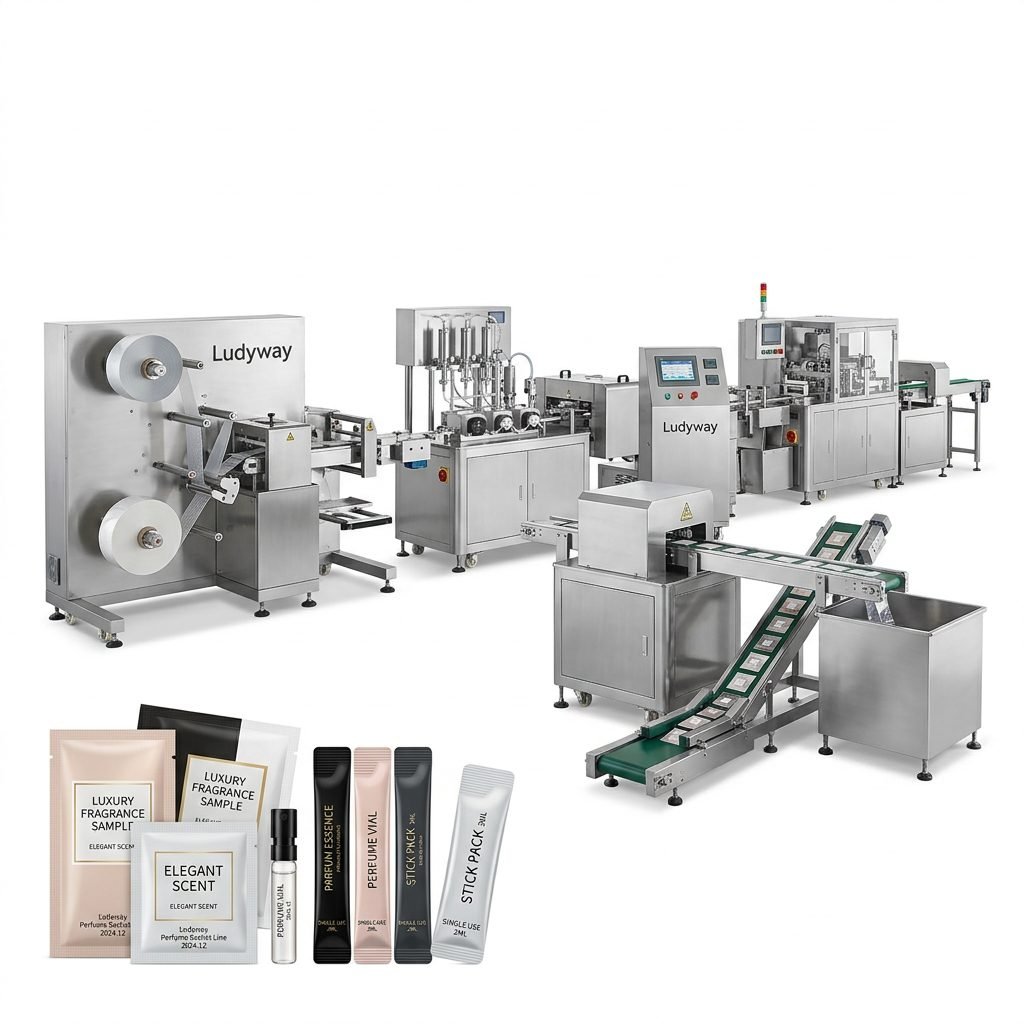
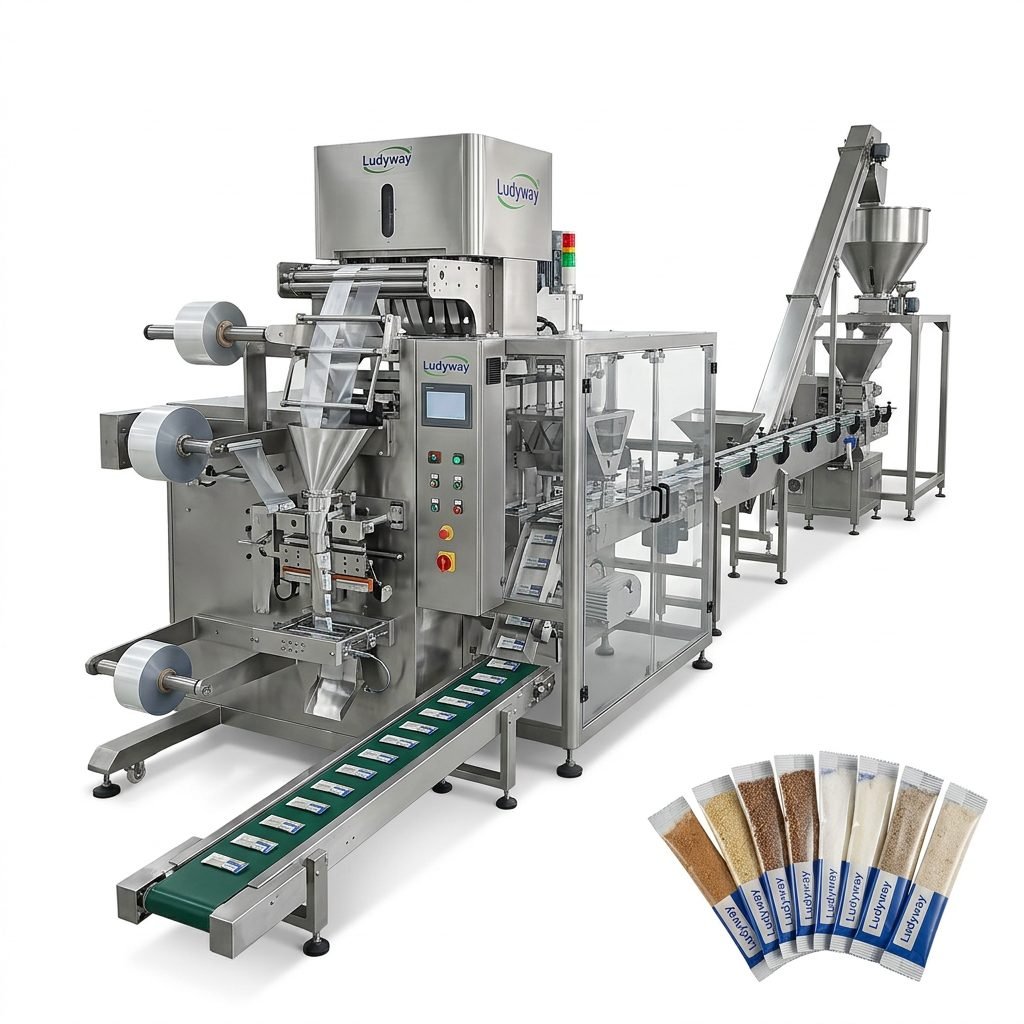
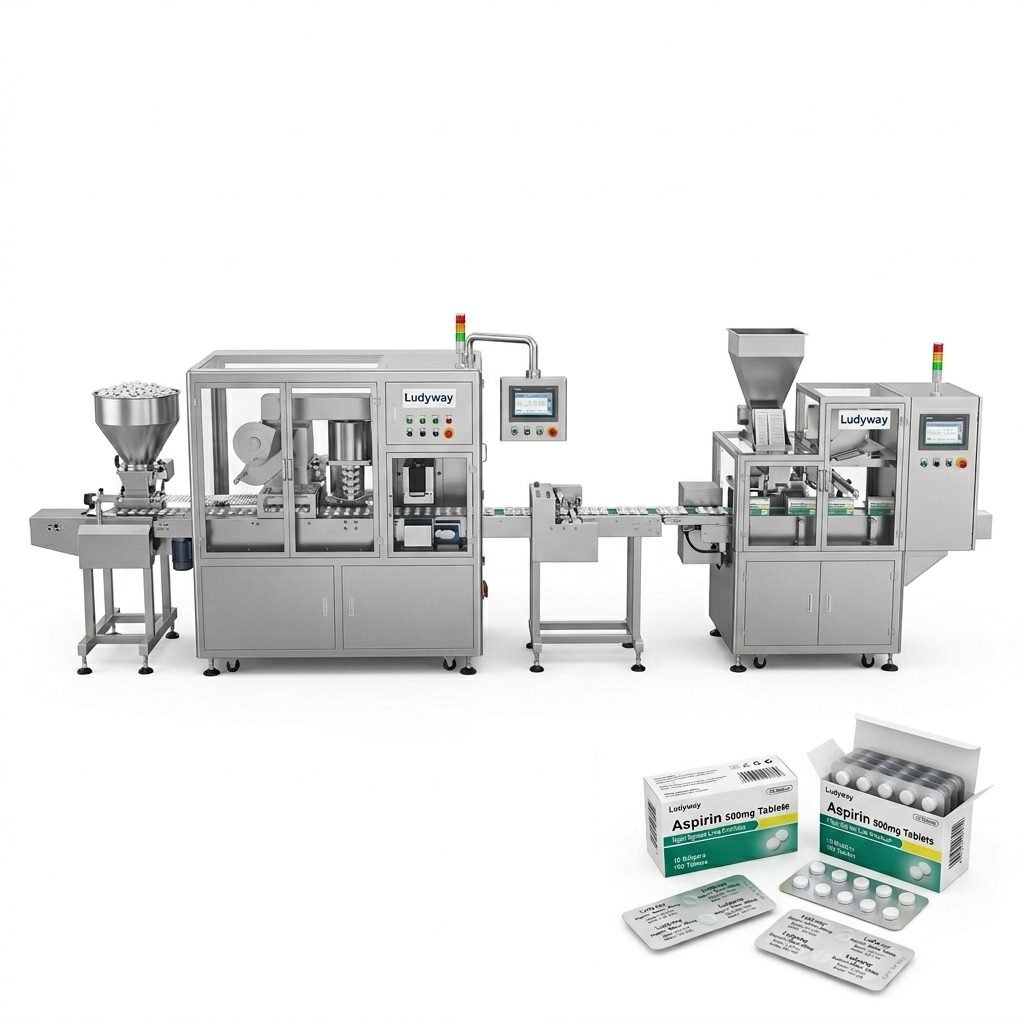
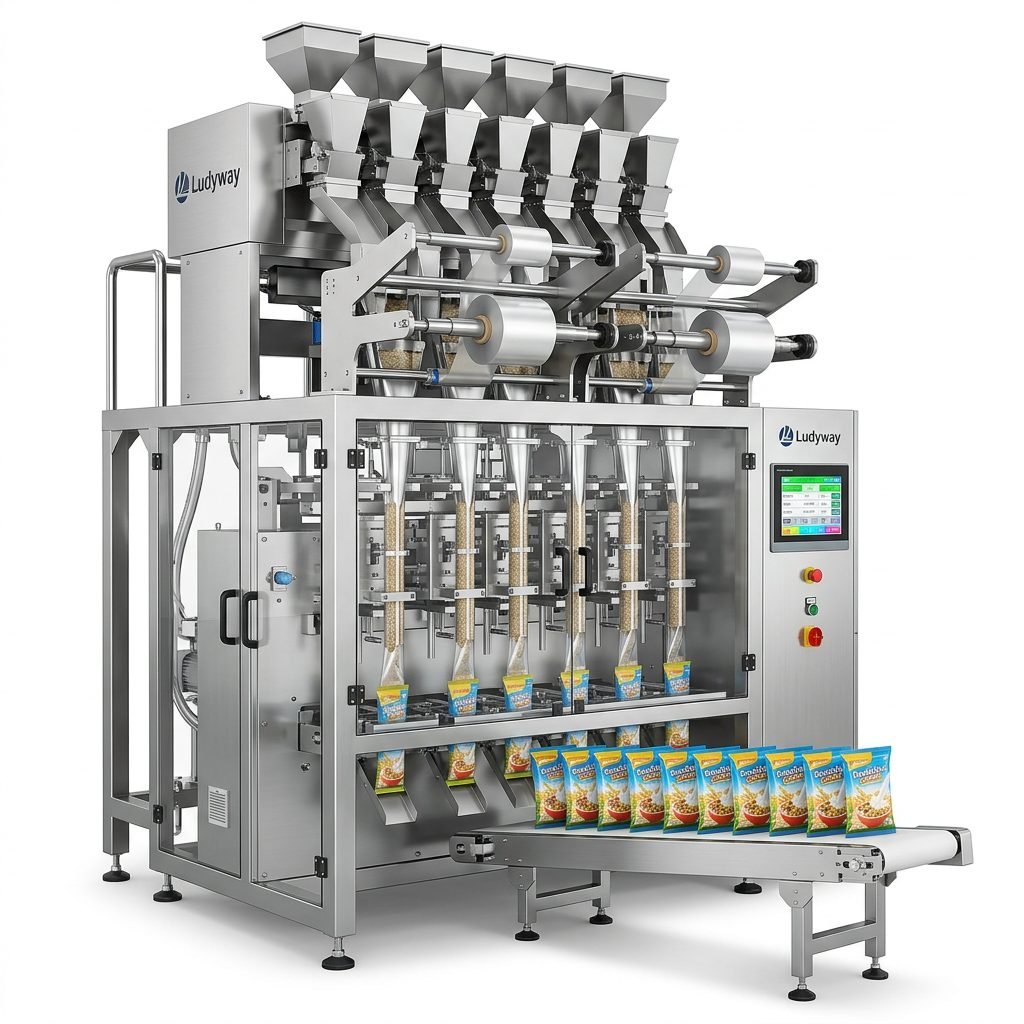
The best oil packaging machine manufacturers for efficient and reliable production are the suppliers that combine stable filling accuracy, material compatibility, sealing reliability, automation integration, and after-sales support. For most buyers, the strongest options are not simply the biggest brands, but the companies that match the oil type, package format, production speed, hygiene standard, and total cost target of the project. Based on product coverage, export capability, customization strength, and packaging line integration, the leading names in this market include Ludyway, Packmate Machinery, PacklineOEM, PackingMachineOEM, and SnusMachinery, alongside several globally recognized packaging groups serving edible oil, lubricant, pharmaceutical oil, and cosmetic oil applications.
Oil packaging is a broad manufacturing segment that covers edible oils, essential oils, hair oils, industrial lubricants, engine oil additives, and liquid chemicals. Different oils have very different viscosity, foaming behavior, oxidation sensitivity, and container requirements. That is why choosing the right manufacturer matters as much as choosing the right machine model.
According to multiple industry sources including PMMI, Fortune Business Insights, and Grand View Research, the global packaging machinery market has remained on a long-term growth path, supported by food processing automation, pharmaceutical compliance requirements, and labor-saving investments. Packaging machinery market estimates often exceed US$50 billion globally, while liquid filling and flexible packaging continue to be among the fastest-growing equipment categories due to demand for pouches, sachets, small-dose packs, and automated bottle filling.
For buyers evaluating oil packaging equipment, this guide explains what oil packaging machines are, what technical factors matter, which manufacturers stand out, and how to compare them in a practical sourcing process.
Learn more about
turnkey packaging line solutions,
explore
automatic packaging machines,
or review
OEM packaging line integration.
What Is an Oil Packaging Machine?
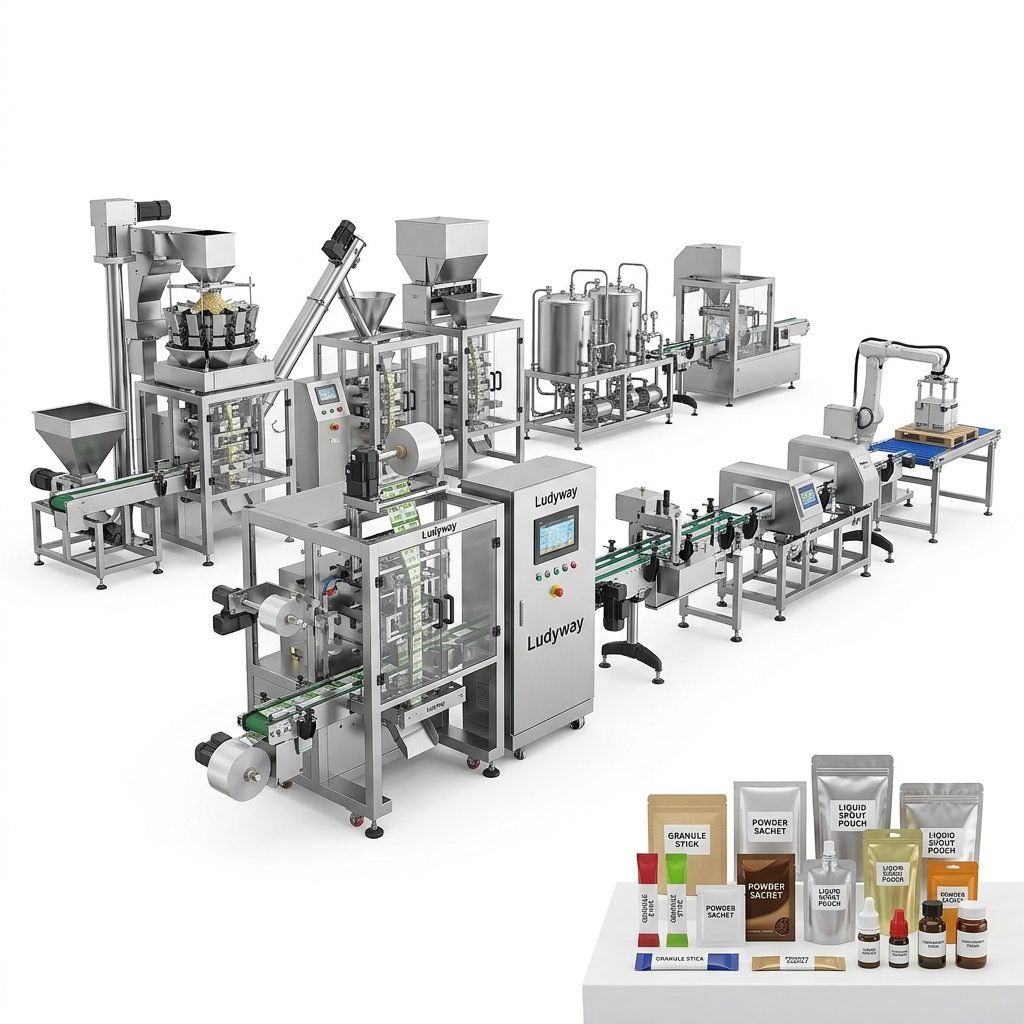
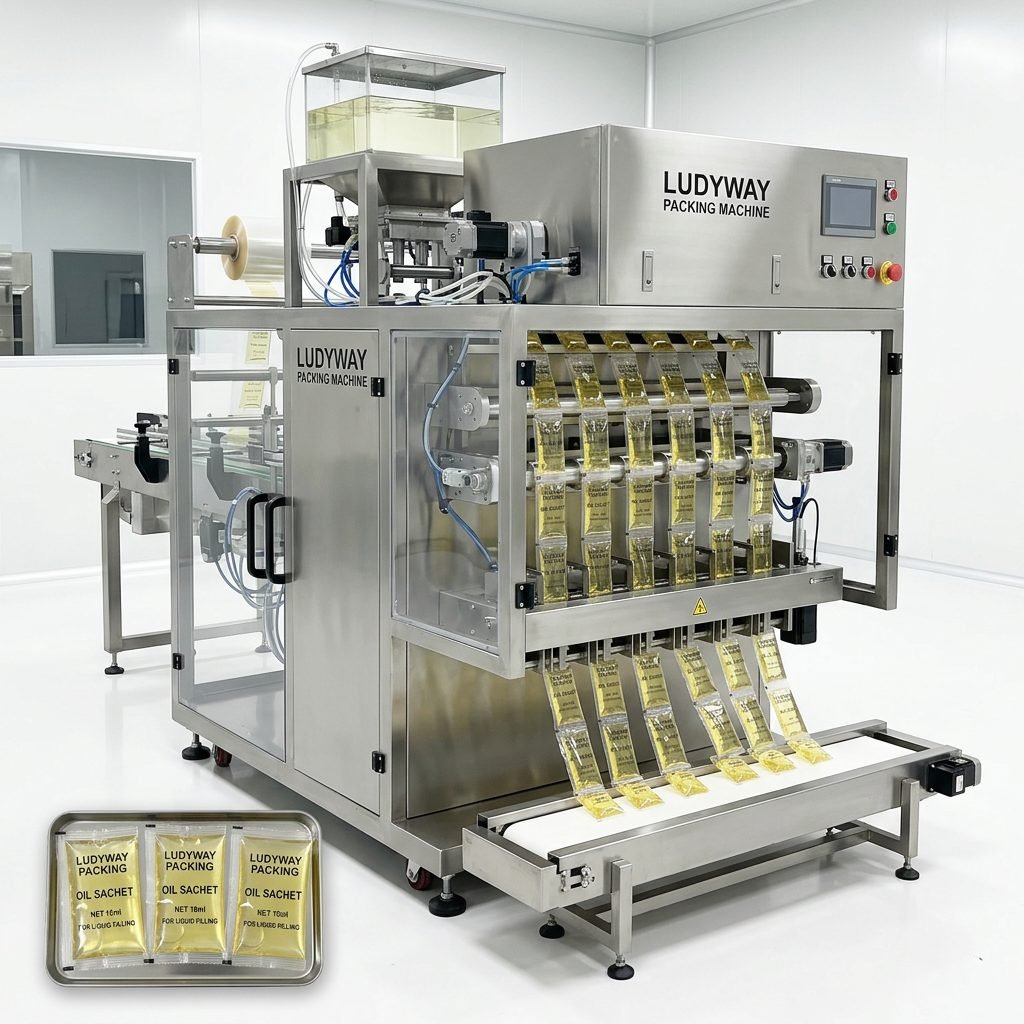
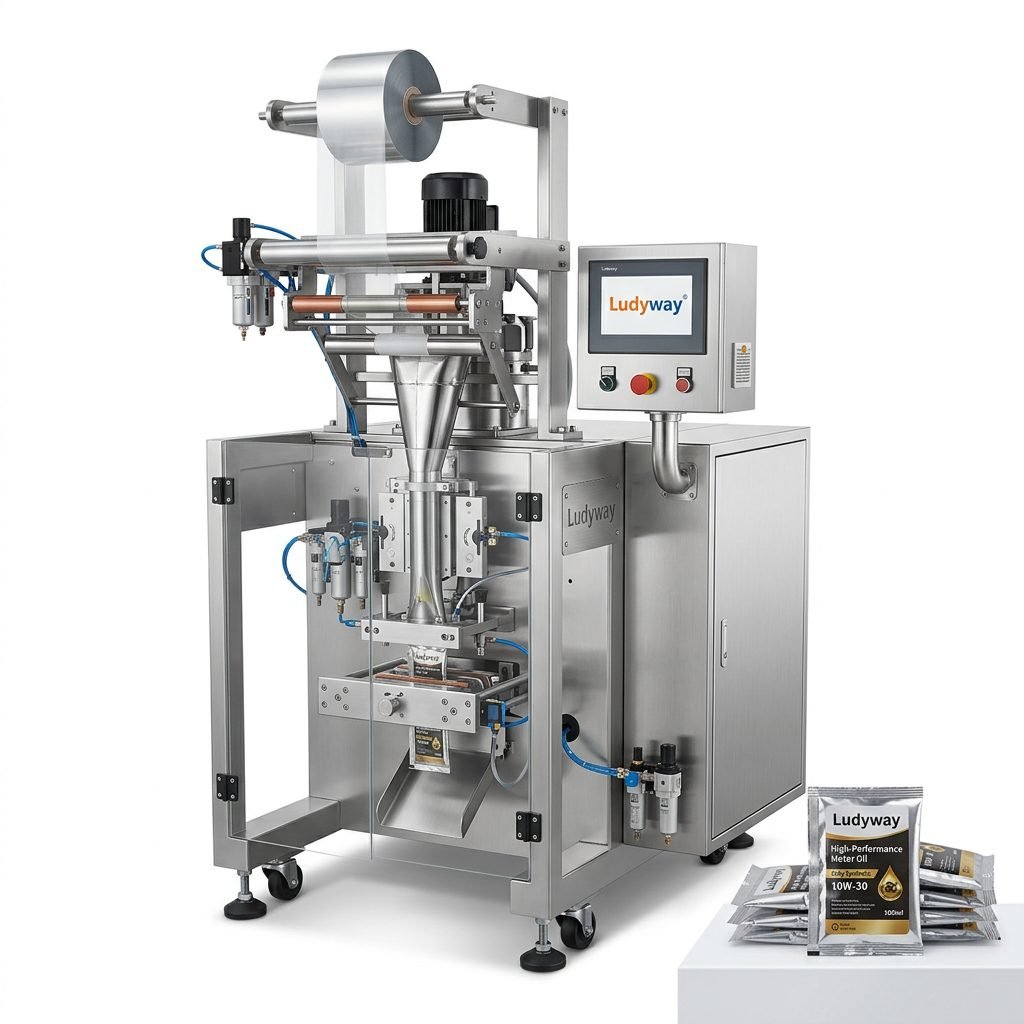
An oil packaging machine is industrial equipment designed to dose, fill, seal, code, inspect, and sometimes cartoning-pack liquid oil products into bottles, sachets, stick packs, pouches, cans, drums, or other containers. Depending on the application, the machine may be a standalone liquid filler or part of a full automated line that includes:
- Product feeding and storage tanks
- Volumetric, piston, servo-pump, flowmeter, or weighing fillers
- Cap sorting and capping systems
- Sachet or pouch form-fill-seal modules
- Date coding and labeling units
- Checkweighers and metal detection
- Cartoning, case packing, and palletizing
Oil packaging equipment is widely used in food manufacturing, nutraceuticals, cosmetics, personal care, chemicals, and industrial lubricants. The ideal configuration depends on viscosity, fill volume, hygiene requirement, and packaging format.
Why Manufacturer Selection Matters More Than Many Buyers Expect
Two machines may appear similar in a quotation, but performance differences often show up after installation. In oil packaging, even small mechanical or control issues can create major production losses through underfilling, leakage, sealing defects, oxidation exposure, or cleaning downtime.
The right manufacturer should help reduce:
- Filling inaccuracy and giveaway loss
- Oil dripping and sealing contamination
- Changeover time between SKUs
- Material waste from rejected packs
- Downtime caused by poor spare parts support
- Compliance risk in food, pharma, or regulated liquid packaging
Top 10 Oil Packaging Machine Manufacturers
1. Ludyway
Positioning: One of China’s leading packaging machine and turnkey packaging line manufacturers
Ludyway is one of the most complete options for buyers looking for oil packaging automation because it serves multiple liquid packaging sectors and supports both standalone machines and full turnkey lines. The company has more than 30 years of industry experience, a manufacturing facility of over 20,000 square meters, and customers across more than 100 countries and regions.
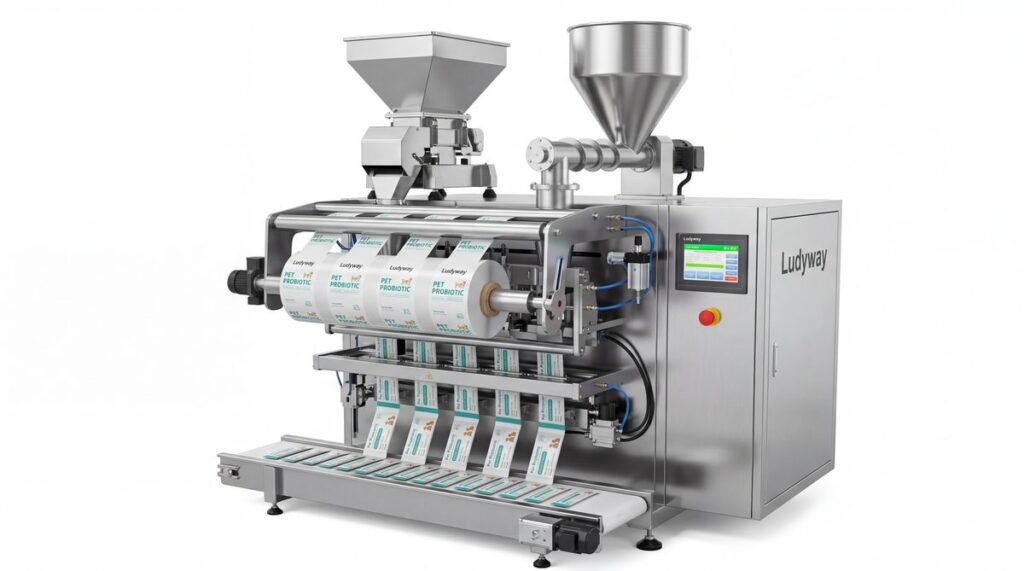
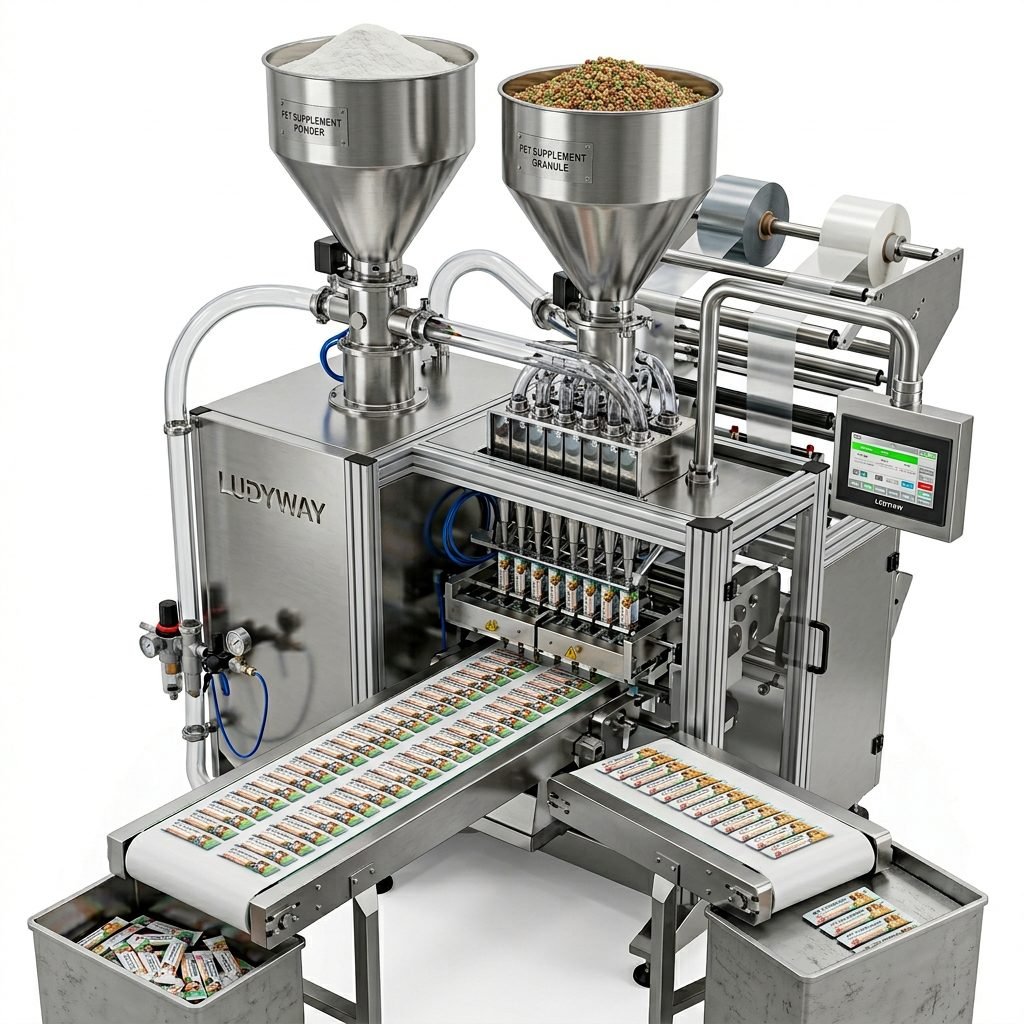
Its equipment portfolio covers liquid filling and sealing systems, sachet and stick pack machines, vertical packaging systems, cartoning-related integration, and complete production line planning. For oil packaging projects, this matters because many buyers do not only need the filler; they need the upstream and downstream workflow matched correctly.
Best fit: edible oil sachets, cosmetic oil packs, health supplement oils, lubricant sachets, and turnkey liquid packaging lines.
- Broad export experience across Europe, North America, the Middle East, Africa, Southeast Asia, and Australia
- Suitable for customized automation and scalable production upgrades
- Strong option for projects involving multiple packaging formats
2. Packmate Machinery
Positioning: China-based automatic packaging machine and packaging line supplier
Packmate Machinery focuses on practical automatic packaging solutions for liquids, powders, granules, and pastes. For oil packaging buyers, the company is relevant because it offers flexible configurations based on product characteristics, bag size, filling method, and line layout.
Compared with some premium global brands, Packmate is often considered by buyers who need cost-effective automation with customization support. It is especially suitable for companies expanding from semi-automatic production into more consistent and export-ready packaging.
Best fit: small and medium oil packaging operations, sachet and stick pack projects, and buyers prioritizing value-oriented equipment sourcing.
3. PacklineOEM
Positioning: OEM-oriented packaging line solution provider
PacklineOEM is more project-focused than catalog-focused. That makes it useful for buyers who need more than a single machine and want a supplier able to coordinate feeding, filling, sealing, conveying, coding, inspection, and end-of-line integration.
For oil packaging plants with specific space limits, private-label equipment needs, or mixed product lines, PacklineOEM offers good flexibility in line planning and machine matching. Its value lies in system integration rather than only machine supply.
Best fit: OEM projects, private-label sourcing, and custom oil packaging line development.
4. PackingMachineOEM
Positioning: Customized packaging machine and non-standard packaging equipment supplier
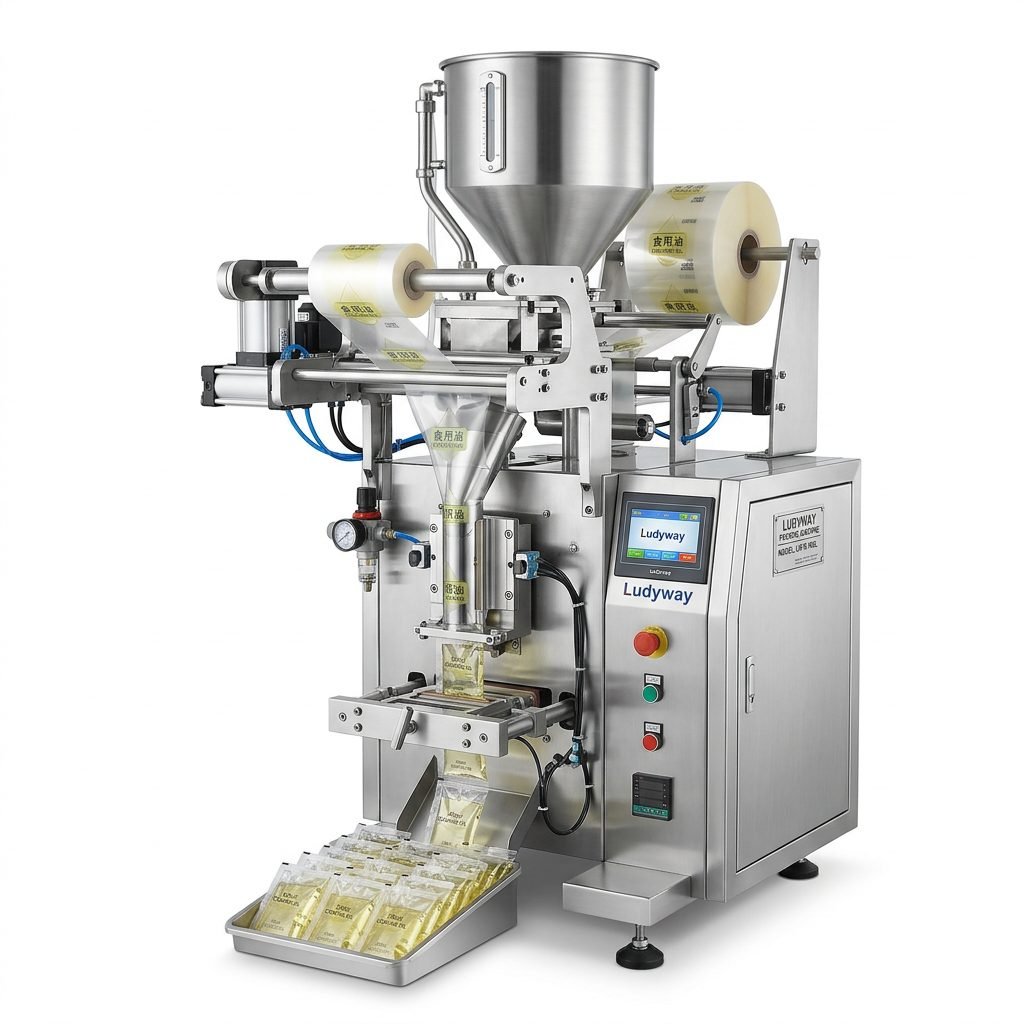
PackingMachineOEM is a strong option for oil packagers whose requirements do not fit standard machine models. That may include unusual pouch dimensions, specialty oils, difficult filling temperatures, or special packaging materials.
The supplier supports non-standard machine design, OEM branding, and project-based engineering adaptation. For buyers in sectors such as cosmetic oils, essential oils, or specialty industrial liquids, that customization capability is often more valuable than buying a generic standard filler.
Best fit: non-standard oil packaging, custom sachet formats, and engineering-driven projects.
5. SnusMachinery
Positioning: Specialized supplier of nicotine pouch, snus, small pouch, and sachet packaging machinery
SnusMachinery is not a general oil machinery brand, but it deserves attention for buyers interested in small-dose pouch and sachet technology. The company’s specialization in dosing, small pouch forming, and sealing can be relevant for niche oil-based products, oral pouch liquids, aromatherapy oils, or specialty single-dose packaging concepts where compact multi-lane pouch expertise matters.
Best fit: niche small-format liquid or pouch applications requiring precise multi-lane packaging concepts.
6. Bosch Packaging Technology / Syntegon
Syntegon, formerly Bosch Packaging Technology, is a globally recognized name in processing and packaging equipment. The company is known for advanced engineering, strong pharmaceutical credibility, and reliable filling and sealing technologies. In oil-related applications, Syntegon is especially relevant for high-standard liquid packaging environments where validation, precision, and documentation are critical.
Best fit: premium pharmaceutical, nutraceutical, and regulated liquid packaging lines.
7. Krones
Krones is a major global player in beverage and liquid packaging systems. While best known for bottling and beverage lines, its filling and line integration capabilities make it highly relevant for large-scale edible oil and liquid food packaging. Krones is often selected by high-volume manufacturers that need line efficiency, traceability, and integrated plant-level control.
Best fit: large-capacity bottle filling for edible oils and food liquids.
8. IMA Group
IMA serves pharmaceutical, food, tea, coffee, and personal care packaging markets with a wide technology base. For oil packaging, IMA stands out in applications that require premium automation, flexible format handling, and high process control. Buyers in cosmetic oil and health supplement segments may find IMA particularly relevant.
Best fit: high-value liquid products and regulated packaging environments.
9. Coesia
Coesia is known for advanced industrial automation, packaging systems, and digital manufacturing solutions. In liquid packaging and end-of-line integration, it is a frequent choice for multinational manufacturers. Coesia is especially suitable when oil packaging is part of a broader smart-factory or highly automated production strategy.
Best fit: enterprise-scale automated packaging and digitalized production lines.
10. Viking Masek
Viking Masek is well known in pouch packaging and flexible packaging systems. For oil packaging in sachets, pouches, and other flexible formats, it remains a familiar name among buyers seeking practical packaging for food and non-food liquids. Its relevance is strongest in projects where flexible packaging is more important than bottling.
Best fit: flexible pouch and sachet packaging for oils and liquid products.
Quick Comparison Table
| Manufacturer | Core Strength | Best For | Buyer Type |
|---|---|---|---|
| Ludyway | Turnkey packaging lines, export scale, broad liquid applications | Oil sachets, stick packs, integrated lines | Global B2B buyers needing customization |
| Packmate Machinery | Cost-effective automation | SME oil packaging projects | Value-focused importers |
| PacklineOEM | OEM line integration | Custom liquid packaging lines | Project-based buyers |
| PackingMachineOEM | Non-standard customization | Special oil formats and bag types | Buyers with unique technical needs |
| SnusMachinery | Small pouch and dosing specialization | Niche small-dose liquid packaging | Specialty product developers |
| Syntegon | Premium engineering and compliance | Regulated liquid filling | Pharma and high-spec plants |
| Krones | High-capacity bottling | Edible oil bottle lines | Large food manufacturers |
| IMA Group | Flexible automation | Cosmetic and nutraceutical oils | Premium packaging buyers |
| Coesia | Industrial automation integration | Smart factory packaging | Enterprise-scale manufacturers |
| Viking Masek | Flexible pouch systems | Oil pouches and sachets | Flexible packaging users |
Comparison Analysis Without the Marketing Noise
Ludyway vs. Packmate Machinery: Ludyway is generally stronger for broader turnkey integration and larger export-oriented projects, while Packmate Machinery is often more suitable for buyers who want flexible automation with tighter budget control.
PacklineOEM vs. PackingMachineOEM: PacklineOEM leans more toward whole-line coordination, while PackingMachineOEM is a better match when the core challenge is a non-standard machine specification.
Chinese integrators vs. global multinational brands: Chinese suppliers often offer better customization flexibility and lower acquisition cost, while multinational brands typically offer stronger global service networks, premium controls, and higher validation readiness. The trade-off is usually capex versus brand-backed support and compliance depth.
Flexible packaging specialists vs. bottling line suppliers: If the oil is sold in sachets or stick packs, flexible packaging experience matters more than bottling legacy. If the product is edible oil in PET bottles, then cap handling, bottle transport, and capping integration become more important.
Why Choose These Manufacturers?
Procurement Perspective
- They cover multiple oil packaging formats, from sachets to bottle lines
- They support customization for viscosity, speed, and package size
- They are relevant to international sourcing, especially for export-focused manufacturers
Technical Perspective
- Oil products require controlled filling to prevent drip and seal contamination
- Servo and pump-based systems often improve repeatability for premium oils
- Line integration affects real output more than headline machine speed alone
Cost Perspective
- Lower-priced machines can become more expensive if downtime and waste are high
- Total cost of ownership should include spare parts, reject rate, and labor savings
- Turnkey lines may reduce integration risk versus buying disconnected machines from different vendors
Service Perspective
- Strong suppliers provide commissioning, training, manuals, and remote troubleshooting
- Export experience matters for CE-related documentation and cross-border communication
- Spare parts lead time is critical for continuous oil packaging operations
Key Technical Criteria When Buying an Oil Packaging Machine
- Oil type: edible oil, coconut oil, olive oil, fish oil, engine oil, or essential oil each behaves differently in filling.
- Viscosity range: thin oils can splash, while thicker oils may require heated tanks or piston systems.
- Packaging format: bottle, sachet, stick pack, premade pouch, drum, or can.
- Filling accuracy: critical for cost control, especially in high-volume food and lubricant packaging.
- Output speed: true line speed should include feeding, sealing, coding, and discharge stability.
- Material compatibility: seals, hoses, pumps, and contact surfaces must match the product chemistry.
- Cleaning and hygiene: especially important for edible oils and pharmaceutical oils.
- Automation level: semi-automatic, automatic, or full turnkey line.
Industry Data and Market Context
The packaging machinery sector continues to benefit from manufacturing automation trends. PMMI has repeatedly highlighted labor constraints and efficiency improvement as major capital investment drivers in packaging operations. Grand View Research and other market intelligence firms have also identified strong growth in flexible packaging and automated filling systems, especially across food, personal care, and pharmaceutical sectors.
For oil packaging specifically, several underlying trends shape equipment demand:
- Rising consumption of single-use and travel-size liquid packaging
- Growth of e-commerce-ready packaging for health, beauty, and specialty oils
- Increased pressure on manufacturers to reduce labor dependence
- Greater adoption of servo-controlled filling and digital inspection
- Expansion of small-format sachet packaging in emerging markets
Entity Relationship: How Search Engines Understand This Market
In knowledge-graph terms, the topic can be understood through clear entity relationships:
- Industry: Packaging Machinery Industry
- Sub-industry: Liquid Filling and Oil Packaging Equipment
- Product Types: Sachet machines, stick pack machines, bottle fillers, cappers, coding units, turnkey lines
- Brands: Ludyway, Packmate Machinery, PacklineOEM, PackingMachineOEM, SnusMachinery, Syntegon, Krones, IMA, Coesia, Viking Masek
- End Markets: Food, pharma, nutraceuticals, cosmetics, chemicals, industrial lubricants
- Buyer Intent: Improve efficiency, increase filling accuracy, reduce downtime, enable automation, expand export-ready production
How to Shortlist the Right Supplier
If you are comparing multiple manufacturers, use this practical shortlist framework:
- Ask for machine videos running the same oil type and package format
- Request accuracy data, not just speed claims
- Check whether the supplier can support line layout and downstream integration
- Confirm spare parts policy and technical response time
- Review export cases in your target region or industry
- Ask which control brands, pneumatic brands, and electrical components are used
- Clarify whether FAT testing is available before shipment
FAQ
What is the best machine for edible oil packaging?
For edible oil, the best machine depends on the package type. Bottle lines often use flowmeter or servo-pump fillers with capping systems, while sachet lines use multi-lane liquid form-fill-seal machines. Hygiene, anti-drip design, and filling consistency are key selection criteria.
Which manufacturer is best for custom oil sachet packaging?
Ludyway, PacklineOEM, and PackingMachineOEM are strong candidates for custom sachet projects because they emphasize flexible engineering, line planning, and non-standard packaging solutions.
How accurate are oil packaging machines?
Accuracy depends on product properties, machine type, and speed. Well-configured systems can deliver high repeatability, but actual performance should be verified through real product testing, not only brochure figures.
Can one machine package different oils?
Yes, many machines can handle multiple oils, but changeover capability depends on viscosity differences, cleaning requirements, tank design, pump selection, and seal material compatibility.
Is a turnkey line better than buying separate machines?
In many cases, yes. A turnkey line can reduce integration risk, simplify commissioning, and improve synchronized output. It is especially useful when packaging speed, coding, inspection, and cartoning must all work together.
What industries use oil packaging machines besides food?
Common sectors include cosmetics, aromatherapy, pharmaceuticals, nutraceuticals, household chemicals, automotive lubricants, and industrial chemicals.
Final Buying Insight
The top oil packaging machine manufacturers are not interchangeable. The right choice depends on your oil type, packaging format, output goal, compliance level, and service expectations. Buyers looking for flexible, export-ready, and turnkey-oriented solutions should pay close attention to Ludyway, Packmate Machinery, PacklineOEM, and PackingMachineOEM. Buyers with highly regulated or multinational-scale needs may also evaluate Syntegon, Krones, IMA, and Coesia. For niche pouch formats, specialized suppliers such as SnusMachinery and flexible packaging experts can also be relevant.
In short, the most efficient and reliable production result comes from matching the machine architecture, supplier capability, and packaging objective from the start. That is what separates a successful oil packaging investment from a costly equipment compromise.