Selecting the right dog food packaging machine is one of the most critical investment decisions for pet food manufacturers. Whether you produce dry kibble, semi-moist treats, freeze-dried raw food, or wet dog food, your packaging equipment directly impacts product freshness, shelf life, production efficiency, and ultimately your brand reputation. This comprehensive buyer’s guide walks you through everything you need to know to make an informed decision.
The dog food market continues to expand globally, with increasing demand for premium, specialized, and conveniently packaged products. According to industry data from the PMMI Business Intelligence Library, pet food packaging machinery innovation is accelerating to meet evolving consumer preferences. Understanding the available equipment options and how they align with your production goals is essential before making a purchase.
Understanding Your Dog Food Product Characteristics
Before evaluating specific machines, you must thoroughly analyze your product’s physical properties. Different dog food formulations require different packaging machinery configurations to achieve optimal filling accuracy, seal integrity, and production speed.
Key product attributes that influence machine selection include:
- Product form: Dry kibble, semi-moist pieces, freeze-dried chunks, powder supplements, wet food chunks in gravy, or paste formulations
- Granule size and uniformity: Consistent kibble sizes allow for smoother volumetric filling, while irregular shapes may require multi-head weigher systems
- Flow characteristics: Free-flowing dry kibble behaves very differently from sticky semi-moist treats or oily powder supplements in feeding and dosing systems
- Fat and moisture content: High-fat formulations can affect seal integrity and may require specialized sealing technologies
- Dust levels: Powdery products like dehydrated raw food or supplement mixes need dust-controlled filling environments
- Fragility: Freeze-dried and delicate treats require gentle handling systems that minimize product breakage
Types of Dog Food Packaging Machines
Modern dog food packaging equipment comes in several configurations, each suited to specific product types, packaging formats, and production volumes. Understanding these options will help you narrow down the best solution for your operation.
Vertical Form Fill Seal (VFFS) Machines
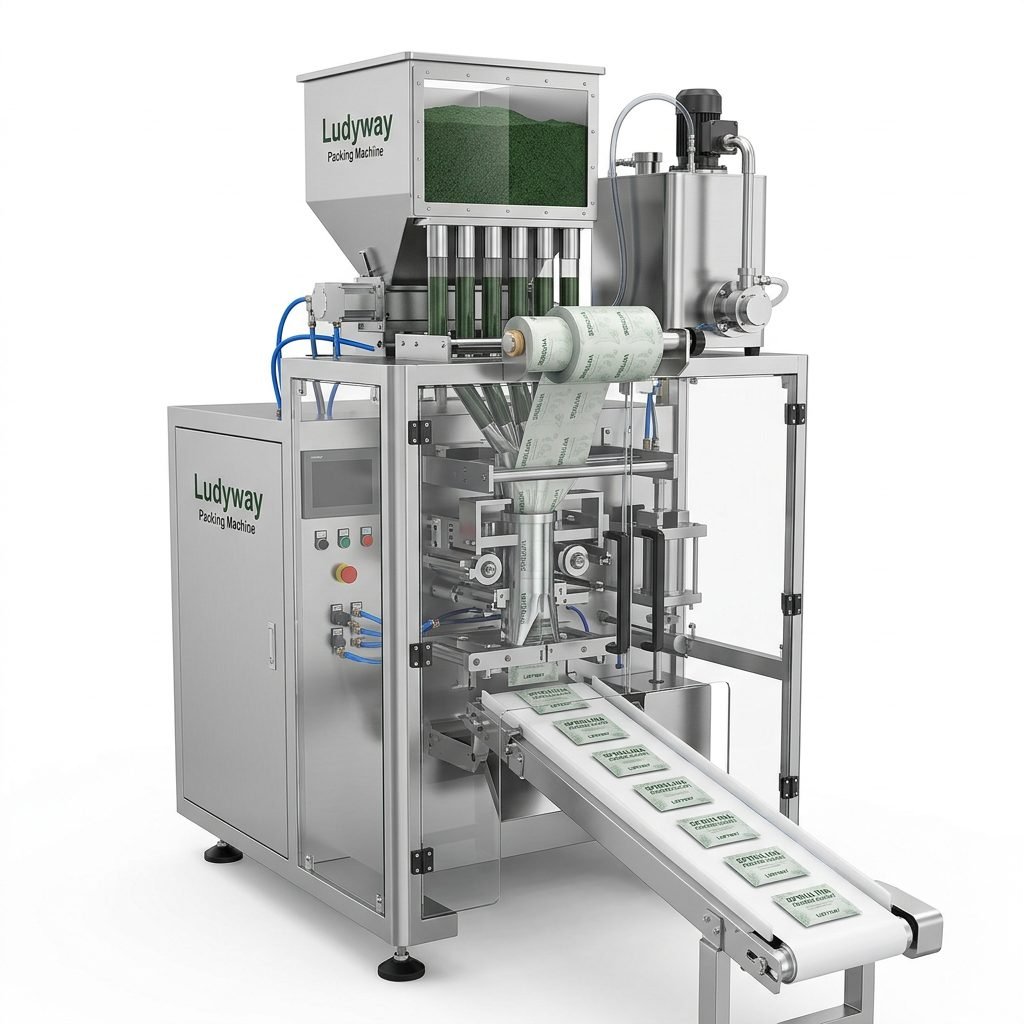
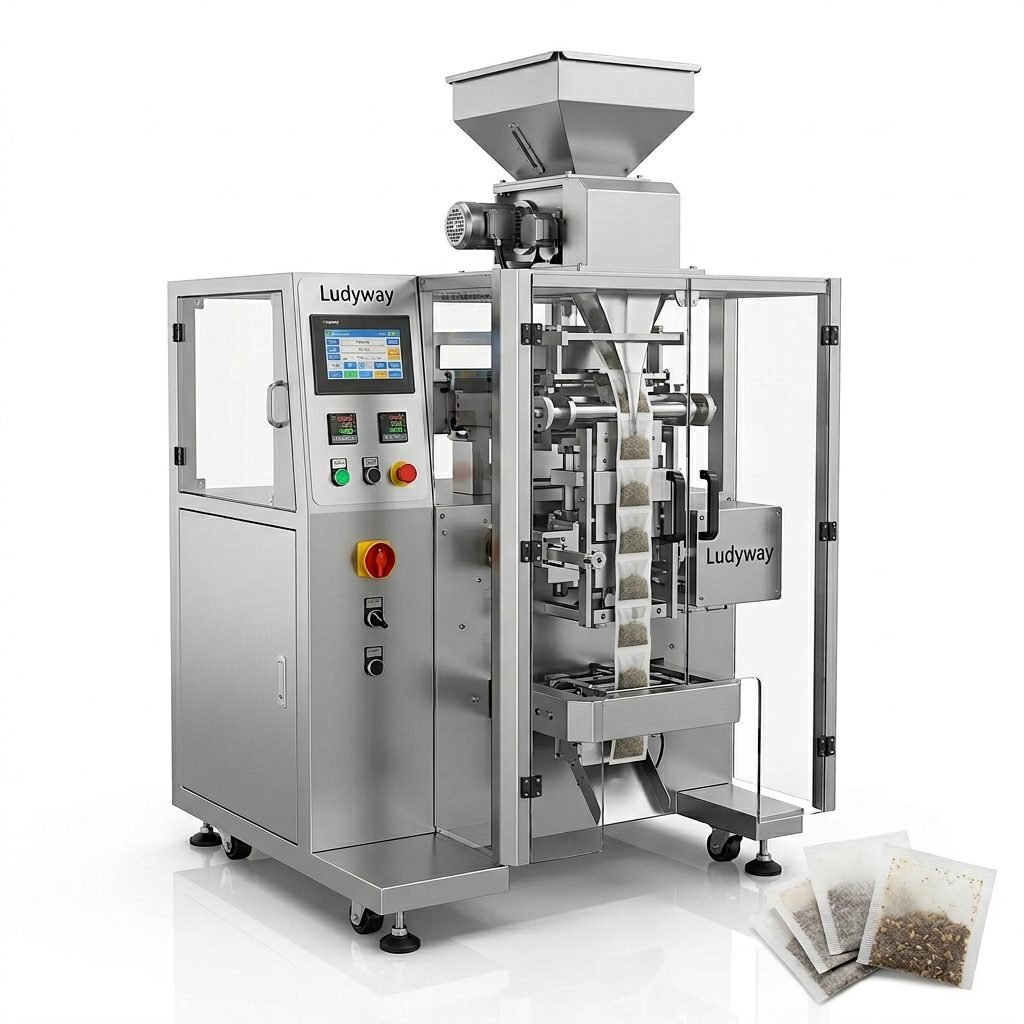
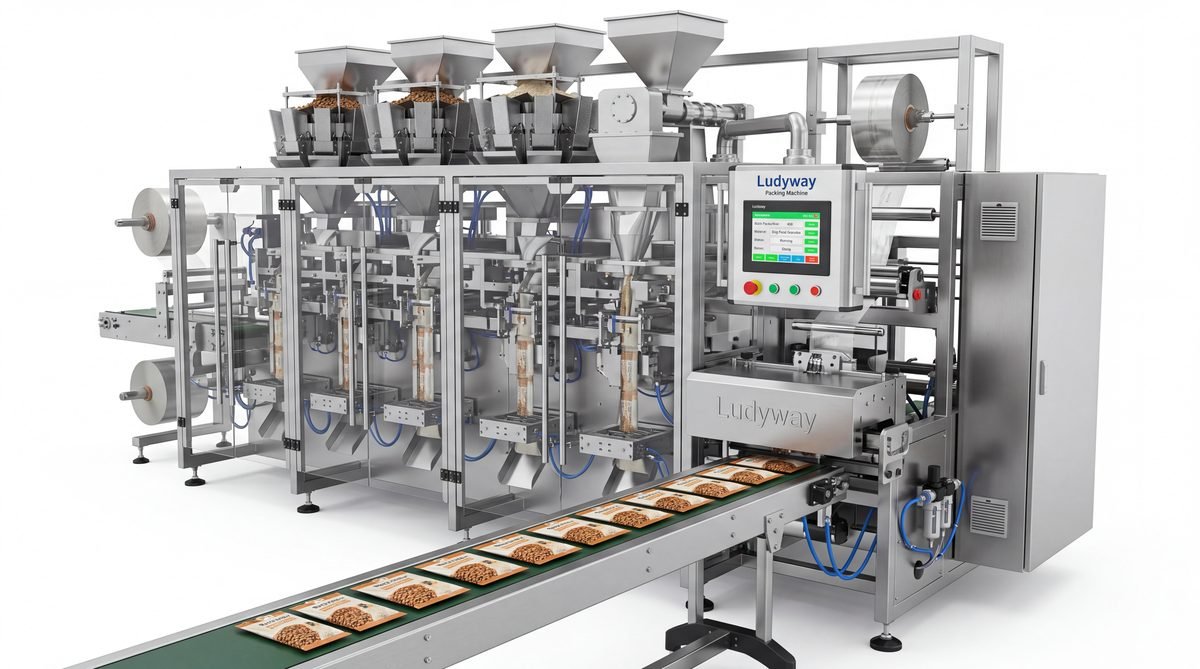
VFFS machines form bags from flat roll stock film, fill them with product, and seal them in a continuous vertical process. These versatile systems are widely used for dry kibble packaging in pillow bags, gusseted bags, and quad-seal pouches ranging from small retail sizes to bulk formats.
Multi-Lane Stick Pack and Sachet Machines
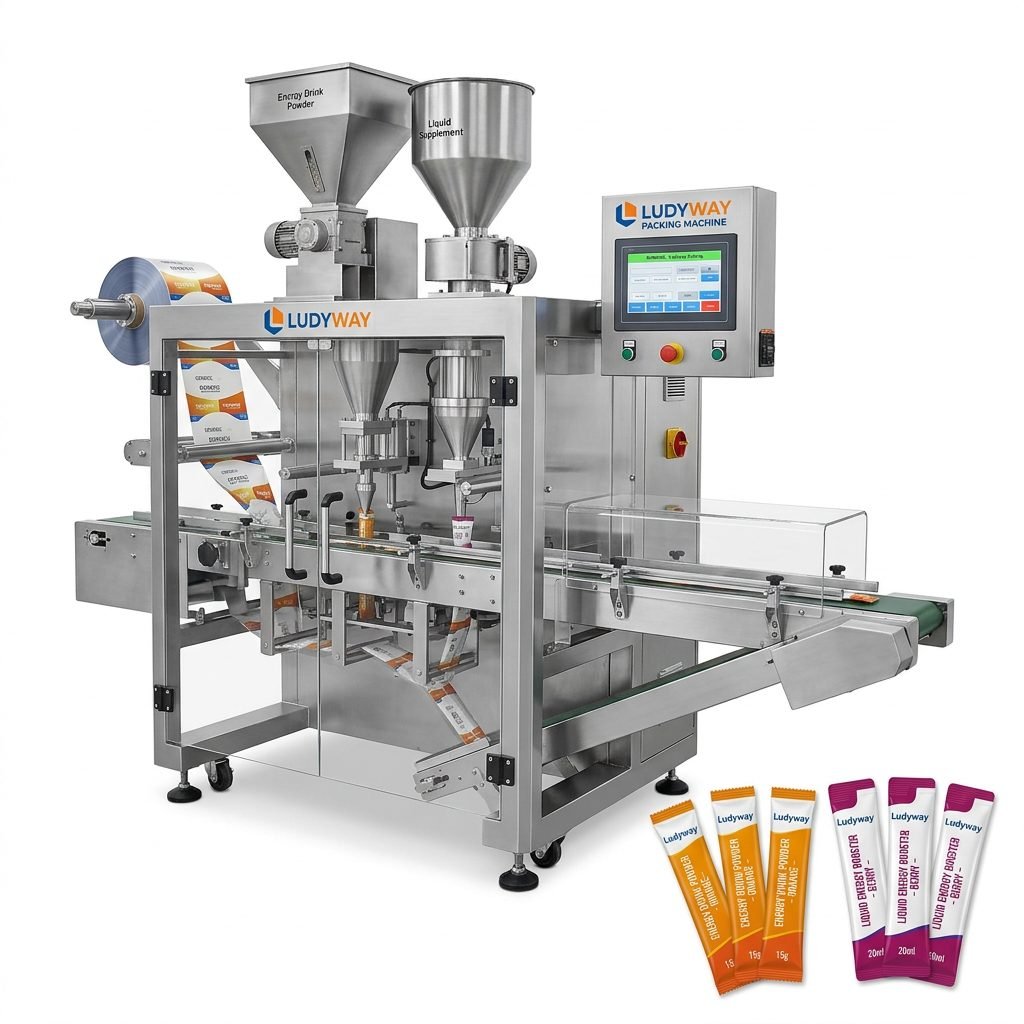
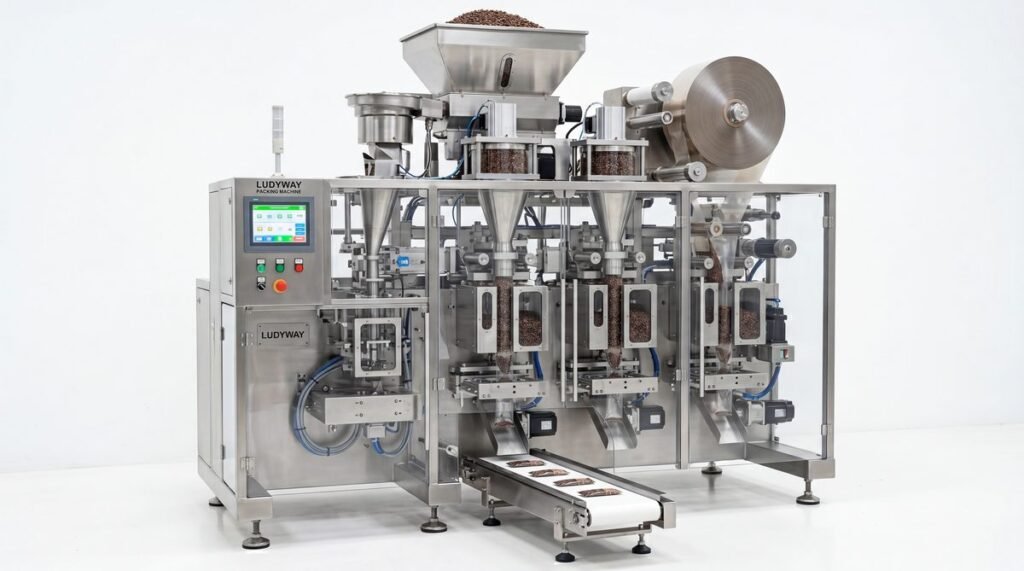
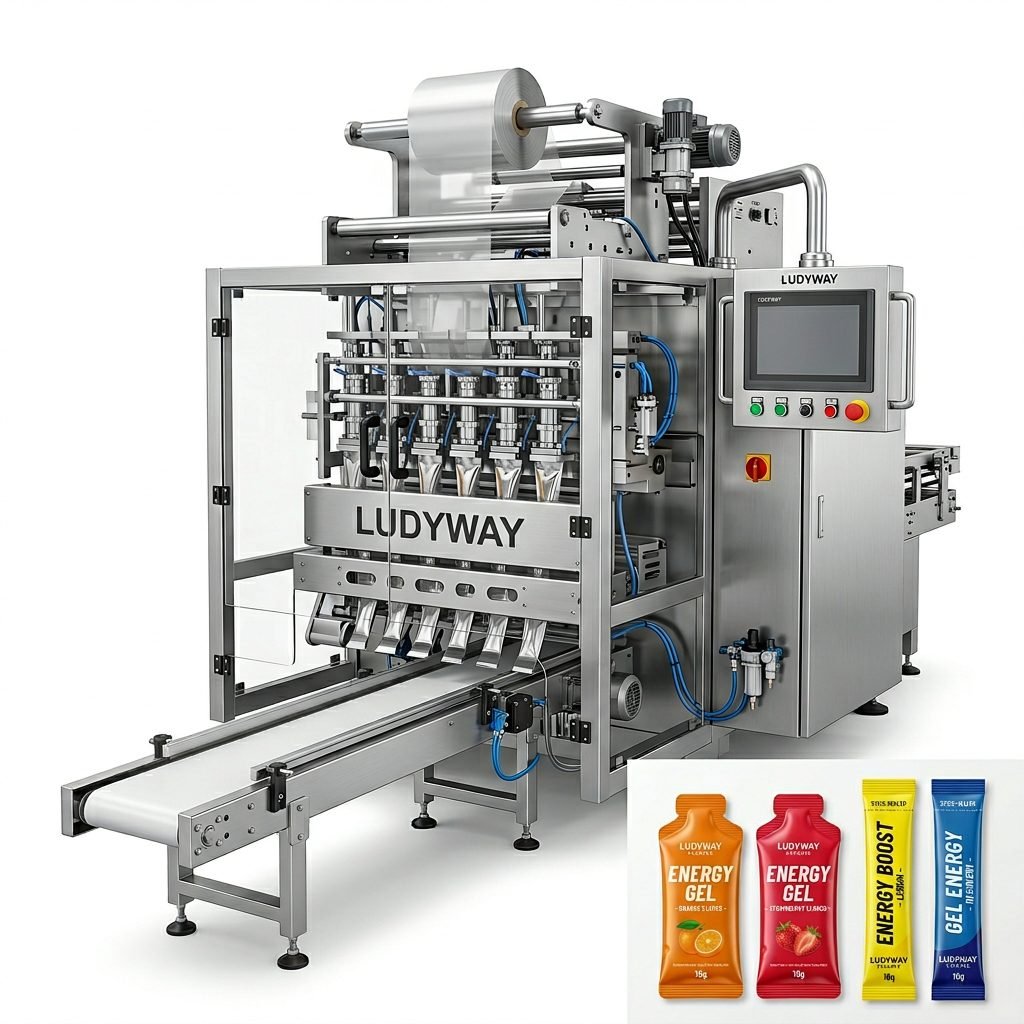
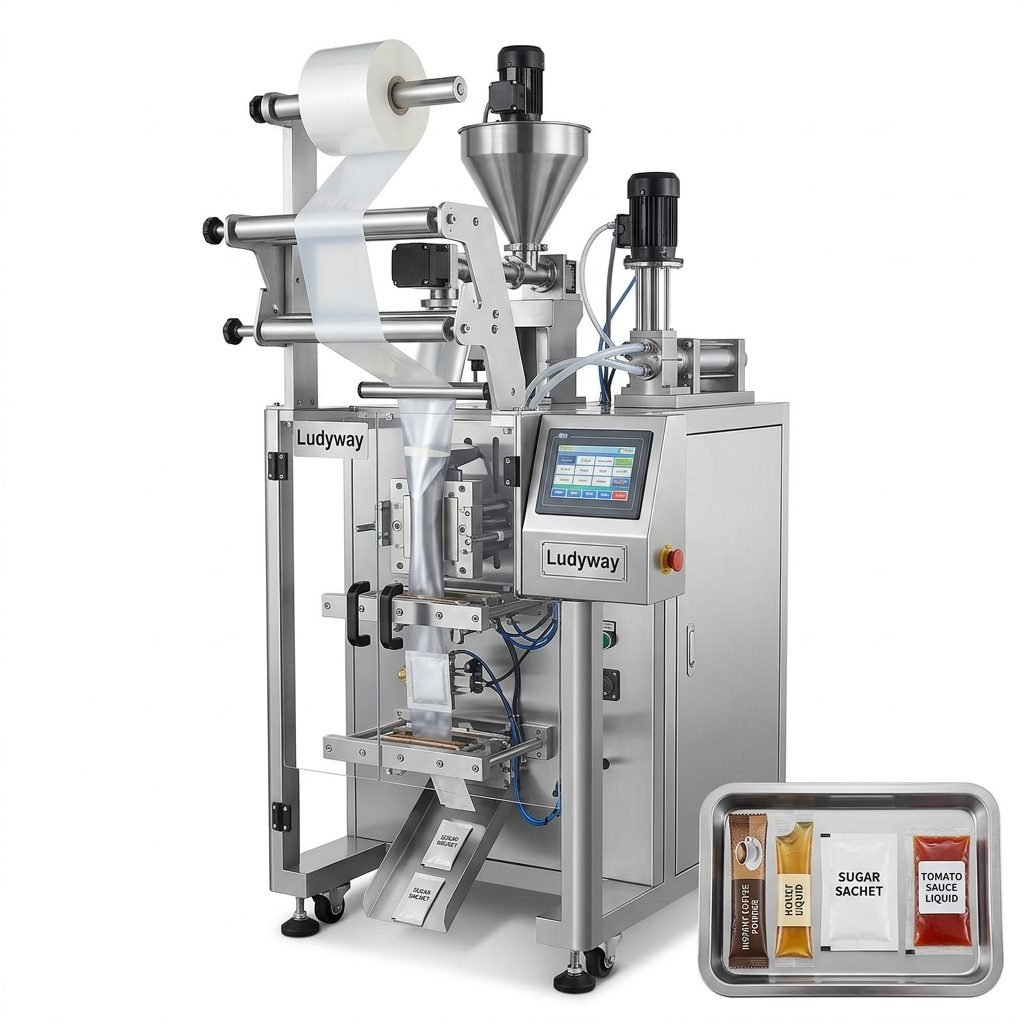
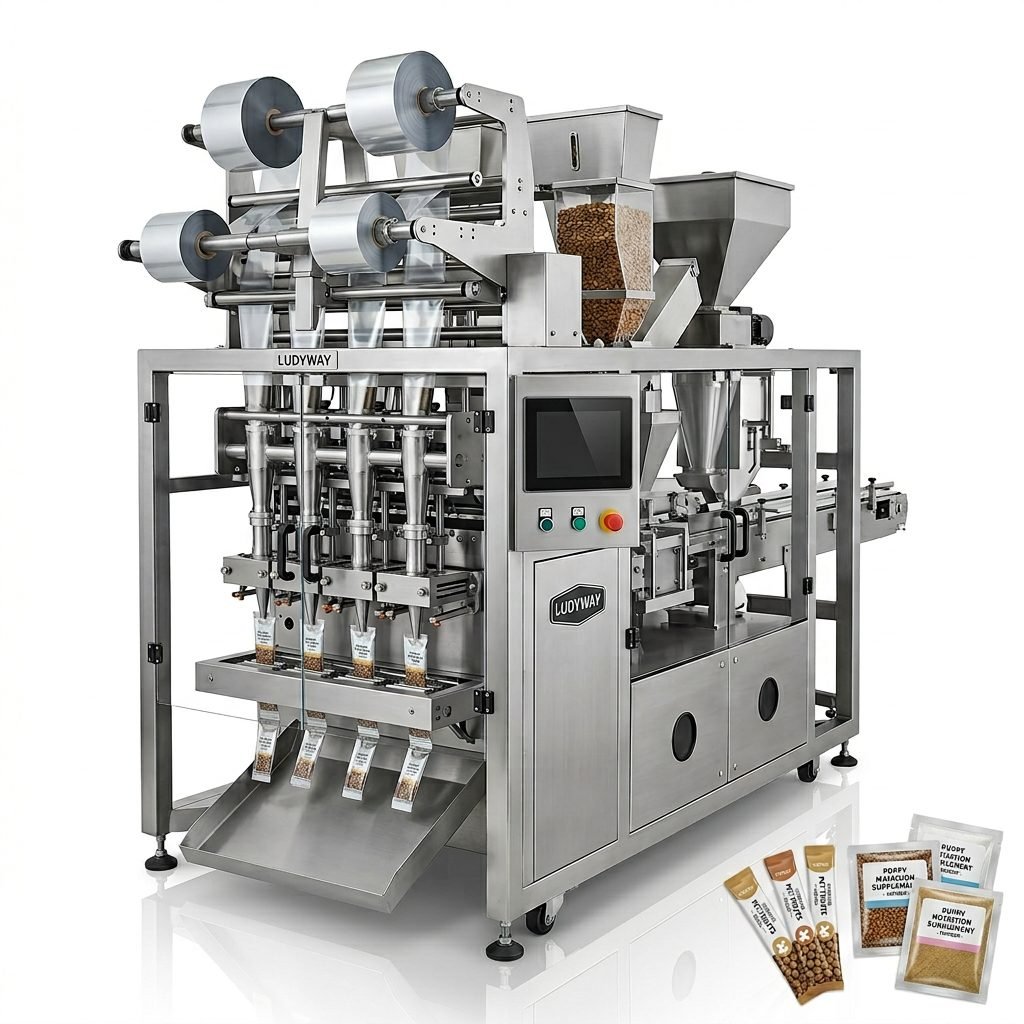
For single-serve portions, trial packs, and on-the-go formats, multi-lane stick pack machines offer exceptional efficiency. These systems simultaneously produce multiple lanes of narrow stick packs or flat sachets at very high speeds—ideal for powder supplements, freeze-dried raw toppers, and single-serving wet food portions. A single multi-lane machine with 8-12 lanes can produce hundreds of packs per minute.
Pre-Made Pouch Packaging Machines
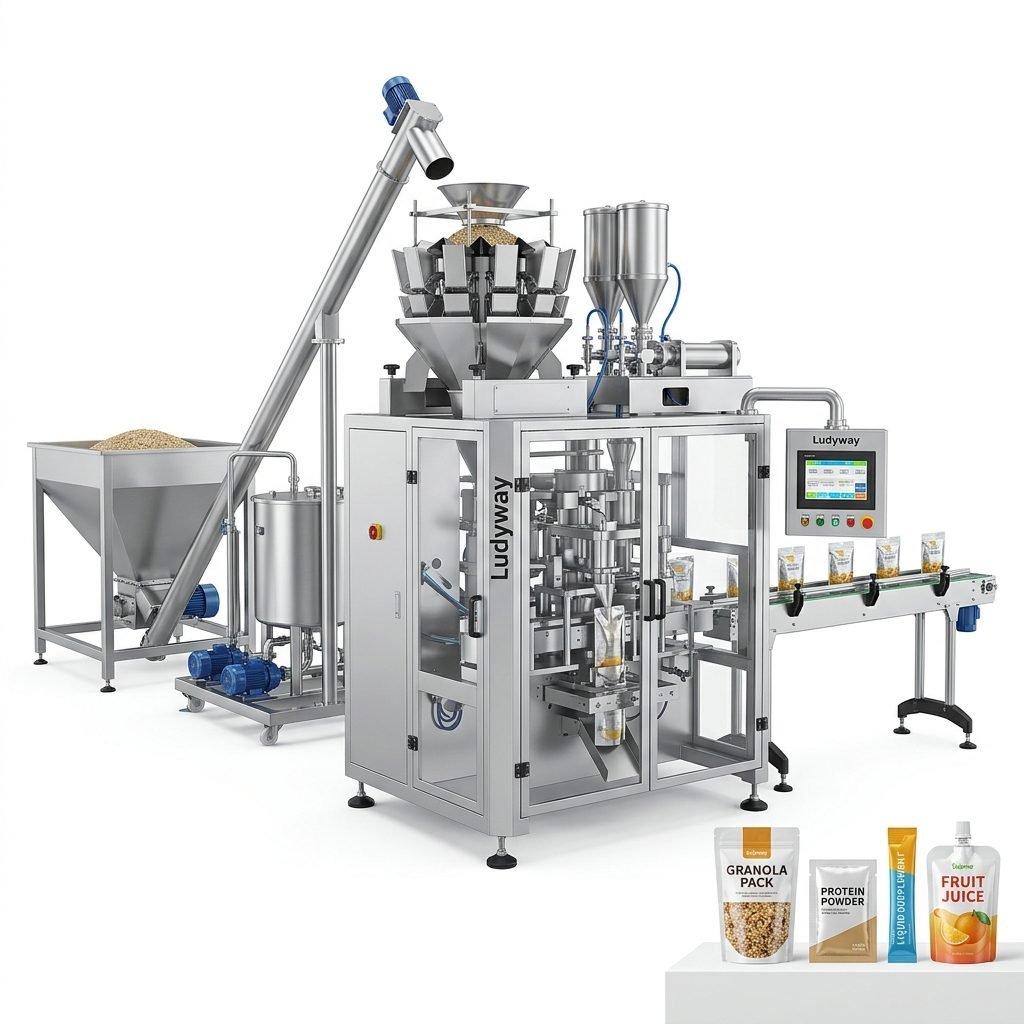
Rotary or inline pouch fill-seal machines handle pre-formed stand-up pouches, zipper bags, and spouted pouches. These are popular for premium and specialty dog food brands seeking maximum shelf appeal with printed stand-up pouches, matte finishes, and resealable zipper features. The Flexible Packaging Association reports continued growth in premium pouch formats across the pet food sector.
Vacuum Packaging Machines
Vacuum sealers remove air from packages before sealing, significantly extending shelf life for freeze-dried raw dog food, dehydrated treats, and high-fat products susceptible to oxidation. Chamber vacuum machines, nozzle vacuum systems, and thermoforming vacuum packaging lines are common options depending on production scale.
Key Factors to Evaluate When Selecting Equipment
The following table summarizes the most critical evaluation criteria when comparing dog food packaging machines:
| Evaluation Factor | Key Questions to Ask | Why It Matters |
|---|---|---|
| Product Compatibility | Can the machine handle your specific kibble size, moisture level, fat content, and fragility? | Mismatched equipment leads to inconsistent fills, product damage, and sealing failures |
| Packaging Format Flexibility | What bag styles, sizes, and materials can the machine accommodate? | Format flexibility supports future product line expansion without new equipment investment |
| Production Speed | What are your current and projected throughput requirements? | Undersized machines create bottlenecks; oversized machines waste capital and floor space |
| Filling Accuracy | What fill weight tolerance is acceptable for your product and regulatory compliance? | Overfilling erodes margins; underfilling risks regulatory penalties and customer complaints |
| Seal Integrity | Does the sealing system handle oily or dusty product contamination in the seal area? | Seal failures cause shelf-life issues, returns, and potential food safety problems |
| Cleaning and Maintenance | How easy is it to clean, sanitize, and perform routine maintenance? | Downtime for cleaning and changeover directly impacts overall equipment effectiveness |
| Automation Level | Do you need semi-automatic or fully automatic operation with integrated feeding and inspection? | Higher automation reduces labor dependency and improves consistency at scale |
| Regulatory Compliance | Does the equipment meet FDA food contact and safety standards for your target markets? | Non-compliant equipment can prevent market access and create liability exposure |
Filling and Dosing Technology Selection
The filling mechanism is at the heart of any dog food packaging machine. Choosing the right dosing technology ensures accurate portion control, minimal waste, and consistent package weights. Common options include:
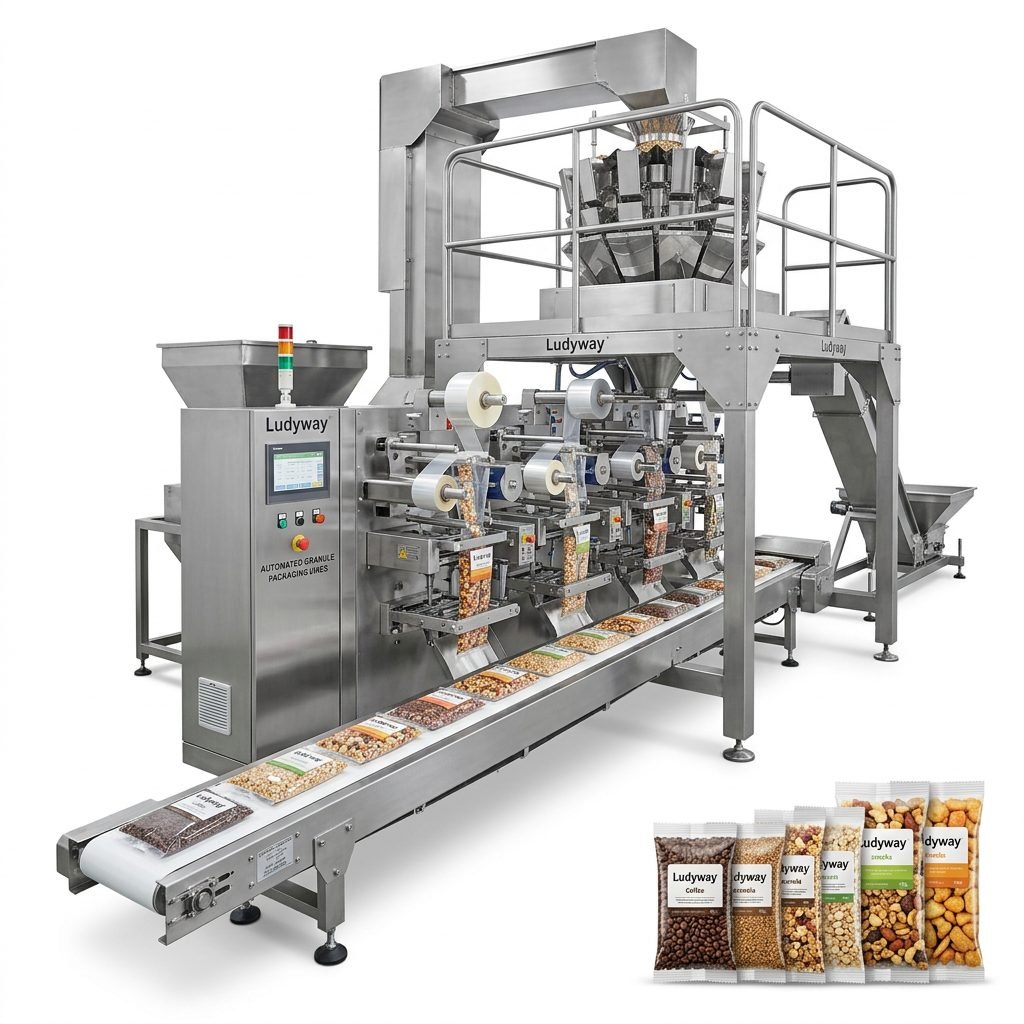
- Multi-head weighers: Ideal for dry kibble and free-flowing granules, these computer-controlled systems achieve high accuracy through combinatorial weighing across multiple weigh heads. Best for medium to high-speed operations requiring precise weight control.
- Volumetric cup fillers: Simple, cost-effective solution for uniform, free-flowing dry products. Suitable for operations with moderate accuracy requirements and budget constraints.
- Auger fillers: Recommended for powder supplements, freeze-dried raw food powders, and non-free-flowing products. Provides consistent volumetric dosing with adjustable fill volumes.
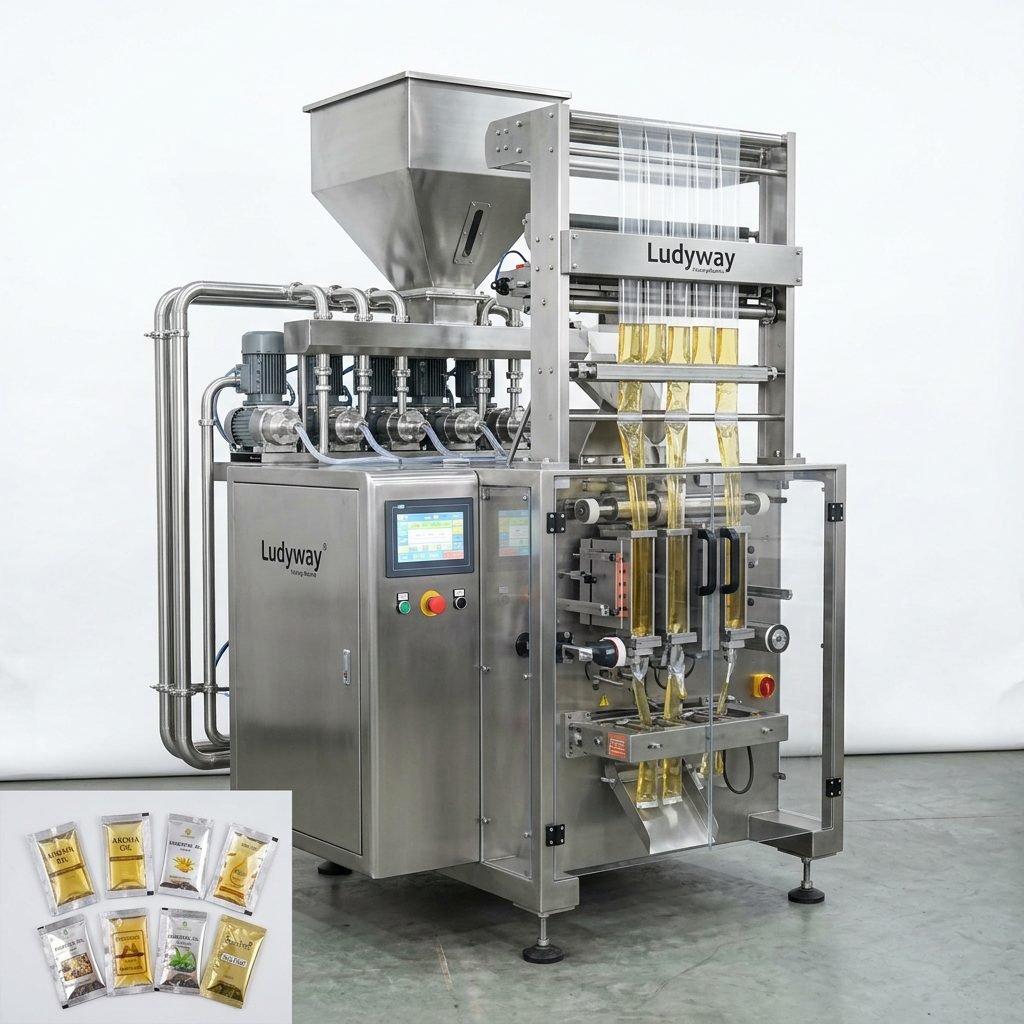
- Piston fillers: Used for wet dog food, gravy-based products, pastes, and semi-liquid formulations. Delivers precise portion control for viscous products.
- Combination weigher-auger systems: Hybrid solutions for products with mixed particle sizes or for operations running multiple product types on the same line.
Packaging Material Considerations
Your packaging machine must be compatible with the materials you plan to use. Dog food packaging increasingly uses multi-layer barrier films to protect product freshness, and your equipment must handle these materials effectively. Key material factors include:
- Film structure: Single-layer versus multi-layer laminates with oxygen and moisture barriers
- Material thickness: Thicker films for heavy or sharp-edged kibble that could puncture packaging
- Sealant layer type: Polyethylene, polypropylene, or specialty sealants for high-fat and oily products
- Sustainability requirements: Recyclable mono-material films, bio-based materials, or reduced-thickness structures
- Print compatibility: Surface print versus reverse print requirements for brand presentation
According to the Flexible Packaging Association’s industry data, sustainable packaging material development is one of the fastest-evolving areas affecting packaging machinery specification in the pet food industry.
Budget and Return on Investment Analysis
Investing in automatic packaging equipment requires careful financial planning. The total cost of ownership extends well beyond the initial purchase price. When building your budget, consider:
- Capital equipment cost: The machine itself, including any customization or optional features
- Installation and commissioning: Freight, rigging, installation, and on-site setup expenses
- Facility modifications: Electrical upgrades, compressed air systems, dust collection, or floor reinforcement
- Training: Operator and maintenance personnel training costs
- Consumables and spare parts: Ongoing costs for wear components, sealing elements, and replacement parts
- Packaging materials: Film, pouches, and labels—often the largest ongoing operational expense
- Maintenance and service: Preventative maintenance, technical support, and emergency repairs
- Labor savings: Reduction in manual packaging labor that offsets equipment costs
- Waste reduction: Lower product giveaway and reduced packaging material waste
A thorough ROI analysis should compare these costs against projected benefits, including increased throughput, reduced labor, improved product quality, expanded production capacity, and faster time-to-market for new products. Many manufacturers find that automated packaging lines achieve full payback within 18 to 36 months through combined labor savings and waste reduction alone.
Integration with Upstream and Downstream Equipment
Rarely does a packaging machine operate in isolation. Consider how your dog food packaging equipment will integrate with:
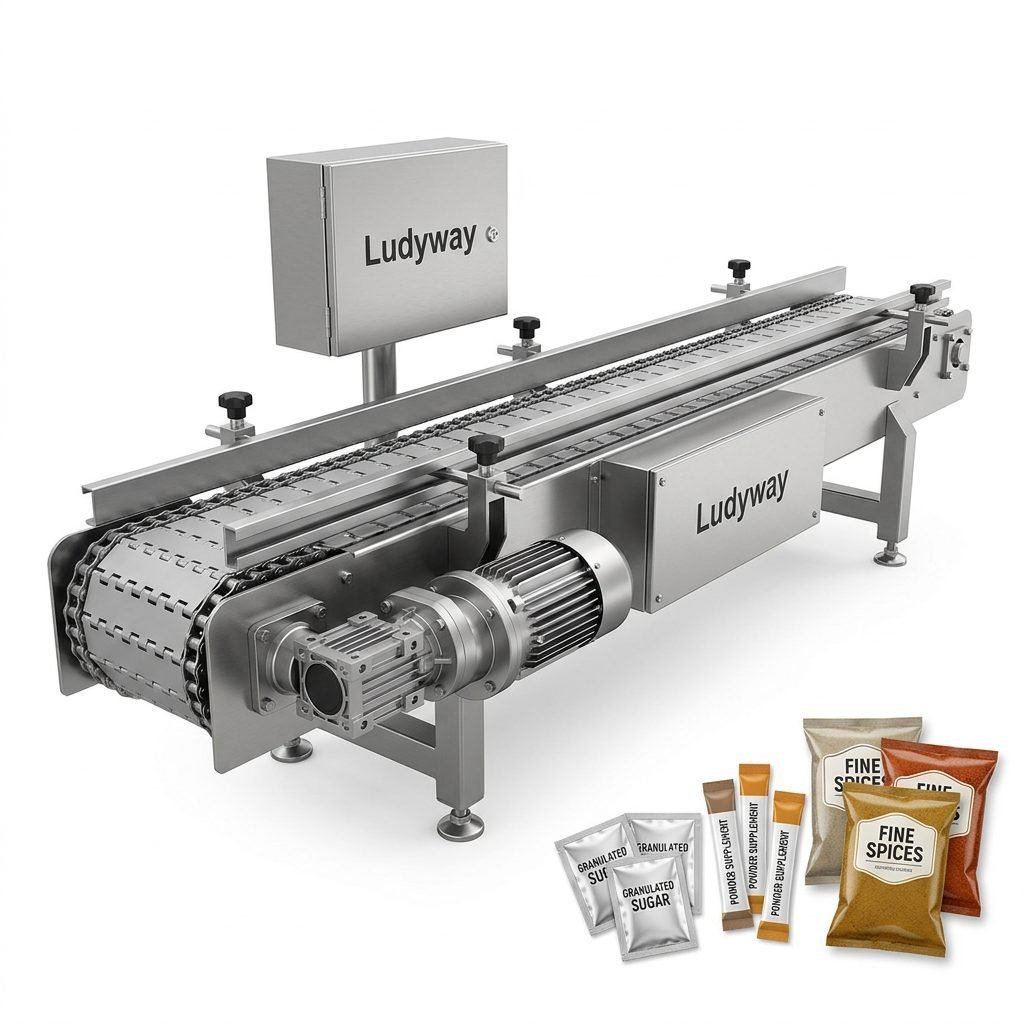
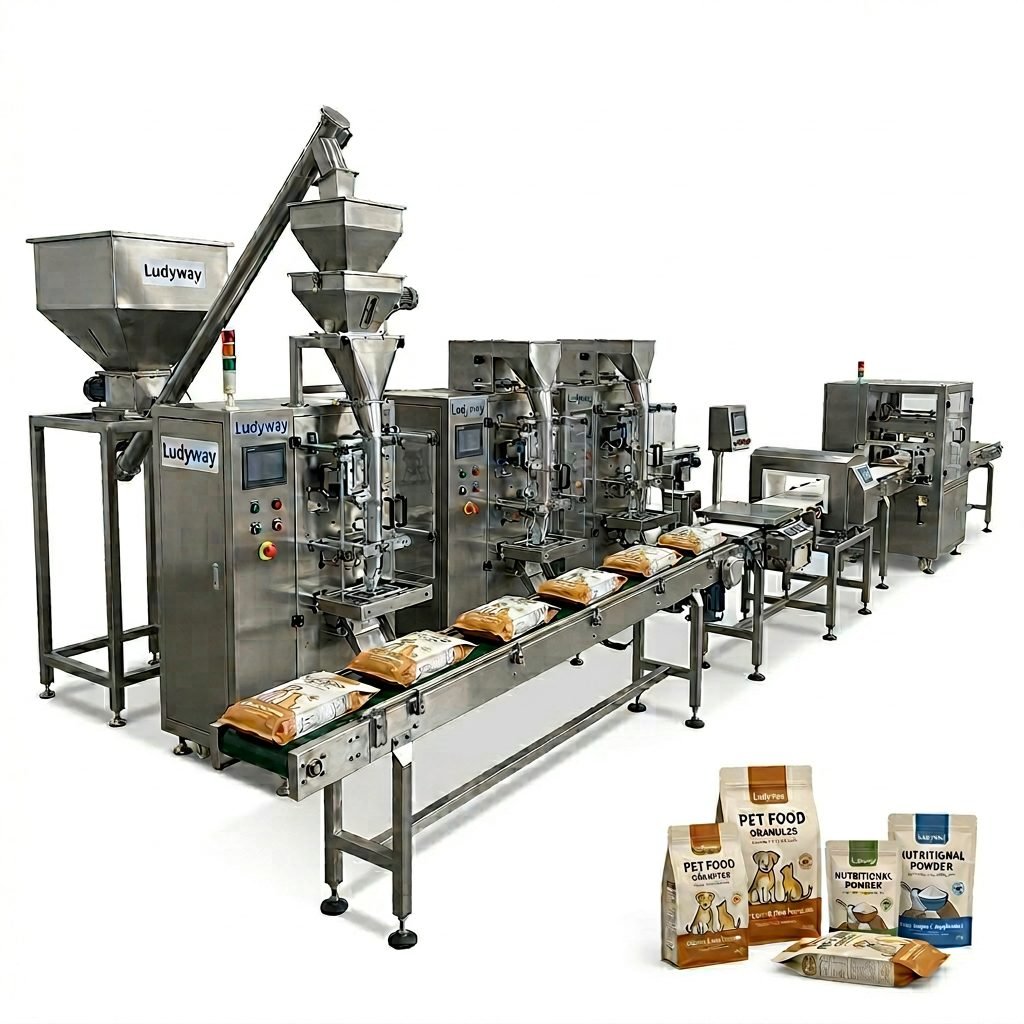
- Upstream: Product conveyors, feeding systems, multi-head weighers, metal detectors, and checkweighers
- Downstream: Date coding and printing systems, case packing, cartoning, palletizing, and stretch wrapping
- Quality control: X-ray inspection, vision inspection systems, and packaging machinery standards-compliant checkweighing
Working with a single supplier that can provide an integrated turnkey packaging line often simplifies project management, reduces compatibility risks, and provides a single point of accountability. Ludyway Machinery, with its 30+ years of packaging industry experience and comprehensive equipment portfolio spanning filling, sealing, cartoning, and palletizing systems, exemplifies this integrated approach for manufacturers seeking a unified packaging solution.
Evaluating Machine Build Quality and Reliability
When assessing potential suppliers, pay close attention to construction quality and component selection. Key indicators of a well-built packaging machine include:
- Frame construction: Heavy-gauge stainless steel or powder-coated steel frames designed for washdown environments
- Food-contact materials: 304 or 316 stainless steel for product-contact surfaces, compliant with food safety standards
- Pneumatic components: Brand-name cylinders, valves, and fittings from established industrial automation suppliers
- Electrical systems: PLC controls, servo drives, and HMI interfaces from recognized manufacturers
- Sealing system design: Robust temperature control, consistent pressure distribution, and durable sealing elements
- Bearing and drive systems: Sealed bearings and corrosion-resistant drive components suitable for food processing environments
After-Sales Support and Service Considerations
Equipment support determines long-term operational success. Before committing to a dog food packaging machine supplier, evaluate:
- Installation support: Does the supplier provide on-site installation, commissioning, and operator training?
- Technical documentation: Comprehensive manuals, electrical schematics, and maintenance guides in your preferred language
- Spare parts availability: Readily available critical spare parts with reasonable lead times and pricing
- Remote support capabilities: Remote diagnostics, troubleshooting assistance, and software updates
- Service network: Local service technicians or partners in your region for on-site repairs when needed
- Warranty terms: Clear warranty coverage, duration, and exclusions
Making the Final Decision
Selecting the right packaging machinery requires balancing multiple factors: product compatibility, production capacity, format flexibility, automation level, budget constraints, and supplier capability. The most successful equipment purchases result from thorough upfront evaluation and clear communication of requirements.
We recommend the following decision process:
- Define your product and packaging specifications in detail before contacting suppliers
- Request sample packaging trials using your actual product and preferred packaging materials
- Visit supplier facilities or request video demonstrations of similar machines in operation
- Speak with existing customers about their experience with the equipment and supplier
- Compare total cost of ownership, not just initial purchase price
- Evaluate after-sales support capabilities for your geographic location
- Consider future scalability—can the equipment grow with your business?
With pet food market projections showing continued global growth, investing in the right dog food packaging machine today positions your business for efficient, scalable production that meets both current demands and future opportunities. Careful evaluation across the factors outlined in this guide will help ensure your packaging equipment investment delivers long-term value and competitive advantage.