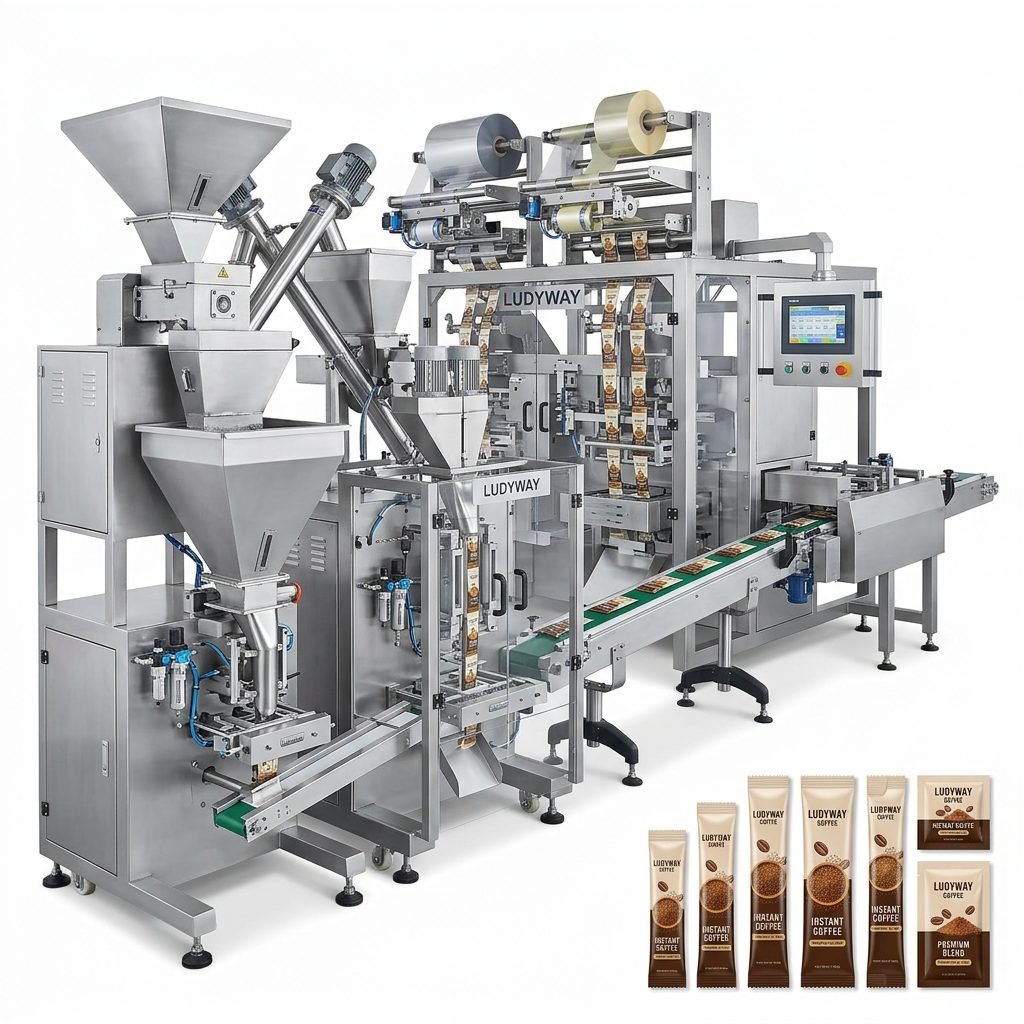
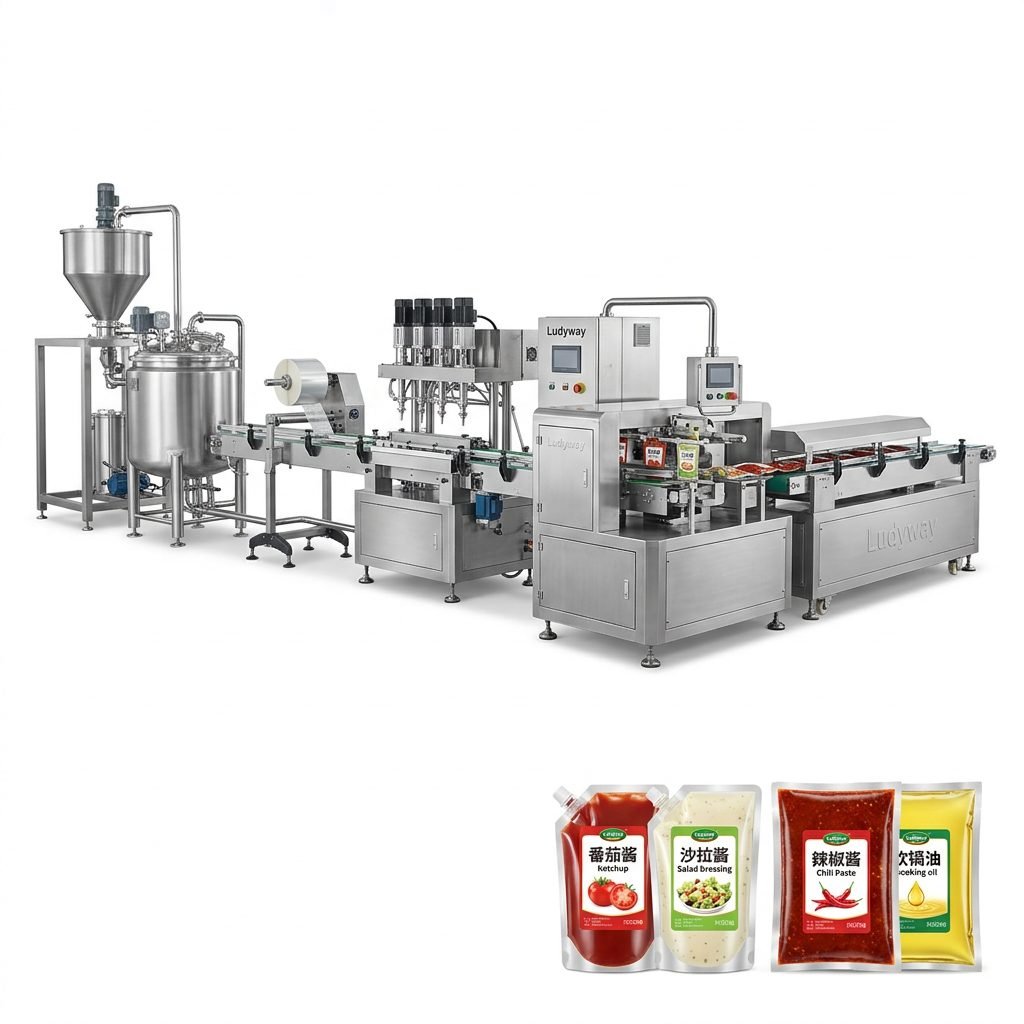
Investing in a sauce packing machine is a strategic decision that affects production efficiency, product consistency, and long-term operational costs. Choosing the wrong equipment can lead to inaccurate fills, material waste, and expensive downtime. This guide provides a structured approach to evaluate the right liquid packaging solution for your sauce products.
Understanding Sauce Packaging Formats
Sauces can be packaged into several primary formats depending on your target market and distribution channels. The machine configuration varies significantly for each type.
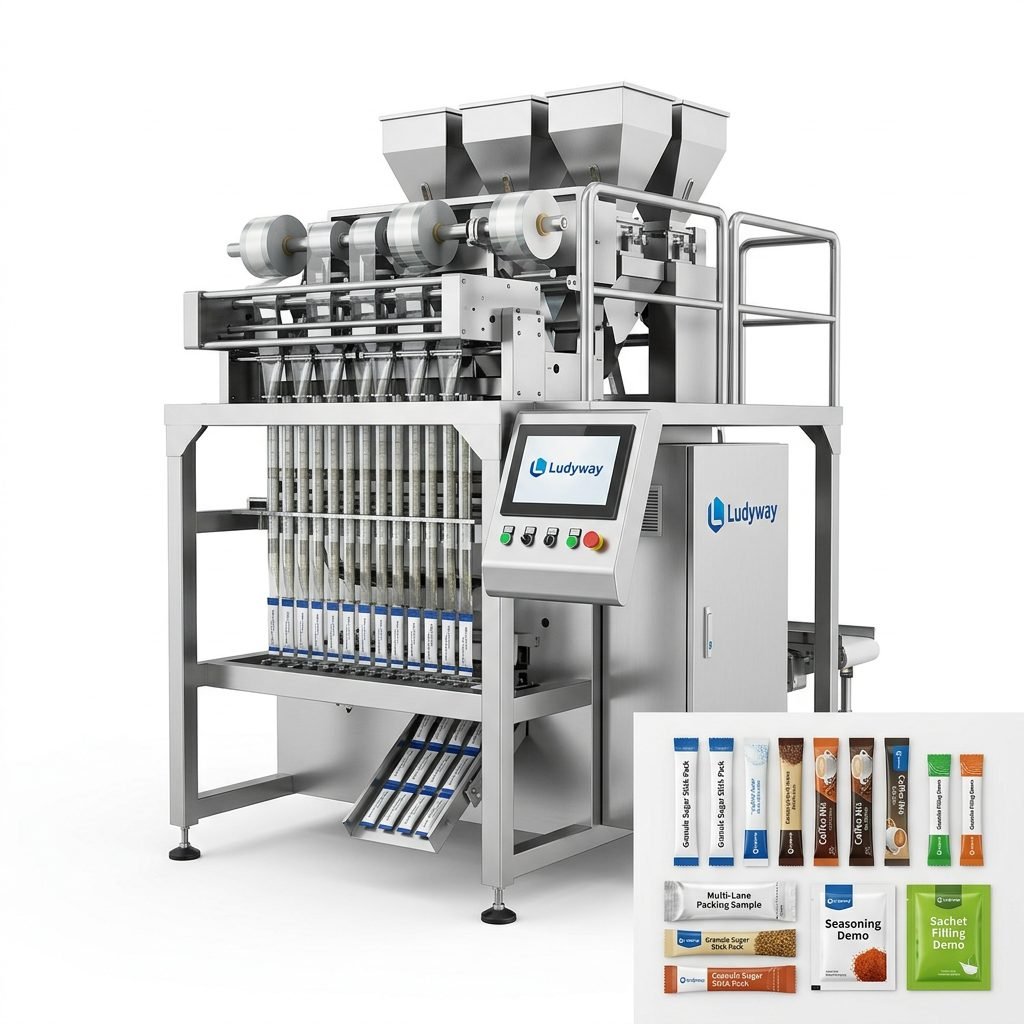
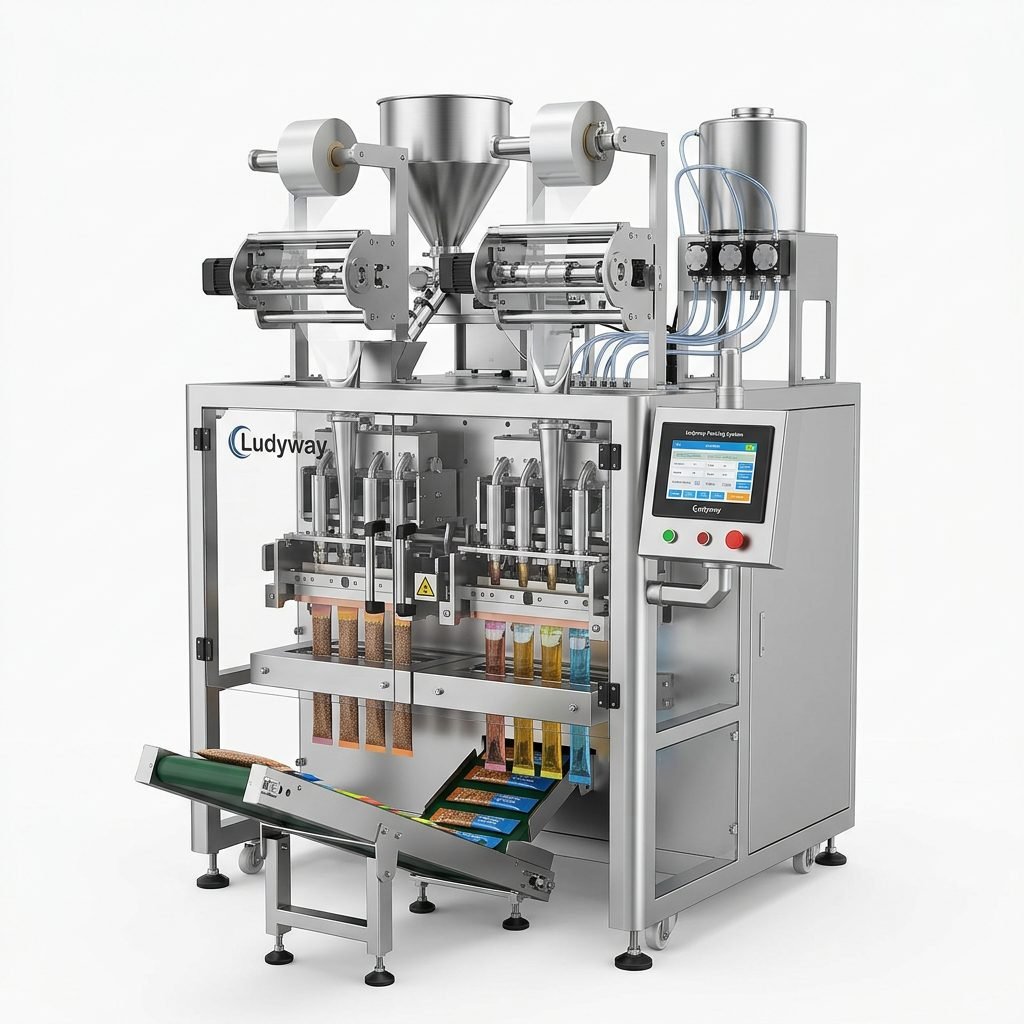
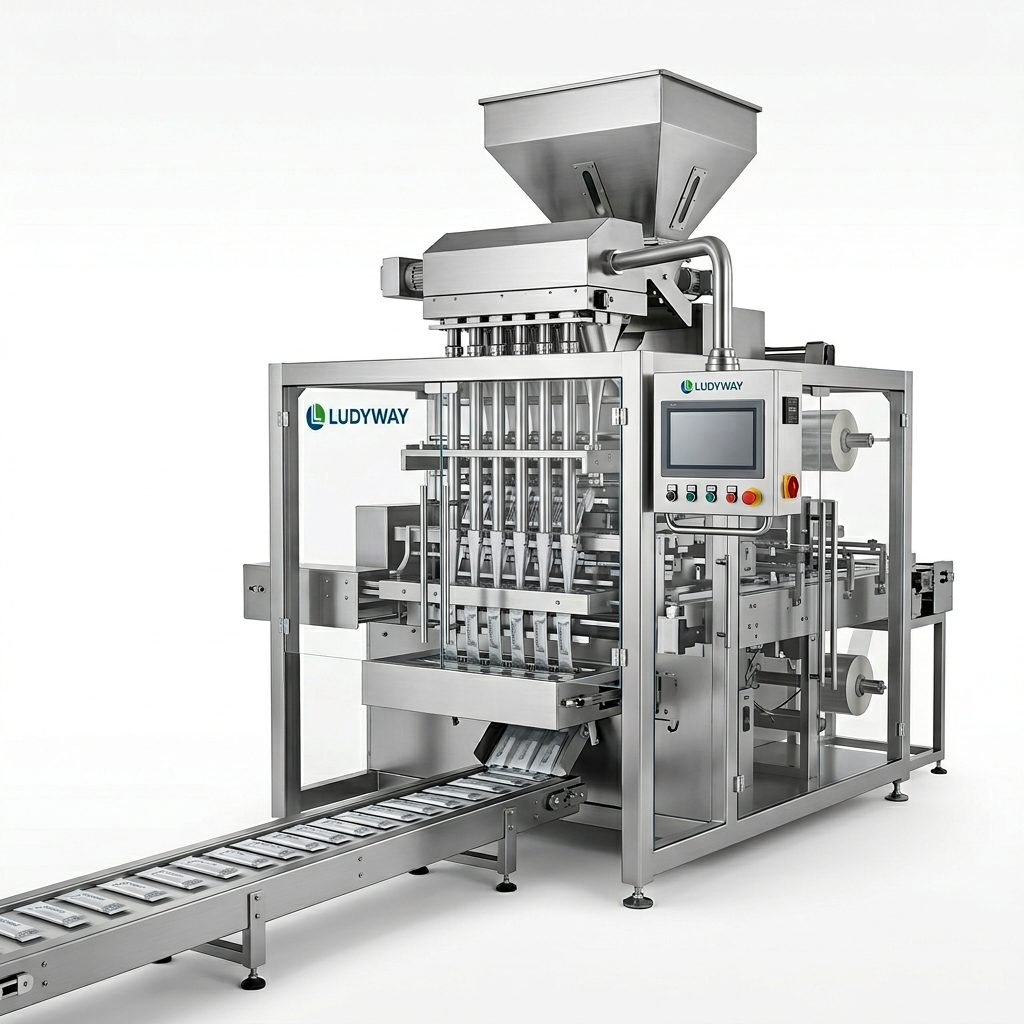
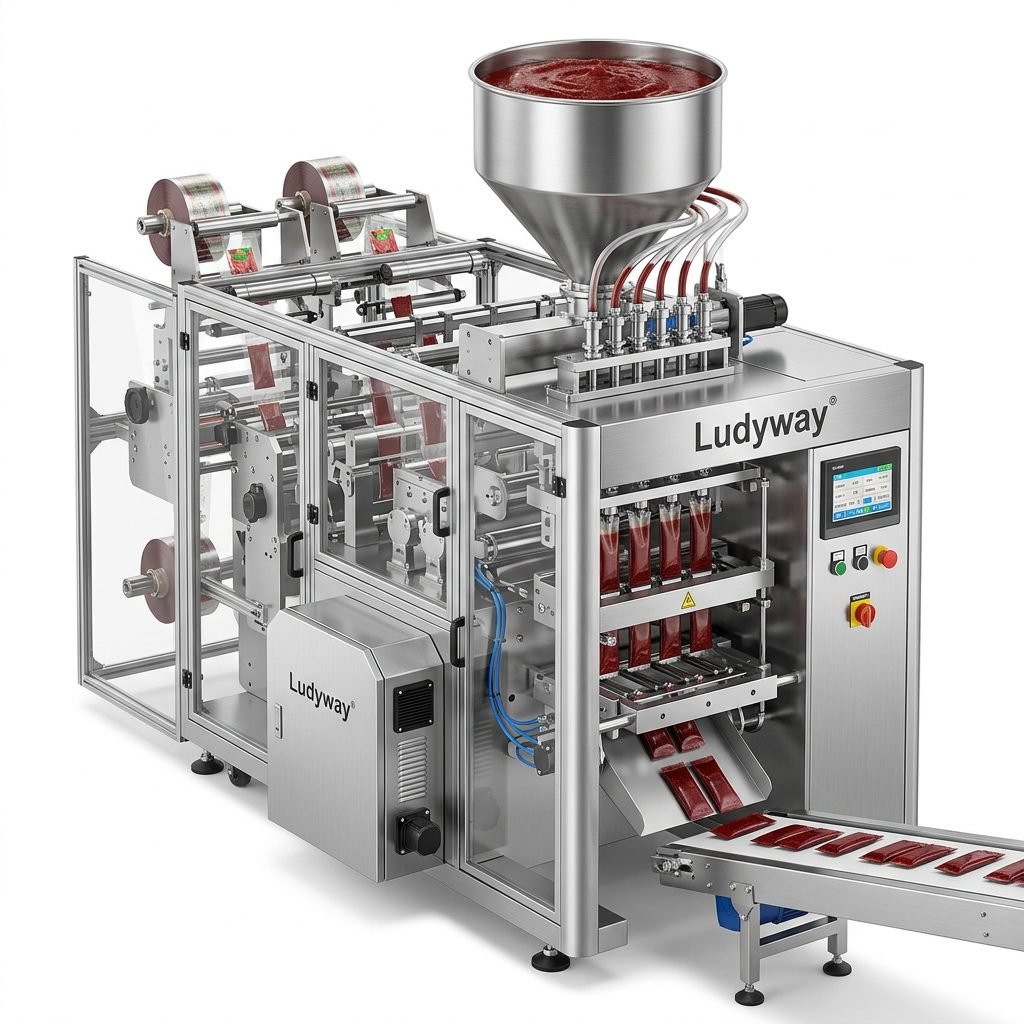
- Stick Pack Machines – Ideal for single-serve portions of ketchup, chili sauce, or mayonnaise. These machines offer high-speed multi-lane capabilities and compact package design.
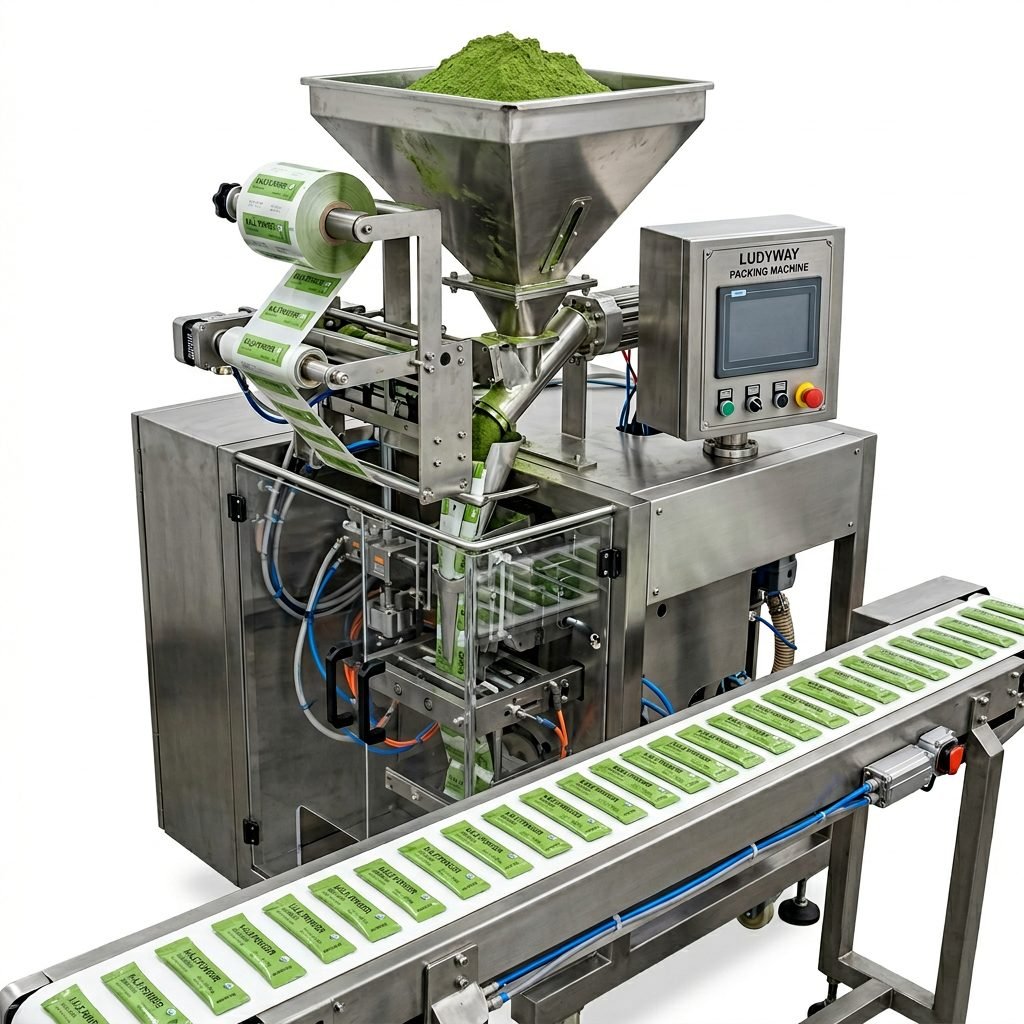
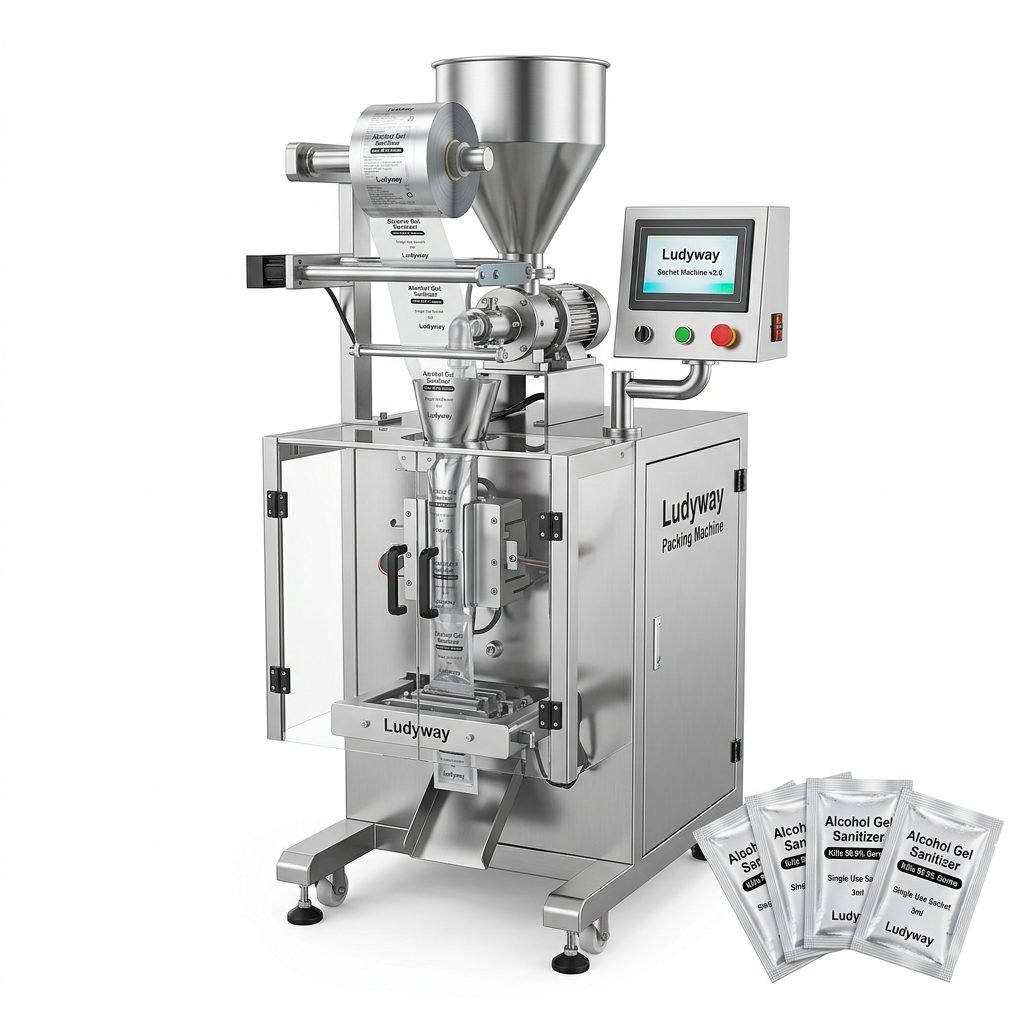
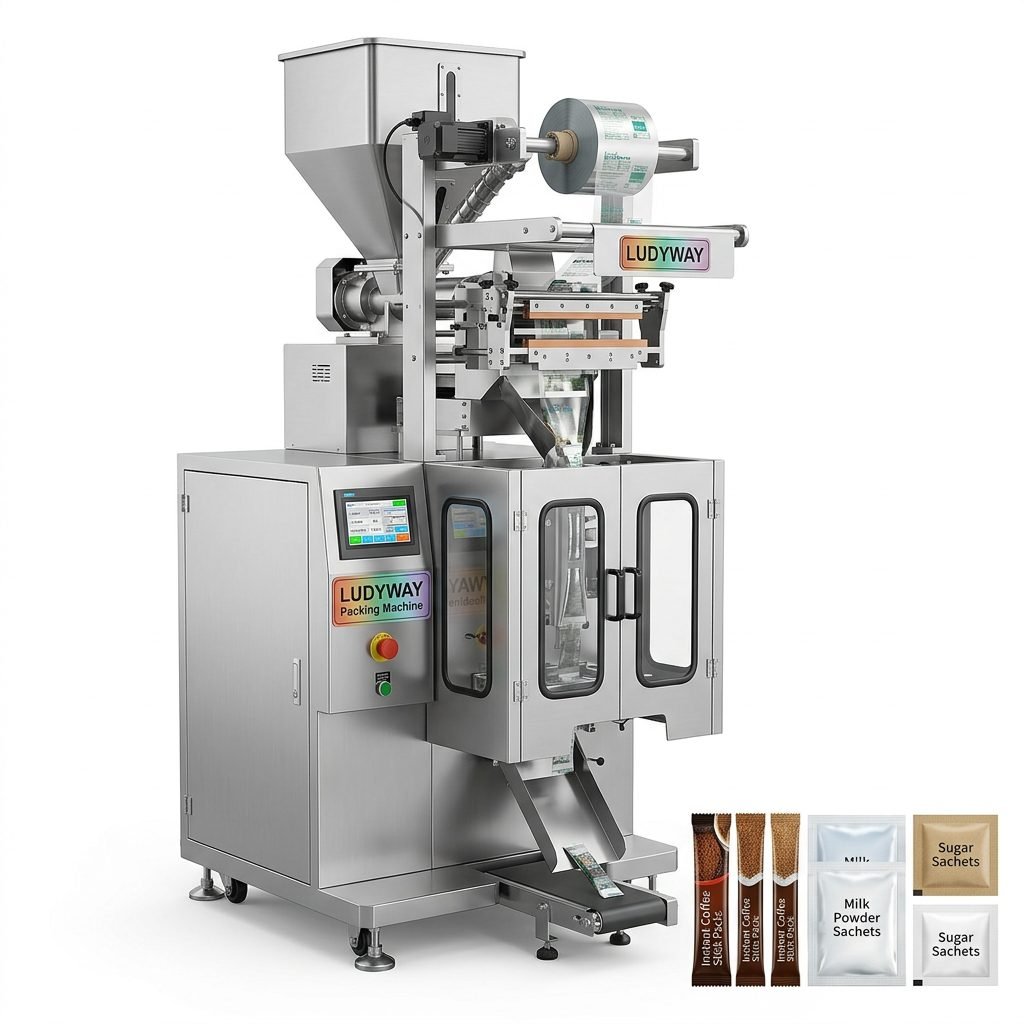
- Sachet Packaging Machines – Suitable for larger single-use volumes ranging from 5ml to 100ml, commonly used for salad dressings, soy sauce, and cooking sauces in food service or retail.
- Pouch Filling and Sealing Machines – Designed for stand-up pouches or flat pouches with spouts, supporting higher volumes for household or commercial kitchen use.
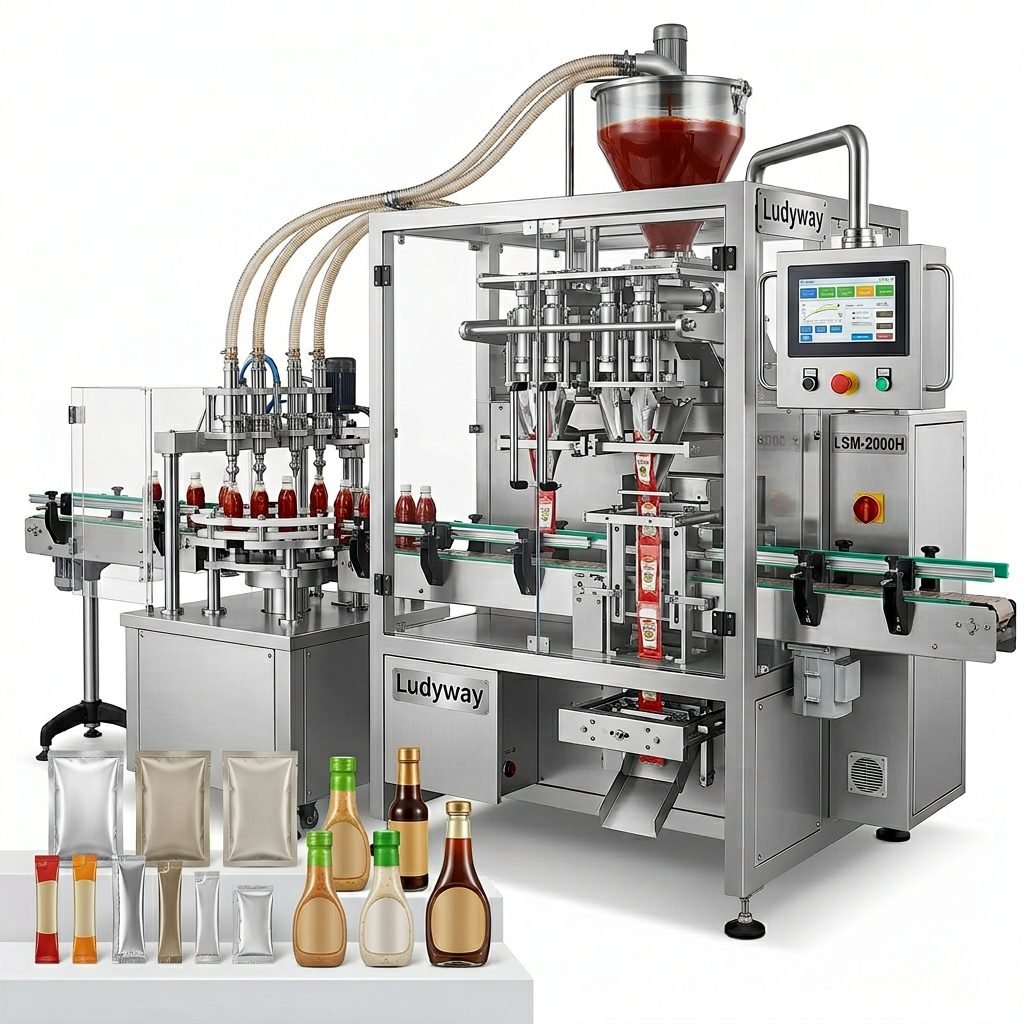
- Bottle Filling Lines – Fully automated systems for glass or plastic bottles, often paired with capping, labeling, and coding equipment for premium retail presentation.
6 Key Factors to Evaluate When Choosing a Sauce Packing Machine
1. Product Viscosity and Characteristics
Sauce viscosity is the most critical technical specification. Low-viscosity liquids like soy sauce flow differently compared to high-viscosity products like tomato paste or chunky salsa. Piston fillers handle thick pastes with particulates, while gear pumps or gravity fillers work for thin, homogeneous sauces. You must also consider whether the sauce is heated during filling, contains particulates, or foams during agitation.
For detailed technical classifications, refer to resources from the PMMI Packaging Industry Resources on liquid filling technologies.
2. Target Production Speed
Production speed directly determines machine configuration. A start-up business producing 20 packs per minute has different requirements than a co-packer manufacturing thousands of units per hour. Multi-lane stick pack machines can output hundreds of sachets per minute by running parallel lanes, while single-lane intermittent-motion machines prioritize flexibility over raw speed.
- Low Volume: 20-40 packs/min, suitable for manual feeding and intermittent motion.
- Medium Volume: 40-120 packs/min, rotary systems or dual-lane configurations.
- High Volume: 120-600+ packs/min, high-speed multi-lane stick pack or sachet lines with automated feeding.
3. Filling Accuracy and Dosing System
Accurate filling ensures regulatory compliance and cost control. For expensive sauces or pharmaceutical-grade applications, precision dosing prevents product giveaways. Servo-driven piston fillers offer superior accuracy compared to pneumatic systems. Check the machine’s specified accuracy tolerance, typically within ±0.5% to ±1% of target fill volume.
4. Packaging Material Compatibility
The machine must handle your chosen flexible packaging material, which varies based on barrier requirements. Sauces often require films like PET/AL/PE for oxygen and moisture protection. Verify if the machine’s sealing jaws can achieve consistent seals with metallized films, paper-based laminates, or biodegradable materials. Temperature-controlled sealing with digital PID controllers is expected in modern systems.
Information about flexible packaging material standards is available from the Flexible Packaging Association Industry Data.
5. Automation Level and Integration
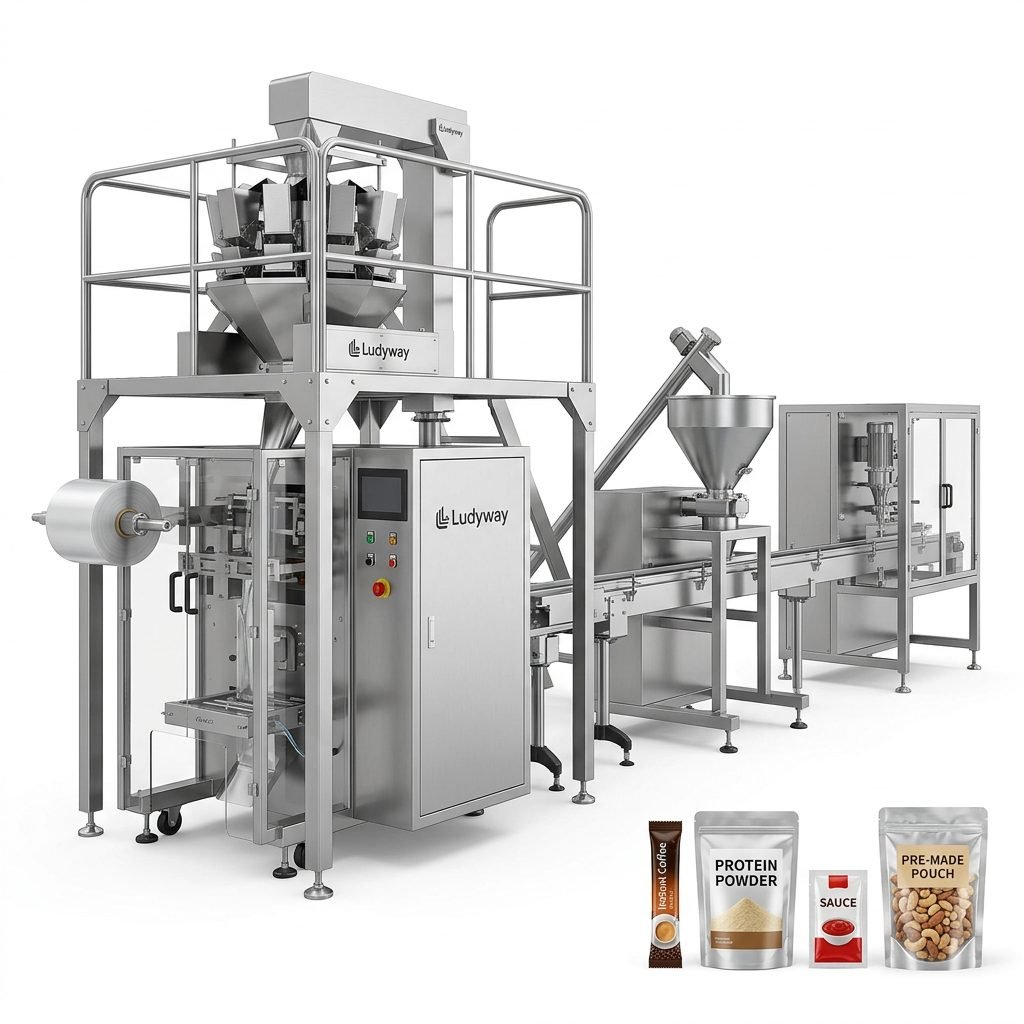
Decide between standalone machines and fully integrated turnkey packaging lines. A standalone sachet packer might suffice for manual operations, but automated inline systems connect filling, coding, inspection, cartoning, and palletizing. Integration reduces labor dependency and improves overall equipment effectiveness. Key automation components include:
- Automated liquid feeders or pumps from holding tanks
- Inline date coding and batch printing
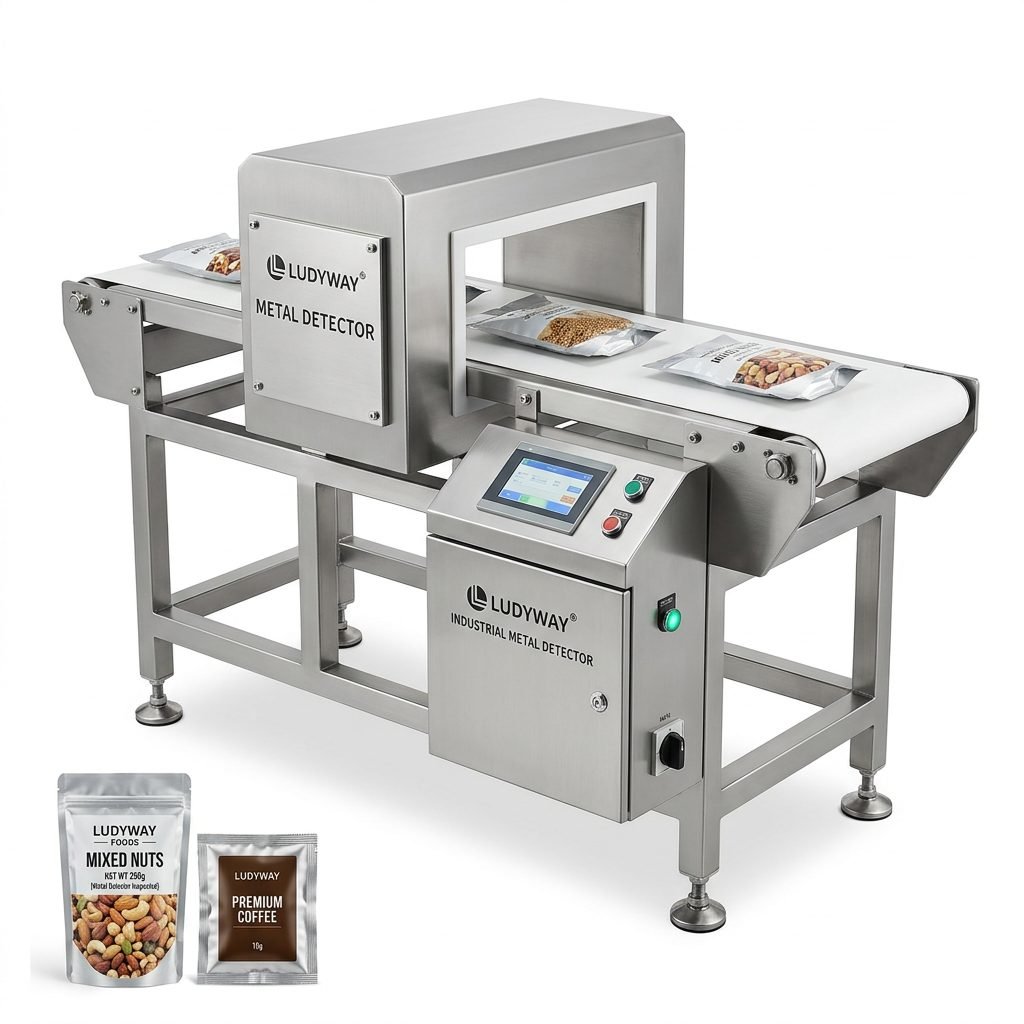
- Checkweighers and metal detectors for quality assurance
- Robotic or manual cartoning and case packing
6. Cleaning, Maintenance, and Hygiene
Sanitary design is non-negotiable for food-grade sauce production. Look for stainless steel construction, sloped surfaces to prevent liquid pooling, and quick-release parts for tool-free cleaning. Machines conforming to food safety standards simplify compliance with regulations enforced by authorities like the FDA Food Packaging and Food Contact Substances guidelines. CIP (Clean-in-Place) capabilities add value for operations with frequent product changeovers.
Comparing Sauce Packaging Machine Types
| Machine Type | Best For | Typical Speed | Key Advantage |
|---|---|---|---|
| Single-Lane Sachet | Test launches, small batches | 30-60 packs/min | Low investment, quick changeover |
| Multi-Lane Stick Pack | High-volume single-serve sauces | 200-600+ packs/min | Extremely high throughput |
| Premade Pouch Filler | Retail stand-up pouches with spouts | 40-80 packs/min | Premium shelf appeal, resealable |
| Automatic Bottle Line | Glass or PET bottles for retail | 50-200 bottles/min | Ideal for premium branding |
Customized Packaging Solutions for Varied Requirements
Standard machines rarely meet all operational requirements without modification. Product characteristics, bag sizes, filling volumes, production speeds, and factory layouts demand tailored configurations. A manufacturer with engineering capabilities can customize the filling system, sealing station, and automation modules to match specific applications, from heated filling of hot sauce to nitrogen-flushed packaging of emulsified dressings.
This customized approach proves particularly valuable when manufacturers seek to automate manual packaging processes or integrate new packaging formats into an existing production line. According to industry data from PMMI State of the Industry Reports, customization demand continues growing as brands differentiate through unique packaging formats.
Quality Standards and International Compliance
Food safety and machinery safety certifications matter. Look for equipment that can be configured to meet applicable ISO Packaging Standards and regional requirements. Machines built with established automation components from recognized industrial suppliers provide confidence in control, pneumatic, and electrical system reliability. Documentation packages for validation, IQ/OQ/PQ, and traceability are increasingly required for food and pharmaceutical sauce applications.
Long-Term Technical Support and Partnership
Beyond the initial purchase, consider the availability of installation support, operator training, troubleshooting, spare parts supply, and after-sales service. Manufacturers serving more than 100 countries with remote technical assistance capabilities help maintain equipment performance and resolve operational issues promptly. This global support infrastructure becomes critical for companies operating across multiple production sites.
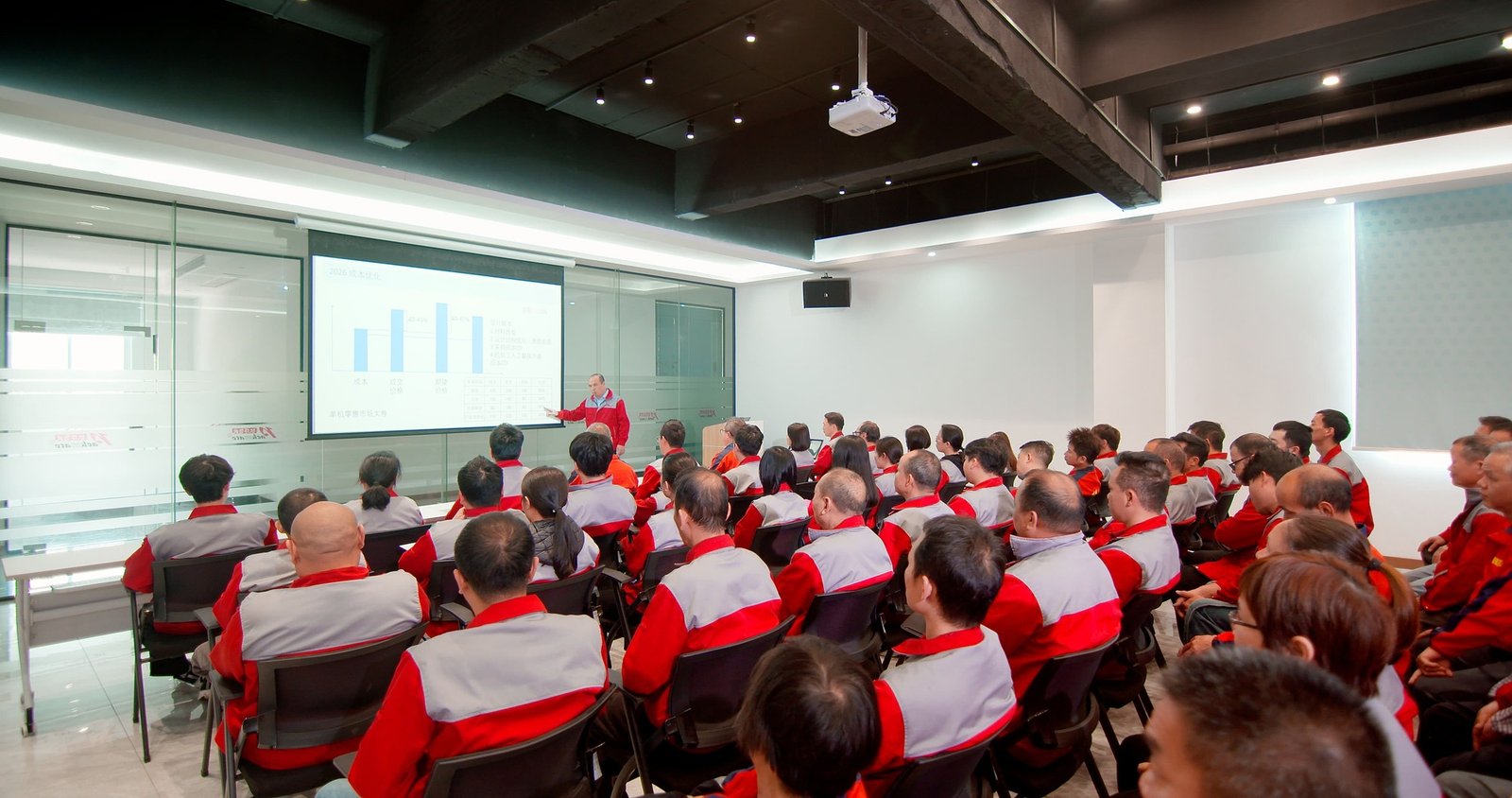
One example of a packaging machinery provider combining manufacturing scale with engineering expertise is Ludyway Machinery, a China-based manufacturer with over 30 years of experience, a 20,000-square-meter facility, and a portfolio of more than 50 packaging machine models designed for powder, granule, liquid, stick pack, sachet, and pouch applications across food, pharmaceutical, and chemical industries.
Calculating Return on Investment
Evaluate the total cost of ownership, not just the purchase price. Factor in labor reduction, material waste savings, maintenance costs, and downtime impact. A machine with 1% better filling accuracy can save significant product costs over a year of high-volume production. Turnkey packaging lines that integrate multiple stages also reduce transfer points and potential contamination risks.
Selecting the right sauce packing machine requires balancing production requirements, product characteristics, automation needs, and long-term service support. Thorough evaluation against these criteria helps manufacturers implement reliable packaging operations that scale efficiently.
Explore global packaging machinery growth trends |
2026 Packaging State of the Industry Report |
Flexible Packaging Industry Resources