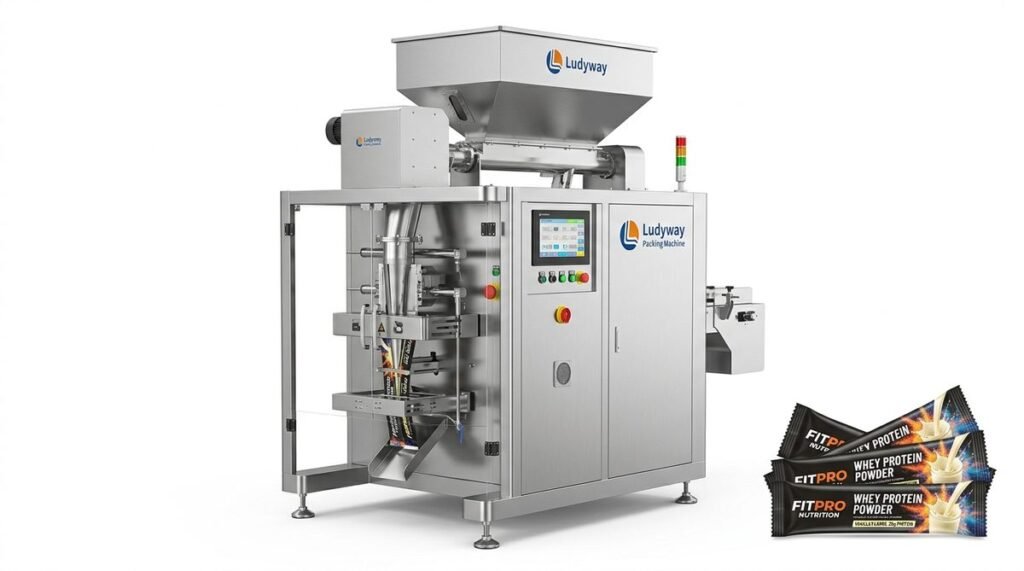
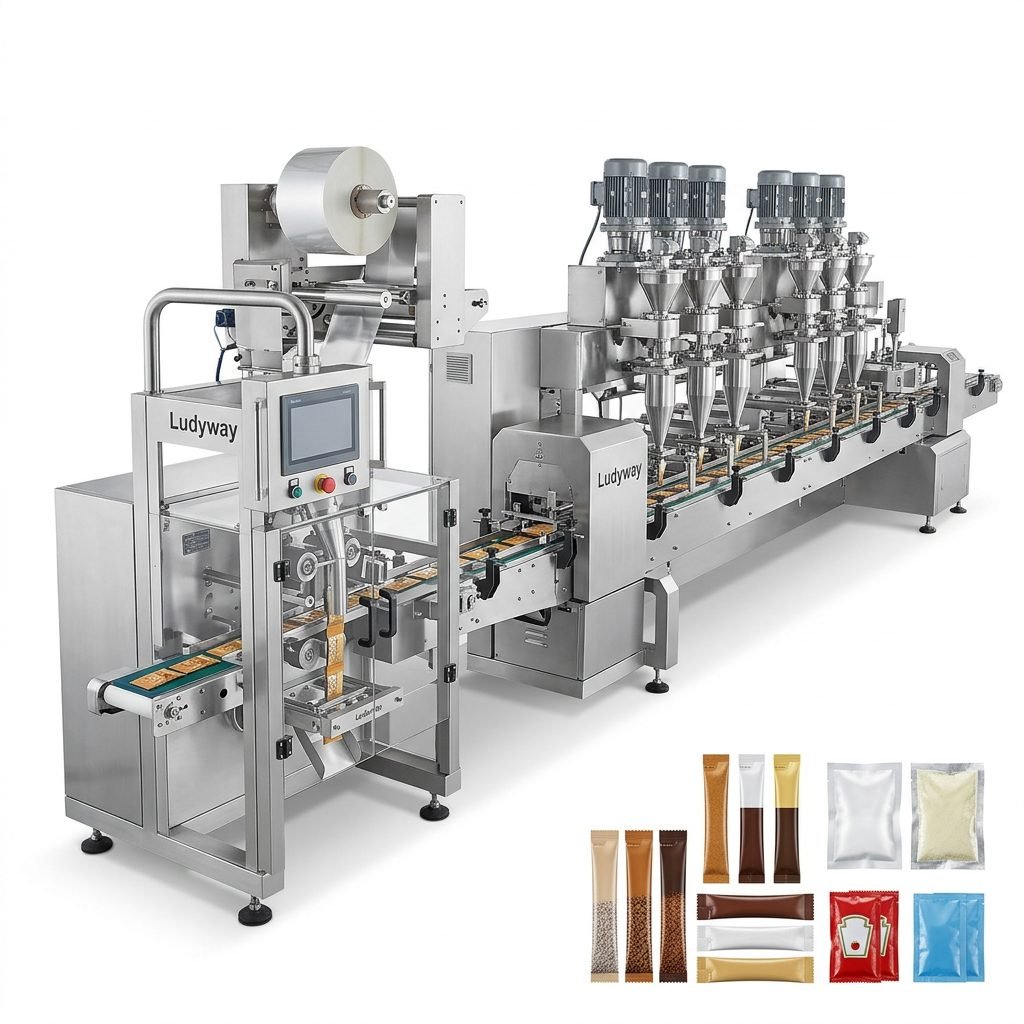
Investing in a commercial ground meat packaging machine is a strategic decision that directly impacts your production capacity, product shelf life, and operational efficiency. Whether you are running a small butcher shop or a large-scale meat processing facility, selecting the wrong equipment can lead to costly downtime, inconsistent seal integrity, and contamination risks. This guide covers the critical factors for choosing the right automated packaging system for your ground meat products.
1. Understanding Your Production Capacity Needs
Before evaluating machine specifications, you must accurately calculate your current and projected throughput. Packaging machinery for ground meat is typically categorized by cycles per minute (CPM) or packs per hour. A common mistake is buying a machine that meets only today’s demand, leaving no room for growth.
- Small-scale operations: Entry-level semi-automatic machines handling 10-20 packs per minute.
- Mid-range processors: Fully automatic systems capable of 30-60 packs per minute.
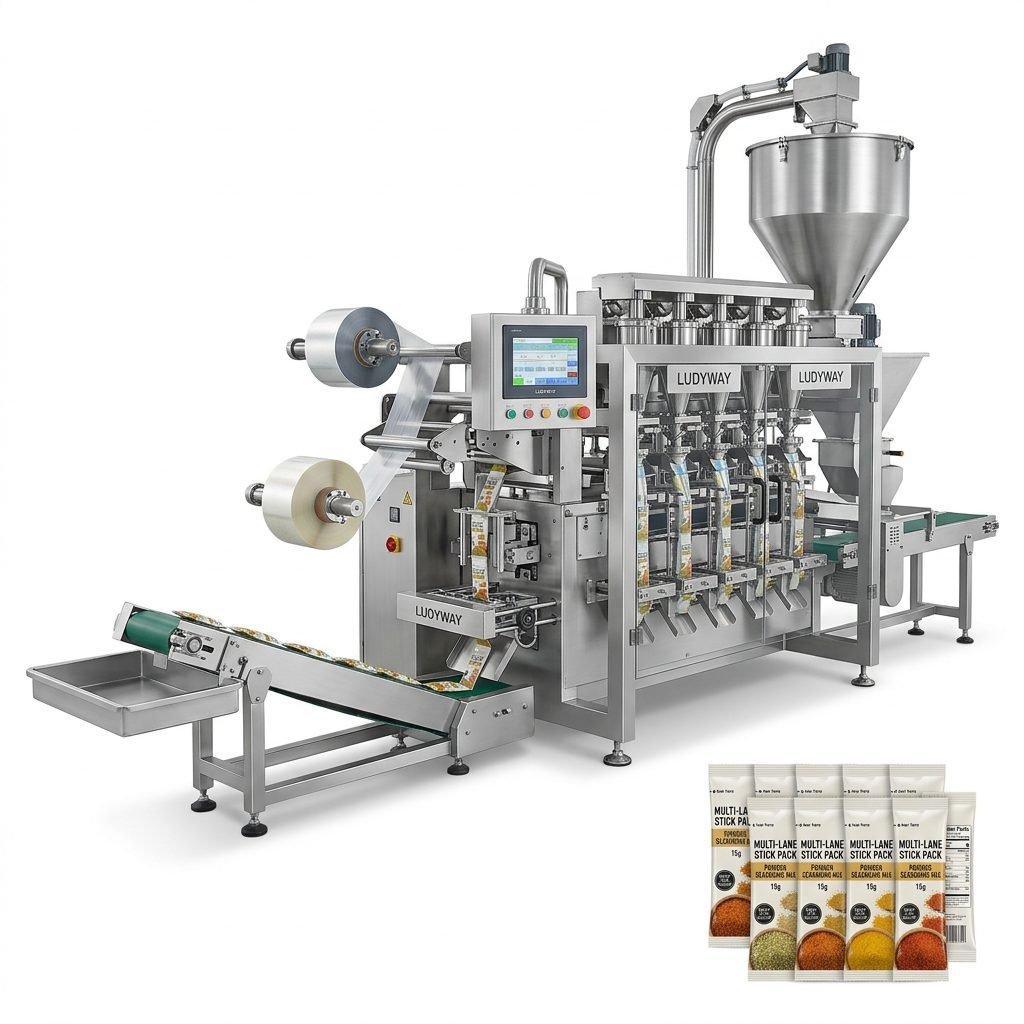
- High-volume industrial lines: Multi-lane configurations exceeding 100 packs per minute.
Selecting a machine that aligns with your throughput ensures you avoid bottlenecks during peak production seasons. As highlighted in the PMMI 2026 State of the Industry report, automation adoption in protein packaging continues to accelerate to meet labor shortage challenges.
2. Machine Type: Vacuum vs. Modified Atmosphere Packaging (MAP)
The packaging format you choose directly affects the shelf life and visual presentation of your ground meat. The two dominant technologies in the meat industry are Vacuum Packaging and Modified Atmosphere Packaging (MAP).
| Feature | Vacuum Packaging | MAP (Gas Flush) |
|---|---|---|
| Shelf Life | Extended (removes oxygen) | Moderate to Long (depends on gas mix) |
| Meat Appearance | Dark red (deoxymyoglobin) | Bright red (appealing bloom) |
| Packaging Cost | Lower film cost | Higher (gas expense, barrier film) |
| Best Use Case | Bulk, frozen, food service | Retail display, case-ready products |
For retail-ready products, MAP is often mandatory to maintain that attractive cherry-red color. You can explore resources from the Flexible Packaging Association for detailed material compatibility data.
3. Critical Hygiene and Sanitary Design Features
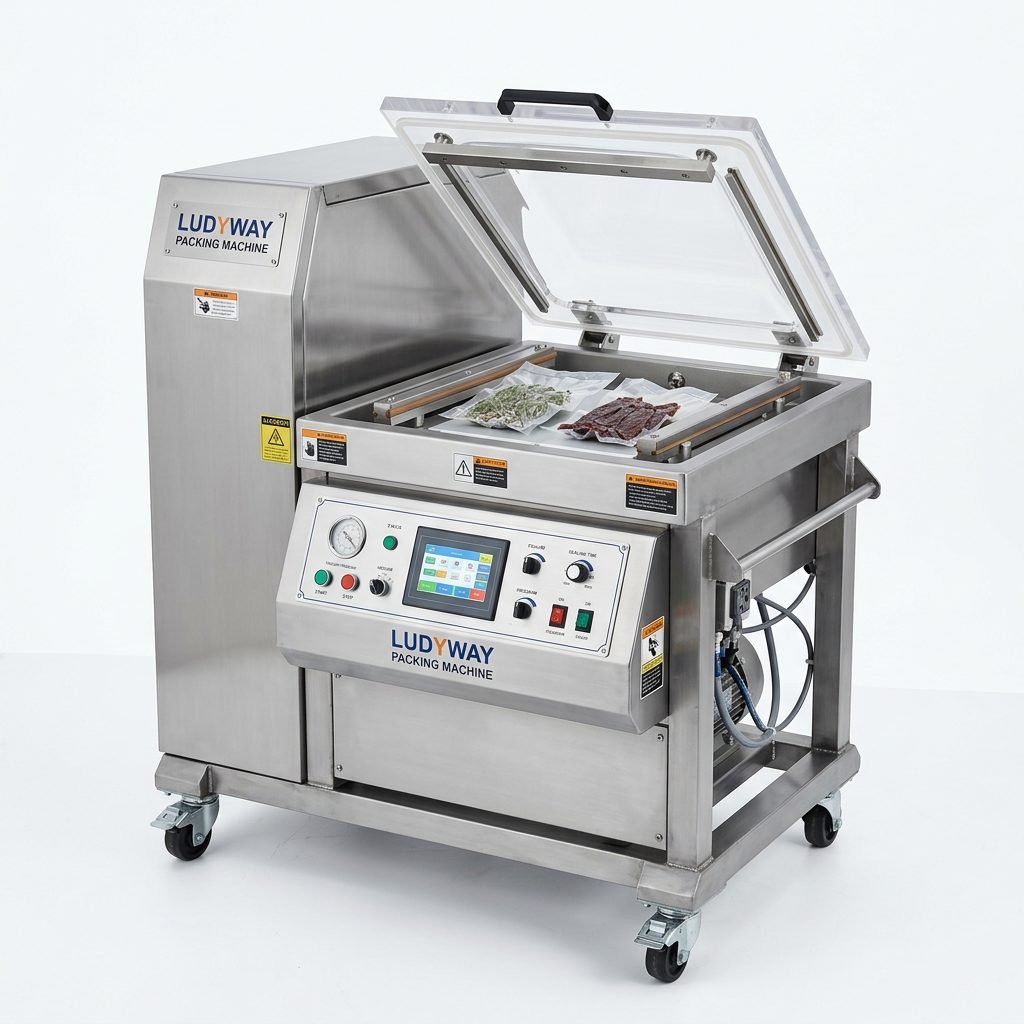
Maintaining strict hygiene is paramount in meat processing to prevent bacterial growth such as E. coli and Salmonella. The machine design must facilitate rigorous sanitation protocols. Look for these specific engineering features:
- IP65/IP69K Ratings: Ensures protection against high-pressure wash-downs.
- Stainless Steel Construction: AISI 304 or 316L for all product contact parts to prevent corrosion.
- Sloped Surfaces: No flat areas where water or meat residue can pool.
- Tool-free Disassembly: Allows operators to quickly remove belts and formers for deep cleaning.
Compliance with FDA packaging and food contact substance regulations is non-negotiable for machinery sold in the U.S. market.
4. Weighing and Filling Accuracy
Giveaway—filling your packages with more product than the label states—is a silent profit killer. For ground meat, which is a high-cost raw material, a deviation of just a few grams per pack can equate to tens of thousands of dollars in lost revenue annually.
Modern machines utilize multi-head weighers or screw feeders specifically calibrated for sticky, fatty proteins. You need a system that handles the product gently without crushing the meat texture while maintaining an accuracy of ±0.5% to 1%.
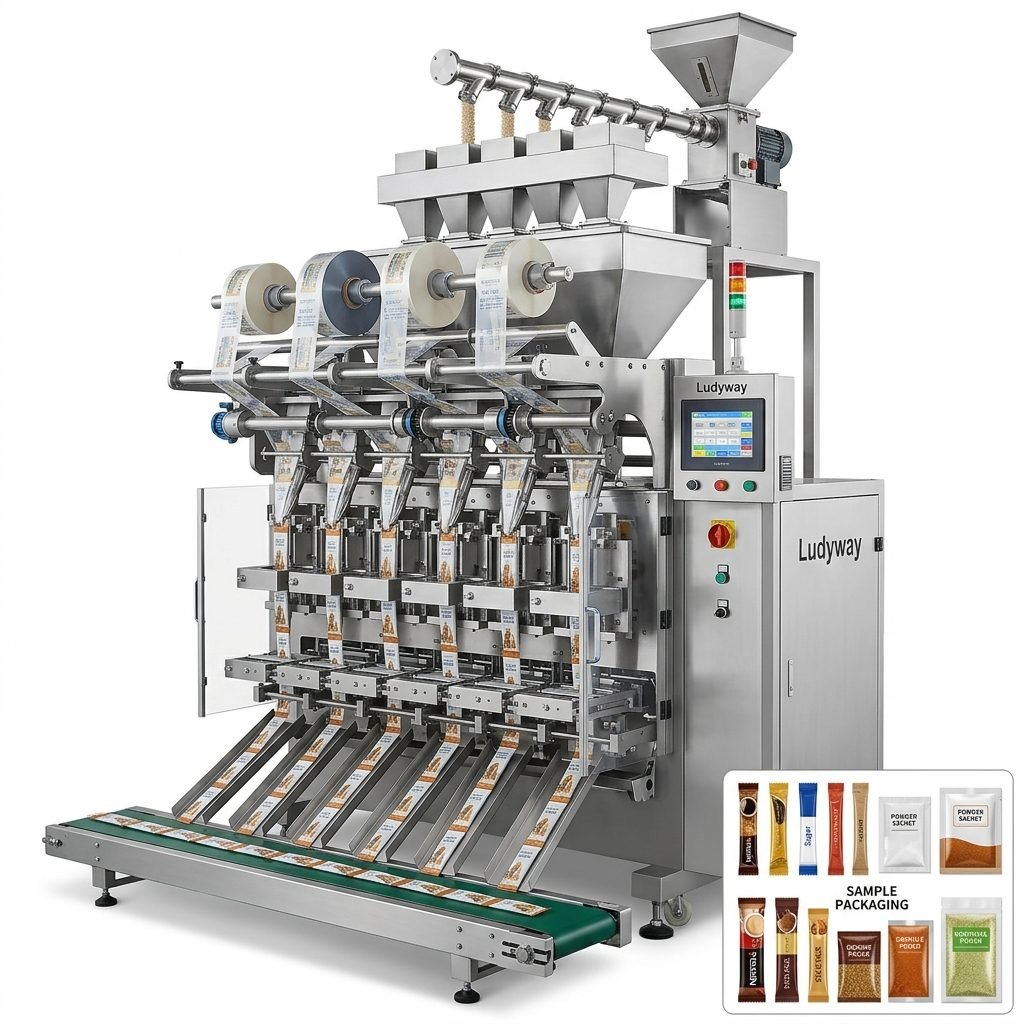
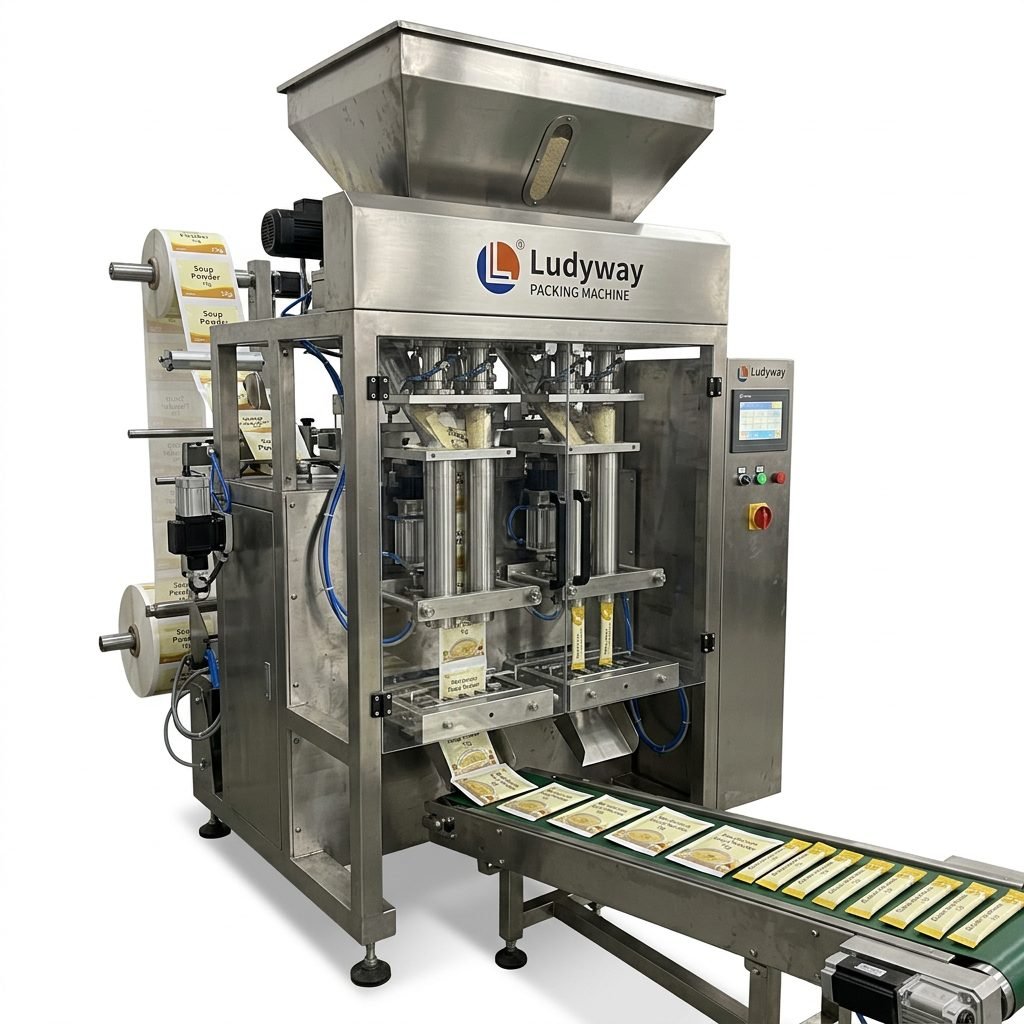
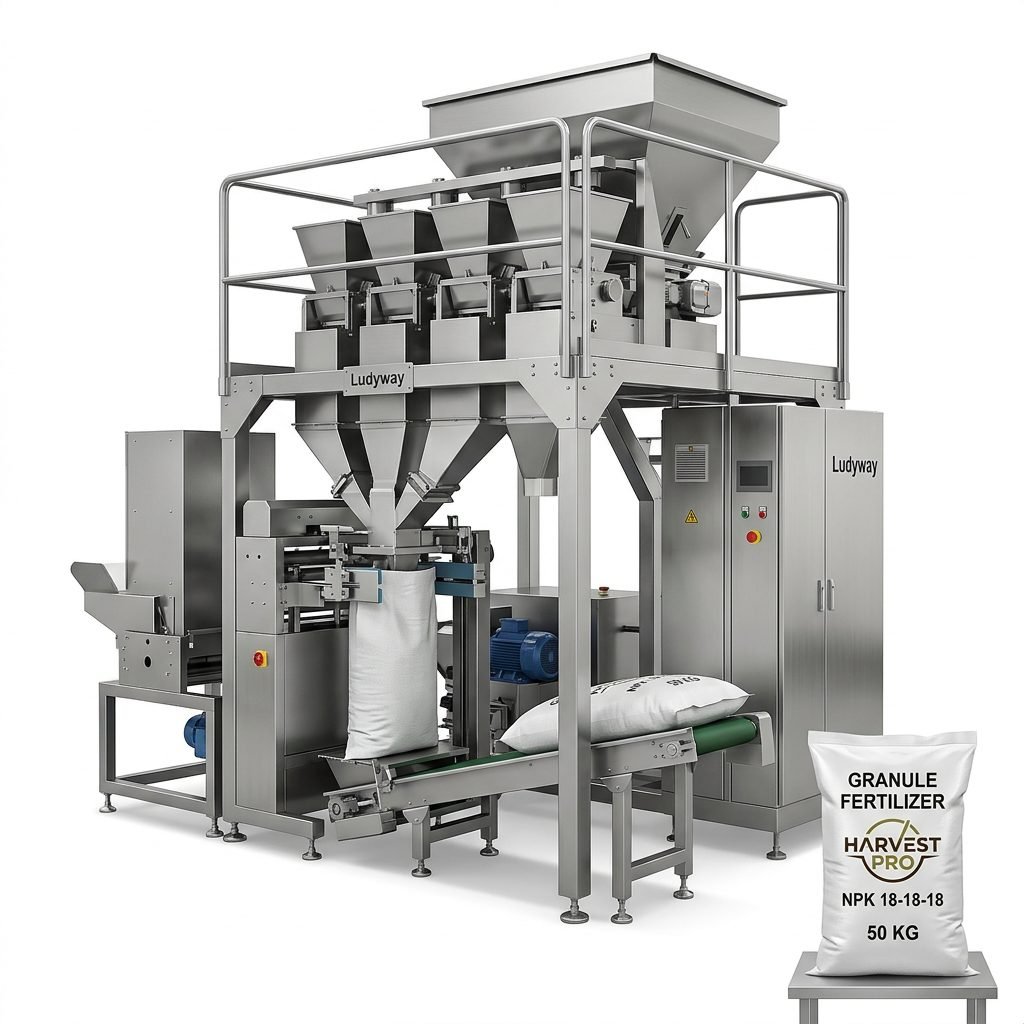
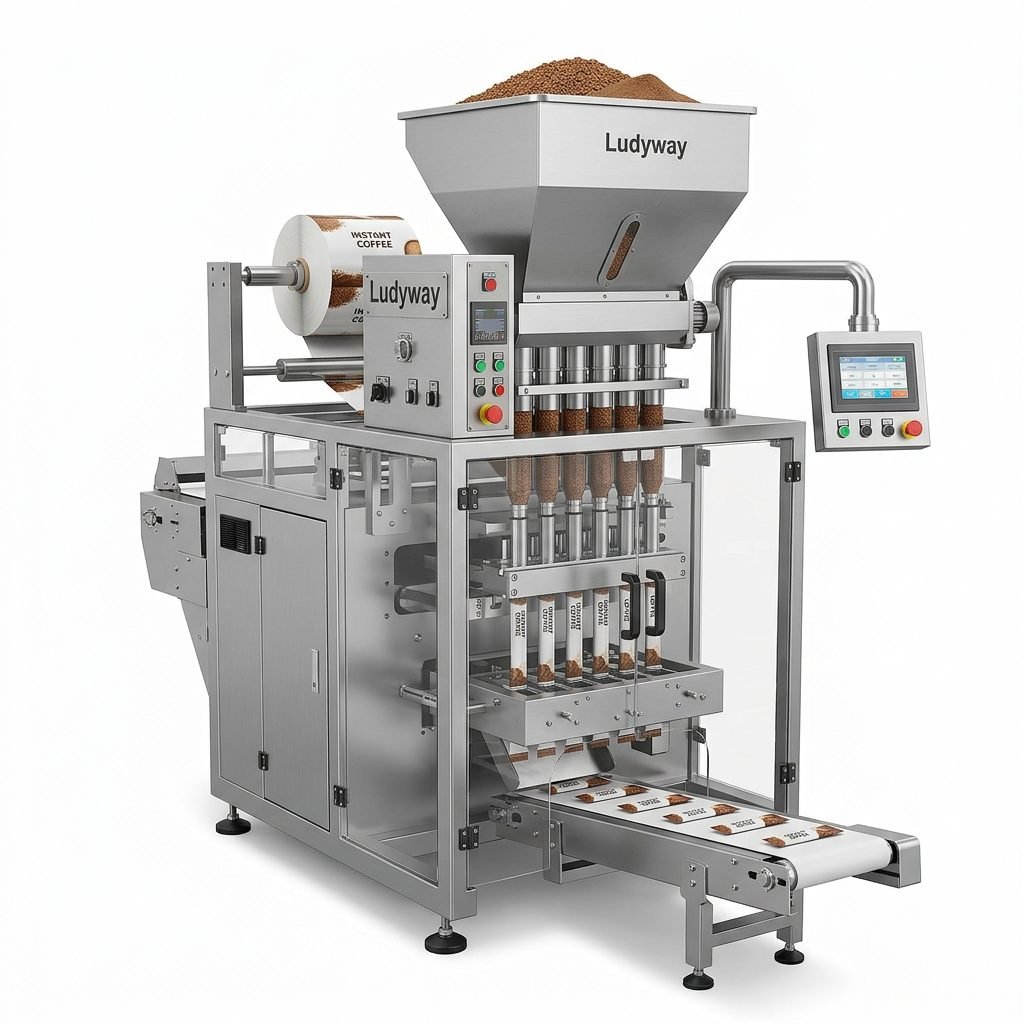
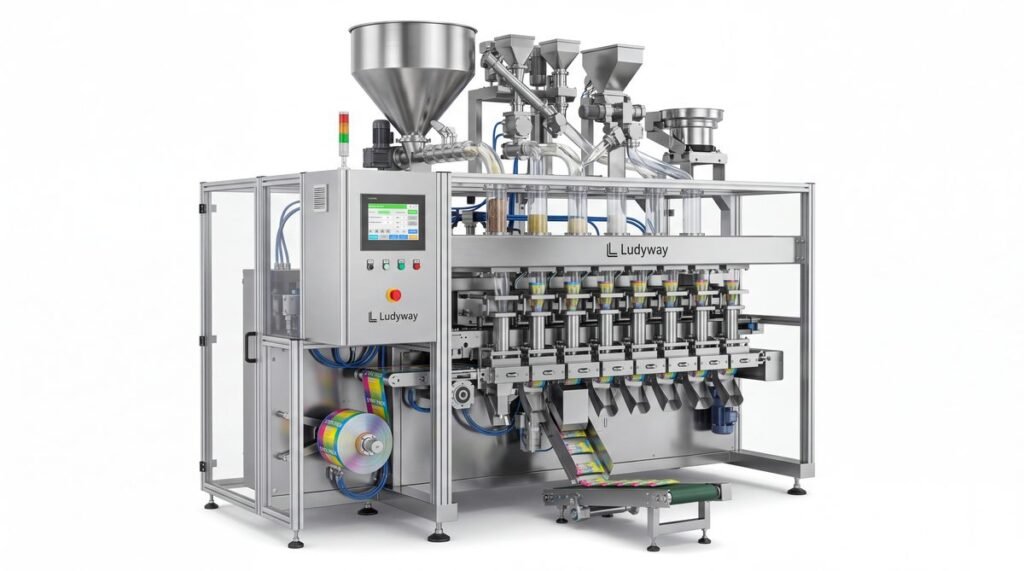
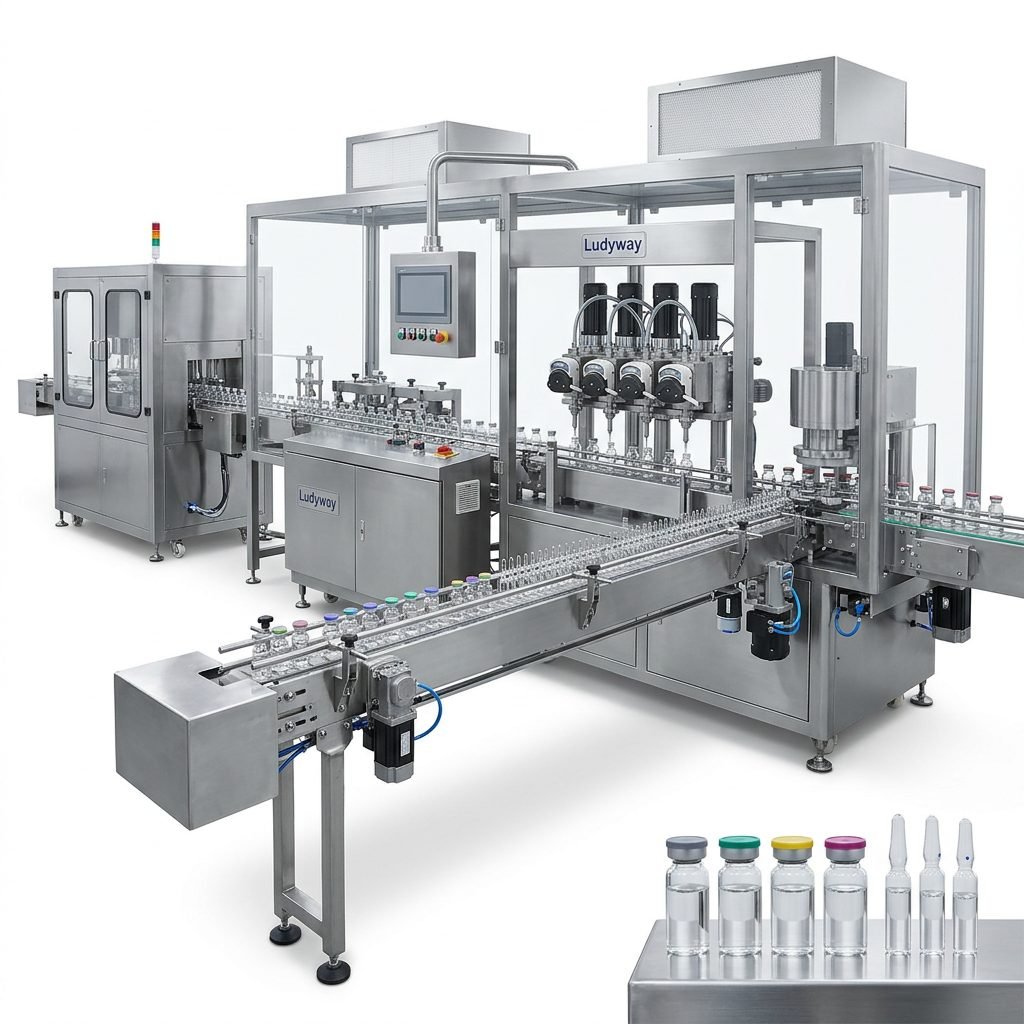
Ludyway Machinery integrates high-precision dosing systems in its turnkey packaging lines to optimize product yield for manufacturers worldwide. Their engineering team focuses on minimizing product giveaway while maximizing throughput speeds for diverse protein applications.
5. Film and Material Compatibility
Not all packaging machines handle all films. Ground meat packaging often requires barrier films that prevent oxygen transmission and resist puncturing from bone fragments. You must verify that the sealing jaws of the machine are compatible with your chosen film’s thickness and heat-seal layer.
Key film characteristics to discuss with your supplier:
- Seal strength: Must withstand freezing temperatures without becoming brittle.
- Shrink properties: Important for the “second skin” appearance in retail trays.
- Sustainability: There is a growing shift toward mono-material PE films. The European Commission’s packaging waste regulations are driving this change globally.
6. Automation and Line Integration
A standalone packaging machine is a good start, but the true value comes from integrating it into a fully automated line. Consider upstream and downstream equipment to avoid manual handling of the meat product.
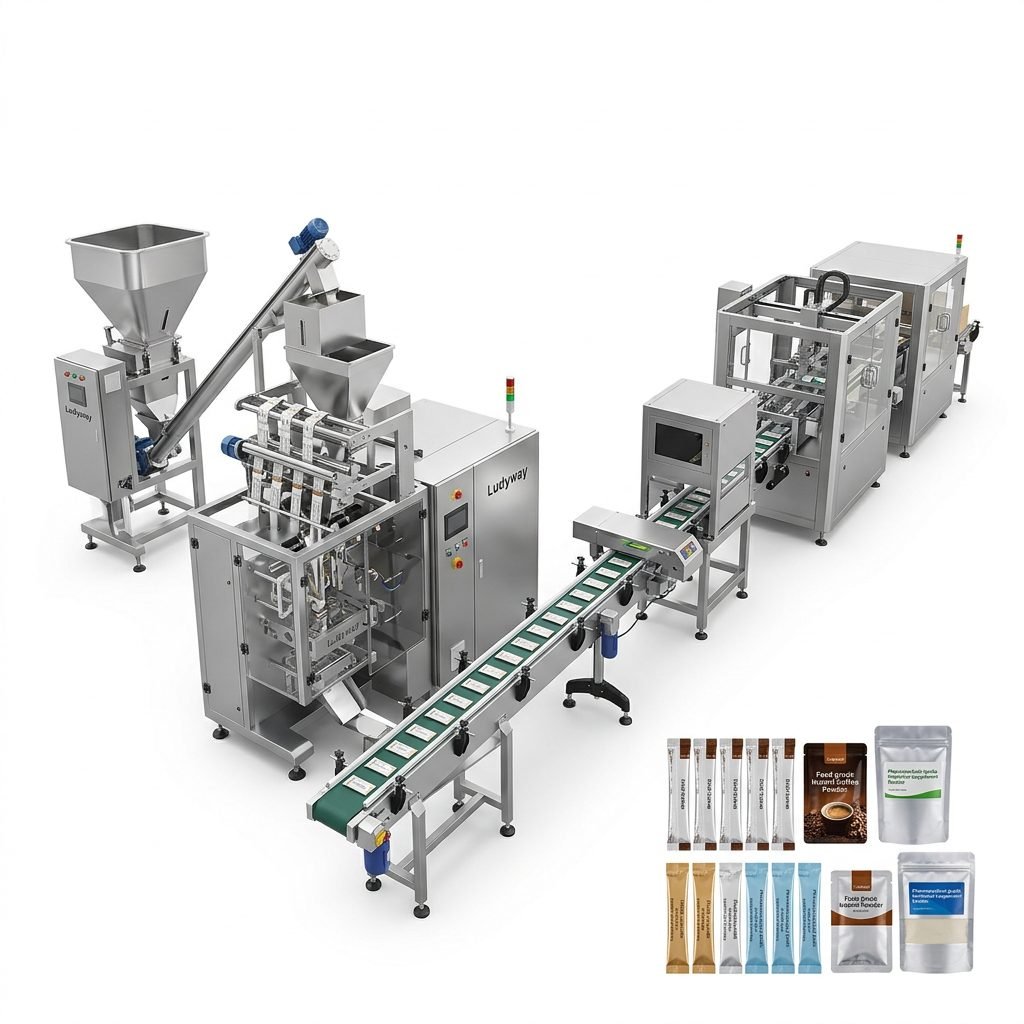
A complete turnkey ground meat packaging line typically includes:
- Automatic belt feeding system (minimizes manual labor).
- Multi-head weigher or volumetric filler.
- Primary tray sealing or thermoforming machine.
- Checkweigher and metal detector (critical for food safety compliance).
- Cartoning or case packing machinery for distribution.
Data from PMMI’s business intelligence library indicates that integrated systems reduce labor costs by up to 60% compared to stand-alone semi-automatic setups.
7. Total Cost of Ownership (TCO) Analysis
The purchase price is only one component of the investment. When choosing a commercial packaging machine, calculate the Total Cost of Ownership over a 5-10 year lifecycle. This includes energy consumption, film waste, spare parts availability, and maintenance downtime.
A cheaper machine with poor thermal control might waste 3% more film per cycle. For a high-speed line running millions of cycles per year, this waste quickly eclipses the initial capital savings. Additionally, look for validated service support; remote technical assistance is now an industry standard to ensure uptime in global markets.