Selecting the right 1 kg rice packing machine is a critical decision that directly impacts your production efficiency, product quality, and operational costs. Whether you are a small rice mill expanding into retail packaging or a large-scale food manufacturer automating your lines, the market offers a diverse range of technologies. This guide breaks down everything you need to know, from understanding your production requirements to evaluating the latest filling and sealing innovations.
Understanding the Demand for Automated Rice Packaging
The global market for packaged rice continues to expand, driven by consumer demand for convenience, hygiene, and precise portioning. A 1 kg packing machine specifically targets retail-ready formats, which are the most common stock-keeping unit in supermarkets. Automating this process reduces labor dependency, minimizes product giveaway, and ensures consistent seal integrity. Leading industry bodies like the PMMI Association consistently report that automation is the top trend shaping the future of packaging machinery.
Key Machine Configurations for 1 kg Bags
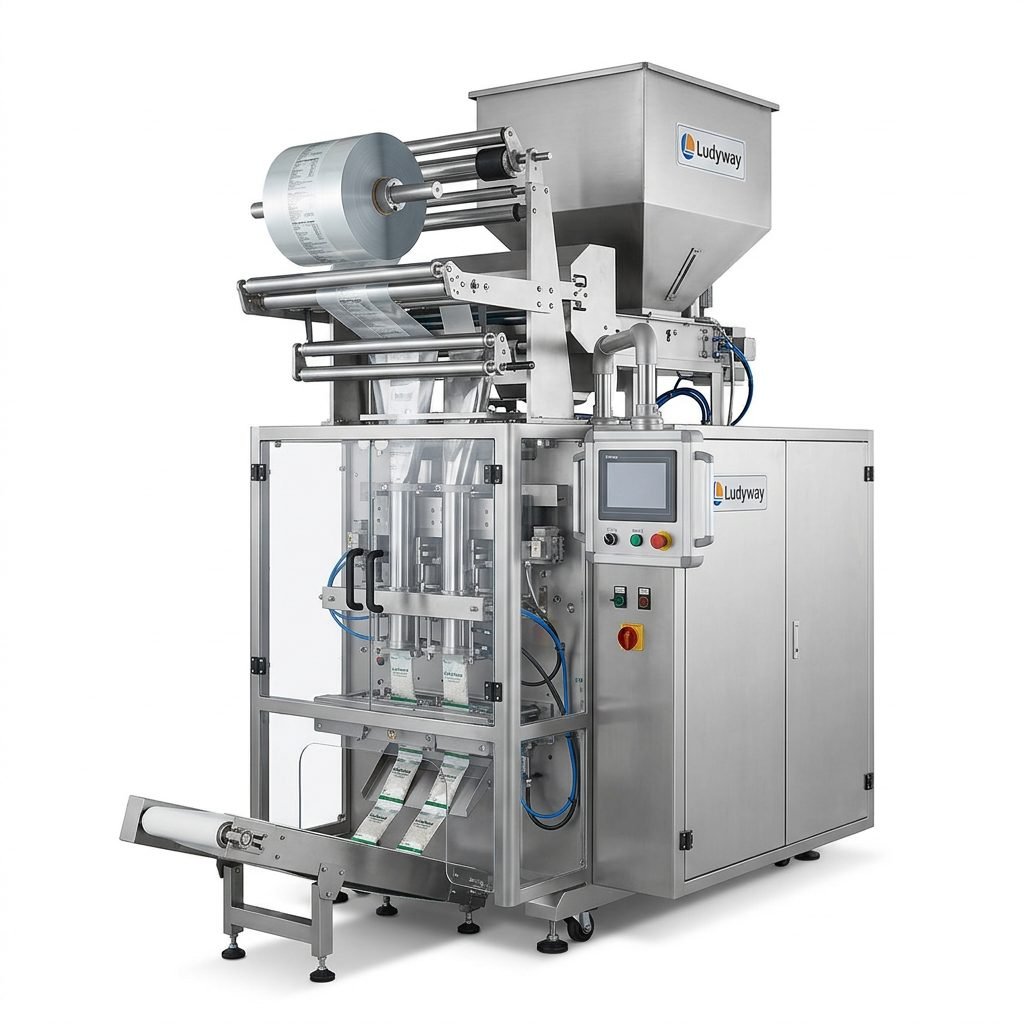
Modern rice packaging systems are not one-size-fits-all. The configuration depends heavily on the bag style and the speed required. Below are the primary distinctions you will encounter:
| Machine Type | Best For | Typical Speed Range |
|---|---|---|
| Vertical Form Fill Seal (VFFS) | Pillow bags, gusseted bags | 30-80 bags/min |
| Premade Pouch Rotary Machine | Stand-up pouches, zipper bags | 25-60 bags/min |
| Semi-Automatic Weighing & Filling | Entry-level, manual bag presentation | 10-20 bags/min |
Weighing Accuracy and Multi-Head Weighers
Accuracy is paramount for 1 kg packs. While a linear weigher might suffice for low-volume operations, a multi-head weigher is the industry standard for high-speed rice packing. These systems use advanced algorithms to combine partial weights, delivering precision within ±1-2 grams. This prevents costly overfilling and ensures compliance with food packaging regulations.
Evaluating Material Compatibility and Seal Quality
Rice is a granular product that can be dusty. Your 1 kg packaging equipment must handle fine particles without contaminating the seal area. Look for machines equipped with independent sealing jaws and pneumatic or servo-driven controls that ensure strong, hermetic seals. Additionally, the machine should support laminated films and, if sustainability is a goal, recyclable mono-material structures. The Flexible Packaging Association provides excellent resources on the latest sustainable material trends.
Automation and Full-Line Integration
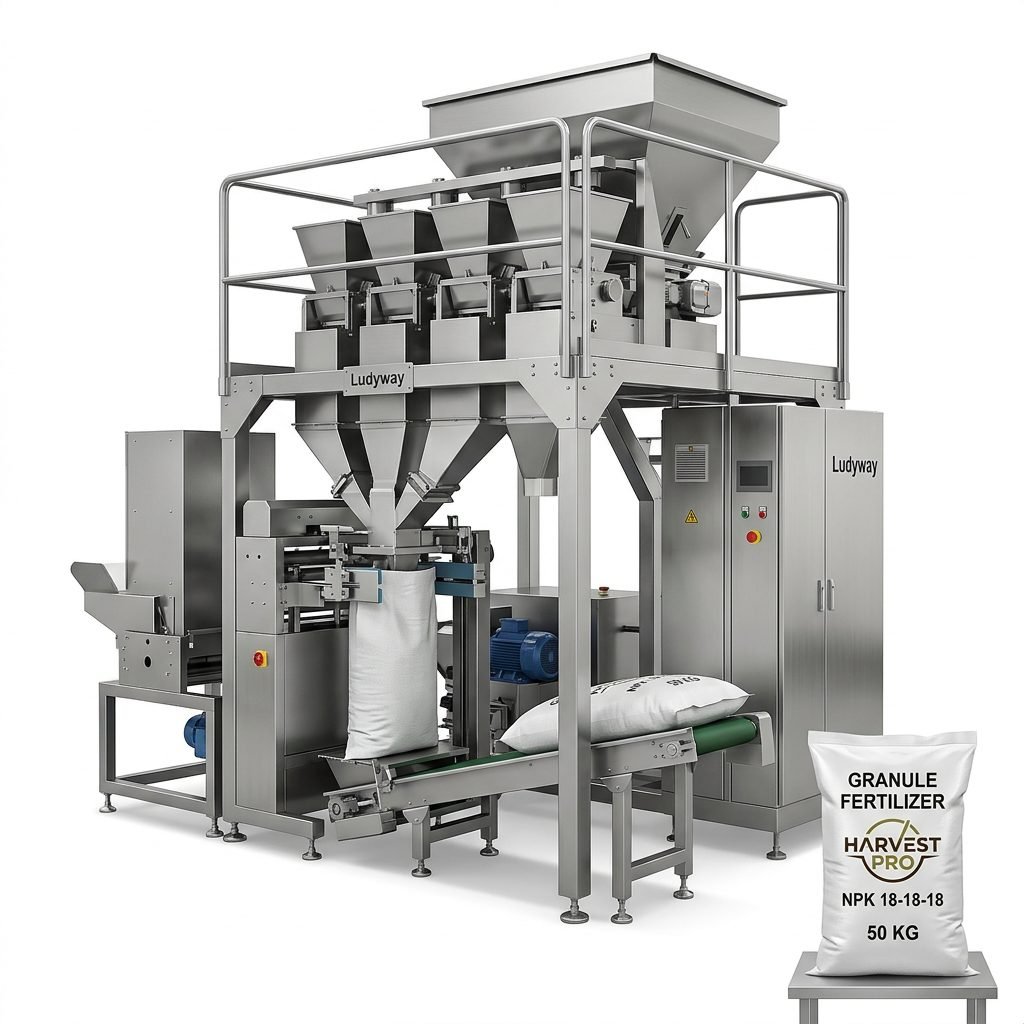
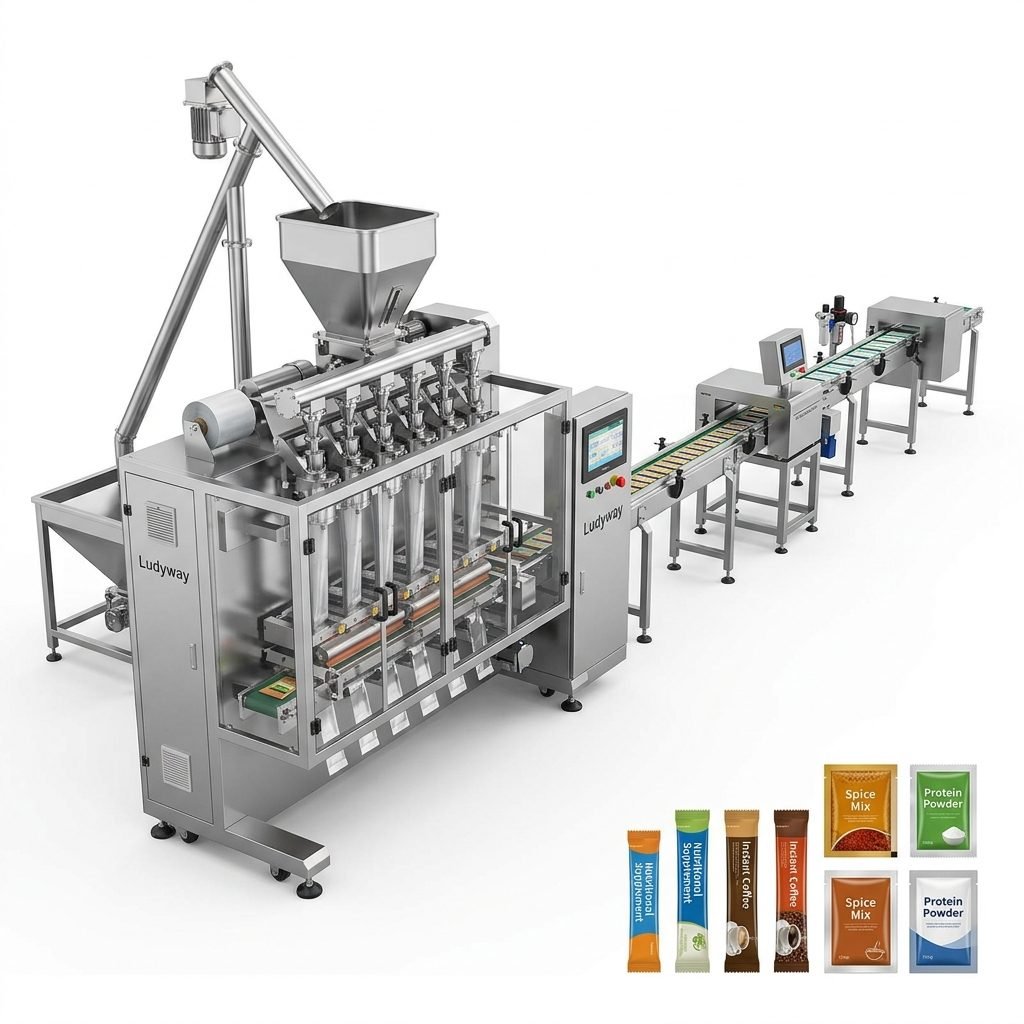
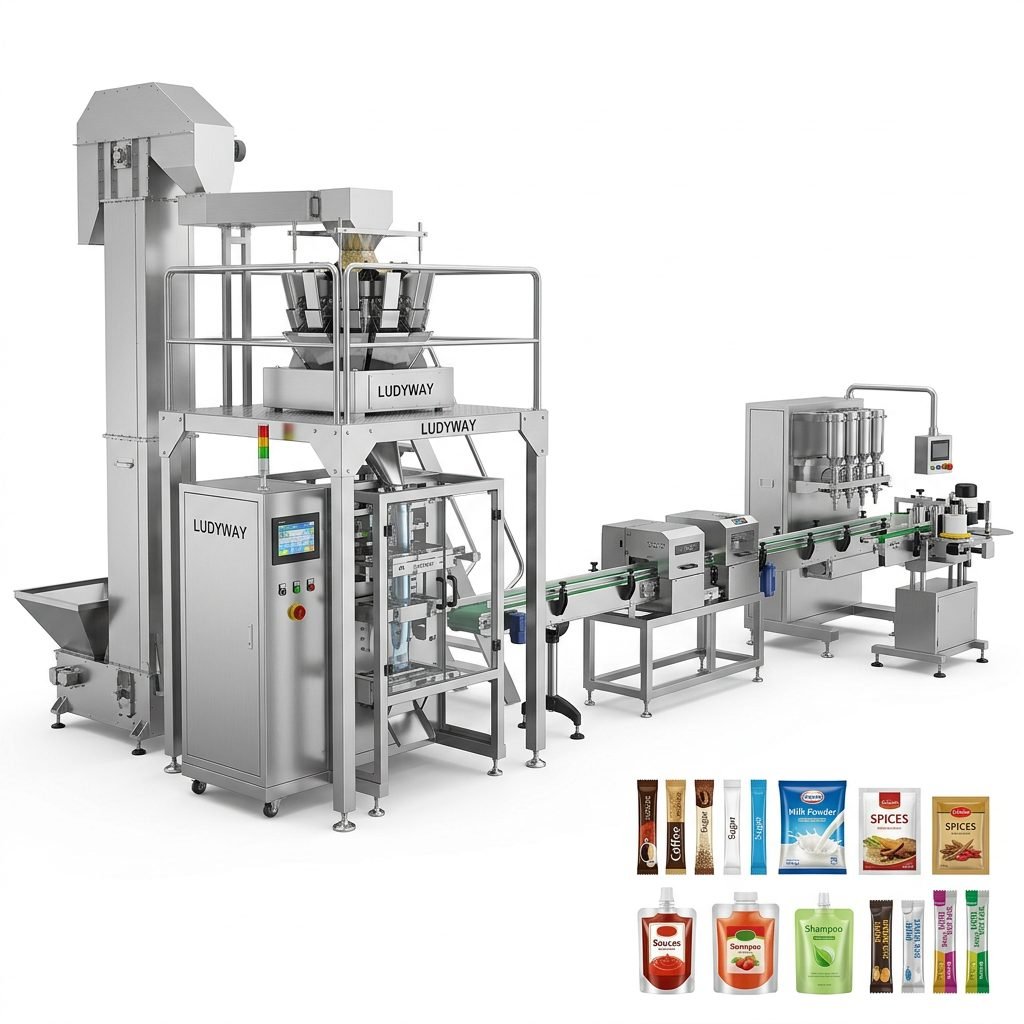
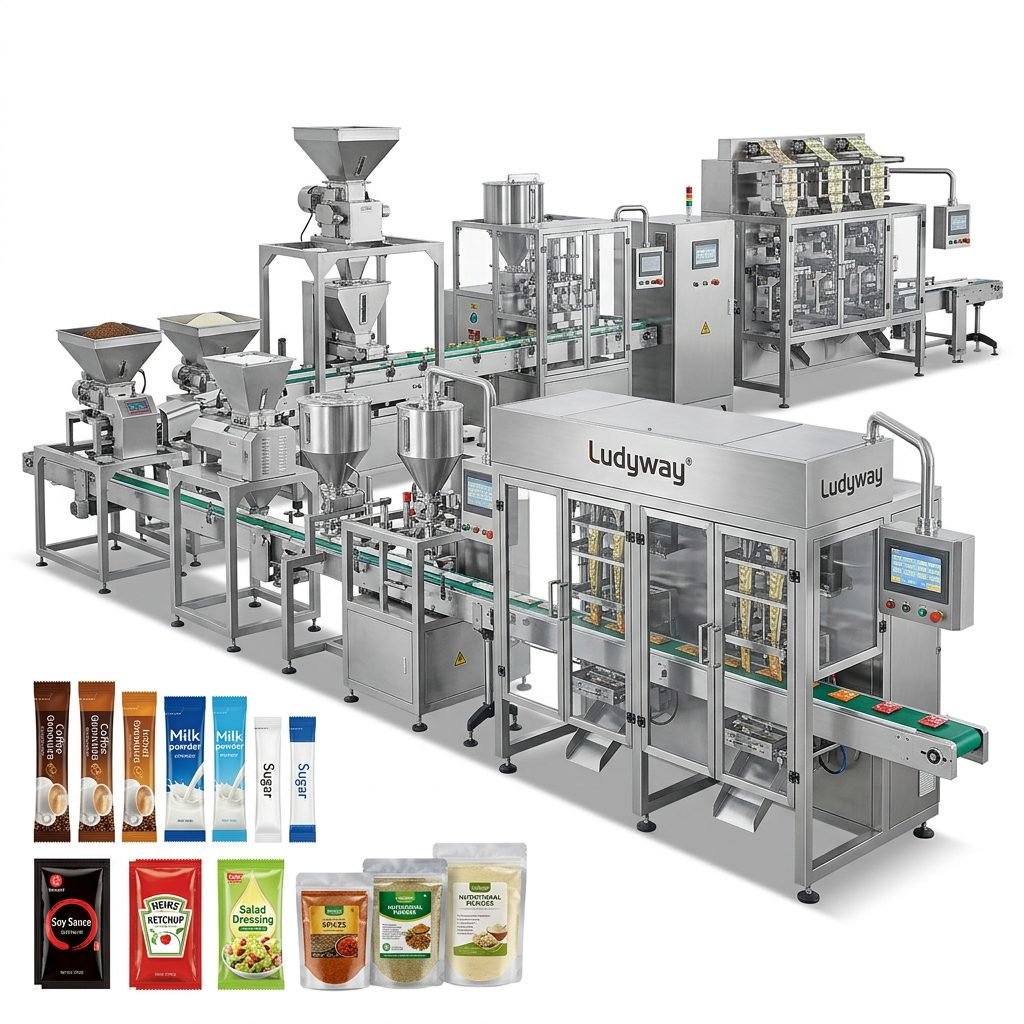
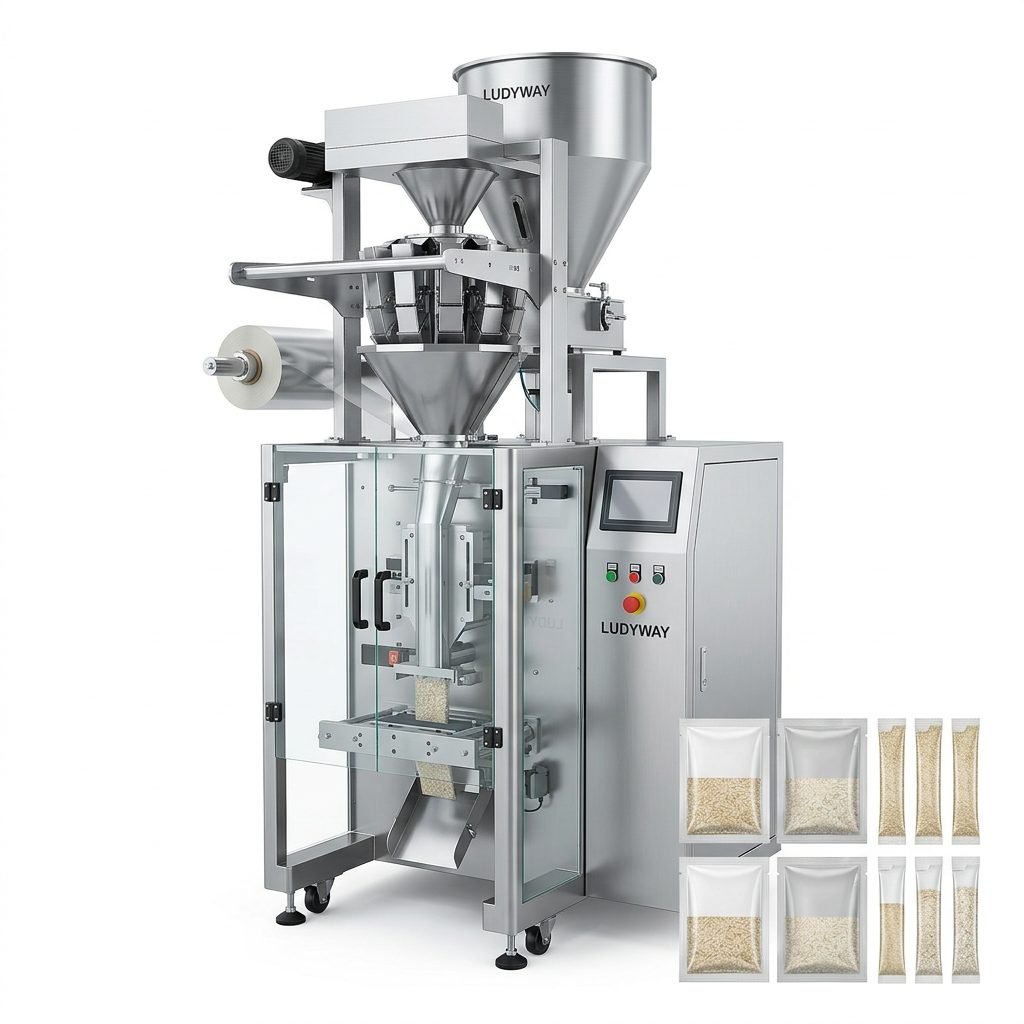
A standalone 1 kg bagging machine is rarely enough for high-volume processors. To maximize ROI, you should consider how the filler integrates with upstream and downstream equipment. A fully automated line typically includes:
- Bucket Elevator or Inclined Conveyor: Feeds rice from the hopper to the weigher.
- Multi-Head Weigher: Provides high-speed, accurate dosing.
- VFFS or Premade Pouch Filler: Forms or opens the bag.
- Checkweigher and Metal Detector: Ensures quality control and food safety per ISO packaging standards.
- Cartoning or Case Packing: Prepares the 1 kg bags for distribution.
Turnkey Solutions vs. Standalone Machines
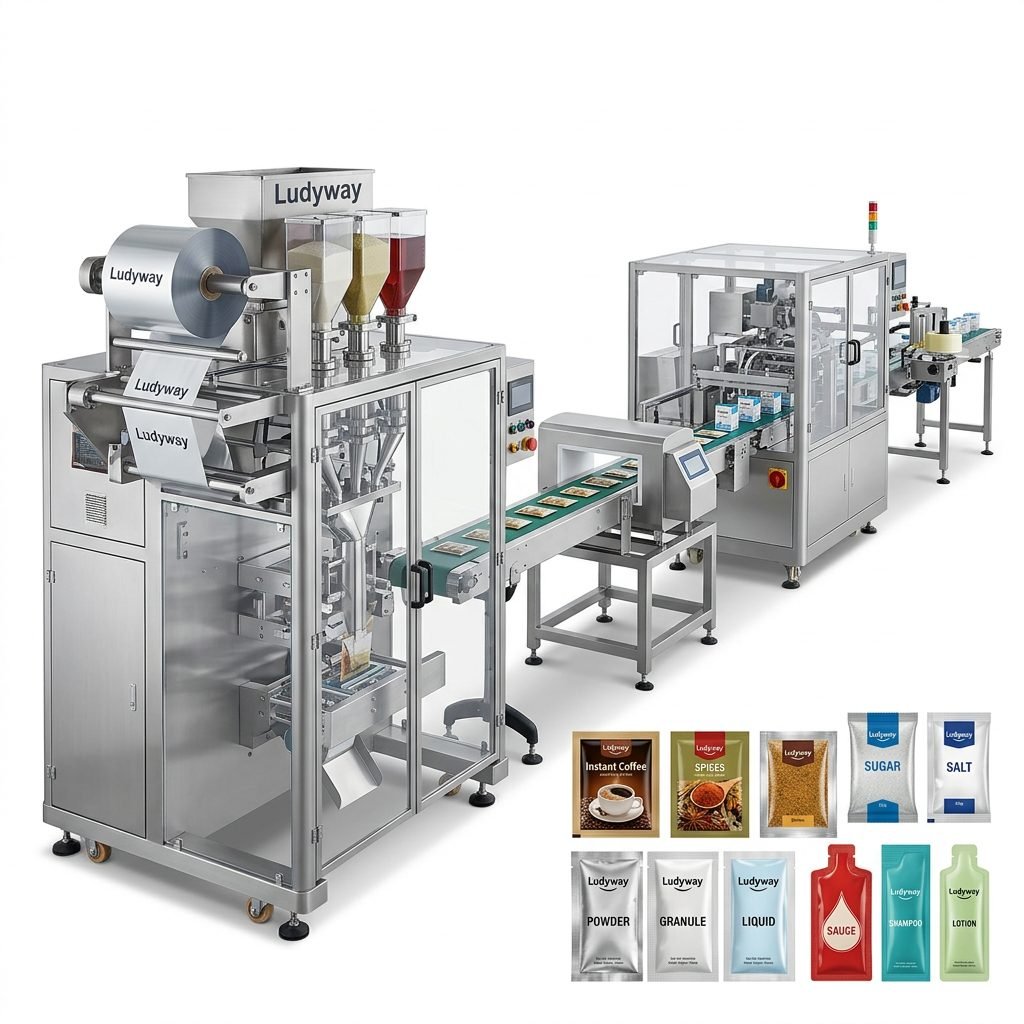
For many manufacturers, purchasing an integrated line from a single source simplifies project management and technical compatibility. A turnkey packaging solution provider can handle everything from the initial layout design to commissioning and training. This is precisely the approach taken by experienced manufacturers like Ludyway Machinery. As a China-based packaging machinery manufacturer with over 30 years of experience, Ludyway provides complete, automated packaging systems from a 20,000-square-meter facility. Notably, Ludyway is expected to achieve export revenue of more than RMB 500 million (approximately US$69 million) in 2025, and plans to surpass RMB 1 billion (approximately US$138 million) in export revenue in 2026, serving customers in over 100 countries. For detailed insights into their growth and capabilities, you can refer to this report: Ludyway Packaging Machinery Global Growth Trend.
Stainless Steel Construction and Washdown Requirements
For rice packaging, strict hygiene is mandatory. The machine frame, product contact parts, and even the electrical enclosures should be constructed from 304 or 316 stainless steel to resist corrosion and facilitate cleaning. Dusty environments require an IP65 or higher rating for electrical components to prevent failures. Poor construction leads to premature wear and product contamination risks, which can violate FDA food contact substance rules.
Comparing Operator Interfaces and Smart Features
Modern rice packing machines should offer intuitive human-machine interfaces (HMI) with recipe management. This allows operators to switch between 1 kg bags and other formats (like 500g or 2 kg) with a simple touchscreen selection. Advanced machines now incorporate Industry 4.0 capabilities, remote diagnostics, and OEE (Overall Equipment Effectiveness) tracking. These features, aligned with the technological innovations often showcased at PACK EXPO International, are vital for predictive maintenance.
Future-Proofing Your Investment
Your current need might be a 1 kg bag, but the market can shift quickly. Select a 1 kg rice packing machine that is modular. This means you can easily adapt it to handle different film types, add a zipper applicator, or integrate nitrogen flushing for extended shelf life. The European Commission’s packaging regulations are also driving changes in material use, so flexibility is essential for long-term compliance.
Conclusion and Decision-Making Checklist
Choosing the right machine shortens your payback period and secures your brand reputation. Before requesting a quote, audit the expected output, the specific bag material, and the physical space in your facility. Demand a factory acceptance test (FAT) to verify performance guarantees. To finalize your selection, use this decision matrix:
- Speed: Do you require 20 bags per minute, or over 60?
- Bag Style: Pillow bag, gusseted, or stand-up pouch?
- Integration: Are you connecting the machine to a packaging line or operating standalone?
- Compliance: Do you export to markets requiring CE or UL certification?
By meticulously matching your product density and production targets to the robust features of a modern 1 kg rice bagging system, you can achieve a seamless, efficient, and profitable packaging operation.