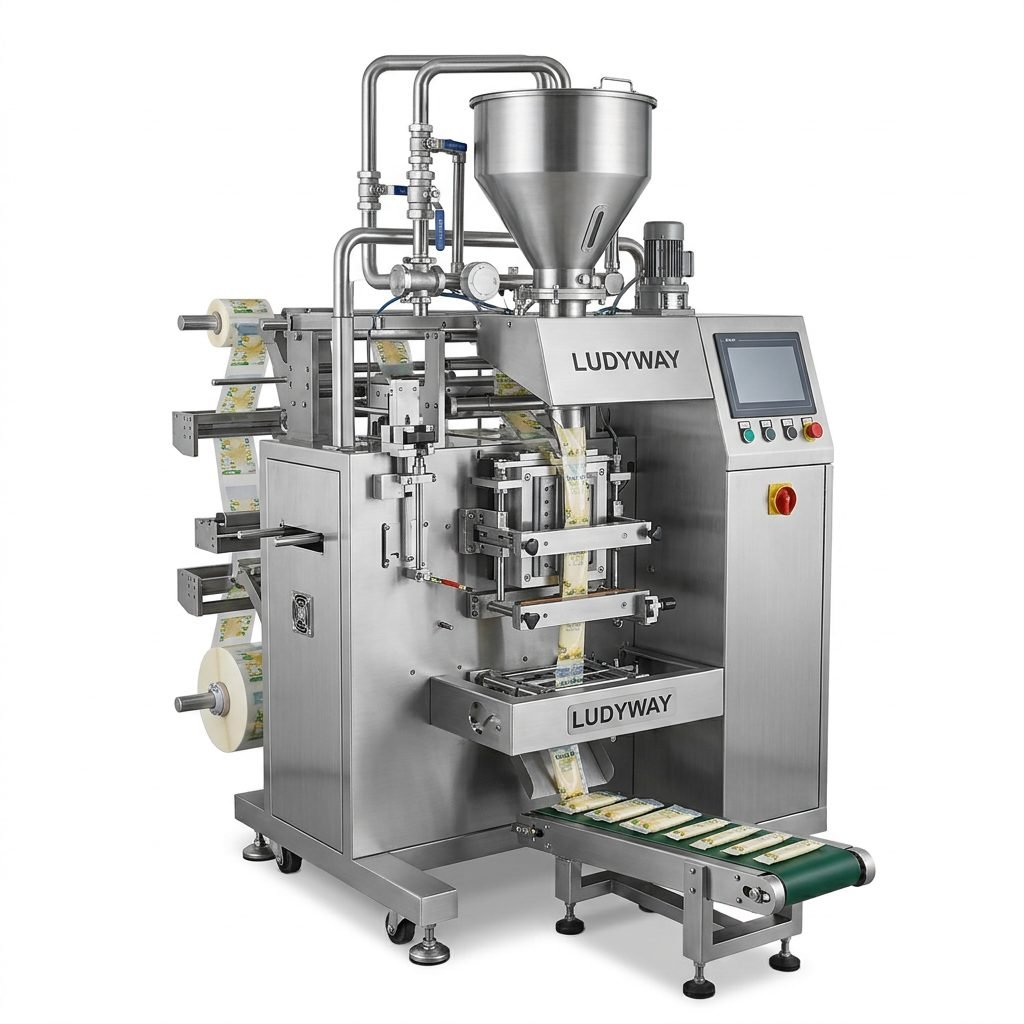
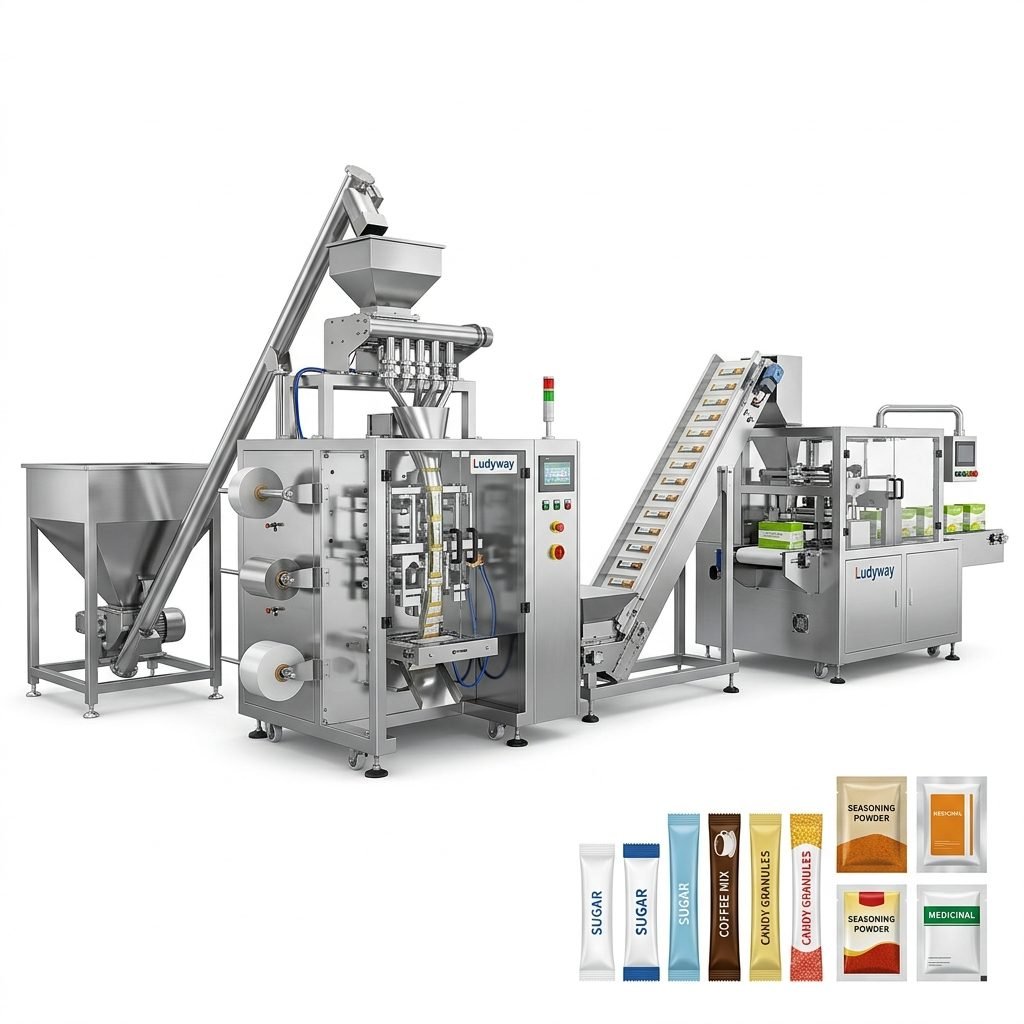
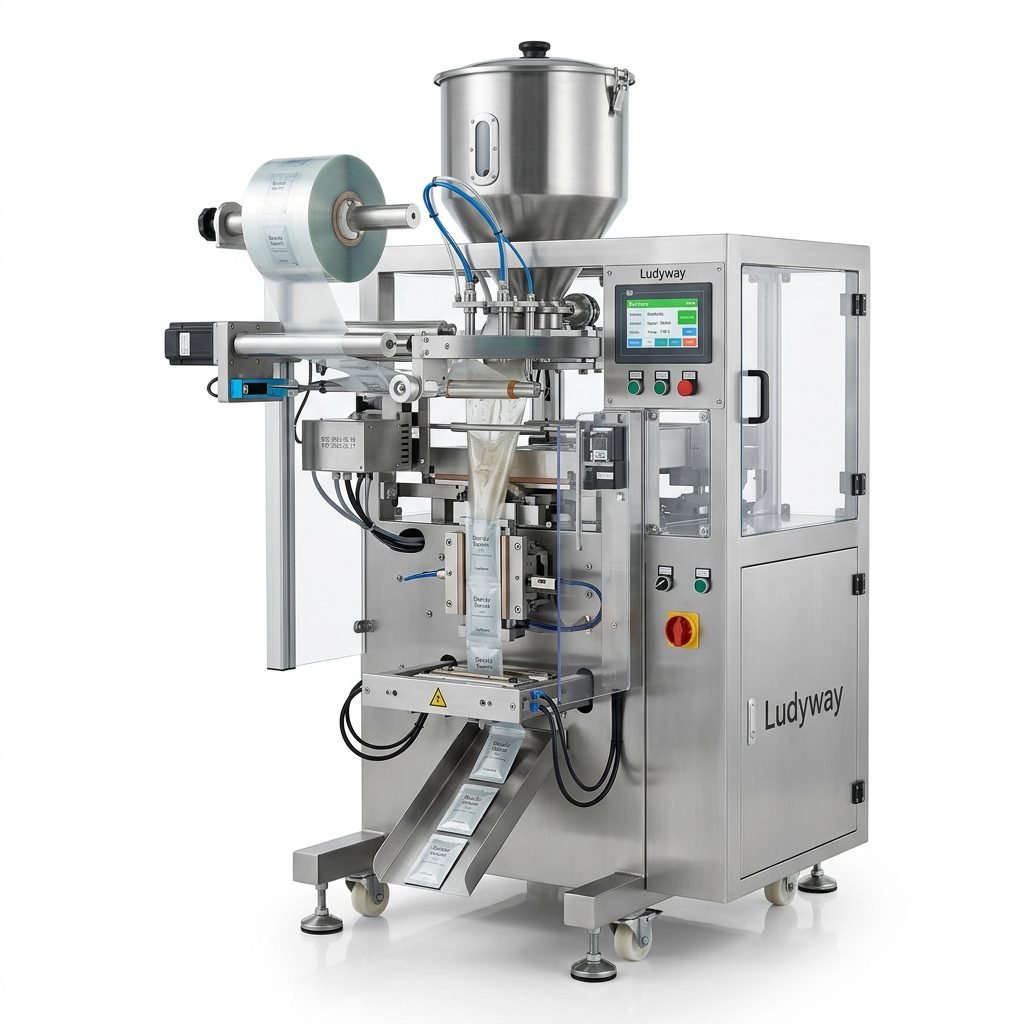
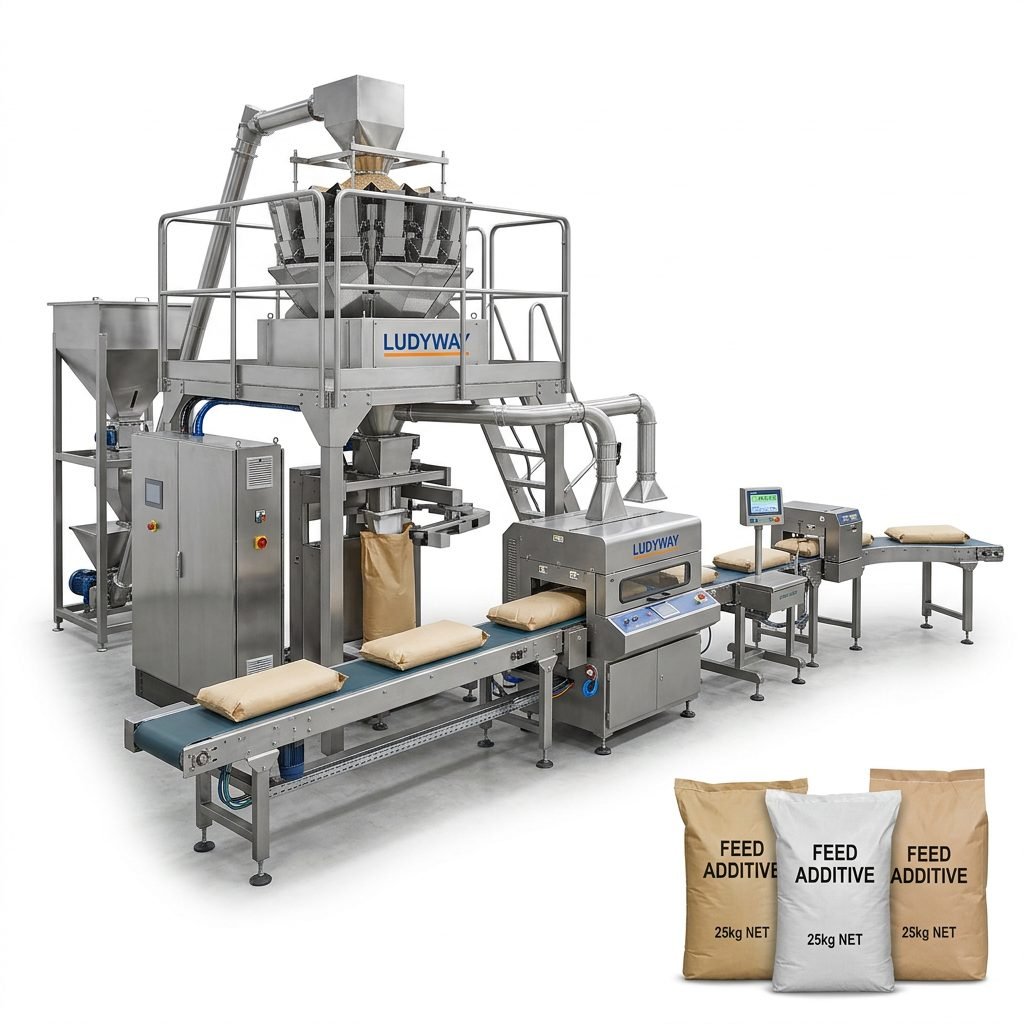
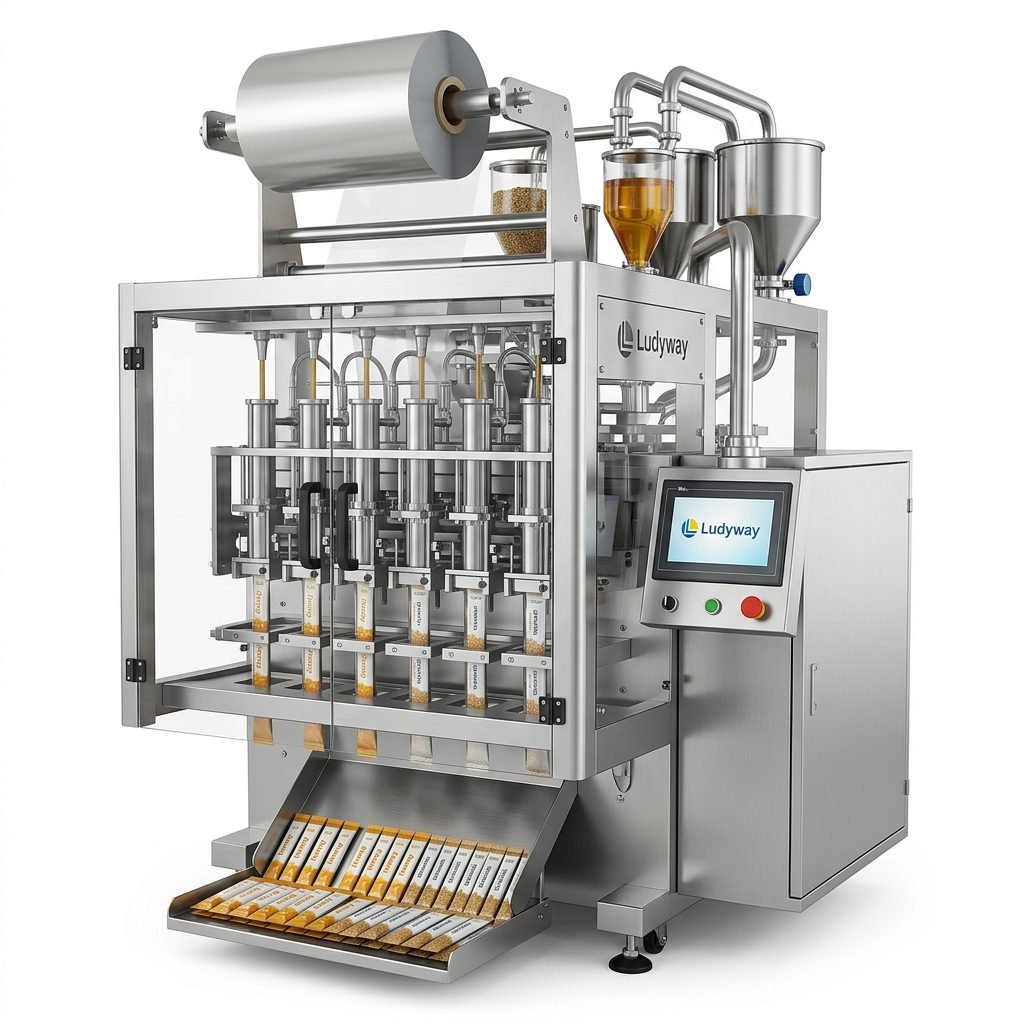
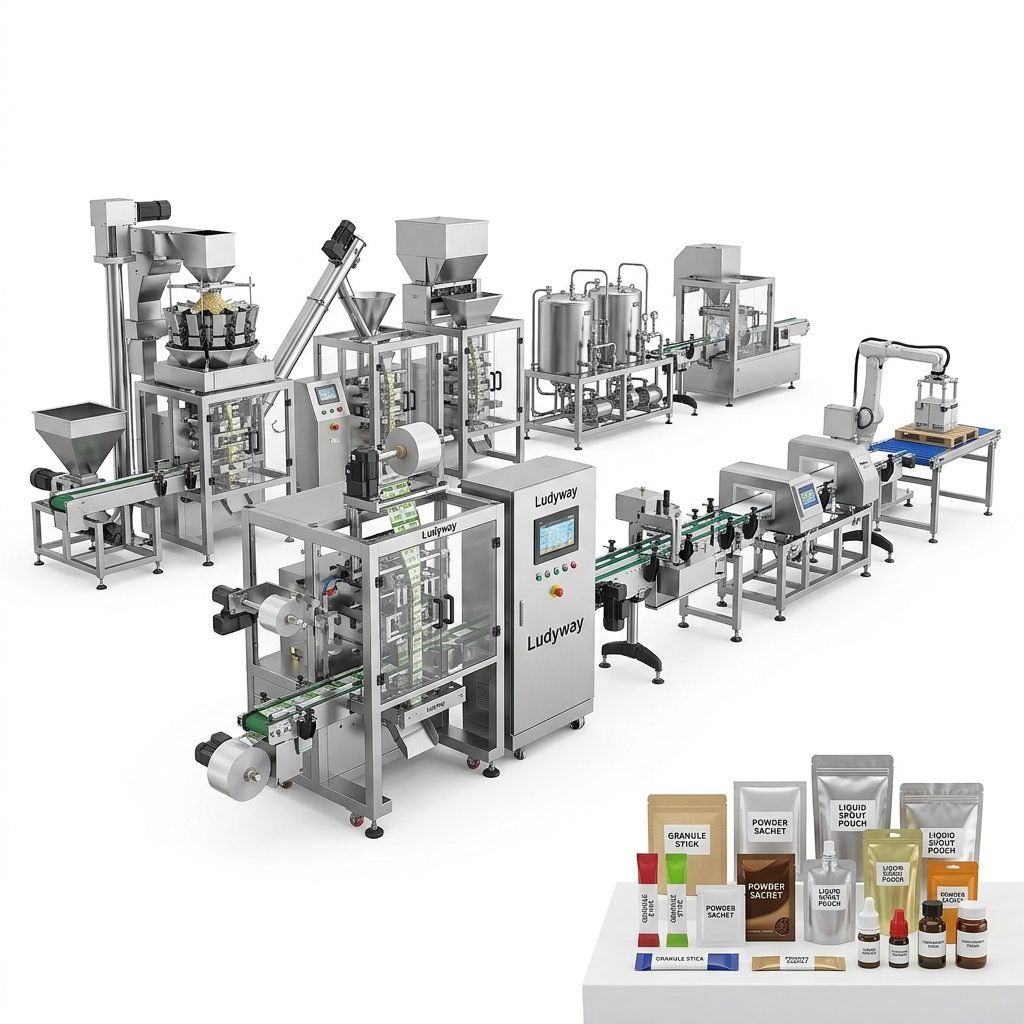
Setting up a sauce packaging machine production line in India is a significant step toward capturing the fast-growing food processing and condiment market. Whether you are packing ketchup, chili sauce, mayonnaise, or curry paste, the right production line ensures high speed, precise filling, and long-term reliability. This step-by-step guide covers everything from factory planning to full-scale production.
Before diving into machine selection, understanding India’s regulatory landscape is essential. Food-grade packaging must comply with Food Safety and Standards Authority of India (FSSAI) guidelines, and packaging materials often follow standards aligned with FDA food contact substance regulations. This ensures consumer safety and smooth market entry.
Step 1: Space and Infrastructure Planning
The foundation of any efficient sauce packaging line is a well-planned factory floor. You need to consider:
- Cleanroom requirements: Sauce filling areas require a minimum of ISO Class 8 cleanroom or equivalent controlled environment.
- Floor area: A standard multi-lane liquid sachet line typically requires 100 to 300 square meters for the machine, conveyors, and operator walkways.
- Utility connections: Stable three-phase power supply, compressed air (minimum 0.6 MPa), and purified water supply for CIP (Clean-in-Place) systems.
- Drainage and slope: The floor must have a minimum 2% slope toward drainage channels to handle liquid spillage during cleaning.
Step 2: Market Research and Packaging Format Selection
India’s sauce market demands diverse packaging formats. Your production line configuration depends entirely on your target retail channel:
| Packaging Format | Typical Volume Range | Target Market Segment | Machine Type Required |
|---|---|---|---|
| Stick Pack | 5g – 15g | Single-serve, food service, instant noodle condiments | Multi-lane stick pack machine |
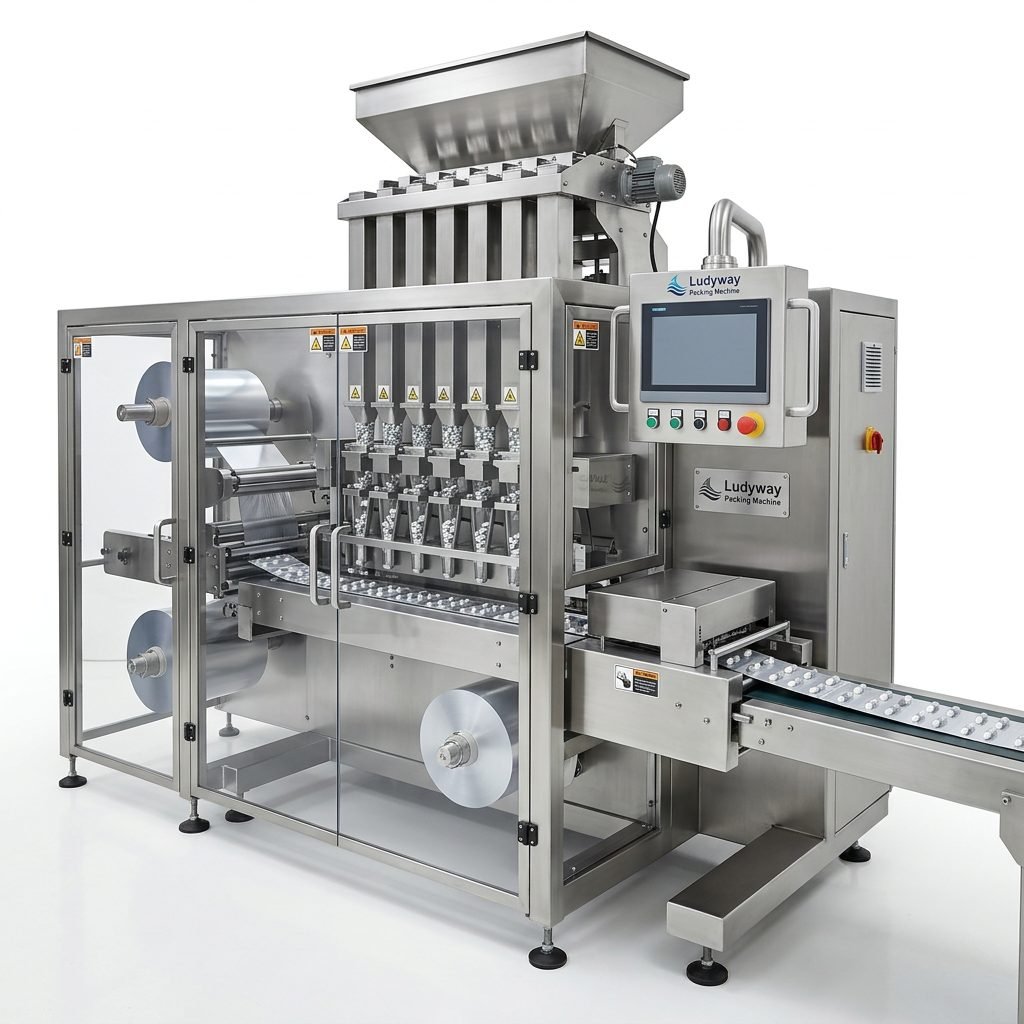
| Flat Sachet | 10g – 50g | Retail pouches, budget segments, hotel amenities | Multi-lane sachet packaging machine |
| Pillow Pouch | 50g – 500g | Supermarket retail, D2C brands | Vertical form fill seal (VFFS) machine |
| Stand-up Pouch | 200g – 1kg | Premium retail, organic sauce brands | Premade pouch rotary filling machine |
| Bottle Filling | 200ml – 1L | Glass/ PET bottles, premium table sauces | Liquid bottle filling and capping line |
Industry standards such as ISO packaging standards provide guidelines on material compatibility and seal integrity, which are critical for preserving sauce freshness and preventing leakage during transport.
Step 3: Sauce Characteristics and Machine Configuration
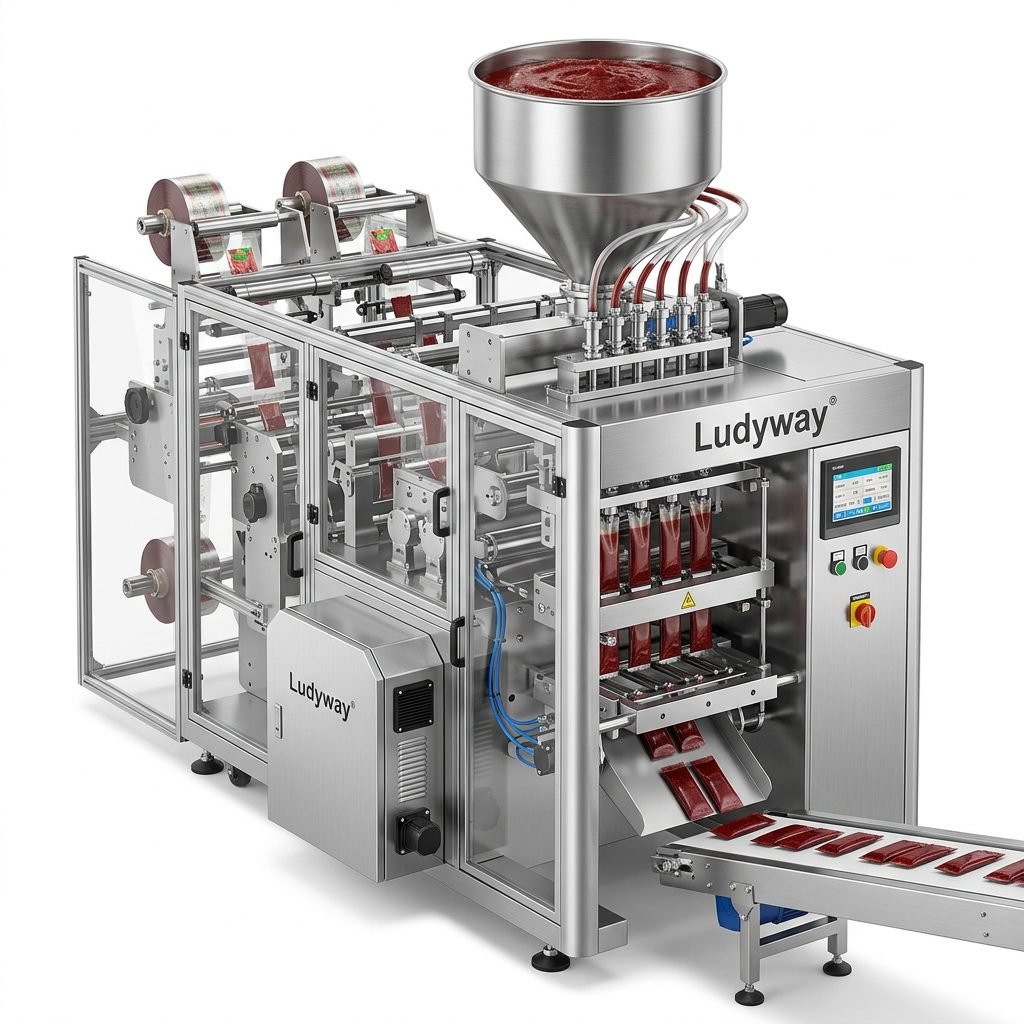
Sauce viscosity is the single most important factor in determining your filling system. Different sauces require specific dosing technologies:
| Sauce Type | Viscosity Range (cP) | Filling System | Nozzle Design |
|---|---|---|---|
| Thin sauces (soy, vinegar, fish sauce) | 1 – 100 cP | Piston filler with drip-control | Small-diameter anti-drip nozzle |
| Medium viscosity (ketchup, BBQ) | 1,000 – 10,000 cP | Piston or gear pump filler | Standard round nozzle |
| High viscosity (mayonnaise, thick paste) | 10,000 – 100,000 cP | Positive displacement pump | Wide-opening nozzle with cut-off |
| Chunky sauces (salsa, chutney) | Varies with particulates | Lobe pump or progressive cavity pump | Large-diameter nozzle, particulate-tolerant |
The Flexible Packaging Association emphasizes that film selection for sauce packaging must account for barrier properties against oxygen and moisture. Multi-layer laminates with aluminum foil or EVOH barrier layers are commonly recommended for extended shelf life.
Key Machine Modules for Sauce Lines
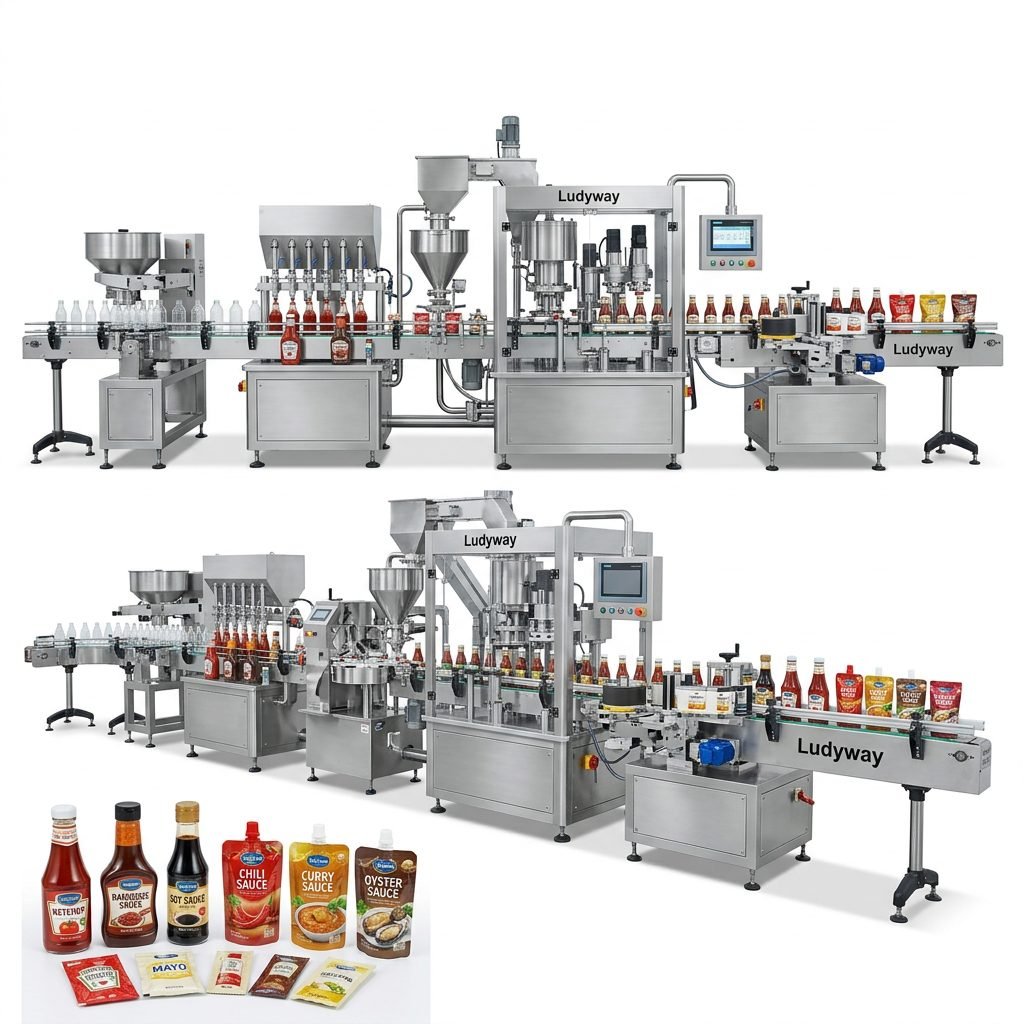
A complete sauce packaging production line typically consists of these integrated modules:
- Liquid mixing and holding tank: Stainless steel 304/316L with agitator, jacket for heating/cooling, and level sensors.
- Transfer pump system: Sanitary-grade centrifugal or positive displacement pumps connected via food-grade hoses.
- Inline filtration: Mesh or magnetic filters to remove particulates before filling (critical for ketchup and chunky sauces).
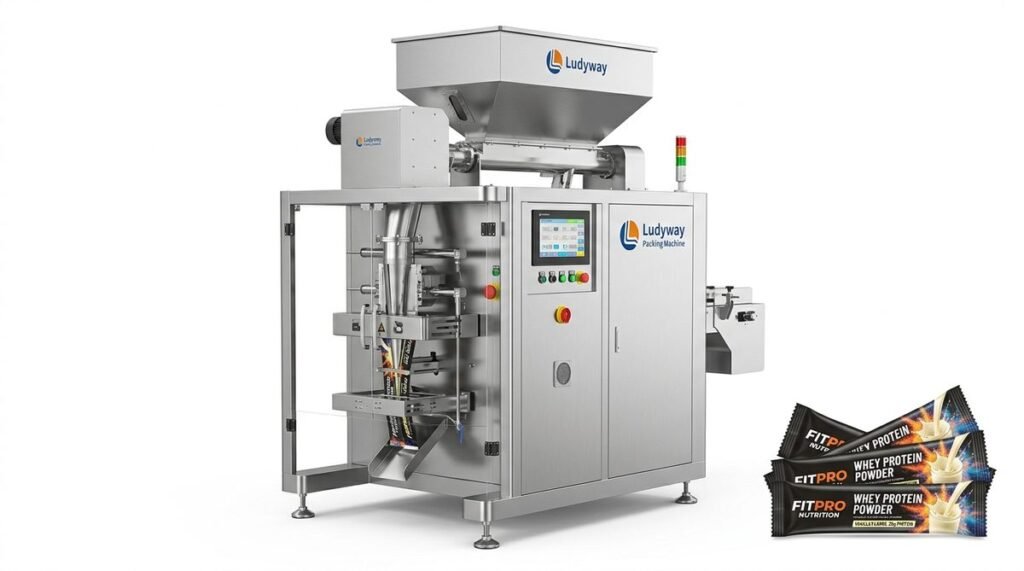
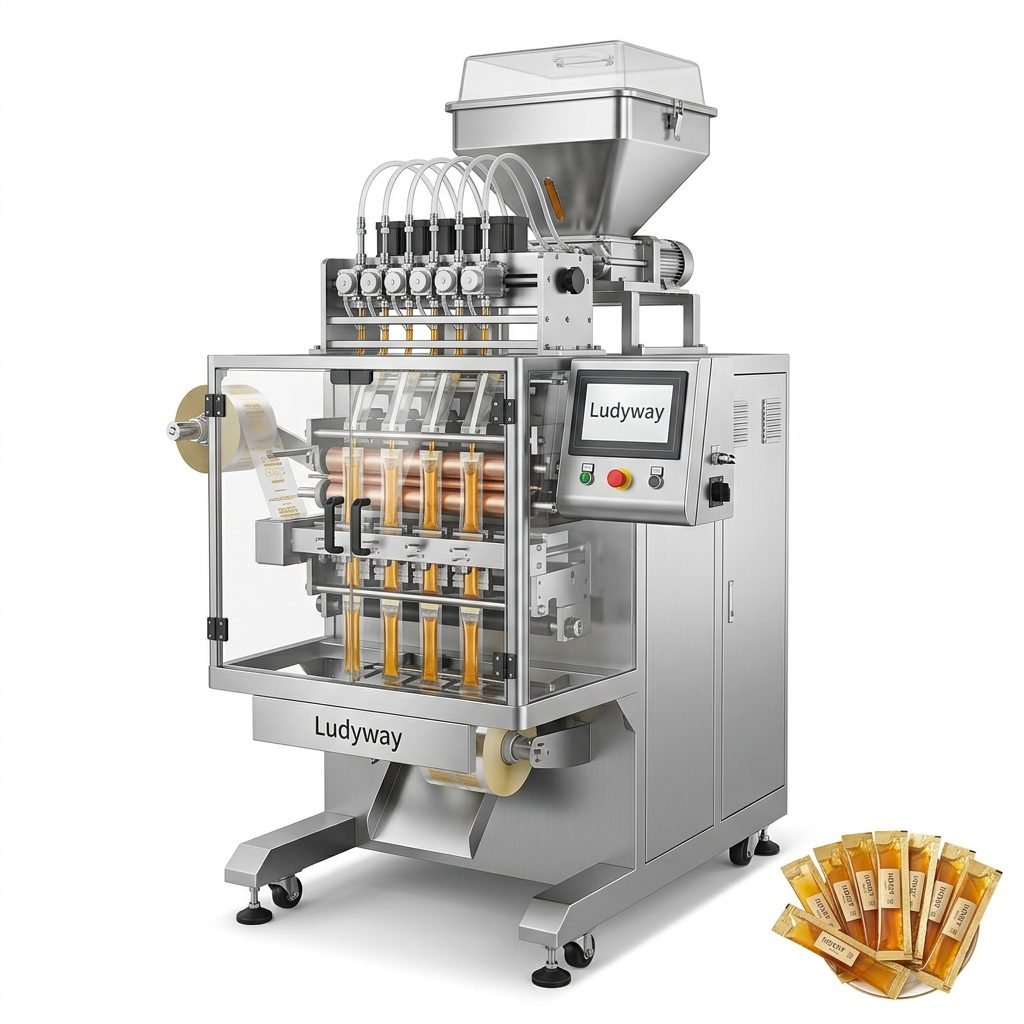
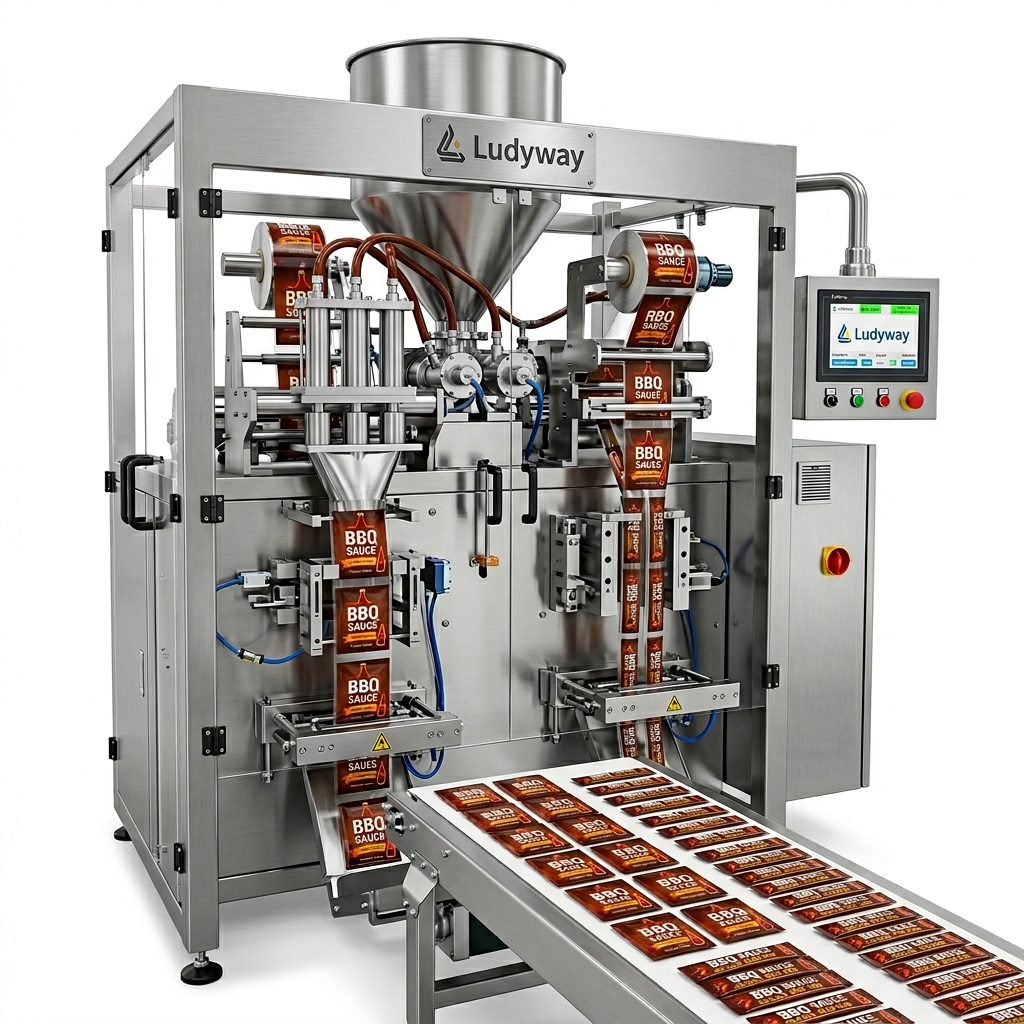
- Multi-lane filling and sealing machine: The core unit that forms pouches from roll stock, doses sauce, and heat-seals each pack.
- Date coding system: Thermal inkjet or laser coder printing batch number, manufacturing date, and MRP.
- Checkweigher and reject system: Inline weighing to detect under-filled or over-filled pouches.
- Conveying and collection system: Discharge belts, rotary collection tables, and pouch sorting units.
- Secondary packaging: Cartoner, case packer, or shrink-wrapping machine.
Step 4: Multi-Lane Machine Selection and Speed Calculation
Production capacity in the Indian sauce market varies widely, from small-scale MSME units to large contract manufacturers. Your machine lane configuration directly determines hourly output:
| Machine Lanes | Cycle Speed (pouches/min/lane) | Total Output (pouches/min) | Annual Output (8hr shift, 300 days) | Suitable Business Scale |
|---|---|---|---|---|
| 4 lanes | 40 – 50 | 160 – 200 | 23 – 29 million | Small MSME, niche brand |
| 6 lanes | 40 – 50 | 240 – 300 | 35 – 43 million | Mid-size manufacturer |
| 8 lanes | 40 – 50 | 320 – 400 | 46 – 58 million | Regional brand, co-packer |
| 10 lanes | 40 – 50 | 400 – 500 | 58 – 72 million | National brand, large co-packer |
| 12 lanes | 40 – 50 | 480 – 600 | 69 – 86 million | Major FMCG, export-oriented |
When evaluating machine speed, always allow a 15-20% overhead buffer above your current production requirement. This accommodates future growth and prevents running the machine at maximum design speed continuously, which accelerates wear on sealing jaws and filling nozzles.
Critical Features to Verify in Sauce Packaging Machines
Not all liquid packaging machines are suitable for sauce applications. You must confirm these specifications with the manufacturer:
- All stainless-steel product contact parts: Ensure 316L stainless steel for all surfaces that touch the sauce, especially for acidic condiments (pH < 4.5).
- Servo-driven sealing jaws: Precision temperature control (±1°C) for consistent seal integrity across all lanes.
- Horizontal sealing pressure adjustment: Individual pressure controls for each lane to handle seal width variations.
- CIP-compatible design: Quick-disconnect fittings, sloped surfaces, and minimal dead legs for thorough cleaning.
- Drip-free nozzle cut-off: Mechanical or pneumatic nozzle shut-off to prevent sauce dripping onto seal areas.
- Film registration system: Photoelectric sensor-based for precise pouch length and print registration.
The PMMI business intelligence resources indicate that servo-driven machines are now the industry standard for achieving consistent fill accuracy (typically ±1% of target weight) and reducing film waste.

Step 5: Auxiliary Equipment and Line Integration
A packaging machine alone does not constitute a production line. The following auxiliary equipment must be integrated for seamless operation:
| Equipment | Function | Key Selection Criteria |
|---|---|---|
| Inline liquid homogenizer | Ensures uniform sauce consistency before filling | Capacity, pressure rating, CIP compatibility |
| Pouch cooling conveyor | Cools heat-sealed pouches to ambient temperature | Length (minimum 3 meters), adjustable speed |
| Dynamic checkweigher | Weighs each pouch at line speed, rejects out-of-tolerance | Accuracy (±0.1g), IP65 rating for washdown |
| Metal detector | Detects ferrous, non-ferrous, and stainless steel contaminants | Sensitivity, aperture size, conveyor speed |
| Automatic cartoner | Collates pouches and packs into cartons | Carton size range, speed, format changeover time |
| Case packer | Loads cartons or pouches into shipping cases | Case size flexibility, pick-and-place technology |
| Palletizer | Stacks cases onto pallets for warehouse storage | Pallet pattern flexibility, robotic vs. conventional |
Standards such as ISO 11607 for packaging validation provide frameworks for ensuring that your entire line maintains sterile barrier properties when required for extended ambient shelf life.
Step 6: Material Handling and Packaging Film Selection
Selecting the right packaging film structure is crucial for sauce shelf life and pouch integrity. Common structures for Indian sauce sachets include:
- PET/Alu/PE: For high-barrier applications, oxygen-sensitive sauces. Shelf life 12-18 months.
- PET/PE: Transparent packs where consumers need to see the product. Suitable for refrigerated sauces. Shelf life 6-9 months.
- BOPP/CPP: For low-cost single-serve pouches. Suitable for ambient shelf-stable sauces with moderate barrier requirements. Shelf life 6-12 months.
- PET/Alu/NY/PE: For retort pouches requiring thermal processing. For cooking sauces and ready-to-eat gravies. Shelf life 18-24 months.
The European Commission packaging waste regulations are increasingly influencing Indian export standards, pushing toward recyclable mono-material structures. Smart manufacturers are now evaluating recycle-ready PE/PE laminates as future-proof alternatives to multi-material laminates.
Step 7: Installation, Commissioning, and Training
Proper installation is as critical as machine quality. The sequence typically follows:
- Pre-installation preparation: Ensure the factory floor is level (tolerance ±3mm across machine footprint), utilities are connected, and operators have received pre-training documentation.
- Mechanical installation: Position the machine, level it, and anchor it. Connect all conveyors, product infeed, and discharge systems.
- Electrical and pneumatic connection: Wire power, control panels, and safety interlocks. Connect compressed air and verify pressure stability.
- Dry run testing: Run the machine without product to verify mechanical movements, sealing jaw timing, and sensor calibration.
- Product trial: Run actual sauce through the line, adjust fill volumes, check seal strength, and fine-tune temperature profiles.
- Operator training: Hands-on training for machine operators (minimum 3-5 days), covering normal operation, cleaning procedures, changeover, and basic troubleshooting.
- Maintenance training: Technicians learn preventive maintenance schedules, part replacement intervals, and diagnostic procedures.
Step 8: Quality Control and Testing Protocols
Establish routine quality checks at defined intervals during production:
| Test Parameter | Frequency | Acceptance Criteria | Test Method |
|---|---|---|---|
| Fill weight | Every 15 minutes | ±3% of target weight (individual pouch), ±1.5% (average of 10) | Analytical balance |
| Seal strength | Every 30 minutes | Minimum 15N/15mm width | Tensile tester per ASTM F88 |
| Seal integrity (leak test) | Every hour | No bubbles in water bath under vacuum | Vacuum leak test (ASTM D3078) |
| Burst strength | Start of shift | No burst below 200N | Burst tester per ASTM F1140 |
| Visual inspection | Continuous | No misaligned print, no ink smudging, no seal wrinkles | Manual or automated vision system |
| Print quality (date/batch code) | Every roll change | Legible, permanent, correct information | Visual plus rub test |
Step 9: Maintenance and Spare Parts Strategy
Maintaining a sauce packaging line in India requires planning for both preventive and corrective maintenance. Critical spare parts to keep in stock include:
- Sealing jaws and heating elements: These wear items should be replaced every 6-12 months depending on usage. Keep at least one complete set.
- Filling nozzle seals and O-rings: Replace annually or when fill accuracy deteriorates.
- Film feed rollers and belts: Keep 2-3 sets of each type.
- Sensor modules (photoelectric, temperature): At least one spare of each critical sensor.
- Servo drive and motor: High-value spares; one of each type recommended for critical production lines.
- Pneumatic cylinders and solenoid valves: Common failure points; keep full set of seals and 2-3 complete valves.
Step 10: Regulatory Compliance for Indian Market
Packaged sauces sold in India must comply with:
- FSSAI Food Safety and Standards (Packaging and Labelling) Regulations: Requires listing all ingredients, nutritional information, FSSAI license number, and manufacturer address on each pouch.
- Legal Metrology (Packaged Commodities) Rules: Mandates declaring net quantity, MRP, manufacturing date, and best-before date. Packaging machines must be calibrated to ensure accurate fill quantities.
- Food Safety and Standards (Contaminants, Toxins and Residues) Regulations: Packaging materials must not transfer contaminants to food. Only food-grade inks and adhesives are permitted for pouch printing.
- BIS standards for plastic films: Where applicable, films should conform to relevant Indian Standards (IS) for food contact materials.
The PMMI State of the Industry reports regularly highlight that regulatory compliance costs in the packaging sector are rising, making it essential to select machinery from manufacturers who understand both local and international standards.
How to Choose the Right Sauce Packaging Machine Supplier
When evaluating suppliers for your Indian production line, prioritize these criteria:
- Proven experience: The manufacturer should have a track record of installing liquid packaging lines for sauce products, not just general powder or granule machines.
- Turnkey capability: The supplier should be able to integrate mixing tanks, conveyors, coders, checkweighers, and secondary packaging—not just sell the filling machine alone.
- Local support in India: Verify that the supplier has local service engineers, spare parts availability, and access to technical support during Indian business hours.
- Factory acceptance testing (FAT): Always request a documented FAT with your actual sauce product before shipment, either in person or via live video.
- Warranty and post-warranty support: Standard warranty of 12-18 months with clear service level agreements (SLA) for response time.
- Compliance documentation: The supplier must provide material certificates (316L stainless steel), FDA-compliant seal materials (PTFE, silicone), and CE/ ISO certifications.
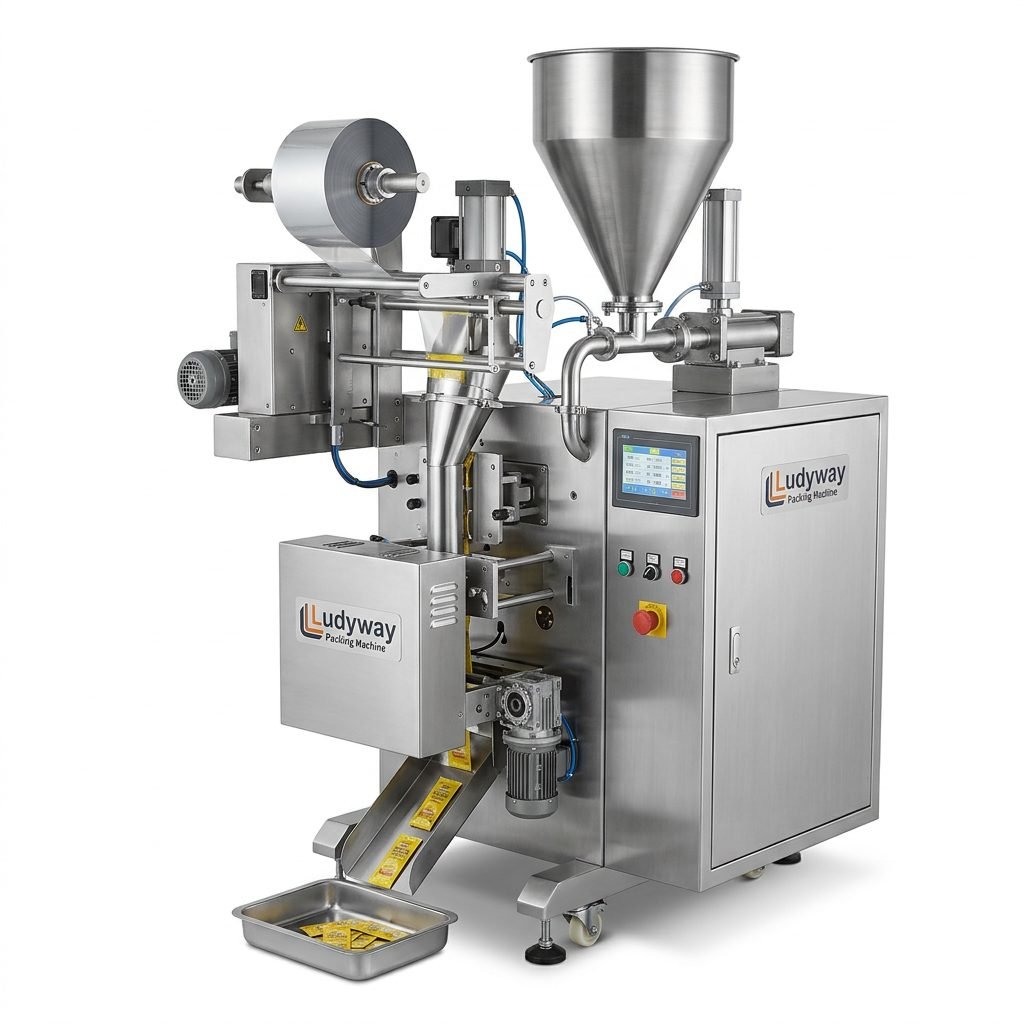
Ludyway, one of the largest packaging machine manufacturers in China, provides integrated sauce packaging solutions with multi-lane filling systems, CIP-compatible stainless-steel construction, and turnkey line integration. With over 30 years of industry expertise and a 20,000㎡ manufacturing facility, they support customers in more than 100 countries, offering advanced liquid packaging technology suitable for the Indian market.
For further reading on packaging machinery trends, consult PMMI – The Association for Packaging and Processing Technologies, which provides extensive resources on packaging technology advancements and market data.
Setting up a sauce packaging machine production line in India is a multi-step process requiring thorough planning, the right machine specifications, and reliable after-sales support. By following this guide and referencing established packaging standards from organizations like the Flexible Packaging Association, you can build a line that delivers consistent quality, high throughput, and long-term profitability.