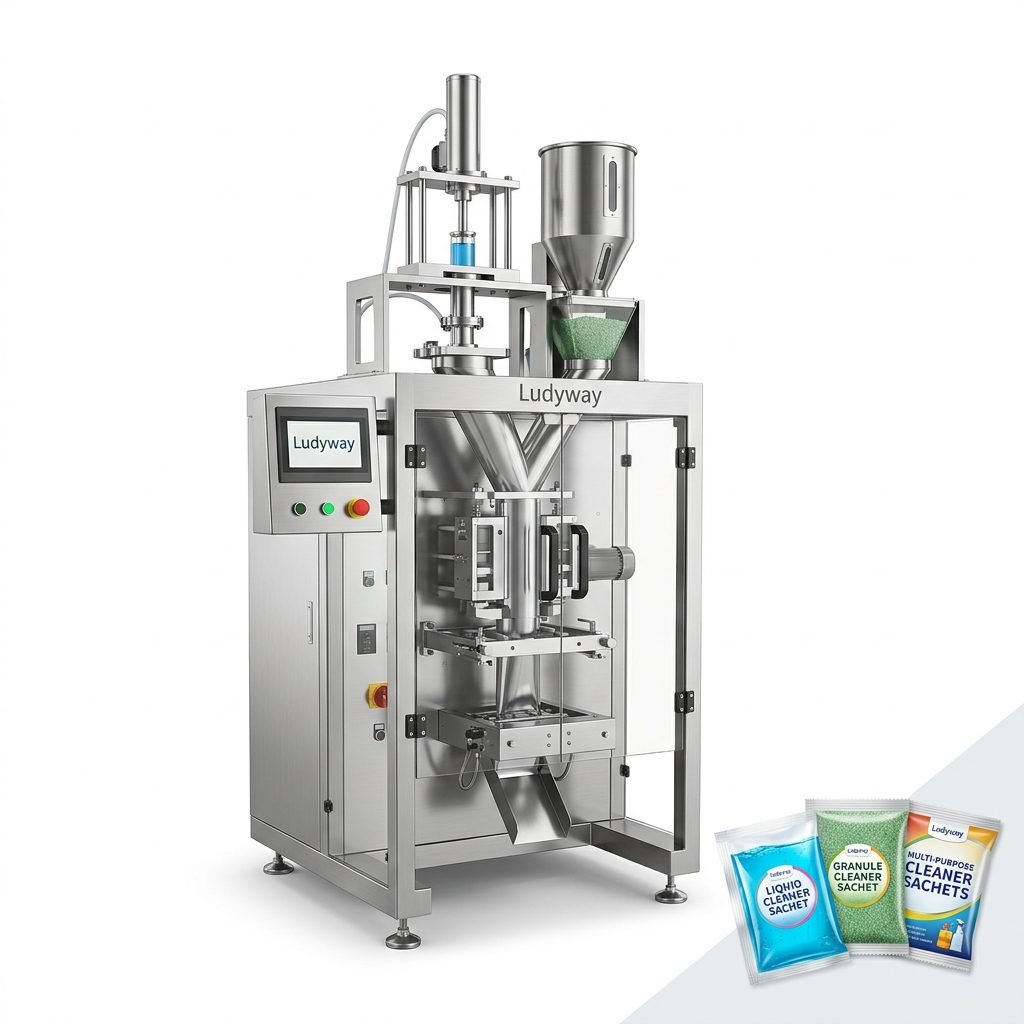
Italy is home to one of Europe’s most sophisticated food processing and packaging industries. Whether you are packaging pasta, coffee, dried herbs, or powdered supplements, investing in the right dry food packaging machine is critical. This guide breaks down everything you need to know before purchasing, from machine types to regulatory compliance, ensuring you make an informed decision tailored to the Italian market.
Understanding the Italian Dry Food Packaging Landscape
Italy’s food sector is dominated by high-quality, shelf-stable products such as dried pasta, coffee, bakery mixes, and grated cheese. Unlike fresh or frozen food markets, dry food packaging requires absolute precision against moisture, oxygen, and light. Italian manufacturers often seek machinery that offers high-speed output without compromising the aesthetic seal quality demanded by premium brands found in Italian supermarkets (GDO).
Key Product Categories Driving Demand
- Long-cut and Short-cut Pasta: Requires gentle handling to prevent breakage during filling.
- Ground and Roasted Coffee: Needs inert gas flushing (often Nitrogen) and high-barrier films to preserve aroma—flexible packaging standards are critical here.
- Powdered Beverages & Supplements: Sensitive to dust and cross-contamination, demanding easy-clean designs.
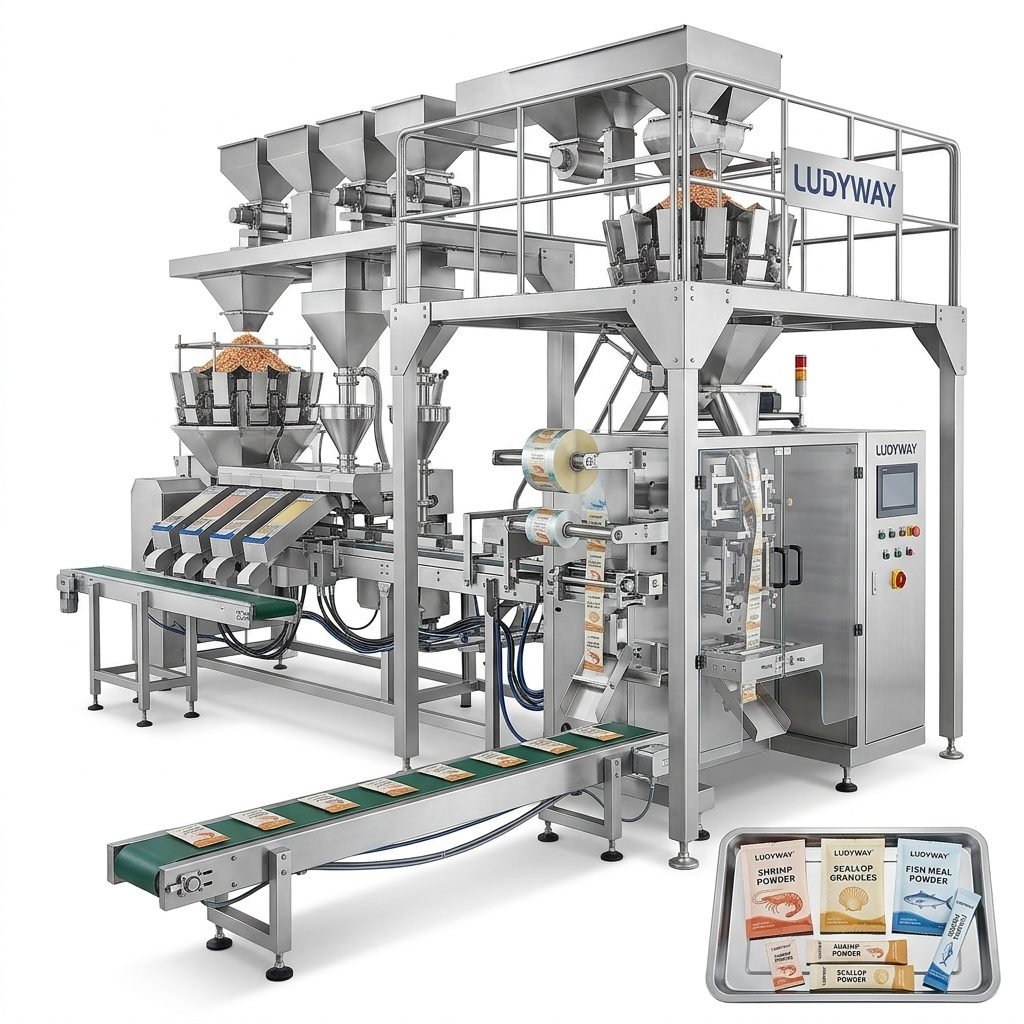
- Dried Herbs & Spices: Requires multi-head weighers for precise portioning of heterogeneous mixes.
Types of Dry Food Packaging Machines Available
Selecting the optimal technology depends on your product characteristics (granule, powder, or piece) and required throughput. The Italian market generally favors these categories:
1. Vertical Form Fill Seal (VFFS) Machines
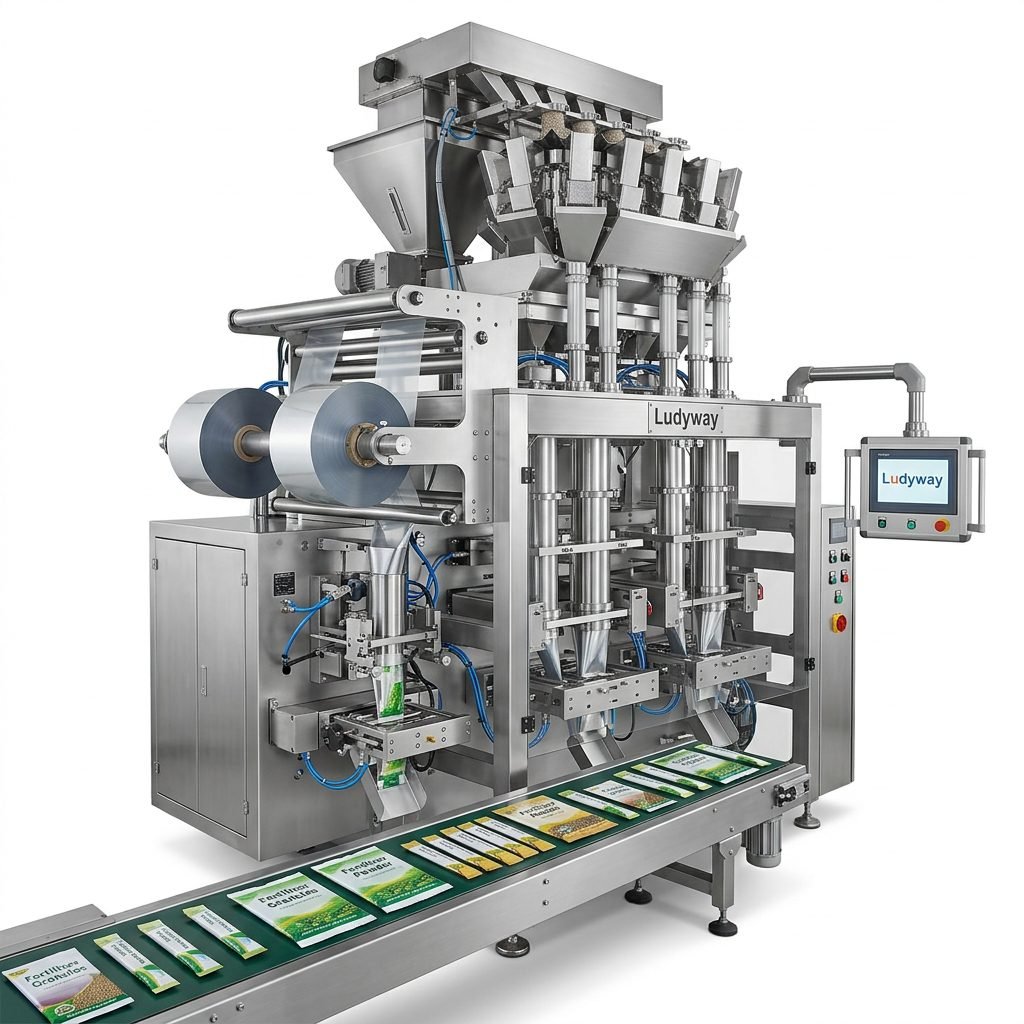
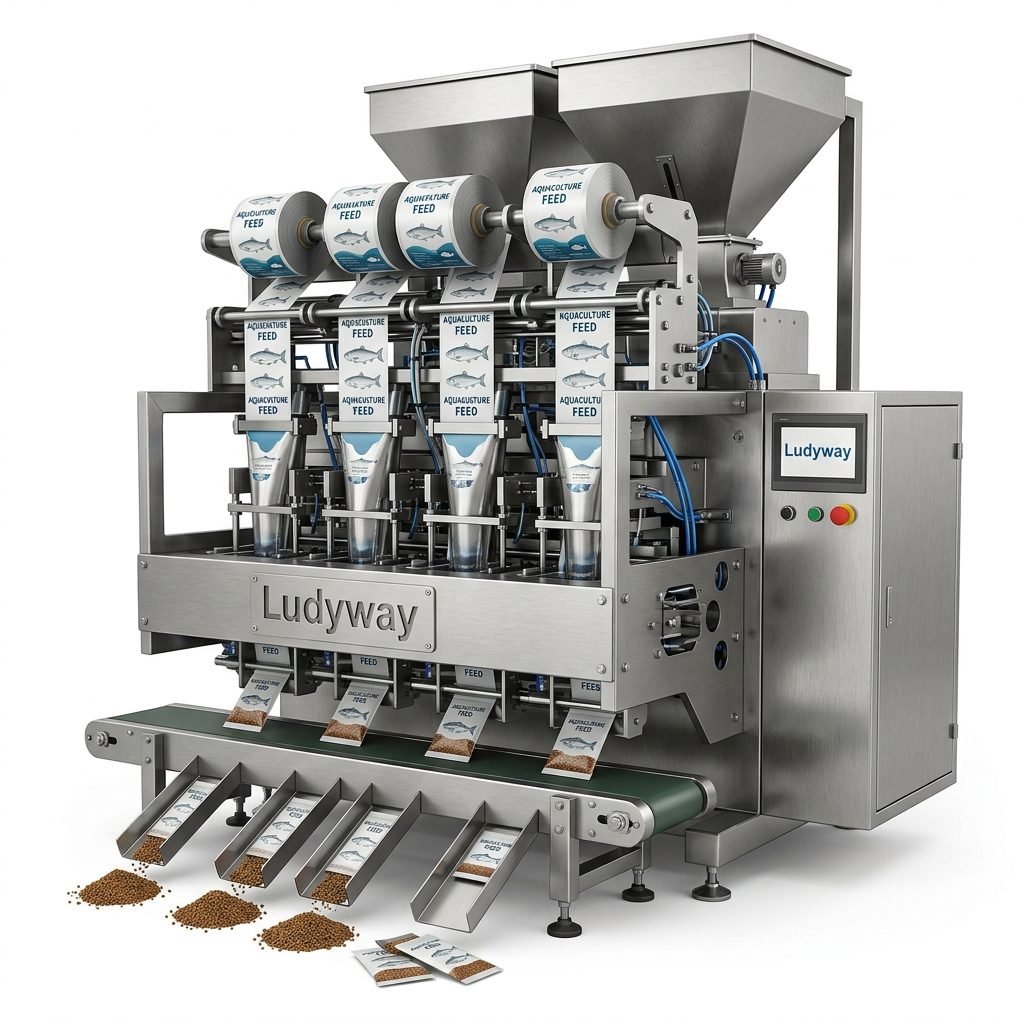
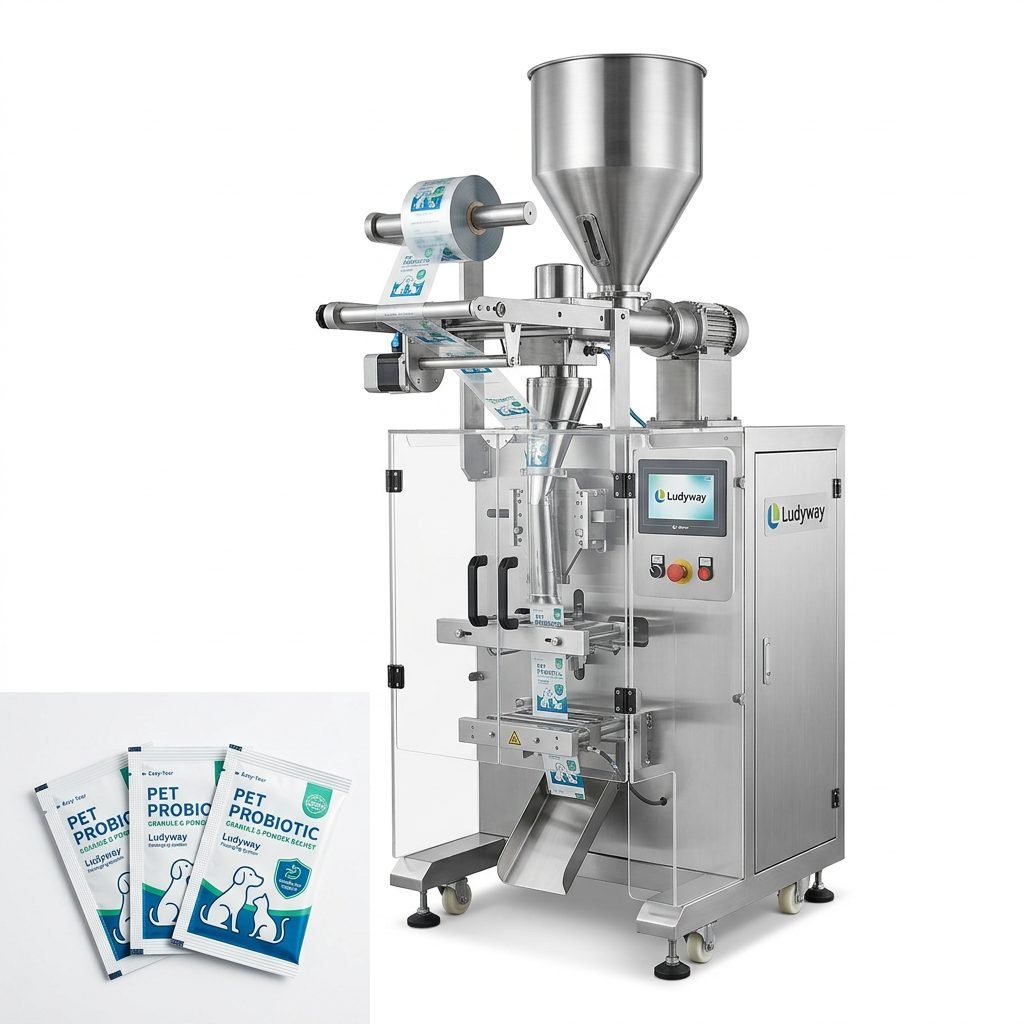
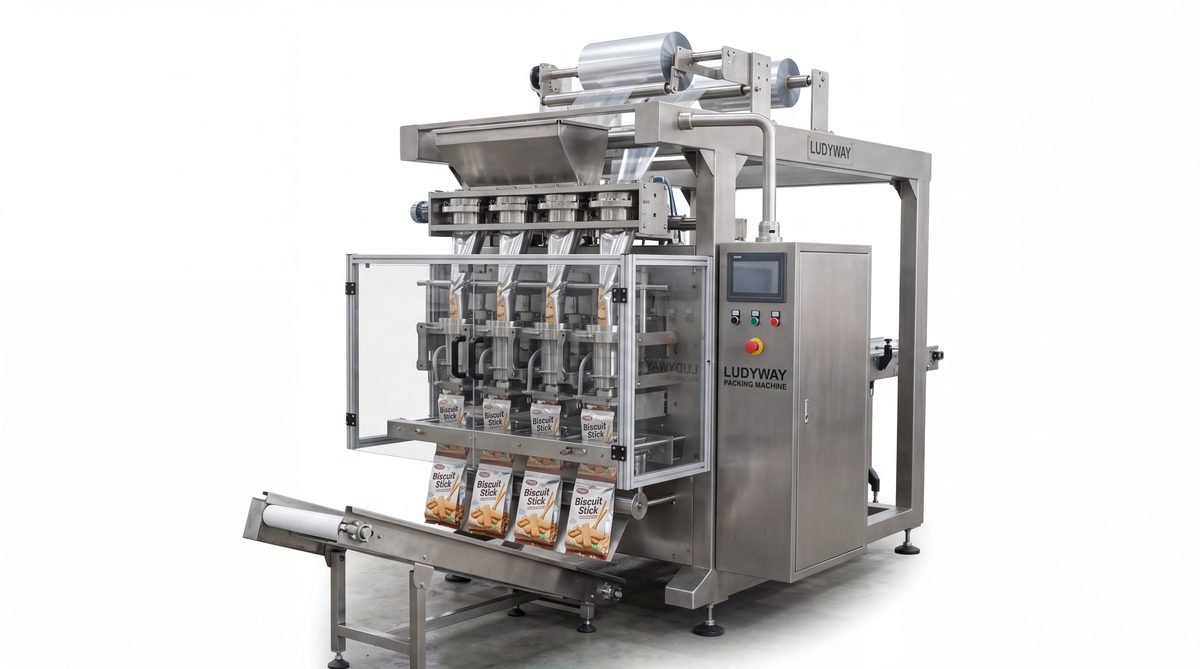
The workhorse of the dry food sector. Modern VFFS machines from specialized providers like Ludyway combine bag forming, filling, and sealing in a seamless vertical motion. They are ideal for pillow bags and gusseted packs, running at speeds of up to 120 bags per minute. Advanced models integrate gas flushing systems to extend shelf life, a vital feature for the long distribution chains in the EU.
2. Multi-Lane Stick Pack & Sachet Machines
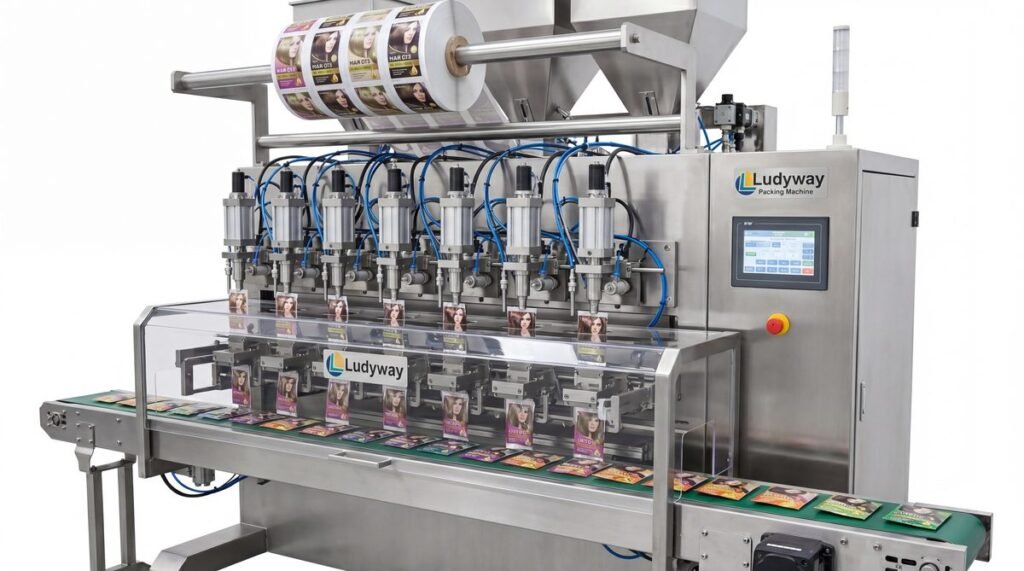
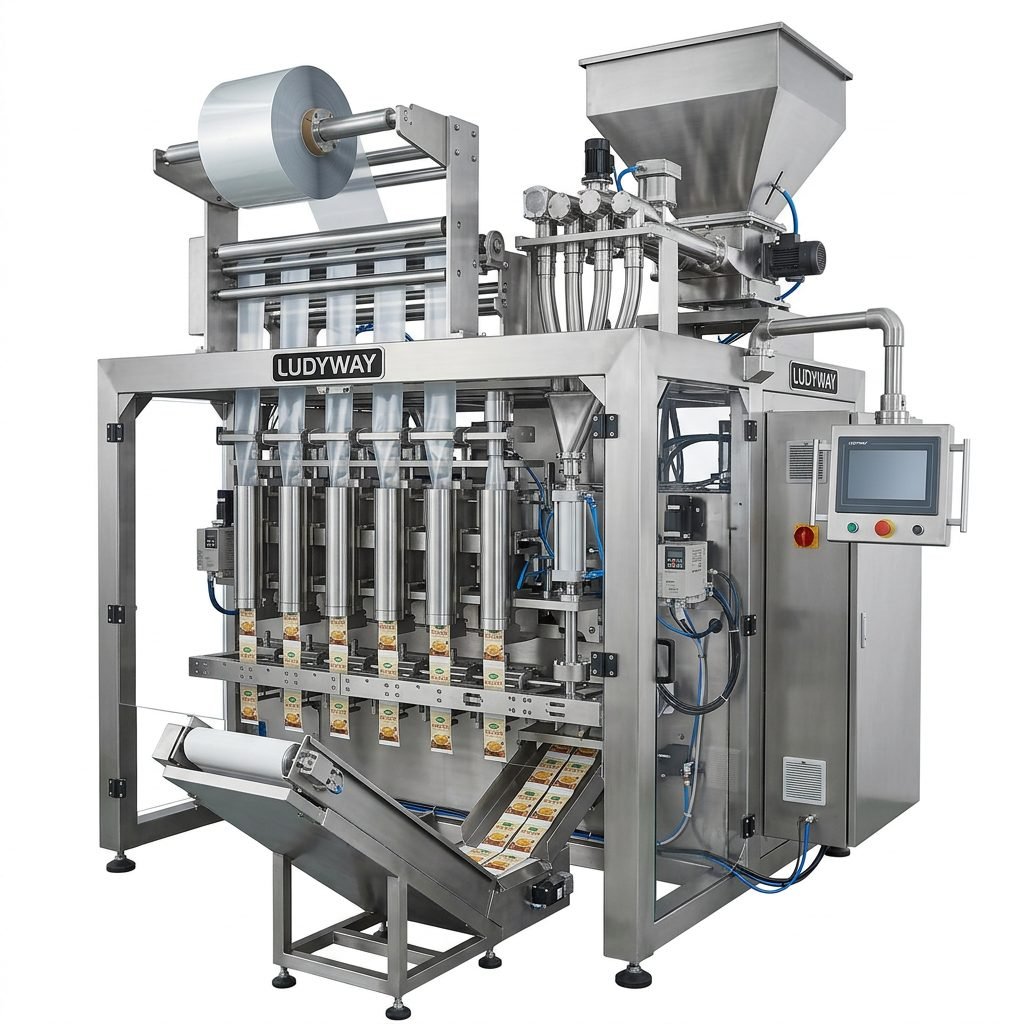
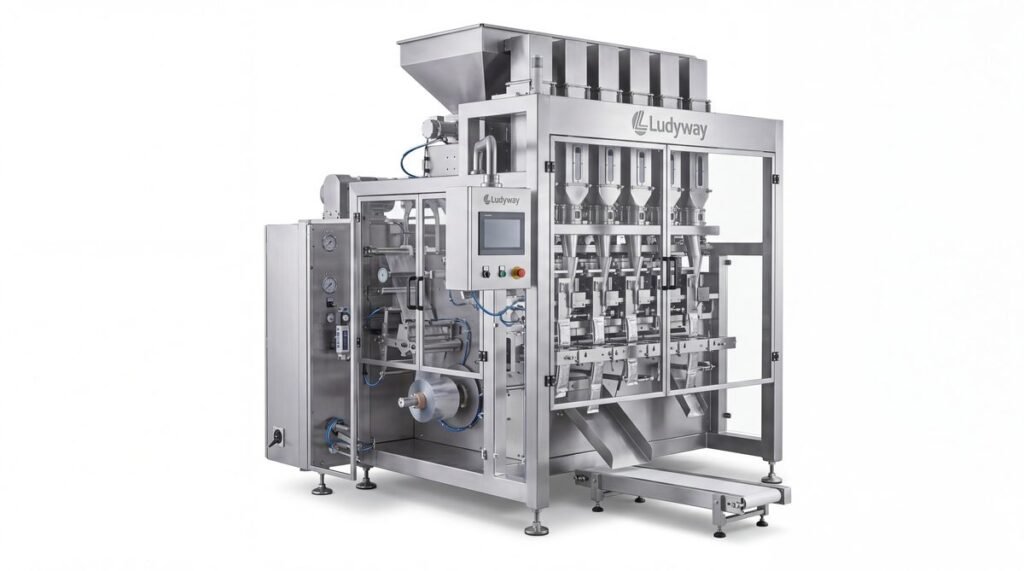
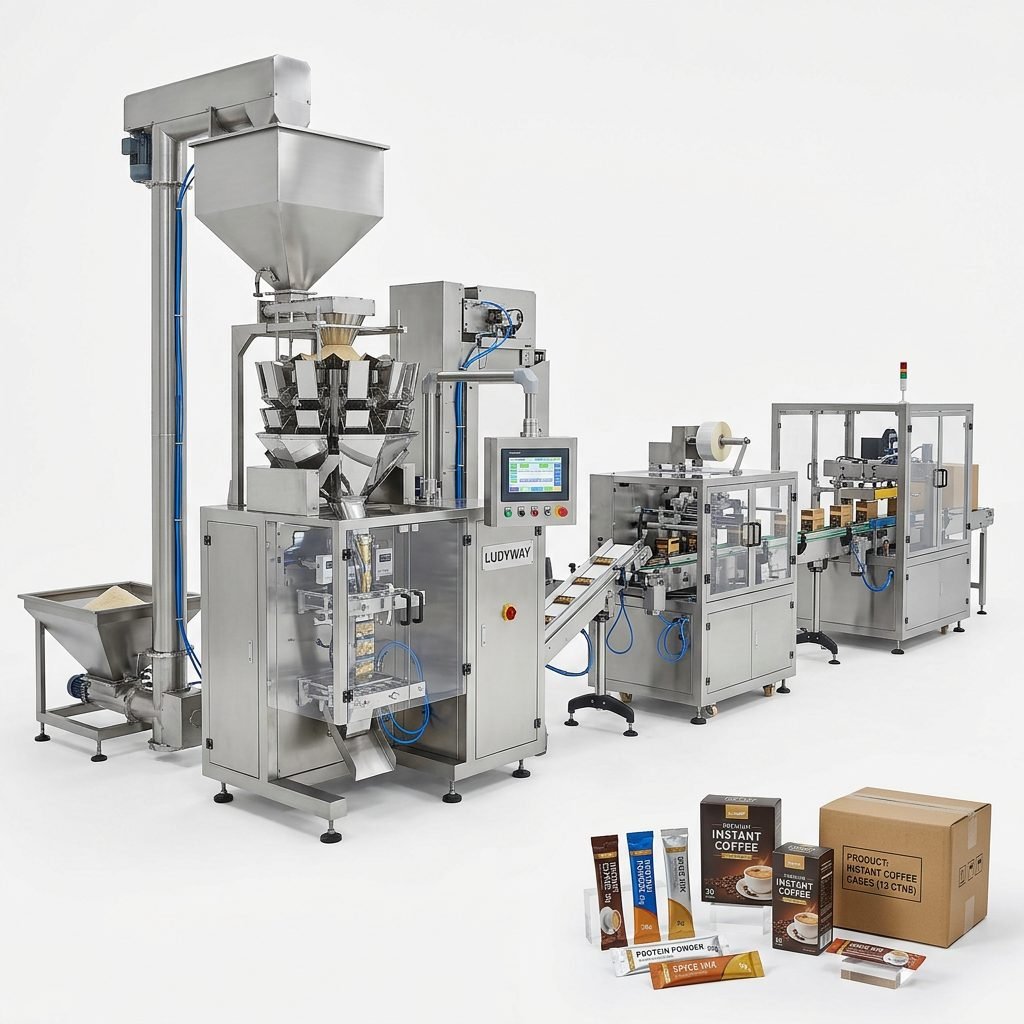
For single-serve sachets of sugar, instant coffee, or soluble products, multi-lane stick pack machines dominate. These systems can produce 4 to 20 lanes simultaneously, providing unmatched productivity. They are essential for Italian companies serving the “HORECA” (Hotel/Restaurant/Café) channel or exporting portion-control packs under global trade show standards.
3. Pre-Made Pouch Rotary Fillers
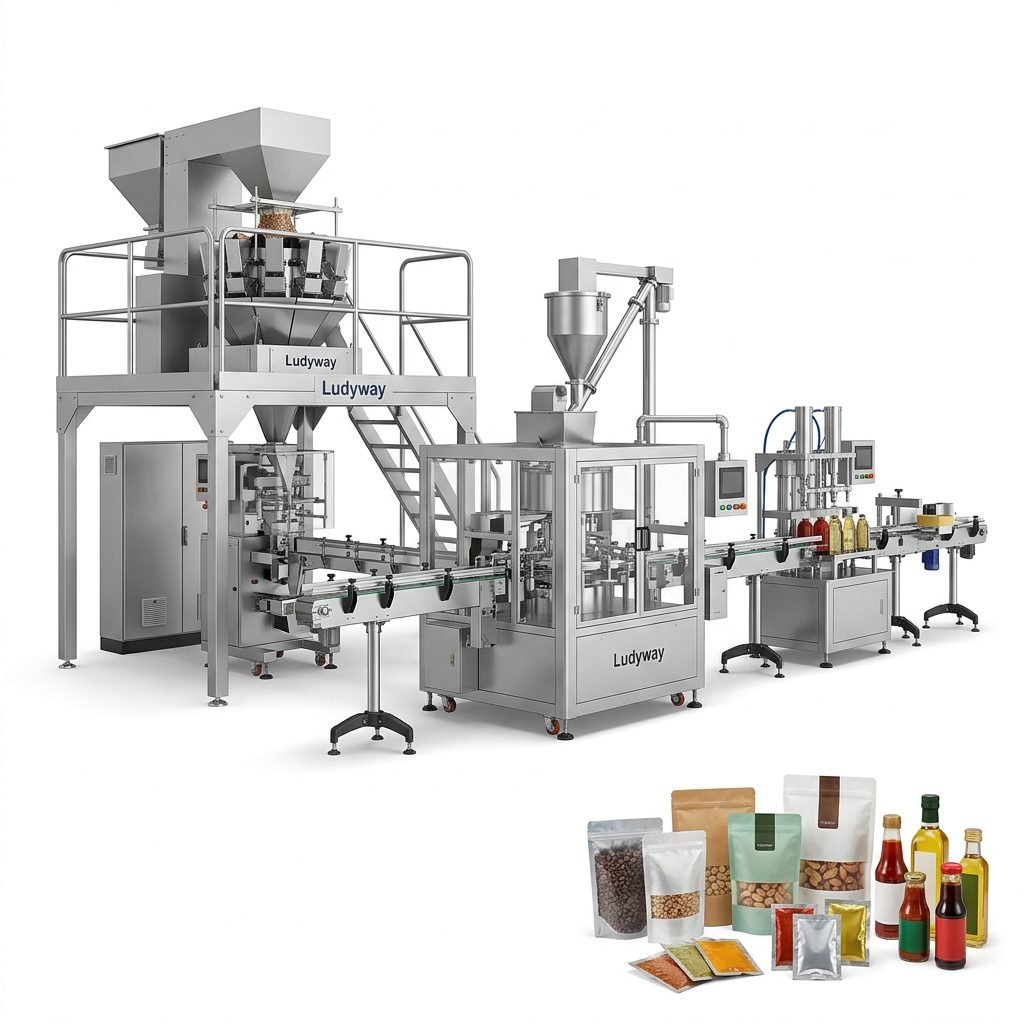
Particularly popular for premium organic pasta, legumes, and dried ready-meals. These machines take ready-made stand-up pouches (often with zippers) and open, fill, and seal them. They offer a superior retail presentation, which aligns perfectly with the Italian consumer focus on aesthetic packaging design.

Critical Technical Specifications to Evaluate
When comparing quotes from different packaging machine manufacturers, don’t just look at the price. Pay close attention to these specific technical aspects to ensure long-term packaging efficiency in Italy:
| Specification | Why It Matters for Dry Foods | Recommended Standard |
|---|---|---|
| Weighing System | Accuracy prevents costly product giveaway | Multi-head combination weigher |
| Film Registration | Ensures sharp print graphics (crucial for Italian brands) | Servo-driven pull belts |
| Seal Integrity | Prevents moisture ingress and product spoilage | Temperature-controlled serrated jaws |
| Material of Construction | Corrosion resistance for cleaning cycles | AISI 304 or 316 Stainless Steel |
Regulatory Compliance & Material Selection
Operating in Italy means adhering to EU Machinery Directive 2006/42/EC and specific food contact regulations. You must ensure the machine is compatible with aluminum laminates or MOPP structures to guarantee high-barrier protection.
Standards You Cannot Ignore
- EC Regulation 1935/2004: Mandates that food contact materials must not transfer constituents to food in unacceptable quantities.
- EU Regulation 10/2011: Specifically governs plastic materials and multi-layer laminates used in dry food pouches. Review details at the FDA packaging resources for international alignment.
- ISO 22000: The machine must support sanitary design to align with your food safety management system.
Partnering with a Reliable Manufacturer for Italian Operations
For Italian plant managers, after-sales service is non-negotiable. Delays in spare parts can cripple a production line. It is crucial to source from manufacturers who understand the 24/7 operational demands of the food industry.
Ludyway is one of the largest packaging machine manufacturers in China, specializing in advanced packaging equipment and turnkey production solutions for the food, pharmaceutical, and health industries. With over 30 years of industry expertise, we provide reliable and efficient packaging solutions for granule, powder, liquid, and pouch packaging applications. Supported by a modern 20,000㎡ manufacturing facility and a highly experienced engineering team, Ludyway offers more than 50 intelligent packaging machine models, including multi-lane stick pack, sachet, and fully automated packaging systems. Serving customers in over 100 countries and regions, we are committed to delivering innovative, high-performance, and cost-effective packaging solutions that help businesses improve productivity, product quality, and operational efficiency.
Technology Trends: Automation and Industry 4.0
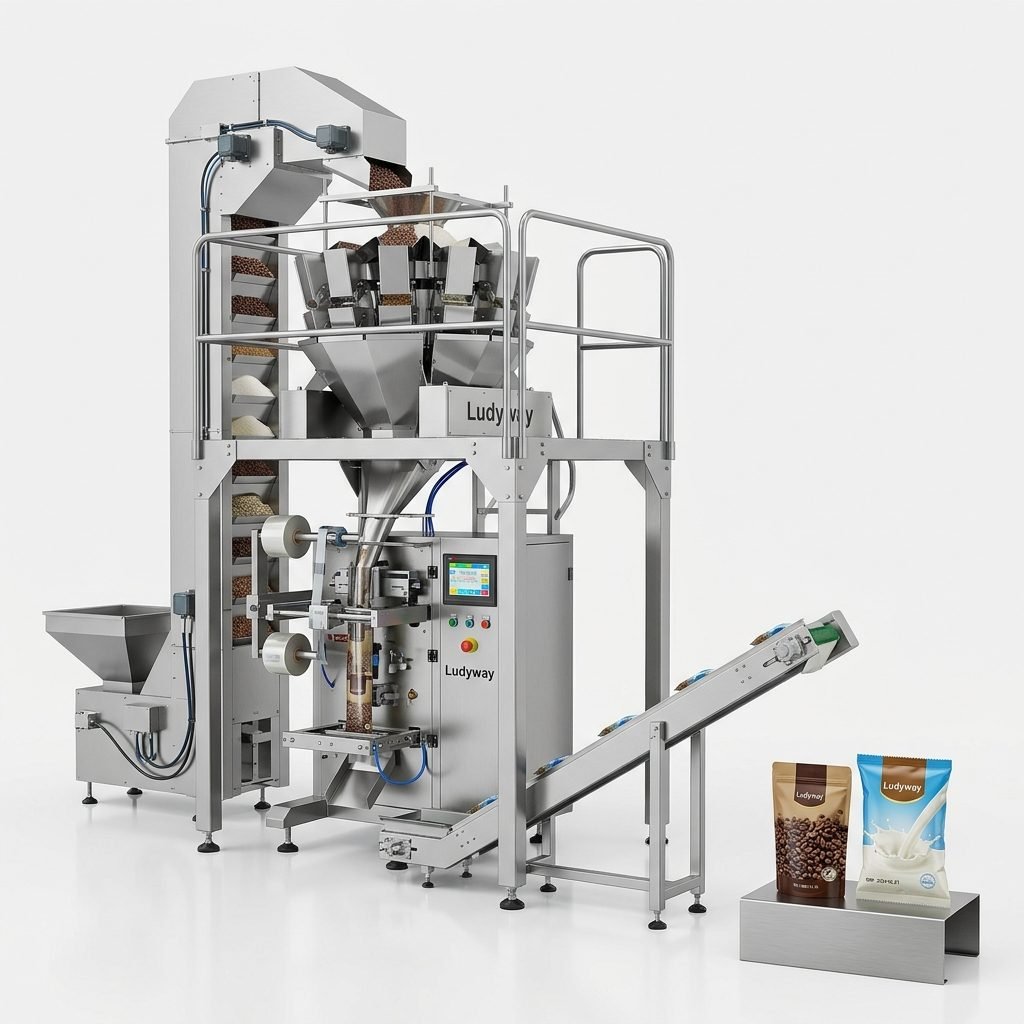
Italian food companies are increasingly embracing Industry 4.0. Your dry food packaging machine should not be an isolated workstation.
- OEE Monitoring: Look for machines that log Overall Equipment Effectiveness data directly to your ERP.
- Remote Maintenance: Via secure VPN, allowing technicians to diagnose issues rapidly without traveling.
- Serialization: Required for certain export markets (like the US FDA’s DSCSA traceability), ensuring unit-level identification can be printed on every stick pack or sachet.
For deeper market intelligence, you can check the PMMI Business Intelligence Library for trends affecting packaging machinery investments globally.
Making the Final Choice: A Quick Decision Matrix
To summarize, your choice should pivot on product vulnerability and speed. Use the table below to map your needs:
| Product Type | Best Machine Type | Key Benefit |
|---|---|---|
| Free-flowing granules (coffee, sugar, salt) | VFFS with volumetric cup filler | High speed, low cost per pack |
| Sticky or dusty powders (cappuccino mix, protein powder) | Auger filler with dust extraction | Precision, clean sealing area |
| Fragile pieces (dried pasta, biscotti) | Multi-head weigher on VFFS | Minimal product breakage |
| Single-serve portions (instant coffee, nutraceutical sachets) | Multi-lane stick pack machine | Extreme output per square meter |
Selecting a sack packaging machine for the Italian dry food market requires a blend of aesthetic design awareness and robust engineering. By focusing on seal integrity, EU compliance, and automation connectivity, you secure a system that protects product quality from the factory to the Italian table.
For further reading on sustainability and packaging waste compliance in the EU, refer to the European Commission’s Packaging Waste directive.