South America’s spice industry is experiencing rapid growth, driven by increasing domestic consumption and robust export demand. Setting up a spice packaging machine production line in this region requires careful planning around local regulations, climate conditions, and market-specific packaging formats. Whether you are packing turmeric, cumin, black pepper, or oregano, the right packaging machinery configuration will directly impact your product shelf life, output efficiency, and compliance with Mercosur standards.
This guide covers every stage of building a spice packaging production line in South America, from equipment selection and factory layout to regulatory approvals and after-sales support.
Understanding the South American Spice Packaging Market
Before investing in machinery, you need to analyze regional market dynamics. Brazil, Argentina, Chile, Colombia, and Peru are the largest markets, each with distinct consumer preferences and packaging regulations. The demand for convenient sachet and stick pack formats is surging across the continent, especially for single-use spice portions in food service and retail channels.
- Brazil: Dominates the regional spice market, requiring ANVISA compliance for food contact materials.
- Argentina: Prefers stand-up pouches with resealable zippers for household spices.
- Chile & Peru: Growing demand for organic and gourmet spice packaging.
- Colombia: Expanding food processing sector driving bulk packaging needs.
Key Equipment for a Spice Packaging Production Line
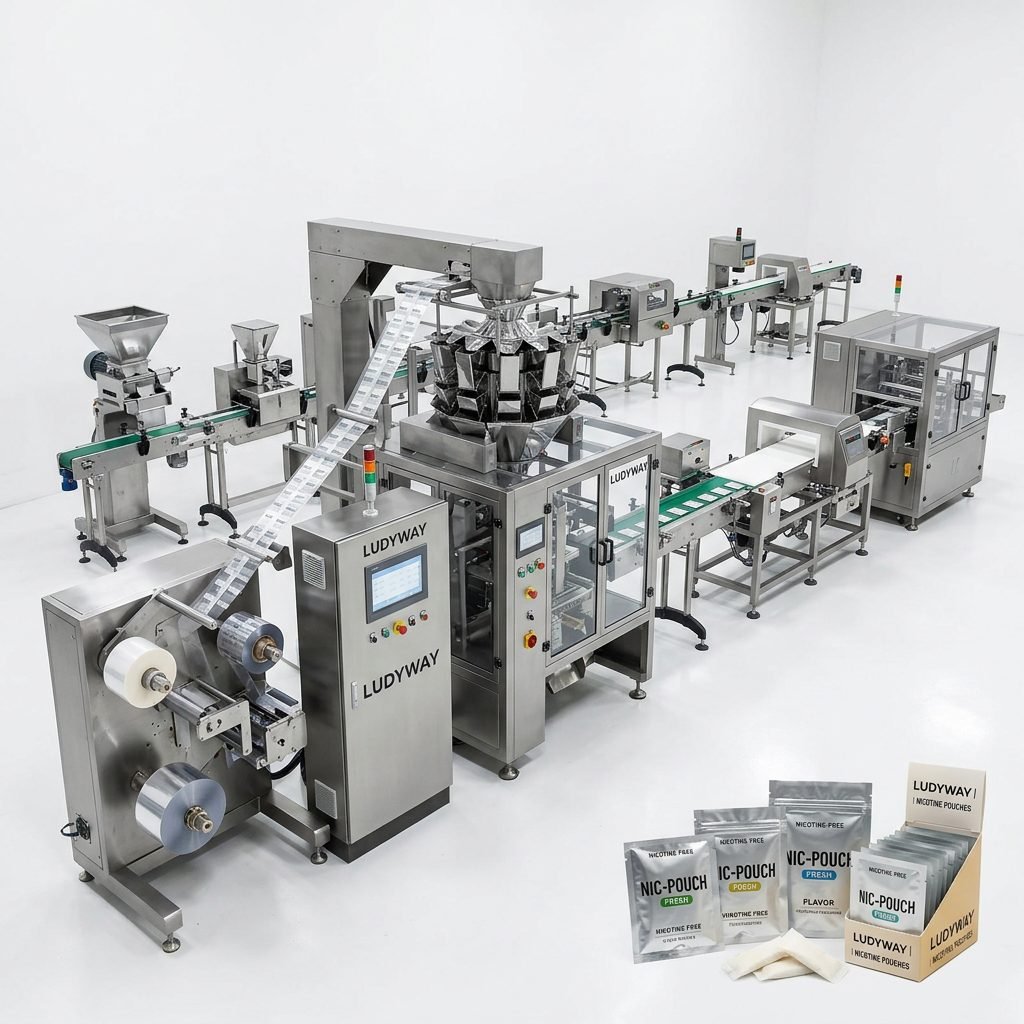
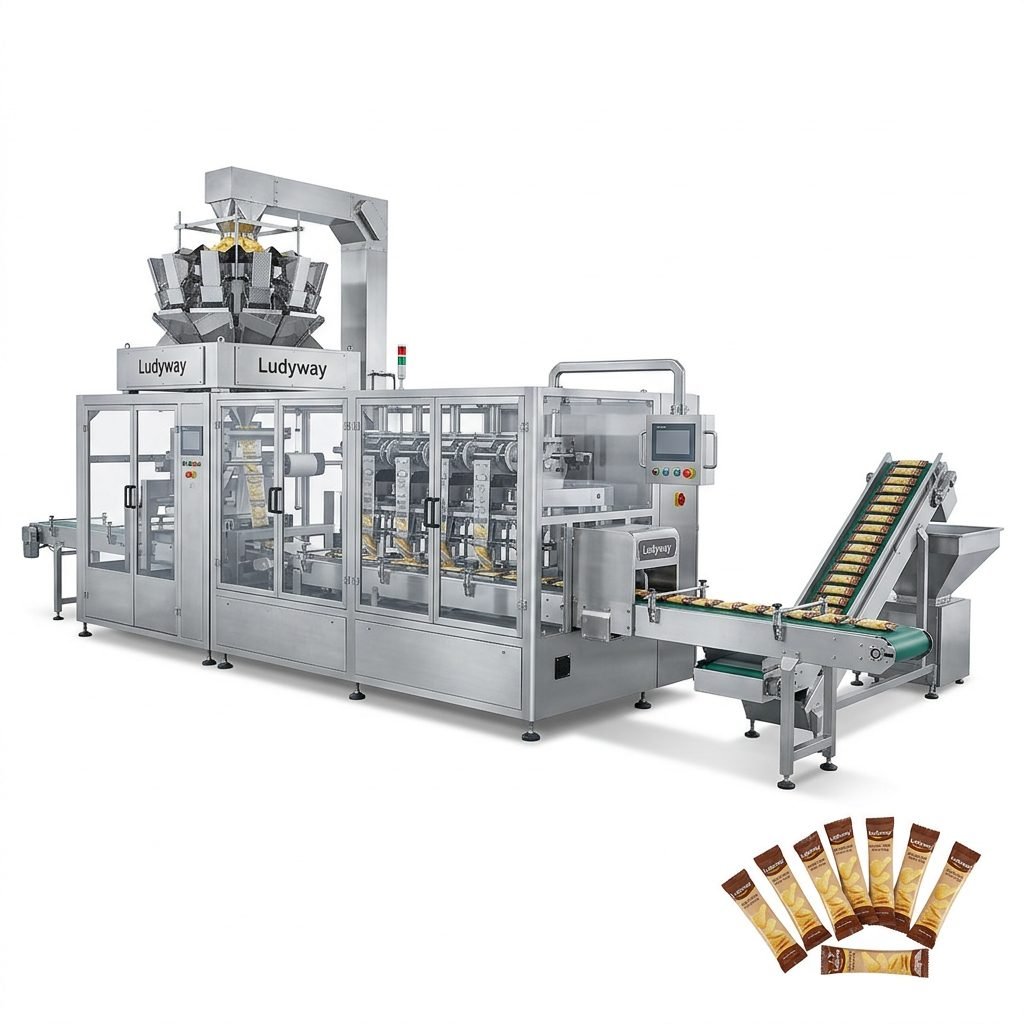
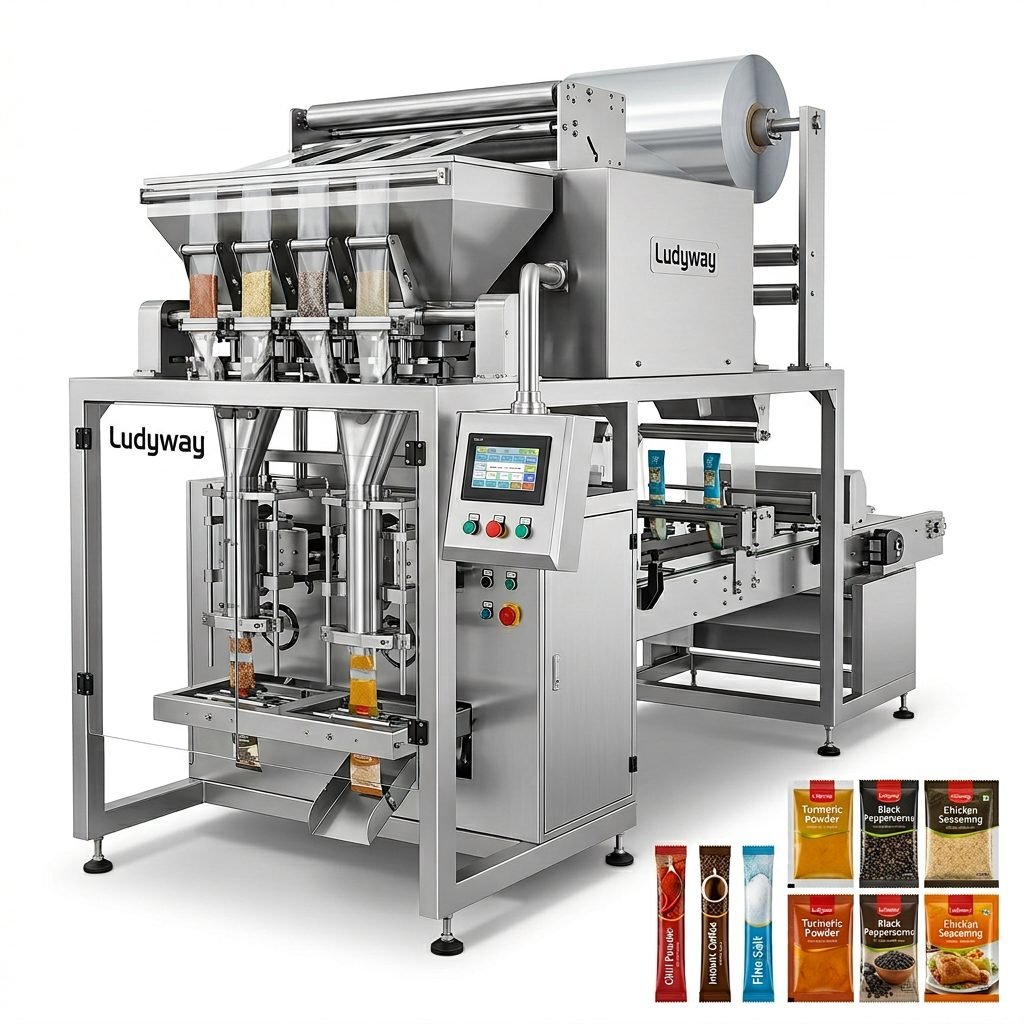
A complete spice packaging line typically includes feeding systems, multi-head weighers, vertical form fill seal machines, checkweighers, metal detectors, and secondary packaging equipment. The specific configuration depends on your target output, packaging style, and spice characteristics.
1. Feeding and Conveying Systems
Spices vary widely in flowability, density, and dust levels. Fine powders like turmeric or chili powder require specialized screw feeders or vacuum conveying to prevent bridging and ensure consistent product flow. Granular spices like black pepper or cumin seeds work efficiently with bucket elevators and vibratory feeders. Ludyway recommends integrating dust extraction systems to maintain a clean production environment, which is critical for operator safety and cross-contamination prevention.
2. Multi-Head Weighing Systems
Accurate weighing is essential for profitability and regulatory compliance. Multi-head weighers with 10 to 14 heads provide high-speed, precision dosing for spice packaging lines. For sticky or oily spices, opt for weighers with dimpled contact surfaces and anti-stick coatings to minimize product buildup and downtime.
3. Vertical Form Fill Seal (VFFS) Machines
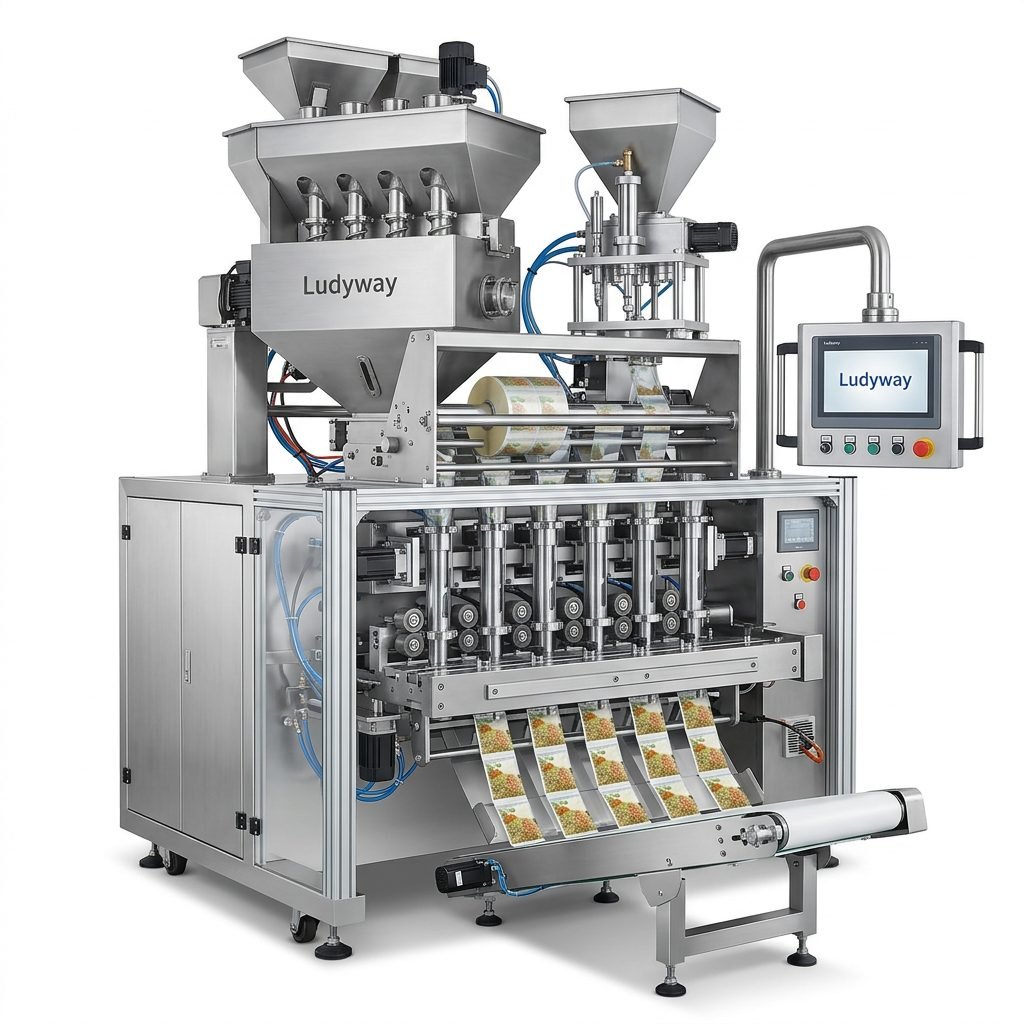
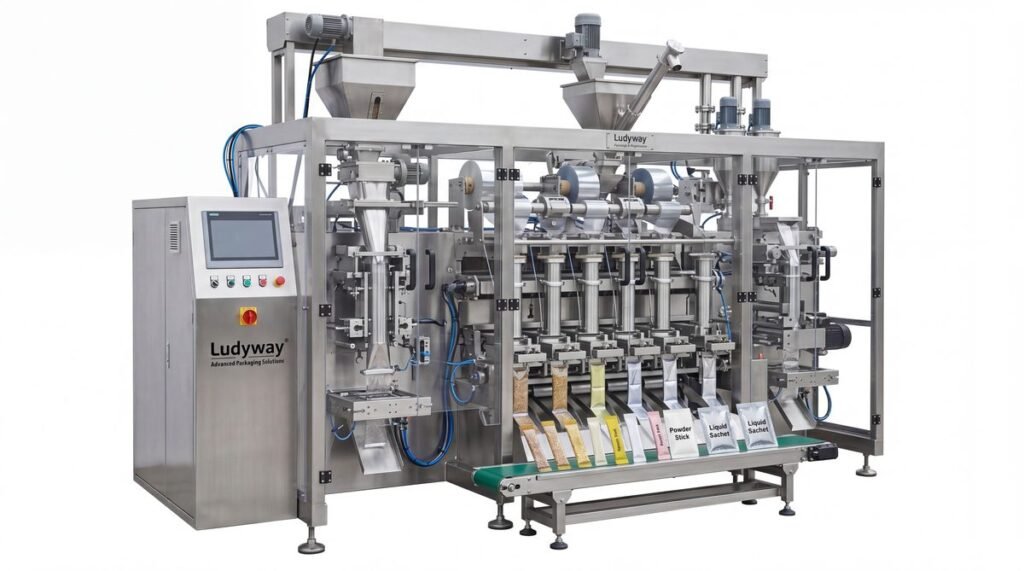
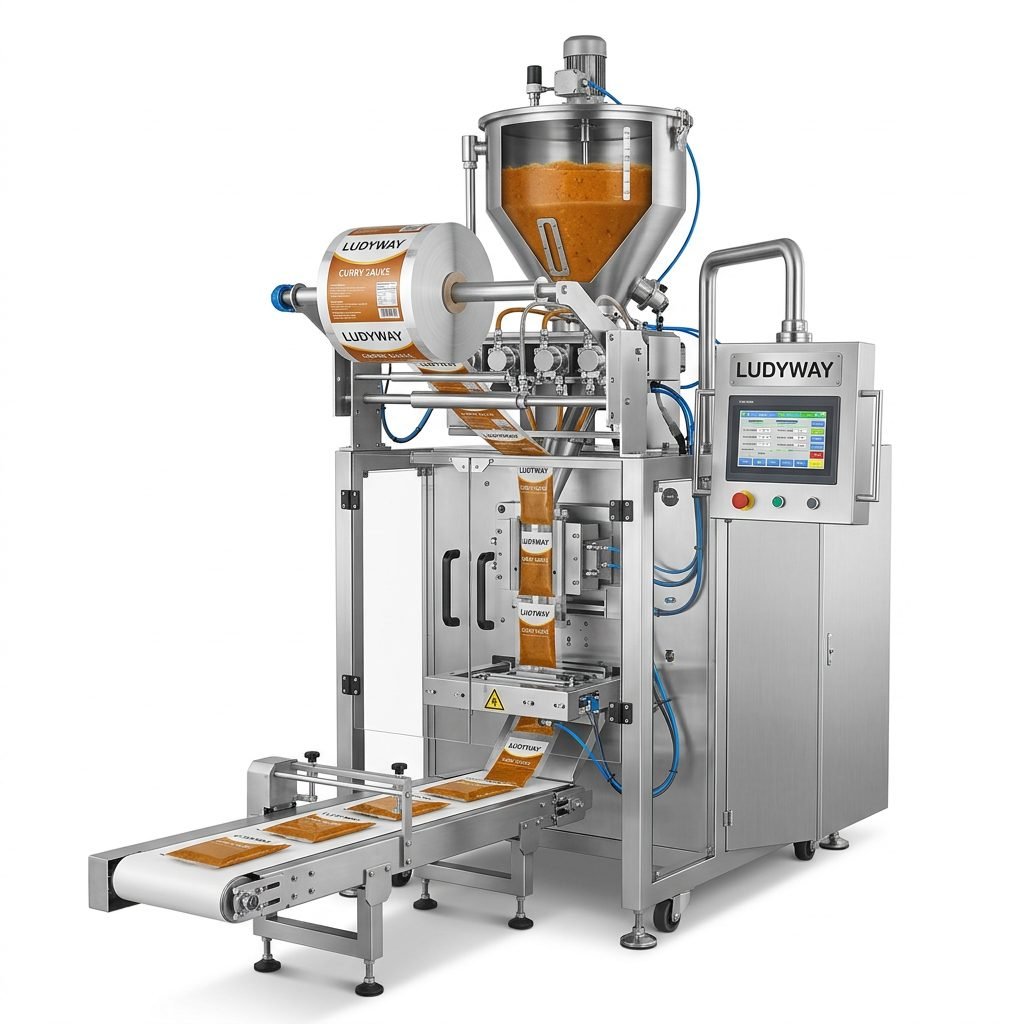
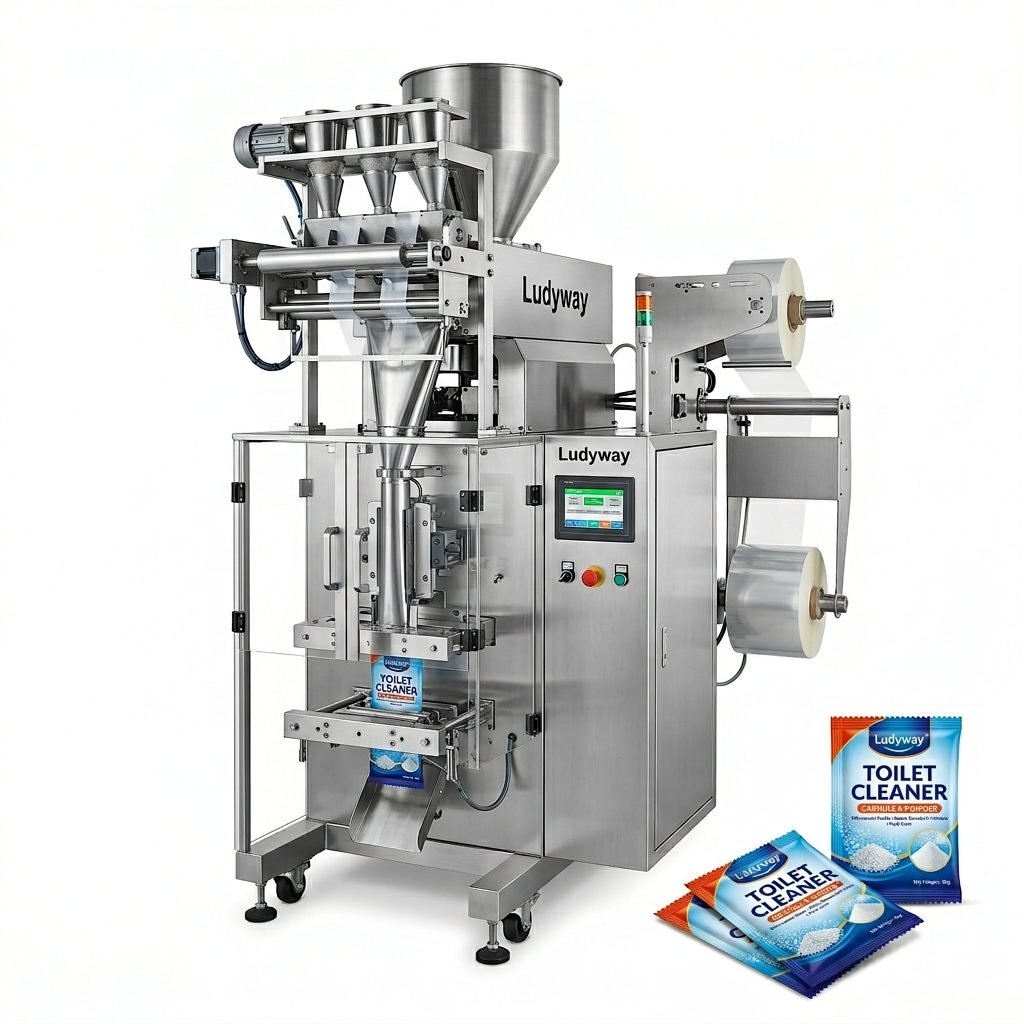
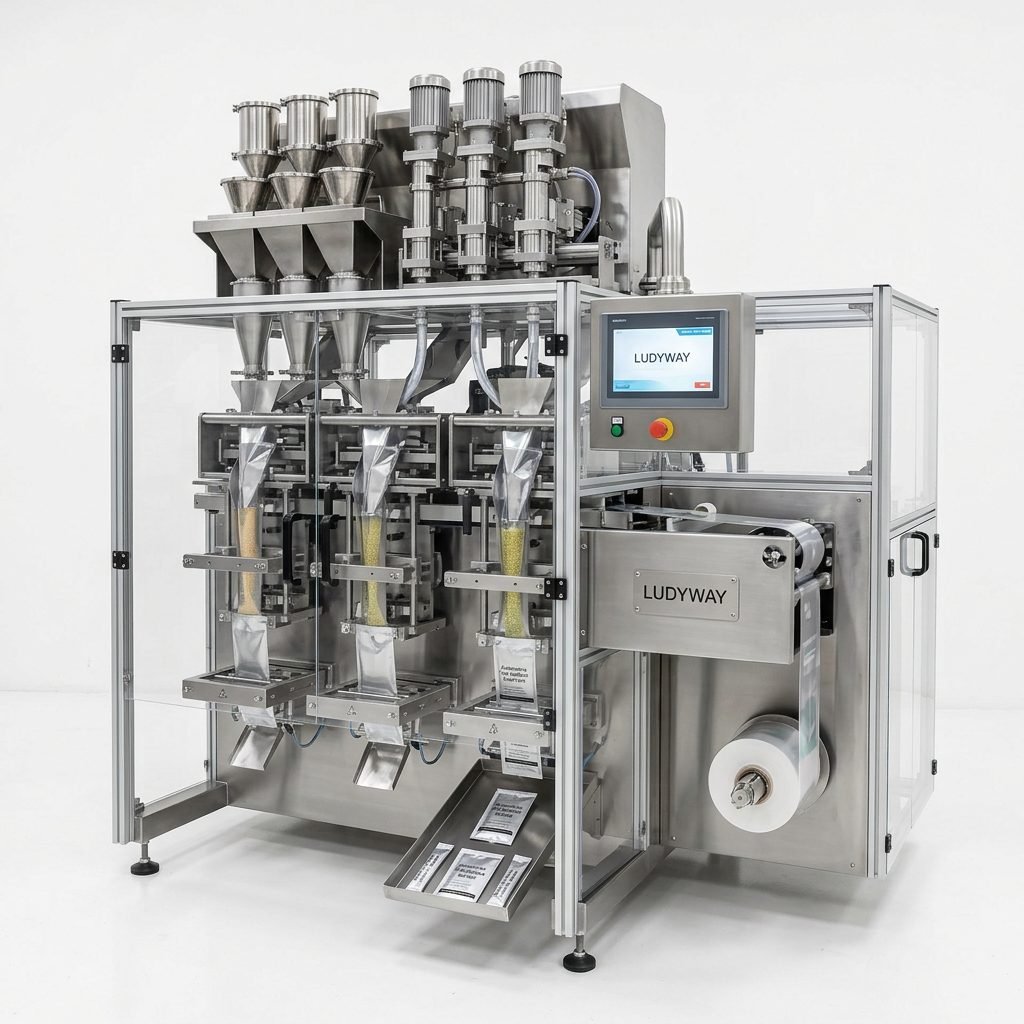
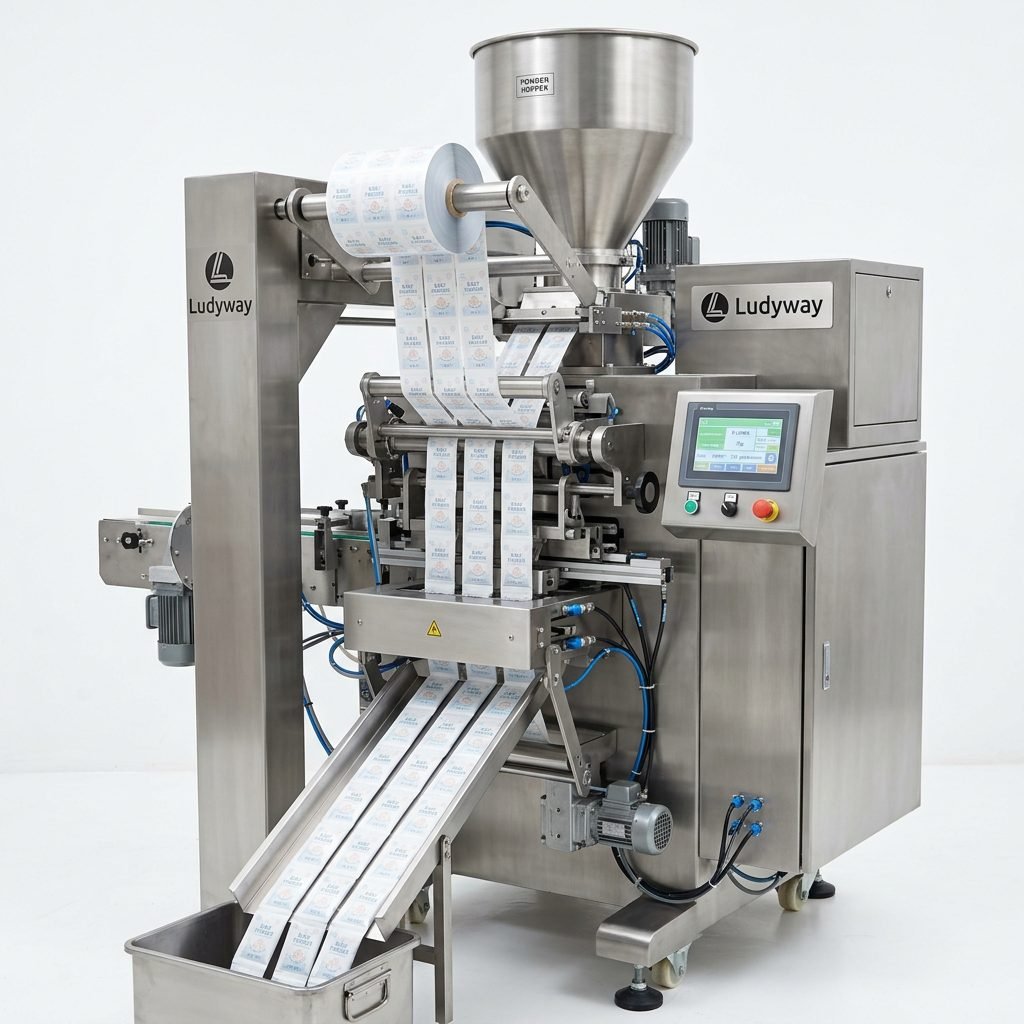
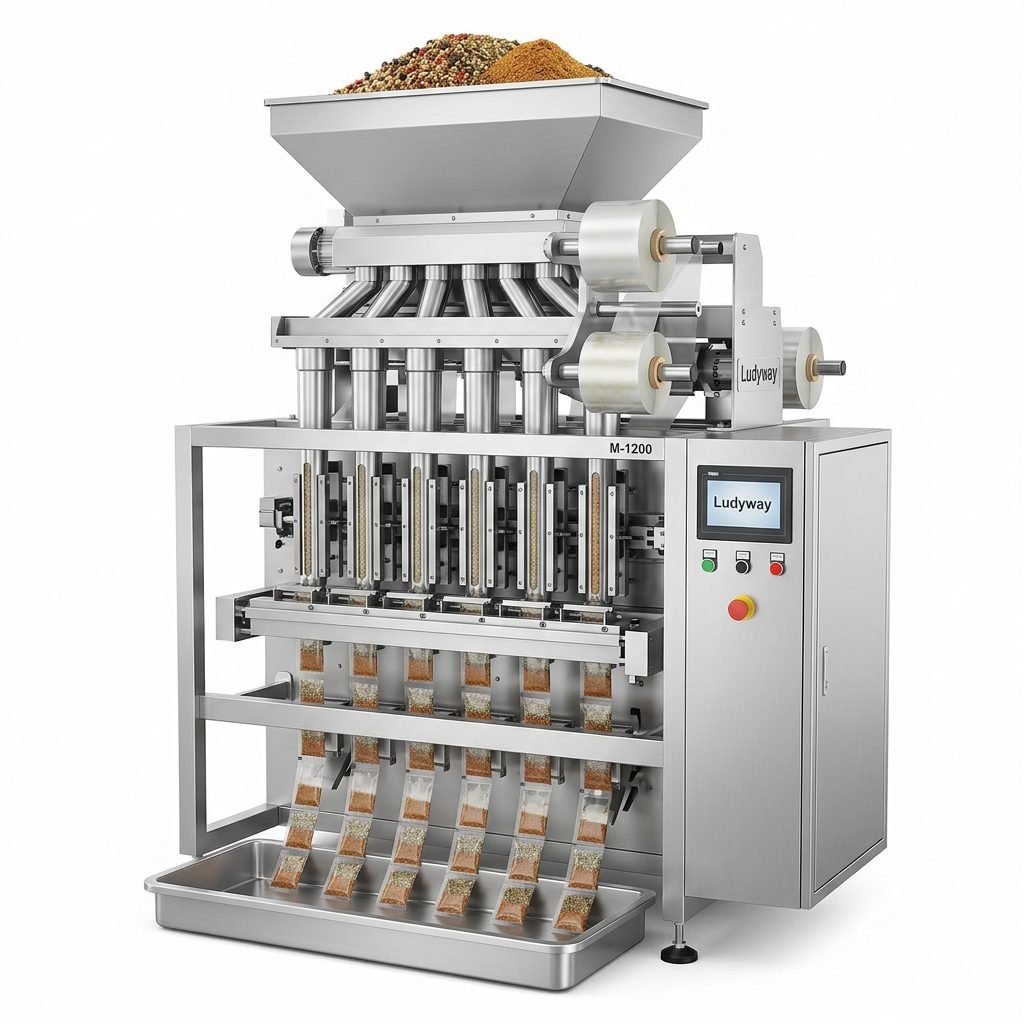
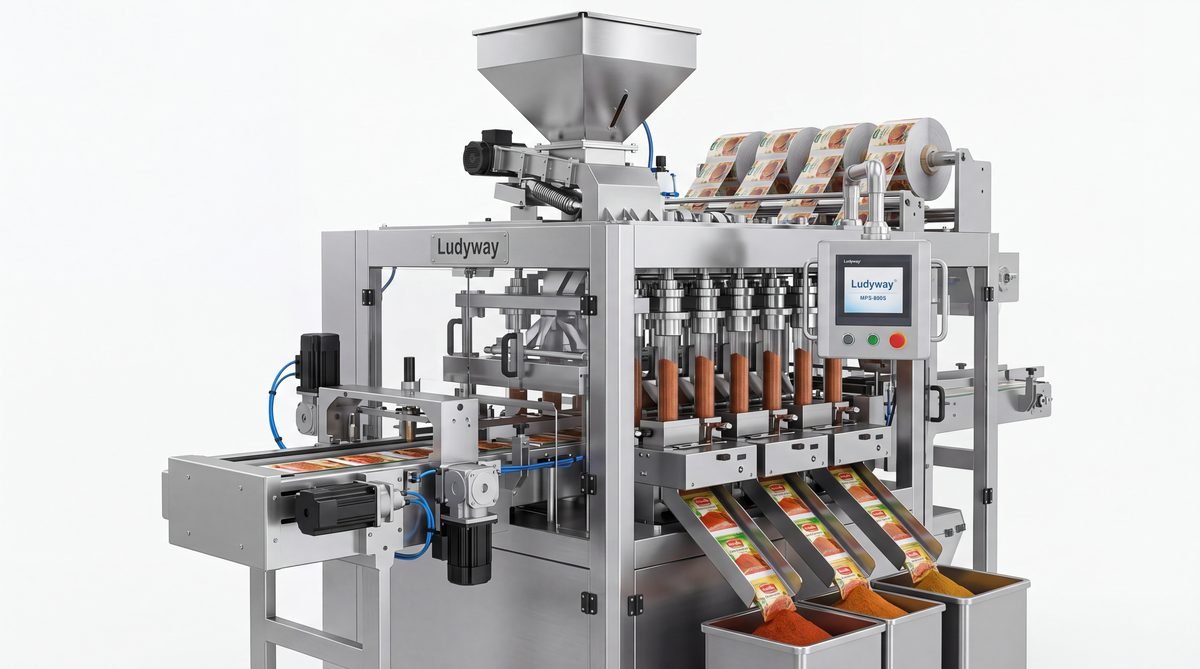
The VFFS machine is the core of any spice packaging line. South American producers commonly use multi-lane stick pack and sachet machines for single-serve spice portions. These machines can produce 4, 6, 8, or more lanes simultaneously, significantly increasing output. Key features to prioritize include:
- Servo-driven film transport for precise bag length control
- Easy-clean design with quick-release forming tubes
- Nitrogen flushing capability for extended shelf life
- Compatibility with multi-layer barrier films to protect against moisture
4. Checkweighing and Metal Detection
Inline checkweighers verify that each pack meets the declared net weight, helping you comply with South American consumer protection laws. Metal detectors are equally critical, as spice supply chains can introduce ferrous and non-ferrous contaminants. Position these inspection systems after the primary packaging stage and before cartoning.
5. Secondary Packaging Equipment
Depending on your distribution model, you may need cartoners, case packers, and palletizers. Many South American retailers require shelf-ready packaging with Spanish or Portuguese labeling, so consider integrating automatic labeling and coding systems into your line.
Selecting the Right Packaging Format for Your Market
Your choice of packaging format should be guided by consumer behavior, distribution channels, and cost considerations. The table below outlines the most popular spice packaging formats in South America.
| Packaging Format | Typical Sizes | Best Applications | Key Markets |
|---|---|---|---|
| Stick Packs (Multi-Lane) | 1g – 10g | Single-serve, food service, travel retail | Brazil, Argentina, Chile |
| Three-Side Sealed Sachets | 5g – 50g | Retail, institutional, promotional | Peru, Colombia, Ecuador |
| Stand-Up Pouches | 50g – 500g | Premium retail, organic, gourmet | Brazil, Chile, Argentina |
| Bulk Bags | 1kg – 25kg | Food processing, industrial, export | All countries |
Regulatory Compliance and Food Safety Standards
South American countries have varying regulatory frameworks, but several common requirements apply across the region. Non-compliance can result in costly delays, rejected shipments, or market access restrictions. Your spice packaging line must meet these fundamental standards:
- Mercosur GMC Resolutions: Harmonized food contact regulations applicable in Argentina, Brazil, Paraguay, and Uruguay.
- ANVISA (Brazil): Specific requirements for food packaging materials, labeling, and traceability.
- SENASA (Argentina): Food safety authority requiring hygiene certifications for processing equipment.
- ISO 22000 / FSSC 22000: Internationally recognized food safety management systems that streamline export to multiple South American markets.
Factory Layout and Production Planning
Designing an efficient factory layout is critical for maximizing throughput and minimizing waste. A well-planned spice packaging line should separate raw material storage, processing, packaging, and finished goods areas to prevent cross-contamination. Consider these layout principles:
- Linear Flow: Materials move in one direction from receiving through to dispatch.
- Zoning: Segregate allergen-containing spices from non-allergen products.
- Cleanroom Integration: Use positive air pressure and HEPA filtration for sensitive products.
- Utility Access: Ensure easy access to compressed air, electrical supplies, and nitrogen lines.
Climate Considerations for Equipment in South America
The tropical and subtropical climates prevalent across much of South America present unique challenges for spice packaging. High humidity levels can cause spice powders to clump, affecting flowability and weighing accuracy. When specifying equipment, look for machines with sealed electrical cabinets, stainless steel construction, and climate-controlled operating environments. Dehumidification systems integrated into the packaging area are strongly recommended for coastal regions in Brazil, Colombia, and Ecuador.
Training and After-Sales Support
Reliable technical support is essential when setting up a production line far from major manufacturing hubs. Choose equipment suppliers who offer comprehensive training programs, remote diagnostic capabilities, and local service partnerships in South America. Key support elements should include:
- On-site installation and commissioning by factory-trained engineers
- Operator training in Spanish and Portuguese
- Readily available spare parts with regional distribution
- Remote troubleshooting via video call and IoT-enabled machine monitoring

Cost Breakdown and ROI Analysis
Investing in a spice packaging production line involves capital expenditure, operational costs, and ongoing maintenance. Understanding the total cost of ownership helps you project realistic returns. Key cost factors include:
| Cost Category | Estimated Range | Notes |
|---|---|---|
| Primary Packaging Equipment | $80,000 – $350,000 | Depends on lanes, speed, and features |
| Secondary Packaging Equipment | $30,000 – $120,000 | Cartoners, case packers, palletizers |
| Installation and Commissioning | $15,000 – $40,000 | Includes travel, labor, and calibration |
| Annual Maintenance | 5% – 8% of equipment cost | Spare parts, consumables, service contracts |
Common Mistakes to Avoid When Setting Up Your Line
Many first-time buyers make easily avoidable errors that lead to delays and budget overruns. Be aware of these common pitfalls:
- Underestimating power requirements: South American electrical grids can be unstable; invest in voltage stabilizers and backup power.
- Ignoring film compatibility testing: Not all packaging films perform equally with local spice blends—always conduct thorough trials before full production.
- Inadequate dust management: Fine spice dust is combustible; your facility must meet ATEX or equivalent safety standards.
- Poor logistics planning: Factor in customs clearance times, port congestion, and inland transportation when ordering machinery.
Working with Experienced Packaging Machine Manufacturers
Selecting the right equipment partner is arguably the most important decision in your project. Look for manufacturers with proven experience in South American installations, multi-language support, and a robust portfolio of spice packaging solutions. Ludyway is one of the largest packaging machine manufacturers in China, offering more than 50 intelligent models and serving over 100 countries worldwide. With a complete portfolio of multi-lane stick pack machines, sachet packaging systems, and integrated turnkey solutions, they provide the expertise needed for successful project execution in South America.
Future Trends in Spice Packaging for South America
The South American spice packaging market is evolving rapidly. Sustainability, smart packaging, and automation are three trends shaping the industry’s future. Biodegradable and recyclable packaging materials are gaining traction, particularly in Chile and Brazil, where environmental regulations are tightening. Smart packaging with QR codes enabling traceability and consumer engagement is becoming a competitive differentiator. Meanwhile, labor shortages are accelerating the adoption of fully automated packaging lines with robotic palletizing and integrated quality inspection.

Step-by-Step Implementation Checklist
Use this step-by-step checklist to guide your spice packaging line project from concept to full production:
- Market Research: Identify target markets, packaging formats, and regulatory requirements.
- Technical Specification: Define output targets, bag sizes, and product characteristics.
- Supplier Evaluation: Compare equipment manufacturers based on experience, support infrastructure, and references from South American clients.
- Factory Preparation: Prepare utilities, flooring, HVAC, and cleanroom environments.
- Equipment Procurement: Place orders with clear delivery timelines and payment milestones.
- Installation and Commissioning: Supervise on-site setup, calibrate machines, and conduct initial production runs.
- Training and Handover: Train operators and maintenance staff; document standard operating procedures.
- Ongoing Optimization: Monitor OEE (Overall Equipment Effectiveness), refine processes, and schedule preventive maintenance.
Setting up a spice packaging machine production line in South America is a significant investment that demands thorough planning and partnership with experienced equipment providers. By focusing on local regulatory compliance, climate-appropriate machinery, and flexible packaging formats, you can build a competitive and profitable operation in this dynamic market. For more information on packaging industry trends and market intelligence, consult resources from leading industry associations.