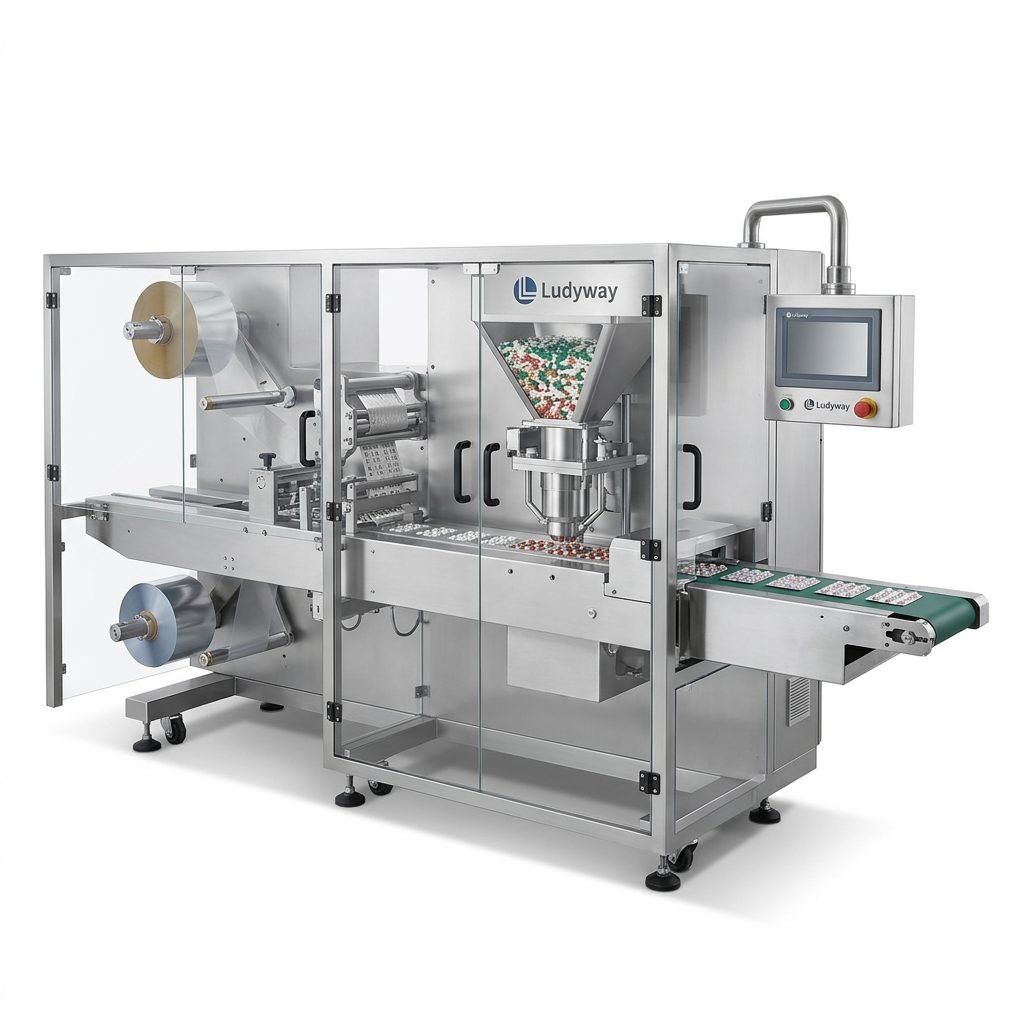
Investing in the right equipment is crucial for any bubble tea or milk tea business. When scaling production or starting a new product line, a common question arises: how much does a manual milk tea packing machine cost? While a fully automatic system represents a significant capital expenditure, a manual or semi-automatic option offers an accessible entry point for small to medium enterprises (SMEs). This guide breaks down the pricing factors, typical cost ranges, and what to expect from your investment in a manual powder packing machine.
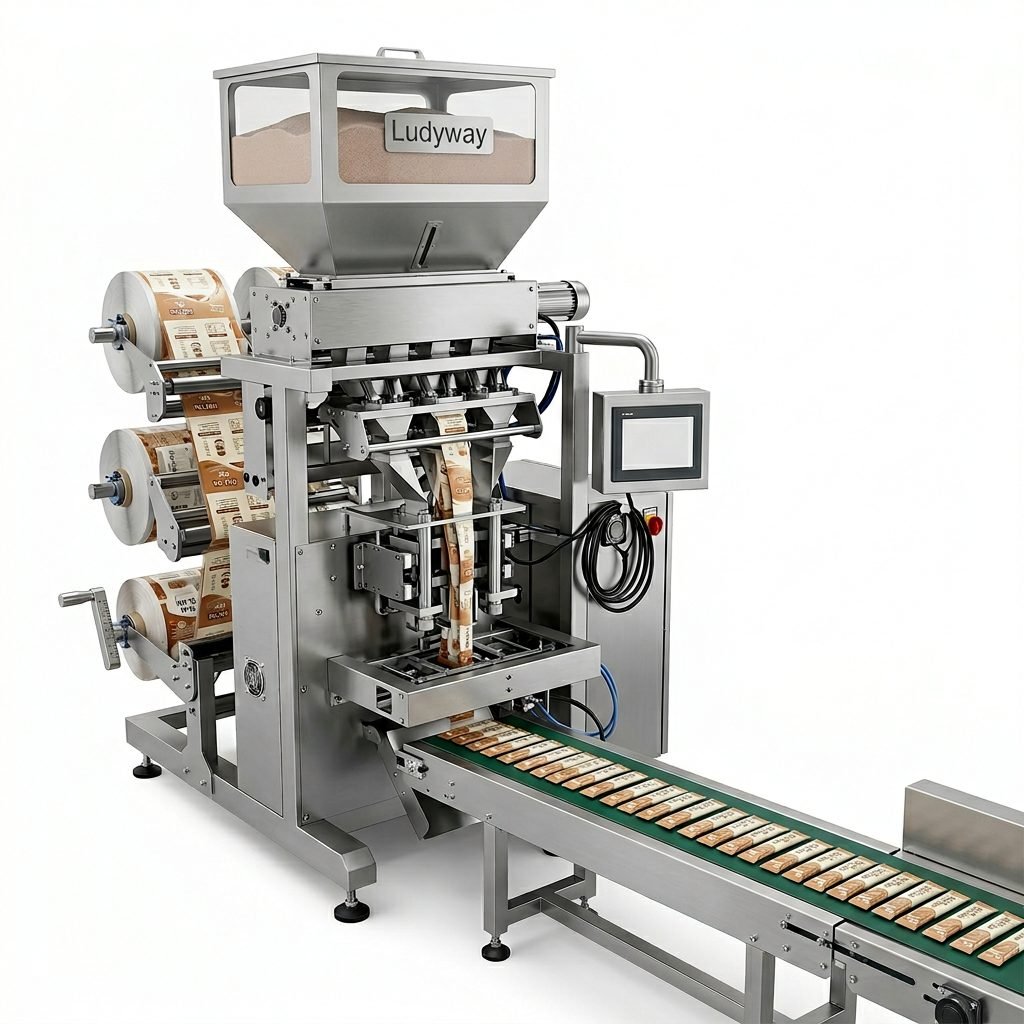
Understanding the Manual Milk Tea Packing Machine
A “manual” milk tea packing machine typically refers to equipment that requires an operator to initiate the filling cycle, often using a foot pedal or a hand switch. These machines don’t usually feature the advanced automated feeding, sealing, and cutting systems of multi-lane stick pack machines, but they are perfectly suited for startup bubble tea brands or businesses that need customized small-batch packaging. They are primarily used for powder products, such as milk tea premix, tapioca starch, or flavored creamer.
Key Factors That Determine the Price
The final cost is rarely a flat rate, as several variables heavily influence the price tag. Understanding these factors will help you budget effectively and avoid overpaying for features you don’t need.
- Machine Grade and Build Material: The construction material significantly impacts cost. A machine built with 304 or 316 stainless steel is essential for food safety but costs more than carbon steel. If you require corrosion resistance for humid environments in a bubble tea shop, expect to pay a premium of 20% to 40% over standard paint-coated machines.
- Filling Range and Accuracy: What volume are you packing? Machines designed for small sachets (1-10g) often utilize an auger filler system. The precision of the volumetric cup or auger screw determines the amount of powder giveaway. Higher precision components directly increase the hardware cost.
- Automation Level of Ancillary Parts: Truly manual machines require you to place the pre-made pouch by hand and manually control the heat seal. However, many suppliers call semi-automatic machines “manual.” If the machine includes pneumatic cylinder compression for sealing, temperature controllers, and an automatic foot-pedal activation, the price will be higher than a purely mechanical lever-operated sealer.
- Brand and After-Sales Support: Established manufacturers who provide CE certifications, exhaustive quality checks, and global warranty support naturally fall into a higher price bracket than uncertified generic workshops.
| Configuration Type | Estimated Price Range (USD) | Suitable Application |
|---|---|---|
| Manual Heat Sealer (Impulse Sealer) | $30 – $200 | Small home-business sealing pre-filled foil pouches. |
| Manual Volumetric Cup Filler + Band Sealer | $1,500 – $4,000 | Small workshop powder dosing for 50-500g stand-up pouches. |
| Semi-Automatic Auger Filler (Single Lane, Foot Pedal) | $4,000 – $9,500 | Professional small business milk tea stick pack or sachet filling. |
| Integrated Semi-Automatic Pouch Filler & Sealer | $10,000 – $18,000 | Step-up model with automatic sealing and air purging for premix powders. |
| Note: Prices are indicative and vary based on customization, export taxes, and shipping terms (FOB/CIF). | ||
Manual vs. Semi-Automatic: Where Does the Money Go?
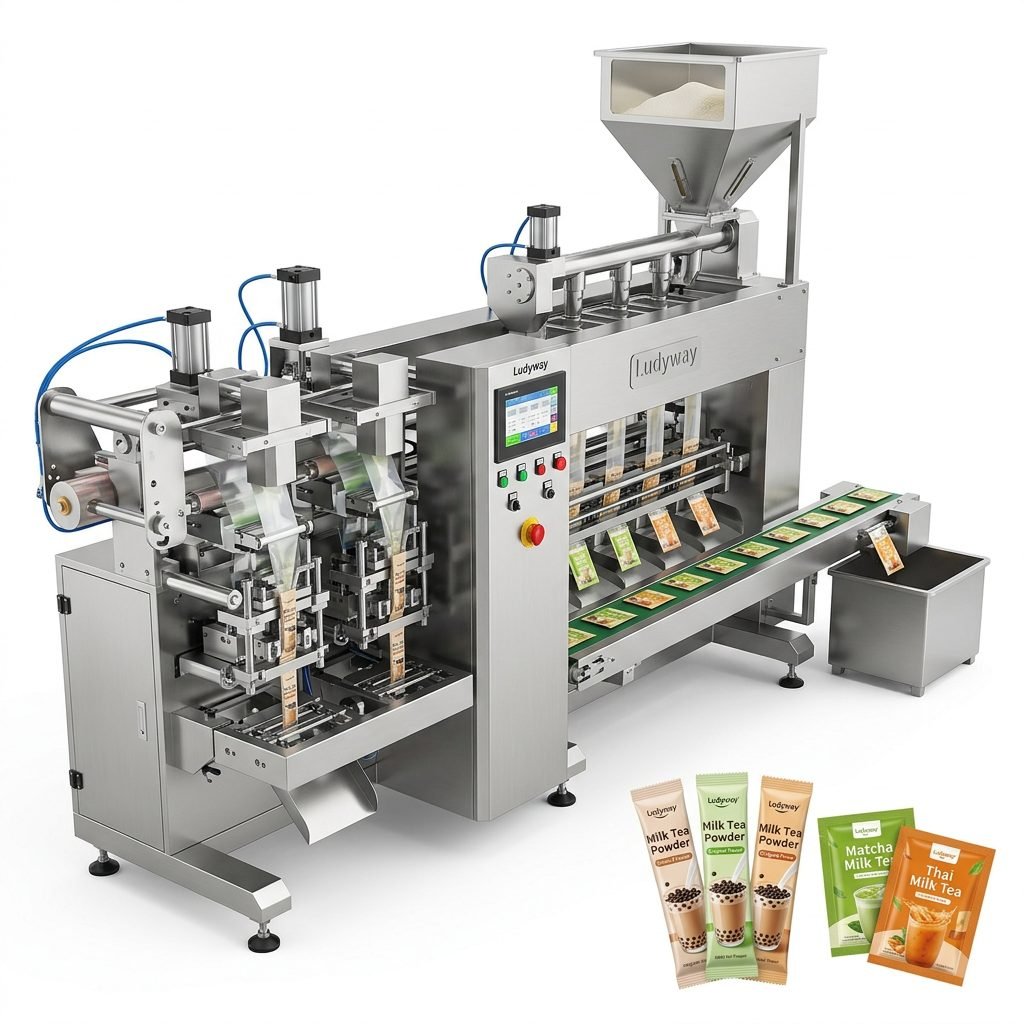
When searching for “how much does a manual milk tea packing machine cost,” you’ll quickly find that pure mechanical tools are cheap, but they don’t offer productivity. The bulk of a practical budget is spent on semi-automatic auger powder fillers. Here is why this is a worthwhile investment:
- The Auger Filler Unit: This is the heart of the machine. A servo-driven auger filler costs roughly $2,000 to $6,000 USD depending on its torque and control system. Analog timers are cheaper than PLC touch screens. A PLC controller allows you to digitally set the filling weight, which sharply decreases operational errors when training staff for your milk tea franchise.
- Dust-Proof Design: Milk tea powder is extremely fine and tends to fly around during filling. A quality packing machine includes a dust-suction nozzle or a fully enclosed cabinet. This health and safety feature adds to the manufacturing complexity and thus the price.
- Tool-less Disassembly: Since bubble tea manufacturers often switch between classic, taro, and matcha flavors, cleaning between runs is vital. Paying a higher price for a manual machine that doesn’t require tools for disassembly will save you hours of downtime.
Pouch Formats for Manual Powder Filling
Not all pouches are equal. Your specific packaging choice also informs the type of machine interface you need. Standard options include:
- Pre-Made Sachet Pouches: The operator opens the pouch, places it under the filler, and seals it.
- Stick Packs: Narrow, elongated sachets that require a precise lateral sealer; difficult to do purely by hand but manageable on an integrated single-lane unit.
- 3-Side Seal vs. 4-Side Seal Back-Flush Bag: A good manual setup can accommodate different sealing patterns if the sealing jaws are adjustable.
Additional Cost Considerations: Auxiliary Equipment
Don’t calculate your cost based on the main filling machine alone. To run a smooth operation, you will also need to factor in ancillary equipment:
- Coding Machines: A manual hot stamp coder for expiry dates might cost $100, while a thermal inkjet printer for logos and batch numbers can cost $1,000 or more.
- Scales and Checkweighers: Since the machine is manual, a bench scale to frequently verify the weight of the powder sachet is non-negotiable.
- Nitrogen Flushing System: If you’re planning to export premium milk tea sachets and require a longer shelf life, you will need a nitrogen injection pipe assembly. This is a significant yet necessary add-on cost for preservative-free products.
Why Choose a Specialized Manufacturer Over Generic Suppliers?
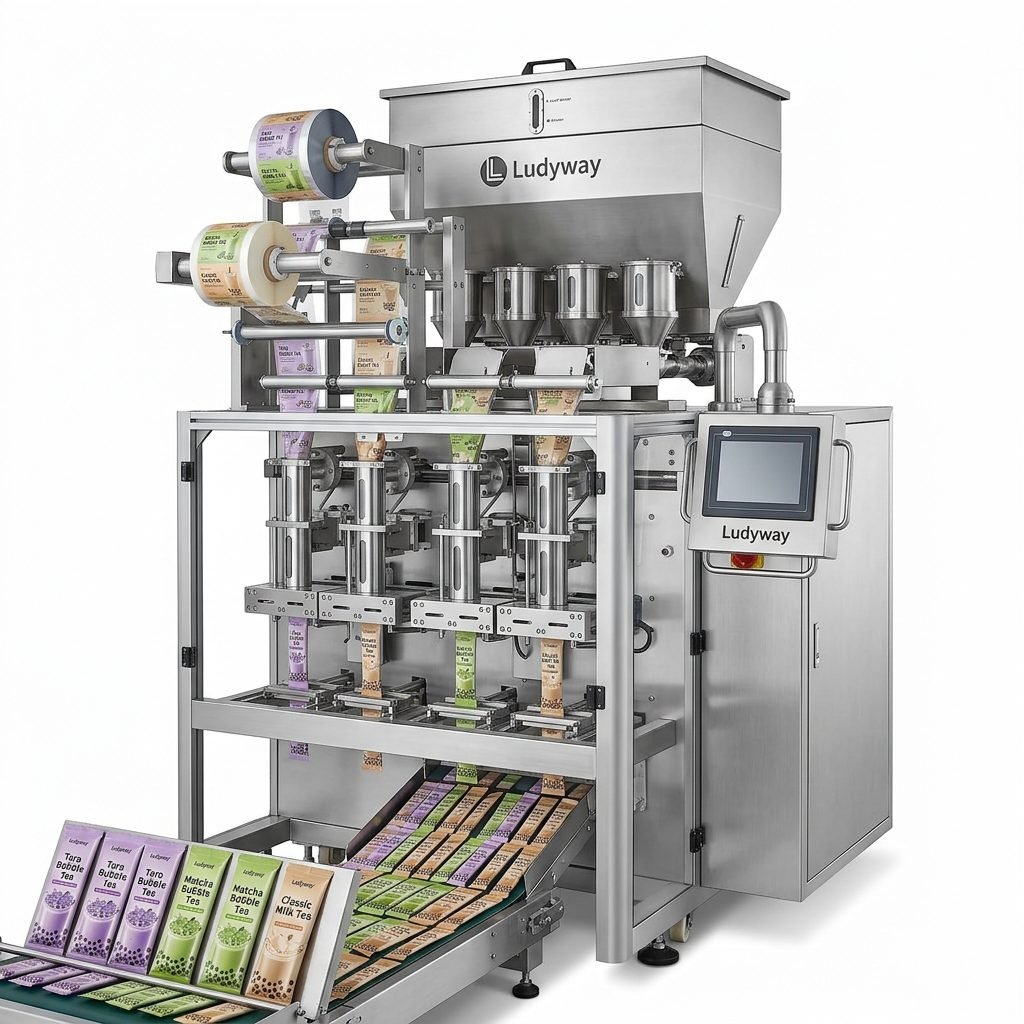
While you might find a cheap manual filler on a generic marketplace, the performance often falls drastically short for commercial milk tea production. A machine designed specifically for sticky, hygroscopic milk tea powder will feature specialized open-mouth auger funnels and non-stick Teflon-coated accessories. As a leading packaging machine manufacturer, Ludyway designs equipment that addresses these specific pain points. The initial cost for a quality-guaranteed machine might be higher, but the return on investment escalates quickly due to reduced material waste and minimal maintenance stoppages during peak bubble tea season.
Quality Standards and Engineering
High-grade manual packing machines offer ergonomic designs that protect the operator. Look for features like emergency stop buttons, safety light curtains, and low-voltage controls. Even a manual machine must adhere to food safety directives. Reputable manufacturers provide documentation verifying that the contact parts are inert and food-safe, a critical factor that justifies a higher cost compared to unbranded alternatives.
Typical Return on Investment (ROI)
Assume you purchase a mid-range manual auger milk tea powder packing machine for approximately $7,500. If your milk tea brand sells 10,000 custom branded sachets weekly with a profit margin of $0.15 per sachet (after subtracting the packaging material and powder costs), the machine effectively pays for itself in roughly 5 to 7 weeks of consistent operation. This excludes the massive savings in labor costs compared to spoon-filling by hand and the professional brand image that machine-filled sachets provide.
Explore Related Equipment for Packaging Efficiency
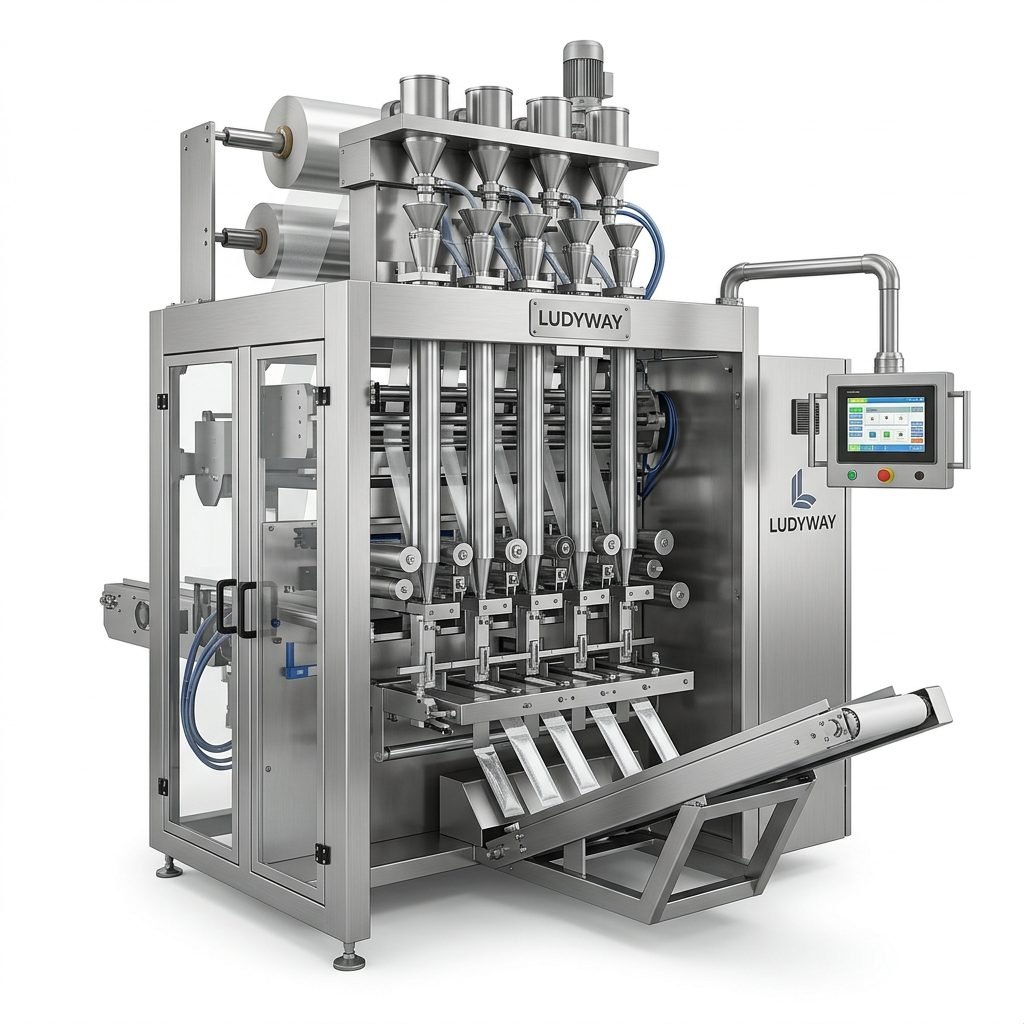
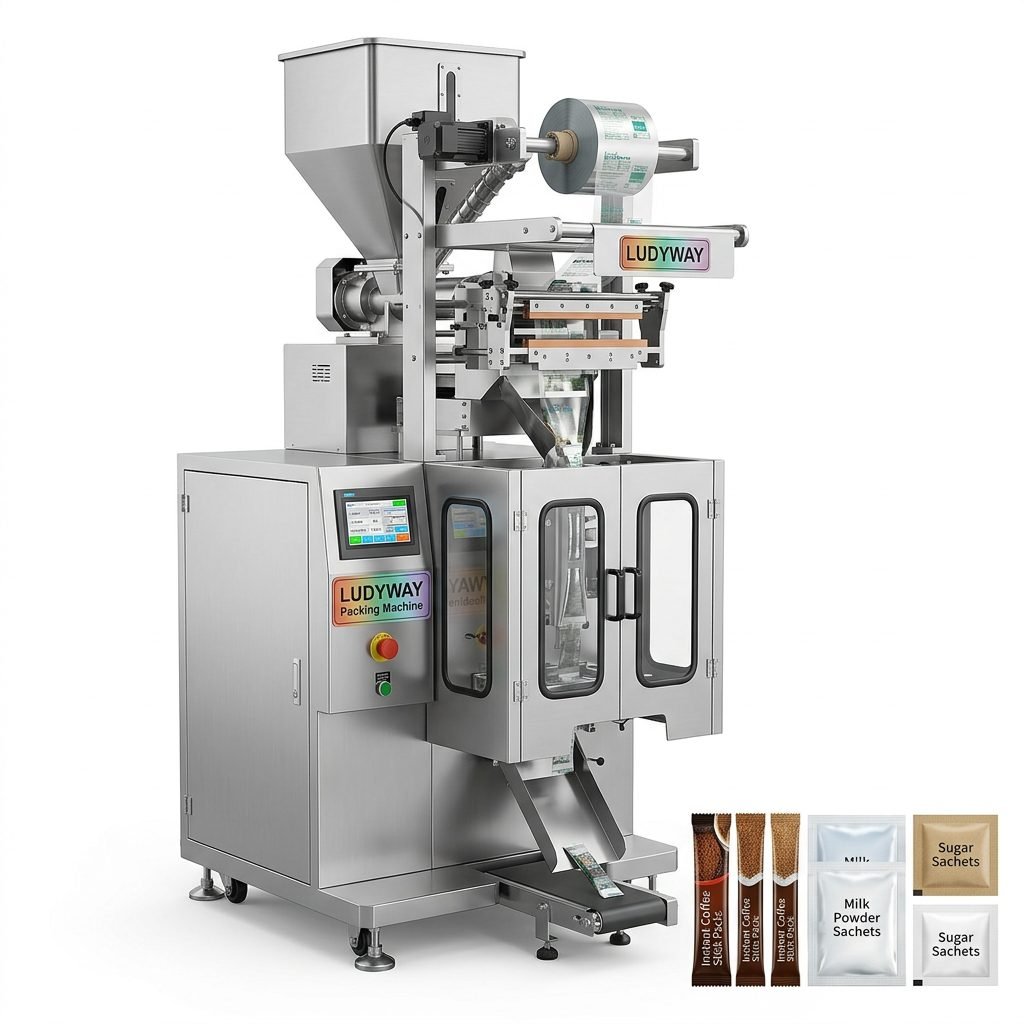
If you plan to scale your manual filling operation into a fully automated line in the future, you might want to explore modern packaging trends and standards to understand the trajectory of the packaging industry. Many businesses that start with a manual configuration eventually upgrade to automatic multi-lane systems. Equipment like the sachet packaging machine for milk powder or the granule and powder packaging machine provide a glimpse into what high-efficiency output looks like. ISO packaging standards also provide guidance on ensuring your packaging process meets global compliance.
The Stepping Stone to Automated Production
Manual machines are excellent for market testing. However, if you already have established retail contracts requiring bulk output of milk tea stick packs, you should analyze the total cost of ownership. Remember, manual machines have lower throughput, typically 5 to 15 pouches per minute, depending heavily on the operator’s dexterity. In contrast, high-speed systems can reach hundreds of packs per minute. If your annual revenue is pegged to mass-market volume, investing immediately in an automated packaging line might be a smarter long-term financial decision than starting with a manual setup.
Final Budgeting Advice
So, how much does a manual milk tea packing machine cost? For a practical, safe, and reasonably accurate machine capable of commercial output, budget between $4,000 and $12,000 for a solid semi-automatic setup. Always request a sample video of the actual machine running your specific formula, as the powder density of milk tea mix drastically impacts filling accuracy. Planning your budget to include a high-quality manual machine from a certified manufacturer ensures that your product stays consistent while you build your brand’s reputation in the competitive milk tea market.