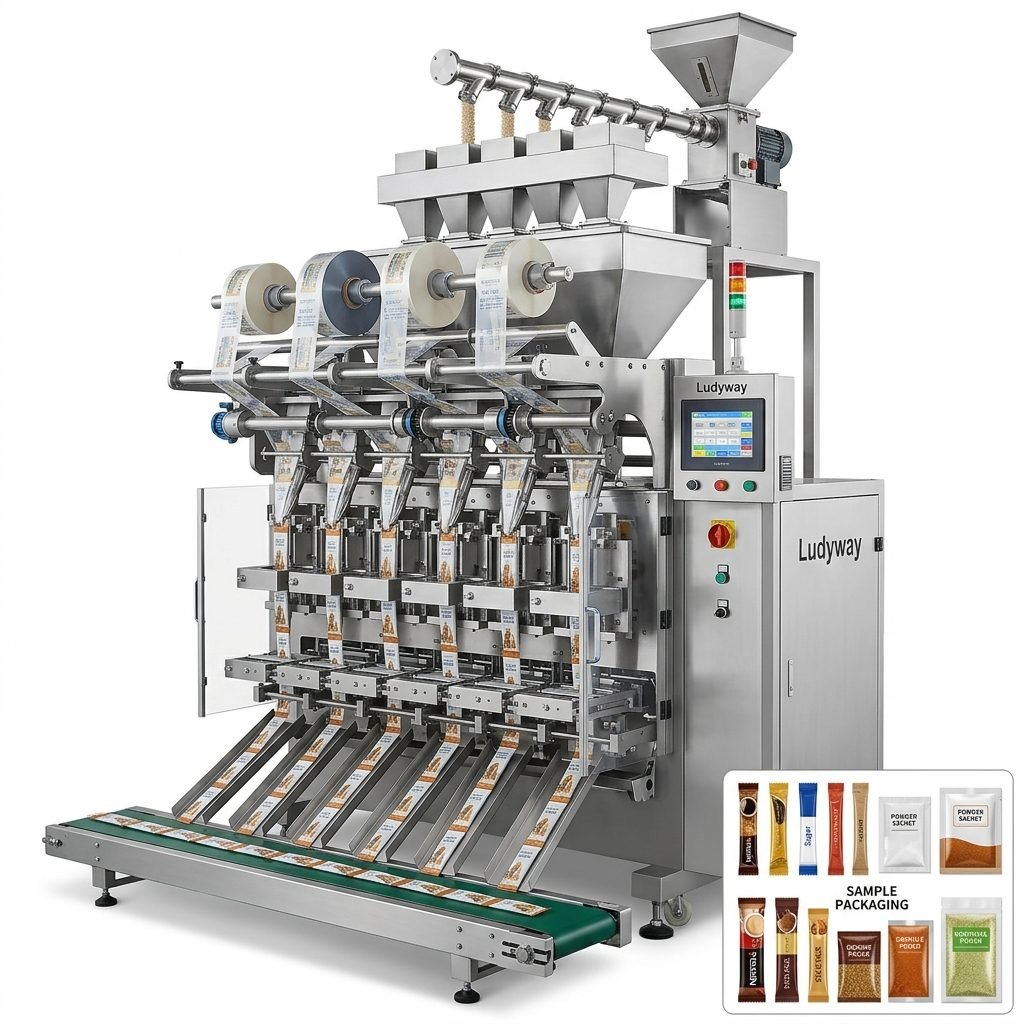
Medical devices can absolutely be packaged by machines, but the answer is not as simple as “yes.” In the medical sector, packaging is part of the product’s safety system. A packaging machine must do far more than create a neat pack—it must help protect sterility, preserve barrier integrity, support traceability, and comply with strict regulatory and validation requirements.
For manufacturers of syringes, wound dressings, diagnostic kits, catheters, surgical consumables, medical gloves, and other healthcare products, choosing the right packaging equipment is a strategic decision. The machine, packaging material, sealing process, inspection system, and clean production environment all need to work together.

What Does Medical Device Packaging Need to Achieve?
Medical device packaging has a much higher responsibility than standard consumer packaging. Its core role is to protect the device from production to point of use. Depending on the product type, packaging may need to maintain sterility, resist puncture, prevent contamination, and allow safe, easy opening in clinical settings.
- Product protection: against moisture, dust, oxygen, impact, and handling damage
- Sterile barrier performance: especially for single-use sterile devices
- Traceability: lot code, date, serial number, barcode, UDI, and inspection records
- Compliance: alignment with ISO, GMP, and applicable market regulations
- Usability: easy-opening packs for hospitals, clinics, and end users
- Shelf-life support: stable seal quality and material compatibility over time
In short, a medical packaging machine is not just filling and sealing. It becomes part of the product quality system.
Can a Packaging Machine Package Medical Devices?
Yes—a packaging machine can package medical devices, provided it is designed, configured, and validated for medical applications. Not every packaging machine is suitable. A standard machine used for food or industrial goods may need major upgrades in hygiene design, sealing accuracy, material handling, inspection, and documentation before it can be used for medical products.
Suitable machines can package a wide range of medical and healthcare-related products, such as:
- Disposable syringes and sterile accessories
- Diagnostic test kits and swabs
- Medical cotton, gauze, and bandages
- Surgical masks and gloves
- Medical wipes and alcohol pads
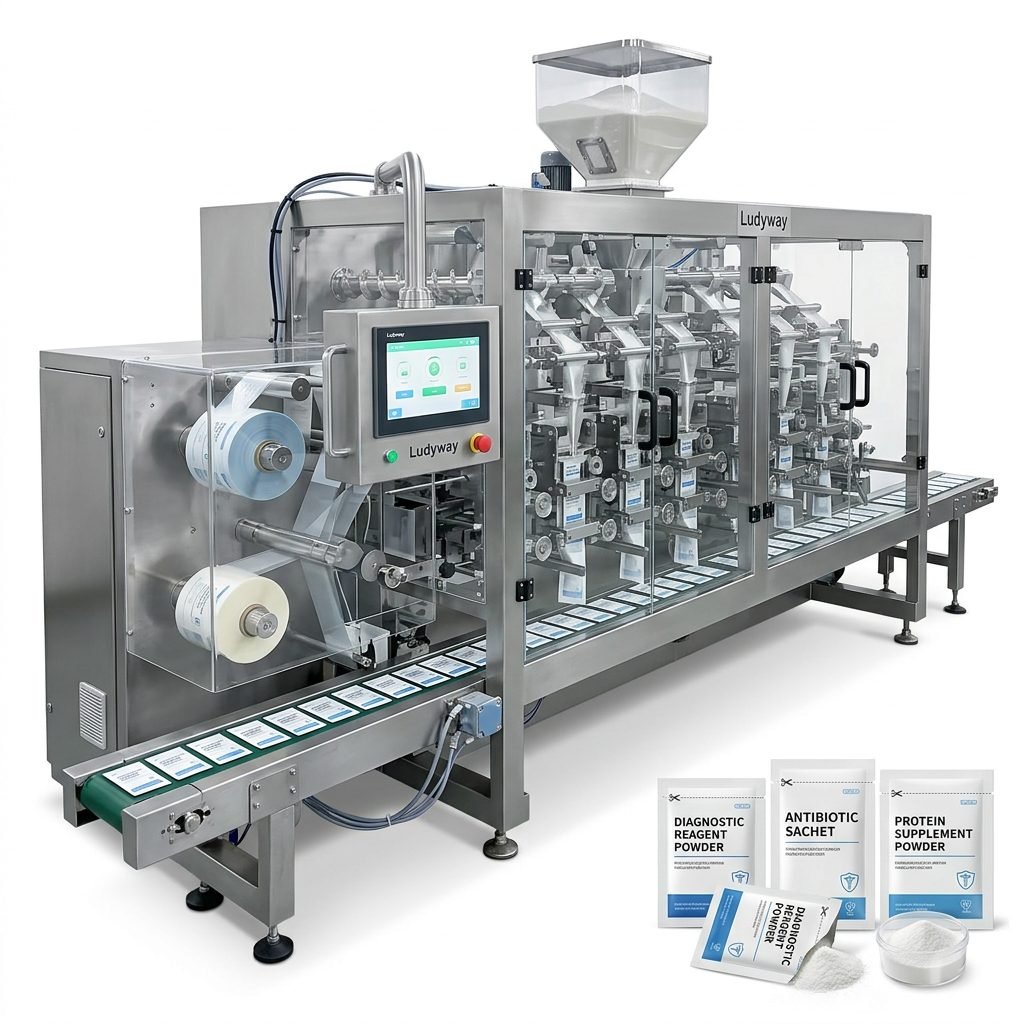
- Granule or powder-based medical products in sachets or stick packs
- Single-use medical consumables in pouches, trays, or cartons
Which Types of Medical Devices Are Commonly Machine-Packaged?
The best packaging format depends on the product’s size, sterility requirement, fragility, and end-use environment. Below is a practical overview.
| Medical Product Type | Common Packaging Format | Typical Machine Type |
|---|---|---|
| Syringes, catheters, sterile consumables | Tyvek pouches, medical paper-film pouches, trays | Pouch sealing, thermoforming, tray sealing, cartoning lines |
| Medical gloves, masks, dressings | Bags, pouches, flow packs, cartons | Flow wrappers, bagging systems, counting and cartoning machines |
| Diagnostic kits, swabs, test components | Pouches, kits in cartons, assembled packs | Kit assembly lines, pouch filling, cartoning, labeling systems |
| Medical powders or granules | Sachets, stick packs, small pouches | Multi-lane sachet machines, stick pack machines, checkweighers |
| Alcohol pads, disinfectant wipes | Single sachets, flow packs, multi-pack cartons | Wipe packaging machines, sachet filling and sealing lines |
What Makes a Packaging Machine Suitable for Medical Devices?
A medical device packaging machine must meet a more disciplined set of requirements than general-purpose equipment. The following factors matter most.
1. Clean and Hygienic Machine Design
The machine should be easy to clean, with smooth product-contact surfaces, minimized dead corners, stable material flow, and reduced particle generation. Stainless steel construction and enclosed guarding are often preferred, especially in controlled production areas.
2. Reliable and Repeatable Sealing
For sterile or high-protection packs, seal quality is critical. Heat, dwell time, pressure, and sealing jaw consistency must be tightly controlled. Poor sealing can destroy sterile barrier performance and cause package failure during transport or storage.
3. Material Compatibility
Medical packaging materials are specialized. Machines may need to run Tyvek, medical-grade paper, laminated film, foil structures, thermoform webs, or coated substrates. A machine must be compatible with the chosen material’s sealing window and handling behavior.
4. Validation Capability
Medical companies often require IQ, OQ, and PQ support. Equipment must provide stable process parameters, documentation, calibration readiness, and repeatable performance that can be formally validated.
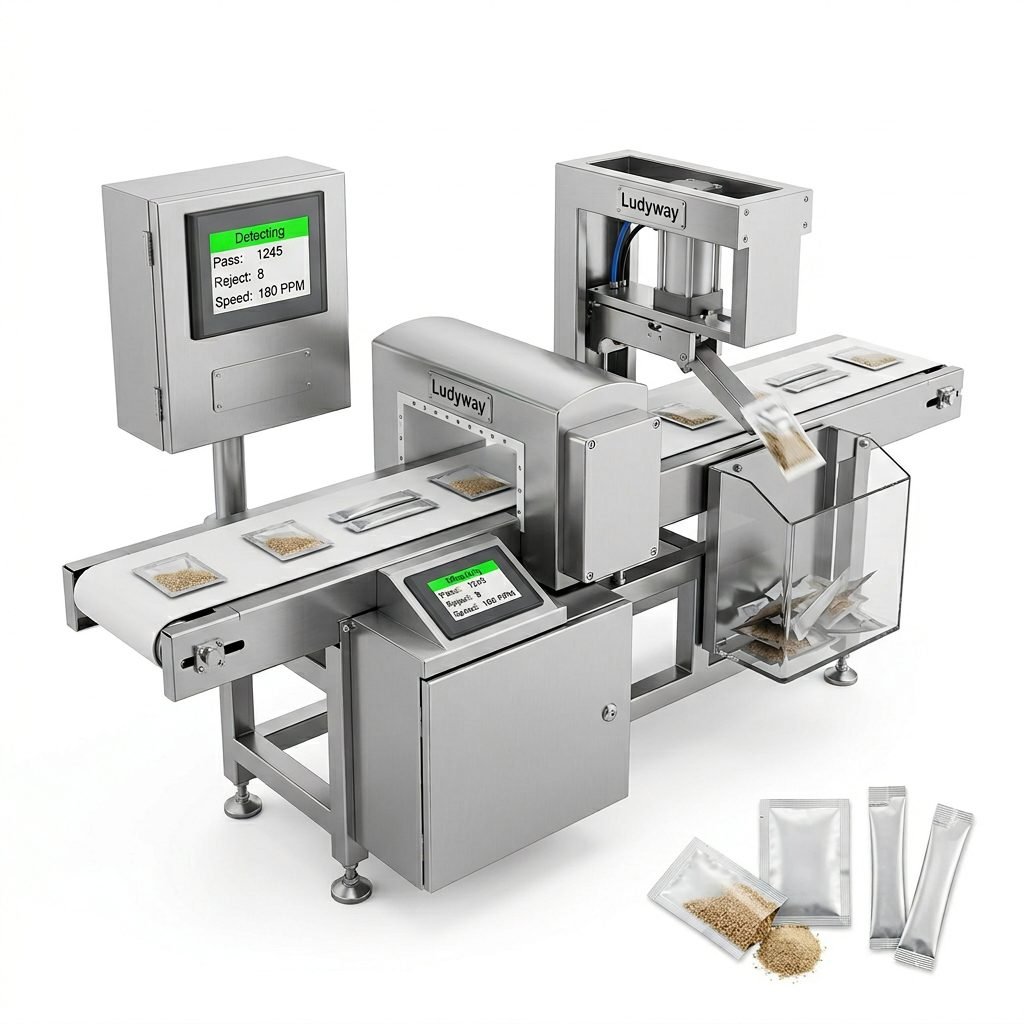
5. Inspection and Rejection Systems
Medical packaging lines often integrate vision inspection, print verification, seal inspection, code reading, weight checking, and automatic rejection. These systems reduce risk and improve compliance records.
6. Traceability and Coding Integration
Batch number printing, date coding, barcode labeling, and UDI support are often mandatory. The machine should integrate with printers, labelers, scanners, and record-keeping systems.
7. Controlled Environment Integration
Some products require packaging inside cleanrooms or controlled environments. The machine should be suitable for installation in these spaces, with layouts that support airflow control, operator access, and contamination management.
Sterile vs. Non-Sterile Medical Device Packaging
This is one of the most important distinctions when selecting packaging equipment.
| Packaging Requirement | Sterile Medical Devices | Non-Sterile Medical Devices |
|---|---|---|
| Main packaging goal | Maintain sterile barrier until point of use | Protect product and support safe handling |
| Material requirements | Highly controlled, sterilization-compatible materials | Protective materials based on product sensitivity |
| Seal validation | Critical and fully documented | Important but may be less stringent |
| Environmental control | Often cleanroom or controlled area | Depends on product risk level |
| Inspection expectations | High-level inspection and record retention | Traceability still important |
If a product requires sterilization after packaging, the machine and material combination must also be compatible with the sterilization method, such as EO, gamma, or steam where applicable.
Common Packaging Machines Used for Medical Devices
There is no one-size-fits-all machine. The right solution depends on product format and production targets.
Pouch Packaging and Sealing Machines
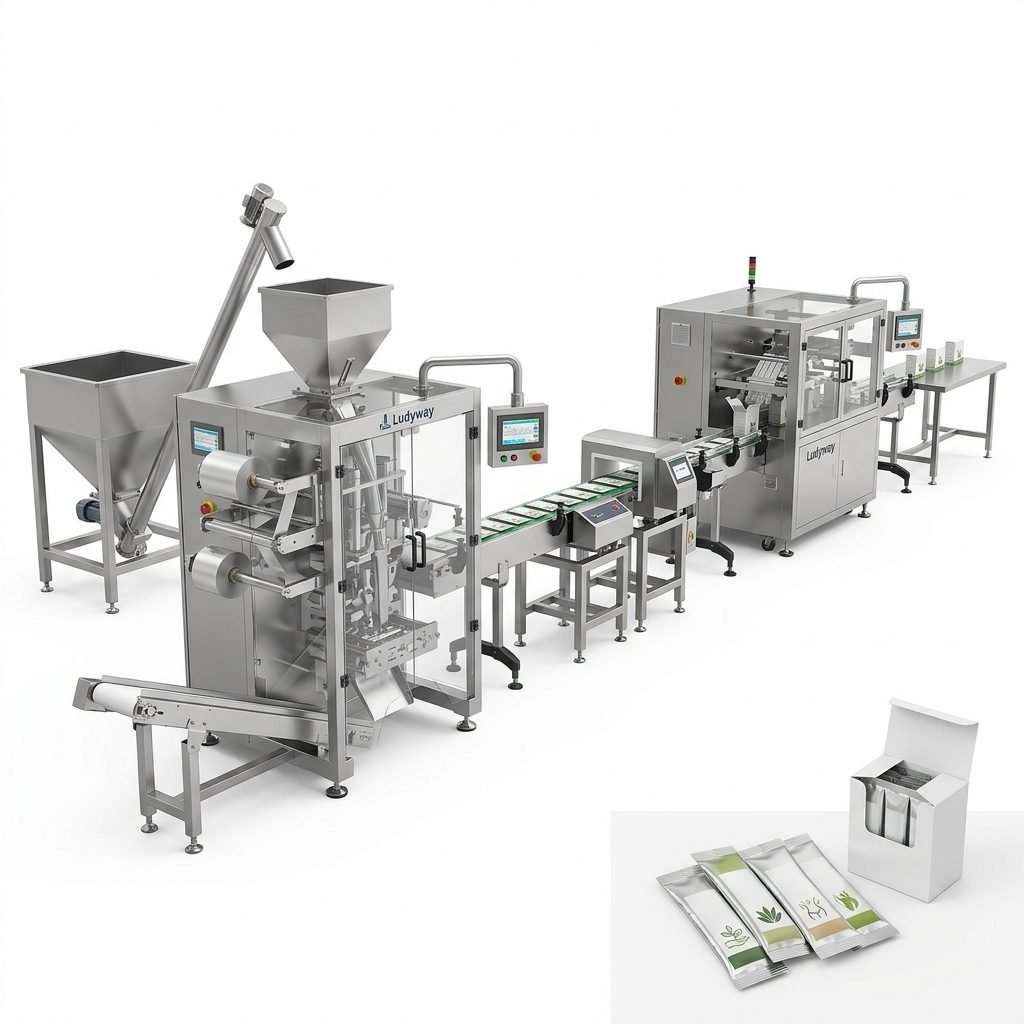
These are widely used for small medical consumables, sterile supplies, wipes, and test components. They can handle preformed pouches or form pouches from rollstock, depending on the production setup.
Thermoforming Packaging Machines
Ideal for trays and formed cavities that hold products securely. They are often used for medical devices that need shape retention, strong barrier properties, and clean presentation.
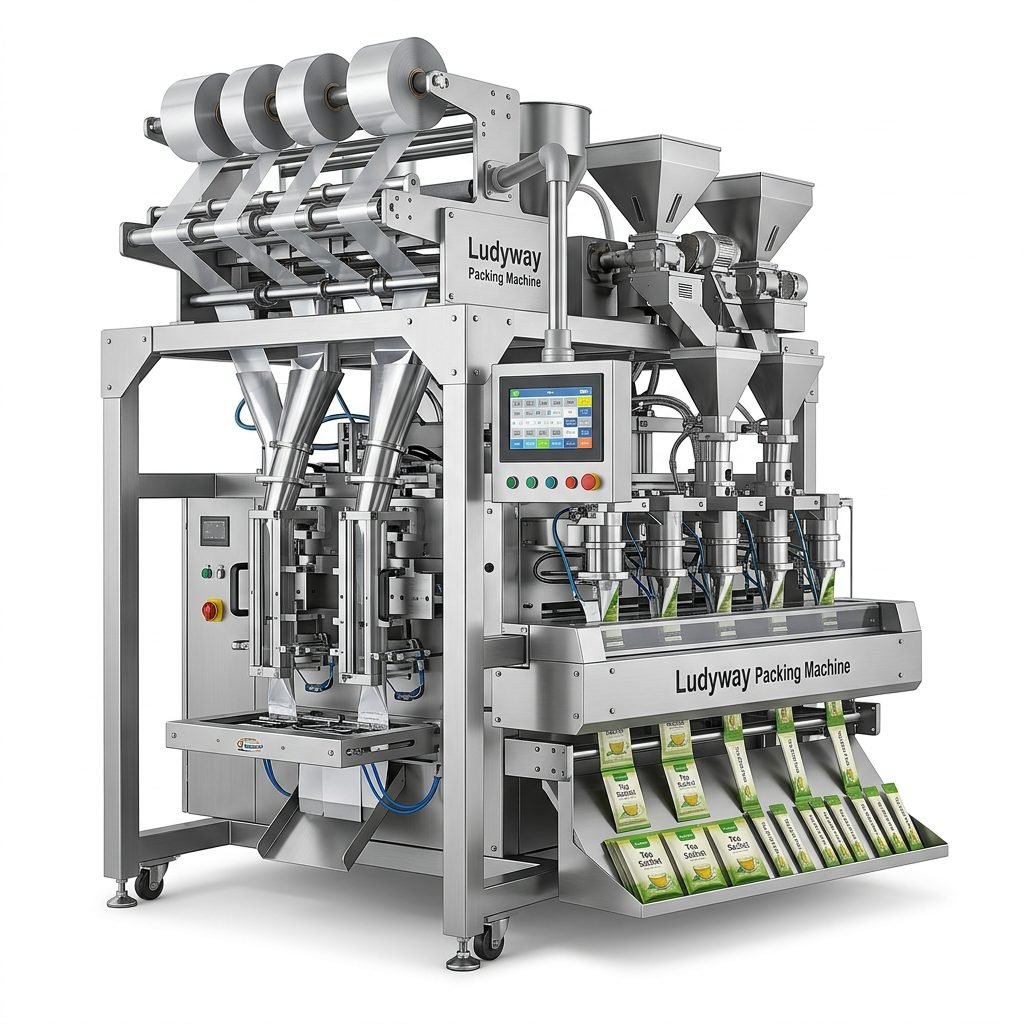
Sachet and Stick Pack Machines
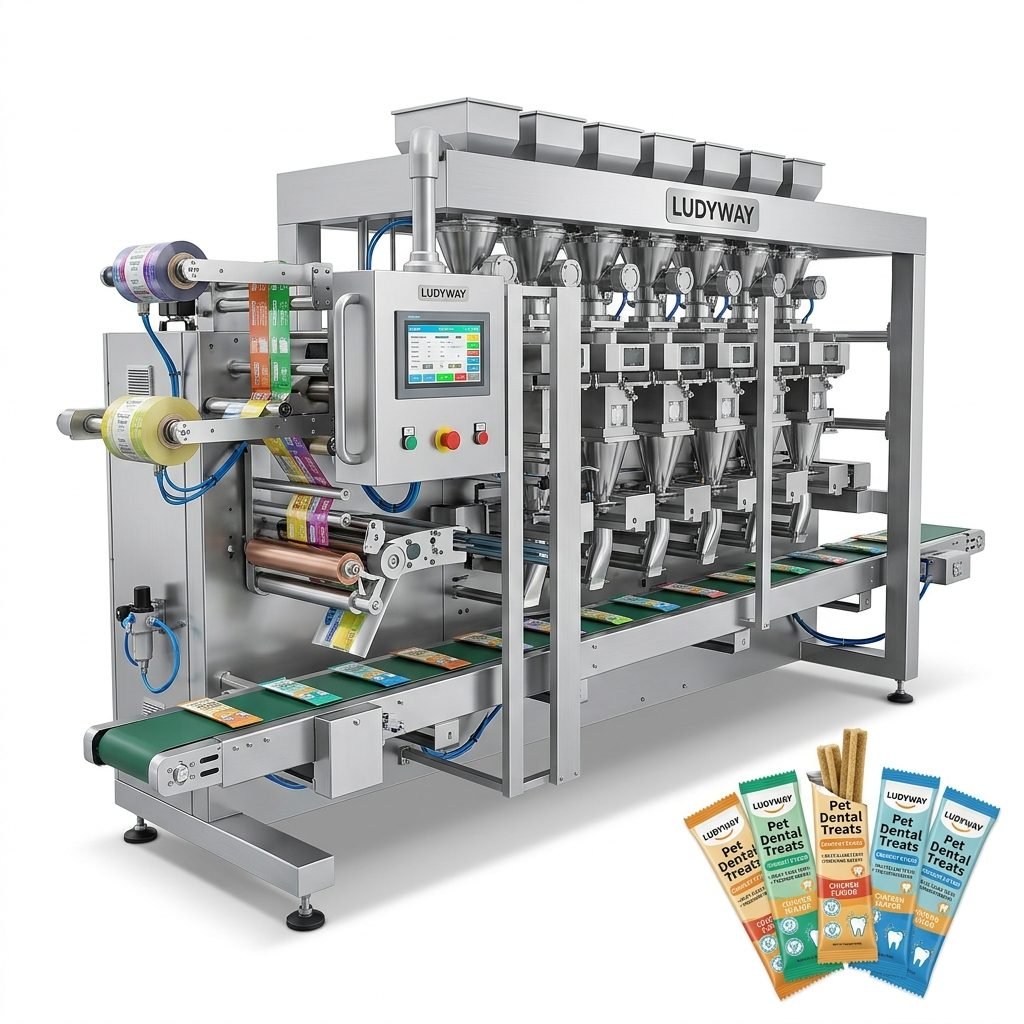
These are suitable for medical powders, healthcare granules, oral rehydration salts, diagnostic powders, and other measured-dose applications. Multi-lane systems are especially useful for higher output.
Flow Wrapping and Bagging Systems
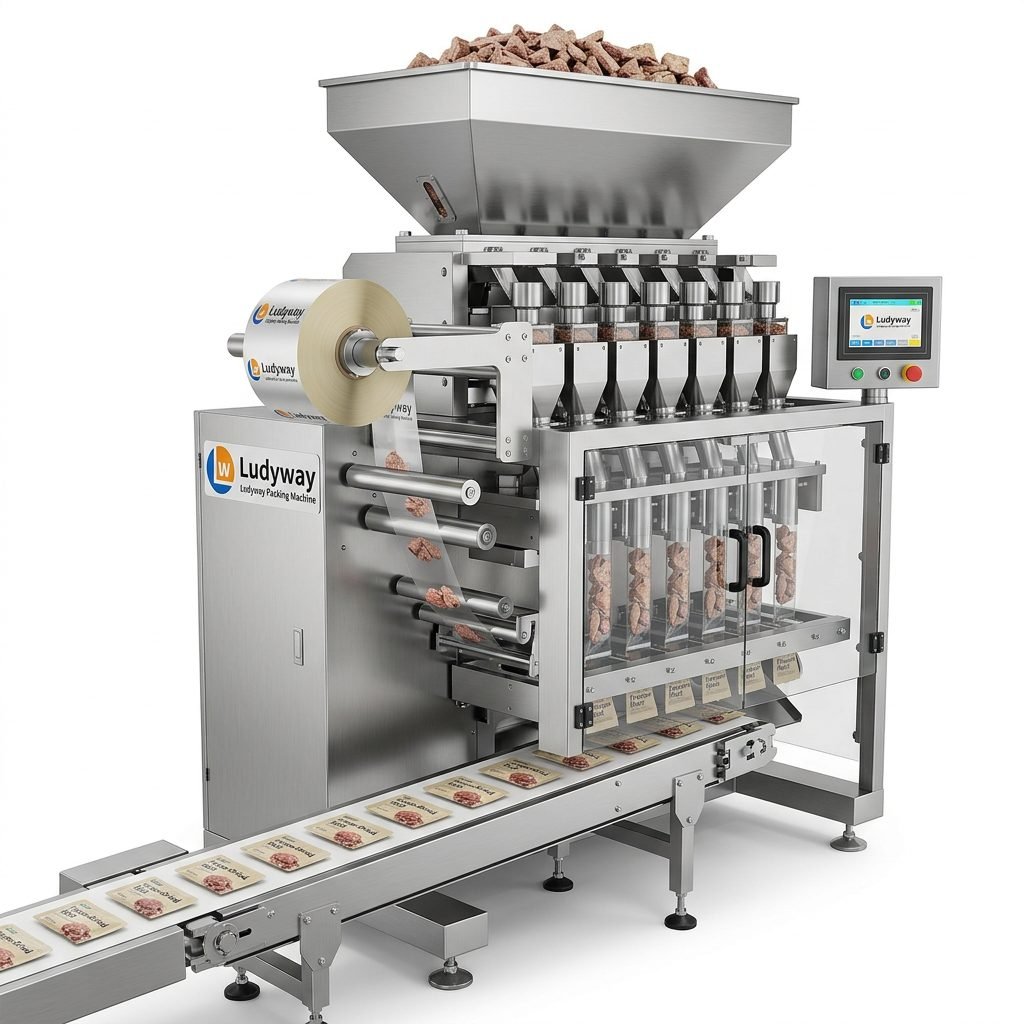
Often used for masks, dressings, and grouped medical products. These systems can be integrated with counting, feeding, coding, and cartoning.
Cartoning and End-of-Line Systems
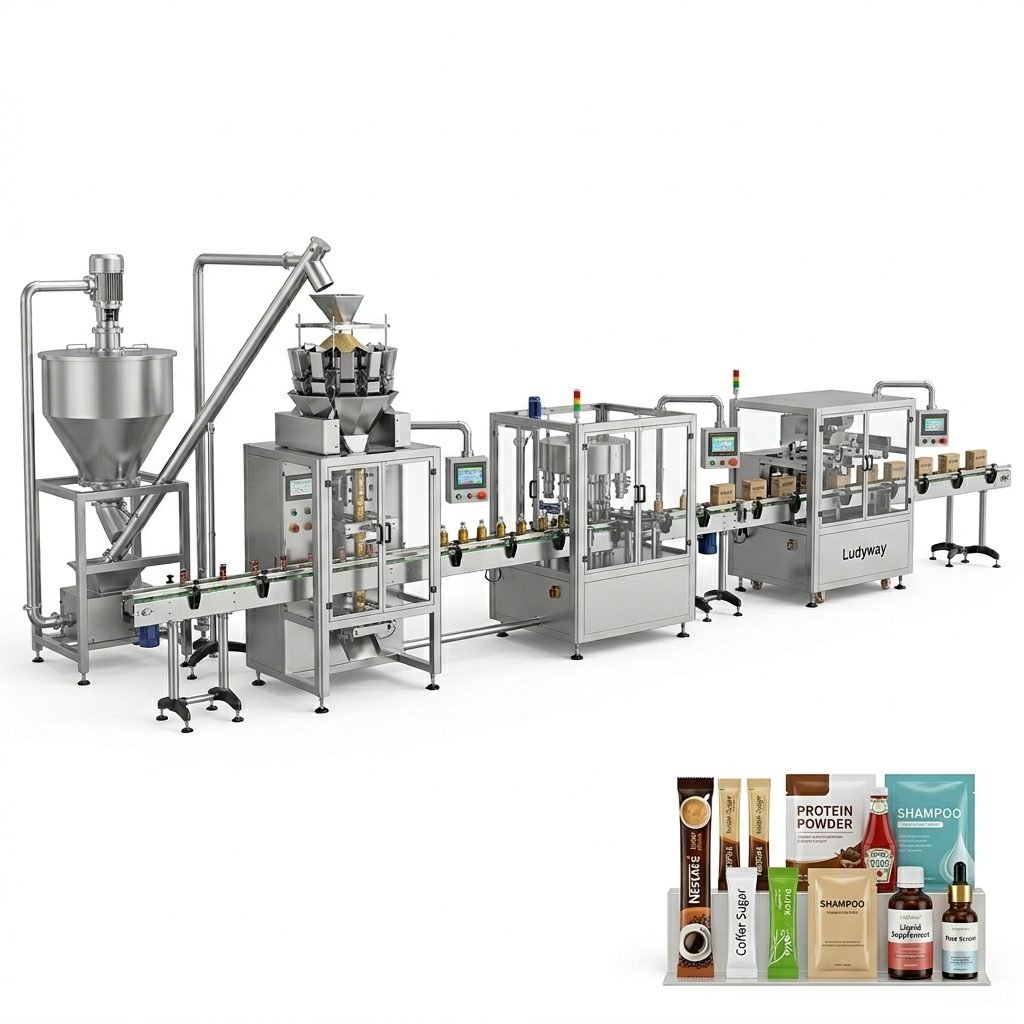
Medical products often require secondary packaging with leaflets, lot coding, serialization, and shipping case preparation. Cartoners, checkweighers, labelers, case packers, and palletizing systems improve total line efficiency.
Key Compliance Considerations
Medical device packaging is heavily influenced by regulation and quality system standards. Packaging machinery should support—not complicate—compliance.
- ISO 11607: packaging for terminally sterilized medical devices
- GMP-oriented production practices: controlled processes, records, hygiene
- Validation documentation: machine settings, test protocols, acceptance criteria
- UDI and labeling rules: especially for regulated export markets
- Risk management: machine design should reduce contamination and seal failure risk
For global suppliers, regulatory expectations may vary by market, but the principle stays the same: the packaging process must be controlled, repeatable, and documented.
What Challenges Come with Packaging Medical Devices by Machine?
Even advanced machines face several practical challenges in medical packaging:
- Maintaining seal consistency on specialized medical materials
- Handling lightweight or irregular products without damage
- Avoiding particles, fiber shedding, or contamination
- Integrating coding, inspection, and rejection in one line
- Meeting cleanroom compatibility requirements
- Balancing speed with strict validation needs
- Supporting product changeover while preserving documented control
That is why equipment selection should involve engineering, quality assurance, regulatory, and production teams—not purchasing alone.
How to Choose the Right Packaging Machine for Medical Devices
When evaluating a machine, ask the following questions before making a final decision.
Product Questions
- Is the device sterile or non-sterile?
- Is it rigid, fragile, sharp, powder-based, or multi-component?
- Does it require a pouch, tray, sachet, stick pack, or carton?
- What shelf life and transport conditions must the package withstand?
Process Questions
- What output speed is required?
- Will packaging happen in a cleanroom?
- What level of automation is needed?
- Do you need in-line printing, coding, weighing, and inspection?
Validation Questions
- Can the machine support IQ/OQ/PQ documentation?
- Are sealing parameters stable and recordable?
- Can the supplier assist with FAT and SAT?
- Is there long-term technical support for qualification and maintenance?
Benefits of Automated Medical Device Packaging
A properly selected and validated packaging machine can create major operational advantages.
| Benefit | Why It Matters |
|---|---|
| Higher consistency | Improves repeatability of sealing, filling, and coding |
| Lower contamination risk | Reduces manual handling of sensitive medical products |
| Better traceability | Supports batch control, labeling, and inspection records |
| Improved productivity | Helps scale output without sacrificing quality control |
| Reduced labor dependence | Useful for high-volume or labor-sensitive operations |
| Line integration | Connects filling, sealing, inspection, cartoning, and palletizing |
Turnkey Packaging Lines for Medical and Healthcare Products
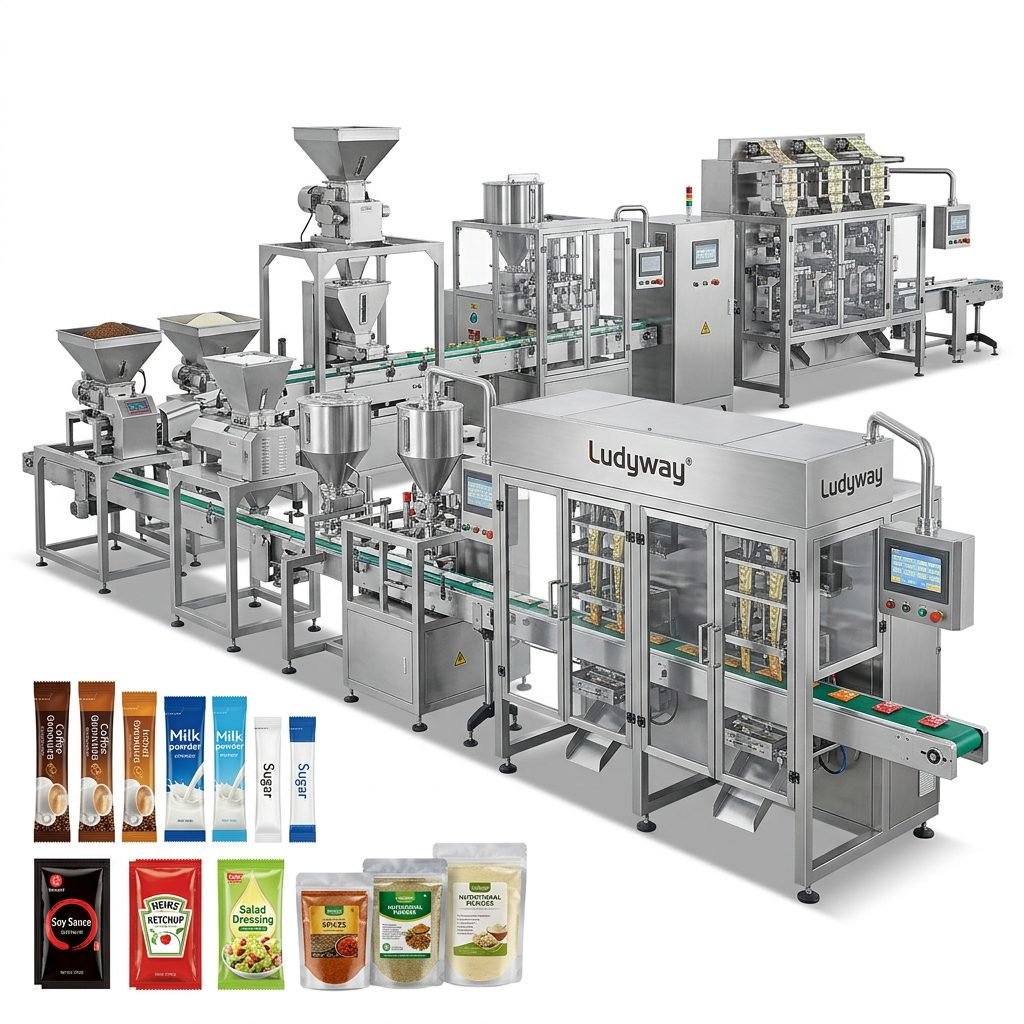
Many manufacturers now prefer complete packaging lines rather than standalone machines. A turnkey line can include feeding, filling, sealing, coding, inspection, rejection, cartoning, case packing, and palletizing. This improves line coordination and simplifies project implementation.
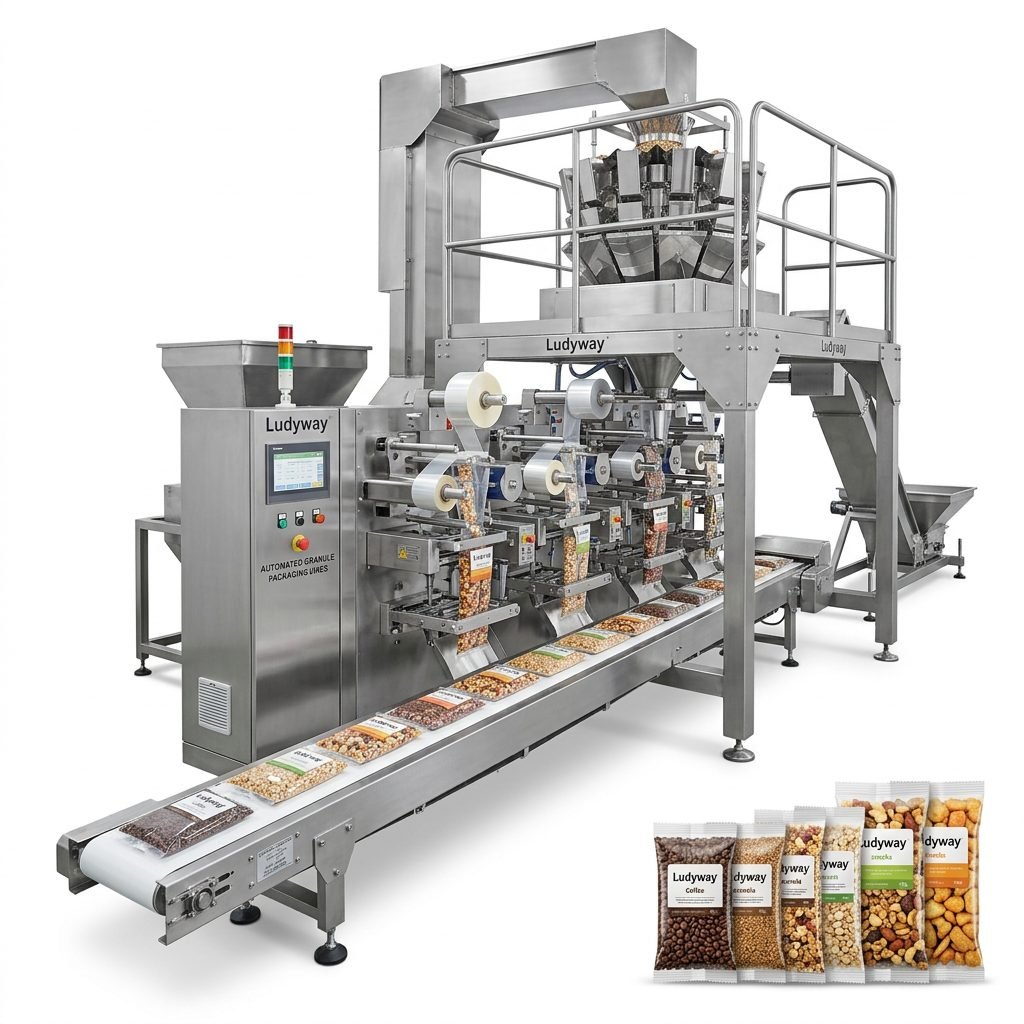
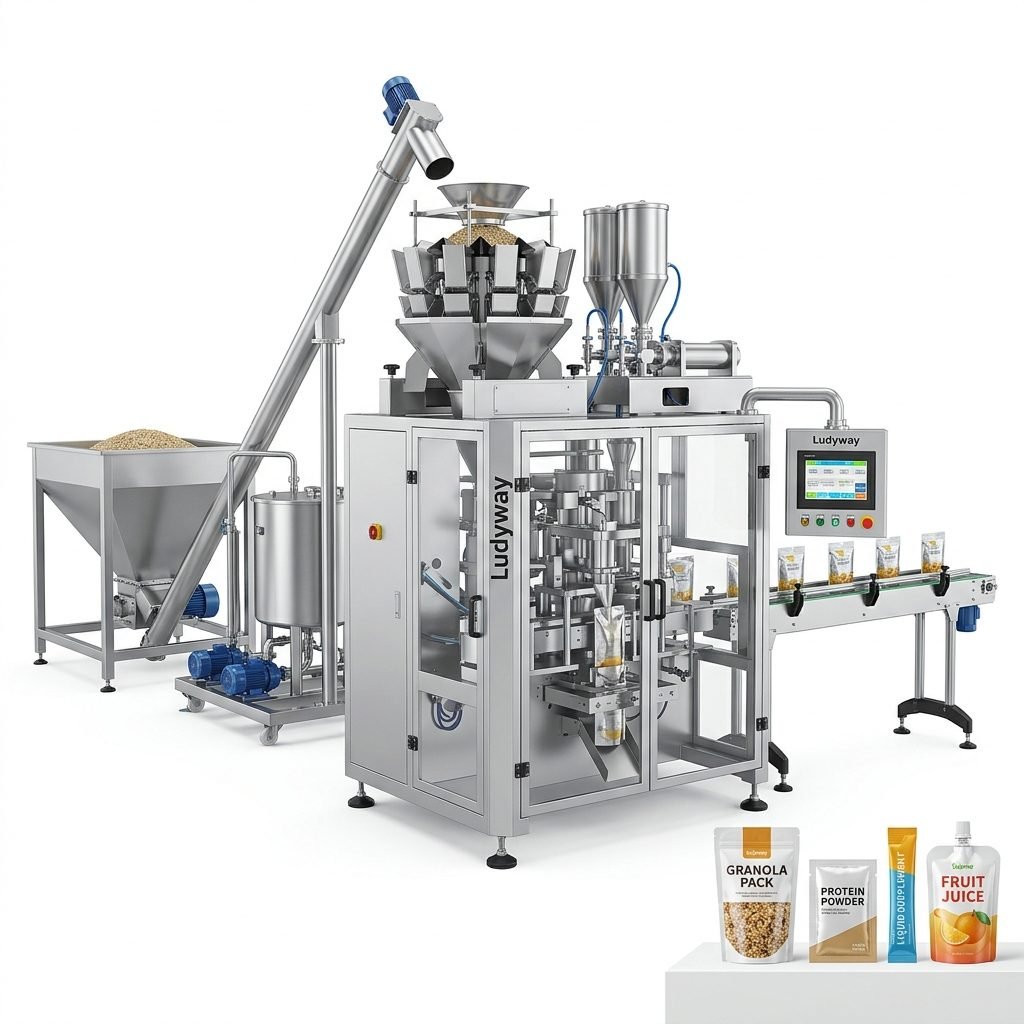
For companies looking for scalable automation, medical device packaging machine solutions from Ludyway can be especially relevant for healthcare, pharmaceutical, granule, powder, sachet, and integrated packaging line applications. As one of China’s leading packaging machine and turnkey packaging line manufacturers, the company has more than 30 years of industry experience and serves customers across more than 100 countries and regions.
Best Practices Before Buying a Medical Device Packaging Machine
- Define the medical product classification and packaging risk level first
- Confirm whether the package must maintain sterility
- Test actual packaging materials on the machine
- Review seal strength, appearance, and transportation performance
- Request validation support documents and machine parameter controls
- Check coding, labeling, and inspection integration capabilities
- Assess after-sales support, spare parts, and training availability
- Consider future expansion into full turnkey packaging lines
Final Answer
A packaging machine can package medical devices—and in many cases, it should—if the machine is purpose-matched to medical packaging requirements. The critical issue is not whether automation is possible, but whether the selected machine can deliver clean operation, stable sealing, traceability, validation support, and compliance with medical packaging standards.
If those requirements are built into the equipment and line design, automated packaging can help medical manufacturers achieve safer products, stronger consistency, and more efficient production at scale.