In today’s fast-paced manufacturing and e-commerce world, efficient packaging is not just a final step—it’s a critical component of productivity, cost management, and product presentation. For businesses that rely on shipping or presenting goods in cartons, selecting the right carton box packaging machine is a pivotal decision. This guide delves into the various types of machines available, outlines their key benefits, and provides a structured approach to help you choose the perfect solution for your operational needs.
Understanding Carton Box Packaging Machines
Carton box packaging machines automate the process of forming, filling, sealing, or closing cardboard boxes. They range from semi-automatic units that assist with one task to fully integrated, high-speed lines that handle everything from flat carton blanks to ready-to-ship parcels. The core function is to replace manual, labor-intensive boxing, which increases speed, ensures consistency, and reduces physical strain on workers.
Key Takeaway: The primary goal of these machines is to transform flat cartons into erected, filled, and sealed containers with minimal human intervention, directly impacting your bottom line through labor savings and reduced product damage.
Primary Types of Carton Packaging Machinery
The market offers a diverse range of equipment tailored to different production volumes, carton styles, and levels of automation. Understanding these categories is the first step in narrowing down your options.
1. Automatic Carton Forming & Sealing Machines
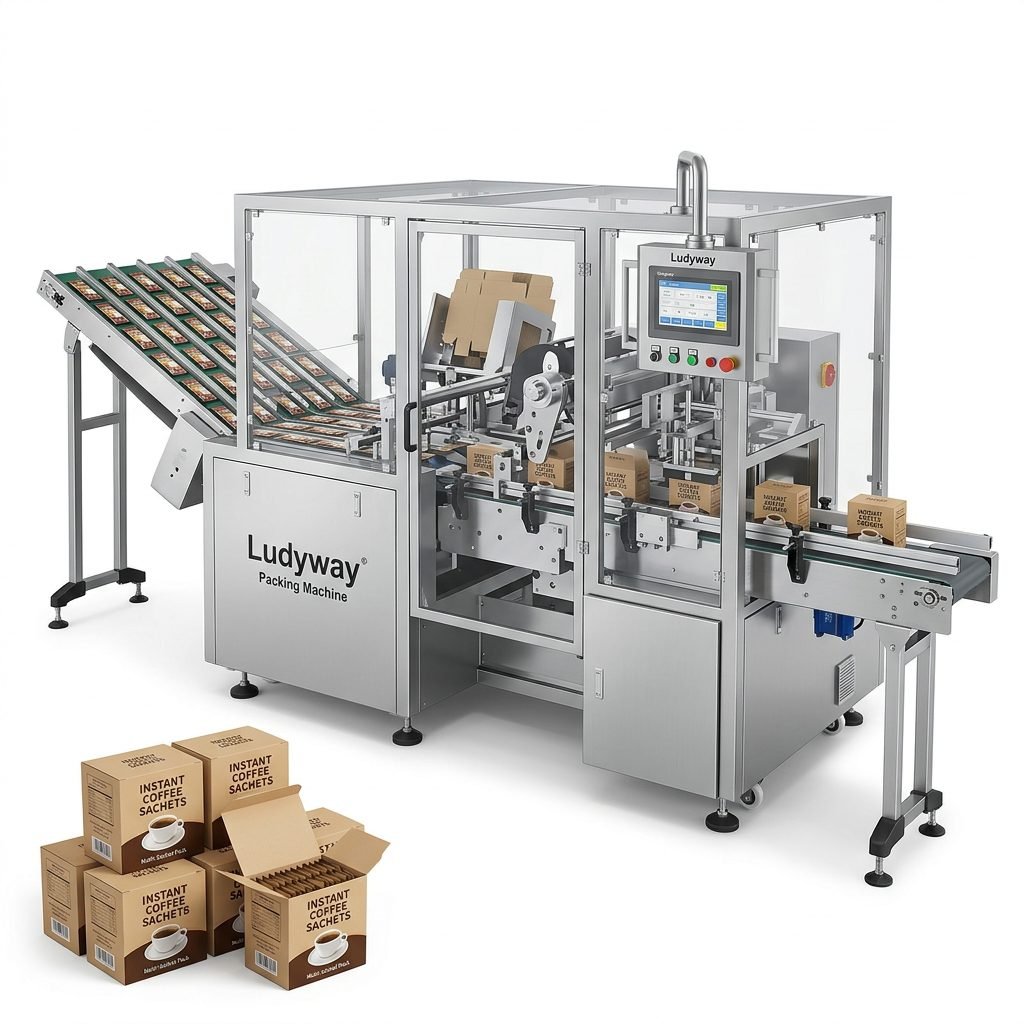
These are the workhorses of carton packaging. They typically take flat, die-cut carton blanks, automatically form them into three-dimensional boxes, and then seal the bottom flaps. They are often integrated into a line where a product is automatically placed into the erected box before the top is closed.
- ➤ Best for: High-volume production lines where products are already collated or bagged, such as in food, pharmaceutical, or consumer goods industries.
2. Semi-Automatic Carton Erectors
These machines require an operator to manually place the flat carton blank into the machine. The machine then automatically forms and seals the bottom of the box, ready for manual or automatic filling. They offer a great balance between cost and productivity increase.
- ➤ Best for: Medium-volume operations, businesses with frequent carton size changes, or as an entry point into automation.
3. Random Case Sealers (Top & Bottom)
These machines are designed to automatically seal the top and/or bottom flaps of already filled and erected boxes. They can handle a wide variety of box sizes without the need for manual adjustment (“random” size capability), making them incredibly flexible for warehouses and distribution centers.
- ➤ Best for: E-commerce fulfillment, third-party logistics (3PL), and any operation with a high mix of different-sized outgoing shipments.
4. Integrated Carton Packaging Lines
This is a complete system that combines multiple machines: a carton erector, a product collator/infeed system, a loading mechanism (like a robotic arm or funnel), and a case sealer. It represents the pinnacle of automation, handling the entire process from flat blank to sealed, labeled box ready for palletizing.
- ➤ Best for: Large-scale manufacturers with consistent, high-speed production needs, such as beverage can multipacks, frozen food boxes, or medical device kits.
Tangible Benefits of Automating Your Carton Packaging
Investing in a carton box packaging machine delivers measurable returns across several key business areas.
Operational & Financial Advantages
Significant Labor Cost Reduction: Automating the repetitive tasks of box forming, taping, or gluing frees up employees for higher-value tasks and can reduce the number of personnel required on a packaging line.
Dramatically Increased Output Speed: Machines can form and seal boxes many times faster than human hands, directly increasing your line’s throughput and capacity.
Unmatched Consistency and Quality: Every box is formed and sealed identically. This eliminates human error, ensures a professional appearance, and provides better protection for the product inside by ensuring proper flap alignment and seal integrity.
Material Savings: Automated systems can be precisely calibrated to use the optimal amount of tape or hot melt adhesive, reducing material waste compared to manual application.
Enhanced Workplace Safety: Reduces the risk of repetitive strain injuries (RSI) and accidents associated with manual box cutting, folding, and taping.
How to Choose the Right Carton Packaging Solution: A Step-by-Step Guide
Selecting the ideal machine requires a careful analysis of your current and future needs. Follow this framework to make an informed decision.
Step 1: Analyze Your Current Packaging Process
Start by documenting everything: your average and peak production volumes (boxes per hour/day), the range of carton sizes you use, the type of seal required (tape, hot melt, cold glue), and your product characteristics (weight, fragility, form).
Step 2: Define Your Automation Goals & Budget
Are you aiming to eliminate a bottleneck, reduce headcount, or handle seasonal spikes? Your goal dictates the level of automation. Be realistic about your capital expenditure (CAPEX) budget, but also calculate the potential return on investment (ROI) from labor and material savings.
Step 3: Evaluate Machine Specifications & Compatibility
Scrutinize the machine’s specifications. Key factors include:
• Speed (boxes per minute): Does it match your required output?
• Size Changeover: How quickly and easily can you switch between different box sizes? Look for tool-less adjustments.
• Footprint: Will it fit in your available floor space?
• Integration: Can it connect with your existing conveyors, product loaders, or labeling systems?
Step 4: Prioritize Reliability and Supplier Support
The machine’s build quality and the manufacturer’s support are critical. Research the brand’s reputation. A reliable supplier like Ludyway Packing Machine, with decades of engineering experience, offers peace of mind. Ensure they provide comprehensive after-sales service, readily available spare parts, and clear technical documentation. Understanding the company’s history and commitment to innovation can be a strong indicator of long-term reliability.
Step 5: Request a Live Demonstration or Trial
Never buy based on specifications alone. If possible, provide samples of your actual cartons and products to the supplier for a live test run. This is the best way to verify performance, seal quality, and ease of operation before making a commitment.
Conclusion
Choosing the right carton box packaging machine is a strategic investment that pays dividends in efficiency, cost savings, and product quality. By thoroughly understanding the different machine types, clearly defining your operational requirements, and partnering with a reputable and experienced supplier, you can implement a solution that streamlines your packaging line, boosts your competitiveness, and scales with your business growth. The journey from manual boxing to automated precision is a key step in modernizing your production or fulfillment operations.
Frequently Asked Questions (FAQs)
1. What is the main difference between a carton erector and a case sealer?
A carton erector forms a box from a flat blank and typically seals the bottom. A case sealer takes an already formed and filled box and seals the top (or top and bottom) flaps. They are often used together in a sequence.
2. How much can I expect to save on labor with an automatic machine?
Savings vary widely based on your current process. A single automatic cartoner can often replace 2-4 manual packing stations. The ROI calculation should include not just wages, but also benefits, training costs, and productivity gains from increased speed and consistency.
3. Can one machine handle all my different box sizes?
Many machines, especially random case sealers and models with quick-change systems, are designed to handle a wide range of sizes. You must provide the supplier with your minimum and maximum dimensions (LxWxH) to confirm compatibility. Frequent, complex size changes may require a more flexible (and potentially higher-end) model.
4. What type of seal is better: tape or hot melt glue?
Pressure-sensitive tape is clean, easy, and requires no warm-up time. Hot melt adhesive provides a very strong, tamper-evident bond and can be more cost-effective for very high-volume runs, but it requires a glue system and maintenance. The choice depends on your product weight, security needs, and operational preferences.
5. Why is supplier experience important when choosing a packaging machine?
An experienced supplier brings invaluable expertise in application engineering. They can help you avoid costly mistakes, recommend the most efficient solution for your specific product, and ensure the machine integrates smoothly into your line. Their long-term support for spare parts and service is crucial for minimizing downtime and protecting your investment over the machine’s entire lifespan.