Selecting the right carton packaging machine is a critical decision that directly impacts your production efficiency, operational costs, and product quality. This comprehensive guide will walk you through the key factors to consider when choosing carton packing equipment, ensuring you make an informed investment that aligns with your specific production line requirements.
Understanding Your Packaging Requirements
The first and most crucial step is a thorough analysis of your own needs. This goes beyond simply wanting to “package products into boxes.” You must define the scope and specifics of your operation.
Key Questions to Ask:
• Product Type & Size: What are the dimensions, weight, and fragility of your items? Are they uniform or variable?
• Production Speed (Output): What is your required output in cartons per minute (CPM) or per hour? Consider both current needs and future growth.
• Carton Supply: Will you use pre-glued (auto-bottom) cartons, flat carton blanks, or corrugated cases?
• Integration Level: Do you need a stand-alone cartoner, or a machine that integrates with upstream fillers and downstream case packers?
Clearly documenting these parameters creates a specification sheet that will be invaluable when evaluating different equipment models and discussing with suppliers.
Types of Carton Packaging Machines
Cartoners are categorized based on their method of carton erection and product loading. Choosing the right type is fundamental.
1. Vertical Cartoners
These machines erect cartons from a flat blank or pre-glued sleeve with the opening facing upward. Products are typically dropped or placed vertically into the carton from above. They are ideal for free-flowing products like pouches, sachets, bottles, or blister packs. Vertical cartoners are known for their compact footprint and high speed.
2. Horizontal Cartoners
Horizontal cartoners form the carton with the opening on its side. Products are inserted horizontally, often using a pusher arm or continuous motion system. This type is perfect for fragile, nested, or stacked items that cannot be dropped, such as vials, syringes, or delicate food products. They offer gentle handling.
3. Wrap-Around Cartoners
This machine forms the carton directly around a product or product group (like a tray of bottles). It uses a single flat blank that is wrapped and sealed, offering excellent material efficiency and a very secure package. It’s highly efficient for high-volume, uniform products.
Core Machine Features and Technology Evaluation
Beyond the basic type, delve into the technological features that differentiate machines and impact long-term performance.
Essential Features Checklist
✓ Drive System: Servo-driven machines offer superior flexibility, precision, and easier changeovers compared to traditional mechanical drives.
✓ Changeover System: Look for quick-change tooling or digital recipe storage to minimize downtime during product switches.
✓ Control System: A user-friendly, graphical HMI (Human-Machine Interface) with diagnostic capabilities is crucial for operator efficiency.
✓ Safety & Compliance: Ensure the machine meets relevant safety standards (e.g., CE, UL) and has appropriate guarding and interlocks.
Investing in modern, feature-rich technology from a reliable packaging partner often results in lower total cost of ownership through reduced waste, less downtime, and higher overall equipment effectiveness (OEE).
Integration with Your Production Line
A cartoner is rarely an island. Its successful operation depends on seamless integration with upstream and downstream equipment.
Upstream Considerations: How will products be fed into the cartoner? This could be from a bulk hopper, a conveyor from a filler/capper, or a robotic pick-and-place cell. The interface (timing, orientation, infeed mechanism) must be perfectly synchronized.
Downstream Considerations: What happens to the filled carton? It may go to a case packer, a checkweigher, a labeling system, or a palletizer. The exit conveyor height, speed, and timing are critical.
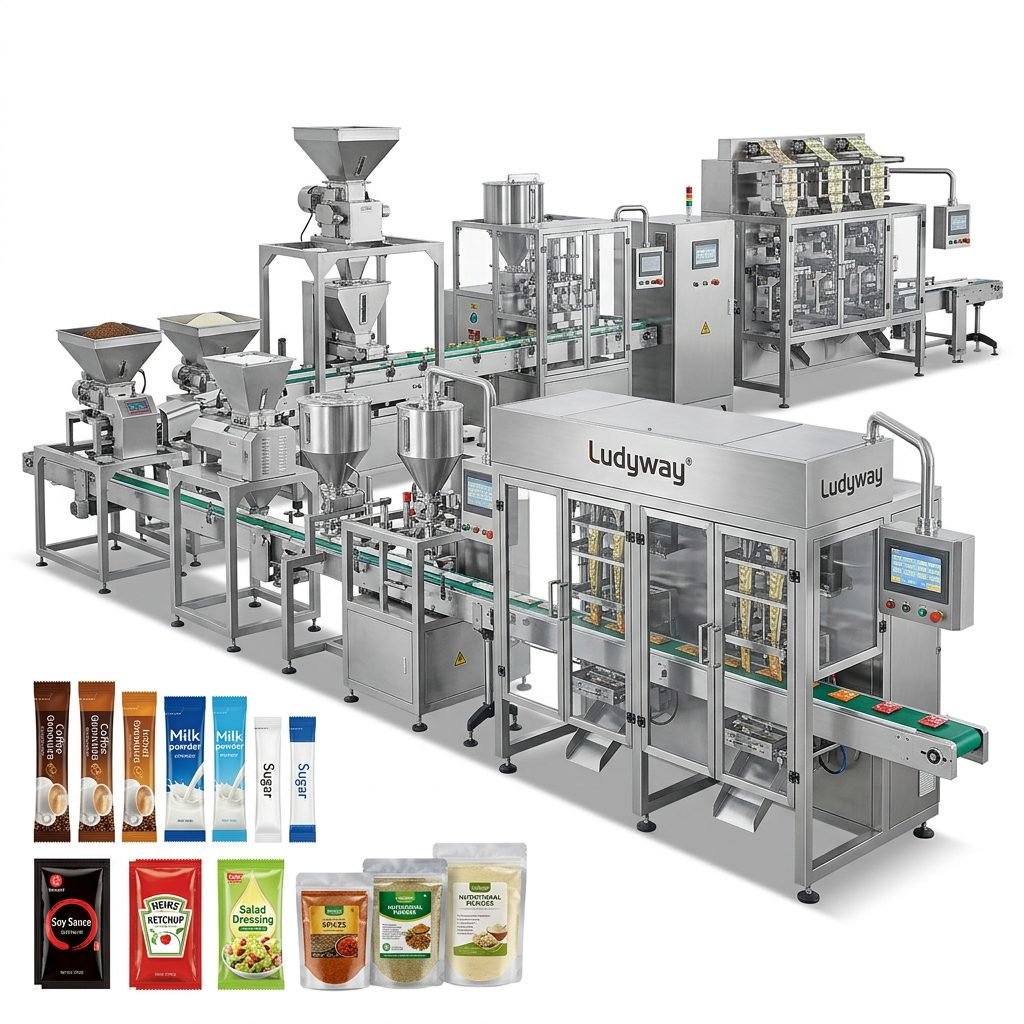
Discussing your entire line layout with the machine supplier is essential. They should provide a detailed integration plan or even act as a turnkey solution provider, ensuring all components work in harmony.
Supplier Selection and Support
The machine manufacturer or distributor is as important as the machine itself. Their support defines your long-term experience.
- Experience & Reputation: Choose a supplier with a proven track record in your industry. For example, a company like Ludyway Machinery, with over a decade of focus on packaging solutions, brings valuable application knowledge.
- Technical Support & Spare Parts: Verify the availability of local or responsive remote support, training programs, and a reliable spare parts inventory.
- Testing & Validation: Always insist on a factory acceptance test (FAT) using your actual products and cartons to see the machine in action before purchase.
Total Cost of Ownership (TCO) Analysis
Look beyond the initial purchase price. The true cost includes:
Capital Cost: Machine price, shipping, installation.
Operational Cost: Energy consumption, required operator time, maintenance labor.
Material Cost: Carton waste rate, glue or tape consumption.
Downtime Cost: Losses from changeovers, repairs, and unplanned stoppages.
A slightly higher initial investment in a robust, efficient, and reliable machine from a quality-focused manufacturer often yields a significantly lower TCO over 5-10 years.
Conclusion and Final Recommendations
Choosing the right carton packaging machine is a strategic process. Start with a clear understanding of your product and output needs. Evaluate the different machine types and prioritize advanced features that offer flexibility and efficiency. Plan for seamless line integration and partner with a reputable supplier who offers strong after-sales support. Finally, conduct a thorough Total Cost of Ownership analysis to justify your investment. By following this guide, you can select equipment that enhances your productivity, protects your product, and grows with your business for years to come.
Frequently Asked Questions (FAQs)
1. What is the main difference between a vertical and a horizontal cartoner?
The primary difference is the direction of product loading. Vertical cartoners load products from above into an upward-facing opening, best for free-flowing items. Horizontal cartoners load products sideways into a laterally-oriented opening, offering gentler handling for fragile or nested products.
2. How important are servo motors in a modern cartoning machine?
Extremely important. Servo-driven systems provide precise control over motion, enabling faster, smoother operation, simpler and quicker changeovers through digital recipes, reduced mechanical wear, and greater flexibility to handle different carton sizes and product types.
3. Can one cartoning machine handle multiple, very different carton sizes?
Yes, but with considerations. Multi-size capability depends on the machine’s design and changeover system. “Quick-changeover” models with tool-less adjustments or interchangeable tooling kits can switch sizes in minutes. However, there are always physical limits to the size range a single machine frame can accommodate.
4. What kind of maintenance does a carton packaging machine require?
Regular preventive maintenance is key. This typically includes daily cleaning, lubrication of guide rails and bearings as per the manual, inspection of seals and wear parts (like tucker blades and grippers), and checking for loose fasteners. Adhering to the supplier’s maintenance schedule is crucial for longevity and avoiding unplanned downtime.
5. How do I ensure the machine will work with my specific product?
The only sure way is through testing. Before purchase, you should provide your exact product(s) and carton blanks to the supplier for a live factory acceptance test (FAT). This demonstrates the machine’s capability, allows for fine-tuning, and gives your team confidence in the equipment’s performance.