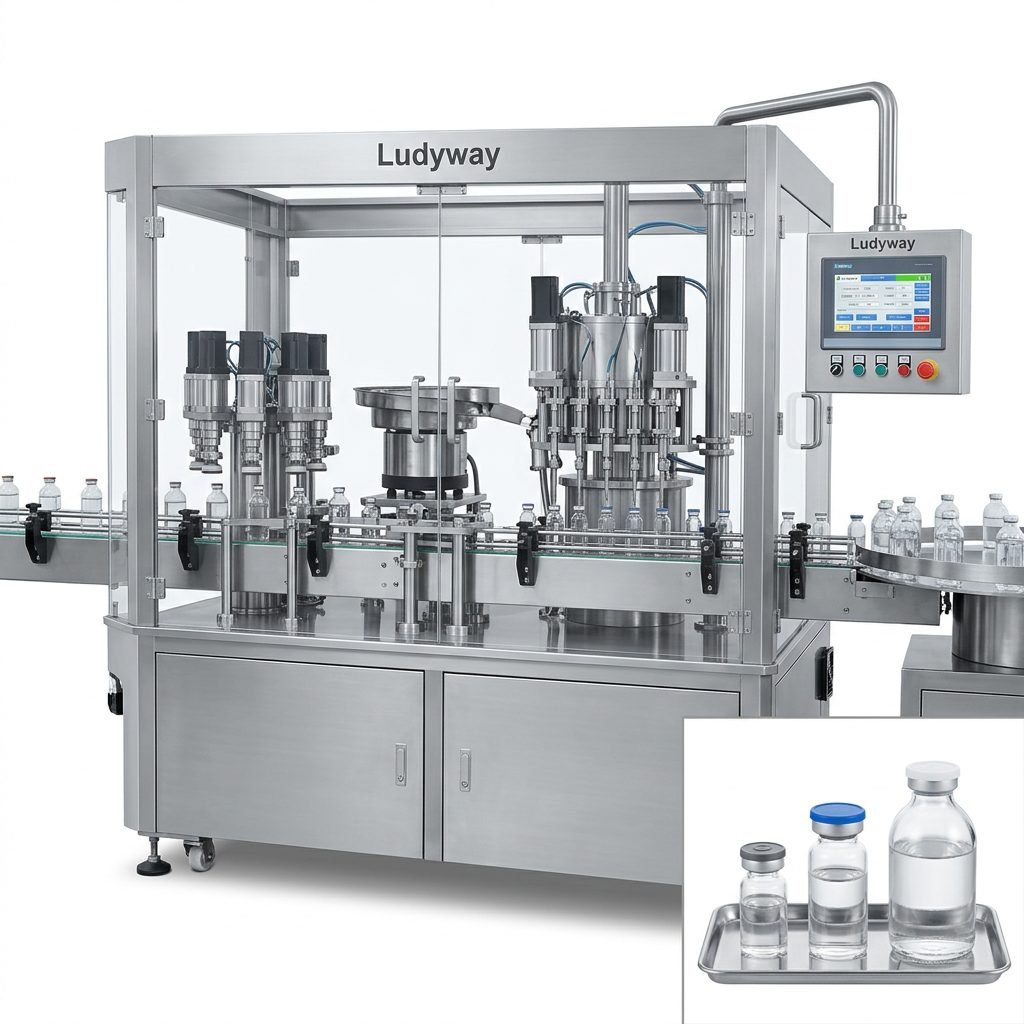
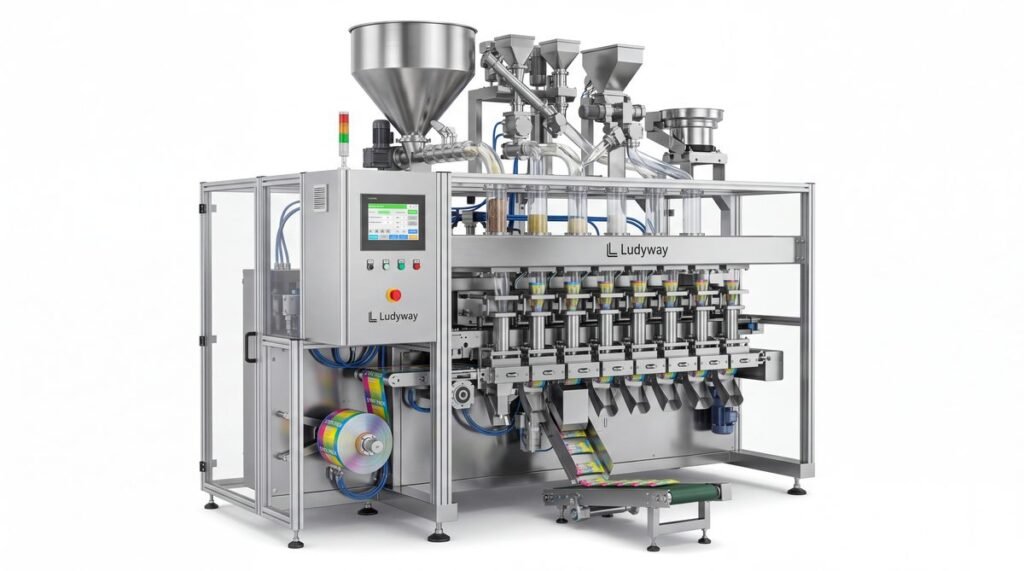
In today’s fast-moving food market, packaging is no longer just the final step of production. It directly affects product safety, shelf appeal, labor efficiency, delivery speed, and long-term business growth. For modern food businesses, choosing the right commercial food packaging equipment can make the difference between a slow, labor-heavy workflow and a scalable, profitable operation.
Whether you produce snacks, spices, coffee, frozen food, sauces, nutrition powders, or ready-to-eat products, advanced packaging systems help standardize output, reduce waste, and support compliance with rising quality expectations across global markets.

Why Commercial Food Packaging Equipment Matters
Food manufacturers face constant pressure to deliver products that are fresh, consistent, secure, and visually attractive. Manual or semi-manual packaging often creates bottlenecks, especially when production volume increases. Commercial packaging equipment solves this by automating key functions such as weighing, filling, sealing, coding, labeling, and secondary packing.
- Higher production efficiency with less downtime and fewer repetitive tasks
- More accurate filling for powders, granules, liquids, and pastes
- Improved package consistency for better retail presentation
- Lower material waste through precision dosing and sealing
- Better hygiene control in food-contact processes
- Scalable automation for growing brands and industrial producers
Types of Food Products Commonly Packaged
Modern packaging machinery is designed to handle a wide range of food categories. The right machine depends on product flow characteristics, packaging format, output requirements, and factory layout.
| Food Category | Typical Product Examples | Suitable Packaging Forms |
|---|---|---|
| Powders | Milk powder, seasoning powder, protein powder, drink mixes | Sachets, stick packs, pouches, jars |
| Granules | Sugar, coffee, seeds, grains, snack mixes | Stick packs, sachets, bags, premade pouches |
| Liquids | Sauces, vinegar, soy sauce, oils, beverages | Sachets, bottles, pouches |
| Pastes | Ketchup, mayonnaise, curry sauce, peanut butter | Sachets, pouches, cups |
| Solid foods | Freeze-dried fruit, nuts, jerky, pet snacks | Vacuum bags, pouches, pillow packs |
Core Equipment Used in Food Packaging Lines
A commercial packaging line may include one machine or a fully integrated solution. The most efficient factories combine several systems to create a smooth flow from product feeding to final case packing.
1. Form Fill Seal Machines
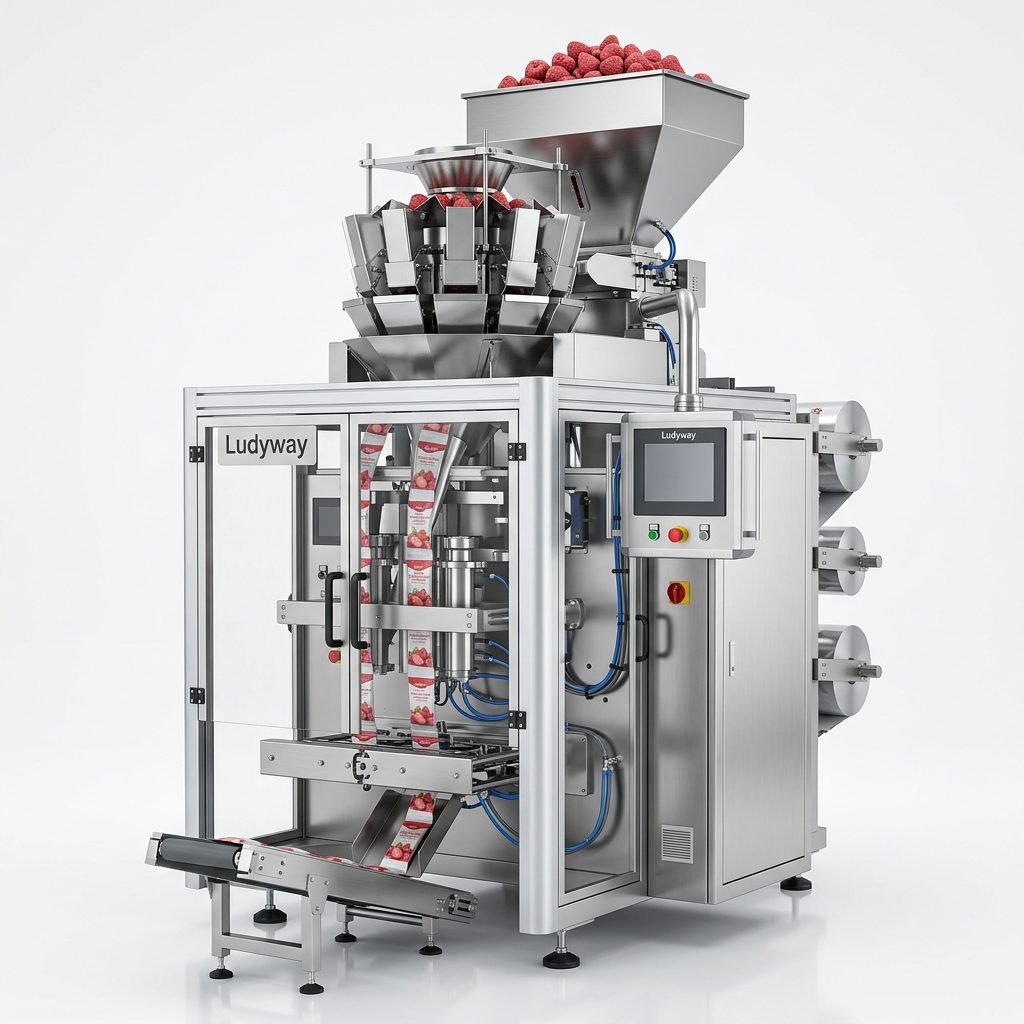
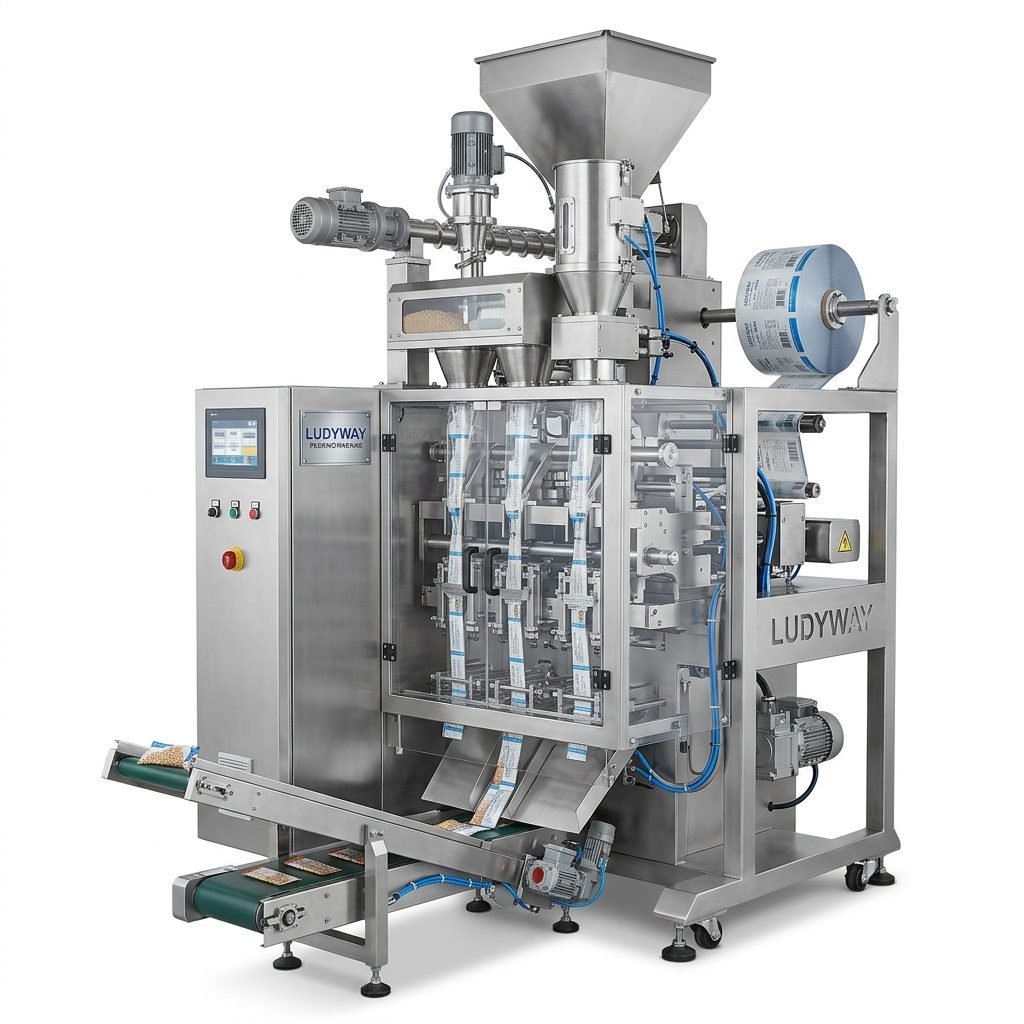
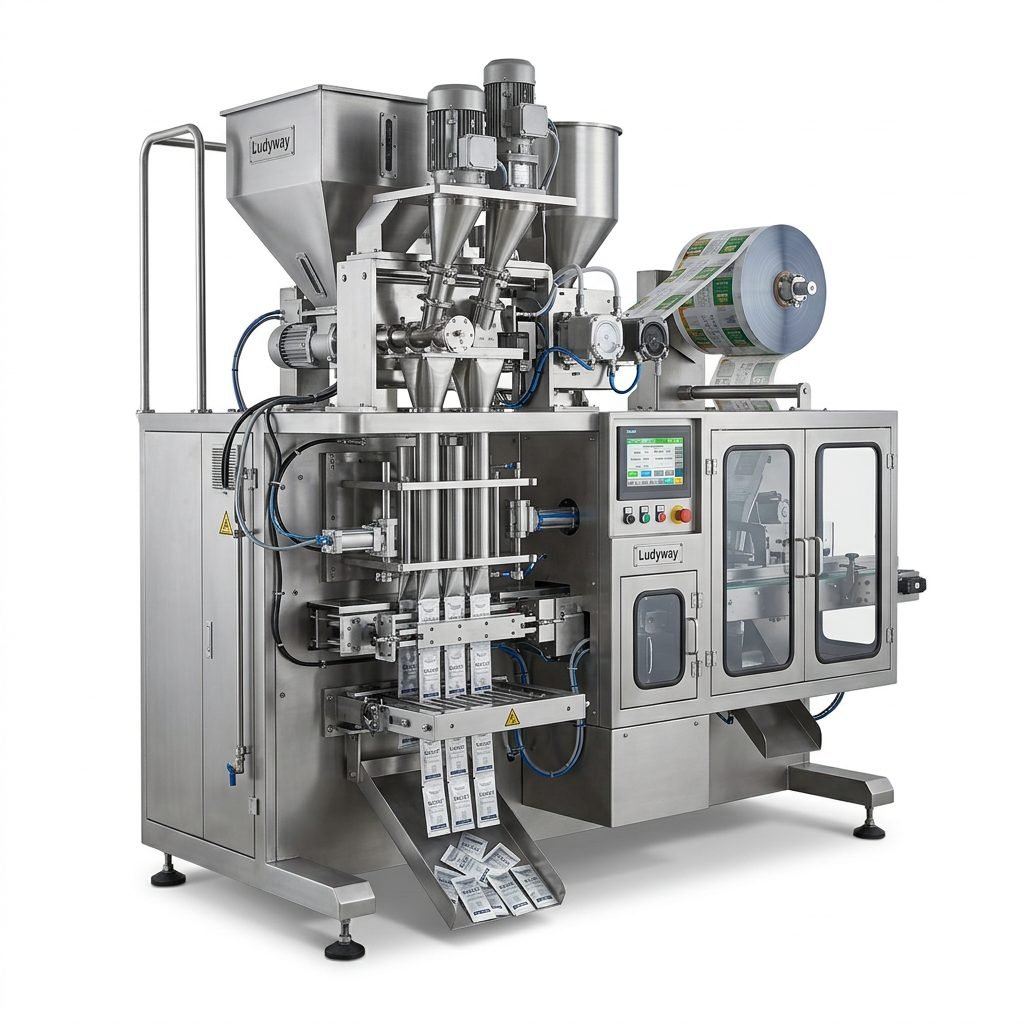
Form fill seal systems create the package from roll film, fill it with product, and seal it in one automated process. These are popular for high-volume food production because they save space and support fast changeovers.
2. Multi-Lane Sachet and Stick Pack Machines
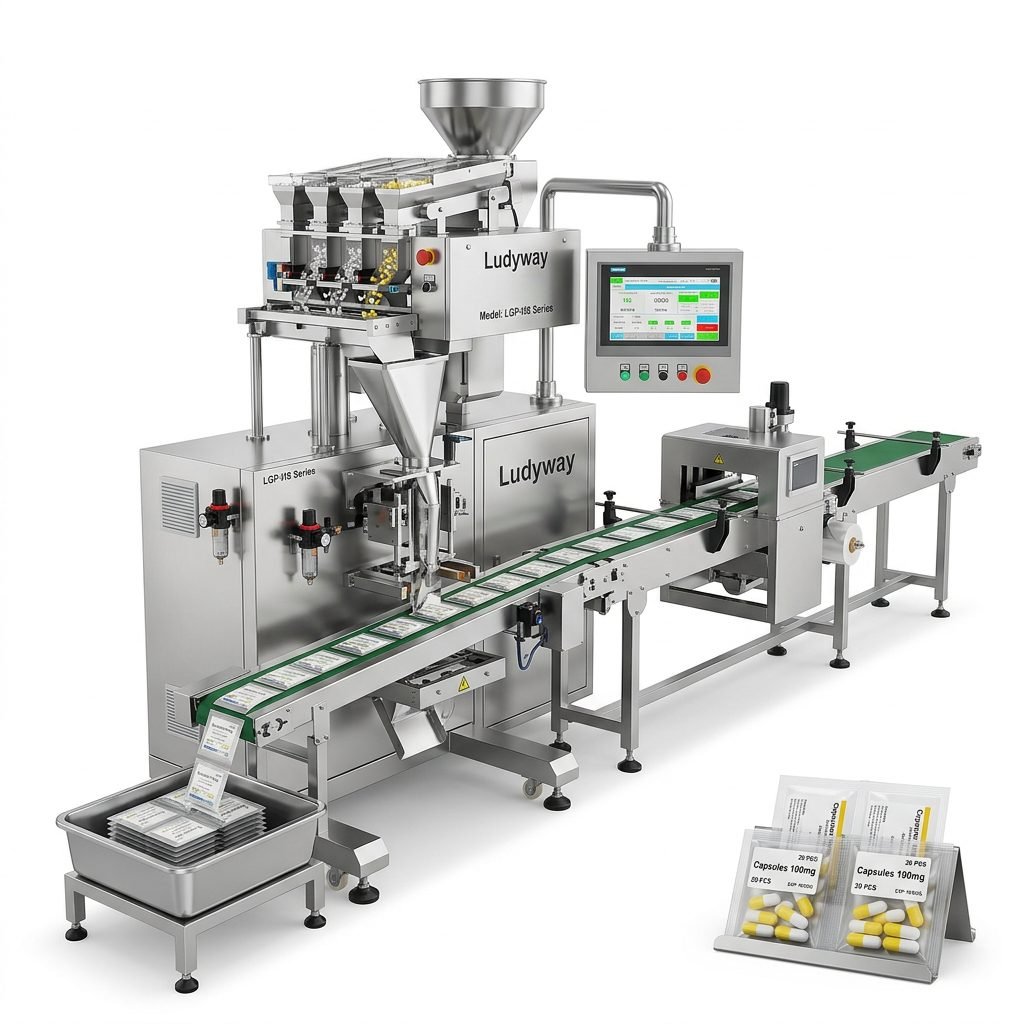
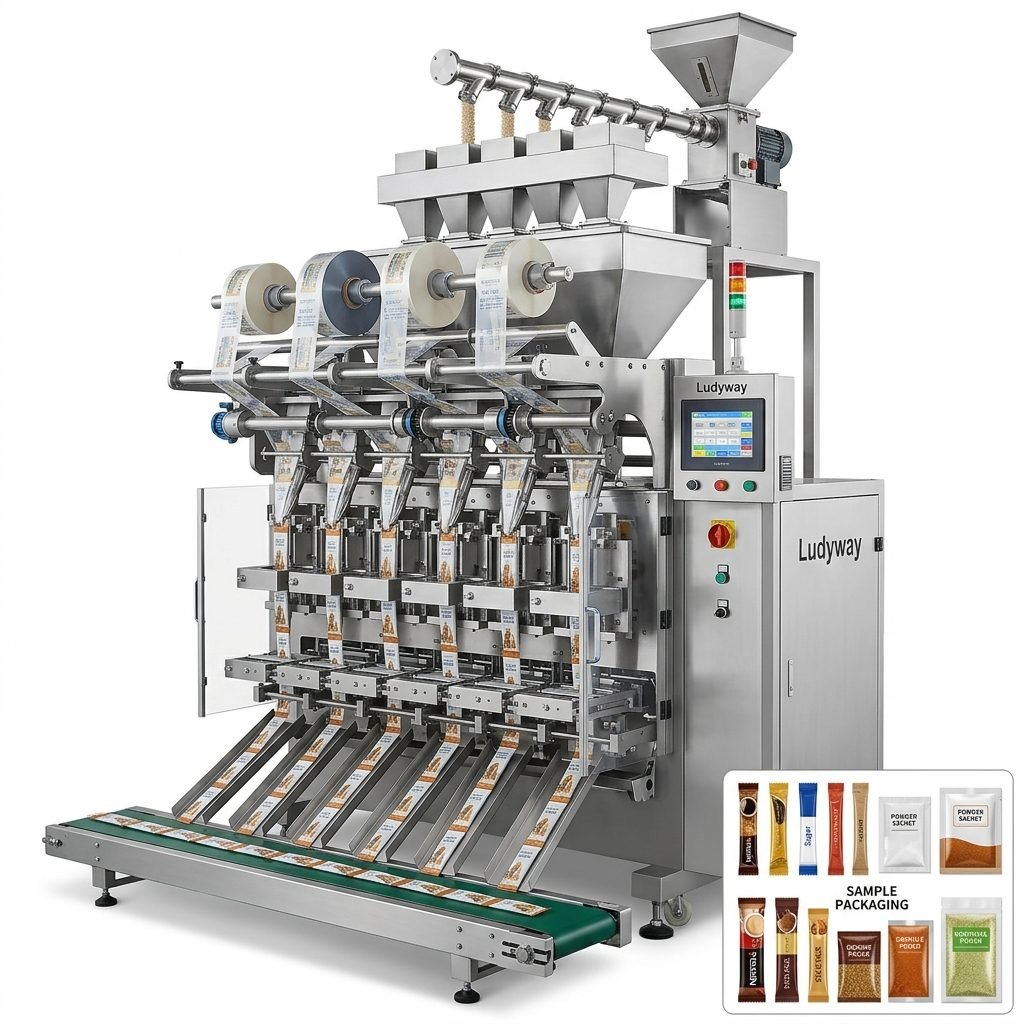
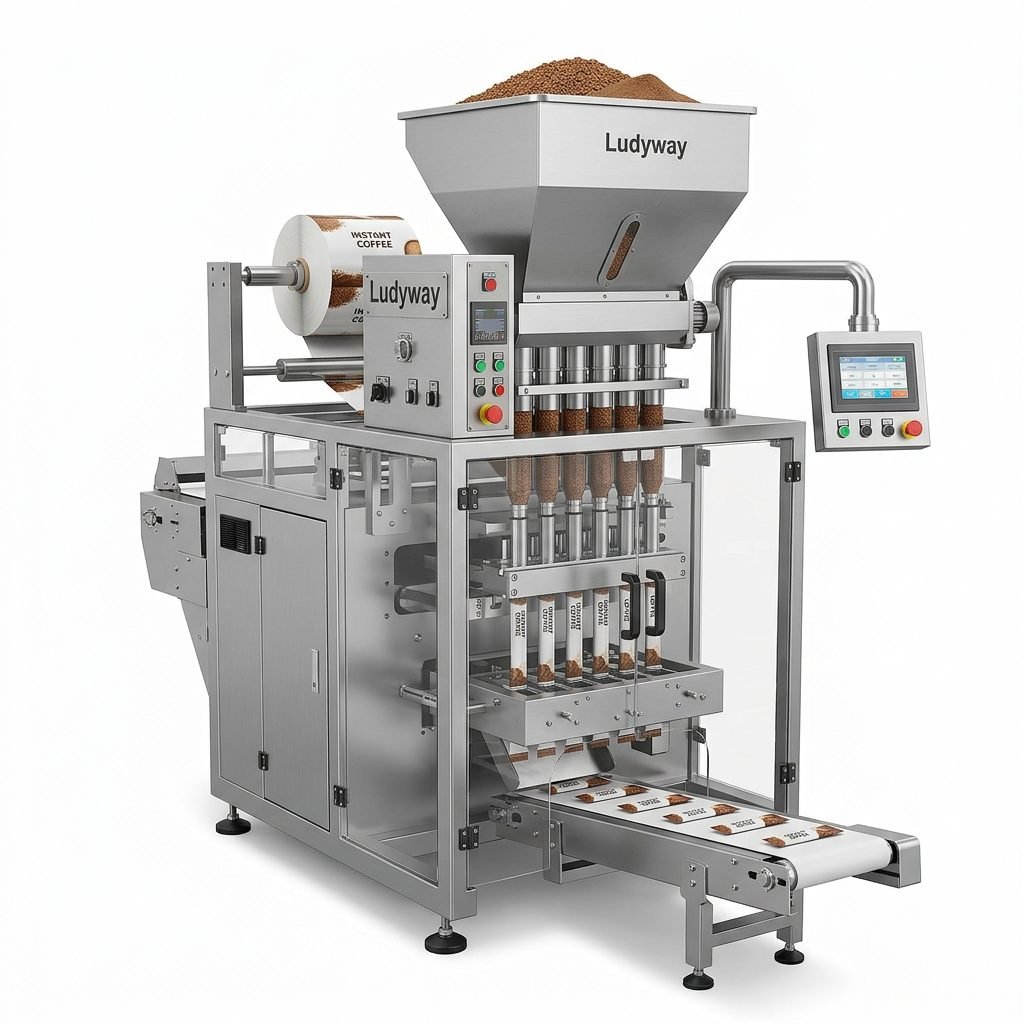
These machines are ideal for single-serve and portion-controlled foods such as instant coffee, sugar, soup powder, electrolyte blends, and seasoning. Multi-lane systems significantly increase output while maintaining compact footprints.
3. Vertical Packaging Machines
Vertical systems are commonly used for granules, powders, and small solids. They are valued for speed, flexibility, and efficient floor-space usage.
4. Liquid and Paste Filling Machines
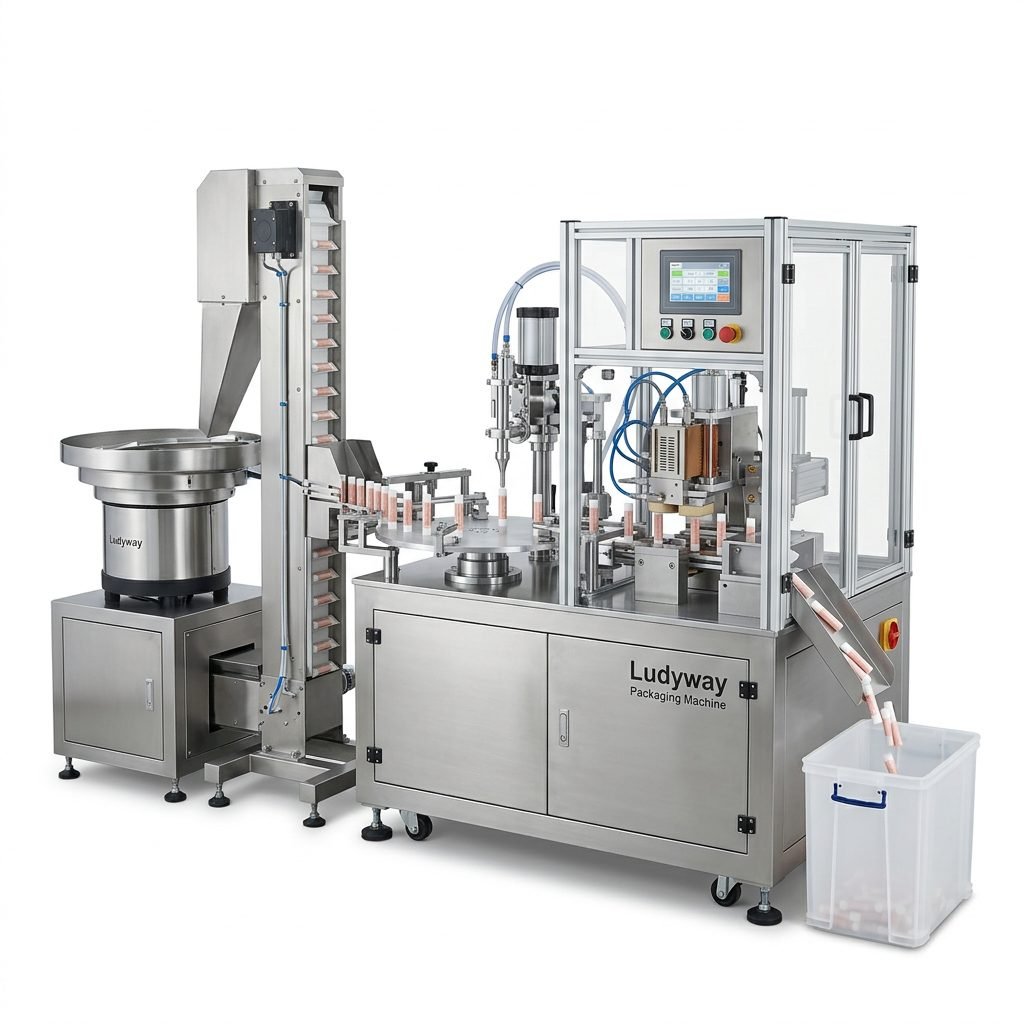
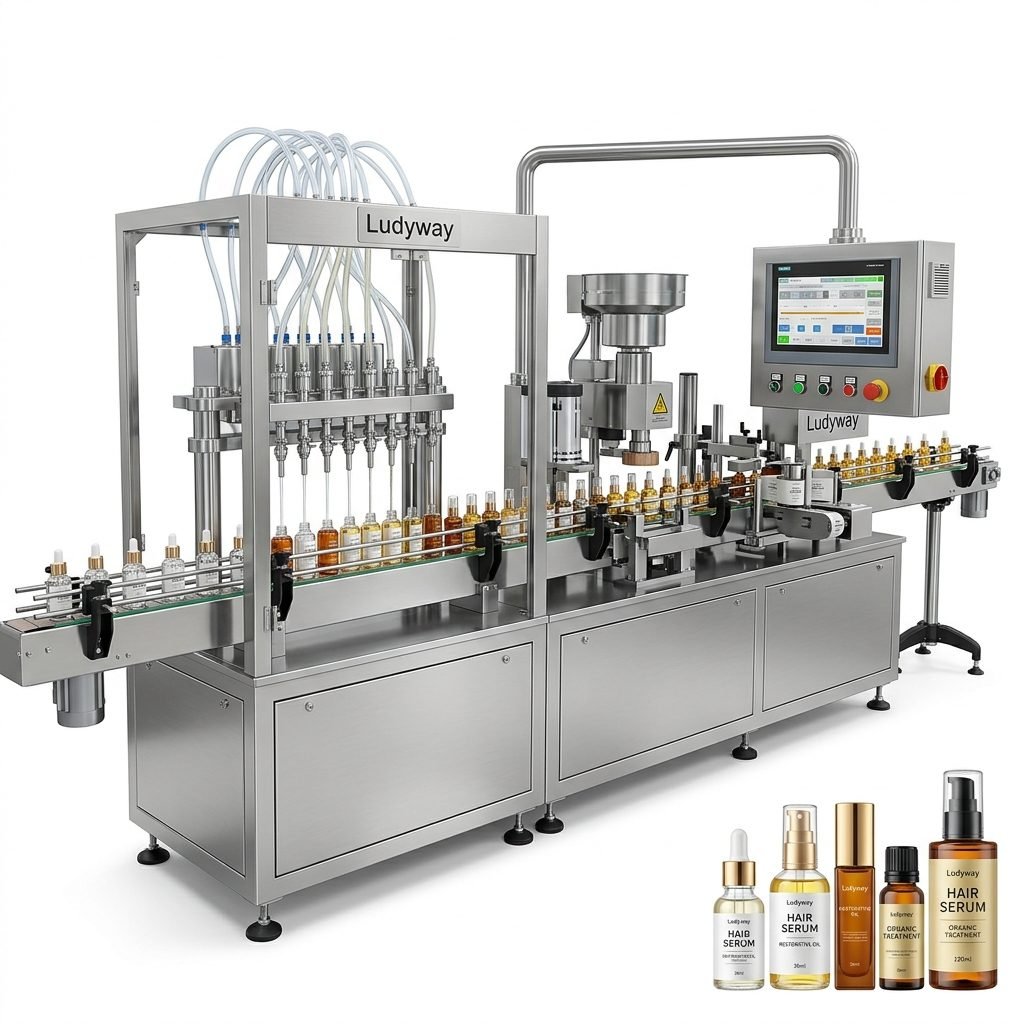
These machines are suitable for sauces, condiments, oils, and viscous food products. Depending on product viscosity and packaging format, they may use piston filling, pump filling, or gravity-based filling systems.
5. Vacuum Packaging Systems
For products that require extended shelf life, vacuum packaging removes air before sealing. This is especially useful for meat products, seafood, dried foods, and premium snacks.
6. Cartoning and End-of-Line Automation
Secondary packaging equipment such as cartoners, case packers, sealers, palletizers, and labeling systems helps create a complete packaging workflow. This reduces manual handling and improves shipping readiness.
Key Benefits for Modern Food Businesses
Investing in advanced food packaging equipment brings value beyond simple automation. It supports operational reliability and business competitiveness.
- Faster output for wholesale, retail, and e-commerce distribution
- Consistent package appearance that strengthens brand image
- Accurate dosing that protects margins and reduces giveaway
- Lower dependence on labor in repetitive packaging tasks
- Improved food safety through controlled sealing and cleaner handling
- Flexible production for multiple SKUs, pack sizes, and materials
- Better traceability with coding, batch marking, and integrated inspection options
How to Choose the Right Packaging Equipment
Not every machine fits every factory. Food companies should match equipment selection to actual production goals rather than choosing only by price or speed. A smart purchase decision considers the entire line performance.
| Selection Factor | Why It Matters |
|---|---|
| Product type | Powders, liquids, granules, and sticky products require different feeding and dosing systems |
| Packaging format | Sachets, stick packs, bottles, pouches, and bags each need different machine structures |
| Target speed | Output requirements determine lane quantity, automation level, and line design |
| Material compatibility | Film type, sealing performance, and barrier needs affect packaging quality |
| Cleaning and hygiene | Food-contact design and maintenance access support sanitation standards |
| Future expansion | Scalable equipment protects long-term investment as your business grows |
Popular Packaging Formats in the Food Industry
Consumer demand is changing packaging preferences. Convenience, portability, freshness, and sustainability are all influencing machine design.
- Stick packs for drink powders, coffee, sugar, and supplements
- Sachets for sauces, seasonings, and single-use servings
- Pillow bags for snacks, grains, and dry foods
- Premade pouches for premium products and retail-ready presentation
- Vacuum packs for shelf-life-sensitive items
- Bottle filling formats for oils, beverages, and liquid condiments
Automation Trends Shaping the Industry
Commercial food packaging equipment is becoming smarter, more connected, and easier to operate. Businesses that invest in updated systems gain better process control and stronger production visibility.
Smart Controls and HMI Interfaces
User-friendly touchscreens simplify recipe management, speed settings, diagnostics, and changeovers.
Servo-Driven Precision
Servo technology improves synchronization, dosing consistency, and sealing accuracy, especially in high-speed packaging environments.
Integrated Inspection
Metal detection, checkweighing, date coding, and vision inspection help maintain quality standards while reducing rework.
Turnkey Line Integration
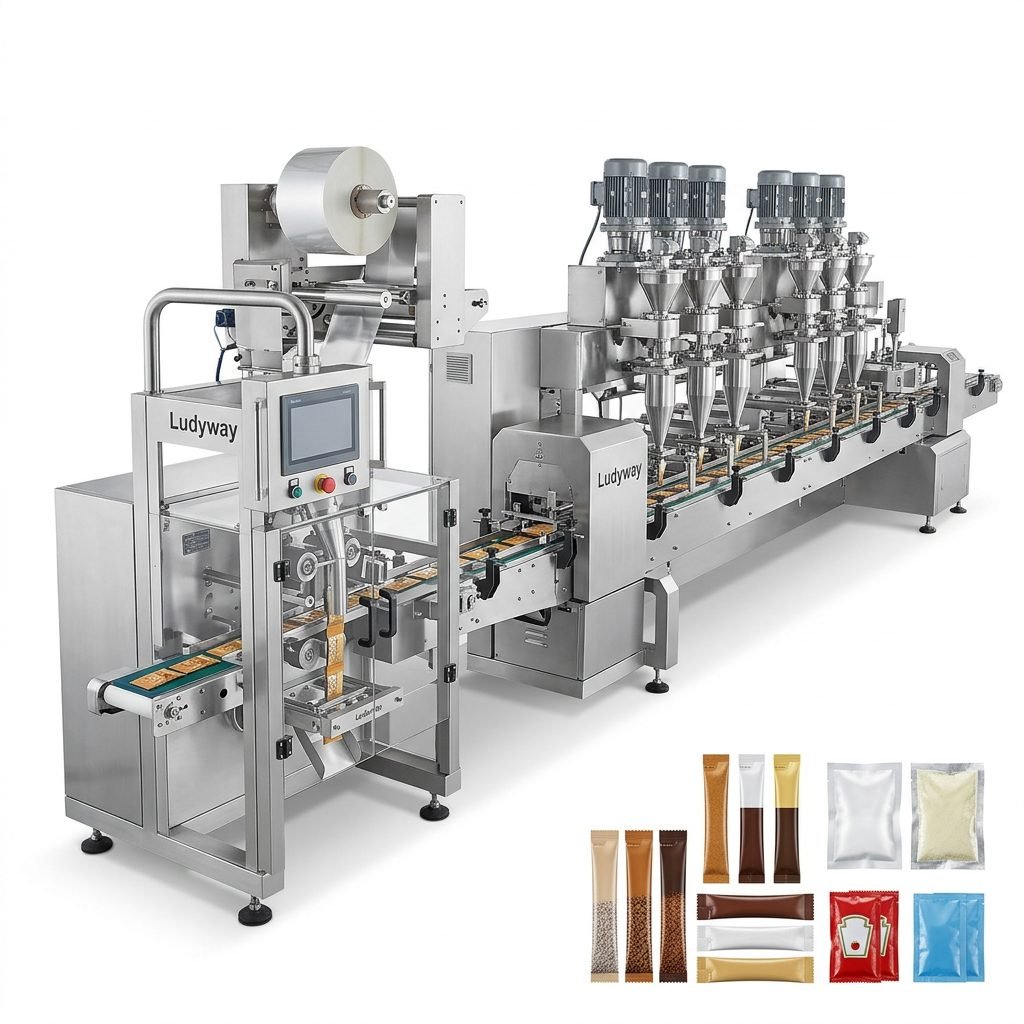
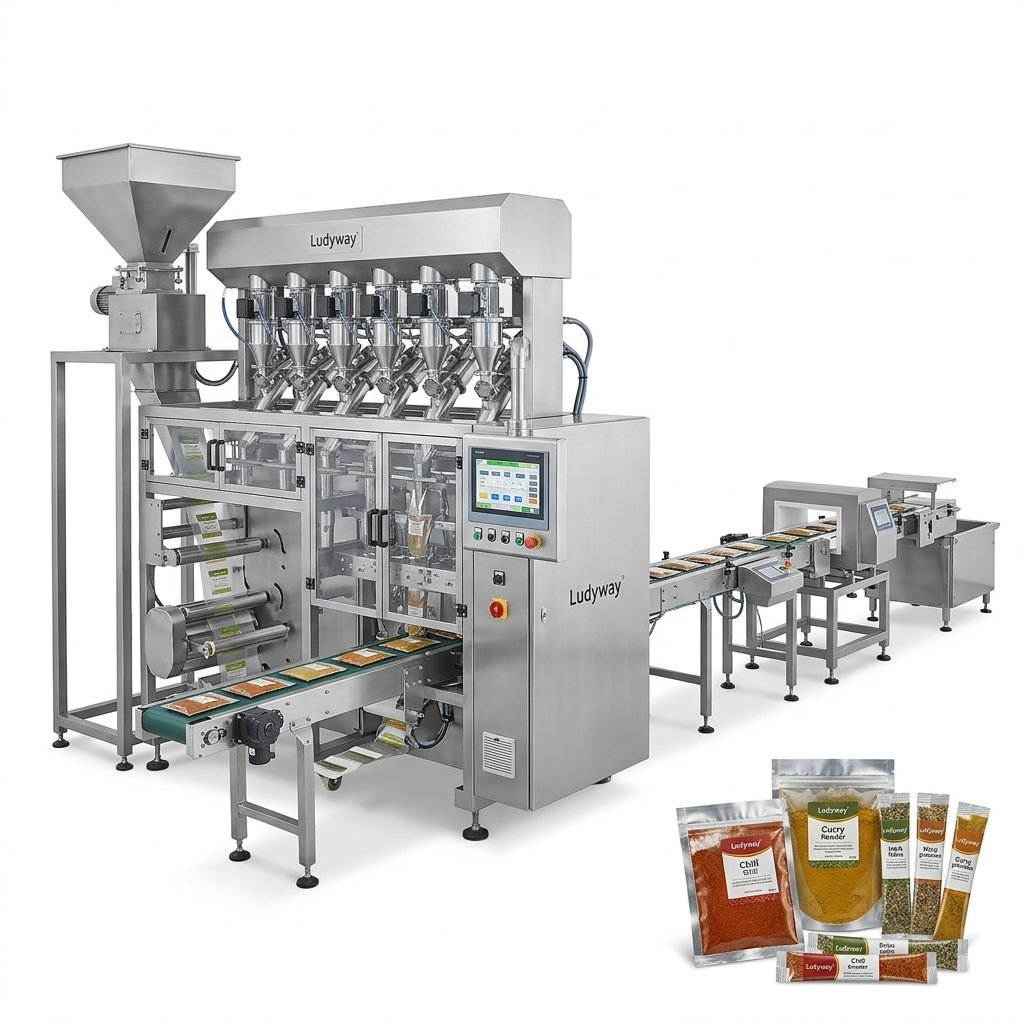
More food businesses are moving from standalone machines to integrated lines that combine feeding, packaging, coding, cartoning, and palletizing in one coordinated workflow.
When a Turnkey Packaging Line Is the Better Choice
A single packaging machine may be enough for smaller operations, but growing food businesses often benefit more from a complete line. Turnkey systems reduce compatibility issues between machines and improve the overall production rhythm.
For example, a complete food packaging line may include:
- Product feeding and conveying equipment
- Automatic weighing or dosing units
- Primary packaging machine
- Date coding or labeling system
- Checkweigher or inspection device
- Cartoning or case packing equipment
- Palletizing or wrapping solution
For businesses looking for scalable and customized automation, commercial food packaging equipment from Ludyway can support both standalone machine projects and turnkey packaging line requirements across diverse food applications.
Industries That Benefit Most
Commercial food packaging systems are especially valuable for:
- Snack food manufacturers
- Instant beverage producers
- Spice and seasoning brands
- Protein and health nutrition companies
- Sauce and condiment processors
- Frozen and freeze-dried food suppliers
- Export-oriented private label manufacturers
Final Considerations Before Investing
Before purchasing equipment, food manufacturers should evaluate not only machine specifications but also service support, engineering capability, spare parts availability, and customization experience. A reliable supplier should understand packaging materials, product behavior, speed targets, hygiene requirements, and line integration challenges.
The best commercial food packaging equipment is not simply the fastest machine on paper. It is the system that fits your product, your plant, your operators, and your long-term production strategy.
Quick Buyer Checklist
- Define your product characteristics clearly
- Confirm packaging type and pack size range
- Estimate current and future output needs
- Review cleaning and maintenance requirements
- Ask about customization and line integration
- Check after-sales support and technical response capability
As competition increases and consumer expectations continue to rise, automated food packaging is becoming a strategic investment rather than an optional upgrade. Businesses that modernize packaging early are better positioned to improve efficiency, protect quality, and respond faster to market demand.