In the competitive food industry, efficiency, safety, and presentation are paramount. The right commercial food packaging equipment is not just a tool; it’s a strategic asset that can enhance product quality, streamline operations, and protect your brand. This guide delves into the various types of packaging machines, their specific uses, and provides a clear framework for selecting the ideal equipment to propel your business forward.
Understanding the Core Types of Commercial Food Packaging Equipment
The landscape of food packaging machinery is diverse, with each type designed for specific product forms and production volumes. Understanding these categories is the first step in making an informed investment.
1. Primary Packaging Machines
These machines handle the direct contact packaging that consumers see on shelves. They are crucial for product integrity and shelf appeal.
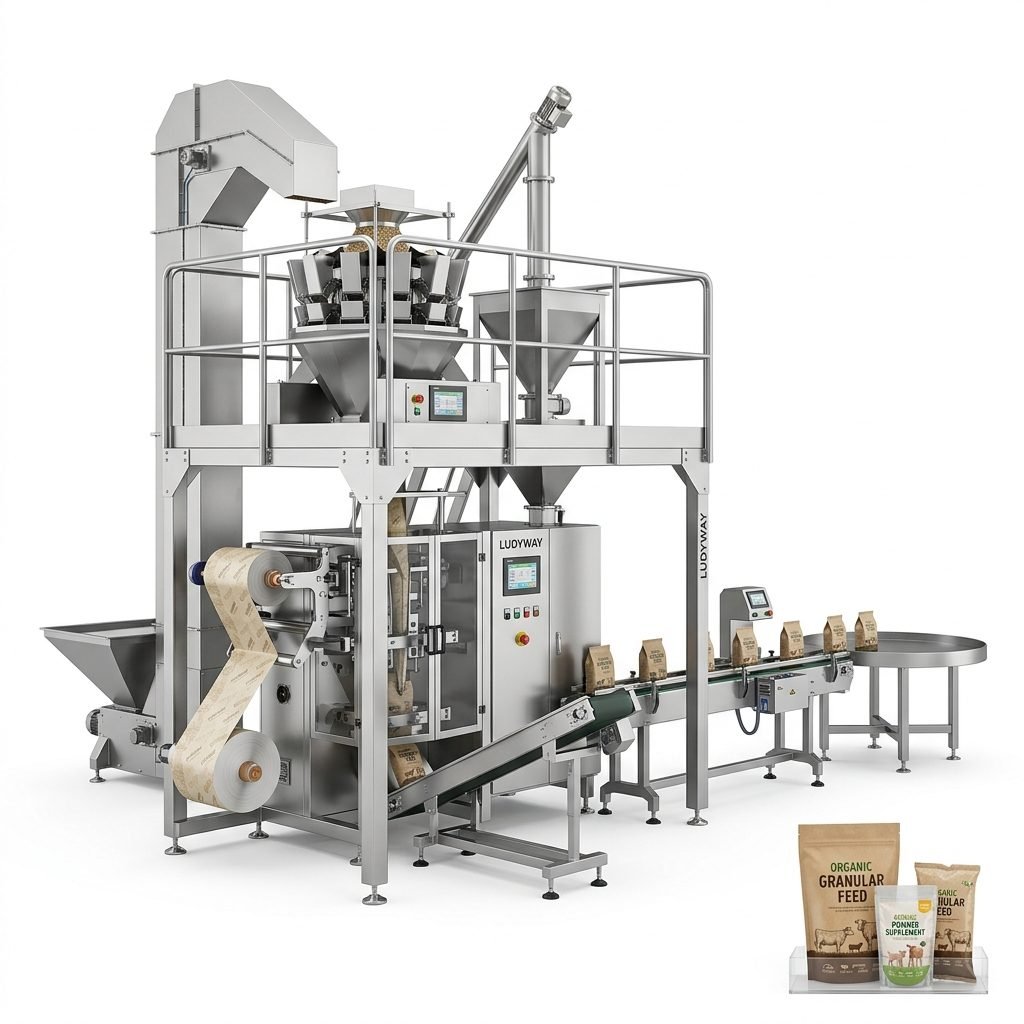
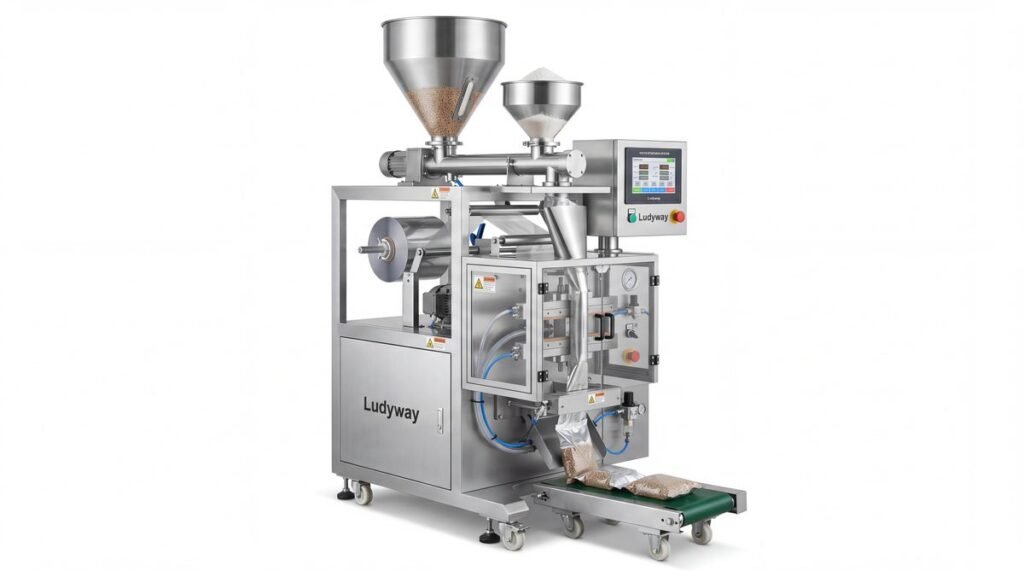
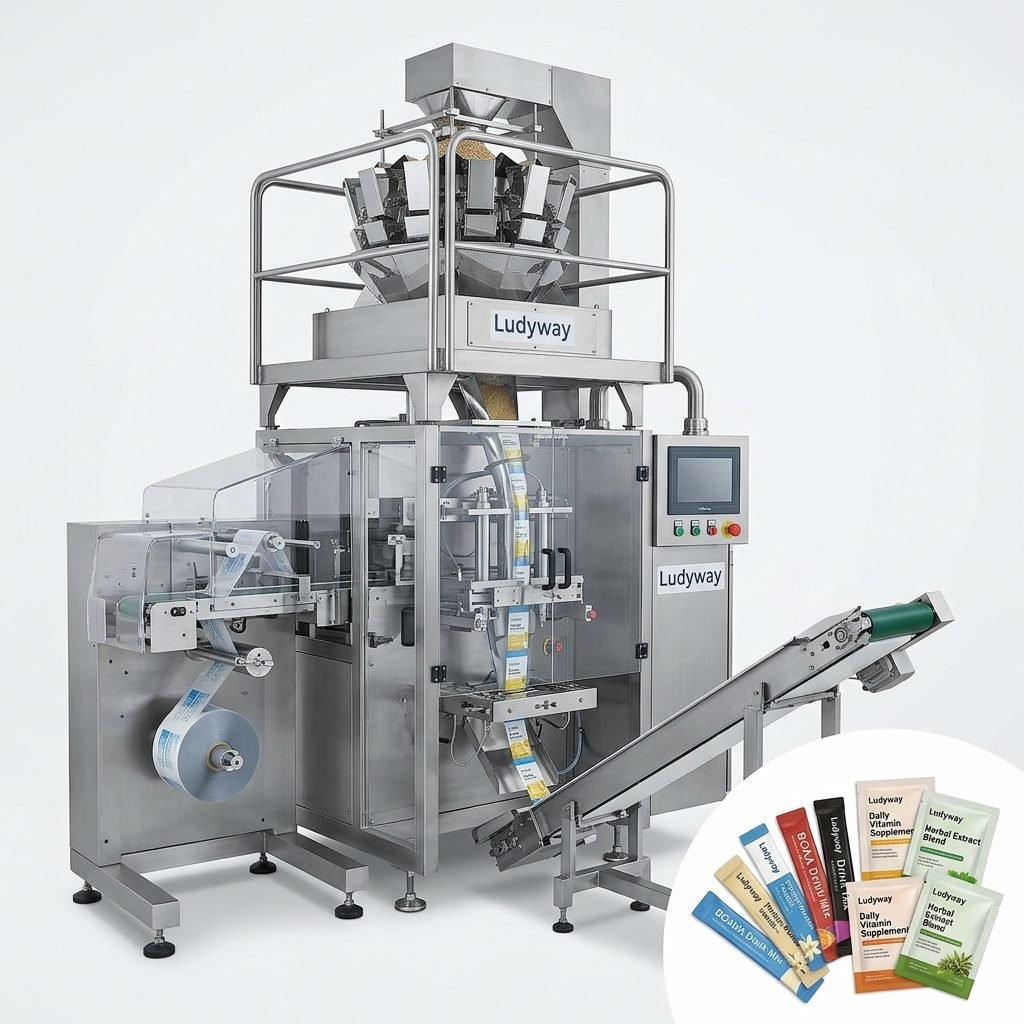
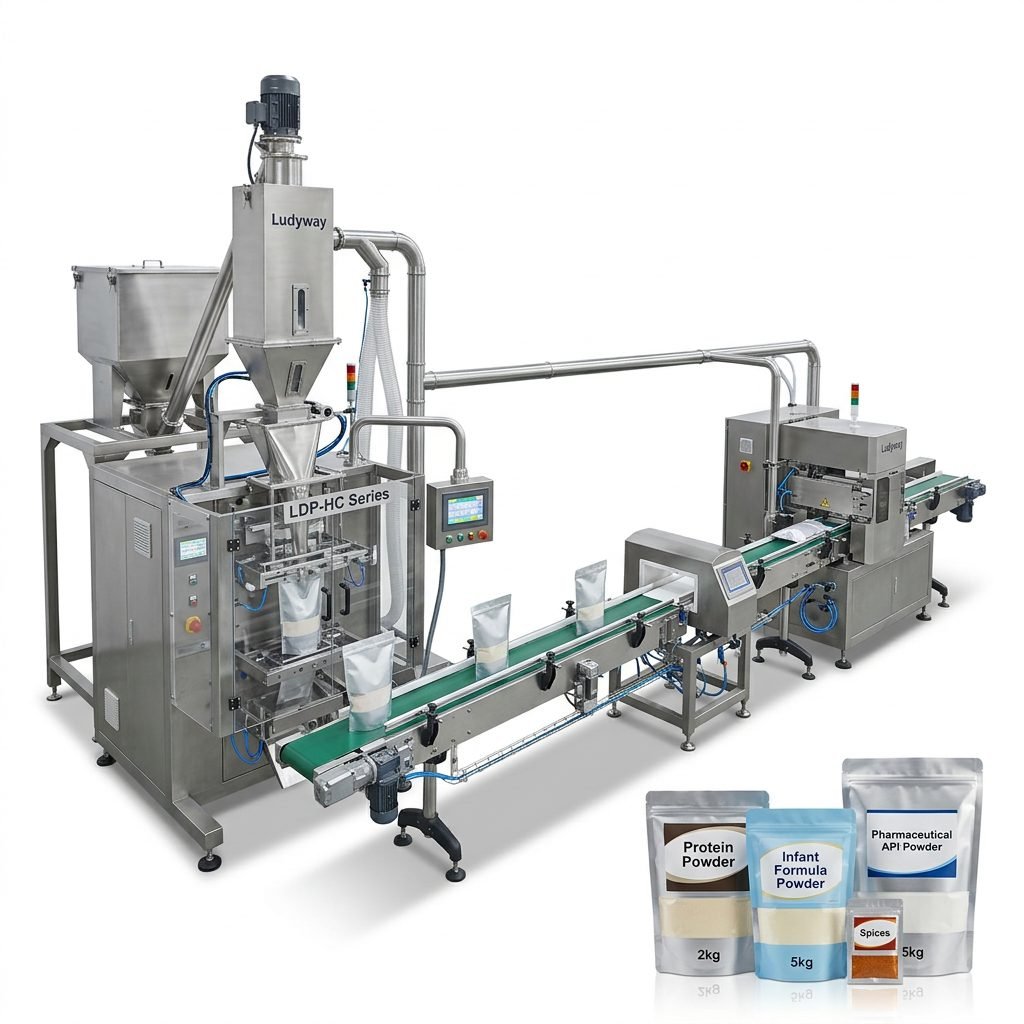
Vertical Form-Fill-Seal (VFFS) Machines: The workhorses of the industry, VFFS machines form bags from a roll of film, fill them with product, and seal them. They are exceptionally versatile, handling granules (like coffee or nuts), powders (spices, milk powder), and liquids (sauces, oils). Their speed and efficiency make them ideal for medium to high-volume production.
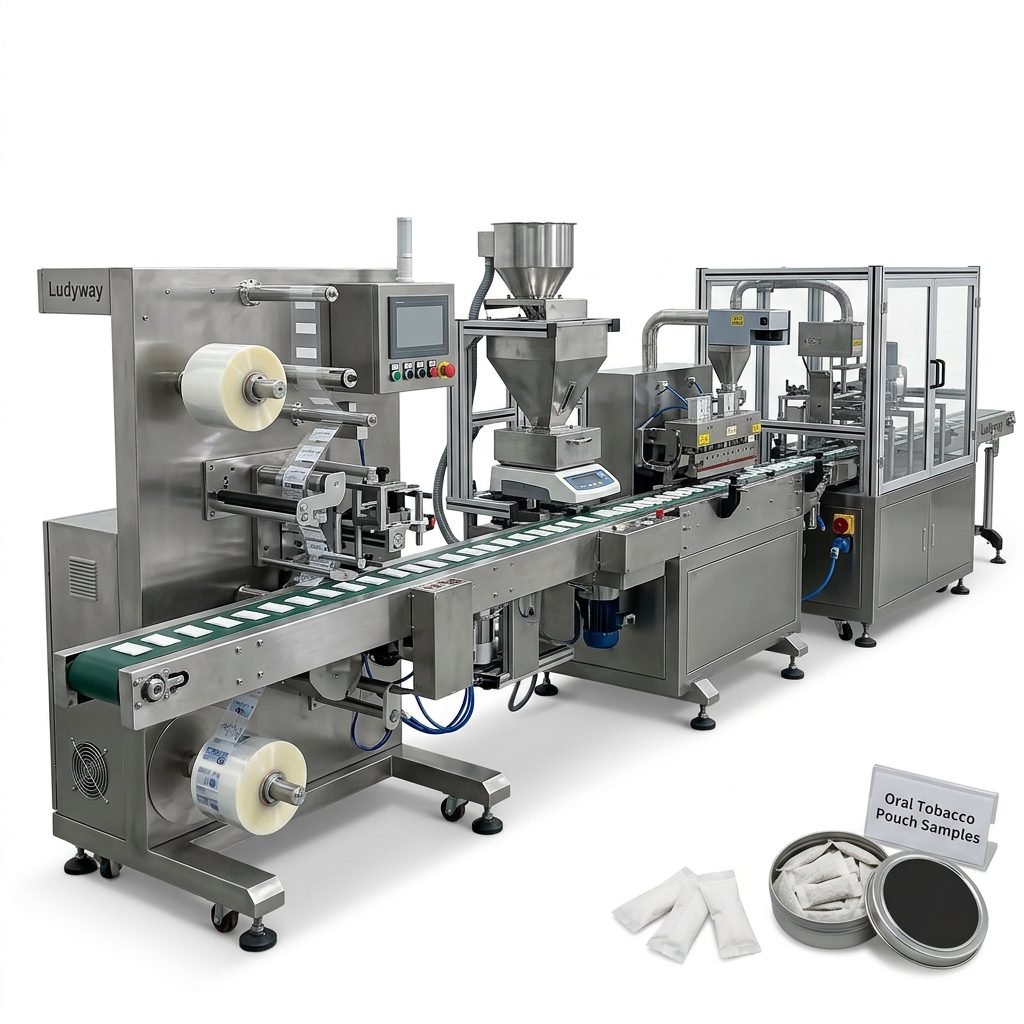
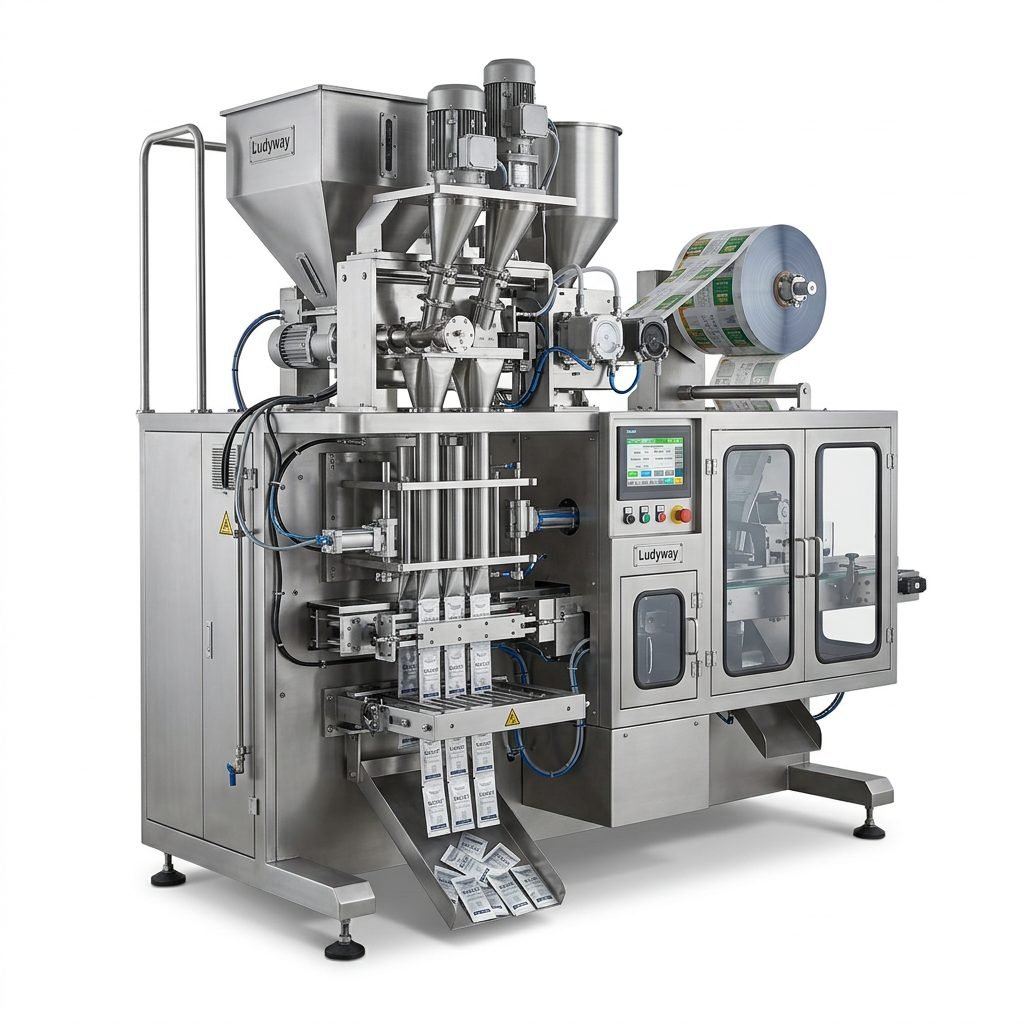
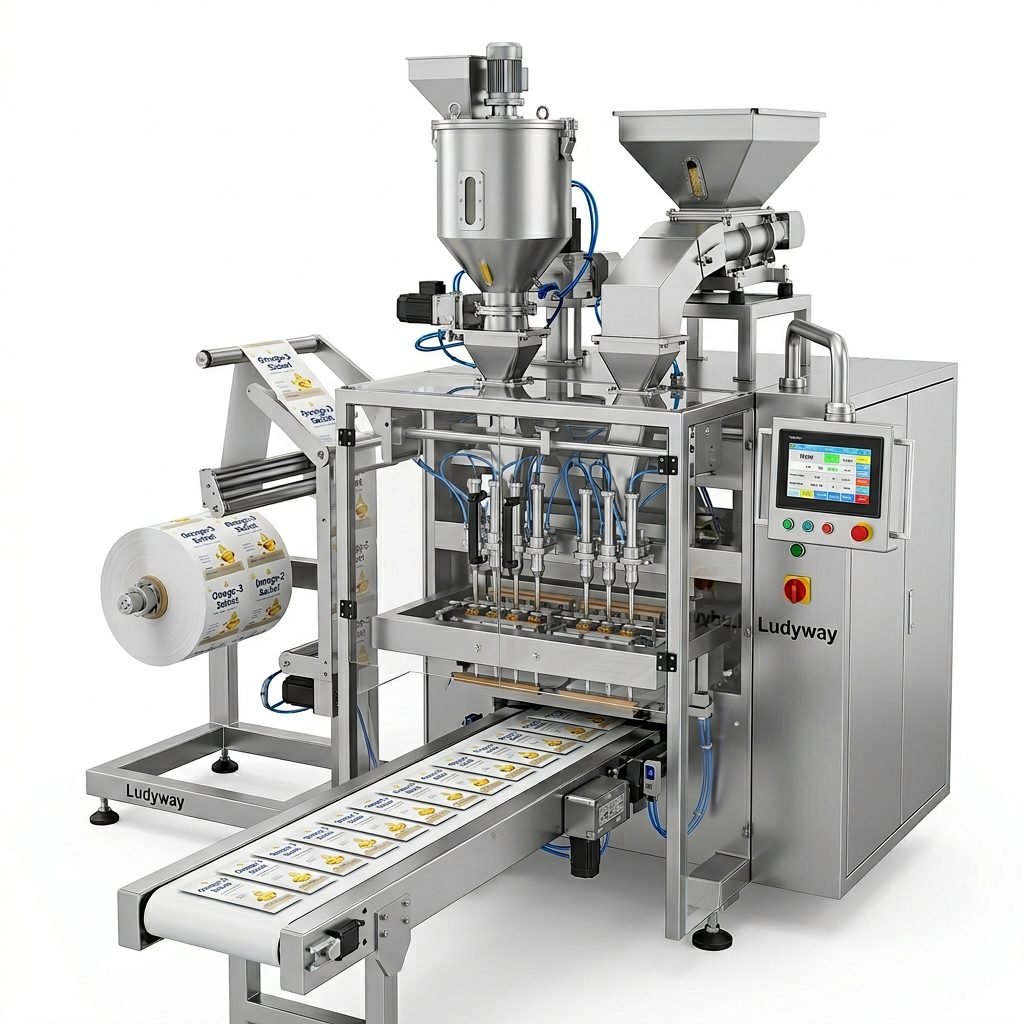
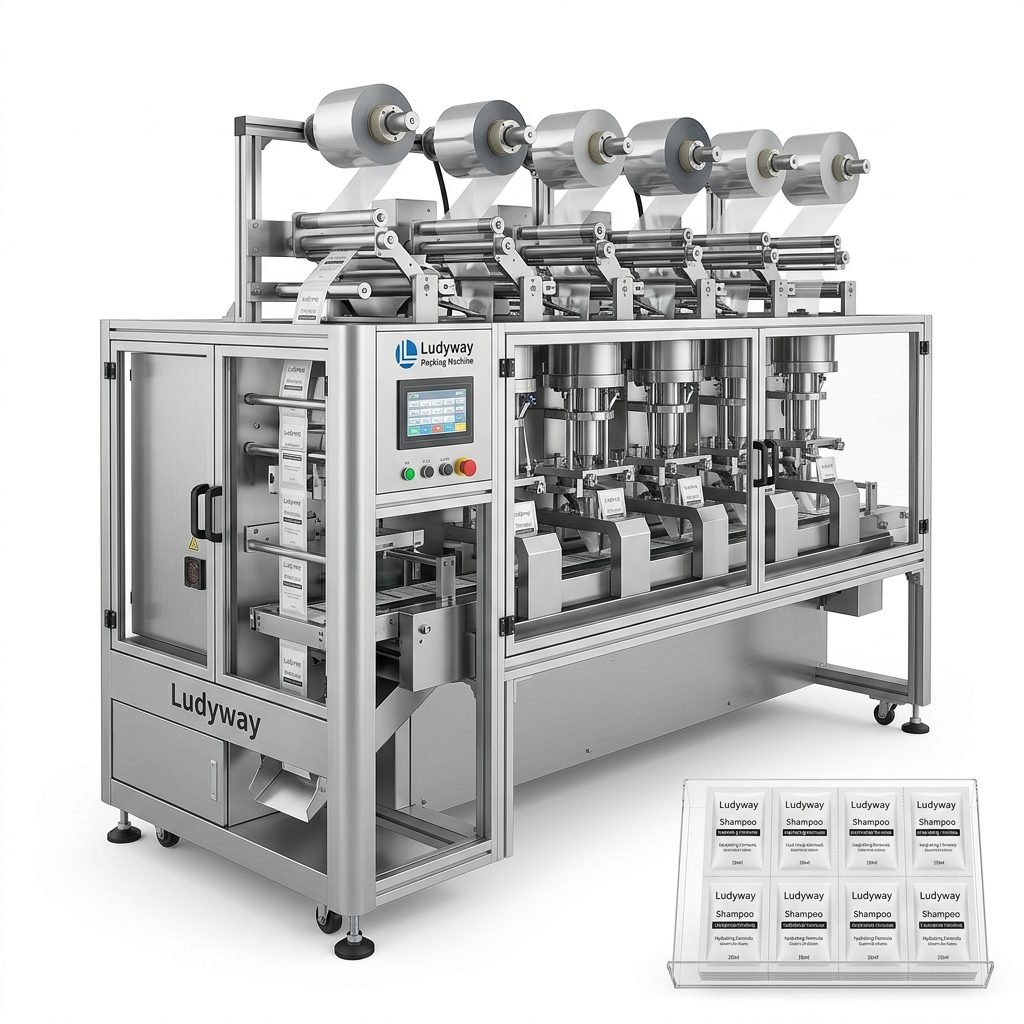
Horizontal Form-Fill-Seal (HFFS) Machines: These machines are typically used for more rigid or structured packaging, such as sachets for condiments, stick packs for drink mixes, or blister packs. They often provide a more premium look and are excellent for products requiring precise portion control.
Thermoforming Machines: Used to create rigid plastic trays or containers (like for yogurt or fresh salads) from a roll of plastic sheet. A second film is then sealed on top. This method offers excellent product protection and visibility.
Liquid Filling Machines: A broad category including piston fillers, gravity fillers, and volumetric fillers designed specifically for bottling or pouching liquids, from water and juices to viscous sauces and oils.
2. Secondary Packaging Equipment
This equipment handles the bundling and preparation of primary packages for shipping and retail display.
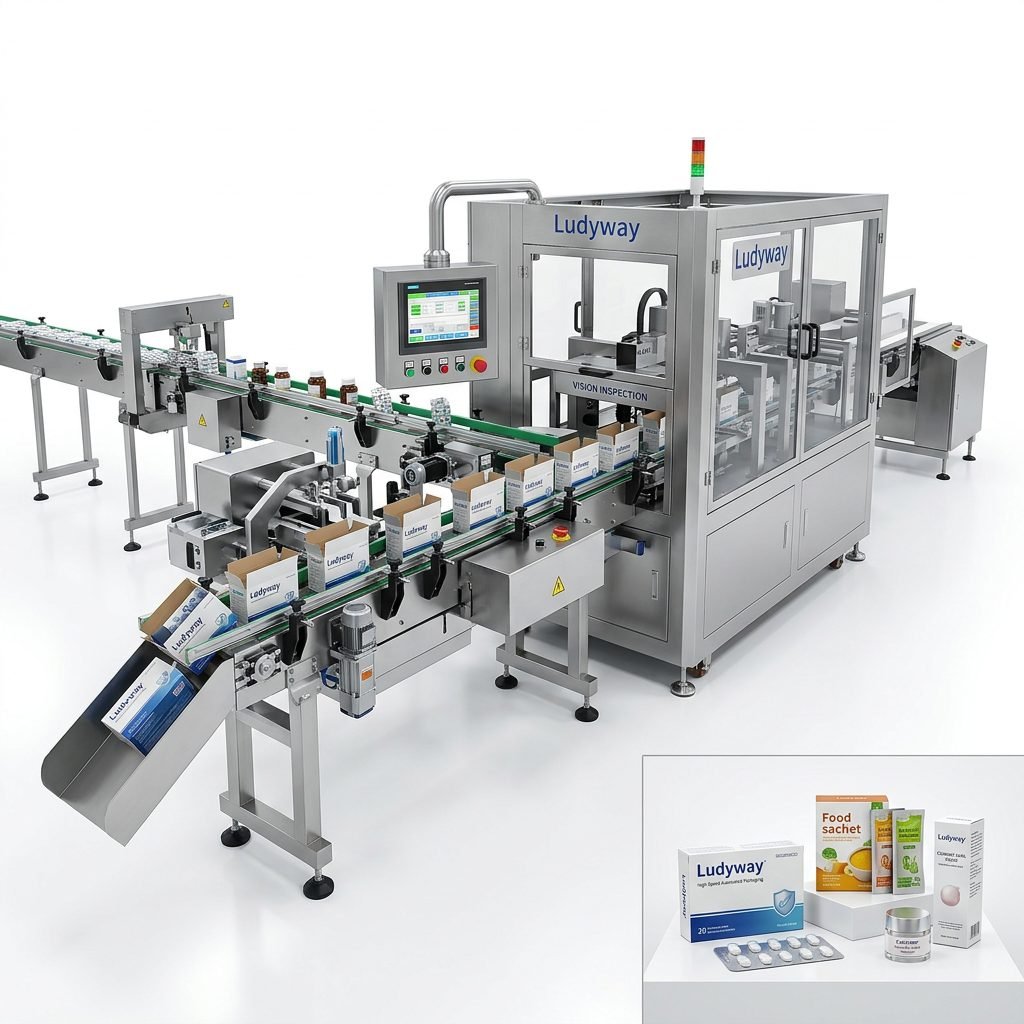
Cartoning Machines: Automatically erect cartons, insert the primary packages (like multiple sachets or bottles), and close/seal them. Essential for creating retail-ready boxes.
Case Packers and Palletizers: Case packers load finished cartons or primary packages into shipping cases. Palletizers then arrange these cases onto pallets for stable transport, drastically reducing manual labor and risk of damage.
Shrink Wrapping and Bundling Machines: Used to bundle multi-packs (e.g., six cans of soda) with a tight plastic film or to wrap pallet loads for stability and weather protection.
Key Applications and Uses in the Food Industry
Each food segment has unique packaging demands driven by product characteristics, shelf life, and consumer expectations.
- Dry Goods & Snacks: VFFS machines are dominant here, packaging nuts, chips, crackers, and candies in flexible pouches that offer excellent barrier properties against moisture and oxygen.
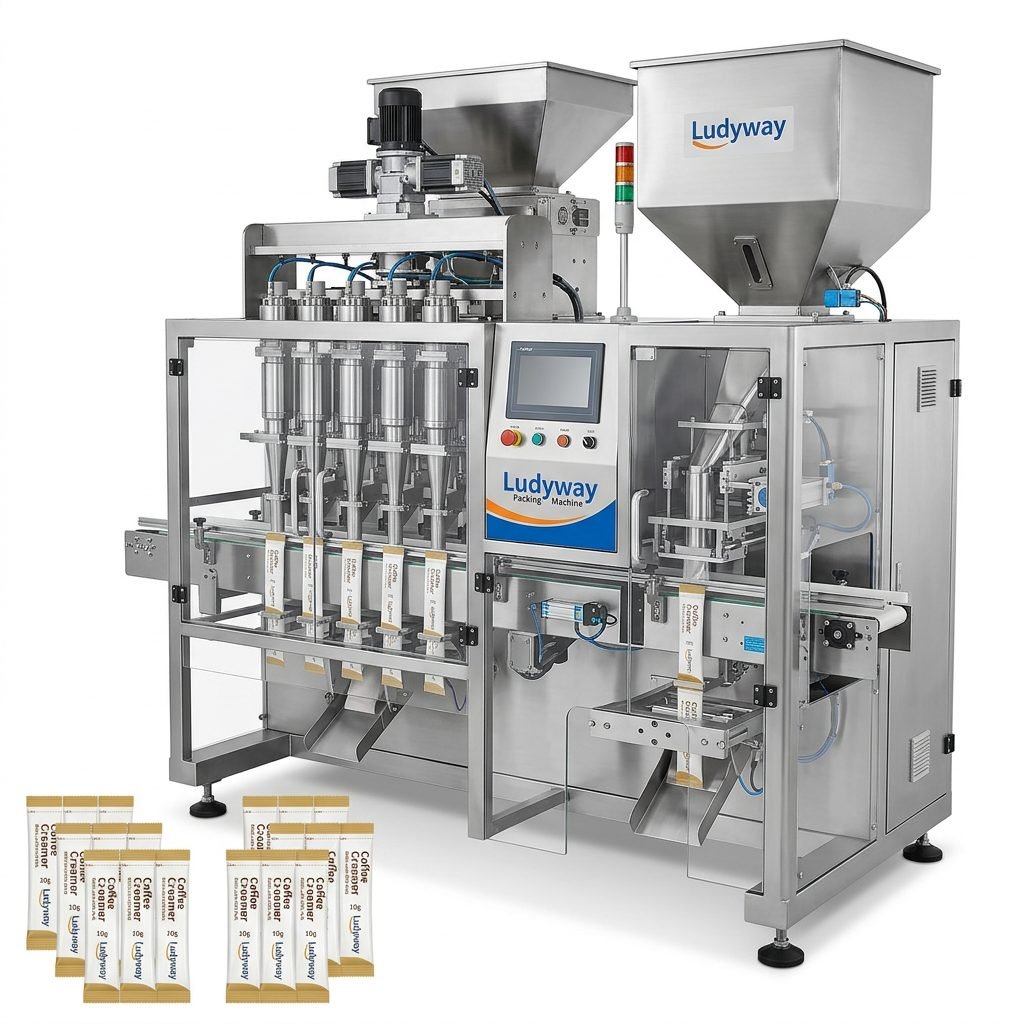
- Powdered Products: Precision is key for coffee, protein powder, spices, and baking mixes. Auger filler-based VFFS machines ensure accurate dosing, while stick pack machines from suppliers like Ludyway Machinery are perfect for single-serve portions.
- Liquids & Sauces: From sachets of ketchup in restaurants to bottles of olive oil, liquid fillers and specialized pouch machines handle varying viscosities while maintaining hygiene and preventing leaks.
- Fresh & Frozen Foods: Thermoforming and modified atmosphere packaging (MAP) machines are critical. They create a protective gas environment inside the package, significantly extending the shelf life of meats, cheeses, and prepared meals.
- Confectionery: Often requires sophisticated horizontal flow wrapping for chocolate bars or twist wrapping for candies, focusing heavily on attractive presentation and tamper evidence.
How to Choose the Right Machine for Your Business: A Step-by-Step Guide
Selecting equipment is a significant capital decision. A systematic approach ensures you invest in a solution that delivers long-term value.
Step 1: Conduct a Thorough Product & Production Analysis
Start with your product. What is its physical form (solid, powder, liquid, viscous)? Is it abrasive, oily, or fragile? What are its shelf-life requirements? Next, analyze your production needs: required output speed (bags/per minute), current and projected volumes, and the number of different products or package sizes you need to run. This analysis will narrow down the machine type (e.g., VFFS with an auger filler for powders).
Step 2: Define Your Packaging Materials & Specifications
The machine must be compatible with your desired packaging. Determine the film or material type (laminate, mono-layer, biodegradable), its thickness, and the required sealing properties (e.g., high-barrier for coffee). Also, finalize your bag or pouch dimensions. A reliable supplier can help you test materials on their equipment to ensure performance.
Step 3: Evaluate Automation Level and Integration Needs
Consider your labor availability and long-term efficiency goals. A basic semi-automatic machine may suffice for a startup, but a fully automatic system with integrated checkweighers, metal detectors, and automated downstream conveying is essential for high-volume, quality-focused production. Think about future expansion—can the machine be easily integrated into a larger line?
Step 4: Assess Key Machine Features and Build Quality
Look beyond the brochure. Key features to scrutinize include:
• Filling System Accuracy: The heart of the machine. Auger fillers for powders, volumetric cup fillers for granules, piston fillers for liquids.
• Sealing System: Robust, temperature-controlled seal jaws are critical for consistent, leak-proof seals.
• Control System: A user-friendly PLC-based HMI (Human-Machine Interface) allows for easy recipe changes, diagnostics, and data tracking.
• Hygiene & Cleanability: Stainless steel construction (especially on food-contact parts), open-frame designs, and CIP (Clean-in-Place) capabilities reduce downtime for cleaning.
• Changeover Ease: Quick-change parts for different bag sizes dramatically increase flexibility and productivity in multi-SKU environments.
Step 5: Prioritize Supplier Support and Service
The machine is only as good as the support behind it. Choose a supplier with a proven track record and strong technical support. Inquire about:
• Availability of installation, training, and commissioning services.
• Spare parts inventory and delivery time.
• Warranty terms and the availability of local or responsive remote service engineers.
Companies like Ludyway Machinery, with decades of industry experience, often provide comprehensive turnkey solutions and long-term partnership support, which is invaluable for business continuity.
Step 6: Calculate Total Cost of Ownership (TCO)
Do not make a decision based on purchase price alone. Calculate the TCO, which includes:
• Initial machine cost.
• Cost of installation and training.
• Ongoing costs for energy, compressed air, and maintenance.
• Expected lifespan and potential costs for parts and service.
A slightly more expensive, robust machine with lower maintenance needs and higher efficiency often has a far better TCO than a cheaper, less reliable alternative.
Common Questions (FAQs)
What is the typical lead time for receiving a new packaging machine?
Lead times can vary significantly based on machine complexity, customization, and supplier capacity. For standard models, it can range from 8 to 16 weeks. For highly customized or large turnkey lines, it may take 20 weeks or more. Always confirm timelines with your supplier during the quoting process.
Can one machine handle different types of products, like powders and granules?
Some versatile VFFS machines can be configured to handle both, but it typically requires changing the filling system (e.g., swapping an auger filler for a volumetric cup filler). This changeover takes time. If you frequently switch between vastly different product forms, dedicated machines or a system designed for quick tooling changeovers might be more efficient.
How important is after-sales service when choosing a supplier?
Extremely important. Packaging machines are complex and will require maintenance, parts, and occasional troubleshooting. A supplier with a responsive, knowledgeable service team minimizes costly production downtime. Prioritize suppliers who offer detailed training, clear manuals, and readily available spare parts.
What are the key trends in food packaging machinery I should be aware of?
Major trends include increased automation and IoT connectivity for data monitoring and predictive maintenance, a focus on sustainability (machines that run compostable or recyclable films efficiently), and flexibility to handle smaller batch sizes and frequent product changes to meet e-commerce and niche market demands.
Is it better to buy a new or used packaging machine?
This depends on your budget and technical expertise. New machines come with the latest technology, full warranty, and supplier support. Used machines are cheaper upfront but carry risks: unknown maintenance history, potential obsolescence, and limited support. For a critical production line, a new or professionally refurbished machine from a reputable source is usually the safer long-term investment.