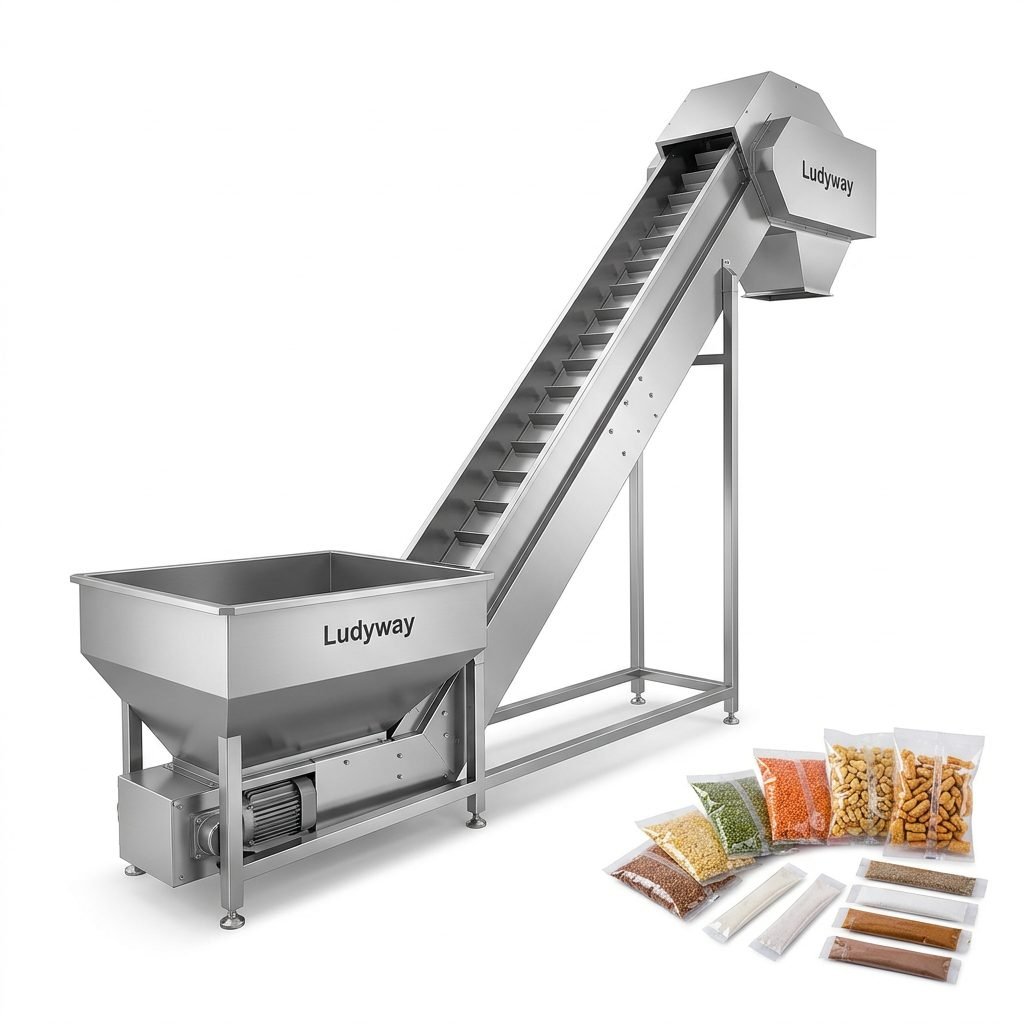
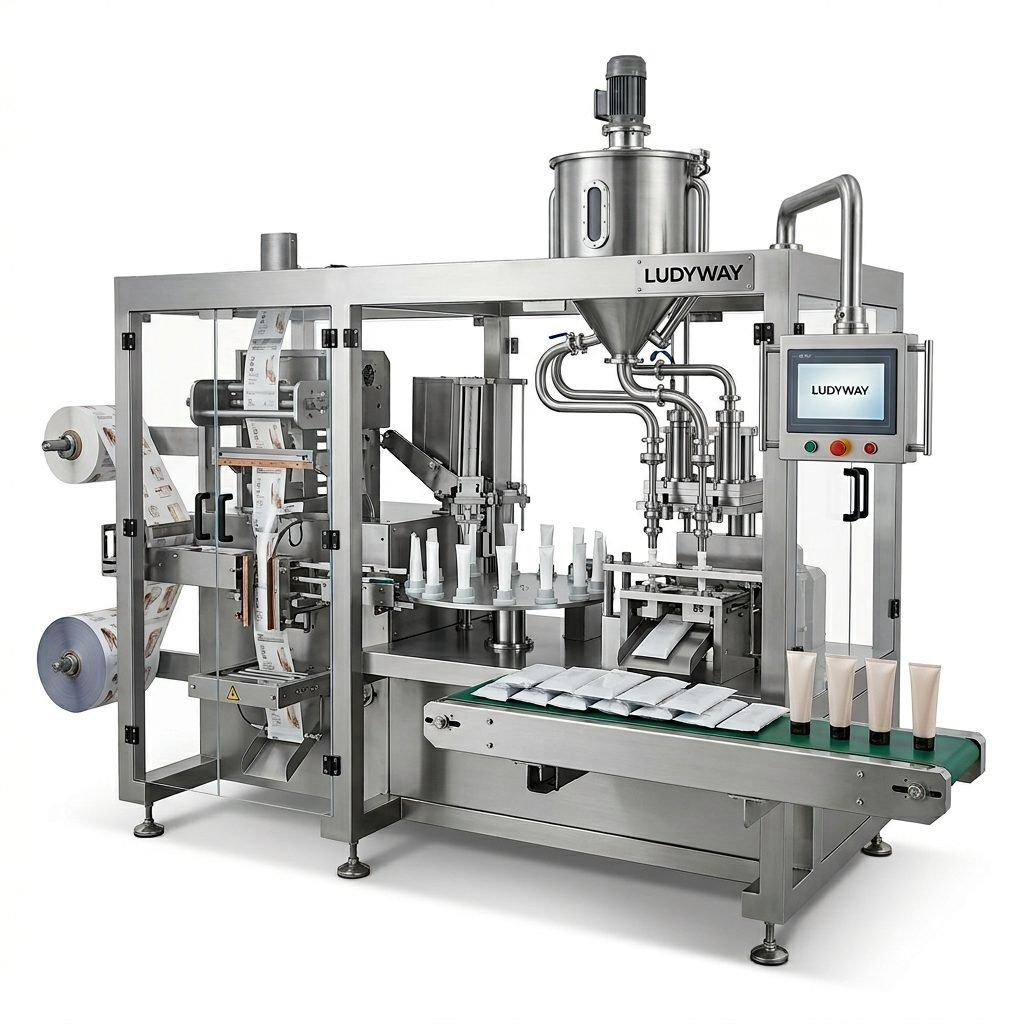
In the fast-paced world of manufacturing, efficiency, consistency, and product protection are paramount. At the heart of achieving these goals lies a critical piece of equipment: the electronic packaging machine. Whether you are packaging food, pharmaceuticals, chemicals, or consumer goods, selecting the right machine is a strategic decision that impacts your production line’s speed, reliability, and overall output quality.
This comprehensive guide is designed to navigate you through the world of electronic packaging machinery. We will explore the various types available, delve into their key features and technological advancements, and provide a structured framework to help you choose the perfect machine for your specific production needs and budget.
Understanding Electronic Packaging Machines
An electronic packaging machine is an automated system that measures, fills, and seals products into their final packaging format. Unlike manual or semi-automatic methods, these machines are controlled by programmable logic controllers (PLCs) and human-machine interfaces (HMIs), ensuring high precision, repeatability, and speed. They are indispensable for businesses looking to scale production, maintain stringent hygiene standards (especially in food and pharma), and reduce labor costs and human error.
Core Function: The primary role of any packaging machine is to automate the process of getting a product from its bulk state into a saleable, protected, and labeled package. This involves a sequence of operations—forming the package, measuring the product, filling it, and finally sealing it—all performed with minimal human intervention.
Main Types of Electronic Packaging Machines
The packaging machinery landscape is diverse, with machines categorized primarily by the type of package they form and the physical state of the product they handle. Here’s a breakdown of the most common types:
1. Vertical Form-Fill-Seal (VFFS) Machines
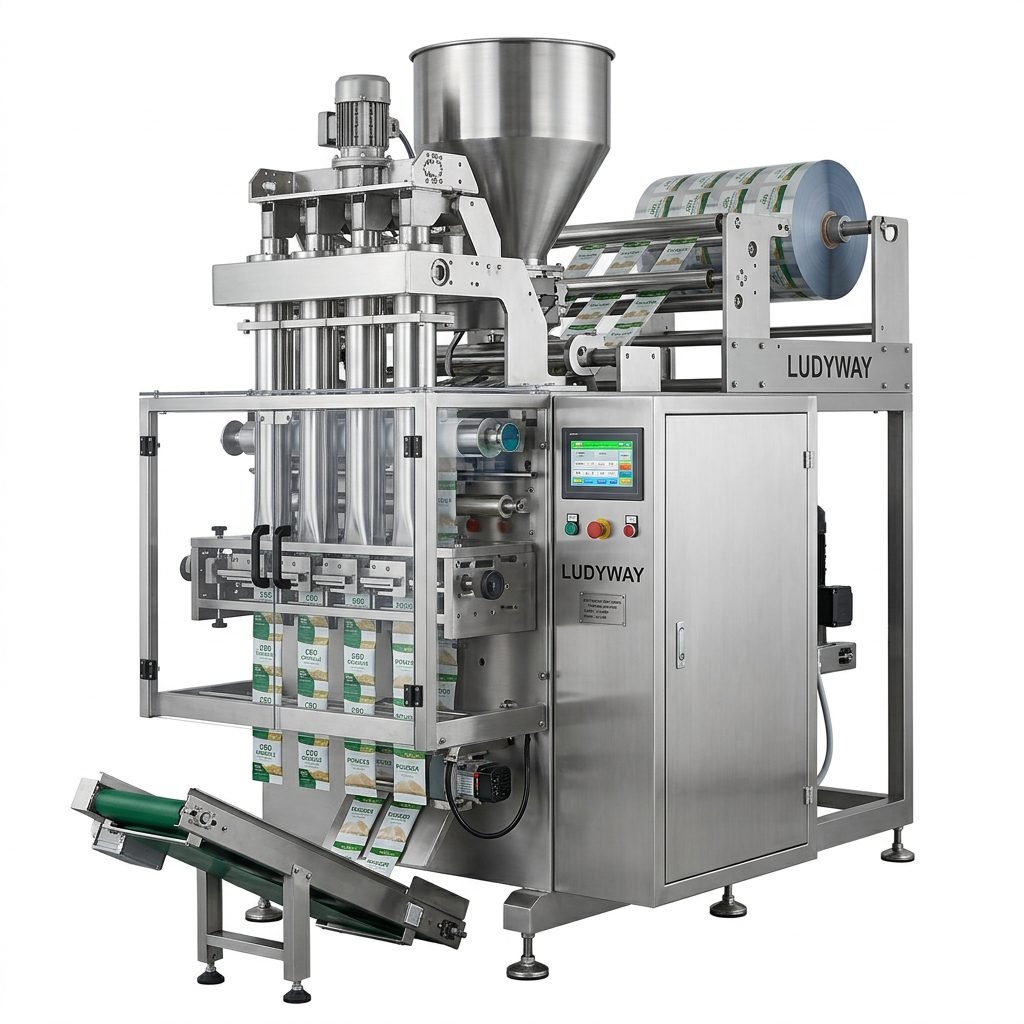
These are among the most versatile and widely used machines. They form a package from a roll of flat film (like polyethylene or laminates), fill it with product, and seal it—all in a continuous vertical motion. Ideal for granules, powders, seeds, snacks, and liquids.
- Common Packages: Pillow bags, gusseted bags, block-bottom bags.
- Key Advantage: High speed, efficient use of packaging material, and quick changeover between bag sizes.
2. Horizontal Form-Fill-Seal (HFFS) Machines
HFFS machines form packages horizontally from a reel of film. They are typically used for more rigid structures or when placing multiple items into a single package. Excellent for biscuits, candy bars, medical devices, and portion-control items.
- Common Packages: Sachets, stick packs, blister packs, trays with lidding film.
- Key Advantage: Creates attractive, retail-ready packaging with excellent graphic presentation.
3. Liquid & Paste Filling Machines
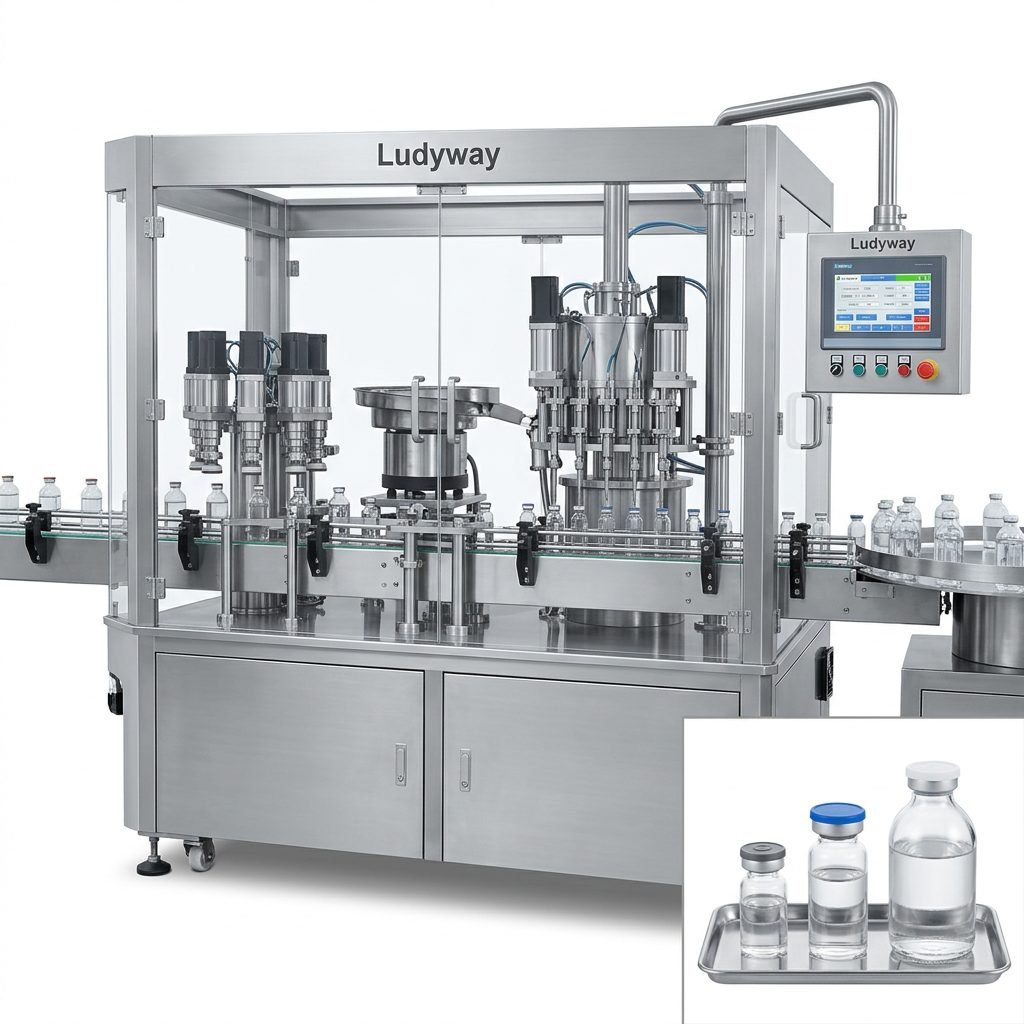
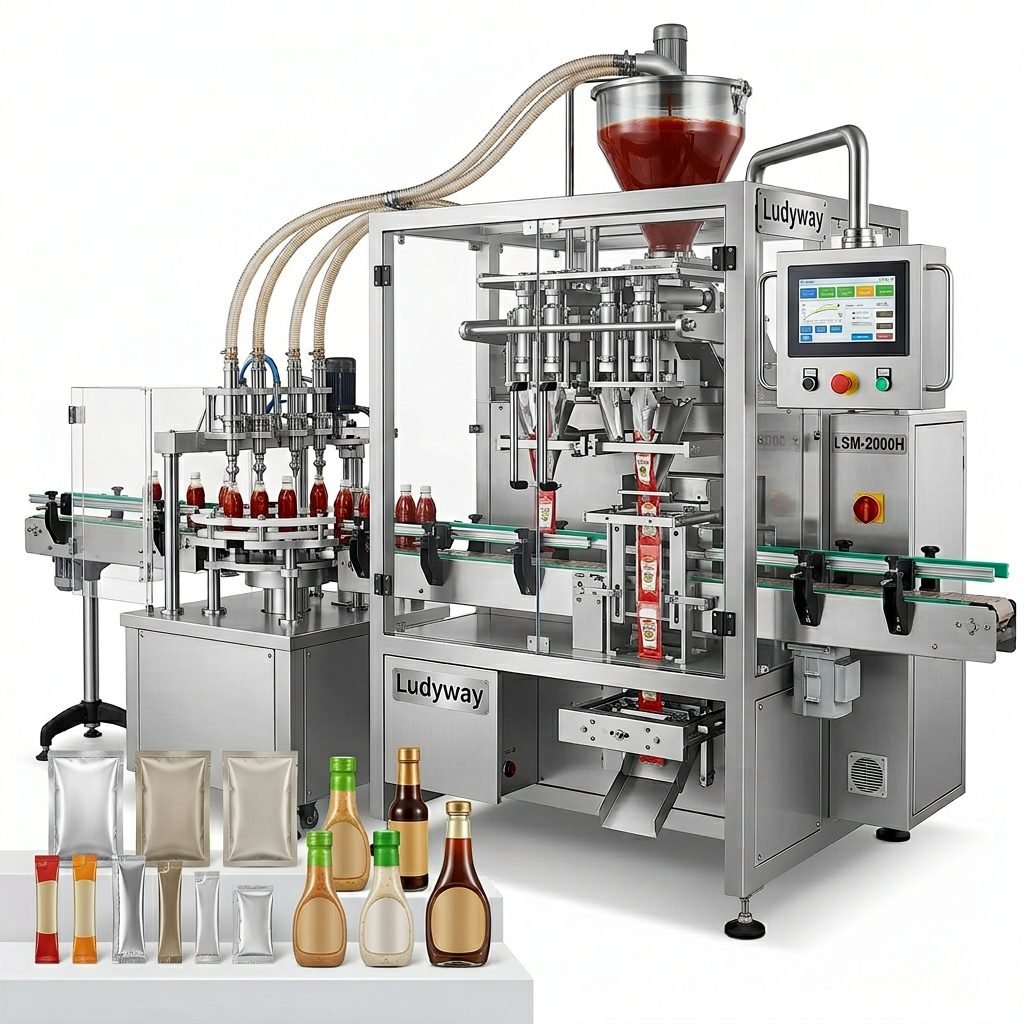
Specifically engineered for viscous products. They use precise pumping systems (piston, peristaltic, gravity) to fill bottles, pouches, or tubes without drips or spills. Critical for sauces, oils, shampoos, creams, and pharmaceuticals.
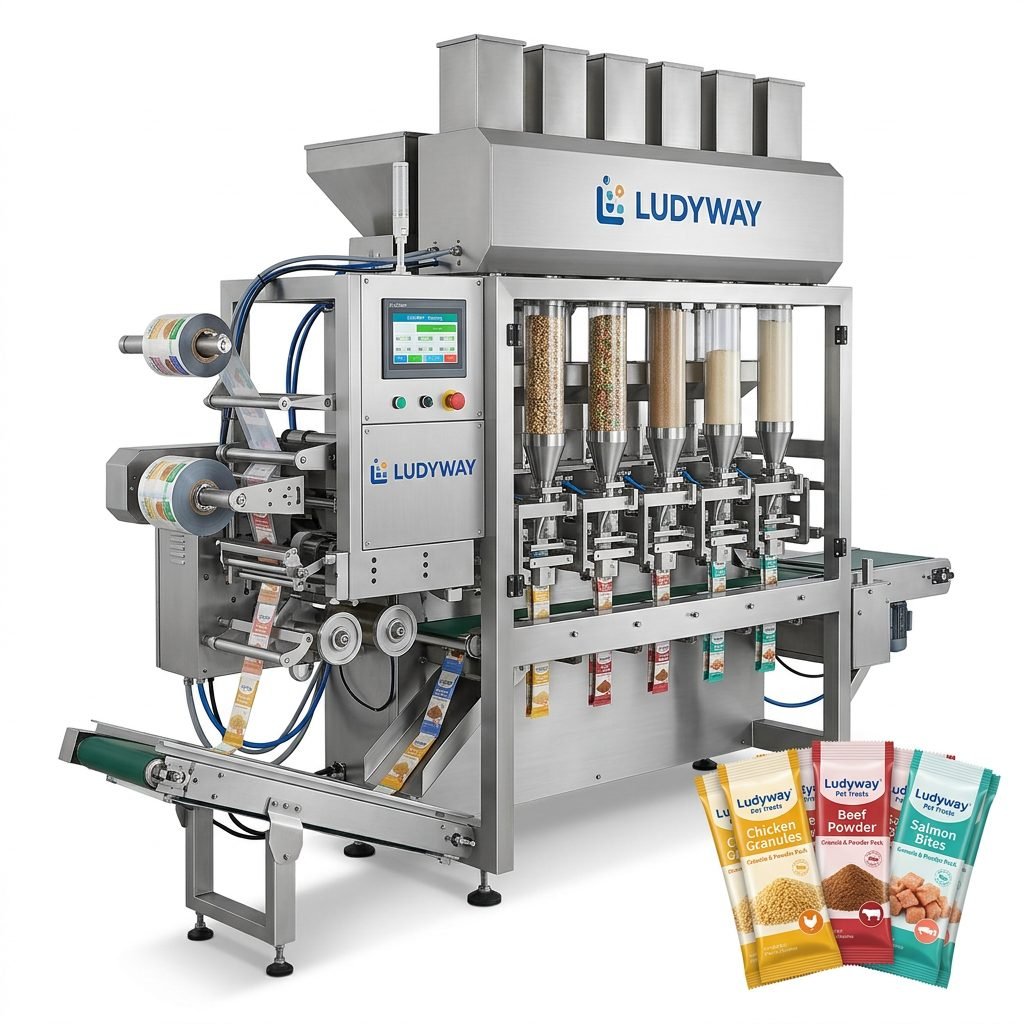
4. Granule & Powder Filling Machines
Designed to handle dry products that can be dusty or prone to bridging. They employ auger fillers, volumetric cup fillers, or weigh scale systems for extreme accuracy. Essential for coffee, spices, protein powder, detergent, and pharmaceuticals.
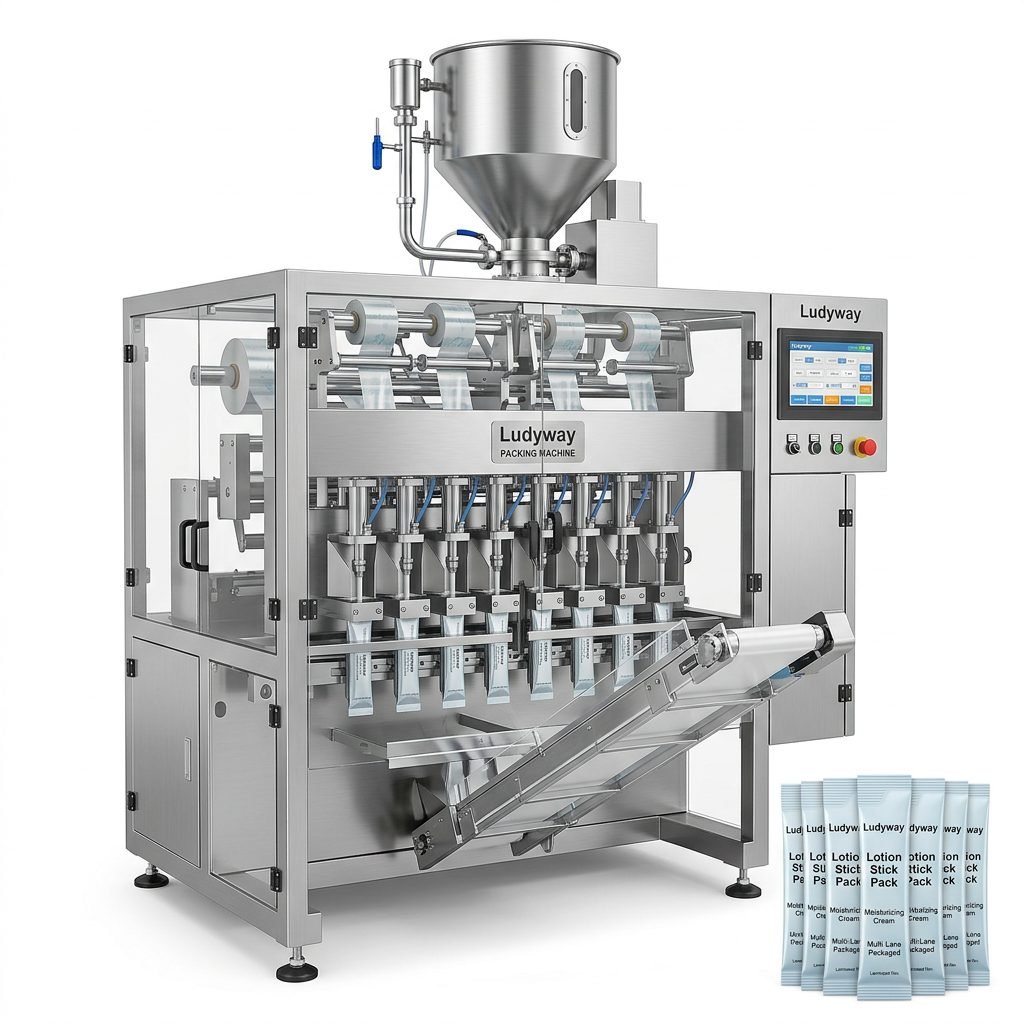
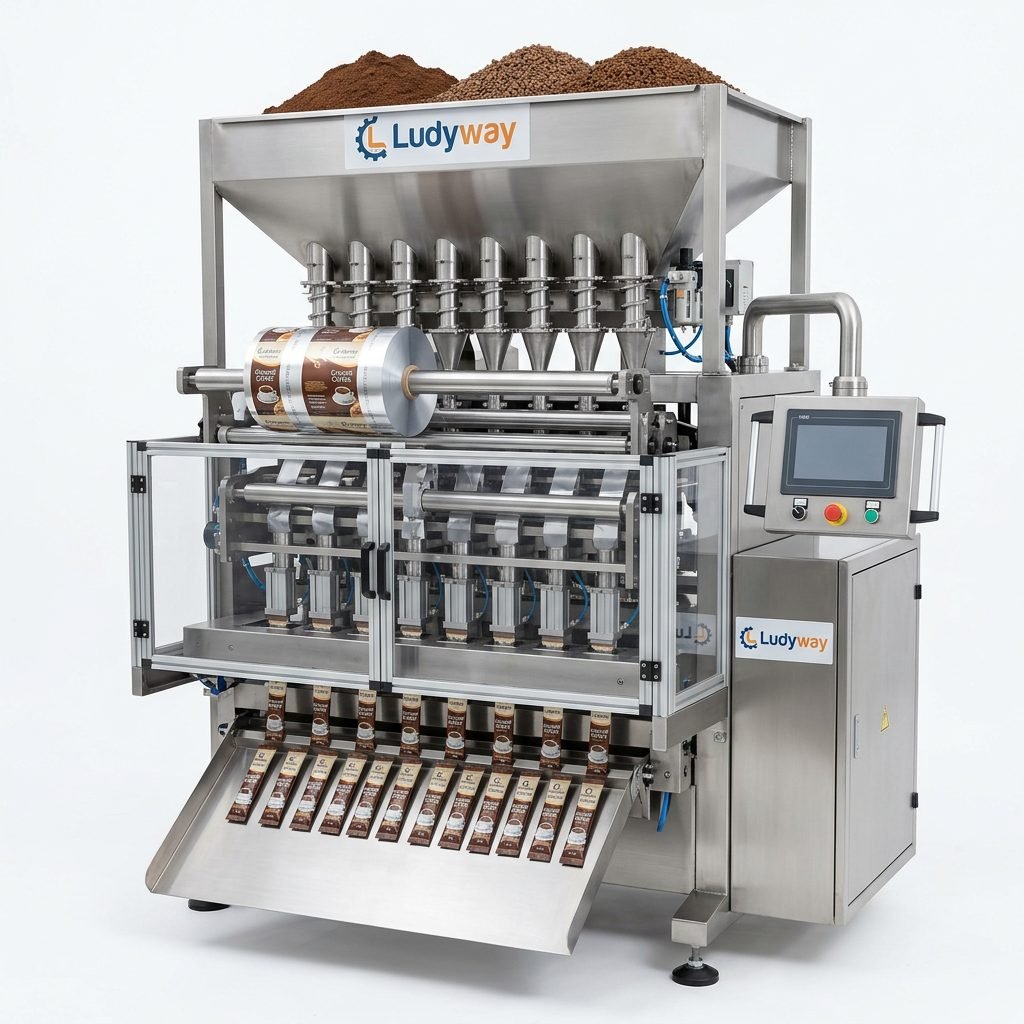
5. Multi-Lane & Stick Pack Machines
A specialized subset of HFFS machines designed for ultra-high-speed production of small, single-serve packages. Multiple lanes run simultaneously, dramatically increasing output. Perfect for instant drink mixes, sugar, salt, pepper, and supplements. Companies like Ludyway Machinery offer advanced multi-lane systems that maximize efficiency for such applications.
Essential Features & Technological Considerations
Modern electronic packaging machines are more than just mechanical fillers. They integrate sophisticated features that enhance performance, usability, and connectivity.
Precision & Control Systems
The brain of the machine. Modern PLC controllers and touch-screen HMIs allow for easy recipe storage, parameter adjustment, and real-time monitoring. Look for intuitive software that reduces operator training time.
Weighing & Filling Accuracy
This is non-negotiable for cost control and compliance. Technologies include:
• Gross Weighing: The entire package is weighed during filling.
• Net Weighing: The product is weighed before entering the package (higher accuracy).
• Volumetric Filling: Uses augers or cups for consistent volume dispensing.
Hygiene & Construction
For food and pharmaceutical use, stainless steel (304 or 316 grade) contact parts are standard. Machines should have a smooth, easy-to-clean design with minimal crevices. IP-rated protection for electrical components may be necessary for wet environments.
Flexibility & Changeover
How quickly can you switch from packaging one product to another? Quick-change tooling and digital size adjustments significantly reduce downtime and are vital for short production runs.
🔍 Connectivity & Industry 4.0
Forward-thinking manufacturers should consider machines with IoT capabilities. Features like OPC-UA communication, data logging for OEE (Overall Equipment Effectiveness), and remote diagnostics allow for predictive maintenance and seamless integration into smart factory systems, a commitment seen in providers focused on innovative automation solutions.
How to Choose the Right Machine for Your Production
Selecting a packaging machine is a significant investment. Follow this step-by-step guide to make an informed decision.
Step 1: Analyze Your Product & Package
This is the foundation. Define:
• Product Characteristics: Is it a granule, powder, liquid, or solid? What is its flowability, abrasiveness, hygroscopicity?
• Package Type & Material: Pouch, stick pack, bottle, sachet? What film/laminate are you using? Its thickness and sealing properties dictate machine requirements.
• Required Output Speed: Calculate your required bags/per minute (BPM) based on production targets.
Step 2: Define Your Must-Have Features
Based on your product, list non-negotiable features. Do you need:
• Nitrogen gas flushing for product freshness?
• A multi-lane system for tiny sachets?
• Check-weighing and rejection systems?
• CIP (Clean-in-Place) functionality?
Step 3: Evaluate Machine Performance & Reliability
Look beyond the brochure. Request a live product test using your actual materials. Assess:
• Achievable accuracy and speed.
• Ease of operation and cleaning.
• Build quality and component brands (e.g., Siemens PLC, Mitsubishi servos).
• The manufacturer’s reputation, evidenced by their years of experience and portfolio of successful installations.
Step 4: Consider Total Cost of Ownership (TCO)
The purchase price is just the beginning. Factor in:
• Installation & Training: Does the supplier provide comprehensive support?
• Energy & Consumable Usage: How efficient is the machine?
• Maintenance & Spare Parts: Availability and cost of spare parts are critical for uptime. A supplier with a modern production facility and strong engineering backbone often ensures better long-term support.
Step 5: Assess Supplier Support & Service
Your relationship with the machine supplier is long-term. Ensure they offer:
• Responsive technical support and clear documentation.
• Availability of spare parts.
• Warranty terms and after-sales service agreements. A partner committed to long-term cooperation and innovation is invaluable.
Frequently Asked Questions (FAQs)
Q1: What is the main difference between vertical (VFFS) and horizontal (HFFS) form-fill-seal machines?
A: The primary difference is the orientation of package formation. VFFS machines form bags vertically from a single roll of film and are best for free-flowing products going into bags. HFFS machines form packages horizontally and are ideal for creating sachets, stick packs, or placing items into pre-formed trays, often allowing for more complex packaging shapes and superior graphic display.
Q2: How accurate are electronic packaging machines?
A: Accuracy varies by machine type and filling principle. High-end weigh-fill systems can achieve accuracies within ±0.1% to ±0.5% of the target weight. Volumetric auger fillers for powders typically offer ±1% accuracy. For the most stringent requirements (e.g., pharmaceuticals), net weight systems with multi-head scales provide the highest precision. Always conduct a product test for verification.
Q3: Can one machine handle different types of products and package sizes?
A: Many machines are built with flexibility in mind. However, there are limits. A machine designed for fine powder may not handle large granules well without modification. The key is changeover time. Machines with quick-change parts and digital adjustment of film width, length, and filling parameters allow for faster switching between similar products and package sizes, maximizing your production flexibility.
Q4: What are the most important maintenance routines for a packaging machine?
A: Daily cleaning and inspection of sealing jaws, film guides, and product contact parts are essential. Regularly check and lubricate moving parts as per the manual. Periodically calibrate the weighing system and inspect electrical connections. The most important factor is following the manufacturer’s preventive maintenance schedule and using recommended spare parts to avoid unexpected downtime.
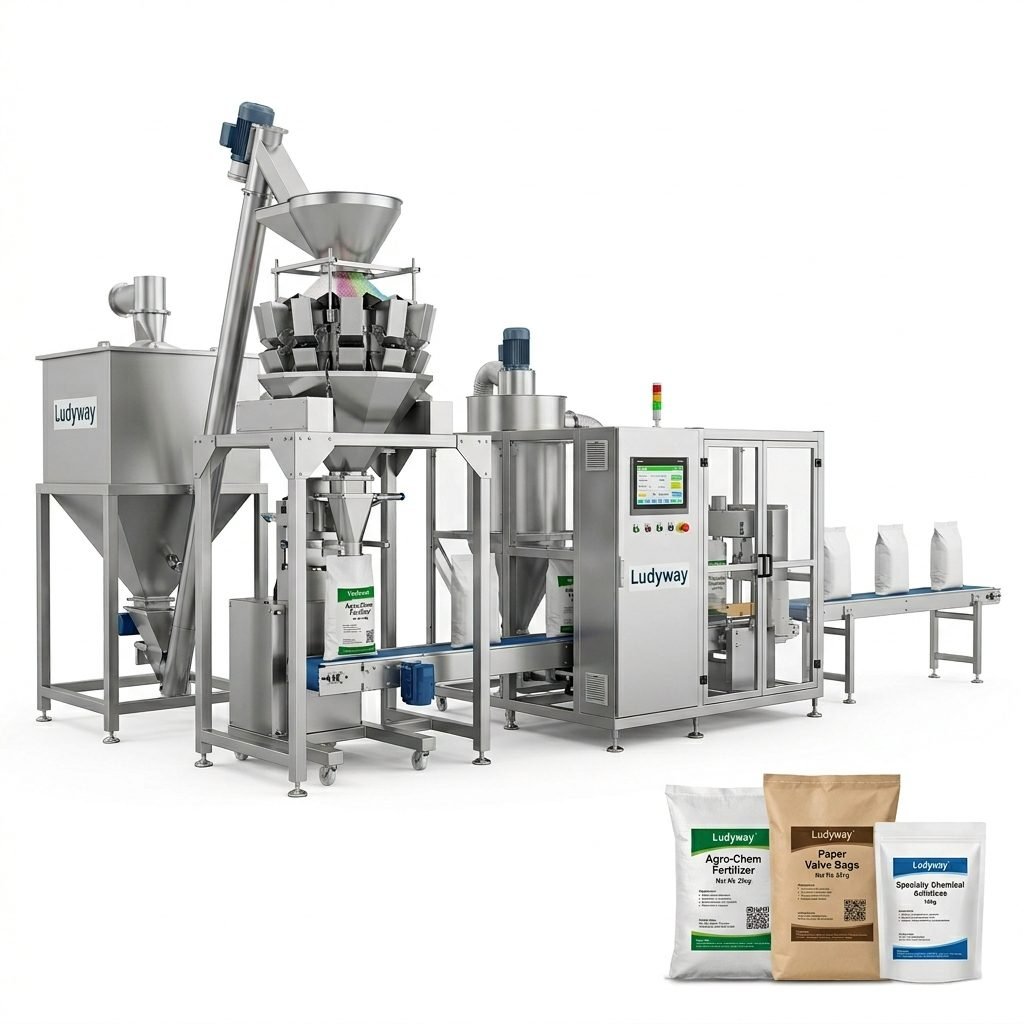
Q5: How do I know if I need a single machine or a complete turnkey packaging line?
A: If you are only automating the final primary packaging step (making and filling the bag), a single machine may suffice. However, if your process includes upstream activities (e.g., product feeding, elevation) or downstream activities (e.g., cartoning, case packing, palletizing), you may benefit from an integrated turnkey solution. A complete line, designed to work harmoniously, optimizes workflow, minimizes manual handling, and maximizes overall efficiency. Assess your entire process from raw material to shipping pallet.