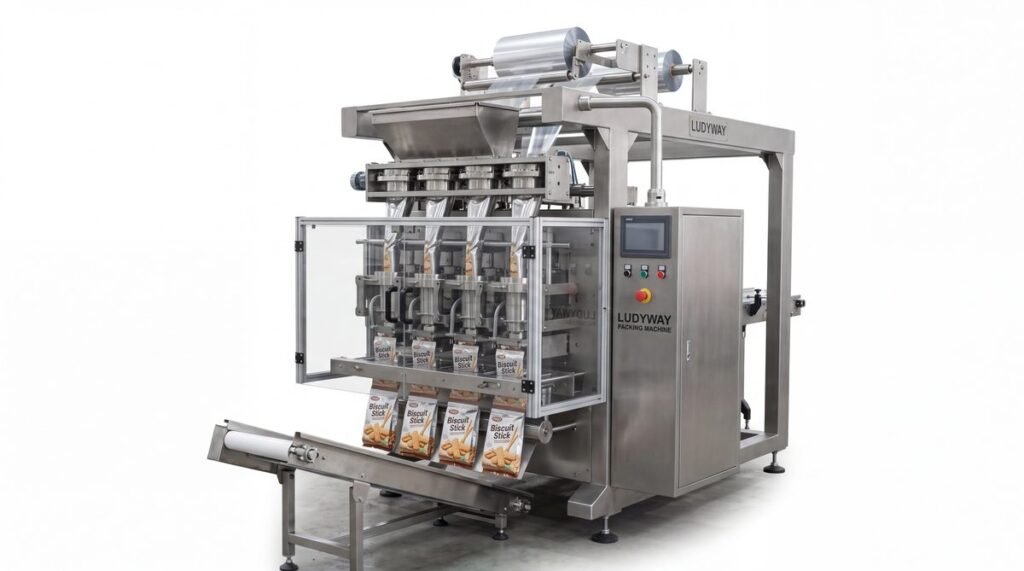
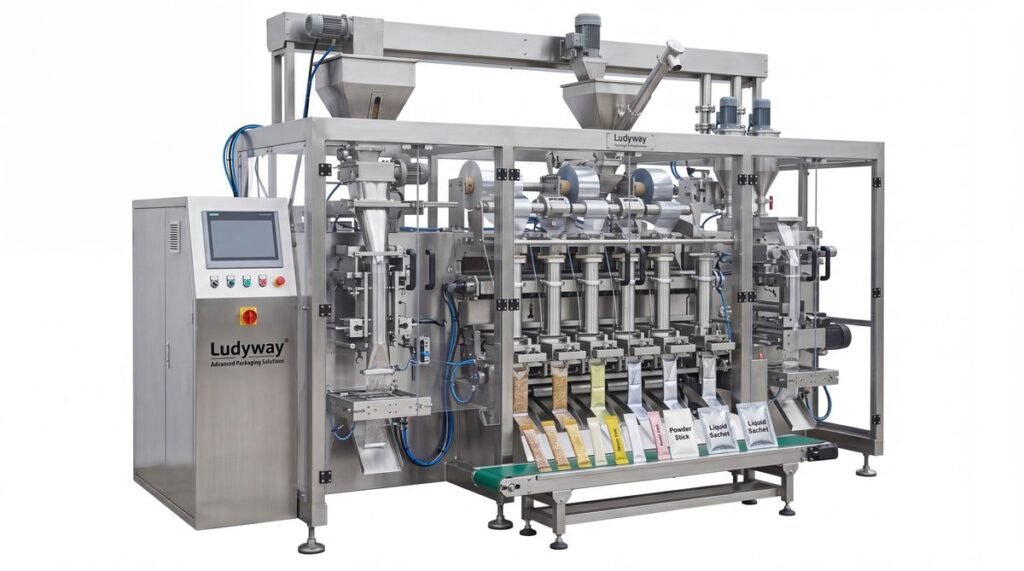
Stick pack packaging is a highly efficient flexible packaging format designed for single-serve, portion-controlled, and easy-to-carry products. It is widely used for powders, granules, liquids, gels, and fine free-flowing materials in industries such as food, pharmaceuticals, nutraceuticals, cosmetics, and household products.
In simple terms, a stick pack machine forms narrow tubular pouches from packaging film, fills them with a precise amount of product, seals them, and cuts them into individual units at high speed. Because the packs are slim, lightweight, and convenient, they are ideal for products like instant drink mixes, coffee, sugar, oral rehydration salts, health supplements, sauces, and cosmetic serums.
What Is Stick Pack Packaging?
Stick pack packaging is a vertical form-fill-seal process that creates long, narrow pouches from a roll of flexible film. Compared with standard sachets, stick packs are slimmer and often more ergonomic for consumers to open, pour, or consume directly.
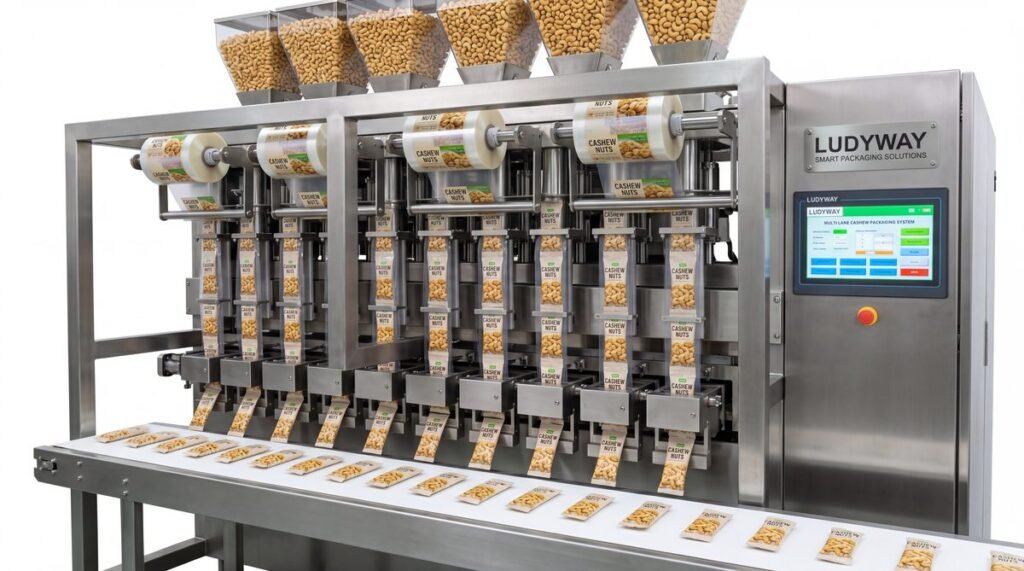
This packaging style is especially popular when brands want to combine portability, accurate dosing, strong shelf appeal, and lower material usage. It is also well-suited to multi-lane automation, allowing manufacturers to produce many stick packs at the same time.
Common products packed in stick packs
- Instant coffee, tea, sugar, sweeteners, and milk powder
- Protein powder, electrolytes, collagen, probiotics, and supplements
- Pharmaceutical powders and granules
- Liquid concentrates, sauces, honey, syrup, and oils
- Cosmetic serums, creams, gels, and sample-size products
- Detergents, cleaners, and specialty chemical products
How Does Stick Pack Packaging Work?
The stick pack packaging process follows a precise sequence. Although machine configurations vary depending on the product type, most systems use the same core workflow.
1. Film unwinding
The process starts with a roll of laminated packaging film mounted on the machine. The film is unwound smoothly under tension control to prevent wrinkles, tracking errors, or sealing defects.
2. Film guiding and registration
Sensors detect print marks on the film to ensure accurate positioning of logos, text, and cutting lines. This step is essential for maintaining brand consistency and professional pack appearance.
3. Vertical forming into lanes
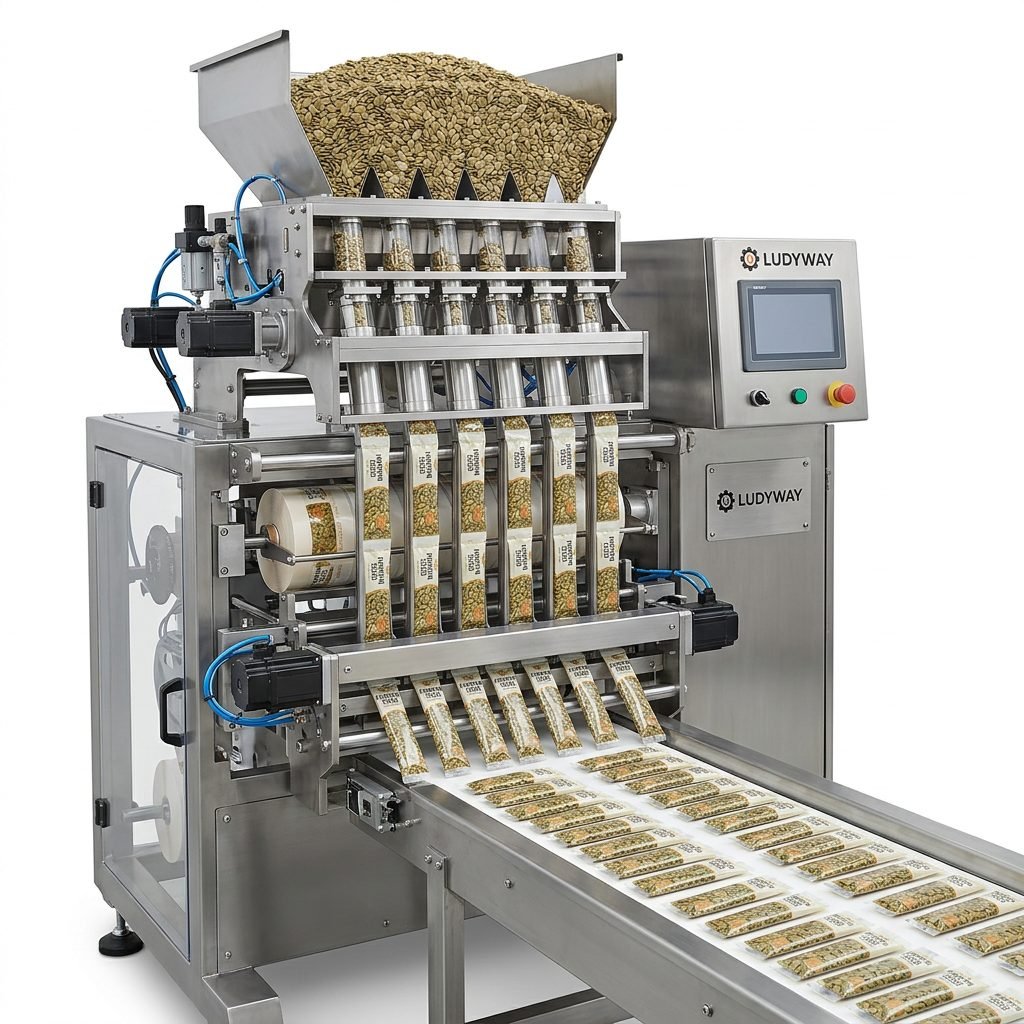
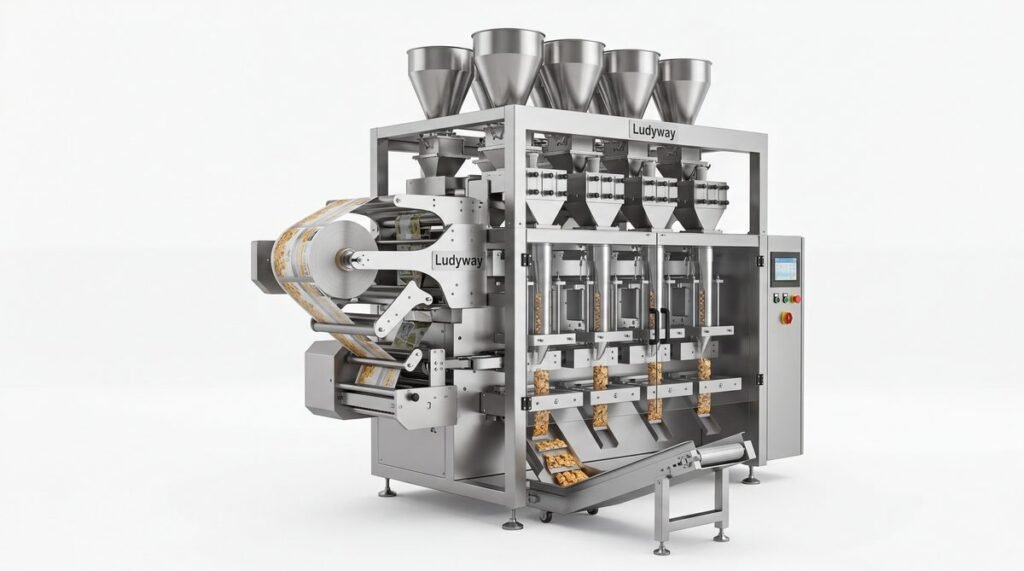
In a multi-lane stick pack machine, the film is split across several lanes. Each lane is shaped around forming tubes so the flat film becomes a narrow tube. This is where the stick pack structure begins to take shape.
4. Longitudinal sealing
The film edges are sealed vertically to create the back or fin seal of each stick pack. Good sealing temperature, pressure, and dwell time are critical for package integrity.
5. Bottom sealing
Before filling, the machine creates the bottom seal for each pack. This forms a closed base that can hold the product securely.
6. Product dosing and filling
The filling system dispenses a measured amount of product into each lane. Different products require different dosing systems:
- Auger fillers for powders
- Volumetric cup fillers for granules
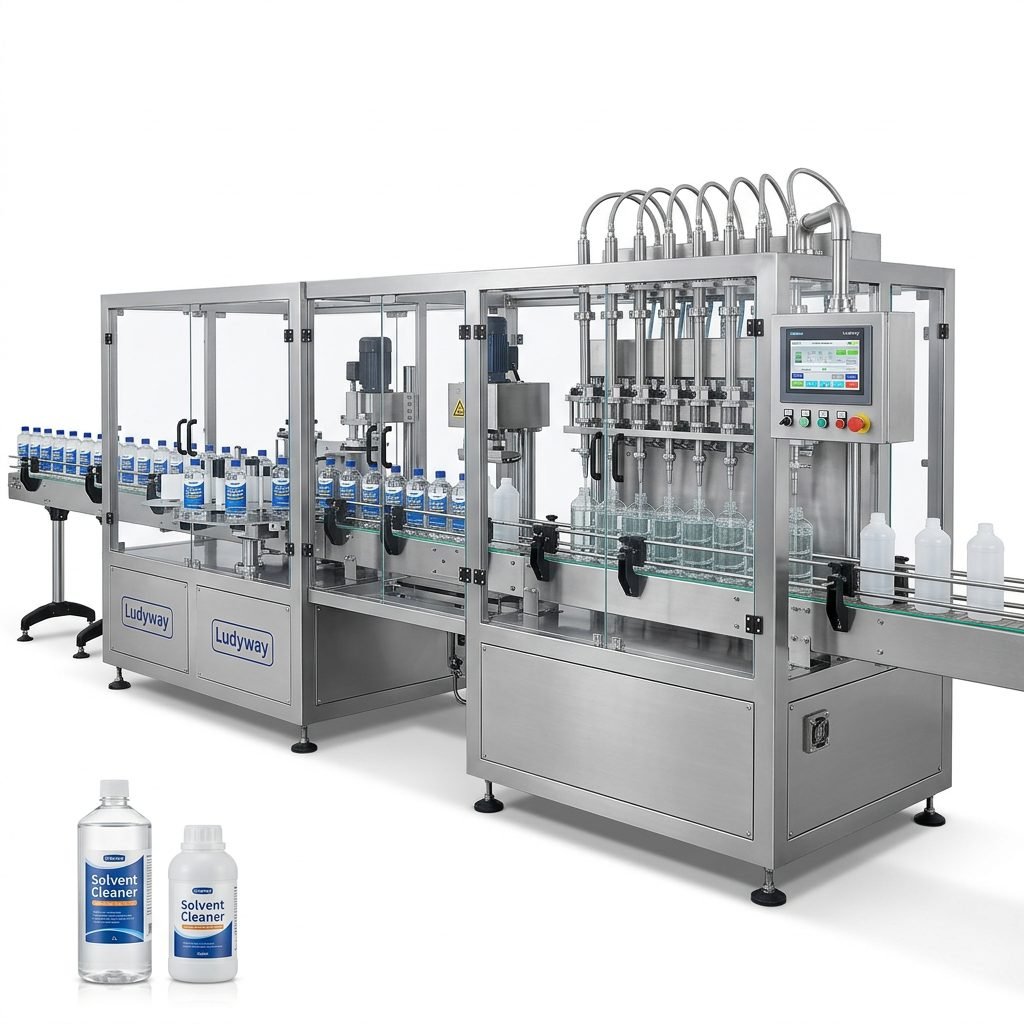
- Piston pumps for liquids and pastes
- Special dosing modules for difficult, sticky, or non-free-flowing materials
7. Top sealing
After filling, the machine seals the top of the current pack while simultaneously creating the bottom seal of the next one. This continuous motion supports high-speed output.
8. Cutting and separation
The sealed strip is cut into individual stick packs. Depending on production needs, packs may be cut with straight edges, tear notches, or special shapes for easier opening.
9. Discharge and downstream handling
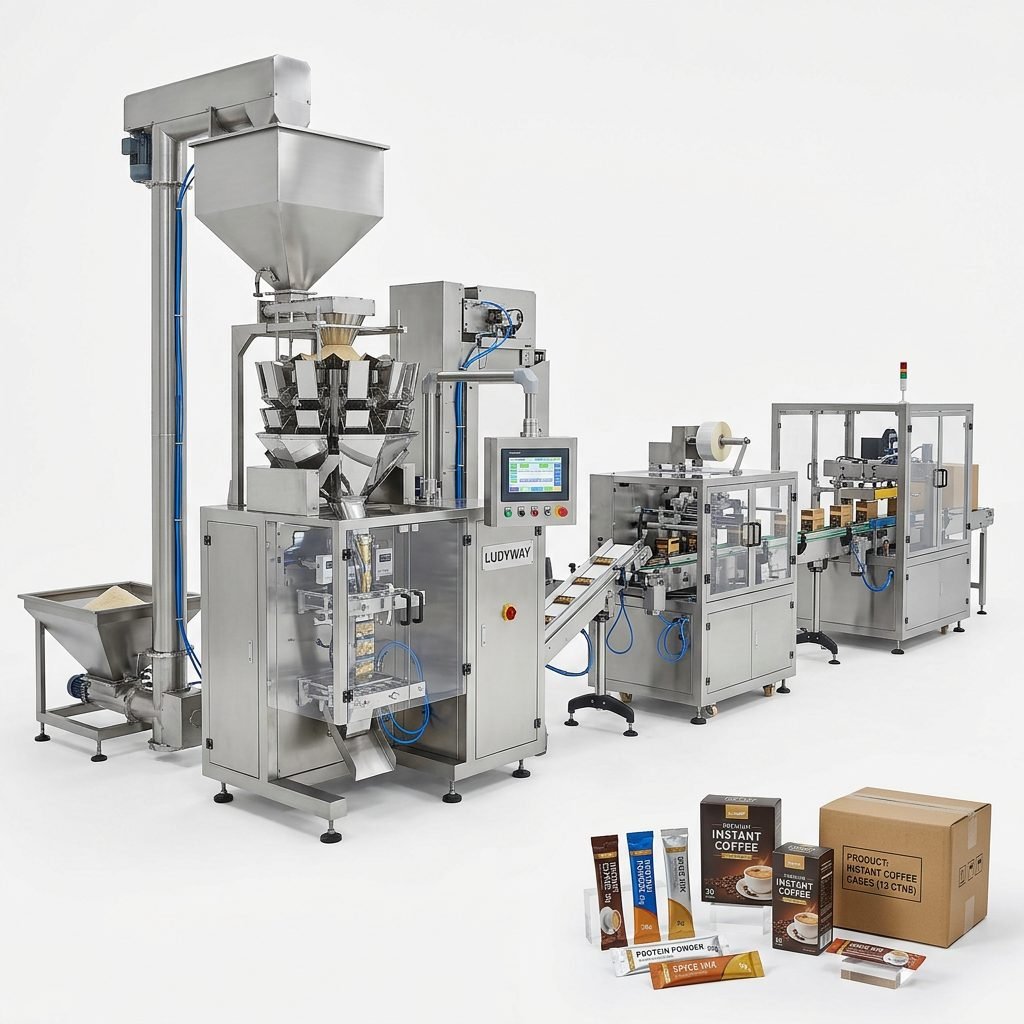
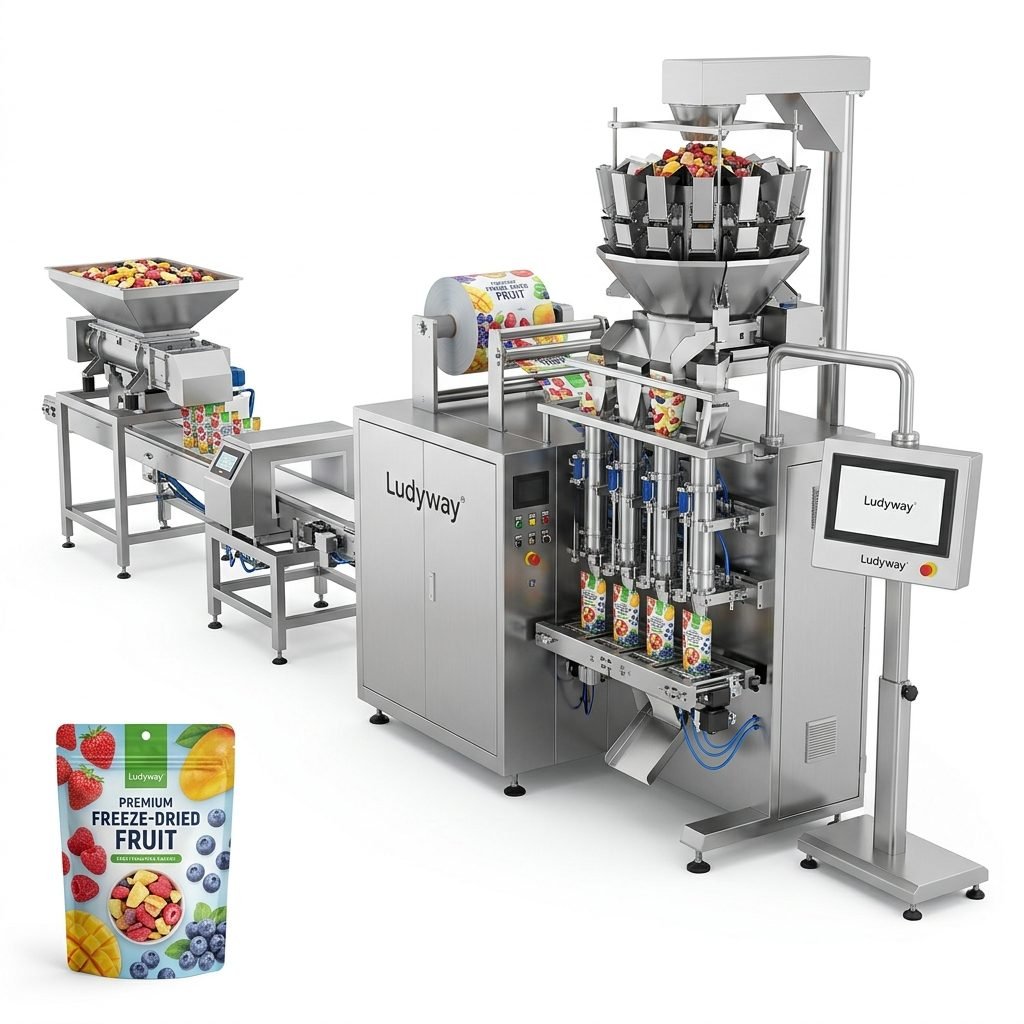
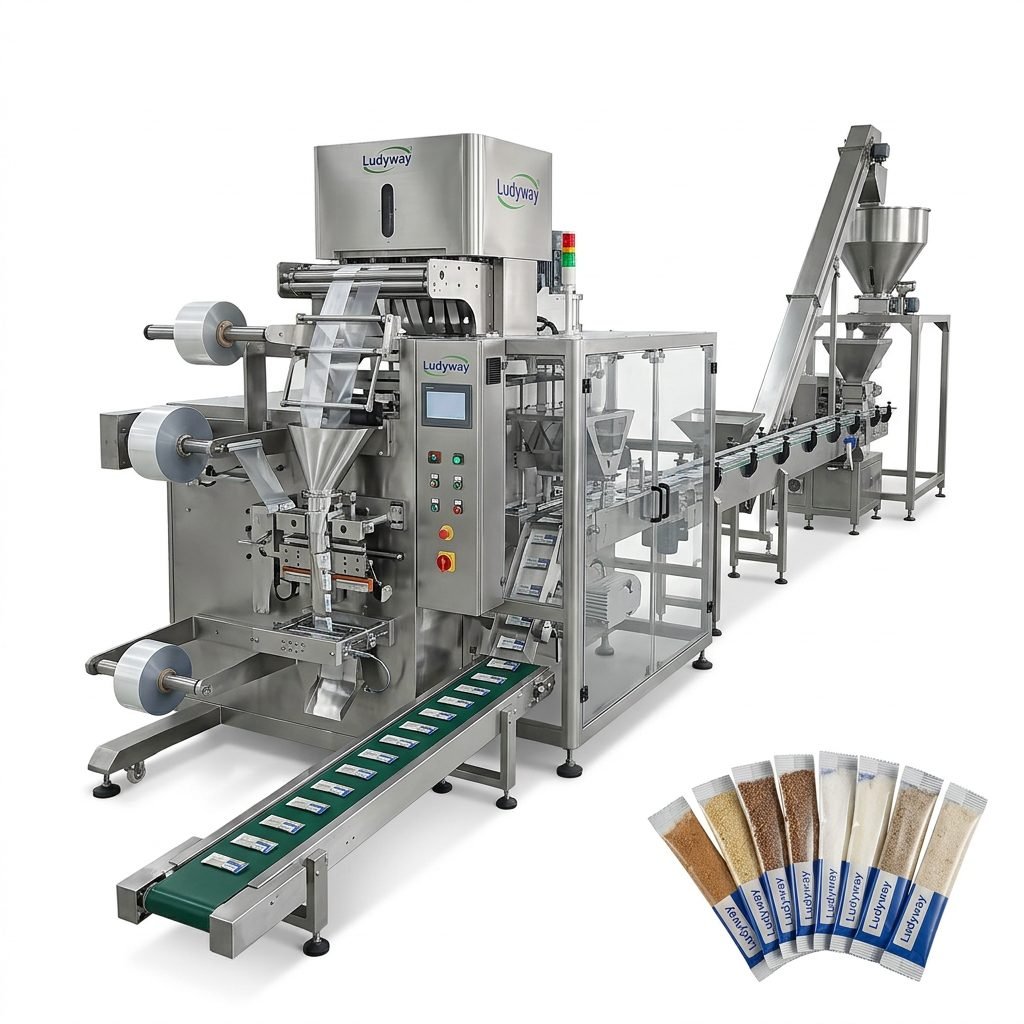
Finished stick packs are discharged to conveyors, inspection units, cartoning systems, or case packing lines. In advanced factories, this can be part of a fully integrated automatic packaging line.
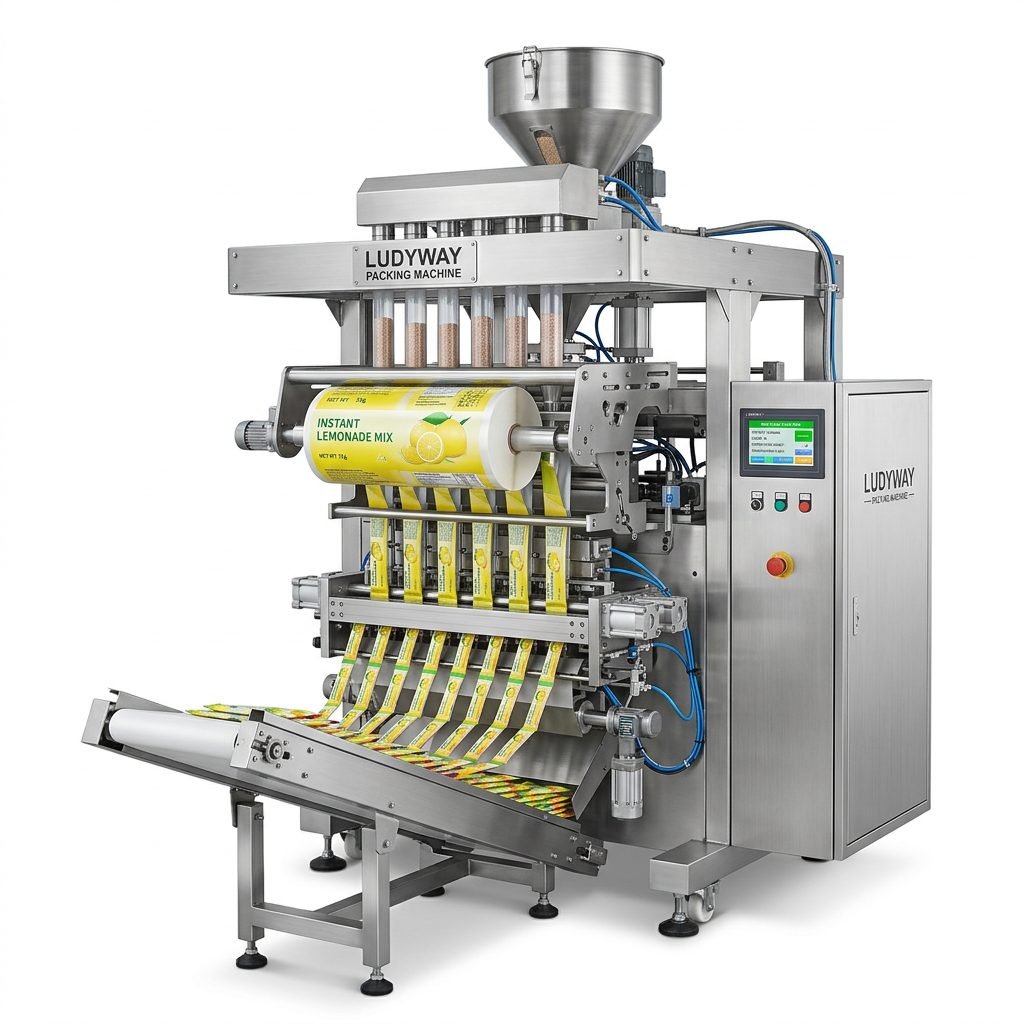
Stick Pack Packaging Process at a Glance
| Process Step | What Happens | Main Purpose |
|---|---|---|
| Film Unwinding | Film roll feeds into the machine | Stable material supply |
| Registration | Sensors align printed graphics | Accurate cutting and print position |
| Forming | Film becomes narrow tubes | Create stick pack shape |
| Vertical Sealing | Tube edges are sealed | Build pouch body |
| Bottom Sealing | Lower end is closed | Prepare for filling |
| Filling | Product enters each lane | Accurate dosing |
| Top Sealing | Pack is sealed after filling | Protect product |
| Cutting | Individual packs are separated | Final package output |
What Machines Are Used in Stick Pack Packaging?
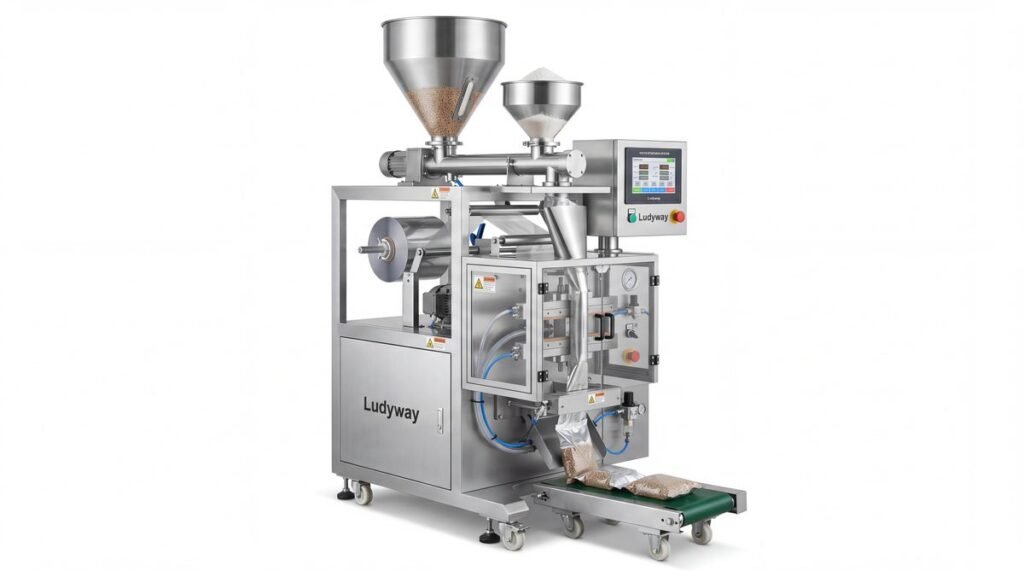
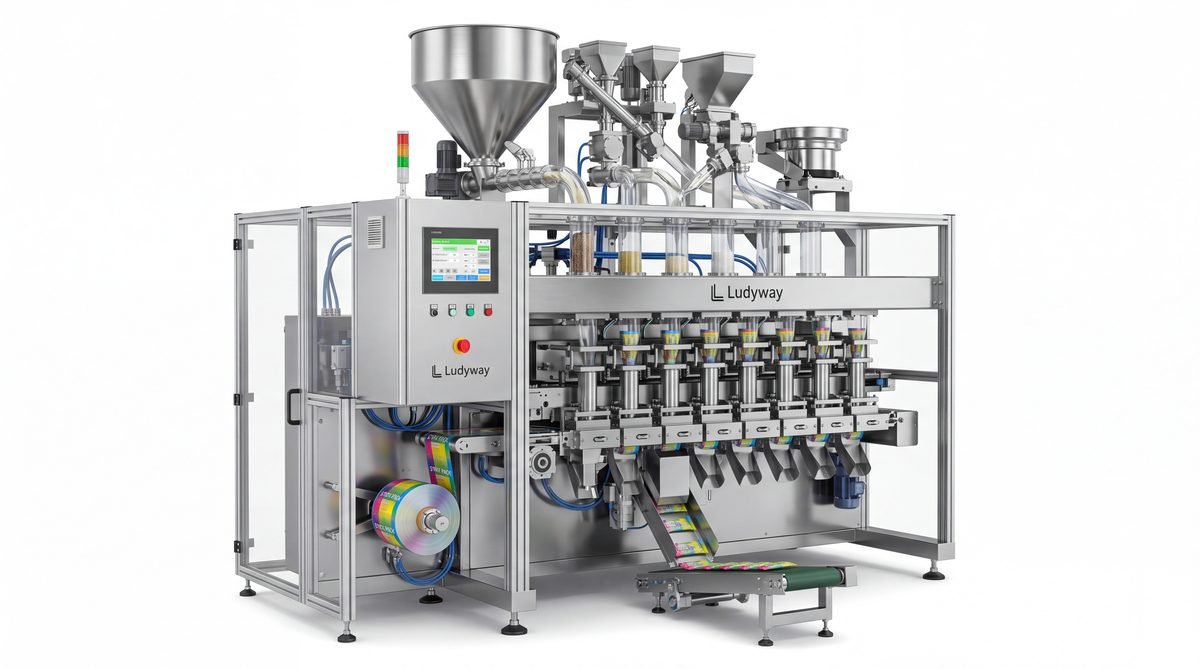
The most common equipment is the multi-lane stick pack machine, which allows several packs to be produced in parallel. This machine can be configured for different filling technologies, depending on product viscosity, flow behavior, and required accuracy.
Main machine components
- Film unwinding system
- Registration mark sensor
- Forming tubes
- Sealing jaws
- Filling system
- Cutting unit
- PLC and touchscreen control system
- Optional coding, inspection, cartoning, and case packing modules
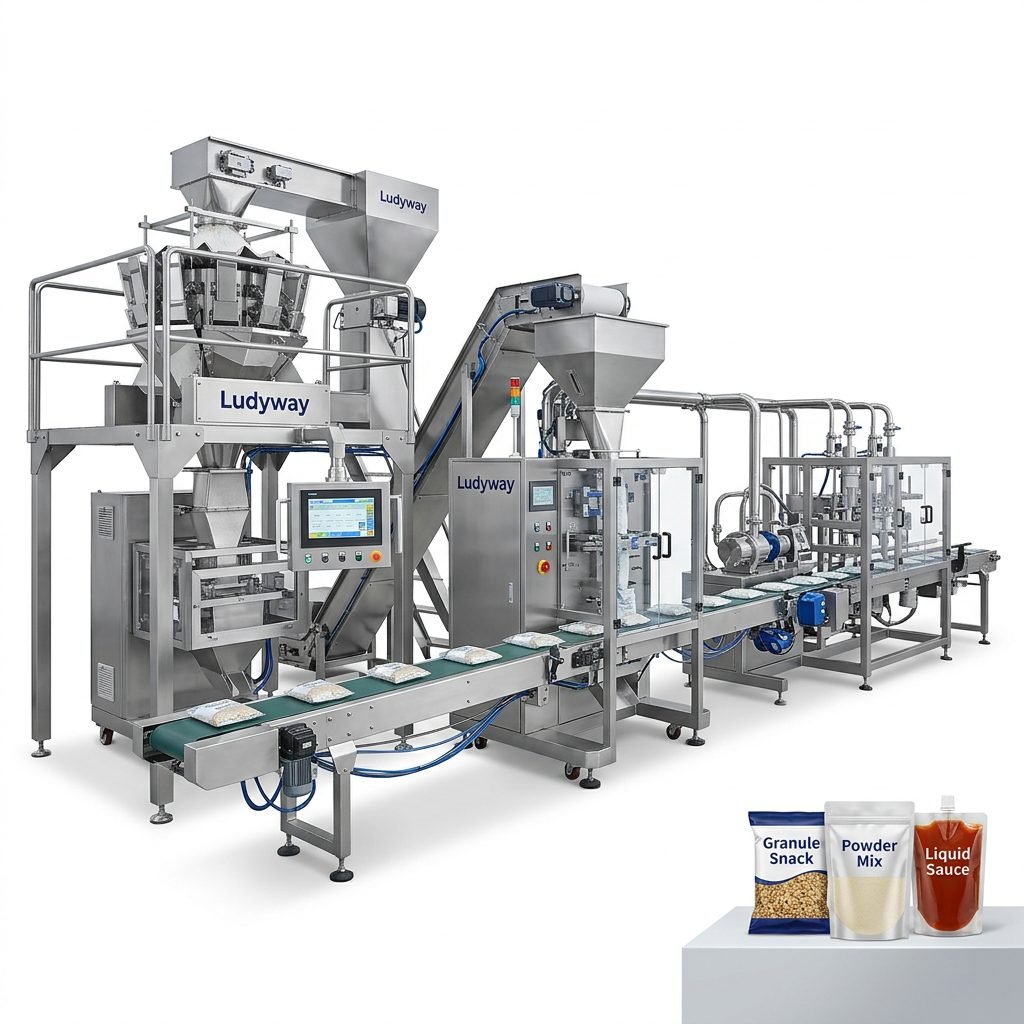
For companies planning complete automation, manufacturers often integrate stick pack machines with feeding systems, conveyors, checkweighers, cartoners, case sealers, and palletizing units. Suppliers such as stick pack packaging machine manufacturer Ludyway provide both standalone equipment and turnkey packaging line solutions for food, pharmaceutical, health supplement, and related industries.
Key Benefits of Stick Pack Packaging
1. Excellent convenience for consumers
Stick packs are easy to carry, store, open, and use. Their slim shape fits into pockets, handbags, travel kits, and retail displays, making them ideal for on-the-go consumption.
2. Accurate portion control
Each pack contains a predefined amount of product, which improves dosage consistency and reduces overuse or waste. This is especially important in pharmaceuticals, sports nutrition, and premium food applications.
3. High production efficiency
Multi-lane systems can produce large quantities in a compact footprint. This helps manufacturers increase output without requiring multiple separate machines.
4. Reduced packaging material use
Compared with some wider sachet formats, stick packs can use less film for the same serving size. This supports both cost reduction and sustainability goals.
5. Strong shelf appeal
Their clean, modern look works well for premium branding. Printed stick packs are also attractive for promotional kits, display boxes, and e-commerce bundles.
6. Better product protection
When proper film structures and sealing conditions are used, stick packs provide strong barriers against moisture, oxygen, contamination, and light exposure.
7. Flexible across many industries
From drink powders and supplements to gels and cosmetic samples, stick packs adapt well to a wide range of products and business models.
Stick Pack vs Sachet Packaging
Many buyers compare stick packs and sachets before investing in equipment. Both are flexible single-use packages, but their shapes, user experience, and application strengths differ.
| Feature | Stick Pack | Sachet |
|---|---|---|
| Shape | Long and narrow | Flat and wider |
| Portability | Very high | High |
| Pouring convenience | Excellent for powders and granules | Good |
| Brand appearance | Modern and premium | Versatile and familiar |
| Suitable for multi-lane speed | Very suitable | Also suitable |
| Best use cases | Single-dose powders, granules, liquids | Sauces, creams, seasonings, samples |
Industries That Benefit Most from Stick Pack Packaging
Food and beverage
Stick packs are ideal for instant coffee, drink mixes, sugar, condiments, seasonings, milk tea powders, and functional beverages. They support retail convenience, travel use, and vending applications.
Pharmaceutical and healthcare
In healthcare applications, single-dose packaging improves hygiene, dosing accuracy, and compliance. Popular products include oral powders, granules, electrolyte formulas, and medical nutrition products.
Nutraceuticals and supplements
Brands selling collagen, probiotics, protein, vitamins, and energy products often prefer stick packs because they combine premium appearance with easy daily dosing.
Cosmetics and personal care
Single-use samples of serum, cream, gel, shampoo, lotion, and facial treatments are frequently packed in stick packs for travel packs, promotional kits, and beauty trial programs.
Chemical and household products
Detergents, cleaning agents, specialty powders, and liquid concentrates can also be packaged in stick packs when controlled dosing and compact unit packaging are needed.
Important Factors That Affect Stick Pack Packaging Performance
Product characteristics
- Flowability of powders or granules
- Viscosity of liquids or gels
- Foaming tendency
- Particle size and density
- Moisture sensitivity and oxidation risk
Film selection
The packaging film must match the product and sealing method. Barrier properties, puncture resistance, printability, and machine compatibility all matter.
Sealing quality
Reliable seals prevent leakage, contamination, and shelf-life failures. Sealing parameters should be validated for each product and film type.
Filling accuracy
Precise dosing protects product consistency, reduces giveaway, and helps meet regulatory or labeling requirements.
Machine lane configuration
More lanes typically mean higher output, but the right number depends on production volume, product behavior, maintenance preferences, and available floor space.
Challenges in Stick Pack Packaging and How to Solve Them
| Challenge | Typical Cause | Solution |
|---|---|---|
| Inaccurate fill weight | Poor product flow or wrong filler type | Use suitable dosing system and optimize settings |
| Seal leakage | Incorrect temperature, pressure, or contamination in seal area | Adjust sealing parameters and improve product control |
| Misaligned printing | Sensor or film tracking issues | Calibrate registration and tension control |
| Film wrinkling | Unstable tension or poor film quality | Improve unwinding and use compatible film rolls |
| Product bridging or clogging | Difficult powder or granule behavior | Use agitation, vibration, or customized feeding design |
How to Choose the Right Stick Pack Machine
If you are evaluating equipment, focus on the real needs of your production rather than just the maximum speed listed in a brochure.
Key selection points
- Product type: powder, granule, liquid, gel, or paste
- Pack size range: width, length, and fill volume
- Required output: packs per minute and future expansion plans
- Film compatibility: sealing structure and barrier needs
- Cleaning requirements: especially for food and pharma
- Automation level: standalone machine or turnkey line
- After-sales support: spare parts, training, technical service
A well-matched machine improves uptime, seal consistency, labor efficiency, and long-term return on investment.
Why Stick Pack Packaging Continues to Grow
Consumer demand for portable, hygienic, single-dose, and easy-to-use packaging continues to rise worldwide. At the same time, manufacturers want faster production, lower material costs, and more flexible product formats. Stick pack packaging addresses all of these goals.
It is particularly attractive for brands launching travel sizes, health-focused products, premium samples, and e-commerce-friendly packaging. With the support of modern multi-lane automation, stick pack packaging is no longer just a niche format—it has become a mainstream solution across multiple industries.
Final Thoughts on How Stick Pack Packaging Works
Stick pack packaging works by forming narrow pouches from flexible film, filling them with a precise amount of product, sealing them securely, and cutting them into individual packs. Its strength lies in combining speed, accuracy, portability, and attractive presentation.
Whether you are packaging drink powders, nutraceuticals, pharmaceutical granules, liquid concentrates, or cosmetic samples, stick packs offer a practical and scalable packaging format. When paired with the right machine configuration and film structure, they can significantly improve both production efficiency and customer experience.