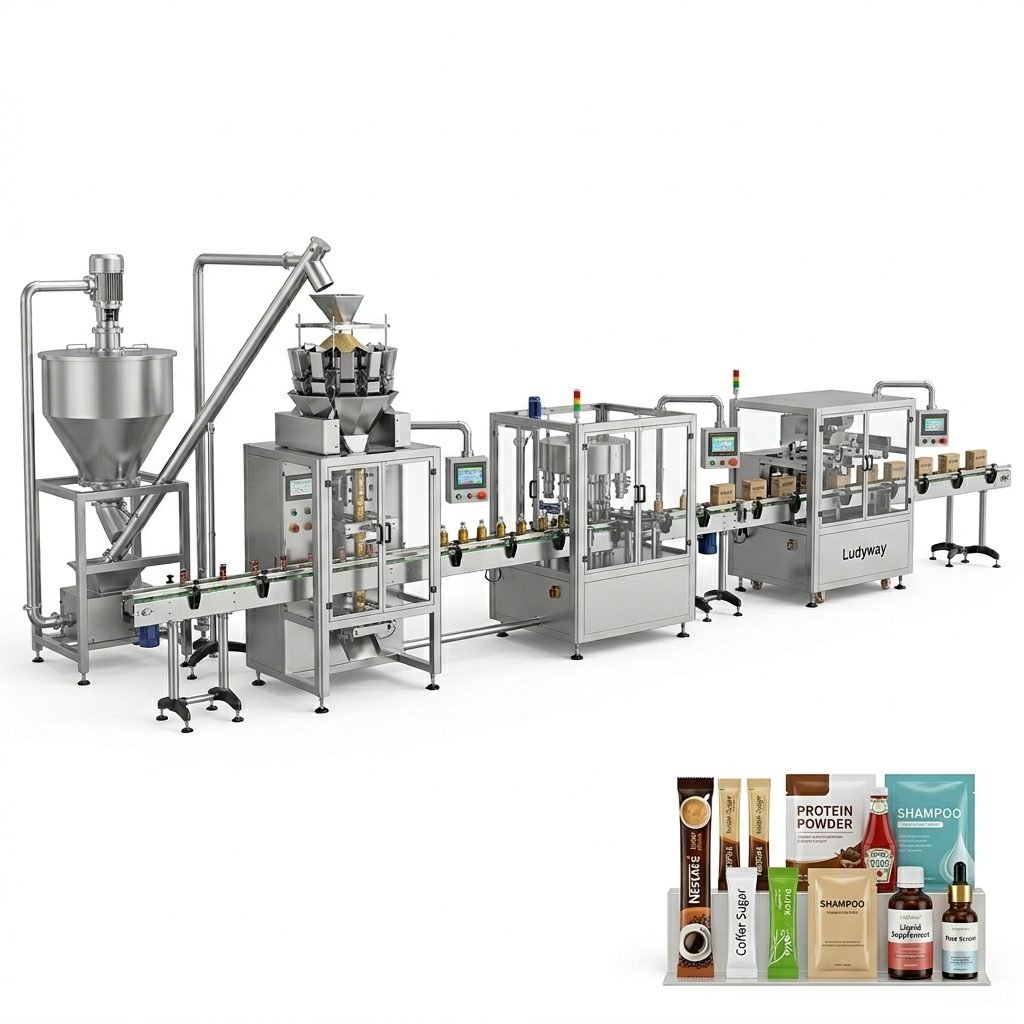
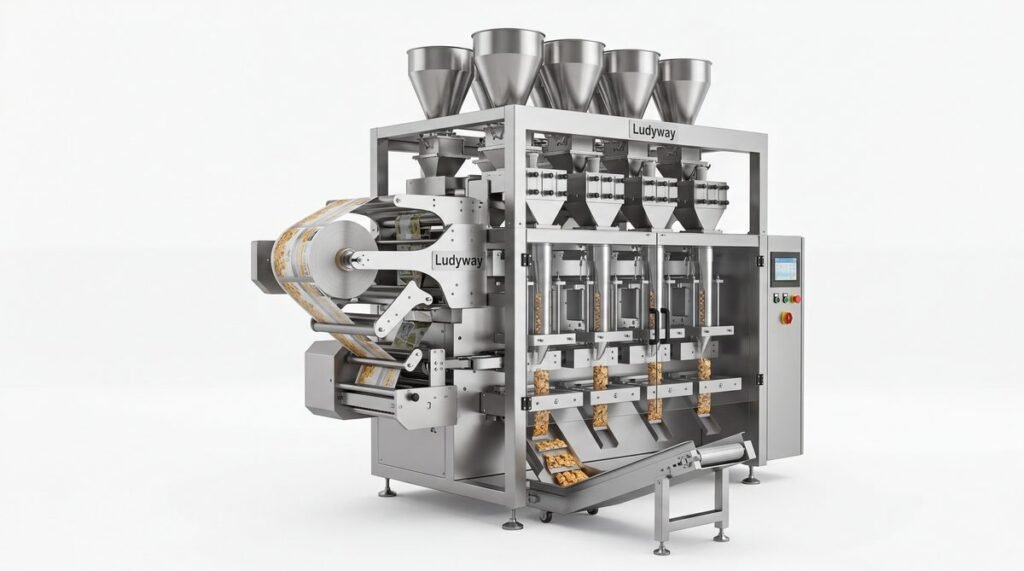
Selecting the right flour packing machine is a critical decision that directly impacts your production efficiency, product quality, and bottom line. With dozens of equipment types, configurations, and automation levels available, the selection process can feel overwhelming. This guide walks you through the essential factors to evaluate, helping you match your specific flour characteristics and production goals to the most suitable packaging equipment on the market.
Understanding Your Flour Product Characteristics
Not all flour behaves the same way during packaging. Before comparing machines, you need a thorough understanding of your product’s physical properties. These characteristics directly influence which dosing system, sealing technology, and material handling approach will work best.
| Product Property | Impact on Machine Selection |
|---|---|
| Particle Size & Flowability | Fine powders like wheat flour require auger fillers for precision; free-flowing granules may work with volumetric cup fillers. |
| Bulk Density | Affects hopper design, filling speed, and the type of weighing system needed for accurate portioning. |
| Moisture Content & Hygroscopy | High moisture or hygroscopic flours demand better sealing integrity and possibly nitrogen flushing to extend shelf life. |
| Dust Generation | Flour creates significant dust; machines need dust extraction systems and sealed construction to maintain a clean working environment. |
According to PMMI industry resources, understanding material characteristics is the foundation of proper equipment specification. Skipping this step often leads to dosing inaccuracies, excessive waste, and premature component wear.
Defining Your Production Requirements
Target Output and Speed
How many bags or sachets do you need to fill per minute? Entry-level machines may handle 30–50 packs per minute, while high-speed multi-lane systems can exceed 400–600 packs per minute. Your required throughput determines the level of automation and the number of filling lanes you need.
Packaging Format and Bag Style
Flour is packed in various formats depending on the target market and distribution channel:
- Pillow pouches and sachets – Common for small retail portions, sample packs, and single-use applications.
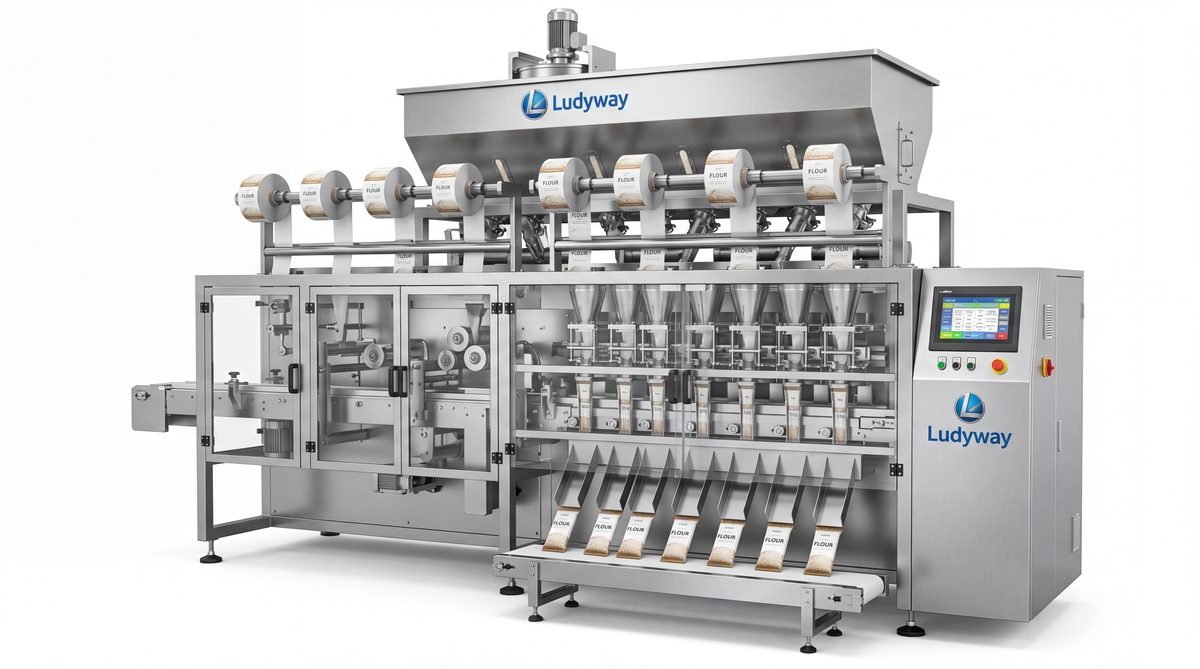
- Stick packs – Increasingly popular for portion-controlled flour products in the health and convenience segments.
- Gusseted bags and block-bottom pouches – Provide better shelf presence and stability for retail display.
- Large bags (1kg–50kg) – Industrial and bulk packaging for bakery supply chains and wholesale distribution.
Comparing Flour Packing Machine Types
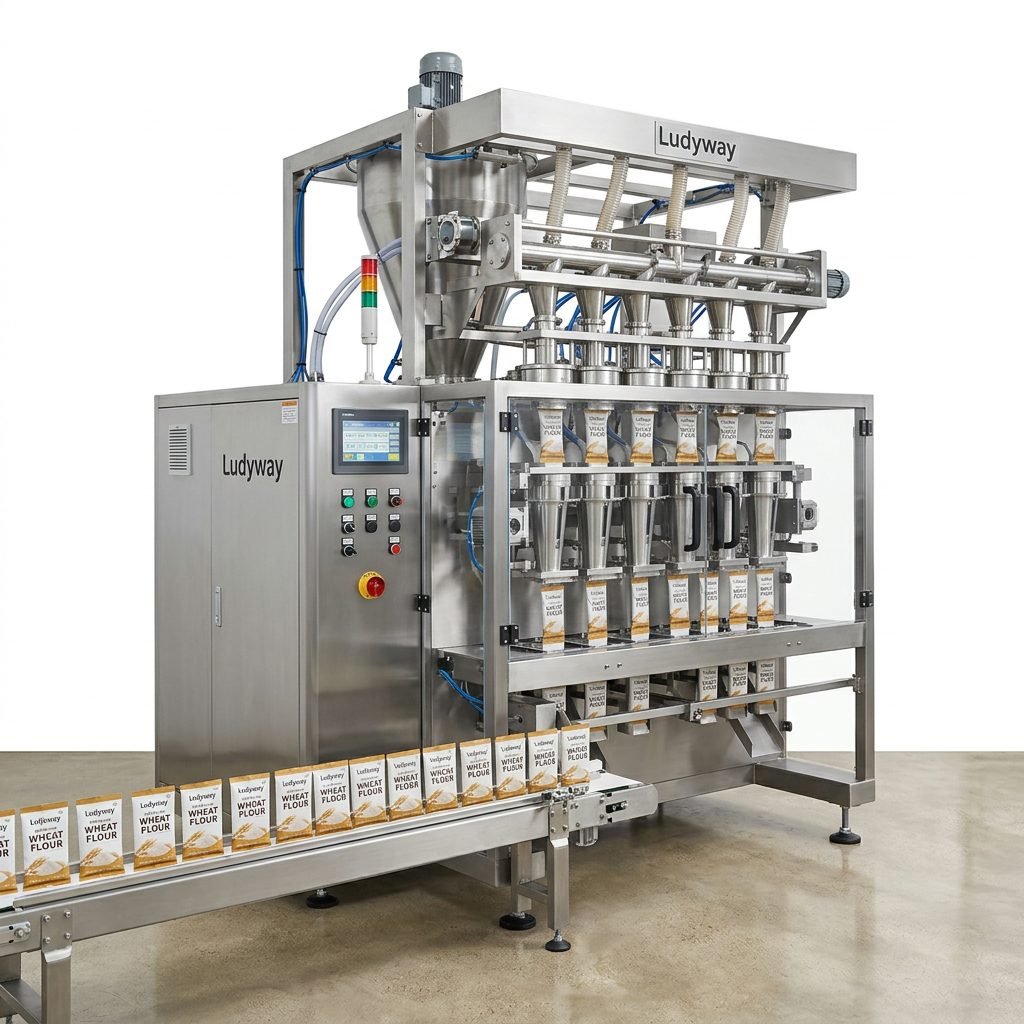
Different machine configurations serve different production scales and packaging formats. The table below outlines the most common types used in flour packaging operations.
| Machine Type | Best For | Typical Output Range |
|---|---|---|
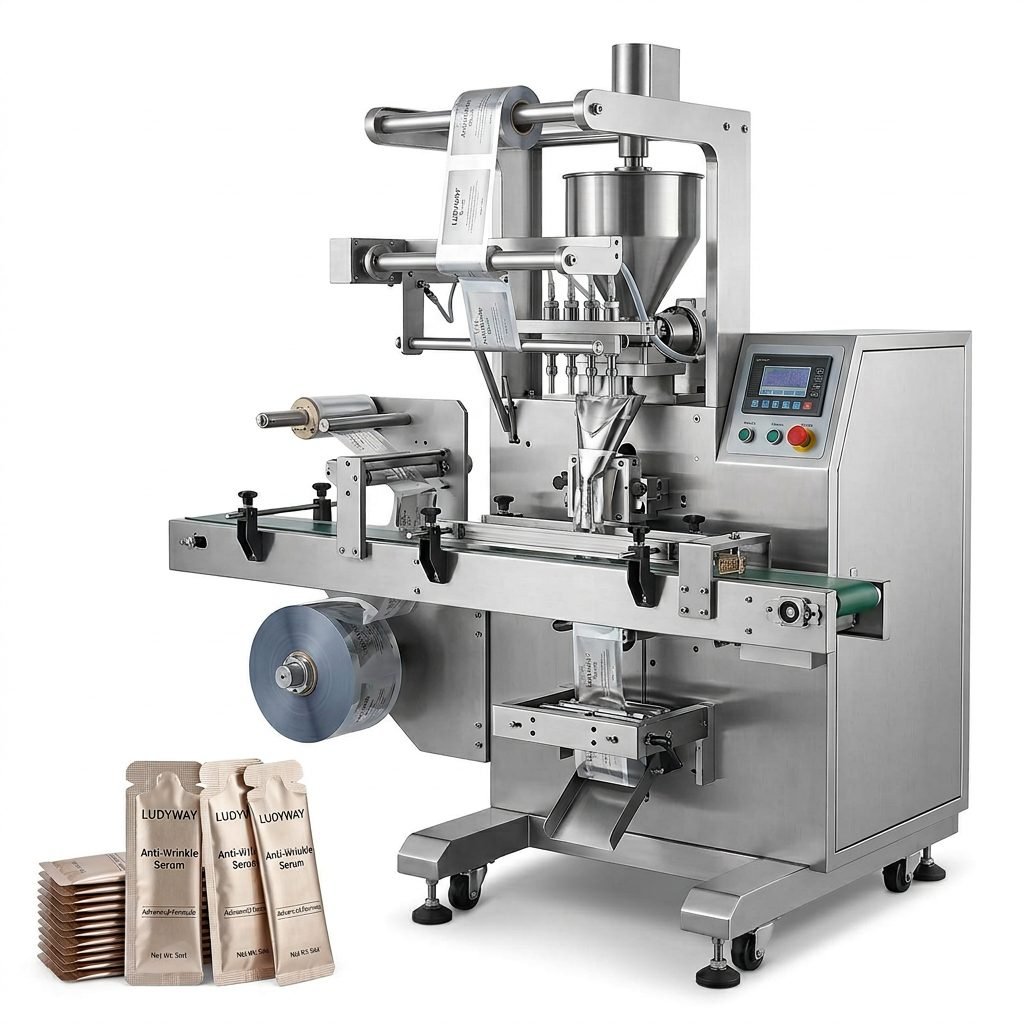
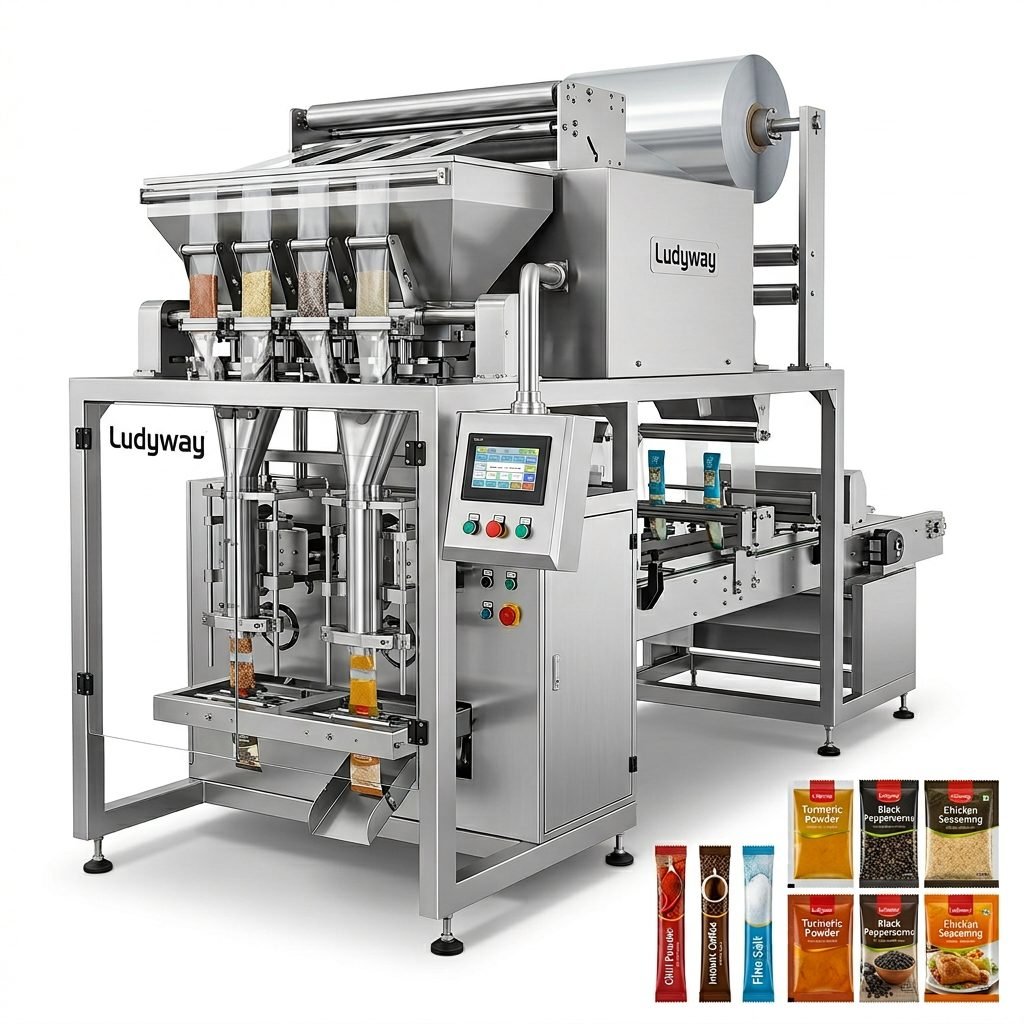
| Single-Lane Vertical Form Fill Seal (VFFS) | Small to medium production, frequent product changeovers | 20–80 packs/min |
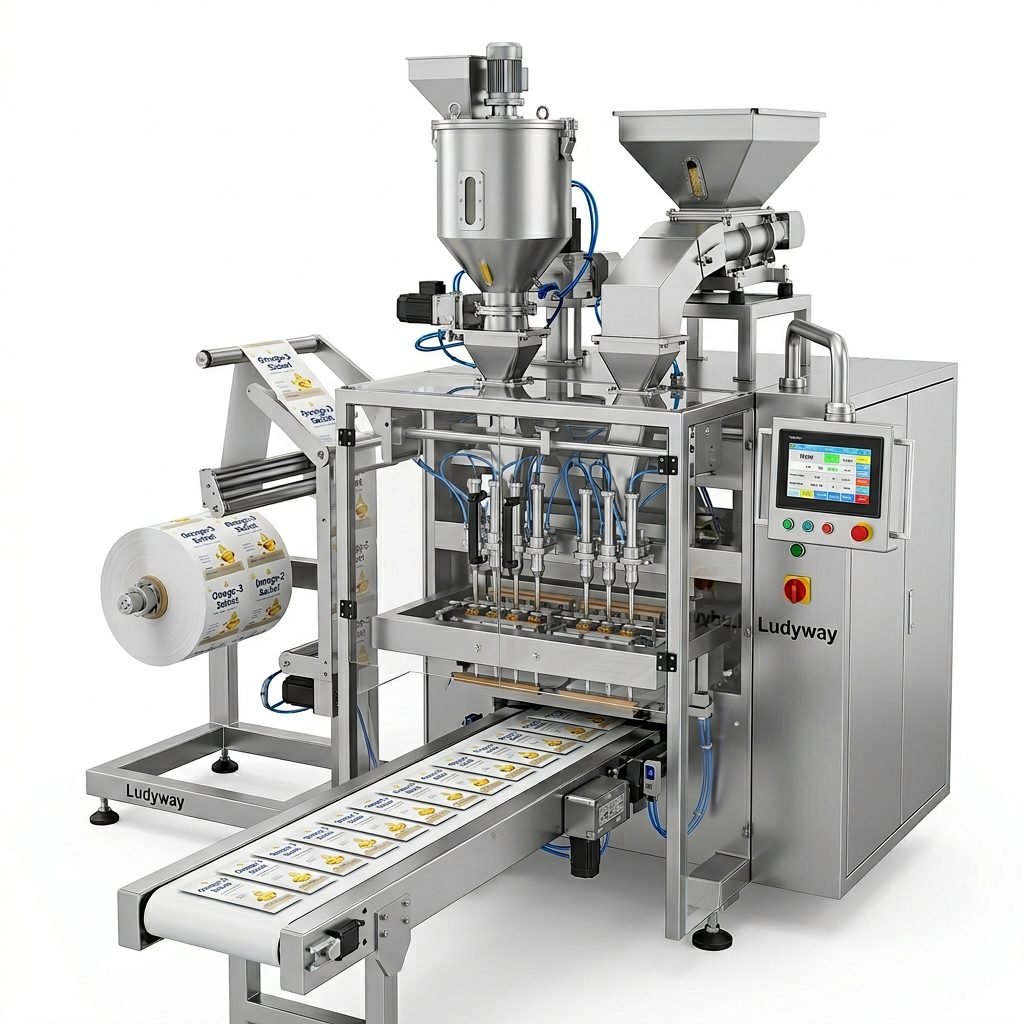
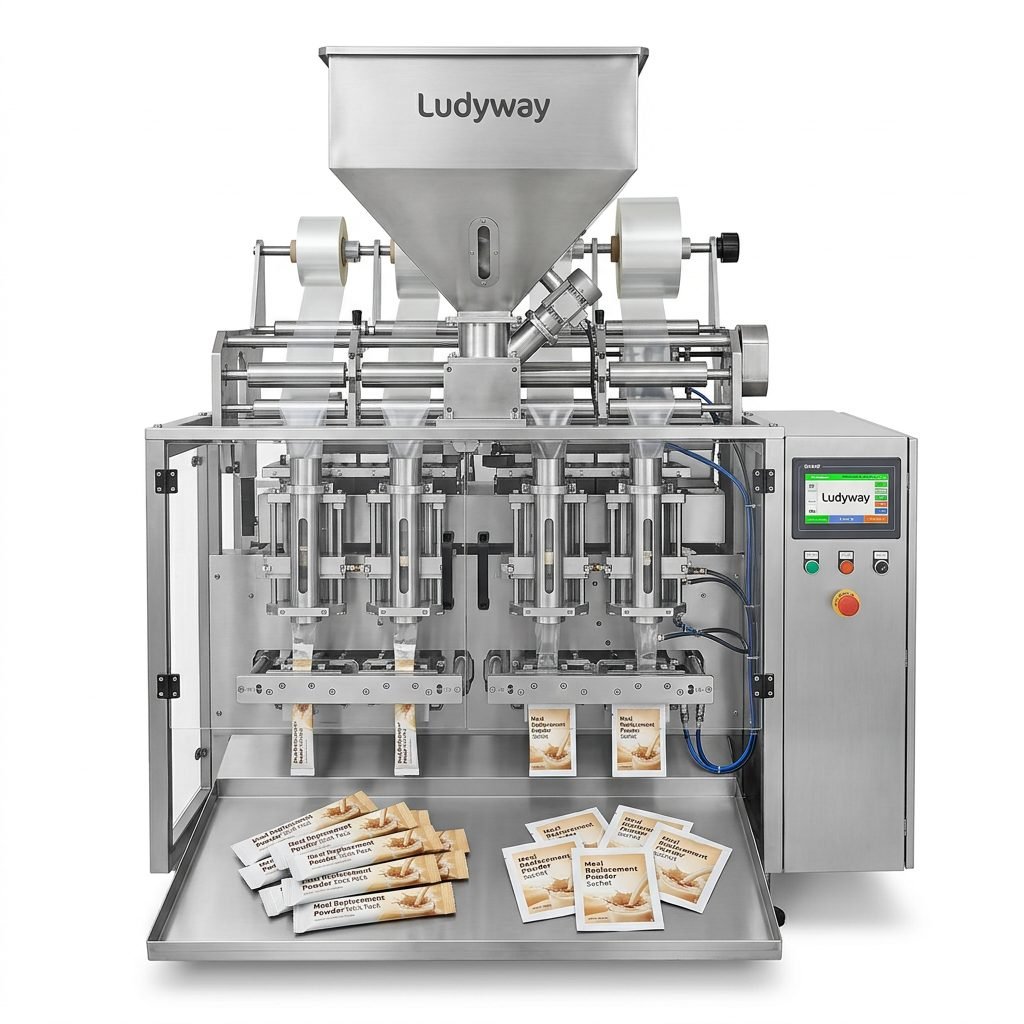
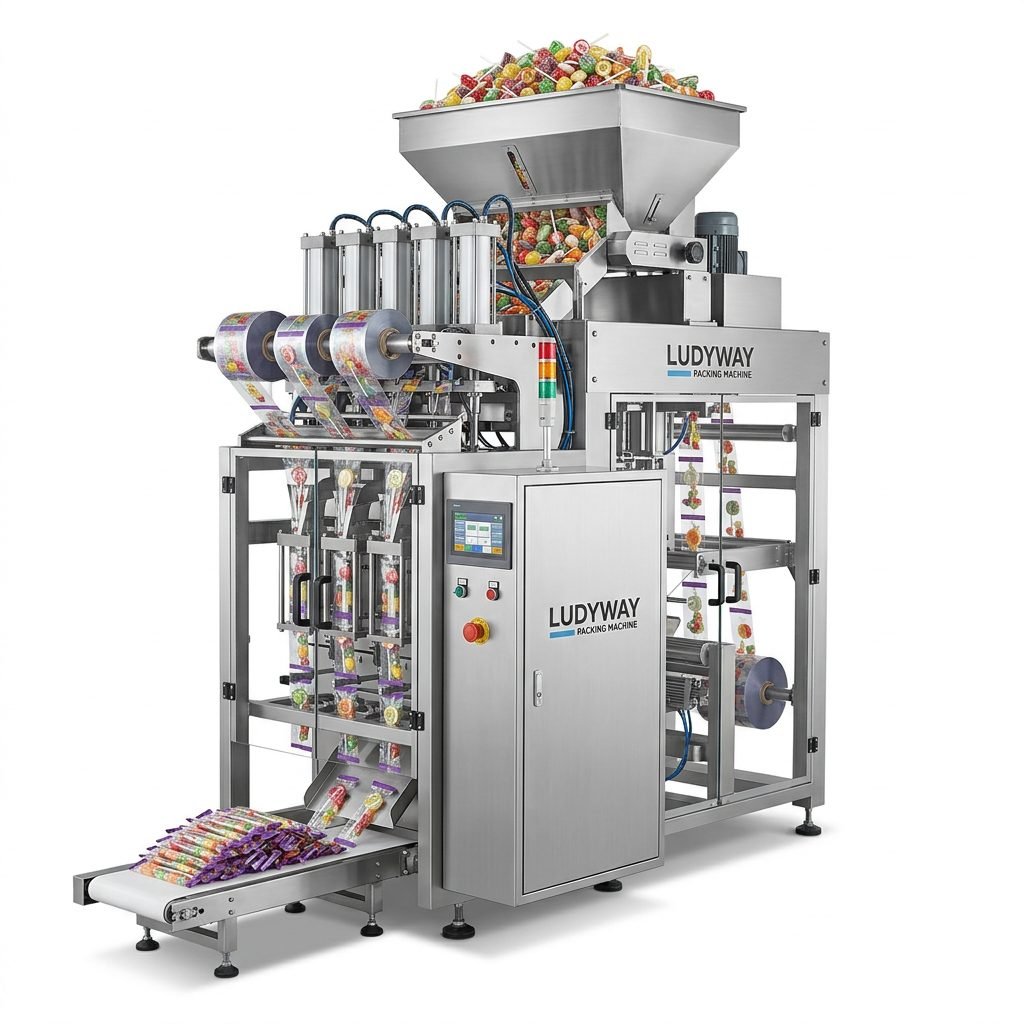
| Multi-Lane Stick Pack Machine | High-volume portion packs, single-serve formats | 200–600+ packs/min |
| Premade Pouch Packaging Machine | Retail-oriented packaging, premium presentation | 30–120 packs/min |
| Bulk Bagging Machine | Industrial bulk packaging (5kg–50kg) | 4–15 bags/min |
Critical Features to Evaluate
Dosing and Weighing Accuracy
For flour packaging, precision filling is non-negotiable. Auger fillers are widely preferred for fine flour due to their volumetric accuracy and ability to handle cohesive powders without bridging. For applications requiring weight-based filling, multi-head weighers or combination weighers provide superior accuracy at higher speeds. The FDA food packaging regulations emphasize consistent net weight compliance, making dosing accuracy both a quality and regulatory requirement.
Sealing Integrity
Flour’s fine particle nature means that even minor seal imperfections lead to leakage, contamination, and customer complaints. Look for machines with temperature-controlled sealing jaws, consistent pressure distribution, and the option for double or reinforced seals. For products requiring extended shelf life, consider equipment that supports modified atmosphere packaging (MAP) or nitrogen flushing capabilities.
Dust Management Systems
Flour dust is not just a housekeeping issue—it poses respiratory hazards and, in high concentrations, can be combustible. Quality flour packing machines incorporate:
- Enclosed filling zones with local dust extraction points
- Anti-static components to reduce dust adhesion
- Easy-clean surfaces and tool-free access for sanitation
- Optional integrated industrial dust collection systems
Automation Level and Line Integration
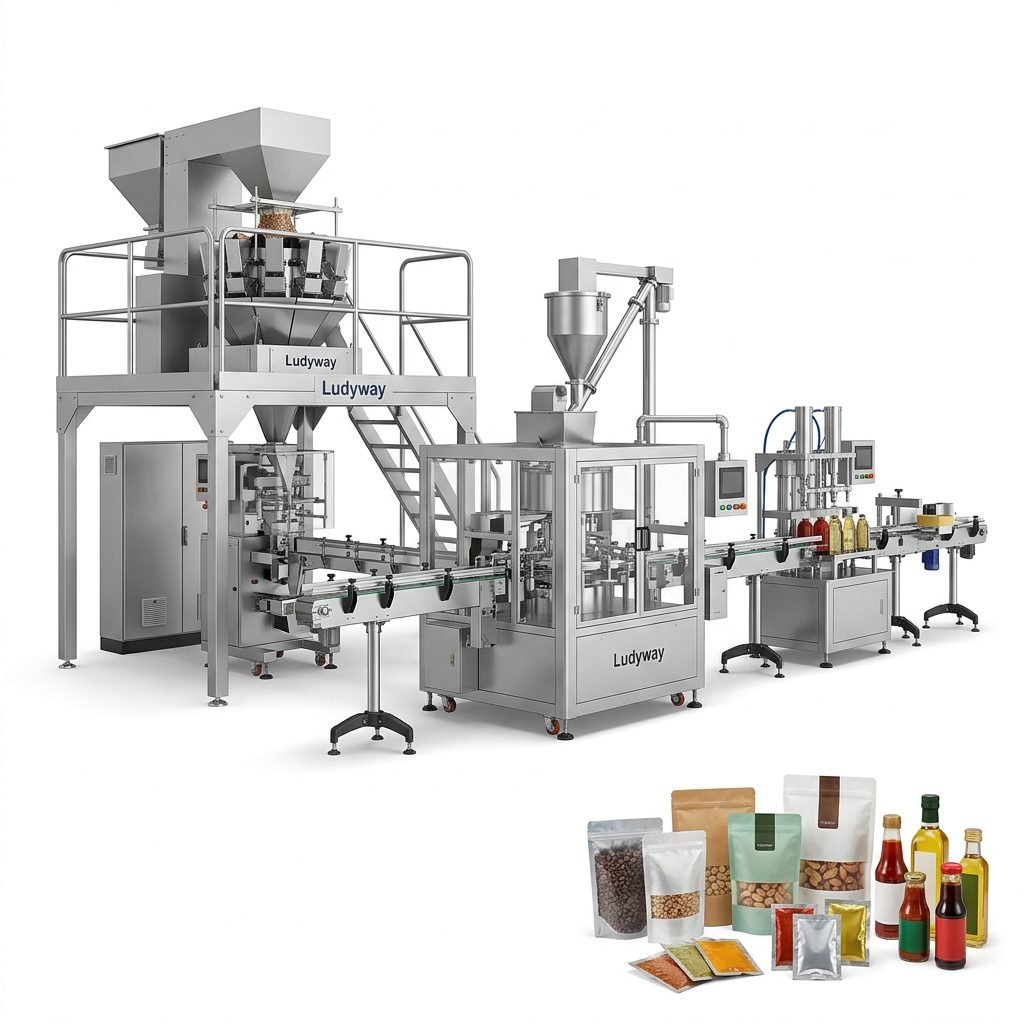
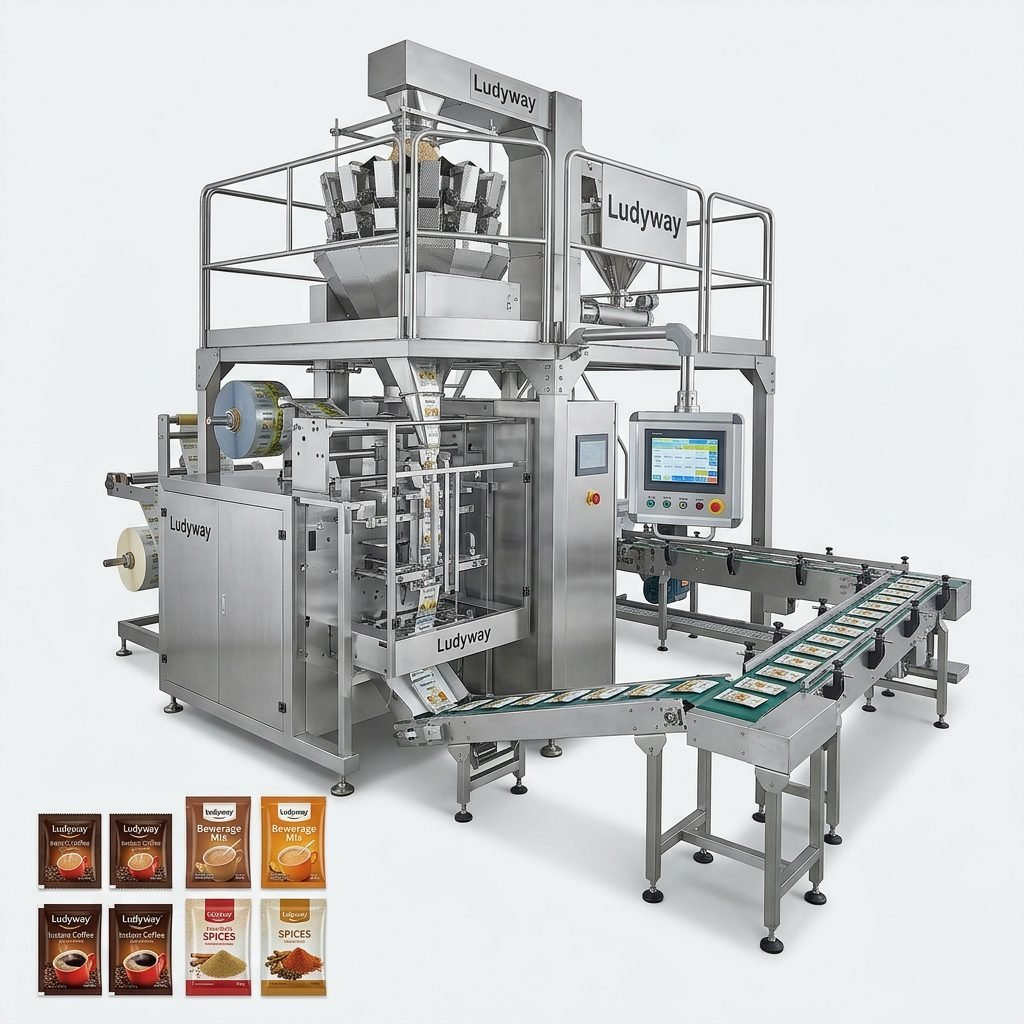
Your current production setup and future growth plans determine how automated your flour packaging line should be. Options range from semi-automatic machines requiring manual bag placement to fully automatic turnkey packaging lines that integrate feeding, dosing, filling, sealing, coding, inspection, cartoning, and palletizing.
Key automation considerations include:
- Integration with upstream processes – Can the machine connect directly to your flour milling or mixing equipment?
- In-line quality control – Checkweighers, metal detectors, and seal inspection systems help catch defects before products leave the line.
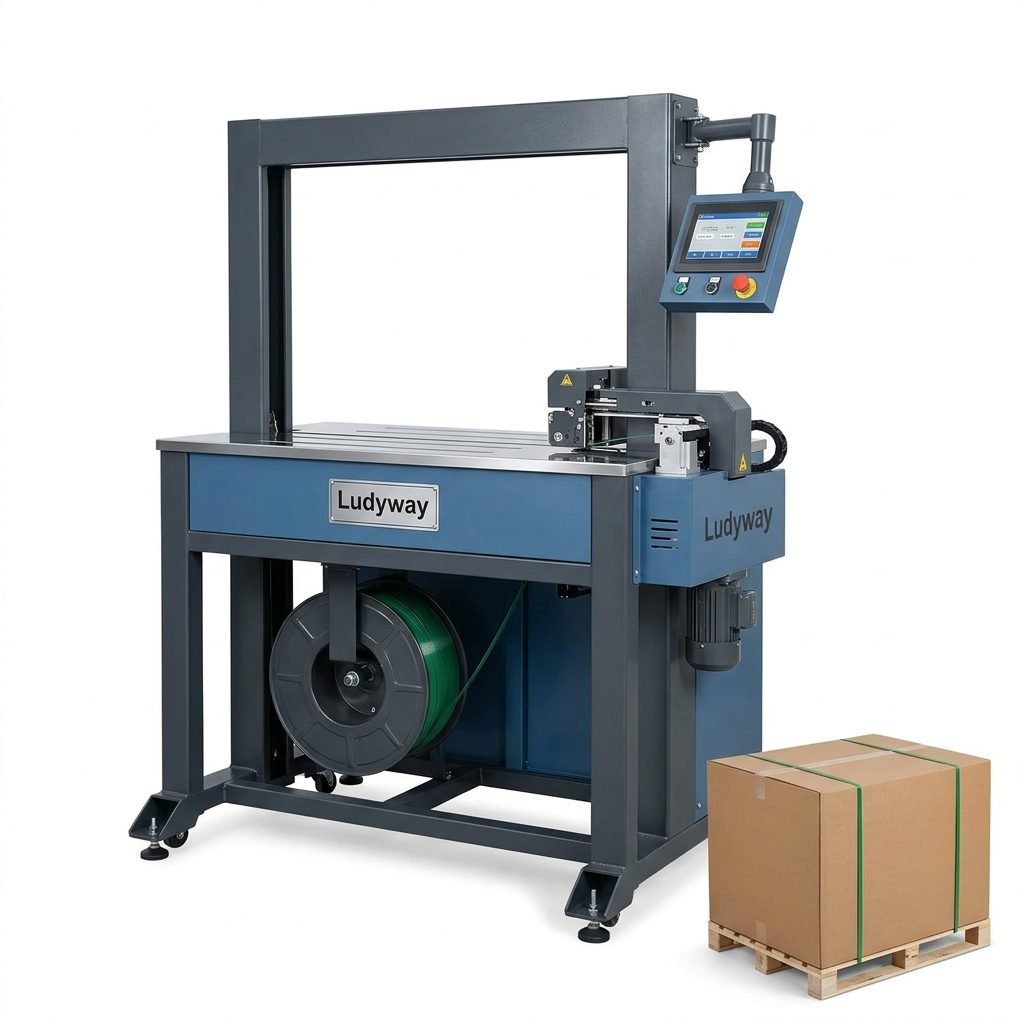
- Secondary packaging integration – Automatic cartoning, case packing, and palletizing systems reduce manual handling and improve throughput consistency.
- Data connectivity – Modern machines with PLC controls and IoT capabilities enable production monitoring, predictive maintenance, and traceability.
Sanitation and Compliance Requirements
Flour packaging for food applications must meet strict hygiene standards. Equipment design should follow principles that facilitate thorough cleaning and prevent contamination. Stainless steel construction in product contact areas is standard, and machines should offer tool-free disassembly for rapid product changeover and sanitation. Depending on your market, certifications such as CE, GMP compliance, or adherence to Flexible Packaging Association standards may be required.
Evaluating Suppliers and After-Sales Support
The quality of your packaging machine supplier is just as important as the machine itself. A reliable manufacturer provides more than equipment—they deliver engineering expertise, responsive technical support, and a commitment to your long-term operational success. When evaluating suppliers, consider their manufacturing capabilities, industry experience, customization options, and global service network.
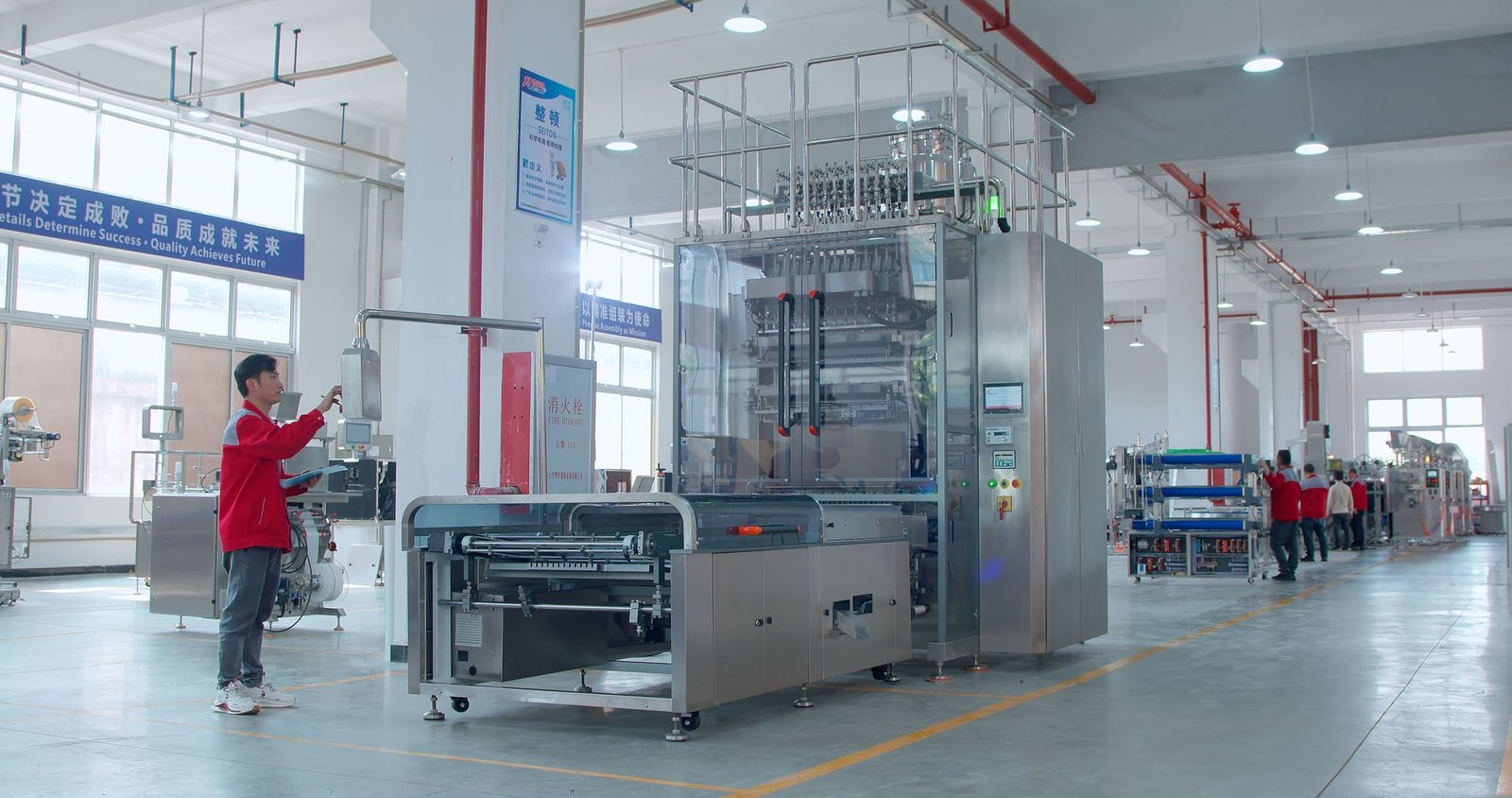
For example, Ludyway Machinery, a China-based packaging equipment manufacturer with over 30 years of industry experience, offers more than 50 packaging machine models from a 20,000-square-meter facility. The company provides customized flour packaging solutions—from individual VFFS machines to complete turnkey lines—backed by engineering support, installation, commissioning, and ongoing technical service across more than 100 countries. Working with a supplier that offers this scope of manufacturing expertise and global support helps ensure your packaging investment delivers consistent results over the long term.
Investment Considerations and ROI
Total Cost of Ownership
Purchase price alone does not reflect the true cost of a flour packing machine. Evaluate the total cost of ownership (TCO), which includes:
- Initial equipment investment and installation
- Operator training and labor requirements
- Spare parts availability and maintenance costs
- Energy consumption and utility costs
- Expected service life and depreciation
- Downtime costs and technical support responsiveness
Scalability and Flexibility
Choose a machine that accommodates your current production volumes while allowing for future expansion. Modular machine designs, the ability to add filling lanes later, and compatibility with different bag sizes and formats provide valuable flexibility as your product portfolio grows or market demands shift.
Key Takeaways for Your Flour Packing Machine Selection
- Start with your product – Flour’s fine particle size, flow characteristics, and dust generation dictate critical machine specifications.
- Match machine type to production scale – From single-lane VFFS to multi-lane stick pack lines and bulk bagging systems, different formats serve different output requirements.
- Prioritize dosing accuracy – Auger fillers and multi-head weighers provide the precision needed for consistent portioning and regulatory compliance.
- Do not overlook dust control – Integrated dust extraction protects operators, maintains cleanliness, and reduces explosion risks.
- Evaluate the supplier thoroughly – Manufacturing experience, customization capabilities, and global after-sales support are essential for a successful long-term partnership.
- Plan for scalability – Your packaging line should support growth without requiring a complete equipment replacement.
By systematically evaluating your product characteristics, production requirements, machine features, and supplier capabilities, you can select a flour packing machine that delivers reliable performance, consistent product quality, and strong return on investment for years to come.
Related resources: