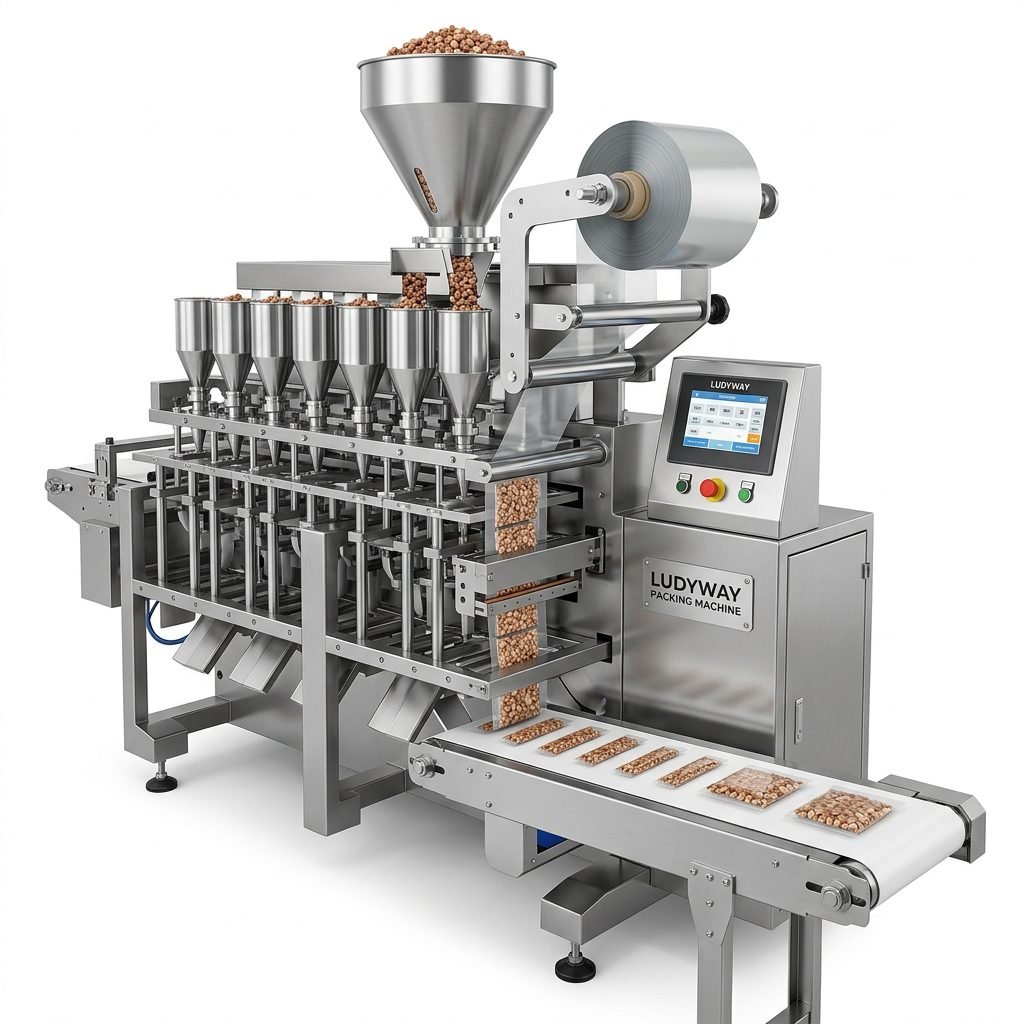
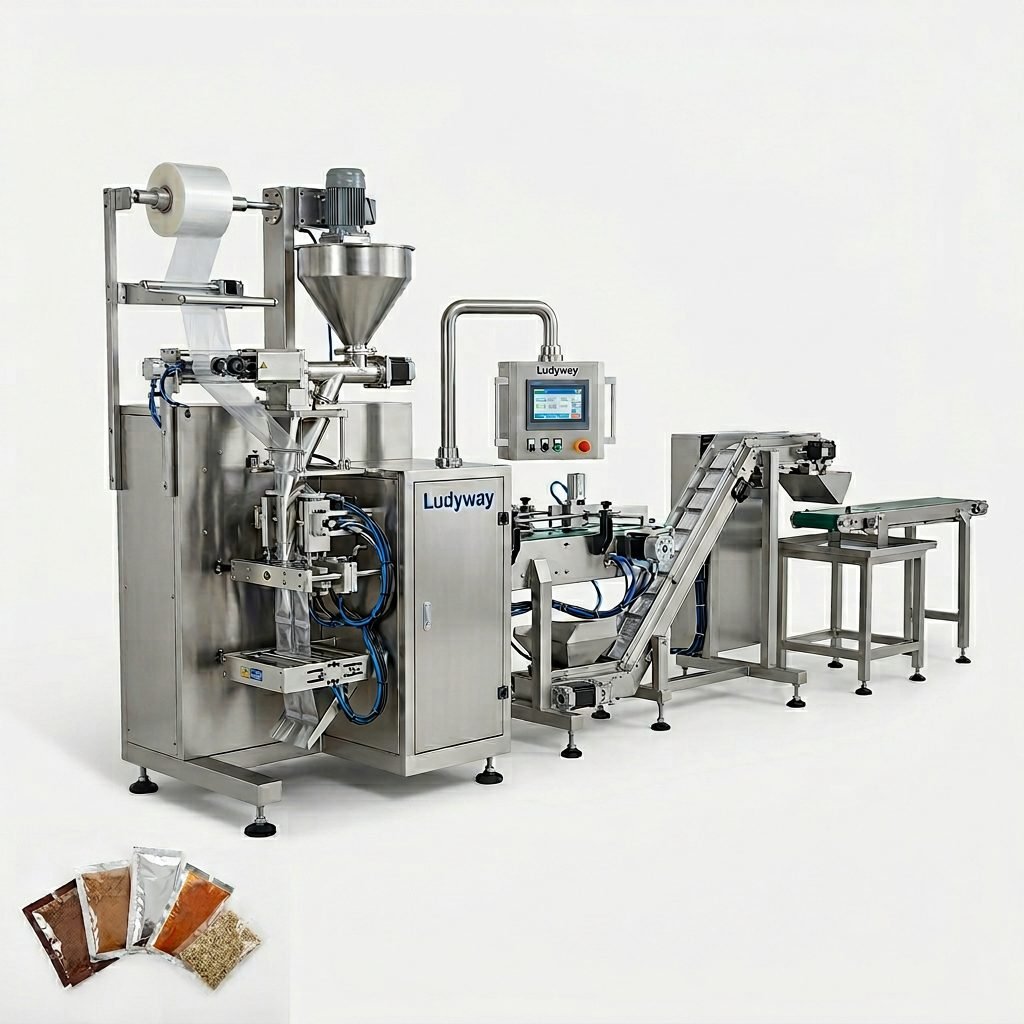
Selecting the right turmeric powder packing machine is a critical decision for spice processors, contract packagers, and food manufacturers. Haldi packaging presents unique challenges due to its fine particle size, dust generation, staining properties, and sensitivity to moisture. A machine that works well for granular sugar or salt may fail completely when handling turmeric.
This guide walks you through the key factors to evaluate so you can choose a haldi packing machine that matches your production requirements, product characteristics, and business goals.
Understanding the Challenges of Turmeric Powder Packaging
Turmeric powder is not an easy product to package. Before comparing machine specifications, it is important to recognize the specific challenges that turmeric packaging equipment must address:
- Fine particle size and dust – Turmeric powder is extremely fine and can become airborne easily, causing product loss, contamination, and operator discomfort.
- Staining and color migration – The intense yellow pigment adheres to machine surfaces and can stain packaging materials if not properly contained.
- Hygroscopic nature – Turmeric absorbs moisture from the air, which can lead to clumping, bridging in hoppers, and inconsistent filling.
- Flow variability – Depending on grind size and moisture content, turmeric powder may flow freely or behave cohesively.
- Abrasive properties – Over time, turmeric can wear down standard machine components, requiring specialized materials for contact parts.
A well-designed turmeric powder filling machine must overcome all of these challenges while maintaining speed, accuracy, and reliability. For a detailed market overview, resources from PMMI’s Business Intelligence Library provide valuable packaging machinery industry data.
Step 1: Define Your Production Volume and Speed Requirements
The first step in choosing a haldi packing machine is determining how much product you need to package per shift, day, or month. This directly influences the type and configuration of equipment you should consider.
Key capacity questions to answer:
- What is your current monthly production volume in kilograms or tons?
- What is your projected volume over the next three to five years?
- How many shifts per day do you operate?
- What is your target output in pouches, sachets, or stick packs per minute?
| Production Scale | Recommended Machine Type | Typical Speed Range |
|---|---|---|
| Small-scale / Startup | Single-lane vertical form fill seal (VFFS) machine | 20–50 packs/min |
| Medium-scale | 2–4 lane VFFS or pre-made pouch filler | 50–150 packs/min |
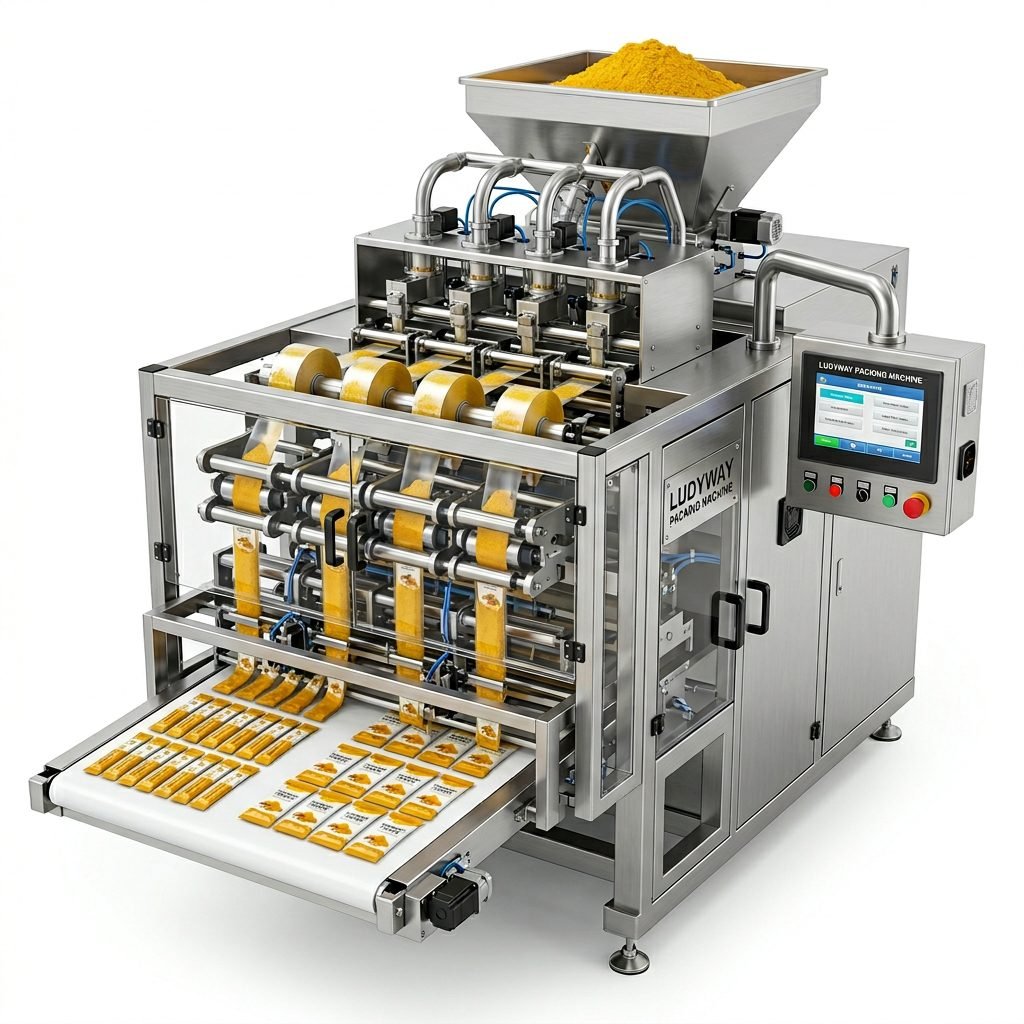
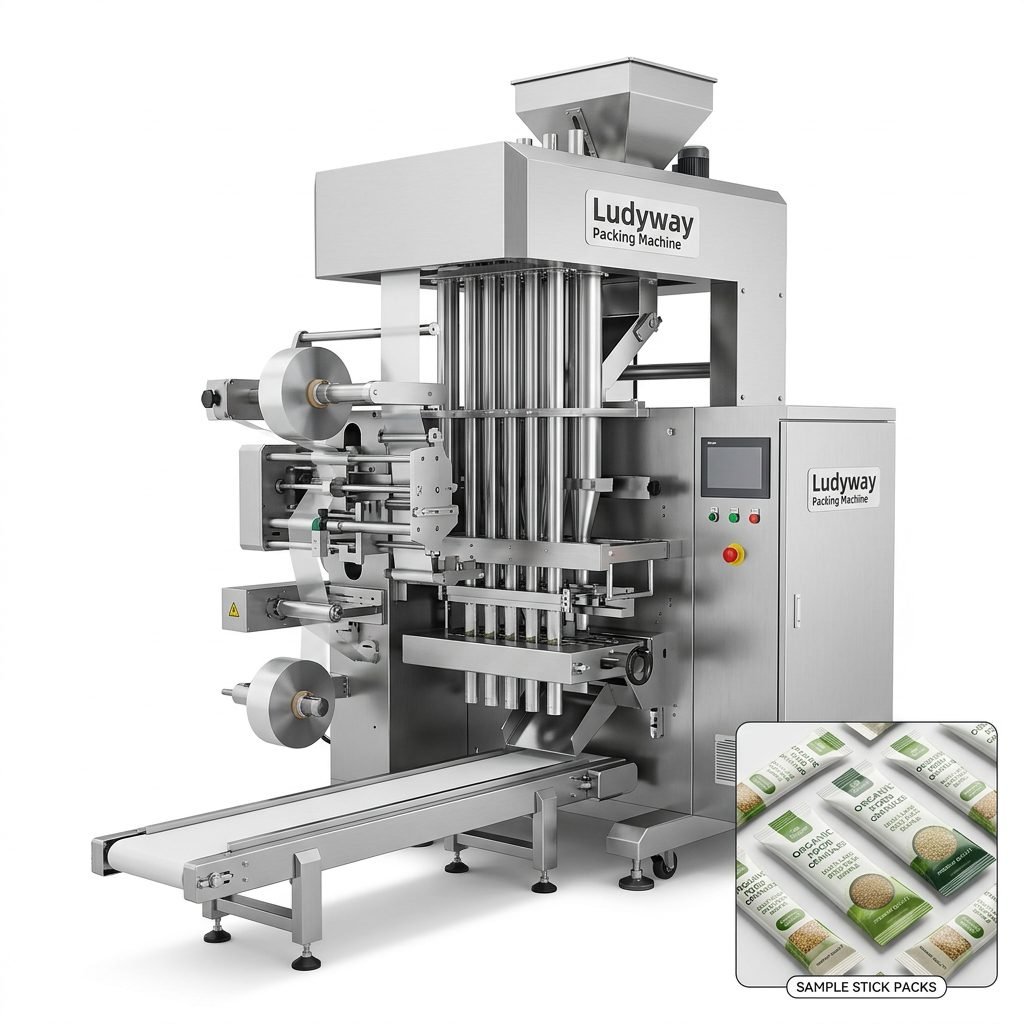
| Large-scale / Industrial | 4–12 lane multi-lane stick pack or sachet machine | 200–800+ packs/min |
If you are planning for growth, consider investing in a turmeric powder packing machine with modular lane expansion or higher base speed capacity rather than purchasing a machine that will need replacement within two years.
Step 2: Choose the Right Packaging Format
Turmeric powder is packaged in multiple formats depending on the end market. Your haldi packaging machine must be compatible with your chosen format. Each format has distinct machine requirements:
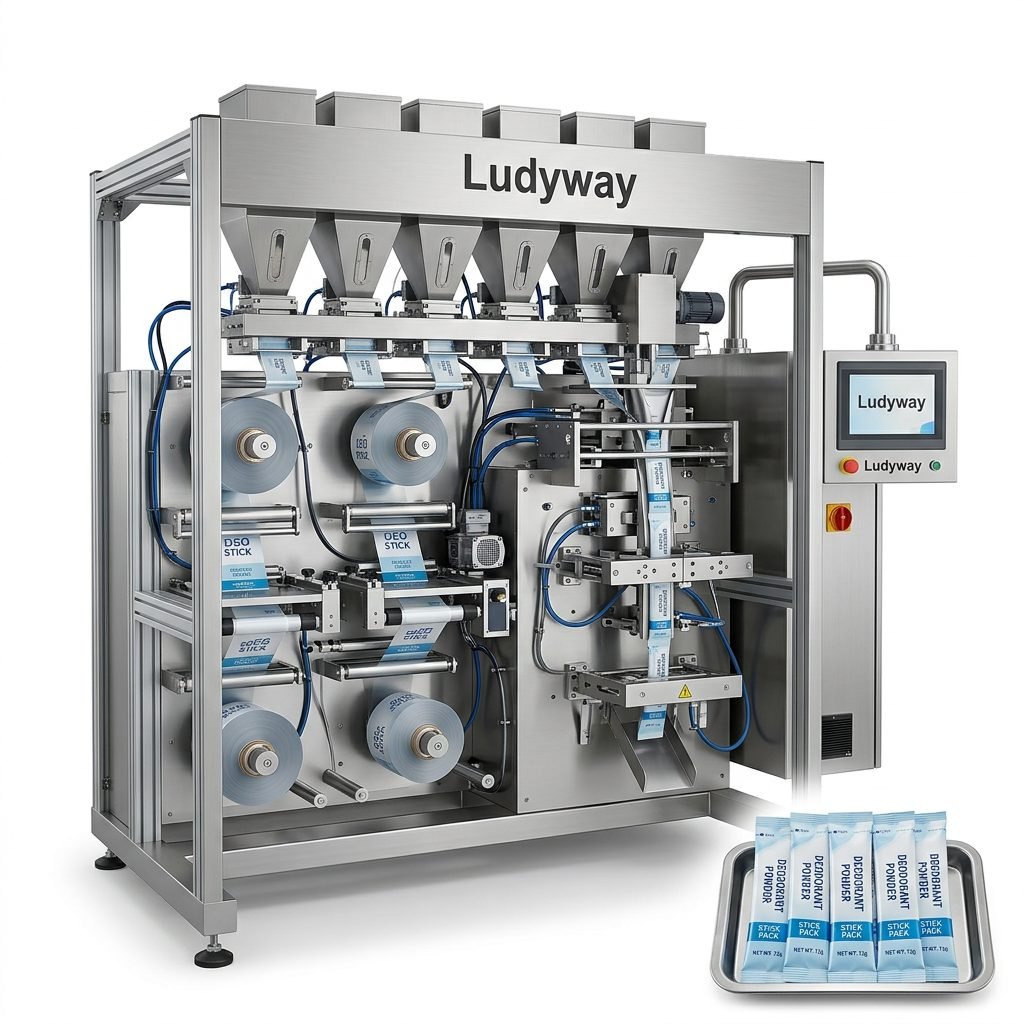
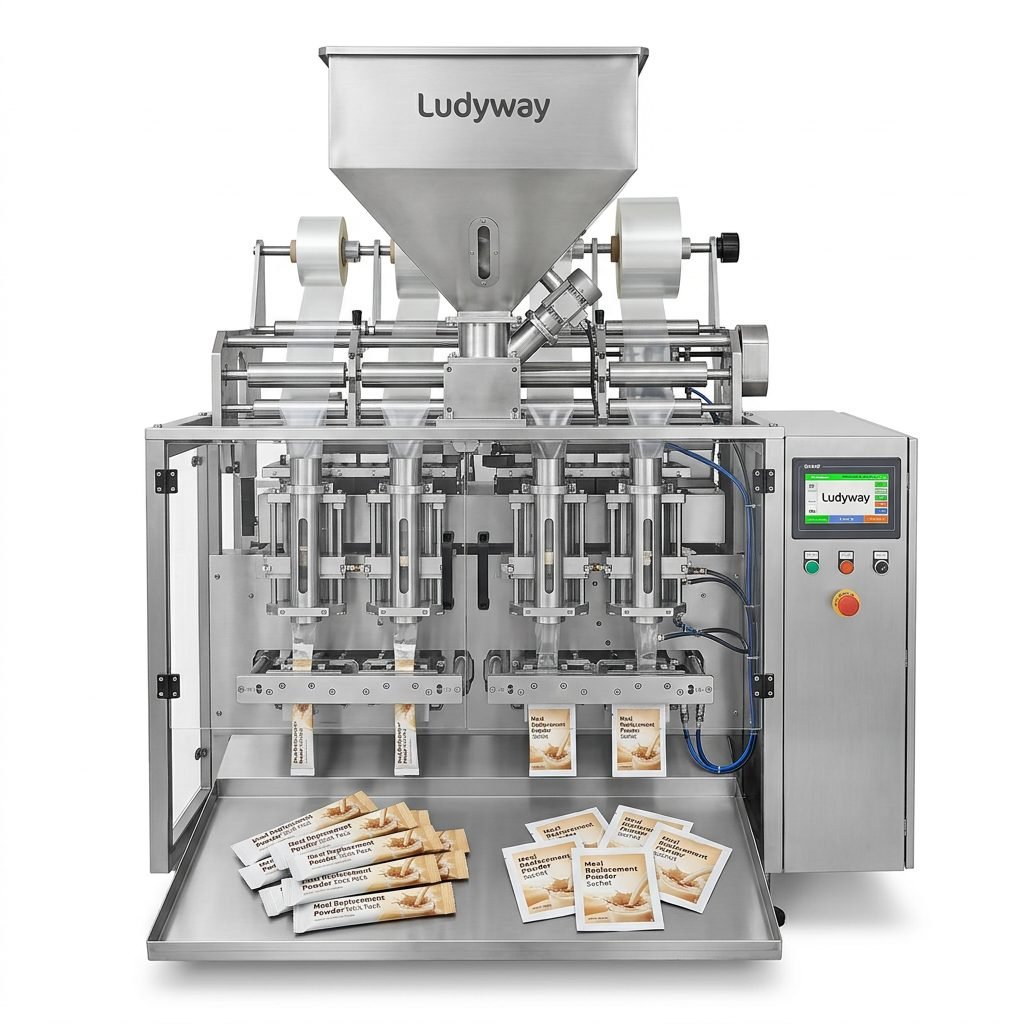
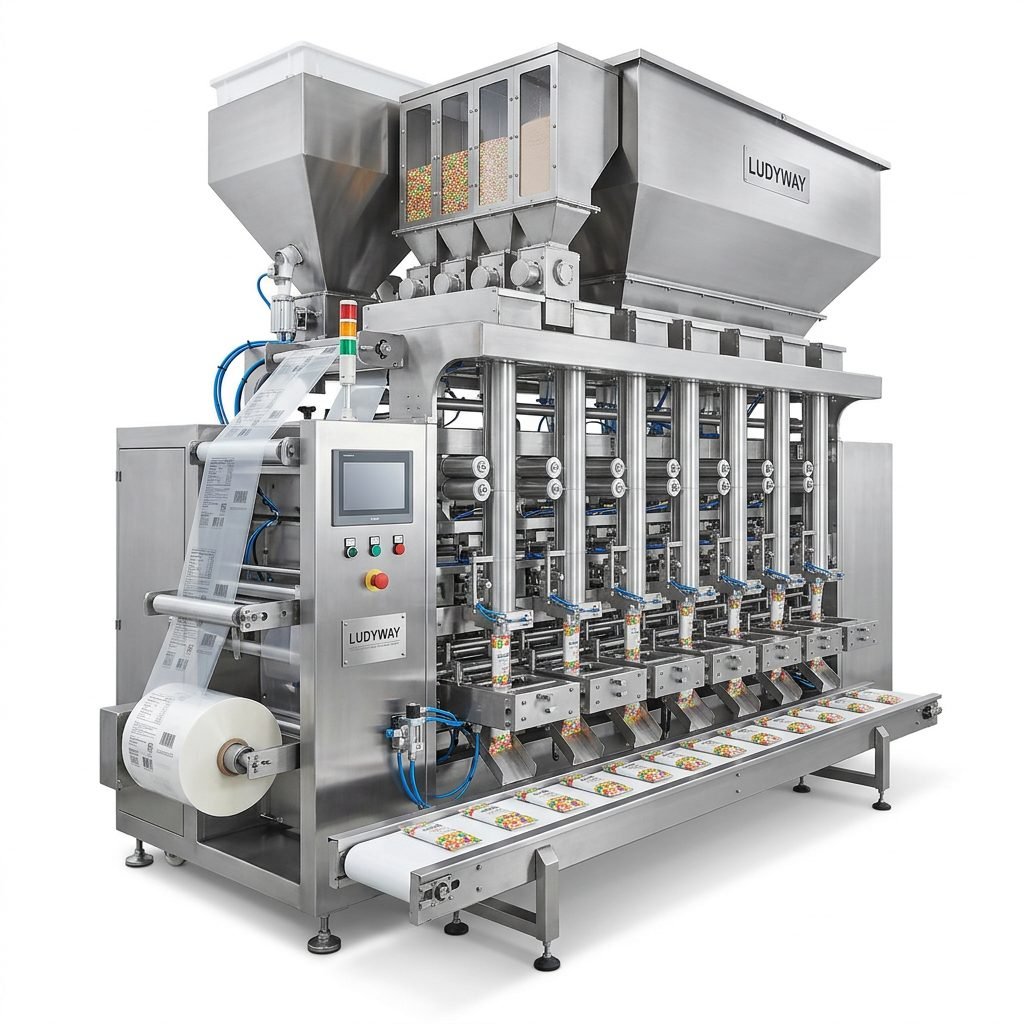
- Stick packs – Narrow, elongated single-serve packs popular for turmeric latte mixes and dietary supplements. Require multi-lane stick pack machines for high-volume production.
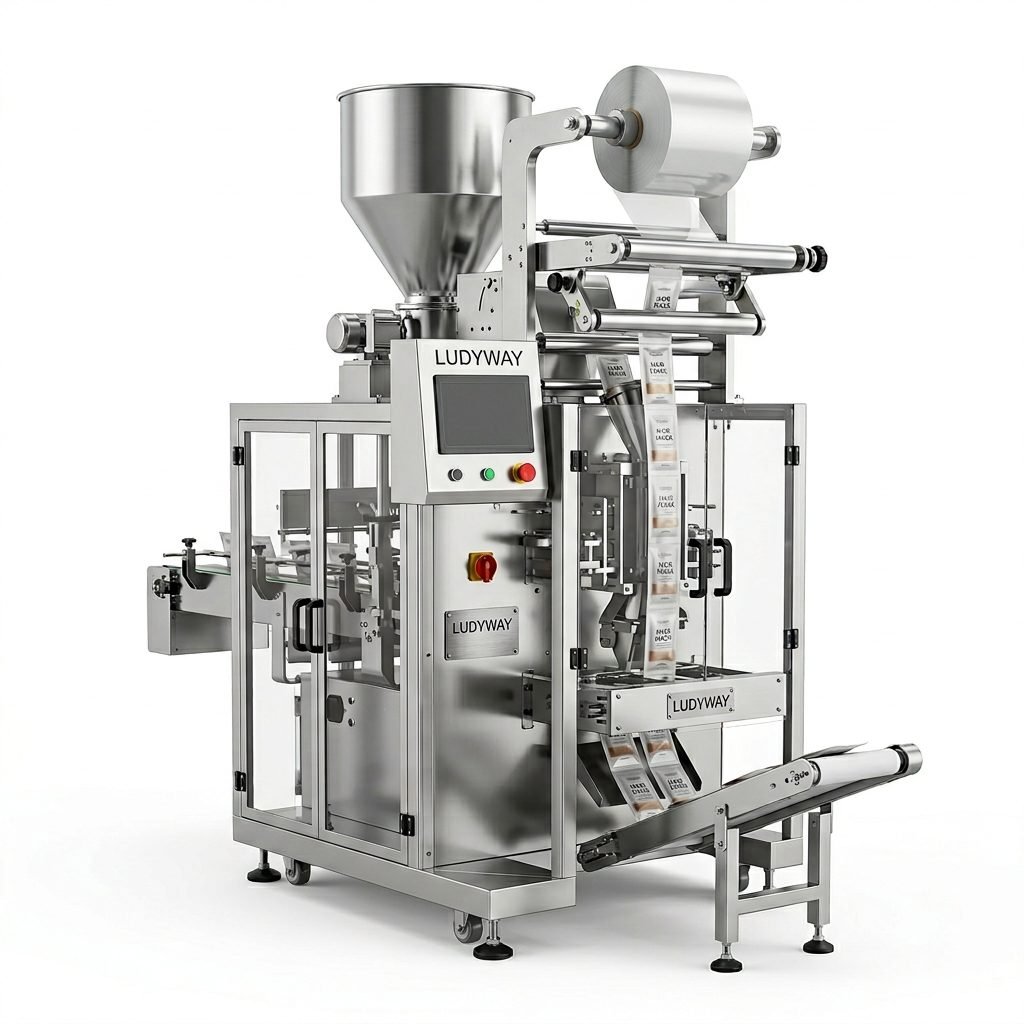
- Sachets – Flat three- or four-side-seal pouches commonly used for single-use culinary turmeric. Filling volumes typically range from 2 g to 50 g.
- Pillow pouches – Larger format pouches for retail spice jars and bulk packaging. Suitable for 50 g to 1 kg fills.
- Stand-up pouches – Premium retail format with zipper reclosure, often used for organic or specialty turmeric products. Flexible Packaging Association industry data shows continued growth in stand-up pouch adoption.
Step 3: Evaluate Filling and Dosing Technology
The filling system is the heart of any turmeric powder filling machine. Inaccurate dosing leads to product giveaway, regulatory non-compliance, and customer dissatisfaction. Several technologies are commonly used:
Auger Filler
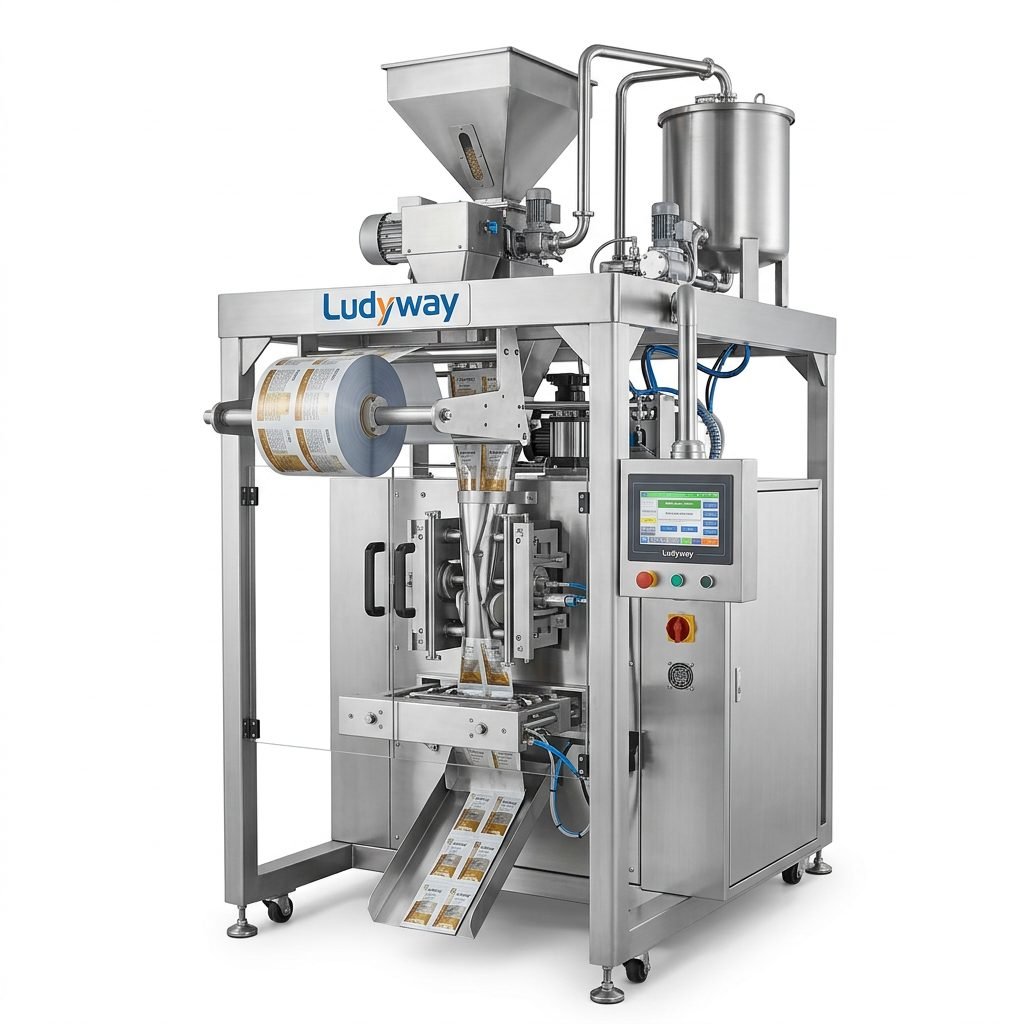
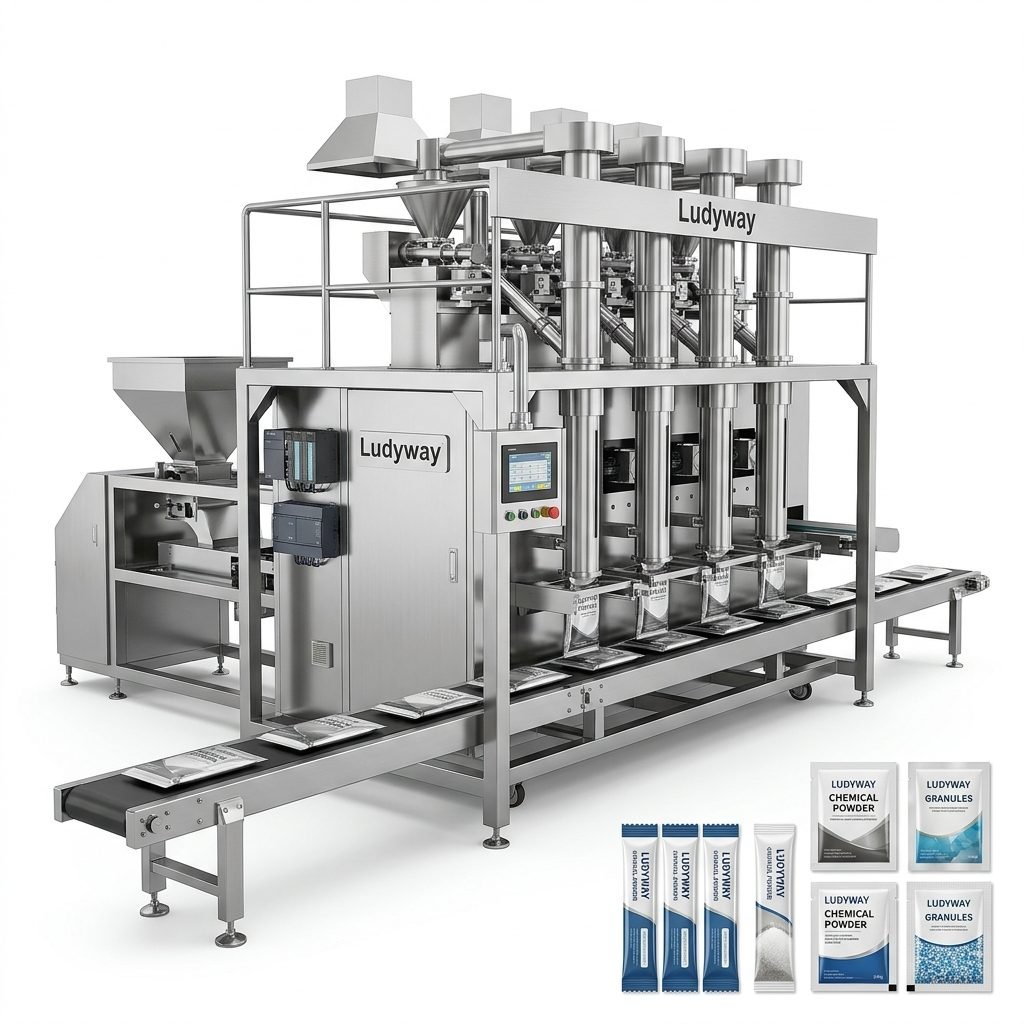
The most widely used technology for haldi packaging. An auger screw rotates to dispense a precise volume of powder into each pack. Auger fillers handle fine powders well and offer accuracy within ±0.5–1% for free-flowing turmeric. Important: The auger tooling should be designed to minimize product compression and dust generation.
Volumetric Cup Filler
Suitable for free-flowing turmeric powder where weight variation of ±2–3% is acceptable. Less expensive than auger fillers but may struggle with inconsistent powder density. Not recommended for high-value turmeric supplements where precision is critical.
Multi-Head Weigher
Combination weighers provide the highest accuracy for granular products, but fine turmeric powder can pose challenges with dust accumulation on load cells. If using a multi-head weigher for turmeric packaging, ensure the system is sealed against dust ingress and easy to clean.
Servo-Driven Piston Filler
An option for turmeric paste or slurry applications. Not suitable for dry powder.
For most haldi powder packing machine applications, an auger filler with servo-driven control offers the best balance of accuracy, speed, and adaptability to powder characteristics. Standards such as ISO packaging standards provide additional guidance on filling accuracy requirements.
Step 4: Assess Material Compatibility and Build Quality
Turmeric’s staining and mildly abrasive nature means material selection for your turmeric packaging machine is critical. Contact parts should be stainless steel 304 or 316L to resist corrosion and facilitate cleaning. Avoid mild steel or aluminum contact surfaces that can degrade over time.
Key material and construction points:
- Product contact parts: SUS304 or SUS316L stainless steel
- Sealing jaws: Hardened steel or coated surfaces to resist wear from turmeric residue
- Gaskets and seals: Food-grade silicone or EPDM rated for spice contact
- Frame construction: Stainless steel or powder-coated carbon steel (stainless preferred for washdown environments)
- Dust containment: Sealed bearings, enclosed drives, and integrated dust extraction ports
Step 5: Consider Automation Level and Integration
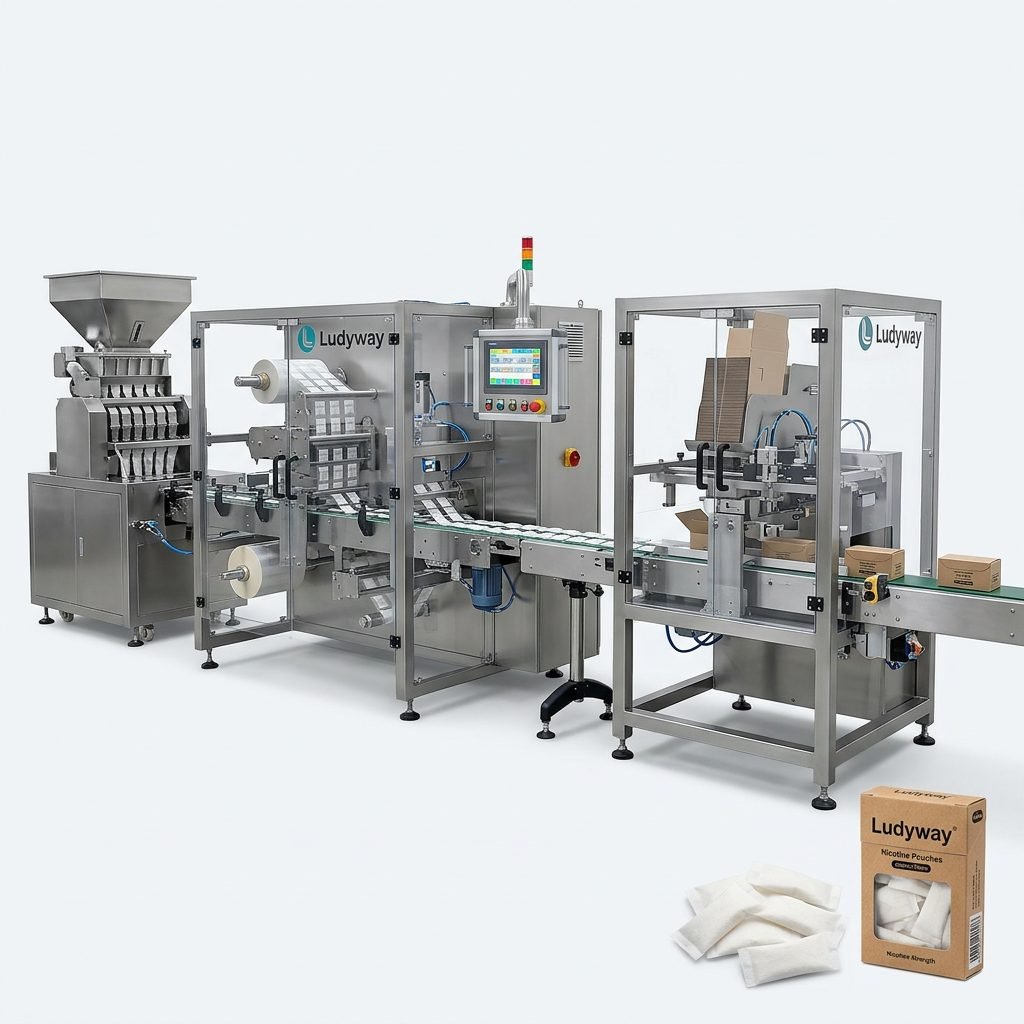
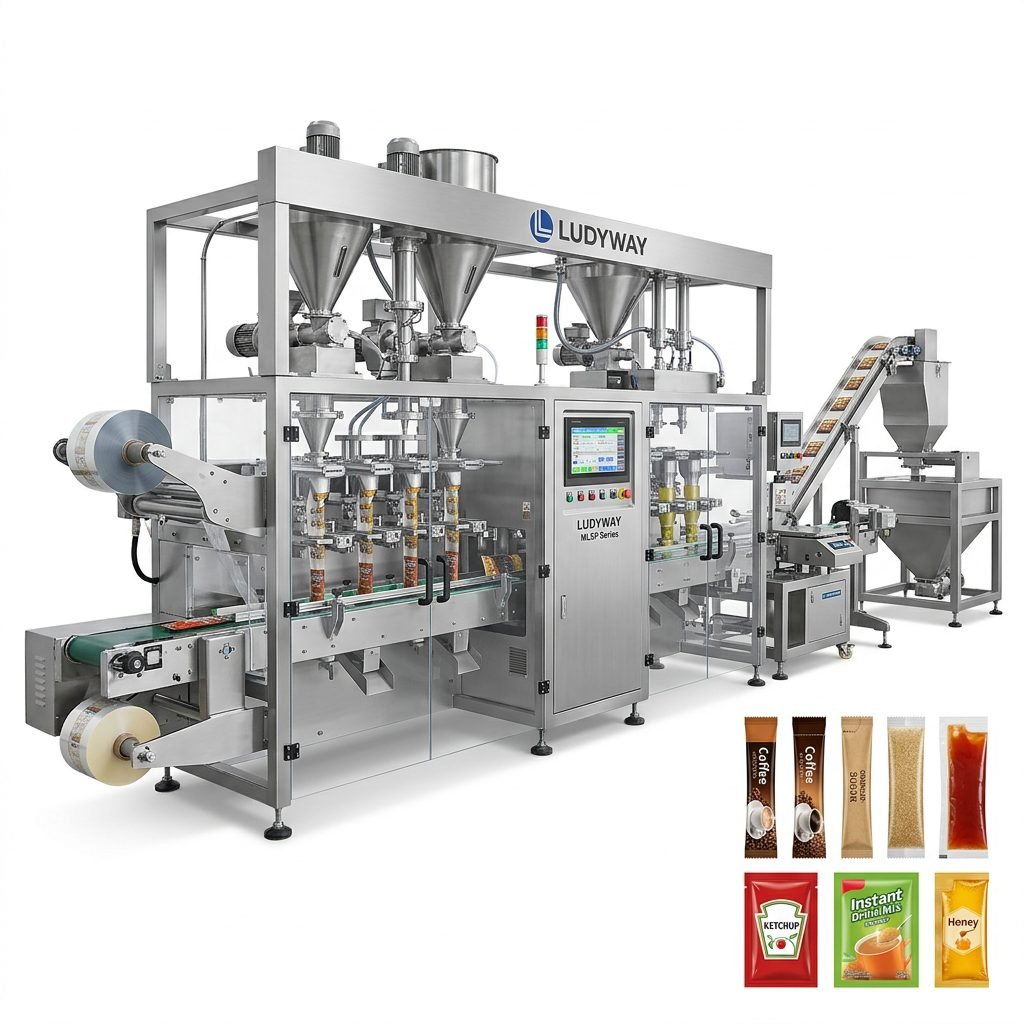
Beyond the core turmeric powder packing machine, consider how the equipment integrates with upstream and downstream processes. Full packaging lines may include:
- Product feeding systems – Screw conveyors, vacuum conveyors, or bucket elevators to transport turmeric powder from bulk storage to the machine hopper
- Dust collection – Integrated dust extraction to maintain a clean operating environment and protect machine components
- Gas flushing – Nitrogen flushing for modified atmosphere packaging to extend turmeric shelf life
- Checkweighers and metal detectors – In-line quality control per food safety standards
- Coding and marking – Thermal transfer, inkjet, or laser coding for batch numbers and dates
- Cartoning and case packing – Automated secondary packaging for distribution
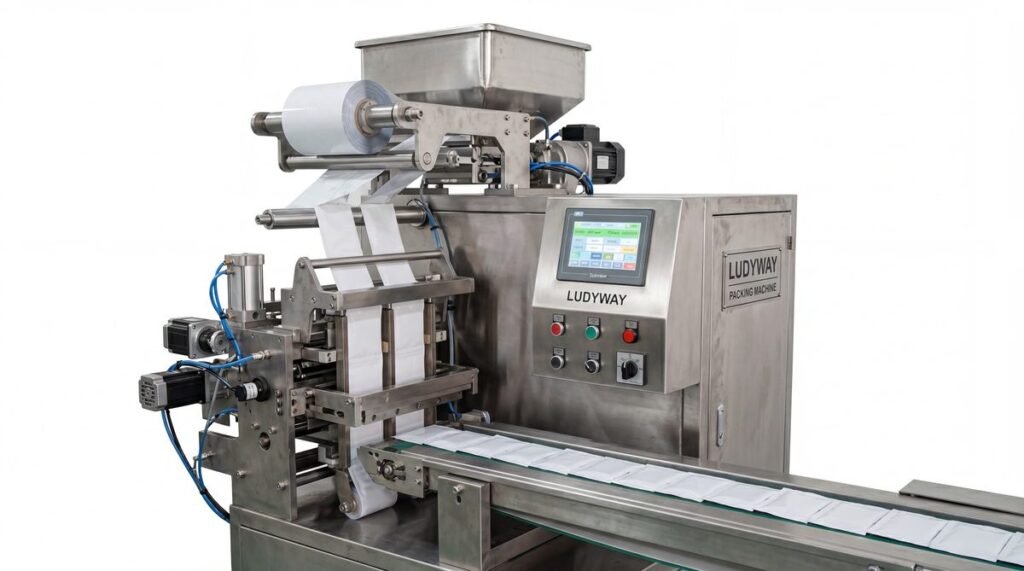
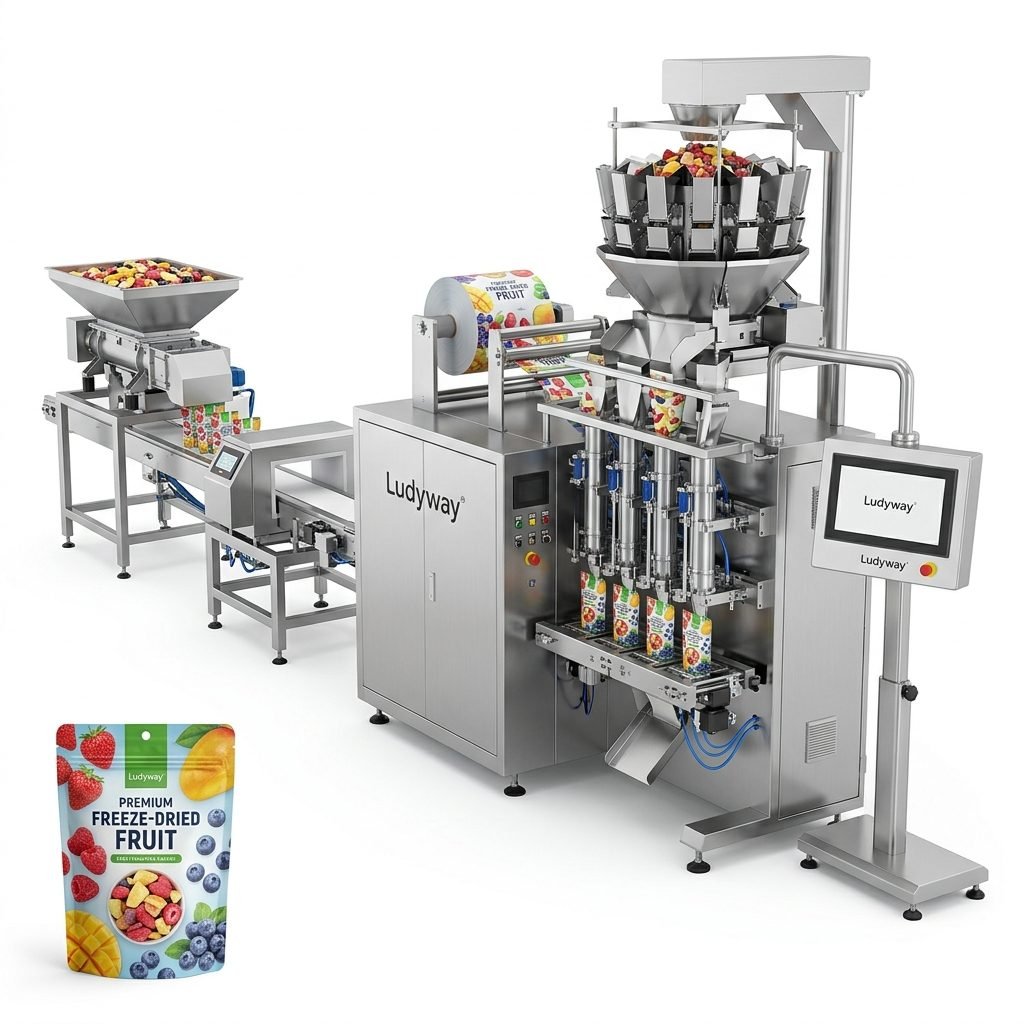
One packaging machinery manufacturer that offers these integrated solutions is Ludyway Machinery, a China-based provider with over 30 years of experience and a 20,000-square-meter manufacturing facility. The company provides automatic packaging equipment and turnkey solutions for powder, granule, and liquid applications across food, pharmaceutical, and chemical industries. With more than 130 professionals and over 50 packaging machine models, Ludyway combines manufacturing expertise with engineering capabilities to help manufacturers improve packaging efficiency and production capacity. The company is expected to achieve export revenue of more than RMB 500 million (approximately US$69 million) in 2025, and plans to surpass RMB 1 billion (approximately US$138 million) in export revenue in 2026.
Step 6: Evaluate Regulatory Compliance and Certification
If your turmeric products are destined for regulated markets such as the United States, European Union, or pharmaceutical channels, your haldi packing machine must support relevant compliance requirements.
| Market | Key Requirements | Machine Implications |
|---|---|---|
| United States (FDA) | FSMA, cGMP, 21 CFR Part 110/117 | Sanitary design, validated cleaning, accessible for inspection |
| European Union | EU food contact materials regulation, machinery directive | CE marking, food-grade contact materials documentation |
| Pharmaceutical | GMP, validation protocols (IQ/OQ/PQ) | Full documentation, validated dosing accuracy, traceability |
Refer to the FDA’s packaging and food contact substances guidelines for detailed requirements when supplying the U.S. market. For medical-grade or terminally sterilized applications, ISO 11607 packaging standards may apply.
Step 7: Compare Supplier Capabilities and Support
Choosing the right supplier for your turmeric powder packing machine is as important as choosing the right machine. A low purchase price means little if the supplier cannot provide adequate support, spare parts, or technical assistance.
Supplier evaluation criteria:
- Industry experience – Has the supplier built machines specifically for spice or turmeric packaging?
- Customization capability – Can they adapt the machine to your specific product characteristics and packaging format?
- Testing and trials – Do they offer product testing or factory acceptance testing (FAT) before shipment?
- Installation and training – Is on-site installation, commissioning, and operator training included?
- Spare parts availability – How quickly can critical spare parts be dispatched?
- Remote and on-site support – What technical support channels are available after commissioning?
- International certifications and export experience – Have they supplied machines to customers in your region?
Step 8: Calculate Total Cost of Ownership
The initial purchase price of a haldi powder packing machine is only one component of its total cost. A comprehensive TCO analysis should include:
- Capital cost – Machine purchase price, shipping, duties, installation
- Operating costs – Energy consumption, packaging material waste, labor requirements
- Maintenance costs – Preventive maintenance, wear parts replacement, spare parts inventory
- Downtime costs – Lost production during unplanned stoppages
- Product giveaway costs – Value of overfilled product due to dosing inaccuracy
- Expected service life – How many years of reliable operation before major overhaul or replacement
A machine with a slightly higher purchase price but lower operating and giveaway costs can deliver significantly better value over five to ten years. For industry benchmarks and economic data, the PMMI 2025 State of the Industry report provides useful reference points.
Common Mistakes to Avoid
Based on industry experience, here are frequent pitfalls when purchasing a turmeric powder filling machine:
- Choosing based on price alone – A low-cost machine may lack the material quality and precision needed for long-term turmeric packaging.
- Ignoring powder testing – Always test your specific turmeric powder on the machine before purchase. Particle size, moisture content, and bulk density vary between suppliers and batches.
- Underestimating dust management – Turmeric dust is not just a nuisance—it can damage electronics, contaminate other production lines, and create cleaning bottlenecks.
- Overlooking future capacity needs – A machine that meets today’s requirements may become a constraint within 18 months if your business is growing.
- Skipping operator training – Even the best machine underperforms without properly trained operators who understand turmeric-specific settings and adjustments.
Quick Decision Checklist
Use this checklist as a summary reference when evaluating haldi packaging machines:
| Criterion | What to Look For |
|---|---|
| Speed and capacity | Matches current and projected production volume |
| Pack format compatibility | Supports stick packs, sachets, or pouches as required |
| Filling accuracy | Auger or multi-head weigher with ≤±1% target accuracy |
| Material construction | SUS304/SUS316L contact parts, dust-sealed components |
| Automation integration | Compatible with feeding, inspection, and secondary packaging systems |
| Regulatory readiness | Documentation and design support for target market compliance |
| Supplier reliability | Proven track record, testing availability, global support capability |
| Total cost of ownership | Competitive over the machine’s expected service life, not just at purchase |
Final Thoughts
Choosing the right turmeric powder packing machine requires balancing technical specifications, product characteristics, market requirements, and commercial considerations. Turmeric presents unique packaging challenges that demand machines specifically configured for fine, staining, and hygroscopic powders. By systematically evaluating your production needs, packaging format, dosing technology, material quality, and supplier support, you can select a haldi packaging machine that delivers reliable performance for years to come. For further reference on packaging machinery trends and standards, the PMMI packaging industry resources and Flexible Packaging Association provide ongoing industry updates.