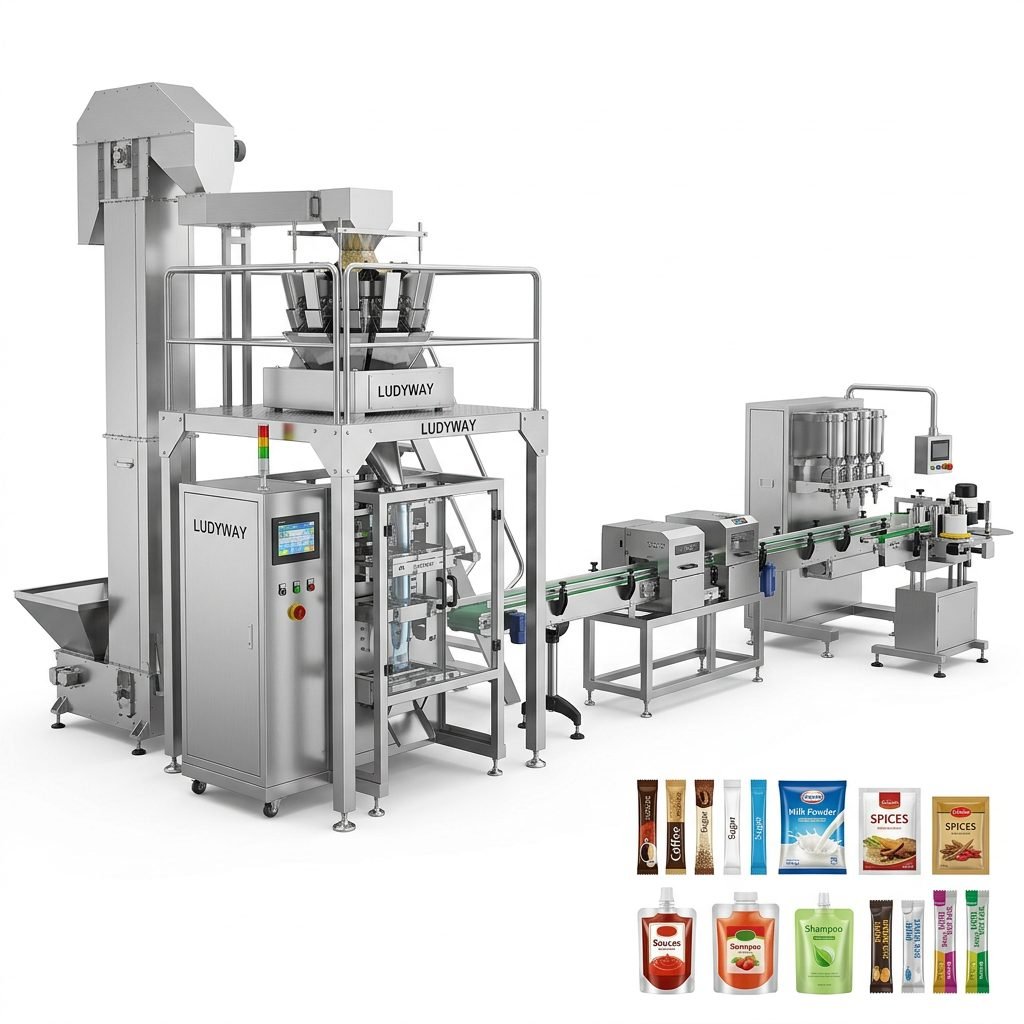
Investing in an industrial packing machine is a critical decision that directly impacts your production efficiency, product quality, and operational costs. Whether you are upgrading an existing line or automating a manual process, selecting the wrong equipment can lead to costly downtime and inconsistent packaging. This comprehensive buyer’s guide walks you through the essential factors to evaluate, helping you make an informed decision that aligns with your manufacturing goals.
1. Understand Your Product Characteristics
The physical and chemical properties of your product determine the type of packaging machinery you need. Before comparing machine models, clearly define the following attributes of your material:
- Physical state: Is your product a powder, granule, liquid, paste, or solid item?
- Flow characteristics: Does the powder clump, bridge, or stick? Free-flowing and non-free-flowing powders require different dosing systems, such as auger fillers or volumetric cup fillers.
- Particle size and bulk density: Variations in density affect weighing accuracy and the type of feeding mechanism required.
- Sensitivity: Is the product hygroscopic, dusty, abrasive, or fragile? Products sensitive to moisture may need packaging machinery with nitrogen flushing or vacuum systems.
Clearly documenting these characteristics helps your equipment supplier recommend the correct dosing, feeding, and sealing modules from the start.
2. Define Your Required Packaging Format and Bag Style
Industrial packing machines accommodate a wide variety of packaging formats. Determine which bag style best suits your market, supply chain, and consumer needs:
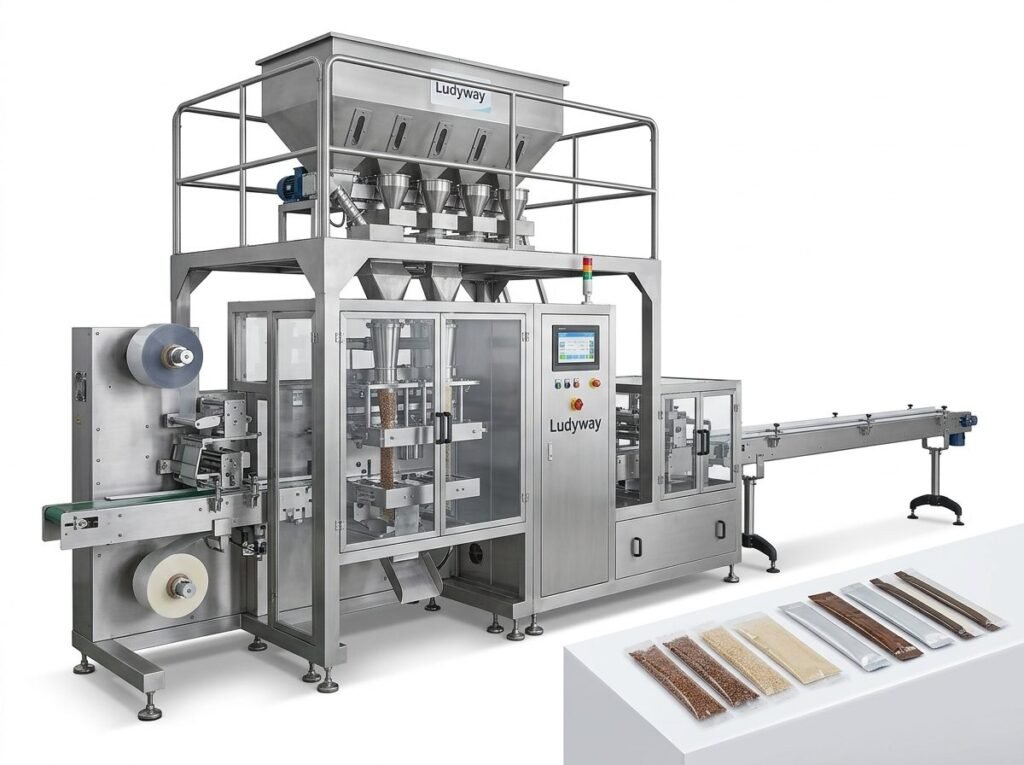
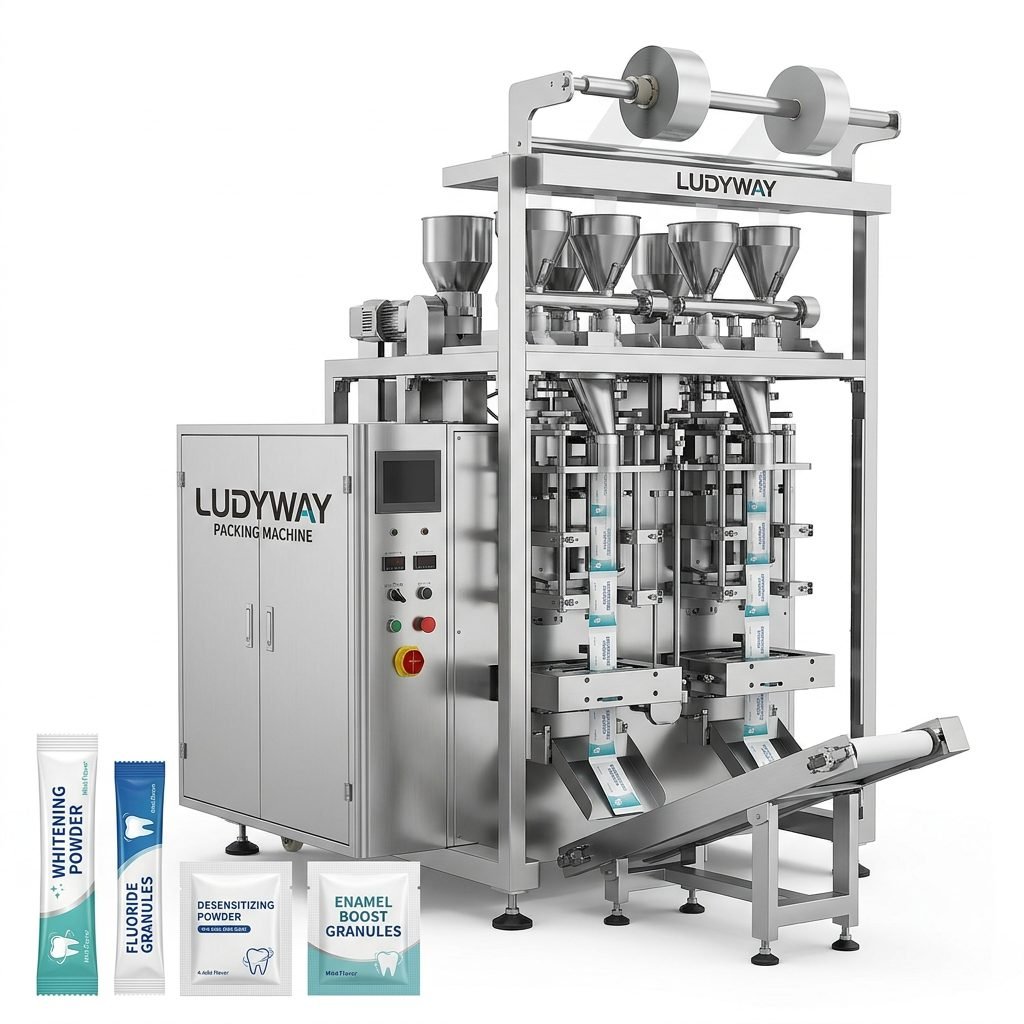
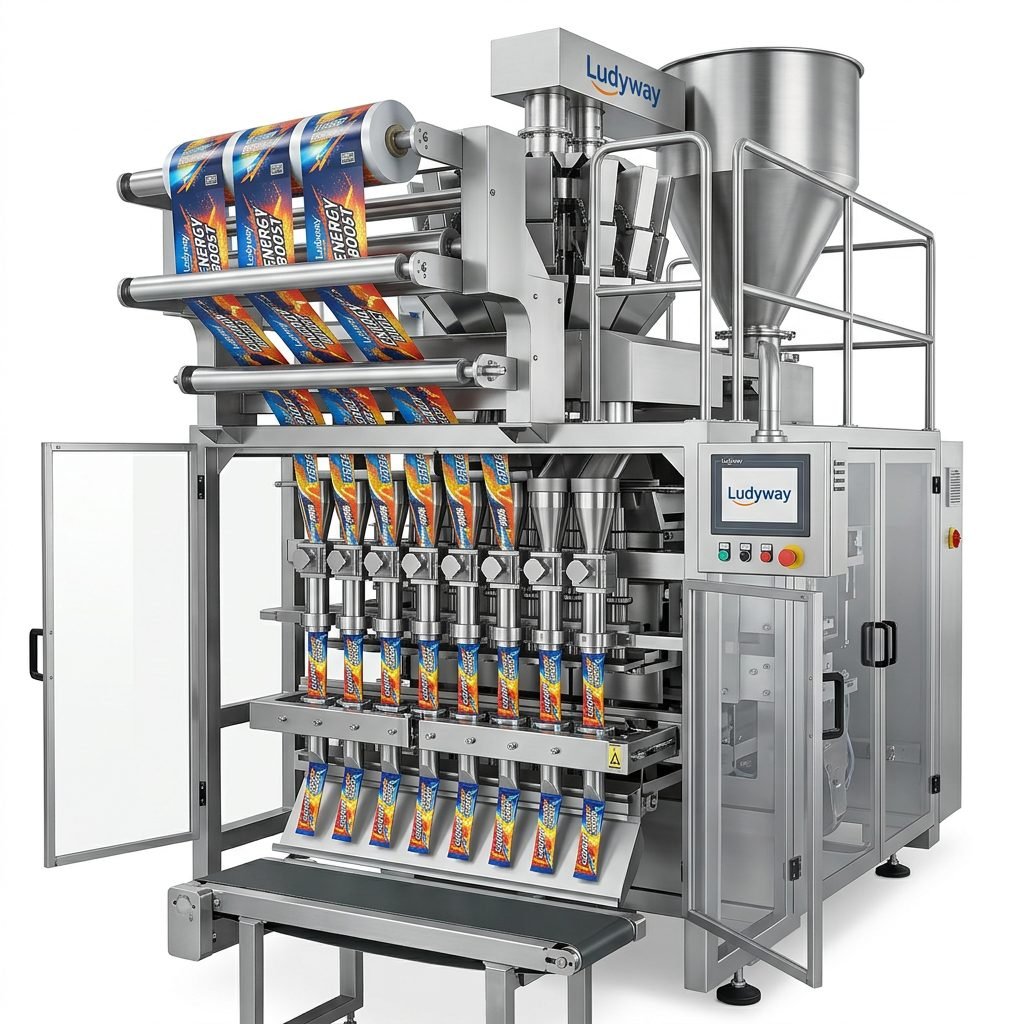
- Stick packs – Narrow, single-serve sachets ideal for powders, granules, and liquids in the food and pharmaceutical sectors.
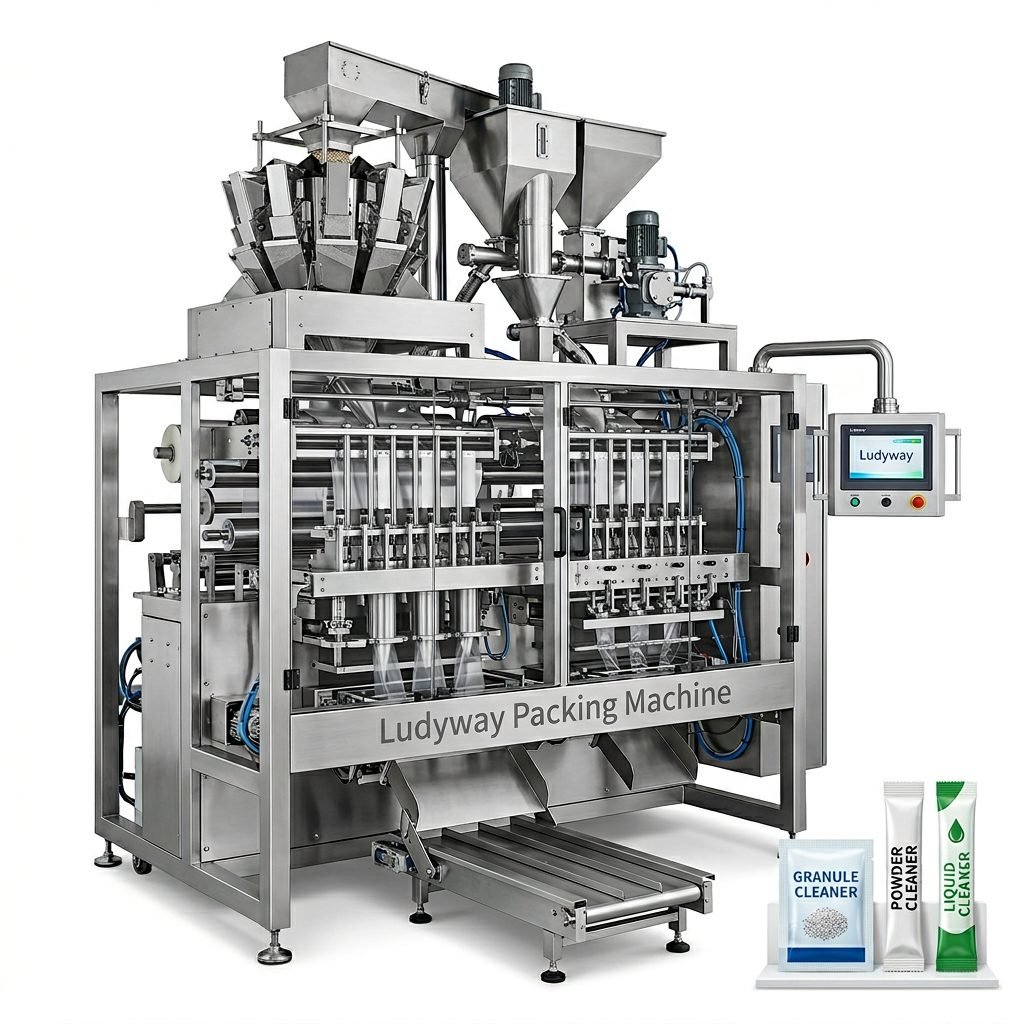
- Sachets and flat pouches – Commonly used for liquid detergents, sauces, cosmetic samples, and instant beverage powders.
- Gusseted bags and stand-up pouches – Provide stability on retail shelves for products like coffee, pet food, and snacks.
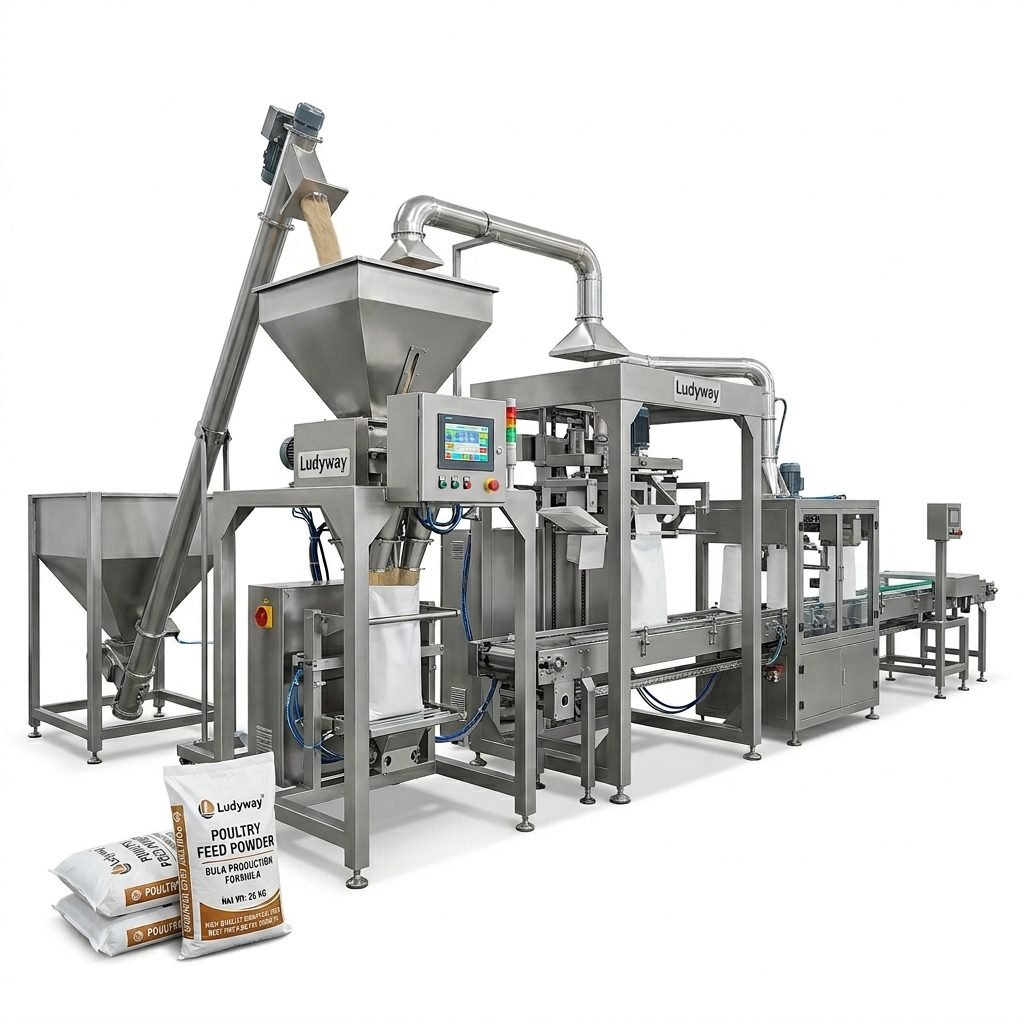
- Large open-mouth bags and valve bags – Suitable for bulk chemicals, fertilizers, animal feed, and industrial powders ranging from 5 kg to 50 kg.
- Premade pouches – Often used with rotary or inline filling and sealing systems for premium product presentation.
The selected format influences the entire machine configuration, from film handling and unwinding to cutting and sealing stations. Confirm compatibility with your preferred packaging material structure and thickness early in the evaluation process.
3. Determine Production Speed and Output Requirements
Production capacity is a fundamental parameter. Calculate your target output in packs per minute (ppm) or bags per hour, and factor in expected growth over the next three to five years. Industrial packing machines vary significantly in speed based on design and lane configuration:
| Machine Configuration | Typical Speed Range | Suitable Applications |
|---|---|---|
| Single-lane vertical form fill seal | 30 – 80 ppm | Small to medium production volumes |
| Multi-lane stick pack machine | 200 – 600+ ppm (combined lanes) | High-volume single-serve products |
| Rotary pre-made pouch filler | 40 – 120 ppm | Premium pouches, retort applications |
| Open-mouth bagging line | 4 – 20 bags per minute | Bulk 10–50 kg bags for industrial goods |
When calculating speed requirements, remember that sustained speed is more important than maximum mechanical speed. Evaluate the machine’s rated speed at the desired fill weight and bag size under realistic operating conditions, accounting for film splices, changeovers, and cleaning cycles.
4. Evaluate Filling and Dosing Accuracy
Fill accuracy directly affects product giveaway, regulatory compliance, and profitability. Different dosing principles suit different product types:
- Auger fillers – High accuracy for powders, with typical accuracy of ±0.5% to ±1% depending on product consistency.
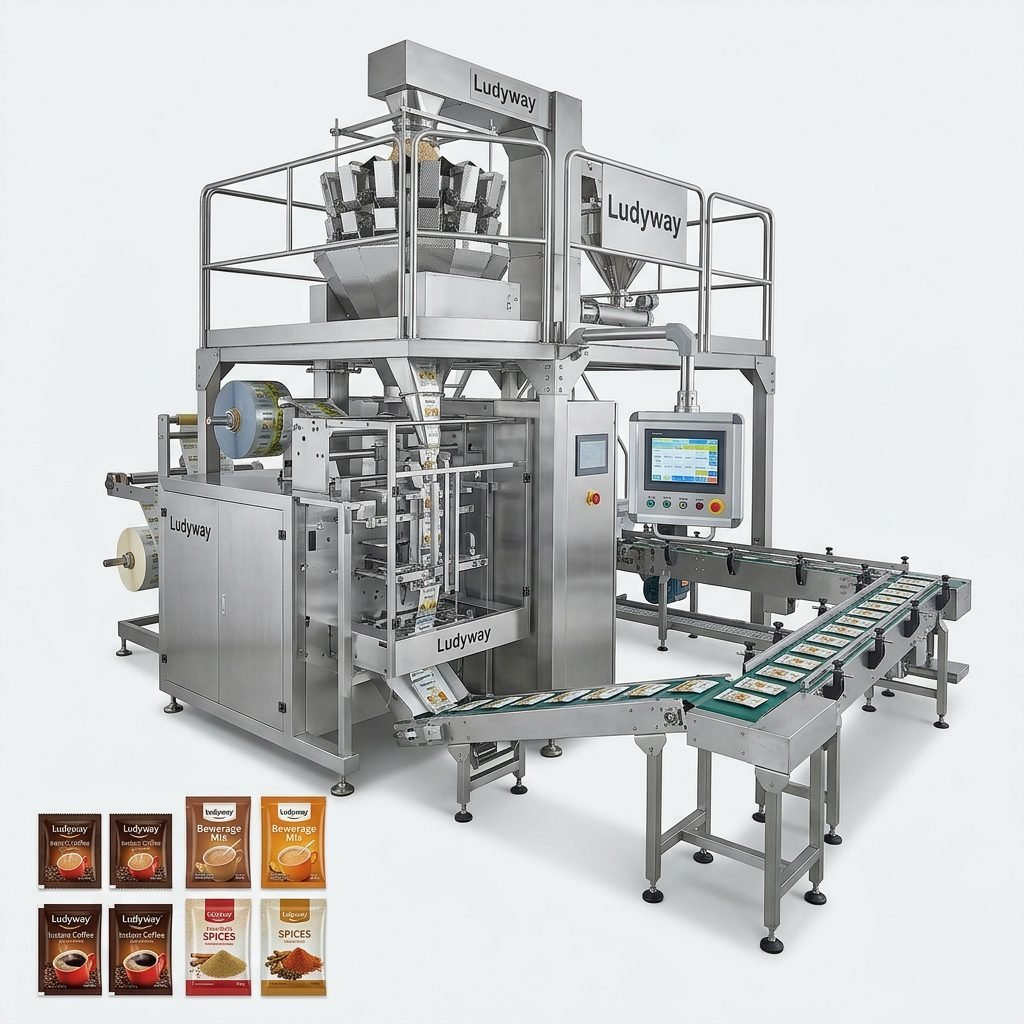
- Multi-head weighers – Ideal for granules, snacks, and solid pieces, achieving high speeds with minimal give-away.
- Volumetric cup fillers – Cost-effective for free-flowing granules where slight volume variation is acceptable.
- Piston and pump fillers – Designed for liquids, creams, and pastes, offering precise volume control.
For regulated industries such as pharmaceuticals, your packaging system must comply with FDA packaging requirements for weight accuracy and product contact materials. Discuss your allowable tolerances with the machine builder to identify the most appropriate dosing technology.
5. Consider Automation Level and System Integration
Modern industrial packing machines range from semi-automatic standalone units to fully automated turnkey packaging lines. The right level of automation for your facility depends on labor costs, space constraints, and your long-term production strategy:
- Semi-automatic machines require manual product loading or bag handling but automate filling and sealing.
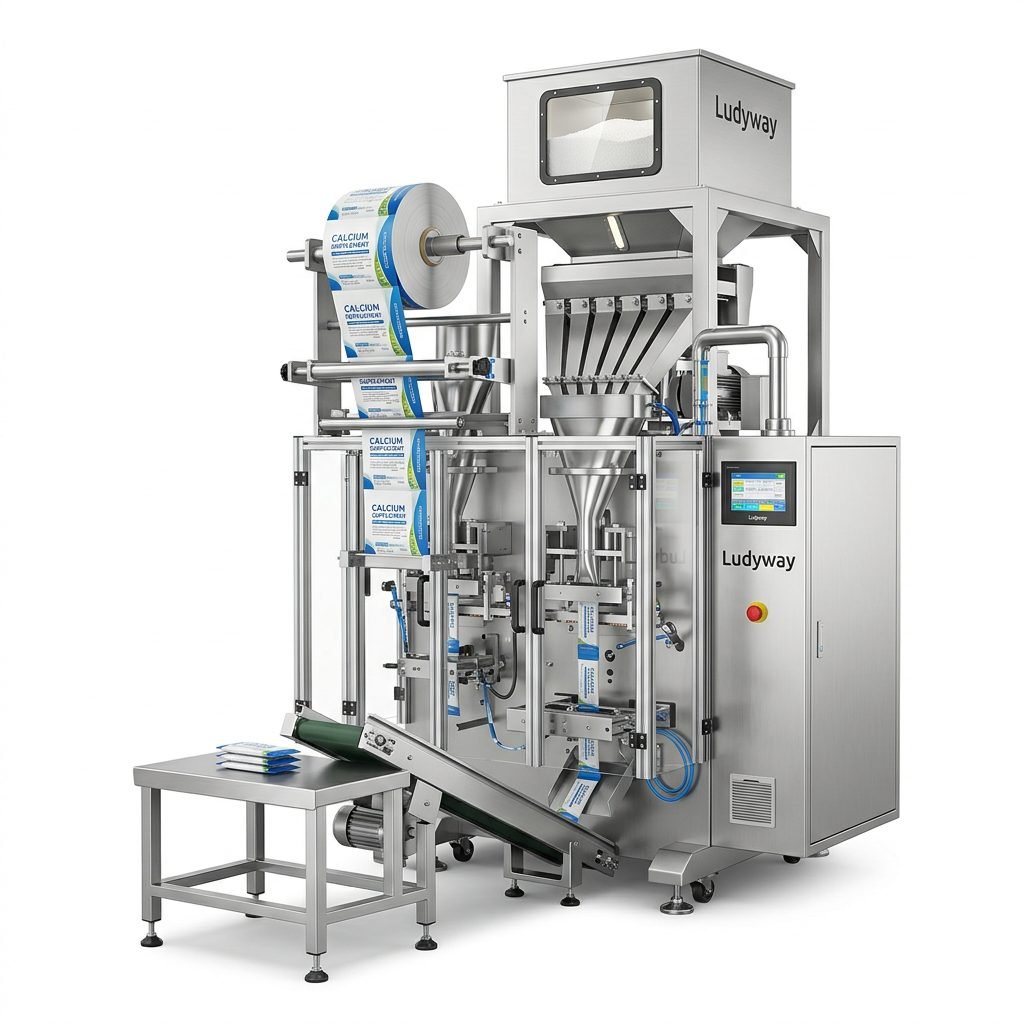
- Fully automatic vertical form fill seal machines integrate film unwinding, forming, filling, sealing, and cutting in one system.
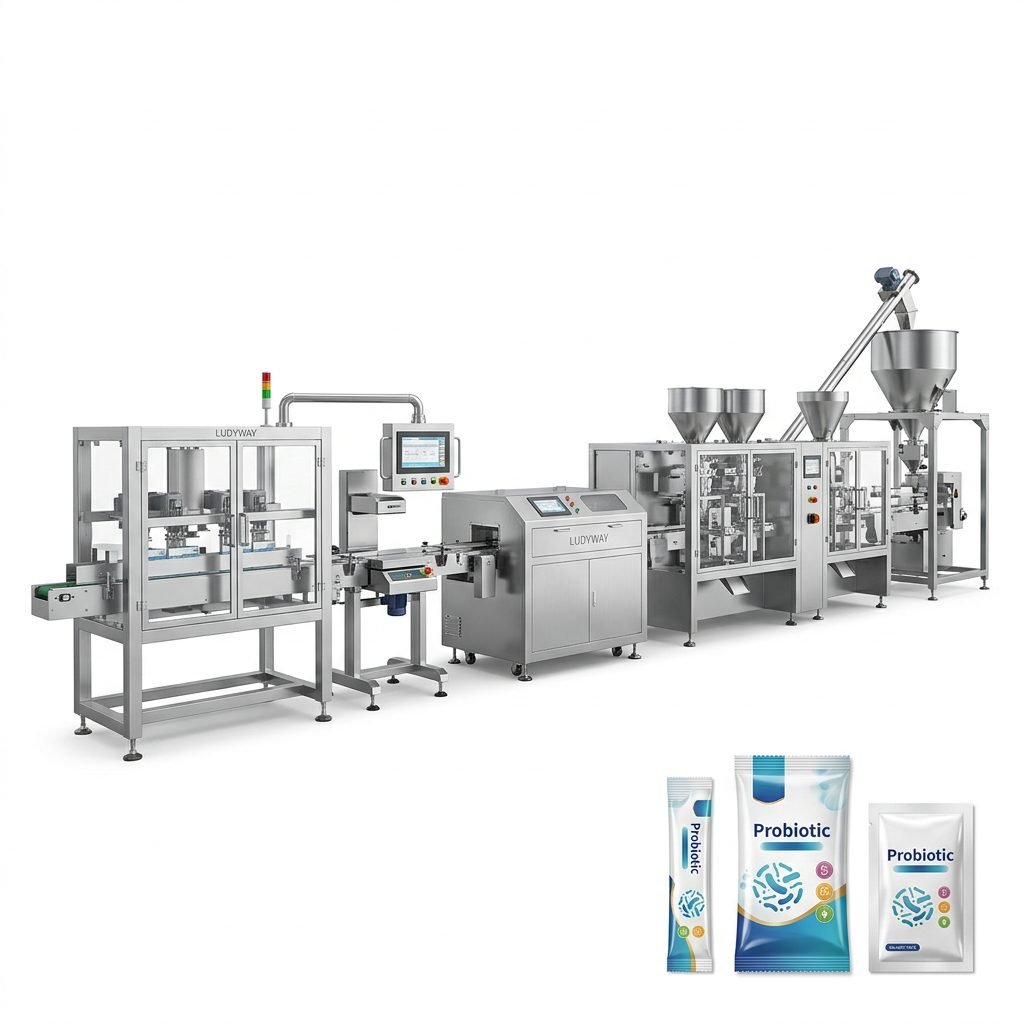
- Complete packaging lines connect multiple machines, including feeding systems, conveyor belts, checkweighers, cartoners, case packing, and palletizing robots.
- Smart factory integration incorporates vision inspection, coding and marking systems, and data collection for production monitoring.
Assess whether your current and future factory layout can accommodate upstream and downstream equipment. Integrated lines reduce manual handling, minimize contamination risks, and improve overall equipment effectiveness (OEE).
6. Verify Machine Quality, Materials, and Compliance
Packaging machinery quality directly correlates with uptime, maintenance costs, and service life. Examine the following aspects during supplier evaluation:
- Frame construction: Machines built with heavy-duty stainless steel or treated carbon steel frames resist corrosion and vibration.
- Product contact parts: For food, pharmaceutical, and cosmetic applications, all contact surfaces should be constructed of 304 or 316L stainless steel with sanitary design principles.
- Control systems: Reputable automation brands such as Siemens, Omron, or Allen-Bradley provide reliable PLC and HMI performance with global support.
- Pneumatic and electrical components: International brands ensure spare parts availability and consistent machine behavior.
- Certifications: Depending on your market, verify that the equipment meets relevant ISO packaging standards, CE marking requirements, GMP guidelines, or UL certification.
Request documentation confirming the machine’s regulatory compliance for your target markets. Equipment designed for pharmaceutical packaging, for instance, must follow 21 CFR Part 11 for electronic records if full data integrity is required.
7. Assess Material Compatibility and Sealing Technology
The interaction between your packaging material and the machine’s sealing system determines package integrity and shelf life. Verify the following:
- Sealing method: Heat sealing, ultrasonic sealing, and impulse sealing each have advantages for different film types. Multi-layer laminates, aluminum foil, and polyethylene films require specific temperature control ranges.
- Film tension control: Accurate unwind and feed mechanisms prevent film stretching, wrinkling, or misalignment during high-speed operation.
- Easy-open features and resealable zippers: If your packaging requires convenience features, confirm that the machine can apply laser scoring, notch cuts, or zipper applicators inline.
- Modified atmosphere packaging (MAP): For perishable products such as freeze-dried foods, flexible packaging materials with barrier properties must work seamlessly with gas flushing systems on the machine.
Always test your actual film on the target machine before finalizing an order to identify any potential feeding, sealing, or printing issues.
8. Look for Customization and Engineering Support
Standard packaging machines often require modifications to properly handle specific products or integrate into existing plant layouts. A supplier with strong engineering capabilities can customize key aspects of the equipment:
- Developing custom dosing systems for difficult-to-feed powders or sticky granules.
- Adding multi-lane configurations to multiply output without increasing floor space proportionally.
- Designing specialized bag formats or dimensions not available in standard catalog machines.
- Creating custom automation modules, including robotic pick-and-place, vision inspection, or reject systems.
For manufacturers requiring a complete production solution, working with a turnkey packaging machinery provider like Ludyway Machinery—which combines in-house manufacturing, engineering, automation expertise, and global technical support—can simplify project management and ensure all system components function together reliably.
9. Plan for Installation, Training, and After-Sales Support
The relationship with your equipment supplier extends beyond machine delivery. Clarify the scope of support included with your purchase:
- Installation and commissioning: Does the supplier dispatch engineers to supervise setup, calibration, and production ramp-up?
- Operator and maintenance training: Comprehensive training programs reduce the learning curve and prevent operational errors.
- Spare parts availability: Confirm which critical wear parts should be kept in stock and the lead time for replacement components from the manufacturer.
- Remote support and on-site service: Access to technical assistance through video calls, remote diagnostics, or scheduled maintenance visits ensures sustained performance.
- Warranty terms: Review warranty coverage for mechanical, electrical, and control system components.
For manufacturers operating across international markets, the ability of a supplier to provide multi-language documentation, remote troubleshooting, and local agent support can significantly reduce operational risk.
10. Evaluate Total Cost of Ownership, Not Just Purchase Price
Comparing equipment quotes solely on upfront cost often leads to higher expenses over the machine’s lifetime. Calculate the total cost of ownership (TCO) by including:
- Initial capital expenditure and installation costs.
- Estimated annual maintenance and spare parts consumption.
- Energy consumption and compressed air requirements.
- Film waste during startups, changeovers, and continuous operation.
- Labor required for operation, cleaning, and routine maintenance.
- Expected machine lifespan and depreciation.
| Cost Category | Considerations |
|---|---|
| Capital cost | Machine price, tooling, shipping, import duties, installation |
| Operating cost | Film material, energy, labor, spare parts, maintenance contracts |
| Downtime cost | Lost production value, expedited parts shipping, emergency service |
| Giveaway cost | Excess product filled above target weight multiplied by annual production |
A machine with higher initial investment but better accuracy, faster speed, and lower maintenance costs often delivers a shorter payback period and stronger long-term return on investment.
Conclusion
Choosing the right industrial packing machine requires careful evaluation of your product, packaging format, speed needs, accuracy requirements, and long-term production goals. By systematically assessing machine design, customization options, compliance, and total cost of ownership, you can select equipment that provides reliable performance and scalability for years to come. Working with an experienced packaging machinery partner who offers comprehensive engineering support, global service, and customized solutions helps ensure your investment aligns with both current operations and future growth.