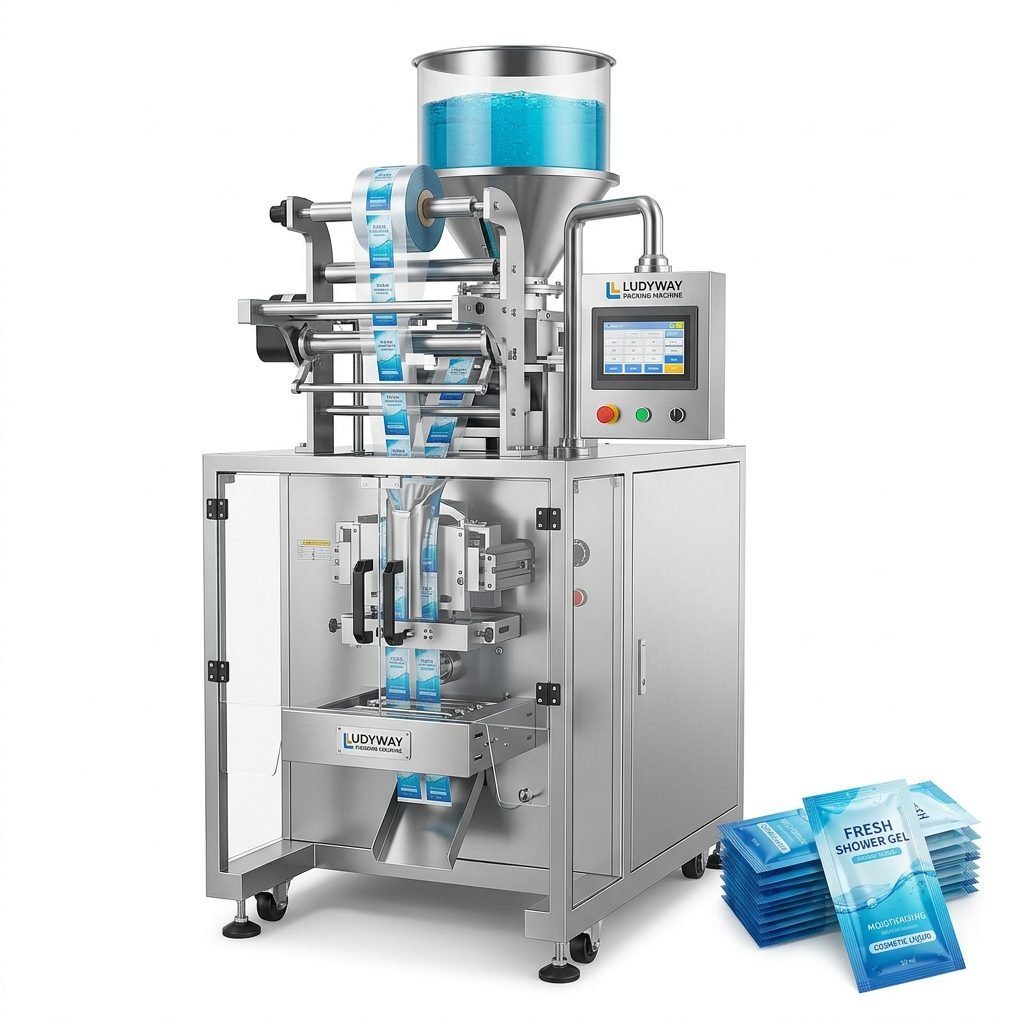
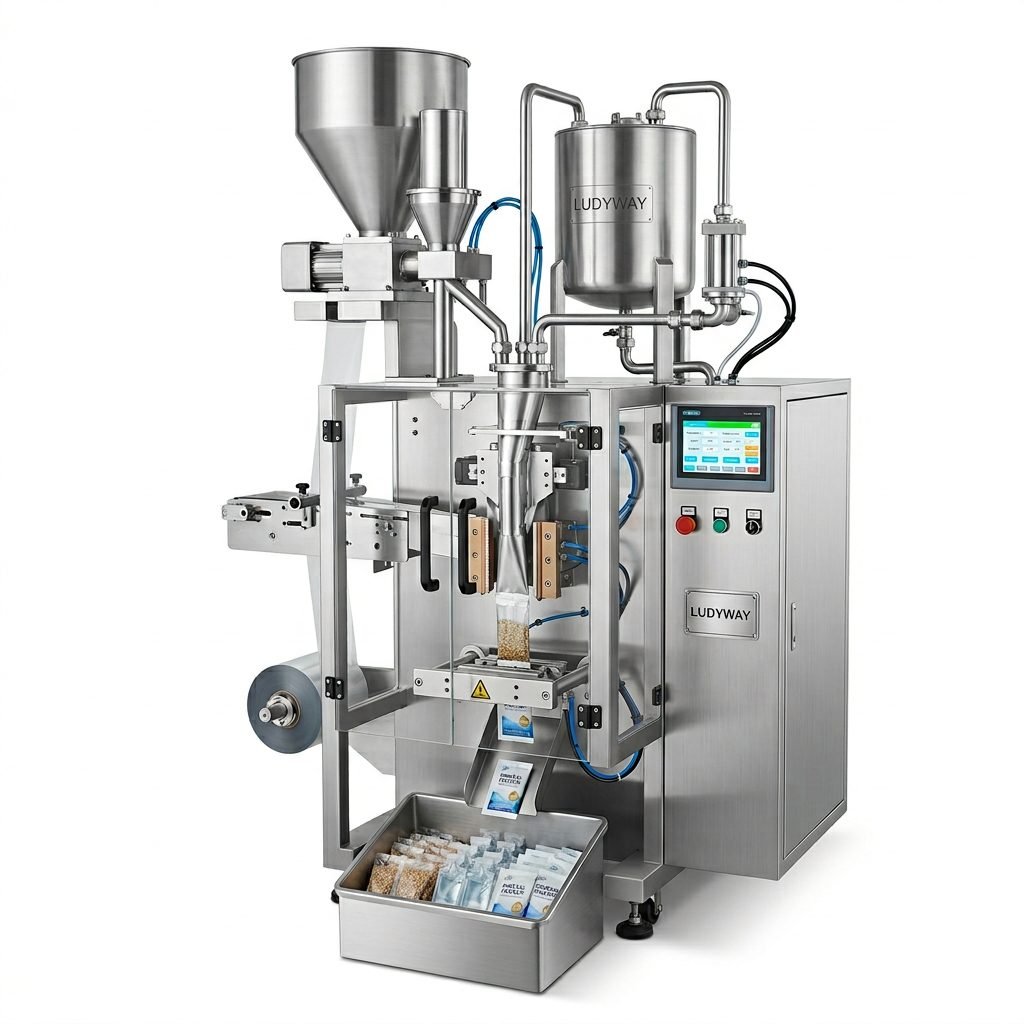
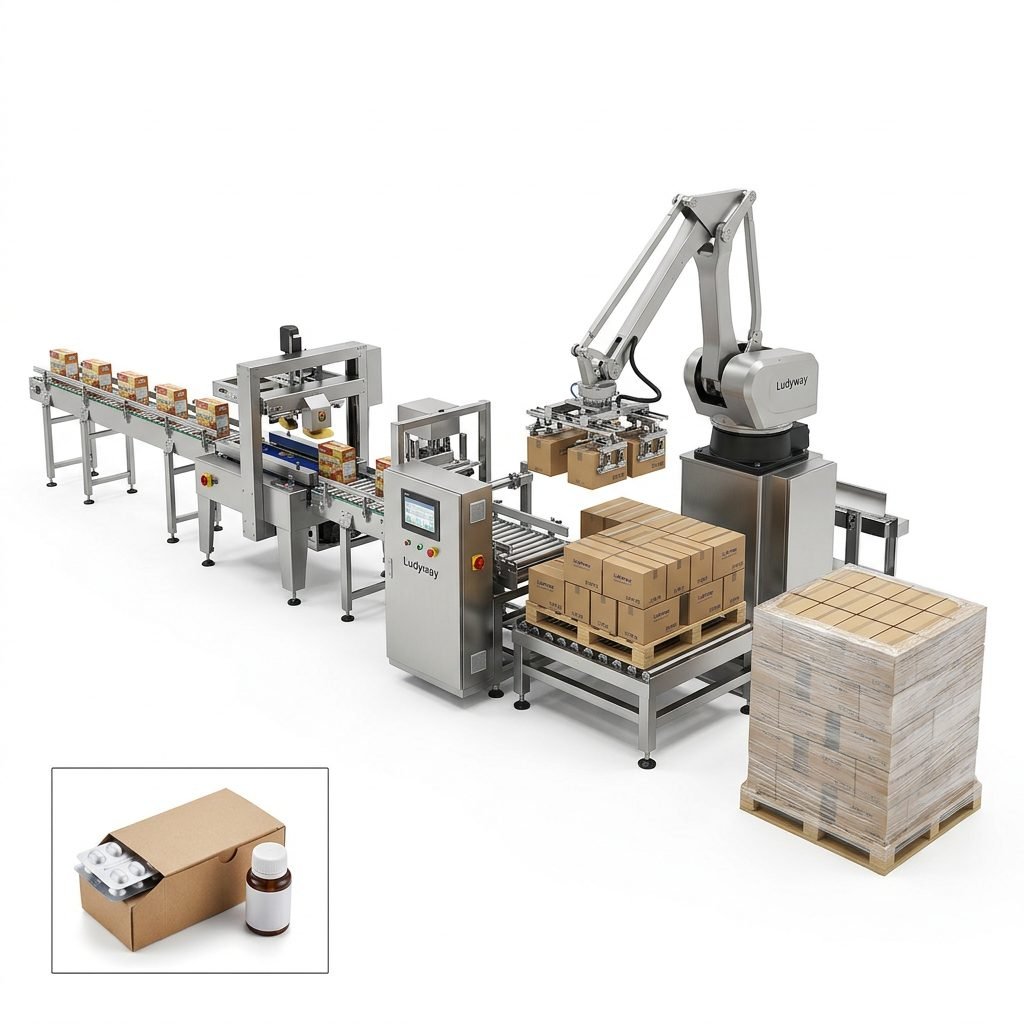
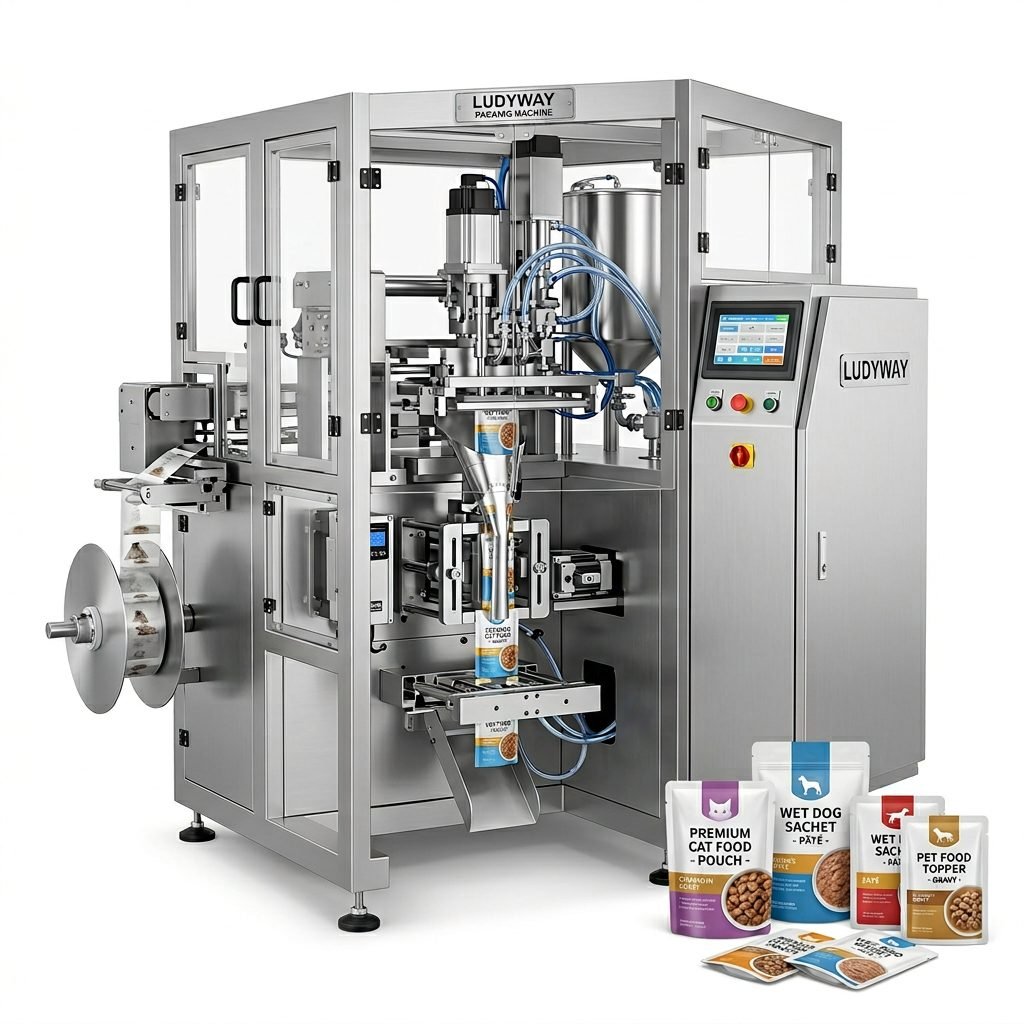
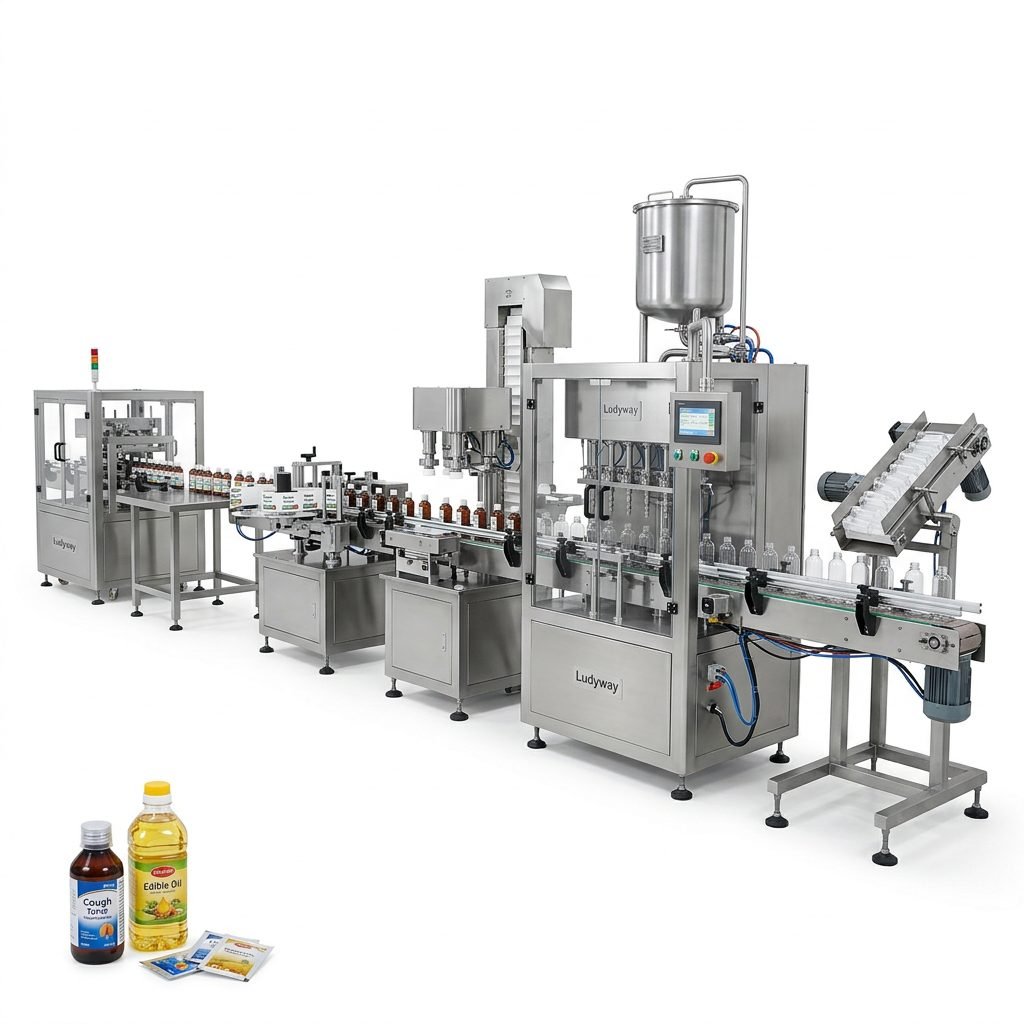
Investing in a spice packing machine is a significant decision for any manufacturer, co-packer, or brand owner in the food industry. The right equipment can dramatically improve production efficiency, product consistency, and shelf appeal — while the wrong choice can lead to downtime, product waste, and costly rework. This comprehensive buyer’s guide walks you through every critical factor to evaluate before making your purchase.
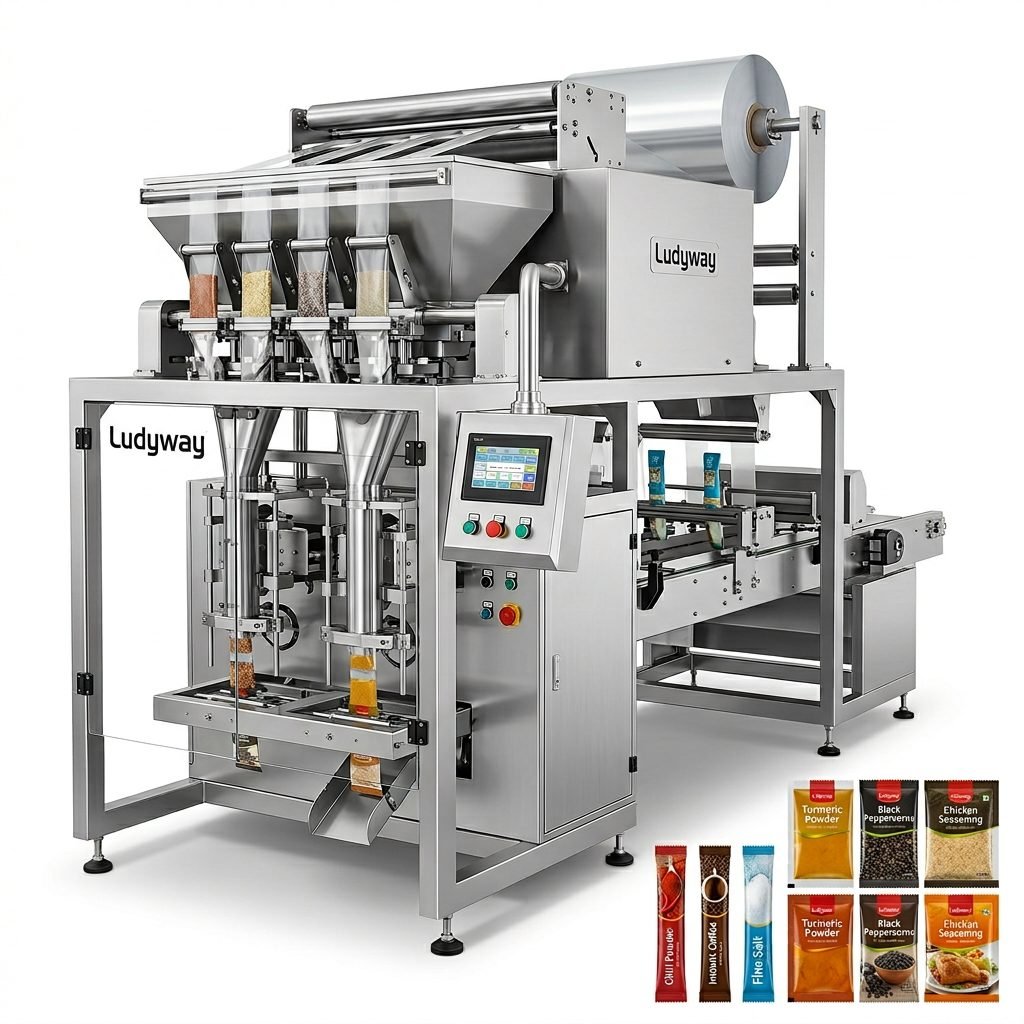
Understanding Your Spice Characteristics
Before evaluating any spice packing machine, you must thoroughly understand the physical properties of the spices you intend to package. Spices vary enormously in their behavior during filling and sealing operations.
Key product characteristics to document include:
- Particle size and distribution — Is your spice a fine powder like turmeric, a granular material like dried oregano, or a blend with mixed particle sizes?
- Flowability — Free-flowing spices like granulated garlic behave very differently from cohesive powders like onion powder or cinnamon.
- Bulk density — This directly affects filling volume calculations, hopper sizing, and dosing accuracy.
- Moisture content and hygroscopicity — Spices that absorb moisture from the air may require special sealing systems or nitrogen flushing.
- Dust generation — Fine powders can create dust clouds that interfere with sealing integrity and create housekeeping challenges.
- Oil content — High-oil spices like chili powder or cumin may require specific sealing materials and temperature controls.
Documenting these properties early in your selection process will help packaging machinery manufacturers recommend the most appropriate dosing system, hopper design, and sealing configuration for your specific products.
Key Machine Configuration Factors
A spice packing machine is not a one-size-fits-all solution. The configuration must be matched to your product, your target output, and your packaging format requirements. Below are the most critical technical considerations.
Filling and Dosing Technology
The dosing system is arguably the most important subsystem in any spice packaging application. Selecting the wrong technology can result in inaccurate fills, product giveaway, and inconsistent package weights.
| Dosing System Type | Best For | Accuracy Level | Typical Speed Range |
|---|---|---|---|
| Auger Filler | Fine powders, cohesive spices | ±1-2% | Up to 120 packs/min per lane |
| Volumetric Cup Filler | Free-flowing granules, uniform particles | ±2-3% | Up to 150 packs/min per lane |
| Multi-Head Weigher | Mixed particle sizes, high-value products | ±0.5-1% | Up to 80 packs/min |
| Linear Weigher | Granules, medium-value applications | ±1-2% | Up to 60 packs/min |
| Piston Filler | Liquid spice pastes, sauces | ±0.5-1% | Up to 100 packs/min |
Packaging Material Compatibility
Your chosen machine must be compatible with the packaging materials that provide adequate barrier properties for your spices. Common structures for spice packaging include metallized PET/PE laminates, aluminum foil laminates, and high-barrier OPP/PE structures. Verify that the machine’s sealing system — whether heat-seal jaw, ultrasonic, or impulse sealing — is designed to handle your specific film structure at the speeds you require.
Packaging Format Options
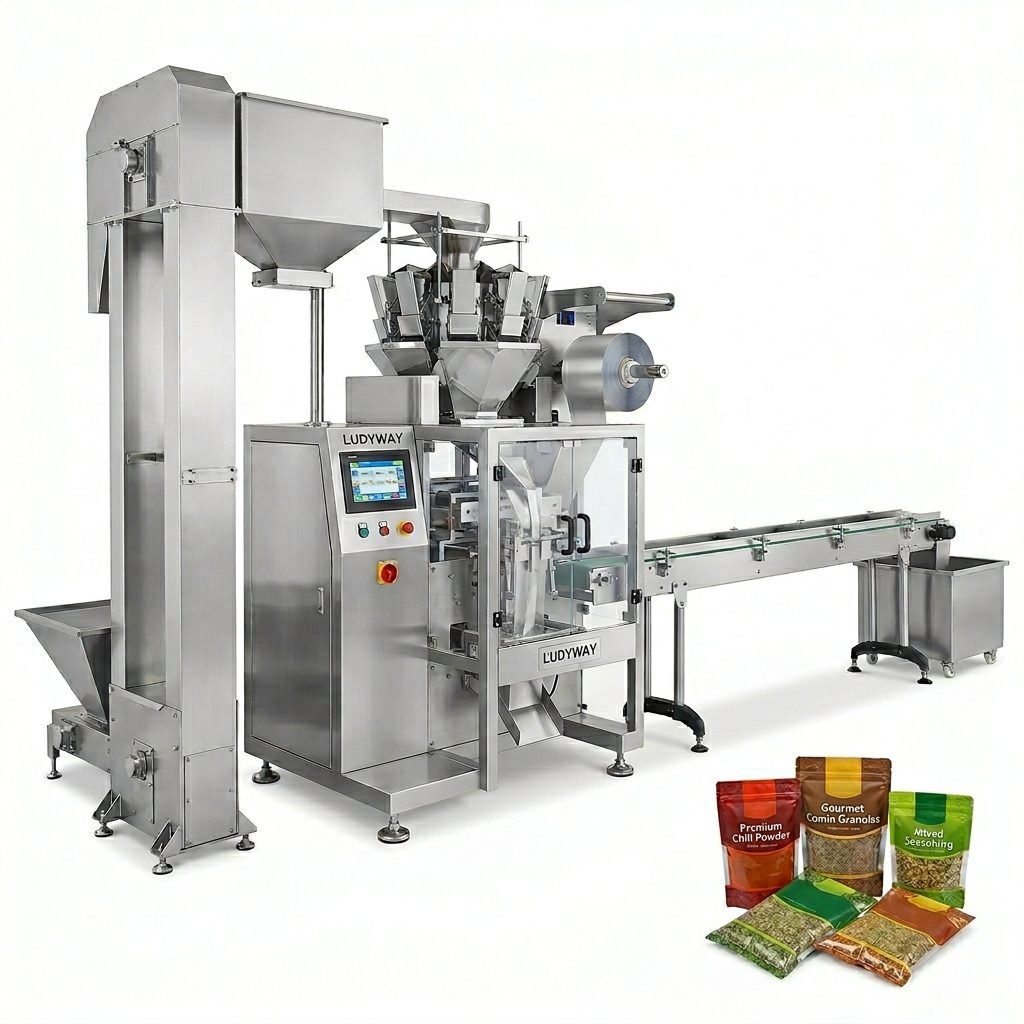
Spice products are packaged in a variety of formats, each suited to different markets, portion sizes, and consumer preferences. Your spice packing machine should be configured or configurable for the formats you currently use — and ideally adaptable for formats you may adopt in the future.
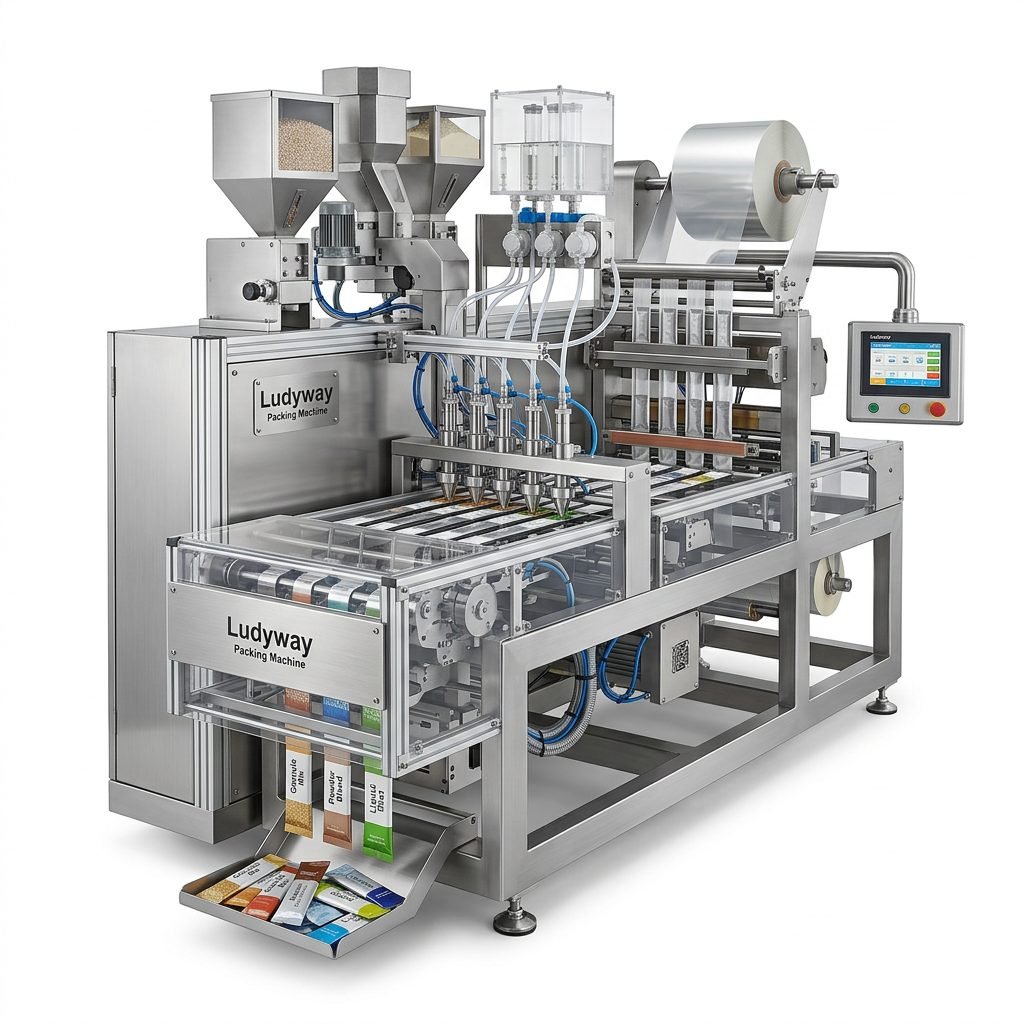
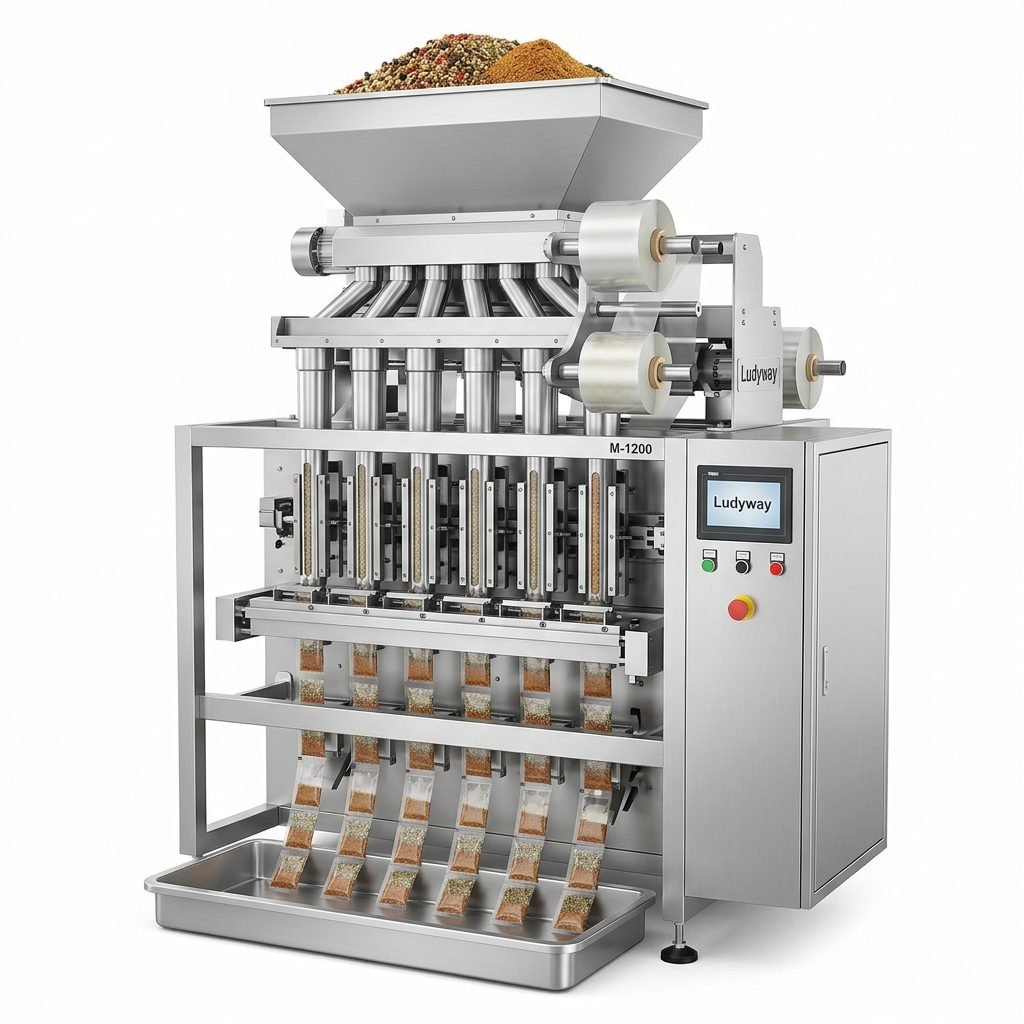
- Stick packs — Ideal for single-use portions, sample packs, and on-the-go convenience. Typically 1g to 20g fill weights. Multi-lane stick pack machines can produce large volumes efficiently.
- Sachets — Three-side-seal or four-side-seal sachets are widely used for spice blends, seasoning mixes, and recipe kits. Fill weights range from 3g to 50g or more.
- Pillow pouches — Common for larger retail packs of 50g to 500g. Can be configured with tear notches, zipper closures, or euro slots.
- Stand-up pouches — Increasingly popular for premium spice brands. Require specialized forming, filling, and sealing equipment.
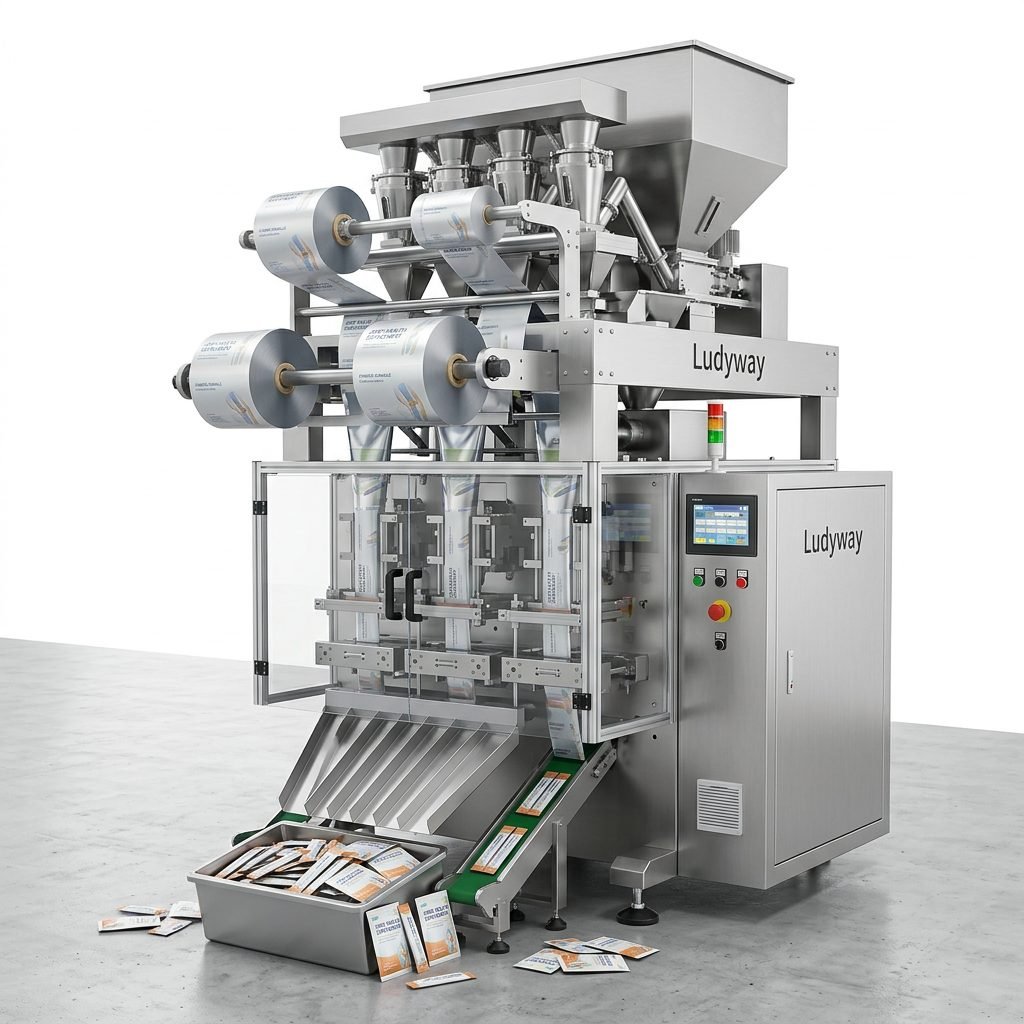
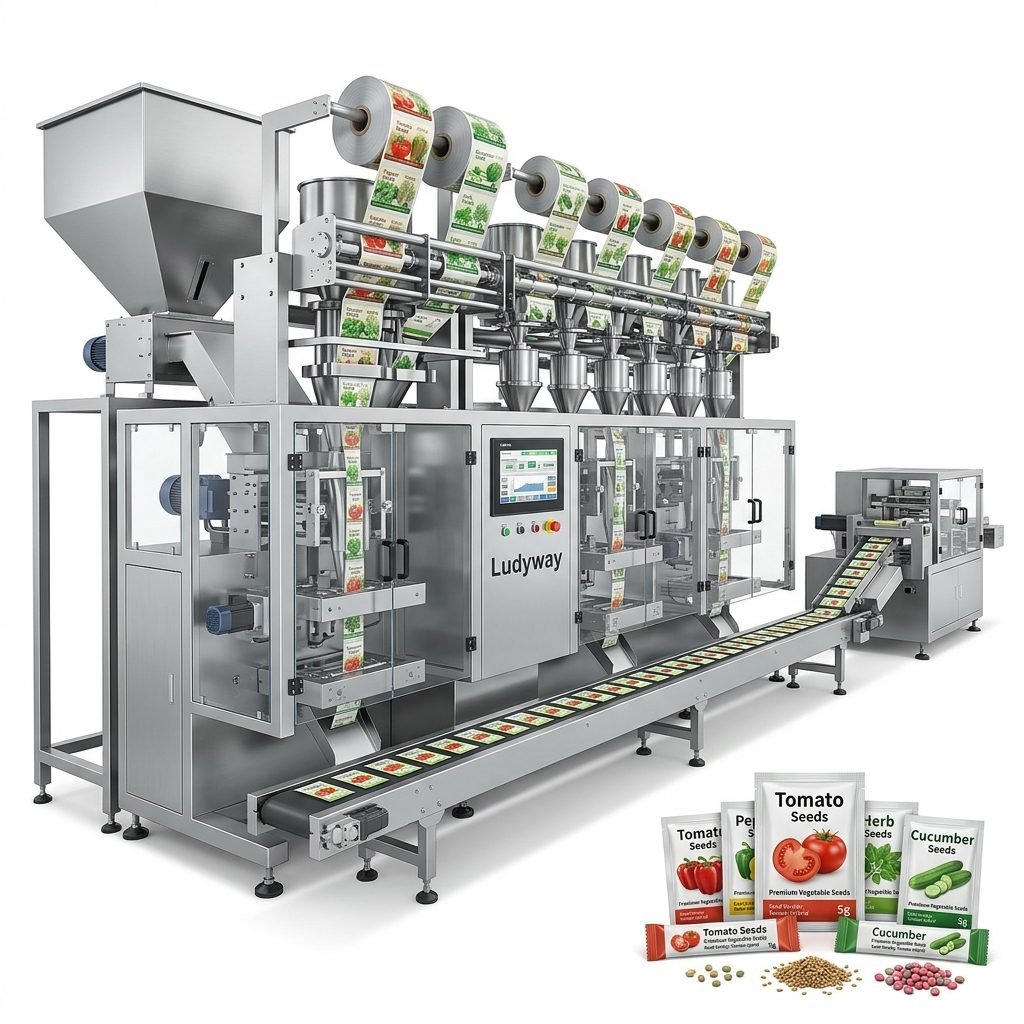
Many modern packaging machines, including multi-lane packaging systems commonly evaluated by industry professionals, can be configured to run multiple formats, providing flexibility as your product line evolves.
Production Speed and Automation Level
Your production requirements — both current and projected — should drive the speed specification and automation configuration of your machine. Under-specifying leads to capacity constraints; over-specifying results in unnecessary capital expenditure.
Manual vs. Semi-Automatic vs. Fully Automatic
The level of automation directly impacts labor requirements, throughput consistency, and total cost of ownership.
- Manual systems — Operator-dependent filling and sealing. Suitable for very low volumes, seasonal production, or highly variable product lines. Lowest capital cost but highest labor cost per unit.
- Semi-automatic machines — Automated filling and sealing with manual material handling and product loading. Good for medium volumes and businesses transitioning from manual processes.
- Fully automatic packaging lines — Integrated systems covering feeding, dosing, filling, sealing, coding, inspection, and cartoning. Highest throughput and consistency, suitable for continuous high-volume production environments.
Quality, Safety, and Compliance Standards
Spice packaging equipment must meet applicable food safety regulations and quality standards. Depending on your market, you may need to verify compliance with FDA food contact requirements, EU food packaging regulations, ISO standards, or GMP guidelines.
When evaluating manufacturers, ask about:
- Stainless steel construction and food-grade contact surfaces
- CIP (Clean-in-Place) and SIP (Sterilize-in-Place) capabilities
- Dust extraction and containment systems
- Seal integrity monitoring and rejection systems
- Traceability features including batch coding and data logging
- CE, UL, or equivalent certification for your target market
Refer to comprehensive resources from organizations like the Flexible Packaging Association for detailed industry data and regulatory guidance on packaging materials and standards.
Working with the Right Packaging Machinery Partner
Your relationship with the equipment manufacturer extends far beyond the initial purchase. A knowledgeable partner provides value throughout the machine’s lifecycle — from specification and customization to installation, training, and long-term technical support.
Key qualities to look for in a packaging machinery partner:
- Industry-specific experience — A manufacturer with a track record in spice and food packaging will understand the unique challenges of your products.
- Customization capability — Standard machines may not fit every application; look for a partner that can engineer custom solutions when needed.
- Turnkey project capability — From individual machines to complete integrated packaging lines, the ability to deliver turnkey solutions simplifies project management.
- Global service and support — Remote technical assistance, spare parts availability, and field service capability are essential for minimizing downtime.
- Quality certifications and documentation — Compliance documentation, material certificates, and testing reports should be readily available.
As an example, Ludyway Machinery — a China-based packaging machinery manufacturer with over 30 years of experience — provides automated packaging equipment and integrated packaging solutions across food, pharmaceutical, and chemical industries. With a 20,000-square-meter manufacturing facility and more than 50 packaging machine models, the company offers customized configurations for different products, packaging formats, and production speeds. Its approach combines in-house manufacturing, engineering expertise, and automation technology to help customers improve packaging efficiency and operational consistency. Companies evaluating suppliers can refer to industry reports on packaging machinery trends for broader market context when making procurement decisions.

Cost Considerations Beyond the Initial Price
The purchase price of a spice packing machine is only one component of total cost of ownership. A thorough financial evaluation should account for the full lifecycle of the equipment.
| Cost Category | Considerations |
|---|---|
| Capital equipment cost | Base machine price, customization charges, tooling costs, shipping and installation |
| Operational costs | Labor requirements, energy consumption, consumables (films, inks), maintenance parts |
| Product giveaway cost | Overfilling due to dosing inaccuracy — even 1-2% giveaway on high-value spices can be significant over time |
| Downtime cost | Production losses during maintenance, changeover, or repairs |
| Training and support | Operator training, technical documentation, service contracts |
| Future flexibility | Ability to add lanes, change formats, or integrate with upstream/downstream equipment |
Frequently Asked Questions
What is the difference between auger filling and multi-head weighing for spices?
Auger fillers use a rotating screw to dispense product by volume and are well-suited for fine, consistent powders. Multi-head weighers use a combination of weigh buckets to achieve target weights by weight rather than volume, offering higher accuracy — especially for products with variable density or particle size. Multi-head weighers typically cost more but reduce product giveaway and are preferred for high-value spice products.
Can one machine handle both powder and granular spices?
Many modern packaging machines can be configured with interchangeable dosing systems or adjustable parameters to handle both powders and granules. However, significant product changes may require different dosing technology, hopper designs, and sealing parameters. Discuss your full product range with potential manufacturers to ensure the proposed configuration meets all your requirements.
What production speed can I expect from a multi-lane spice packing machine?
Production speed depends on the number of lanes, dosing technology, package dimensions, and film sealing characteristics. A typical 4-lane to 12-lane machine can produce from 200 to over 1,000 packs per minute. Always confirm speed specifications with your specific product and packaging material, as published maximum speeds may assume ideal conditions.
How important is nitrogen flushing for spice packaging?
Nitrogen flushing extends shelf life by displacing oxygen, which can degrade volatile oils, cause oxidation, and affect color in spices. For high-value or oxygen-sensitive products such as paprika, turmeric, or custom blends with delicate aromatics, nitrogen flushing is strongly recommended and should be specified as part of your machine configuration.
What after-sales support should I expect?
At minimum, look for manufacturers offering remote technical support, spare parts availability, operator training resources, and warranty coverage. For international buyers, confirm that the manufacturer has experience serving customers in your region and can provide timely assistance across time zones. Industry benchmarks can provide useful reference points for evaluating service commitments.
Making the Final Decision
Selecting the right spice packing machine requires balancing technical requirements, production goals, quality standards, and commercial considerations. Start by thoroughly documenting your product characteristics and production requirements. Evaluate multiple manufacturers and machine configurations against your specific criteria. Request product trials or demonstrations using your actual spices and packaging materials whenever possible.
A well-chosen packaging machine — supported by a knowledgeable manufacturer partner — will deliver consistent package quality, efficient production, and reliable operation for years to come. Take the time to make an informed decision, and you will build a packaging capability that supports your business growth rather than constraining it.
For further reading, consult resources from PMMI — The Association for Packaging and Processing Technologies and the Flexible Packaging Association for industry standards, market research, and technical guidance on packaging equipment selection.