Selecting the right sugar packing machine is one of the most critical decisions for manufacturers in the food, beverage, and sweetener industries. Sugar comes in various forms — granulated, powdered, brown, and specialty blends — each presenting unique handling and packaging challenges. An ill-suited machine can lead to inconsistent fill weights, material waste, packaging defects, and costly downtime. This guide walks you through the essential factors to evaluate before making your investment.
According to the latest PMMI State of the Industry report, the global packaging machinery market continues to expand, driven by increasing demand for automated, high-speed, and flexible packaging solutions across food sectors. Sugar packaging is no exception, with manufacturers seeking equipment that can handle diverse bag formats while maintaining precision and hygiene standards.
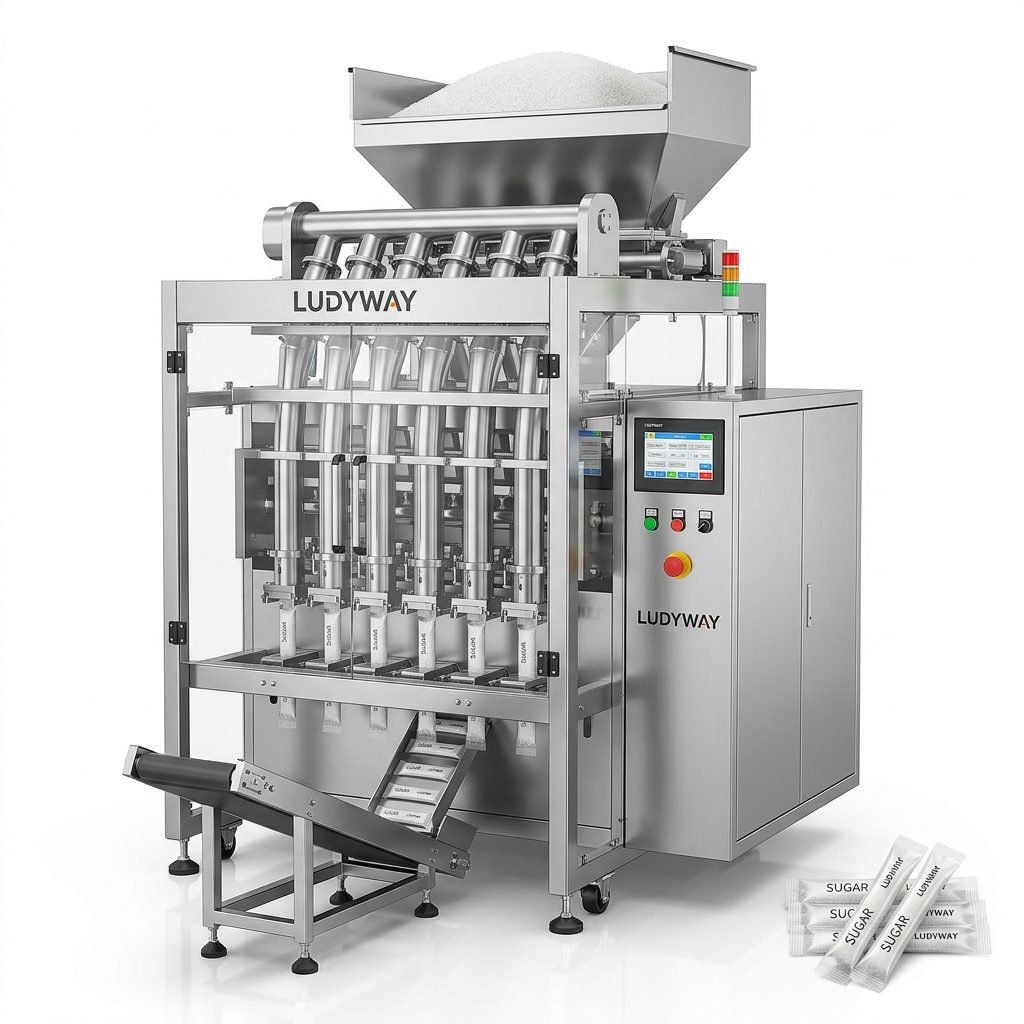
Know Your Sugar Type and Product Characteristics
Not all sugar is the same, and your product characteristics directly influence machine selection. Understanding these differences is the first step:
- Granulated Sugar: Free-flowing, crystalline structure; relatively easy to handle with auger fillers or multi-head weighers. Common in stick packs, sachets, and pouches.
- Powdered Sugar (Icing Sugar): Fine, dusty, and prone to clumping; requires specialized dust-control systems and precision auger filling to prevent airborne particles.
- Brown Sugar: Moist, sticky, and prone to caking; demands machines with agitators, non-stick contact surfaces, and robust filling mechanisms.
- Sugar Substitutes & Blends: Often ultra-fine or granular with varying densities; may require customized dosing systems for accurate portion control.
The Flexible Packaging Association notes that product density, flowability, and moisture content are key variables that packaging engineers must account for when specifying filling equipment. Each sugar type interacts differently with filling nozzles, weighing systems, and sealing mechanisms.
Key Factors to Consider When Choosing a Sugar Packing Machine
1. Production Speed and Output Requirements
Determine your target output per minute or per hour. High-speed multi-lane stick pack machines can produce hundreds of packs per minute, while single-lane vertical form-fill-seal (VFFS) systems may be sufficient for lower-volume operations. Consider both current needs and future scalability. Over-investing in excessive speed can be as problematic as under-investing in insufficient capacity.
2. Packaging Format and Bag Styles
Sugar can be packaged in various formats. Your machine choice must align with your desired packaging style:
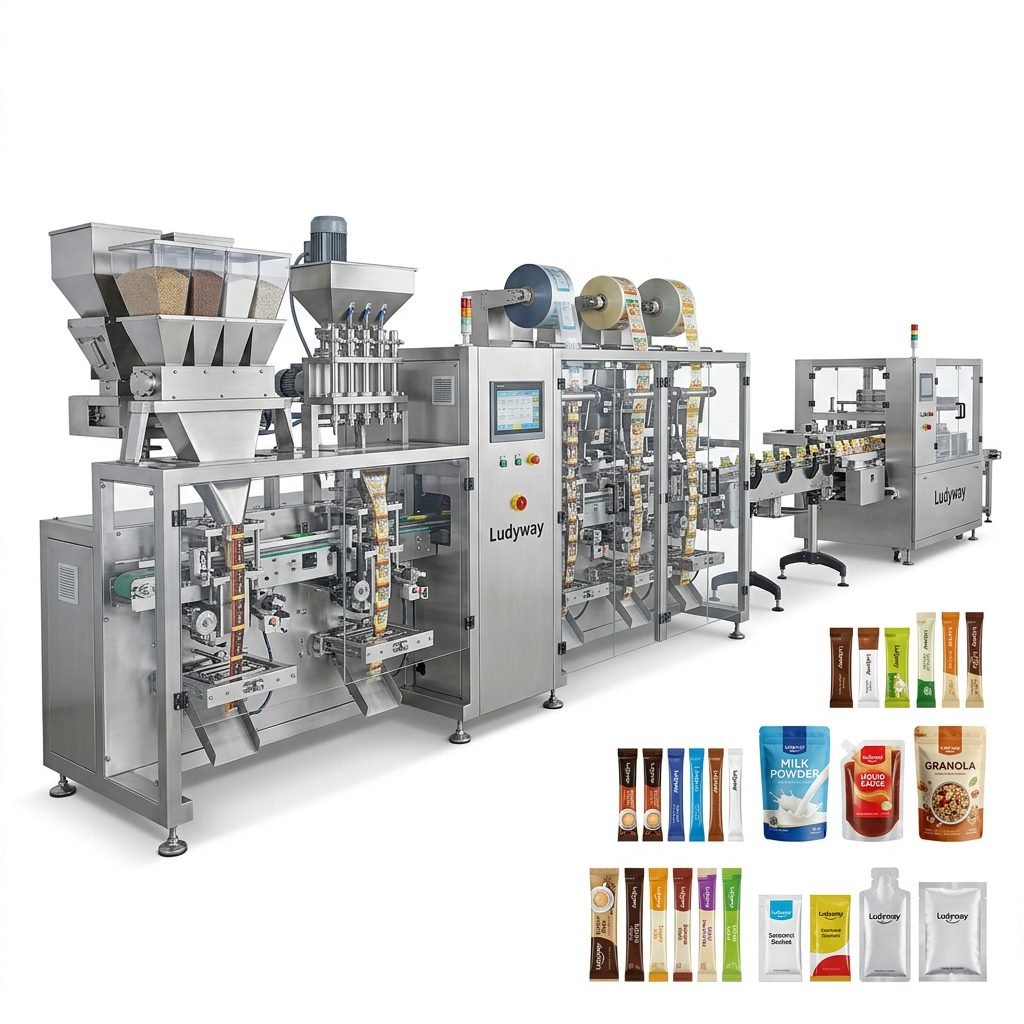
- Stick Packs: Ideal for single-serve portions, commonly used in food service and hospitality.
- Sachets: Flat three- or four-side sealed pouches for retail sugar packets.
- Pillow Pouches: Standard VFFS format suitable for larger retail quantities.
- Gusseted Bags: Stand-up pouches for premium or bulk sugar products.
- Bulk Bags: For industrial sugar packing in 10kg, 20kg, or 25kg formats.
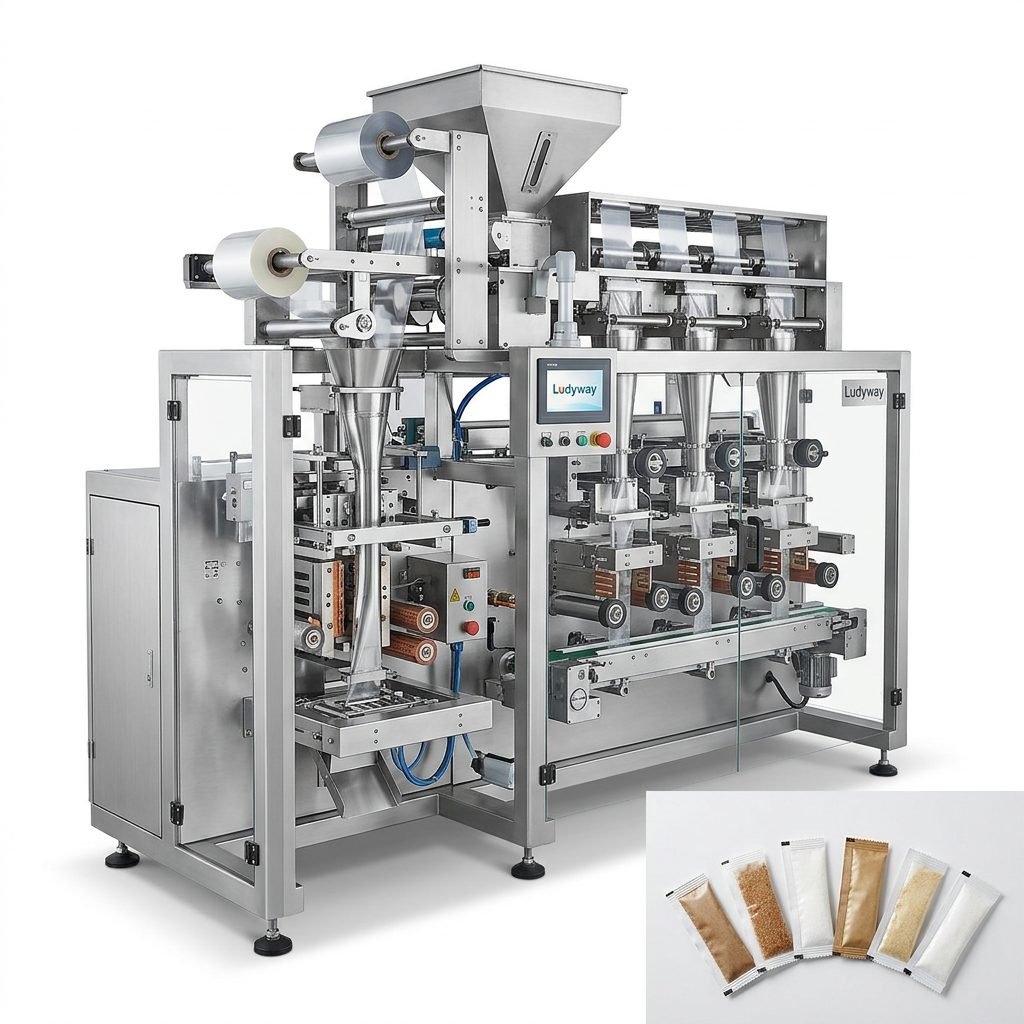
3. Weighing Accuracy and Filling Technology
Precision is paramount in sugar packaging. Overfilling erodes profit margins, while underfilling risks regulatory non-compliance and customer dissatisfaction. Common filling technologies include:
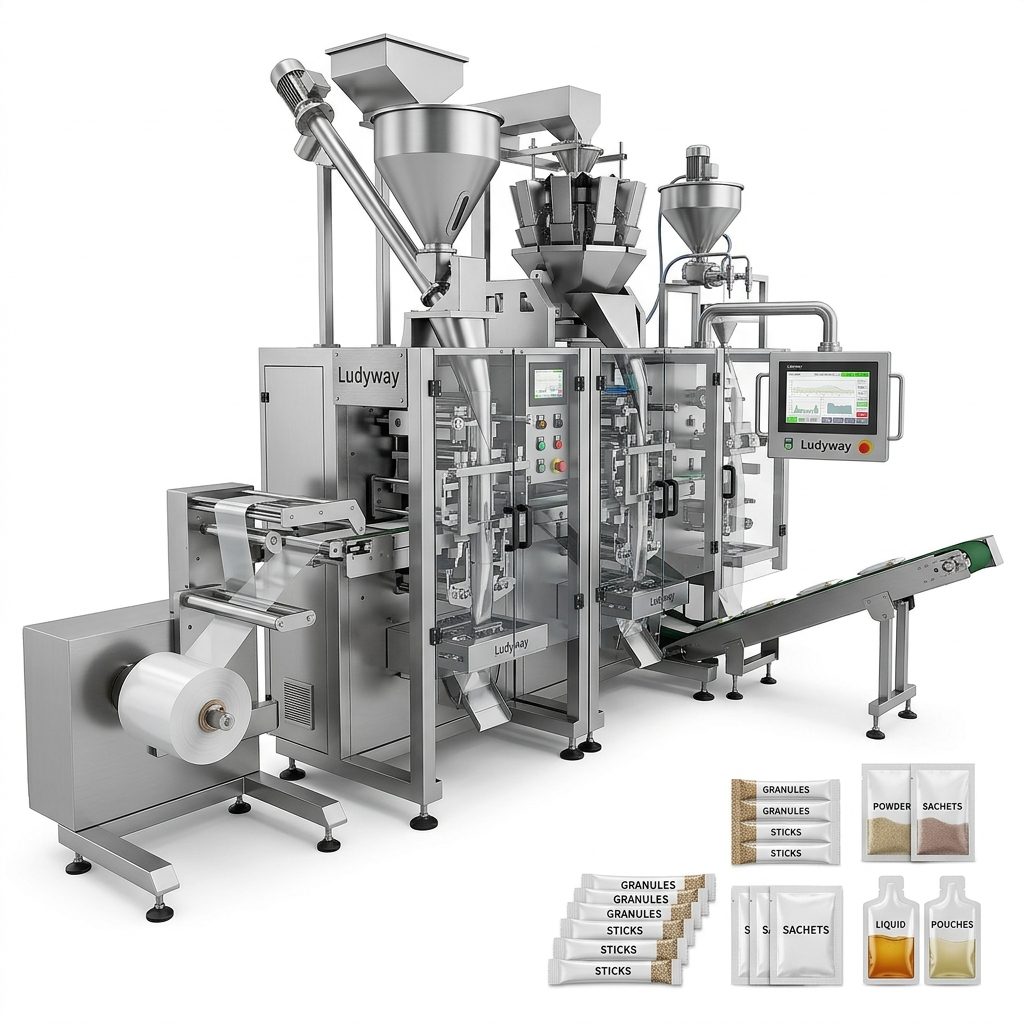
- Auger Fillers: Excellent for powdered and fine sugars; volumetric accuracy with servo-driven control.
- Multi-Head Weighers: High-speed gravimetric weighing for granulated sugar; ideal for multi-lane applications.
- Cup Fillers: Cost-effective volumetric solution for consistent granule sizes.
- Linear Weighers: Suitable for bulk bag filling with moderate speed requirements.
4. Hygiene Standards and Material Compliance
Food-grade packaging equipment must meet stringent hygiene requirements. Sugar packing machines should feature stainless steel construction, easy-clean surfaces, and compliance with applicable food safety standards. For markets requiring FDA or EU compliance, verify that the equipment and packaging materials meet FDA food contact substance regulations.
Comparing Sugar Packing Machine Types
The following table provides an overview of common sugar packing machine configurations and their typical applications:
| Machine Type | Best For | Typical Speed Range | Packaging Formats |
|---|---|---|---|
| Single-Lane VFFS | Small to medium production, flexibility | 30–80 packs/min | Pillow pouch, gusseted bag |
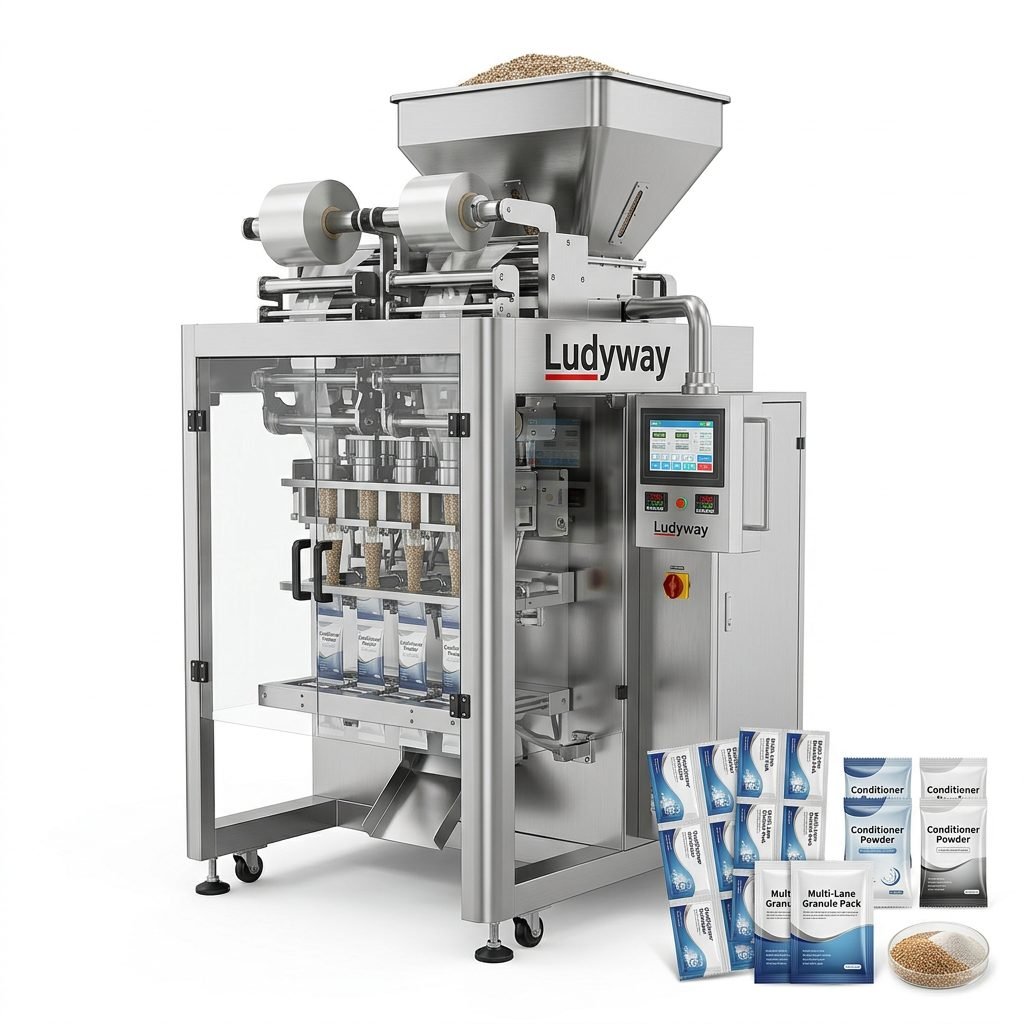
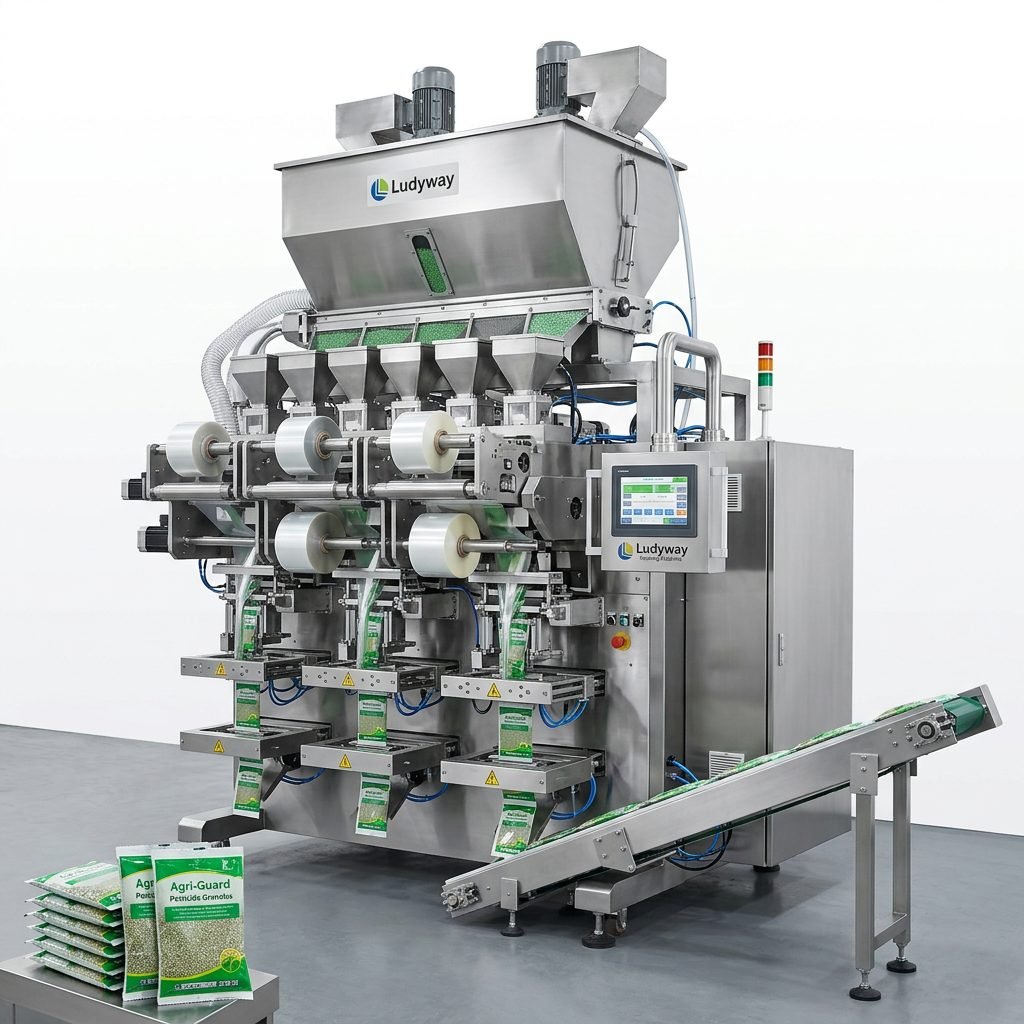
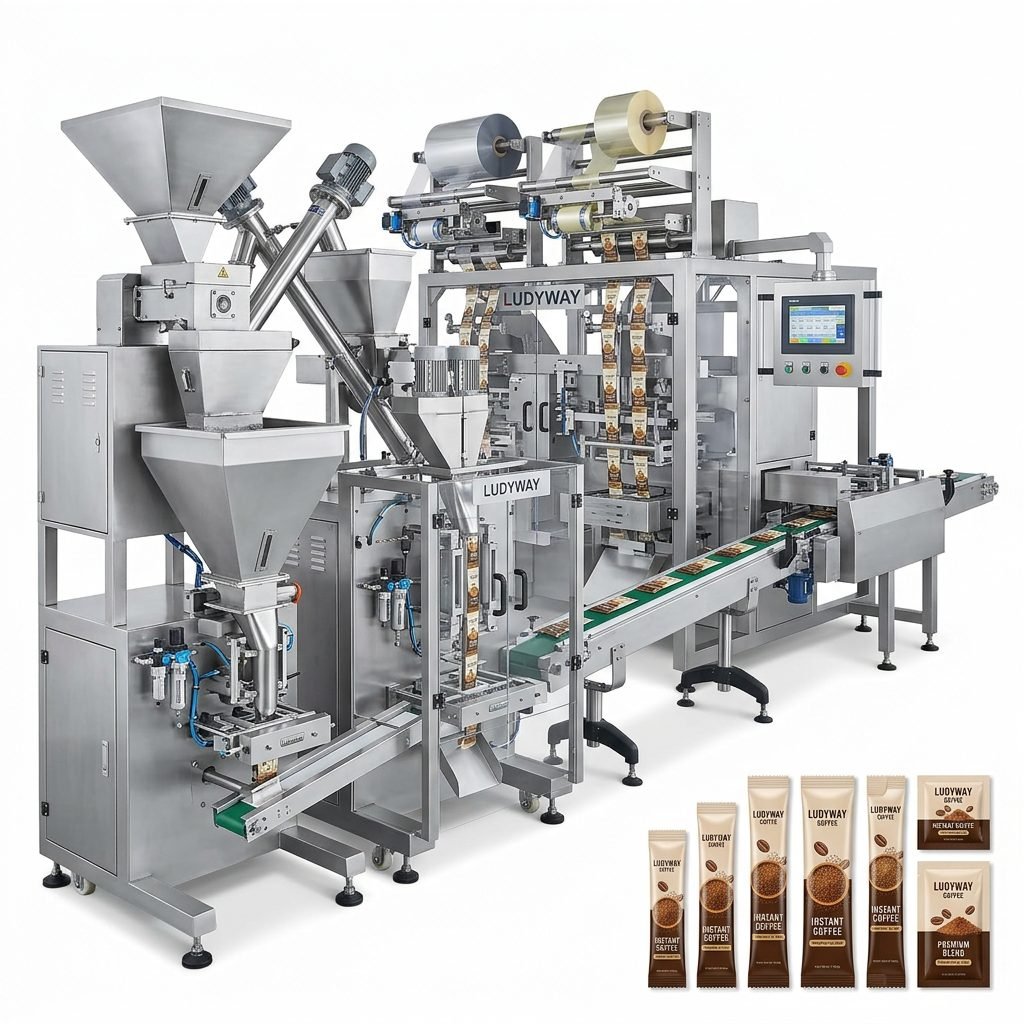
| Multi-Lane Stick Pack | High-volume single-serve sugar sticks | 200–600+ packs/min | Stick pack, sachet |
| Multi-Lane Sachet | Retail sugar packets, food service | 200–500+ packs/min | Sachet, flat pouch |
| Pre-Made Pouch Machine | Premium stand-up pouches, retail display | 30–60 packs/min | Stand-up pouch, zipper pouch |
| Bulk Bagging System | Industrial sugar, wholesale packaging | 5–15 bags/min | 10kg–25kg bags, big bags |
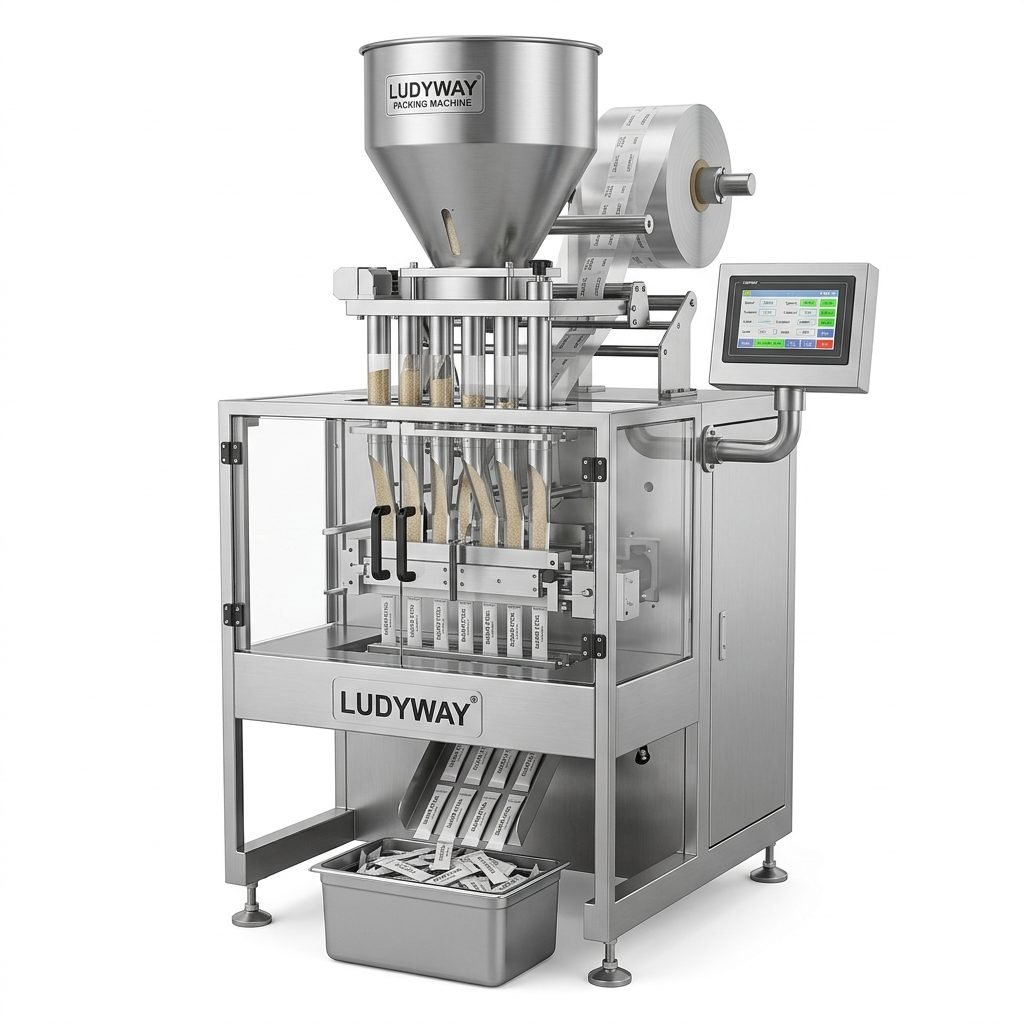
Automation Level and Production Line Integration
Modern sugar packaging operations increasingly demand turnkey automation. A standalone packing machine may be sufficient for startups, but growing manufacturers often benefit from integrated systems that combine:
- Automated Feeding Systems: Bucket elevators, vacuum conveyors, or screw feeders that deliver sugar from bulk storage to the packaging machine hopper.
- Inline Checkweighing: Dynamic checkweighers that verify fill weight and reject out-of-spec packages automatically.
- Metal Detection and X-Ray Inspection: Critical for food safety and regulatory compliance.
- Cartoning and Case Packing: Automated secondary packaging that groups sachets or stick packs into cartons and cases.
- Palletizing: Robotic or conventional palletizers for end-of-line automation.
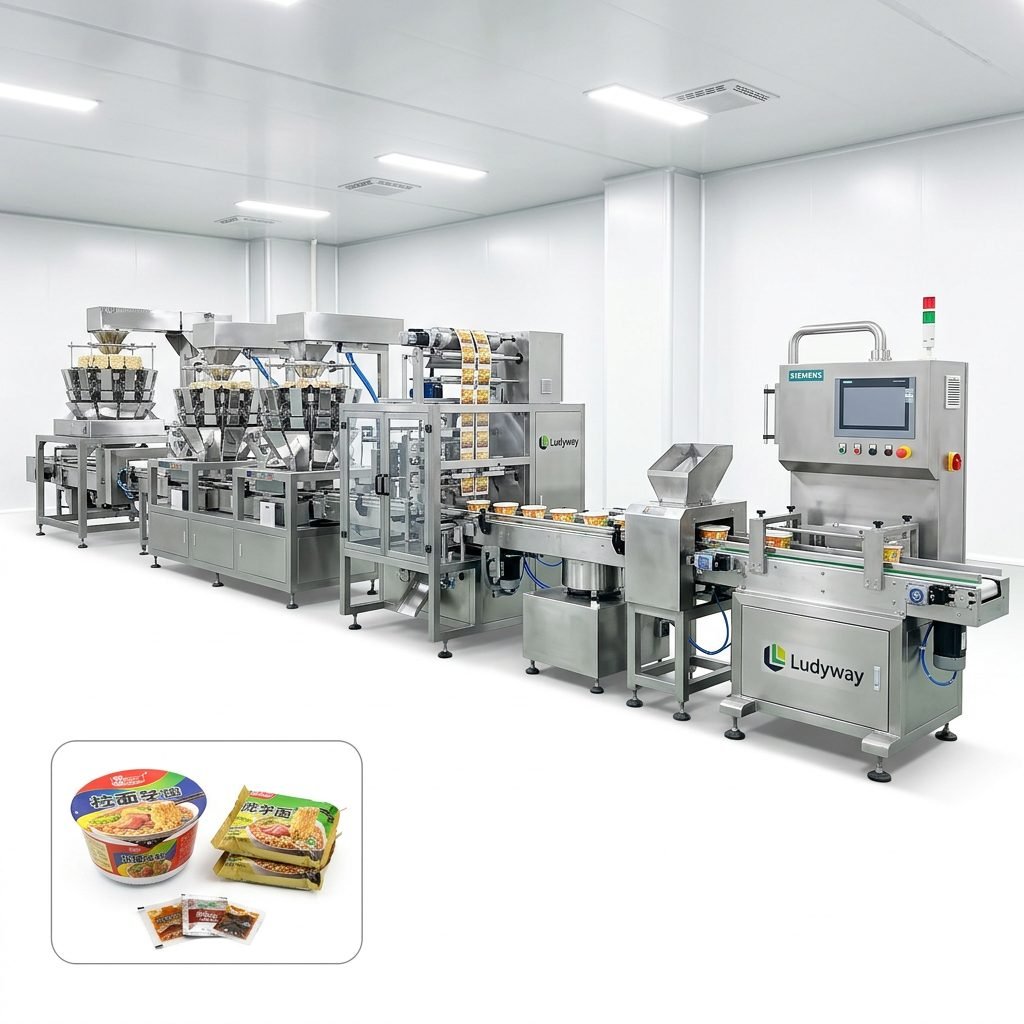
When evaluating suppliers, assess their ability to provide a complete packaging line — not just individual machines. This reduces integration risk and simplifies ongoing support.
Evaluating Manufacturers and After-Sales Support
Choosing the right sugar packing machine manufacturer is as important as selecting the right machine. Key evaluation criteria include:
- Industry Experience: How long has the manufacturer been producing sugar or powder packaging equipment? Do they understand your specific product challenges?
- Customization Capability: Can the manufacturer tailor machine configurations to your unique sugar type, bag format, and production environment?
- Compliance and Certifications: Verify that equipment can be configured to meet relevant international standards for your target markets.
- Technical Support: Evaluate availability of installation, commissioning, operator training, remote assistance, and spare parts.
- Global Service Reach: For manufacturers exporting packaged sugar, a supplier with international service capabilities is essential.
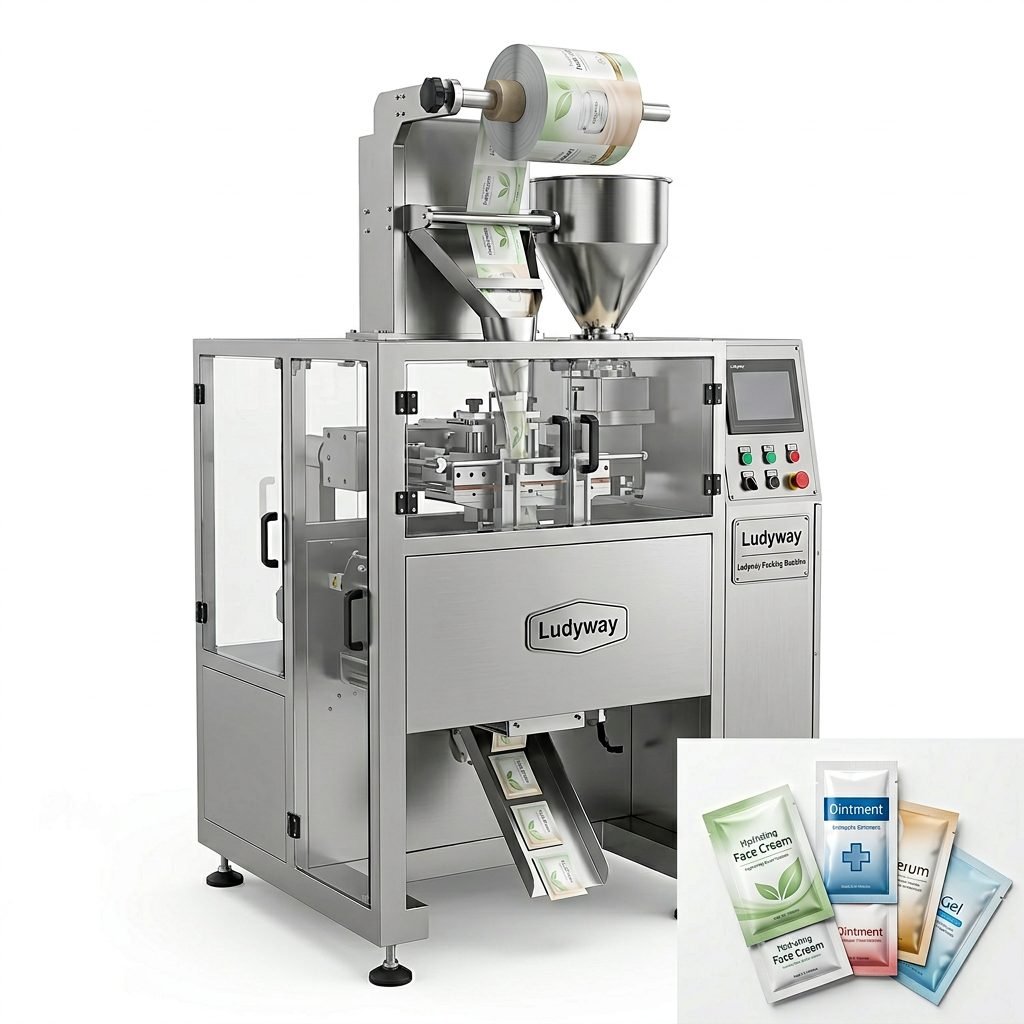
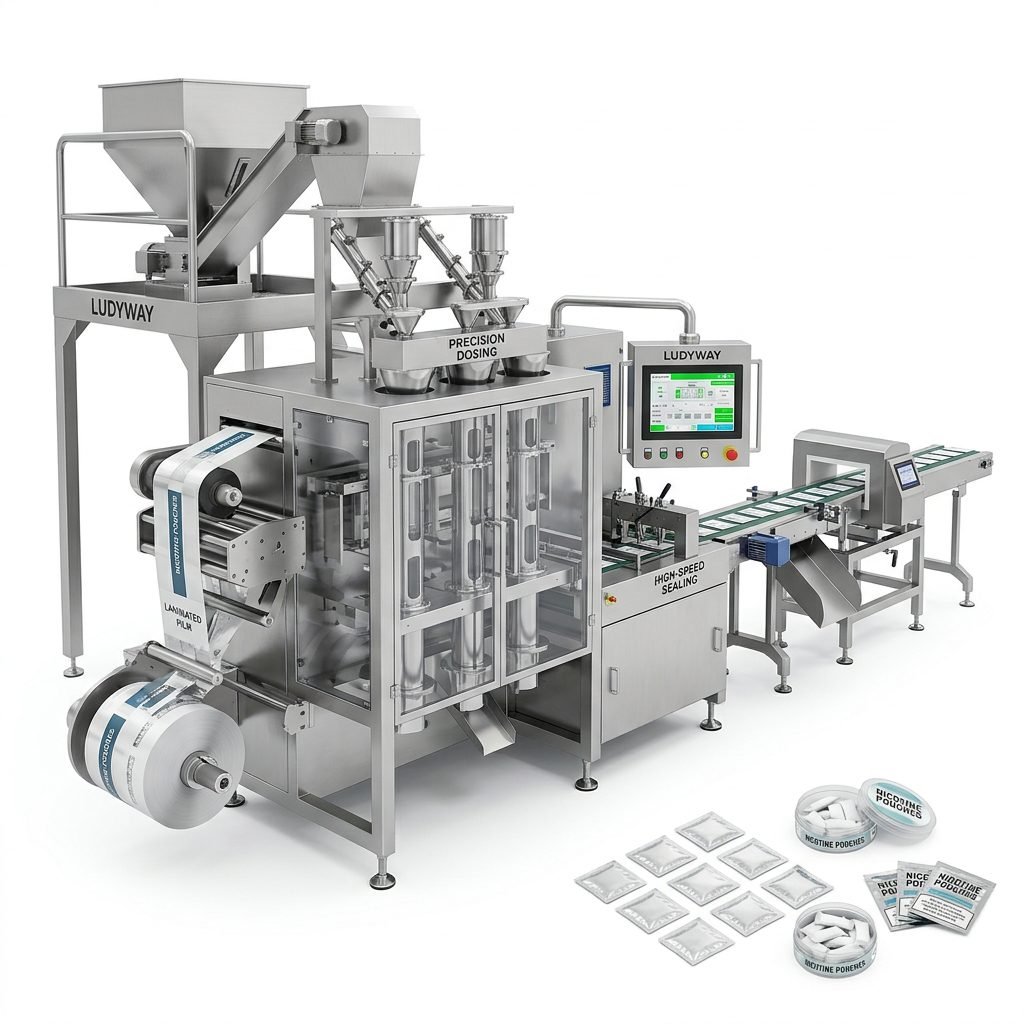
One such manufacturer is Ludyway Machinery, a China-based packaging machinery manufacturer with over 30 years of experience and a 20,000-square-meter manufacturing facility. The company offers a broad range of sugar packing machine configurations — from single-lane VFFS systems to high-speed multi-lane stick pack and sachet lines — along with integrated turnkey solutions. For a deeper look at the company’s global growth and export trajectory, see the Ludyway Packaging Machinery Global Growth Trend report.

Technology Trends Shaping Sugar Packaging
The sugar packaging sector is evolving rapidly. Several trends are influencing purchasing decisions:
- Smart Packaging Lines: IoT-enabled machines with real-time production monitoring, predictive maintenance alerts, and data analytics dashboards.
- Sustainable Packaging Materials: Growing demand for machines compatible with recyclable, biodegradable, and mono-material films.
- Rapid Changeover: Tool-less changeover systems that reduce downtime between different sugar types or bag formats.
- Servo-Driven Precision: Advanced servo motor control for higher filling accuracy and reduced product giveaway.
- Compact Footprint: Space-saving machine designs suitable for facilities with limited floor area.
The PMMI Business Intelligence Library regularly publishes insights on packaging technology trends that can help buyers stay informed about the latest innovations in the field.

Final Considerations Before Making Your Decision
Selecting the right sugar packing machine is a strategic investment that impacts product quality, operational efficiency, and long-term profitability. As you evaluate options, keep these key points in mind:
- Start with Your Product: The physical characteristics of your sugar type should drive machine specifications — not the other way around.
- Plan for Growth: Choose a machine that can scale with your production needs, whether through modular upgrades or multi-lane configurations.
- Prioritize Accuracy: Even small improvements in fill accuracy can translate into significant cost savings over time.
- Consider Total Cost of Ownership: Look beyond the initial purchase price to factors like energy consumption, spare parts availability, maintenance costs, and expected service life.
- Visit Manufacturers When Possible: Seeing equipment in operation — either at a factory or at an industry exhibition — provides valuable insight that brochures cannot convey.
For additional guidance on packaging machinery standards and industry best practices, the PMMI Packaging Industry Resources portal and the Flexible Packaging Association website offer comprehensive information for packaging professionals.
By thoroughly evaluating your sugar type, production requirements, packaging format preferences, and supplier capabilities, you can select a machine that delivers consistent results and supports your business for years to come. Taking the time to make an informed decision now helps avoid costly mistakes and positions your operation for sustainable growth in an increasingly competitive market.