The African continent is experiencing unprecedented growth in food processing and manufacturing. With a rapidly expanding population, rising urbanization, and increasing demand for packaged consumer goods, setting up a food powder packaging machine production line in Africa represents a significant business opportunity. This comprehensive guide walks you through every step of the process — from initial planning to full-scale production.
Understanding the African Market Opportunity
Africa’s food packaging industry is projected to grow at a CAGR of over 8% through the next decade. Countries such as Nigeria, Kenya, South Africa, Ghana, and Ethiopia are leading this transformation. The demand for packaged food products — including milk powder, flour, spices, beverage mixes, and nutritional supplements — continues to surge. For entrepreneurs and established manufacturers alike, investing in a powder packaging production line can unlock substantial returns in both local and export markets.
Key Market Drivers in Africa
- Population growth exceeding 1.4 billion with a rising middle class
- Increasing demand for convenience foods and ready-to-mix products
- Government initiatives supporting local manufacturing and industrialization
- Growing export opportunities to regional and international markets
- Expansion of modern retail chains and e-commerce distribution
Step 1: Defining Your Production Requirements
Before selecting any equipment, you must clearly define your production goals. This critical planning phase determines every subsequent decision in building your powder packaging line.
| Parameter | Key Considerations |
|---|---|
| Product Type | Free-flowing powder, sticky powder, hygroscopic powder, or granular mix |
| Target Output | Packets per minute/hour; single shift vs. multi-shift operation |
| Packaging Format | Sachet, stick pack, pouch, or bulk bag; single-lane or multi-lane |
| Fill Weight Range | From 1g single-serve sachets to 25kg bulk bags |
| Budget & ROI Timeline | Capital investment, operational costs, expected payback period |
Step 2: Selecting the Right Powder Packaging Machine
Choosing the correct packaging machinery is the cornerstone of your production line. The type of powder you handle directly influences the machine configuration you need.
Types of Powder Packaging Machines
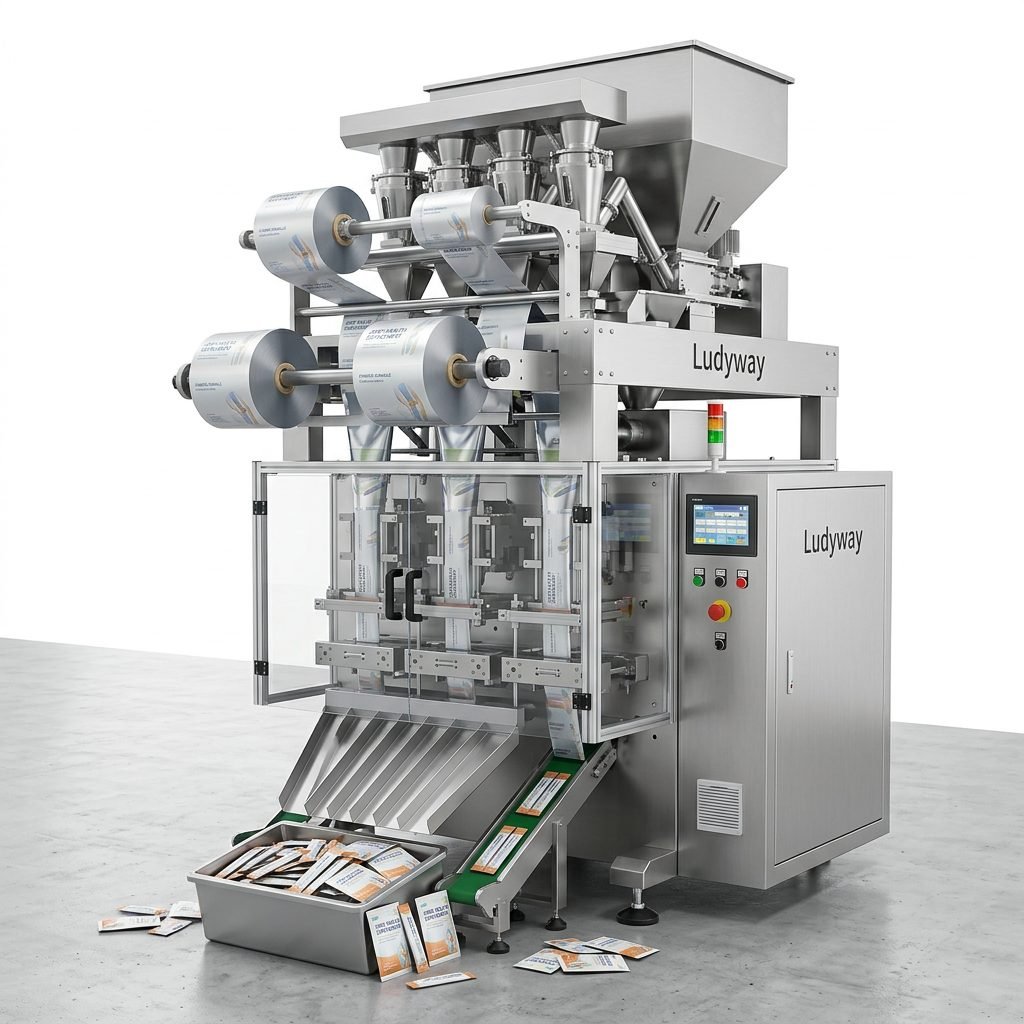
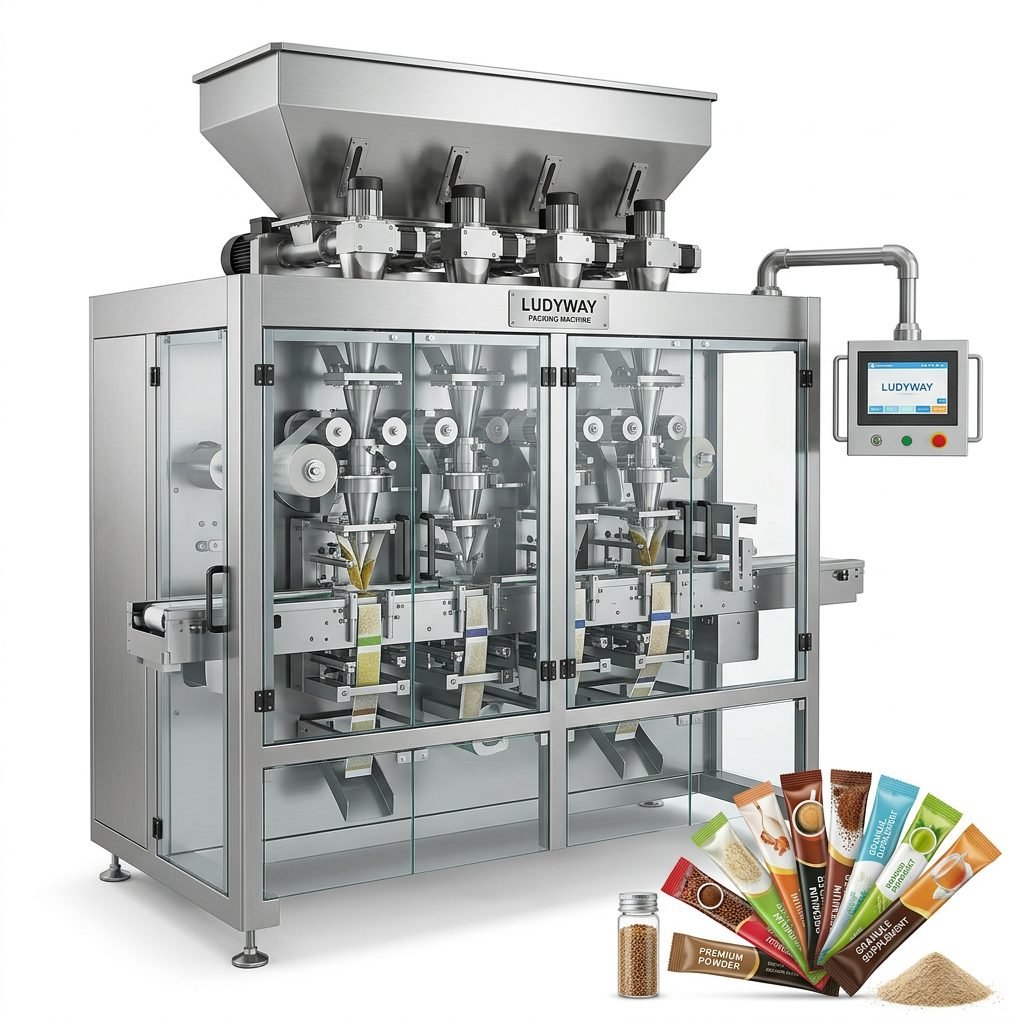
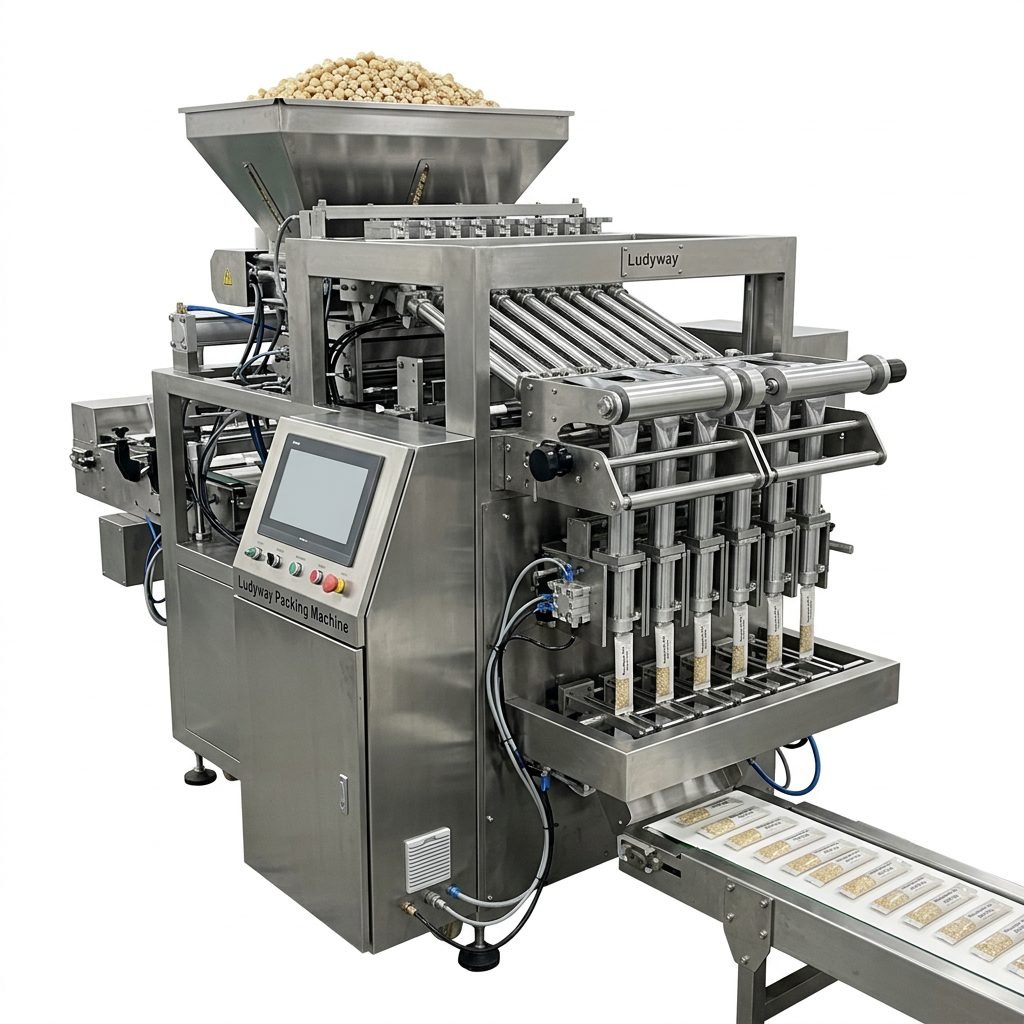
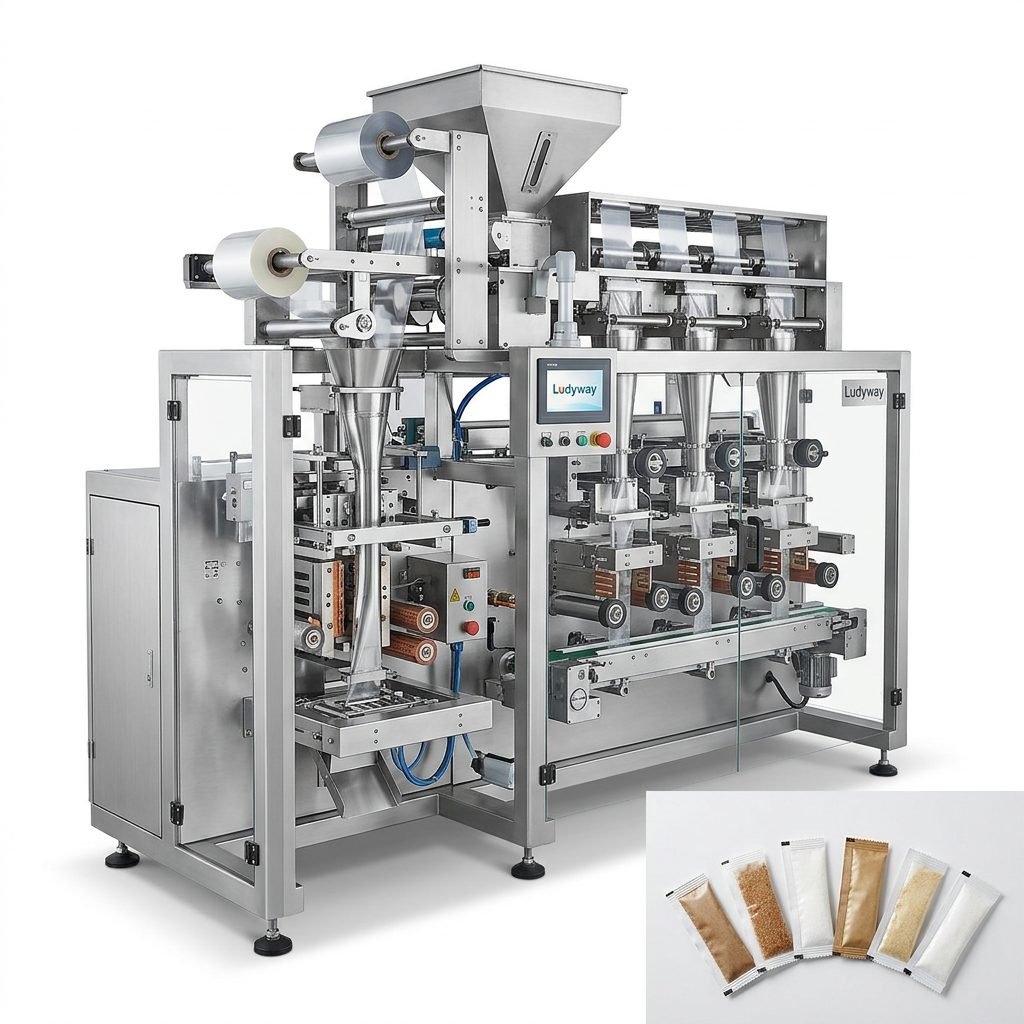
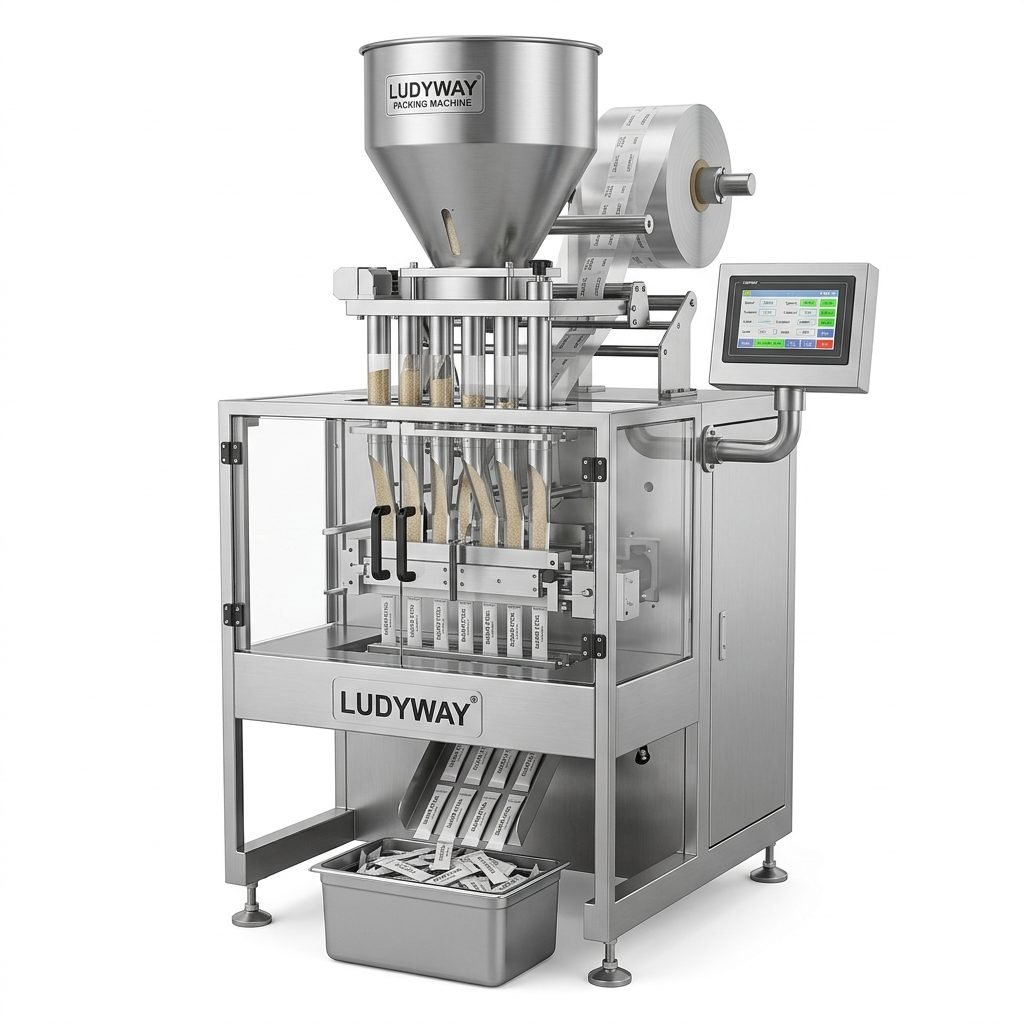
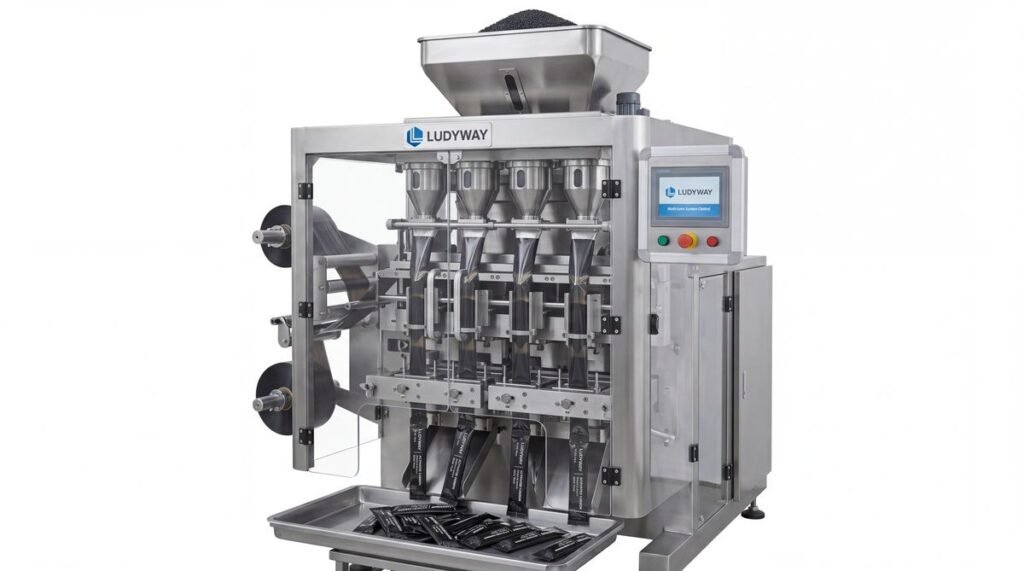
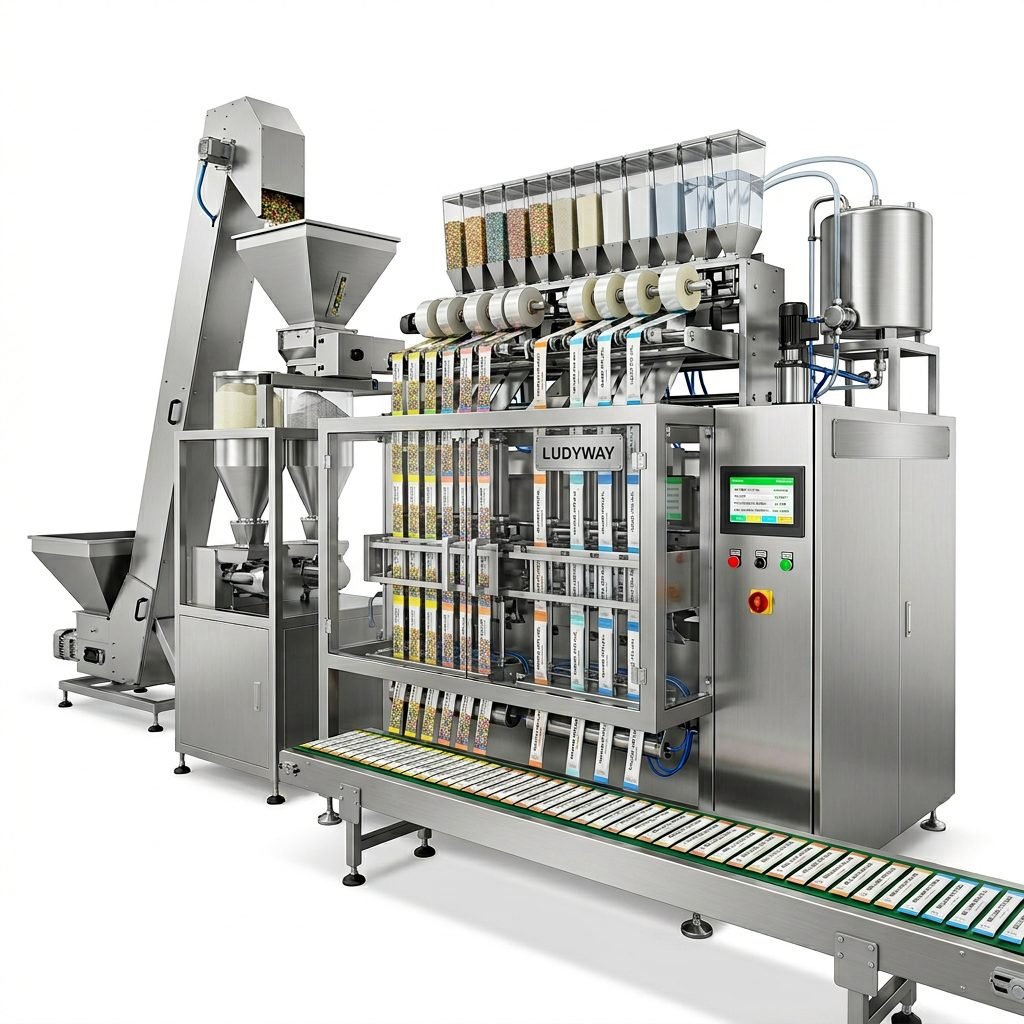
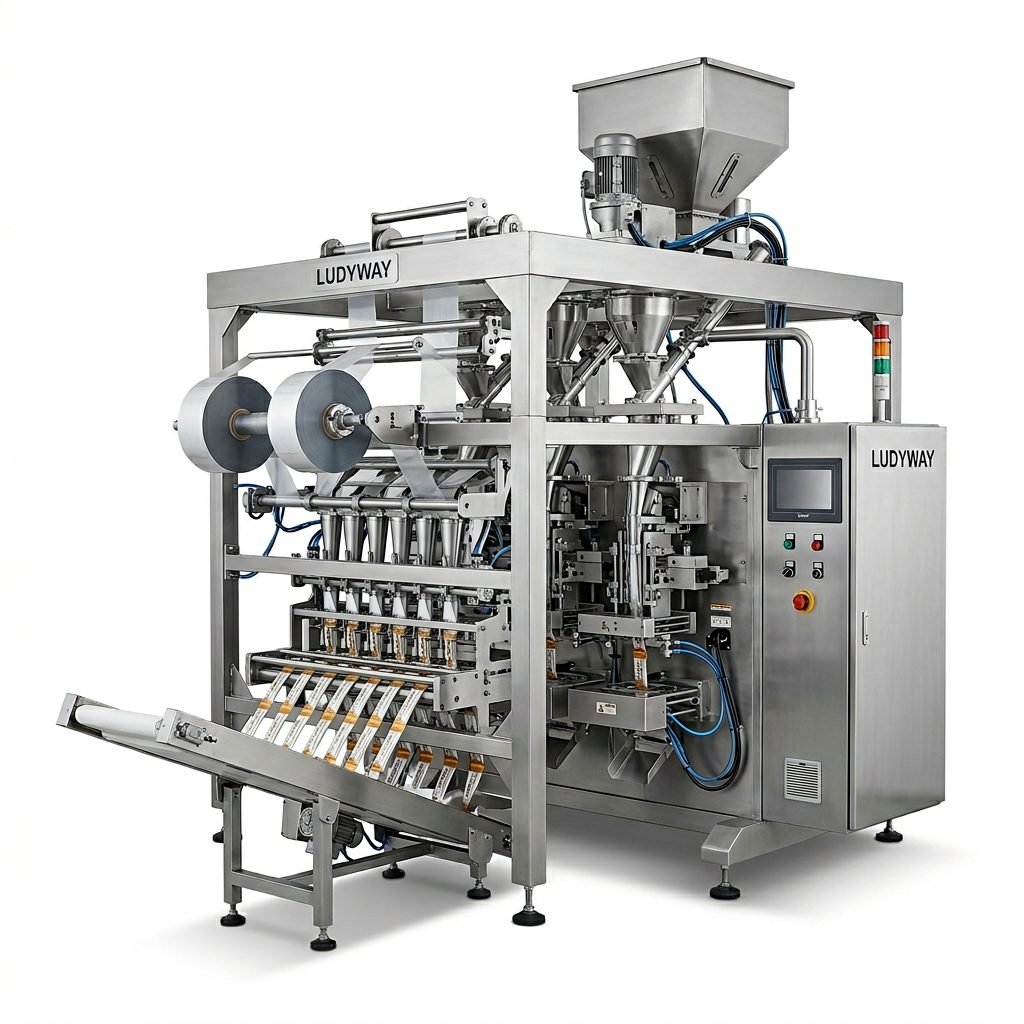
- Multi-Lane Stick Pack Machines — Ideal for single-serve powders like coffee, sugar, milk powder, and nutritional supplements. High-speed output with 4 to 24 lanes operating simultaneously.
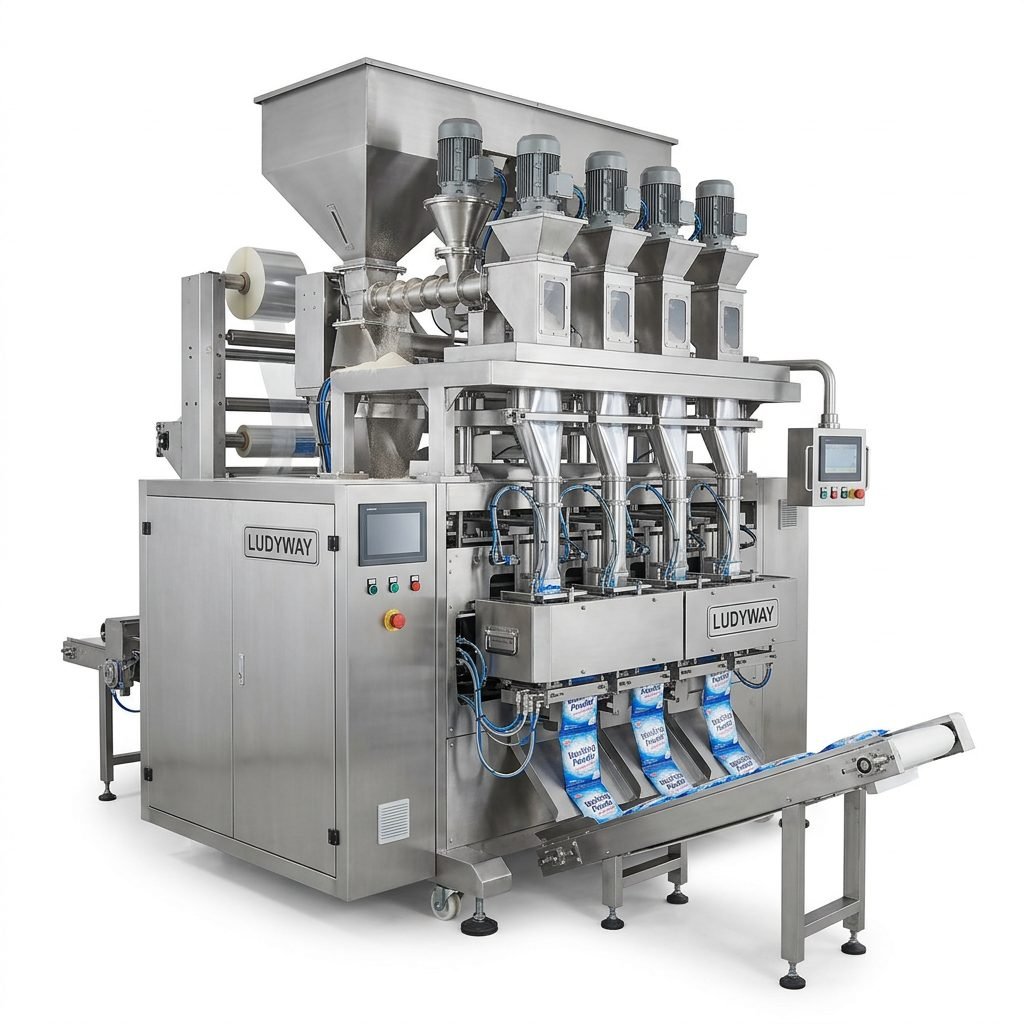
- Sachet Packaging Machines — Suitable for flat or pillow-shaped sachets ranging from 2g to 50g. Widely used for spices, detergent powder, and pharmaceutical powders.
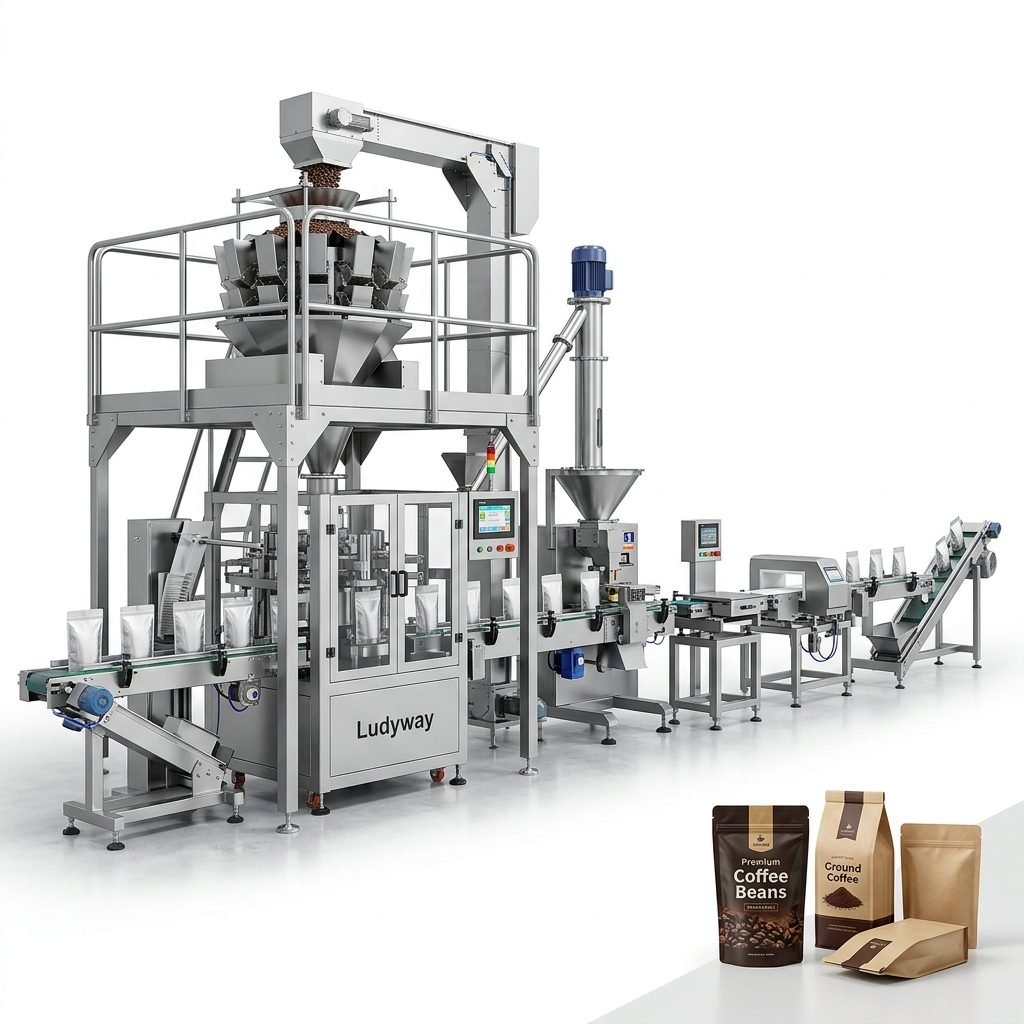
- Vertical Form Fill Seal (VFFS) Machines — Versatile systems for larger pouch formats up to 5kg. Excellent for flour, baking mixes, and bulk food powders.
- Premade Pouch Filling Machines — For high-quality stand-up pouches with zipper closures, commonly used for premium food powders and export-oriented products.
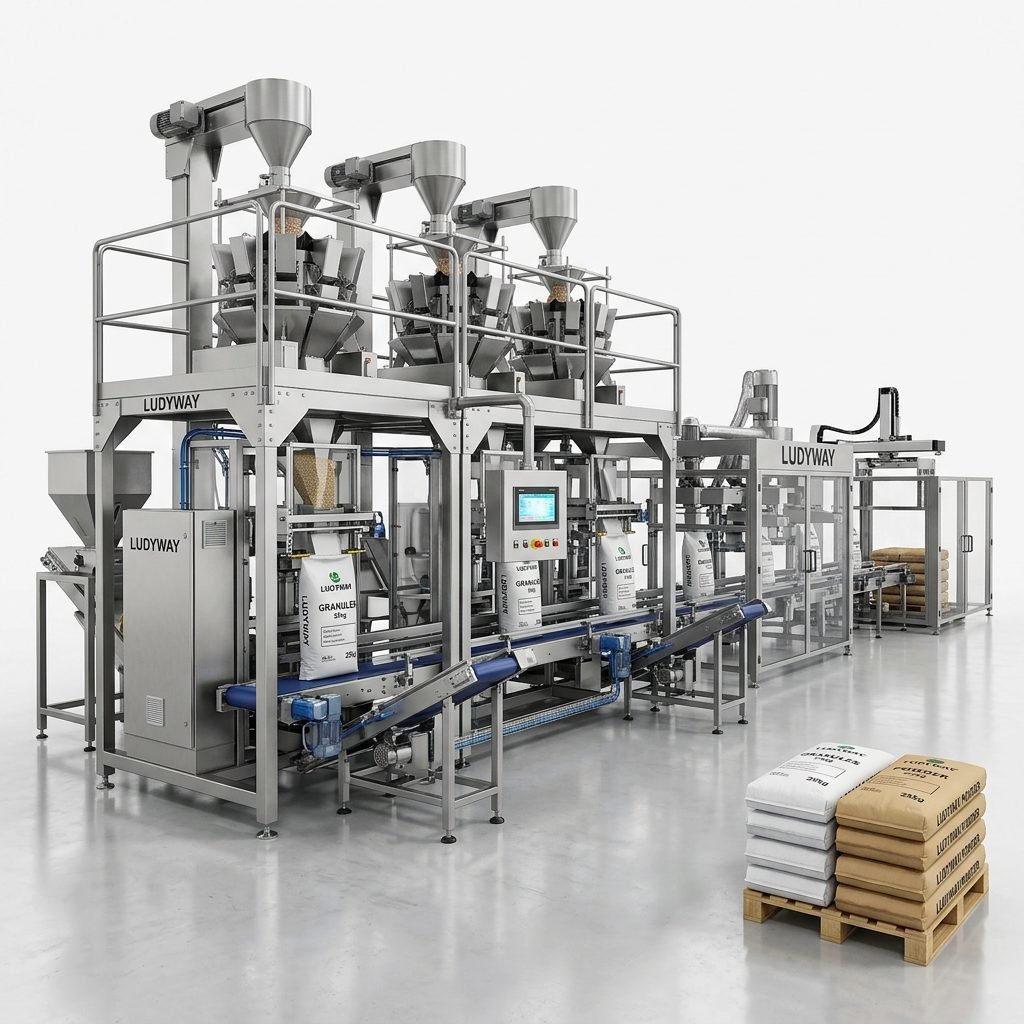
- Bulk Bagging Systems — For industrial-scale packaging of 10kg to 50kg bags, suitable for raw material distribution and B2B supply chains.
Step 3: Understanding Machine Specifications
When evaluating a food powder packaging machine, pay close attention to these critical specifications that directly impact production efficiency and product quality:
| Specification | Why It Matters |
|---|---|
| Filling Accuracy | Precision dosing (±0.5-1%) reduces product giveaway and ensures regulatory compliance |
| Sealing Integrity | Multi-temperature zone sealing prevents leaks and extends shelf life |
| Speed Range | 30-200+ packs per minute depending on lane configuration and product type |
| Material Compatibility | Stainless steel 304/316L construction for food-grade and corrosive powder applications |
| Automation Level | Semi-automatic to fully automatic with PLC control, HMI touchscreen, and IoT connectivity |
Step 4: Ancillary Equipment and Line Integration
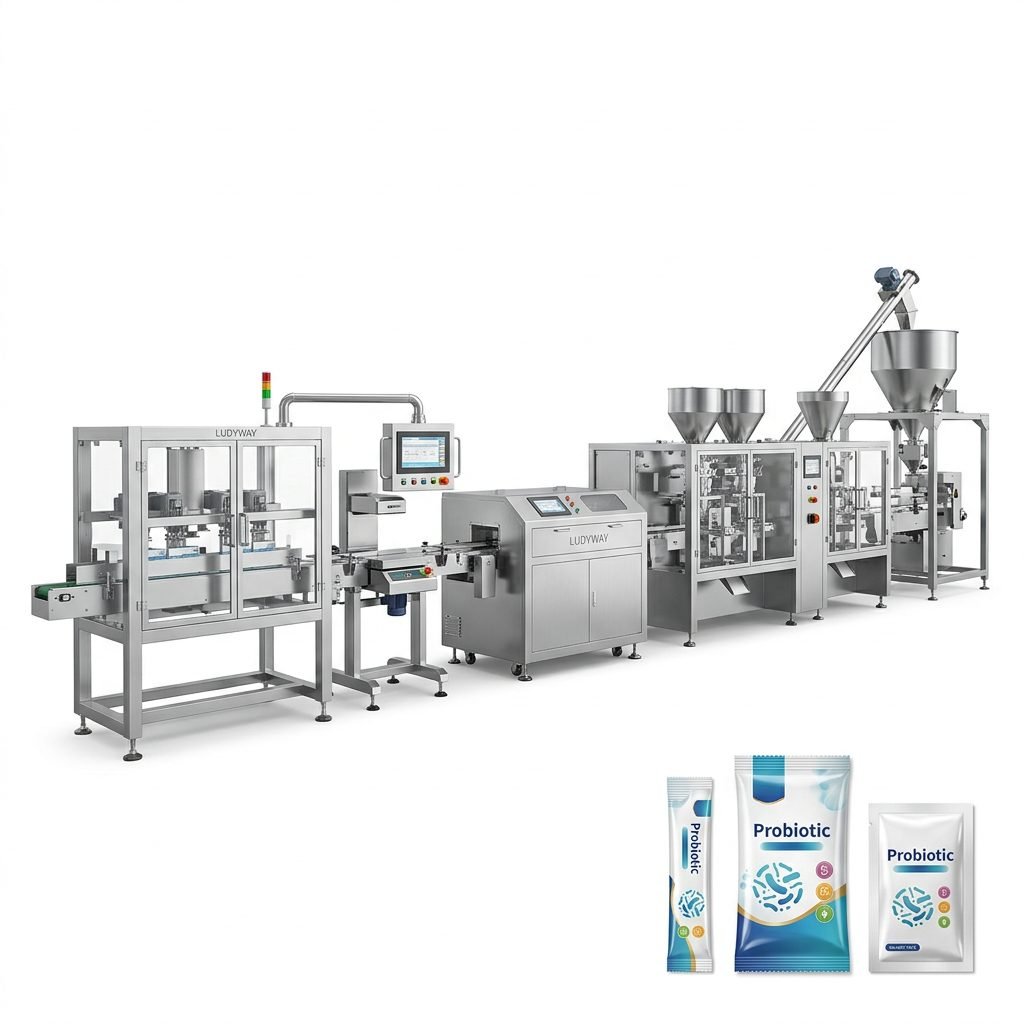
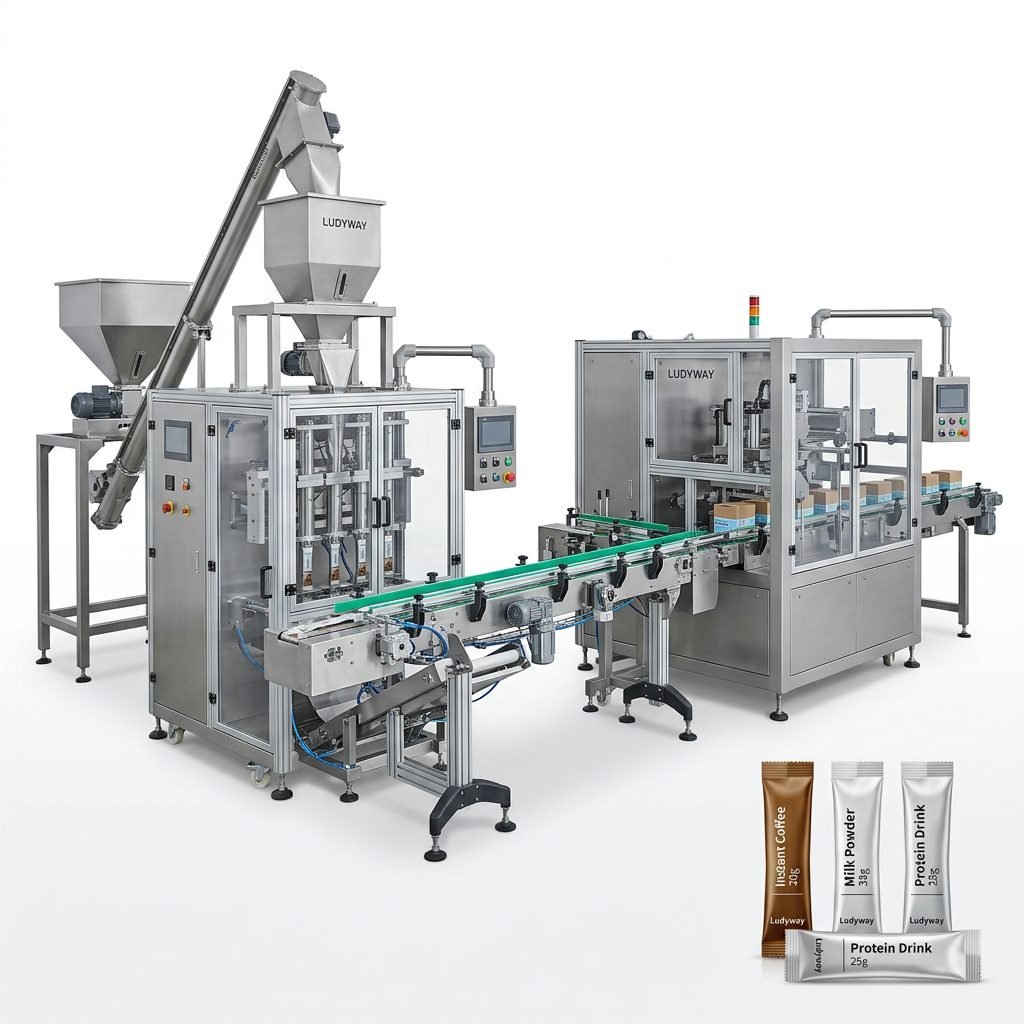
A complete powder packaging production line extends far beyond the primary filling machine. Integrating the right ancillary equipment ensures smooth material flow and maximum overall equipment effectiveness (OEE).
Essential Ancillary Equipment
- Powder Feeding Systems — Screw conveyors, vacuum feeders, or bucket elevators to transport raw powder from storage to the hopper
- Multi-Head Weighers or Auger Fillers — Precision dosing units matched to your powder characteristics
- Metal Detectors and Checkweighers — Critical food safety inspection equipment
- Nitrogen Flushing Systems — For oxygen-sensitive powders requiring extended shelf life
- Date Coding and Labeling Machines — Batch coding, expiry date printing, and product labeling
- Cartoning and Case Packing Systems — Automated secondary packaging for retail-ready products
- Palletizing Solutions — Robotic or conventional palletizers for warehouse logistics
Step 5: Installation and Commissioning
Proper installation is absolutely critical for long-term reliability. In many African countries, environmental factors such as temperature, humidity, and dust levels must be carefully managed.
Site Preparation Checklist
- Ensure stable power supply with appropriate voltage regulation and backup generators
- Install compressed air systems with adequate capacity and air-drying units
- Prepare level flooring capable of supporting heavy machinery
- Establish climate-controlled environments for hygroscopic powder handling
- Set up proper dust extraction and ventilation systems
- Arrange for potable water supply if CIP (Clean-in-Place) systems are required
Step 6: Operator Training and Skill Development
One of the most overlooked aspects of setting up a production line in Africa is operator training. Investing in comprehensive training programs reduces downtime, prevents costly errors, and extends equipment lifespan. Key training areas include:
- Machine operation and parameter adjustment via HMI
- Routine preventive maintenance procedures
- Troubleshooting common issues and fault diagnosis
- Cleaning and sanitation protocols for food safety compliance
- Changeover procedures for different product formats
- Quality control sampling and documentation
Step 7: Regulatory Compliance and Certifications
African countries increasingly align with international ISO packaging standards. Your production line must meet applicable regulations to access both local and export markets. Consider the following:
| Standard / Certification | Applicability |
|---|---|
| ISO 22000 / FSSC 22000 | Food safety management systems |
| GMP (Good Manufacturing Practice) | Pharmaceutical and food powder production |
| CE Marking | Machinery safety for equipment imported from Europe |
| Local NAFDAC / KEBS / SON | National regulatory bodies in Nigeria, Kenya, and other African nations |
Step 8: Maintenance and After-Sales Support
Reliable after-sales support is essential when operating packaging machinery in Africa, where access to spare parts and technical expertise can sometimes be challenging. When selecting a packaging equipment supplier, prioritize those offering:
- Remote technical support and video-assisted troubleshooting
- Readily available spare parts inventory with express shipping options
- Comprehensive warranty coverage and service agreements
- Local distributor or service partner presence in Africa
- Detailed maintenance manuals and training documentation
Cost Breakdown and ROI Analysis
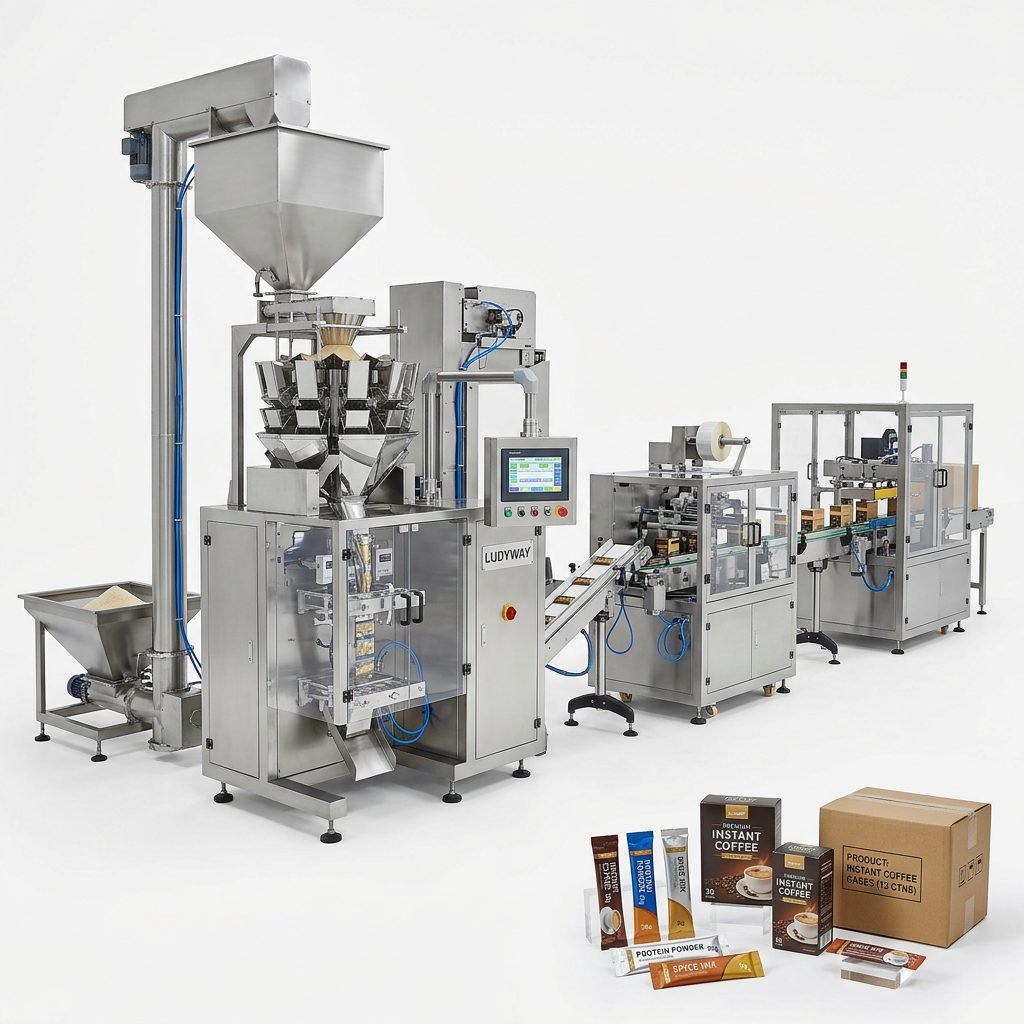
Understanding the financial implications helps you make informed decisions. Below is a typical cost structure for setting up a powder packaging production line in Africa:
| Cost Category | Estimated Percentage |
|---|---|
| Primary packaging machine | 30-40% |
| Ancillary and conveying equipment | 20-25% |
| Shipping, customs, and logistics | 10-15% |
| Installation and commissioning | 5-10% |
| Training and documentation | 3-5% |
| Facility modifications | 10-15% |
A well-planned production line typically achieves ROI within 18-36 months, depending on market conditions, product pricing, and operational efficiency. Businesses serving high-demand segments such as infant formula, nutritional supplements, and instant beverages often see even faster returns.
Common Challenges and How to Overcome Them
Operating in African markets presents unique challenges. Being prepared for these obstacles ensures smooth operations from day one:
- Power instability: Invest in industrial-grade voltage stabilizers and backup generators
- Humidity and climate: Install dehumidifiers and climate control for powder storage and processing areas
- Skilled labor shortage: Partner with equipment suppliers that offer on-site training and continuous support
- Import clearance delays: Work with experienced freight forwarders familiar with African customs procedures
- Packaging material sourcing: Establish relationships with flexible packaging suppliers with regional distribution
Future-Proofing Your Investment
As your business grows, your production line should scale accordingly. Look for modular equipment designs that allow easy capacity upgrades without replacing entire systems. Key future-proofing strategies include:
- Choosing machines with modular lane expansion capabilities
- Investing in IoT-enabled equipment for predictive maintenance and remote monitoring
- Selecting formats compatible with sustainable packaging trends
- Ensuring software and firmware can be updated as standards evolve
Why Source Your Equipment from Experienced Manufacturers
Partnering with an established packaging machine manufacturer is crucial for success in African markets. With over 30 years of industry expertise, Ludyway is one of the largest packaging machine manufacturers in China, specializing in advanced packaging equipment and turnkey production solutions for the food, pharmaceutical, and health industries. Their modern 20,000㎡ manufacturing facility and highly experienced engineering team support over 50 intelligent packaging machine models, serving customers in more than 100 countries and regions — including multiple African nations. When you choose a partner with deep technical knowledge and global service capabilities, you gain access to reliable equipment, professional technical support, and a long-term commitment to your success.
Getting Started: Your Action Plan
Ready to launch your food powder packaging production line in Africa? Follow this condensed action plan:
- Conduct market research to identify high-demand powder products in your target region
- Define technical specifications based on product type, output requirements, and packaging format
- Shortlist equipment suppliers with proven experience in African markets
- Request detailed quotations including machinery, ancillaries, shipping, and installation
- Plan your facility with adequate utilities, space, and regulatory compliance
- Arrange financing through equipment leasing, trade finance, or direct investment
- Schedule installation and training to minimize downtime during commissioning
- Launch production with a phased approach, starting with core products and scaling up
Frequently Asked Questions
What is the minimum investment for a powder packaging line in Africa?
A basic single-lane sachet packaging line can start from approximately $15,000-$30,000, while a fully automated multi-lane system with ancillaries may range from $80,000 to $300,000+, depending on capacity and features.
How long does it take to ship and install equipment?
Manufacturing lead times typically range from 30 to 90 days, with shipping to African ports taking an additional 3-8 weeks. Installation and commissioning usually require 1-4 weeks on-site.
Can one machine handle multiple powder types?
Yes, many modern packaging systems are designed for quick changeover between different powder products. However, highly sticky or cohesive powders may require specialized dosing configurations.
What after-sales support is available in Africa?
Leading manufacturers offer remote diagnostic support, express spare parts delivery, and can dispatch service engineers to African locations when needed. Some also partner with regional service centers for faster response times.
Setting up a food powder packaging machine production line in Africa is a strategic investment that can yield substantial returns. By carefully planning each phase — from equipment selection to installation, training, and regulatory compliance — you position your business for long-term growth in one of the world’s most dynamic markets. The key is partnering with experienced equipment manufacturers who understand both the technical requirements and the unique operational context of African production environments.