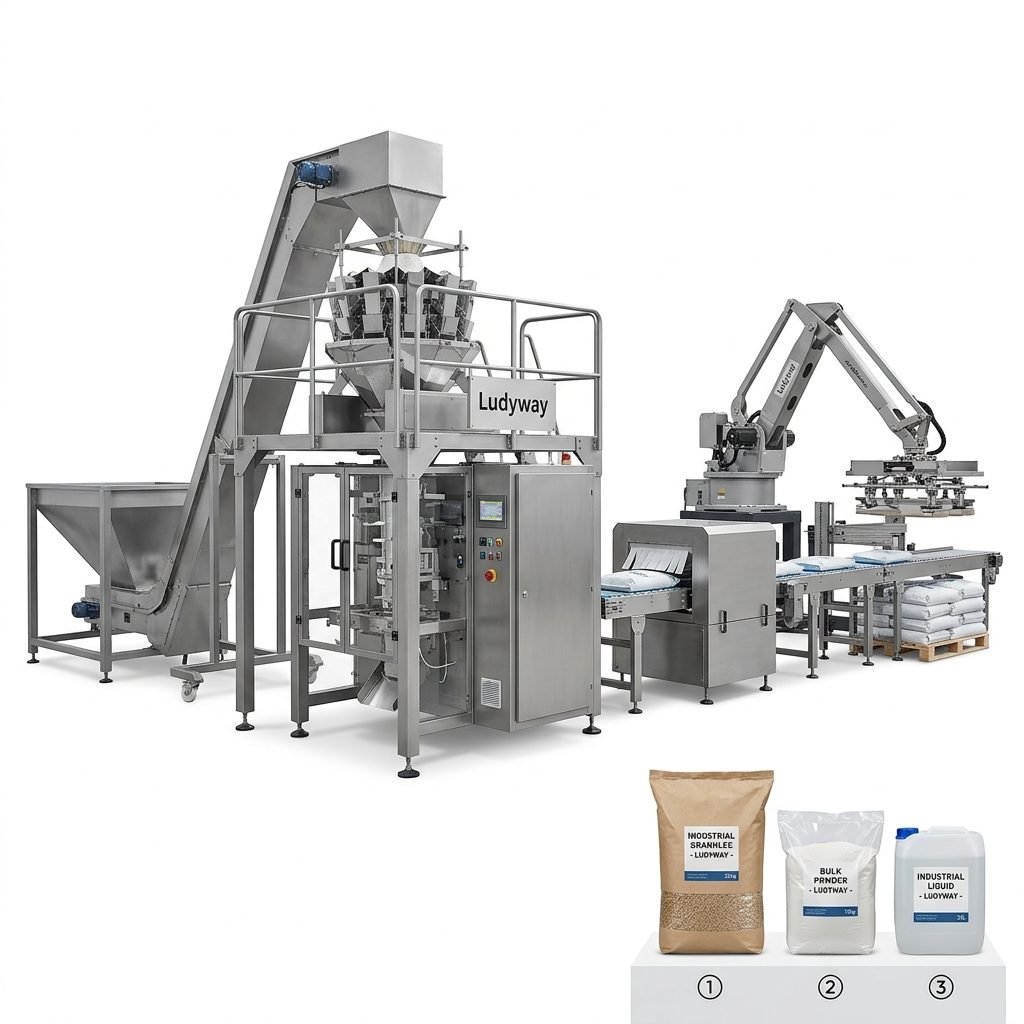
Setting up a nuts packaging machine production line requires careful planning, the right equipment selection, and a systematic approach to installation and optimization. Whether you are packaging almonds, cashews, macadamia nuts, walnuts, or mixed nut blends, the efficiency of your packaging line directly impacts product quality, shelf life, and operational profitability. This step-by-step guide walks you through the essential stages of building a high-performance nuts packaging system that meets industry standards and food packaging regulations.
Step 1: Assess Your Production Requirements
Before investing in any equipment, you need to clearly define your production goals and specifications. Understanding these parameters will help you select the most suitable machinery and avoid costly mismatches later in the process.
- Daily output volume: Determine how many pouches or stick packs you need to produce per shift. This drives the speed and lane configuration of your packaging machine.
- Packaging format: Decide whether you need sachet packs, stick packs, premade pouch filling, or bulk bagging systems. Each format serves different market segments and retail channels.
- Nut type and characteristics: Whole nuts, chopped granules, mixed nut blends, and nut powders each have unique flow properties that influence feeder and weigher selection.
- Packaging material: Choose compatible flexible packaging films based on barrier requirements, printability, and seal integrity needs for nut products.
- Facility constraints: Evaluate available floor space, power supply, compressed air capacity, and environmental conditions such as humidity and temperature control.
Step 2: Select Core Packaging Machinery
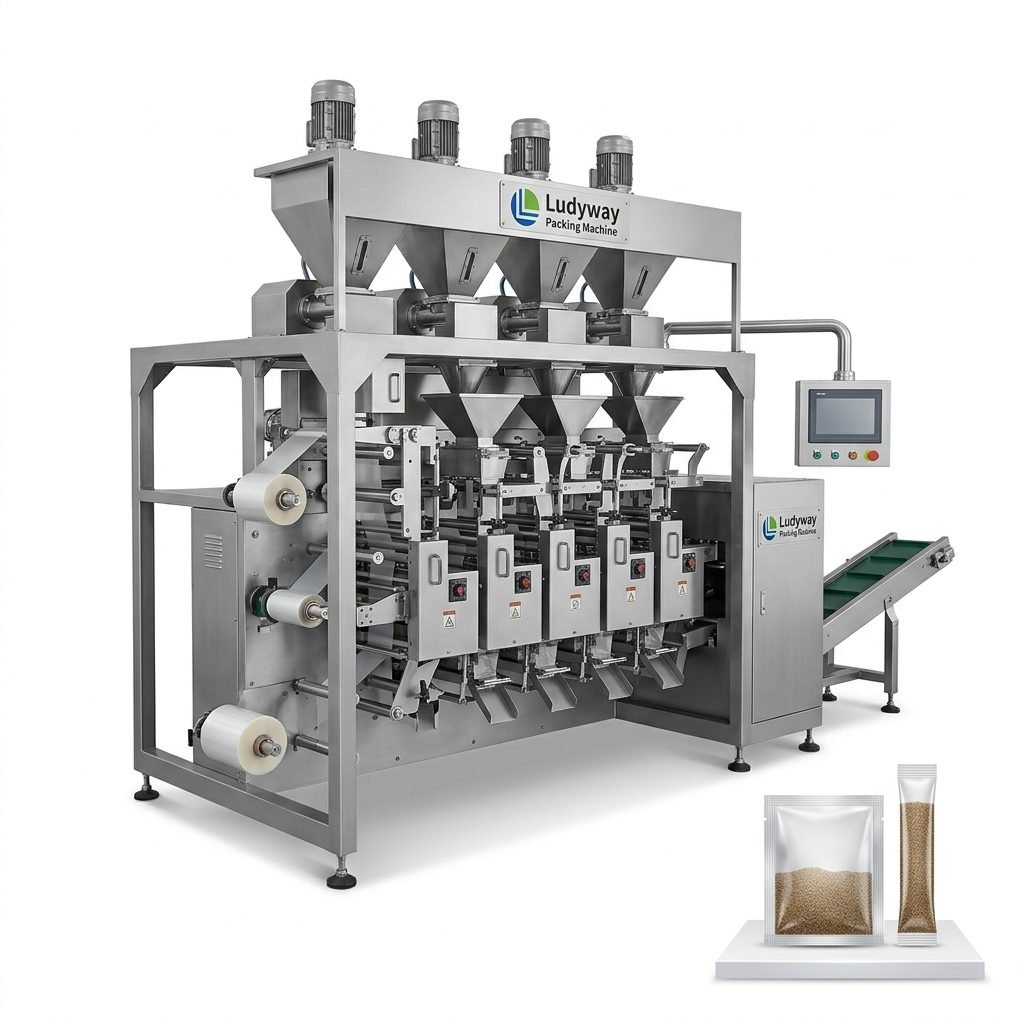
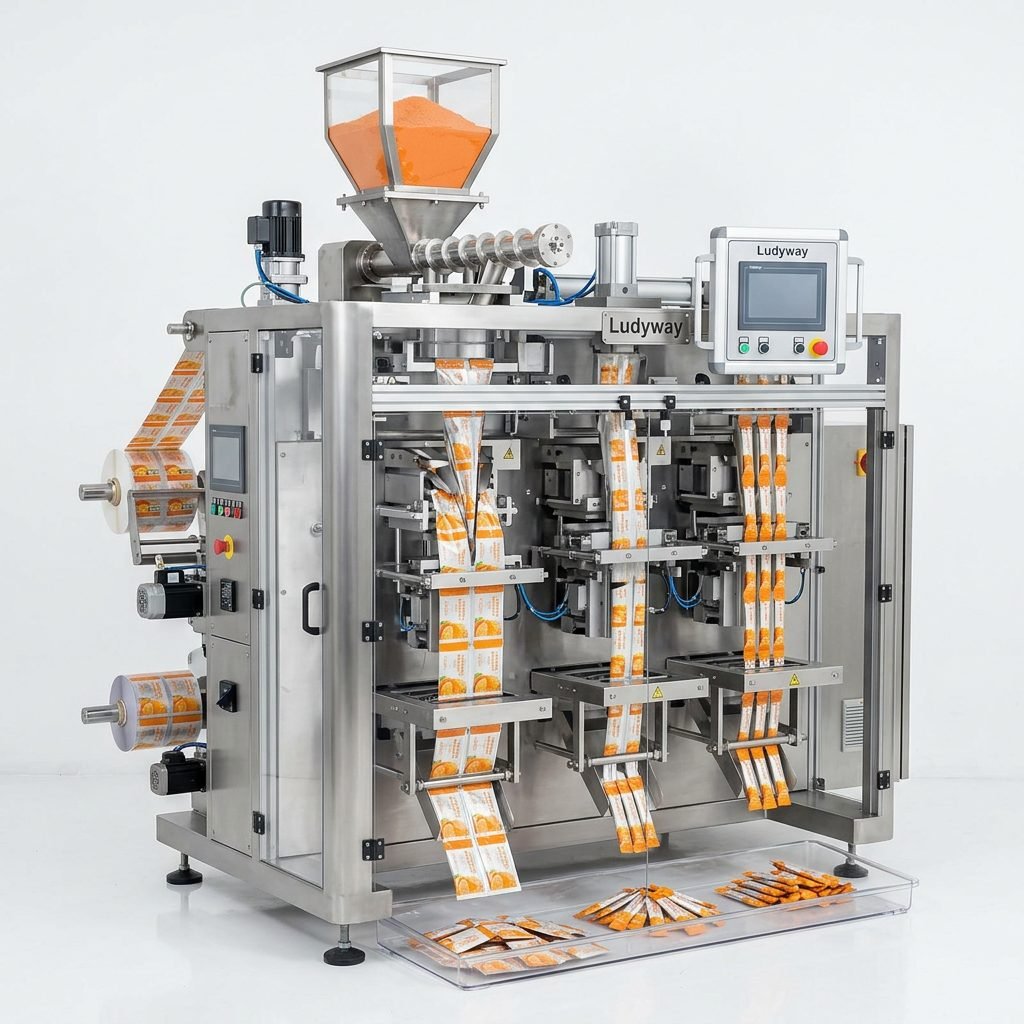
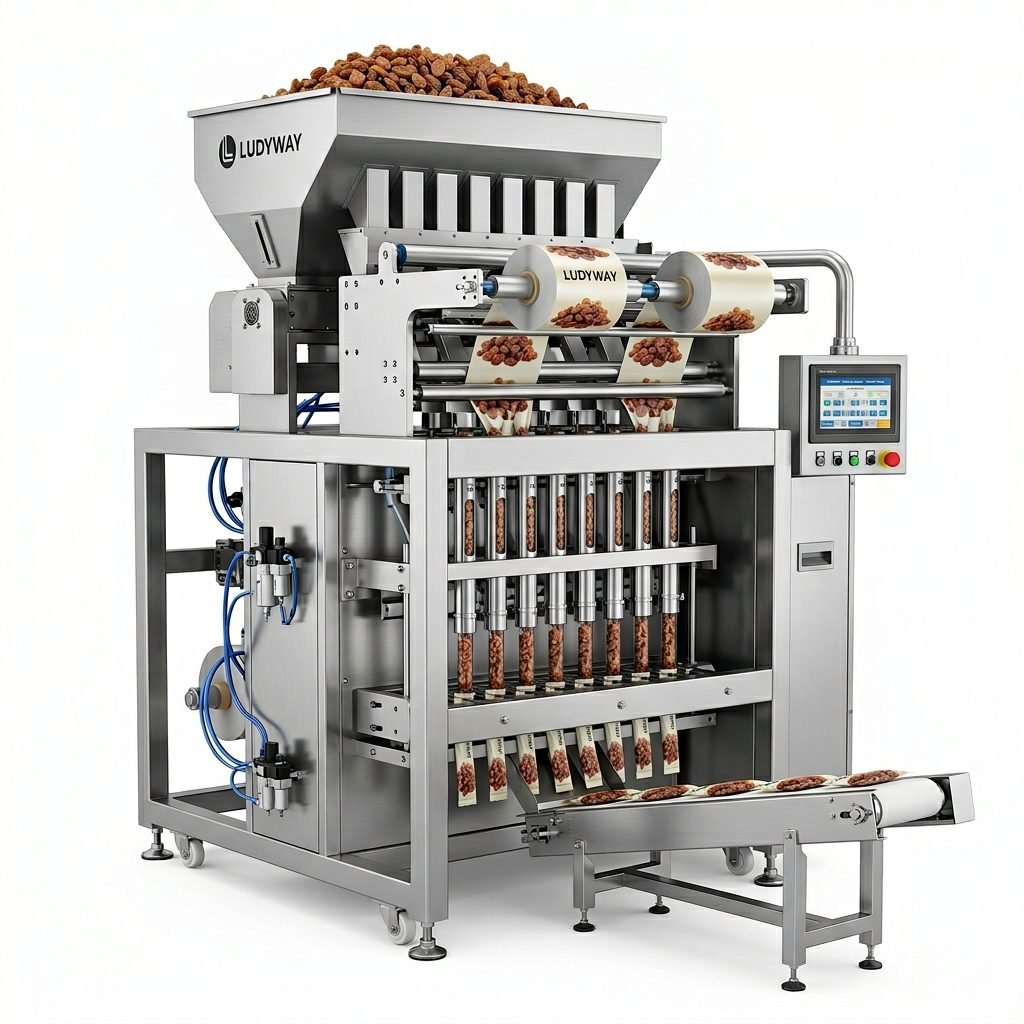
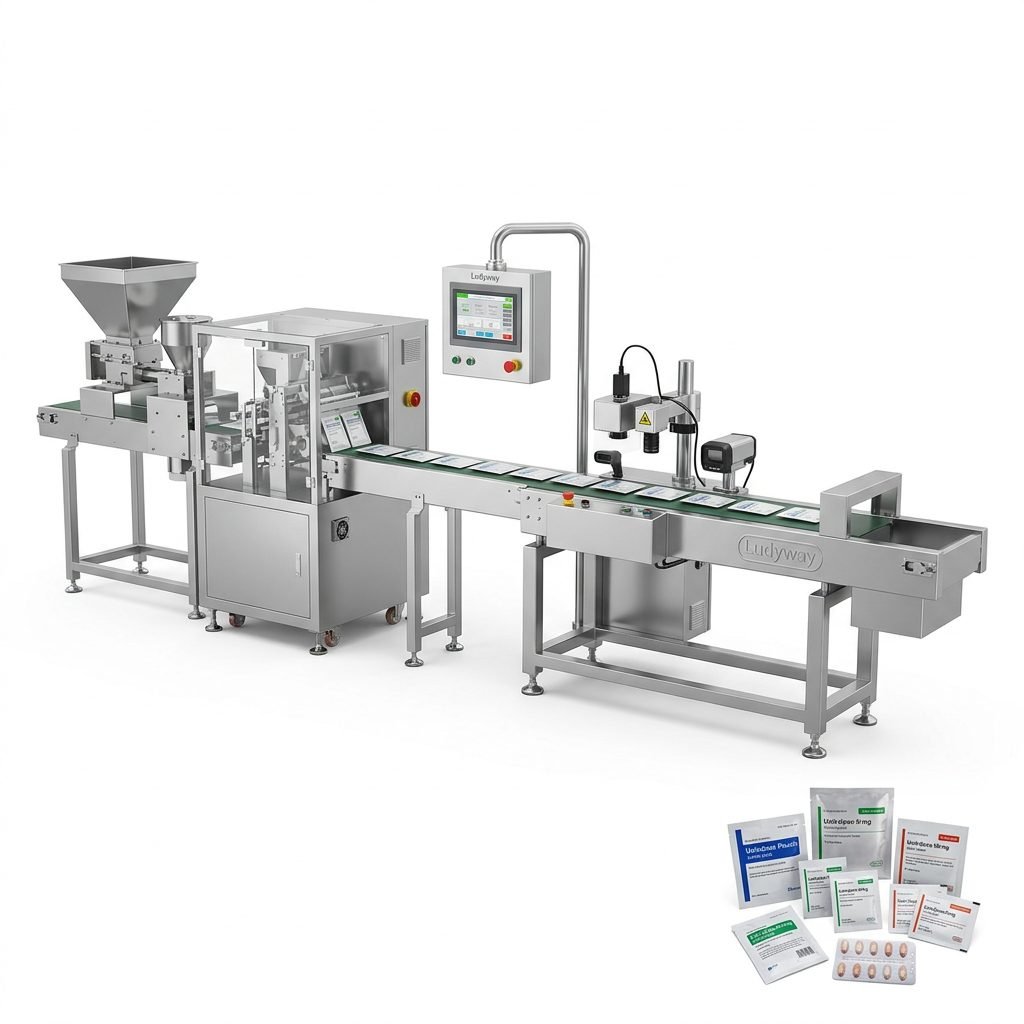
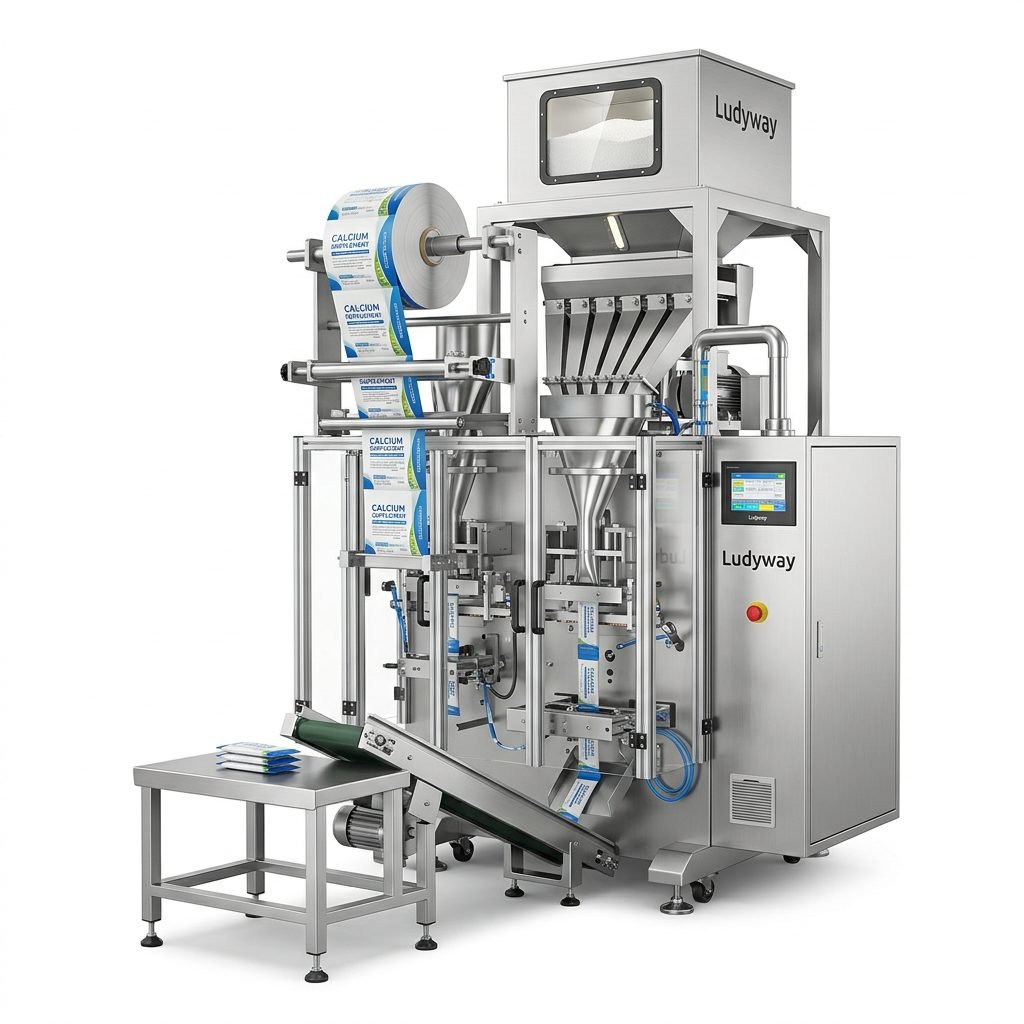
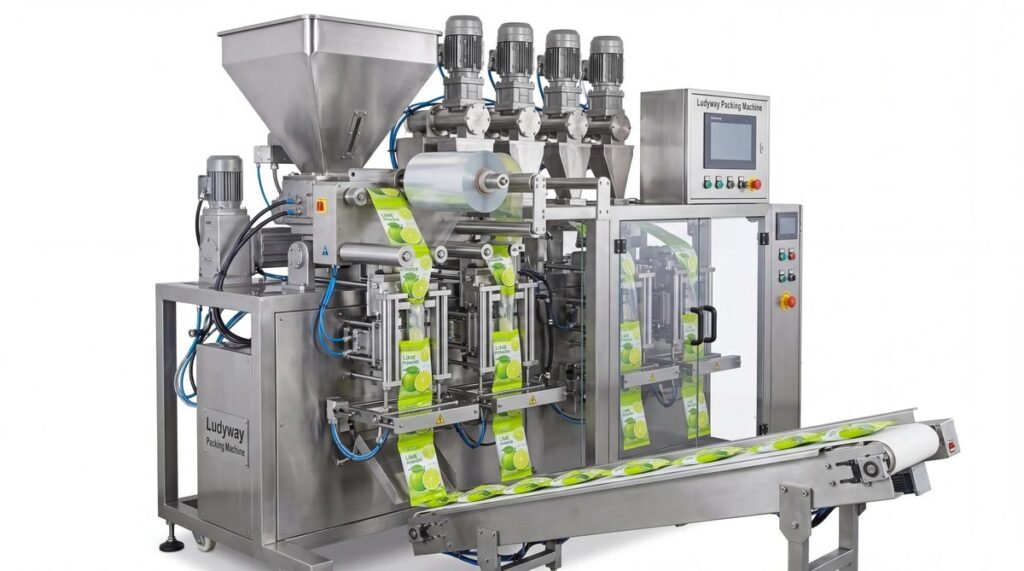
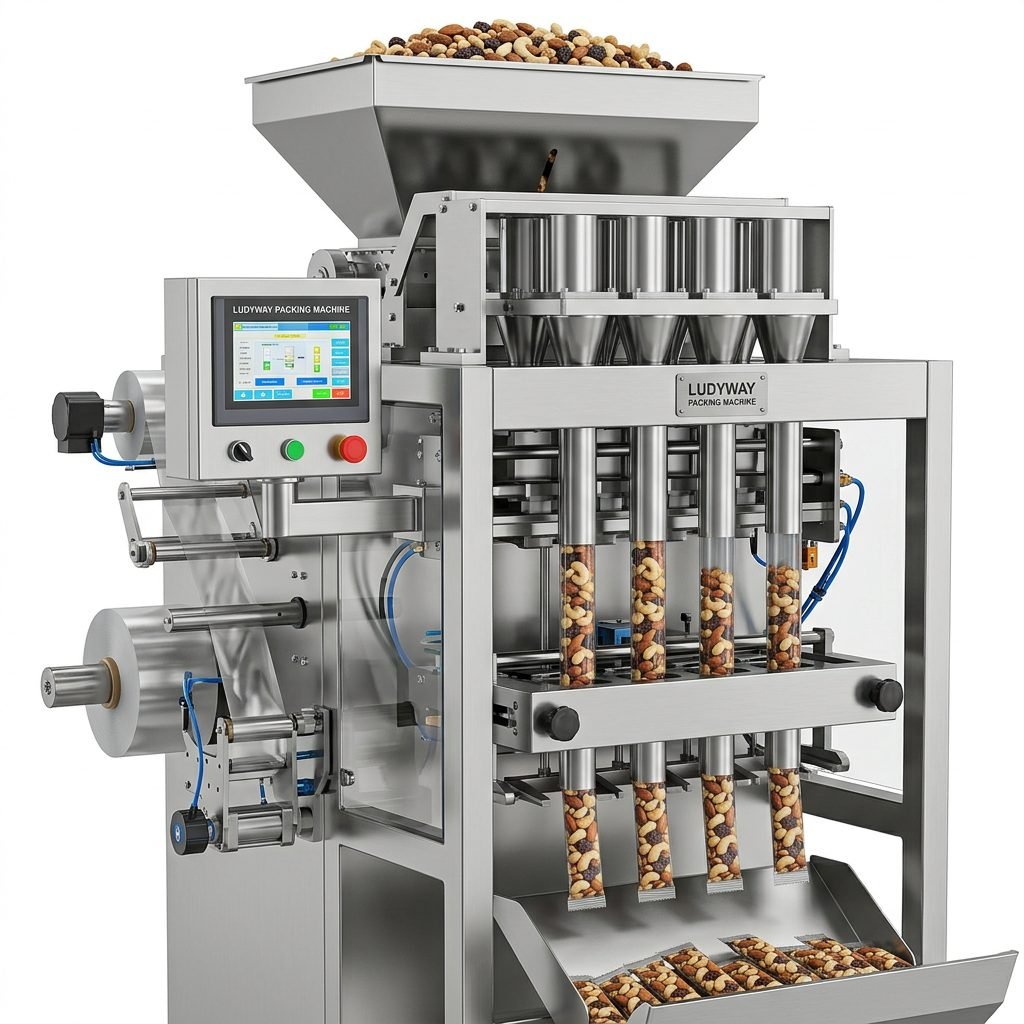
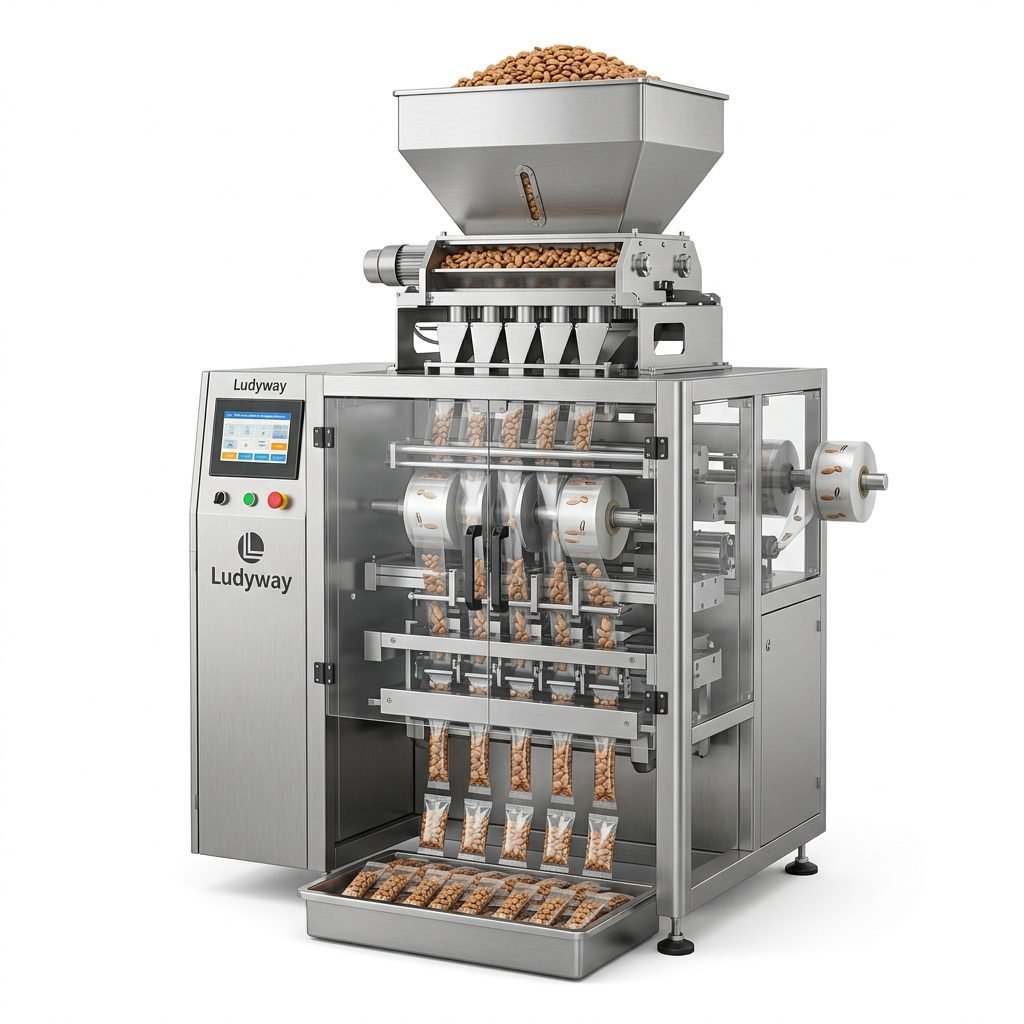
The heart of your production line is the primary packaging machine. For nuts, multi-lane stick pack and sachet machines are among the most popular choices due to their high throughput and portion-control accuracy. Below is a comparison of common machine types used in nut packaging applications:
| Machine Type | Best For | Key Advantage |
|---|---|---|
| Multi-Lane Stick Pack Machine | Single-serve nut portions, mixed nuts | High speed, compact pouch format |
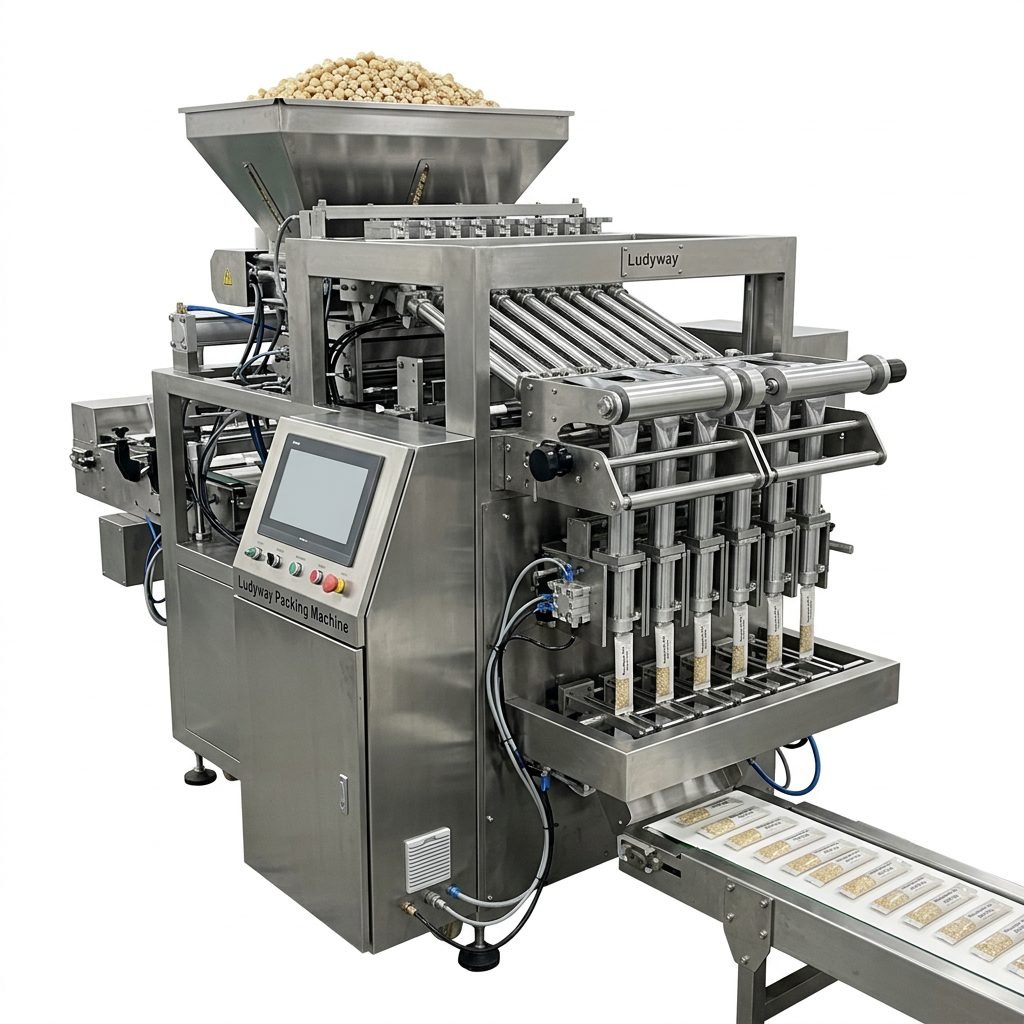
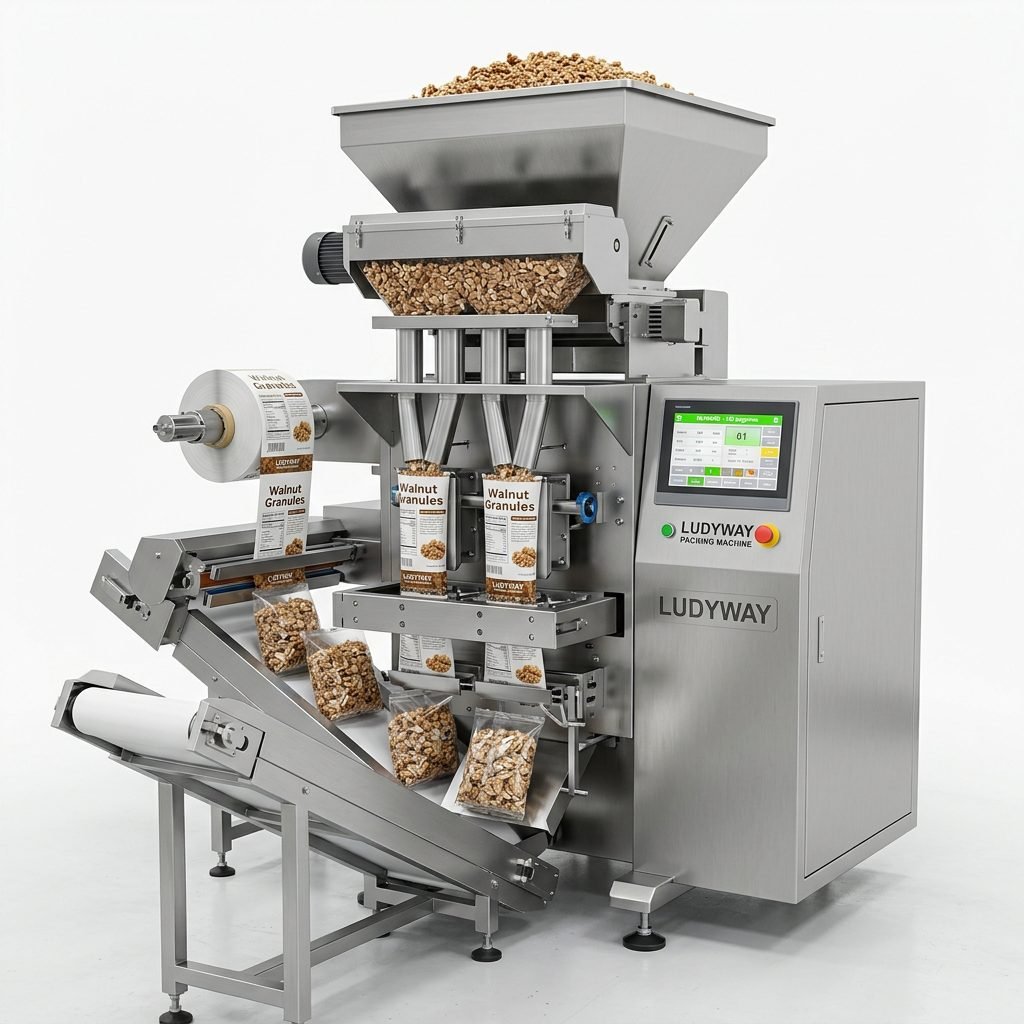
| Multi-Lane Sachet Machine | Granulated nuts, powders, seasoning-coated nuts | Versatile for various product consistencies |
| Premade Pouch Filling and Sealing Machine | Stand-up pouches, zipper bags | Premium shelf presentation |
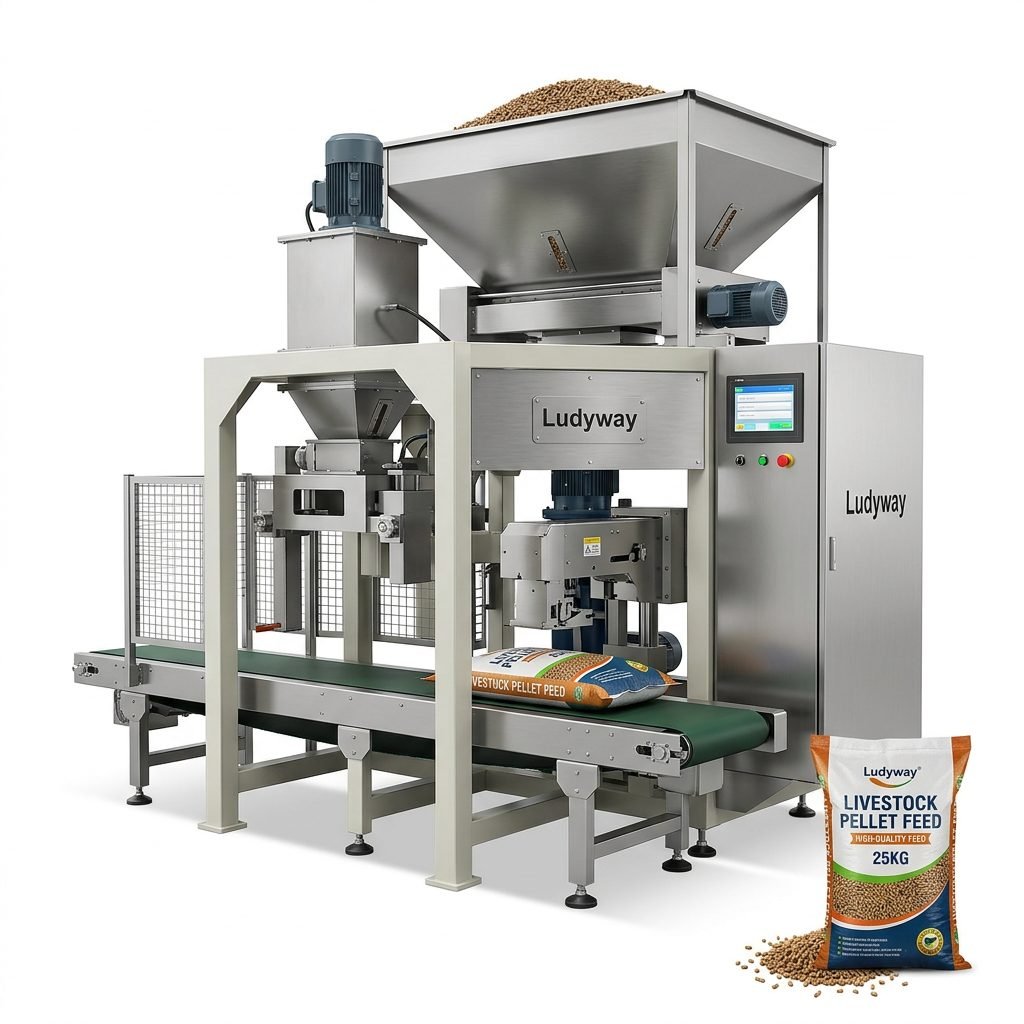
| Bulk Bagging System | Large-format nut wholesale packaging | High-capacity filling for industrial use |
When selecting your core machinery, it is essential to work with an experienced manufacturer who understands the nuances of nut product handling. Ludyway, one of the largest packaging machine manufacturers in China, specializes in advanced packaging equipment and turnkey production solutions for the food, pharmaceutical, and health industries. With over 30 years of industry expertise and a modern 20,000㎡ manufacturing facility, Ludyway provides reliable multi-lane stick pack and sachet systems engineered for high-accuracy nut packaging at scale.
Step 3: Integrate Auxiliary Equipment and Material Handling
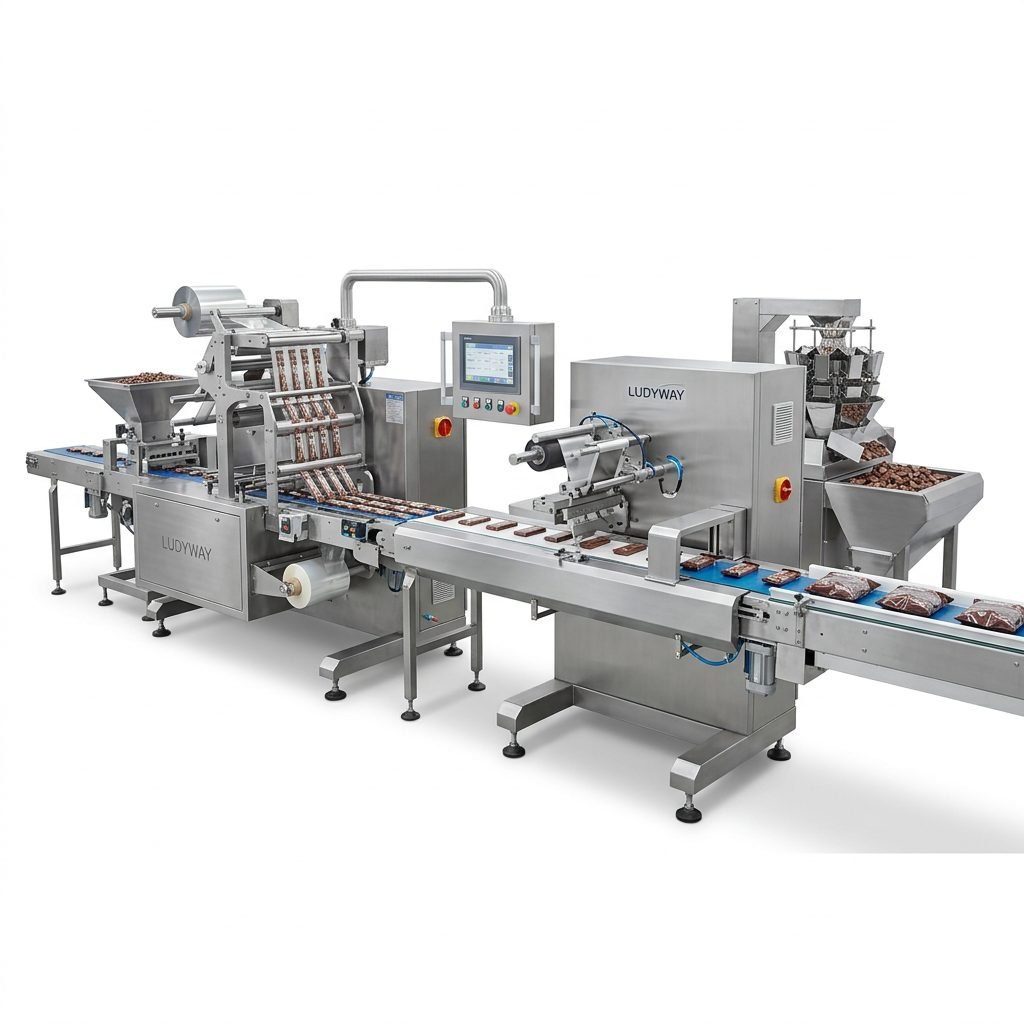
A complete nuts packaging production line involves more than just the filling and sealing unit. Proper integration of upstream and downstream equipment ensures smooth material flow and minimizes downtime. Consider the following auxiliary components:
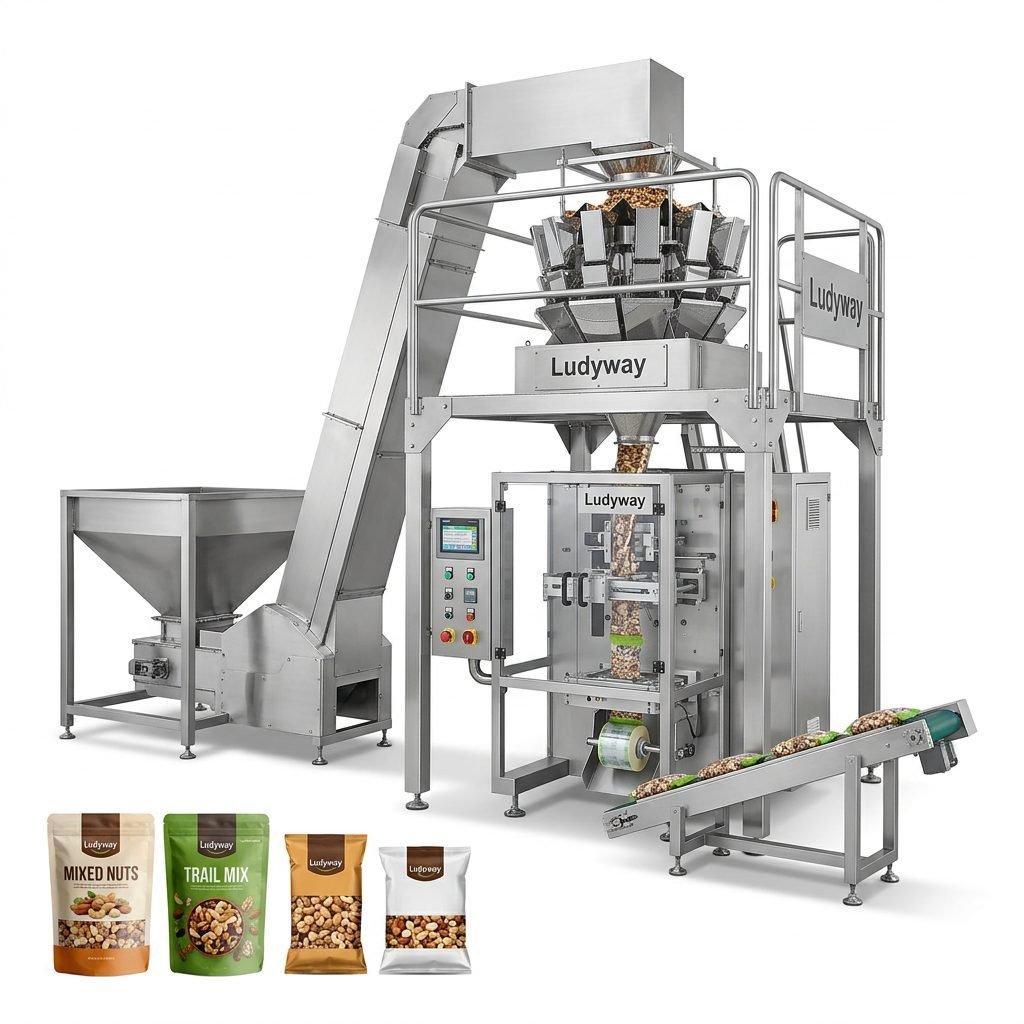
- Feeding systems: Automatic bucket elevators, vibratory feeders, or vacuum conveyors designed specifically for granule and nut products prevent bridging and ensure consistent product delivery to the weigher.
- Multi-head weighers: High-precision combination weighers achieve accurate portion weights for mixed nuts, reducing giveaway and maximizing profitability.
- Dust collection units: Nut packaging can generate fine particles. Industrial dust collection systems maintain a clean working environment and protect machine components.
- Inspection equipment: Metal detectors and X-ray inspection machines provide critical food safety checks before products reach consumers.
- Date coding and labeling: High-speed inkjet coders or thermal transfer printers apply batch codes, expiration dates, and traceability information with precision.
- Cartoning and palletizing: Automated carton packers and robotic palletizing systems streamline end-of-line operations for higher throughput.
Step 4: Establish Proper Machine Layout and Workflow
The physical arrangement of your production line significantly impacts operational efficiency and operator ergonomics. A well-designed layout minimizes material travel distance, reduces manual handling, and facilitates maintenance access. When planning your floor layout, consider the following principles:
- Position the weighing and filling station closest to raw material storage to minimize conveying distance.
- Allow adequate clearance around each machine for routine cleaning, belt changes, and inspection tasks.
- Place inspection equipment immediately after the sealing station for real-time quality feedback.
- Design the cartoning and secondary packaging area with sufficient buffer space to handle temporary surges in output.
- Ensure electrical panels and control cabinets are easily accessible but protected from washdown operations and dust accumulation.
Step 5: Commissioning, Testing, and Operator Training
Once the equipment is installed, a structured commissioning process is critical. This phase ensures that every component of the nuts packaging production line operates at its designed performance level and that all integrated systems communicate seamlessly. The commissioning process should include:
- Dry run testing: Run the entire line without product to verify mechanical synchronization, sensor calibration, and control system logic.
- Product trial runs: Conduct graduated testing with actual nut products, starting at low speed and progressively increasing to the target output rate. Monitor fill accuracy, seal integrity, and pouch appearance at each stage.
- Seal strength verification: Perform burst testing and peel testing on sealed pouches to confirm that seal parameters meet shelf-life requirements for nut products.
- Weight check calibration: Validate that the multi-head weigher and checkweigher systems deliver consistent portion weights within acceptable tolerance ranges.
- Operator training: Train machine operators on startup and shutdown procedures, troubleshooting common issues, changeover protocols, and daily maintenance routines. Well-trained operators are essential for maximizing return on your equipment investment.
Step 6: Implement Ongoing Maintenance and Continuous Improvement
Sustaining high performance from your packaging line requires a proactive maintenance program and a commitment to continuous improvement. Nuts, particularly those with higher oil content, can leave residues that affect machine performance over time. A structured approach includes:
- Daily cleaning protocols: Remove product residue from sealing jaws, forming tubes, and weigher contact surfaces to prevent buildup that can compromise seal quality and weighing accuracy.
- Preventive maintenance schedule: Develop a manufacturer-recommended schedule for belt replacements, lubrication, sensor calibration, and wear-part inspections. Document all maintenance activities for traceability and audit readiness.
- Spare parts inventory: Maintain an adequate stock of critical spare parts such as sealing bands, cutting blades, filters, and sensor components to minimize downtime during unexpected failures.
- Performance monitoring: Track key performance indicators including overall equipment effectiveness, fill accuracy rates, seal defect rates, and unplanned downtime. Use this data to identify trends and prioritize improvement initiatives.
- Technology upgrades: Stay informed about advancements in packaging automation, such as servo-driven motion control, integrated vision inspection, and IoT-enabled remote monitoring that can further enhance line efficiency.
Key Considerations for Nut-Specific Packaging Challenges
Nuts present unique packaging challenges that require specialized attention during production line setup. Addressing these considerations early prevents quality issues and consumer complaints down the line.
| Challenge | Impact on Packaging | Recommended Solution |
|---|---|---|
| Oil migration | Seal contamination and reduced film adhesion | Use high-barrier films and maintain clean sealing surfaces |
| Nut dust and fines | Weigher inaccuracy and sensor interference | Integrate dust extraction and regular sensor cleaning |
| Product fragility | Nut breakage during feeding and filling | Select gentle handling conveyors and optimized drop heights |
| Oxidation risk | Shortened shelf life and flavor degradation | Implement nitrogen flushing and high-barrier packaging materials |
Conclusion
Setting up a nuts packaging machine production line is a multifaceted project that demands thoughtful planning, the right equipment partnerships, and disciplined execution. By following this step-by-step guide—from assessing production requirements and selecting core machinery to integrating auxiliary systems, commissioning the line, and maintaining it for long-term performance—you can build a packaging operation that delivers consistent quality, high throughput, and strong return on investment. Whether you are launching a new nut product or upgrading an existing facility, investing time in proper line setup will pay dividends in reliability and customer satisfaction for years to come.